Social Superpowers Lesson Plan Social Superpowers
Navigating Friendships • Lesson Plan
TIER 3 SUPPORT
TIME
30 Minutes
AUDIENCE
7th Grade Individual
APPROACH
Direct & Guided
The Why
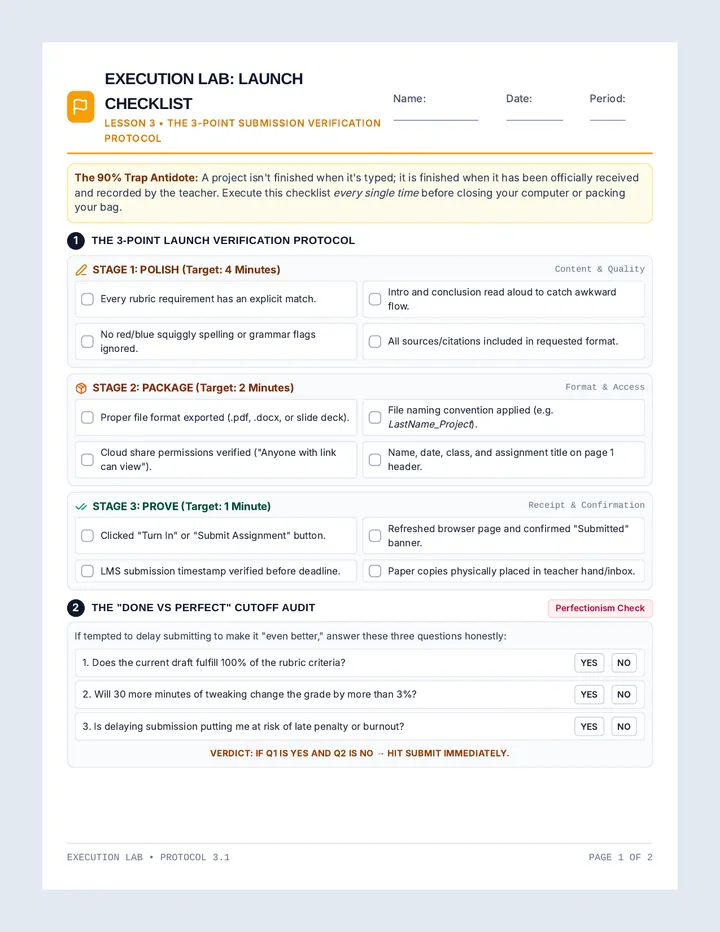
Understanding social cues and practicing communication helps build connections, reduce feelings of isolation, and foster a more positive school experience.
Prep List
01 Review Slide Deck and internalize script talking points.
02 Print the "Social Cues Activity" worksheet.
03 Gather: Whiteboard/marker and a small ball/object for play.
Objectives
The student will:
Identify common non-verbal social cues.
Practice initiating short conversations.
Participate in reciprocal interactions.
Instructional Sequence
01
Warm-Up: Social Detectives
5 MIN
Begin the "Social Detectives" framing. Discuss what a detective does (looks for clues) and apply it to people (feelings and thoughts).
02
Understanding Social Cues
8 MIN
Use Slide Deck (1-3) to introduce non-verbal cues: facial expressions, body language, and tone of voice.
Refer to the Script for master decoder prompts.
03
Practicing Initiation
7 MIN
Use Slide Deck (4-5) to guide a discussion on starting conversations. Model a simple "Hi" or a question about a shared experience.
04
Reciprocal Interaction Activity
7 MIN
Physical Activity: Toss a ball. Guide the student to maintain eye contact, smile, and verbally acknowledge turns. Introduce the "Social Cues Activity" worksheet during/after.
05
Cool-Down: Reflection
3 MIN
"What is one social superpower you practiced today?"
Social Superpowers Slides Social Skills Mission
Social
Superpowers
Unlocking the secrets to connecting with others and navigating friendships.
What are Social Cues?
The unspoken messages people send every day.
Facial expressions
Body language
Tone of voice
Detective Note
Think of these as the clues that help us understand how others feel without them saying a word.
Decoding Social Cues
Happy
Smile, relaxed shoulders, open body position, laughing.
Confused
Furrowed brow, tilted head, scratching head, shrugging.
Sad
Frown, slumped shoulders, looking down, quiet voice.
Interested
Eye contact, nodding, facing you, asking questions.
Starting a Conversation
Step 1: Connection
Look at them, smile, and say "Hi" or "Hey"
Step 2: Curiosity
Ask a simple question: "How was your weekend?" or "What'd you think of the homework?"
Step 3: Kindness
Make a positive comment: "That's a cool backpack!" or "Nice job on that project."
Pro Tip
Keep it simple. You don't need a script, just a starting point!
Practice Makes Progress!
Small steps lead to big changes.
Observe others and learn.
Be patient with yourself.
Try one new thing today.
Social Superpowers Script Guide Facilitator Script
Lesson: Social Superpowers: Navigating Friendships
Duration
30 MIN
1
Warm-Up: Social Detectives (5 Min)
[Energetic & Welcoming]
"Hey [Student's Name]! Welcome! Today, we're going to embark on a really cool mission: becoming 'Social Detectives'! What do you think a social detective does? What kinds of clues do they look for?"
[Pause for student response. Guide them to think about observing people.]
"Exactly! A social detective looks for clues about how people are feeling or what they might be thinking. It's like having a superpower that helps us understand others better. And understanding others is a huge part of making and keeping friends. So, are you ready to learn some social superpowers?"
2
Social Cues (8 Min)
[Transition to Slide 2]
"Let's start with our first superpower: understanding social cues. Look at this slide. Social cues are like unspoken messages people send us. They're the things we notice that tell us a lot without anyone saying a single word. Can you think of any ways people show how they feel without talking?"
[Guide student to think about facial expressions, body language, sounds like sighs or laughs.]
"You got it! Things like a smile, a frown, or even how someone stands. These are all clues!"
[Transition to Slide 3]
"Now, let's become master decoders! On this slide, we have some common social cues. If someone is smiling and their shoulders are relaxed, what emotion do you think they're showing?"
[Pause for student response: Happy]
"Great job! What if someone has a furrowed brow and a slightly tilted head? What could that clue tell us?"
[Pause for student response: Confused or thinking]
"Exactly! They might be confused or really thinking hard about something. These clues help us know how to react and what to say next."
3
Initiating Conversations (7 Min)
[Transition to Slide 4]
"Our next superpower is initiating conversations. This is how we start talking to someone new or someone we want to get to know better. It can feel a little tricky sometimes, but there are simple ways to do it. Look at these ideas on the slide."
"What's the easiest way to acknowledge someone you see?"
[Pause for response: Say 'Hi' or wave]
"Right! A simple 'Hi' and a friendly smile can go a long way. After that, you can try asking a simple question or maybe even give a positive comment."
[Role-play a few scenarios, giving positive feedback and gentle suggestions.]
4
Interaction Activity (7 Min)
Social Cues Activity Worksheet Social Detective
Mission: Be a Social Detective!
Agent:
Date:
Instructions: As your teacher makes different facial expressions or body language, try to identify what emotion or thought they might be showing. Then, write down what you think that cue means.
01 Observation One
What did you observe? (face, body, sound)
What social cue is this?
02 Observation Two
What did you observe? (face, body, sound)
What social cue is this?
03 Observation Three
What did you observe? (face, body, sound)
What social cue is this?
04 Observation Four
What did you observe? (face, body, sound)
What social cue is this?
Reflect & Practice
What is one simple way you could start a conversation with a peer this week?