Smart Budget Paragraph Handout
Grade 9 Personal Finance
Smart Budget Paragraph
Sample Response
Name:
Date:
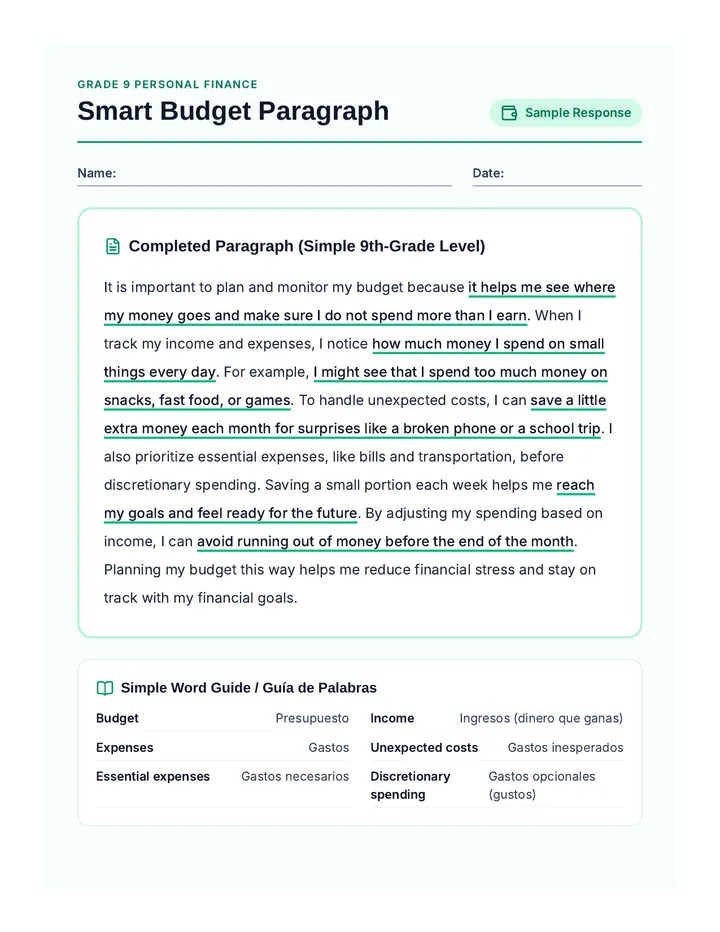
Completed Paragraph (Simple 9th-Grade Level)
It is important to plan and monitor my budget because it helps me see where my money goes and make sure I do not spend more than I earn. When I track my income and expenses, I notice how much money I spend on small things every day. For example, I might see that I spend too much money on snacks, fast food, or games. To handle unexpected costs, I can save a little extra money each month for surprises like a broken phone or a school trip. I also prioritize essential expenses, like bills and transportation, before discretionary spending. Saving a small portion each week helps me reach my goals and feel ready for the future. By adjusting my spending based on income, I can avoid running out of money before the end of the month. Planning my budget this way helps me reduce financial stress and stay on track with my financial goals.
Simple Word Guide / Guía de Palabras
Budget Presupuesto
Income Ingresos (dinero que ganas)
Expenses Gastos
Unexpected costs Gastos inesperados
Essential expenses Gastos necesarios
Discretionary spending Gastos opcionales (gustos)
Grade 9 Personal Finance
Learning Targets & Quick Check
Goals & Review
Learning Target
How can I understand and apply budgeting skills to manage income and expenses, including challenges such as variable income, unexpected costs, and limited resources?
Target Purpose
So that I can identify and compare the financial factors that affect my monthly budget, understand the challenges people face when money is tight, and learn strategies to manage income effectively while still meeting essential needs and financial goals.
Success Criteria
I can explain the main challenges people face when creating and maintaining a budget, including unexpected expenses and variable income. I can describe strategies someone can use to manage limited or fluctuating income, such as prioritizing essential needs, tracking spending, and making financial trade-offs. I can also analyze real-life scenarios, including minimum wage versus living wage situations, and explain how government benefits can help cover basic expenses. Finally, I understand how to apply these budgeting strategies to plan, save, and adjust spending effectively, so I can make informed financial decisions and work toward long-term financial stability.
Choose the Best Response
Which of the following is the BEST strategy for managing a monthly budget when income varies from month to month?
A Spend the same amount each month regardless of income
B Prioritize essential expenses and adjust discretionary spending
C Ignore unexpected expenses and hope for the best
D Only save money when income is above average
Smart Budget Answer Key
Grade 9 Personal Finance
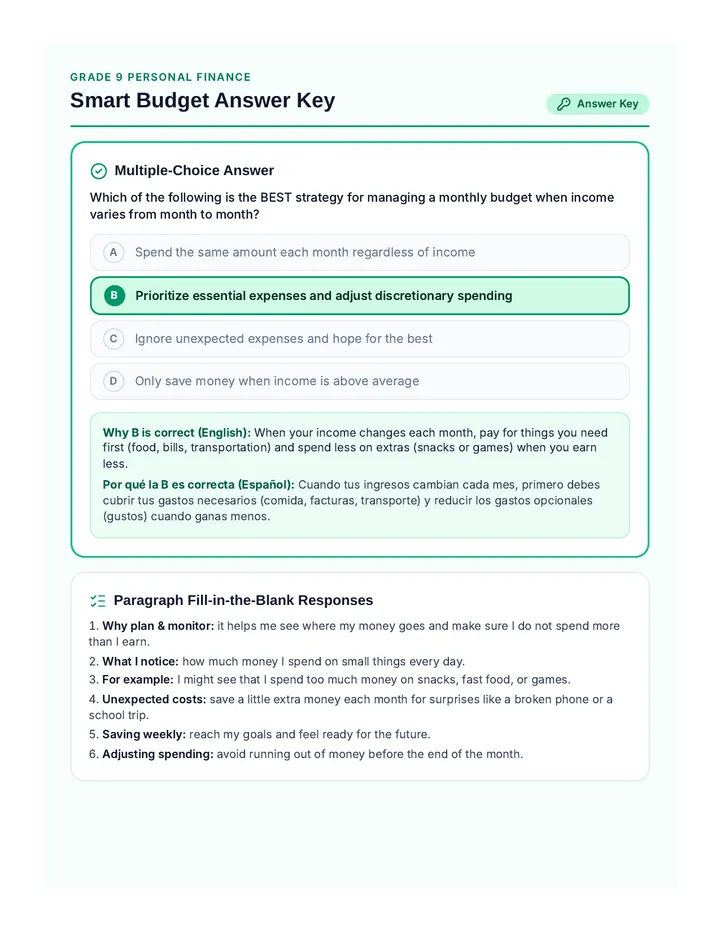
Smart Budget Answer Key
Answer Key
Multiple-Choice Answer
Which of the following is the BEST strategy for managing a monthly budget when income varies from month to month?
A Spend the same amount each month regardless of income
B Prioritize essential expenses and adjust discretionary spending
C Ignore unexpected expenses and hope for the best
D Only save money when income is above average
Why B is correct (English): When your income changes each month, pay for things you need first (food, bills, transportation) and spend less on extras (snacks or games) when you earn less.
Por qué la B es correcta (Español): Cuando tus ingresos cambian cada mes, primero debes cubrir tus gastos necesarios (comida, facturas, transporte) y reducir los gastos opcionales (gustos) cuando ganas menos.
Paragraph Fill-in-the-Blank Responses
- Why plan & monitor: it helps me see where my money goes and make sure I do not spend more than I earn.
- What I notice: how much money I spend on small things every day.
- For example: I might see that I spend too much money on snacks, fast food, or games.
- Unexpected costs: save a little extra money each month for surprises like a broken phone or a school trip.
- Saving weekly: reach my goals and feel ready for the future.
- Adjusting spending: avoid running out of money before the end of the month.