A foundational 15-minute kindergarten lesson promoting empathy and respectful language, helping students replace hurtful names with kind words.
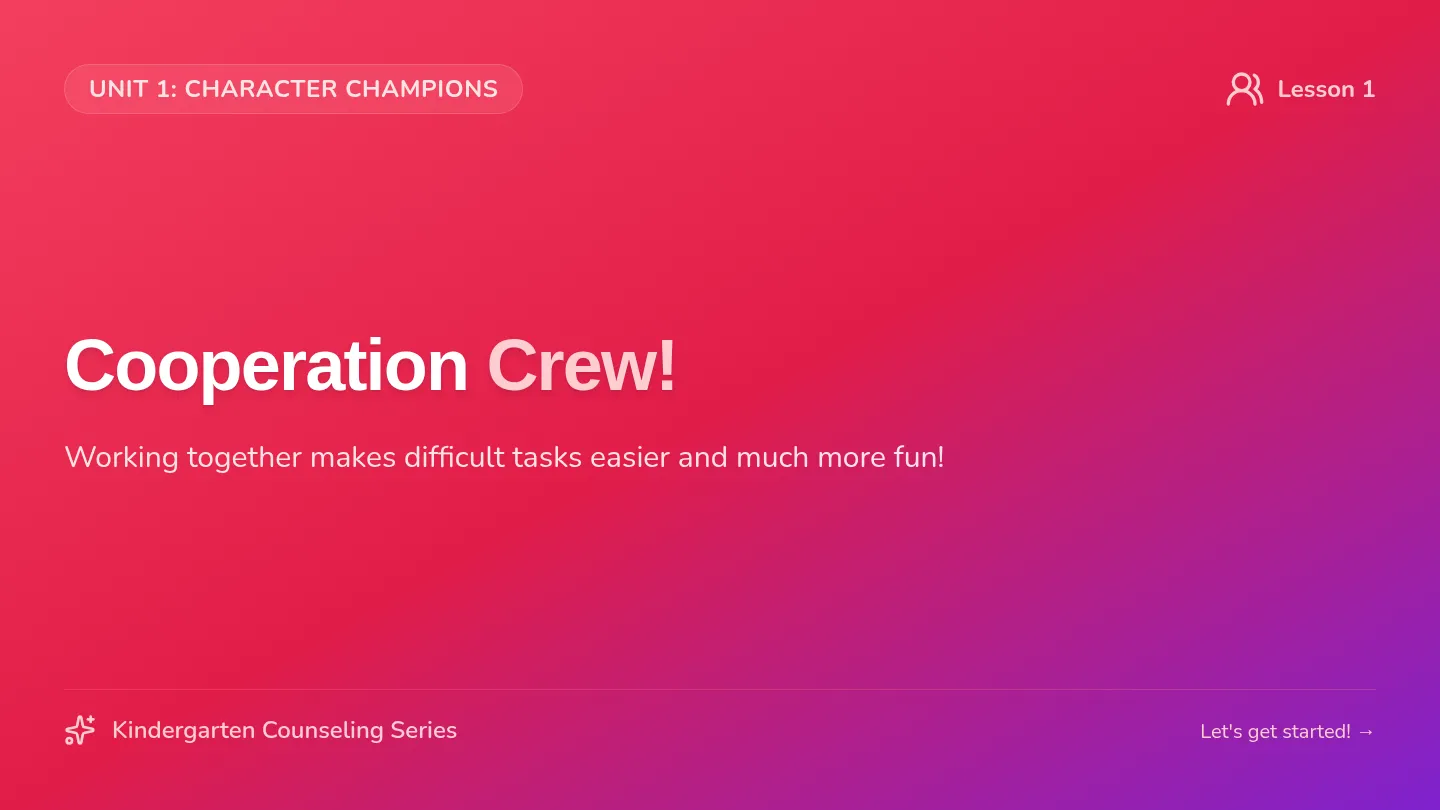
A comprehensive character education curriculum for kindergarten students focusing on Respect, Perseverance, Honesty, Cooperation, Courage, and Creativity. It combines slide-based instruction with interactive problem-solving scenarios and integrated printables.
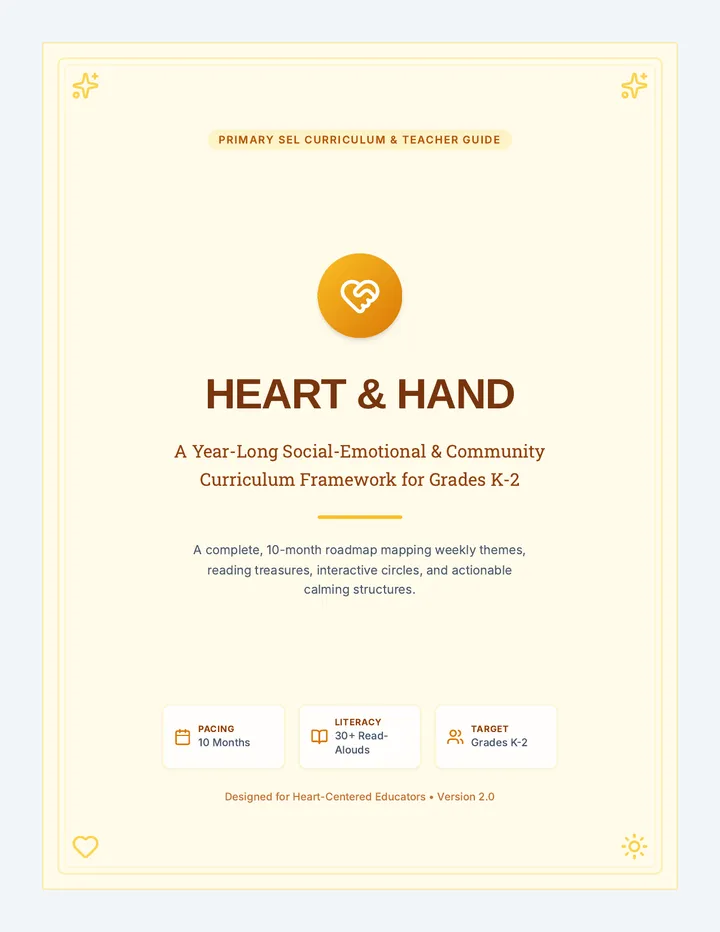
A comprehensive Year-Long K-2 Social-Emotional Learning (SEL) curriculum framework and teacher guide containing monthly themes, recommended read-alouds, morning meeting structures, and classroom activities.
A comprehensive, print-ready, year-long Social-Emotional Learning and Community curriculum guide for Grades K-2. Features month-by-month and week-by-week thematic frameworks from August to May, complete with recommended read-aloud book lists, concrete daily morning meeting structures, and classroom-ready anchor chart templates.
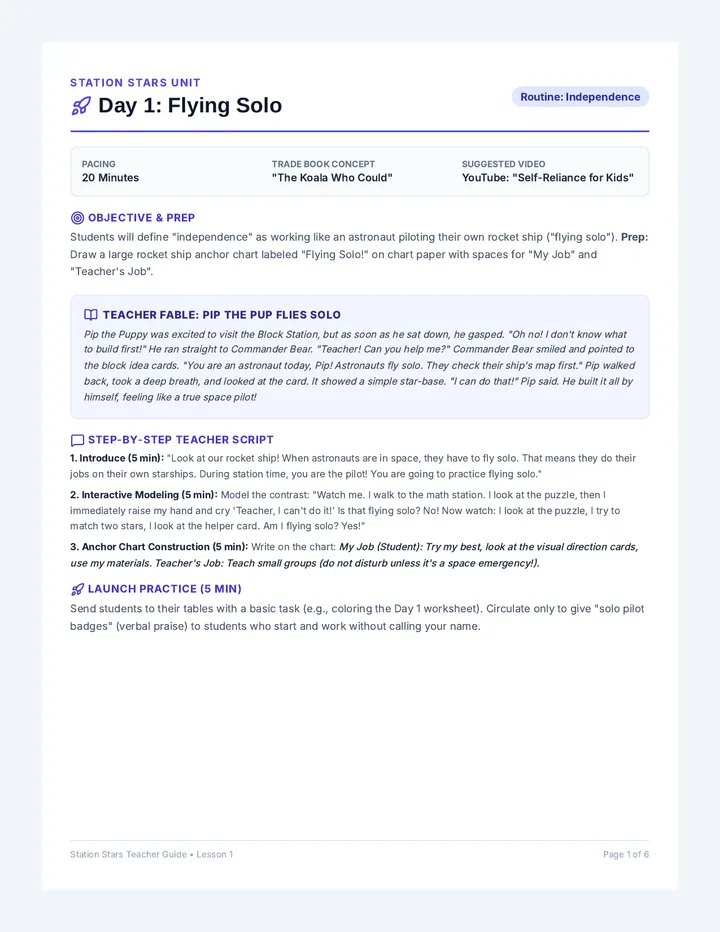
A comprehensive 6-day kindergarten sequence designed to introduce, model, and reinforce essential independent station routines through interactive fables, activities, and visual cues.
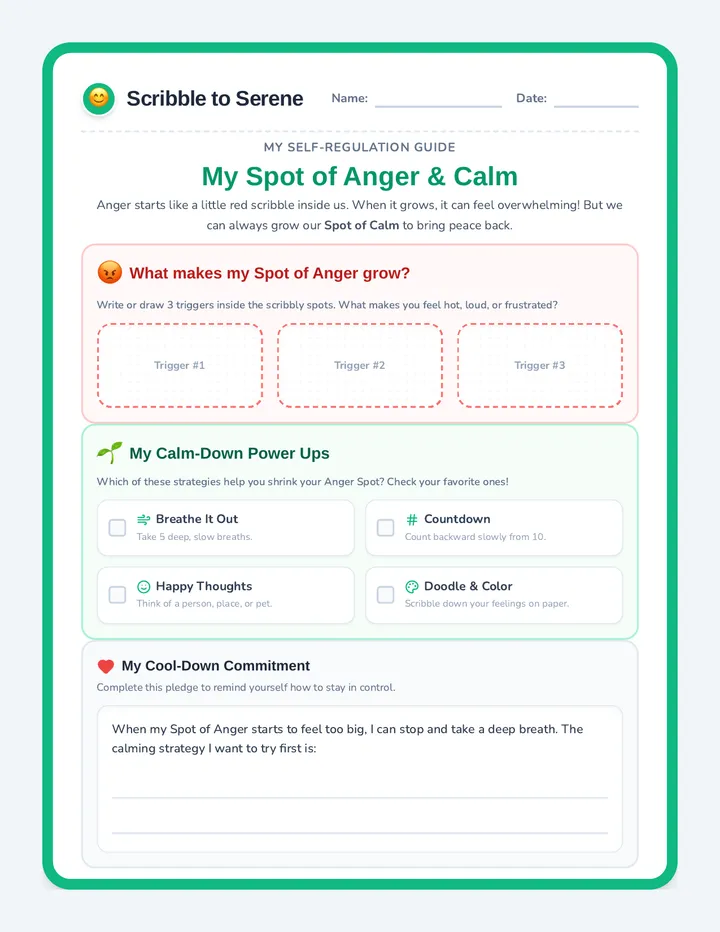
A therapeutic and engaging social-emotional learning lesson focusing on identifying anger triggers and practicing hands-on calming strategies. Students explore their 'Spot of Anger' and build their personal 'Spot of Calm' through reflection and crafts.
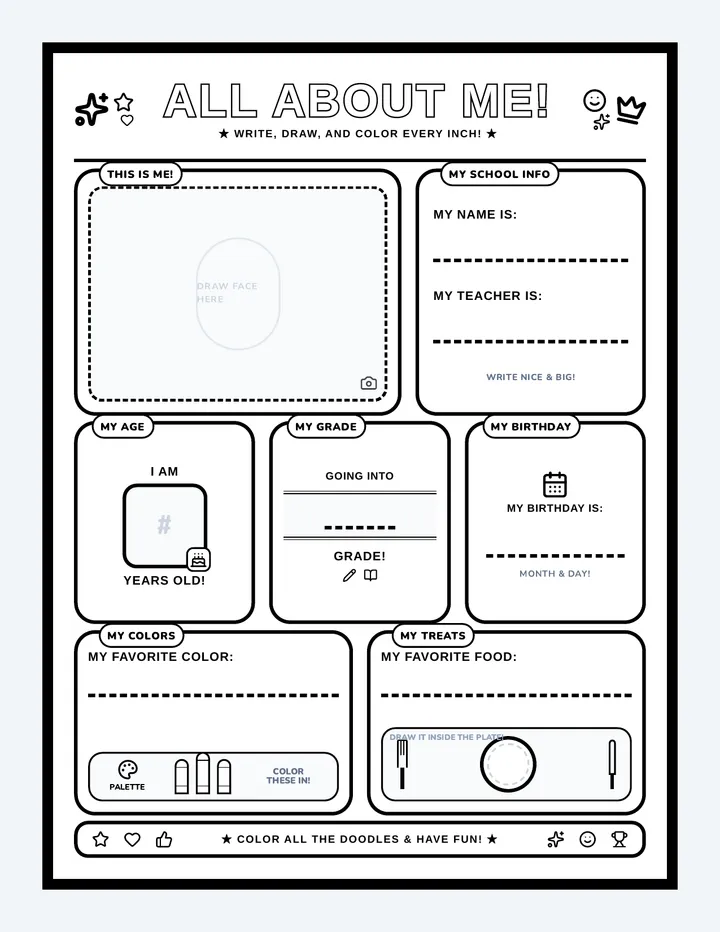
A playful, high-quality, hand-drawn style All About Me coloring worksheet for young students. It features a self-portrait frame, name line, teacher's name line, grade banner, birthday cupcake, favorite color crayons, and a favorite food plate for students to write, draw, and color.
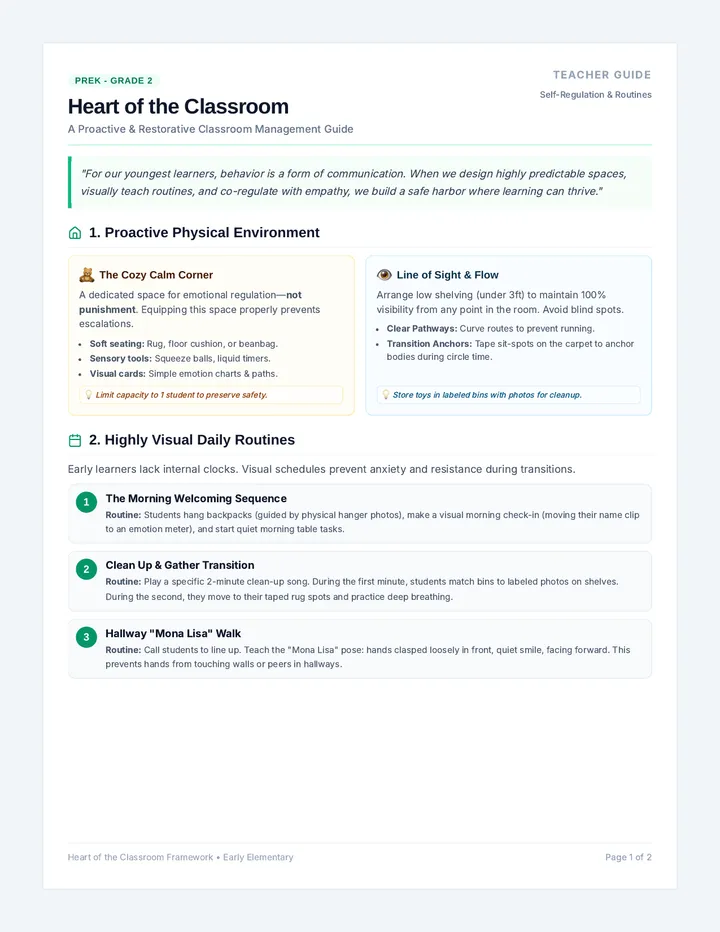
A comprehensive sequence of classroom management frameworks spanning PreK through Grade 8, detailing visual self-regulation routines for early elementary, peer-led cooperative monitoring for upper elementary, and restorative agency frameworks for middle school.
A comprehensive, supportive toolkit focused on emotional regulation and emotional intelligence. Students learn to navigate and balance their emotional states, building visual awareness of their feelings and coping mechanisms.
A two-page printable social-emotional learning worksheet and craft. Page 1 helps students reflect on their anger triggers and plan calming strategies. Page 2 features a hands-on "Calm Spot Dial" craft that students can cut out, assemble, and use to practice self-regulation.
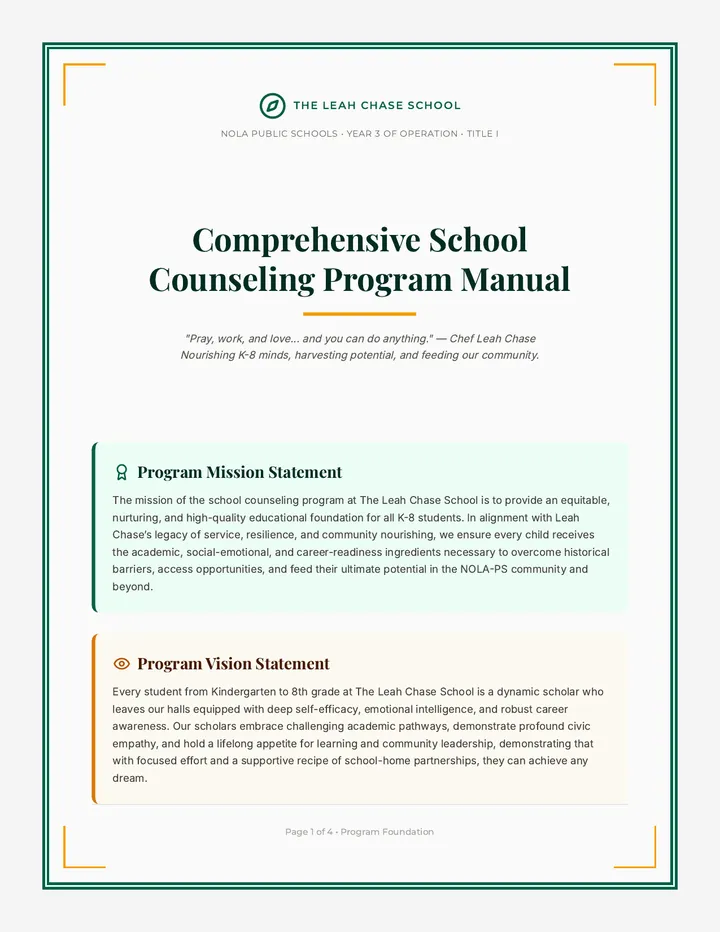
A comprehensive ASCA-aligned school counseling program framework designed for The Leah Chase School. Tailored for a single K-8 counselor in a Title I, NOLA-PS district-run school in its third year of operation, covering program management, MTSS, SEL, and career exploration.
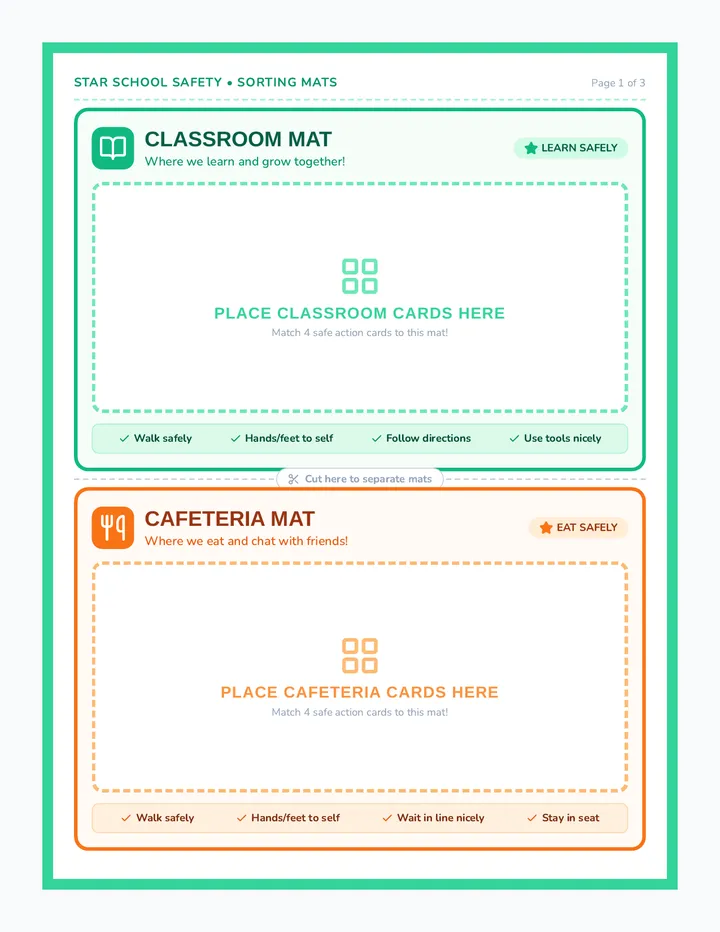
A friendly and active school safety unit for K-2 students based on the STAR behavioral matrix, teaching safe choices in the classroom, cafeteria, recess, school grounds, hallways, and bathrooms.
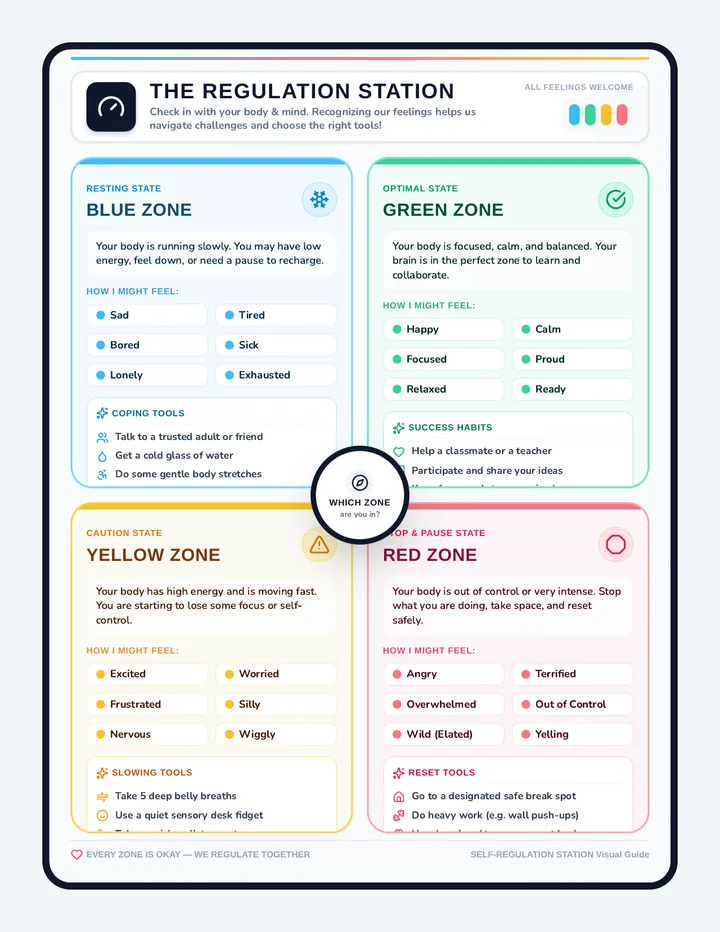
A high-visibility printable anchor chart poster dividing feelings into four color-coded zones (Blue, Green, Yellow, Red). Includes state descriptions, specific emotion word lists, and classroom-ready coping strategies for each zone.