Streamlined Intake Fundamentals Lesson Plan
Streamlined Intake
Fundamentals Lesson Plan
Duration
60 Minutes
Why This Matters
A streamlined yet thorough intake process is vital for effective clinical practice, ensuring accurate diagnostic formulations and appropriate treatment planning from the outset. This lesson helps develop foundational skills for supervised interns.
Learning Objective
Participants will understand the core components of a comprehensive clinical intake and learn strategies for efficient assessment without sacrificing depth.
Approach & Audience
Target Audience
Adult Professionals (Supervised Interns)
Instructional Method
Interactive Discussion & Practical Application
Materials
- The Intake Power Hour Slides
- Intake Form Checklist
- Ethical Intake Dilemmas
Prep Checklist
Review lesson plan & deck.
Print checklists for each intern.
Prepare ethical dilemma prompts.
Est. Prep Time: 20 min
Instructional Timeline
10 Minutes
Introduction & Warm-Up
- Greet participants and introduce "Intake Essentials."
- Explain importance of balancing efficiency with clinical depth.
- Opening Prompt: "What are some initial challenges you've faced during client intake?"
- Facilitate brief group share of responses.
20 Minutes
The Intake Power Hour Presentation
- Present the visual slide deck.
- Focus on key components: MSE, Risk Assessment, and History.
- Discuss the role of DSM-5 diagnostic formulation in the initial session.
- Take active questions throughout to ensure clarity on clinical nuances.
15 Minutes
Intake Form Checklist Activity
- Distribute the Intake Form Checklist Worksheet.
- Task interns with working in pairs to review an imagined or sample form.
- Circulate to offer clinical insights and answer procedural questions.
- Regroup to discuss findings, common omissions, and potential pitfalls.
10 Minutes
Ethical Intake Dilemmas Discussion
- Divide participants into small break-out groups.
- Present selected dilemmas (Confidentiality, Cultural Bias, etc.).
- Allow 5 minutes of focused group peer-discussion.
- Share back: focus on ethical frameworks and decision-making steps.
05 Minutes
Wrap-Up & Q&A
- Summarize high-level takeaways (Safety first, efficiency via structure).
- Final floor for interns' concerns or lingering questions.
- Challenge: "Apply one strategy from today in your next intake."
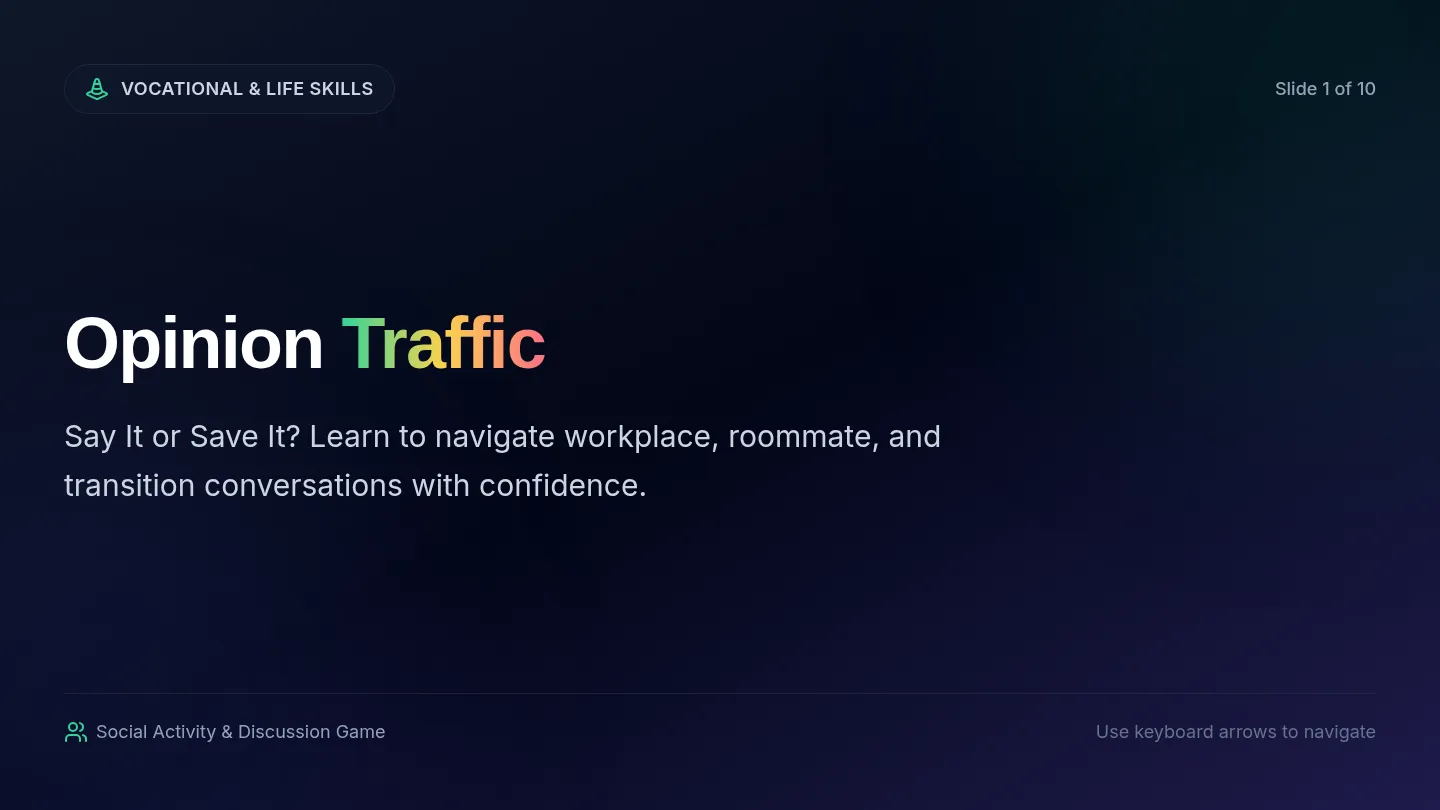
The Intake Power Hour Slides
The Intake Power Hour
Streamlining Clinical Intake & Assessment
"Efficiency is doing things right; effectiveness is doing the right things."
Foundations of Intake
More Than Just Paperwork
The purpose of intake is to gather essential information for accurate diagnosis & treatment planning.
Pro Tip
Balance comprehensive data collection with establishing a clinical connection.
Key Components
- Presenting Problem
- Social & Medical History
- Mental Status Exam (MSE)
- Risk Assessment
What Brings You Here Today?
Client's Words
Mirror their language to understand their concerns and validate their experience.
Duration & Intensity
When did it start? How much does it impact their daily life/functioning?
Prior Attempts
What have they tried before? What worked? What didn't work?
Goals for Therapy
What do they hope to achieve in the next 3, 6, or 12 months?
Piecing Together the Puzzle
Social
Family, relationships, education, work, and culture.
Medical
Current health, meds, and past physical illness.
Psychiatric
Prior diagnoses, hospitalizations, and therapy.
Substance
Type, frequency, duration, and lifestyle impact.
Observing the Unspoken
Appearance Grooming, attire, posture
Behavior Eye contact, motor activity
Speech Rate, volume, quality
Affect/Mood Range, congruency
Thought Content Delusions, suicidal ideation
Insight Understanding of situation
Safety First: Assessing Risk
-
Suicidal / Homicidal Ideation
Thoughts, plans, means, and intent.
-
Self-Harm & Harm to Others
History and current impulses.
Safety Planning
Collaborative strategies to ensure immediate safety. This is a non-negotiable part of the intake session if risk is identified.
Mandatory Reporting Required
DSM-5 Formulation
Diagnostic Logic
1
Standardized Criteria
Symptom frequency, duration, and clinical impairment.
2
Differential Diagnosis
Intake Form Checklist Worksheet
Intake Form Checklist
Clinical Intern Training Module
Intern Name:
Date:
Instructions: Imagine you are reviewing a completed intake form for a new client. Use this checklist to evaluate if all essential information has been gathered. Mark 'Yes' if the information is present and thorough, 'No' if it's missing or insufficient, and 'N/A' if it's not applicable.
1. Client Demographics Assessment Logic
| Data Point | Y | N | NA |
|---|
| | | |
| Client Name & Contact Info | | | |
| | | |
|
DOB / Age / Identity Markers (Gender/Pronouns)
| | | |
|
Ethnicity / Cultural Background / Emergency Contact
| | | |
2. Presenting Problem Reason for Service
<table class="w-full text-left border-collapse"><tbody class="divide-y divide-slate-100"><tr><td class="p-4 w-2/3"><p class="font-semibold text-sm">Primary Complaint (Onset, Duration, Frequency)</p><div class="h-12 mt-1"></div></td><td class="border-x border-slate-100 bg-slate-50/30 w-12"></td><td class="border-x border-slate-100 bg-slate-50/30 w-12"></td><td class="border-x border-slate-100 bg-slate-50/30 w-12"></td></tr><tr><td class="p-4"><p class="font-semibold text-sm">Severity, Impact on Functioning, & Goals</p><div class="h-12 mt-1"></div></td><td class="border-x border-slate-100 bg-slate-50/30 w-12"></td><td class="border-x border-slate-100 bg-slate-50/30 w-12"></td><td class="border-x border-slate-100 bg-slate-50/30 w-12"></td></tr></tbody></table>
3. Clinical History Bio-Psycho-Social
<table class="w-full text-left border-collapse"><tbody class="divide-y divide-slate-100"><tr><td class="p-4 w-2/3 font-bold text-slate-500 uppercase text-[10px] tracking-wider">Social History</td><td colspan="3" class="bg-slate-50 border-x border-slate-100"></td></tr><tr><td class="p-4"><p class="font-semibold text-sm">Family, Relationships, Social Support, Living Situation</p><div class="h-10 mt-1"></div></td><td class="border-x border-slate-100 bg-slate-50/30 w-12"></td><td class="border-x border-slate-100 bg-slate-50/30 w-12"></td><td class="border-x border-slate-100 bg-slate-50/30 w-12"></td></tr><tr><td class="p-4 w-2/3 font-bold text-slate-500 uppercase text-[10px] tracking-wider">Medical & Psychiatric</td><td colspan="3" class="bg-slate-50 border-x border-slate-100"></td></tr><tr><td class="p-4"><p class="font-semibold text-sm">Current/Past Meds, Conditions, Allergies</p><div class="h-10 mt-1"></div></td><td class="border-x border-slate-100 bg-slate-50/30 w-12"></td><td class="border-x border-slate-100 bg-slate-50/30 w-12"></td><td class="border-x border-slate-100 bg-slate-50/30 w-12"></td></tr><tr><td class="p-4"><p class="font-semibold text-sm">Psych History (Diagnoses, Hospitalizations, Family History)</p><div class="h-10 mt-1"></div></td><td class="border-x border-slate-100 bg-slate-50/30 w-12"></td><td class="border-x border-slate-100 bg-slate-50/30 w-12"></td><td class="border-x border-slate-100 bg-slate-50/30 w-12"></td></tr><tr><td class="p-4 w-2/3 font-bold text-slate-500 uppercase text-[10px] tracking-wider">Substance Use</td><td colspan="3" class="bg-slate-50 border-x border-slate-100"></td></tr><tr><td class="p-4"><p class="font-semibold text-sm">Current/Past Use (Type, Freq), Impact, Prior Tx</p><div class="h-10 mt-1"></div></td><td class="border-x border-slate-100 bg-slate-50/30 w-12"></td><td class="border-x border-slate-100 bg-slate-50/30 w-12"></td><td class="border-x border-slate-100 bg-slate-50/30 w-12"></td></tr></tbody></table>
<table class="w-full text-left border-collapse"><tbody class="divide-y divide-slate-100"><tr><td class="p-4 w-2/3"><p class="font-semibold text-sm">Appearance, Behavior, & Speech</p><div class="h-10 mt-1"></div></td><td class="border-x border-slate-100 bg-slate-50/30 w-12"></td><td class="border-x border-slate-100 bg-slate-50/30 w-12"></td><td class="border-x border-slate-100 bg-slate-50/30 w-12"></td></tr><tr><td class="p-4"><p class="font-semibold text-sm">Mood, Affect, & Thought Process/Content</p><div class="h-10 mt-1"></div></td><td class="border-x border-slate-100 bg-slate-50/30 w-12"></td><td class="border-x border-slate-100 bg-slate-50/30 w-12"></td><td class="border-x border-slate-100 bg-slate-50/30 w-12"></td></tr><tr><td class="p-4"><p class="font-semibold text-sm">Cognition, Insight, & Judgment</p><div class="h-10 mt-1"></div></td><td class="border-x border-slate-100 bg-slate-50/30 w-12"></td><td class="border-x border-slate-100 bg-slate-50/30 w-12"></td><td class="border-x border-slate-100 bg-slate-50/30 w-12"></td></tr></tbody></table>
<table class="w-full text-left border-collapse"><tbody class="divide-y divide-slate-100"><tr><td class="p-4 w-2/3"><p class="font-semibold text-sm">SI/HI (Ideation, Plans, Intent, Means)</p><div class="h-10 mt-1"></div></td><td class="border-x border-slate-100 bg-slate-50/30 w-12"></td><td class="border-x border-slate-100 bg-slate-50/30 w-12"></td><td class="border-x border-slate-100 bg-slate-50/30 w-12"></td></tr><tr><td class="p-4"><p class="font-semibold text-sm">History of Self-Harm, Violence, or Abuse</p><div class="h-10 mt-1"></div></td><td class="border-x border-slate-100 bg-slate-50/30 w-12"></td><td class="border-x border-slate-100 bg-slate-50/30 w-12"></td><td class="border-x border-slate-100 bg-slate-50/30 w-12"></td></tr></tbody></table>
Ethical Intake Dilemmas Discussion Guide
Ethical Intake Dilemmas
Instructions: In your small groups, discuss the following ethical dilemmas that may arise during clinical intake. Consider principles like confidentiality, informed consent, beneficence, and non-maleficence. Be prepared to share your group's decision-making process.
DILEMMA 1
The Reluctant Client
An adult client is strongly encouraged by family to seek therapy due to withdrawal. During intake, they state: "I'm only here because my family made me. I don't really think therapy will help, and I don't want to share too much." They are disengaged.
Discussion Prompts
- How do you address reluctance while gathering essential data?
- What are your ethical obligations regarding informed consent here?
- How might this impact the therapeutic alliance?
Group Notes / Action Steps
DILEMMA 2
Confidentiality & Collateral Info
A new adult client mentions their spouse has been calling your office frequently, expressing concerns and asking for updates. The client has not given permission for you to speak with the spouse.
Discussion Prompts
- How do you handle the spouse's requests for information?
- What are the strict limits of confidentiality in this scenario?
- How do you balance autonomy vs. addressing reported risks?
Group Notes / Action Steps
DILEMMA 3
Disclosure of Sensitive Information
During intake, a client mentions a past instance of illegal drug use. You know that in your jurisdiction, certain past activities could impact future professional licensing for the client's specific field.
Discussion Prompts
- Do you have an obligation to discuss future licensing implications?
- How do you balance privacy with a professional duty to inform?
- What would be your immediate next steps?
Group Notes / Action Steps
DILEMMA 4
Cultural Competence & Bias
During intake with a client from a different background, you recognize you are making assumptions based on stereotypes despite trying to remain objective.
Discussion Prompts
- How do you recognize and address unconscious biases in the moment?
- What steps ensure you don't impose your own cultural framework?
- How do you adjust your approach to understand their unique context?
Group Notes / Action Steps