Through a simulation, students see how clicking only on one type of topic eventually removes all other topics from a feed. They define 'filter bubble' and discuss the downsides of only seeing things you agree with.
A comprehensive restorative respect and empathy sequence spanning Grades 5 to 8, providing age-appropriate independent reflection packets and companion advisory slides for each grade level.
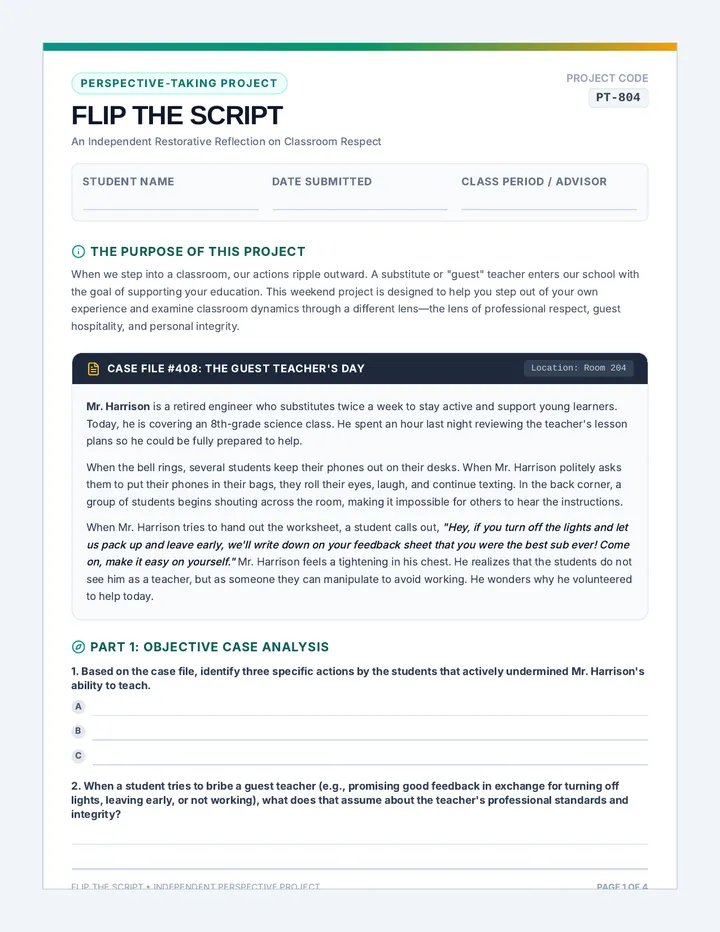
A restorative learning unit focused on 8th-grade students reflecting on phone use, ignoring rules, and group disruption during a substitute's lesson.
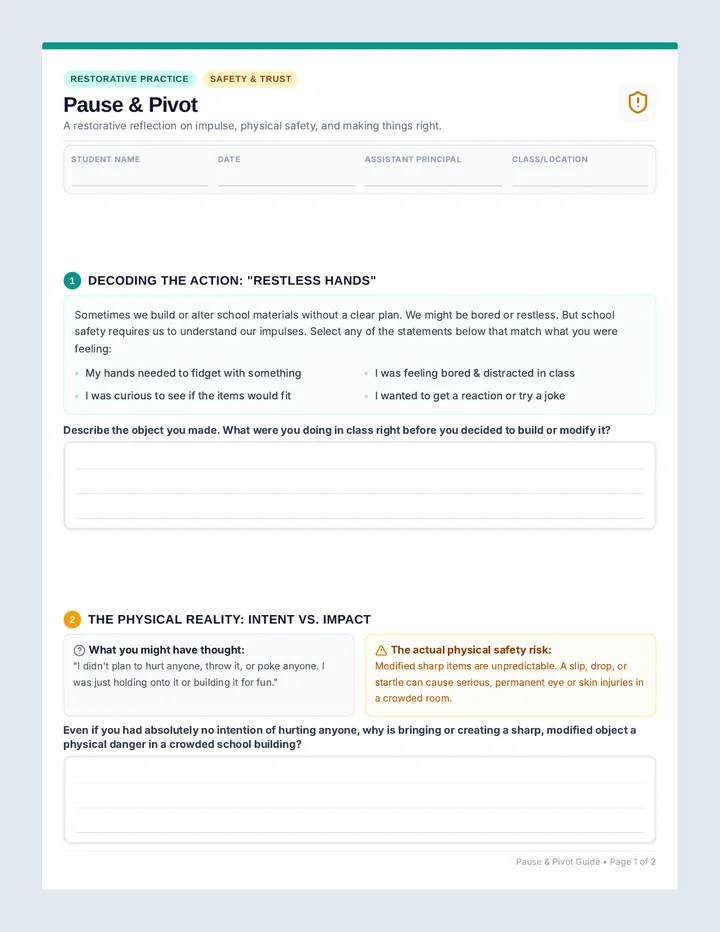
A restorative 2-page reflection packet designed for a student who created a dangerous object from a push pin and paper. Formatted with large, highly legible fonts and spacious, multi-line writing boxes, it guides the student through impulse control coaching, understanding physical safety risks, and co-creating a restore plan with their Assistant Principal.
A transformative leadership program designed for 8th-grade boys, focusing on academic buy-in, the heavy historical significance of cultural symbols, and elevating their public influence from low-level edge-lord behavior to respected legacy leadership. Includes school lessons, weekend homework packs, and a parent reflection guide.
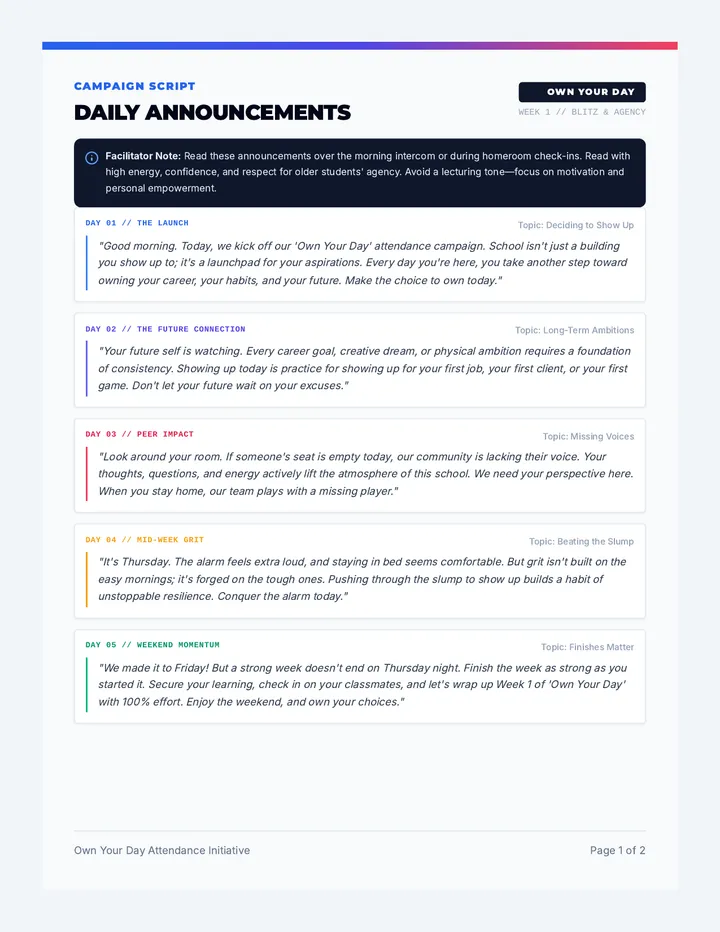
A collection of daily intercom announcement scripts and homeroom discussion prompts spanning a 2-week campaign. Features ready-to-read text focused on long-term goals, peer support, personal accountability, and personal attendance tracking sections.
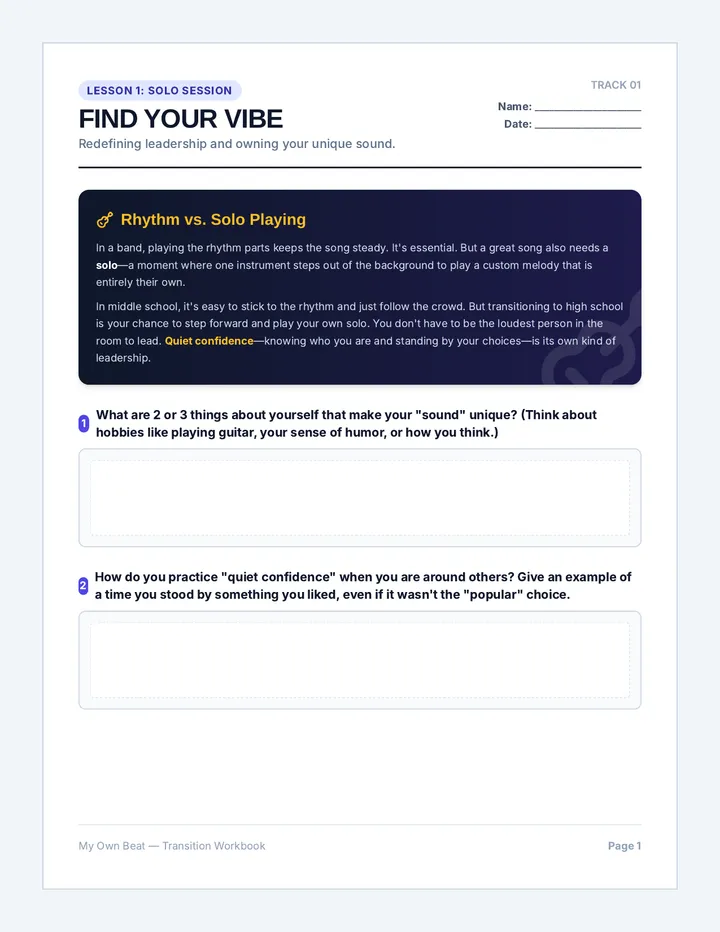
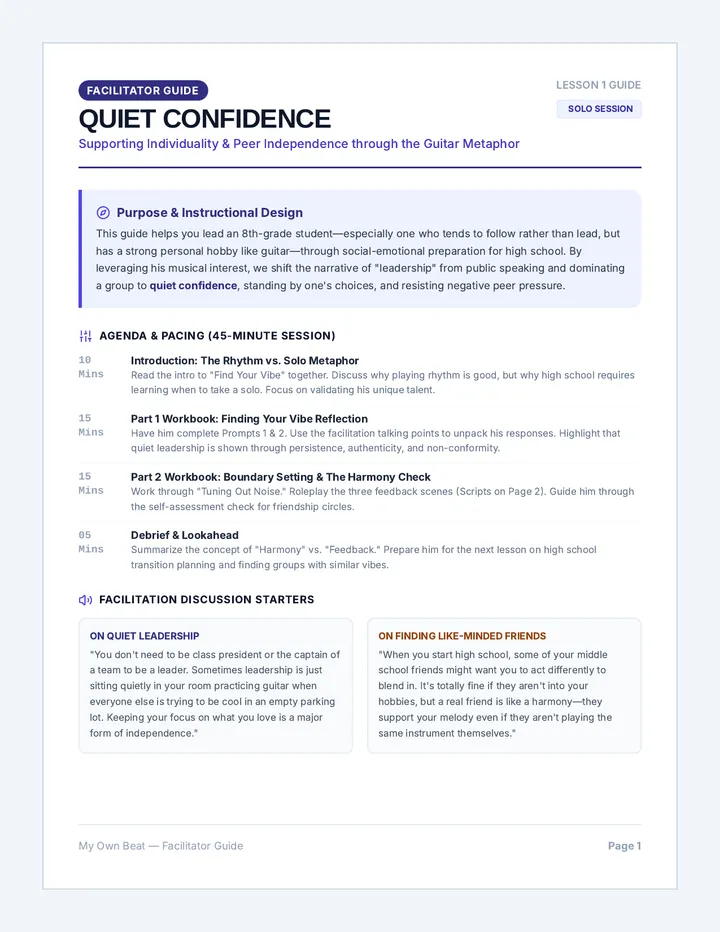
A transition curriculum for an 8th-grade student moving to high school, using music and guitar metaphors to cultivate individuality, self-confidence, independent decision-making, and positive peer connection. This 2-lesson unit empowers him to choose his own path, join clubs aligned with his interests, and build supportive friendships.
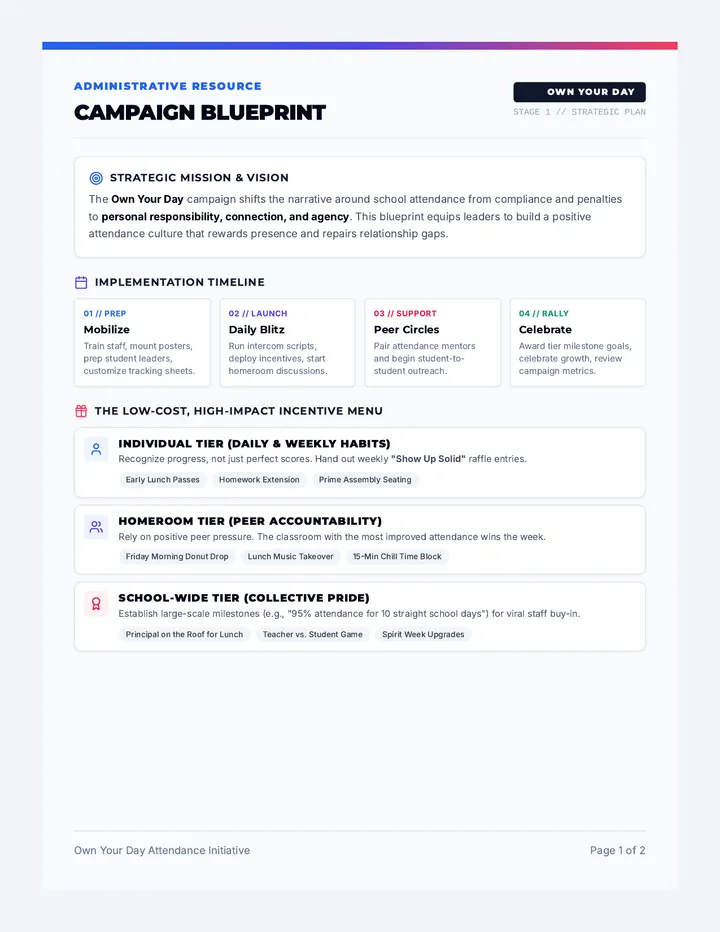
A comprehensive school-wide campaign guide for administrators and teachers to implement the 'Own Your Day' attendance campaign. Includes a step-by-step launch roadmap, a menu of low-cost incentives, peer-led connection strategies, and an administrative tracking framework.
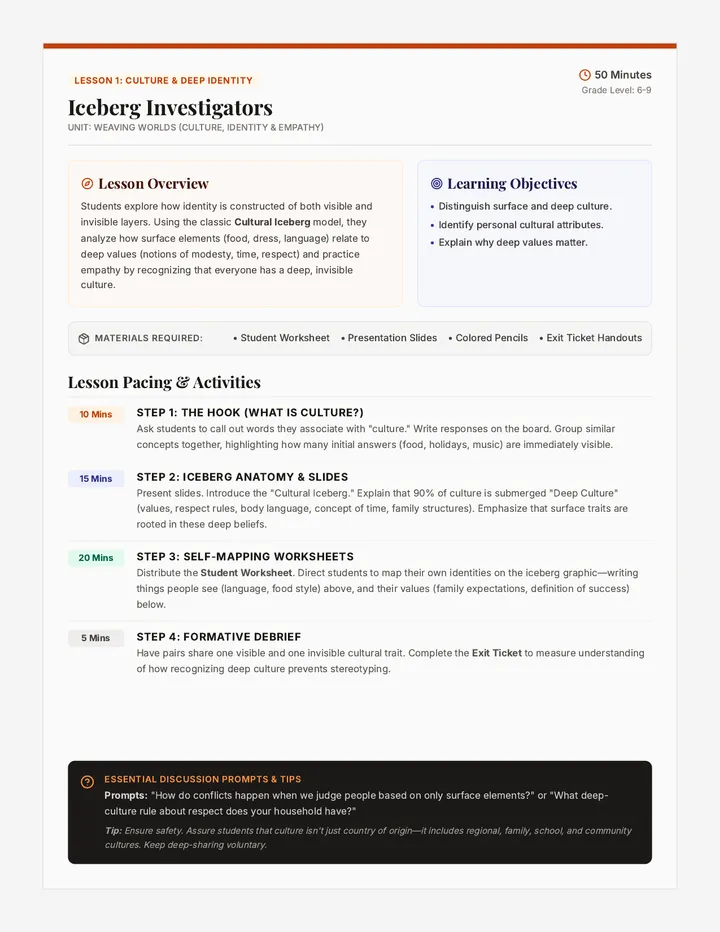
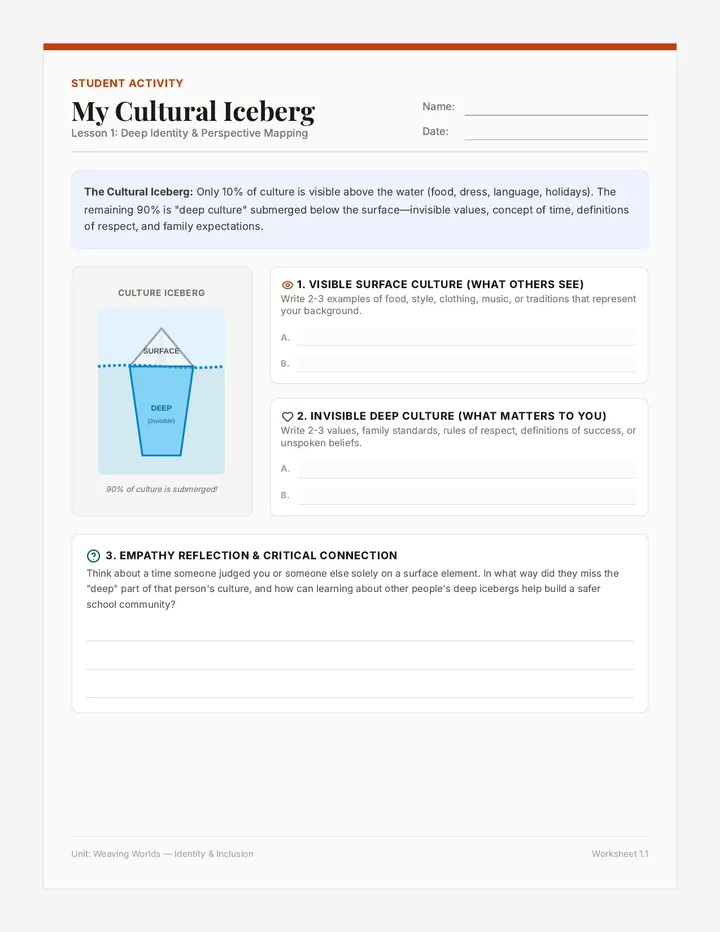
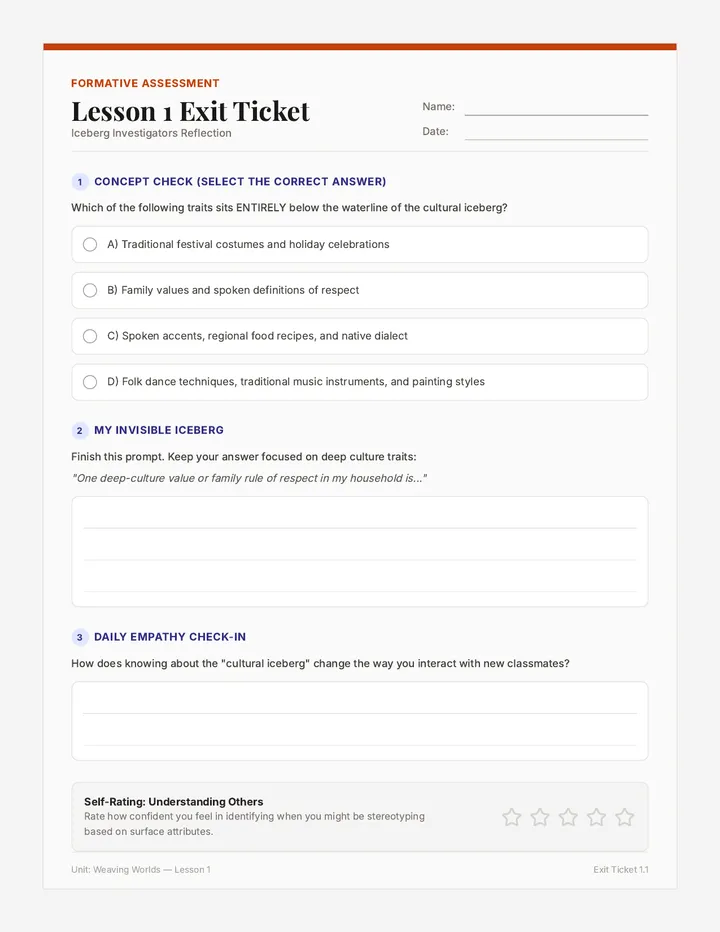
A 3-lesson unit on culture, identity, empathy, and building an inclusive school community. Students explore the cultural iceberg, share personal perspective narratives, and collaborate on actionable school-wide inclusion plans.
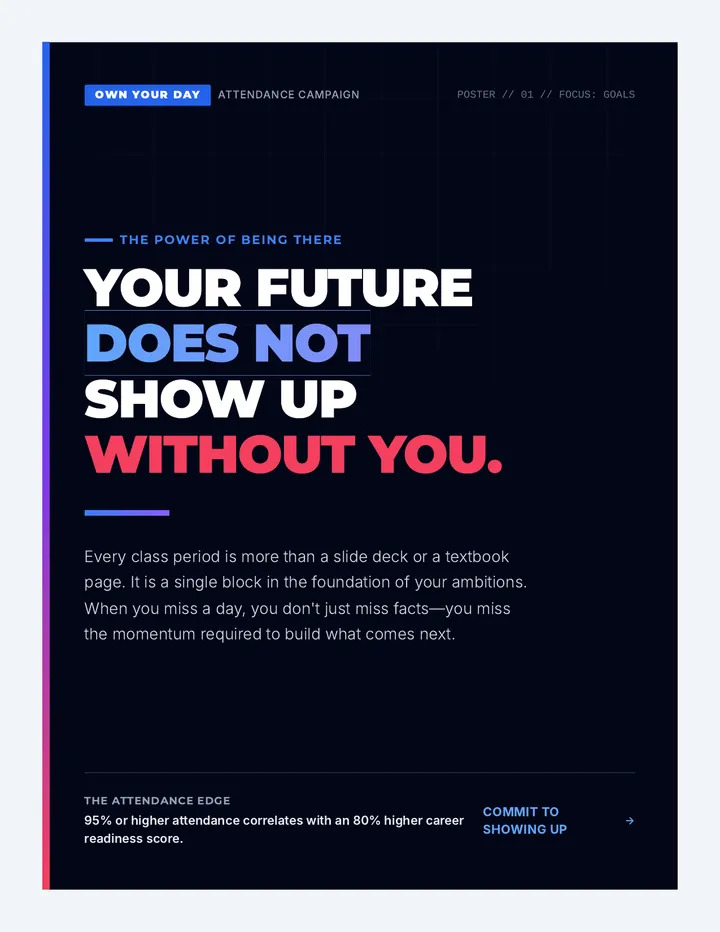
A set of three modern, high-impact campaign posters designed for middle and high school hallways. The posters focus on personal agency, peer connection, and future goals, utilizing a bold slate-and-cobalt color palette with clean, tech-inspired layouts that appeal to older students.
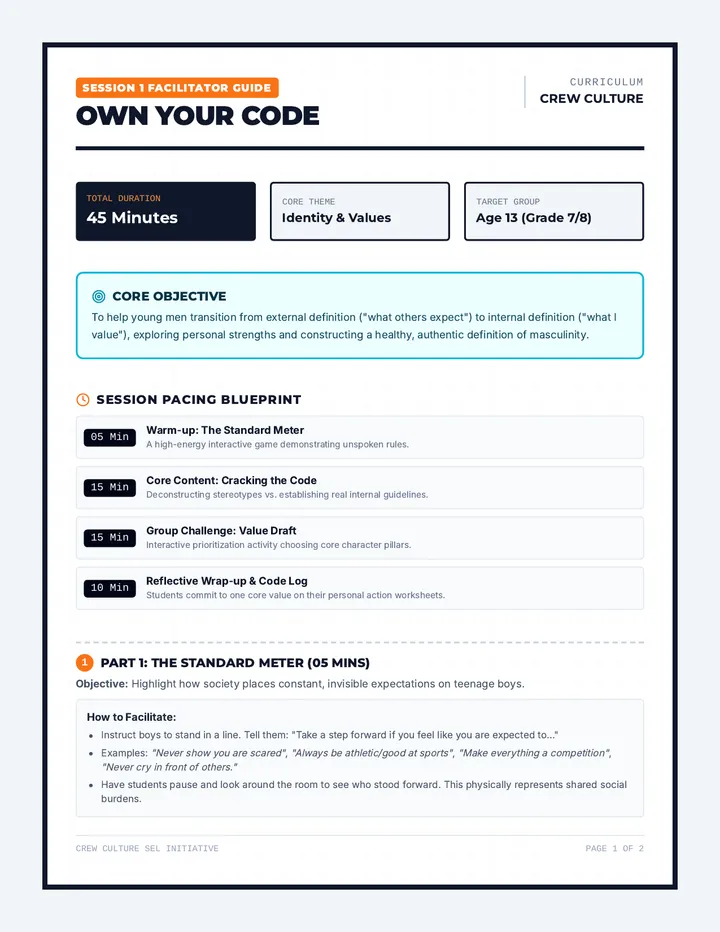
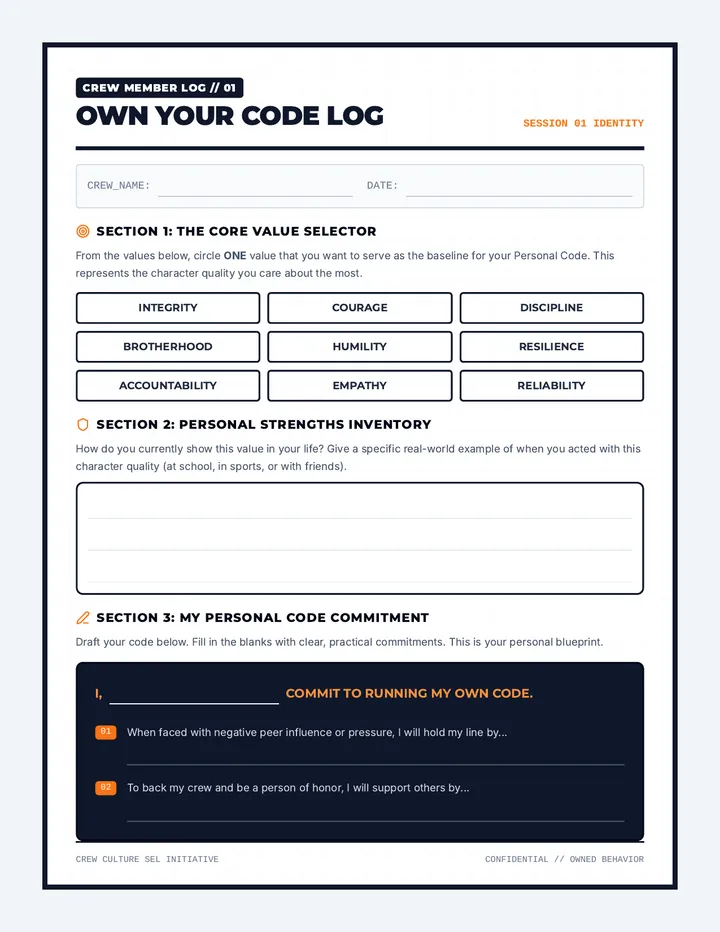
A three-part social-emotional learning curriculum designed specifically for middle school boys to develop self-esteem, manage digital pressure, and build authentic peer relationships.