A interactive and sensory-rich Pre-K lesson designed to teach four basic emotions (happy, sad, mad, scared) using mirrors, guided modeling, collaborative peer play, and a creative drawing reflection.
Distribute individual handheld plastic safety mirrors. Project Slides 3 & 4. Review the target facial anatomy details: eyes, eyebrows, cheeks, and mouth corners. Model each of the four emotions in turn, describing your face using the Teacher Script with Prompts. Instruct children to look into their safety mirrors and attempt to duplicate each physical facial expression precisely.
3
Partner Game: Mirror Match-Up (8 Minutes)
Instruct students to turn face-to-face with an assigned peer sitting directly across from them on the carpet. Explain that one partner will be the "Actor" and the other partner will play the "Mirror." Show slide 5 instructions. Distribute cards from the Handheld Mirrors Set to actors. Actors mimic the facial expressions depicted, and mirrors must guess and copy the face correctly. Alternate roles.
4
Independent Drawing: Draw Your Feeling Sheet (7 Minutes)
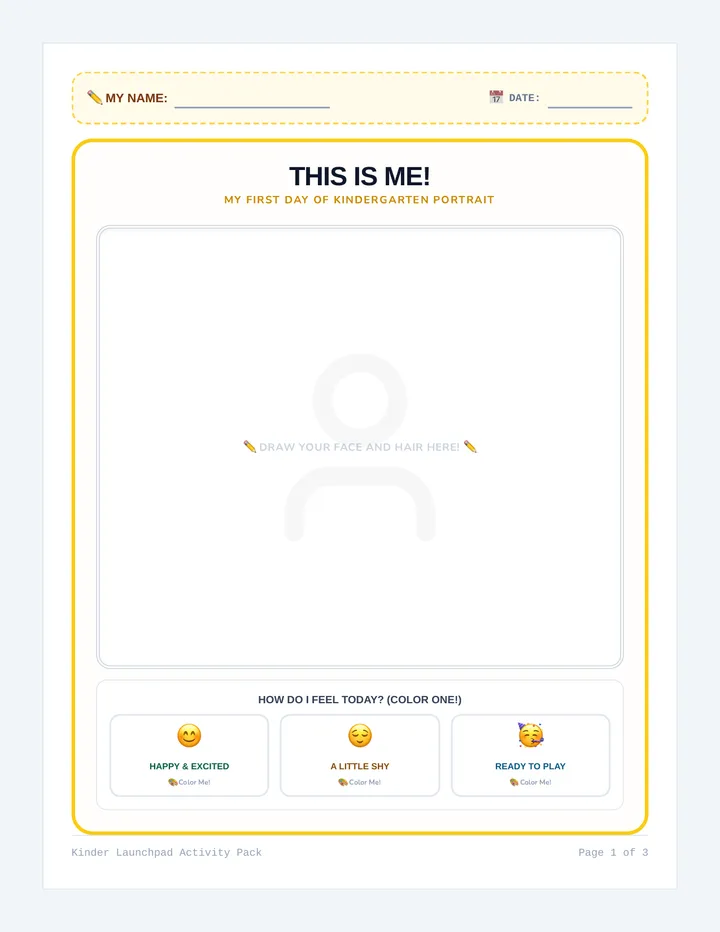
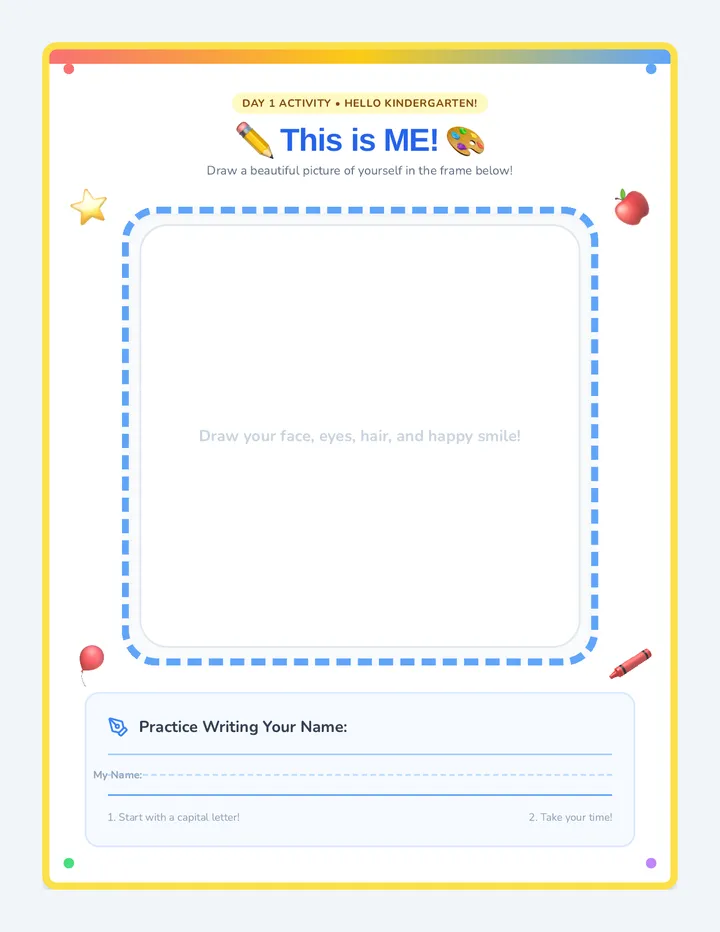
Transition students to desk stations. Hand out the "Draw Your Feeling Sheet." Prompt students to look once more into their mirrors and make the face of how they feel right now. Have them draw their current face in the large blank mirror face template using crayons. Move around the room to perform dictation, writing down their direct quotes in the blank "because" fields.
5
Wrap-Up: Circle Reflection & Share (3 Minutes)
Bring students back to the carpet circle. Guide students to sit with their sheets in their laps. Ask reflection questions from Slide 6. Prompt children to hold up their sheets and share their drawn faces. Conclude with a collective breathing exercise: "We can feel happy, sad, mad, or scared, and all feelings are okay!"
Pre-K Classroom Management Tips
Mirror Safety: Keep mirrors on the floor or held in two hands to prevent dropping. Use a soft transition sound (e.g., chime) when switching roles during the partner game to keep energy levels calm. Praise children who wait patiently for their turn.
Feelings Faces Mirror Game Page 2 of 2
Emotion 4: Scared (2.5 Minutes)
Say: "Last one! Put your mirror up. Suddenly, a giant thundercloud goes CRACK-BOOM right outside! Oh! Let's make a scared face in our mirrors!"
Say: "Look at your eyes. Are they wide and huge? Look at your eyebrows—they are stretched way up. Your mouth might be open in a big 'O' shape, and your hands might go to your cheeks. This is the SCARED face."
Ask: "Who can you look for when you are scared?" (e.g., "a teacher," "mommy or daddy," "a safe adult")
Inquiry & Debriefing Prompts
For Self-Regulation
"If you see a friend with a sad or mad face, what can you do?" Goal: Foster empathy and teaching kids to offer comfort or ask "Are you okay?".
For Facial Differences
"Do everyone's happy faces look exactly the same?" Goal: Highlight that some smiles are small, some are big, but all mean happiness.
Differentiated Support for Pre-K Students
For non-verbal students: Allow them to point to cards instead of speaking. Encourage exaggerated blinking or wide eyes to participate in the physical mimicking without speech pressure. For highly active students: Incorporate larger body movement constraints (e.g., "Make your arms stand up like angry feathers").