A Tier 2 small group counseling lesson designed for 5th graders to master the art of reading social cues. Students learn to decode non-verbal signals like body language and vocal tone to better understand the feelings of others.
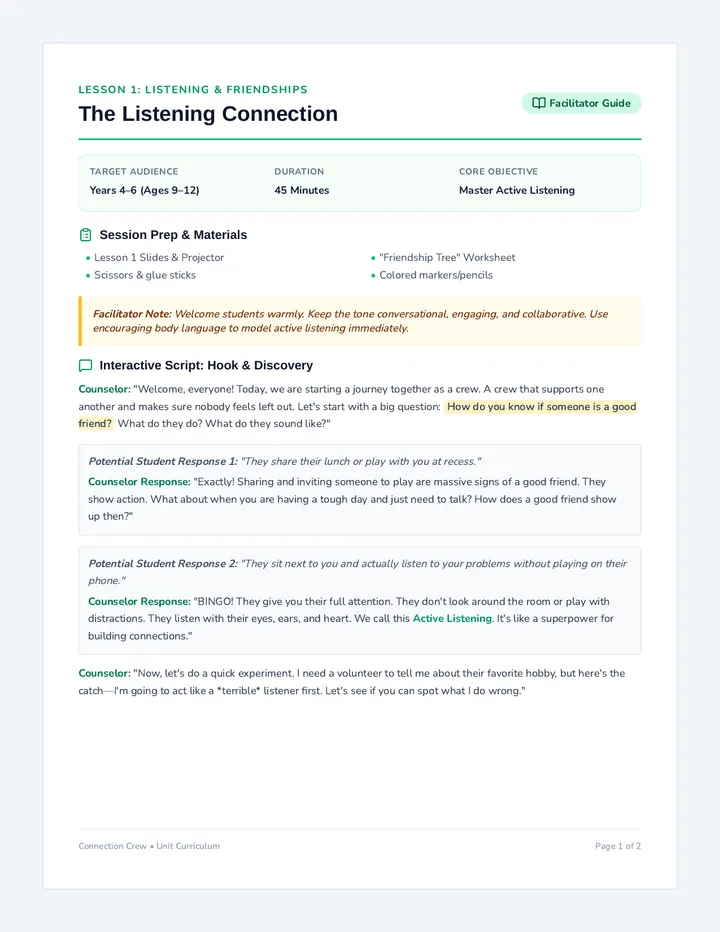
A comprehensive, three-lesson unit designed for Years 4-6 students to build healthy peer connections. The sequence covers active listening, respectful disagreement using the 'Stop - Think - Talk' framework, and building trust through kindness and sincerity.
A superhero-themed emotional wellbeing check-in system for primary classrooms. Students rate their emotional state as an inner 'battery charge' and use superhero-themed tokens to check in daily, supported by reflection worksheets and a teacher facilitation guide.
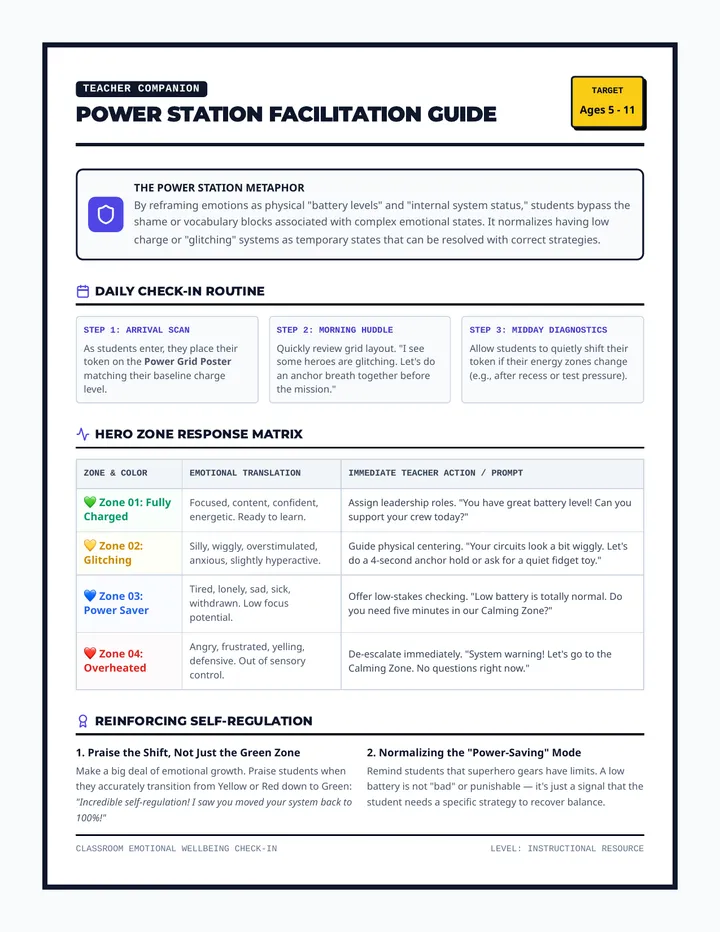
A comprehensive 1-page teacher facilitation guide outlining classroom deployment, daily routines, check-in prompts, and action steps for helping students manage their different emotional battery levels.
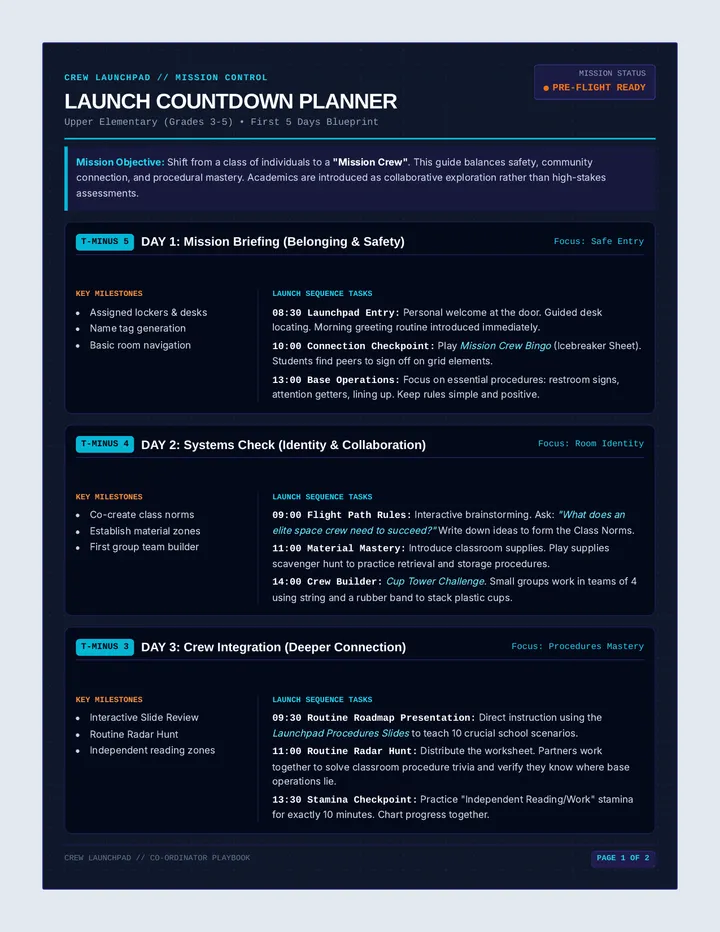
A comprehensive back-to-school launch kit for Upper Elementary (grades 3-5). It includes a detailed five-day lesson planner, engaging community-building activities, and an interactive slide-deck and scavenger hunt to master classroom routines.
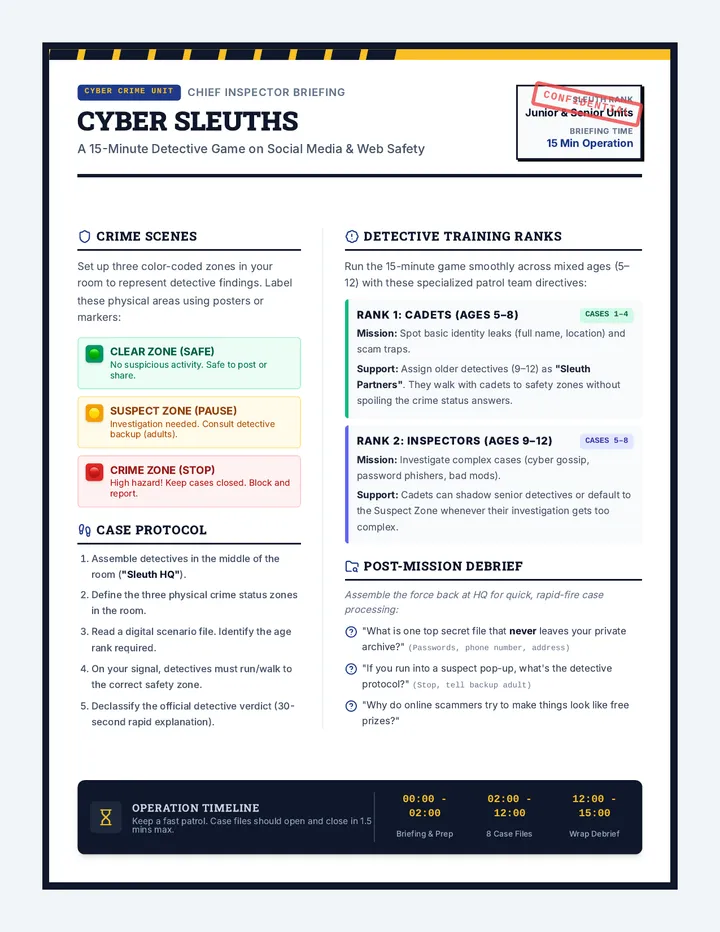
A high-energy, 15-minute movement game designed to teach kids ages 5-12 how to make smart, safe decisions online. Through rapid-fire scenario cards, students act as Cyber Sleuths to solve digital cases and investigate cyber threats.
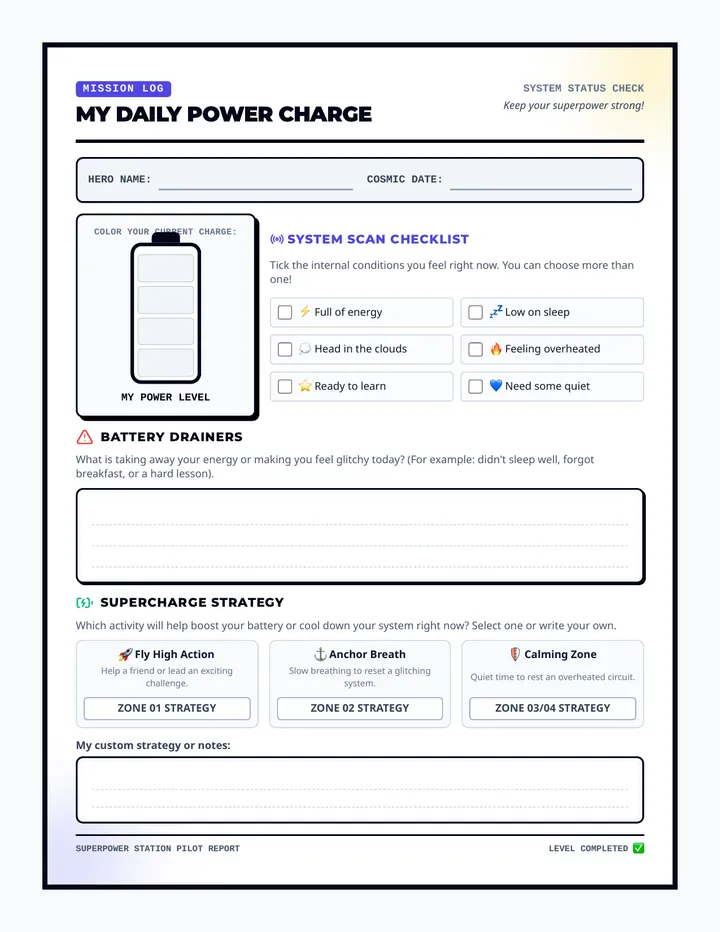
A 1-page daily or weekly student reflection worksheet where students analyze their inner battery levels, pinpoint charge-drainers, and plan recharge strategies.
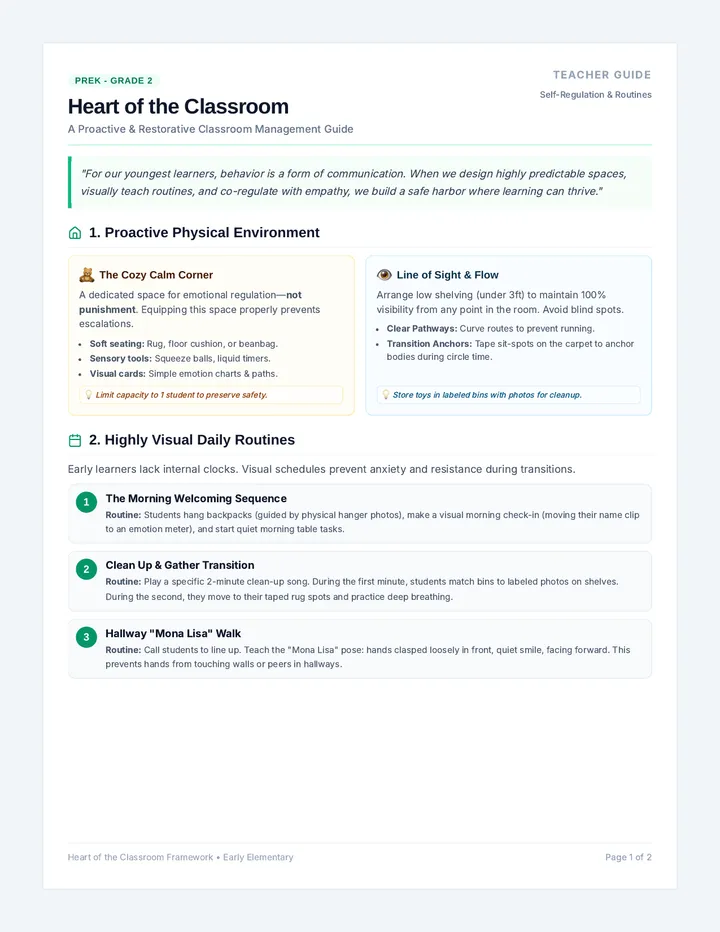
A comprehensive sequence of classroom management frameworks spanning PreK through Grade 8, detailing visual self-regulation routines for early elementary, peer-led cooperative monitoring for upper elementary, and restorative agency frameworks for middle school.
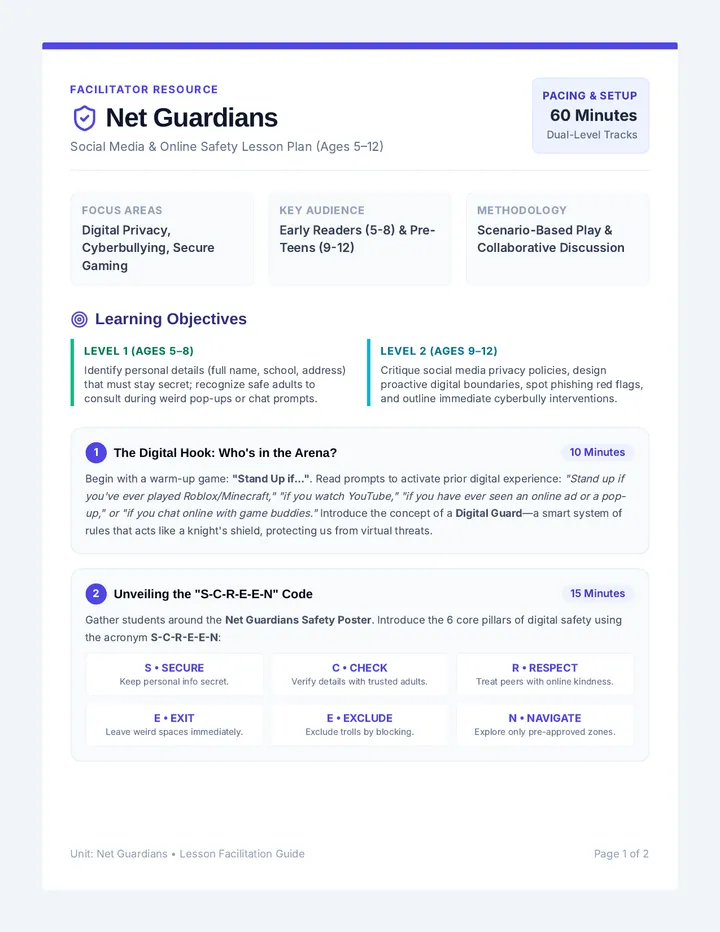
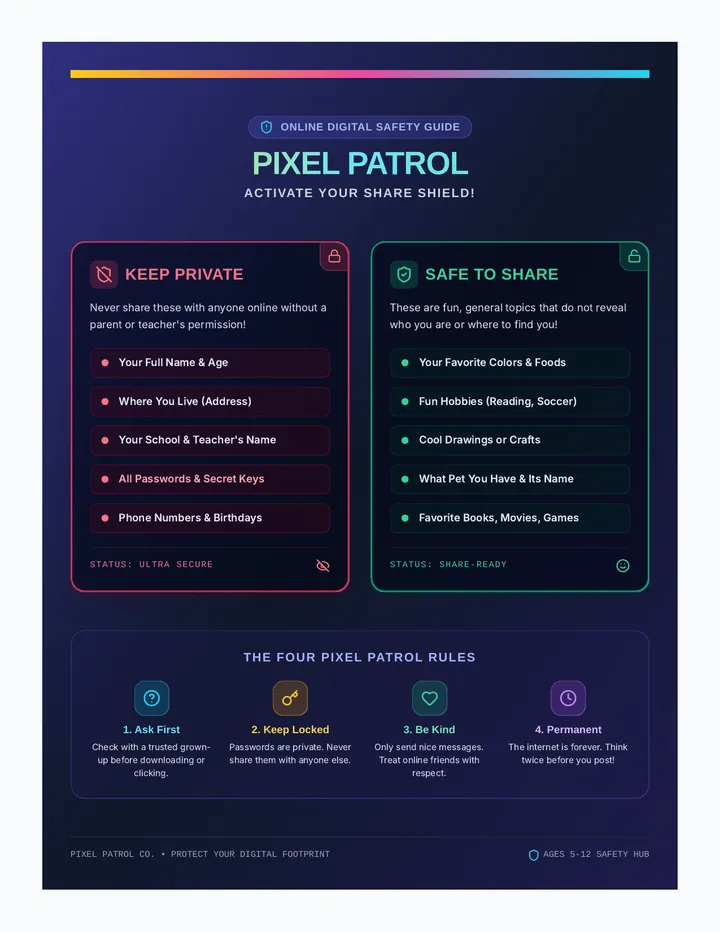
An interactive, dual-level digital safety lesson designed for youth ages 5-12, covering key concepts of digital privacy, cyberbullying, and safe gaming through collaborative activities and differentiated scenario cards.
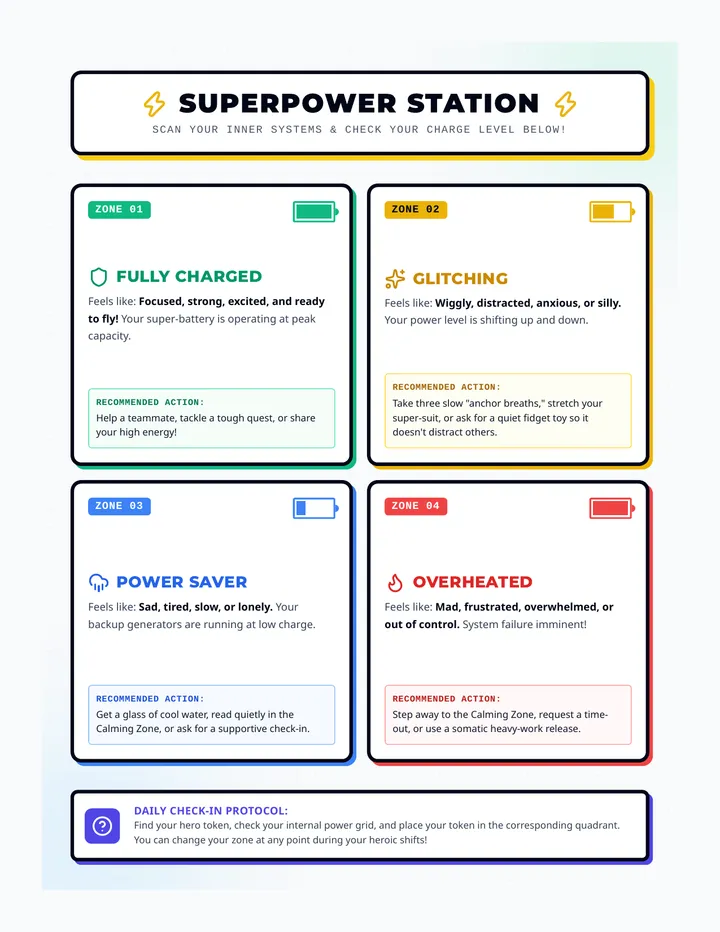
An interactive 2-page printout featuring a high-energy retro-comic 'Power Grid' bulletin board poster with four distinct emotional battery charge zones, plus a sheet of customizable superhero name tokens for classroom check-ins.
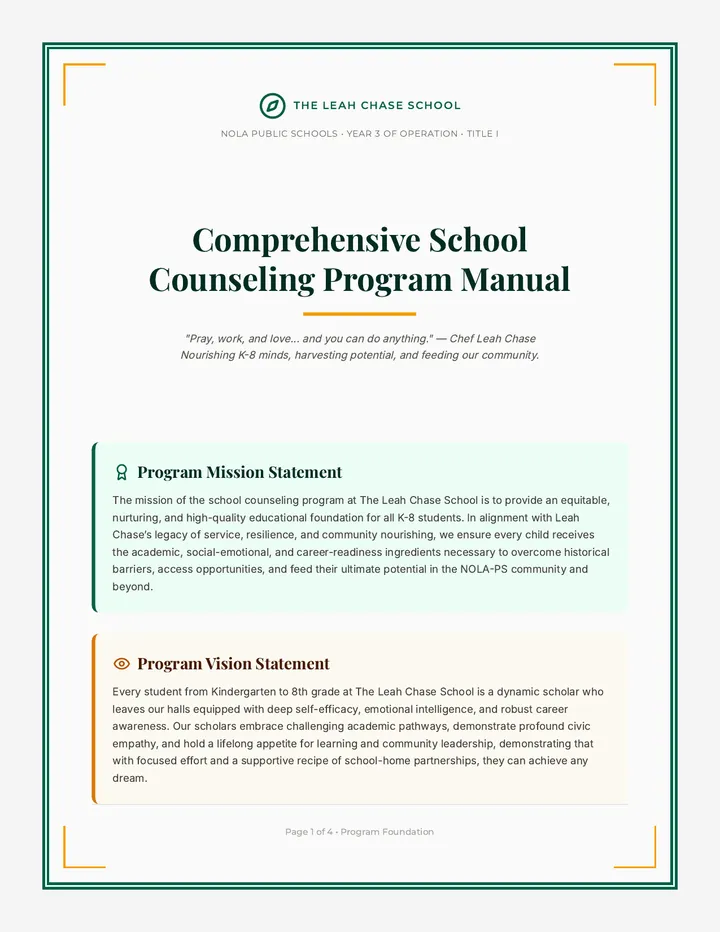
A comprehensive ASCA-aligned school counseling program framework designed for The Leah Chase School. Tailored for a single K-8 counselor in a Title I, NOLA-PS district-run school in its third year of operation, covering program management, MTSS, SEL, and career exploration.
An interactive, gamified lesson on social media and digital safety designed for youth aged 5-12. Features differentiated pathways for early readers and pre-teens to learn about privacy, sharing limits, and online community respect.
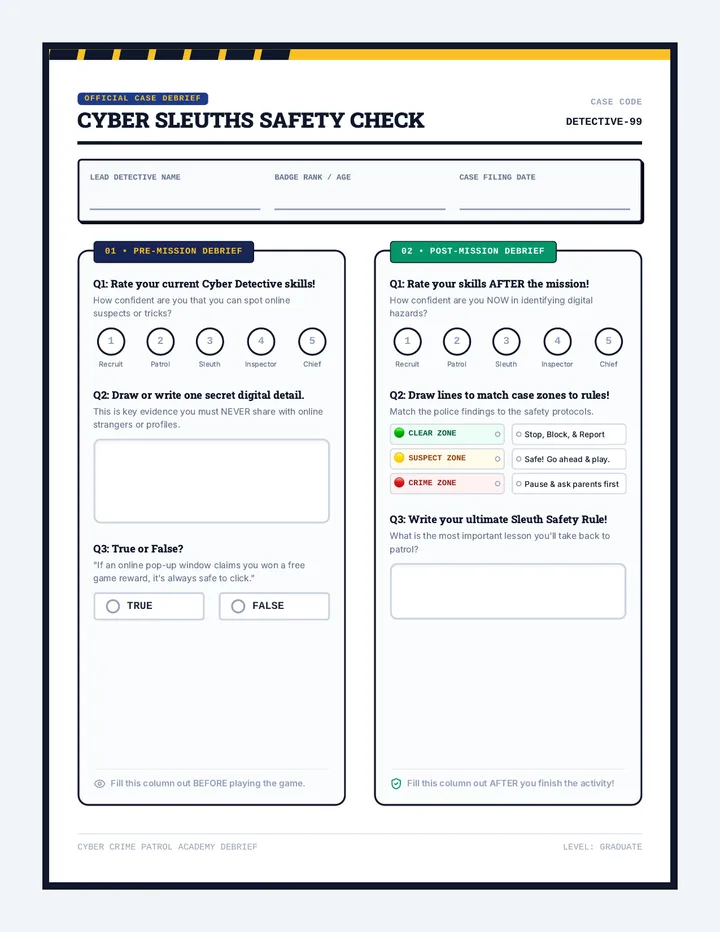
A 1-page student pre- and post-activity assessment sheet. It features visual self-ratings, a matching game for safety zones, and creative writing/drawing prompts suitable for mixed ages (5-12).