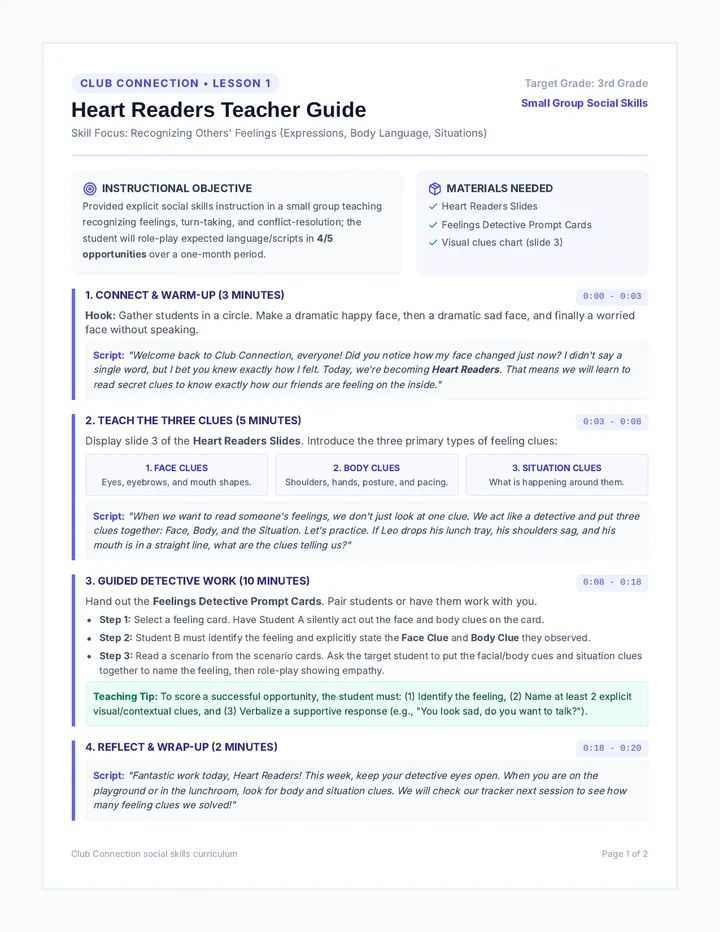
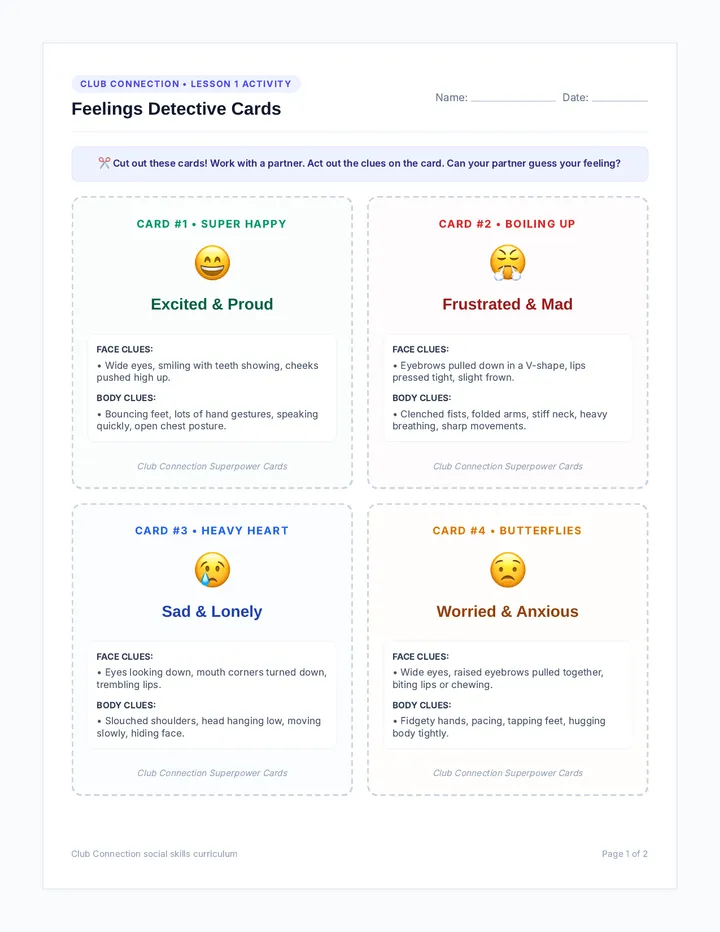
A fun, interactive lesson where students use facial expressions and body language to express and identify emotions, building their emotional vocabulary and social-emotional awareness.
A comprehensive social skills curriculum sequence designed for small groups (specifically 3rd graders) to master recognizing feelings, conversational turn-taking, and conflict resolution over three structured lessons, including visual prompts, role-play scripts, and teacher guides with tracking tools.
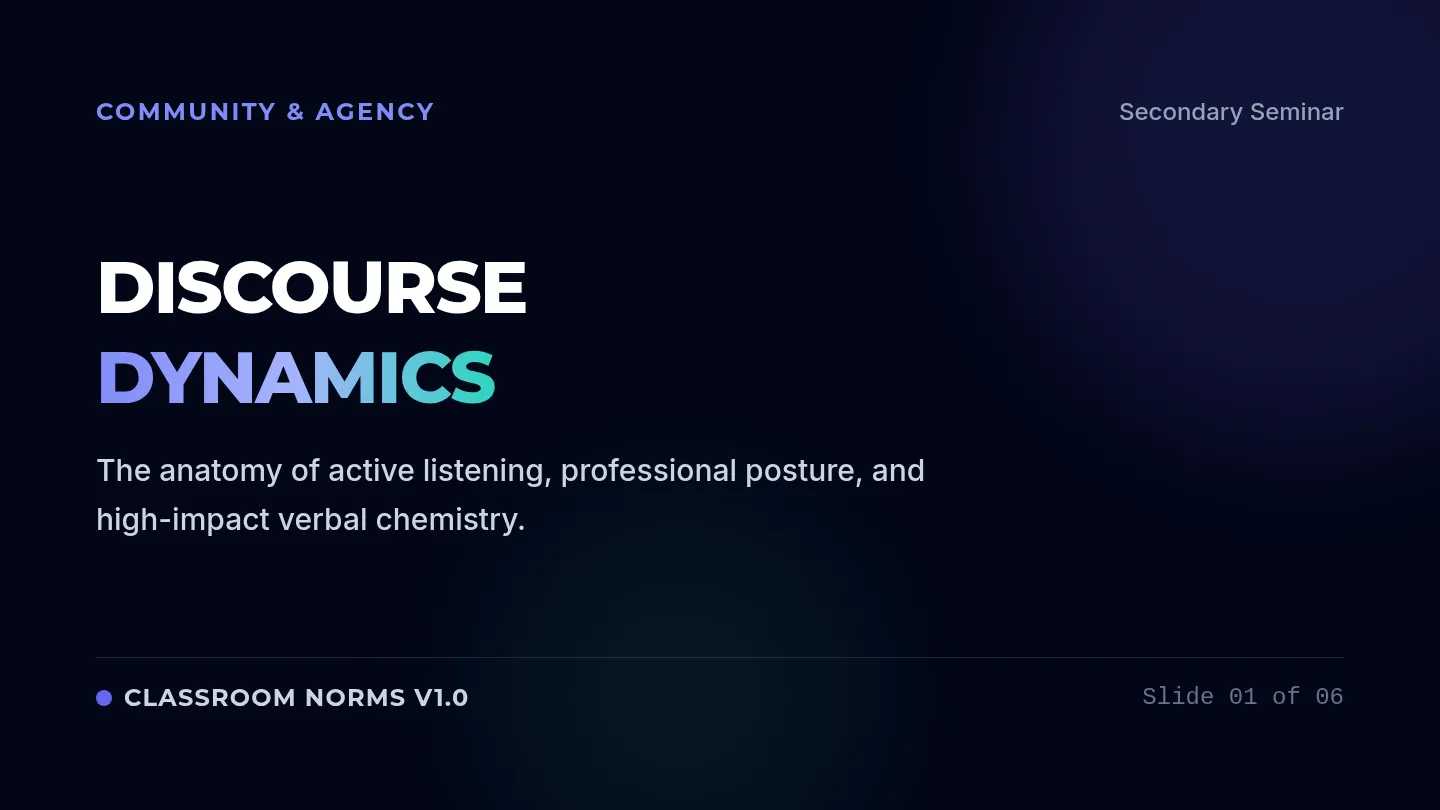
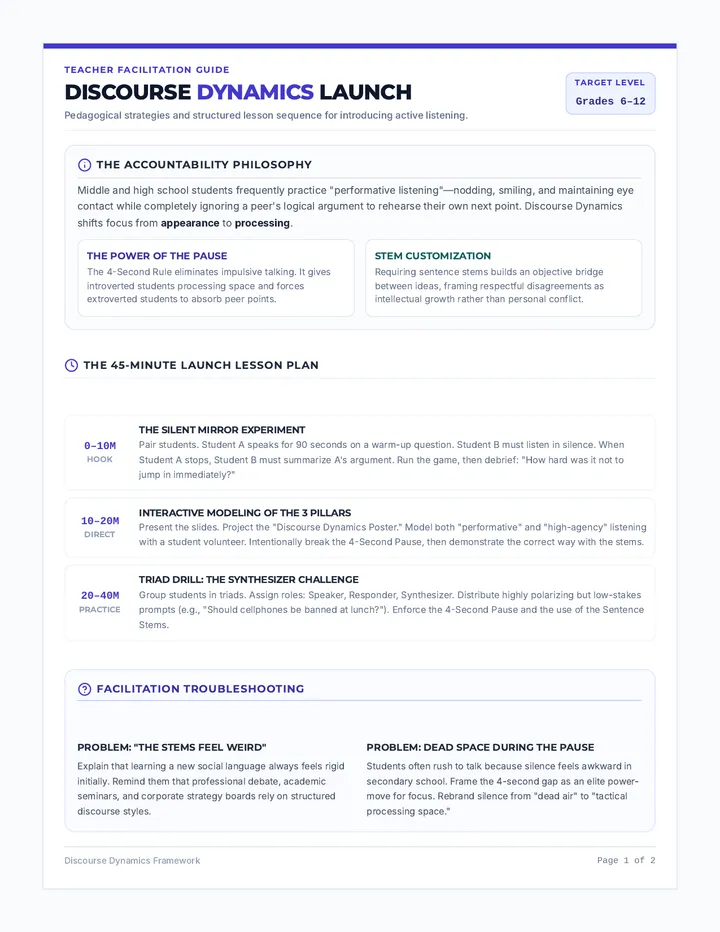
A modern, high-accountability framework for active listening and structured peer discussion in middle and high school classrooms. Includes an anchor chart, introductory slides, and a teacher facilitation guide.
A comprehensive, 2-page professional facilitator guide detailing how to launch the Discourse Dynamics framework, run active listening drills, and assess student discussion accountability.
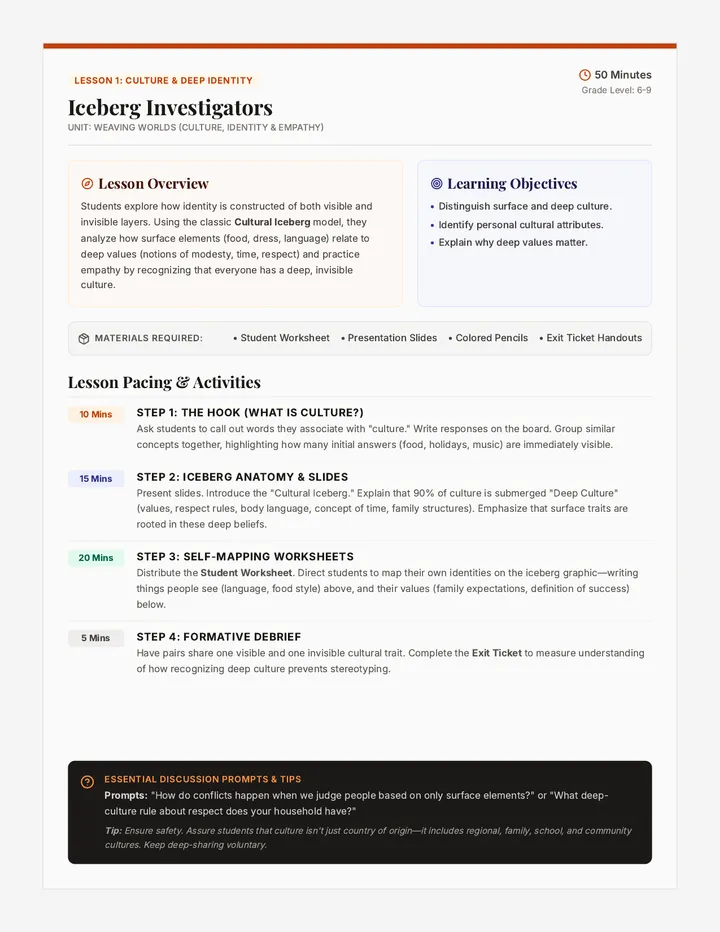
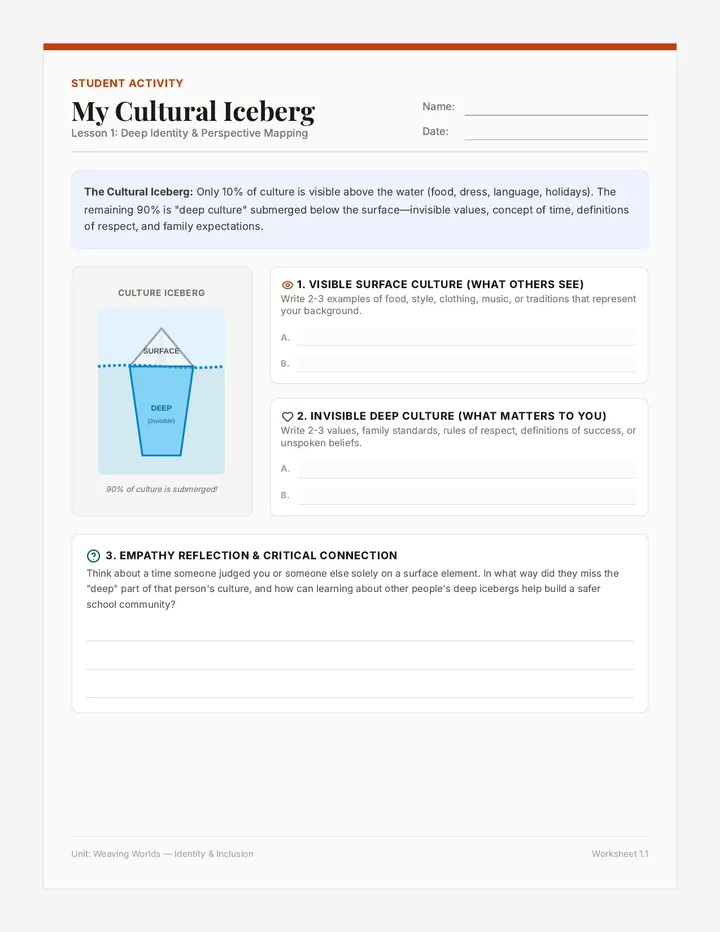
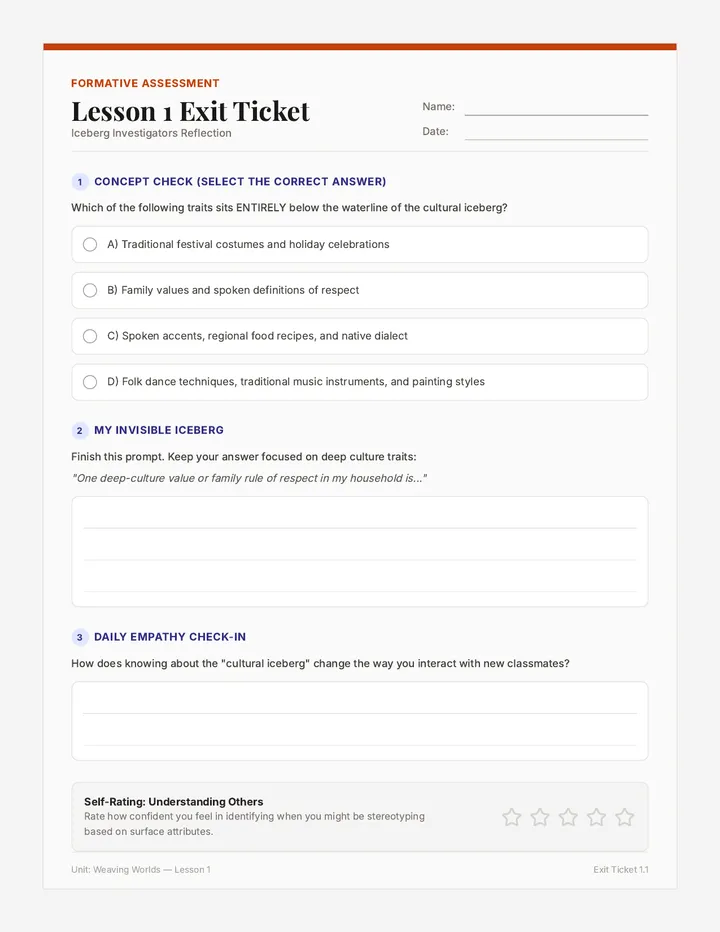
A 3-lesson unit on culture, identity, empathy, and building an inclusive school community. Students explore the cultural iceberg, share personal perspective narratives, and collaborate on actionable school-wide inclusion plans.
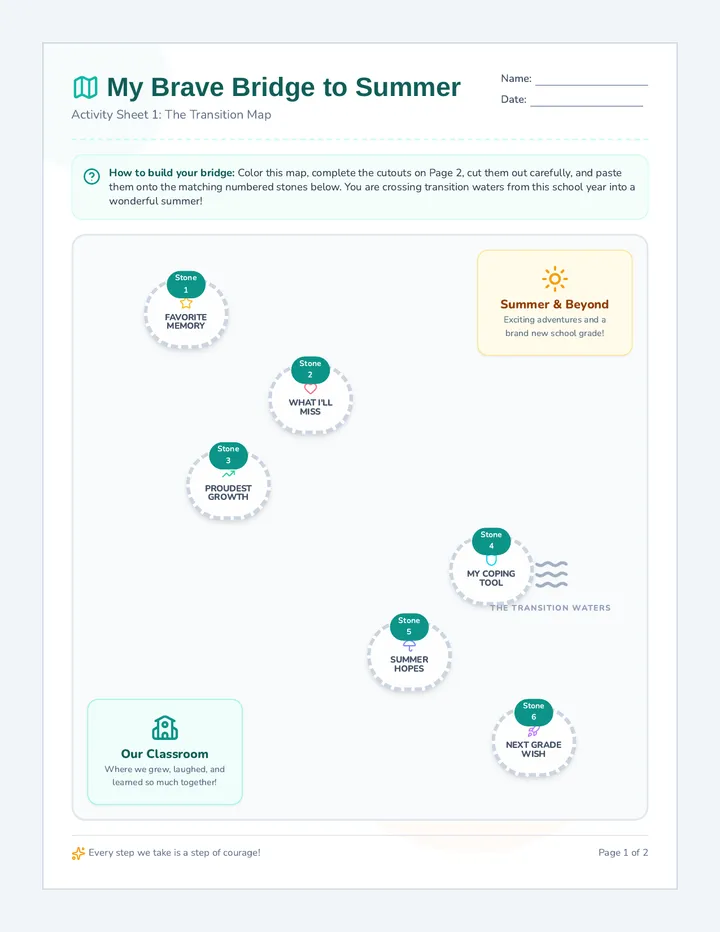
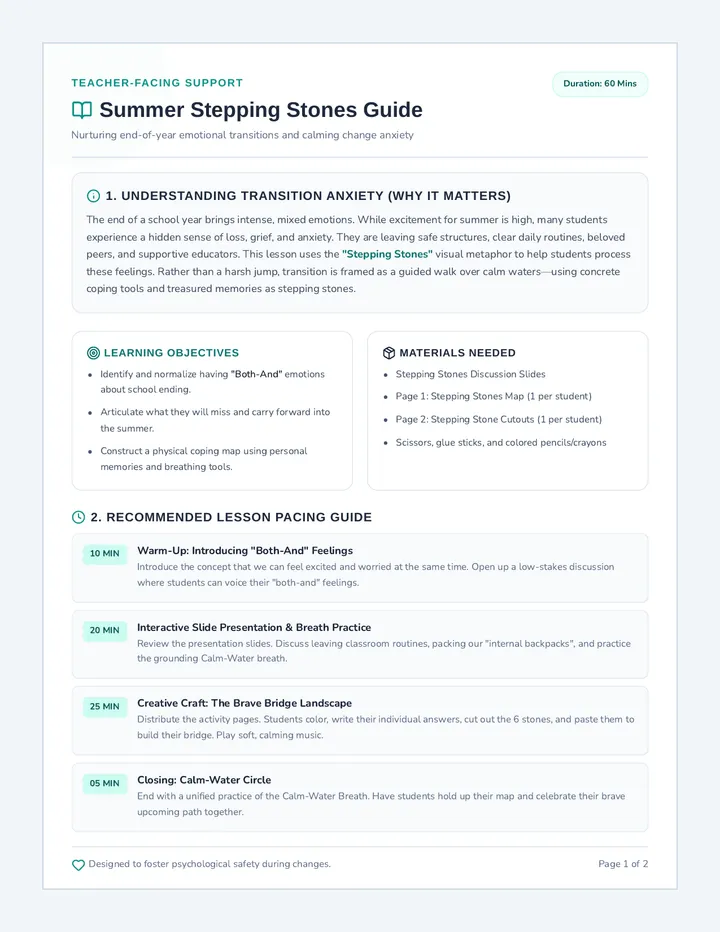
A supportive, social-emotional learning lesson designed to help students navigate end-of-the-year transition anxiety. Through a supportive slide-guided discussion and a hands-on "Stepping Stones" cut, paste, and color craft, students celebrate their growth, process what they will miss, and build coping strategies for entering summer and the next grade.
An engaging, modern 6-slide presentation deck to introduce active listening pillars, sentence stems, and the 4-second rule to middle and high school students.
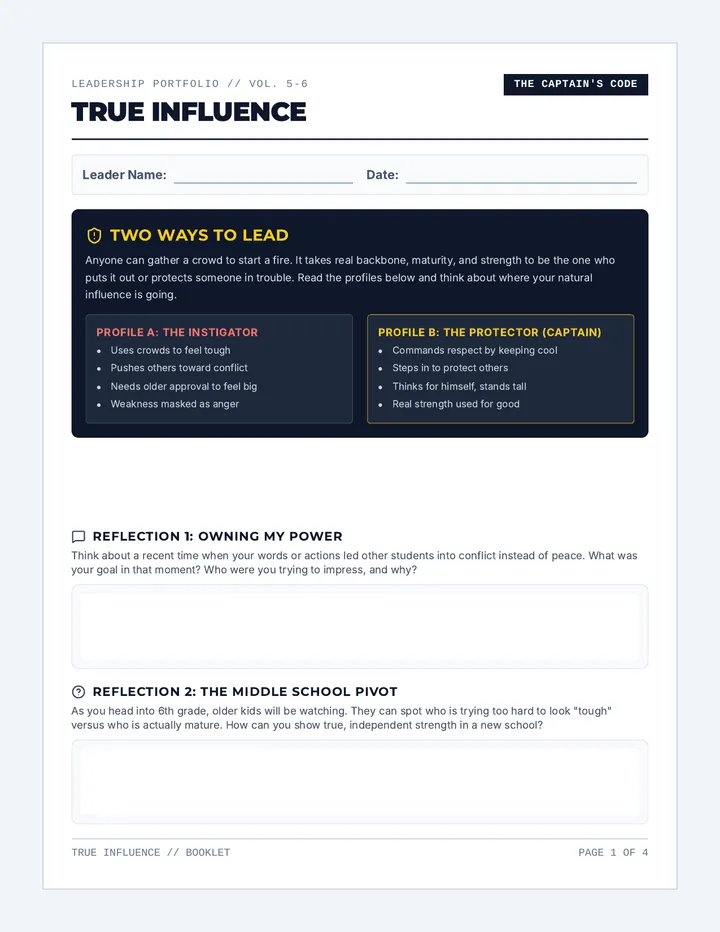
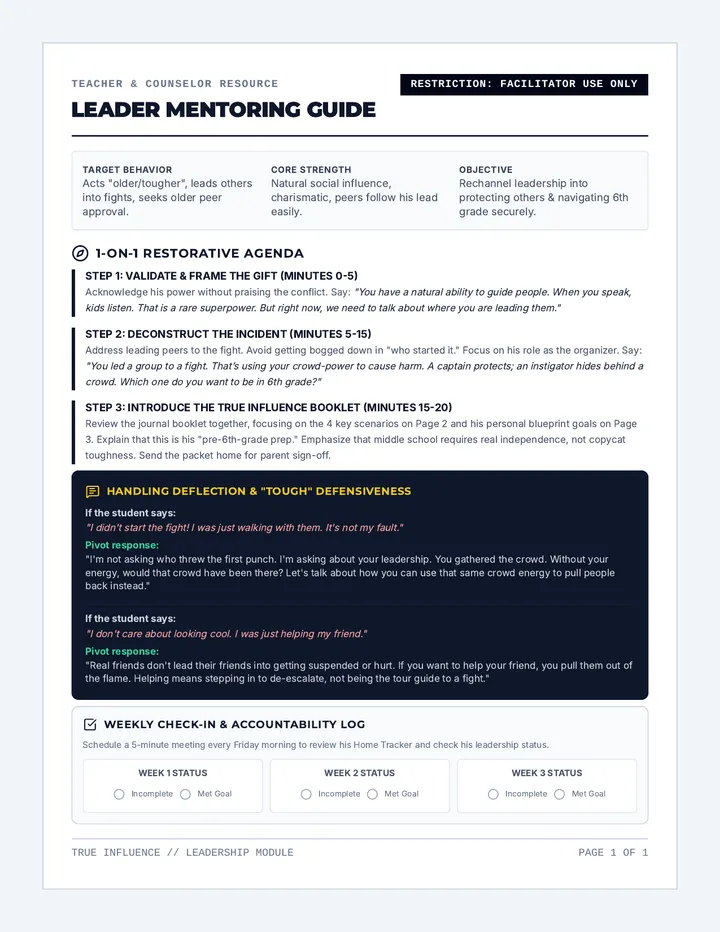
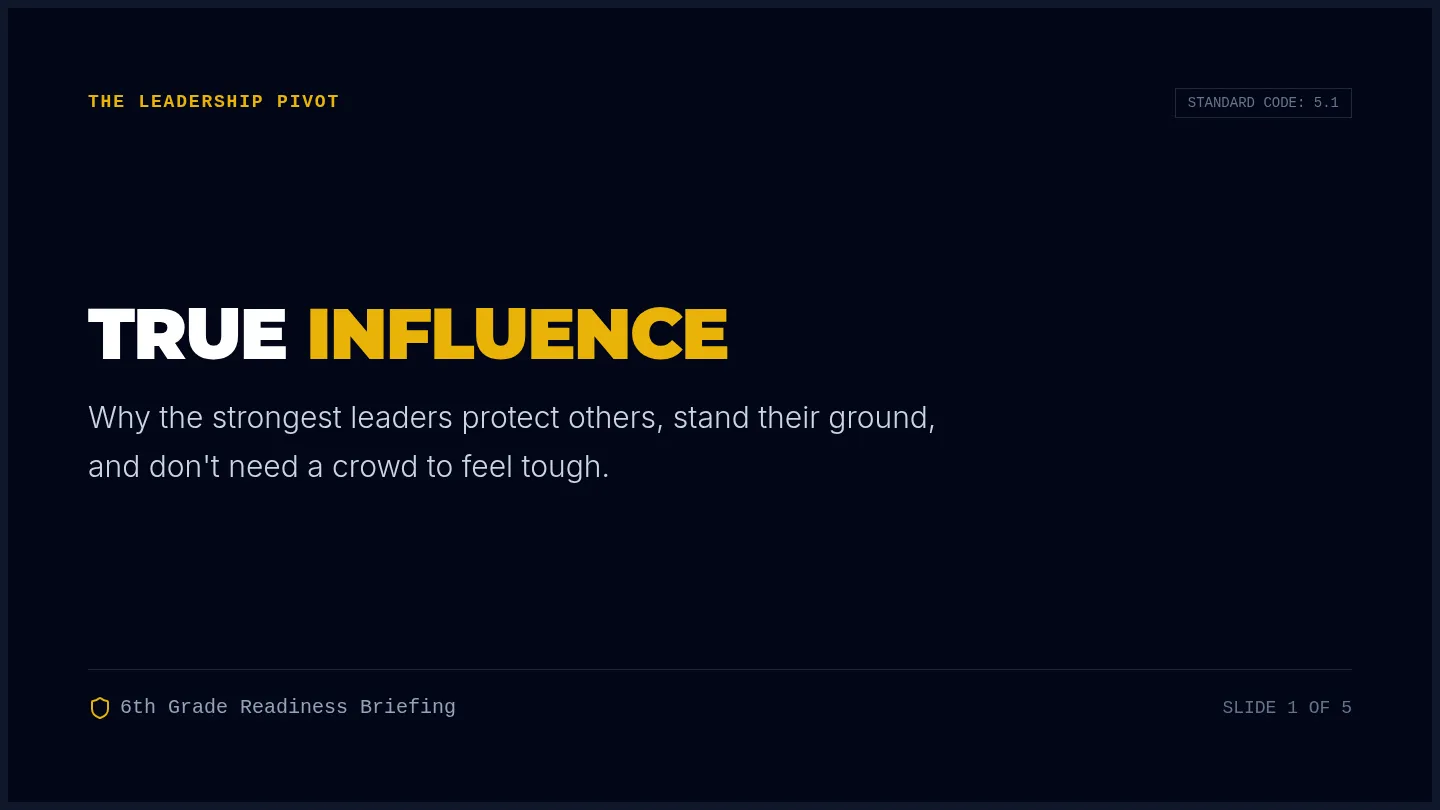
A comprehensive restorative leadership and peer advocacy sequence designed for students transitioning to middle school. It guides students from understanding their social influence to actively protecting peers and spreading positive school culture.
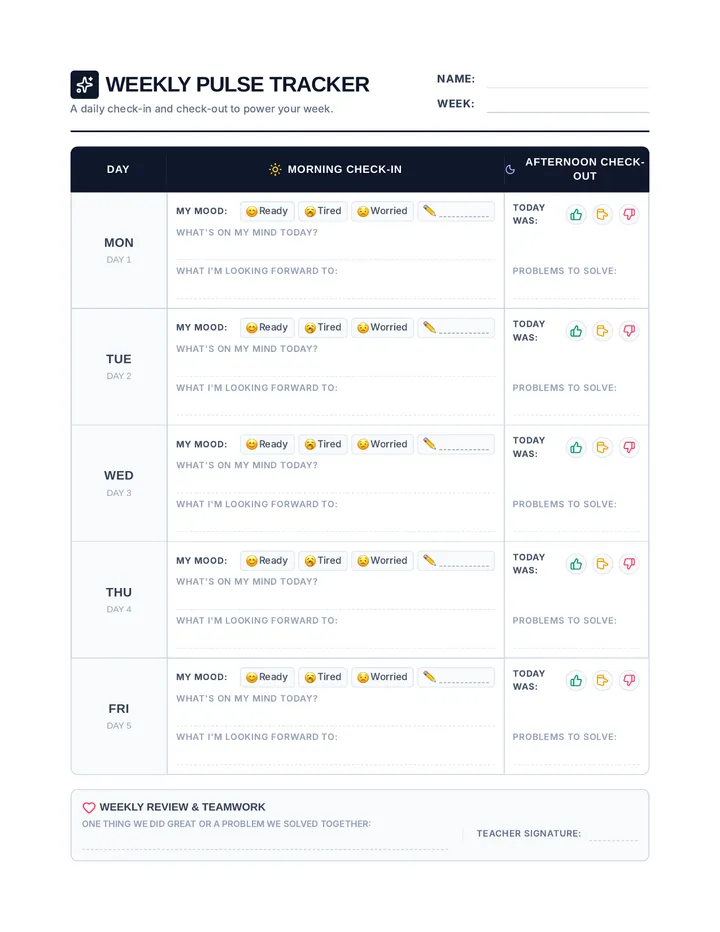
A daily reflection routine for elementary students to check in on their emotional state, anticipate challenges, and review their day with their teacher or peers.
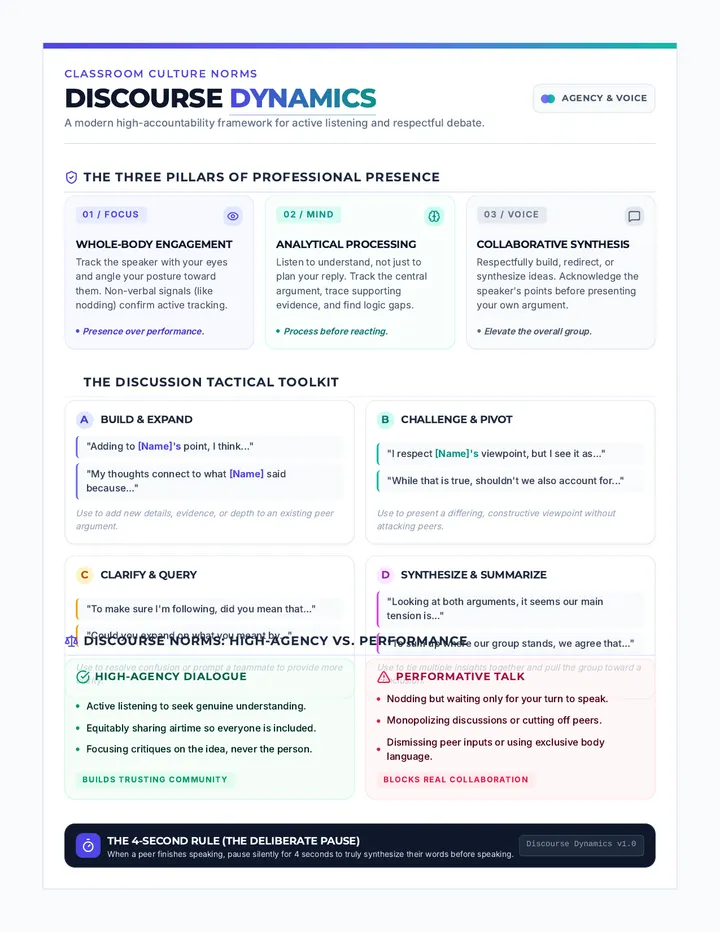
A professional, modern 8.5x11 printable anchor chart outlining active listening, whole-body presence, civil dialogue norms, and tactical sentence stems for high-school and middle-school classroom discussion.
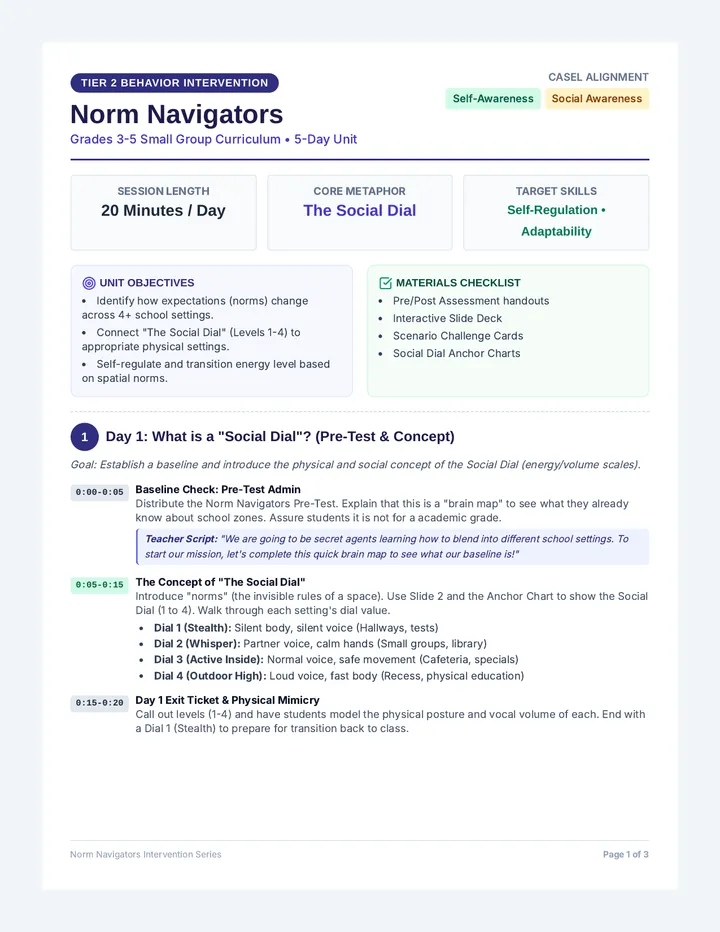
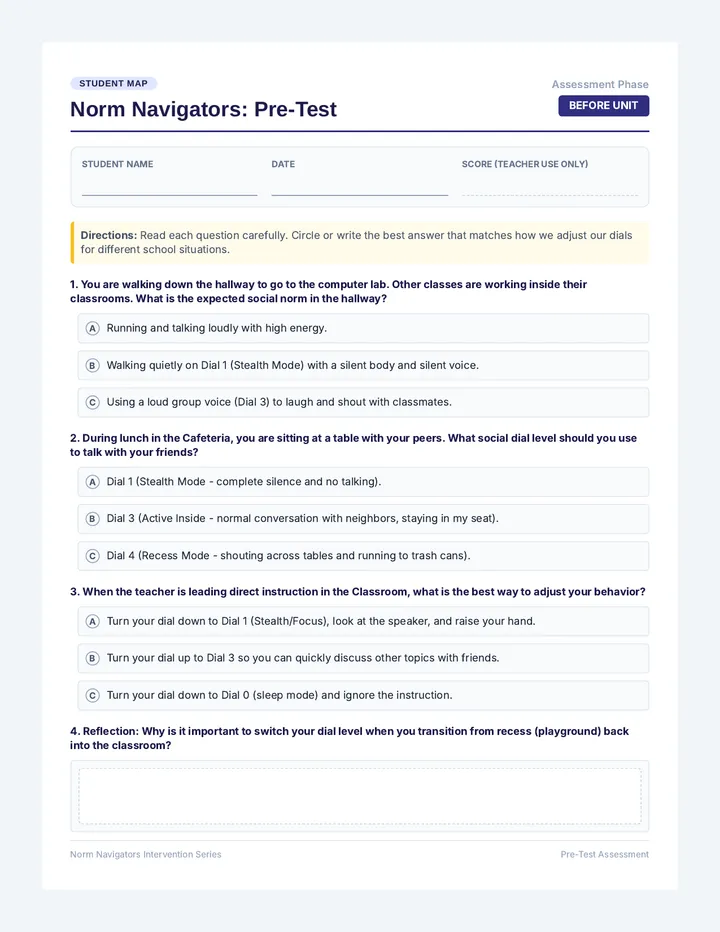
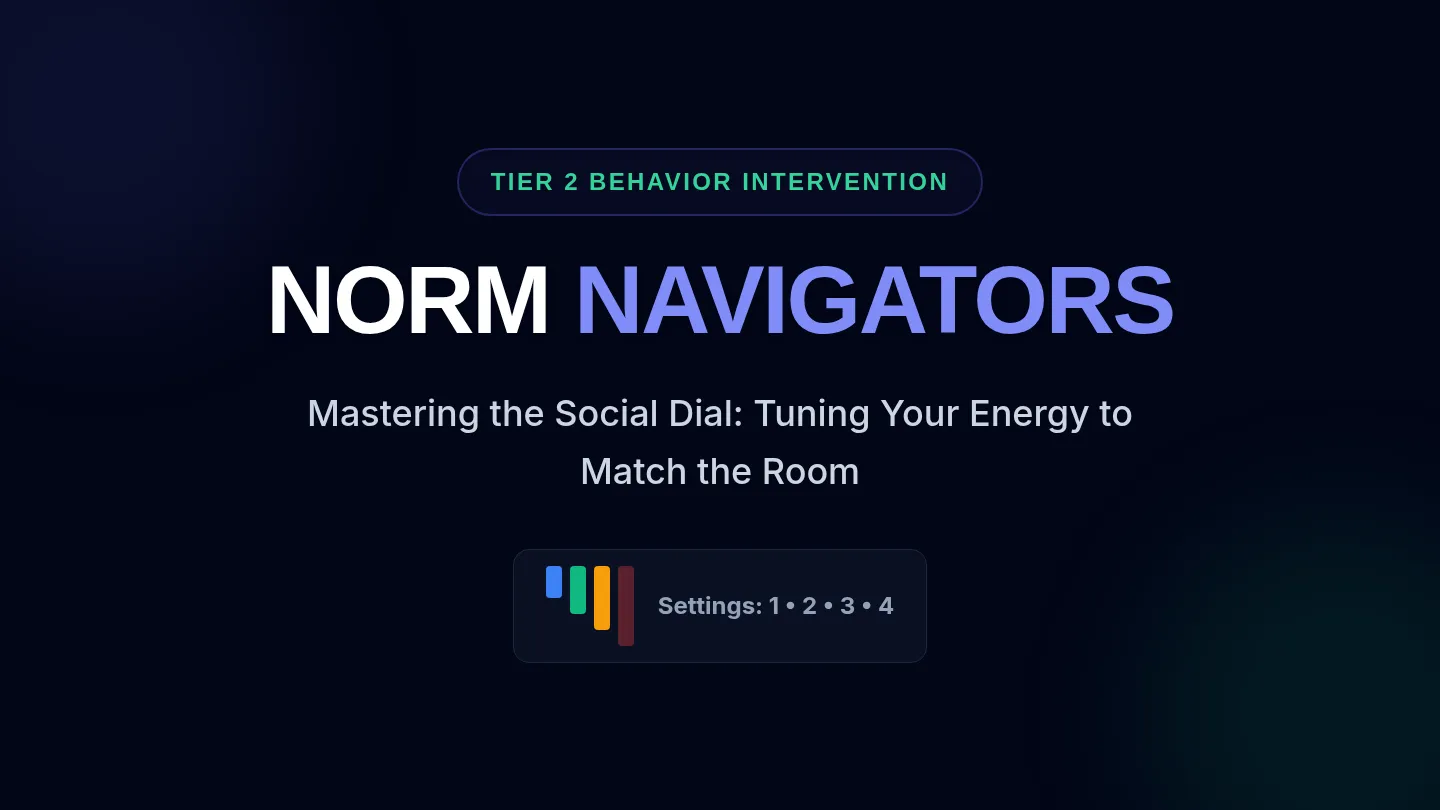
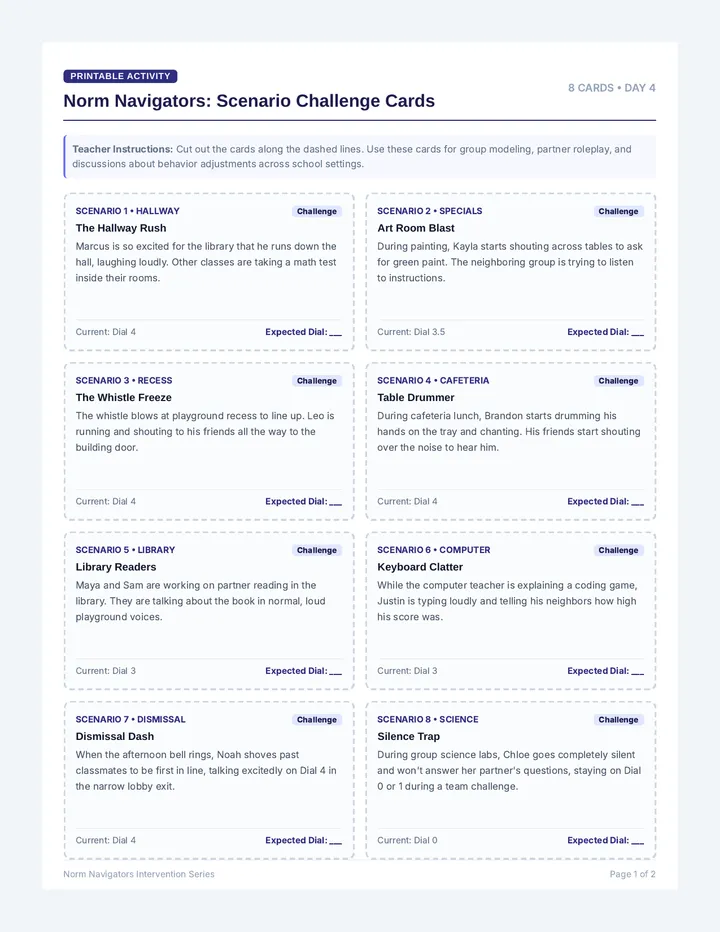
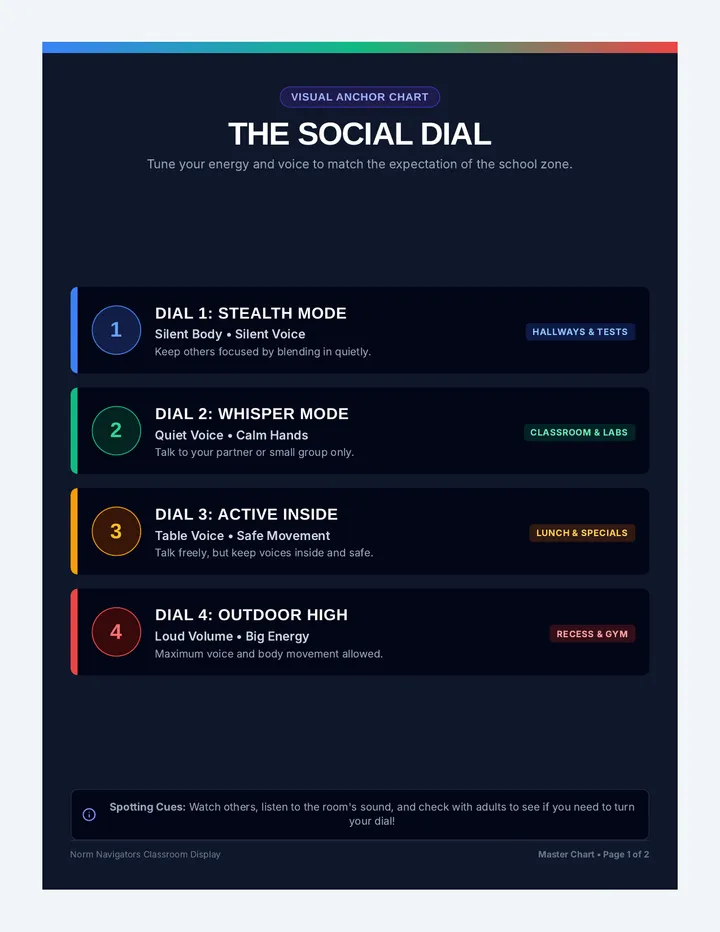
A 5-day Tier 2 behavior intervention sequence for grades 3-5 focused on recognizing and adapting to social norms across different school settings. Aligned with CASEL Self-Awareness and Social Awareness competencies, the sequence uses the concept of the 'Social Dial' to help students regulate their energy and volume.
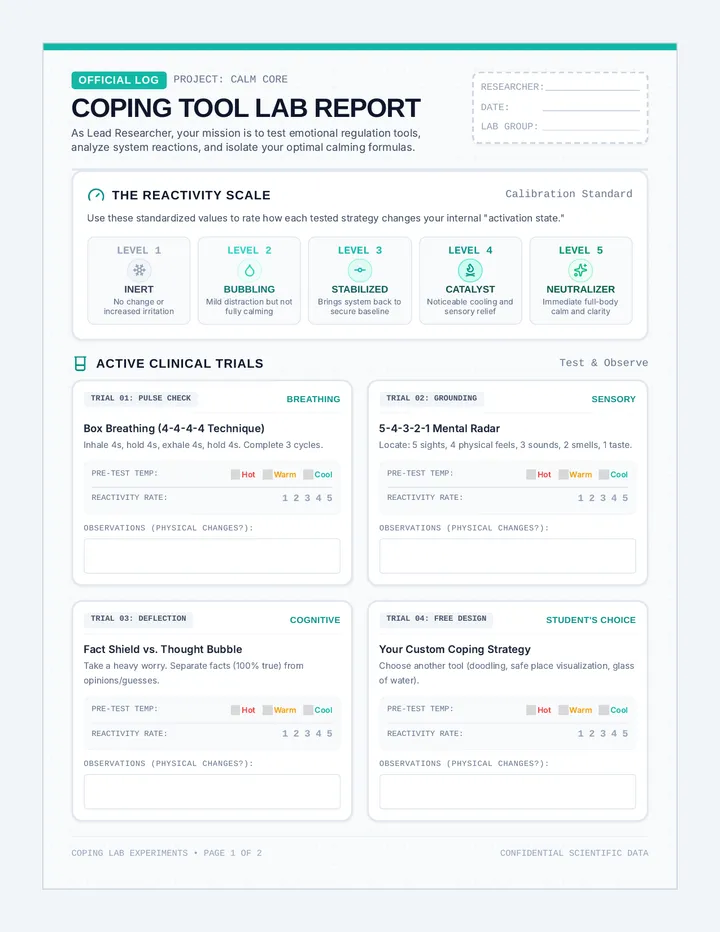
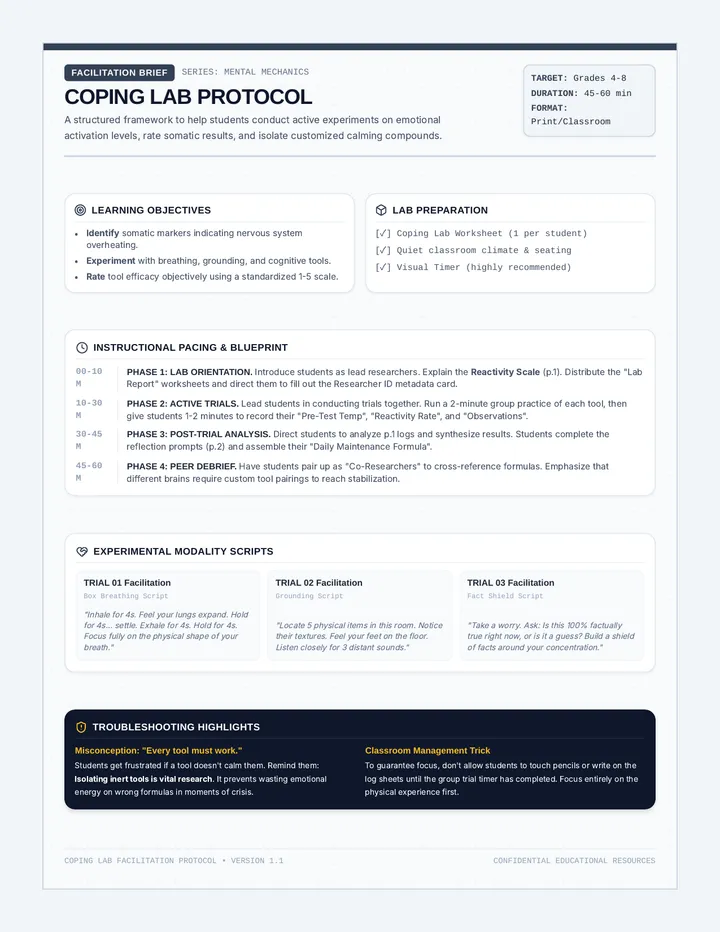
An engaging, science-themed counseling lesson where students become 'researchers' to test, rate, and formulate their own personalized mental health coping tools. Students track their emotional 'reactions' and compile a custom recipe for self-care and emotional regulation.
A comprehensive teacher guide featuring step-by-step lesson pacing, slide-by-slide scripts, transition anxiety background knowledge, and actionable strategies to help students navigate end-of-the-year mixed feelings.