Daily Safety Builders Worksheet Parent-Child Connection Tool
Daily Safety Builders
Creating predictability, connection, and emotional security for your four-year-old.
Age 4
Child's Name:
Date:
Why Age 4 is Different: At four, children are expanding their verbal skills and active imaginations. However, developmental trauma can make the world feel unpredictable. Safety is built when routines are tangible, interactive, and co-created. Use this worksheet to establish clear, fun daily anchoring habits.
Four Daily Anchors for a Safe Day
1. The Morning Spark
Start the day with the exact same greeting. Try a secret 3-step handshake , a morning butterfly hug, or saying: "My eyes love looking at you."
2. Weather Report
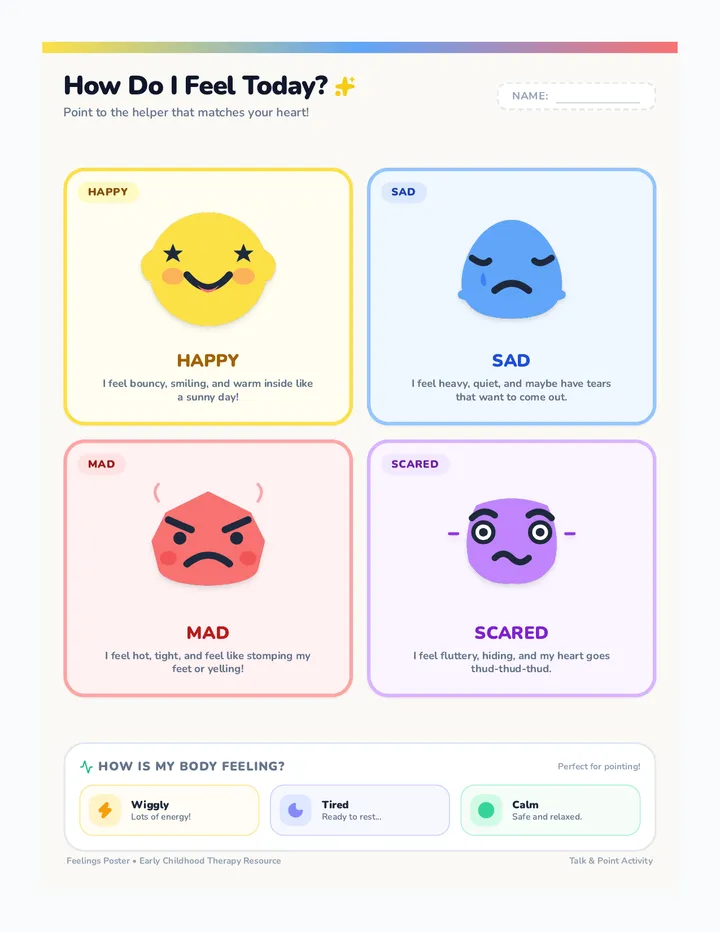
Check in on feelings. Ask: "Is your inside weather sunny, windy, rainy, or storming right now?" Reassure them that all weather is welcome here.
3. High-Low Check-In
During dinner or snack, review the day. This helps their growing brain make sense of experiences, turning a chaotic day into a coherent, organized story.
4. Safe Landing Bedtime
Before sleep, use a steady sequence. Light dimming, same song, and a safety statement: "You are safe in your bed. I am right down the hall."
Co-Creative Safety Planner
Sit down together during a calm moment. Talk about these two builders and use the empty spaces below to draw, doodle, or write down your plan.
Our Cozy Corner Map
Where can your child go when their alarm fires? (A soft rug, pillows, stuffed animals, books).
[Draw cozy items together here]
Our Secret Handshake
Rhythmic play builds neural safety. Create three fun steps (e.g., high-five, fist bump, peace sign, wiggle).
[Illustrate or write your moves here]
A Caregiver's Daily Intention
"When my child is overwhelmed, they are not trying to be difficult—they are reaching out with survival behavior. My primary job is not to punish the behavior immediately, but to establish somatic safety first. Connection always precedes correction."
HEALING EARLY HEARTS • Psychoeducation Packet Daily Safety Builders (Age 4)
Calm Connections Guide Parent Psychoeducation Series
Calm Connections
Understanding Early Childhood Trauma & the Developing Brain
Ages 0 - 3
A Message of Hope for Caregivers
When a baby or toddler experiences early stress, loss, or fright, their tiny body adapts to survive. They aren't trying to push your buttons—their biological alarm system is simply working overtime. By understanding their nervous system, you can build a bridge of safety back to their heart.
The Early Brain: A Low-Jargon Map
The Biological Alarm (The Amygdala)
Think of this as the body's smoke detector. In babies who have experienced trauma, this alarm is extremely sensitive. It fires at the slightest hint of danger—like a loud noise, a parent leaving the room, or even a sudden change in tone of voice.
The Connecting Brain (The Prefrontal Cortex)
This is the area responsible for calming down, learning, and deep emotional bonding. When a child's stress level is high, this "Connecting Brain" goes completely offline. You cannot teach or reason with a baby who is in alarm state; they must be physically calmed first.
Toxic Stress (The Stuck Switch)
When stress is severe or unpredictable, the stress hormones (like cortisol) keep flooding the body. The alarm's "off switch" breaks, leaving the child in a constant state of biological exhaustion, even when they look perfectly safe.
Reading the Silent Stress Signals
Babies and toddlers show trauma through their bodies, not words. Watch for these two very different stress responses:
On High Alert (Hyper)
Arched back or stiff, rigid muscles
Extreme startle response to mild sounds
Screaming or crying that cannot be consoled
Fierce resistance to sleeping or resting
Hypervigilant (darting eyes, scanning)
Checked Out (Hypo)
Blank, glazed, or "glassy-eyed" stare
Unusual compliance (passively "too good")
Limp or floppy muscle tone
Withdrawing from human eyes or touch
No crying, babbling, or seeking response
HEALING EARLY HEARTS • Psychoeducation Packet Page 1 of 2
Co-Regulation Toolkit
The Power of Co-Regulation
How your calm nervous system helps repair their alarm system.
Be the Thermostat, Not the Thermometer
An infant or toddler's nervous system cannot calm itself down. They have to "borrow" your calm nervous system to soothe theirs. If their stress is a fire, your biological calm is the water. If you match their fire with frustration, the alarm rages louder.
The "Four S's" of Attachment Repair
1
Safe
Protecting them from frights & surprises.
2
Seen
Tuning into physical cues & sensations.
3
Soothed
Helping them slow down & rest physically.
4
Secure
Building deep, predictable trust.
Daily Safety Builders (Ages 0 - 3)
Rhythmic Calming
The brainstem (survival brain) loves rhythm because it mimics the womb. Try slow, rhythmic patting on their back (matching a heartbeat pace), swaying in a rocking chair, or humming a low, steady pitch.
Hyper-Predictable Transitions
Surprises trigger the alarm brain. Prepare toddlers for transitions. Use simple visual cue cards or say the same transition phrases: "First diaper change, then story time." Keep daily routines exactly the same when stress is high.
Interactive Repair Play
For toddlers, cooperative games like "Peek-a-boo" (where a person leaves and ALWAYS comes back) safely rebuild cognitive trust. Gentle blow-the-bubbles play helps slow down their breathing organically.
The 4-Step Crisis Loop
When your baby melts down and your own chest feels tight, perform this silent mental checklist.
1. PAUSE (Stop moving)
2. EXHALE (Deep sigh)
3. LOWER (Get to eye level)
4. SOOTHE (Soft touch)
HEALING EARLY HEARTS • Psychoeducation Packet Page 2 of 2
Caregiver Calming Checklist Self-Care & Burnout Prevention
Caregiver Calming Checklist
Pouring into your own cup so you can co-regulate with your child
Self-Care
"You cannot pour from an empty cup." When your child is dysregulated, your body goes into alarm state too. Use this checklist daily to ground your own nervous system, allowing you to offer genuine safety.
1. Morning Grounding (Start Anchored)
The 3-Breath Awakening
Take 3 deep breaths before touching your phone. Inhale peace, exhale tension.
The Physical Touchstone
Hold a warm mug or wrap in a blanket. Focus on the physical sensation of warmth.
2. Emergency Calming (When the Alarm is Ringing)
When your child is screaming or hyperventilating, perform one of these quick micro-resets:
The Physiological Sigh
Take two quick, consecutive inhales through your nose, then one long, slow sigh out through your mouth. This immediately triggers the heart rate to slow down.
5-4-3-2-1 Sensory Reset
Quietly name 3 things you can physically feel (e.g., floor under feet, cotton of shirt, cold air) to anchor your awareness back into the present moment.
Compassionate Self-Talk Mantra
Whisper: "I am safe. My child is safe. This moment is hard, but it will pass, and we can handle it together."
3. Evening Release (Discharging the Day's Stress)
Physical Shake-Off
Spend 60 seconds gently shaking out your hands, arms, and legs to release accumulated stress hormones.
Acknowledge One Win
Name one moment today where you kept your cool or connected with your baby, even if everything else was tough.
My Personalized Calming Plan
Fill this out when you are calm to prepare for moments of high stress.
My personal warning signs (How my body feels when I start getting upset):
One touch, sound, or smell that instantly makes me feel safer & calmer:
My supportive ally (Someone I can text or call to remind me to breathe):
HEALING EARLY HEARTS • Caregiver Checklists Page 1 of 1