A lesson focused on evaluating source reliability through domain extensions. Students learn to distinguish between .com, .org, .gov, and .edu and investigate how a website's purpose impacts its credibility.
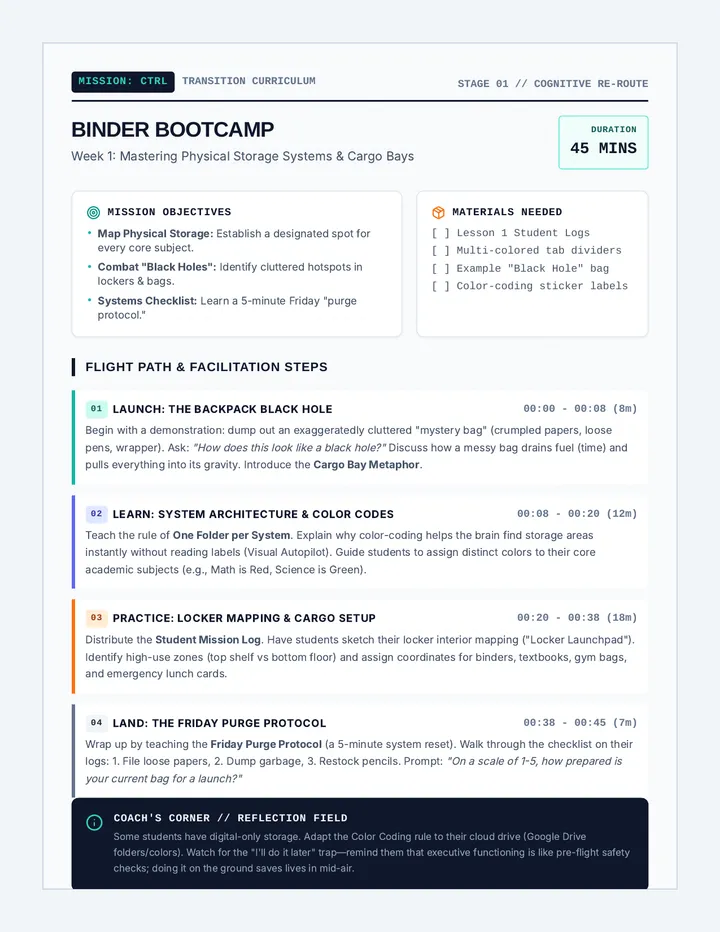
A 6-week small group curriculum designed to build executive functioning skills in transitioning 6th graders. Covers organization, time management, planning, distraction management, goal setting, and stress coping using a highly engaging space-mission theme.
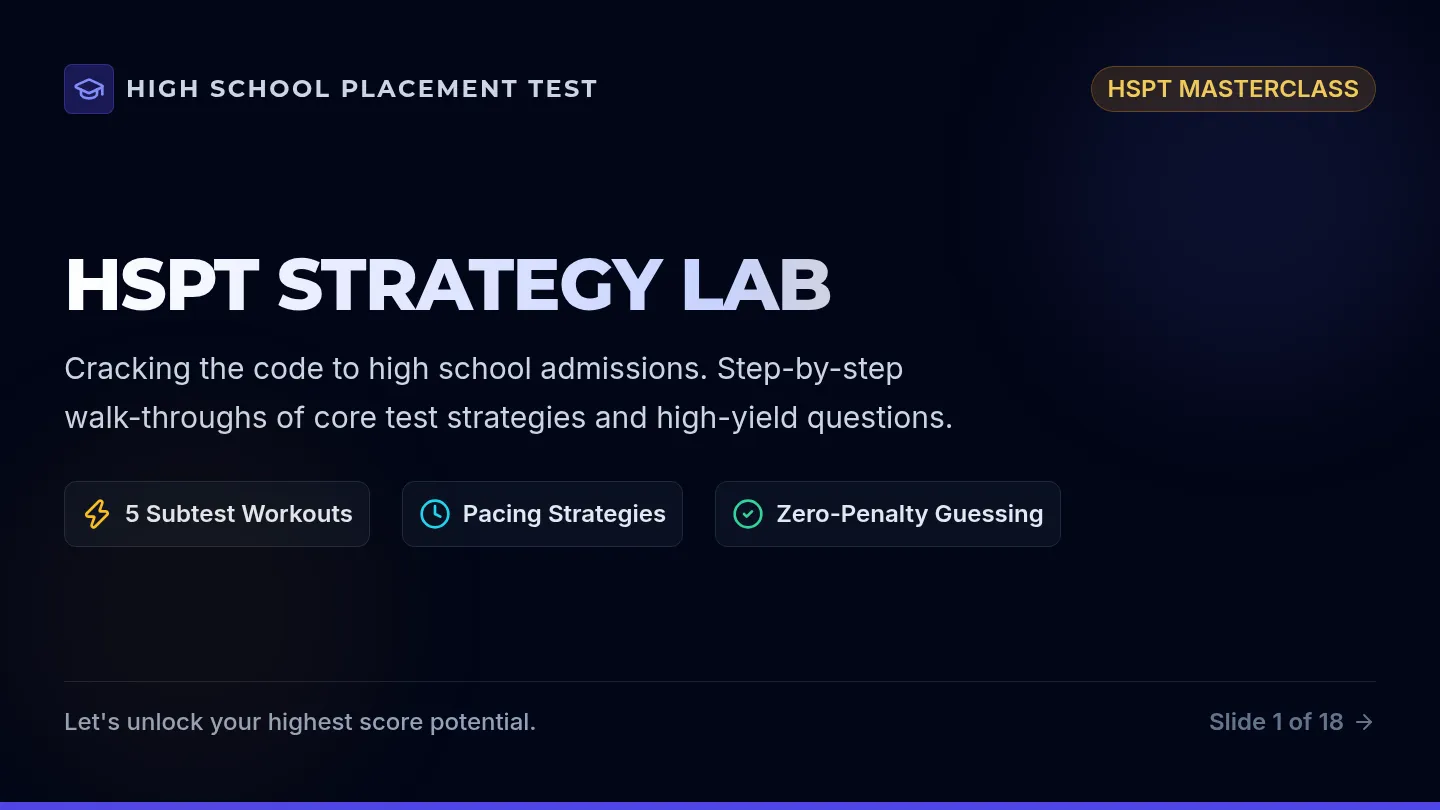
A comprehensive prep lab for the High School Placement Test (HSPT). Includes a high-impact, strategy-focused guided slideshow designed to walk students through each core subtest with practical practice challenges and breakdowns.
An interactive visual slide deck for the HSPT Strategy Lab. Walks students step-by-step through core test strategies, pacing guides, and sample questions across all five subtests with extensive breakdowns.
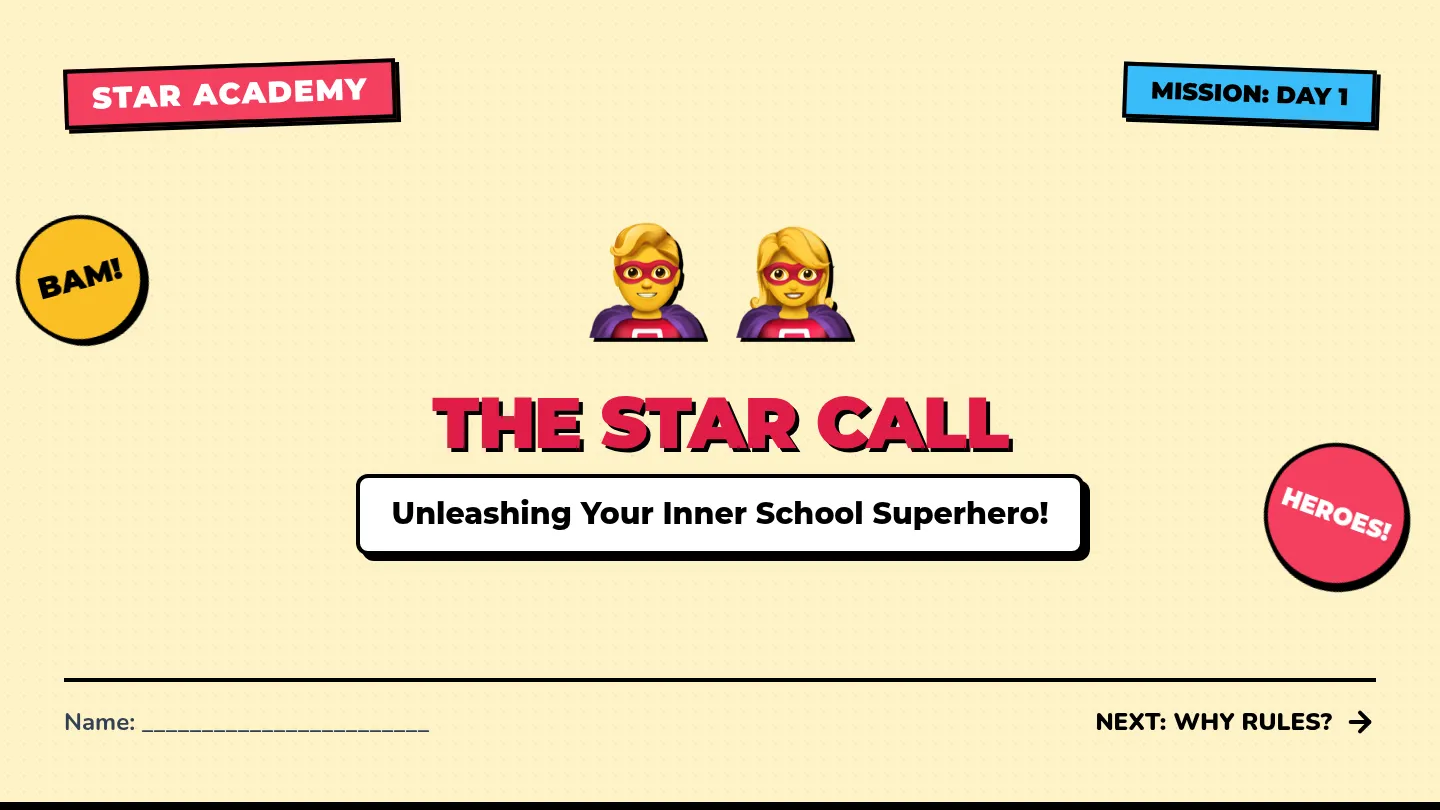
A 5-day curriculum teaching 4th graders the STAR expectations (Safe, Targeting Success, Acting with Integrity, Respect & Responsibility) across classrooms, hallways, bathrooms, playgrounds, and cafeterias using a high-energy comic-book superhero theme.
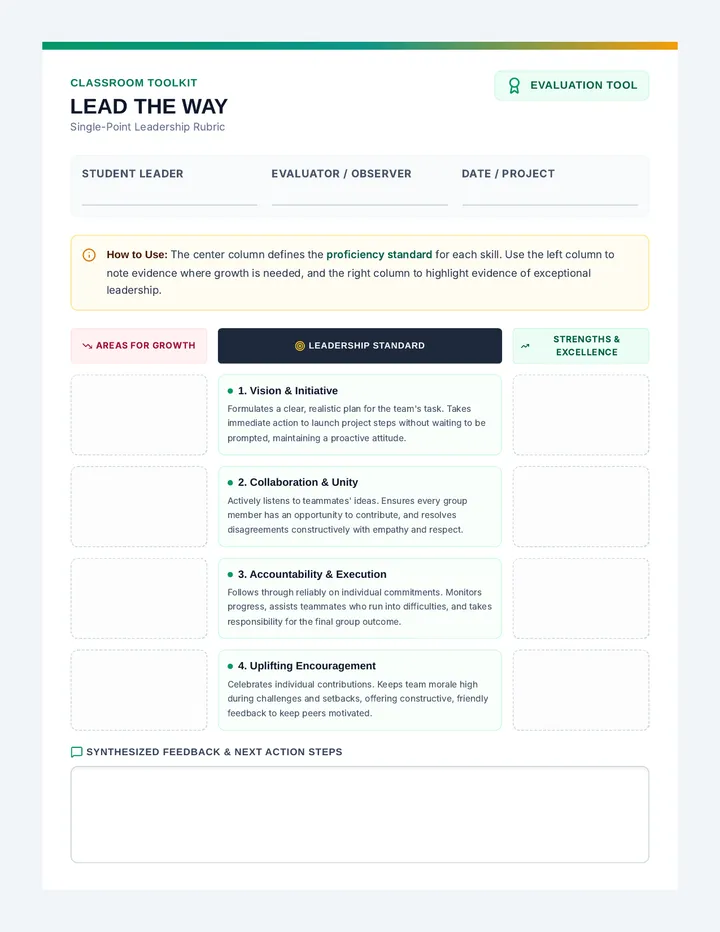
A classroom toolkit designed to cultivate, evaluate, and reflect on student leadership during group projects, extracurricular activities, and daily classroom routines. Features a professional single-point evaluation rubric and a student-centered self-assessment.
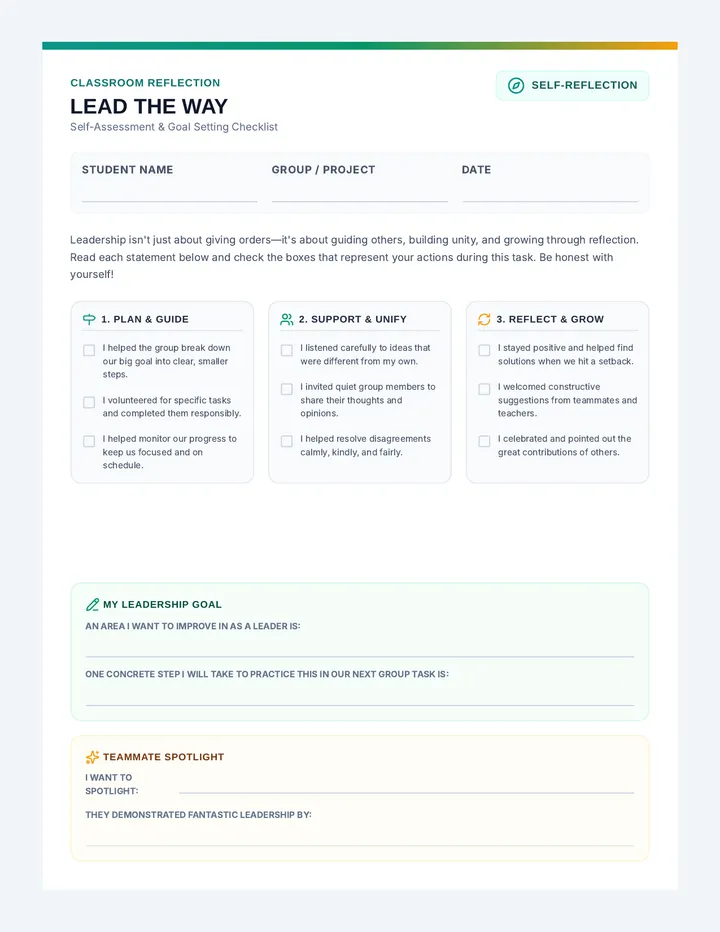
A student-facing self-reflection checklist designed to foster personal leadership awareness. Features structured checkboxes across three core leadership domains, paired with goal-setting prompts and a peer-recognition spotlight.
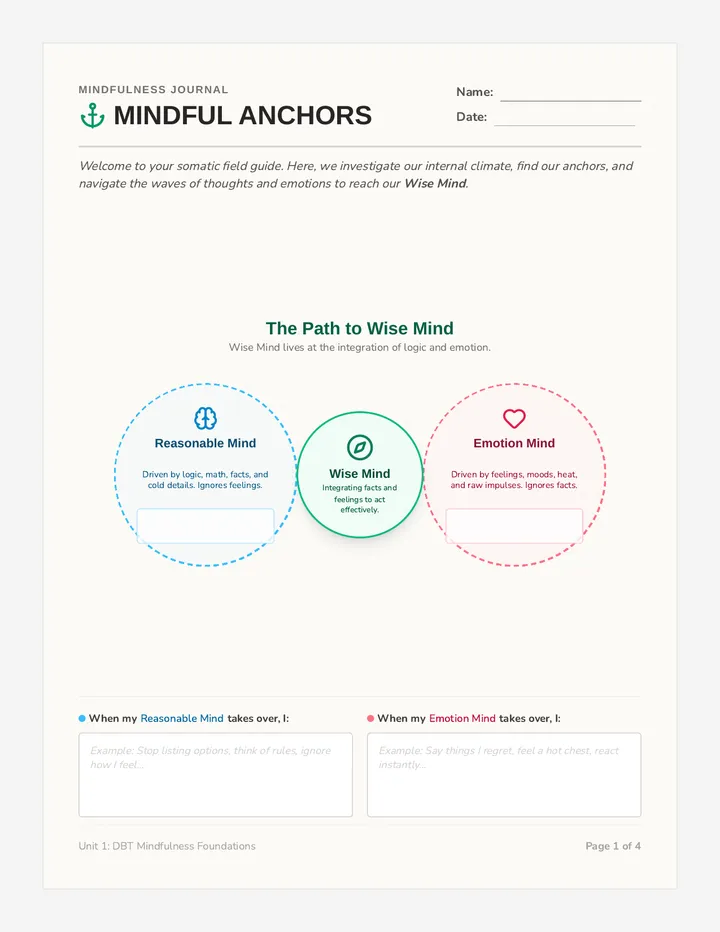
A comprehensive unit on Dialectical Behavior Therapy (DBT) mindfulness skills, taking students from somatic anchoring and cognitive understanding to collaborative, station-based performances that demonstrate 'What' and 'How' skills.
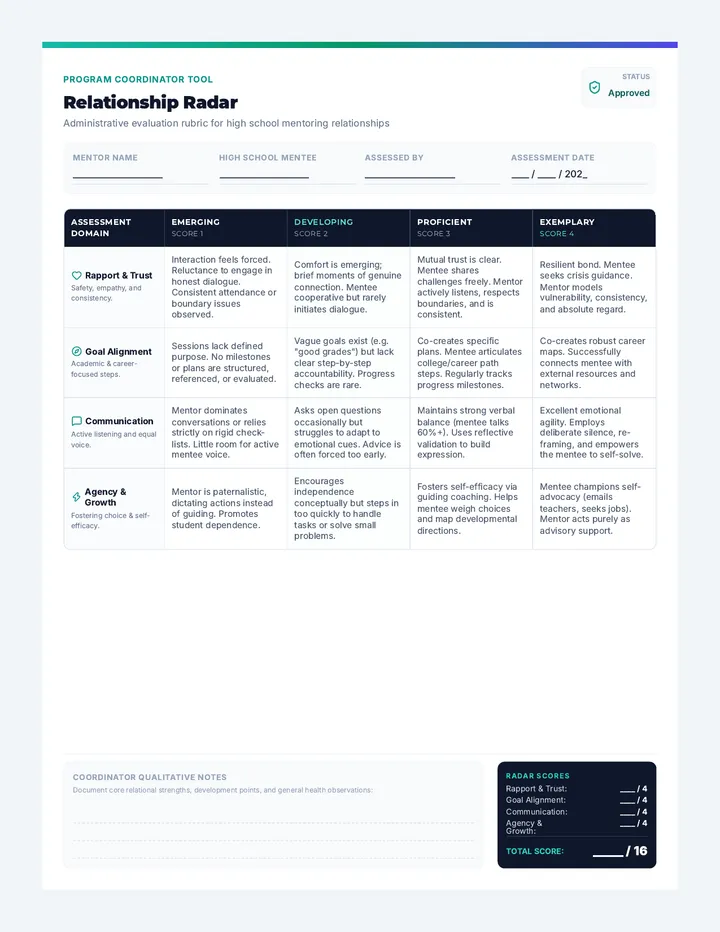
An evaluation and growth framework designed for high school mentoring programs. This lesson bundle equips Program Coordinators and mentors with actionable rubrics, reflective tools, and forward-looking goal templates to maximize mentoring efficacy and relationship quality.
A premium, ready-to-print single-point evaluation rubric for assessing key student leadership qualities. Ideal for group projects, extracurricular evaluations, or peer-assessment sessions, featuring clean writing spaces for personalized feedback.
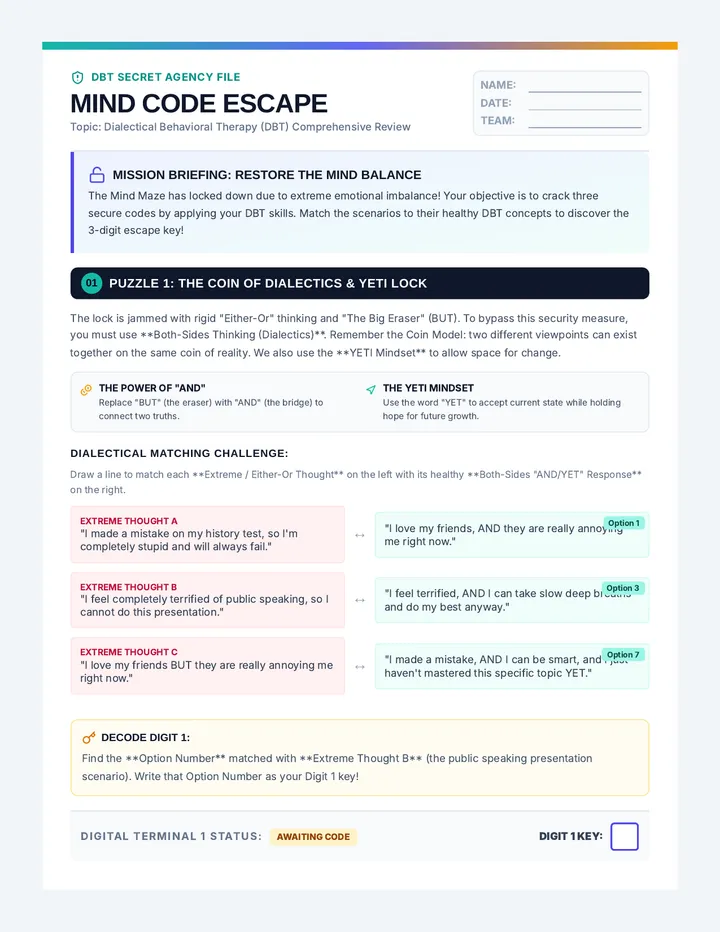
A hands-on sequence designed to empower teens with Dialectical Behavioral Therapy (DBT) concepts. Through engaging escape rooms, creative drama challenges, and real-life scenarios, students master dialectics and emotional regulation.
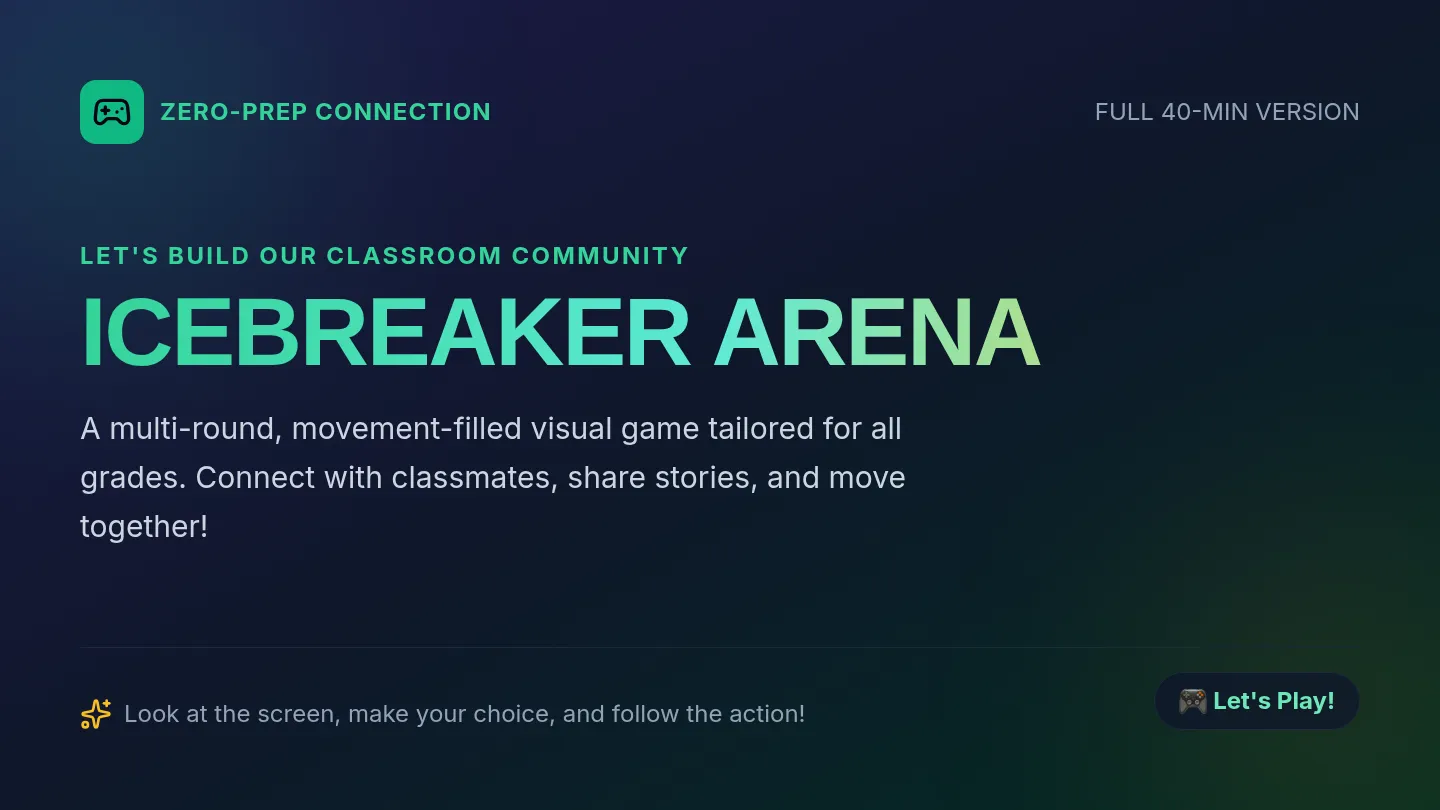
A zero-prep, highly visual set of projectable slides and a facilitation playbook that makes getting-to-know-you activities easy and energetic. Structured for Preschool to 5th grade with movement-based challenges and engaging prompts.
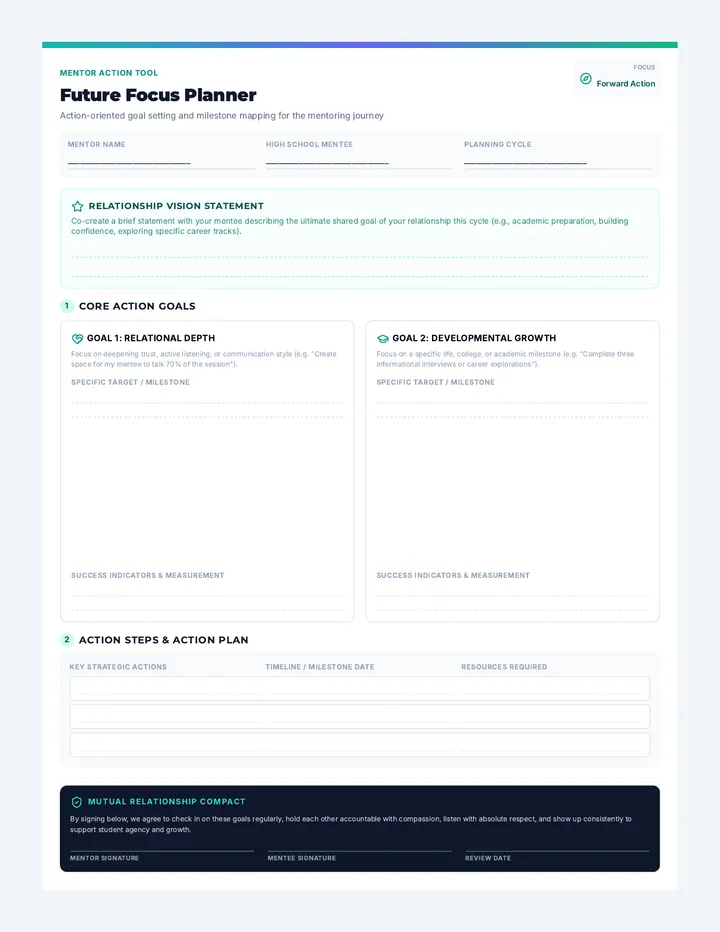
A goal-setting and action-planning template for mentors to co-create relational, developmental, and academic goals with high school students. Includes a core vision section, structured milestones, and a mutual commitment sign-off.