Lenny.com
Explore
Create
ActivitiesNewMathEnglish Language ArtsScience & EngineeringSocial StudiesGlobal LanguagesHealth & Physical EducationSpecial EducationCounseling & Life SkillsArts & CreativityESL
Lenny.com
Lenny.com
Explore
Create
ActivitiesNewMathEnglish Language ArtsScience & EngineeringSocial StudiesGlobal LanguagesHealth & Physical EducationSpecial EducationCounseling & Life SkillsArts & CreativityESL
Lenny.com
Lenny.com

Solutions

Lenny for EducatorsLenny for SchoolsLenny for Districts

Product

ExploreSign inCreateSupportAbout

Resources

Getting startedMTSS Acceleration Program

Newsletters

School Funding Newsletter

© 2026 Lenny Learning Inc.

TermsPrivacyAccessibility
LinkedInInstagramX
Lenny
Counseling & Life SkillsSelf-AwarenessBasic Emotion RecognitionComplex Emotion IdentificationEmotional Nuance & Mixed FeelingsBuilding Positive Self-ImageRecognizing Strengths & Growth AreasAccurate Self-AssessmentPersonal Values IdentificationCultural & Individual Identity ExplorationValues-Based Decision MakingSelf-ManagementStop-and-Think StrategiesDelaying GratificationIndependent Impulse ManagementIdentifying Stress TriggersShort-Term Goal SettingSMART Goals DevelopmentGoal Monitoring & AdjustmentBuilding Perseverance & ResilienceInternal Motivation DevelopmentComprehensive Stress Reduction PlanningSocial AwarenessRecognizing Others' FeelingsDemonstrating EmpathyRespecting Individual DifferencesUnderstanding Cultural DiversityComplex Empathetic ResponsesMultiple Viewpoint ConsiderationMulti-Perspective AnalysisChallenging Stereotypes & BiasRelationship SkillsActive ListeningClear Verbal & Nonverbal CommunicationBuilding Positive FriendshipsWorking Cooperatively in GroupsCommunicating Personal BoundariesRespecting Others' BoundariesAssertive ExpressionPeaceful Problem-SolvingContributing to Team GoalsComplex Conflict NavigationMediation & NegotiationHealthy Romantic RelationshipsResponsible Decision-MakingDaily Problem IdentificationBrainstorming Multiple SolutionsEvaluating Pros & ConsRecognizing Risks & ConsequencesApplying Ethical FrameworksInformed Risk-Benefit DecisionsRoot Cause AnalysisMindfulnessMindful BreathingBody Scan MeditationDaily Mindfulness ApplicationDaily Self-Care RoutinesBalancing Life DemandsAdvocating for Wellness NeedsMental Health SupportUnderstanding Anxiety SymptomsWorry Management StrategiesProgressive Muscle RelaxationRecognizing Depression SignsBuilding Mood-Supporting RoutinesBehavioral Activation for MoodUnderstanding Grief StagesHealthy Grief CopingCreative Expression of LossBehavioral SupportDaily Check-In ProceduresDaily Goal Setting & ReviewRecognizing Escalation Warning SignsRequesting Breaks & SupportSelf-Calming During DistressUnderstanding Positive ReinforcementToken Economy ImplementationBehavior Chart TrackingAnalyzing Behavior PatternsIdentifying Antecedents & ConsequencesDetermining Behavior FunctionFunction-Based InterventionsIndividualized Behavior ContractsData-Driven Behavior AdjustmentTherapeutic ApproachesThoughts-Feelings-Behaviors ConnectionRecognizing Thinking PatternsChallenging Negative ThoughtsPositive Self-Talk PracticeThought Record TrackingAdvanced Cognitive RestructuringComprehensive CBT PlansBehavioral Activation TechniquesBuilding Positive ExperiencesExposure Hierarchies for AnxietyPresent-Moment AwarenessNon-Judgmental ObservationSelf-Soothing & DistractionComplex Emotion LabelingReducing Emotional Vulnerability (PLEASE)DEAR MAN CommunicationGIVE Skills for RelationshipsFAST Skills for Self-RespectRadical Acceptance PracticeCrisis Survival Skills (TIPP)Understanding Trauma EffectsTrauma Responses & TriggersIdentifying Trauma FeelingsGrounding TechniquesRegulation During Trauma DistressSafe Place VisualizationProcessing Through NarrativeDeveloping Trauma StoryPersonalized Safety PlanningGroup SupportTurn-Taking & SharingGroup Conversation SkillsSharing in Supportive EnvironmentLearning from Similar ChallengesBuilding Community & BelongingNavigating Peer RelationshipsGroup Skill PracticeGroup Mental Health EducationStress & Anxiety UnderstandingCrisis Support & SafetyKnowing When to Seek HelpIdentifying Mental Health CrisesGrounding During CrisisUsing Crisis HotlinesBuilding Support NetworksAccessing Mental Health ResourcesWarning Signs & Coping StrategiesDeveloping Personal Safety PlansUnderstanding Suicide Warning SignsGatekeeper Skills for PeersDigital LiteracySocial MediaTechnology BasicsProductivity ToolsInternet and Online ResearchWeb Design and PublishingDigital CitizenshipOnline Safety and PrivacyEmerging TechnologiesFinancial LiteracyMaking Financial DecisionsBanking and AccountsConsumer SkillsSaving and InvestingCredit and DebtEmployment and IncomeTaxesInsuranceMajor PurchasesEconomic ConceptsFinancial PlanningCollege & Post-Secondary PlanningCareer ExplorationUnderstanding Post-Secondary OptionsCollege Research & SelectionAdmission RequirementsCollege Application ProcessPersonal Statement WritingFAFSA CompletionScholarship Search & ApplicationsUnderstanding Student LoansContinuing Education PlanningInterview PreparationResearching EmployersCommon Interview QuestionsSTAR Method ResponsesProfessional Interview PresenceVirtual Interview SkillsInterview Follow-UpJob Search SkillsUnderstanding Job PostingsEffective Job Search StrategiesNetworking for OpportunitiesResume Writing BasicsAction Verbs & AchievementsTailoring Resumes to JobsCover Letter WritingProfessional ReferencesProfessional CommunicationBusiness Email EtiquettePhone & Voicemail ProfessionalismMeeting ParticipationPresentation SkillsProfessional Work EthicTime Management & ProductivityTeamwork & CollaborationAdaptability & FlexibilityProblem-Solving at WorkConstructive FeedbackWorkplace RightsUnderstanding Employment LawsPay & Benefits UnderstandingWorkplace SafetyAnti-Discrimination & Harassment

Credit Compass

A comprehensive advising lesson designed to help North Carolina high school students navigate their graduation requirements under the Future-Ready Core (FRC). This curriculum ensures students understand credit requirements, math and social studies pathways, and elective options to graduate college- and career-ready.

CJCris Jackson
Focus Area:

02 New Academic Mandates

  • Computer Science: 1.0 CS credit (required by LEC now; NC mandated starting with 2026-27 entry cohort).
  • Arts Education: 1.0 Arts credit in grades 6-12 (mandated starting with 2025-26 entry cohort).

Slide 5 of 7


LEC ADVISING PORTFOLIO

LEC Guidelines

World Languages

2 sequential credits in the same language are strongly recommended for standard 4-year college admissions.

LCS Recommendation

Additional elective credits are required to reach the Lee County Schools recommended target of 28 total credits.

Associate degree

Lee Early College students who successfully complete a transferable Associate degree exceed high school requirements by 15-20+ credits!

Early college students typically exceed high school expectations. Slide 6 of 7


CHART YOUR PATH

Action Steps

1

Audit Your Status

Look at your school transcripts or Infinite Campus dashboard. Note classes you passed with a "D" or better. Be prepared to repeat any class you fail.

2

Check the Boxes

Use your printable student tracker. Check off standard core items and draft current electives.

3

Review

Schedule a short meeting with your Advisor, Counselor or College Liaison to review pathways, career targets, or potential exceptions.

Don't guess your path. Use your Credit Compass tool! Slide 7 of 7

E.g., Associate in Arts, Associate in Science, Associate in Engineering, transferring to standard 4-year public/private university, military pathway, trade certification,  employment, etc.

2. registration needs and action steps:

Which specific high school or CCCC dual college courses do you still need to schedule to fulfill core graduation requirements?

Advising Semester Roadmap (Dual Enrollment / CCCC)

Draft your prospective courses per term to ensure you hit both your 22 core high school credits and 28 recommended credits.

Junior Year Roadmap

Fall Term:

Spring Term:

Senior Year Roadmap

Fall Term:

Spring Term:

Super Senior Roadmap

Fall Term:

Spring Term:

Academic Advising Sign-Off

Student Signature & Date

Advisor Signature & Date

Counselor Signature & Date

CCJ | August 20, 2026 | Lee Early College Counseling Department Page 2 of 2

MAT 171 (Precalculus Algebra) OR MAT 152 (Statistical Methods I)
1.0 HS Credit
Physical ScienceCHM 151 (General Chemistry I) OR PHY 151 (College Physics I)1.0 HS Credit

Alternative Math Sequence Policy

Exemption from standard Math I, II, III requires meeting formal criteria under SBE policy GRAD-004.

Process & Approvals:

  • Must complete NC Math 1B or Math 1 first.
  • Requires written parent and principal approvals.

Approved Alternatives:

  • Foundational Math Sequence, modern algebra, or CTE math course.

OCS Pathway Overview

For students with IEPs requiring modified curriculums: 4 English (Applied I-IV), 3 Math (Intro, Math I, Financial), 2 Science (Applied, Bio), 2 Social Studies (OCS World, OCS Civic), and 600 total documented work hours (150 school, 225 community, 225 competitive).

North Carolina State Board Policy Reference Sheet CONFIDENTIAL COUNSELOR RESOURCE

2

Focus on Course Pathways

Talk to your child about their classes and career interests. Help them pick an academic pathway (like CTE, Arts, or STEM) that aligns with their future goals. Explore which Associates degree best suits their career aspirations. Be supportive and flexible if goals change.

3

Home-School Communication

Communicate with Lee Early College educators, counselor, and administration. Open dialogue promotes active, collaborative support for your child.

4

Connect with the Counselor

Encourage your child to meet with their school counselor yearly to audit their graduation credits, check off requirements, and discuss postsecondary pathways.

5

Prioritize Overall Well-Being

The early college journey is highly rigorous. Help your child balance this intensity by encouraging positive lifestyle choices—like healthy sleep and dietary habits, regular physical activity, stress management techniques, active social engagement, and mindful social media use. Supporting your child's emotional and physical well-being is the ultimate foundation for academic success.

CCJ | August 20, 2026 | NC Future-Ready Core Family Engagement Handout CREDIT COMPASS FAMILY GUIDE
You might also like

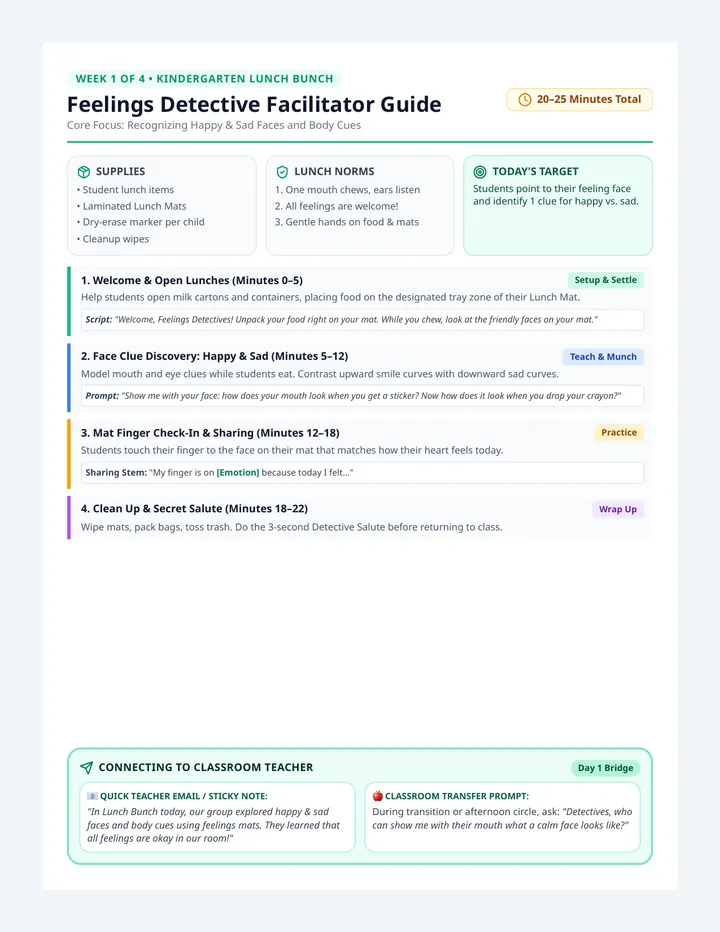
Feelings Detective Facilitator Guide

Feelings Crew

A four-week social-emotional lunch bunch sequence for Kindergarten students focusing on identifying core feelings and learning foundational calming strategies. Designed specifically for brief 20-30 minute lunchtime group sessions with high-engagement visuals and low-mess activities.

SS

Samantha Stagles

12
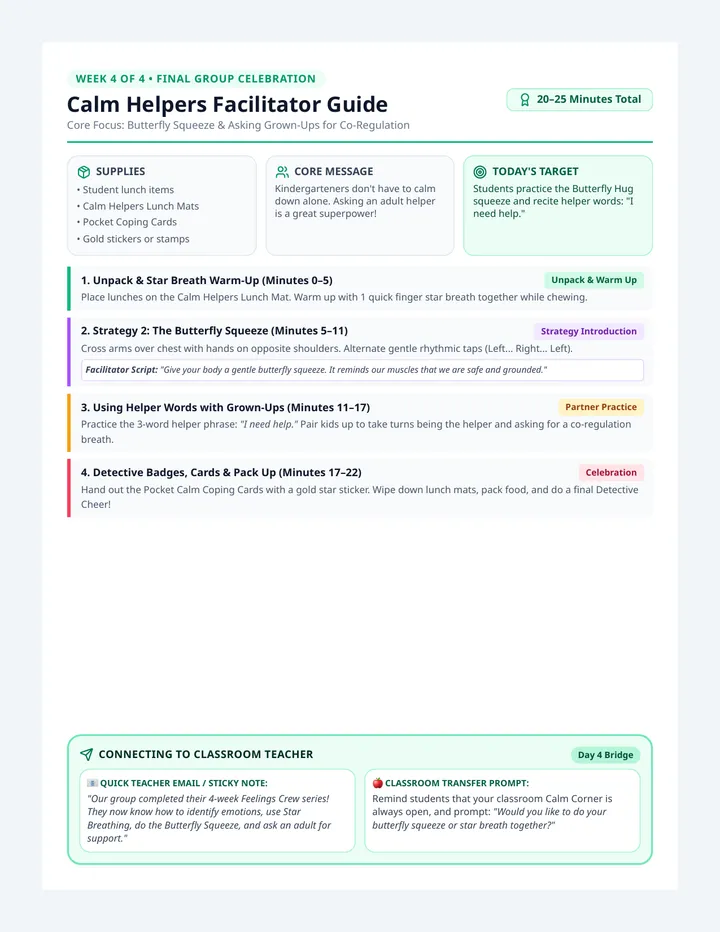
Calm Helpers Facilitator Guide

Calm Body Helpers

Students learn their second core regulation strategy: the gentle butterfly squeeze and asking an adult helper for support. They review all tools and celebrate becoming feelings detectives.

SS

Samantha Stagles

5
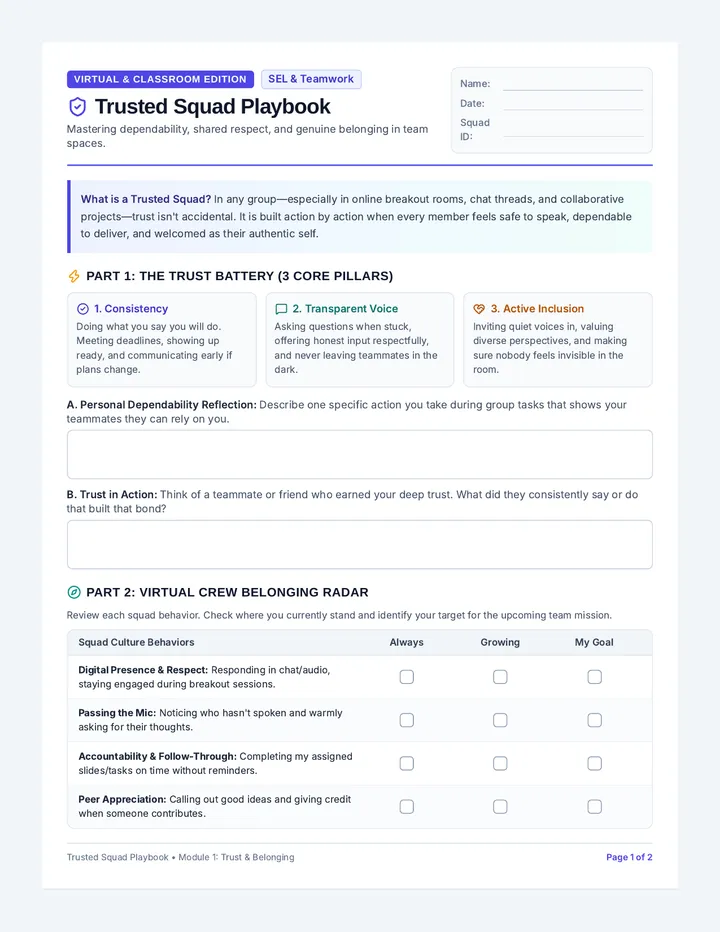
Trusted Squad Playbook Worksheet

Trusted Squad Playbook Worksheet

A comprehensive two-page student worksheet and reflection playbook on building trust, fostering belonging, and practicing dependable teamwork in virtual and classroom environments.

PH

Patricia Hanna

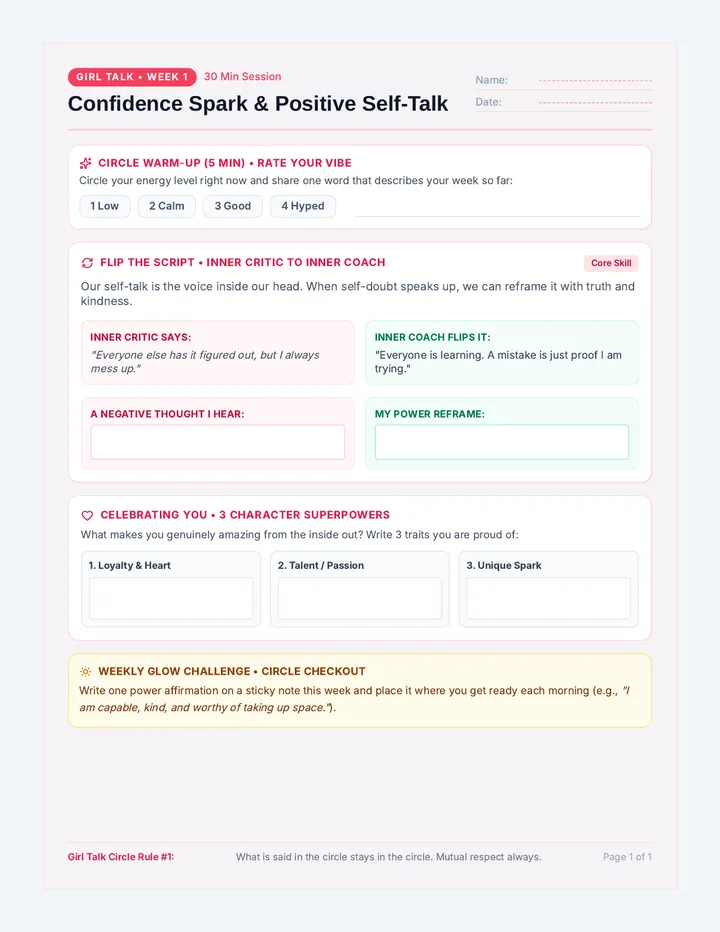
Confidence Spark Journal

Girl Talk Circle

A six-week small group curriculum for adolescent girls designed to build self-esteem, interpersonal loyalty, healthy boundaries, stress regulation, everyday etiquette, and future aspirations through engaging 30-minute weekly circles.

A

aiesha.olamiju

6
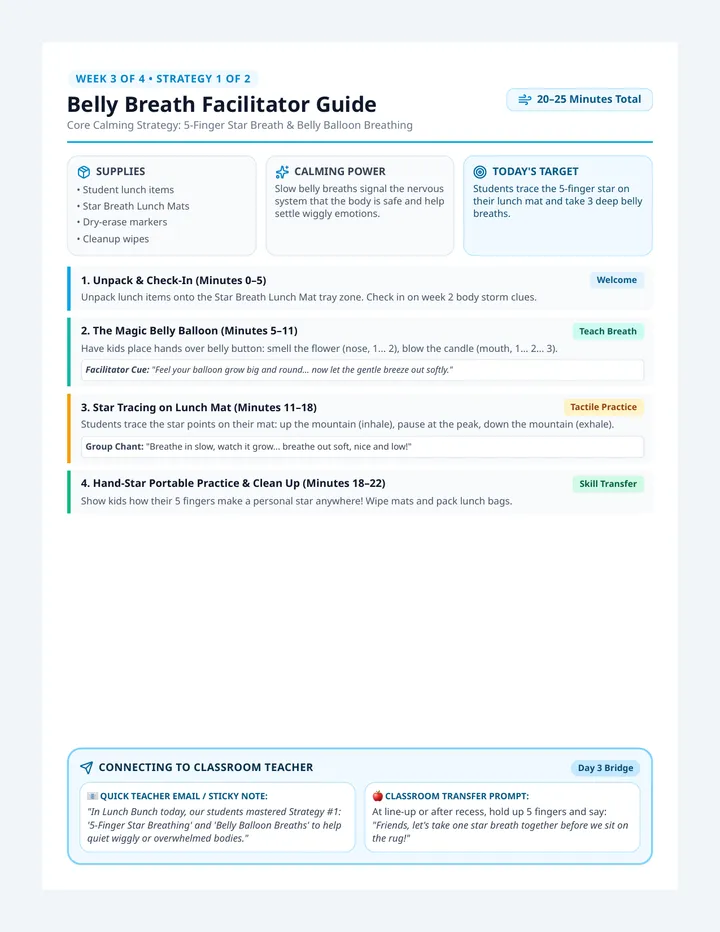
Belly Breath Facilitator Guide

Belly Breath Magic

Students learn their first core calming tool: slow star breathing and belly breathing to settle active bodies. They practice tracing visual breath paths while sitting calmly together.

SS

Samantha Stagles

3
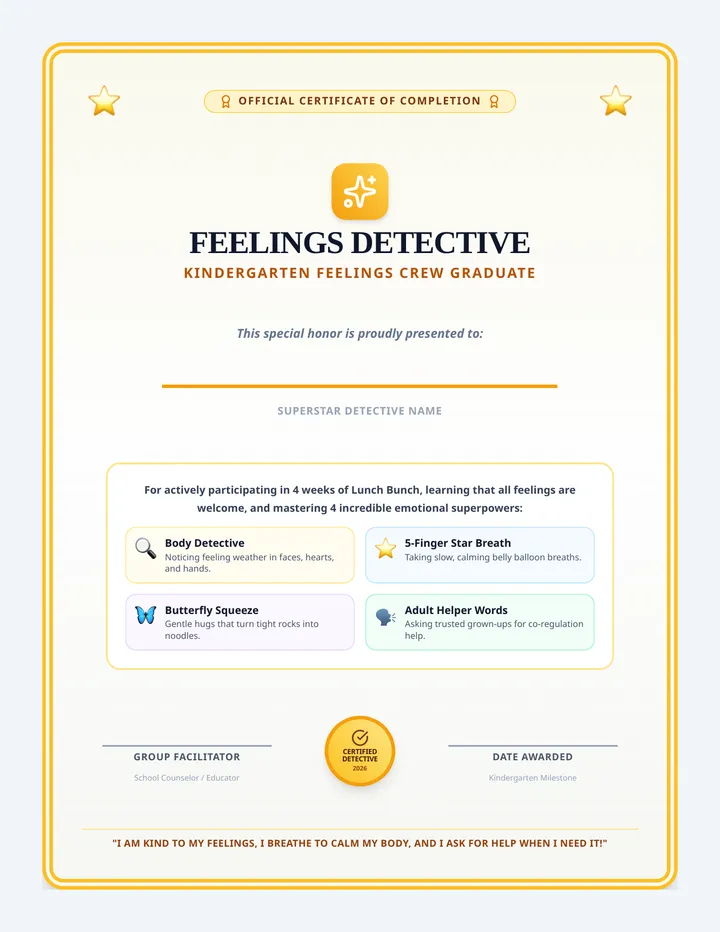
Feelings Detective Graduation Certificate

Feelings Detective Graduation Certificate

A commemorative graduation certificate for Kindergarten students completing the 4-week Feelings Crew lunch bunch group, celebrating their mastery of emotion identification, star breathing, butterfly hugs, and asking adults for help.

SS

Samantha Stagles

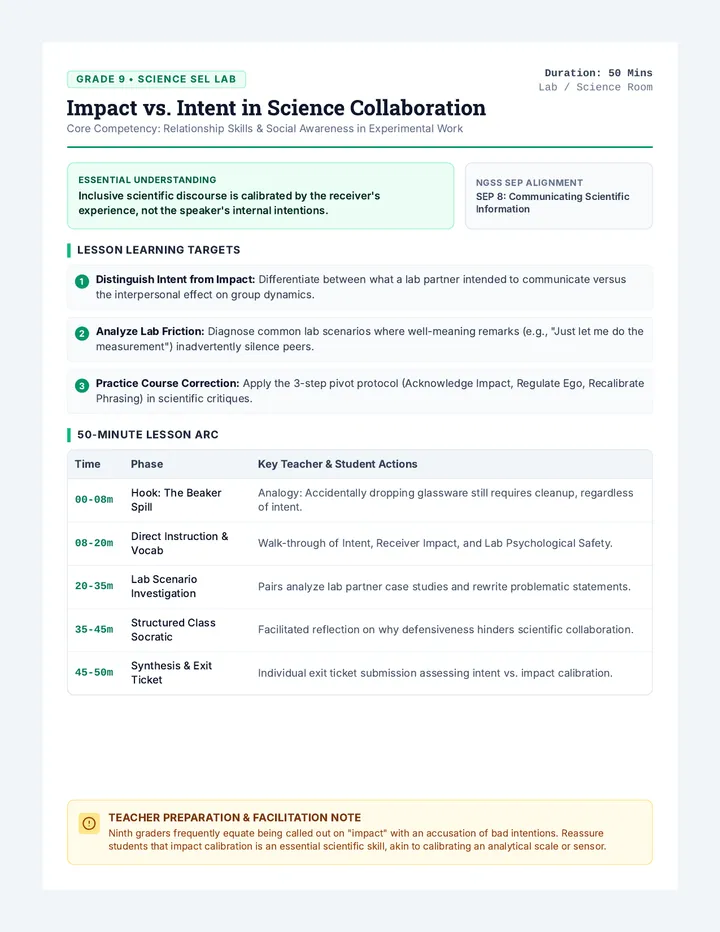
Impact Intent Teacher Guide

Science Class Dialogue

A high school science SEL sequence that builds positive teamwork, clear communication, and barrier-free collaboration between project partners in science class across grades 9 through 11.

J

jtoomey

27
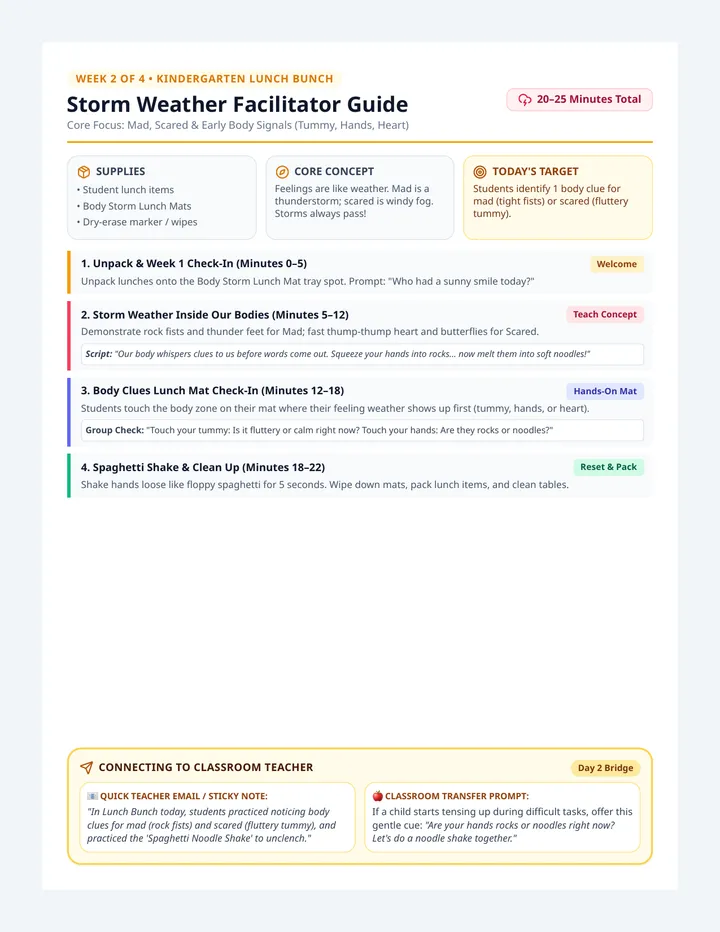
Storm Weather Facilitator Guide

Big Storm Feelings

Students identify high-energy emotions including mad and scared using kid-friendly weather metaphors. They learn to notice early warning body cues before feelings become overwhelming.

SS

Samantha Stagles

2
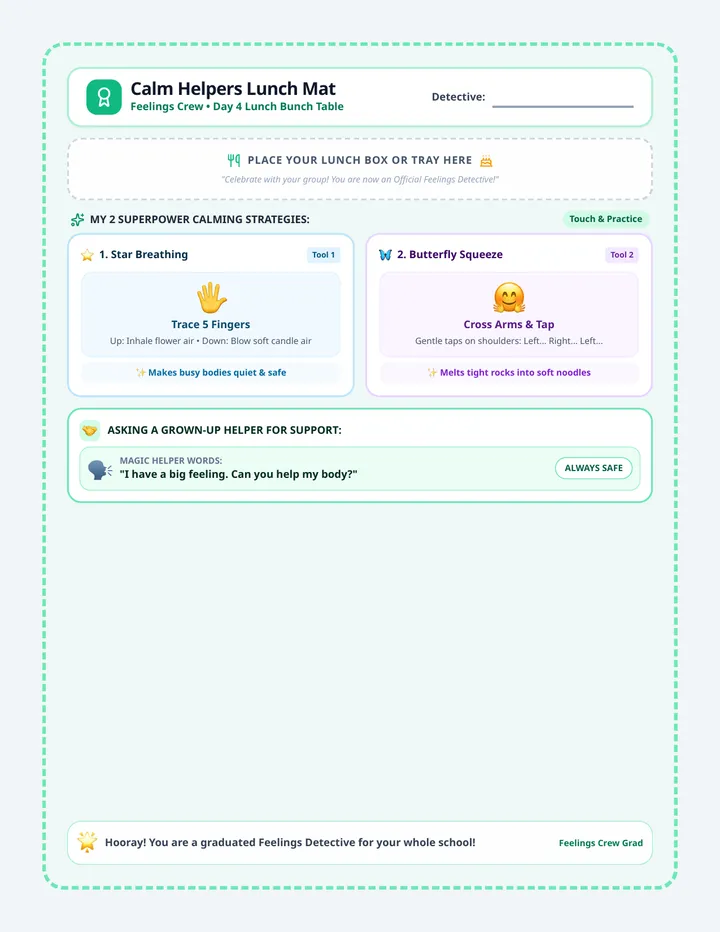
Calm Helpers Lunch Mat

Calm Helpers Lunch Mat

A laminated student lunch placemat for Day 4 featuring designated lunch tray areas, visual check-offs for both core strategies (star breath and butterfly hug), and adult helper words.

SS

Samantha Stagles

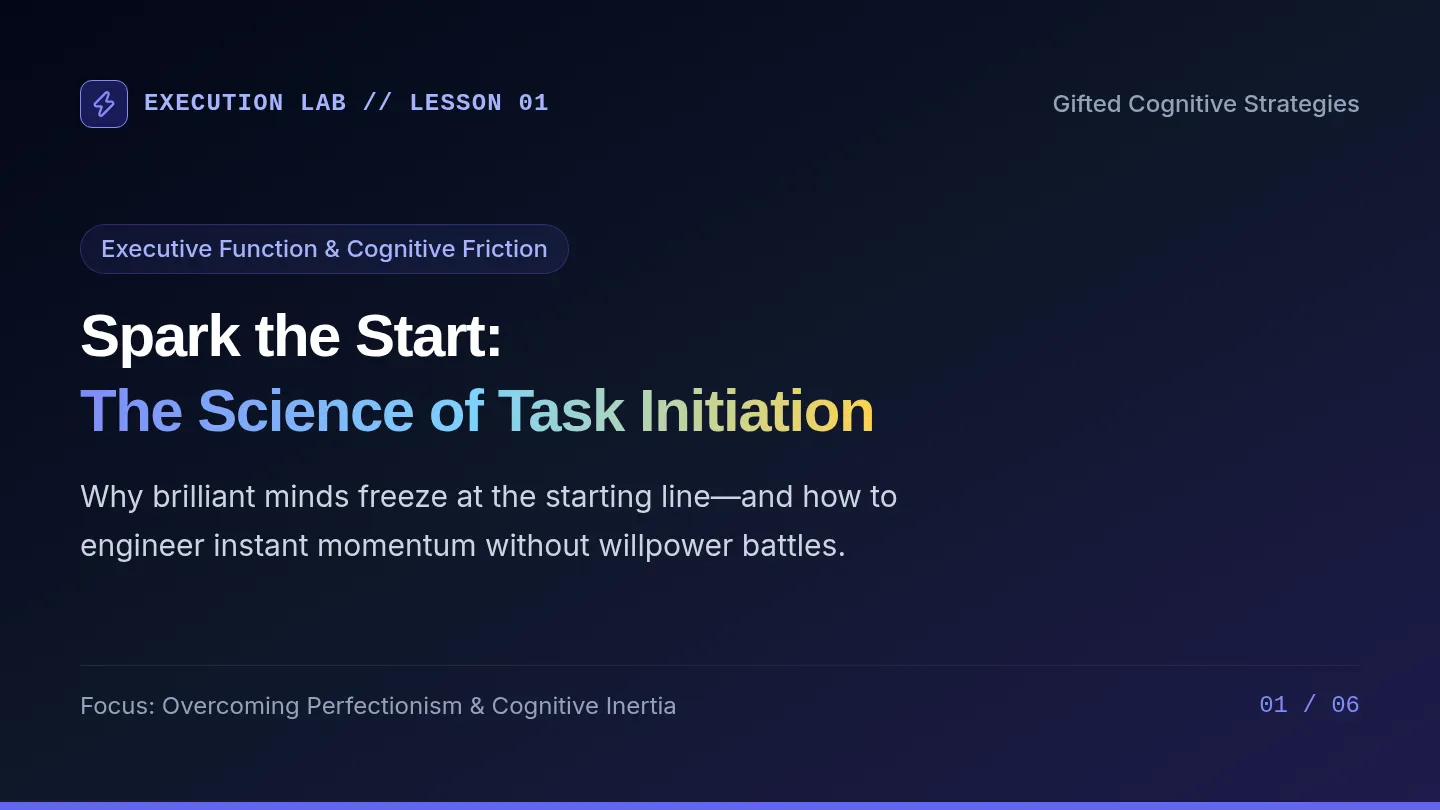
Initiation Hurdles Slides

Execution Lab

An executive functioning and work completion curriculum designed specifically for gifted middle schoolers. Students learn cognitive strategies to dismantle perfectionism paralysis, accurately pace multi-phase projects, and conquer the final submission hurdle.

MB

Michele Berning

6
Feelings Detective Facilitator Guide

Face and Feelings

Students explore how different emotions look on faces and feel in our bodies, focusing on happy and sad. They practice checking in with their own feelings during lunch bunch.

SS

Samantha Stagles

2
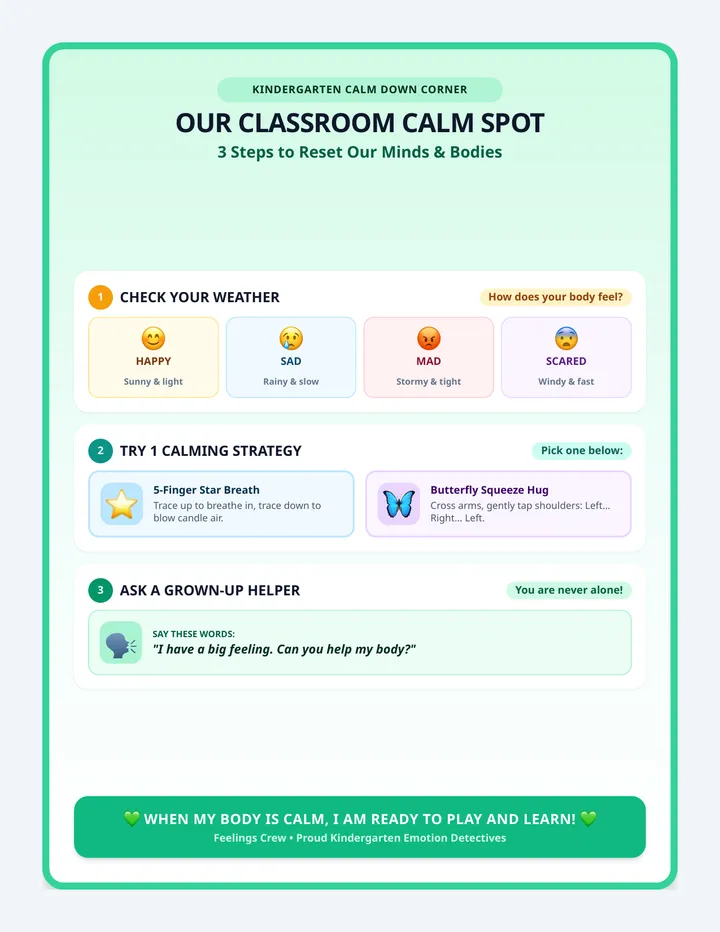
Calm Corner Station Poster

Calm Corner Station Poster

A full-color classroom Calm Down Corner visual poster for Kindergarten. Features the 3-step calm routine: identifying feeling weather, choosing a calming tool (star breath or butterfly hug), and using adult helper words.

SS

Samantha Stagles