Using mathematical models, students visualize the difference between simple and compound interest over time. They explore the impact of compounding on both savings growth and credit card debt.
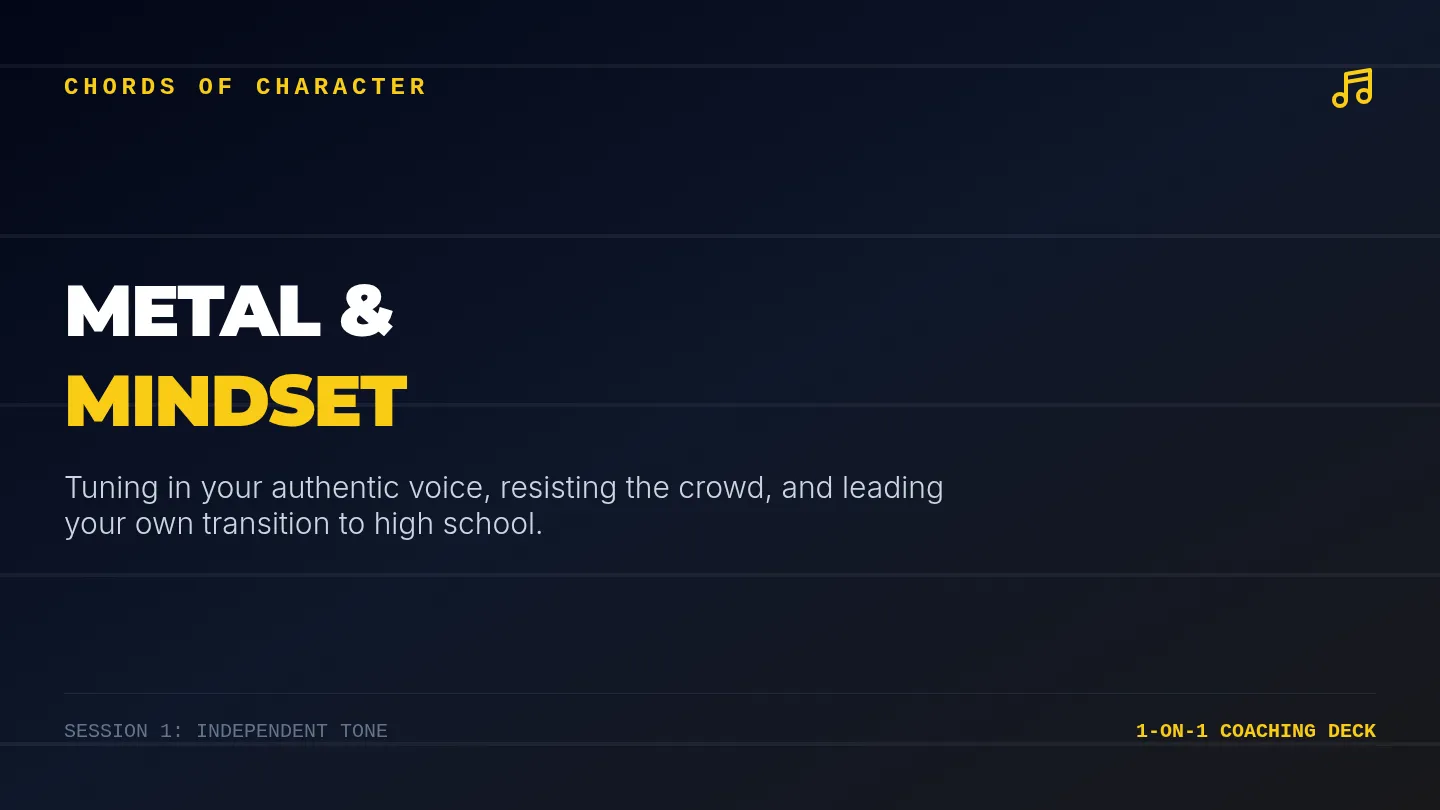
A transition curriculum for an 8th-grade student moving to high school, using music and guitar metaphors to cultivate individuality, self-confidence, independent decision-making, and positive peer connection. This 2-lesson unit empowers him to choose his own path, join clubs aligned with his interests, and build supportive friendships.
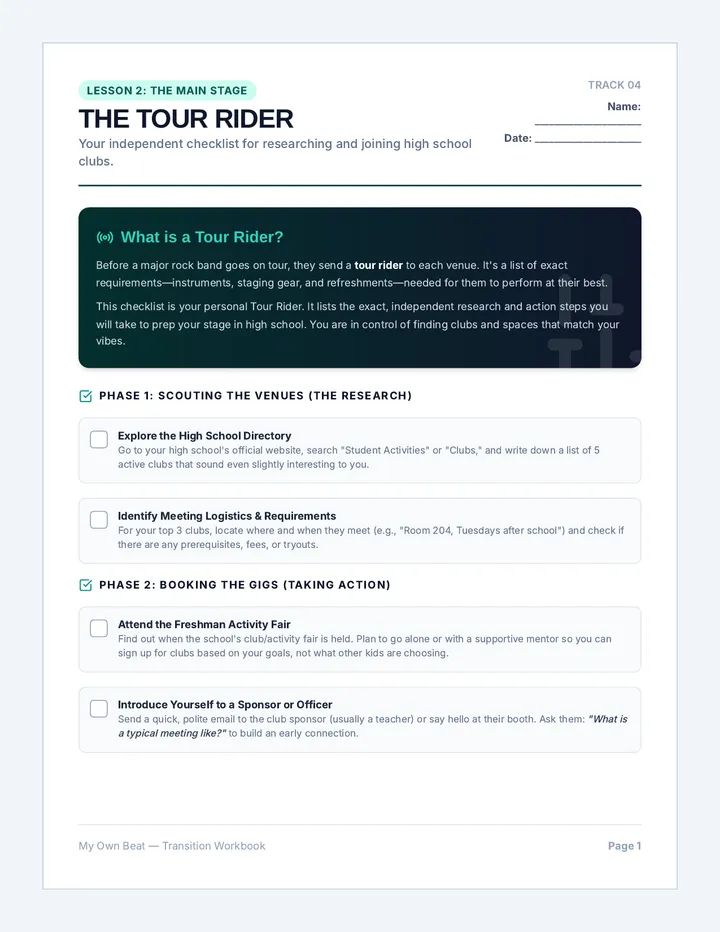
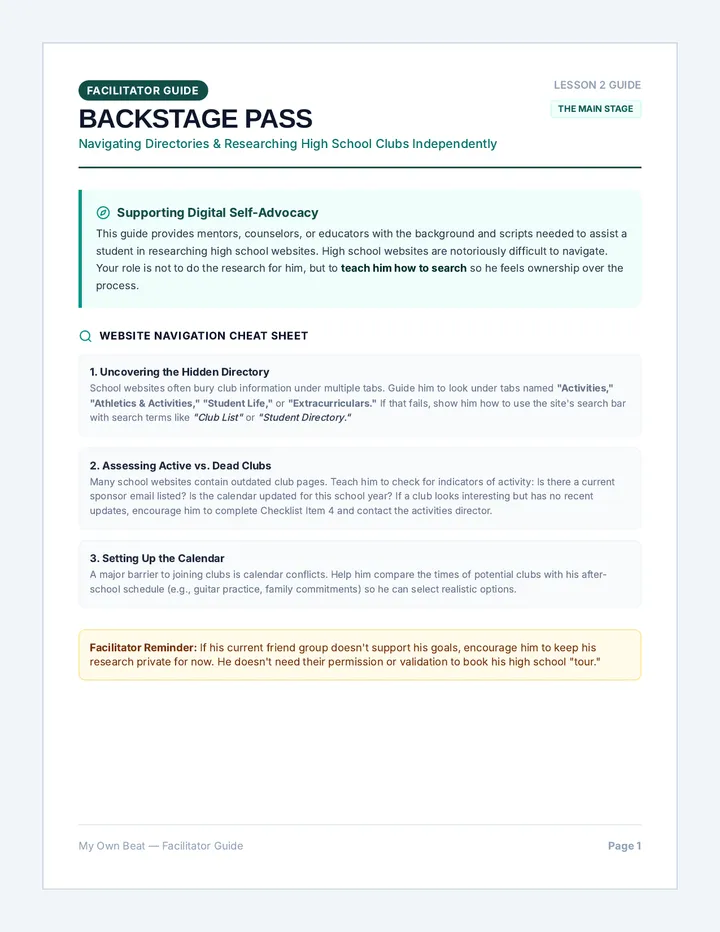
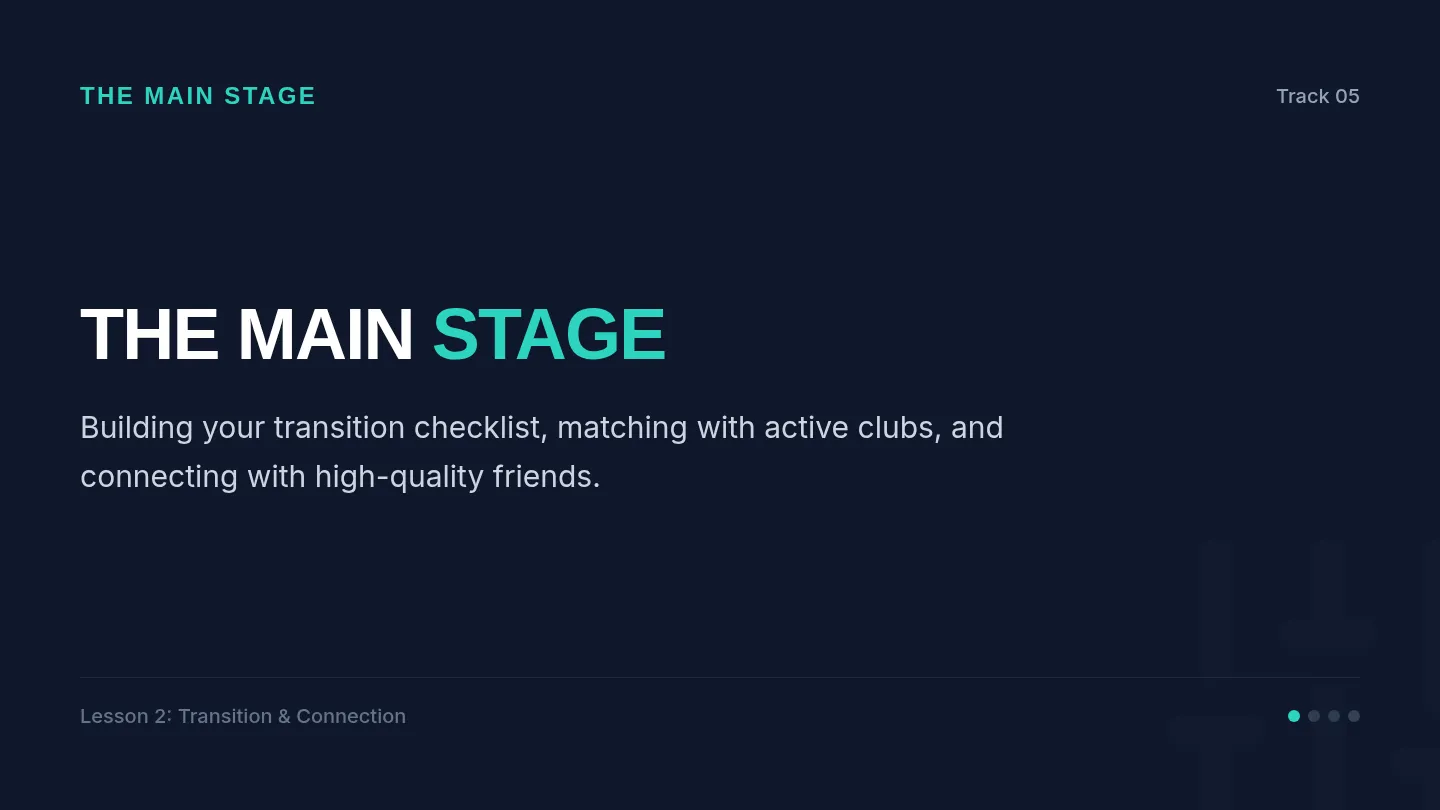
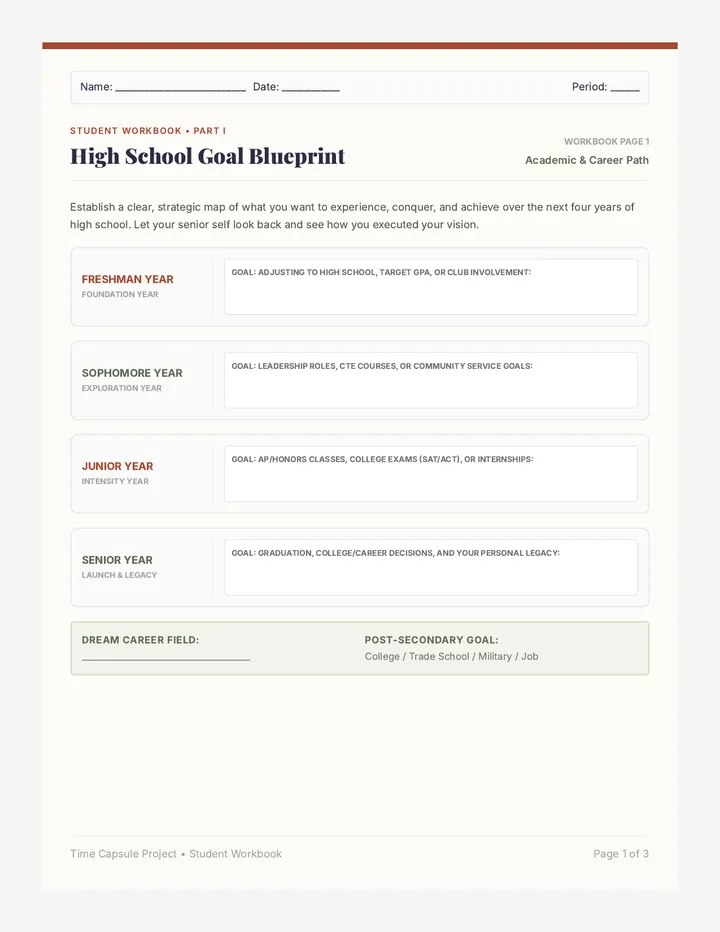
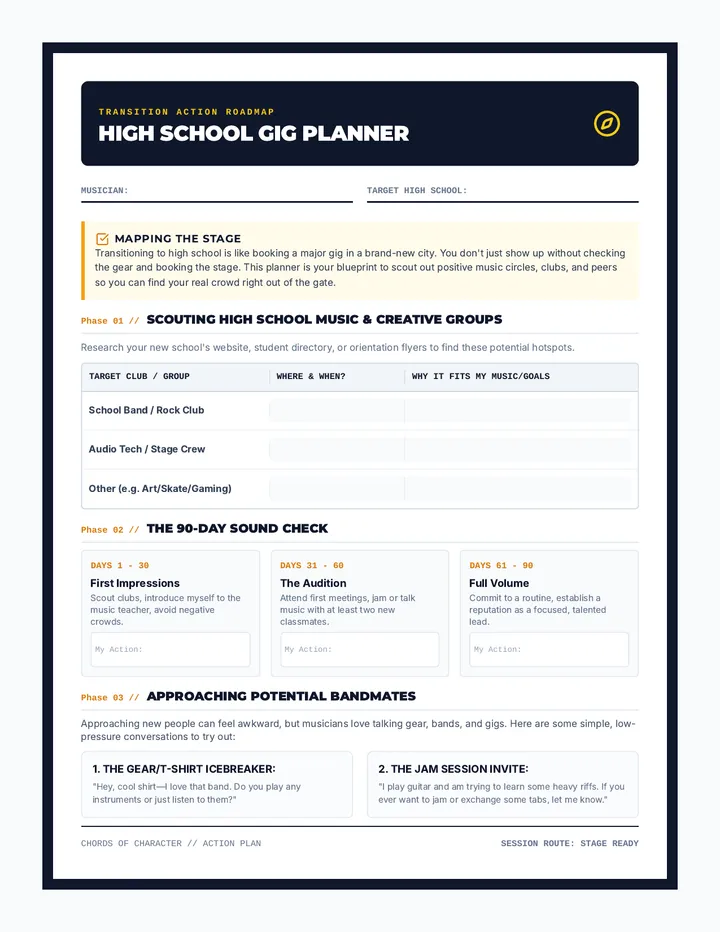
Provides concrete transition planning, club matchmaking, independent research techniques, and actionable steps to find, join, and thrive in high school extracurricular activities where like-minded peers gather.
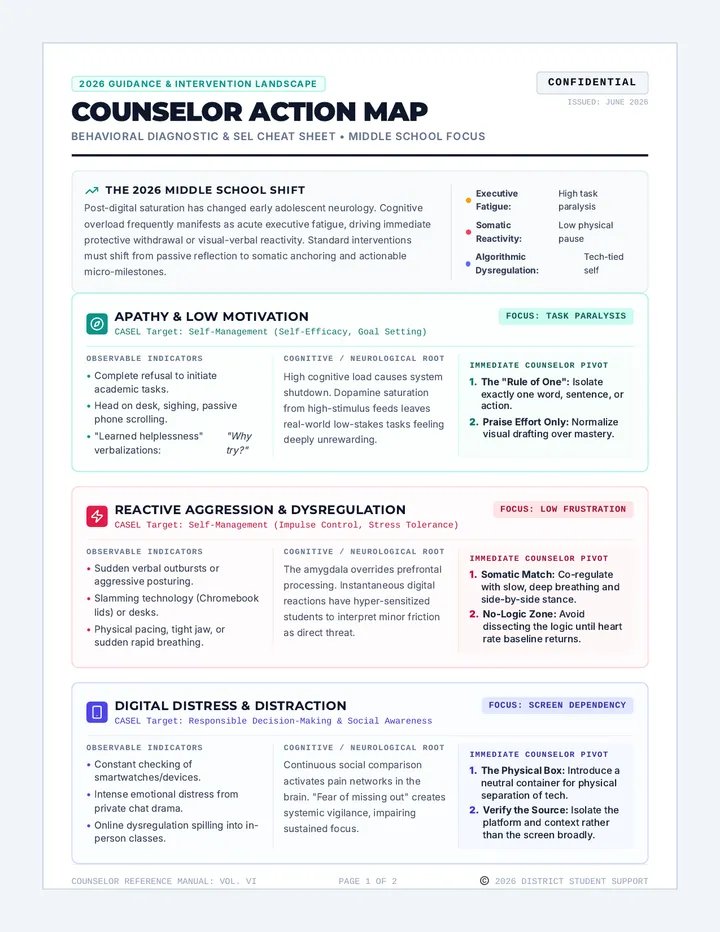
A highly professional, 2-page print-ready Counselor Reference Sheet for middle school counselors in 2026. It covers three major behavioral priorities: Apathy & Low Motivation, Reactive Aggression & Dysregulation, and Digital Distress & Distraction. Includes actionable immediate pivots, a Tiered Intervention Matrix, a Rapid Assessment Protocol, and a writable follow-up log with spacious writing areas.
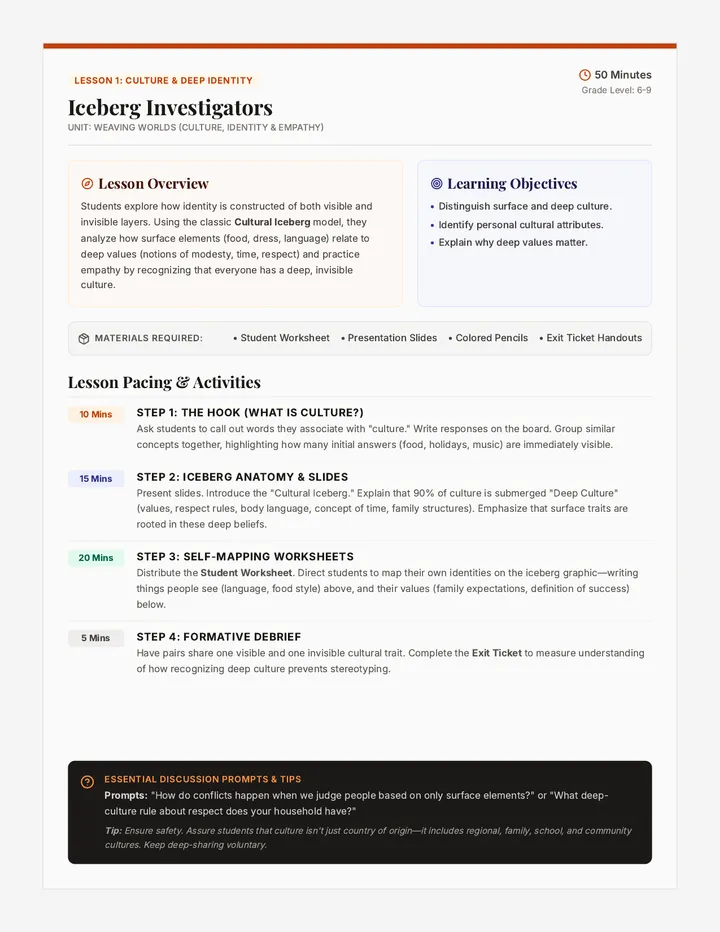
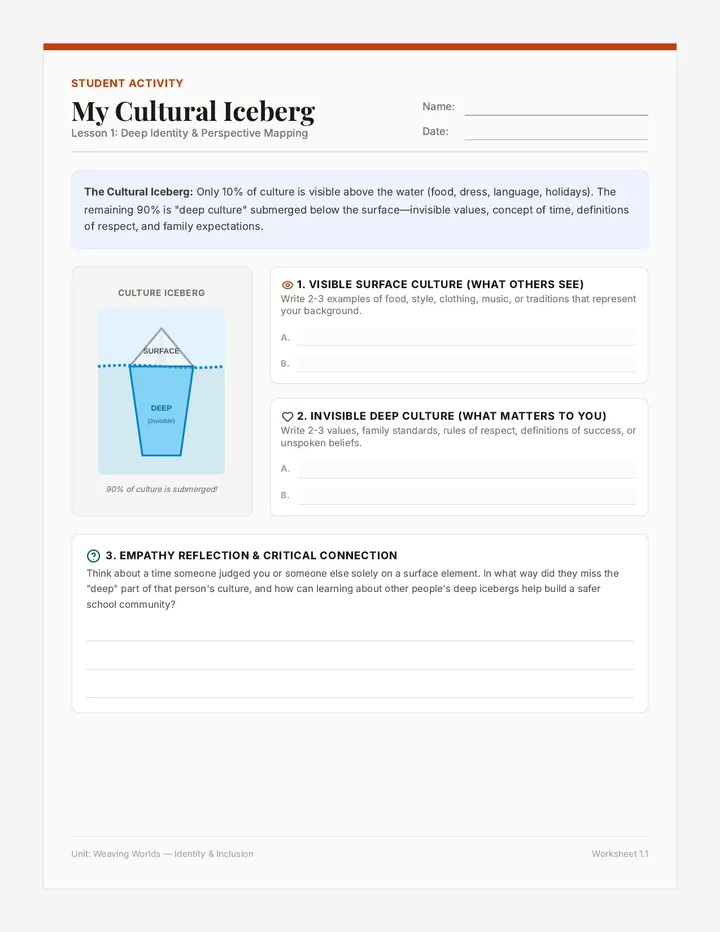
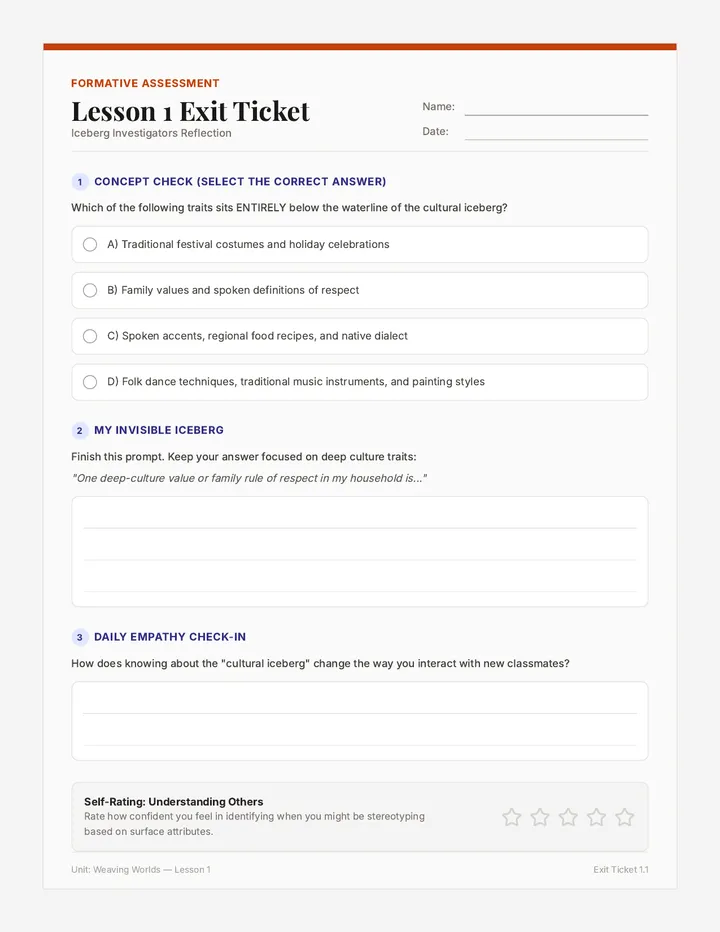
A 3-lesson unit on culture, identity, empathy, and building an inclusive school community. Students explore the cultural iceberg, share personal perspective narratives, and collaborate on actionable school-wide inclusion plans.
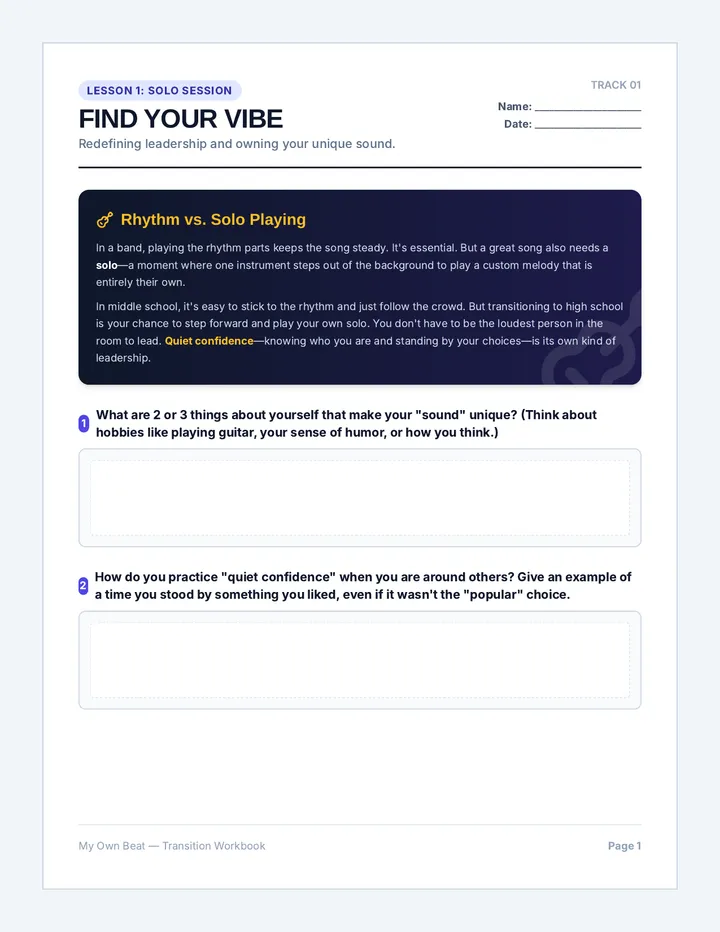
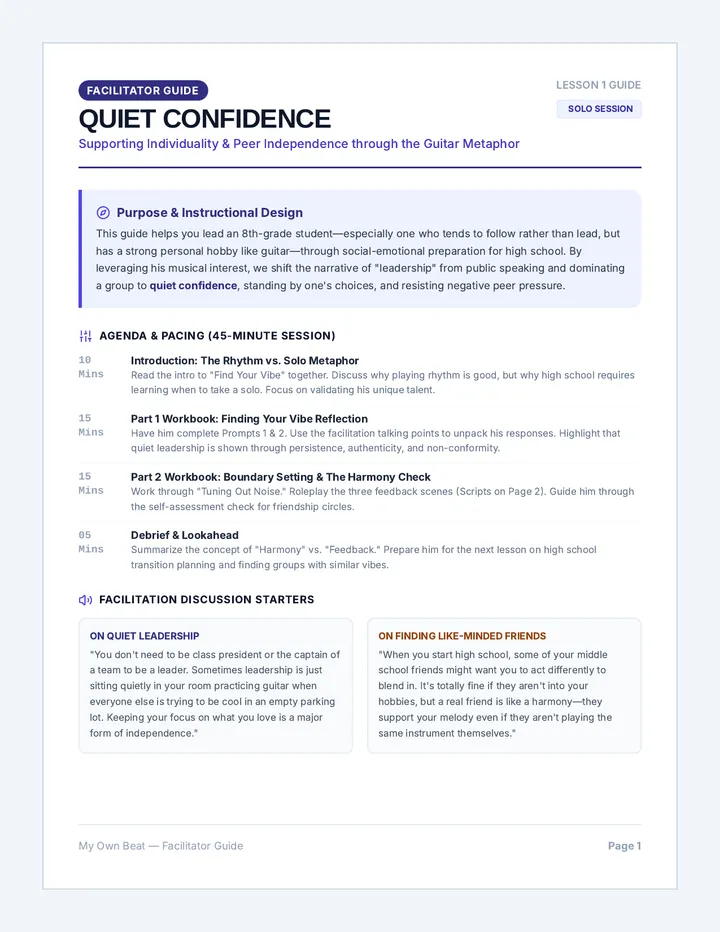
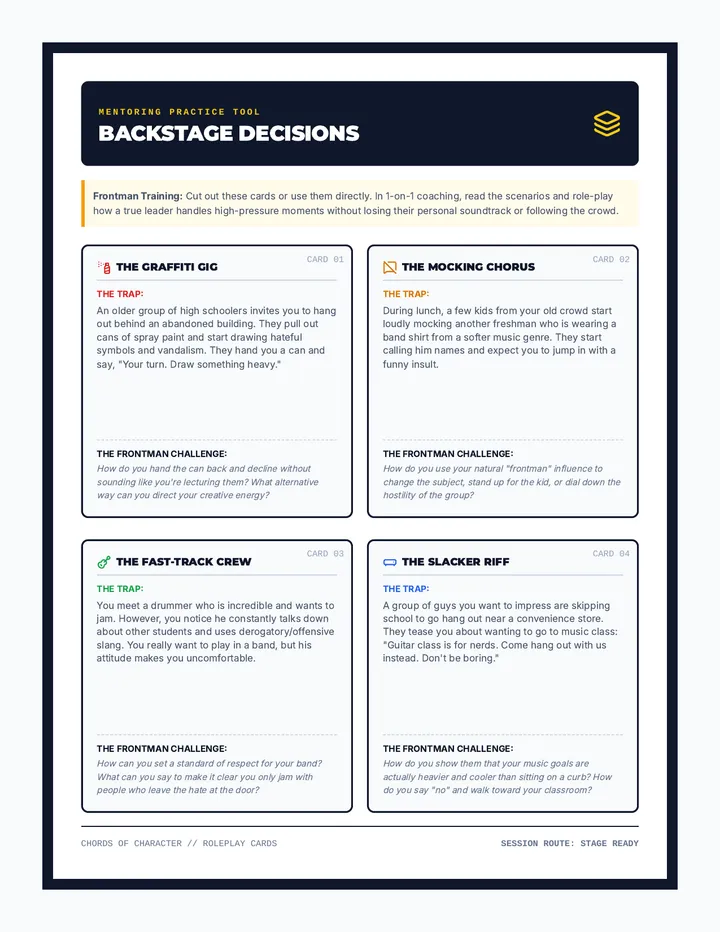
Focuses on developing individuality over conformity, redefining leadership through quiet confidence, resisting peer pressure, and assessing the quality of friendships. It helps the student understand that carving out their own path is like playing a custom solo.
A visual slide presentation for Lesson 2, outlining the practical transition steps to research and join school clubs independently, and sharing actionable conversational starters.
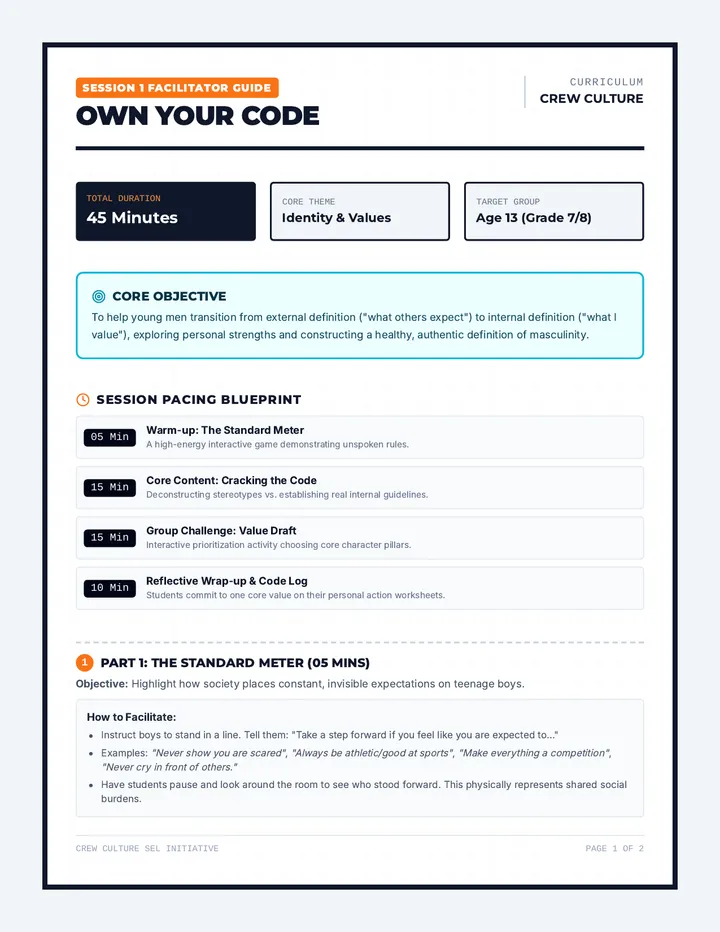
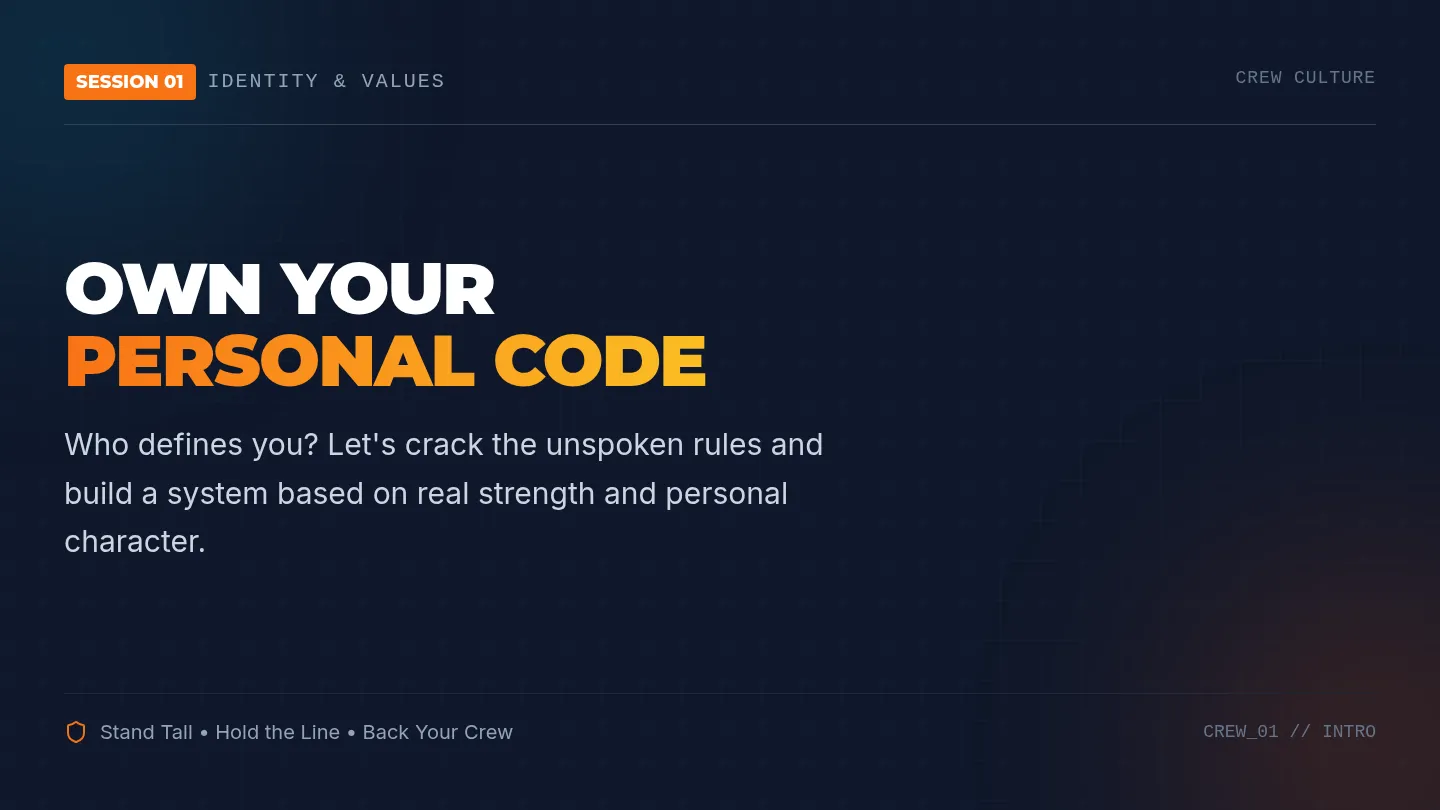
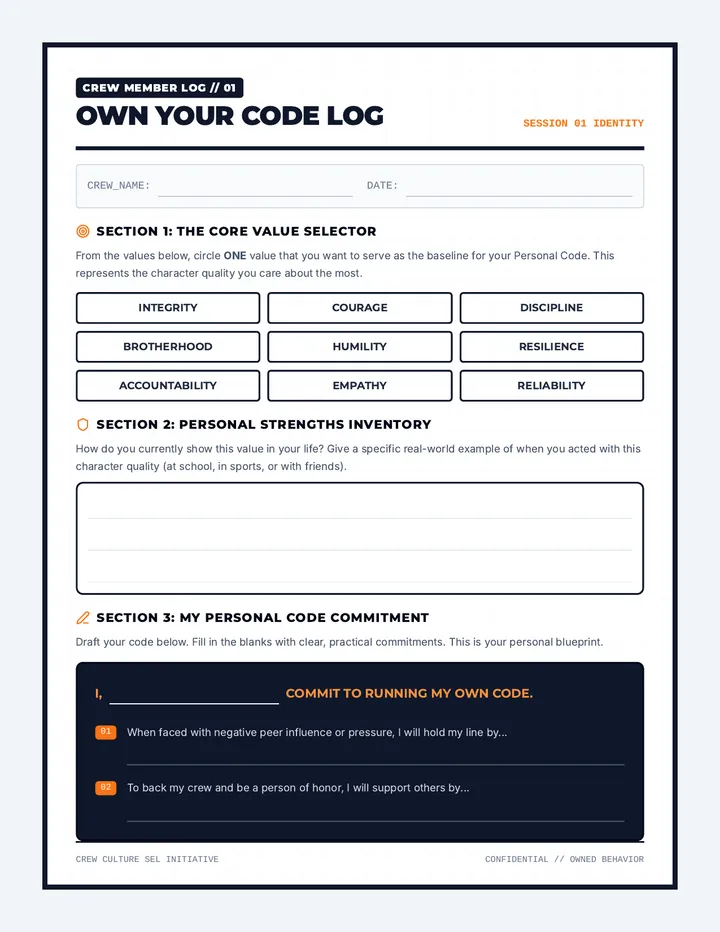
A three-part social-emotional learning curriculum designed specifically for middle school boys to develop self-esteem, manage digital pressure, and build authentic peer relationships.
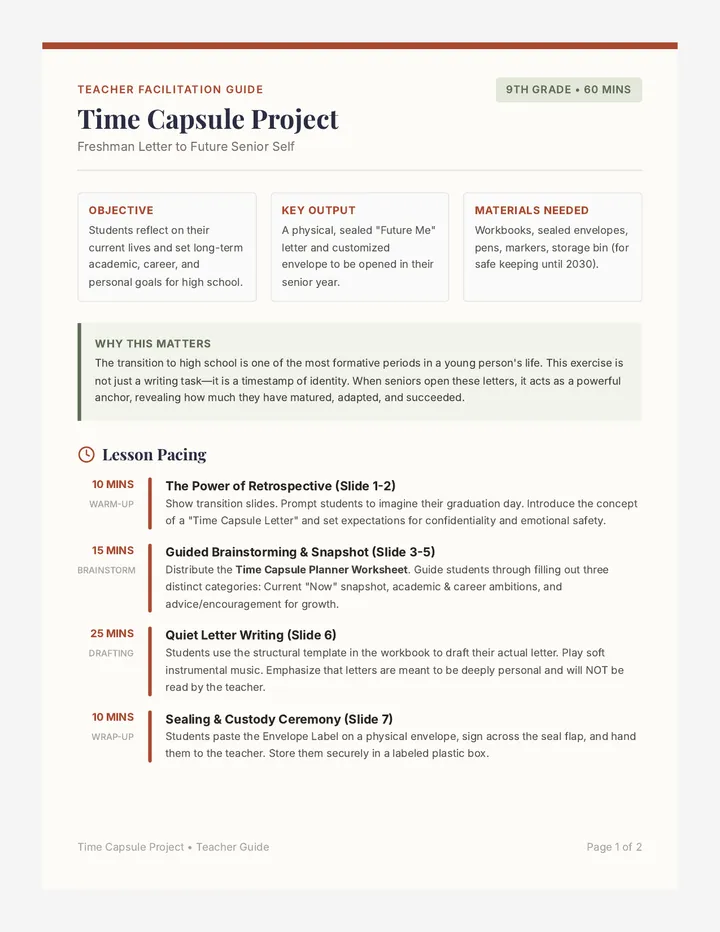
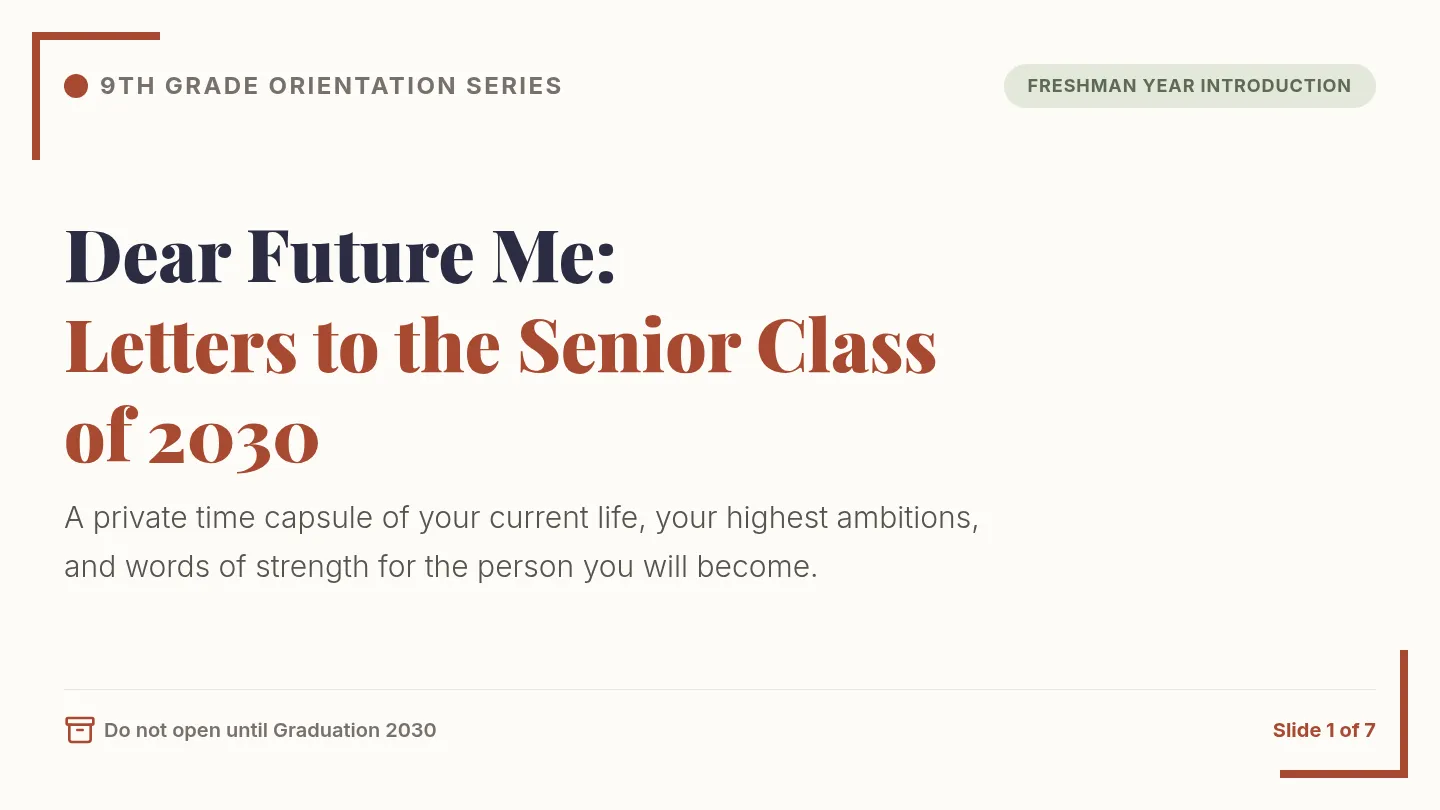
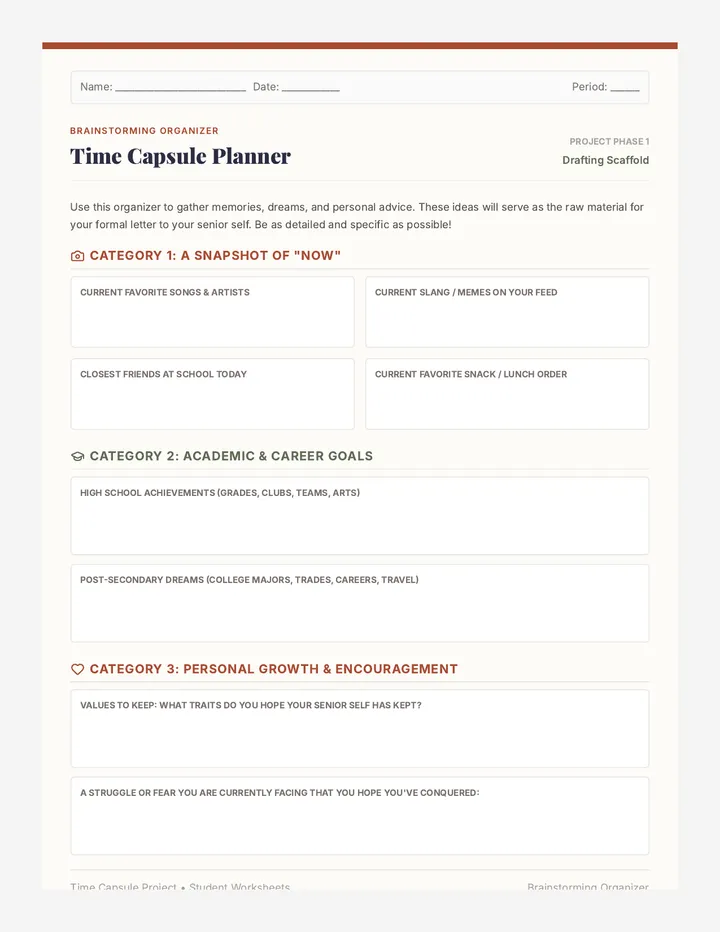
A reflective lesson designed to help high school freshmen write a meaningful letter to their future senior selves, capturing a snapshot of their current life, establishing goals, and offering advice and encouragement.
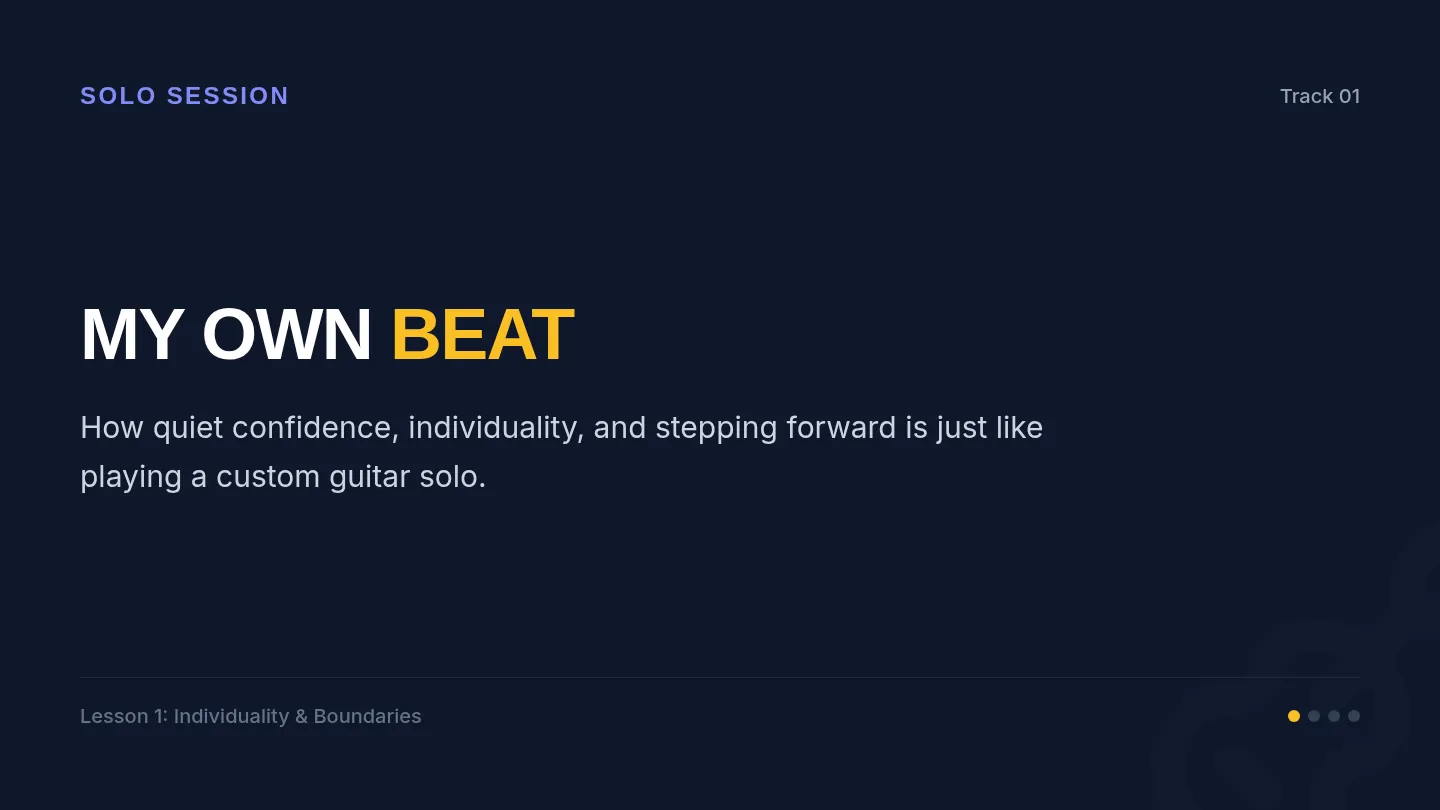
A visual slide presentation for Lesson 1, introducing the guitar metaphor of "rhythm vs. solo," outlining quiet leadership, and showcasing techniques for boundary-setting.
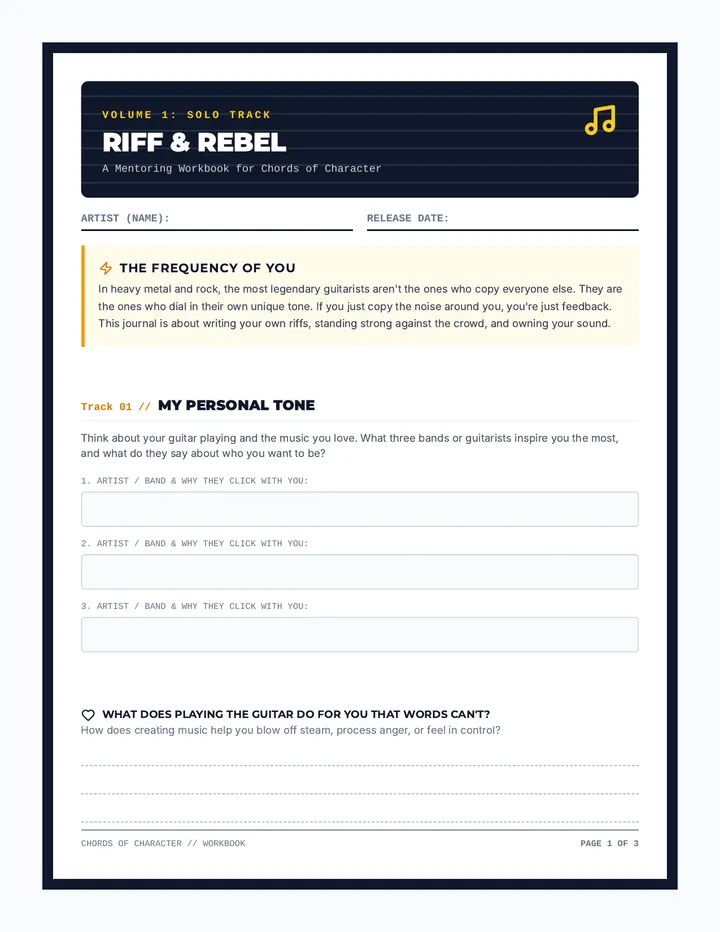
A transition curriculum linking heavy metal passion with character, true rebellion, and leadership. Features an in-school coaching workshop and a parallel at-home action journal for tonight.
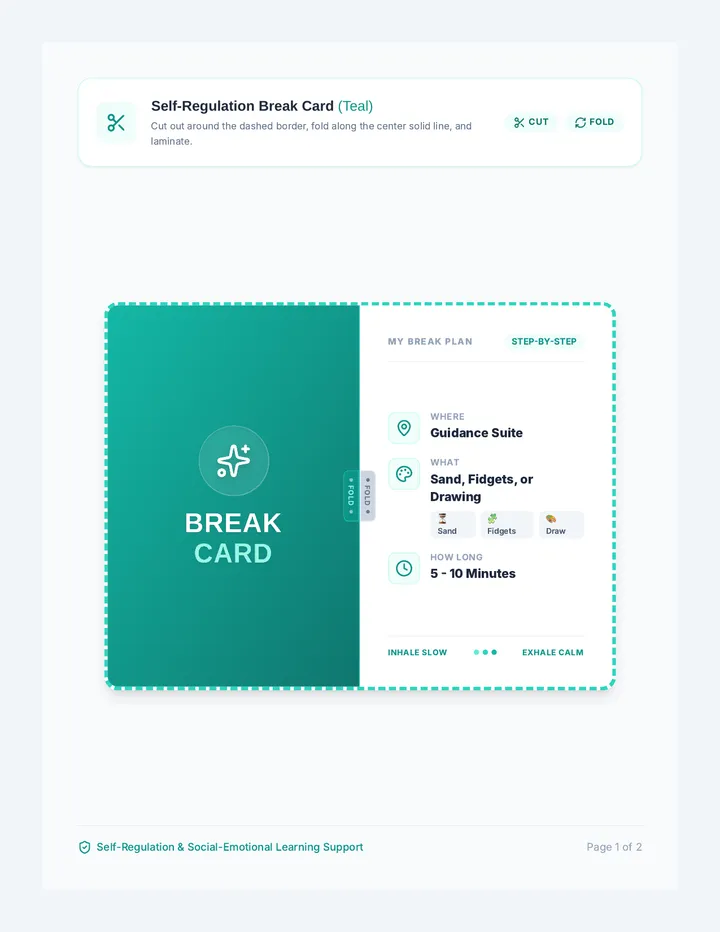
A collection of visual prompts and break cards designed to support students in self-regulation and managing emotions within the school environment.
A facilitator's guide and debrief framework for Lesson 2, providing instructions for helping students research high school directories, sample completed club matchmaking sheets, and conversational roleplay activities.