Resolution Facilitator Guide Resolution Facilitator Guide
Collaborative Conflict Resolution & Cognitive Awareness
Tier 1 Classroom
Lesson Plan • 40 Minutes
Objective
Students will be able to resolve interpersonal conflict using collaborative problem-solving strategies while identifying key neurocognitive skills involved in the process.
Audience
Grade 10 Students
Materials
Discussion Questions
Cognitive Blueprint Worksheet
Writing Utensils & Paper
Scenario Cards (included)
Instructional Approach
Experiential Learning
Direct application through role-play and simulation allows students to test conflict strategies in a low-stakes environment.
Collaborative Learning
Small group dynamics mirror real-world peer interactions, forcing students to use the exact skills they are studying.
Instructional Timeline
0-5 Min
Introduction & Framing
Define conflict resolution through the lens of collaboration vs. confrontation.
Neurocognitive Primer: Explain skills like attention (staying focused on the issue), memory (recalling past patterns), and executive function (planning the solution).
5-15 Min
Guided Discussion
Goal: Externalize personal experiences to create a shared classroom baseline.
Facilitate discussion using the Dialogue Guide.
Focus on "Work Refusal" as a specific conflict trigger.
15-30 Min
The Resolution Lab (Group Work)
Scenario: A group member refuses to contribute to a shared project.Groups must draft a 3-step resolution plan that identifies the "lagging skills" in the peer and proposes a collaborative fix.
30-35 Min
Individual Blueprinting
Students complete the Neurocognitive Skills Assessment worksheet.
Focus on meta-cognition: "Which part of my brain was hardest to activate?"
35-40 Min
Synthesis & Debrief
Compare group solutions. Are they punitive or restorative?
Challenge students to use one "Cognitive Tool" in their next peer interaction.
Scenario Spotlight: Work Refusal
"You are working on a history presentation worth 30% of your grade. One partner, Alex, has not opened the shared slide deck in three days. When you ask them about it, they shrug and say 'I'm just not doing it.' How do you resolve this without involving the teacher yet?"
Resolution Dialogue Guide Resolution Dialogue Guide
Collaborative Problem Solving Discussion
Facilitator Tool
How to use this guide
Use these prompts to lead a 10-minute classroom discussion. Encourage students to move beyond surface-level answers and think about the "why" behind peer behaviors and conflict dynamics.
1
"What are some common reasons students might refuse to complete work?"
Facilitator Tips:
Prompt for personal factors (stress, lack of sleep).
Prompt for external factors (unclear directions, task difficulty).
Challenge the "lazy" narrative—what's under the surface?
Connect to "lagging skills" vs. "bad attitude."
2
"How can collaborative problem solving help in resolving conflicts?"
Facilitator Tips:
Perspective Taking: Discuss how hearing the "other side" changes the solution.Sustainability: Why do collaborative solutions last longer than "power-over" (telling someone what to do) solutions?Compromise: Does everyone get 100% of what they want? Is that the goal?
3
"Can you share a time when you successfully resolved a conflict? What strategies did you use?"
Facilitator Tips:
Encourage students to identify specific "moves" (e.g., "I waited until I was calm," or "I asked a question instead of making an accusation").
Look for links to neurocognitive skills (e.g., "I used self-regulation to stay focused").
Neuro-Focus Extension
"If a student is struggling with Working Memory , how might that look like 'work refusal'? Could they just be overwhelmed by the number of steps in the project?"
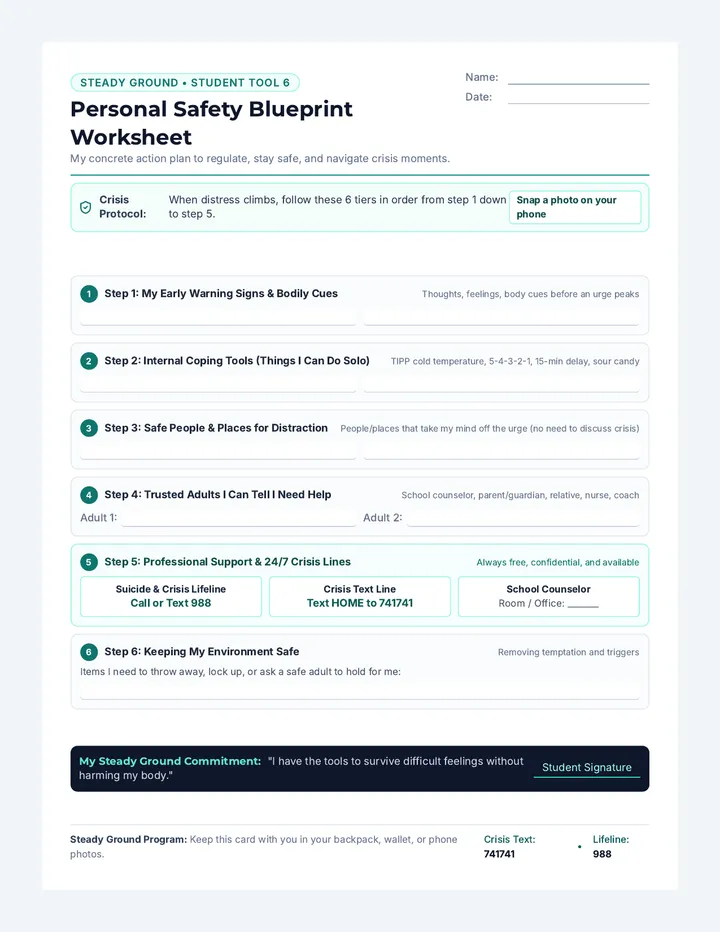
Cognitive Blueprint Worksheet Cognitive Blueprint
Neurocognitive Skills & Conflict Resolution Assessment
Phase Self-Reflection
Student Name
Date
1. Skill Inventory
Reflecting on the group activity (resolving the peer work refusal scenario), list the neurocognitive skills you personally utilized. (Examples: Attention, Working Memory, Task Initiation, Self-Regulation, Cognitive Flexibility, Problem Solving)
2. Impact Analysis
Which neurocognitive skill do you think was most important in reaching a resolution during your group discussion? Why?
3. Growth Target
Identify one skill you found challenging during the activity. How would improving this skill change how you handle future group conflicts?
Self-Reflection Tip: Conflict isn't just about what people say; it's about how our brains process information and emotions in real-time. Developing these skills makes collaboration easier and less stressful.
Resolution Lab Slides Resolution Lab
Collaborative Conflict Resolution
Tier 1 Classroom Series
Today's Target
Identify neurocognitive skills involved in teamwork and conflict.
Practice collaborative problem solving to address work refusal.
Develop a shared language for resolving peer disputes.
The Neurocognitive Lens
"Behind every 'difficult' behavior is a brain working hard to process information."
These skills help us:
Stay Focused (Attention)
Plan & Start (Task Initiation)
Manage Emotions (Self-Regulation)
Switch Ideas (Flexibility)
Class Discussion
What are some common reasons students might refuse to complete work?
Internal Factors
External Factors
Cognitive Load
Why Collaboration Wins
Builds Empathy
You understand the "why" before fixing the "what."
Lasting Change
Solutions work better when everyone agrees to them.
New Skills
You practice flexibility and active listening.
Win-Win Thinking
The Scenario: Work Refusal
"One group partner is refusing to do their part of a project that is due in 2 days. When you ask them, they just shrug and ignore you."
Step 1: Explore
What skill might they be lagging in?
Step 2: Propose
What is a win-win solution?
Blueprint Time
Grab your Cognitive Blueprint Worksheet . Reflection is where the real learning happens.
LIST SKILLS
ANALYZE IMPACT
TARGET GROWTH
Take it With You
Conflict is inevitable, but how we respond is a skill. Try using one neurocognitive tool this week when things get tense.