A collaborative engineering lesson where students work in teams to build paper bridges, focusing on communication, planning, and unity.
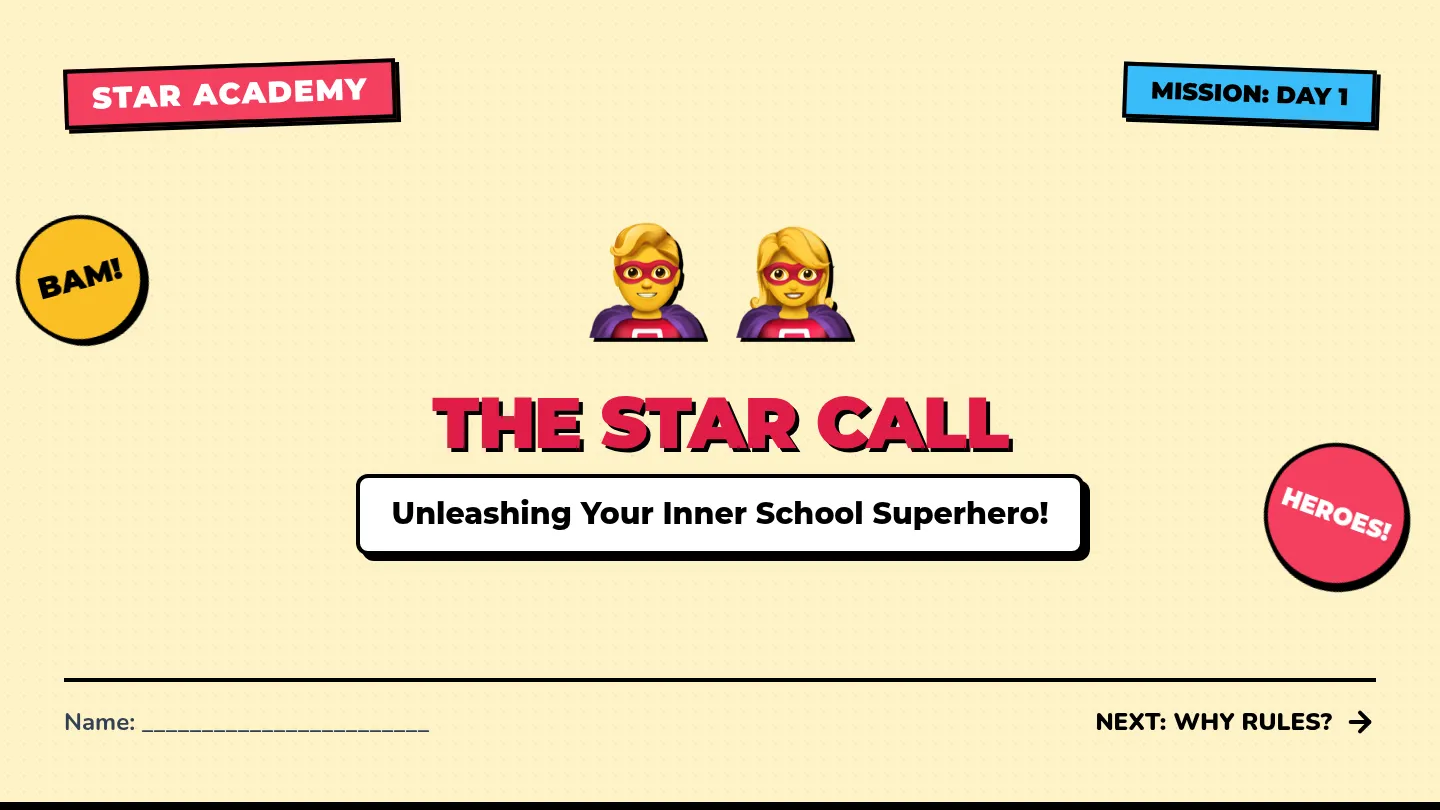
A 5-day curriculum teaching 4th graders the STAR expectations (Safe, Targeting Success, Acting with Integrity, Respect & Responsibility) across classrooms, hallways, bathrooms, playgrounds, and cafeterias using a high-energy comic-book superhero theme.
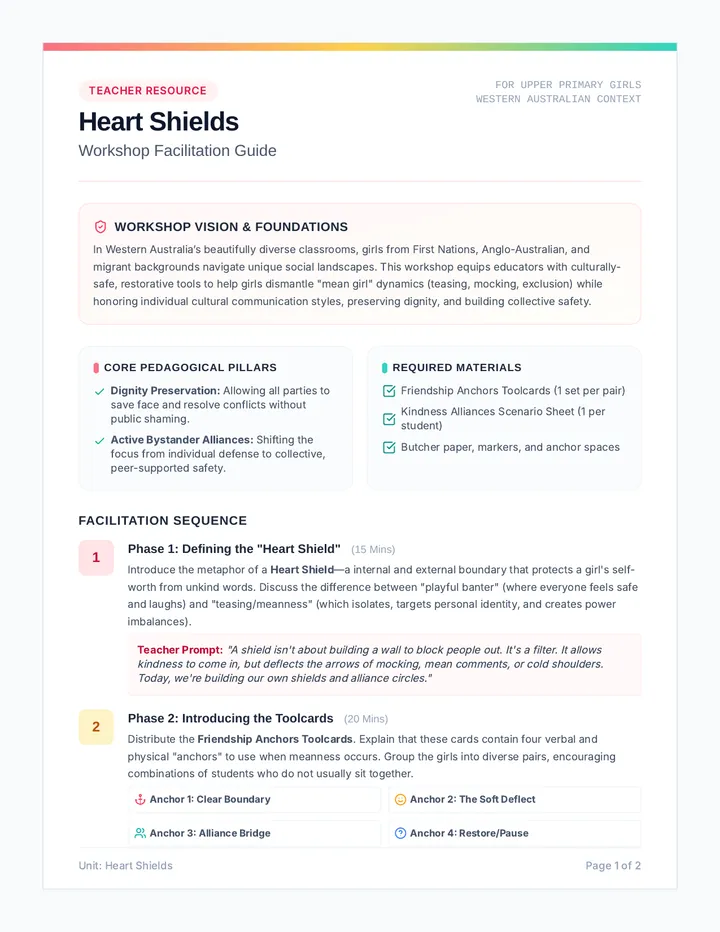
A comprehensive workshop and toolset designed for upper primary girls in diverse Western Australian classrooms. This lesson focuses on building emotional resilience, stopping teasing or meanness, and navigating friendship conflicts with inclusive, culturally-responsive strategies.
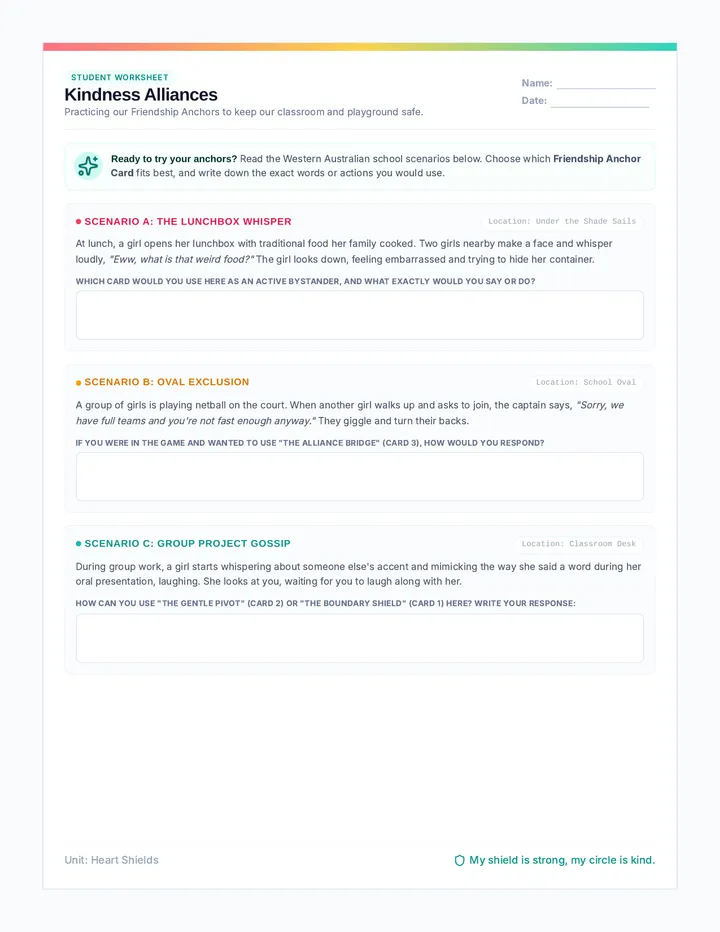
A student-facing activity sheet featuring real-world Western Australian school scenarios. It guides students to apply the 'Friendship Anchors' to address teasing, exclusionary lunchbox comments, and playground cliques, with dedicated writing spaces.
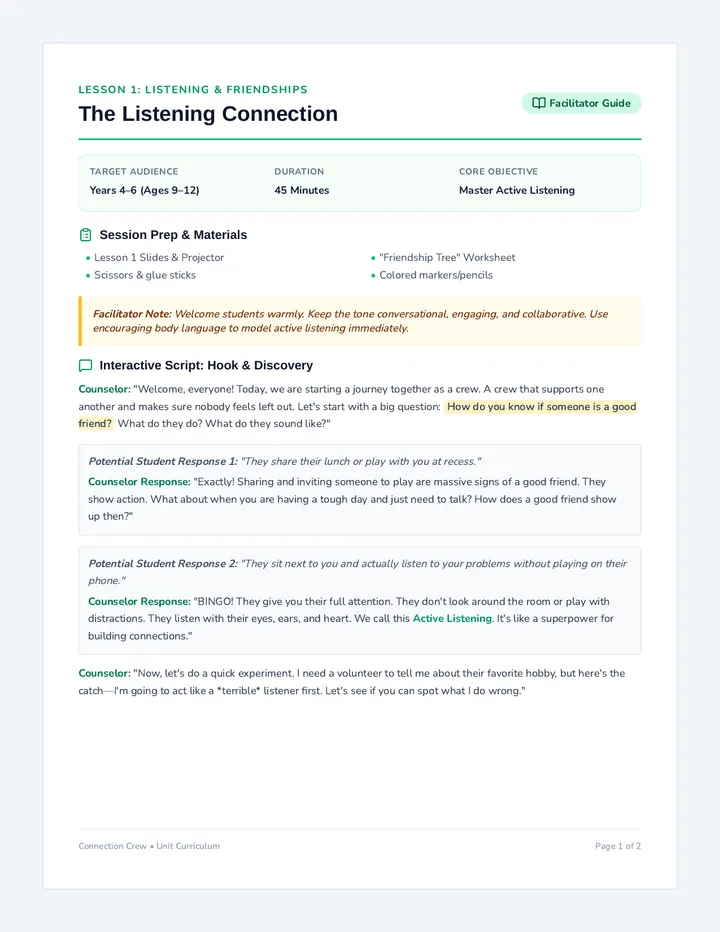
A comprehensive, three-lesson unit designed for Years 4-6 students to build healthy peer connections. The sequence covers active listening, respectful disagreement using the 'Stop - Think - Talk' framework, and building trust through kindness and sincerity.
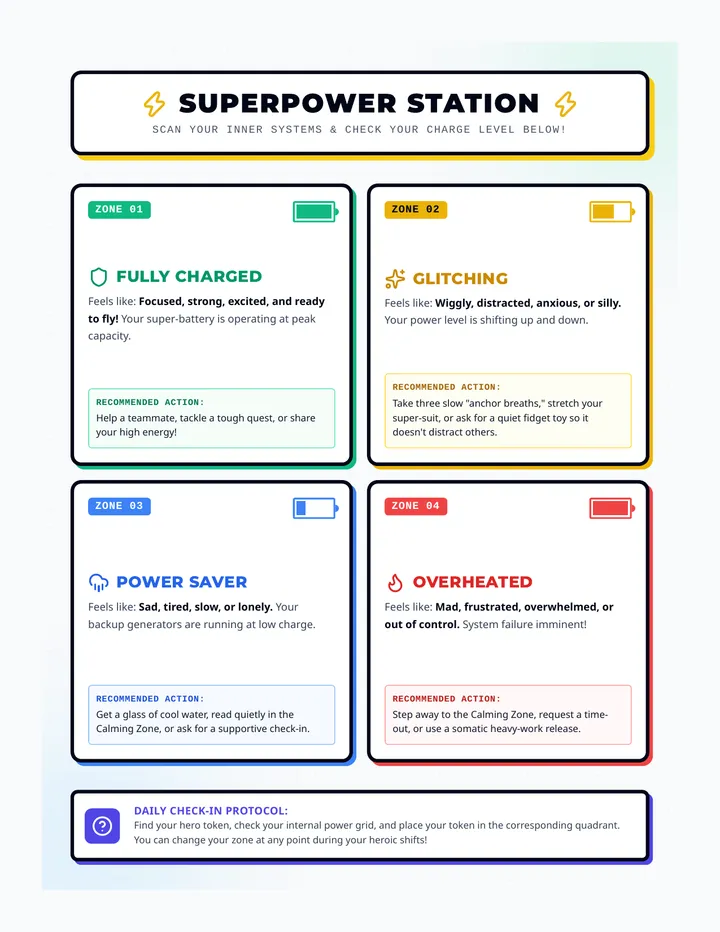
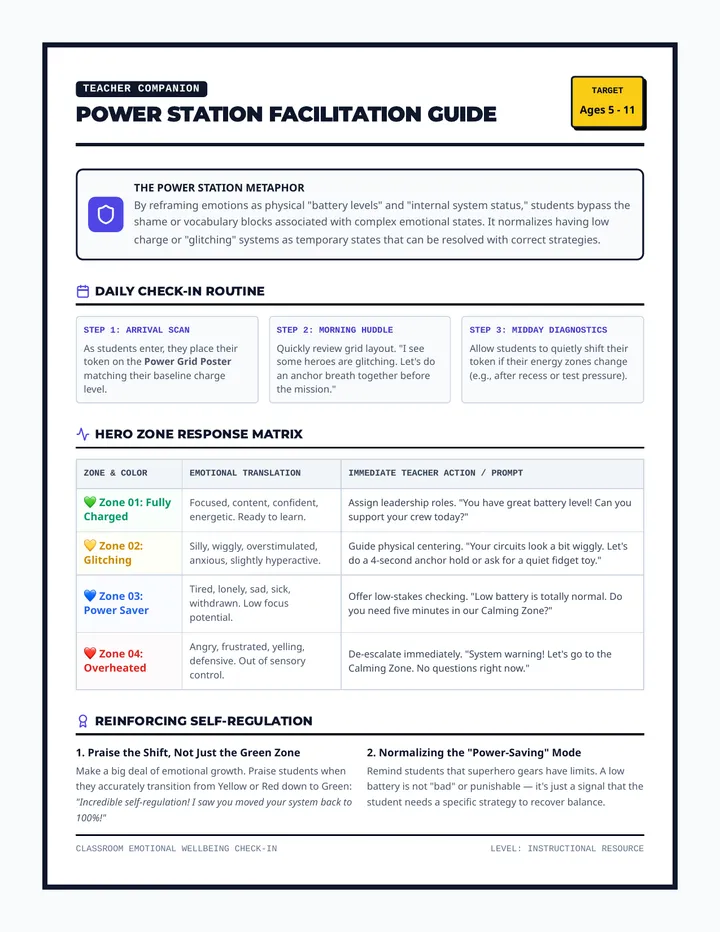
A superhero-themed emotional wellbeing check-in system for primary classrooms. Students rate their emotional state as an inner 'battery charge' and use superhero-themed tokens to check in daily, supported by reflection worksheets and a teacher facilitation guide.
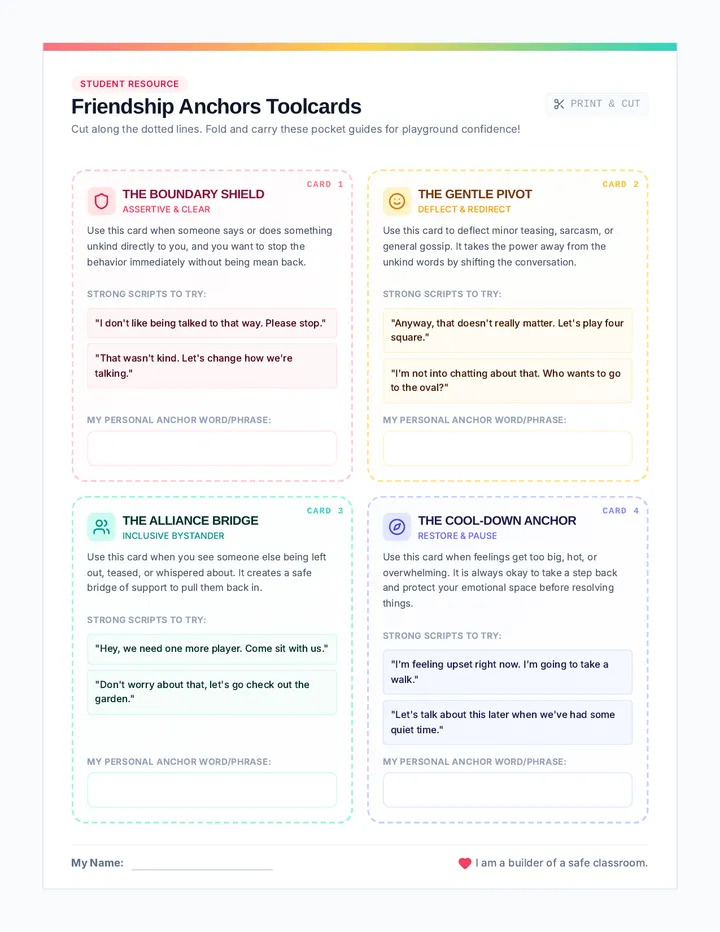
A printable page of 4 portable, step-by-step strategy toolcards designed for students. Each card provides actionable verbal scripts and physical steps to de-escalate teasing, build alliances, and set boundaries, complete with handwriting spaces for personalization.
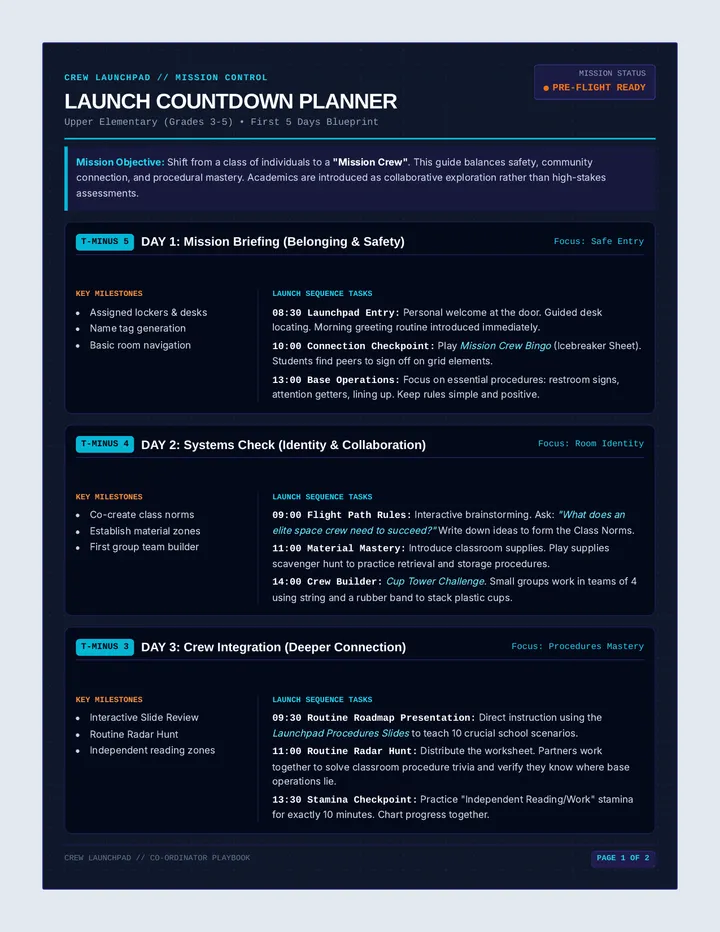
A comprehensive back-to-school launch kit for Upper Elementary (grades 3-5). It includes a detailed five-day lesson planner, engaging community-building activities, and an interactive slide-deck and scavenger hunt to master classroom routines.
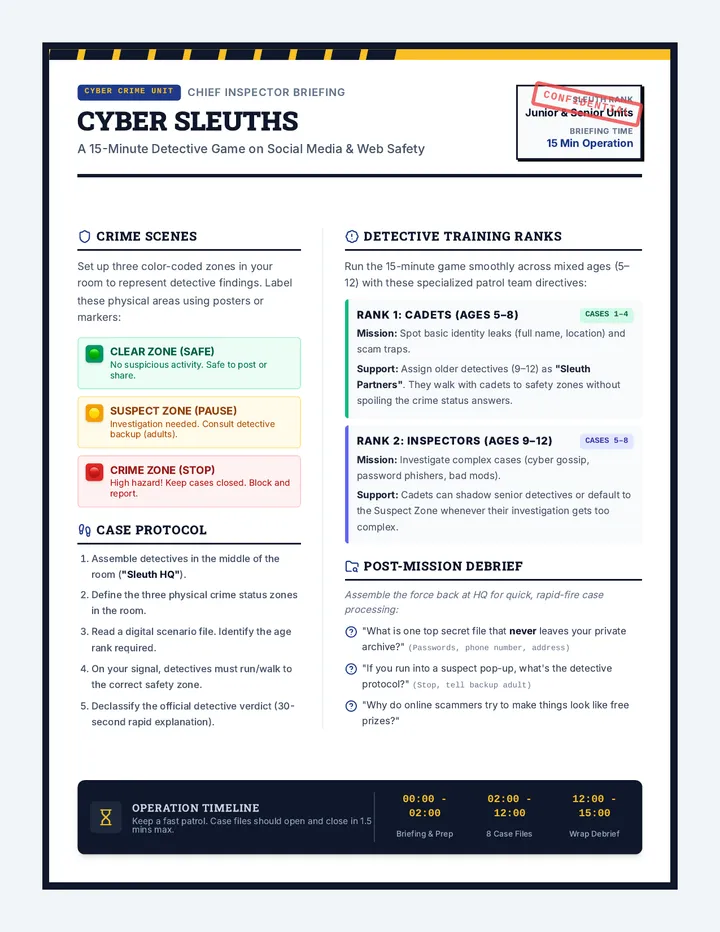
A high-energy, 15-minute movement game designed to teach kids ages 5-12 how to make smart, safe decisions online. Through rapid-fire scenario cards, students act as Cyber Sleuths to solve digital cases and investigate cyber threats.
A 2-page facilitator guide for educators delivering the Heart Shields workshop. It provides a step-by-step facilitation framework, discussion prompts, and culturally-responsive strategies to address teasing and build inclusive friendships in diverse classrooms.
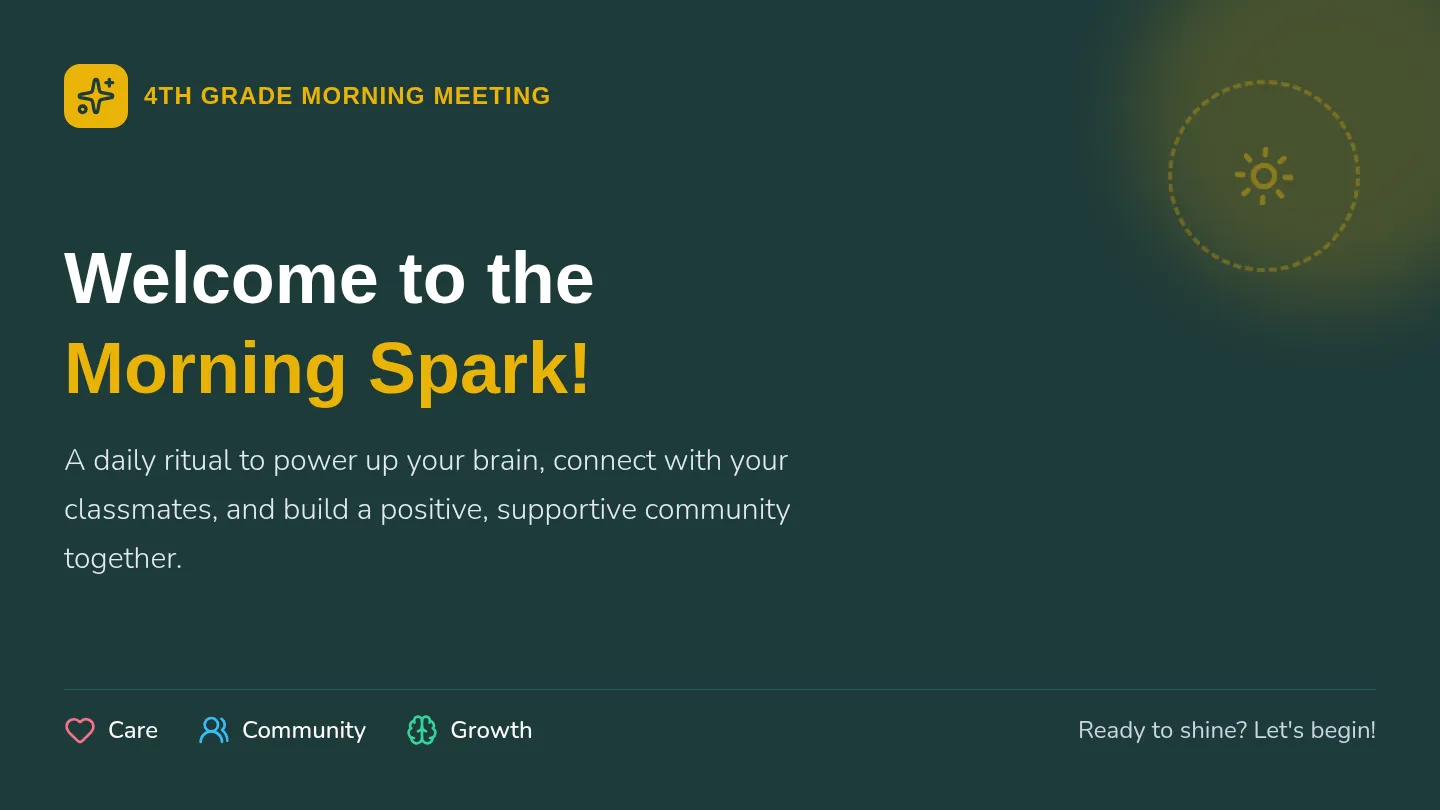
A comprehensive, year-long morning meeting curriculum for 4th graders designed to integrate social-emotional learning, community building, and a growth mindset.
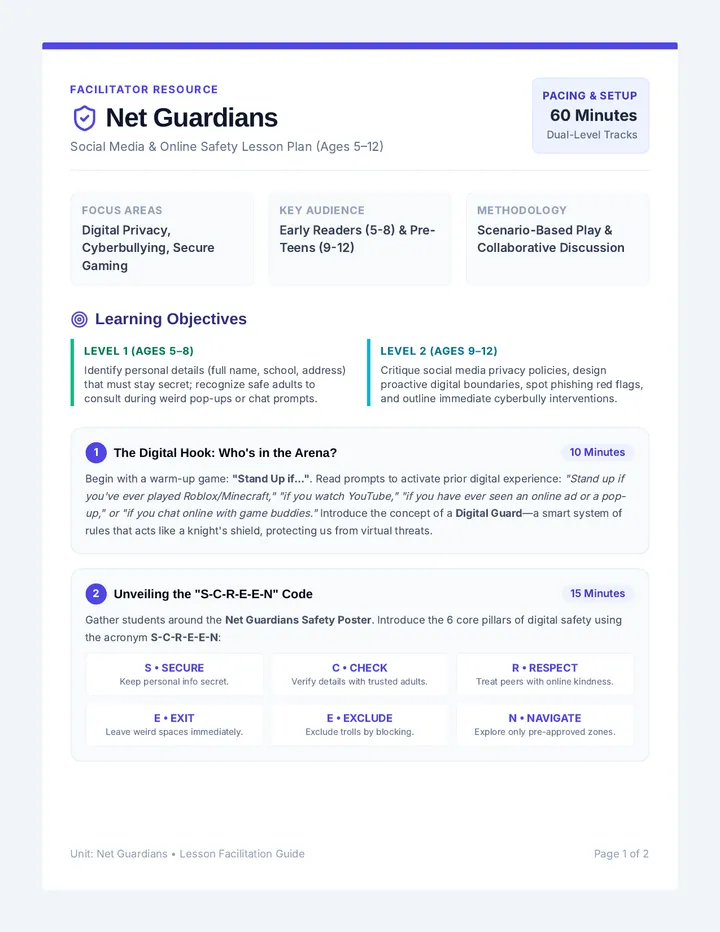
An interactive, dual-level digital safety lesson designed for youth ages 5-12, covering key concepts of digital privacy, cyberbullying, and safe gaming through collaborative activities and differentiated scenario cards.
A comprehensive 1-page teacher facilitation guide outlining classroom deployment, daily routines, check-in prompts, and action steps for helping students manage their different emotional battery levels.