Methods for tracking progress against milestones and evaluating the effectiveness of current action plans. Equips individuals to identify obstacles and implement tactical adjustments to maintain momentum toward long-term objectives.
An engaging, student-centered one-page goal setting worksheet featuring goal categorization, SMART goal framing, three-step action planning, obstacle problem-solving, and a commitment meter.
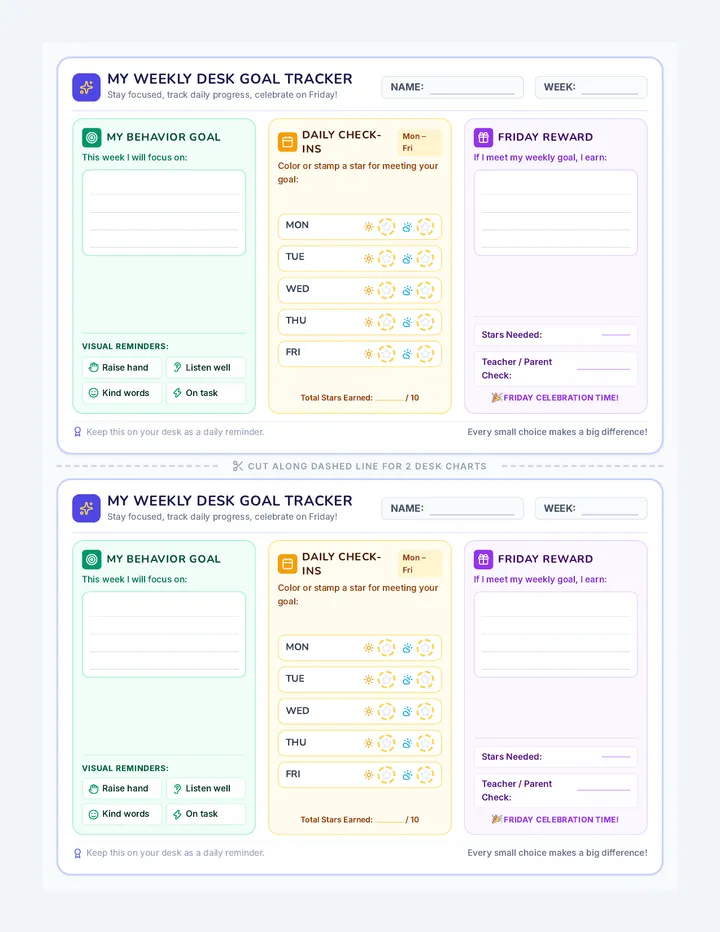
A colorful, four-per-sheet printable desk goal chart with student name lines, side-by-side Goal and Friday Reward writing areas, daily Monday through Friday teacher check boxes, and teacher signature lines.
A 2-page printable dry-erase desk tracker kit designed for student-led blurt self-monitoring. Page 1 features two laminated-ready desk mats for Goal & Count tracking and Interval Self-Checks with a dedicated Thought Parking Lot; Page 2 provides slim desk-edge ruler strips and a weekly goal progress log.
A streamlined, colorful weekly tracker for a 10-year-old boy featuring Name and Week fields, 3 spacious session task rows for Monday through Friday with blank tracking boxes, and an uncluttered end-of-week prize box.
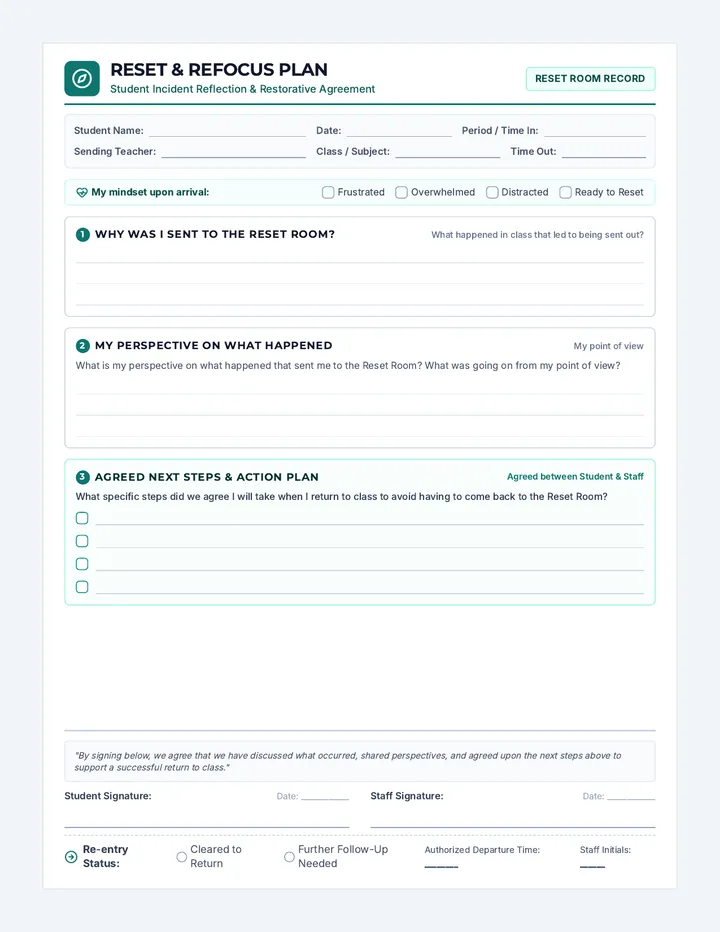
A restorative reset room reflection form with intake data, incident reason, a dedicated student perspective section, custom agreed-upon next steps, and dual student-staff signatures.
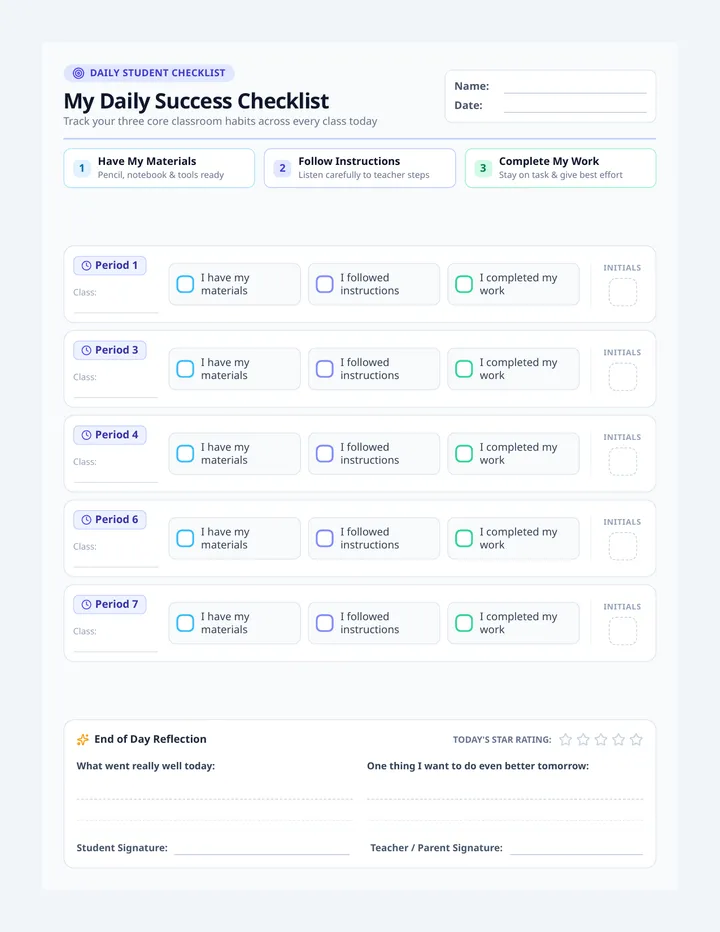
A single-day student self-monitoring checklist organized by class periods (1, 3, 4, 6, and 7). Each period features dedicated checkboxes for having materials ready, following teacher instructions, completing work, and teacher initials, followed by an end-of-day reflection.
A comprehensive two-part unit for Secondary 1 and 2 students focusing on developing impulse control. Students learn to navigate immediate urges using the 'Pause, Think, Act' and 'Pause, Process, Proceed' frameworks through interactive activities, real-world scenarios, and personal planning.
A 6-week social-emotional learning program for 6th-grade girls focused on building healthy friendships, resolving conflicts, practicing empathy, and setting boundaries.
A comprehensive sequence for 6th graders to understand and apply behavioral activation. Students learn how their actions impact their emotions, track their energy levels, brainstorm nourishing activities, and create a sustainable weekly schedule to improve their mental well-being.
In this inquiry-driven sequence, students explore behavioral activation, investigating how their actions influence their emotions. They learn to distinguish between pleasure and mastery activities, conduct personal experiments to track mood changes, and create a personalized evidence-based plan for mood regulation.
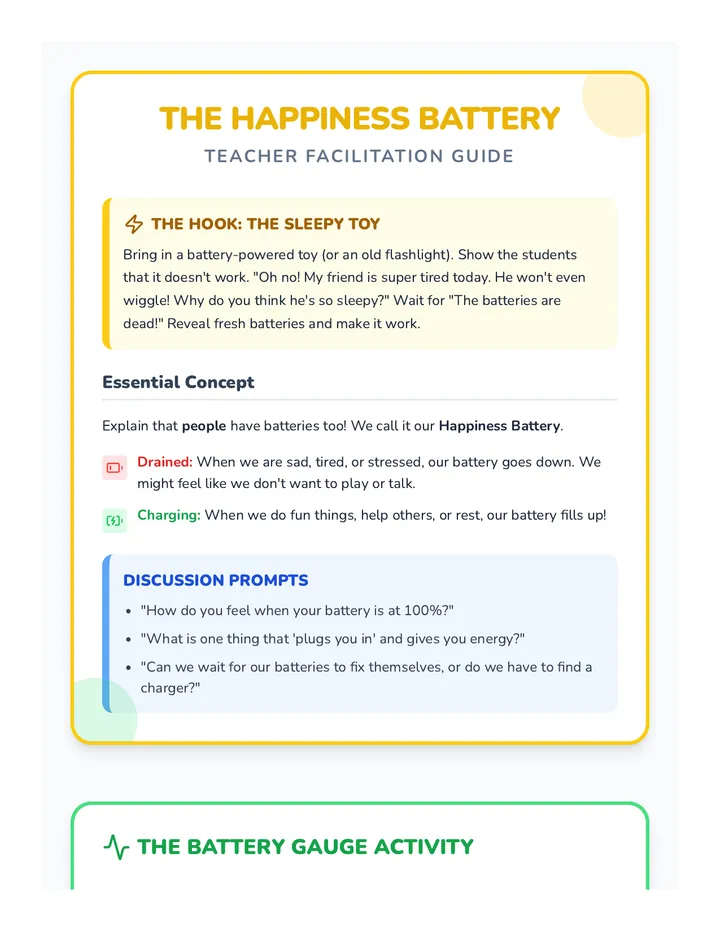
A 1st-grade counseling sequence that uses game-based mechanics and metaphors to teach behavioral activation, emotional resilience, and the importance of daily positive routines.
This sequence shifts focus from the design of the study guide to its utility, emphasizing active recall and self-testing strategies to help students distinguish between familiarity and actual mastery of material.