Tone Spectrum Slides Sonic Sleuths
Lesson 1: The Tone Spectrum
Social Communication Lab Grade 7
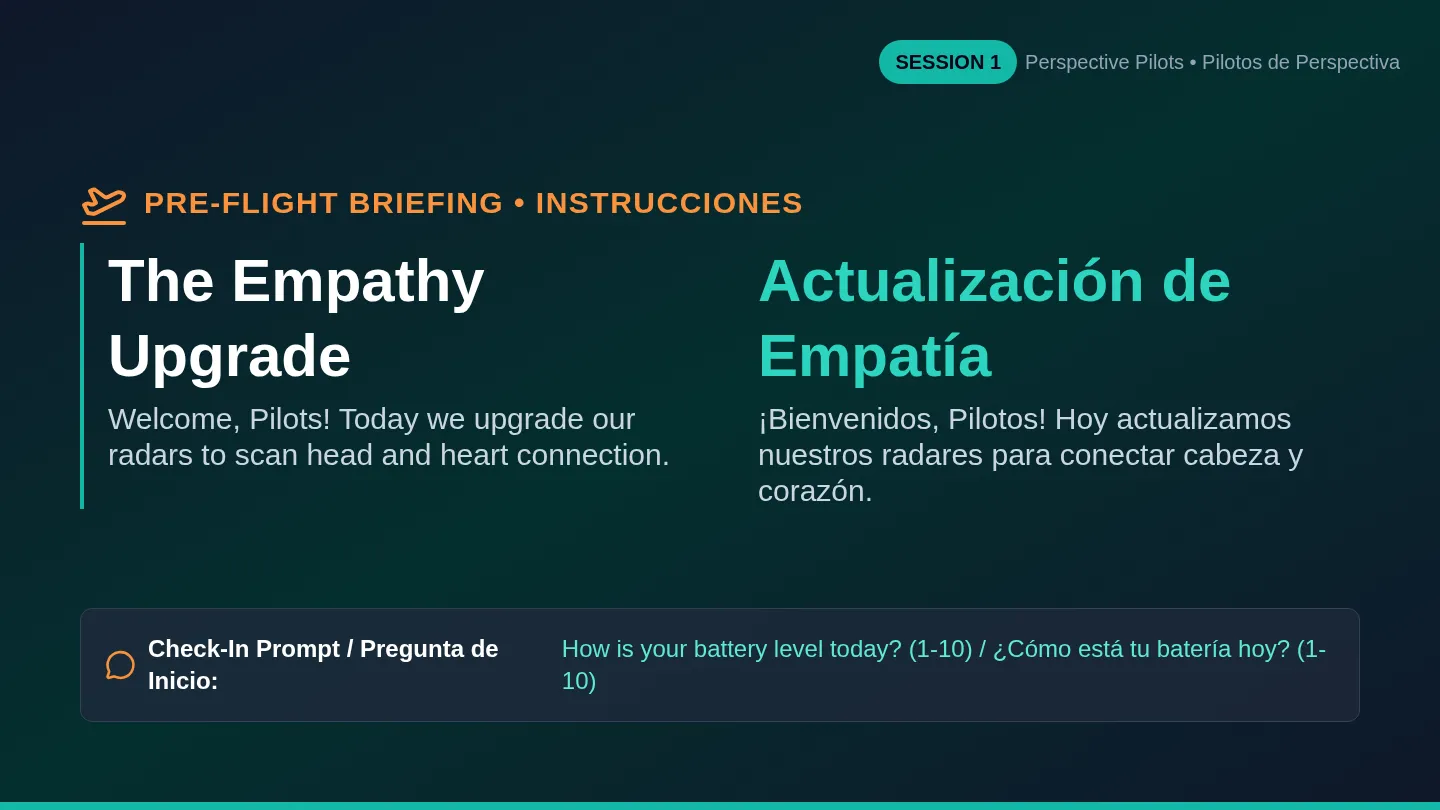
The Robot Test
Listen to your teacher say this sentence:
"Wow, you did a great job today."
Question 1
Did they mean it?
Question 2
How do you know?
The Tone Toolkit
Pitch
How high or low your voice sounds. High pitch often means excitement; low pitch can mean seriousness.
Speed
How fast you talk. Fast can mean nervous or excited. Slow can mean bored or careful.
Volume
How loud or soft you are. It shows the intensity of your emotion.
The "Thanks" Challenge
😊
Genuine
🙄
Sarcastic
😡
Angry
😔
Sad
🤩
Excited
One word. Five meanings. Can you hear the difference?
The Social Connection
Avoiding Friction
If we misinterpret tone, we might get our feelings hurt or miss a joke.
Building Intent
Learning to control our own tone helps people understand what we really mean.
Discussion: When was a time you misunderstood someone's tone?
Tone Spectrum Worksheet Sonic Sleuths: Lab Report
Mission 1: The Tone Spectrum
Sleuth:
Date:
1
Component Match-Up
Draw a line from the vocal component to its laboratory definition.
Pitch
Speed
Volume
The intensity of your sound (loud vs. soft).
How high or low your voice sounds on a musical scale.
The rate at which you speak (fast vs. slow).
2
The "Thanks" Challenge
Your teacher will say "Thanks" in different ways. Listen carefully and record what you hear.
Attempt # Pitch/Speed? What did they really mean? Example High / Fast They are excited about a gift! 1 2 3 4
3
Sleuth's Conclusion
If someone says "Nice shoes" with a very low pitch and slow speed, what are they probably trying to communicate?
Why is it important to listen to the tone and not just the words ?
Tone Spectrum Teacher Guide Teacher Facilitation Guide
Lesson 1: The Tone Spectrum
Duration: 45-50 Minutes
Lesson Objective
Students will define and identify the three core components of vocal tone (pitch, speed, volume) and explain how these components change the meaning of a single word using the "Thanks Challenge."
Key Vocabulary
Pitch Inflection Auditory Discrimination Sarcasm
Materials
Tone Spectrum Slides
Tone Spectrum Worksheet
Robot voice (optional prop)
Instructional Flow
The Hook: The Robot Test
5-10 MIN
Start by giving a "compliment" to the class in a completely flat, robotic monotone. "Wow... you did a great job today..."
Prompt: "Did I sound happy? Why not? I used the word 'great'. Doesn't 'great' mean good?"
Core Instruction: The Tone Toolkit
15 MIN
Use the slides to define Pitch, Speed, and Volume. Use physical gestures:
Pitch: Hand moving up/down (like a slide).
Speed: Hand moving fast/slow (like a car).
Volume: Hands moving wide/close (like a balloon).
Simulation: The "Thanks" Challenge
20 MIN
This is the heart of the lesson. You will say "Thanks" five times. Students record observations on their worksheet.
1. Genuine: Medium pitch, warm speed.
2. Sarcastic: Very slow, low-high-low pitch slide.
3. Angry: Loud, fast, clipped ending.
4. Sad: Low pitch, very slow, breathy.
5. Excited: Very high pitch, fast, rising end.
Teacher Tips & Differentiation
For Visual Learners
Draw "soundwaves" on the board for each 'Thanks' to show the visual shape of the tone (jagged for angry, smooth for genuine).
Correcting Literalism
If a student insists 'Thanks' always means you're happy, remind them: "The words are the mail, but the tone is the address. If the address is wrong, the mail doesn't get to the right place."
Detecting Mismatches Slides Detecting Mismatches
Lesson 2: Spotting the Sarcasm Clues
Sonic Sleuths Lab Mission: Identify Non-Verbal Conflicts
Something is Wrong...
Picture this scenario:
Someone stares at a flat tire in the rain and says:
"Oh, GREAT."
The Words
"Great" means good, wonderful, or happy.
The Reality
A flat tire in the rain is annoying and bad.
MISMATCH DETECTED!
The Sarcasm Equation
Positive Words
Negative Clues
=
SARCASM
When the words don't match the face, the tone, or the situation, the speaker usually means the opposite of what they said.
The Sleuth's Checklist
The Eyes
Rolling eyes, looking away, or squinting.
The Mouth
A "fake" smile or a tight, flat line.
The Tone
Exaggerated, very slow, or "flat."
The Context
Does the comment fit what's actually happening?
The Video Lab
Clip Observation Zone
Your teacher will play short clips here. Look for the Mismatch .
PAUSE SPOT THE CLUE DECODE
Detecting Mismatches Worksheet Sonic Sleuths: Lab Report
Mission 2: Detecting Mismatches
Sleuth:
Date:
1
The Sarcasm Equation
Fill in the missing parts of the equation to show how we detect sarcasm.
Positive Words
Negative Clues
=
SARCASM
2
Video Lab: Spotting the Mismatch
As you watch the clips, identify the words spoken and the negative clues that don't match them.
CLIP #1
Words Spoken:
Negative Clues (Face, Tone, Eyes):
CLIP #2
Words Spoken:
Negative Clues (Face, Tone, Eyes):
CLIP #3
Words Spoken:
Negative Clues (Face, Tone, Eyes):
3
Sleuth's Thinking
Why do people use sarcasm instead of just saying "I'm unhappy" or "This is bad"?
Detecting Mismatches Teacher Guide Teacher Facilitation Guide
Lesson 2: Detecting Mismatches
Focus: Conflict Identification
Lesson Objective
Students will define the concept of a "mismatch" in communication and use a systematic checklist (eyes, mouth, tone, context) to identify sarcasm in visual scenarios and video clips.
Prep Needed
Select 3-4 video clips of sarcasm (suggestions: The Office , Parks & Rec , or Disney/Pixar clips where characters are annoyed).
Guidance
Step 1: The Sarcasm Equation
Introduce the formula: Positive Words + Negative Clues = Sarcasm .
"Sarcasm is like a math problem. If I say something 'nice' but my face looks 'mean', the answer isn't 'nice'. The answer is 'sarcastic'."
The Non-Verbal Menu
Teach students to scan in this order:
1. Eyes (Rolling/Squinting)
2. Mouth (Tight/Fake Smile)
3. Tone (Slow/Flat/High)
4. Context (Is it a bad time?)
Pro-Tip
Watch clips once for "The Vibe" (how do they feel?), then a second time with no sound to focus only on the face. Finally, watch with only sound (eyes closed) to focus on the tone.
Step 3: The Video Analysis
Pause the video the moment the "Mismatch" occurs. Ask:
Question A: "What are the words telling us?"
Question B: "What is the body telling us?"
Guided Discussion Questions
?
"Why is it harder to detect sarcasm over a text message?" (No tone/face clues).
?
"What happens if we ONLY listen to the words and ignore the mismatch?" (We miss the true meaning).
Sarcasm vs Lying Slides Sarcasm vs. Lying
Lesson 3: Decoding the Intent
Sonic Sleuths Lab Mission: Truth, Deception, and Banter
Who is Being Dishonest?
Scenario A
"I didn't do my homework because my dog ate it."
Wait... is that true?
Scenario B
"Oh yeah, I just LOVE spending five hours on homework!"
Wait... do they mean it?
Both people said something that isn't true. So, what's the difference?
Case 1: The Lie
The Goal
To make someone believe something that is false .
The Tone
Usually sounds genuine or "normal" because they want to trick you.
INTENT: DECEPTION
Case 2: Sarcasm
INTENT: CONNECTION
The Goal
To make someone understand the opposite of the words.
The Tone
Usually sounds exaggerated or "weird" because they want you to know it's a joke.
The Intent Triangle
The Truth
What actually happened?
The Words
What did they say?
The Clues
How did they say it?
Lying hides the truth. Sarcasm expects you to find it.
Sarcasm vs Lying Worksheet Sonic Sleuths: Lab Report
Mission 3: Sarcasm vs. Lying
Sleuth:
Date:
1
The Intent Sort
Read each scenario and check the box that best describes the speaker's intent.
"No, I didn't break the lamp. It must have fallen over by itself."
Spoken in a very serious, normal tone.
Lying
Sarcasm
"Oh, great! My coffee is cold. Just how I like it."
Spoken with an exaggerated roll of the eyes.
Lying
Sarcasm
"I already turned my paper in yesterday. You must have lost it."
Spoken while looking the teacher in the eye calmly.
Lying
Sarcasm
2
The Intent Triangle Analysis
Pick one of the scenarios from Part 1 and break it down using the Detective's logic:
1. The Words
What did they actually say?
2. The Truth
What is really happening?
3. The Clues
What were their eyes, face, and tone doing?
3
Sleuth's Discovery
Lying is often used to get out of trouble. Sarcasm is often used to share a feeling about trouble. Explain what this means in your own words.
Sarcasm vs Lying Teacher Guide Teacher Facilitation Guide
Lesson 3: Sarcasm vs. Lying
Focus: Determining Intent
Lesson Objective
Students will differentiate between sarcasm and lying by analyzing the speaker's goal (intent). They will understand that lying aims to deceive, while sarcasm aims to be understood as the opposite of the spoken words through specific vocal and facial cues.
Key Instructional Points
The Big Difference: The Secret
Lying
"I want you to keep the secret."
Lying works best when the listener doesn't know the truth. The speaker hides the clues.
Sarcasm
"I want you to be in on the secret."
Sarcasm only works if the listener finds the truth. The speaker highlights the clues.
Facilitating the Intent Triangle
When a student is confused, walk them through the three points of the triangle:
1
The Reality: What is actually happening? (e.g., The pizza is burnt).
2
The Words: What did they say? (e.g., "This pizza looks delicious").
3
The Clues: Did their face/tone match the reality or the words? (e.g., They rolled their eyes—the eyes match the reality, not the words).
Discussion: Social Impact
Why do we care which one it is?
The Impact of Lying:
It breaks trust. People feel tricked or manipulated.
The Impact of Sarcasm:
It's a "social glue." It's sharing an opinion through humor. But, if overused, it can feel mean or negative.
Differentiation Tip
"For students who struggle with abstract intent, use the 'Friend Test'. Does the speaker want to trick the teacher (Lying) or make a friend laugh about a situation (Sarcasm)?"
Vibe Check Role Play Slides Vibe Check
Lesson 4: The Performance Challenge
Sonic Sleuths Arena Mission: Expressive Accuracy
Guess the Vibe
Round 1: Teacher Performance
"Yeah, this is exactly what I wanted for lunch."
GENUINE
They love their lunch!
SARCASTIC
Their lunch is terrible.
The Rules of the Game
01
Grab a Script
Work with a partner. Pick a short scene card.
02
Draw a Vibe
SECRETLY draw a "Mood Card." Sincere or Sarcastic?
03
Perform & Guess
Act it out! The class must guess your vibe.
The Acting Toolkit
To be Sincere...
Match your face to your words.
Keep your tone steady and warm.
No eye-rolling!
To be Sarcastic...
Create a "Mismatch."
Exaggerate your tone (High/Low).
Use your eyes to show you're lying.
Scoring Points
Actor Points
Earn 10 points if the class correctly guesses your vibe!
Sleuth Points
Earn 5 points for every "Mismatch" you can identify correctly.
Bonus Points
Earn 10 points for explaining how you knew the tone.
Vibe Check Role Play Cards Vibe Check: Action Cards
Cut these out for the Lesson 4 Role-Play Challenge.
Script Cards (The Scenarios)
Scene A
"This is the best sandwich I have ever eaten in my entire life."
Perform this in the vibe you draw!
Scene B
"I am so excited to spend my whole Saturday cleaning the garage."
Perform this in the vibe you draw!
Scene C
"You are such a great friend for helping me with this."
Perform this in the vibe you draw!
Scene D
"Wow, that movie was so interesting. I wasn't bored at all."
Perform this in the vibe you draw!
Mood Cards (The Vibe)
SINCERE
Match your face and tone to your words. You mean it!
SARCASTIC
Create a mismatch. Your words are nice, but your face is annoyed.
SINCERE
Match your face and tone to your words. You mean it!
SARCASTIC
Create a mismatch. Your words are nice, but your face is annoyed.
SINCERE
Match your face and tone to your words. You mean it!
SARCASTIC
Create a mismatch. Your words are nice, but your face is annoyed.
SINCERE
Match your face and tone to your words. You mean it!
SARCASTIC
Create a mismatch. Your words are nice, but your face is annoyed.
Instructions for Prep:
Cut the Script Cards and Mood Cards separately. Place them in two different envelopes. Students draw one from each to determine their performance.
Vibe Check Role Play Teacher Guide Teacher Facilitation Guide
Lesson 4: Vibe Check Role Play
Activity: Game-Based Simulation
Lesson Objective
Students will demonstrate expressive control of vocal tone and non-verbal cues to accurately convey either a sincere or sarcastic "vibe" during a role-play activity. Peer students will use deductive reasoning to identify the intended tone.
Setup Instructions
Print and cut the Vibe Check Cards .
Place Script Cards in Envelope A.
Place Mood Cards in Envelope B.
Set up a "Stage Area" at the front of the room.
Quick Script Tips
If students are stuck, encourage these specific "tweak" words:
Sincere: "Say it like you're telling your best friend a secret you're happy about."
Sarcastic: "Say it like you're really bored and waiting for the bus in the rain."
Physical: "Roll your eyes *before* you speak for the sarcastic version."
Gameplay Loop
1
The Secret Draw
Actors draw their script and their vibe. Ensure they keep the "Mood Card" hidden from the audience!
2
The Performance
Encourage actors to use the "Acting Toolkit" from the slides. Remind them: No laughing until the scene is over!
3
The Vibe Check
The audience votes. Ask one "Sleuth" to explain: "I think it was sarcastic because their tone was flat and they rolled their eyes."
Scoreboard Template
Team Name
Accuracy (Actors)
Analysis (Sleuths)
Responding to Sarcasm Slides Sarcasm Toolkit
Lesson 5: The Social Response
Sonic Sleuths Capstone Mission: Respond with Confidence
The Literal Trap
Someone says sarcastically:
"Yeah, this 10-mile hike is just a walk in the park."
The Literal Response
"Actually, it's 10 miles. A park is usually smaller."
CUE THE AWKWARD SILENCE...
Your Response Options
Option 1: Laugh / Smile
Shows you "get it." The simplest way to keep the conversation going.
Option 2: Play Along
Add your own sarcastic comment. "Oh yeah, let's do another 10 miles!"
Option 3: Ignore the Sarcasm
Respond to the *feeling* instead of the words. "Yeah, I'm tired too."
Is it Friendly?
Banter (Friendly)
✅ Everyone is laughing.
✅ It's about a situation .
✅ It builds the relationship.
Meanness (Not Friendly)
❌ Only one person is laughing.
❌ It's about a person's feelings .
❌ It hurts the relationship.
The "Rewind" Challenge
If someone says sarcastically:
"Nice haircut. Did you do it yourself with a lawnmower?"
What's the vibe?
How do you respond?
Responding to Sarcasm Worksheet Sonic Sleuths: Lab Report
Mission 5: The Response Toolkit
Sleuth:
Date:
1
The Toolkit Match-Up
A. Laugh / Smile
B. Play Along
C. Ignore & Validate
___ You respond to the *feeling* instead of the literal words.
___ You show you understand the joke without needing to say anything.
___ You add your own sarcastic comment to keep the banter going.
2
Rewind and Refine
Read the "Bad Reaction" (literal) and write a "Better Reaction" using one of your toolkit options.
"Oh, amazing. I just dropped my phone in the toilet."
SARCASTIC
Literal Reaction (Bad):
"That's not amazing. That's actually very gross and bad."
Your Refined Reaction:
"Wow, the cafeteria pizza is basically a gourmet meal."
SARCASTIC
Literal Reaction (Bad):
"It's just frozen pizza. Gourmet means high quality food."
Your Refined Reaction:
3
The Safety Check
What is one sign that sarcasm has turned from "Friendly Banter" into "Mean Bullying"?
If you realize your own sarcasm has hurt someone's feelings, how can you "fix" the interaction?
Responding to Sarcasm Teacher Guide Teacher Facilitation Guide
Lesson 5: Responding to Sarcasm
Focus: Social Responsiveness
Lesson Objective
Students will identify and practice appropriate social responses to sarcasm (laughing, playing along, ignoring the literal words) to maintain positive peer relationships and distinguish between playful banter and bullying.
Why Response Matters
For students with social communication challenges, the default is often to correct the facts (The "Literal Trap"). This stops the conversation and can make peers feel awkward or like the student "doesn't get it." This lesson focuses on the social outcome over the factual truth .
Facilitating the Toolkit
Laugh / Smile
When to use: When you understand it's a joke but don't know what to say.
Teacher Script: "A smile says 'I hear your joke and I'm with you.' It's the safest response."
Play Along
When to use: When you're with close friends and want to join the "vibe."
Teacher Script: "Sarcasm is like a ball. Playing along is catching the ball and throwing it back."
The Safety Check (Crucial)
Teach students the "One Laugh Rule":
If everyone laughs...
It's probably Banter . It's safe to play along.
If only one laughs...
It might be Meanness . It's better to stay quiet or tell an adult.
Common Misconception
Students often ask: "But isn't sarcasm lying? Should I tell them it's not true?"
Your Answer: "In your head, you know it's not true. But in a social group, your job is to respond to how the person feels , not the facts they say."