A comprehensive teacher lesson plan for the Unity Mission activity, featuring clear steps, materials list, and time-stamped instructions for Grades 1-2.
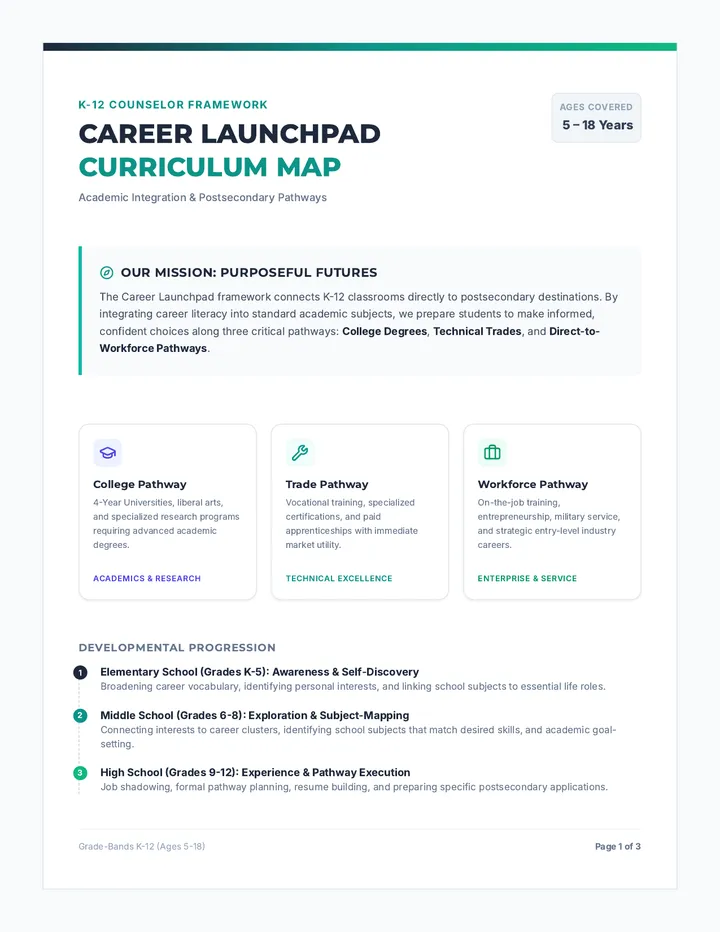
A comprehensive career exploration framework and counselor planning toolkit for grades K-12. This curriculum maps academic subjects to real-world career paths (college, trade school, and workforce) and provides counselors with implementation templates, annual pacing calendars, and a school-wide Career Day blueprint.
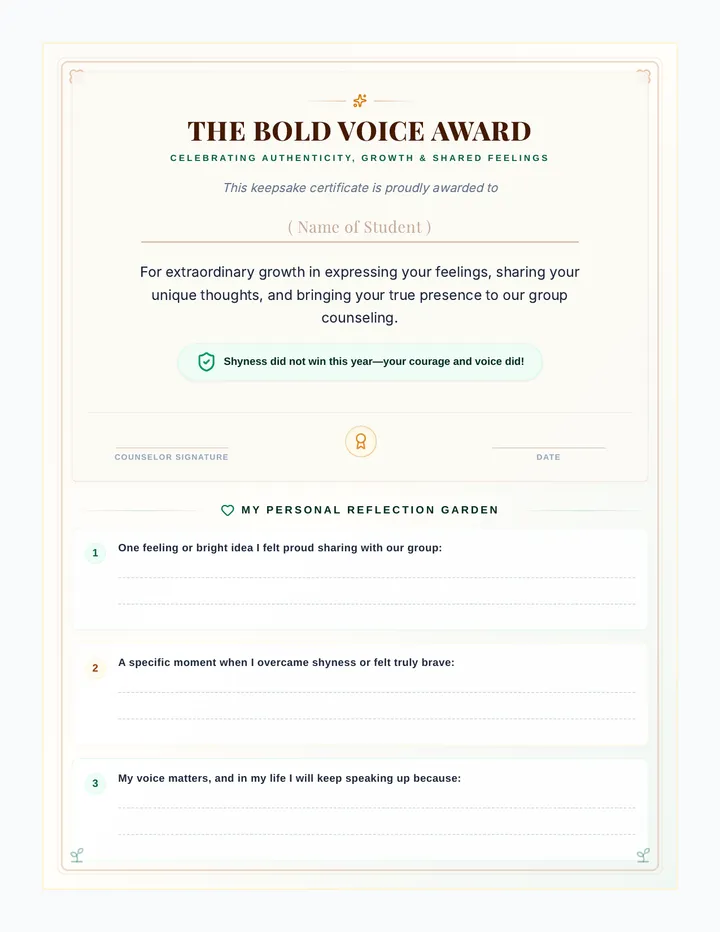
A reflective counseling lesson celebrating emotional expression, triumph over shyness, and setting intentions for speaking up with confidence in group settings.
A beautiful, warm, and reflective landscape-inspired keepsake award certificate and interactive student reflection document celebrating a student's personal growth and triumph over shyness in group counseling.
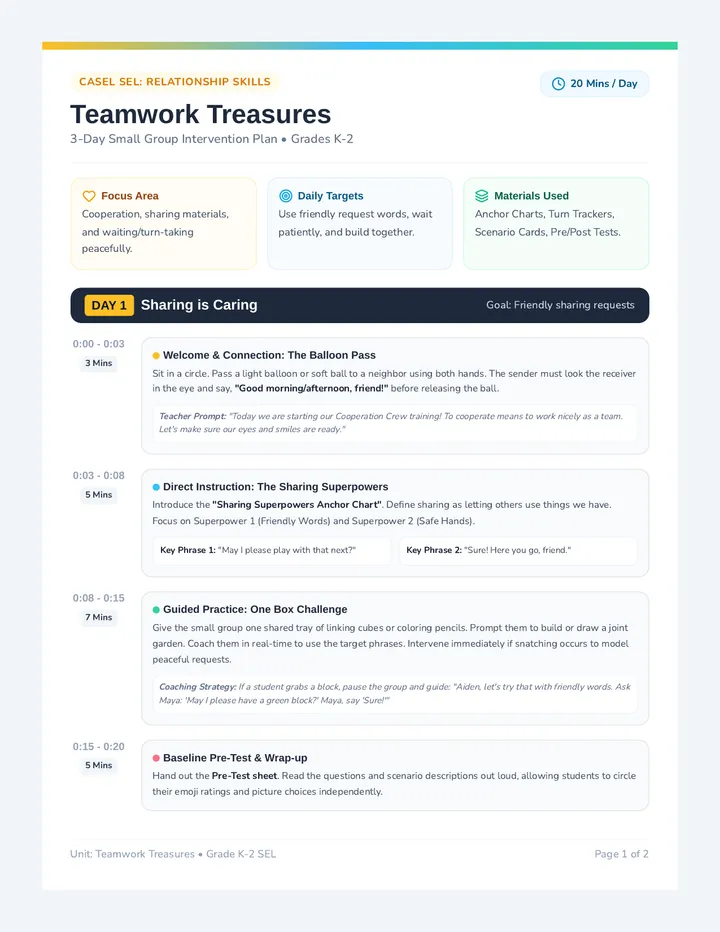
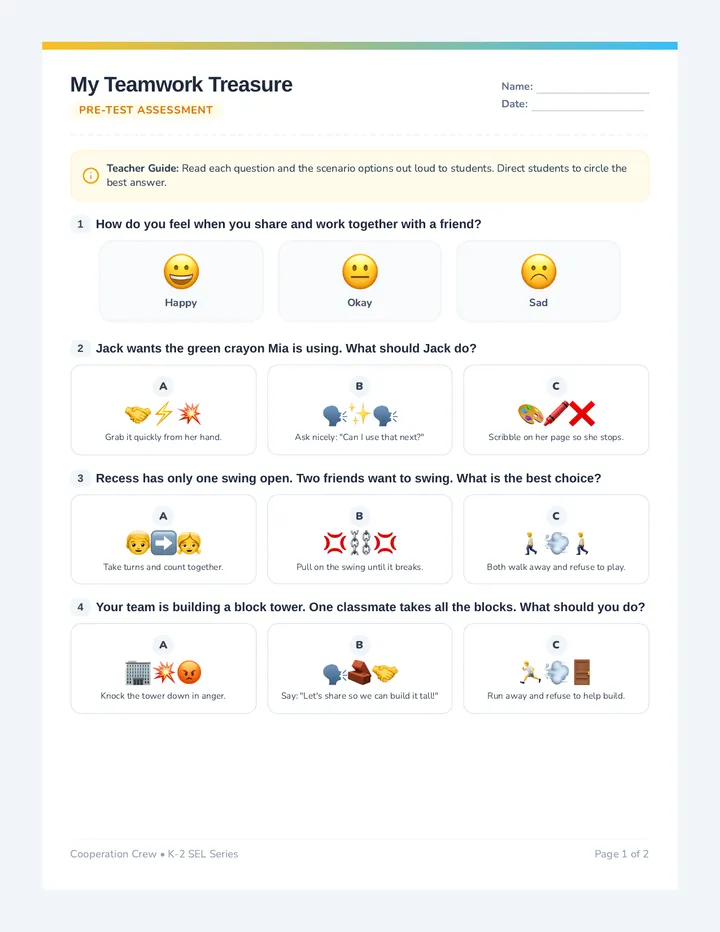
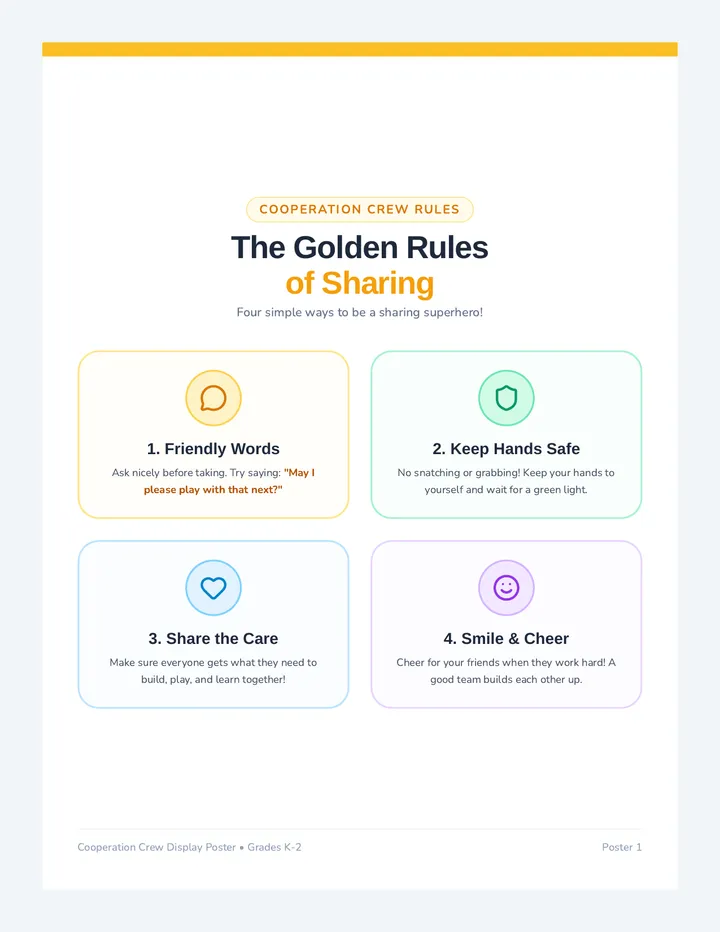
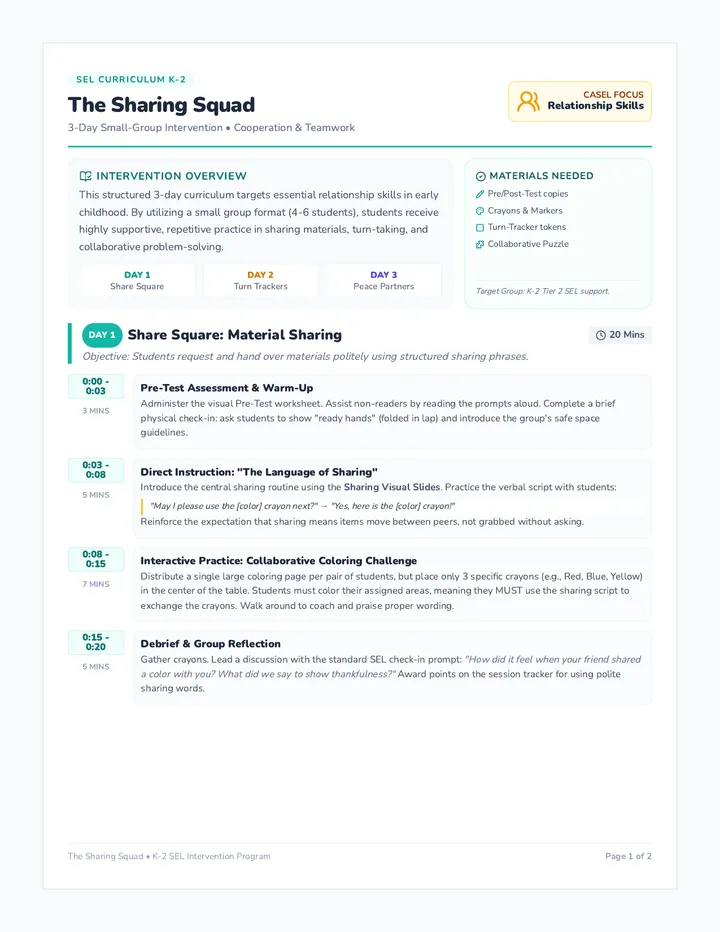
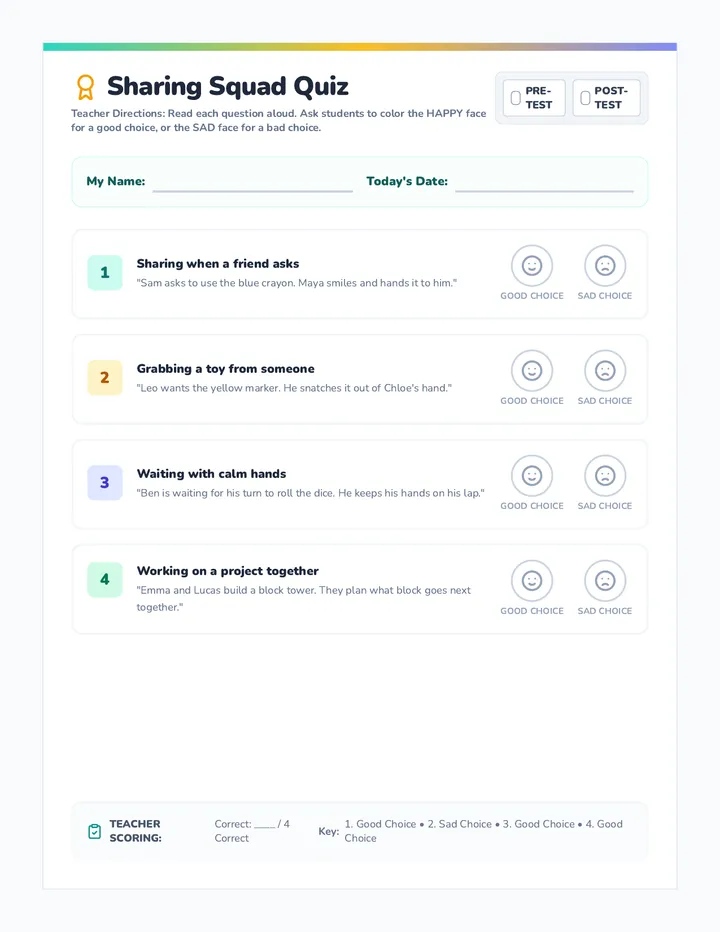
A 3-day social-emotional learning series for grades K-2 focusing on cooperation, sharing, and peaceful turn-taking, aligned with the CASEL Relationship Skills competency.
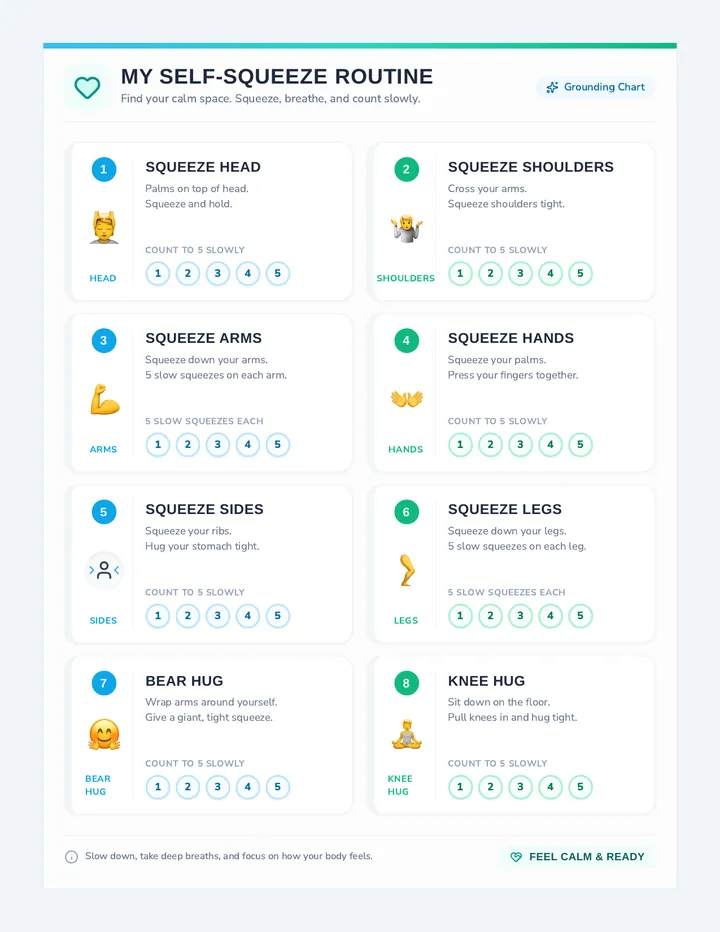
A pediatric grounding and sensory regulation lesson featuring a self-squeeze physical therapy routine to help students self-soothe and calm down.
A clean, minimalist single-page routine chart featuring a calming 8-step self-squeeze physical therapy routine. Includes physical count-down touchpoints from 1 to 5 to help students track their grounding exercises directly on the poster.
A 3-day SEL small-group intervention for grades K-2 focused on material sharing, turn-taking, and peaceful collaboration, aligned with the CASEL Relationship Skills competency. Each daily session is designed for 20 minutes with specific timestamps.
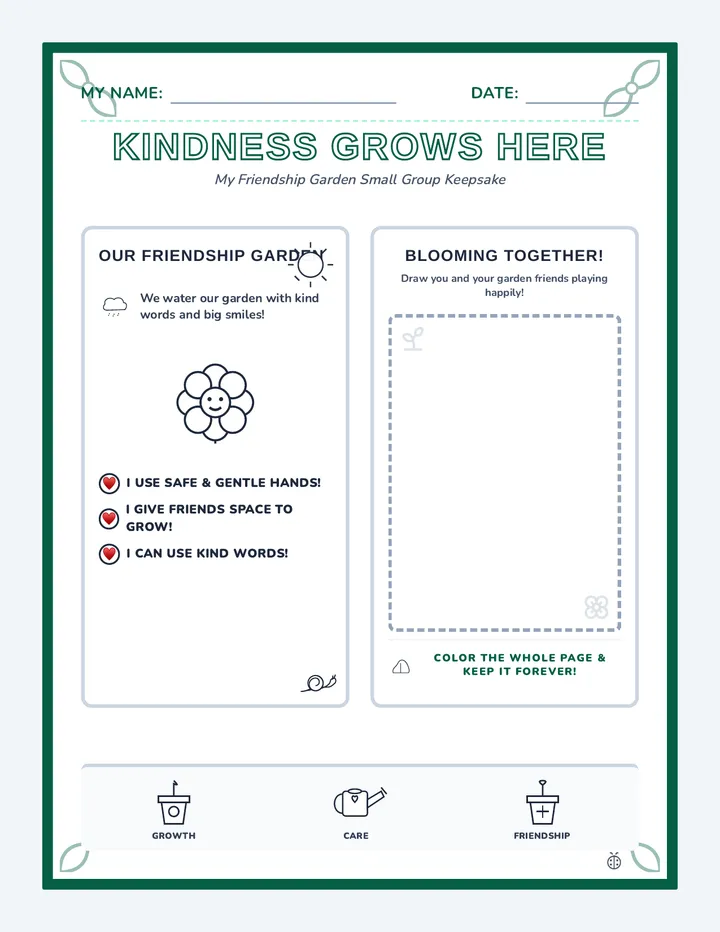
A warm, reflective closing lesson for the Friendship Garden small group. It provides students with creative keepsake coloring posters tailored to their grade levels to celebrate their growth and positive relationships.
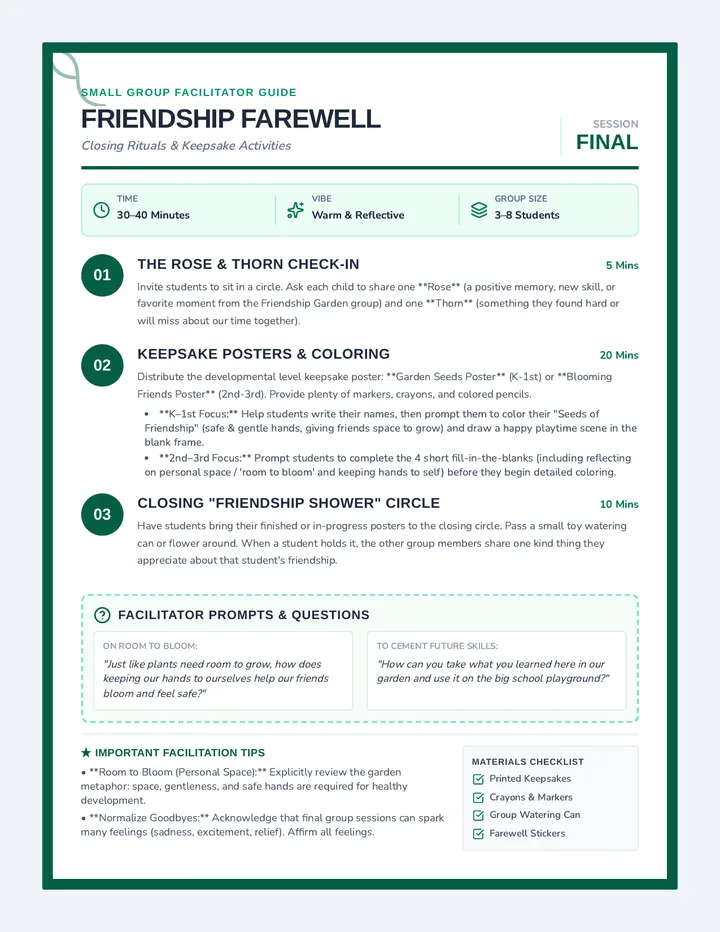
A comprehensive teacher-facing resource detailing the final session outline for the Friendship Garden small group. It provides pacing, structured discussion prompts, a closing circle ritual, and facilitation instructions for the keepsake posters.
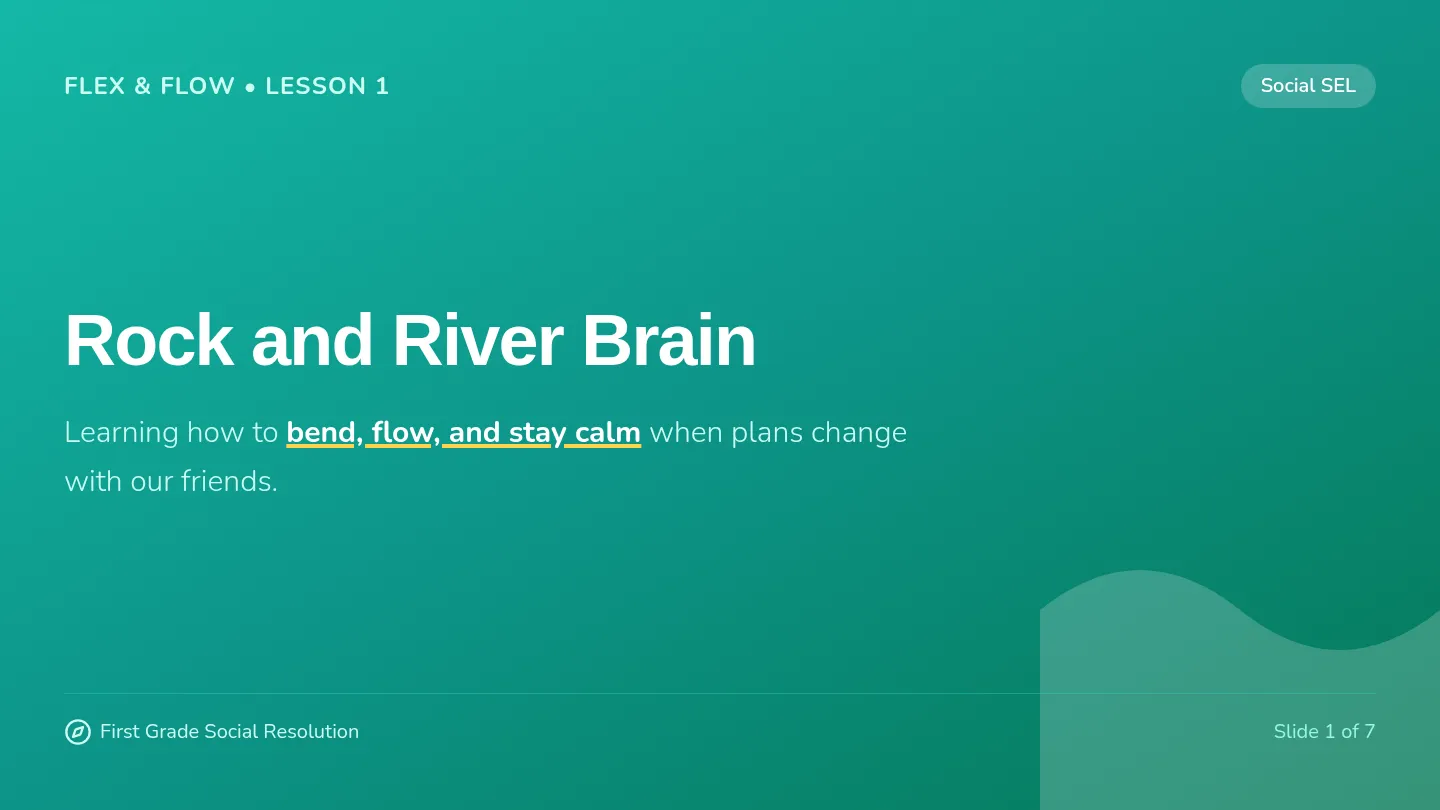
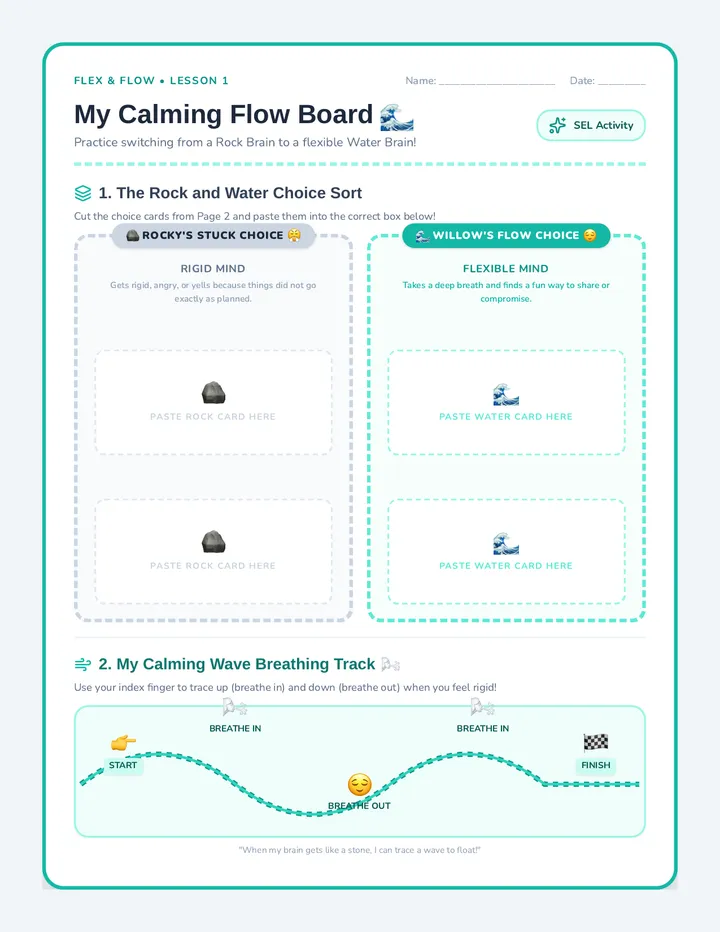
A social-emotional learning unit for first graders to master peer conflict resolution. Through physical metaphors, visual scaling, and calming exercises, students learn to transition from rigid thinking to flexible problem-solving.
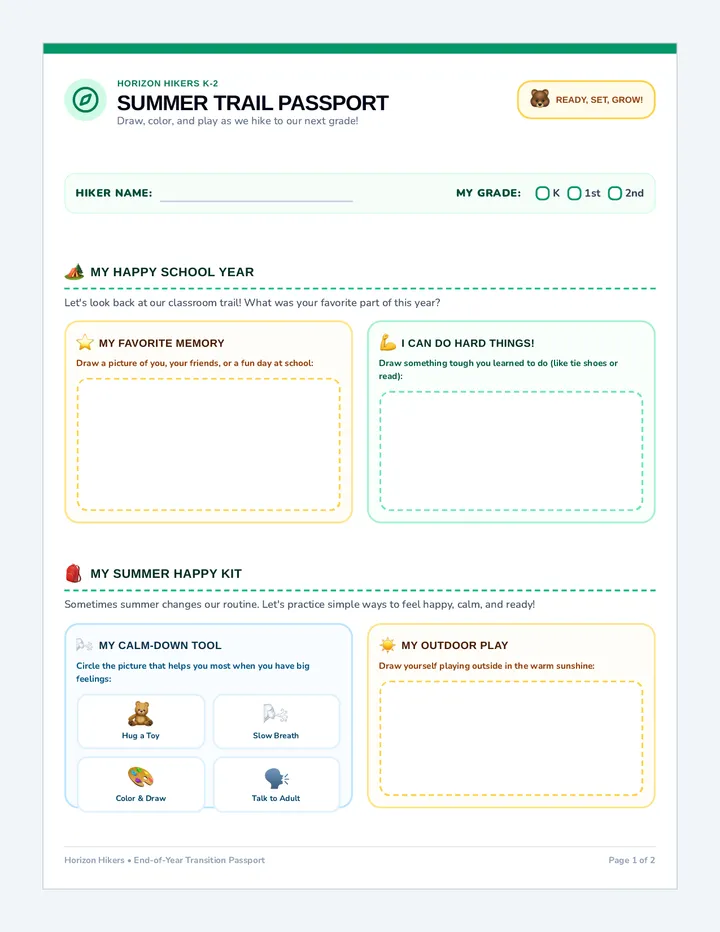
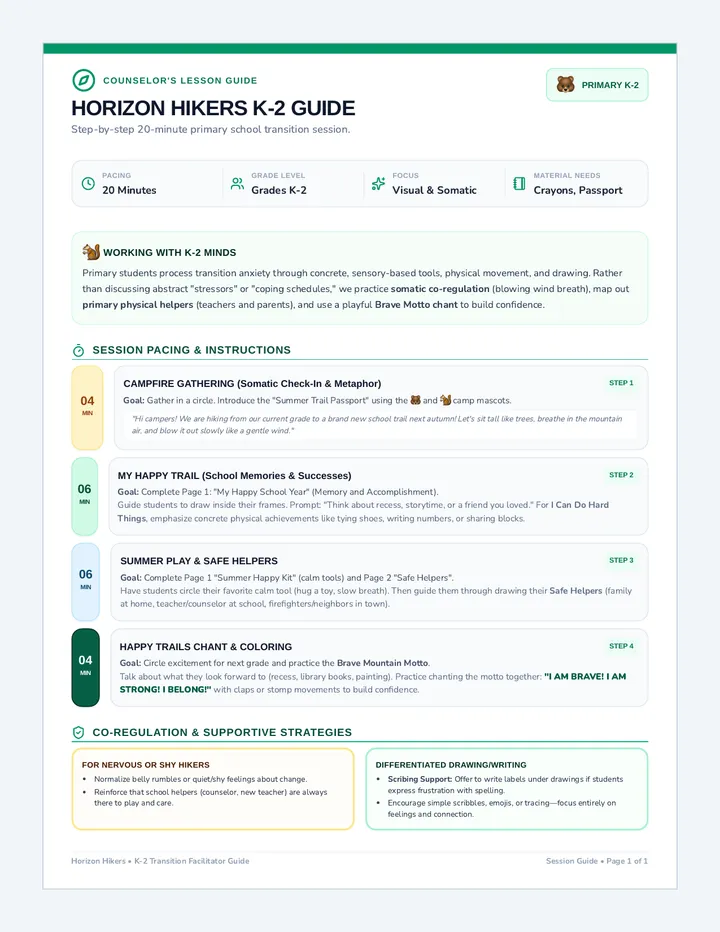
A supportive, highly visual transition lesson for primary students (grades K-2) to reflect on classroom successes, map out summer coping tools and trusted helpers, and build confidence through sensory-friendly drawing prompts and a somatic brave chant.
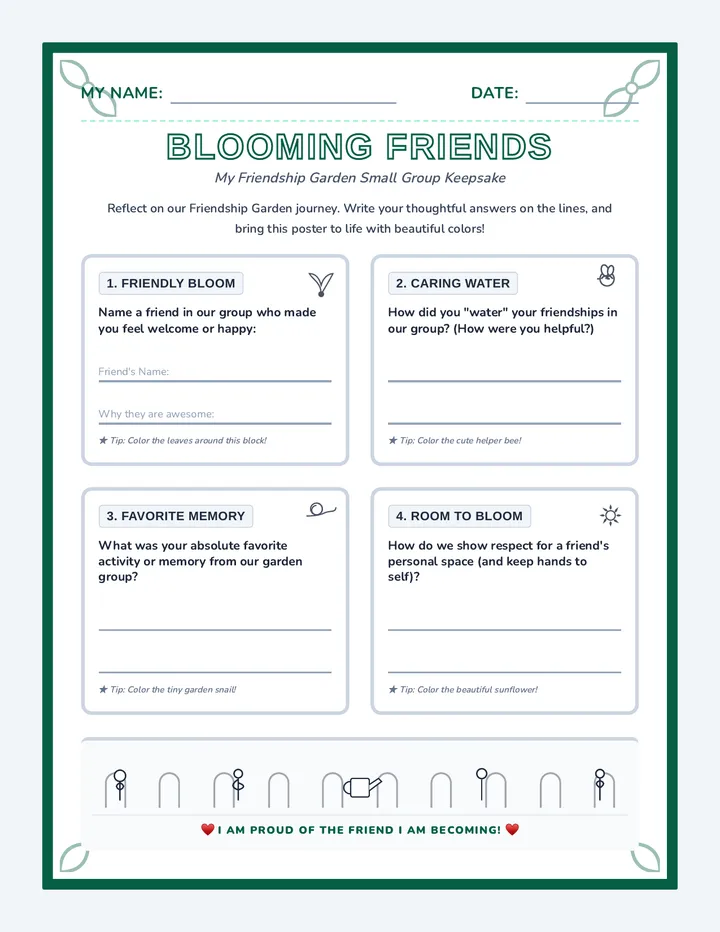
An interactive, beautifully themed keepsake coloring poster for 2nd-3rd grade students. It combines garden-themed coloring illustrations with short, creative reflection prompts to celebrate their friendship journey.