A comprehensive visual presentation for the Scholarship Savvy session, covering scholarship types, search strategies, and organization techniques.
A workshop-specific activity guide providing checklists for environmental optimization, advanced academic review techniques (Feynman, Reverse Engineering), and a menu of restorative breaks.
A multi-purpose student worksheet used for daily grounding, metacognitive tracking, and workshop session documentation, emphasizing the link between emotional state and academic performance.
A visual presentation for the 60-minute core session and 90-minute workshop, guiding students through grounding exercises, metacognitive analysis, and deep-work protocols.
A detailed instructional guide for educators, outlining the pedagogical and psychological strategies for the Equilibrium Session, including timed breakdowns for the core block and workshop.
A blueprint-themed worksheet that frames motivation mapping as a technical engineering project. Features a grid background, technical schematic headers, and organized sections for self-analysis and goal setting. Revised to fit on a single page with high-contrast white work areas.
A blueprint-themed worksheet that frames motivation mapping as a technical engineering project. Features a grid background, technical schematic headers, and organized sections for self-analysis and goal setting.
A vintage adventure journal-themed worksheet that transforms self-motivation mapping into a field expedition. Features elegant serif typography, earth tones, and sketched visual motifs. Revised for better readability and handwriting space on a single page.
A vintage adventure journal-themed worksheet that transforms self-motivation mapping into a field expedition. Features elegant serif typography, earth tones, and sketched visual motifs. Revised to fit on a single page with all original user prompts included.
A single-page motivation mapping worksheet for students to identify personal drivers and develop a growth mindset. Featuring white work areas for high contrast and a compact, organized layout.
Final student worksheet for Week 8 featuring a self-assessment audit and long-term goal-setting exercise for post-curriculum social growth.
Final slide deck for Week 8 summarizing the curriculum's key takeaways and helping students create a long-term social growth plan.
A student worksheet for Week 7 providing space to identify common conflict triggers and practice writing de-escalation "I-statements."
Slide deck for Week 7 focusing on managing conflict, distinguishing healthy from toxic friction, and using "I-statements" for de-escalation.
A student consistency log for Week 6 to help track friendship maintenance actions and identify core social connections.
Slide deck for Week 6 covering the levels of friendship (The Pyramid) and the importance of consistency in maintaining long-term connections.
A student activity sheet for Week 5 to help map out social locations and practice scripting low-stakes conversational openers.
Slide deck for Week 5 focusing on identifying positive friend traits ("Green Flags") and mastering the three-stage "Cold Open" for approaching new people.
A student handout for Week 4 featuring decoding exercises for body language and a proximity mapping activity.
Slide deck for Week 4 focusing on non-verbal communication, including posture, proximity, and the impact of tone on social interactions.
A student handout for Week 3 containing exercises for turning closed-ended questions into open-ended ones and strategies for conversational follow-ups.
Slide deck for Week 3 teaching the "Ping-Pong" method of conversation and how to avoid the "Dead-End" trap of closed-ended questions.
A student worksheet for Week 2 focusing on identifying personal distractions ("Static") and practicing "Recap" responses to demonstrate active listening.
Slide deck for Week 2, teaching the "Static vs. Signal" concept and a 3-step active listening strategy called "The Listening Playbook."
A student handout for Week 1 where participants identify their own interests, values in friendship, and set a personal social goal for the curriculum.
Presentation slides for Week 1 of the Social Playbook curriculum, focusing on group norms, the philosophy of friendship ROI, and defining the group's objectives.
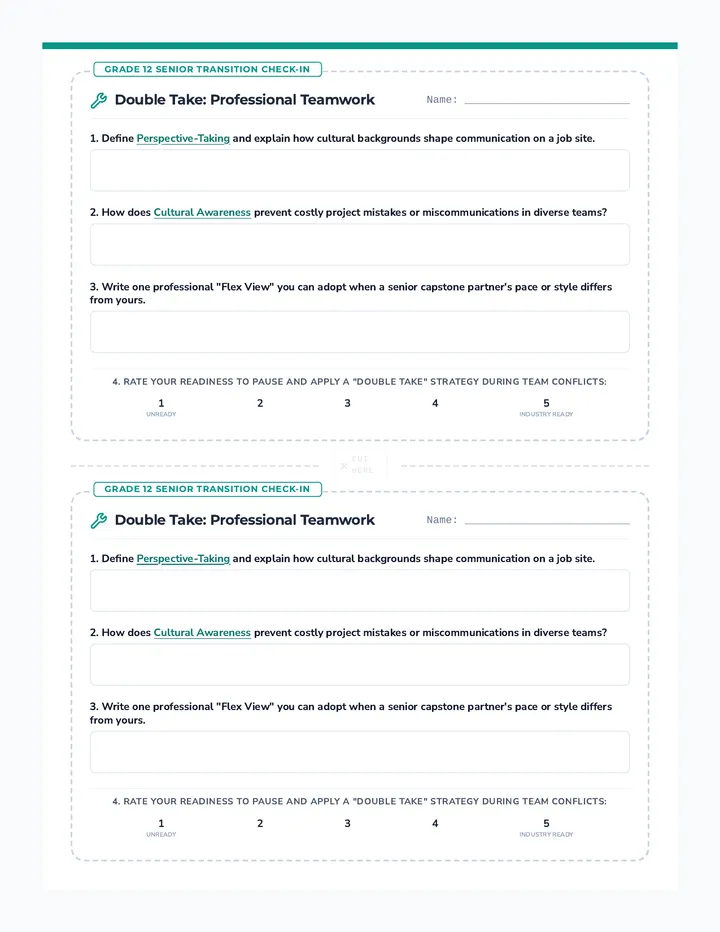
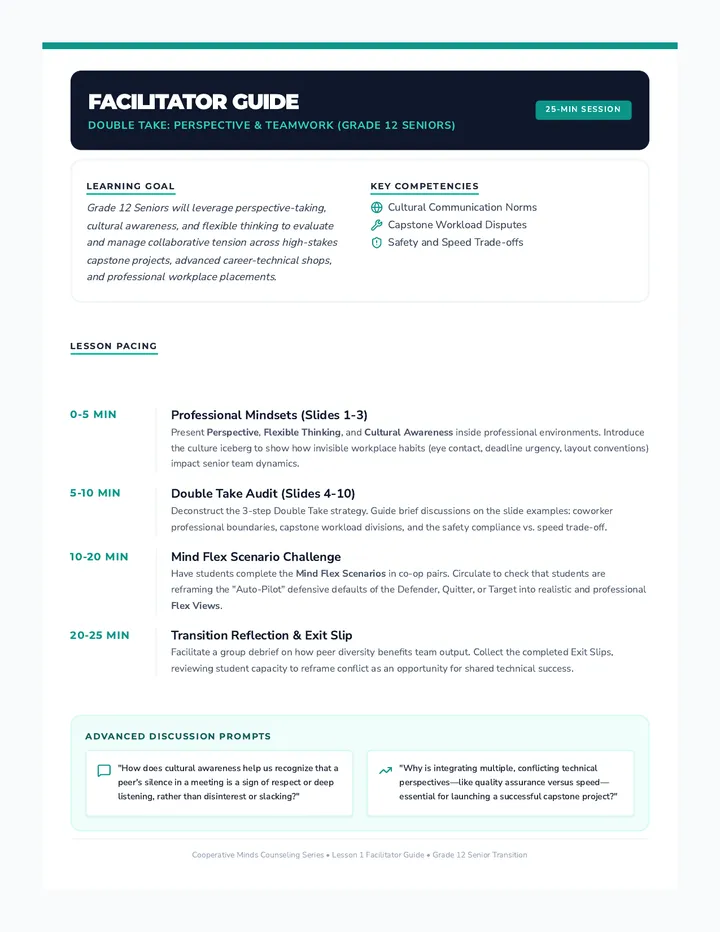
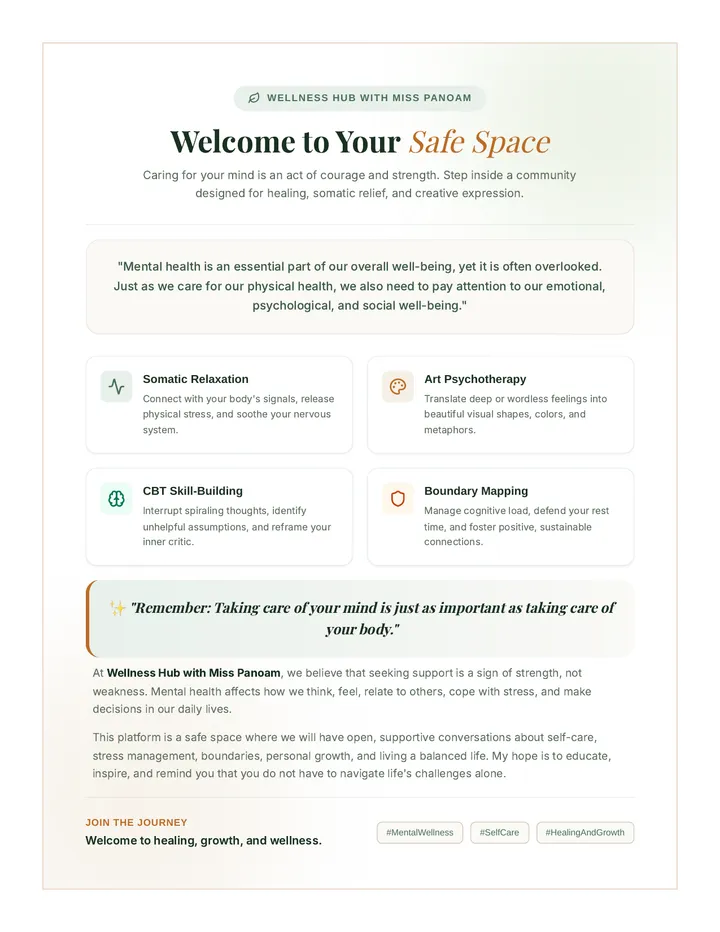
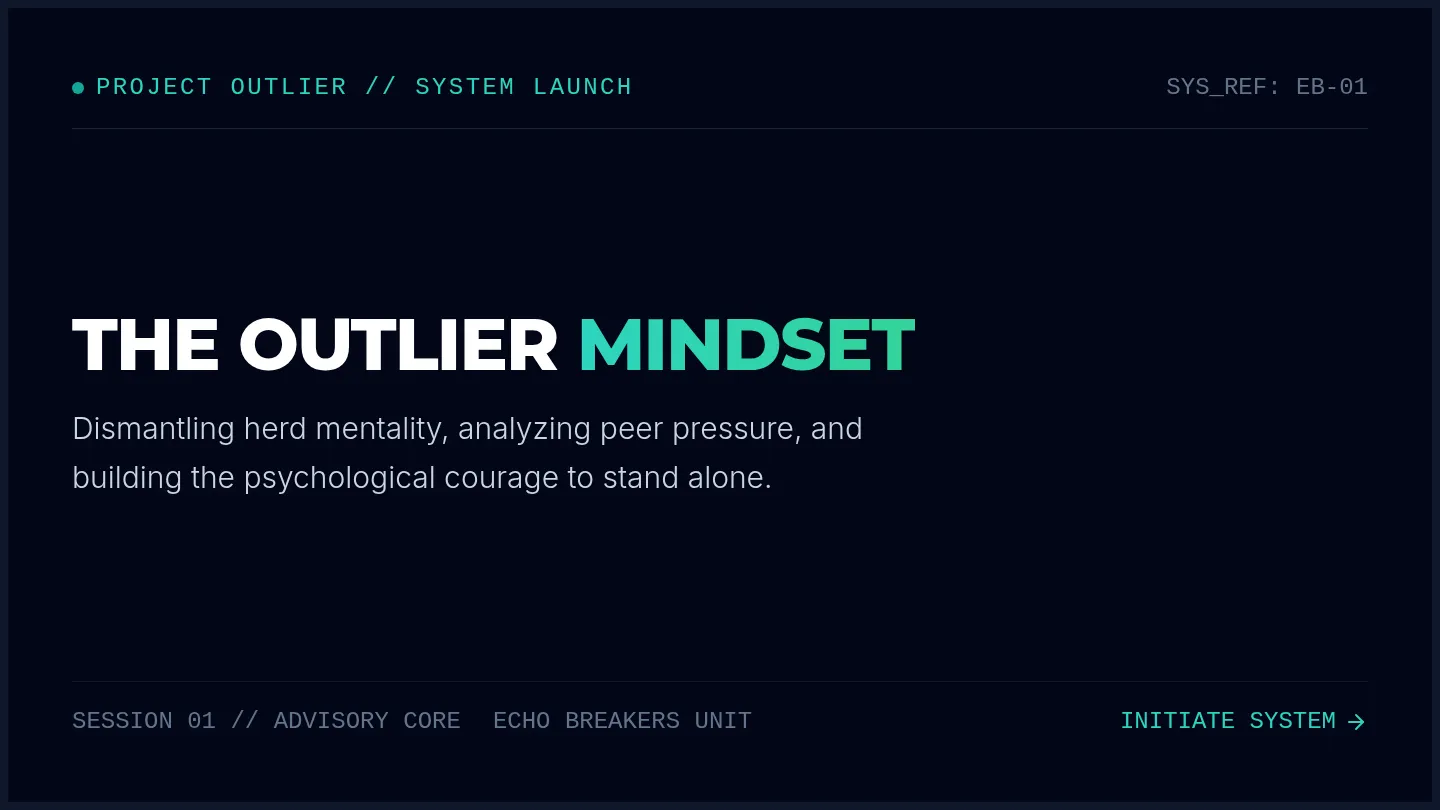
A comprehensive facilitator guide for the Social Playbook curriculum, including program philosophy, session structures, and management strategies for high school boys' groups.
A reflection worksheet for students to record their physical and emotional states before and after the mindfulness practice, with space for drawing and writing.
A visually calming anchor chart or poster for students to reference the four main steps of the grounding and movement flow, including a facilitator read-aloud guide.
A comprehensive guided script for educators to facilitate a mindfulness session focused on progressive muscle relaxation and gentle mindful movement.
A performance rubric for evaluating students' mastery of the 5-4-3-2-1 grounding technique, themed as a system diagnostic scorecard. Assesses precision, speed, stealth, and stabilization success.
A detailed teacher instructional script for the 'System Reset' lesson, using a technical metaphor to teach the 5-4-3-2-1 grounding technique. Includes timed sections, speaker prompts, and activity cues.
A printable set of 4 'System Reset' grounding cards with updated text, colored icons for each sensory step, and a clear 5-4-3-2-1 protocol layout.
A coding-themed mindfulness worksheet titled 'System Reset Protocol' with multi-colored sensory sections and a professional tech aesthetic. Guides students through a 5-4-3-2-1 grounding exercise. Removed Node, Telemetry, and gray backgrounds. Corrected spelling in the reflection log. Revised layout to fit exactly on two pages. Made the '05 // NEW' badge larger and replaced calibration status with body sensation lines. Standardized line weights for better visibility. Added non-breaking spaces to reflection log prompts to ensure correct word separation.
A set of 4 visual anchor posters for the classroom, defining the 4 P's Performance Stack with high-impact icons and simplified 'clue' questions. Ideal for supporting non-native speakers with permanent visual references.
A visual flowchart 'Glitch Decoder' to help non-native speakers and all students quickly identify which tool from the 4 P's Performance Stack they need based on their current feelings or obstacles.
A guide for parents explaining the Mastery Mode framework. Revised to include specific "Home Clues" for each module and practical support strategies for parents. Theme updated to light mode.
A comprehensive facilitator's guide for Lesson 8 (Mastery Legacy), including skills briefing, pacing, and verbatim talk-tracks. Theme updated to light mode.
A comprehensive facilitator's guide for Lesson 7 (Habit Hacker), including skills briefing, pacing, and verbatim talk-tracks. Theme updated to light mode. Fixed page breaks.
A comprehensive facilitator's guide for Lesson 6 (Blocker Busters), including skills briefing, pacing, and verbatim talk-tracks. Theme updated to light mode.
A comprehensive facilitator's guide for Lesson 5 (Mindset Matrix), including skills briefing, pacing, and verbatim talk-tracks. Theme updated to light mode.
A comprehensive facilitator's guide for Lesson 4 (Performance Architecture), including skills briefing, pacing, and verbatim talk-tracks. Theme updated to light mode.