The primary project guide for the final portfolio, featuring character profiles, market rate tables for health and renters insurance, and a planning area for students to justify their selections.
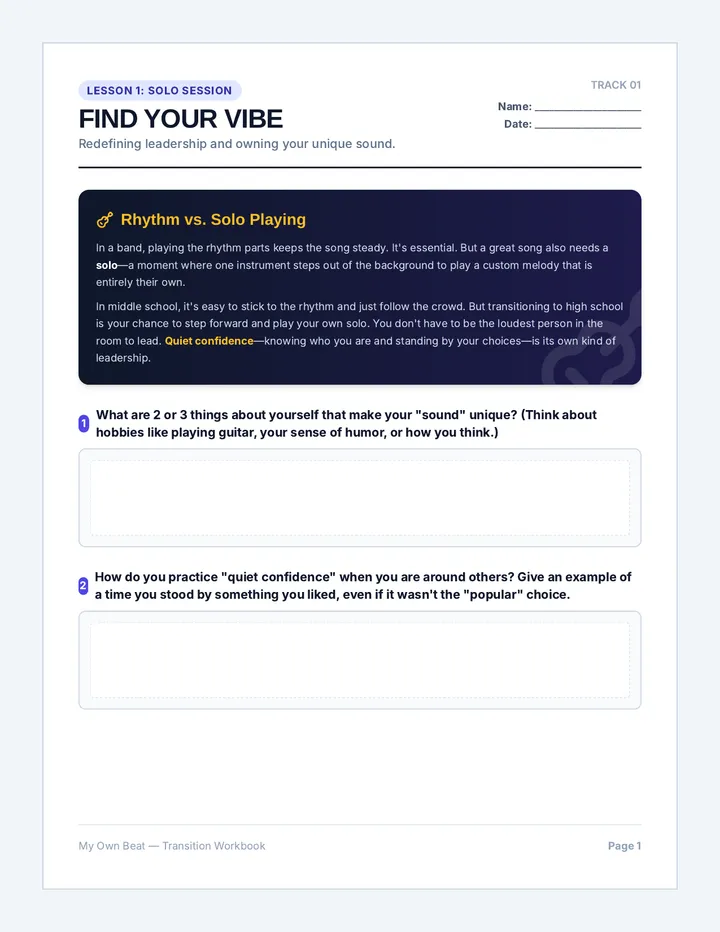
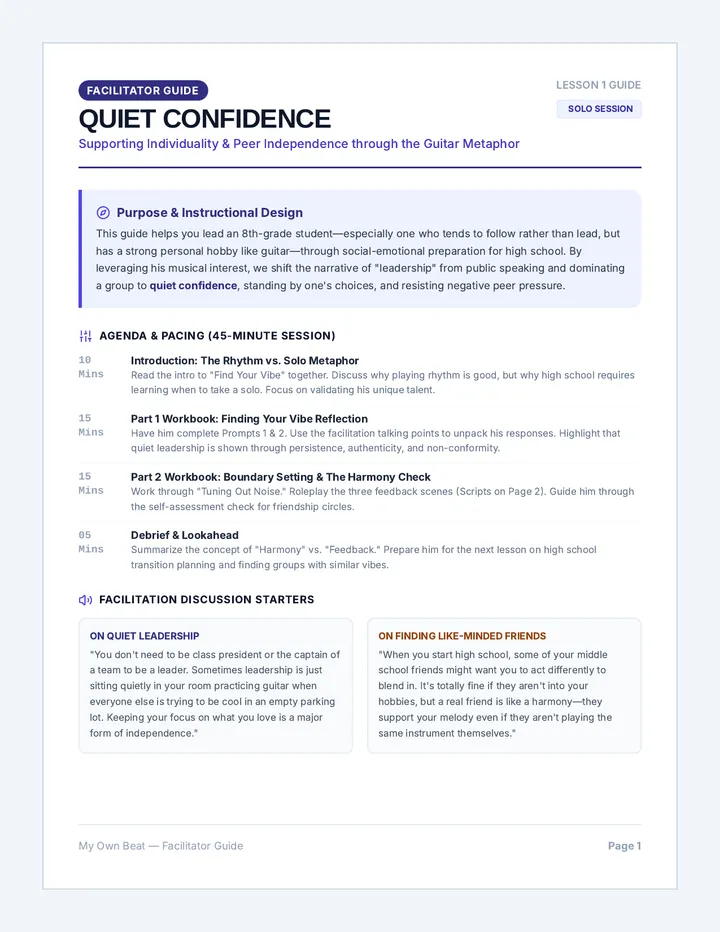
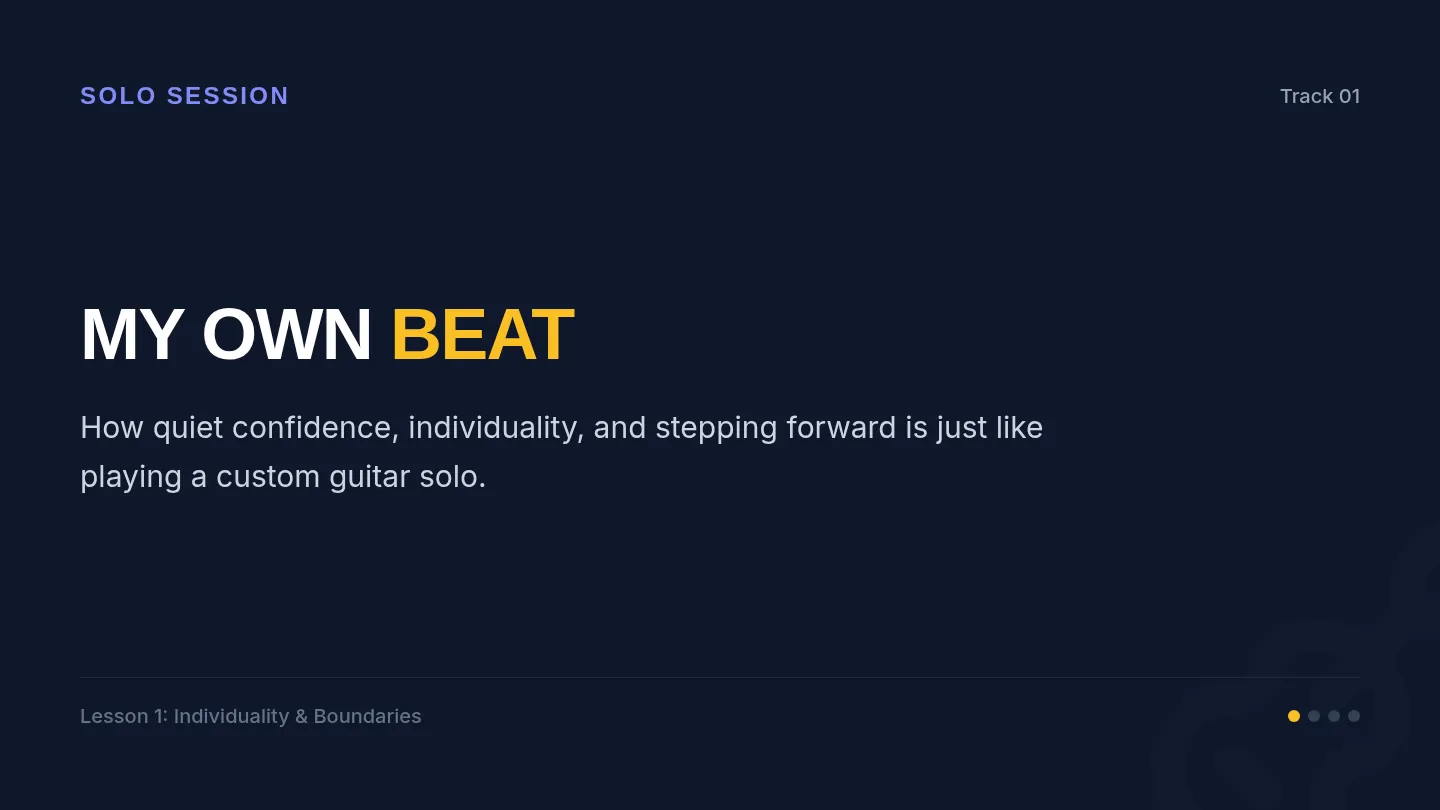
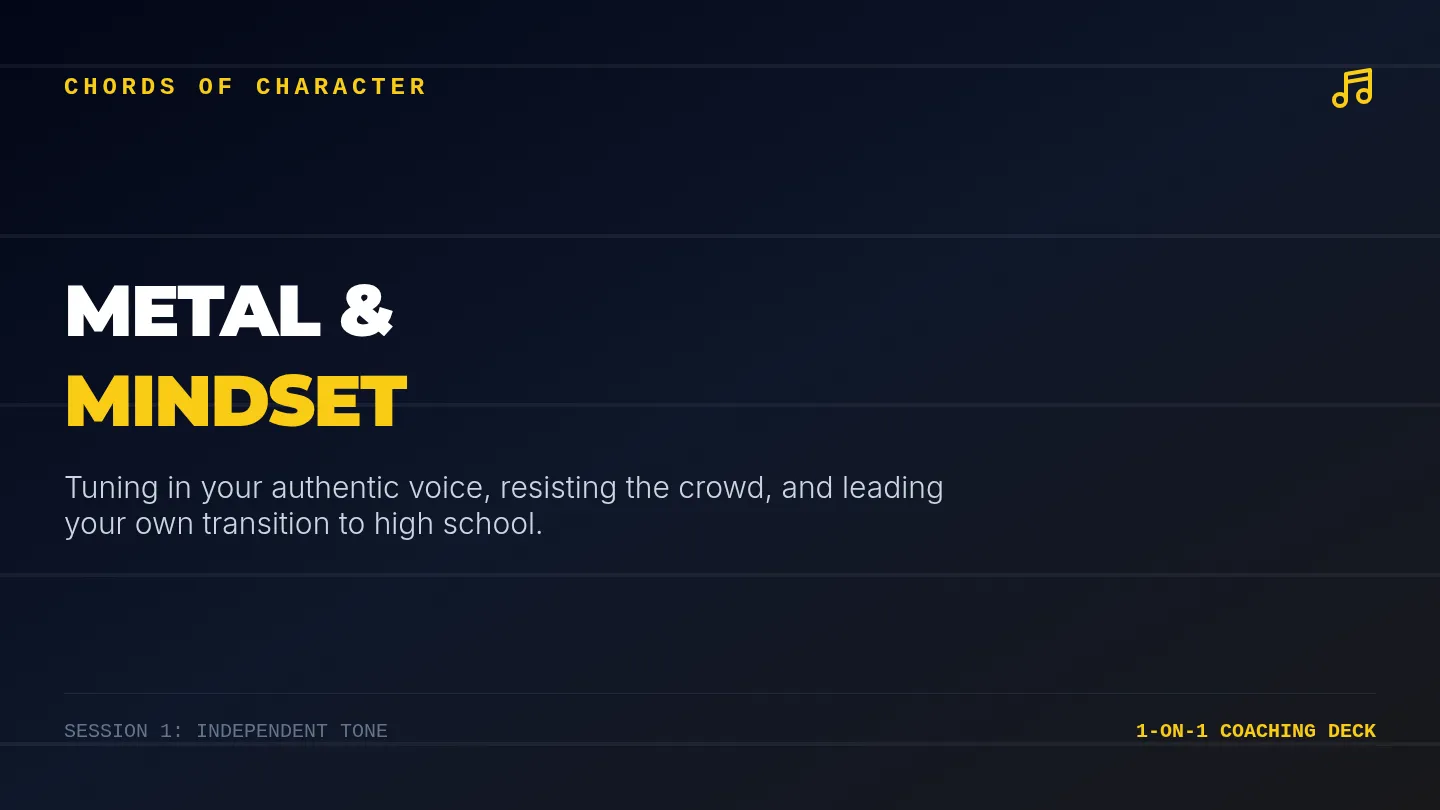
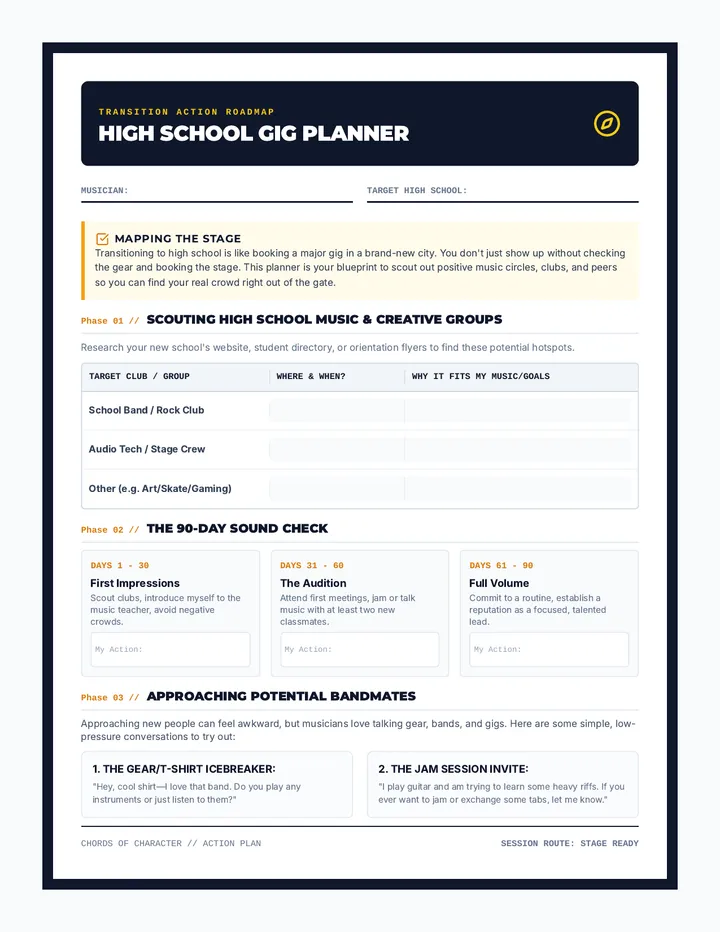
A transition curriculum for an 8th-grade student moving to high school, using music and guitar metaphors to cultivate individuality, self-confidence, independent decision-making, and positive peer connection. This 2-lesson unit empowers him to choose his own path, join clubs aligned with his interests, and build supportive friendships.
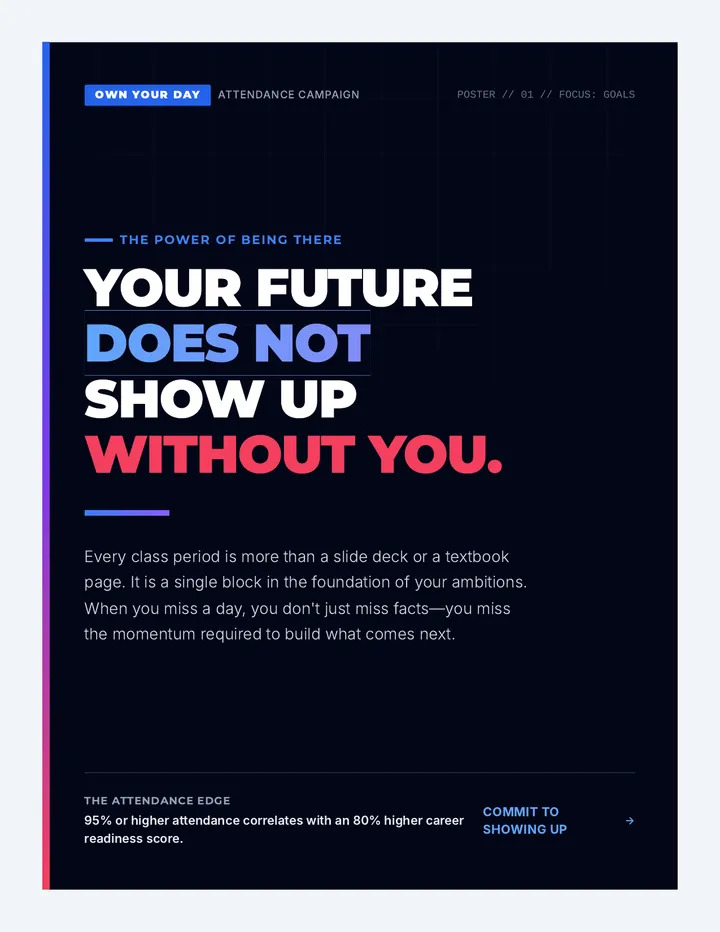
A school-wide campaign kit designed for middle and high school settings to build an empowering attendance culture. Includes high-impact motivational posters, an administrative campaign blueprint with low-cost incentive ideas, and ready-to-use daily announcements and homeroom discussion prompts.
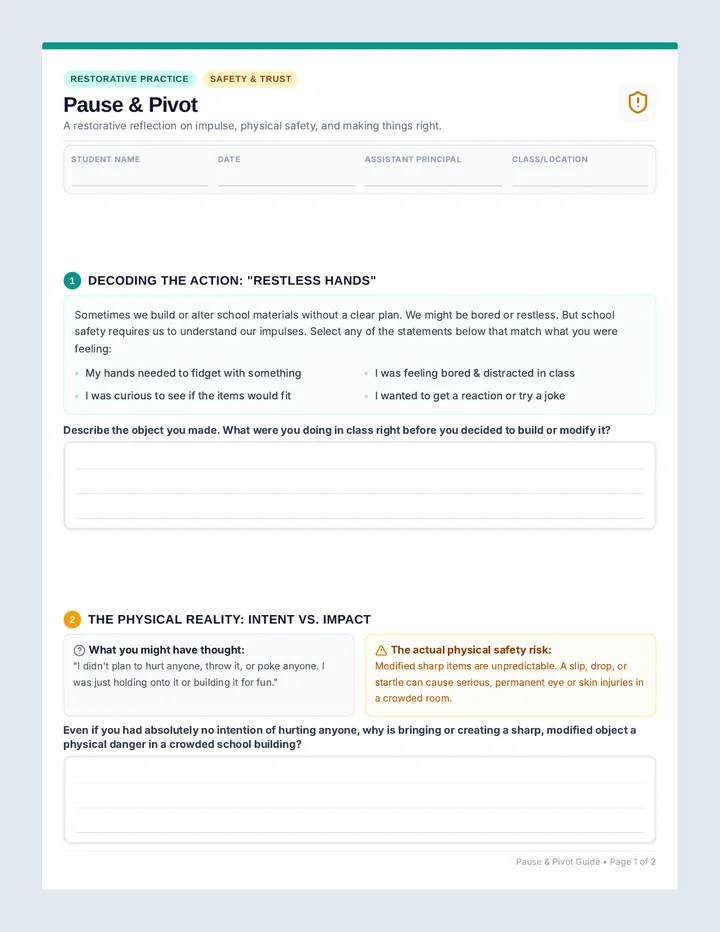
A restorative 2-page reflection packet designed for a student who created a dangerous object from a push pin and paper. Formatted with large, highly legible fonts and spacious, multi-line writing boxes, it guides the student through impulse control coaching, understanding physical safety risks, and co-creating a restore plan with their Assistant Principal.
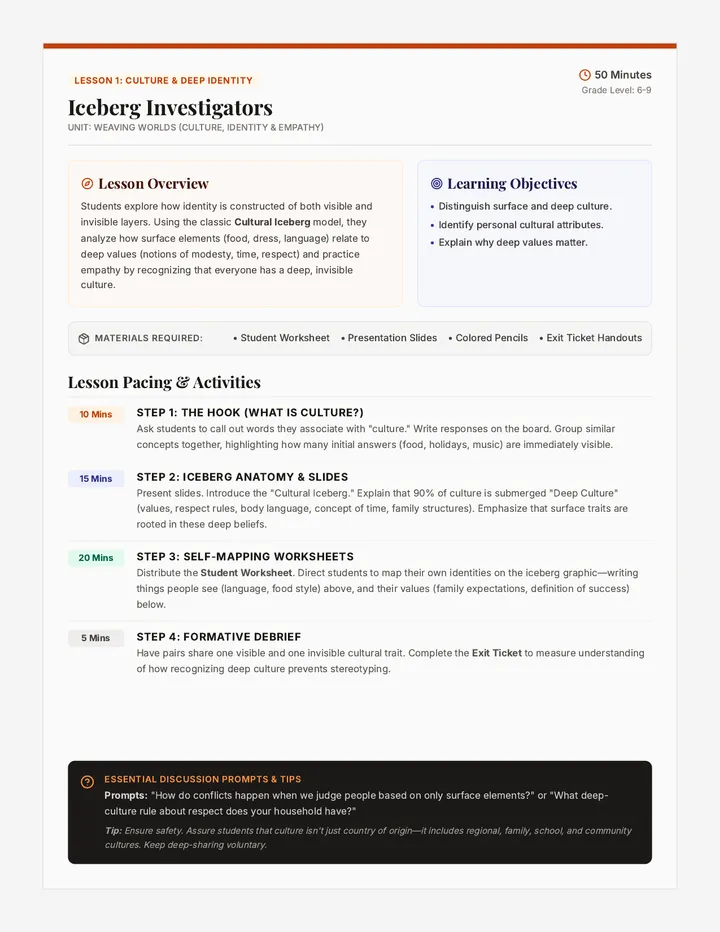
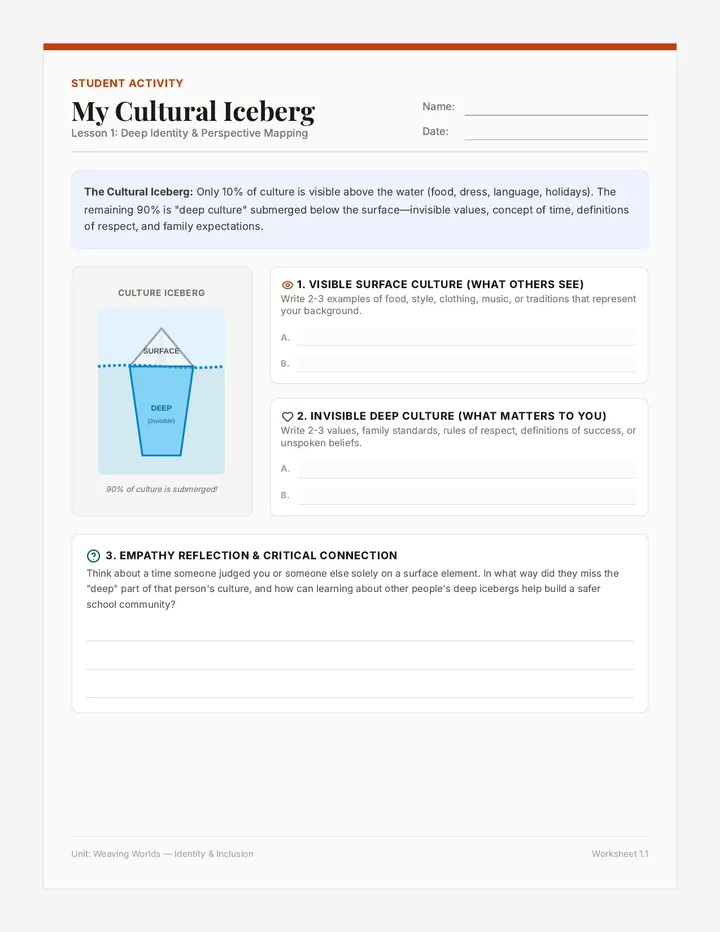
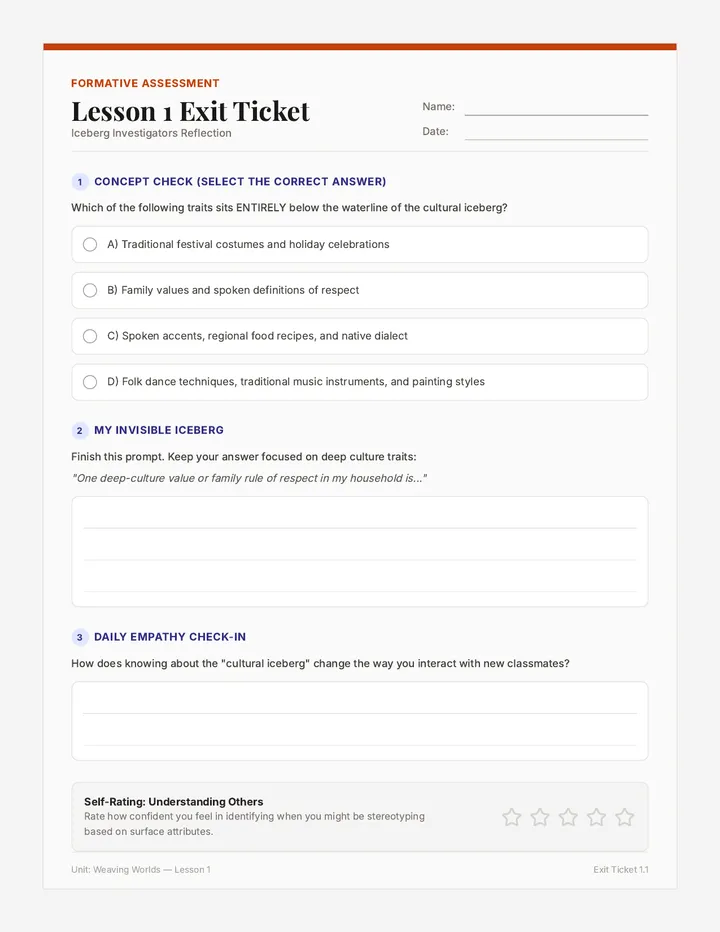
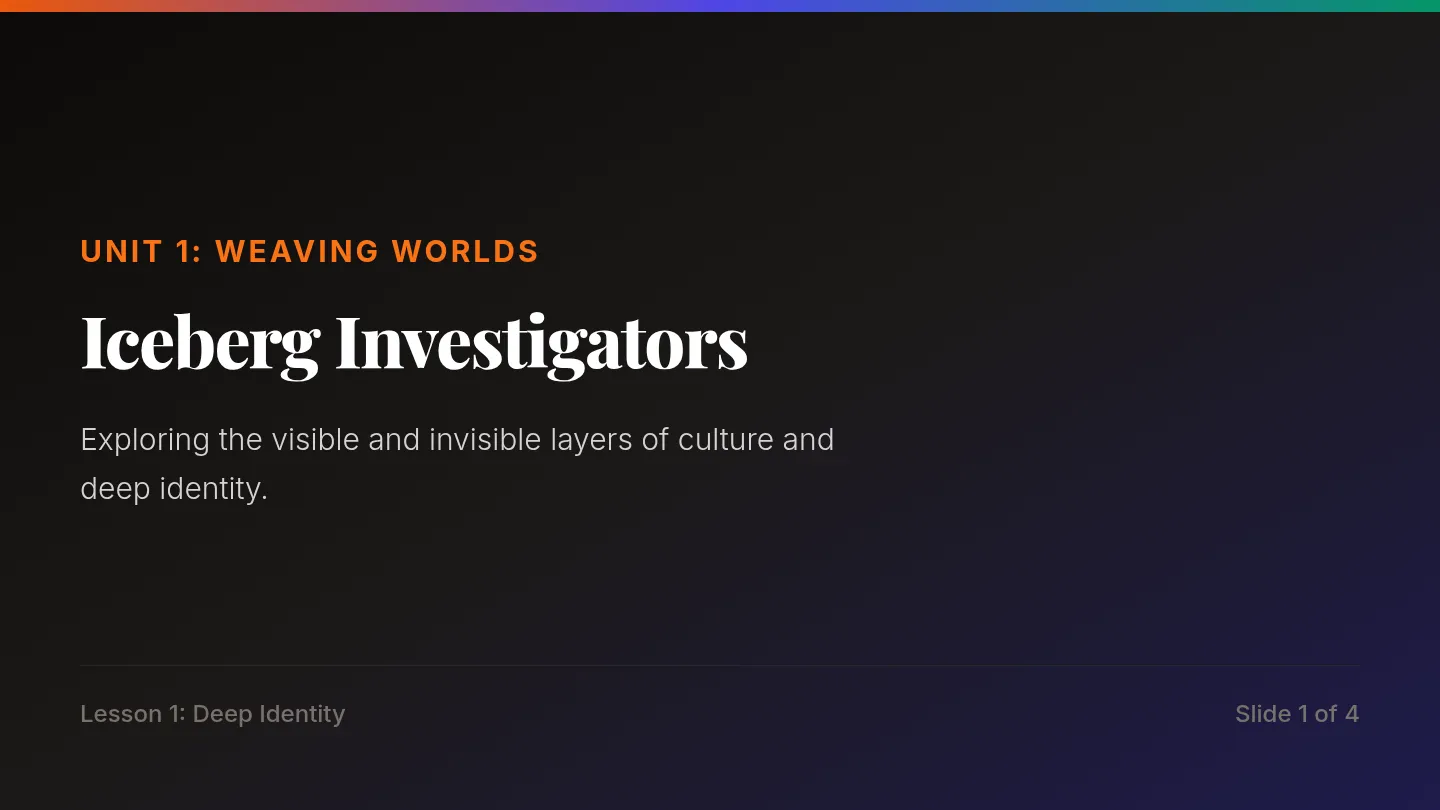
A 3-lesson unit on culture, identity, empathy, and building an inclusive school community. Students explore the cultural iceberg, share personal perspective narratives, and collaborate on actionable school-wide inclusion plans.
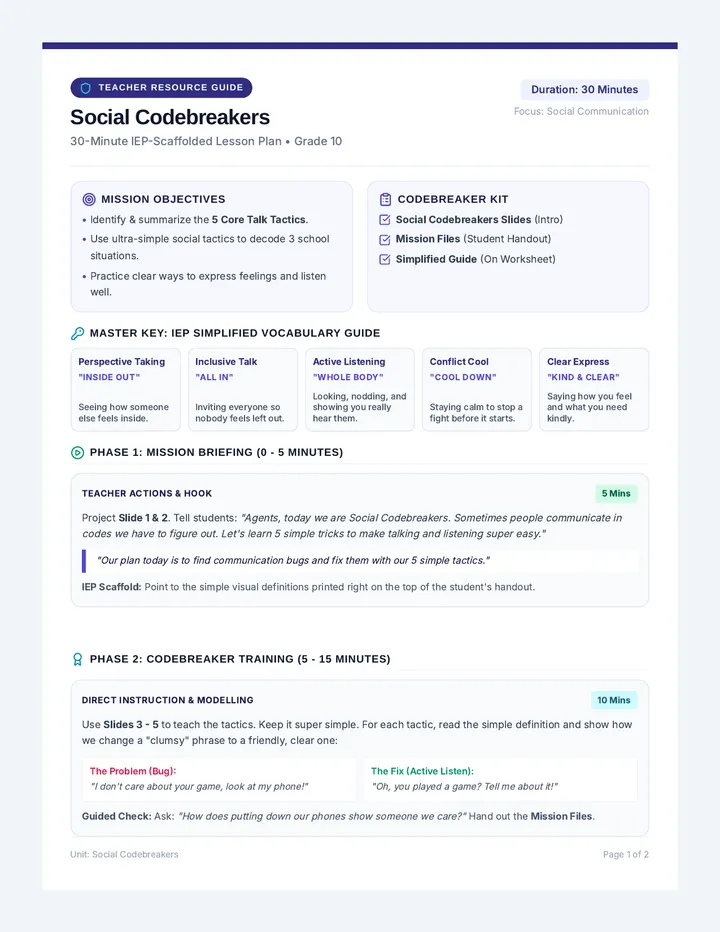
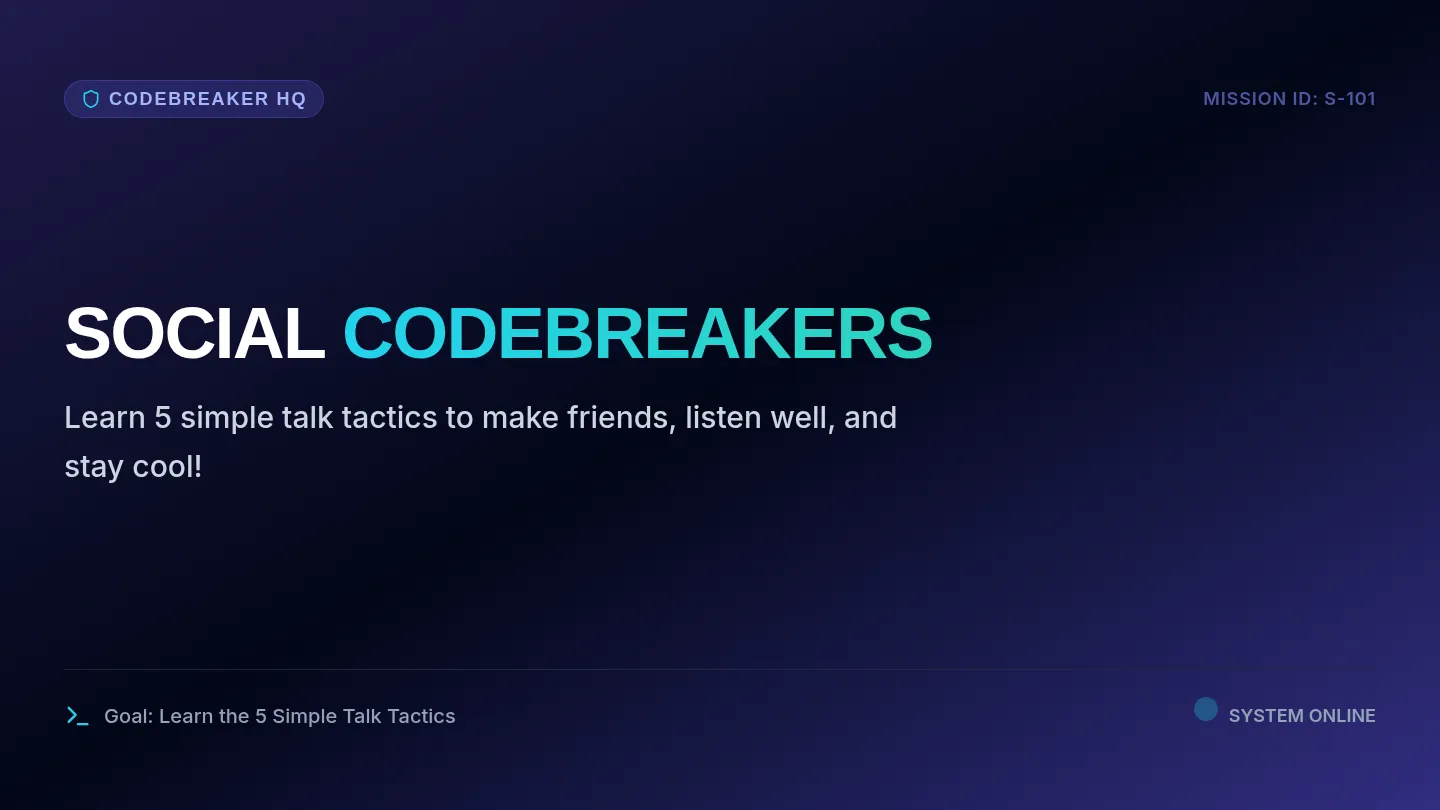
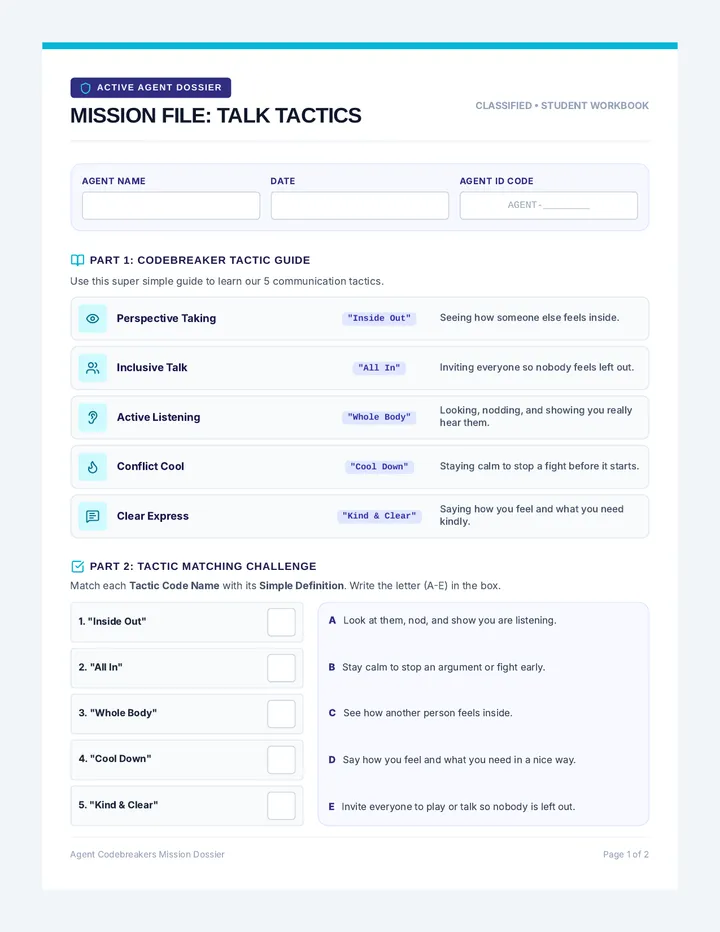
A high-interest, scaffolded 30-minute lesson designed for 10th-grade IEP students to master perspective-taking, active listening, inclusive communication, conflict prevention, and effective communication. Students act as 'Social Codebreakers' to decode social scenarios and summarize key communication concepts using highly structured simplified vocabulary guides.
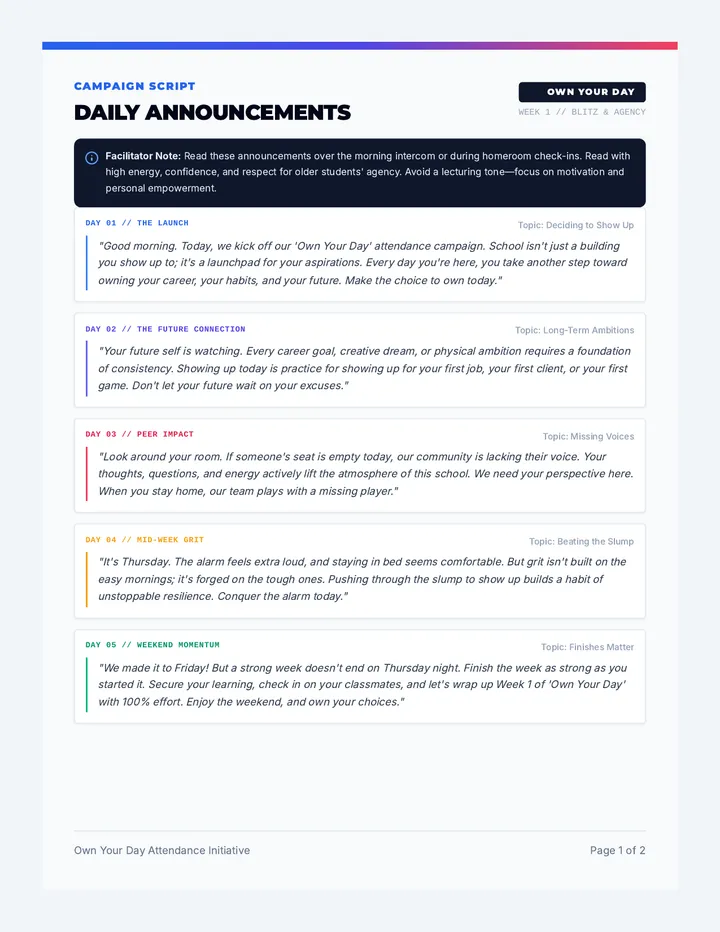
A collection of daily intercom announcement scripts and homeroom discussion prompts spanning a 2-week campaign. Features ready-to-read text focused on long-term goals, peer support, personal accountability, and personal attendance tracking sections.
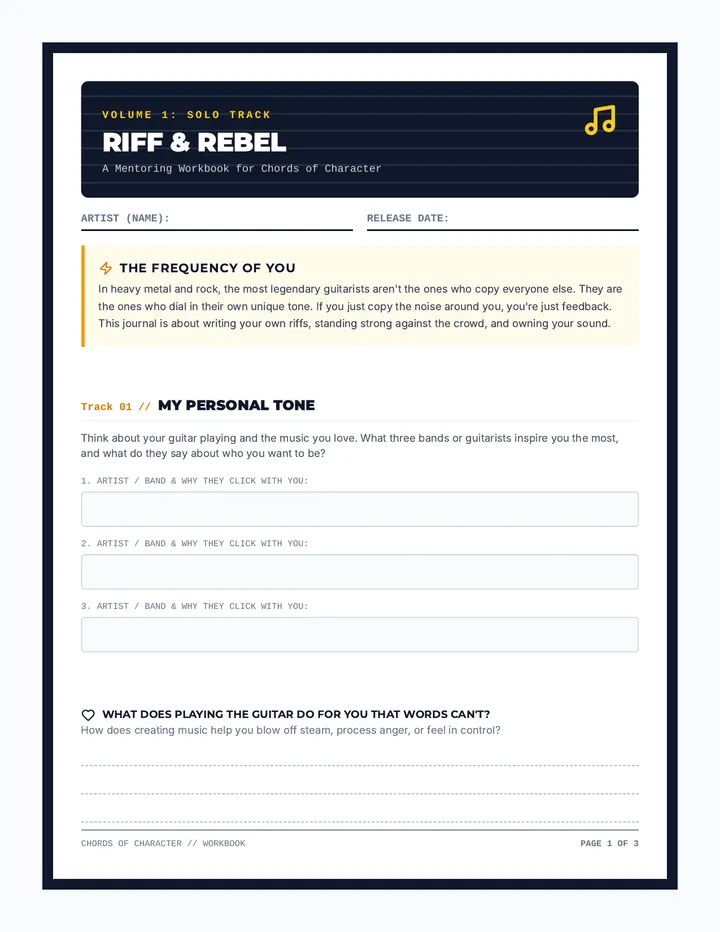
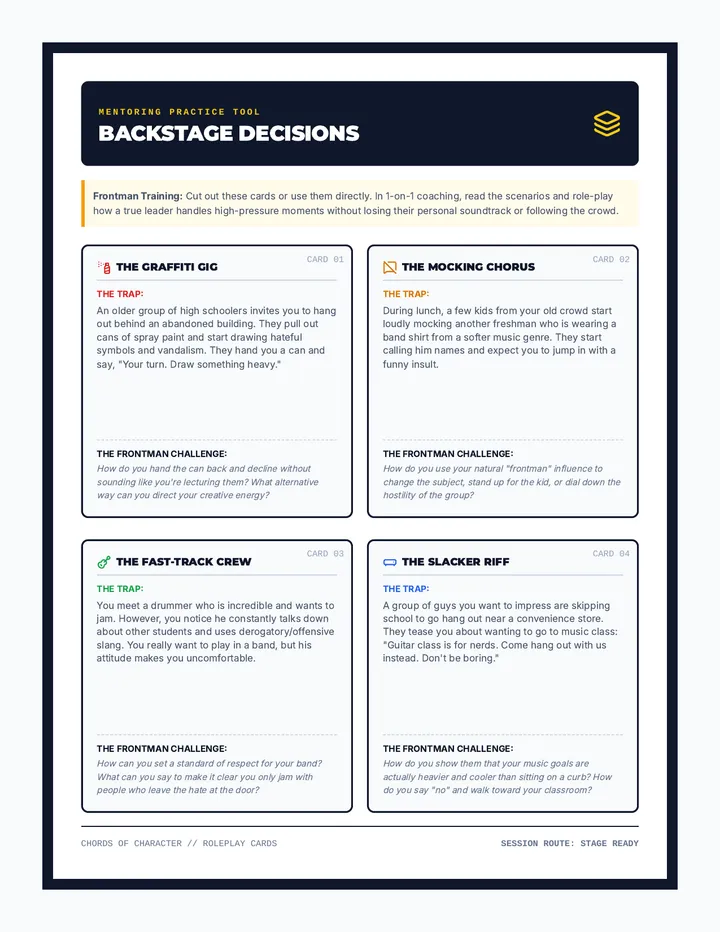
A transition curriculum linking heavy metal passion with character, true rebellion, and leadership. Features an in-school coaching workshop and a parallel at-home action journal for tonight.
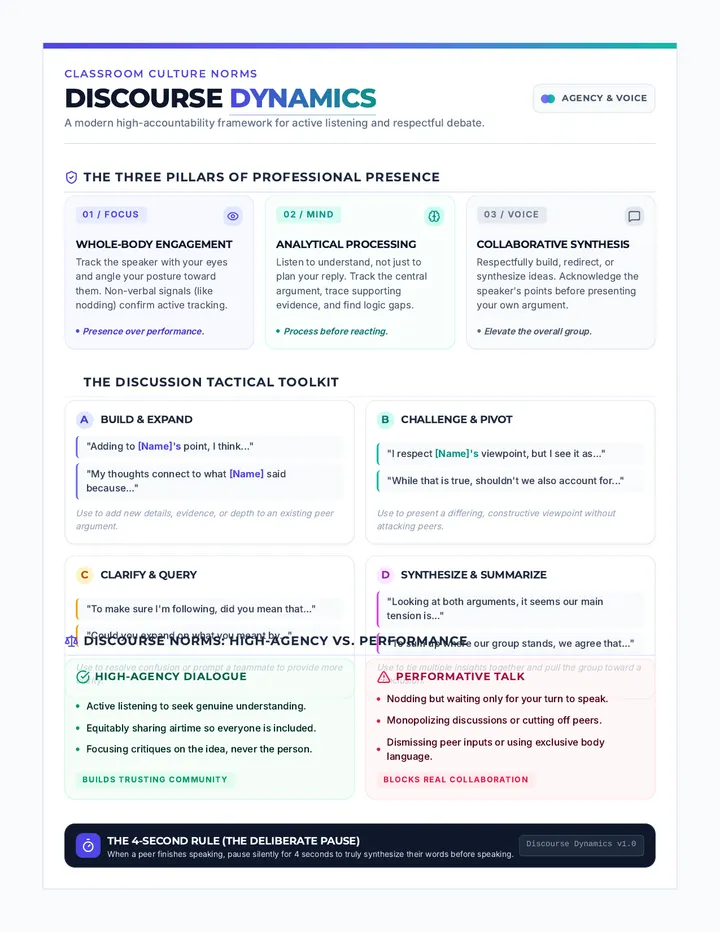
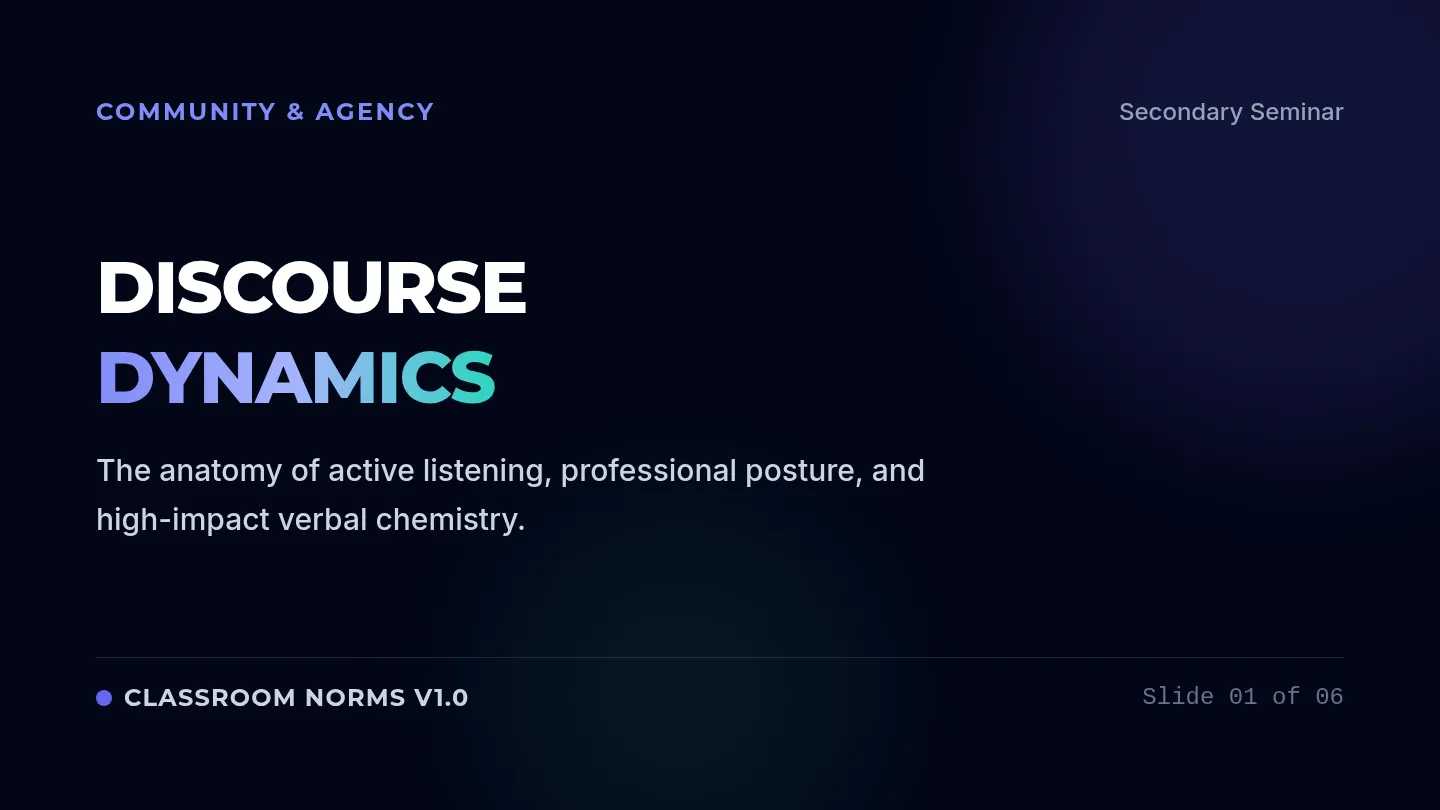
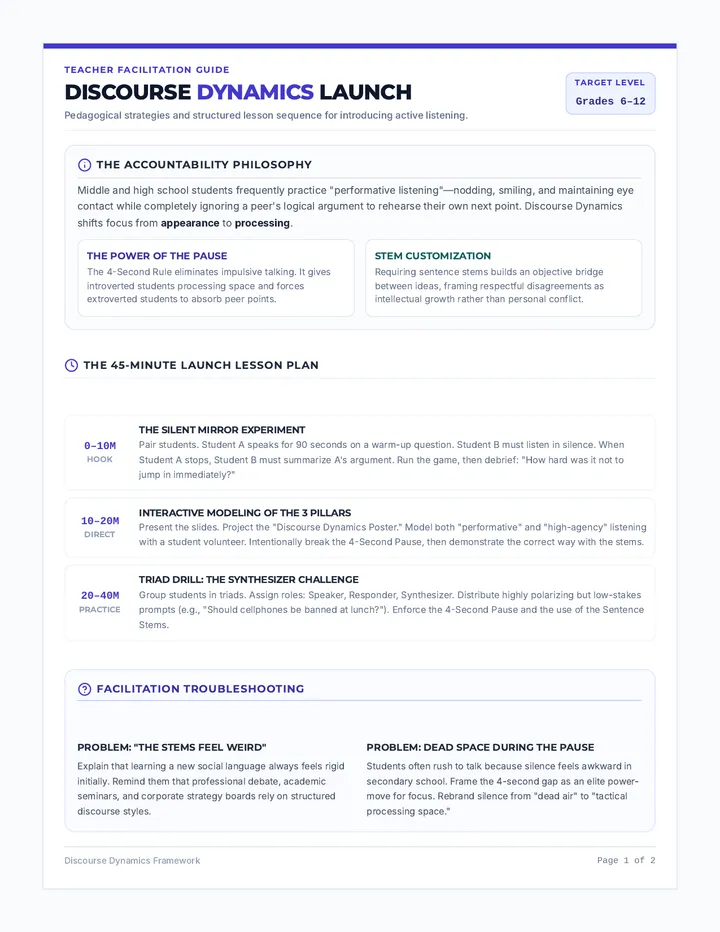
A modern, high-accountability framework for active listening and structured peer discussion in middle and high school classrooms. Includes an anchor chart, introductory slides, and a teacher facilitation guide.
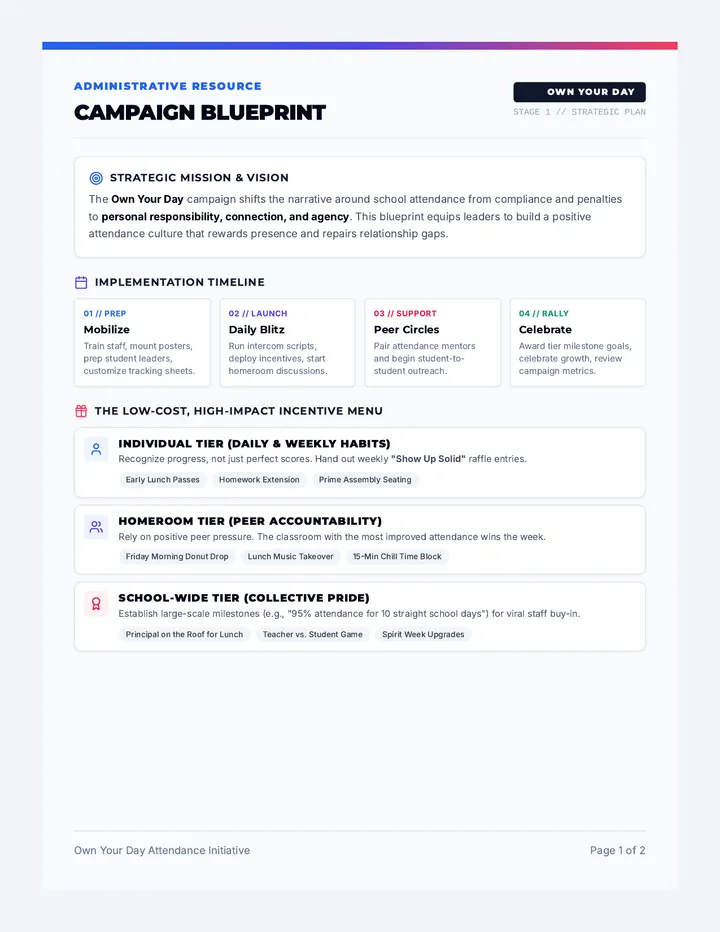
A comprehensive school-wide campaign guide for administrators and teachers to implement the 'Own Your Day' attendance campaign. Includes a step-by-step launch roadmap, a menu of low-cost incentives, peer-led connection strategies, and an administrative tracking framework.
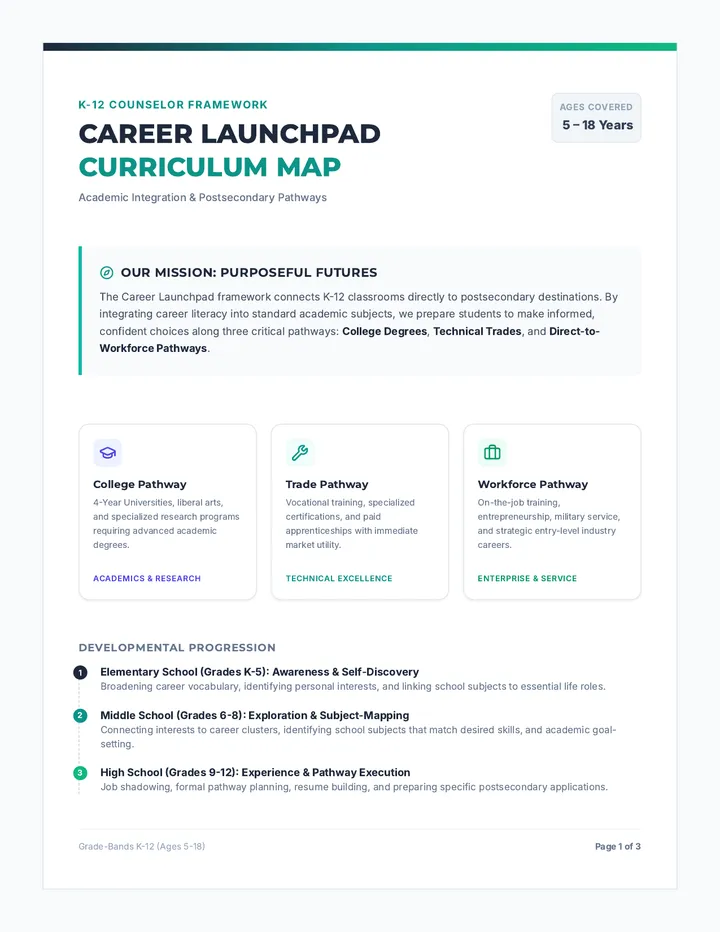
A comprehensive career exploration framework and counselor planning toolkit for grades K-12. This curriculum maps academic subjects to real-world career paths (college, trade school, and workforce) and provides counselors with implementation templates, annual pacing calendars, and a school-wide Career Day blueprint.
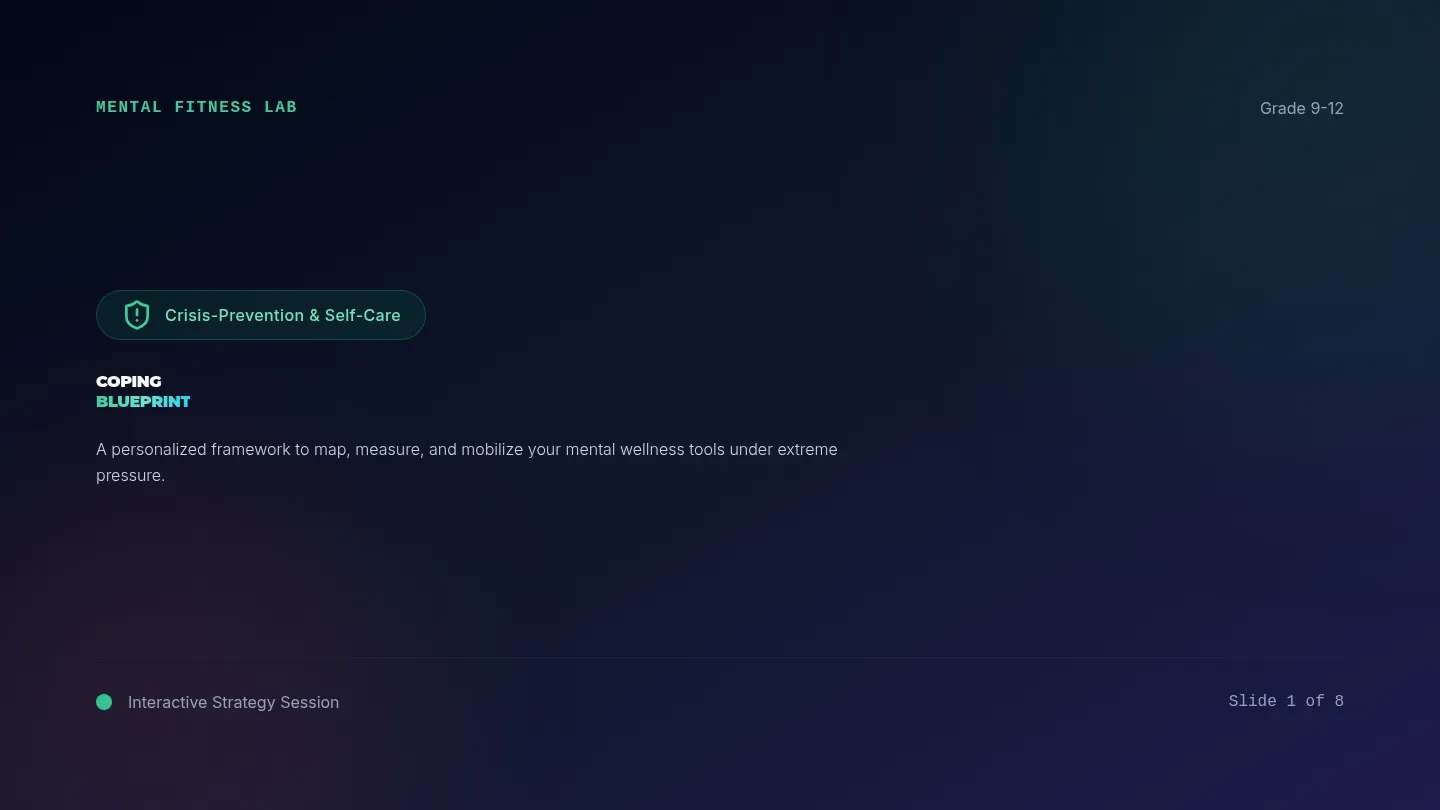
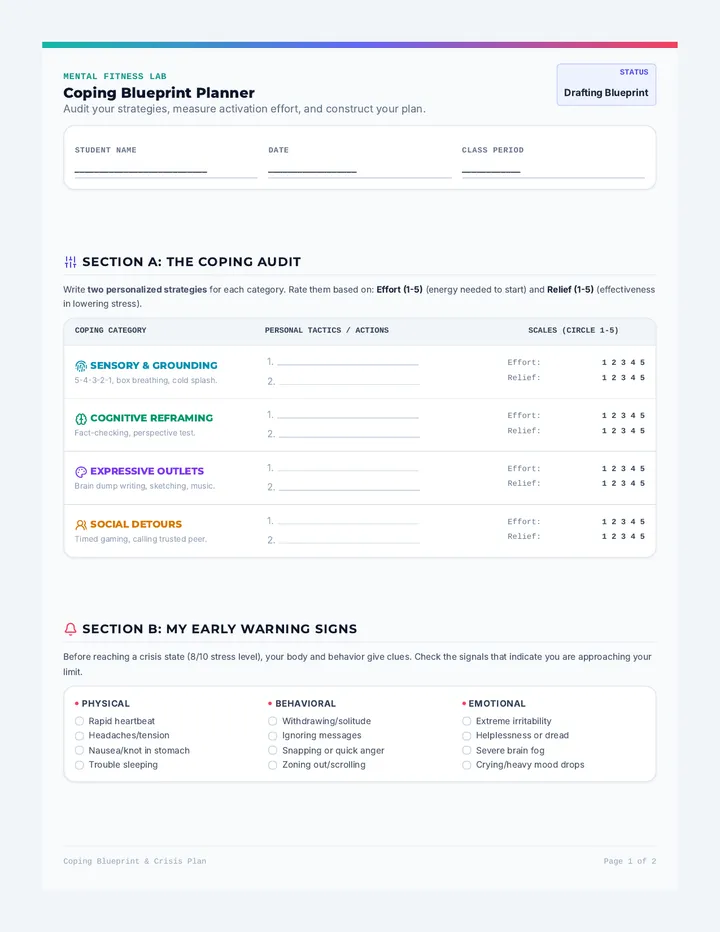
A modern, evidence-based lesson helping high schoolers identify, categorize, and rate coping strategies to build a personalized self-care and crisis-prevention plan. It includes an instructional slide deck to introduce coping science and categories, paired with a structured, print-ready coping planner.
A set of three modern, high-impact campaign posters designed for middle and high school hallways. The posters focus on personal agency, peer connection, and future goals, utilizing a bold slate-and-cobalt color palette with clean, tech-inspired layouts that appeal to older students.