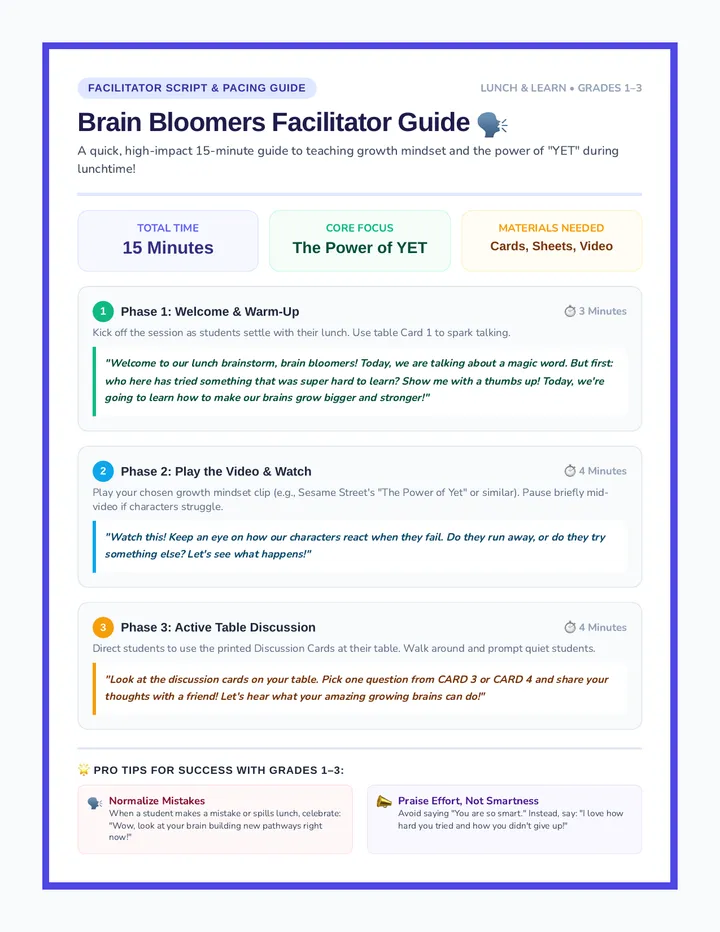
A 1-page teacher facilitator guide for Lesson 2 (Mistake Muscle) that details how to run a high-energy 10-minute lunch-and-learn lesson about mistakes growing brain connections.
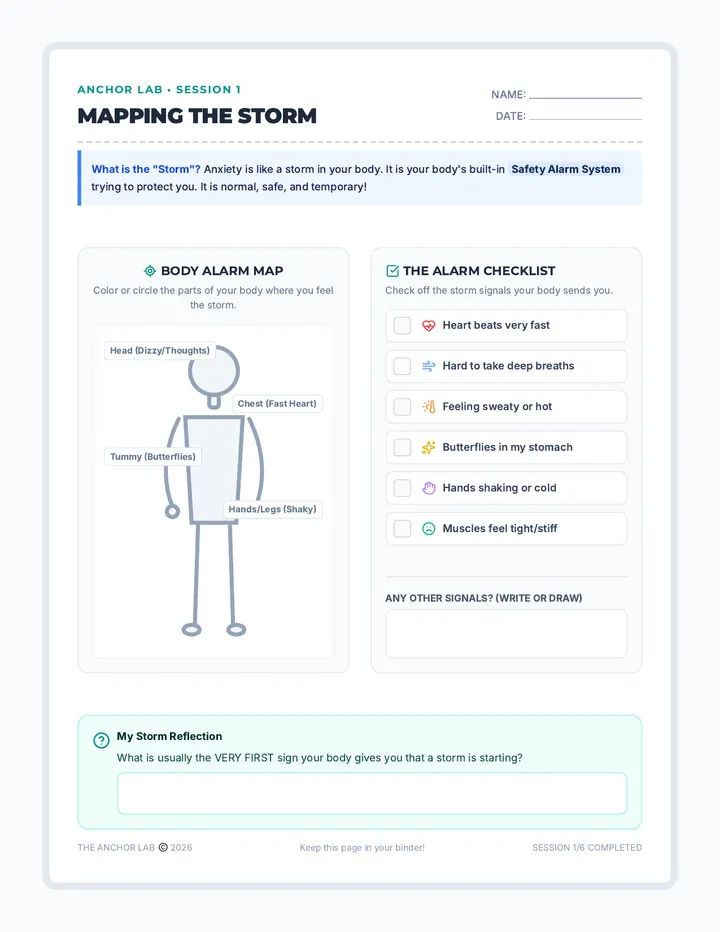
A six-session anxiety coping skills group designed for middle school students with high visual and concrete support. Students explore physical anxiety symptoms, sensory grounding, breathing regulation, cognitive reframing, and build a personalized visual toolkit.
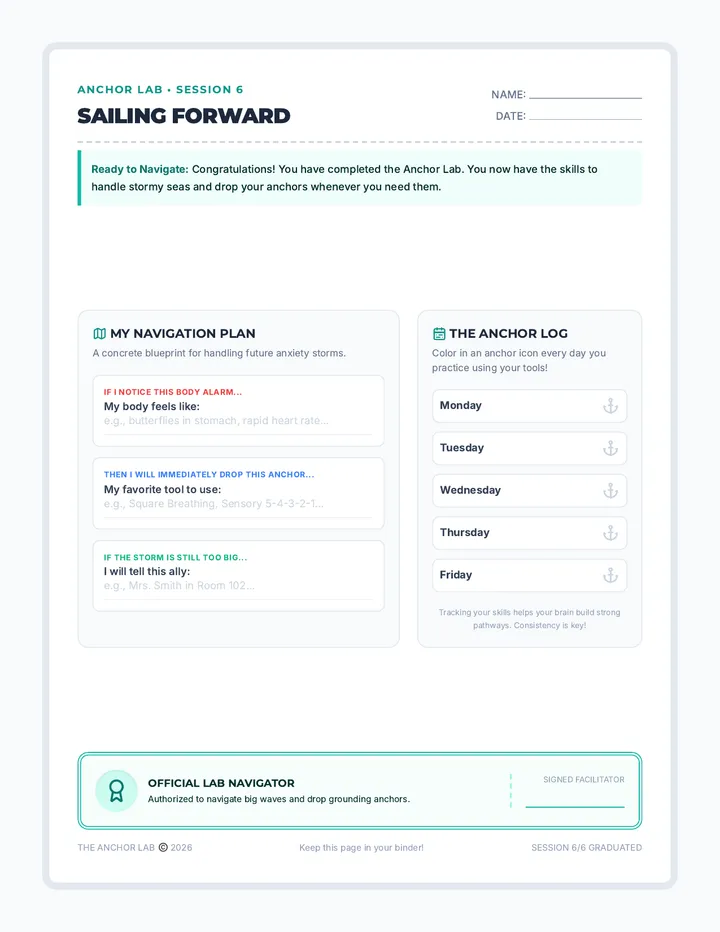
Students create a relapse prevention plan, customize a daily/weekly coping tracker, and celebrate group completion with an anchor ceremony.
Interactive daily coping tracker and future action plan for Session 6. Includes an If-Then navigation plan, weekly log sheet, and group completion navigator badge.
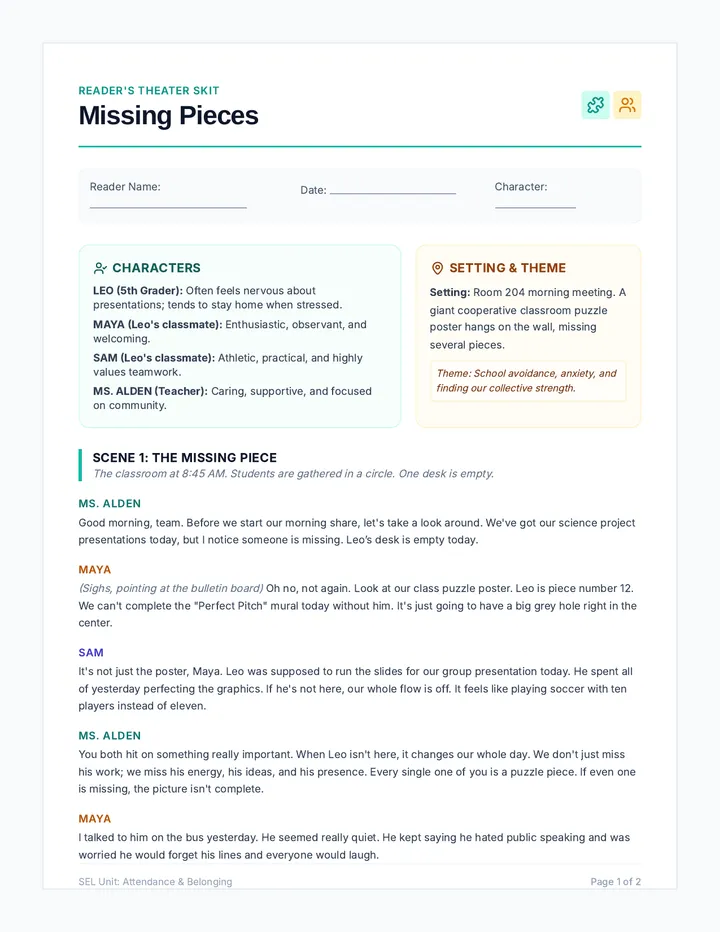
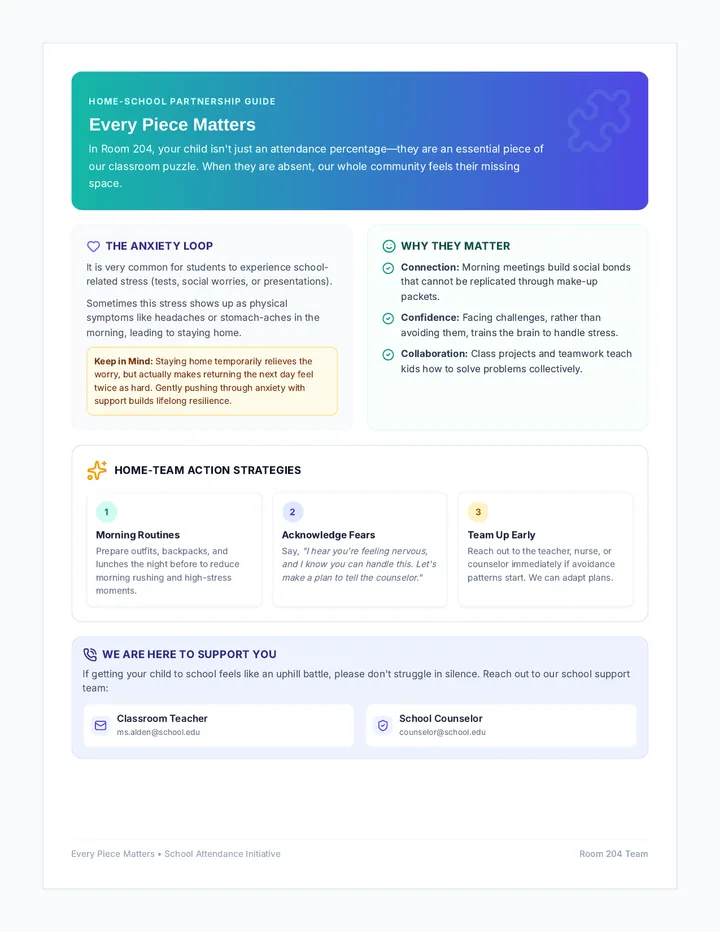
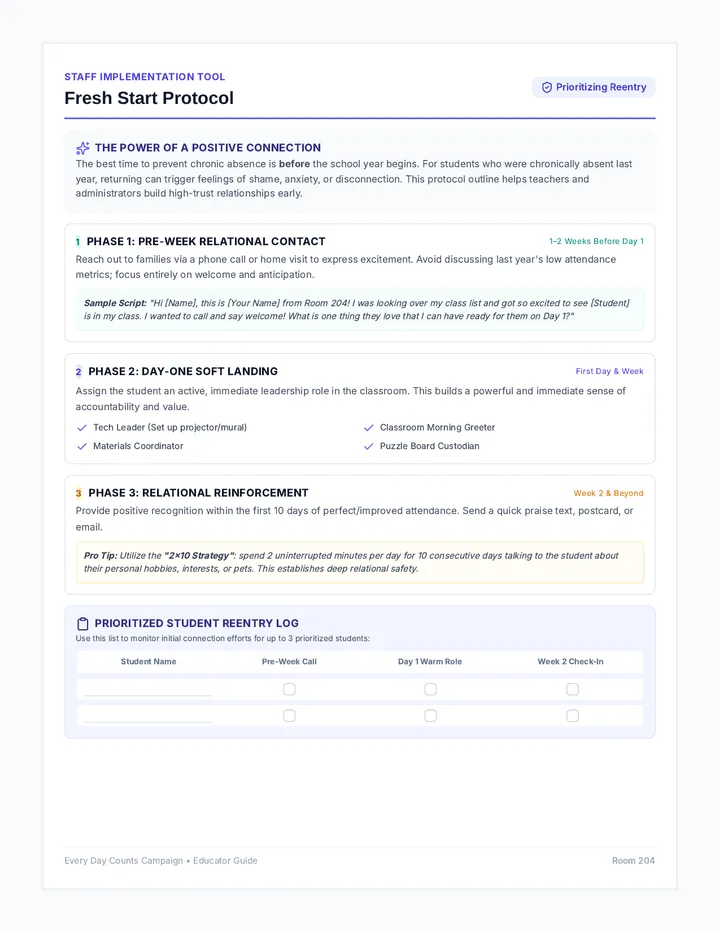
A comprehensive school-wide attendance campaign for elementary schools consisting of a strong start-of-year community kickoff, mid-semester habit-building trackers, and winter-reconnection activities to foster a supportive and consistent school-home culture.
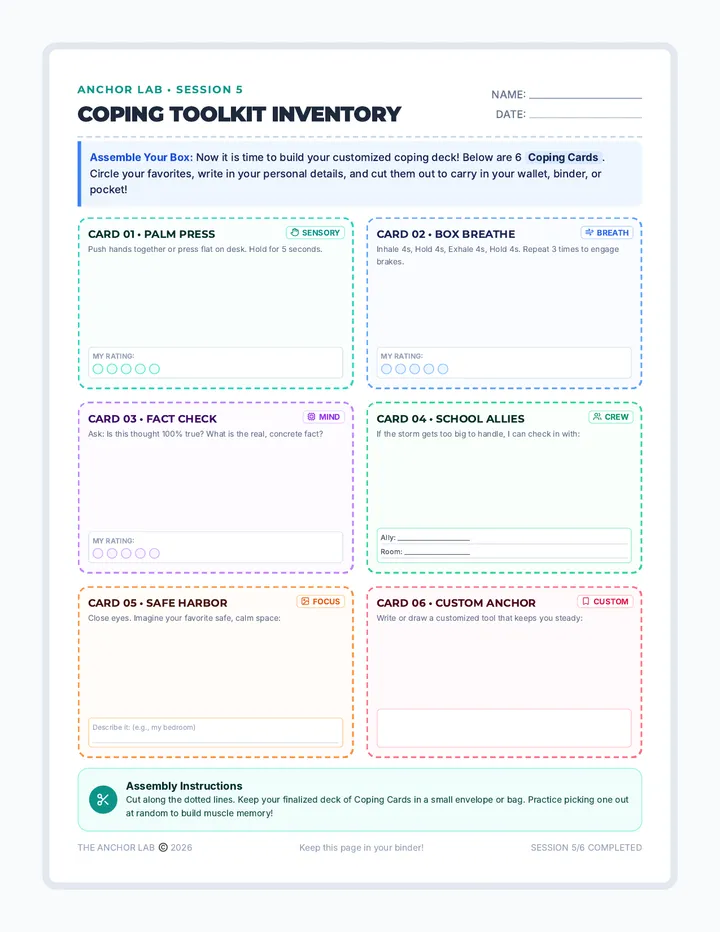
Students review the physical, sensory, breathing, and cognitive tools they have practiced, and select their personal favorites to assemble into a customized portable coping card toolkit.
Interactive visual student toolkit builder for Session 5. Features 6 collectible-style cut-out Coping Cards with concrete reminders for physical, sensory, and cognitive anchors.
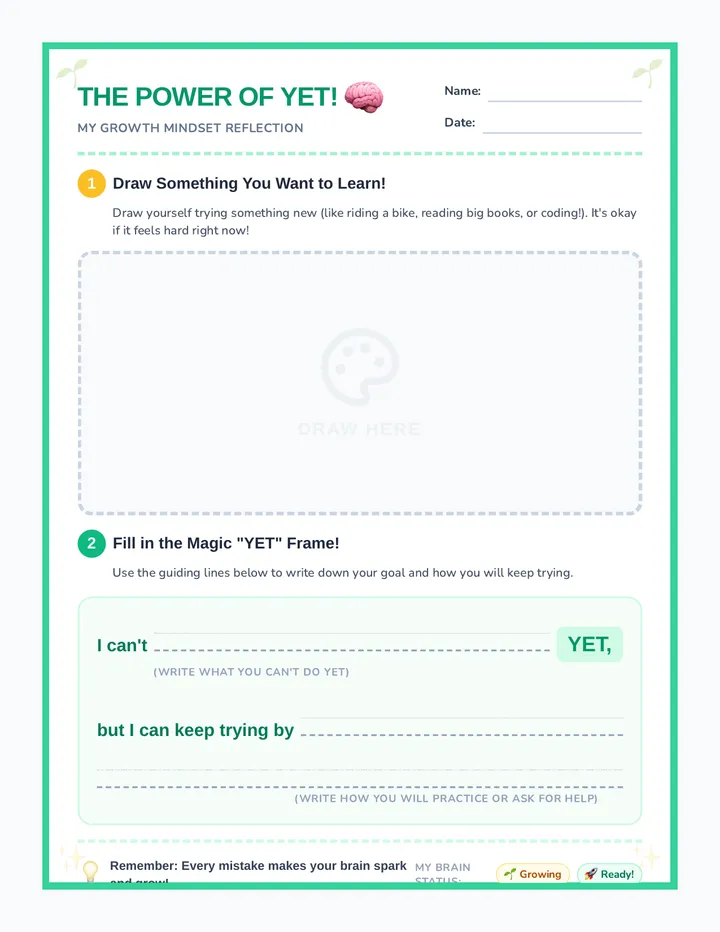
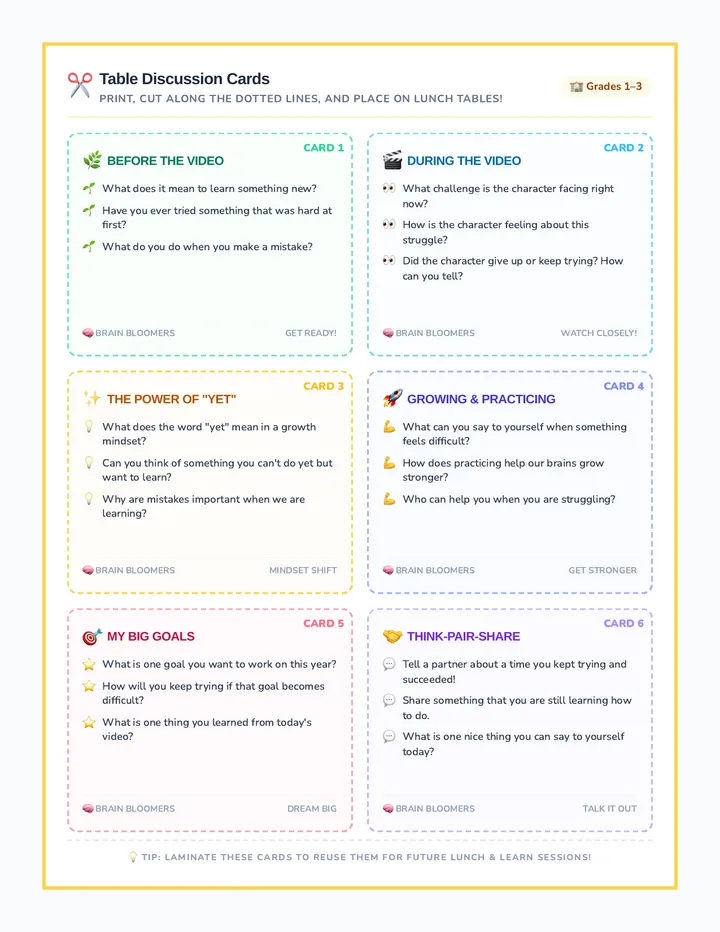
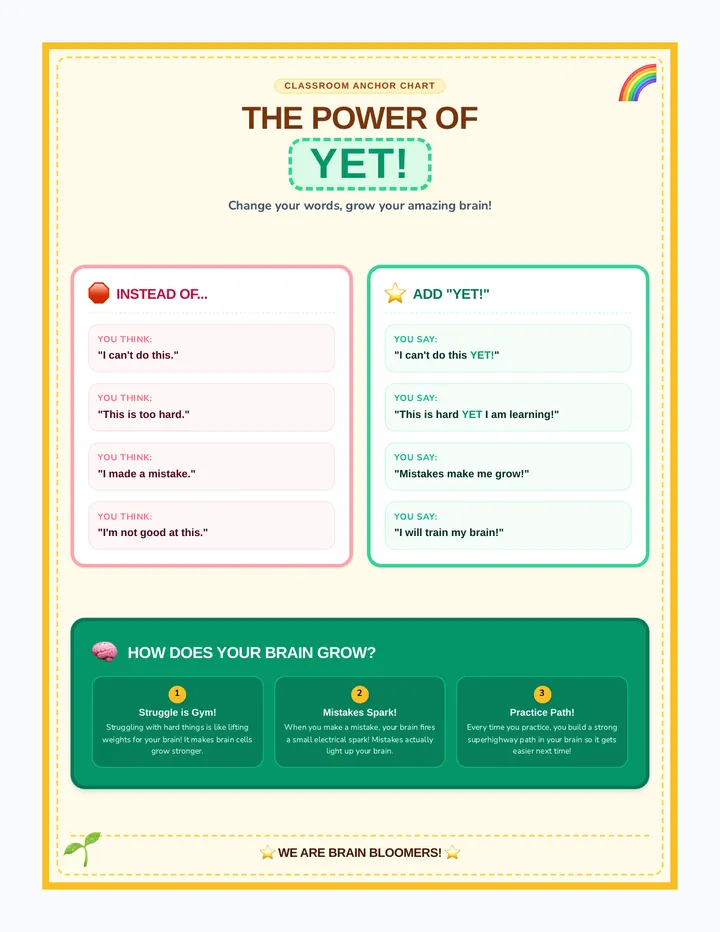
A weekly 10-minute lunch-and-learn series for mixed-age students in grades 1-6, focused on developing growth mindsets, embracing challenges, and learning from mistakes.
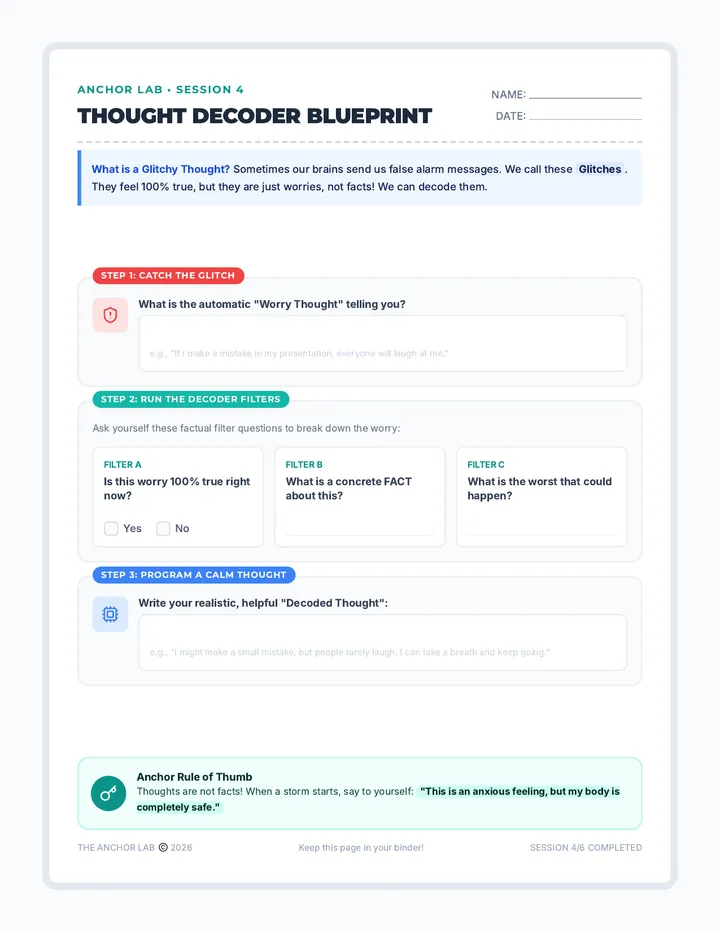
Students learn to decode and challenge automatic negative thoughts (the "Glitchy Thoughts") and use basic visual reframing sheets to turn worries into calm statements.
Interactive visual cognitive reframing worksheet for Session 4. Helps students identify automatic worry thoughts ("Glitches"), filter them through a factual check, and rewrite them into realistic calm statements.
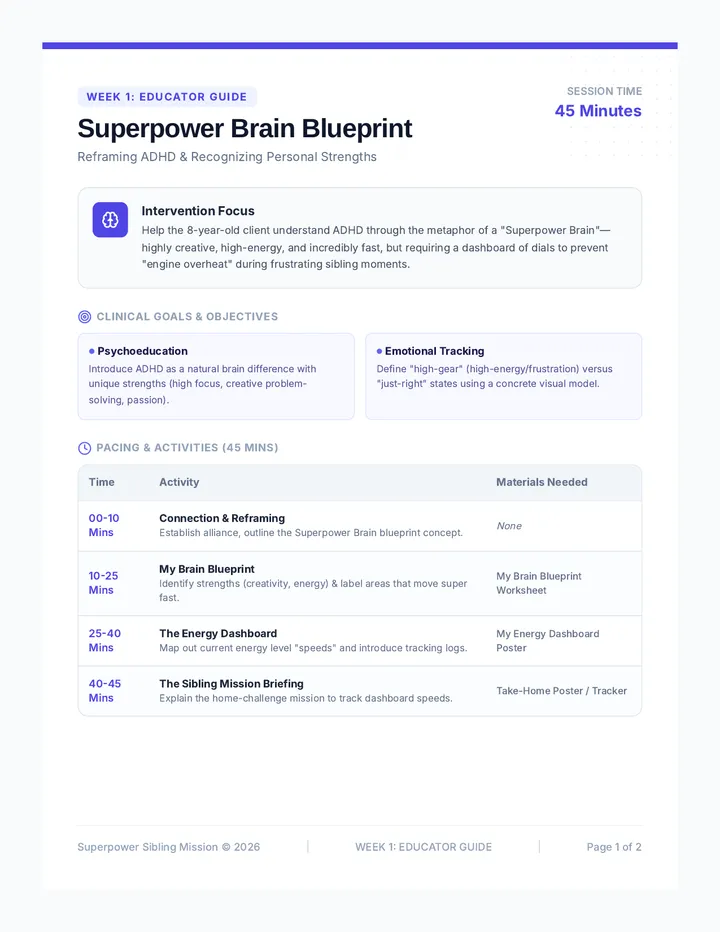
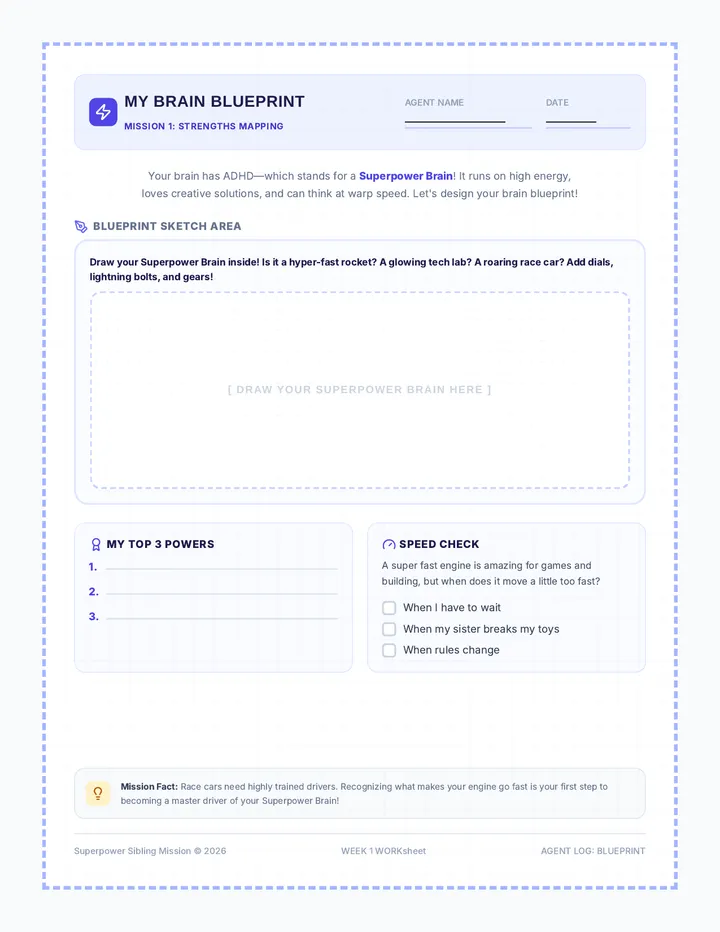
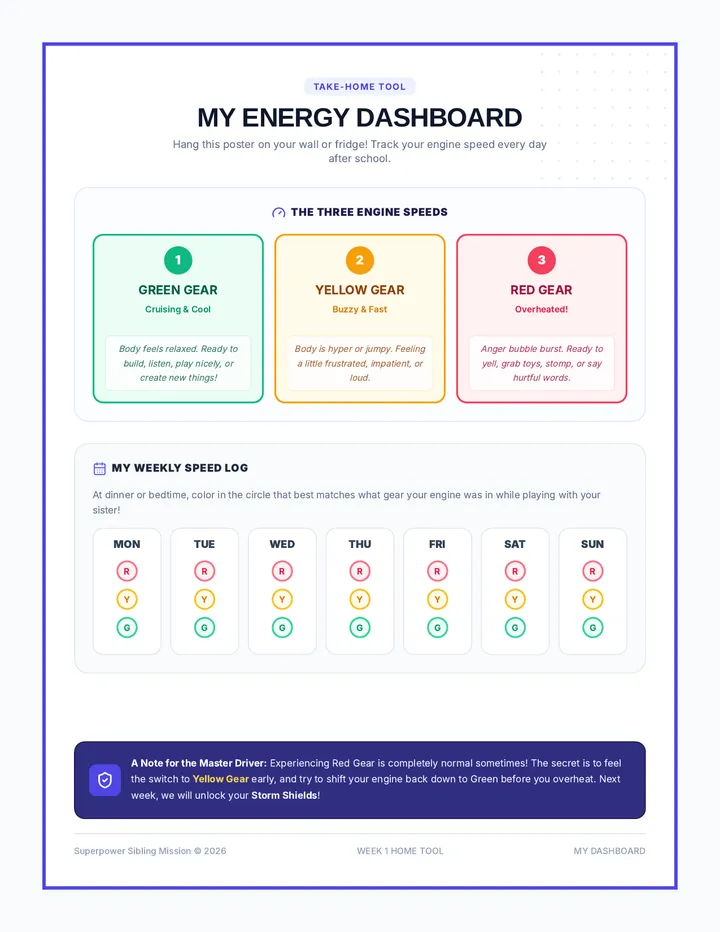
A three-week therapeutic intervention sequence for an 8-year-old child to understand his ADHD as a 'Superpower Brain', recognize emotional triggers, and develop non-aggressive coping mechanisms for interactions with his 5-year-old sister.
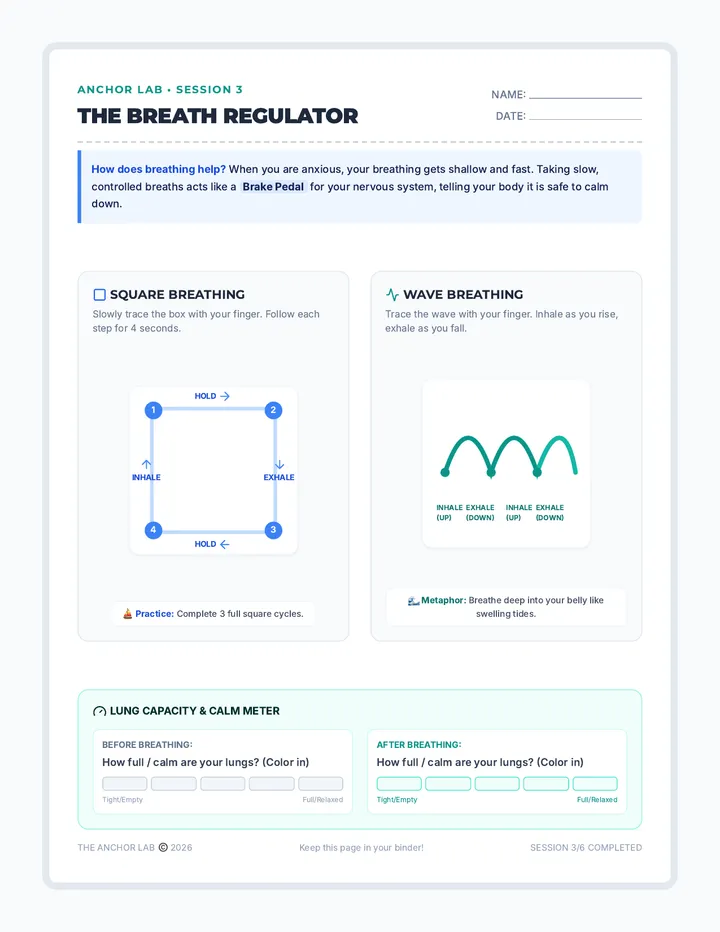
Students practice concrete, visual breathing techniques (such as shape and trace breathing) to physically slow down their nervous system when feeling anxious.
Interactive trace-breathing workbook page for Session 3. Features highly visual trace-along pathways for Square Breathing and Wave Breathing, concrete physical metaphors, and pre/post rating scales.