A comprehensive lesson plan for kindergarten teachers focused on teaching students how to listen actively and wait for their turn to speak.
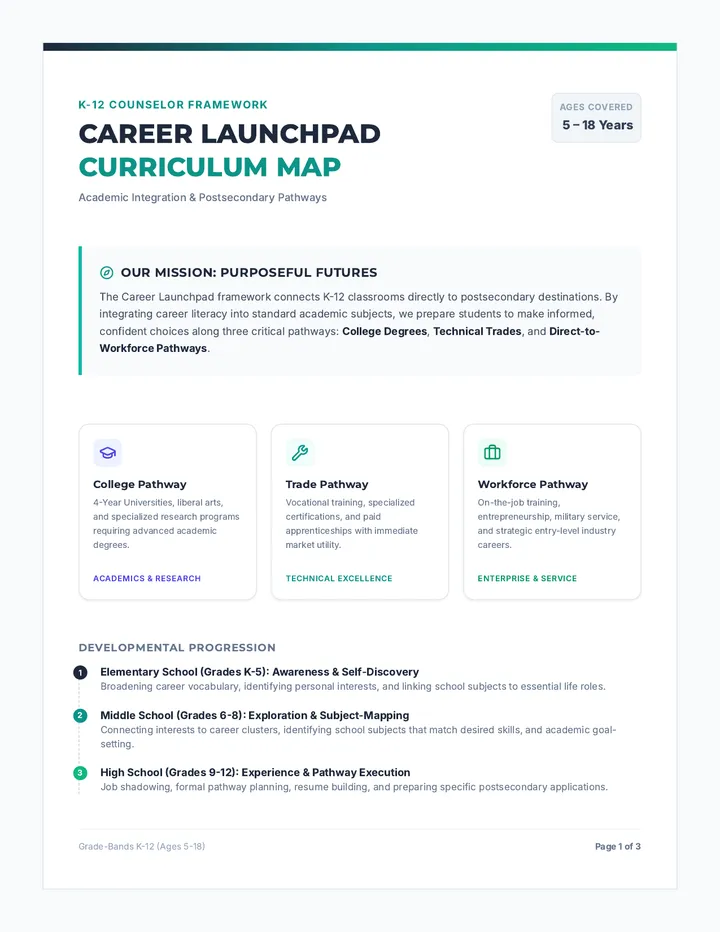
A comprehensive career exploration framework and counselor planning toolkit for grades K-12. This curriculum maps academic subjects to real-world career paths (college, trade school, and workforce) and provides counselors with implementation templates, annual pacing calendars, and a school-wide Career Day blueprint.
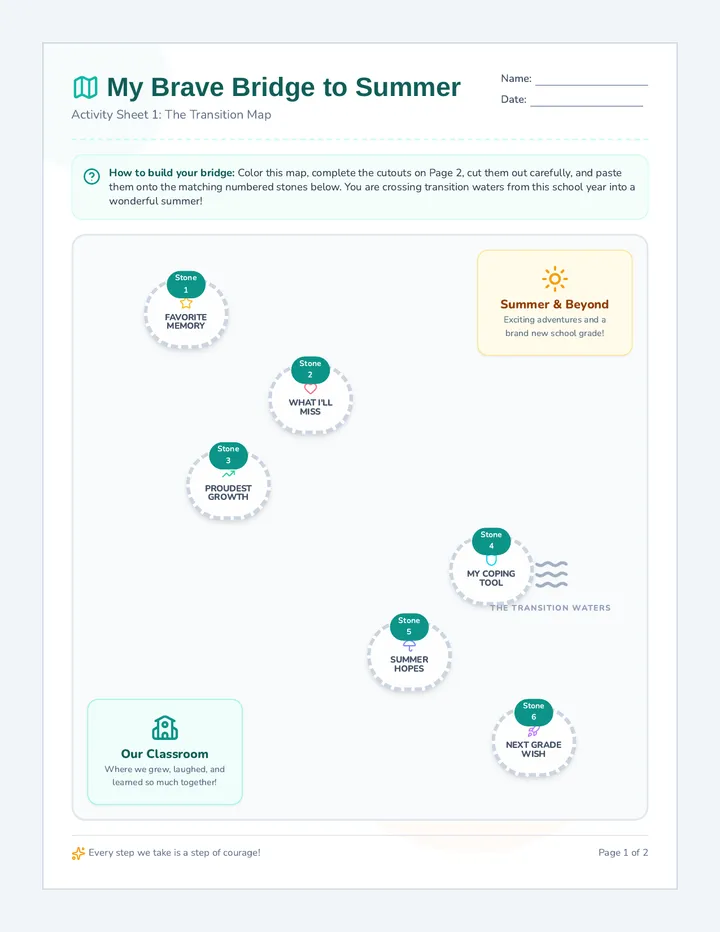
A supportive, social-emotional learning lesson designed to help students navigate end-of-the-year transition anxiety. Through a supportive slide-guided discussion and a hands-on "Stepping Stones" cut, paste, and color craft, students celebrate their growth, process what they will miss, and build coping strategies for entering summer and the next grade.
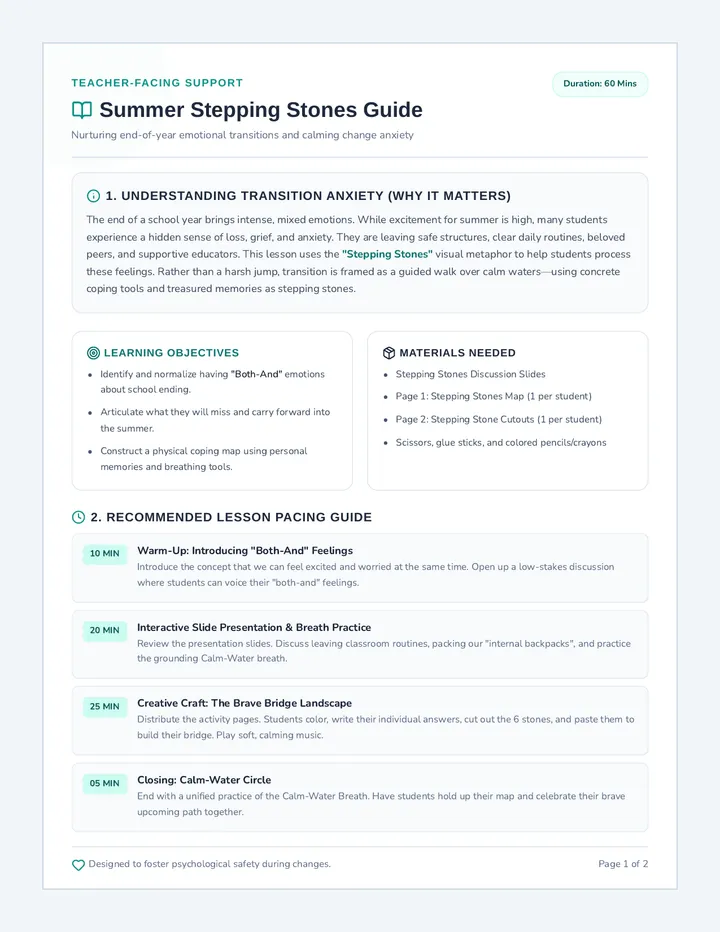
A comprehensive teacher guide featuring step-by-step lesson pacing, slide-by-slide scripts, transition anxiety background knowledge, and actionable strategies to help students navigate end-of-the-year mixed feelings.
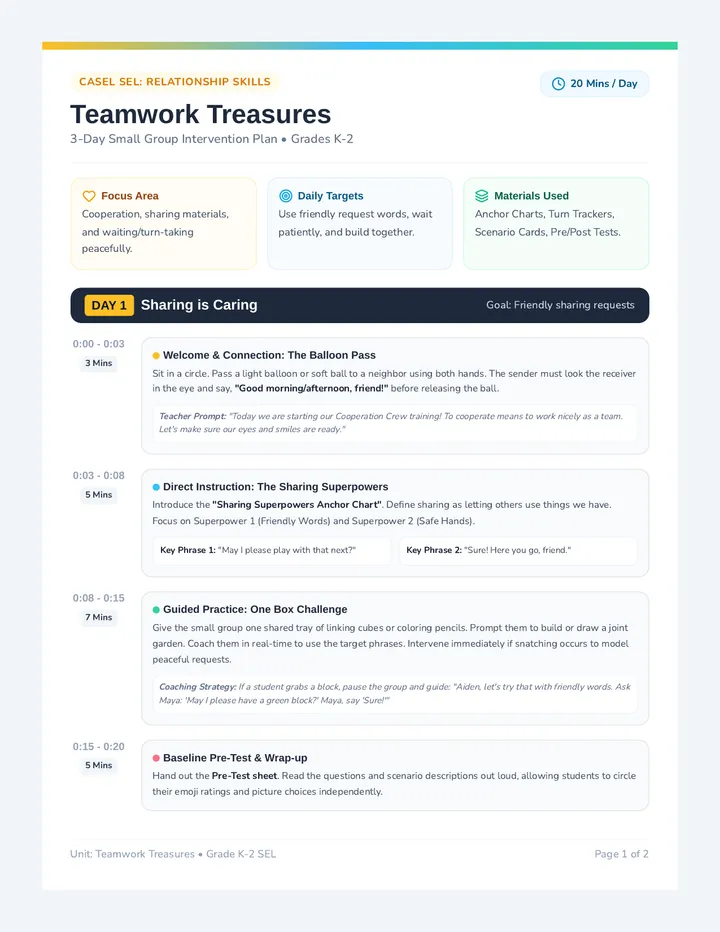
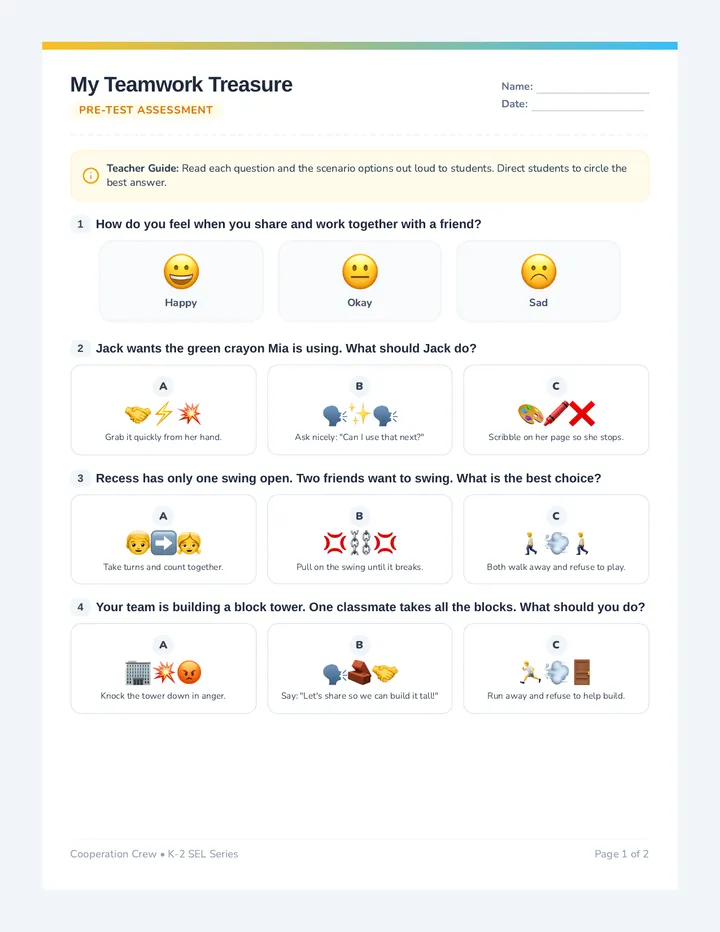
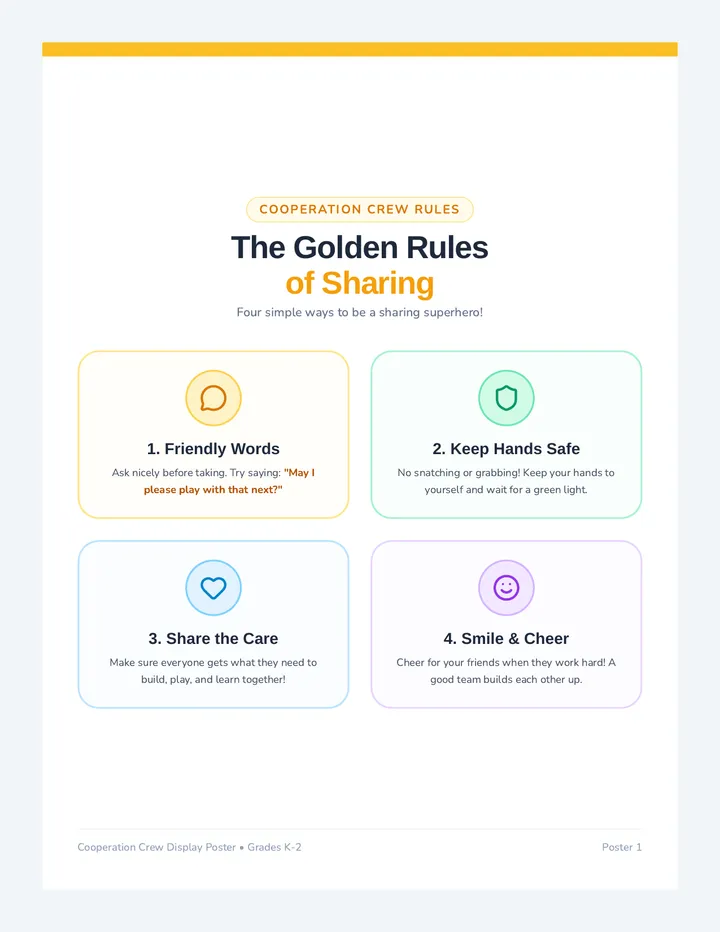
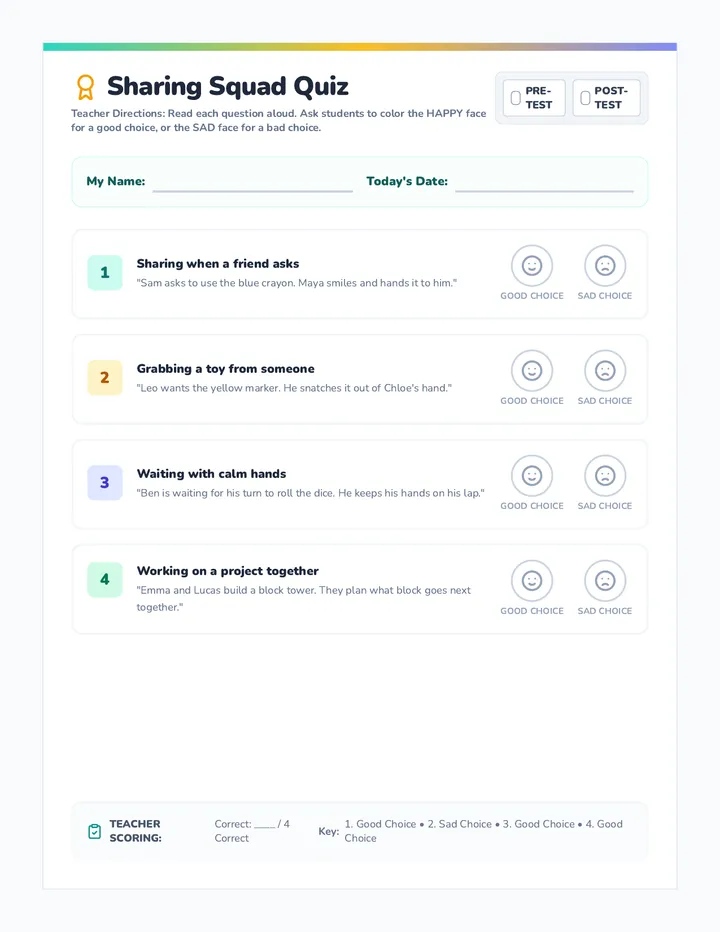
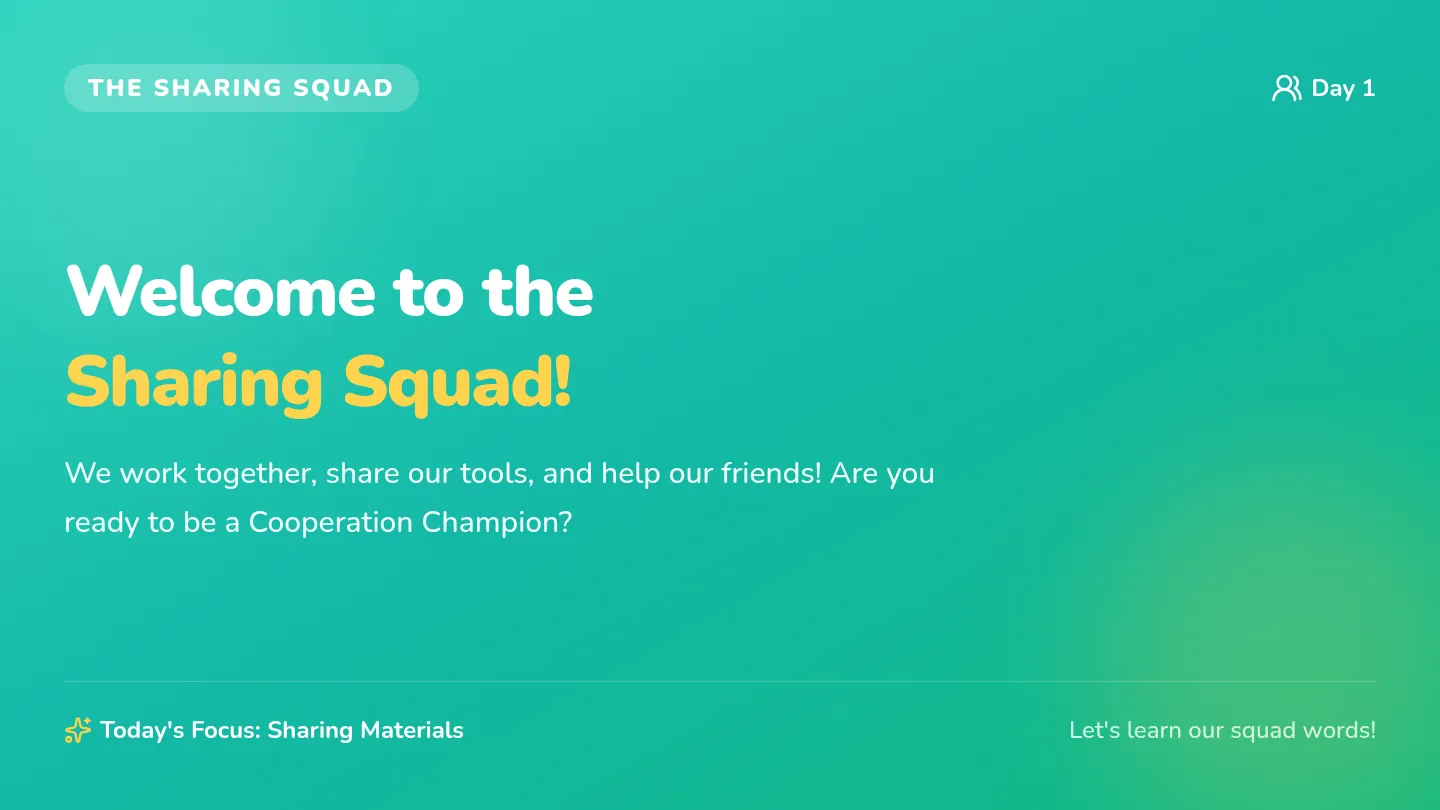
A 3-day social-emotional learning series for grades K-2 focusing on cooperation, sharing, and peaceful turn-taking, aligned with the CASEL Relationship Skills competency.
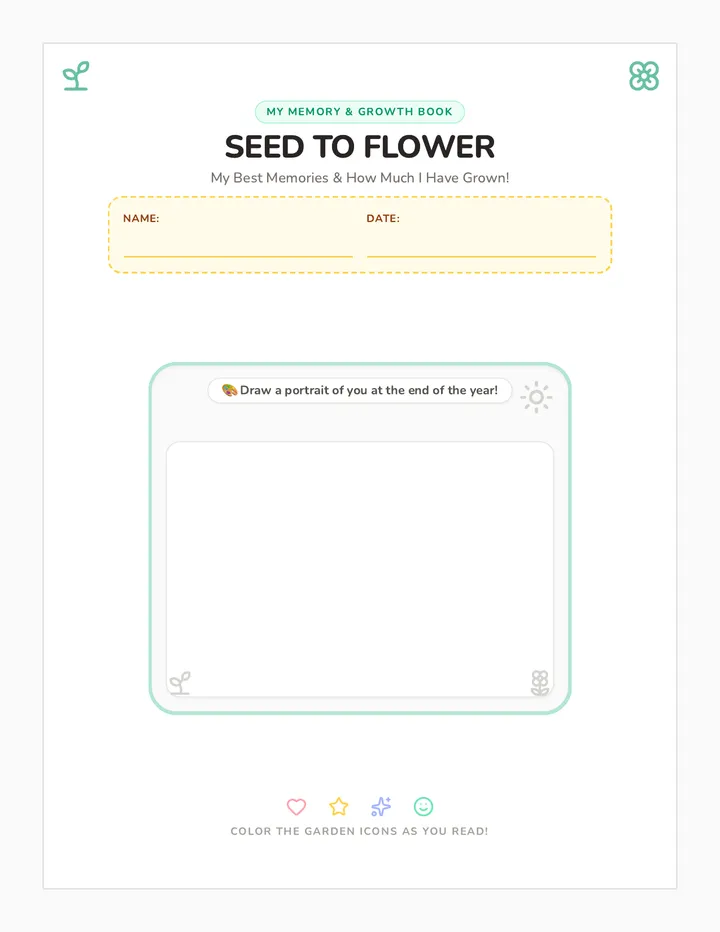
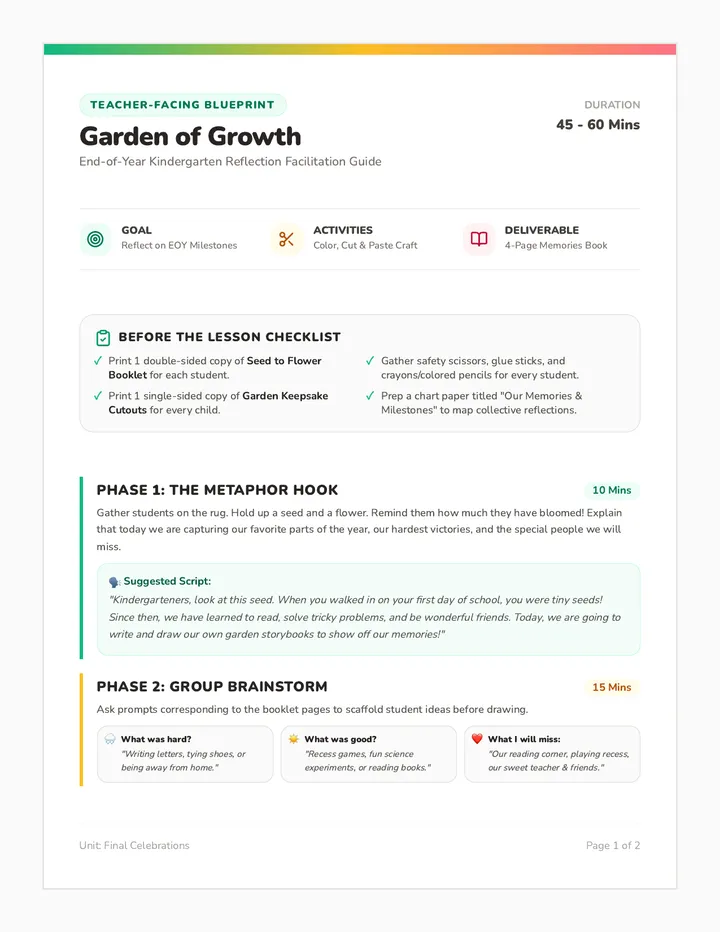
A kindergarten end-of-year reflection lesson focused on growth mindset, helping students visualize and celebrate how much they have grown, learned, and changed since autumn through drawing and discussion.
A two-page printable student activity sheet and craft. Page 1 features a "Brave Bridge to Summer" landscape map across transition waters, and Page 2 provides 6 beautifully designed interactive "Stepping Stone" cutouts for students to color, personalize, cut, and paste.
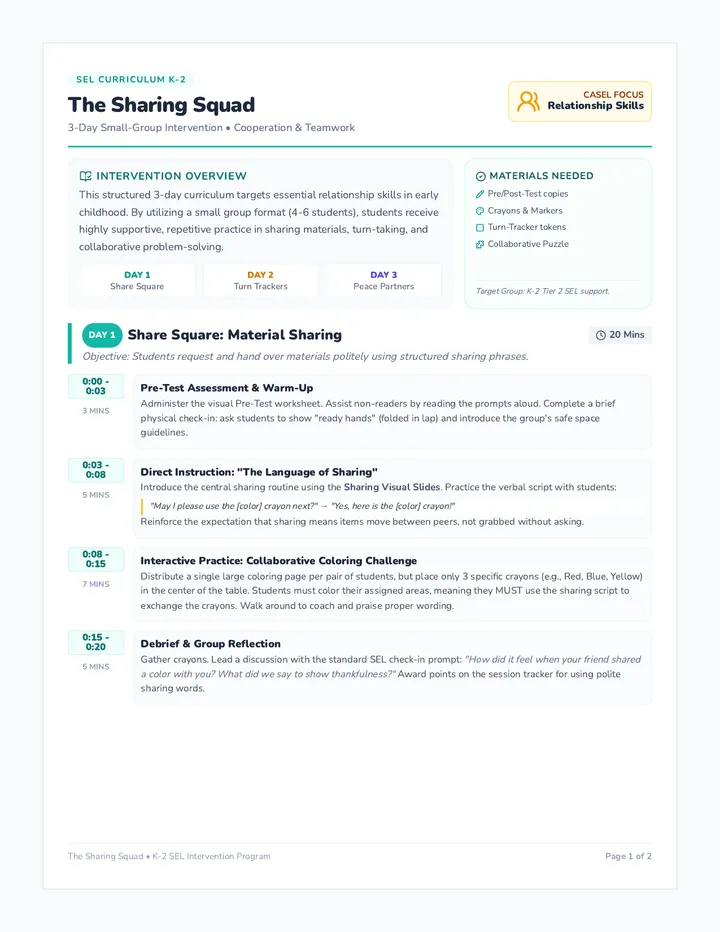
A 3-day SEL small-group intervention for grades K-2 focused on material sharing, turn-taking, and peaceful collaboration, aligned with the CASEL Relationship Skills competency. Each daily session is designed for 20 minutes with specific timestamps.
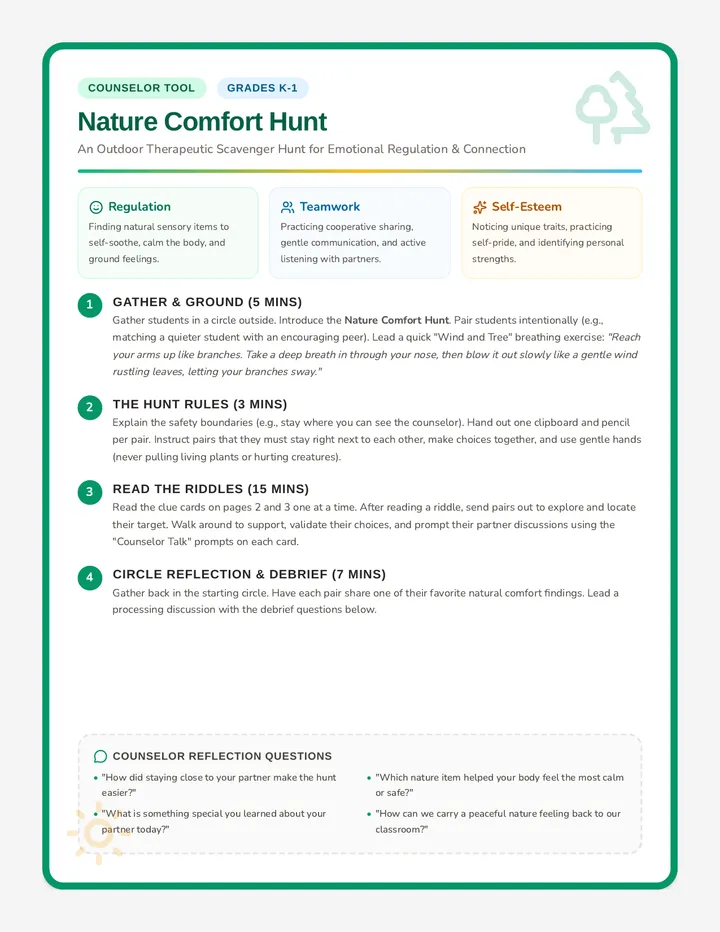
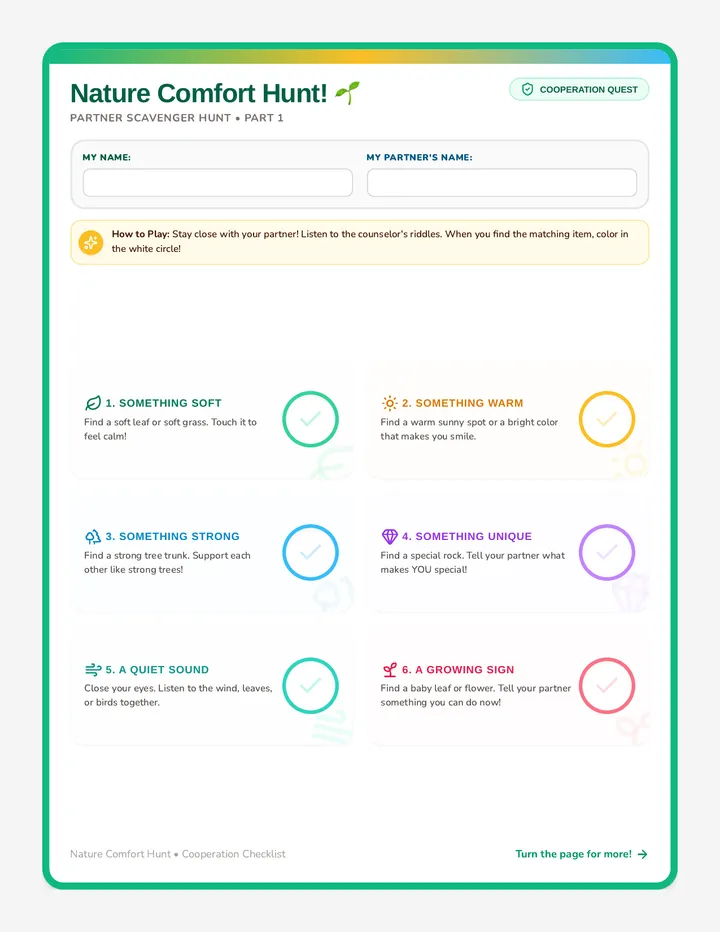
An outdoor therapeutic scavenger hunt lesson designed for Kindergarten and 1st-grade students. It uses nature-based exploration to teach emotional regulation, cooperative social skills, and self-esteem through counselor-guided riddles.
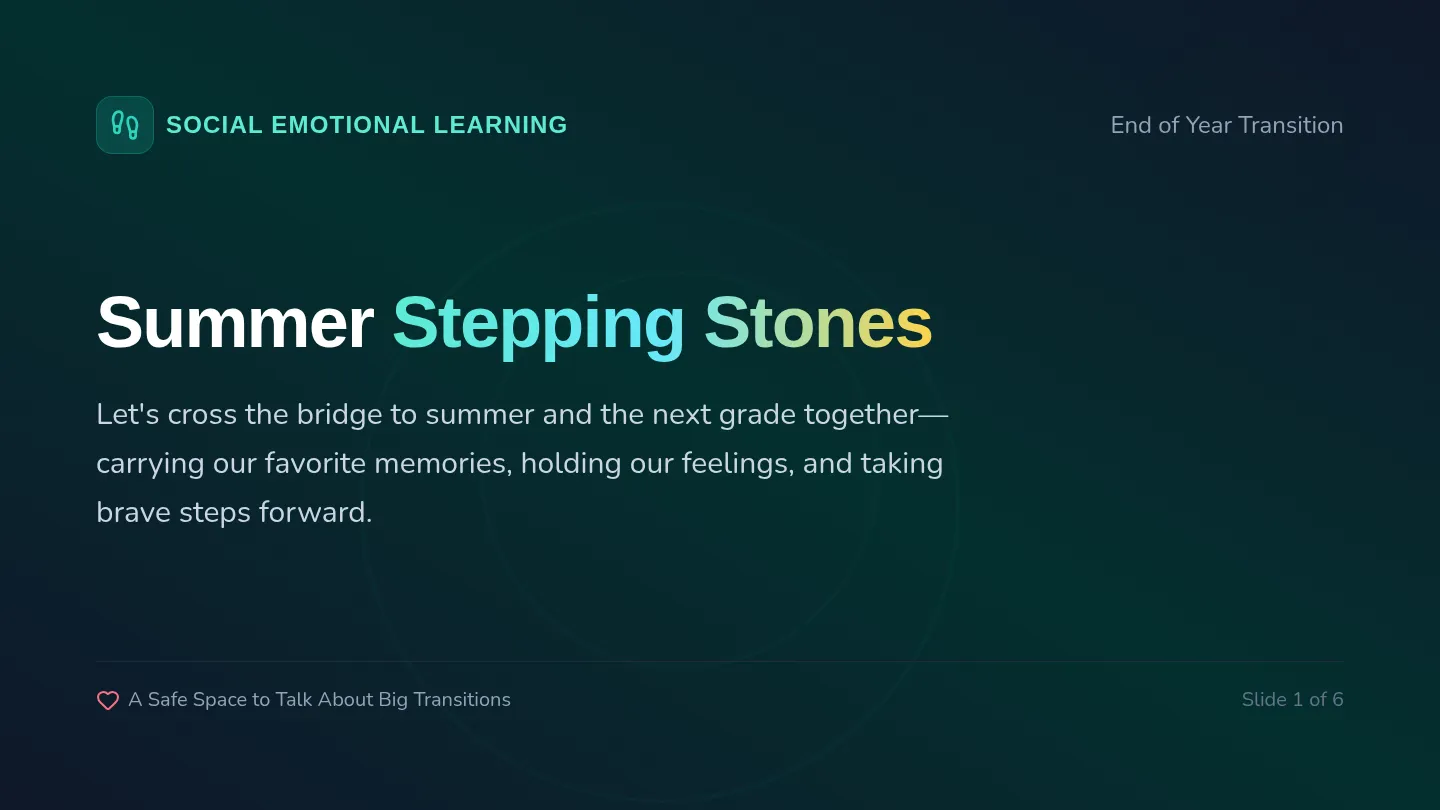
An interactive slide presentation designed to lead a comforting, classroom-wide SEL discussion about end-of-the-year transitions. It normalizes mixed feelings, introduces the stepping-stone metaphor, and guides students through managing transition anxiety.
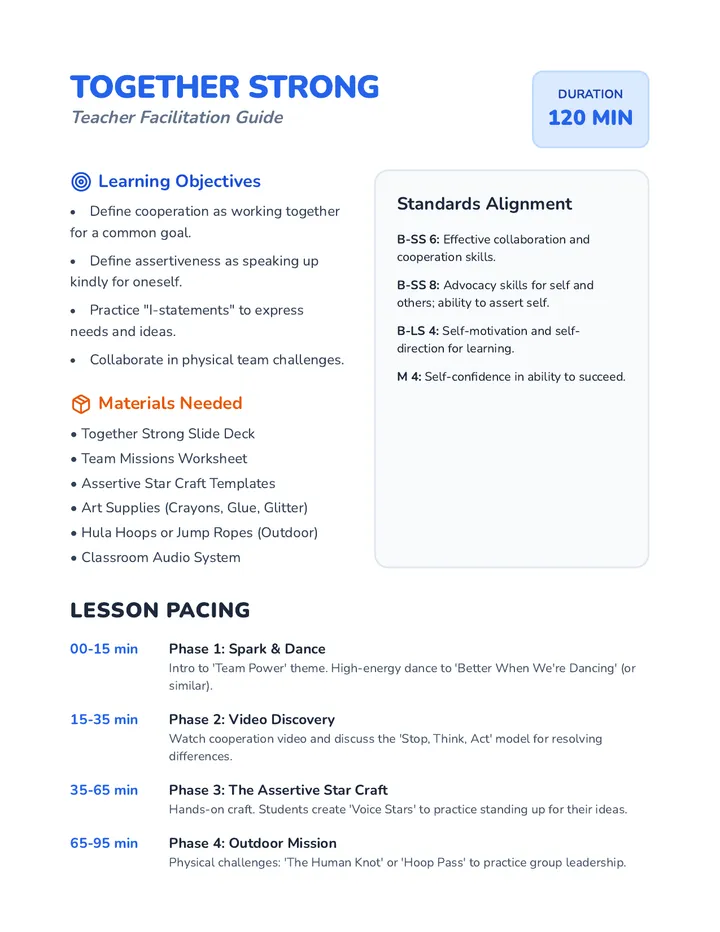
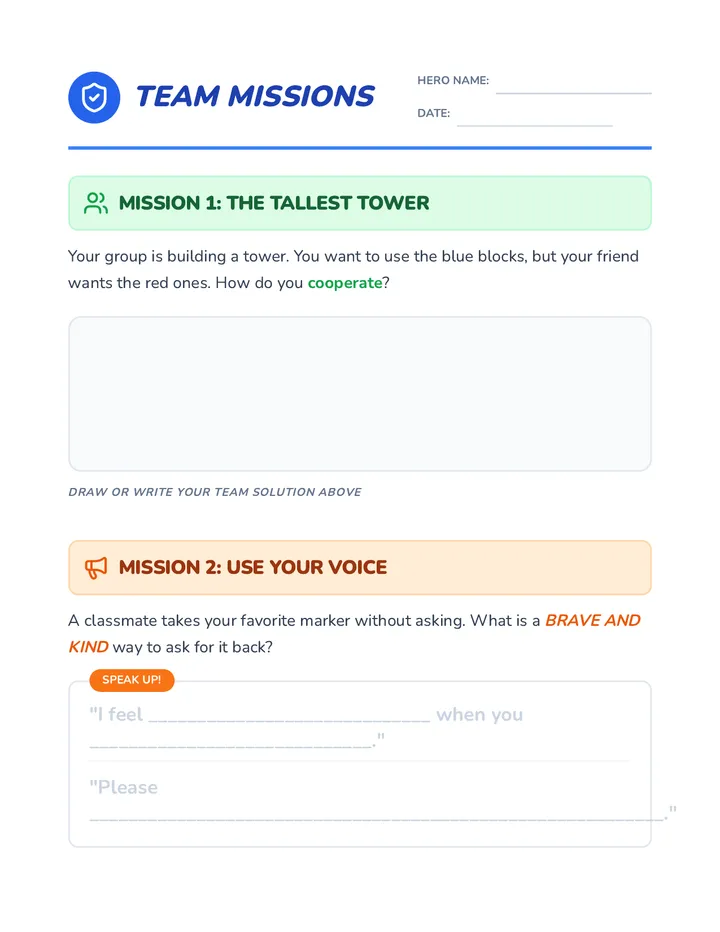
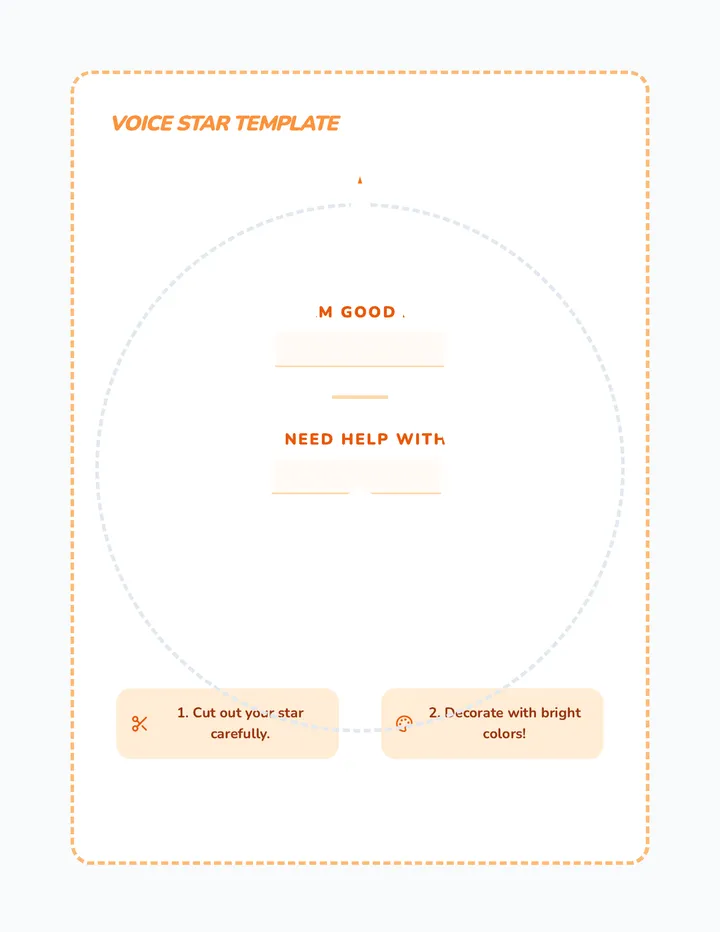
A social-emotional learning sequence focused on developing cooperation and assertiveness in K-2 students through music, movement, and hands-on activities. Students learn to balance their own needs with the needs of the group to become effective 'Team Power' heroes.
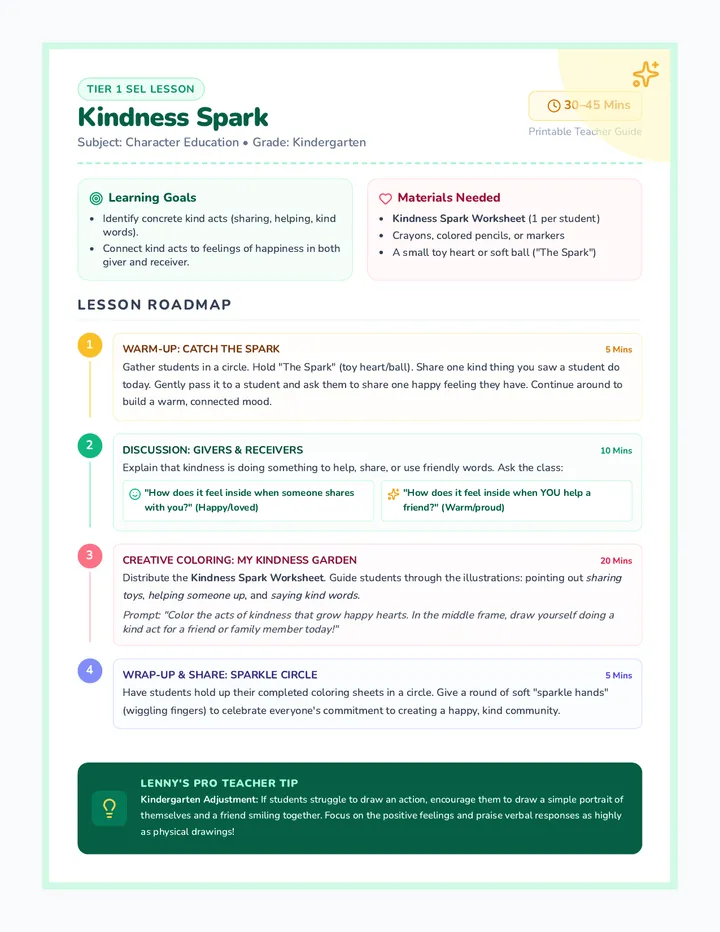
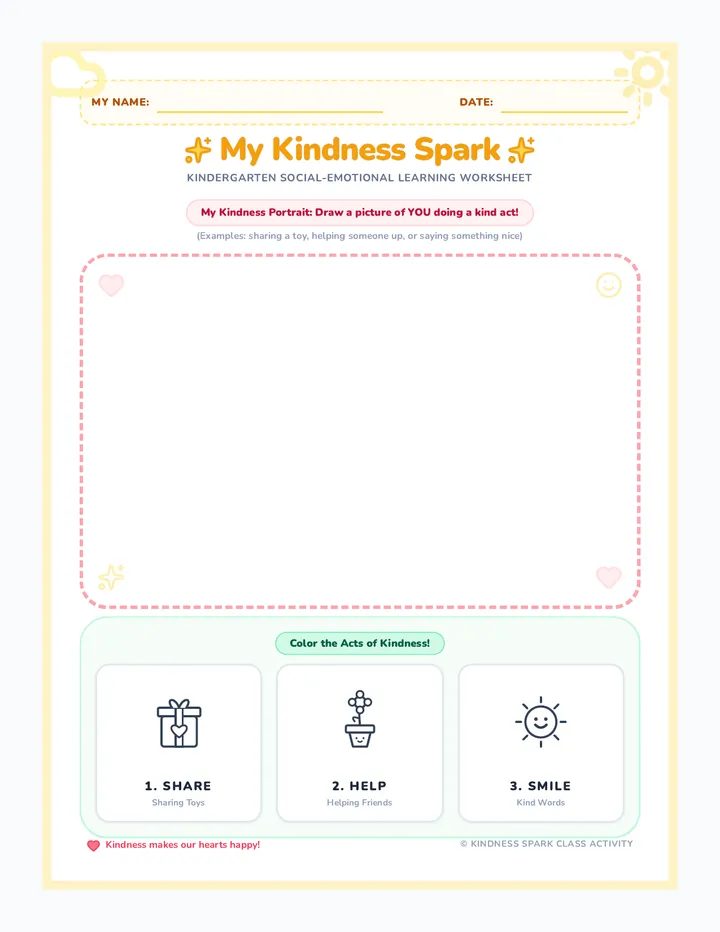
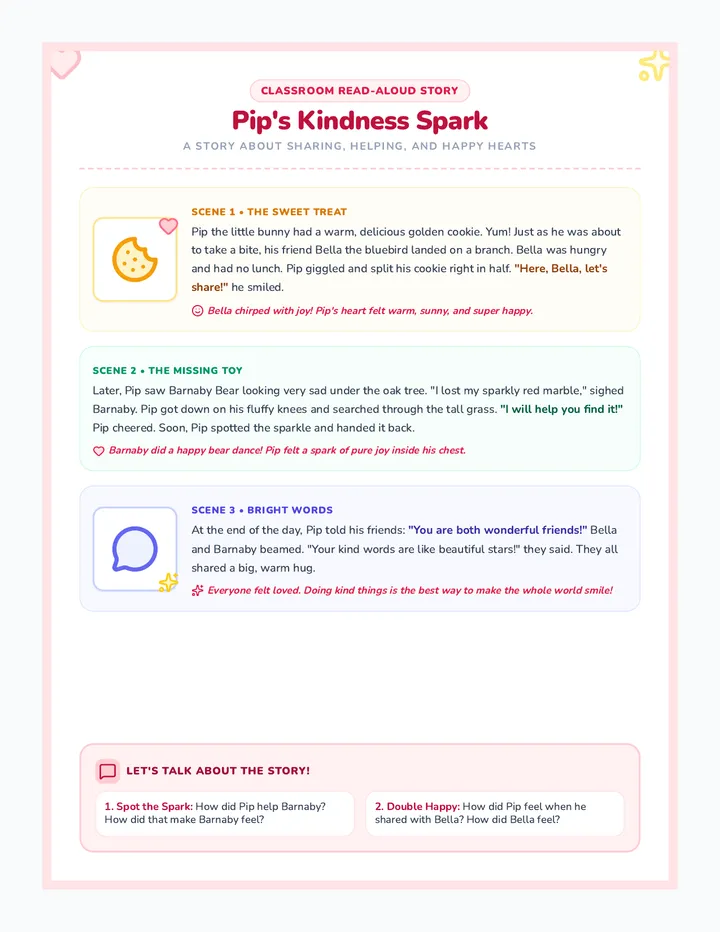
A warm, engaging Tier 1 kindergarten lesson focusing on recognizing kind actions like sharing and helping, and exploring how kindness makes both the giver and receiver feel happy through discussion and a hands-on coloring activity.
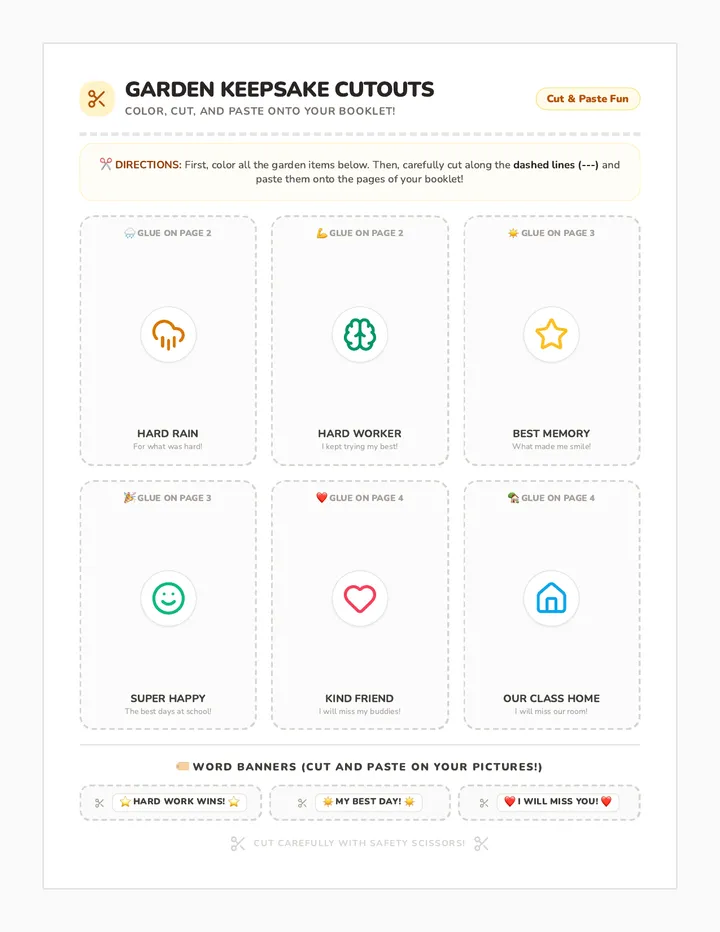
A single-page printable containing fun, easy-to-cut garden elements, badges, and word labels for kindergarteners to color, cut out, and paste onto their Seed to Flower booklets. Features clear dotted lines and kid-friendly designs.