Final project guide and rubric for students to create a visual metaphor explaining compound interest, reinforcing core vocabulary and conceptual understanding.
A detailed teacher answer key and scoring guide for the Safety Signals Quiz, including sample responses and grading criteria.
A comprehensive assessment for the Social Media Safety lesson, covering vocabulary terms, main idea analysis (RI.5.2), and evidence-based responses (RI.5.1).
A final reflection exit ticket for students to define the pause strategy and commit to using it in a personal future scenario.
A large-format visual aid for the classroom outlining the two-step pause strategy (Name It and Brake It) to bridge the gap between feelings and actions.
A set of four scenario cards featuring emojis and relatable 7th-grade situations for students to practice differentiating between automatic and braked reactions.
A teacher-facing guide providing scripts for three different role-play scenarios and facilitation instructions for the mindful minute and debrief sessions.
A comprehensive teacher guide including lesson objectives, standards alignment, a step-by-step instructional sequence, and a detailed answer key.
A worksheet for students to map their physical sensations of emotions, identify automatic reactions, and redraft a personal scenario using the pause strategy.
A student worksheet for analyzing the 'Safe Scrawl' passage, featuring sections for identifying main ideas, quoting evidence, and making inferences.
A 6-slide presentation deck using a blueprint aesthetic to teach the connection between emotions and actions, introducing the Name It and Brake It strategy.
A Grade 5 level informational text about digital footprints, privacy settings, and cyberbullying, designed for main idea and key detail analysis.
A set of 15 conversation starter cards focused on challenges and fun questions, designed for a turn-taking activity with clear cutting lines and a mustard/amber theme.
A visually engaging slide deck that introduces students to social media safety concepts while teaching the reading strategies of identifying main ideas and supporting details.
A set of 15 conversation starter cards focused on values and dreams, designed for a turn-taking activity with clear cutting lines and a coral/rose theme.
A set of 15 conversation starter cards focused on personal favorites, designed for a turn-taking activity with clear cutting lines and a teal/indigo theme.
A comprehensive facilitator guide for teachers, including lesson objectives, pacing, role-play scenarios, and a real-time intervention strategy for social filter failures.
A narrative social story about a student who learns how his 'jokes' create negative ripples in his friendships, even when adults aren't watching.
A comprehensive facilitator guide for the Chatter Box turn-taking activity, including learning objectives, speaker/listener roles, rules of the game, and reflection questions.
An instructional slide deck using a blueprint theme to teach the social filter concept, distinguishing between thinking and saying, and understanding the 'just joking' trap.
A hands-on worksheet that helps students practice identifying 'Think It' vs 'Say It' thoughts and analyzing the difference between their intent and the actual impact on others.
A set of four roleplay cards featuring common middle school classroom scenarios to help students practice self-advocacy scripts in pairs or small groups.
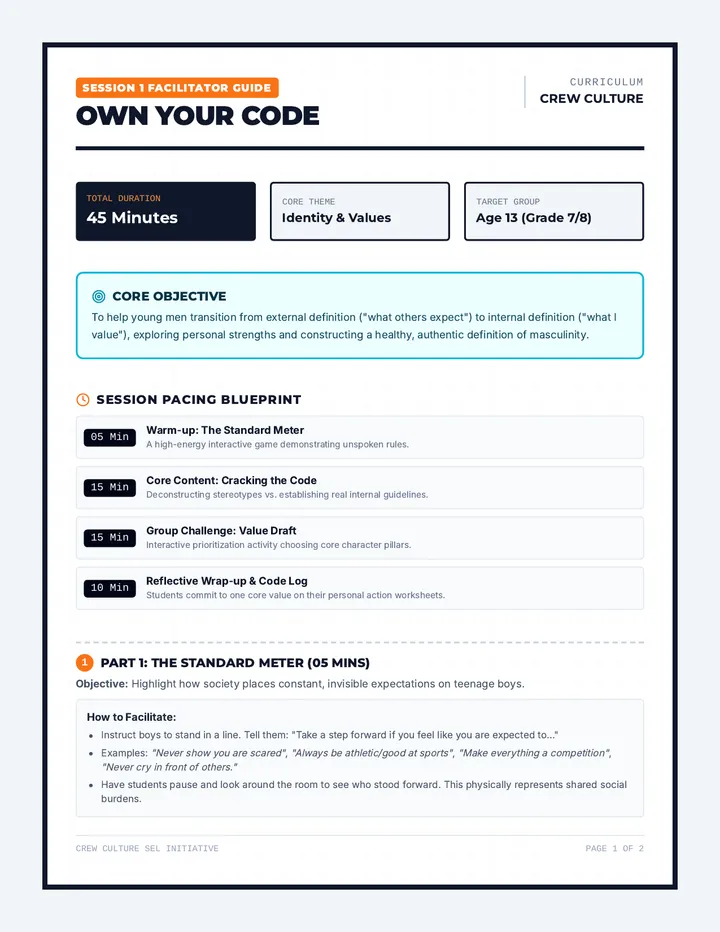
A comprehensive facilitator guide for counselors, including learning objectives, a timed session flow, discussion prompts, and sample answers for the student activities.
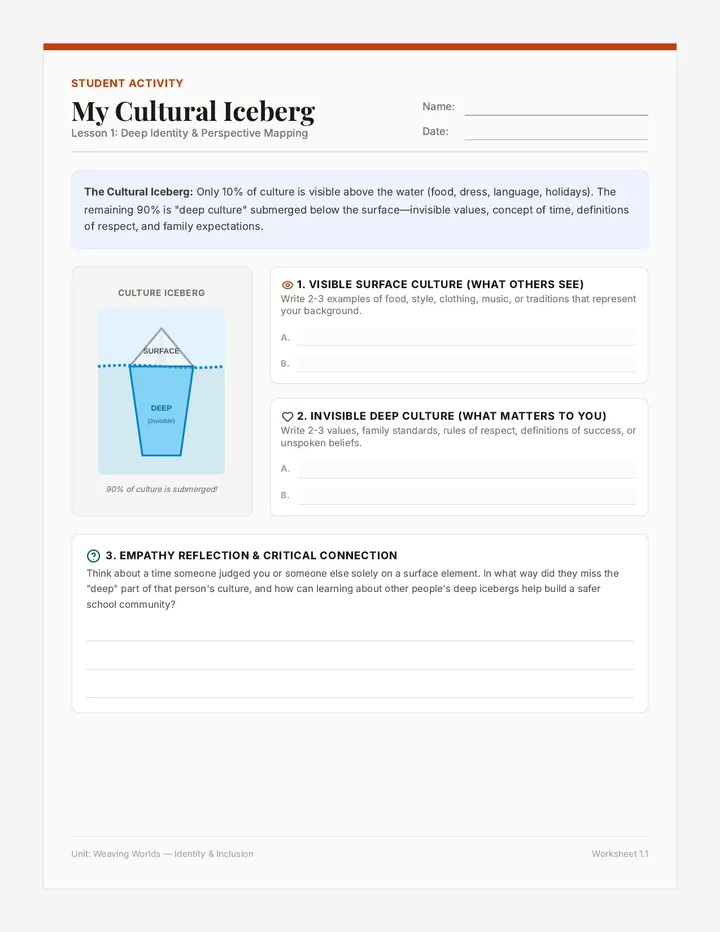
A scenario-based worksheet for middle school students to practice self-advocacy by writing scripts for common classroom challenges using an 'Advocacy Formula'.
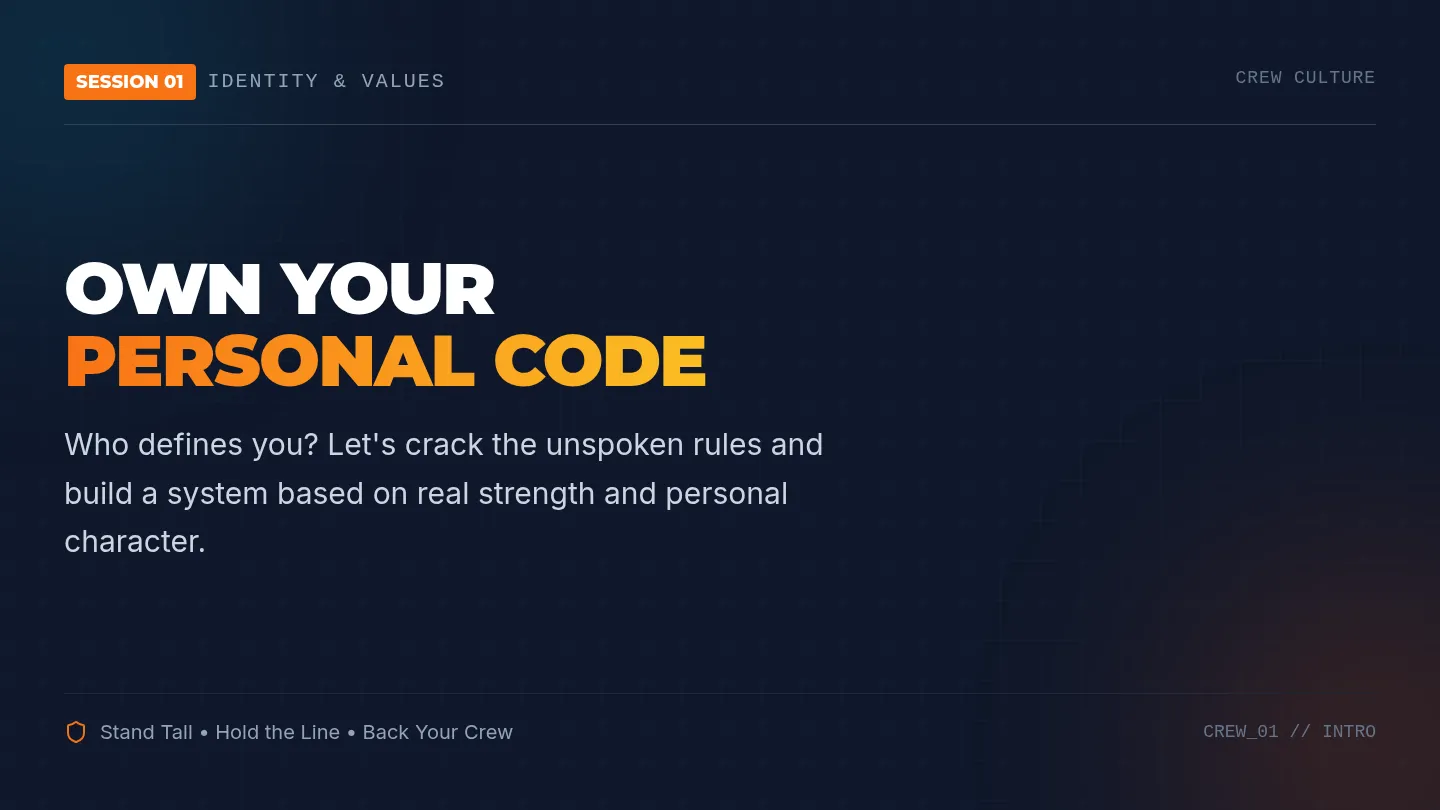
A slide deck for a 6th-grade counseling group on self-advocacy, featuring communication scripts, the benefits of speaking up, and tips for approaching teachers professionally.
The corresponding answer key for the updated Safety Shield Quiz, with full text for questions and detailed scoring guides for teachers.
A comprehensive digital citizenship and keyboard safety quiz. Includes questions on passwords, hardware care, ergonomics, and source evaluation. Now includes an integrated answer key on the second page.
The answer key for the Web Wise Worksheet, providing full contextual sentences and complete matching definitions for teacher reference. Revised for better layout stability.
A worksheet for students to practice digital literacy concepts, featuring a matching section for key terms and a fill-in-the-blank passage about digital citizenship. Revised for improved alphabetical order and baseline alignment.
Teacher's answer key for the Web Wisely Worksheet, including correct answers, instructional notes for each question, and exemplar responses for the short writing task.
A digital literacy worksheet where students analyze a fictional viral social media post to identify misinformation, red flags, and practice lateral reading skills.
A comprehensive 1-page teacher facilitation script for "The Kindness Spark" lesson. Includes timed segments, specific discussion prompts, role-play ideas, and teacher tips to ensure the 10-minute lesson remains engaging and high-impact. now featuring 'We Will' and 'I Will' objectives.
A high-energy, visually vibrant 6-slide presentation for a 10-minute lesson on kindness and caring. It features a modern geometric theme and focuses on interpersonal skills like listening, cooperation, and resisting negative peer influence.
A student worksheet with real-world peer pressure scenarios where students must apply refusal strategies and write out specific scripts for how they would respond.
A teacher-facing guide with deep-dive discussion questions to help middle school students analyze the psychology and digital aspects of peer pressure.
A visual presentation for middle school students on understanding peer pressure, defining direct and indirect influence, and learning refusal toolkits.
A comprehensive teacher's lesson guide for teaching middle schoolers about peer pressure, including learning objectives, materials, pacing, and facilitation tips.
A presentation to introduce the 'Hero Heart' concept, explaining what real-life heroes look like and guiding students through the four sections of their reflection shield.
A maximized self-reflection shield worksheet. Students draw and write about their skills, efforts, proudest moments, and acts of kindness in four distinct quadrants of a full-page hero's shield.
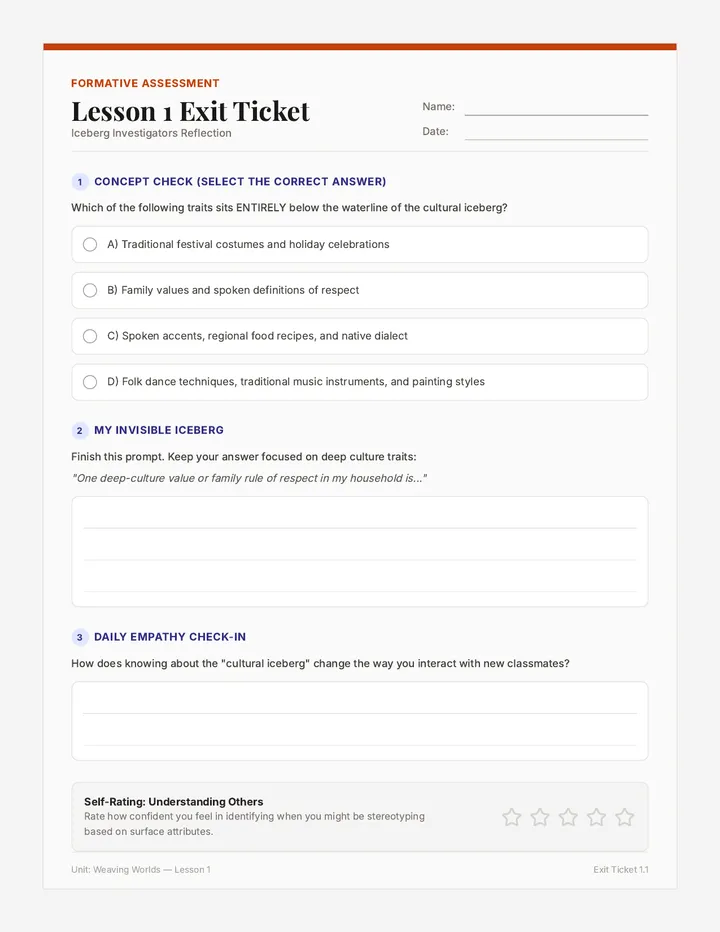
An exit ticket for students to reflect on an upcoming transition and practice writing a self-advocacy script.
A vibrant 8-slide presentation designed to help students navigate major life transitions with strategies for grounding and self-advocacy.
A set of four pocket-sized visual prompt cards for students to carry, featuring Philippians 4:8 and quick reminders for the Mind Gardener tools (Truth Filter, Garden Fence, and Bloom Breath).
A set of three cut-out journal reflection prompts for each part of the Mind Gardeners series, encouraging students to apply the Philippians 4:8 filter and trust in God.
A graphic organizer worksheet for the Circle of Control, helping students categorize their worries into things they can and cannot control, now featuring the concept of trusting God with things 'outside the fence'.
A student worksheet focusing on the 'Bloom Breath' technique and practicing 'thought transplants' by reframing negative thoughts into positive growth-oriented ones, now emphasizing the Philippians 4:8 'True' filter.
A student worksheet for identifying physical anxiety symptoms and distinguishing between helpful thoughts and 'weed' thoughts, now incorporating the 'Is it True?' truth filter from Philippians 4:8.
A visually engaging slide deck covering all three micro-lessons, now featuring Philippians 4:8 as the central 'Gardener's Verse' and integrating trust in God into coping strategies.
A comprehensive teacher script for the 3-part Mind Gardeners series, now featuring an integrated Christian perspective with Philippians 4:8 as the anchor for identifying and reframing thoughts.
A flowchart organizer for student use. Revised to ensure the connecting line is visible, writing boxes have ruled lines that align perfectly, and content fits on one page.
Printable strategy cards for self-regulation. Revised with reduced card height to fit one page, improved icon contrast, and clearer instructions for students.
A visual body map worksheet for Grade 5 students. Revised with a much-improved continuous anatomical silhouette, higher contrast for writing lines, and refined radar-themed aesthetics.