A visually striking slide deck for Day 1: The Emotional Rollercoaster. Covers definitions of emotion, the three components, major theories, and the six universal emotions.
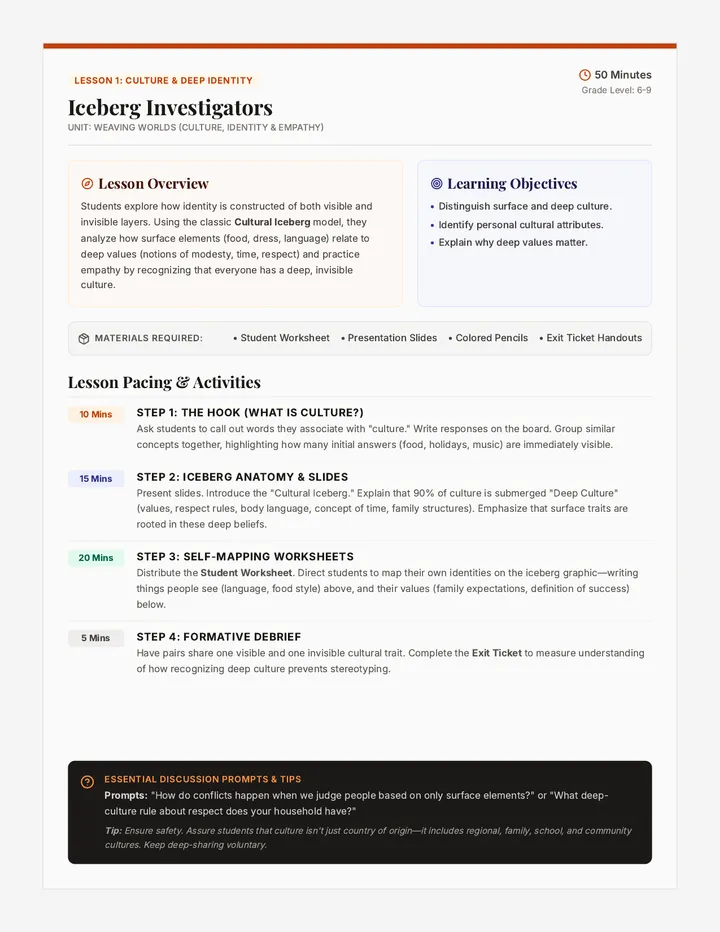
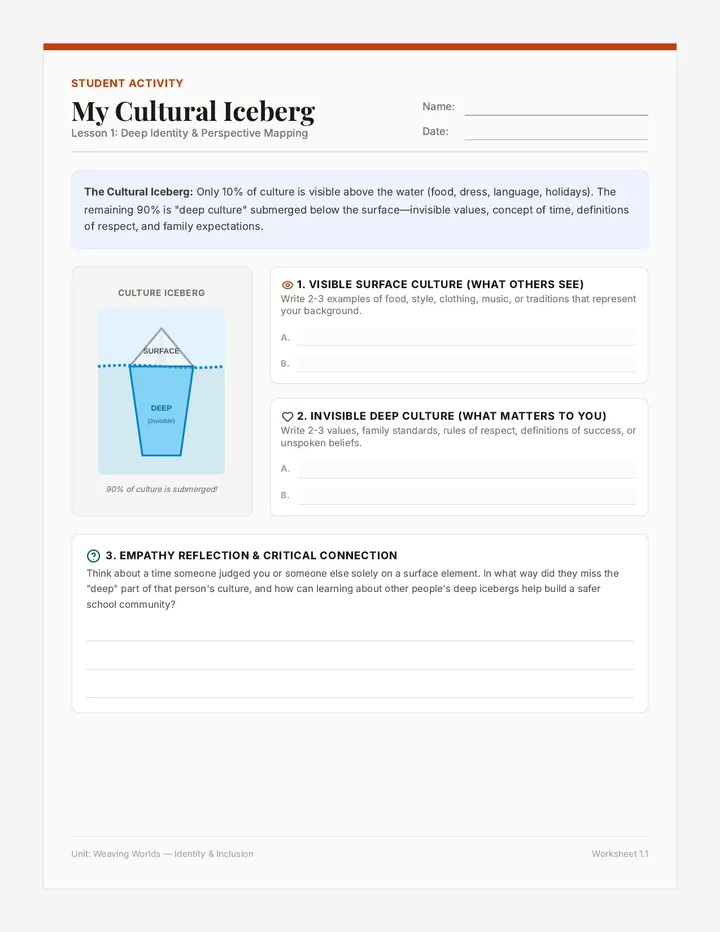
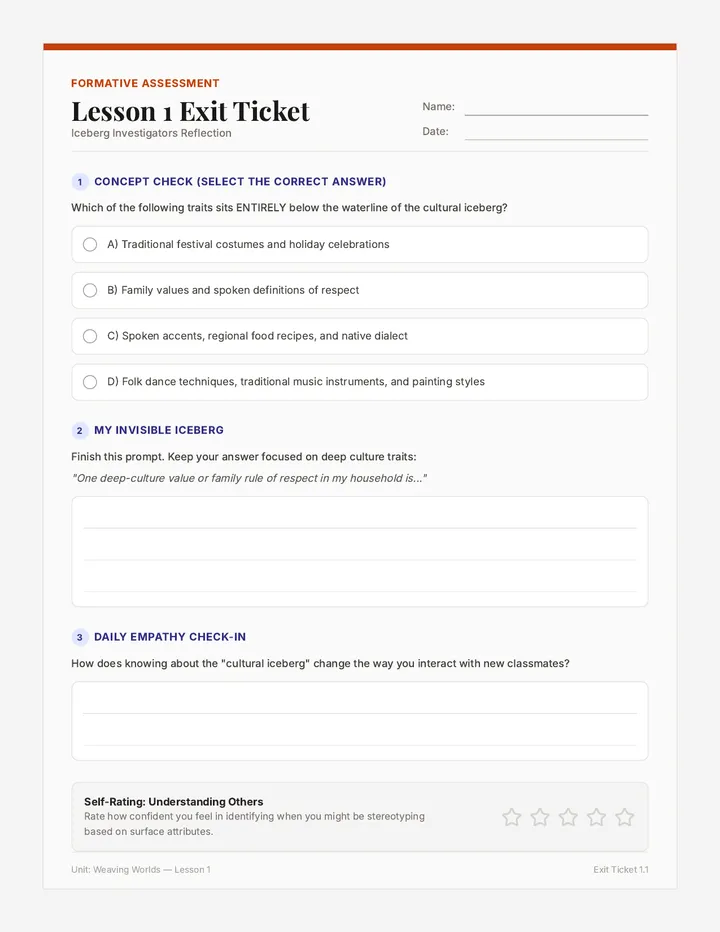
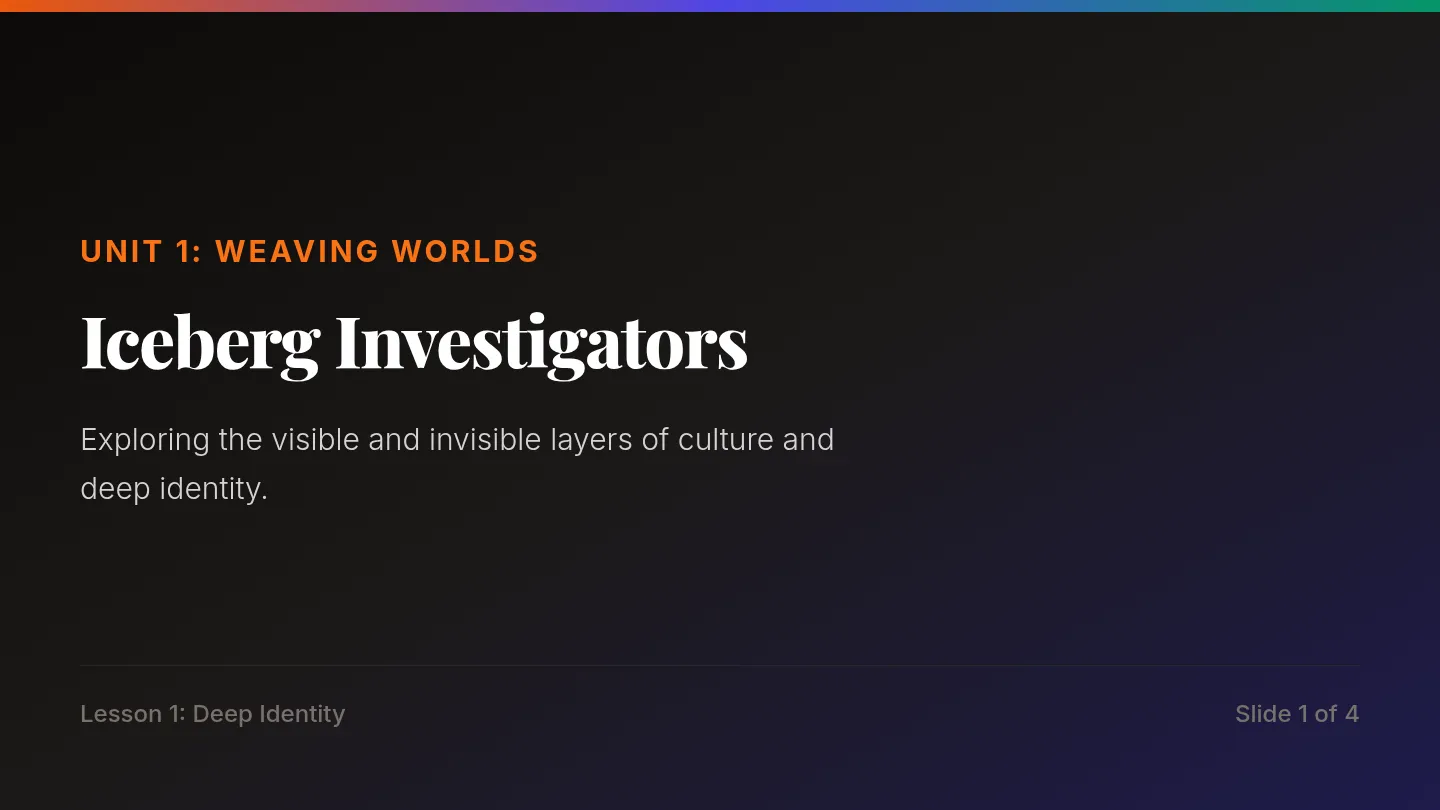
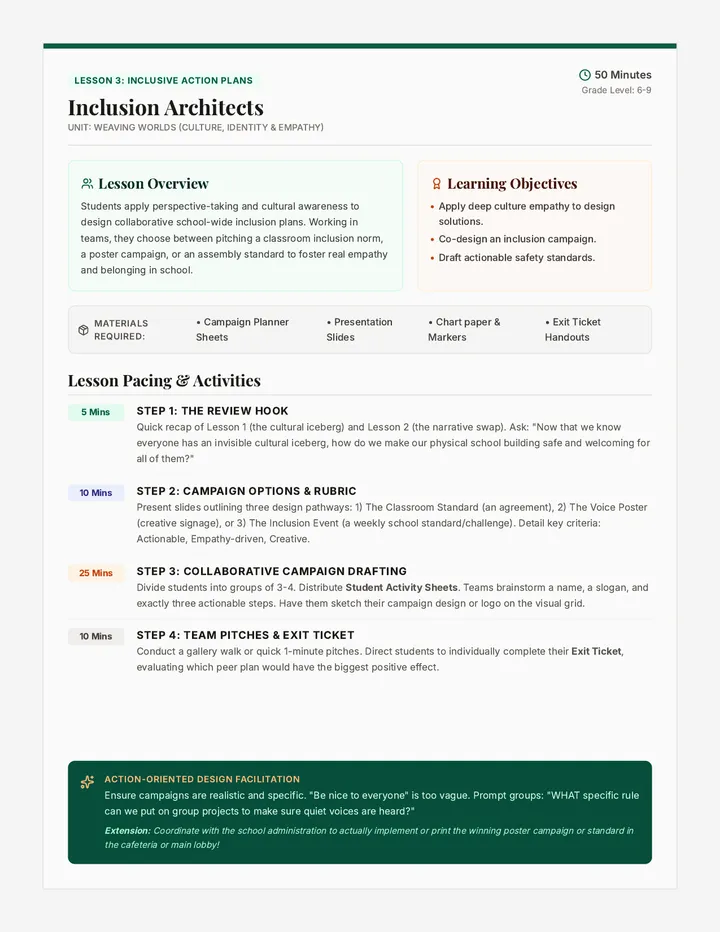
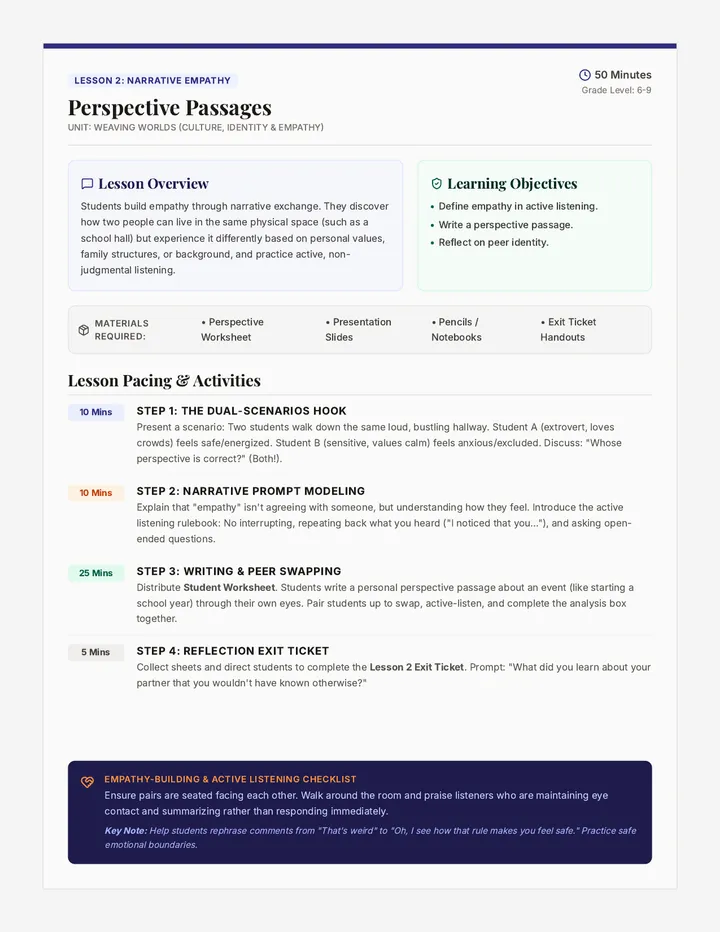
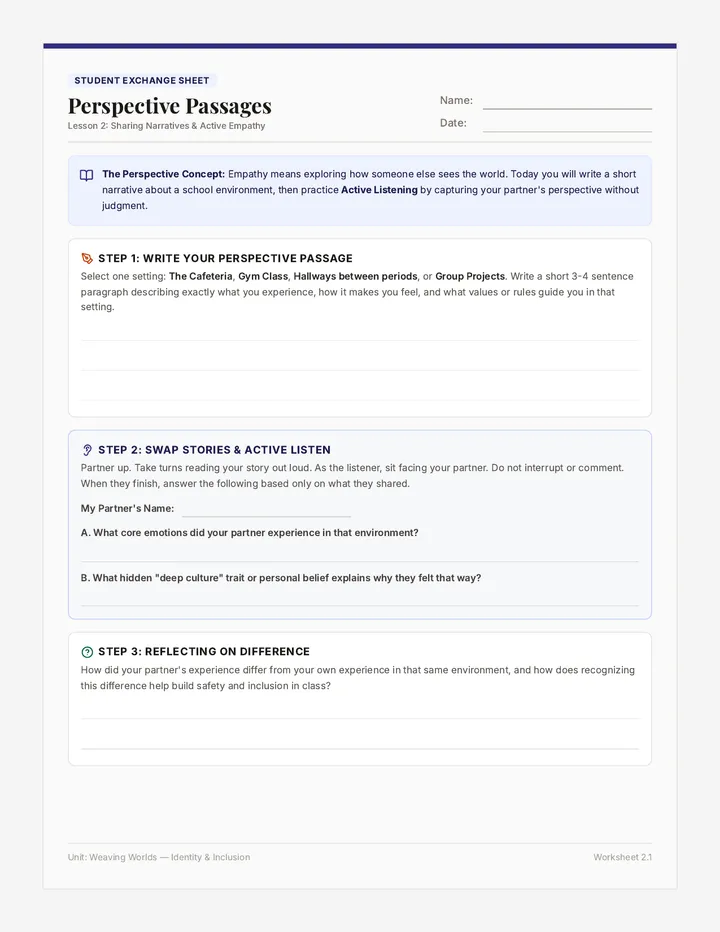
A 3-lesson unit on culture, identity, empathy, and building an inclusive school community. Students explore the cultural iceberg, share personal perspective narratives, and collaborate on actionable school-wide inclusion plans.
A middle school counseling lesson on healthy relationships and personal safety. Students learn to decode relationship signals, identify red and yellow flags, map their personal boundaries, and practice navigating peer pressure through interactive discussions and guided reflections.
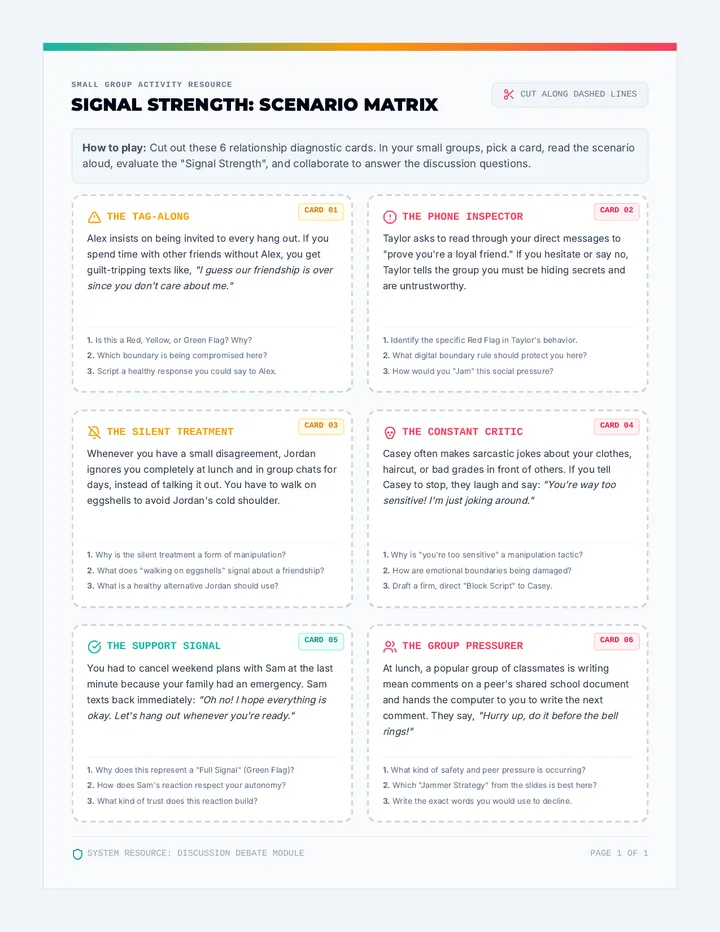
Print-ready small group scenario debate cards. Features 6 detailed scenarios designed to guide middle schoolers through peer pressure, boundary calibration, and red/yellow flag diagnostics.
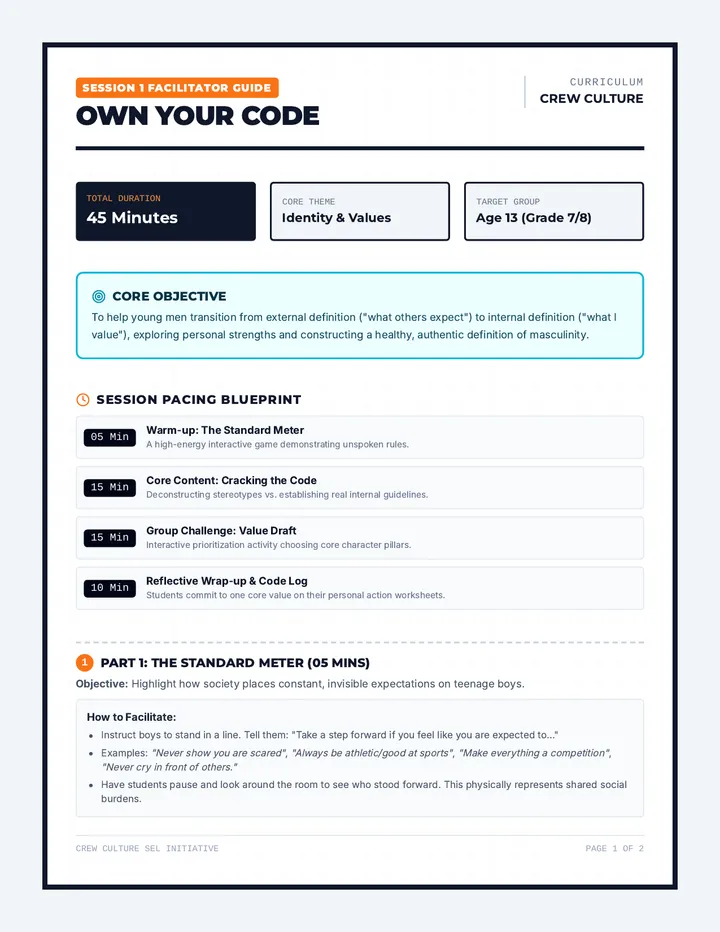
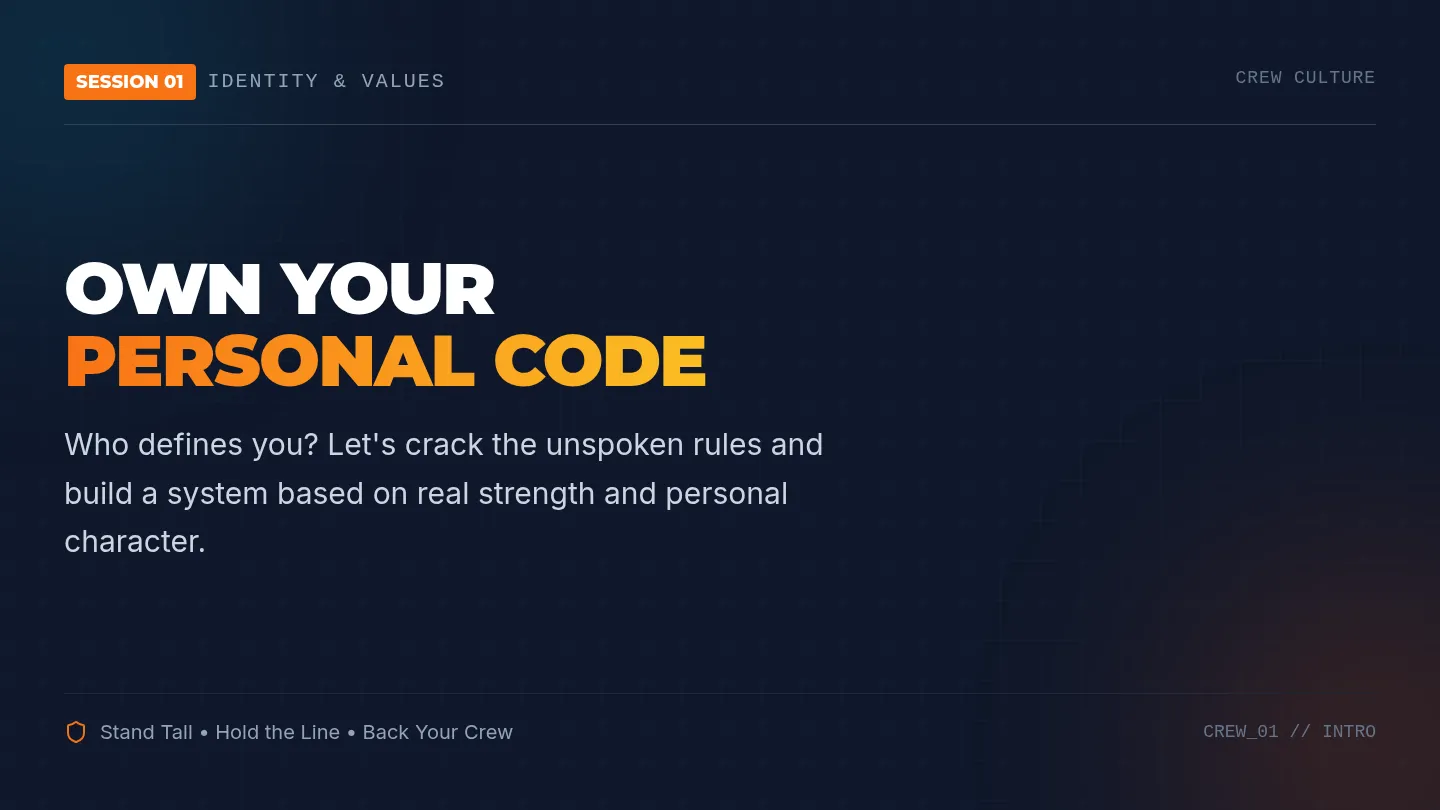
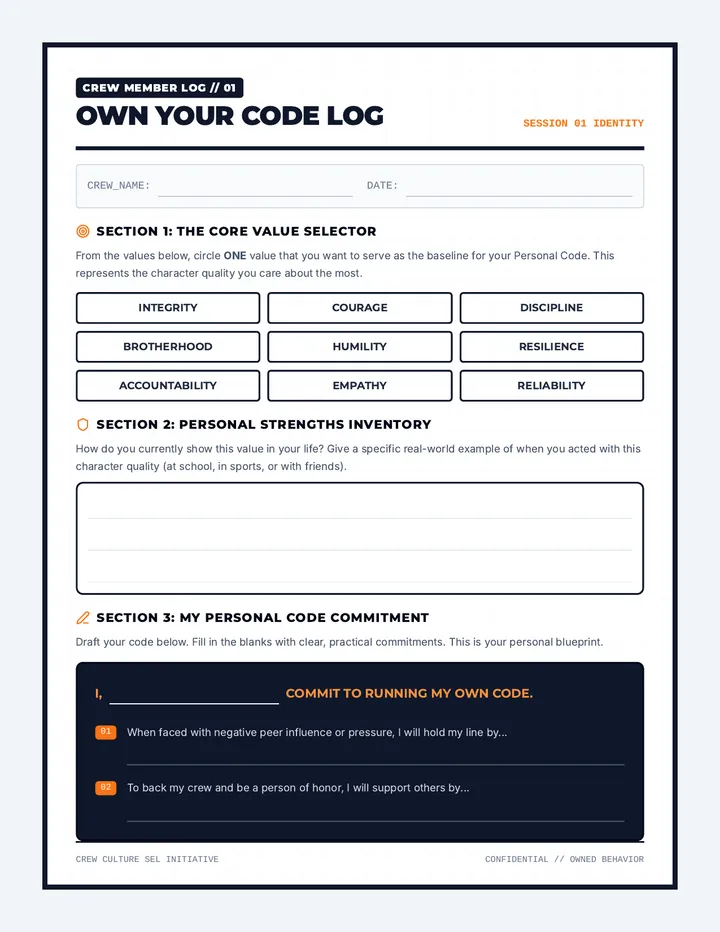
A three-part social-emotional learning curriculum designed specifically for middle school boys to develop self-esteem, manage digital pressure, and build authentic peer relationships.
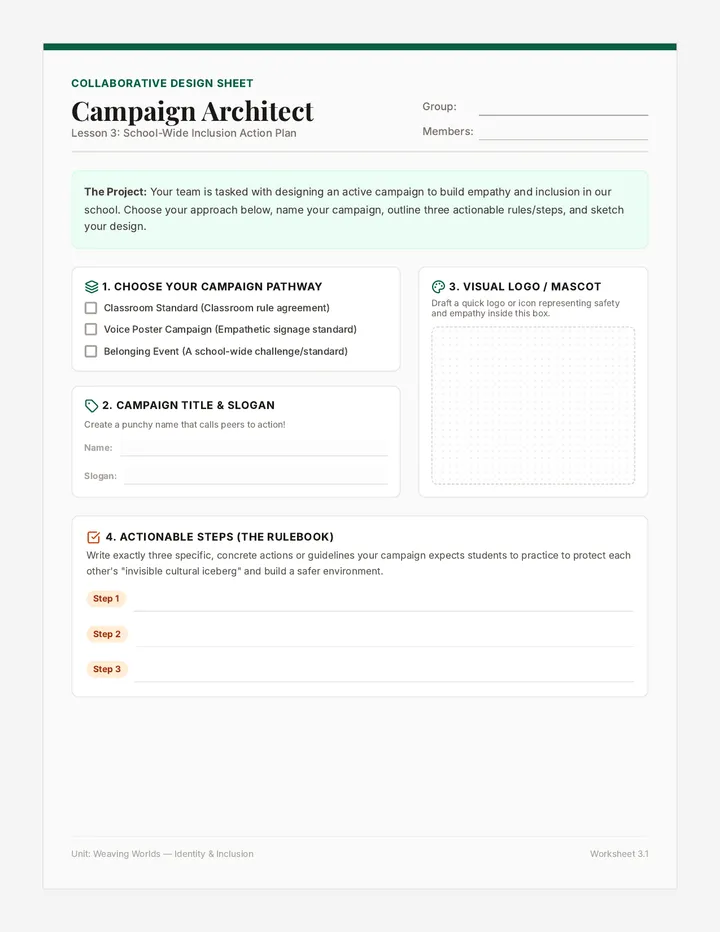
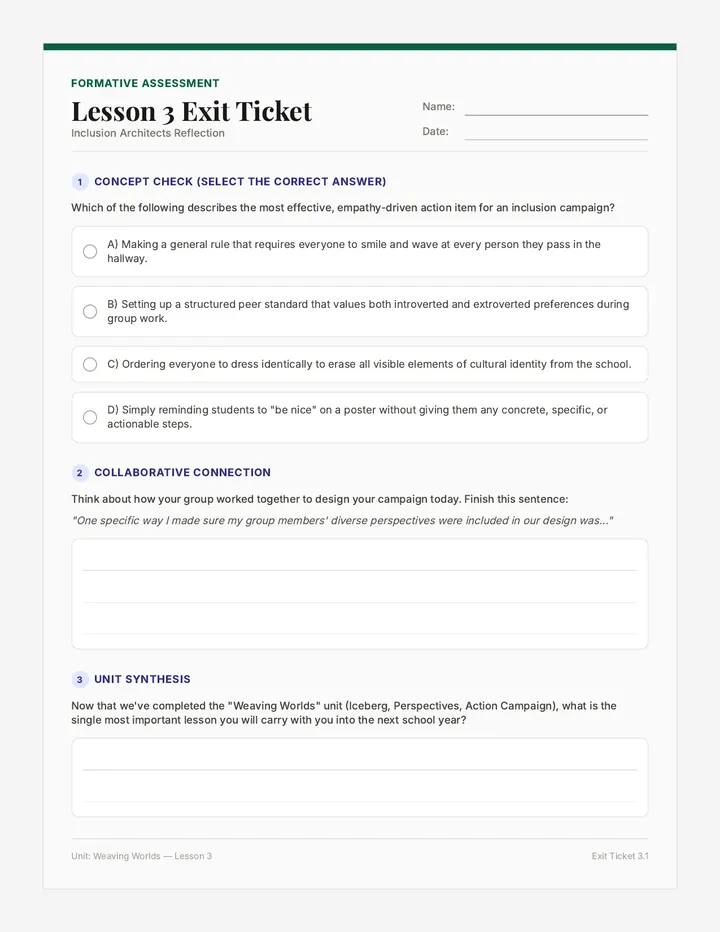
Students apply their deep listening and empathy skills to design a school-wide inclusion campaign or classroom standard, designing collaborative action items.
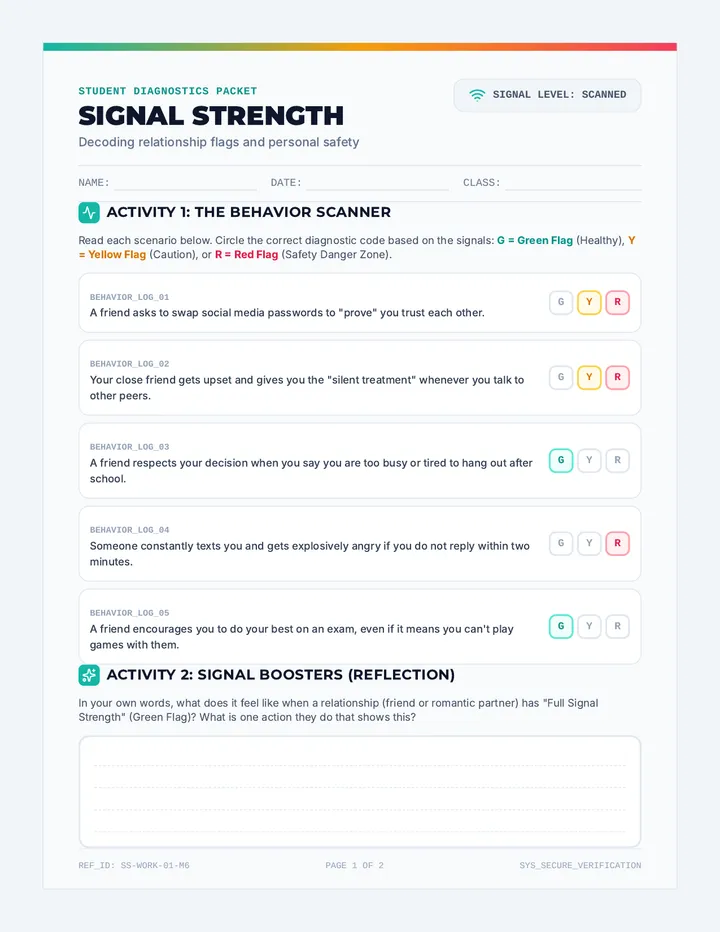
A 2-page print-ready interactive student worksheet packet for self-assessment, boundary mapping, and scripting refusal skills. Uses the cohesive digital/tech theme.
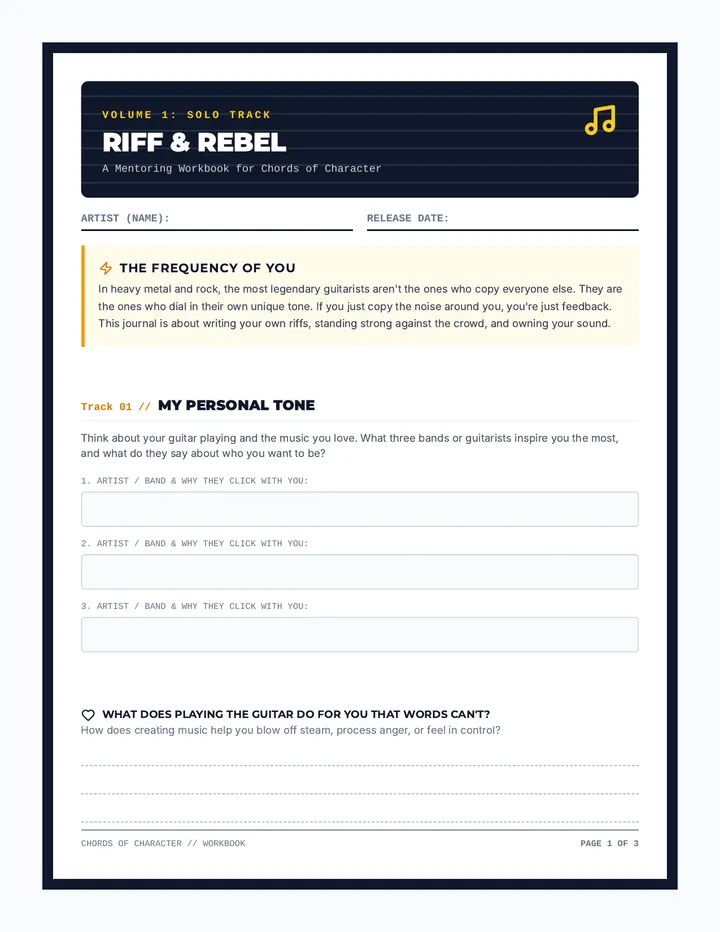
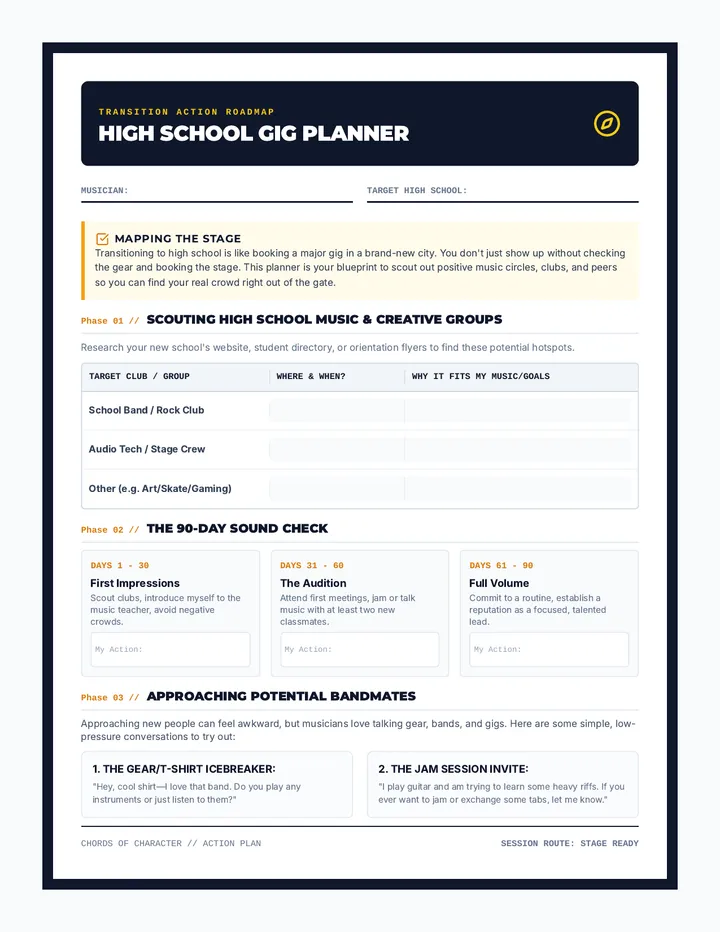
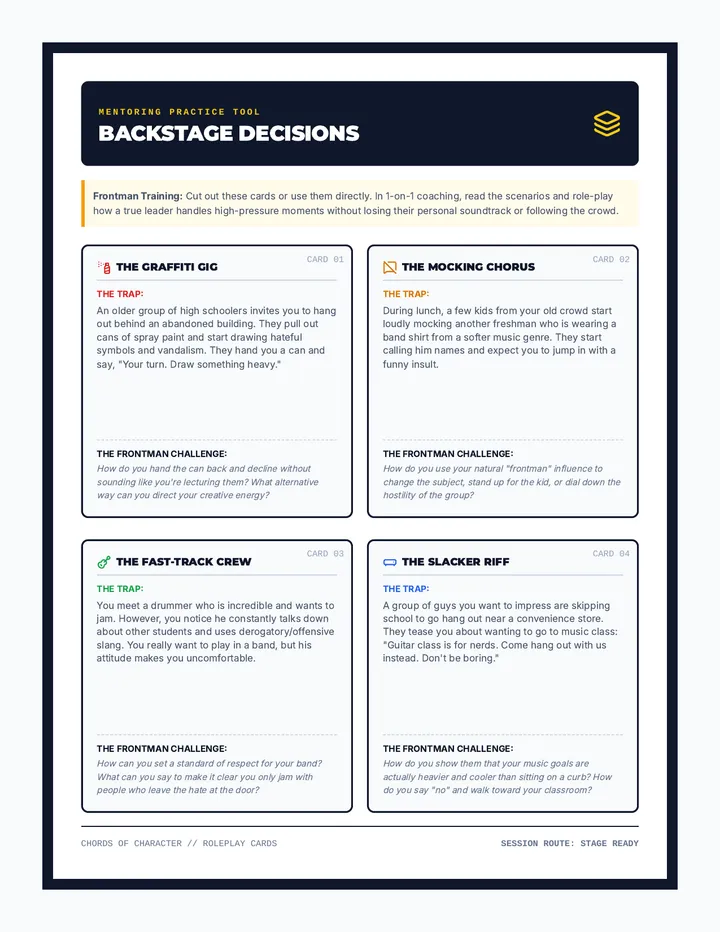
A transition curriculum linking heavy metal passion with character, true rebellion, and leadership. Features an in-school coaching workshop and a parallel at-home action journal for tonight.
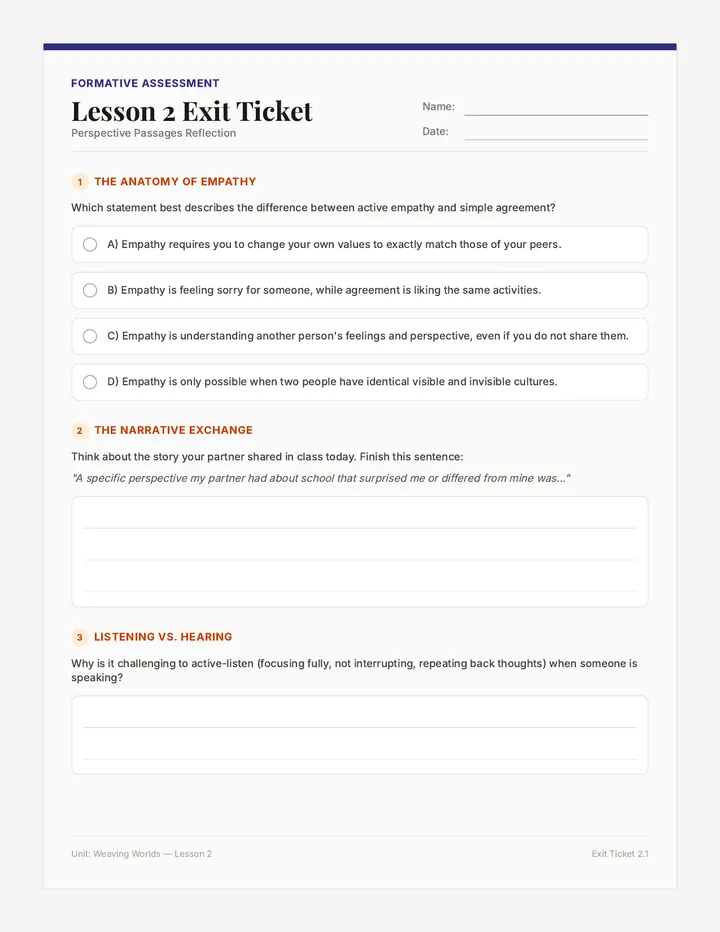
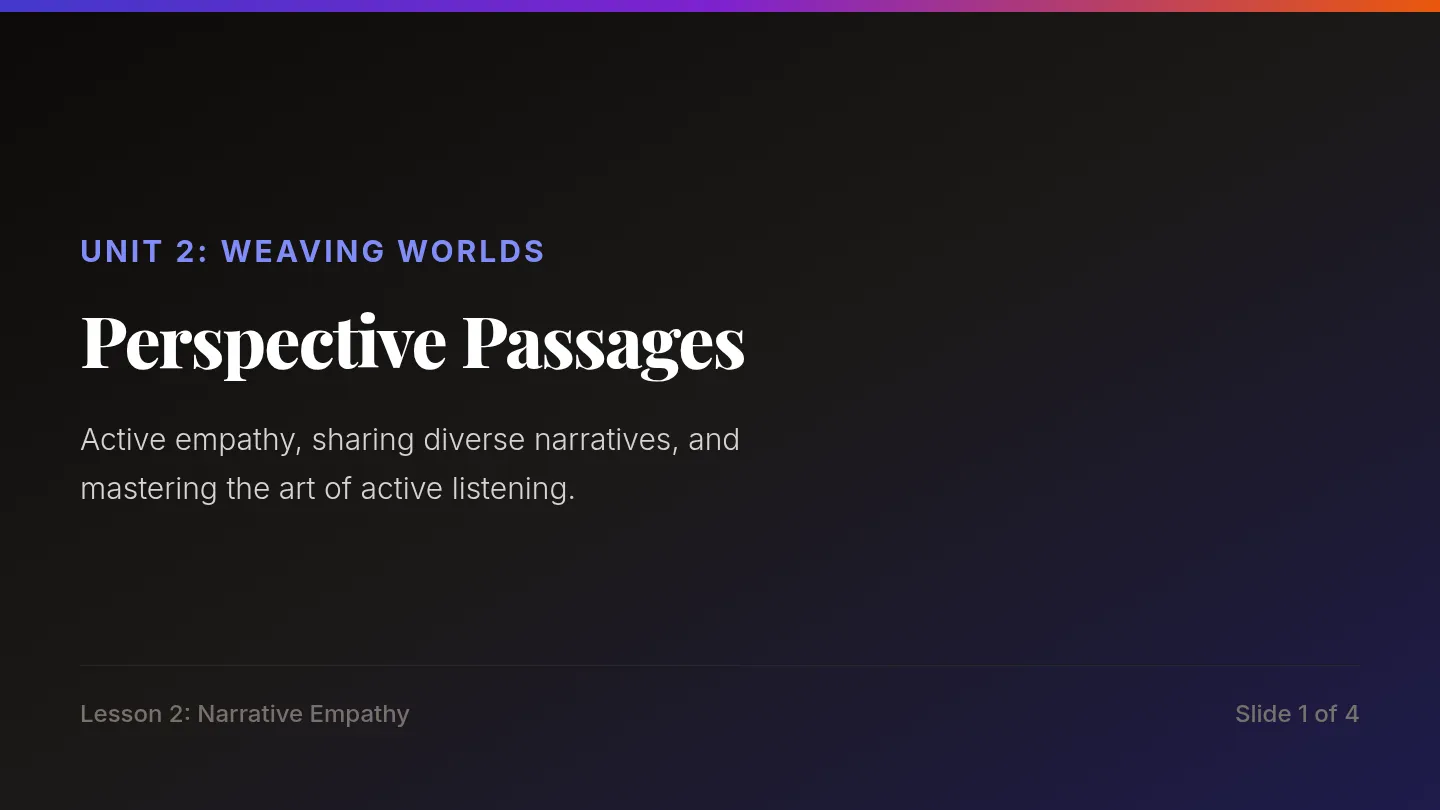
Students engage in active empathy and narrative exchange, analyzing how personal experiences and cultural backgrounds shape our perspectives of shared environments.
An engaging, modern slide presentation for middle schoolers to introduce relationship green, yellow, and red flags, boundaries, and safety strategies. Uses a tech/signal theme.
A 4-slide presentation for Lesson 3, explaining the campaign design project guidelines, campaign pathways, and presentation instructions.