Lenny.com
Explore
Create
ActivitiesNewMathEnglish Language ArtsScience & EngineeringSocial StudiesGlobal LanguagesHealth & Physical EducationSpecial EducationCounseling & Life SkillsArts & CreativityESL
Lenny.com
Lenny.com
Explore
Create
ActivitiesNewMathEnglish Language ArtsScience & EngineeringSocial StudiesGlobal LanguagesHealth & Physical EducationSpecial EducationCounseling & Life SkillsArts & CreativityESL
Lenny.com
Lenny.com

Solutions

Lenny for EducatorsLenny for SchoolsLenny for Districts

Product

ExploreSign inCreateSupportAbout

Resources

Getting startedMTSS Acceleration Program

Newsletters

School Funding Newsletter

© 2026 Lenny Learning Inc.

TermsPrivacyAccessibility
LinkedInInstagramX
Lenny
Counseling & Life SkillsSelf-AwarenessBasic Emotion RecognitionComplex Emotion IdentificationEmotional Nuance & Mixed FeelingsBuilding Positive Self-ImageRecognizing Strengths & Growth AreasAccurate Self-AssessmentPersonal Values IdentificationCultural & Individual Identity ExplorationValues-Based Decision MakingSelf-ManagementStop-and-Think StrategiesDelaying GratificationIndependent Impulse ManagementIdentifying Stress TriggersShort-Term Goal SettingSMART Goals DevelopmentGoal Monitoring & AdjustmentBuilding Perseverance & ResilienceInternal Motivation DevelopmentComprehensive Stress Reduction PlanningSocial AwarenessRecognizing Others' FeelingsDemonstrating EmpathyRespecting Individual DifferencesUnderstanding Cultural DiversityComplex Empathetic ResponsesMultiple Viewpoint ConsiderationMulti-Perspective AnalysisChallenging Stereotypes & BiasRelationship SkillsActive ListeningClear Verbal & Nonverbal CommunicationBuilding Positive FriendshipsWorking Cooperatively in GroupsCommunicating Personal BoundariesRespecting Others' BoundariesAssertive ExpressionPeaceful Problem-SolvingContributing to Team GoalsComplex Conflict NavigationMediation & NegotiationHealthy Romantic RelationshipsResponsible Decision-MakingDaily Problem IdentificationBrainstorming Multiple SolutionsEvaluating Pros & ConsRecognizing Risks & ConsequencesApplying Ethical FrameworksInformed Risk-Benefit DecisionsRoot Cause AnalysisMindfulnessMindful BreathingBody Scan MeditationDaily Mindfulness ApplicationDaily Self-Care RoutinesBalancing Life DemandsAdvocating for Wellness NeedsMental Health SupportUnderstanding Anxiety SymptomsWorry Management StrategiesProgressive Muscle RelaxationRecognizing Depression SignsBuilding Mood-Supporting RoutinesBehavioral Activation for MoodUnderstanding Grief StagesHealthy Grief CopingCreative Expression of LossBehavioral SupportDaily Check-In ProceduresDaily Goal Setting & ReviewRecognizing Escalation Warning SignsRequesting Breaks & SupportSelf-Calming During DistressUnderstanding Positive ReinforcementToken Economy ImplementationBehavior Chart TrackingAnalyzing Behavior PatternsIdentifying Antecedents & ConsequencesDetermining Behavior FunctionFunction-Based InterventionsIndividualized Behavior ContractsData-Driven Behavior AdjustmentTherapeutic ApproachesThoughts-Feelings-Behaviors ConnectionRecognizing Thinking PatternsChallenging Negative ThoughtsPositive Self-Talk PracticeThought Record TrackingAdvanced Cognitive RestructuringComprehensive CBT PlansBehavioral Activation TechniquesBuilding Positive ExperiencesExposure Hierarchies for AnxietyPresent-Moment AwarenessNon-Judgmental ObservationSelf-Soothing & DistractionComplex Emotion LabelingReducing Emotional Vulnerability (PLEASE)DEAR MAN CommunicationGIVE Skills for RelationshipsFAST Skills for Self-RespectRadical Acceptance PracticeCrisis Survival Skills (TIPP)Understanding Trauma EffectsTrauma Responses & TriggersIdentifying Trauma FeelingsGrounding TechniquesRegulation During Trauma DistressSafe Place VisualizationProcessing Through NarrativeDeveloping Trauma StoryPersonalized Safety PlanningGroup SupportTurn-Taking & SharingGroup Conversation SkillsSharing in Supportive EnvironmentLearning from Similar ChallengesBuilding Community & BelongingNavigating Peer RelationshipsGroup Skill PracticeGroup Mental Health EducationStress & Anxiety UnderstandingCrisis Support & SafetyKnowing When to Seek HelpIdentifying Mental Health CrisesGrounding During CrisisUsing Crisis HotlinesBuilding Support NetworksAccessing Mental Health ResourcesWarning Signs & Coping StrategiesDeveloping Personal Safety PlansUnderstanding Suicide Warning SignsGatekeeper Skills for PeersDigital LiteracySocial MediaTechnology BasicsProductivity ToolsInternet and Online ResearchWeb Design and PublishingDigital CitizenshipOnline Safety and PrivacyEmerging TechnologiesFinancial LiteracyMaking Financial DecisionsBanking and AccountsConsumer SkillsSaving and InvestingCredit and DebtEmployment and IncomeTaxesInsuranceMajor PurchasesEconomic ConceptsFinancial PlanningCollege & Post-Secondary PlanningCareer ExplorationUnderstanding Post-Secondary OptionsCollege Research & SelectionAdmission RequirementsCollege Application ProcessPersonal Statement WritingFAFSA CompletionScholarship Search & ApplicationsUnderstanding Student LoansContinuing Education PlanningInterview PreparationResearching EmployersCommon Interview QuestionsSTAR Method ResponsesProfessional Interview PresenceVirtual Interview SkillsInterview Follow-UpJob Search SkillsUnderstanding Job PostingsEffective Job Search StrategiesNetworking for OpportunitiesResume Writing BasicsAction Verbs & AchievementsTailoring Resumes to JobsCover Letter WritingProfessional ReferencesProfessional CommunicationBusiness Email EtiquettePhone & Voicemail ProfessionalismMeeting ParticipationPresentation SkillsProfessional Work EthicTime Management & ProductivityTeamwork & CollaborationAdaptability & FlexibilityProblem-Solving at WorkConstructive FeedbackWorkplace RightsUnderstanding Employment LawsPay & Benefits UnderstandingWorkplace SafetyAnti-Discrimination & Harassment

Whisper Network

An interactive Social Emotional Learning lesson where students practice empathy, perspective-taking, and collaborative problem-solving through partner whispers and quiet group stations. Students learn to communicate with intention and care while maintaining low-voice acoustic norms.

JKJames Katcher

Rank each action from 1 (Most Supportive & Empathetic) to 4 (Least Supportive):

A. Whisper privately: “That happened to me before. You took a brave breath and finished, and that took courage.”

B. Roll eyes and sigh at the table so everyone knows who caused the presentation delay.

C. Act like nothing happened and avoid eye contact with them for the rest of the day.

D. Hand them a discreet sticky note: “We still nailed the slides together. Good job hanging in there!”

Partner Whisper Reflection: Why is private validation better than public comments in this scenario?

Whisper Network • Social Emotional Learning Lab Page 2 of 2

Phase 3: Quiet Station Rotation Protocol (24 Mins • 6 Mins × 4)

Slides 5–7

Station 1: Perspective Decoder

Students decode Jordan and Maya. Circulate and check if students identify secondary emotions (embarrassment, anxiety) rather than just surface reactions (mad, rude).

Station 2: Silent Blueprint

Strict Level 0 rule. Students pass the paper back and forth, drawing features for a school calm-down nook. Watch for collaborative turn-taking and gesture checks.

Station 3: Kindness Signals

Students compose specific, non-superficial affirmations. Encourage them to avoid generic praise like “you are nice” in favor of “I admire how calm you stay under pressure.”

Station 4: Soundless Solutions

Consensus ranking. Students whisper their rationale: Option A (1st), Option D (2nd), Option C (3rd), Option B (4th). Prompt them to justify why public callouts amplify shame.

Troubleshooting Acoustic & Social Challenges

Volume Creep:

If chatter exceeds whisper level, ring the chime once. Hold up 1 finger. Have all students pause for 5 seconds of silent breathing before resuming.

Reluctant Writers:

Provide bullet-point sentence stems or allow partner dictation: one student whispers the thought, the other transcribes onto the worksheet.

Partner Disagreement:

At Station 4, remind students that empathy requires hearing another perspective. If deadlocked, use the “Split the Rank” rule: write both numbers.

Phase 4: Debrief & Assessment Rubric (6 Mins)

Slide 8

CriteriaExemplary (3 pts)Proficient (2 pts)Developing (1 pt)
Perspective TakingUncovers deep underlying feelings (isolation, vulnerability).Identifies general emotions (sad, angry, stressed).Describes only surface actions without emotional insight.
Supportive LanguageCrafts validating, gentle, non-judgmental responses.Offers constructive advice with friendly tone.Offers generic or dismissive responses (“cheer up”).
Acoustic NormsMaintains Level 0/1 effortlessly; uses hand signals.Modulates volume with minimal facilitator reminders.Frequently slips into room voice; needs verbal resets.

Teacher Note: Collect Kindness Signals cards to redistribute during tomorrow's advisory or homeroom circle!

Whisper Network • Educator Instructional Framework Page 2 of 2

You might also like

Impact Intent Teacher Guide

Science Lab Dialogue

A high school science SEL sequence that fosters inclusive collaboration, empathetic communication, and barrier-free scientific discourse across grades 9 through 11.

YB

Yna Bersales

27
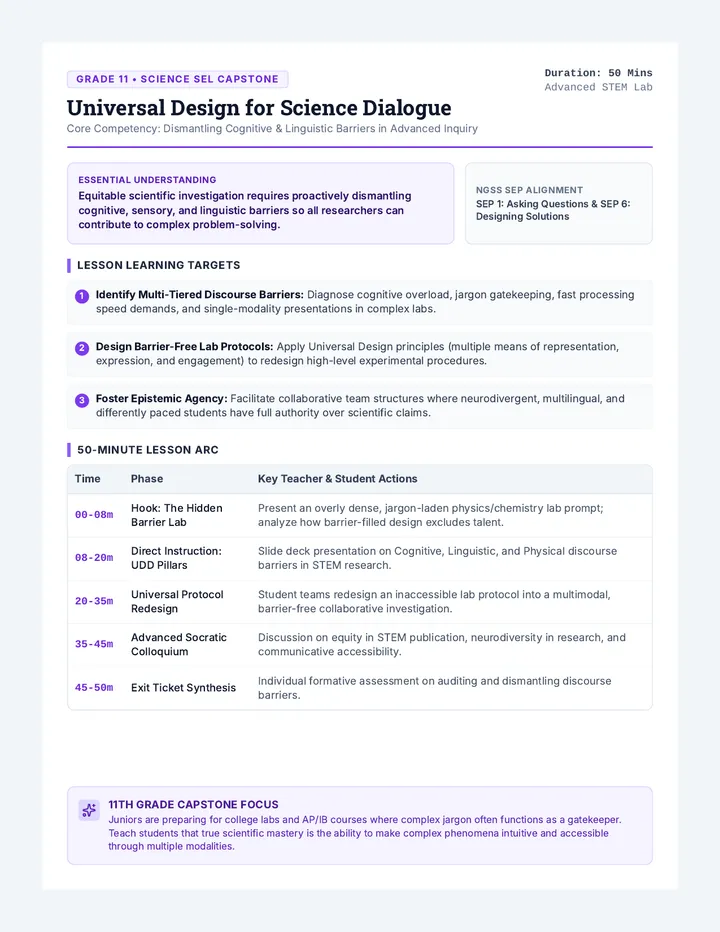
Barrier Free Teacher Guide

Universal Science Dialogue

Eleventh grade science students implement Universal Design for Dialogue to identify and dismantle cognitive and linguistic barriers during complex scientific inquiry.

YB

Yna Bersales

9
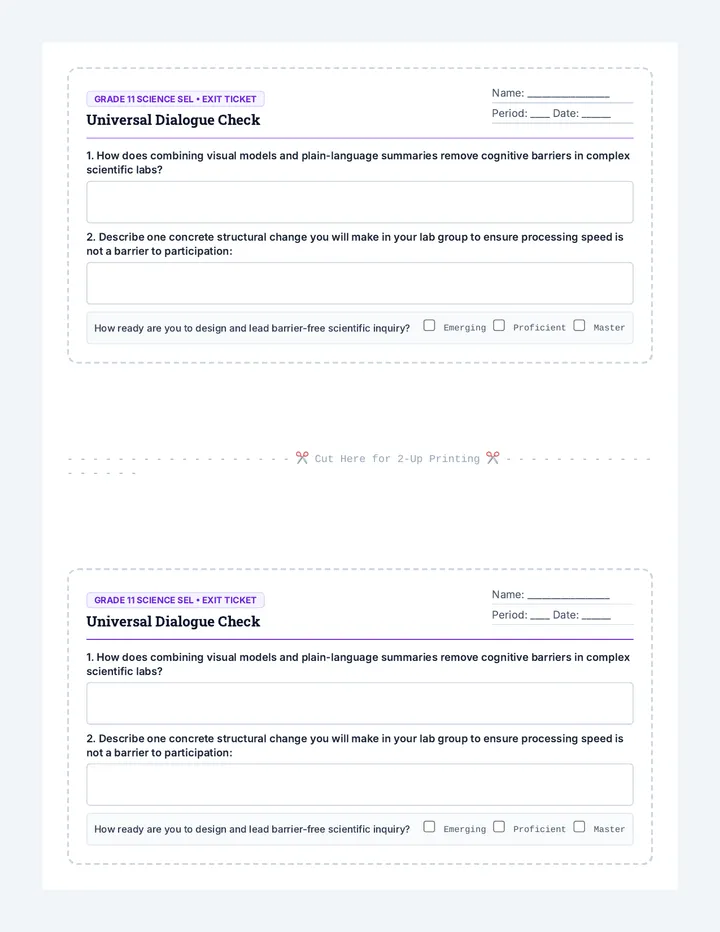
Barrier Free Exit Ticket

Barrier Free Exit Ticket

A formative assessment exit ticket evaluating student mastery of universal design for dialogue and removing cognitive barriers in science labs.

YB

Yna Bersales

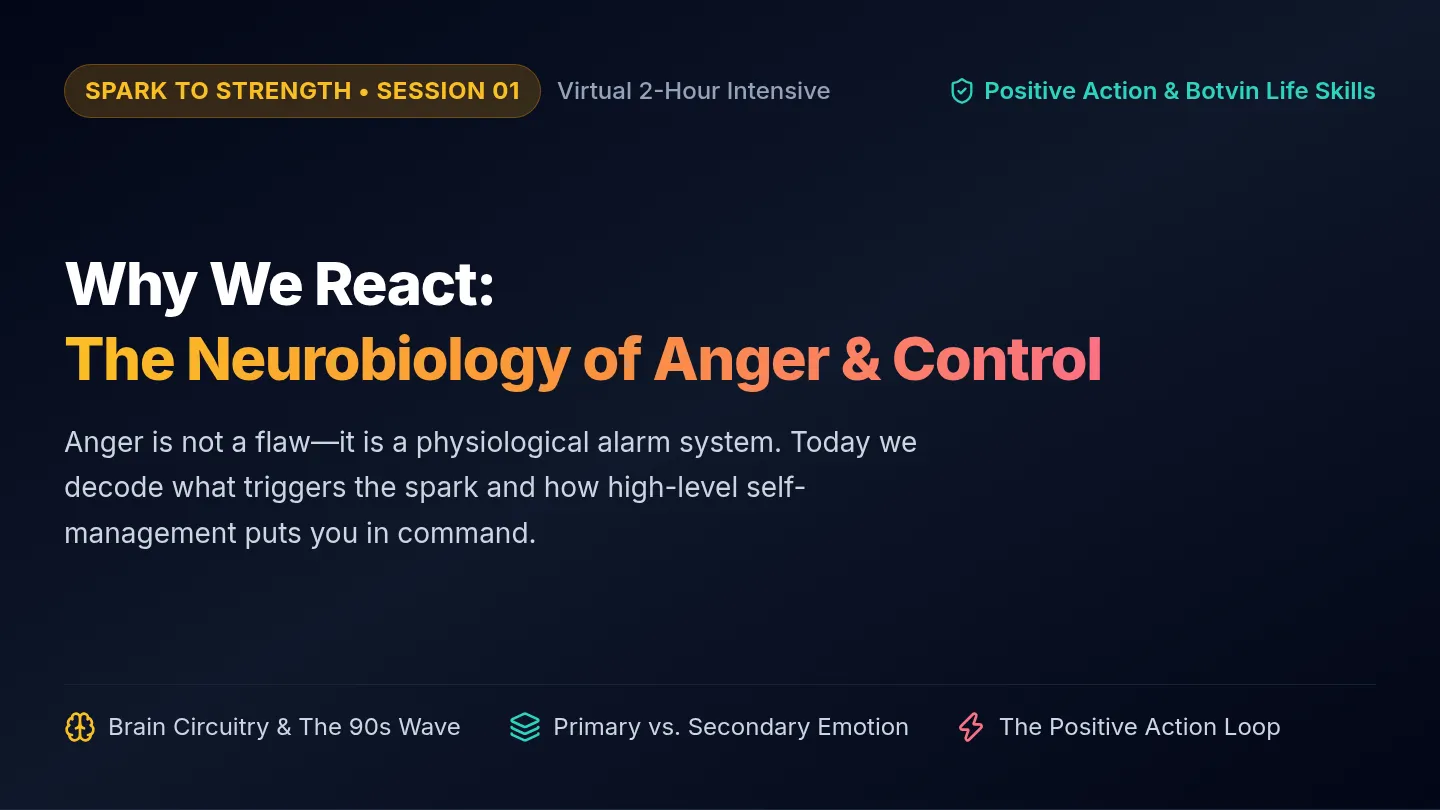
Why We React Slides

Spark to Strength

A 12-week, 24-hour evidence-based virtual anger management and emotional regulation sequence for high school youth aged 15-18+. Integrates core principles from Positive Action, Botvin Life Skills, Learning to BREATHE, and the BLUES program to cultivate self-management, somatic awareness, and cognitive restructuring.

CG

Connor Gilbertson

4
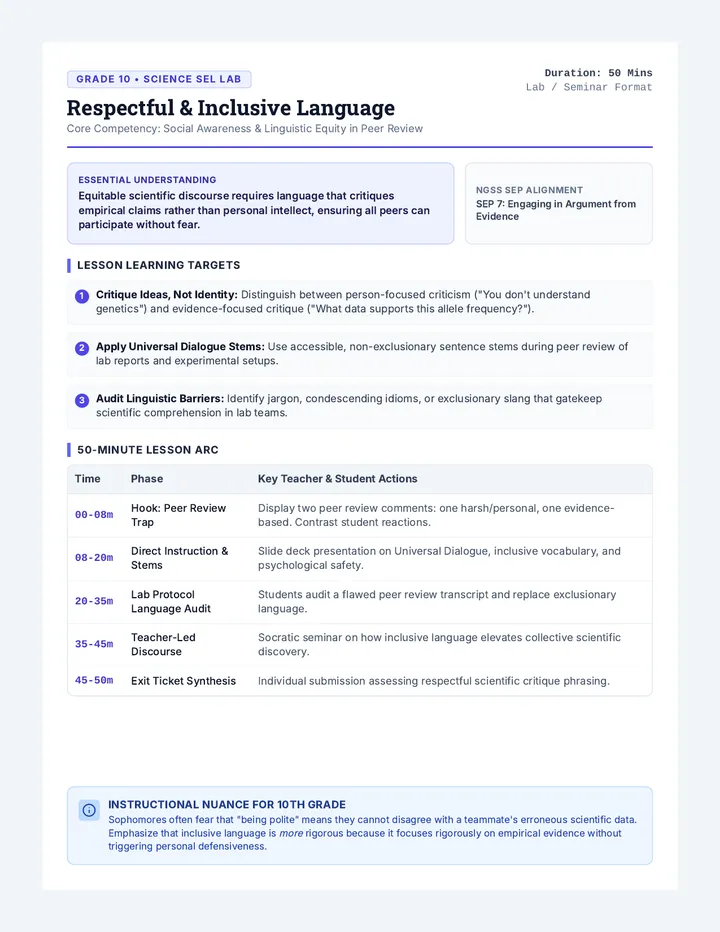
Inclusive Language Teacher Guide

Inclusive Science Language

Tenth grade science students examine respectful terminology and linguistic choices to foster psychological safety during experimental peer review.

YB

Yna Bersales

9
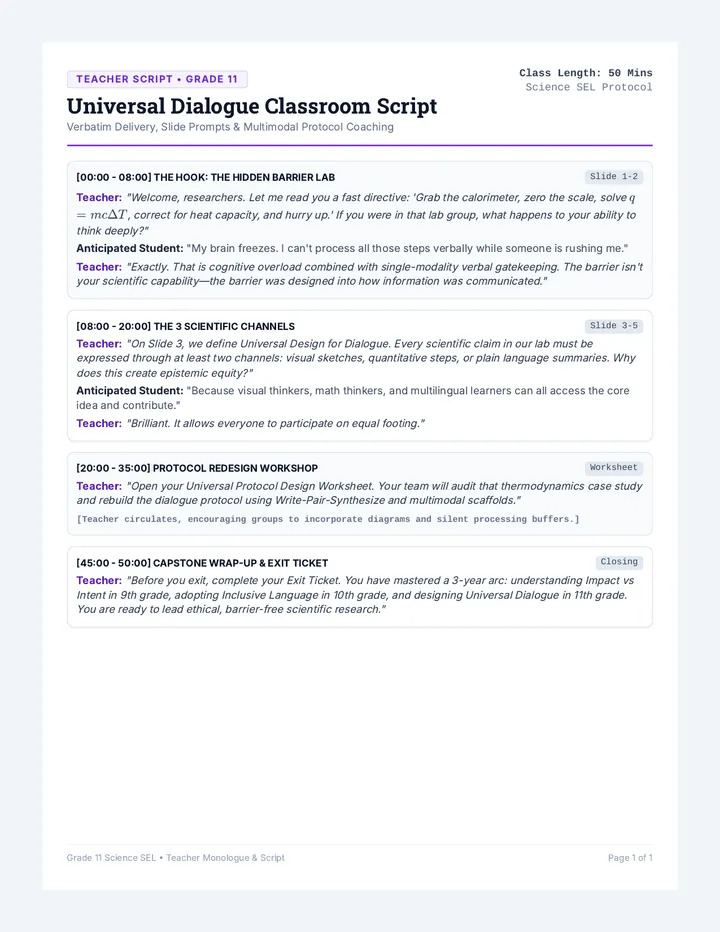
Universal Dialogue Teacher Script

Universal Dialogue Teacher Script

A verbatim classroom delivery script with teacher monologue, prompts, expected student responses, and slide cues for 11th grade science.

YB

Yna Bersales

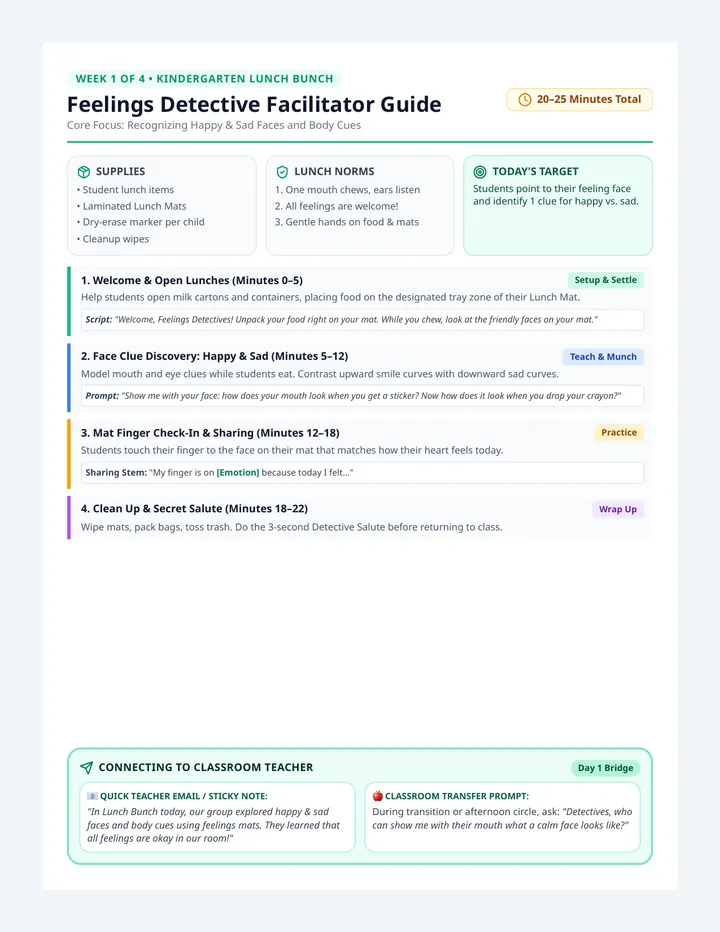
Feelings Detective Facilitator Guide

Feelings Crew

A four-week social-emotional lunch bunch sequence for Kindergarten students focusing on identifying core feelings and learning foundational calming strategies. Designed specifically for brief 20-30 minute lunchtime group sessions with high-engagement visuals and low-mess activities.

SS

Samantha Stagles

12
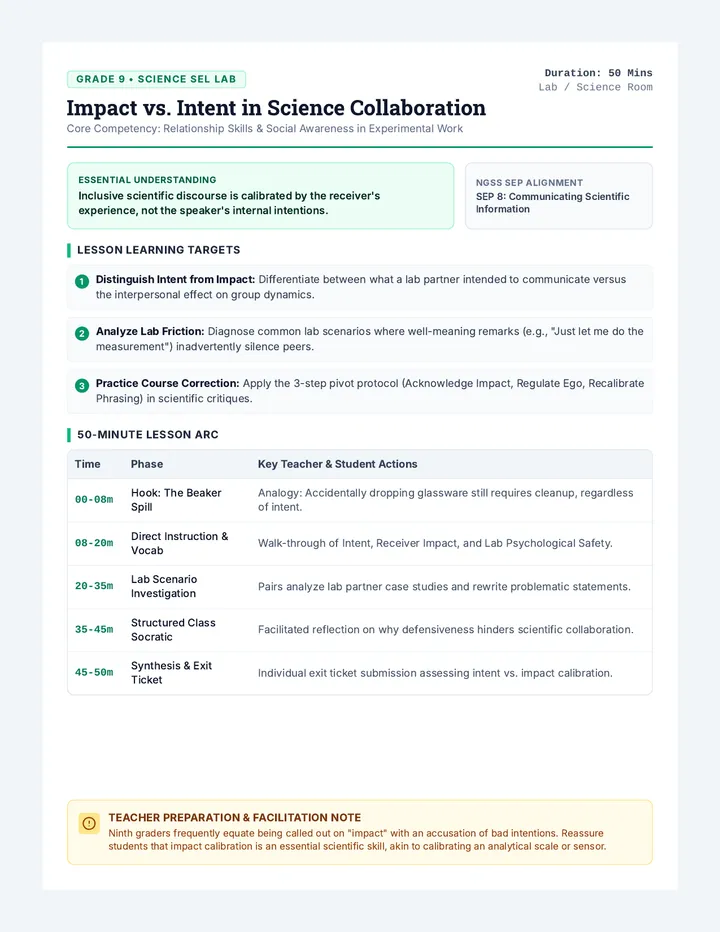
Impact Intent Teacher Guide

Impact Over Intent

Ninth grade science students analyze communication gaps in lab partnerships, understanding that interpersonal impact is defined by the receiver rather than sender intentions.

YB

Yna Bersales

9
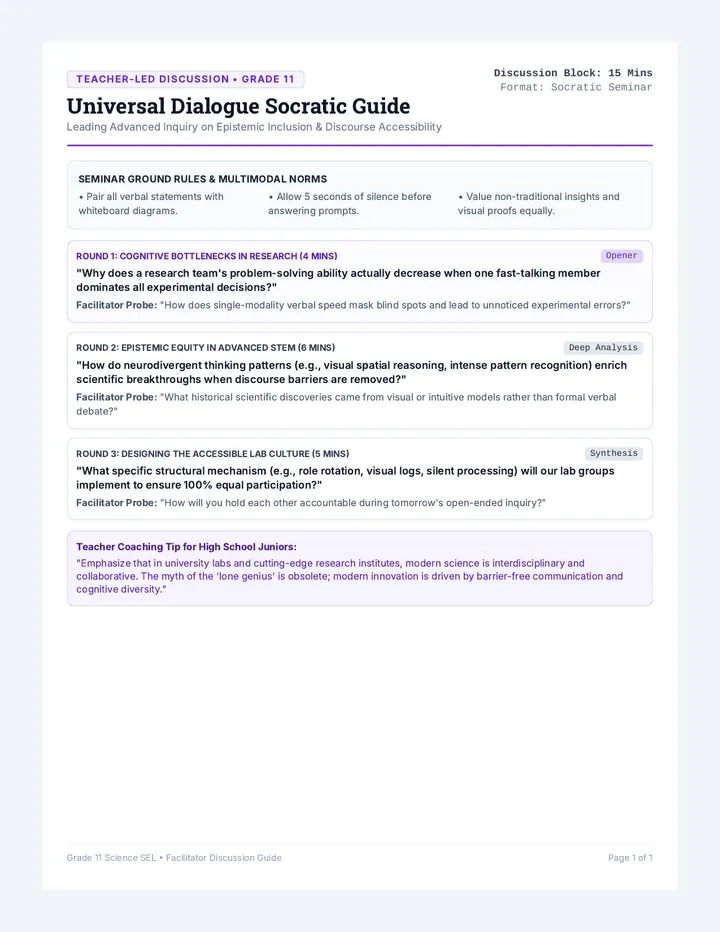
Equitable Science Discussion Guide

Equitable Science Discussion Guide

A structured facilitation guide for leading whole-class and peer discussions on barrier-free scientific discourse and universal dialogue design in 11th grade.

YB

Yna Bersales

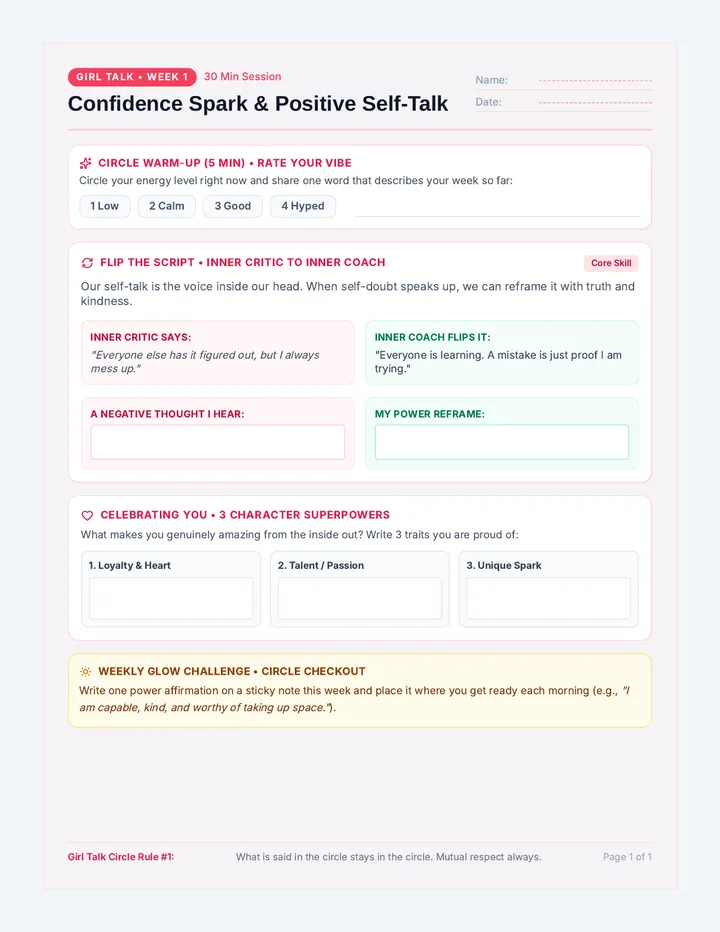
Confidence Spark Journal

Girl Talk Circle

A six-week small group curriculum for adolescent girls designed to build self-esteem, interpersonal loyalty, healthy boundaries, stress regulation, everyday etiquette, and future aspirations through engaging 30-minute weekly circles.

A

aiesha.olamiju

6
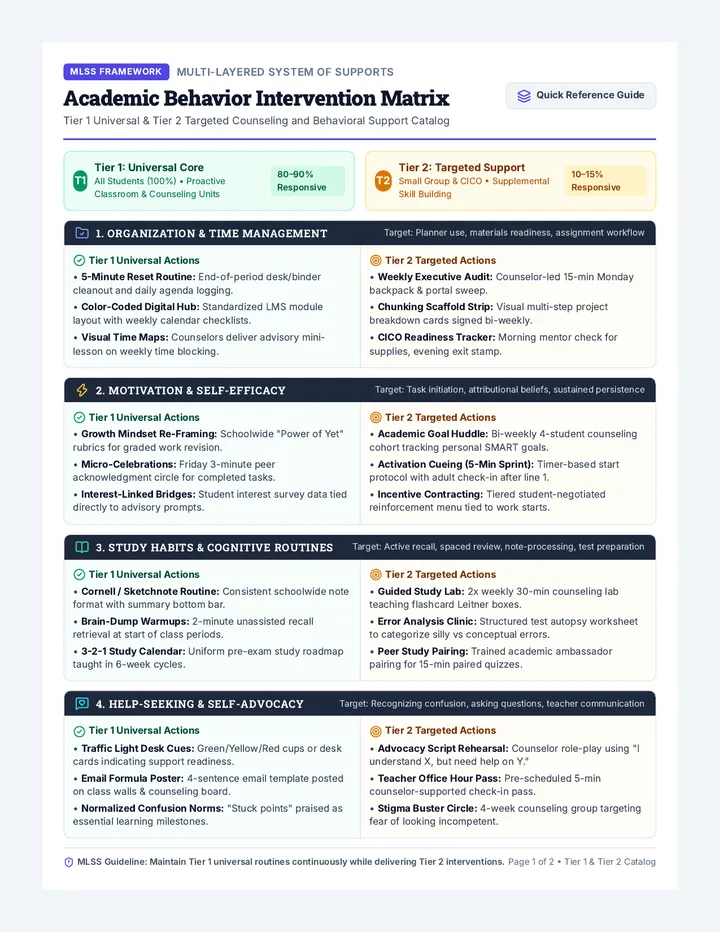
Intervention Matrix Reference Chart

Tiered Action Toolkit

A comprehensive Multi-Layered System of Supports (MLSS) framework for academic behaviors and counseling interventions across Tiers 1, 2, and 3. Educators and counselors gain actionable intervention matrices, tiered decision protocols, and documentation templates to support student organization, study habits, motivation, and help-seeking.

JB

Jaclyn Brooks

2
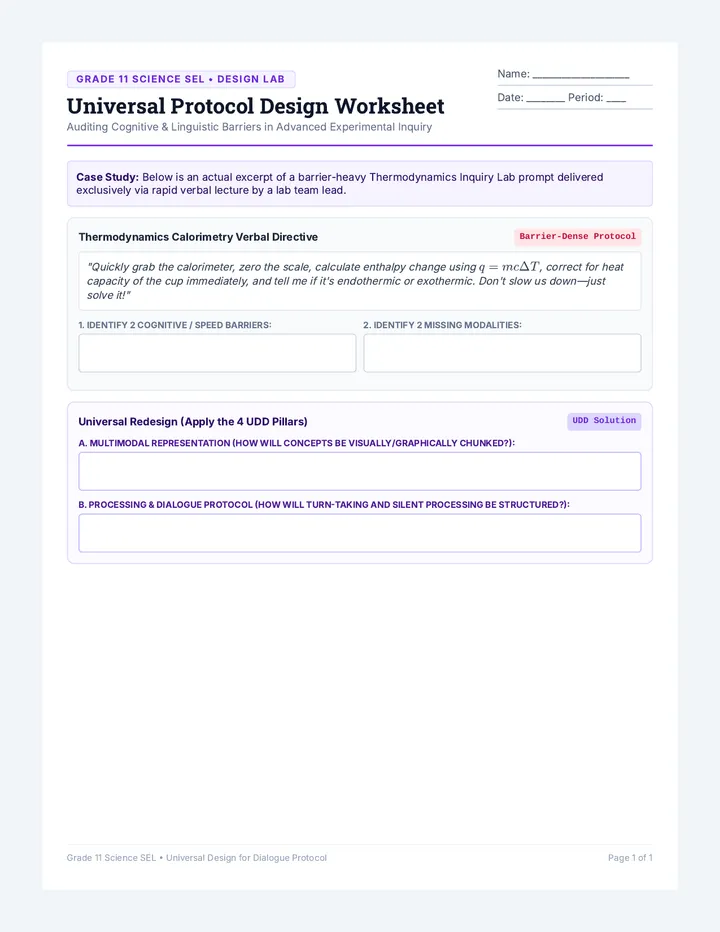
Universal Protocol Design Worksheet

Universal Protocol Design Worksheet

A redesign workshop worksheet where 11th-grade students audit a barrier-heavy experimental procedure and rebuild it using multimodal universal design.

YB

Yna Bersales