Walk a Mile Different Lesson PlanWalk a Mile Different Building Empathy through Neurodiversity Time: 30 Minutes Audience: 5th Grade Approach: Experiential Why It Matters Understanding neurodiversity helps create a more compassionate and inclusive classroom where every student feels valued and supported. It teaches students to appreciate differences and recognize that everyone learns and experiences the world in their own unique way. Objective Students will be able to identify various aspects of neurodiversity and articulate ways to support neurodivergent peers, fostering an inclusive classroom environment. Teacher Prep Review lesson plan and slide deck. Print and cut Empathy Challenge Cards. Set up whiteboard/projector. Copy Reflection Journal Entries for each student. Est. Prep: 15 mins Materials Whiteboard or Projector Markers/Pens Slide Deck Activity Cards Journal Entries Instructional Steps 1. Introduction: What's Your Superpower? 5 MIN • Display the first slide of the Walk a Mile Different Slide Deck. • Ask students: "What makes each of us unique and special?" (2 mins) • Introduce 'neurodiversity': explain that brains work differently just like hair color or height. These differences are natural and valuable. (3 mins) • Transition: Explain that sometimes these differences make certain tasks easier or harder for different people. 2. Empathy Challenge: Experiencing Differences 15 MIN • Divide students into groups of 3-4. Explain that we will try activities to understand brains that work differently. (2 mins) • Distribute Empathy Challenge Activity Cards. Each card simulates a neurodivergent experience (non-dominant writing, distracted listening, etc.). (2 mins) • Groups try each activity for a few minutes. Emphasize: These are simulations to build empathy, not exact experiences. (10 mins) • Reconvene: Groups share one thing they noticed or felt during the tasks. (1 min) 3. Discussion & Reflection 8 MIN • Lead class discussion using the Slide Deck prompts: "What was challenging about these activities?" "How might these relate to what classmates experience?" "How can we support classmates who experience things differently?" • Distribute Reflection Journal Entry and explain that they will complete this individually to deepen their learning. (3 mins)
Walk a Mile Different Slide Deck5th Grade Workshop Walk a Mile Different Understanding Neurodiversity What is Neurodiversity? Imagine a garden with many different kinds of flowers. Each flower is beautiful in its own way! Some brains are wired a little differently. Everyone has unique strengths and challenges. These differences are natural and valuable! Empathy Challenge! Today, we're going to try some activities to understand what it might feel like when your brain works differently. Simulations These are just practice runs to help us imagine. Empathy We are trying to see through someone else's eyes. Respect It's about understanding, not copying! Let's Share and Reflect 01 "What was challenging about these activities?" 02 "How do you think these feelings relate to what your classmates might experience?" 03 "What are some ways we can support our classmates who experience things differently?" Every Brain is Amazing! When we understand and support each other, our classroom becomes a stronger, kinder, and more awesome place for everyone. Your Challenge Complete the Reflection Journal Entry to think more about what you learned today.
Empathy Challenge Activity CardsEmpathy Challenge Activity Cards Instructions for Students: Work with your group to try each challenge. Talk about how it feels to complete each task. Remember, these are simulations to help us imagine what it's like for someone whose brain works differently. It's about building empathy! Challenge 1 The Distracted Listener Task: One person reads 5 instructions (e.g., "Touch your nose, clap twice"). Others hum or tap pencils softly. The listener must follow the instructions perfectly while ignored the noise. Reflect & Discuss How hard was it to focus on the instructions? Did the sounds make it harder to remember? Challenge 2 The Tricky Writer Task: Write your full name and the sentence "Today is a great day!" using your non-dominant hand. Try to make it as neat as possible. Reflect & Discuss How did it feel to write this way? What parts were difficult? Challenge 3 The Jumbled Sort Task: Sort 10 objects by weight or shininess without talking. Then, explain the rule without using the words "weight" or "shiny." Reflect & Discuss Was it easy or hard to figure out without talking? How did it feel to explain without specific words? Challenge 4 The Sensitive Scenario Task: Imagine you're in a noisy room with flickering lights while doing a hard math problem. Discuss what sensations would bother you most and what would help. Reflect & Discuss What sensations would bother you the most? What could someone do to help you?
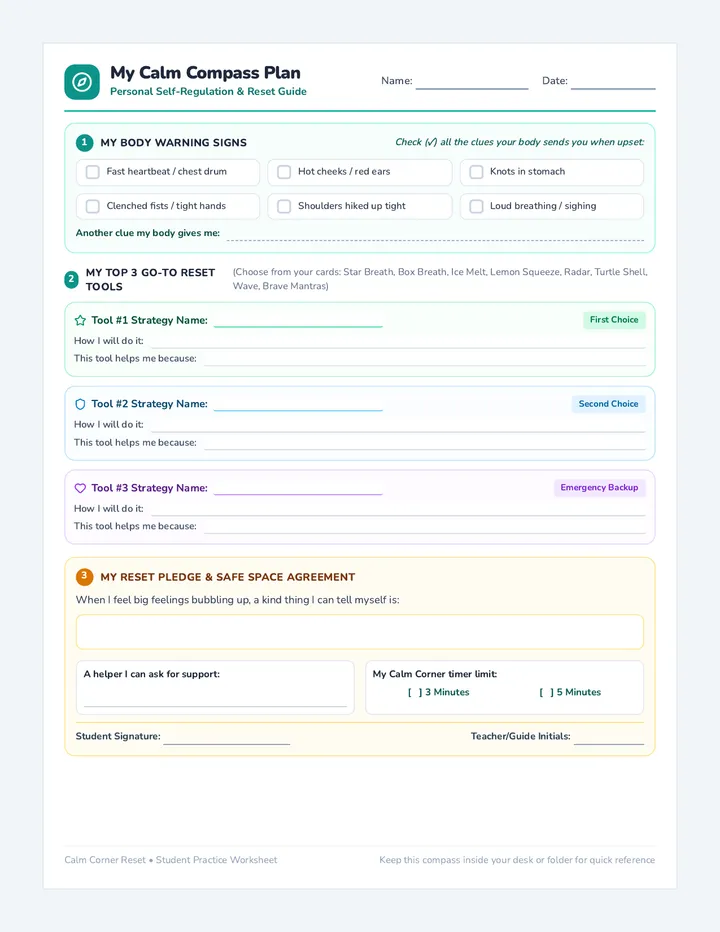
Reflection Journal EntryReflection Journal "Walking in Different Shoes" Name: Date: 1 Which activity from today's lesson was the most interesting or surprising to you? Why? 2 When you were doing the challenges, what feelings did you experience? Circle all that apply and add your own if needed! Frustrated Confused Tired Annoyed Focused Calm Creative Overwhelmed Excited Other: 3 How might these feelings be similar to what a neurodivergent classmate might experience sometimes? 4 What is one new thing you learned about how different brains work? 5 Think of one way you can be a more supportive and understanding classmate to everyone, especially those whose brains work a little differently.