A comprehensive lesson for 10th graders on active listening, focusing on verbal and non-verbal cues, unbiased summarization, and the distinction between hearing and understanding.
This lesson empowers 10th graders to understand the biological mechanisms of stress and equips them with a diverse toolkit of practical coping strategies. Students will analyze their own stress triggers and build a personalized 'Stress Shield' plan for navigating academic and social challenges.
This lesson empowers 10th graders to master active listening through verbal and non-verbal cues, bias-free summarization, and practical empathy exercises. Students will move beyond simple hearing to develop deep interpersonal understanding and collaborative skills.
A comprehensive lesson for 10th graders on mastering active listening. Students move beyond simple hearing to develop verbal and non-verbal techniques, learn to summarize without bias, and practice empathetic communication in academic and personal contexts.
A comprehensive lesson for 10th graders on mastering active listening skills, focusing on verbal and non-verbal cues, unbiased summarization, and the psychological shift from hearing to understanding.
A comprehensive lesson for 10th graders on mastering active listening, focusing on the distinction between hearing and understanding through verbal and non-verbal techniques and bias-free summarization.
A lesson designed to help teenagers identify stress triggers and develop healthy coping mechanisms through peer discussion and personal reflection.
Prepares the student for speaking in varied contexts and with new communication partners through simulated scenarios.
Develops short, functional phrases through predictable scripts and collaborative reading.
Uses forced-choice questions and one-word prompts to elicit the first instances of verbalization.
Introduces non-speech vocalizations (humming, sound effects, breath control) to build comfort with vocal cord engagement.
A final assessment module to evaluate student understanding of career readiness concepts and application proficiency.
A deep dive into the mechanics of job applications, cover letter construction, and managing professional references.
An introductory unit focusing on career terminology, professional mindset, and identifying personal strengths for the workforce.
A suite of professional case note templates for school counselors, designed for efficiency and clarity in documenting student support sessions. These templates follow a blue and gold theme and utilize best-practice intervention checklists.
A 30-minute counseling session designed to help students navigate parental pressure and the feeling of being misunderstood by articulating their emotions clearly and maintaining control over their reactions.
A creative counseling session designed for students who are hesitant to share feelings verbally. This lesson uses a "Hidden Gallery" art activity to explore the difference between public personas and private emotions in a low-pressure, symbolic way.
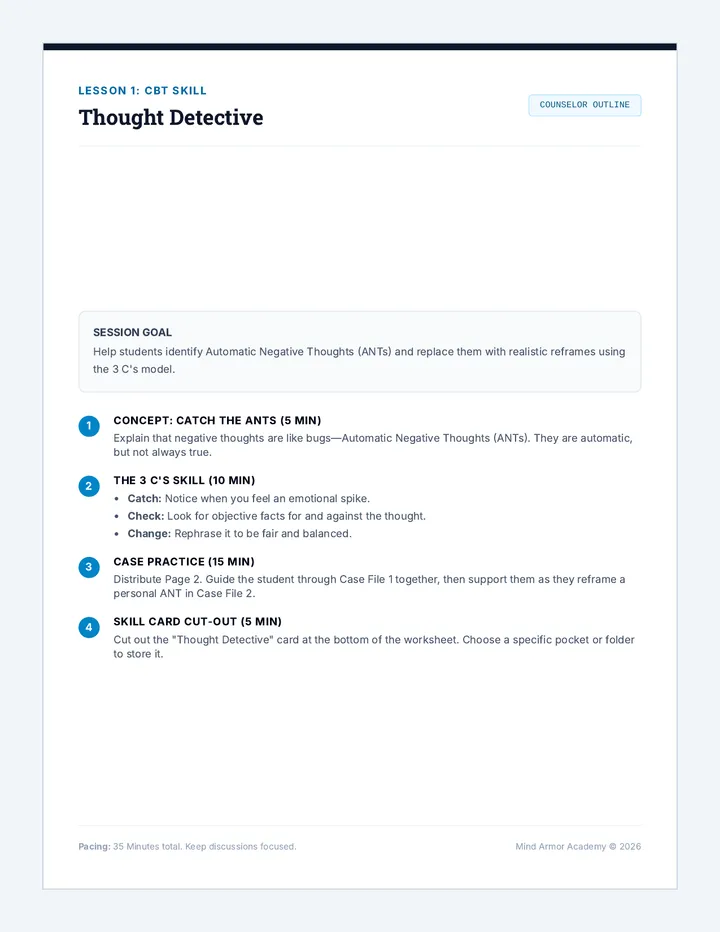
This lesson focuses on executive functioning skills, specifically task initiation. Students will practice strategies to overcome procrastination and "get started" on challenging academic tasks through realistic role-playing scenarios.
Focuses on developing practical social skills, effective communication strategies, and mindfulness tools to stay present during social interactions.
Focuses on identifying social fears and creating a 'Bravery Ladder' to gradually face them through planned exposure steps.
A foundational lesson introducing students to the nature of social anxiety, the cycle of avoidance, and initial coping strategies like relaxation and mindfulness.
A therapeutic activity designed to help middle and high school students distinguish between child and adult responsibilities during family transitions like divorce. This lesson focuses on establishing healthy emotional boundaries and reducing parentification.
A comprehensive 60-minute session designed for teenagers with ADHD to explore emotional regulation, communication strategies, and the nuances of literal vs. abstract thinking.