This individualized 15-minute lesson helps a 5th-grade student develop simple time management strategies to reduce anxiety by breaking tasks into manageable steps and using a visual schedule.
A comprehensive restorative respect and empathy sequence spanning Grades 5 to 8, providing age-appropriate independent reflection packets and companion advisory slides for each grade level.
A comprehensive, week-long morning meeting series for the final week of school. Helps students celebrate growth, outline summer plans, address fifth-grade transitions, set future goals, and build class community before departure.
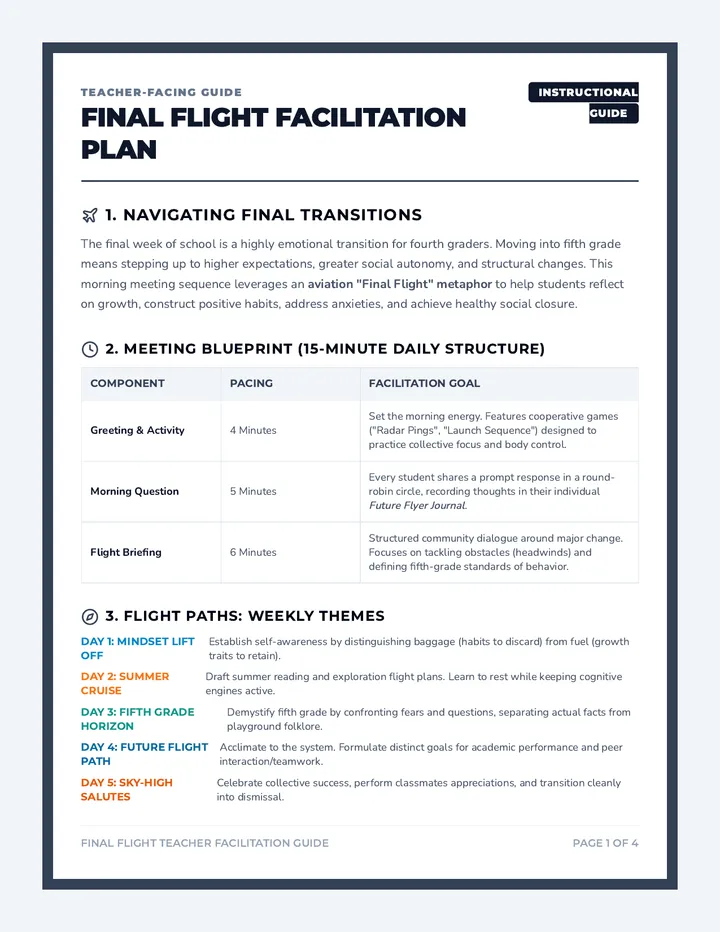
A 4-page teacher-facing facilitation plan and printable prompt cards. Outlines day-by-day lesson scripts, pacing, community-building strategies, and printable pocket-sized cards for facilitating the morning circle.
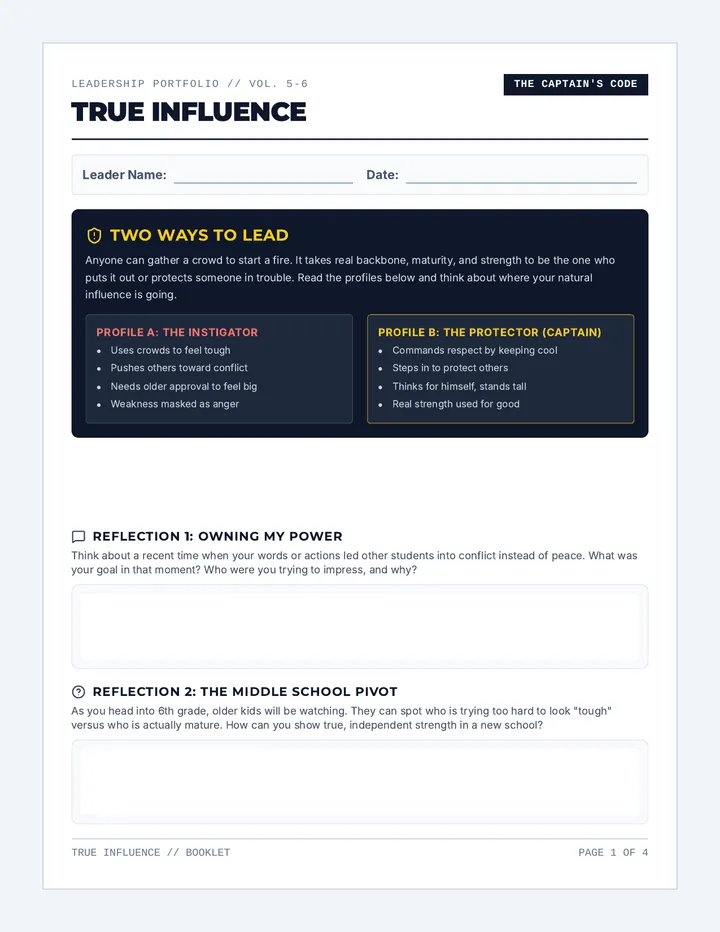
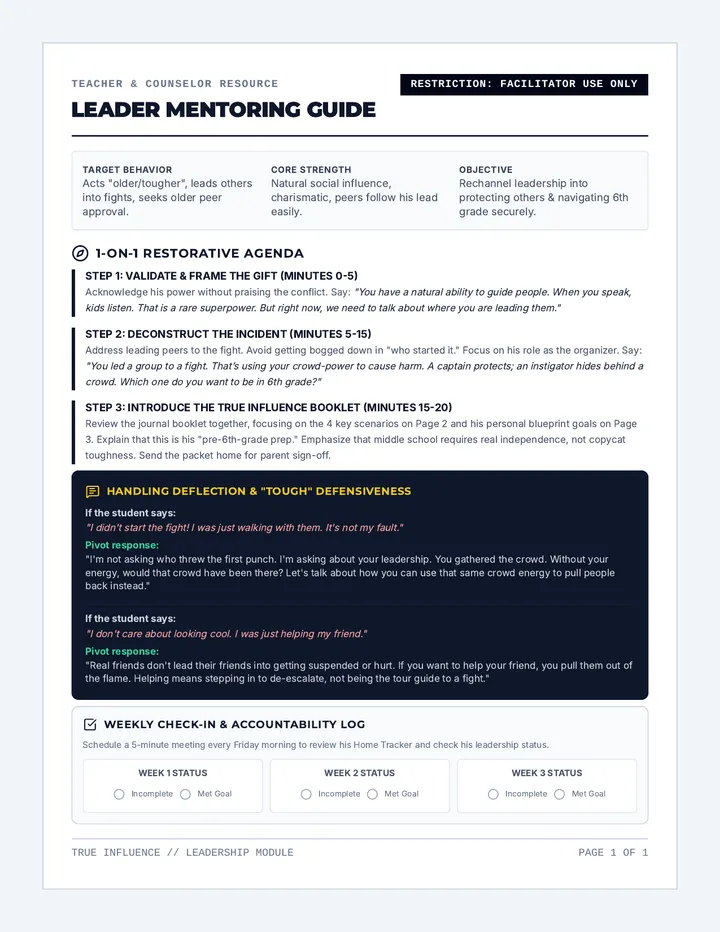
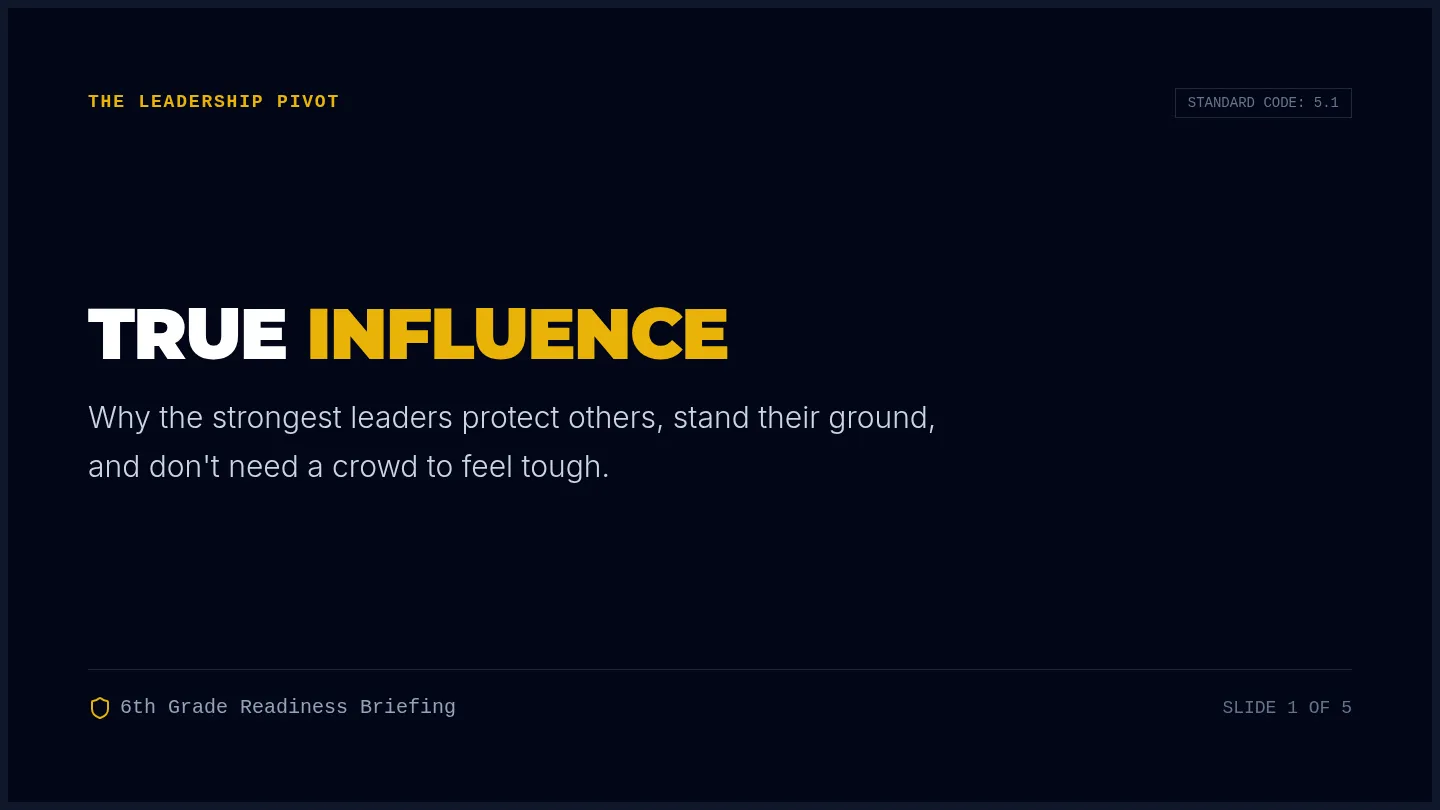
A comprehensive restorative leadership and peer advocacy sequence designed for students transitioning to middle school. It guides students from understanding their social influence to actively protecting peers and spreading positive school culture.
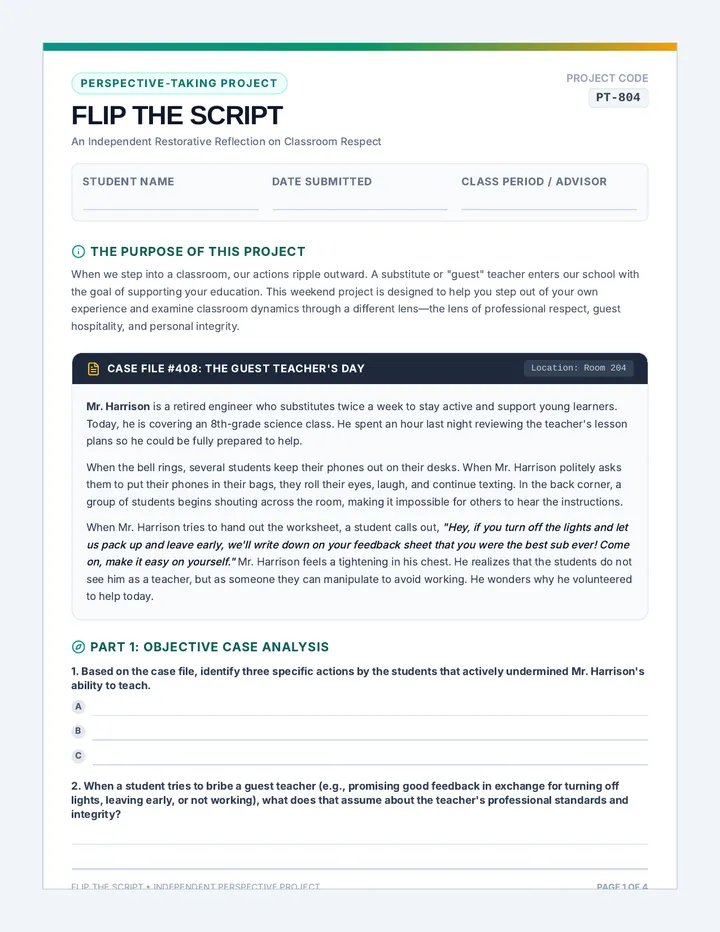
A restorative learning unit focused on 8th-grade students reflecting on phone use, ignoring rules, and group disruption during a substitute's lesson.
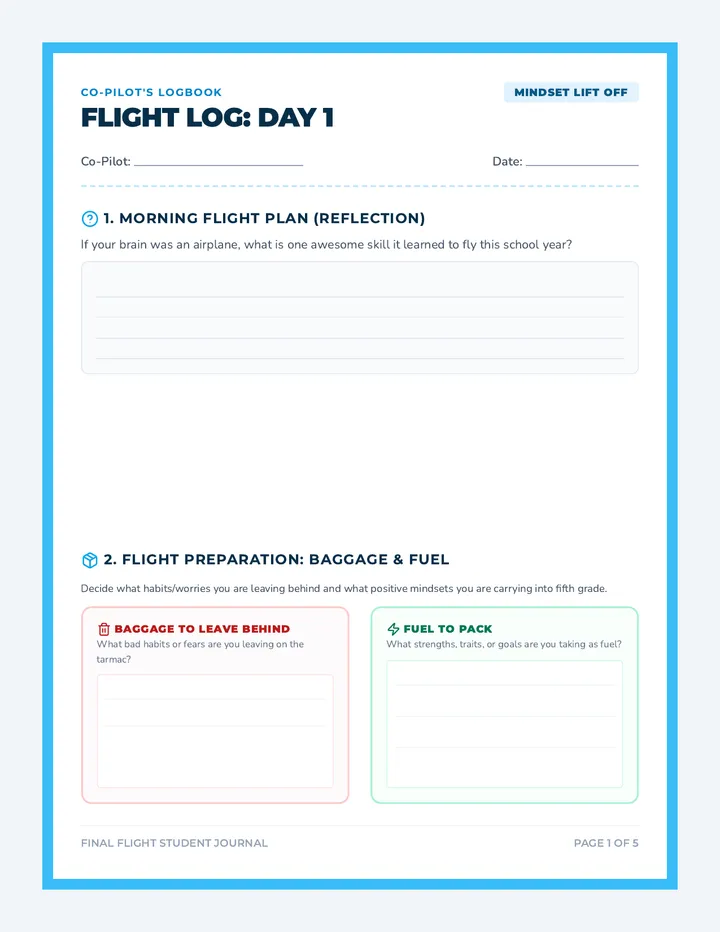
A 5-page student-facing morning meeting reflection booklet styled as an aviation flight log. Includes space for daily morning responses, activity summaries, transition goal-setting, and classmate autographs.
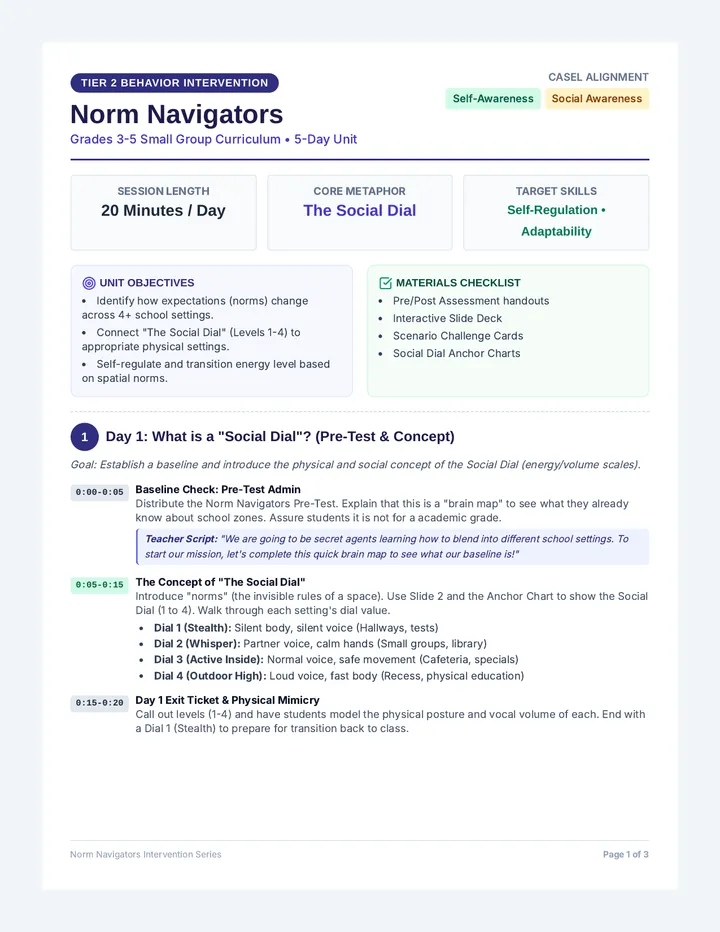
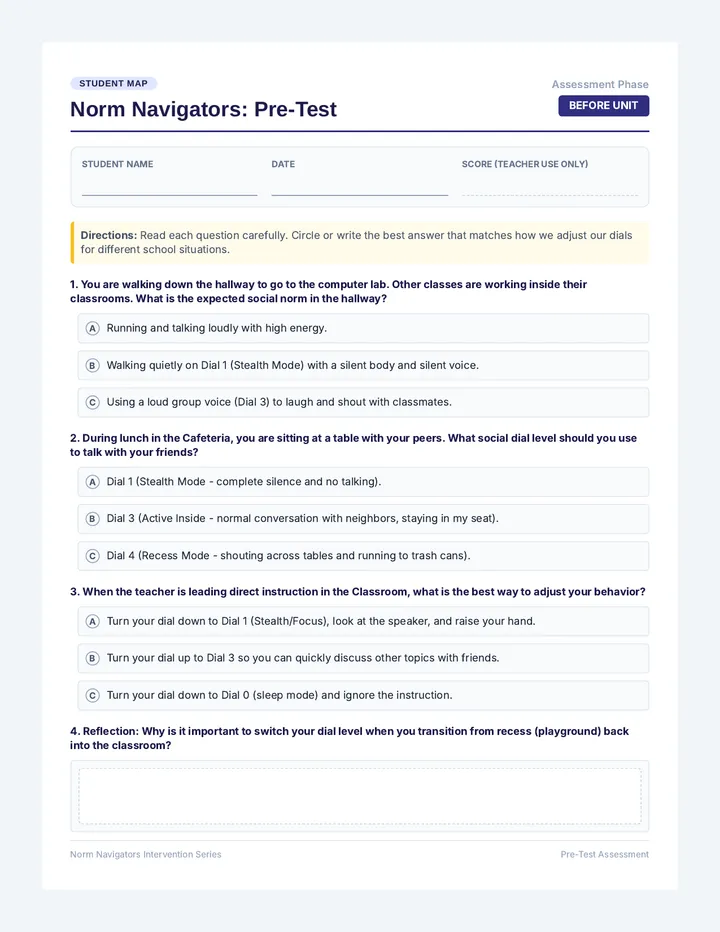
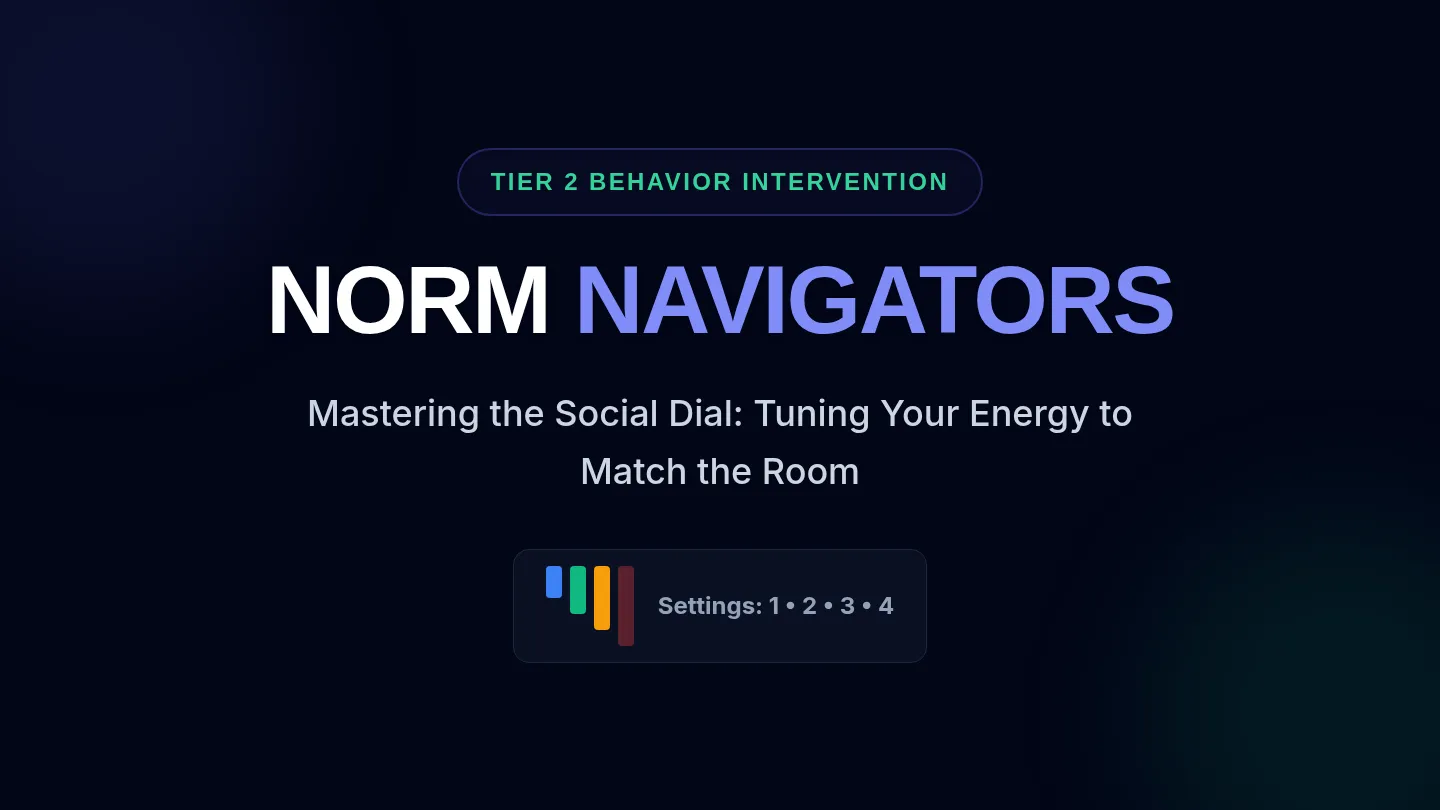
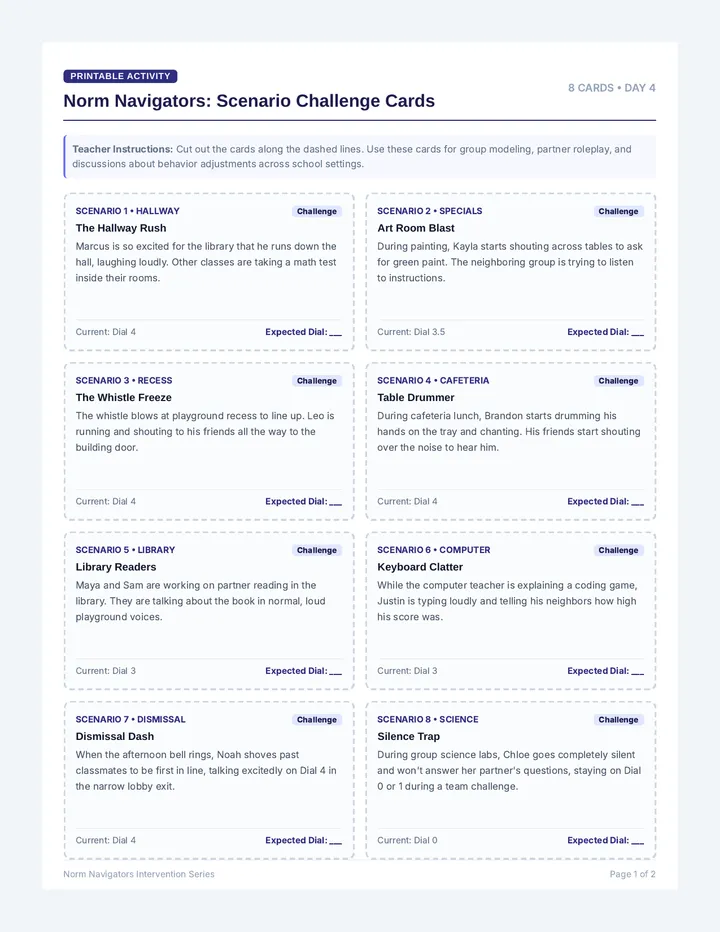
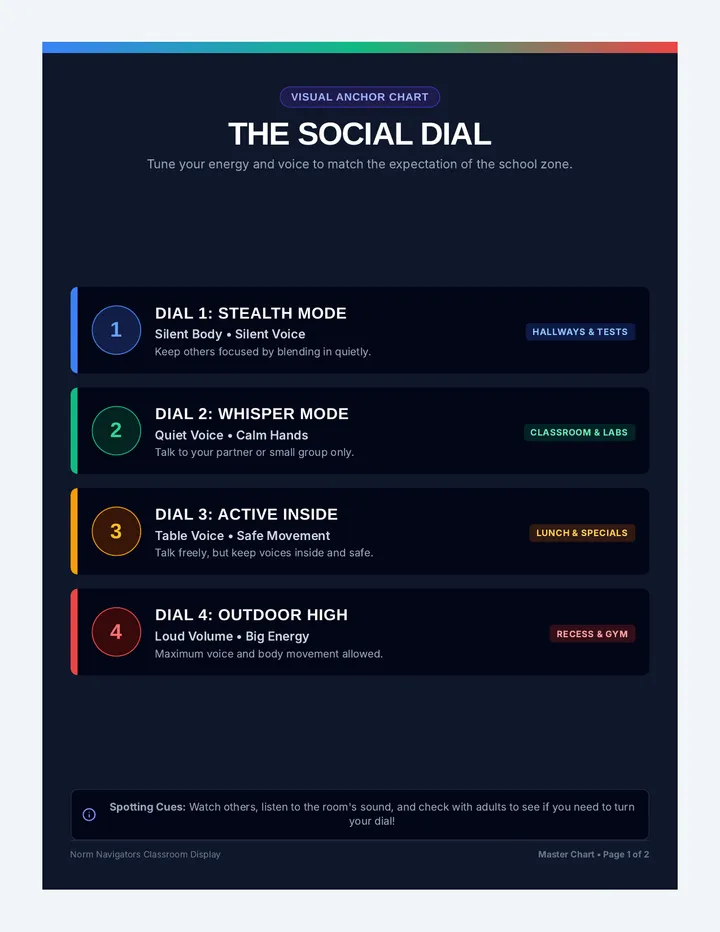
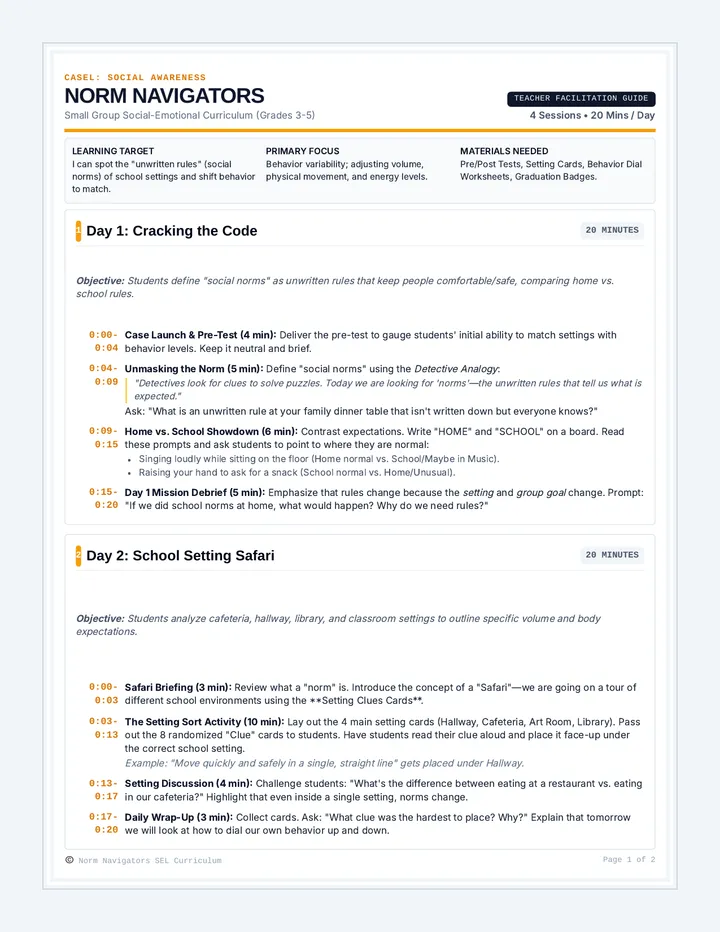
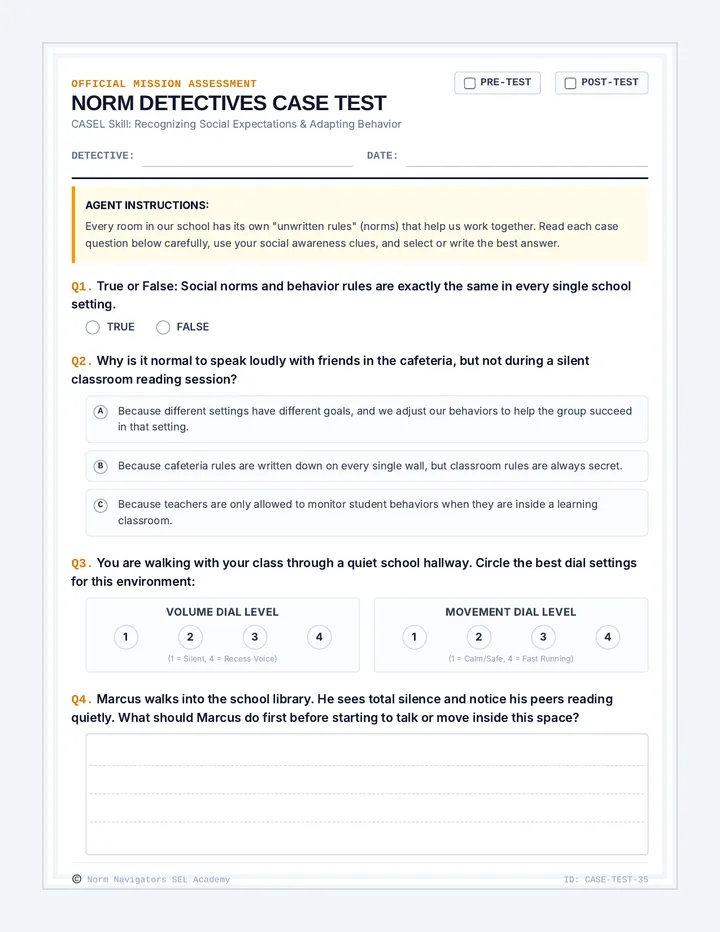
A 5-day Tier 2 behavior intervention sequence for grades 3-5 focused on recognizing and adapting to social norms across different school settings. Aligned with CASEL Self-Awareness and Social Awareness competencies, the sequence uses the concept of the 'Social Dial' to help students regulate their energy and volume.
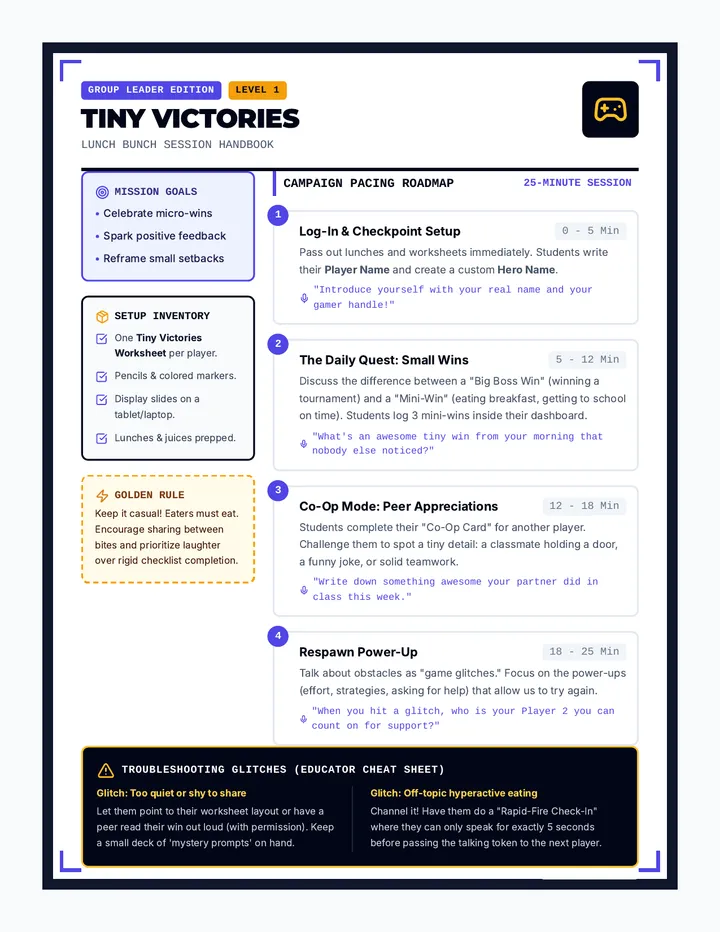
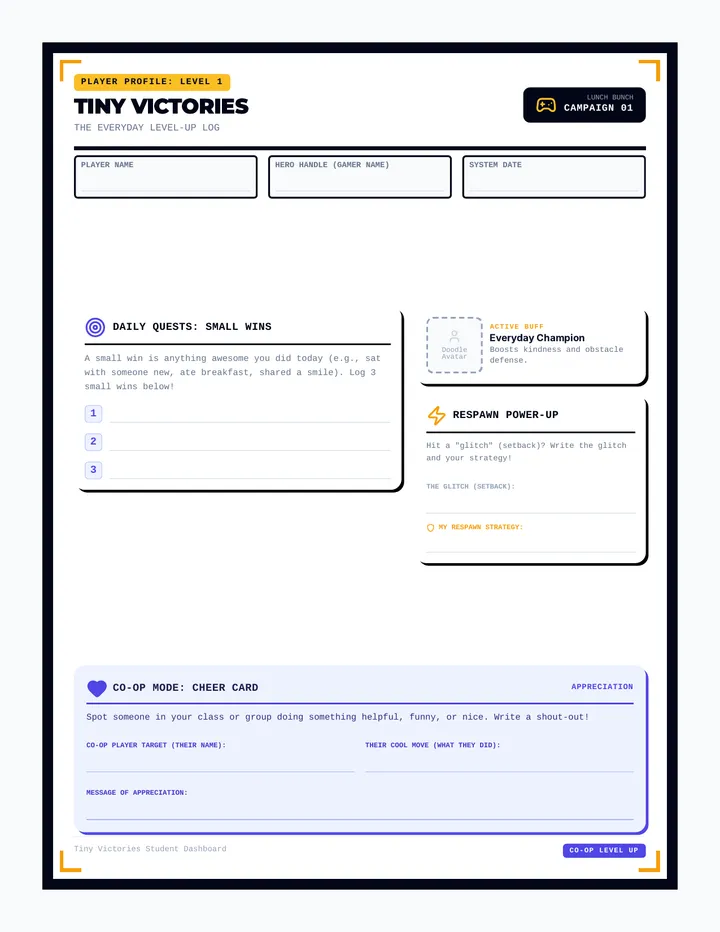
A high-energy, lunch-friendly social-emotional learning lesson designed to help students recognize everyday small wins, express genuine appreciation for peers, and celebrate the growth and resilience involved in overcoming daily challenges.
A 5-day daily morning meeting presentation featuring a hot air balloon aviation theme. Each day includes a daily morning question, a cooperative transition activity, and an interactive group discussion prompt to prepare students for fifth grade.
A comprehensive 4-day small-group social-emotional learning sequence for grades 3-5. Aligned with the CASEL Social Awareness framework, this unit teaches students to identify how expectations and social norms change across different school environments and how to adapt their behaviors successfully.
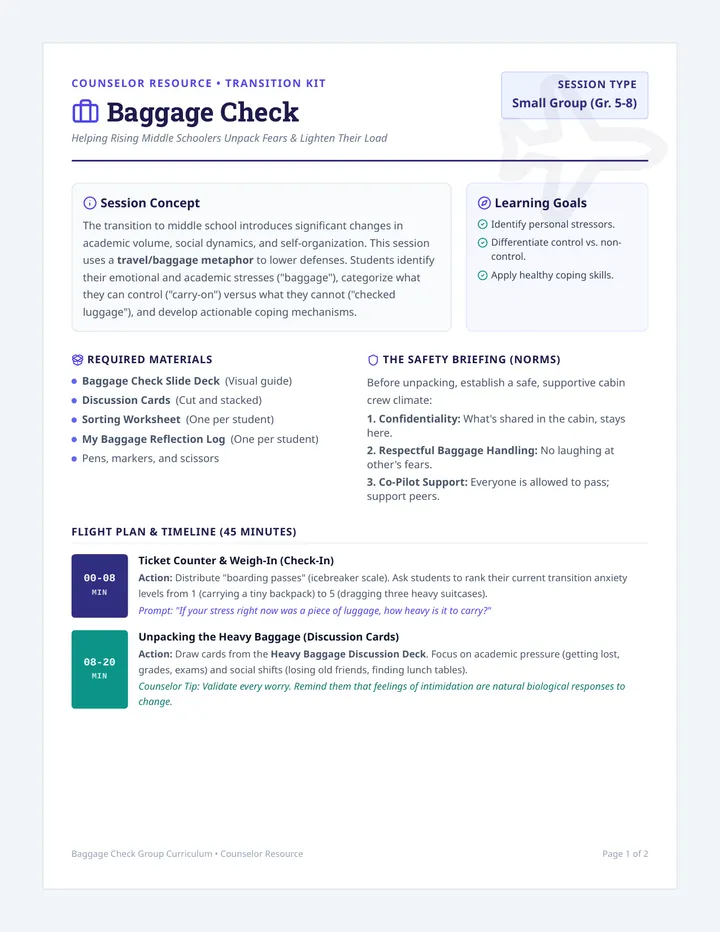
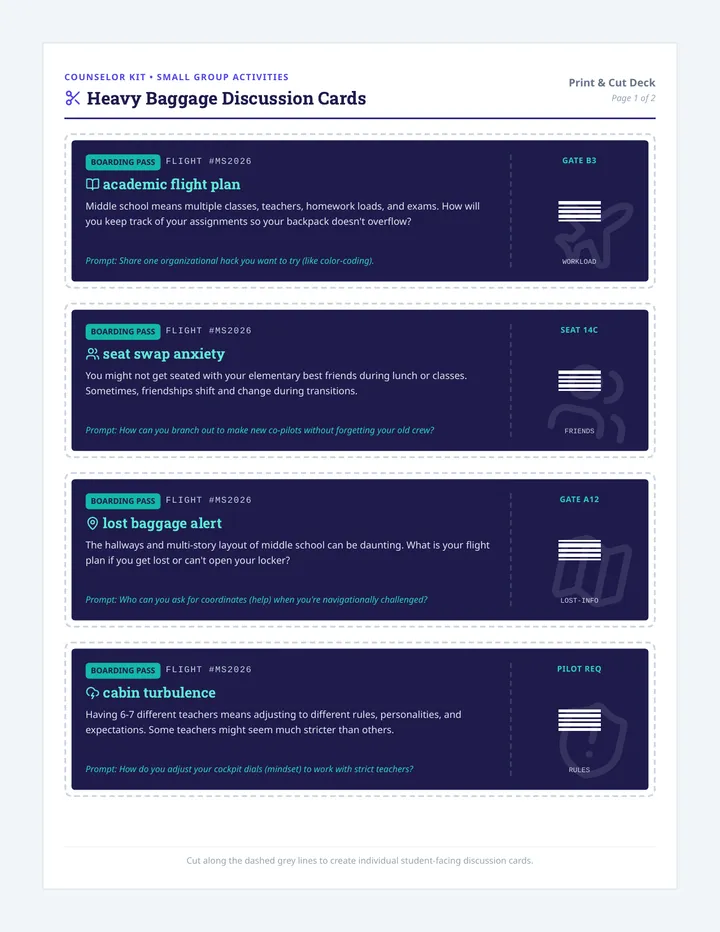
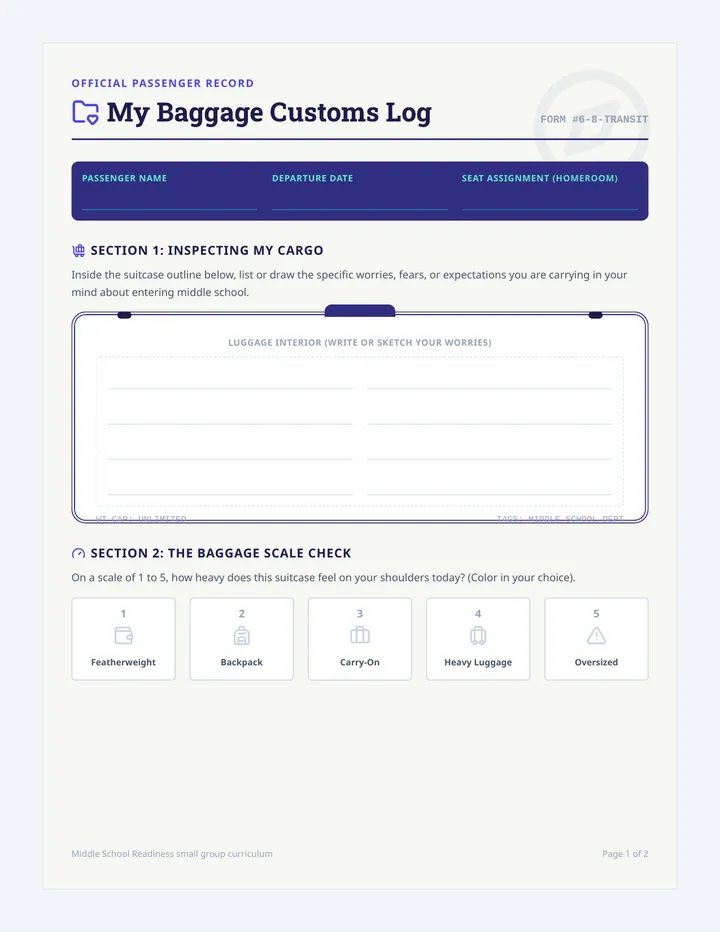
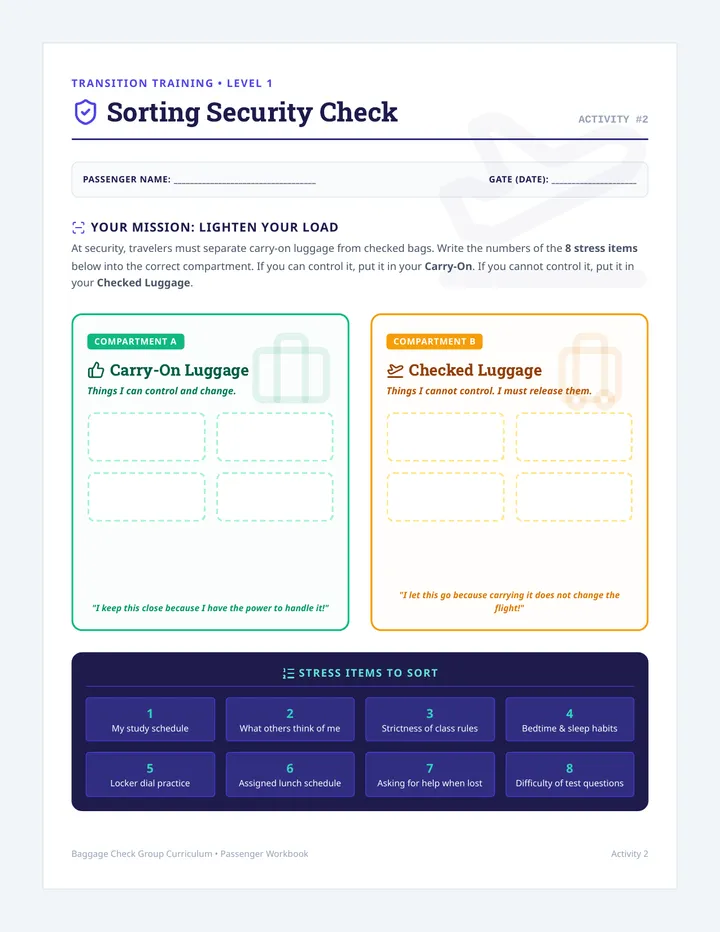
A small-group counseling kit designed to help rising middle schoolers identify, discuss, and unpack the emotional baggage and academic pressures associated with school transitions.
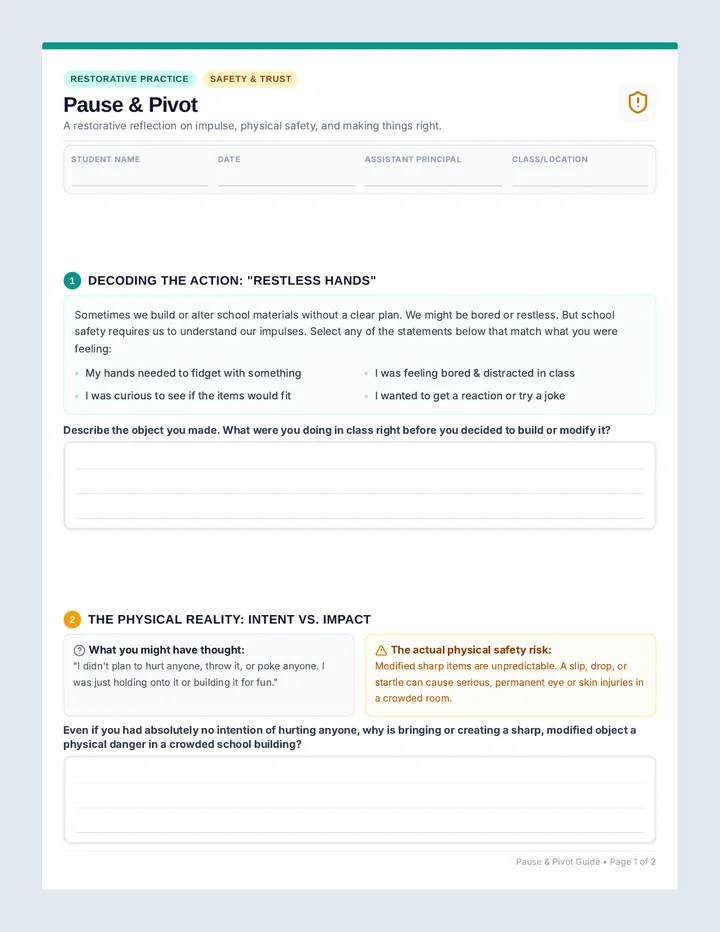
A restorative 2-page reflection packet designed for a student who created a dangerous object from a push pin and paper. Formatted with large, highly legible fonts and spacious, multi-line writing boxes, it guides the student through impulse control coaching, understanding physical safety risks, and co-creating a restore plan with their Assistant Principal.