A peer-editing workshop focusing on grammatical precision and formatting for both mobile and desktop reading environments.
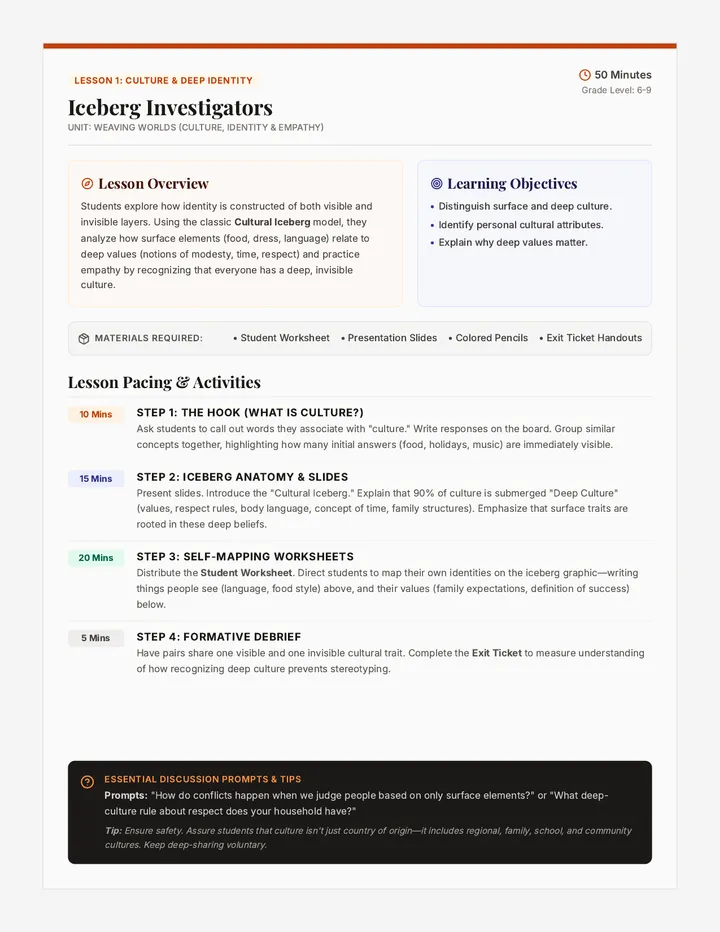
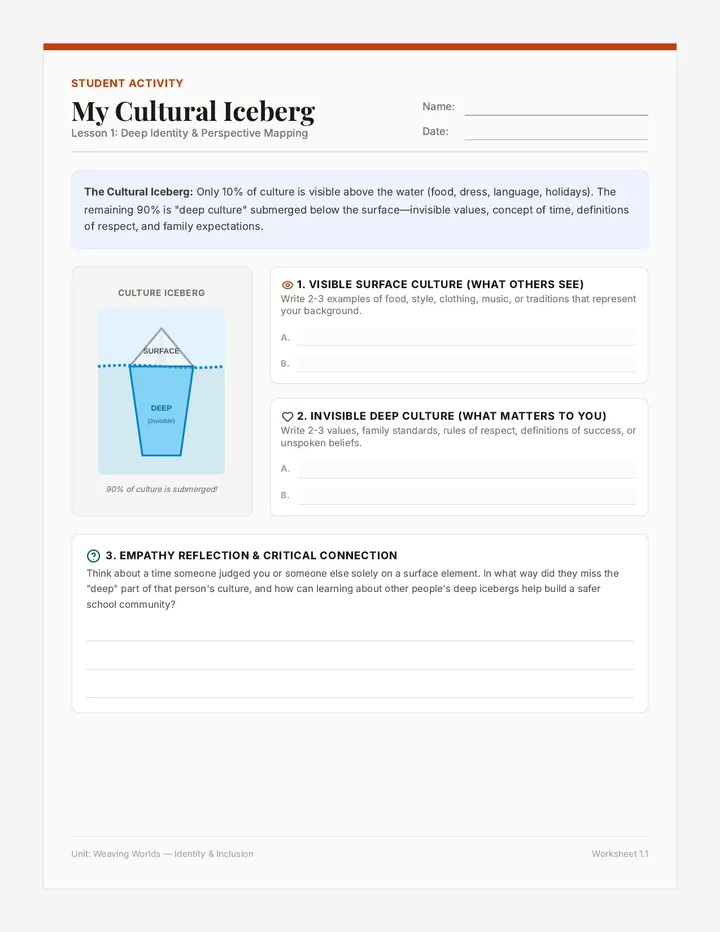
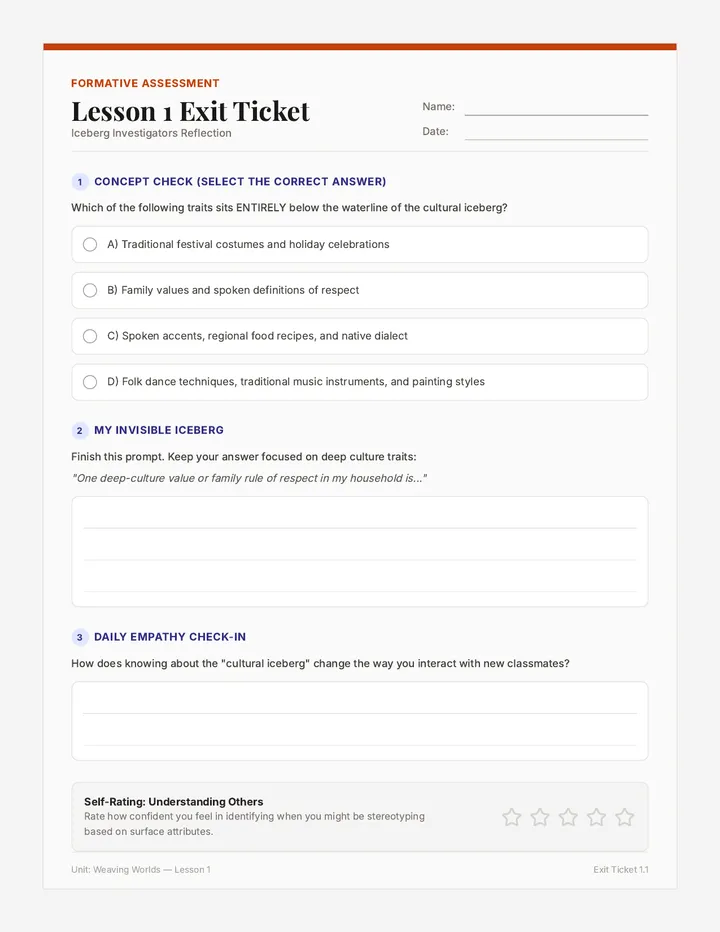
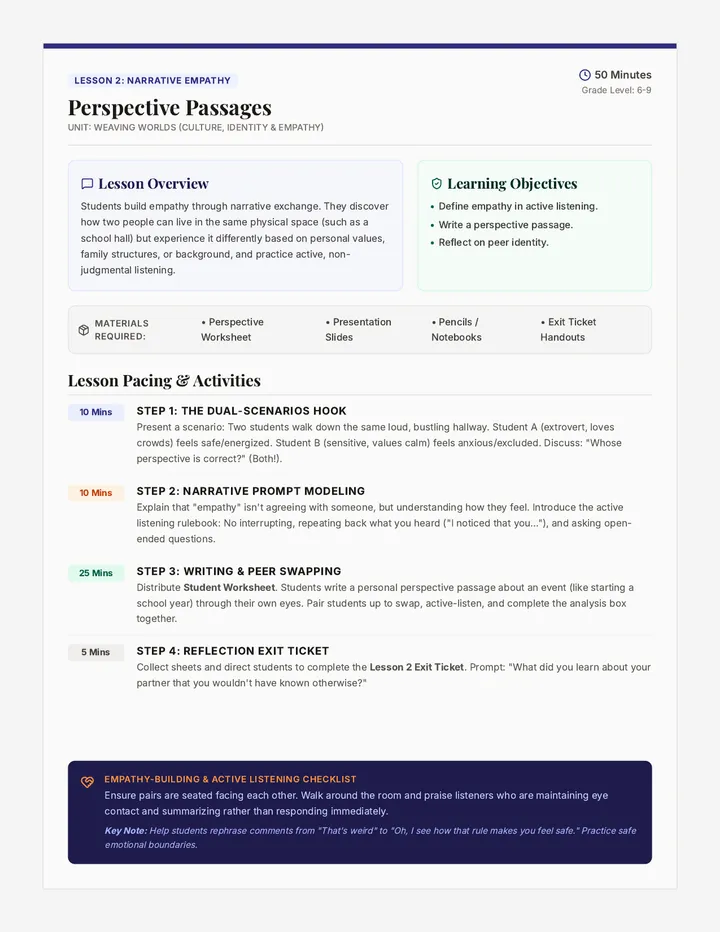
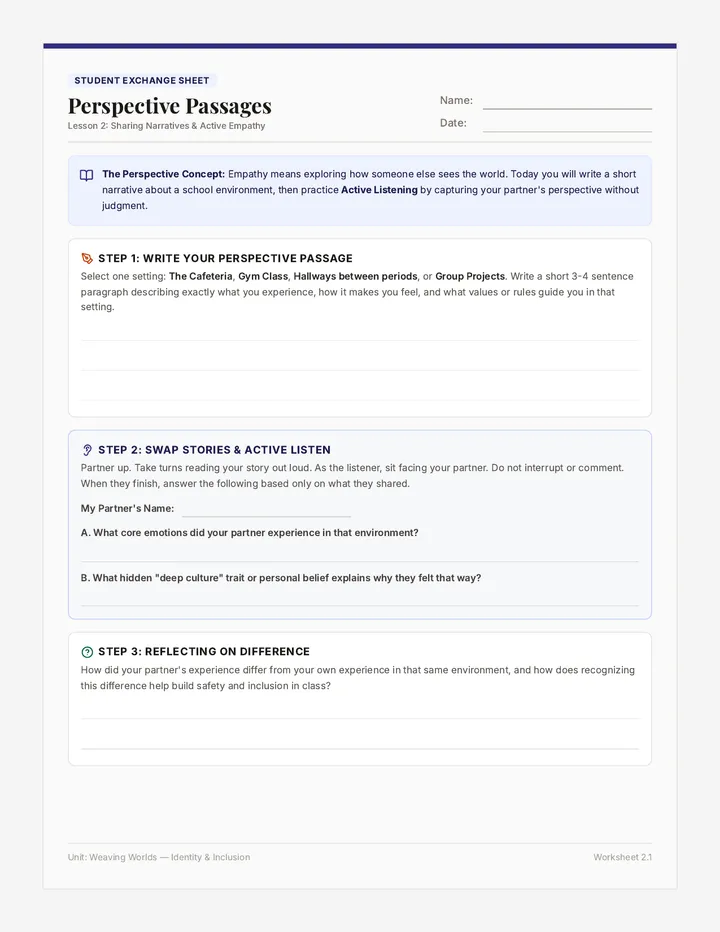
A 3-lesson unit on culture, identity, empathy, and building an inclusive school community. Students explore the cultural iceberg, share personal perspective narratives, and collaborate on actionable school-wide inclusion plans.
A high-energy, collaborative staff training session built around a competitive trivia game. Staff work in teams to analyze realistic scenarios and master MetroWest YMCA's Social Networking Policy (Appendix IV, Updated 6/2024), emphasizing child safety, professional boundaries, and brand protection.
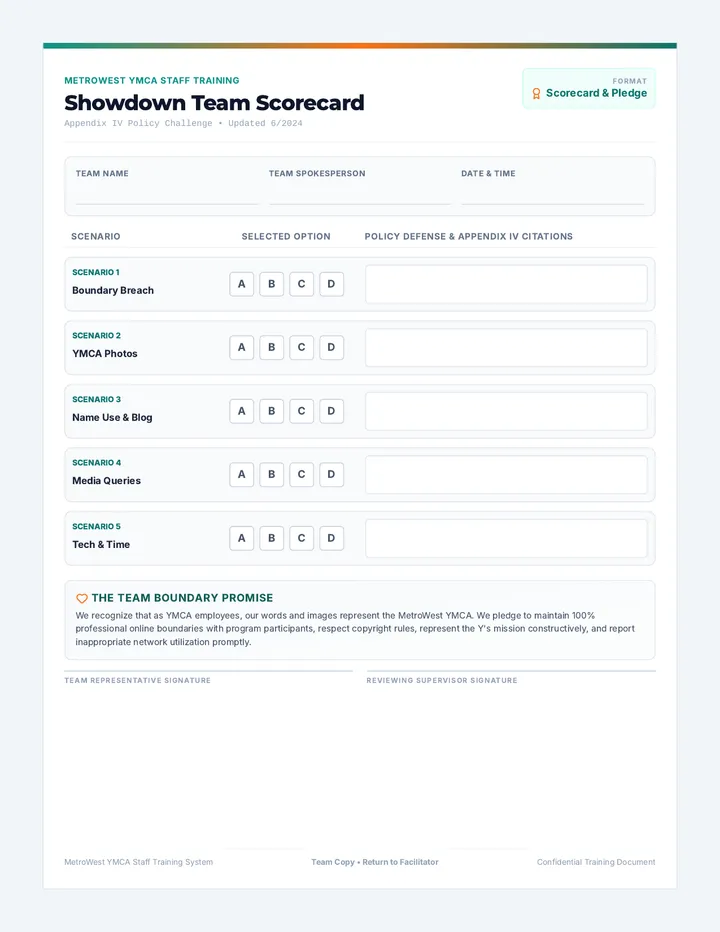
A clean, print-ready single-page team scorecard for 20-30 staff members divided into squads. It features space for team details, selection indicators, and dedicated white writing blocks for teams to cite policy rules from Appendix IV.
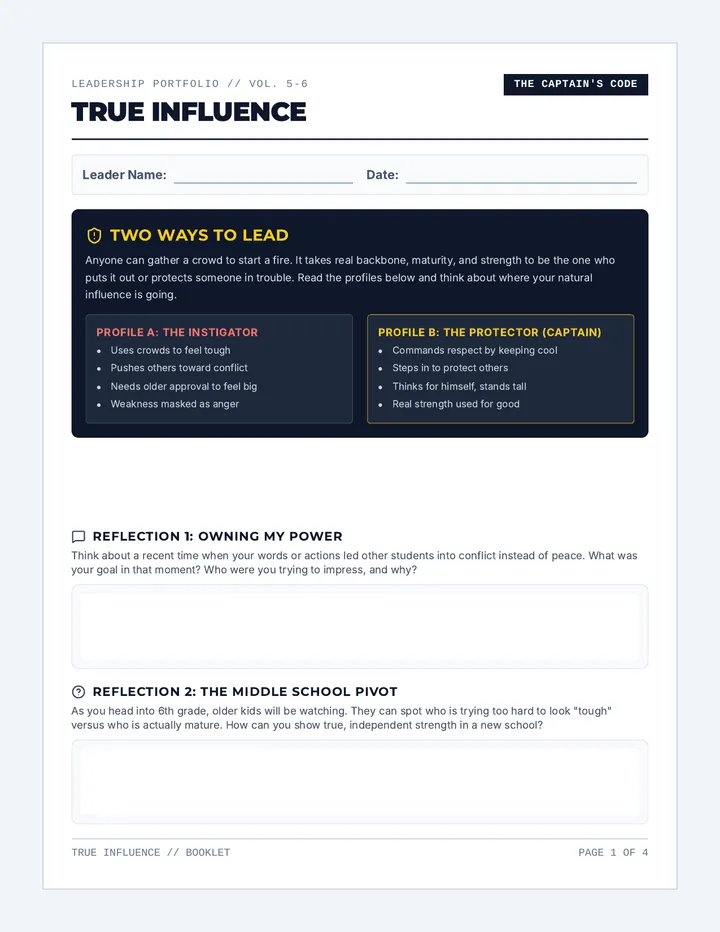
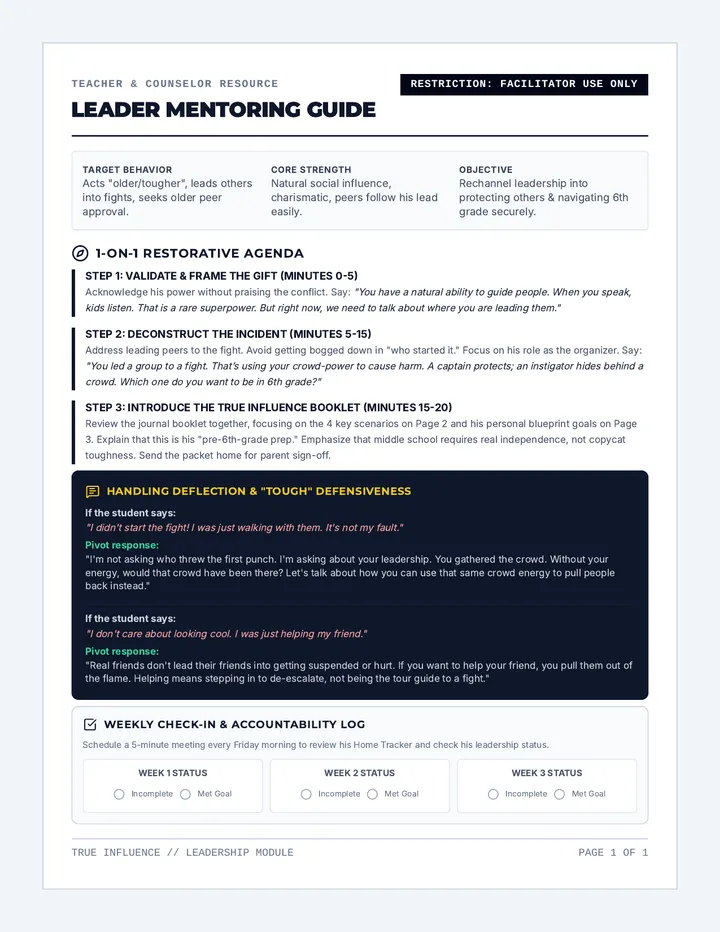
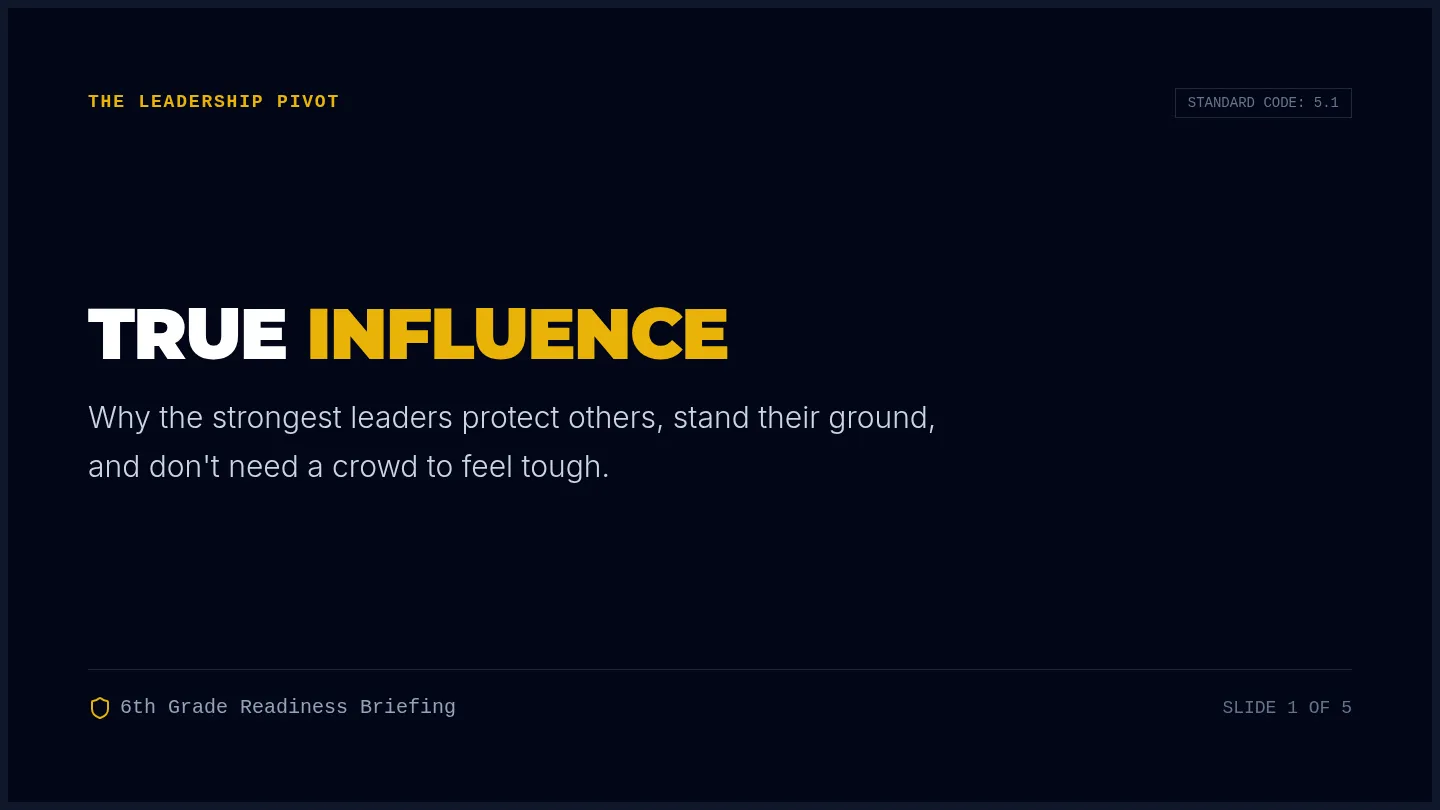
A comprehensive restorative leadership and peer advocacy sequence designed for students transitioning to middle school. It guides students from understanding their social influence to actively protecting peers and spreading positive school culture.
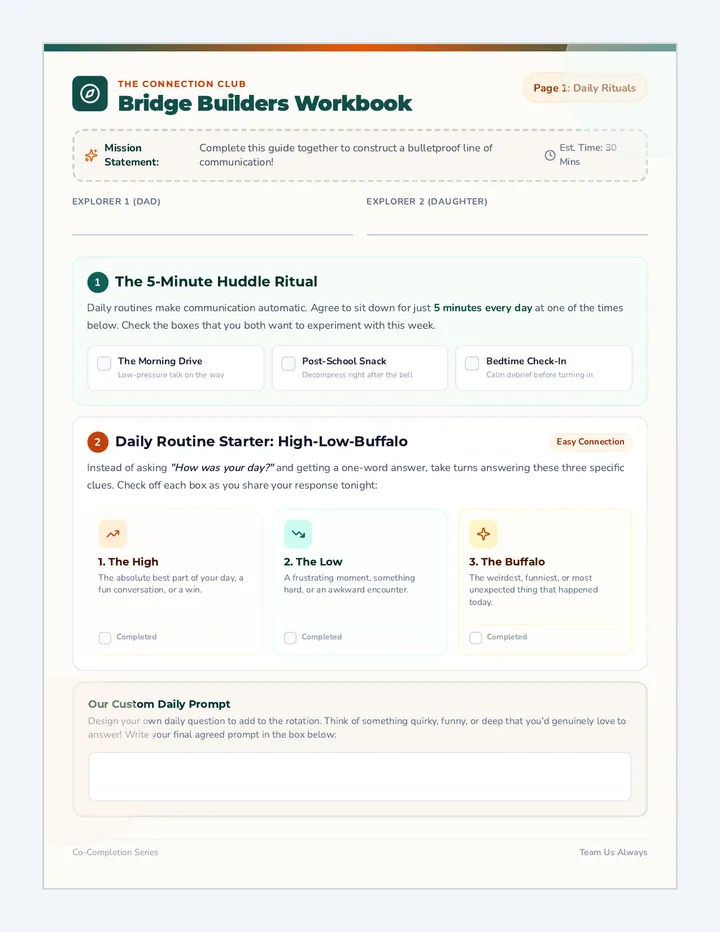
A high-quality co-completion toolkit for parents and 11-year-old pre-teens. Focuses on active listening, emotional attunement, conflict de-escalation, and establishing daily connection rituals.
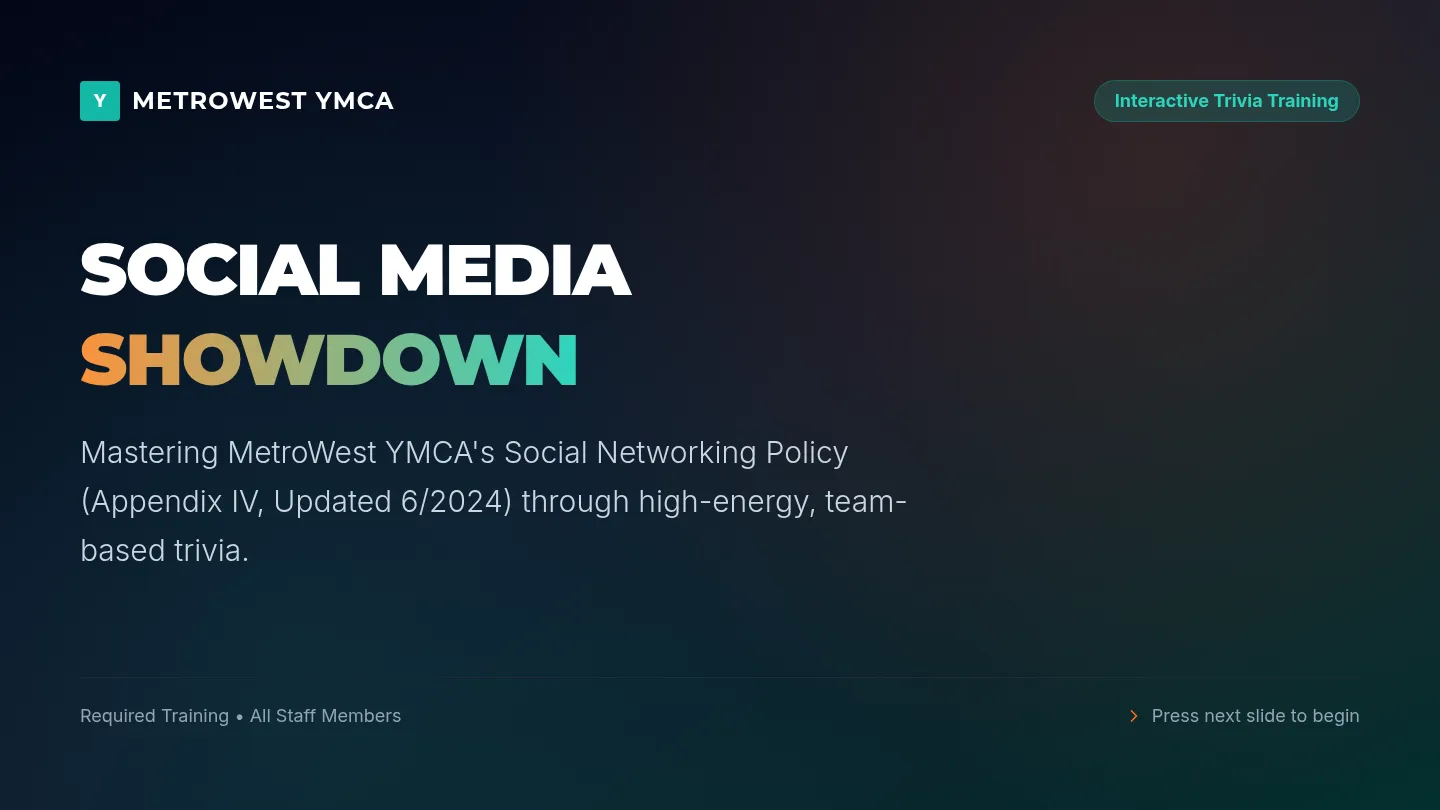
An engaging, high-contrast 14-slide presentation used to project the interactive trivia game during the training. It details real-world scenarios, game rules, and reveals answer explanations citing official rules from the MetroWest YMCA Social Networking Policy.
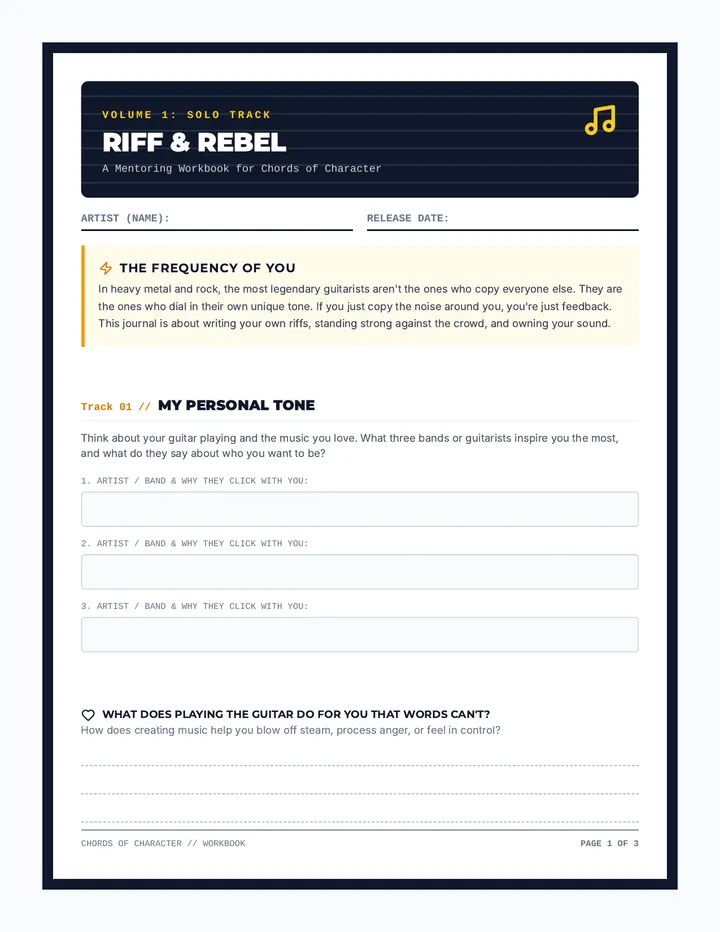
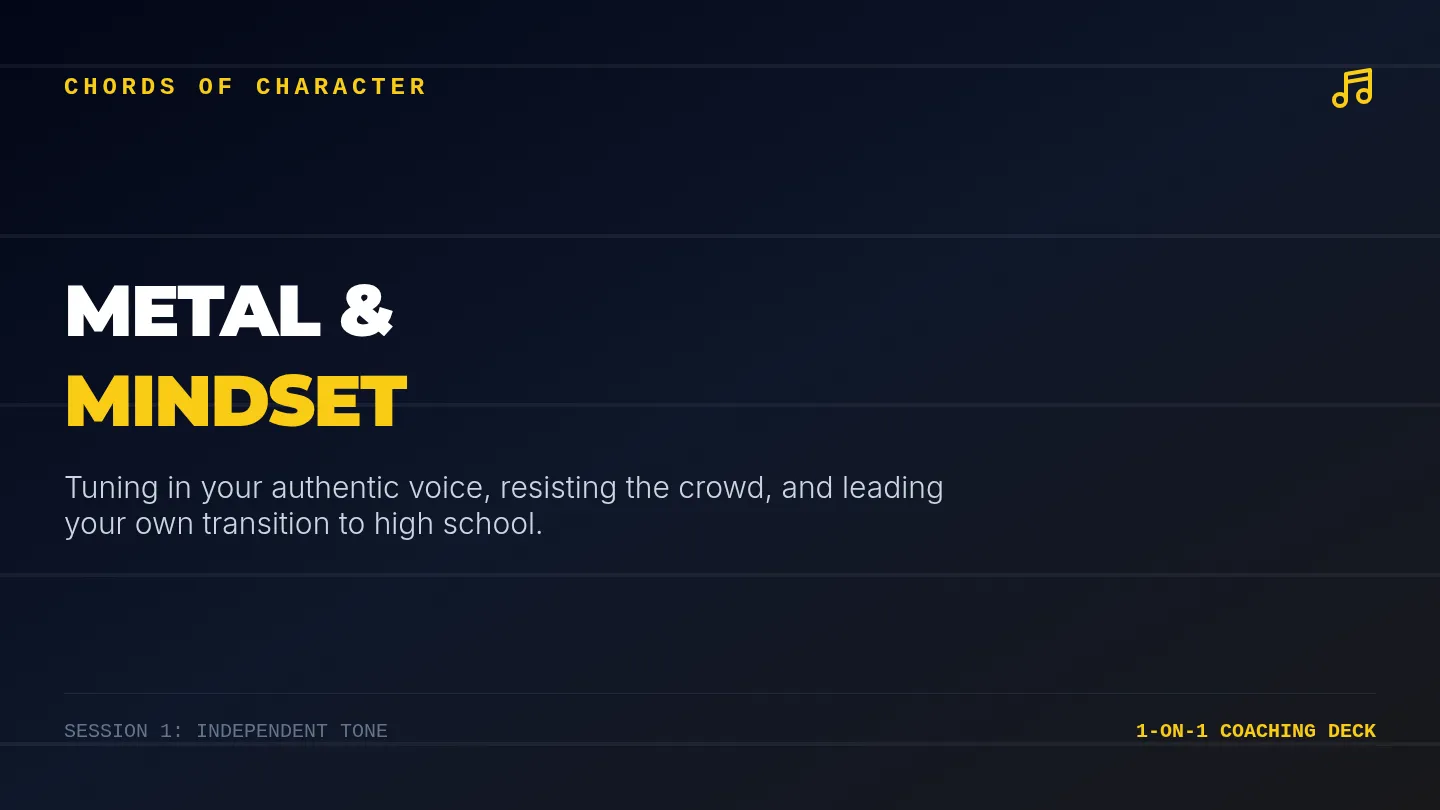
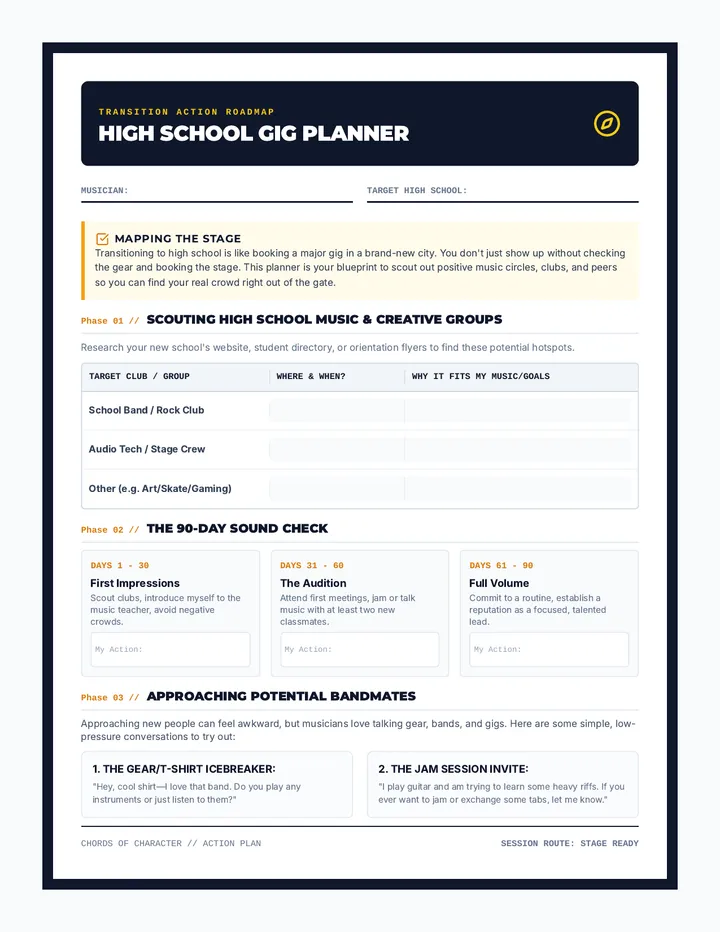
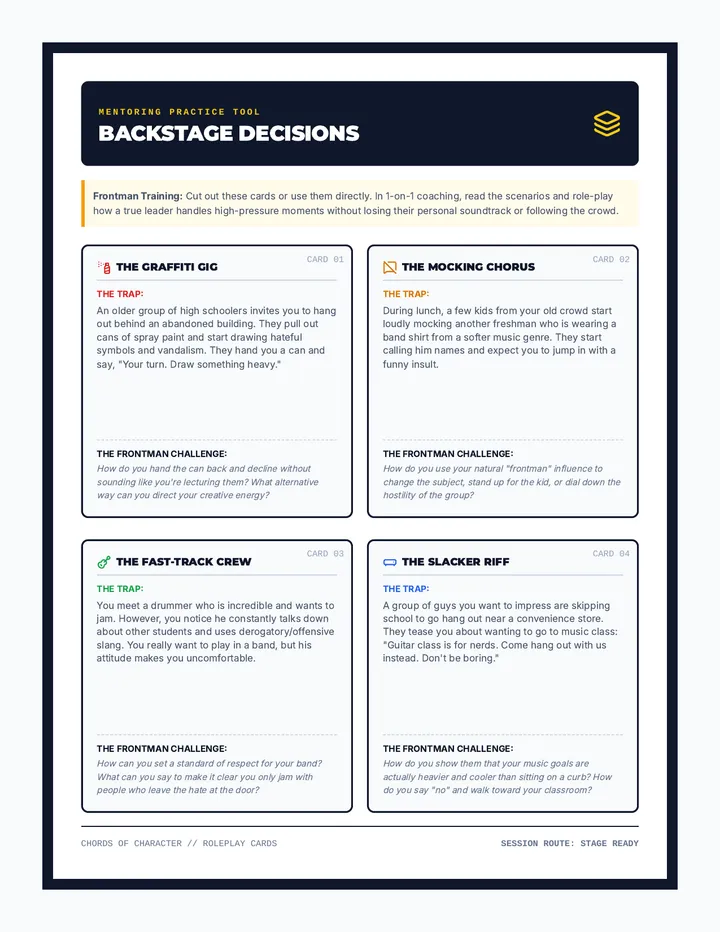
A transition curriculum linking heavy metal passion with character, true rebellion, and leadership. Features an in-school coaching workshop and a parallel at-home action journal for tonight.
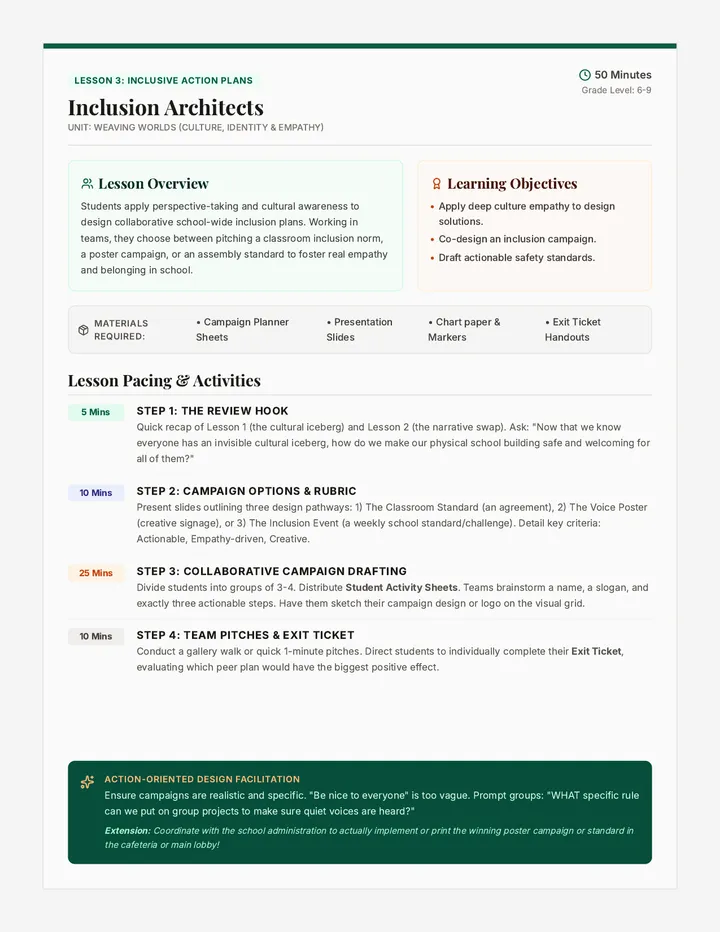
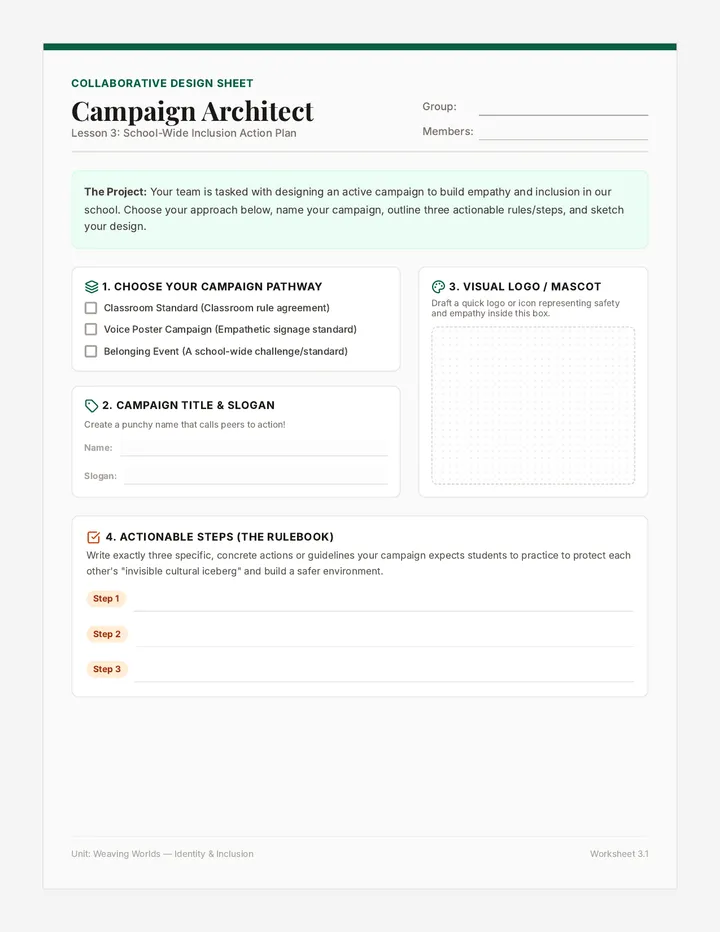
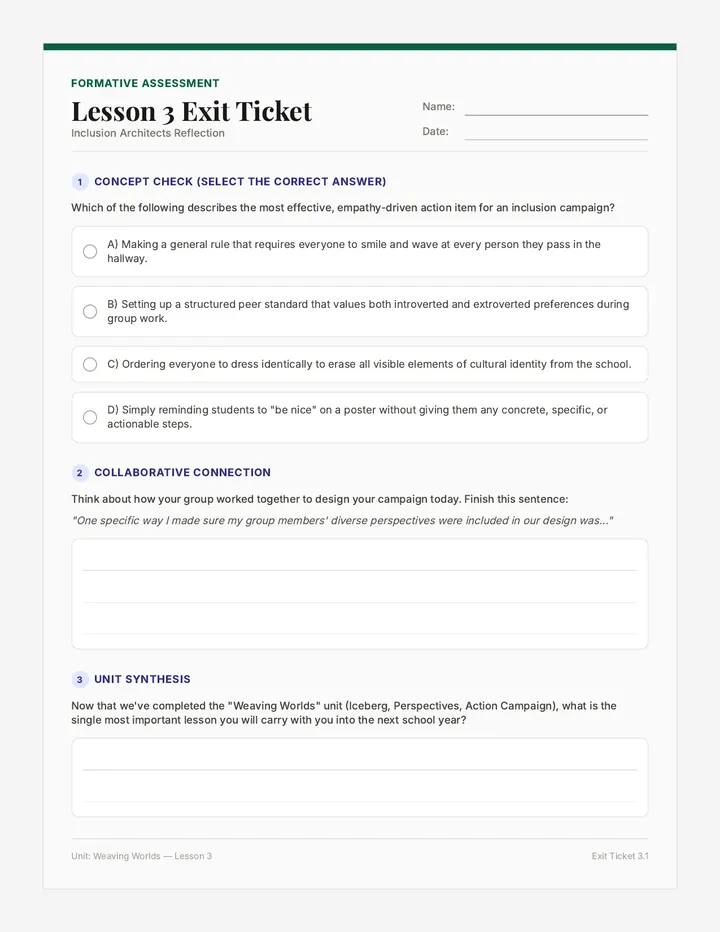
Students apply their deep listening and empathy skills to design a school-wide inclusion campaign or classroom standard, designing collaborative action items.
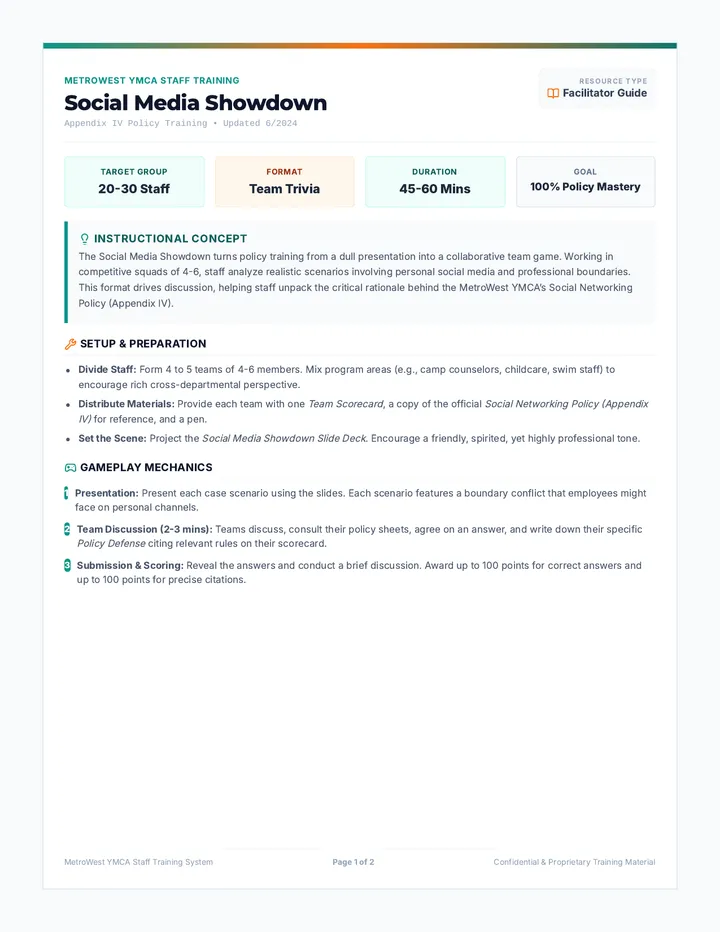
A comprehensive, two-page print-ready facilitator guide for leading the Social Media Showdown staff training. It contains game instructions, pacing guides, team division tips, and detailed policy explanations for each round based on the MetroWest YMCA Social Networking Policy (Appendix IV, Updated 6/2024).
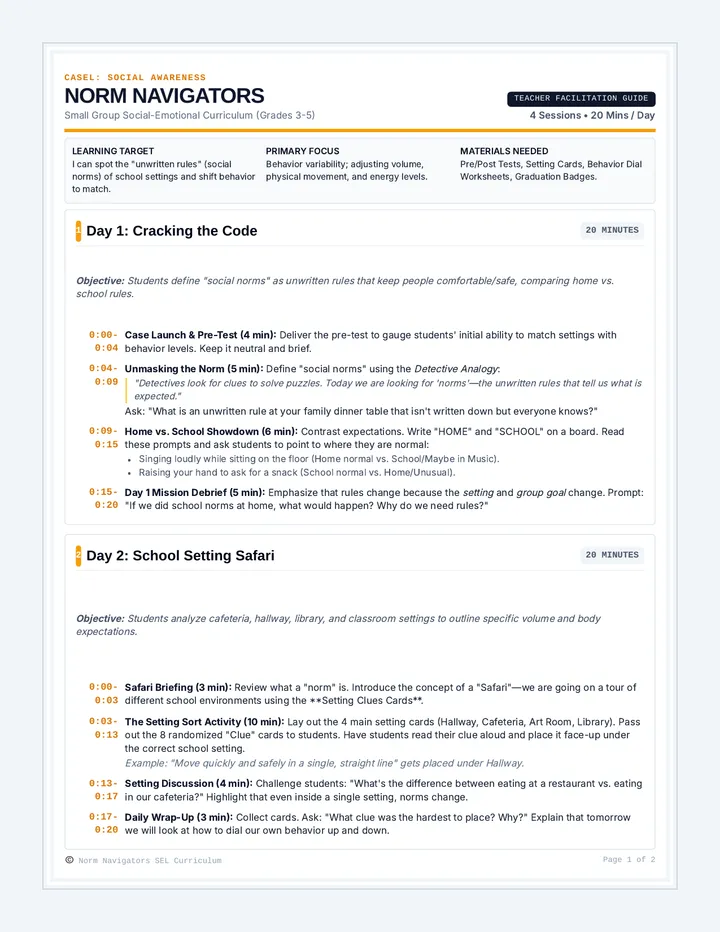
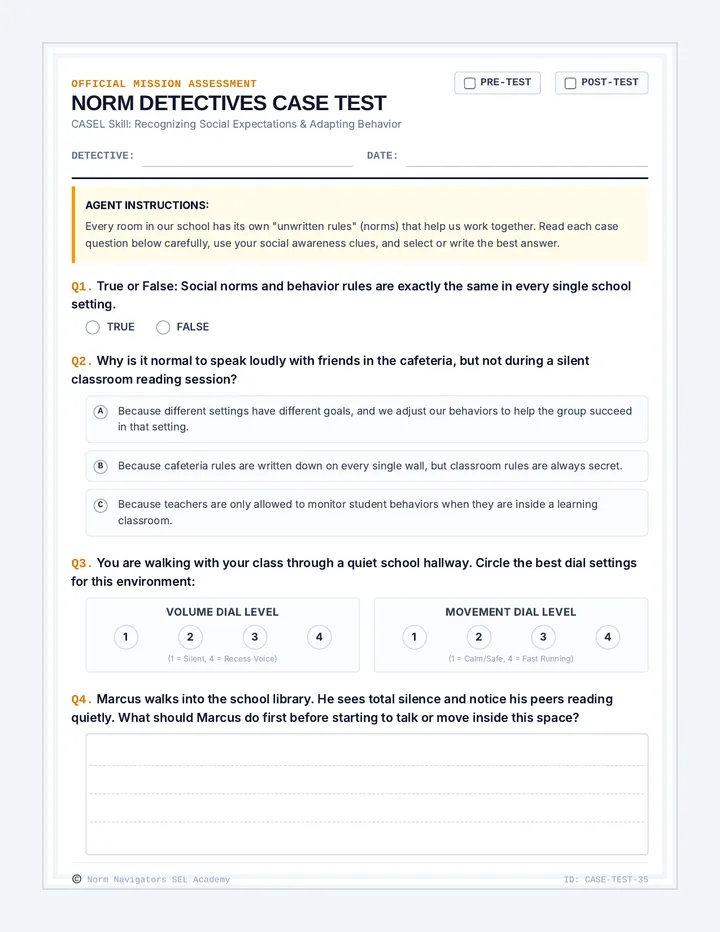
A comprehensive 4-day small-group social-emotional learning sequence for grades 3-5. Aligned with the CASEL Social Awareness framework, this unit teaches students to identify how expectations and social norms change across different school environments and how to adapt their behaviors successfully.
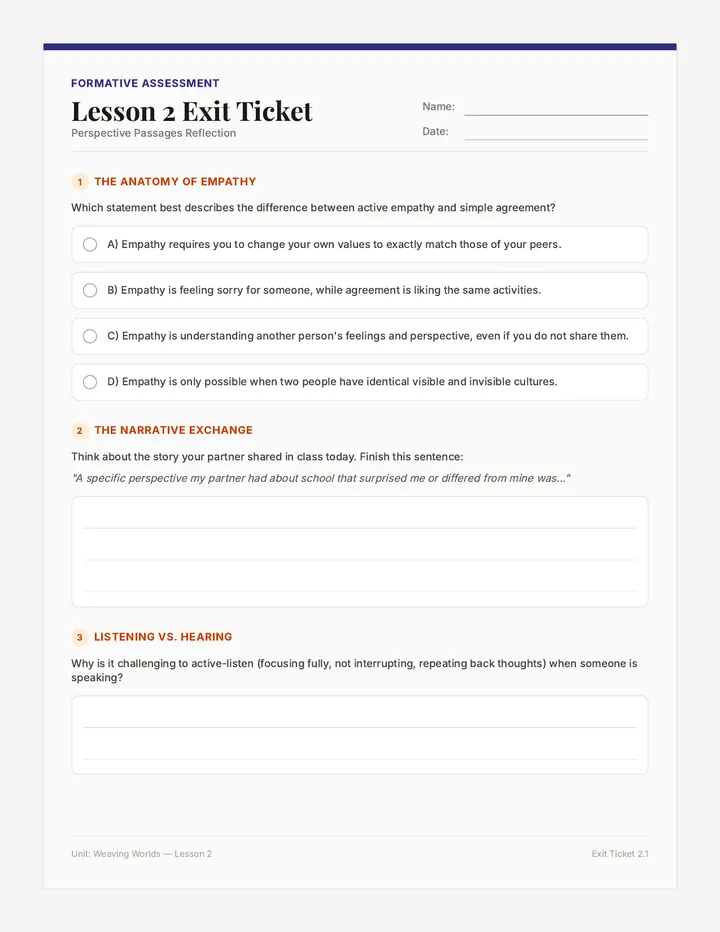
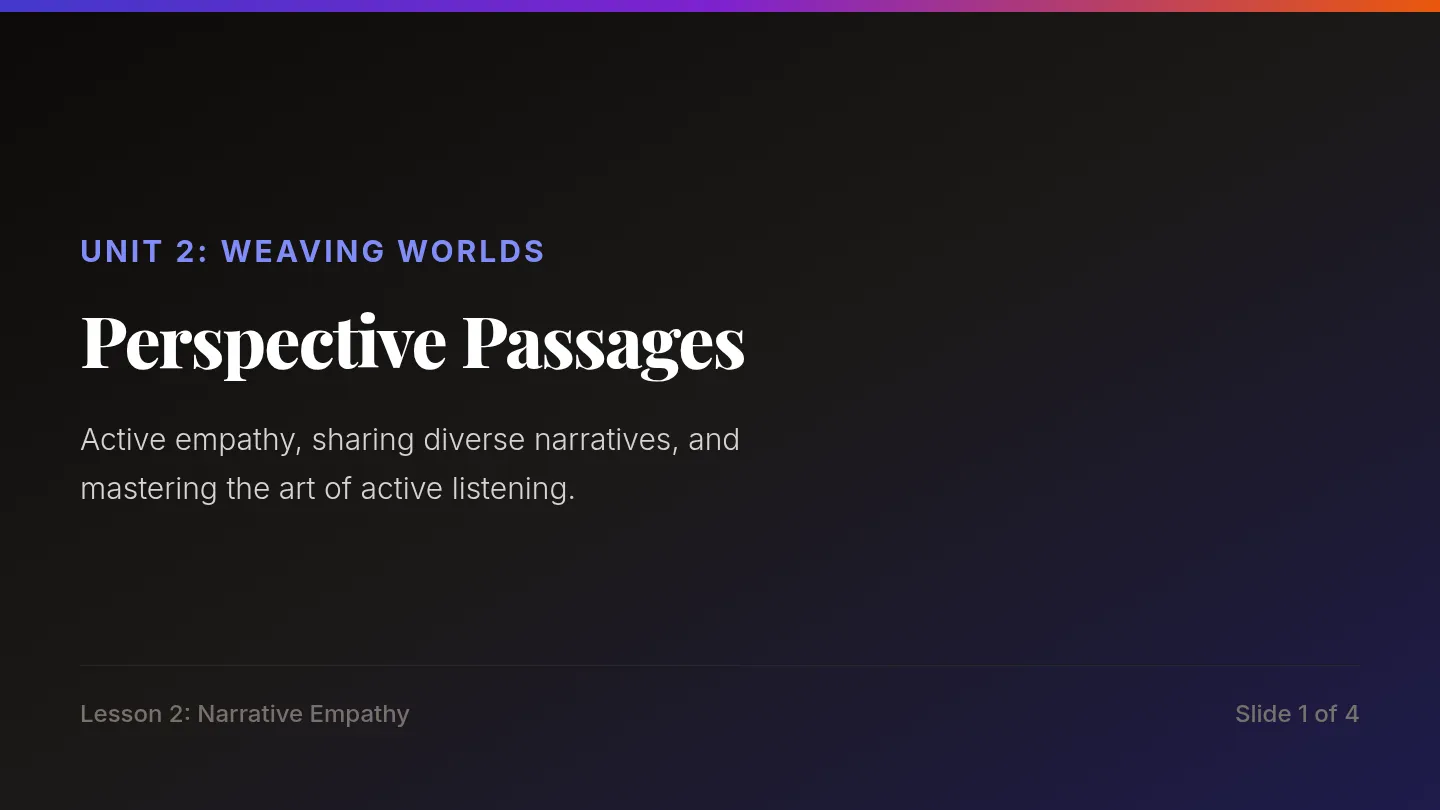
Students engage in active empathy and narrative exchange, analyzing how personal experiences and cultural backgrounds shape our perspectives of shared environments.
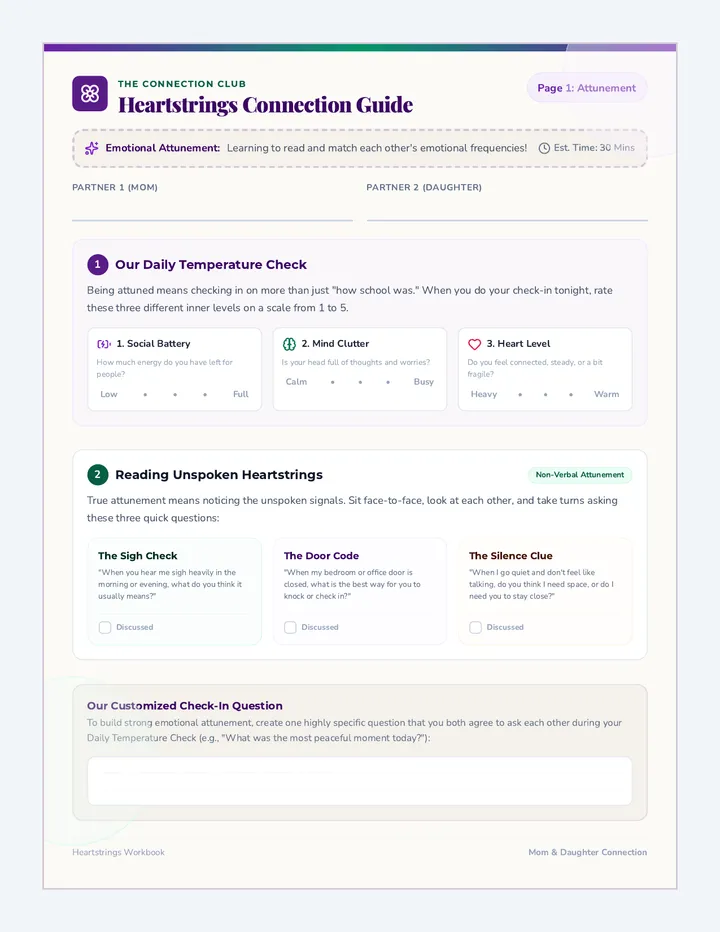
A beautifully crafted 3-page companion workbook for moms and their 11-year-old daughters titled 'Heartstrings Connection Guide'. This material focuses on emotional attunement, interpreting unspoken body signals, deep emotional validation, and collaborative conflict repair tools. It features blank writing areas and elegant styling.