A 30-minute lesson for 5th-grade students to explore the concept of kindness, its impact on others, and how small deeds can create a positive ripple effect. includes a video, guided discussion, and a creative activity.
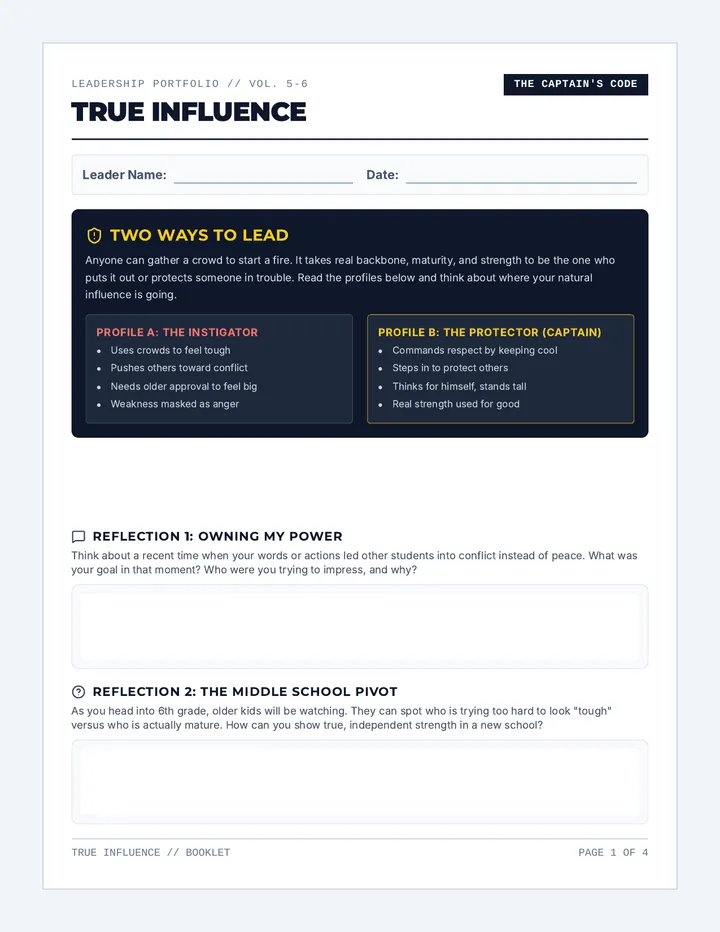
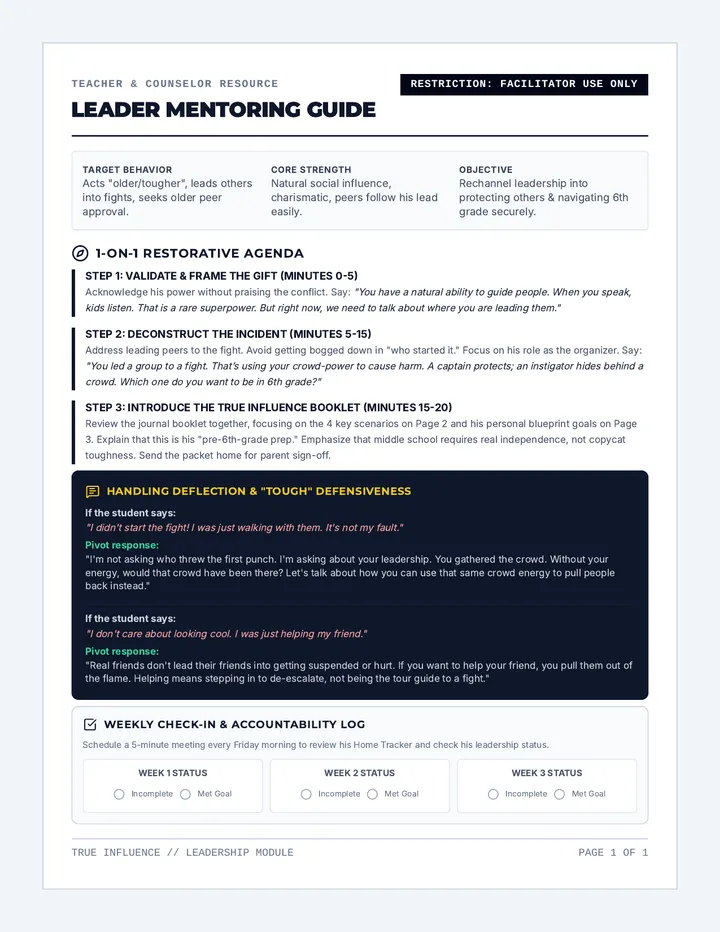
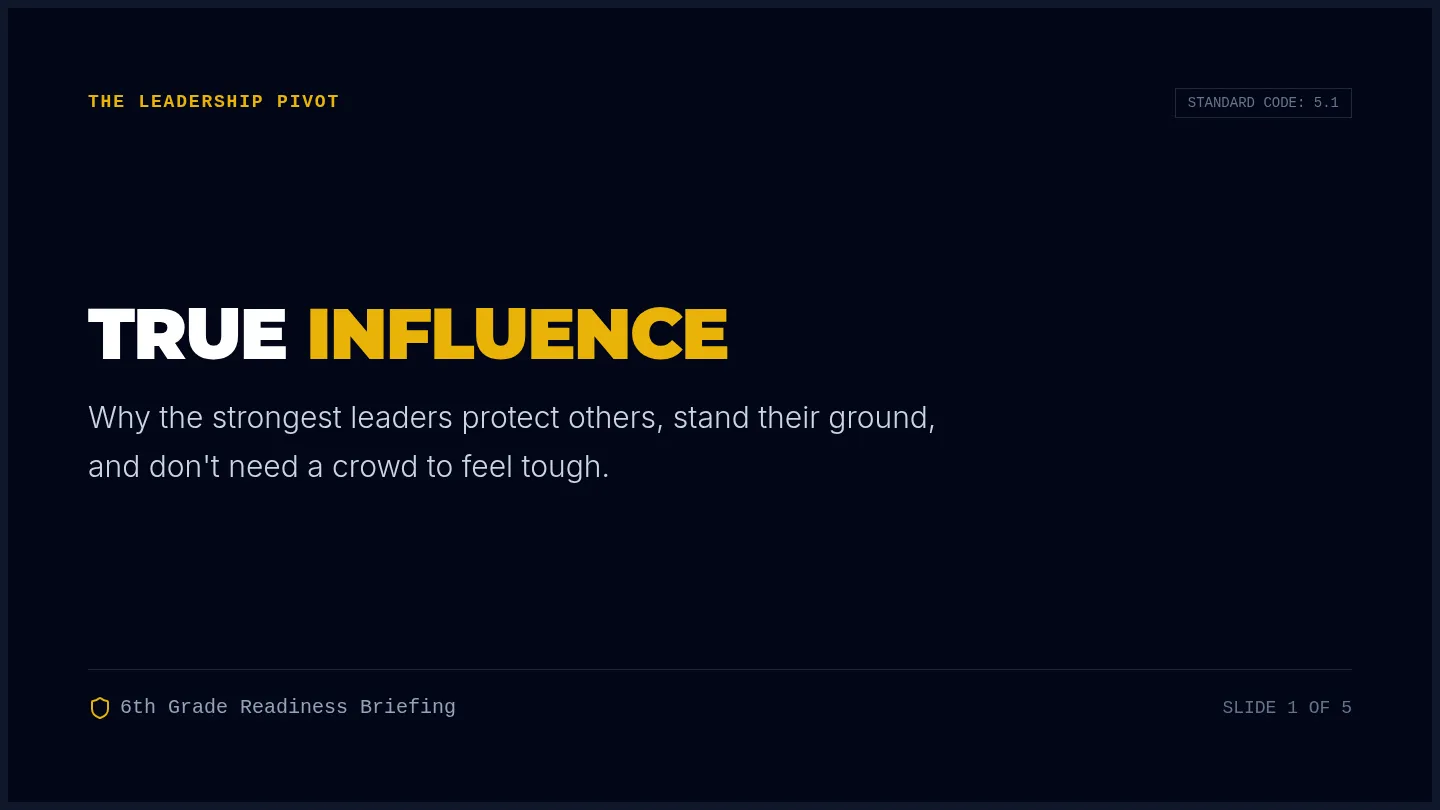
A comprehensive restorative leadership and peer advocacy sequence designed for students transitioning to middle school. It guides students from understanding their social influence to actively protecting peers and spreading positive school culture.
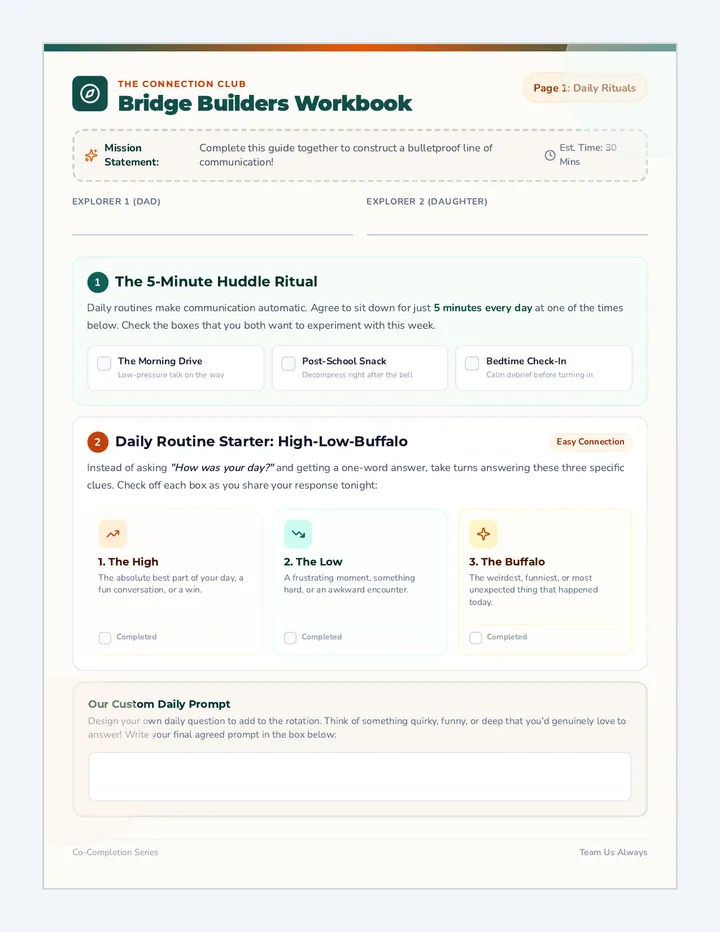
A high-quality co-completion toolkit for parents and 11-year-old pre-teens. Focuses on active listening, emotional attunement, conflict de-escalation, and establishing daily connection rituals.
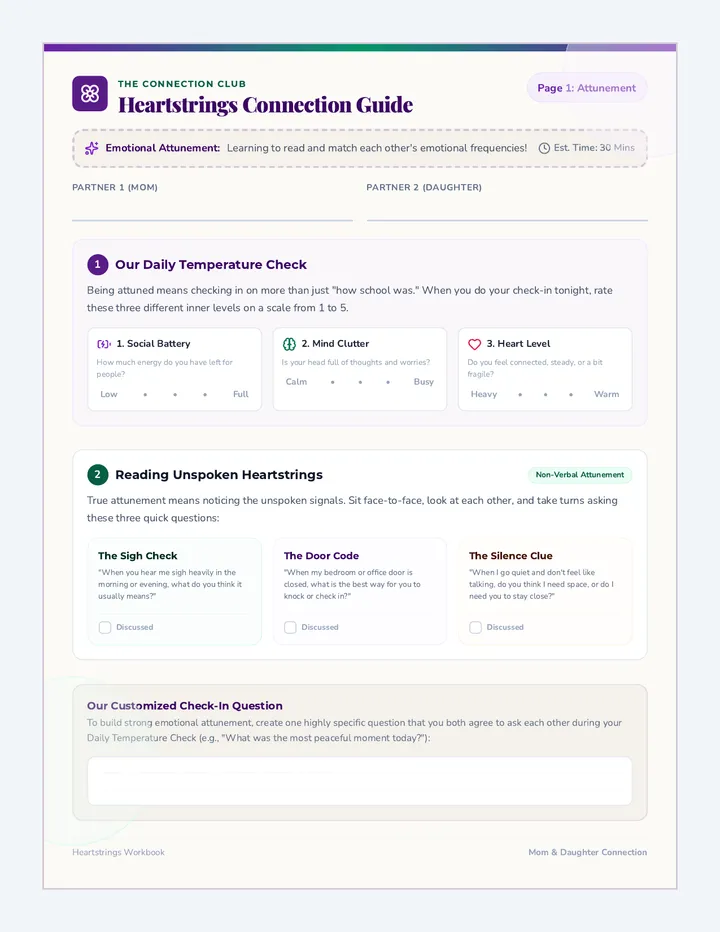
A beautifully crafted 3-page companion workbook for moms and their 11-year-old daughters titled 'Heartstrings Connection Guide'. This material focuses on emotional attunement, interpreting unspoken body signals, deep emotional validation, and collaborative conflict repair tools. It features blank writing areas and elegant styling.
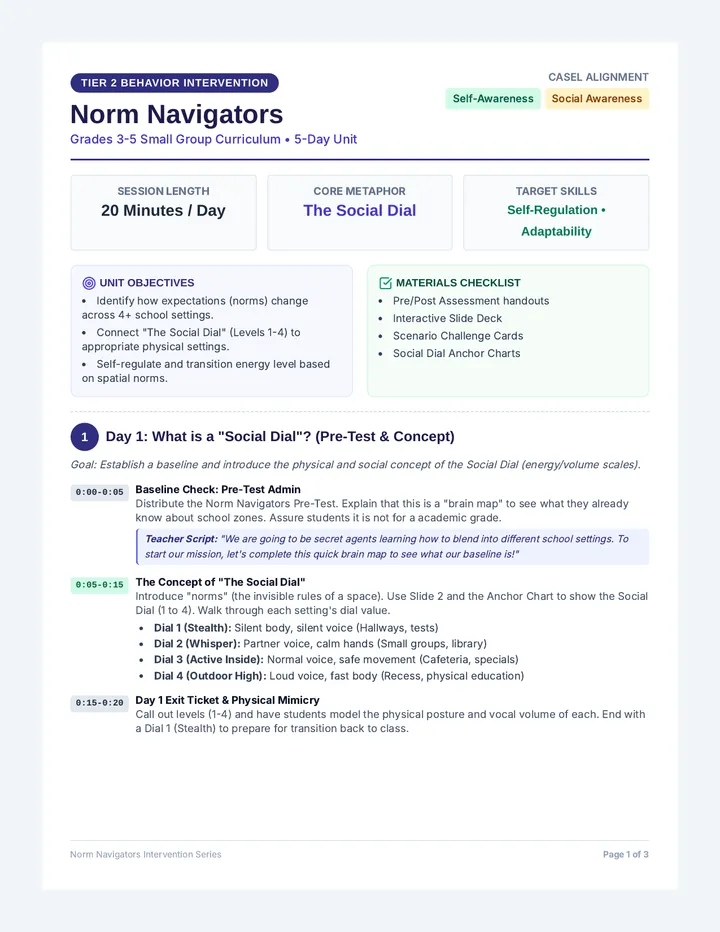
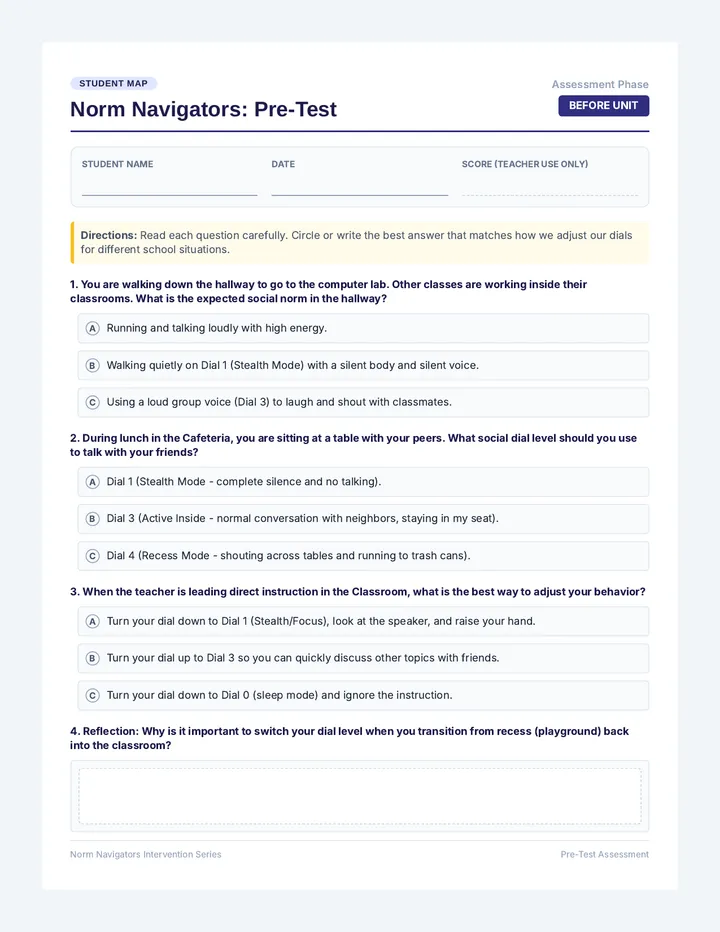
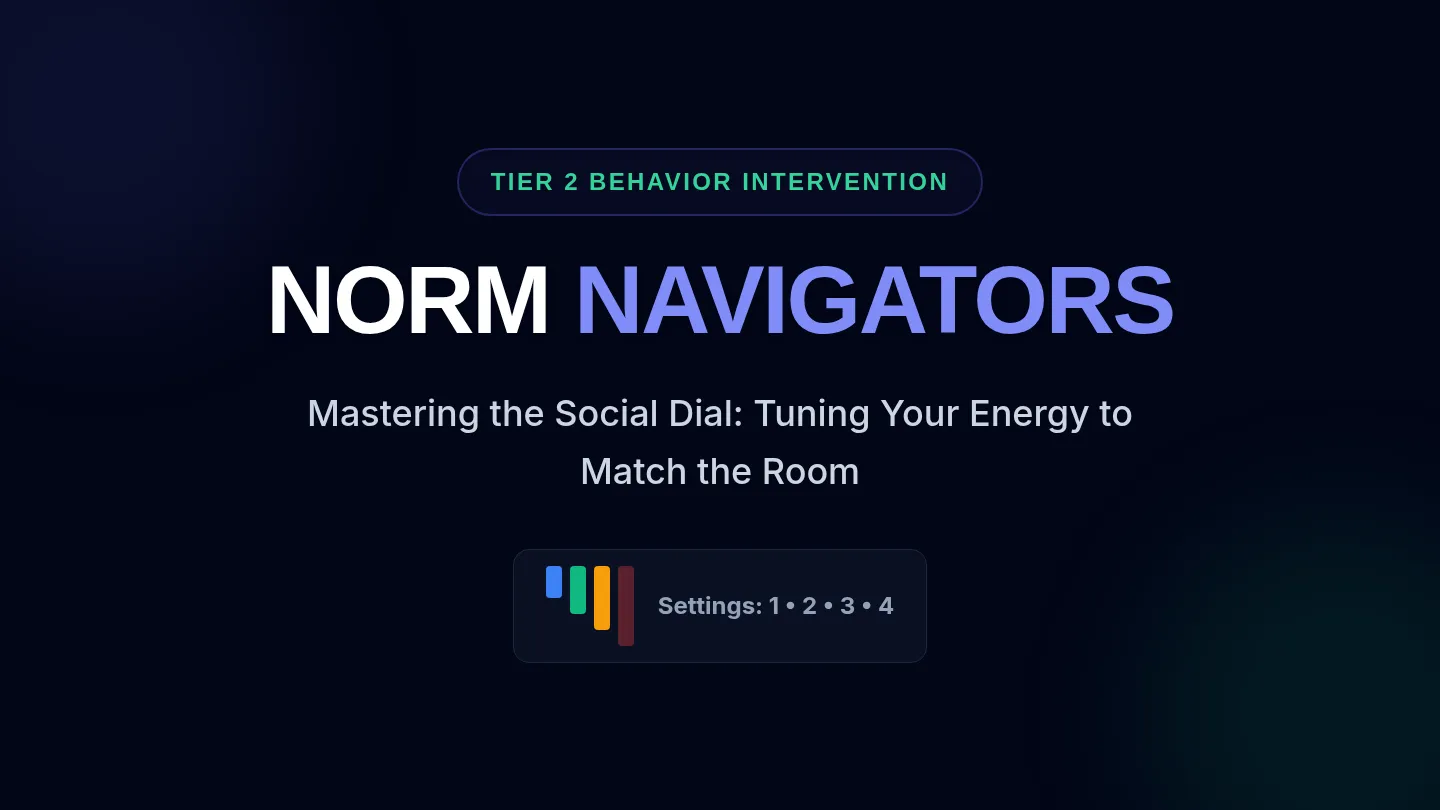
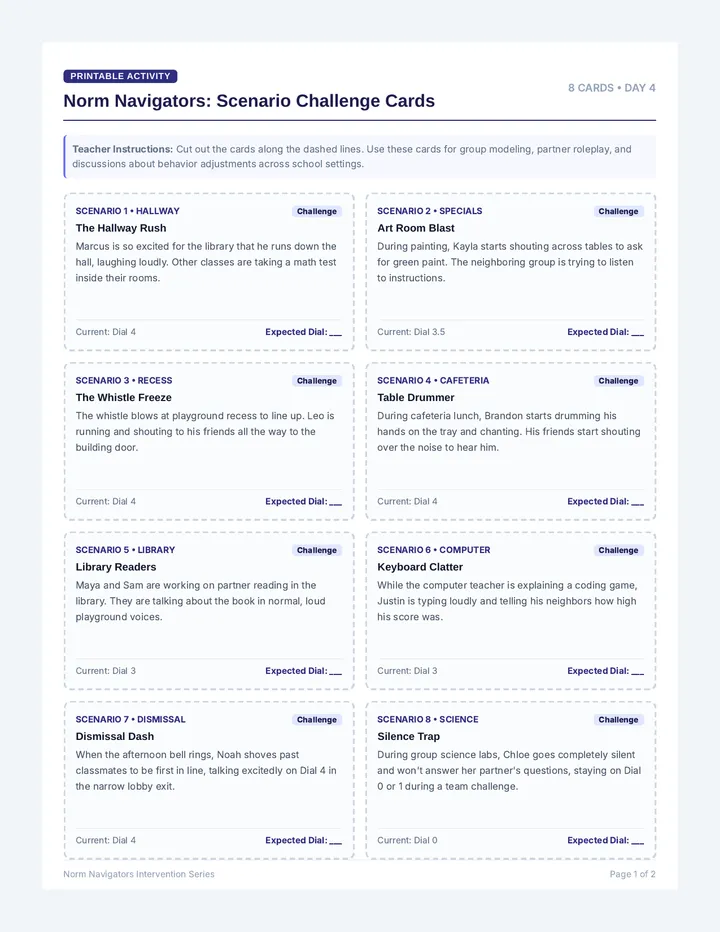
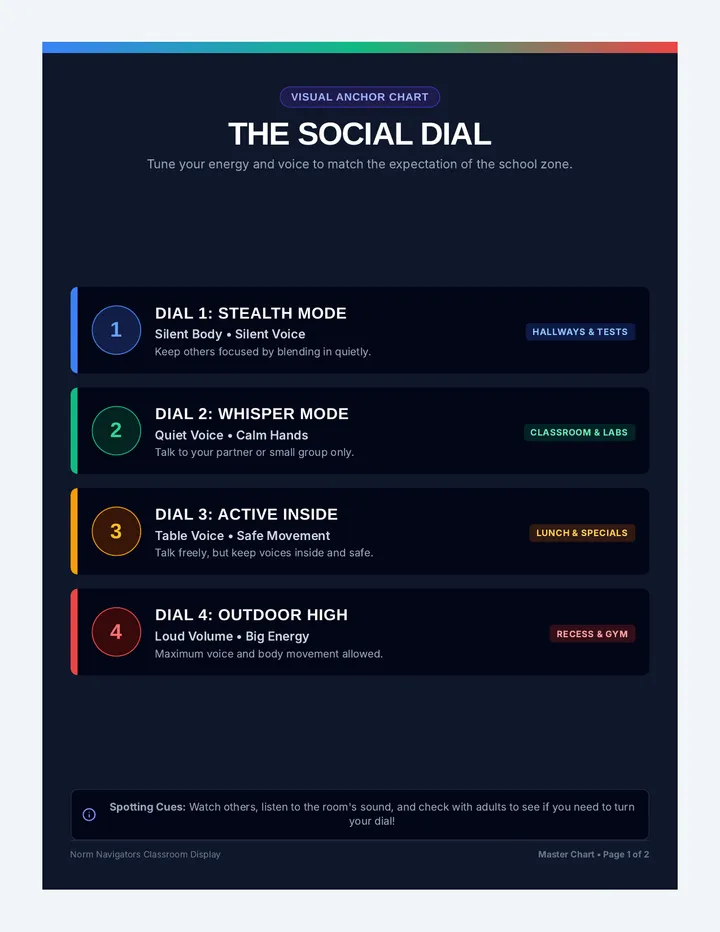
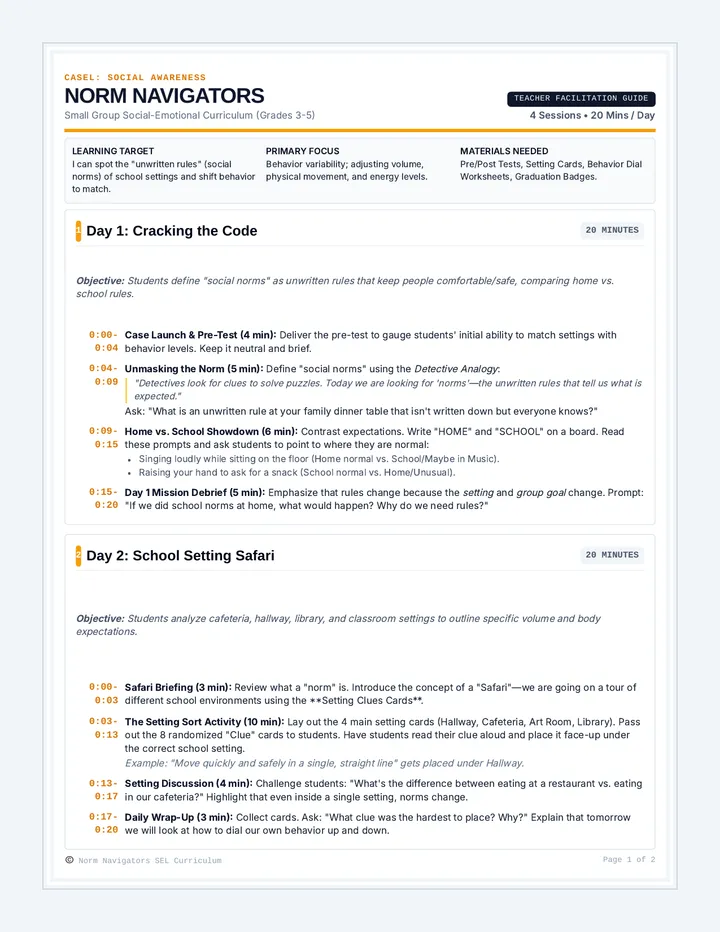
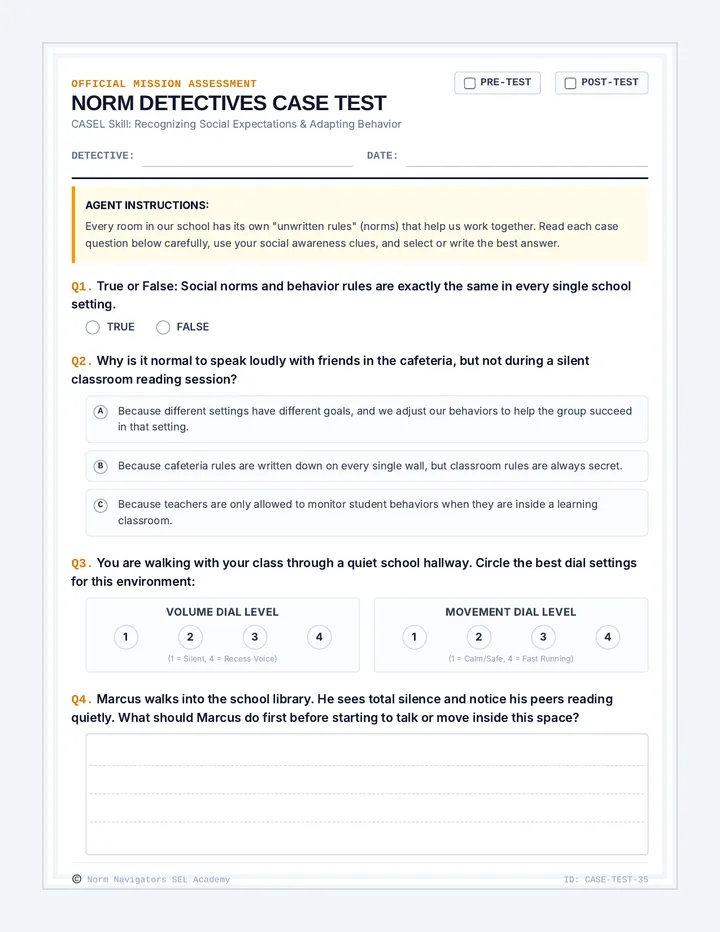
A 5-day Tier 2 behavior intervention sequence for grades 3-5 focused on recognizing and adapting to social norms across different school settings. Aligned with CASEL Self-Awareness and Social Awareness competencies, the sequence uses the concept of the 'Social Dial' to help students regulate their energy and volume.
Focuses on creating a sustainable positive culture through daily small actions, prompting students to track their leadership and reflect on how positive behavior spreads. Features read-and-respond profiles of real student leaders.
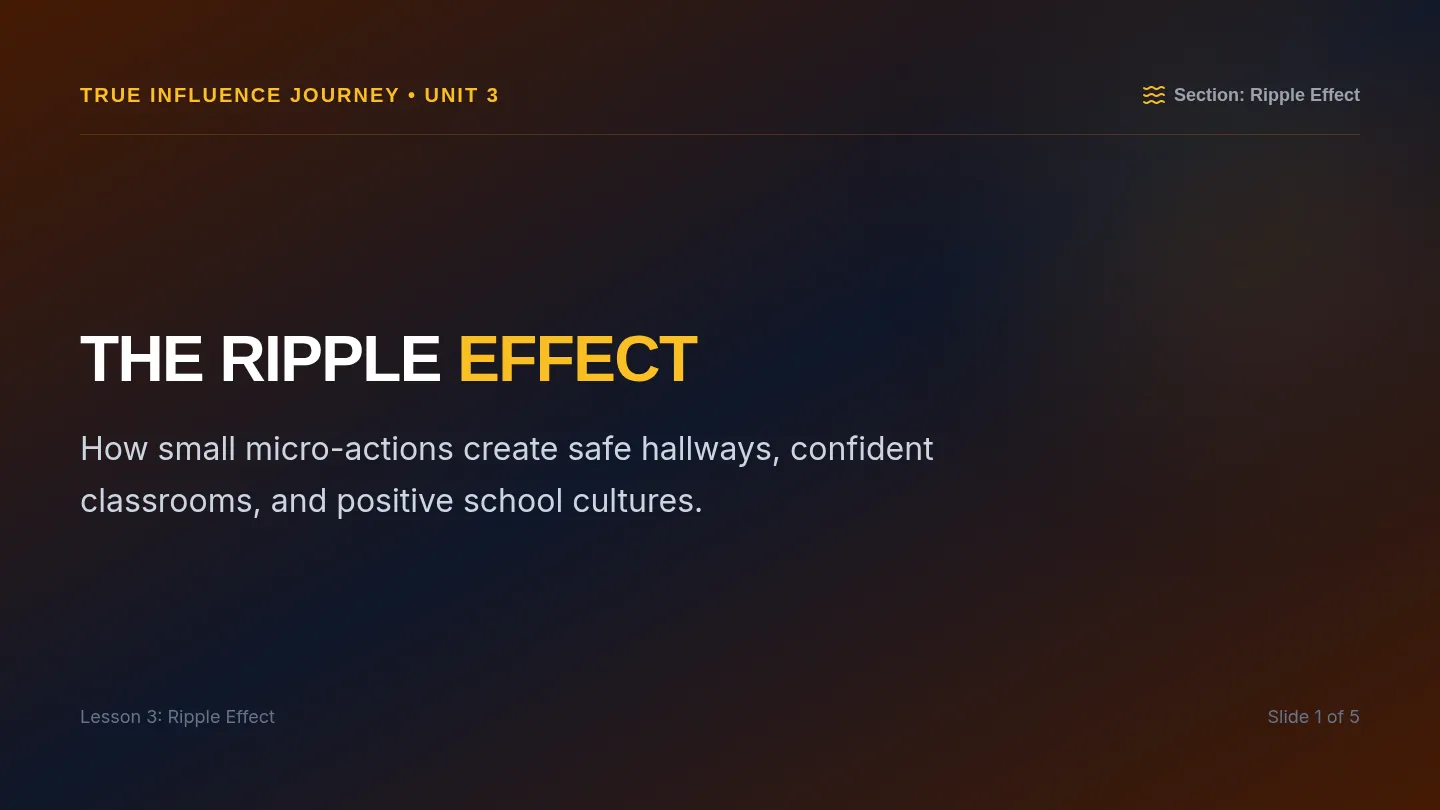
A 5-slide presentation matching the Ripple Effect lesson. It introduces students to the physics of school culture, walks through Maya's hallway story, and details the 5 leadership tracker actions.
A comprehensive 4-day small-group social-emotional learning sequence for grades 3-5. Aligned with the CASEL Social Awareness framework, this unit teaches students to identify how expectations and social norms change across different school environments and how to adapt their behaviors successfully.
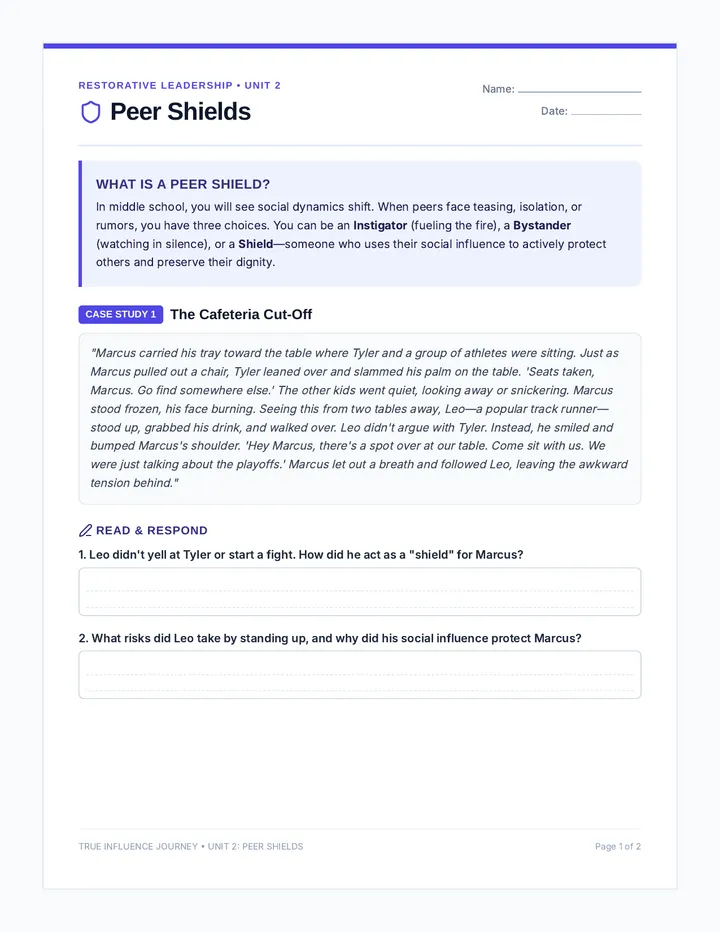
Students explore what it means to be a 'shield' for peers in middle school rather than a passive bystander or an instigator. Features narrative read-and-respond case studies on standing up to social exclusion and rumors.
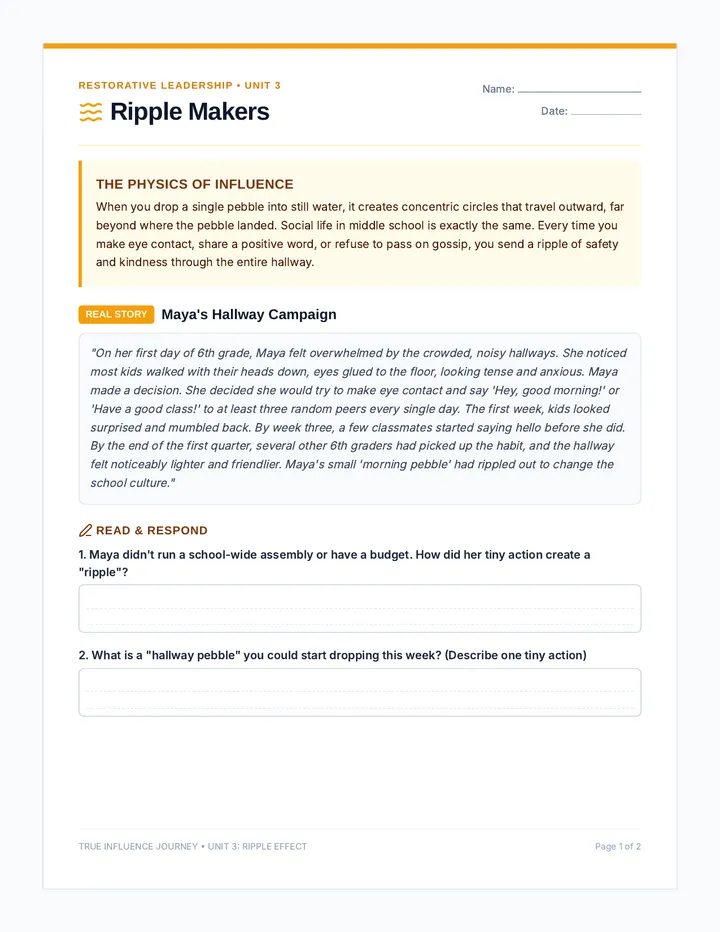
A 2-page print-ready student-centered Read & Respond workbook detailing the physics of the ripple effect in school culture, featuring biographical vignettes of youth advocates and daily leadership tracking sheets.
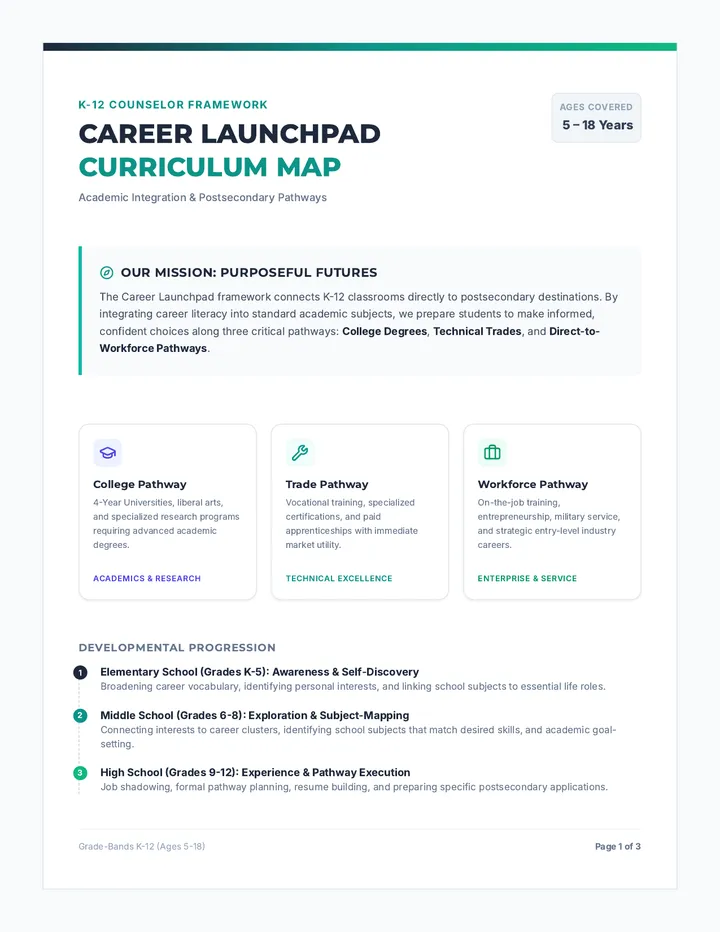
A comprehensive career exploration framework and counselor planning toolkit for grades K-12. This curriculum maps academic subjects to real-world career paths (college, trade school, and workforce) and provides counselors with implementation templates, annual pacing calendars, and a school-wide Career Day blueprint.
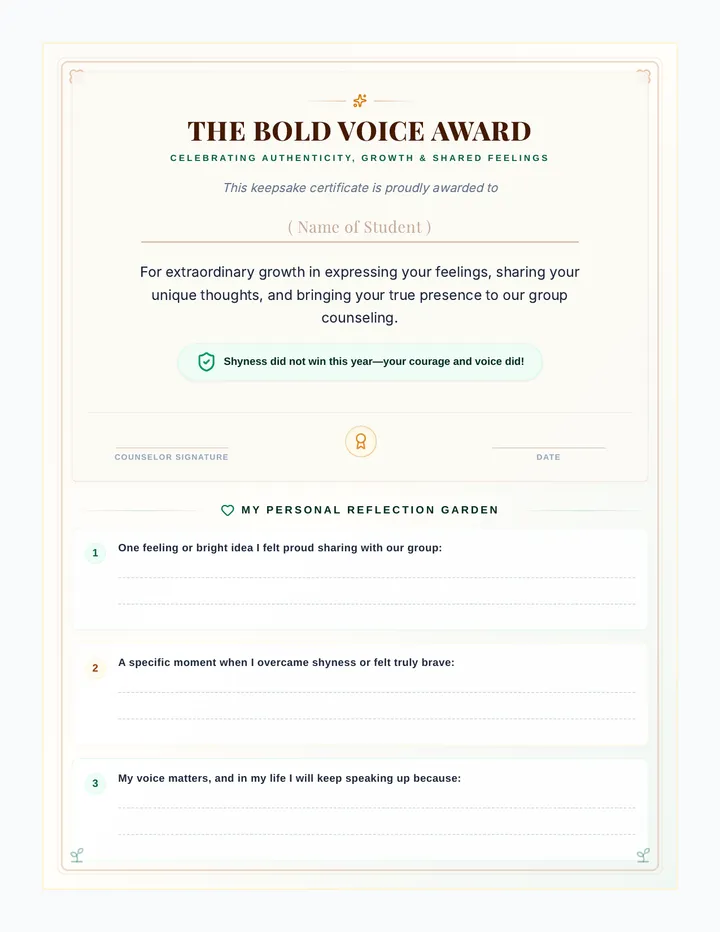
A reflective counseling lesson celebrating emotional expression, triumph over shyness, and setting intentions for speaking up with confidence in group settings.
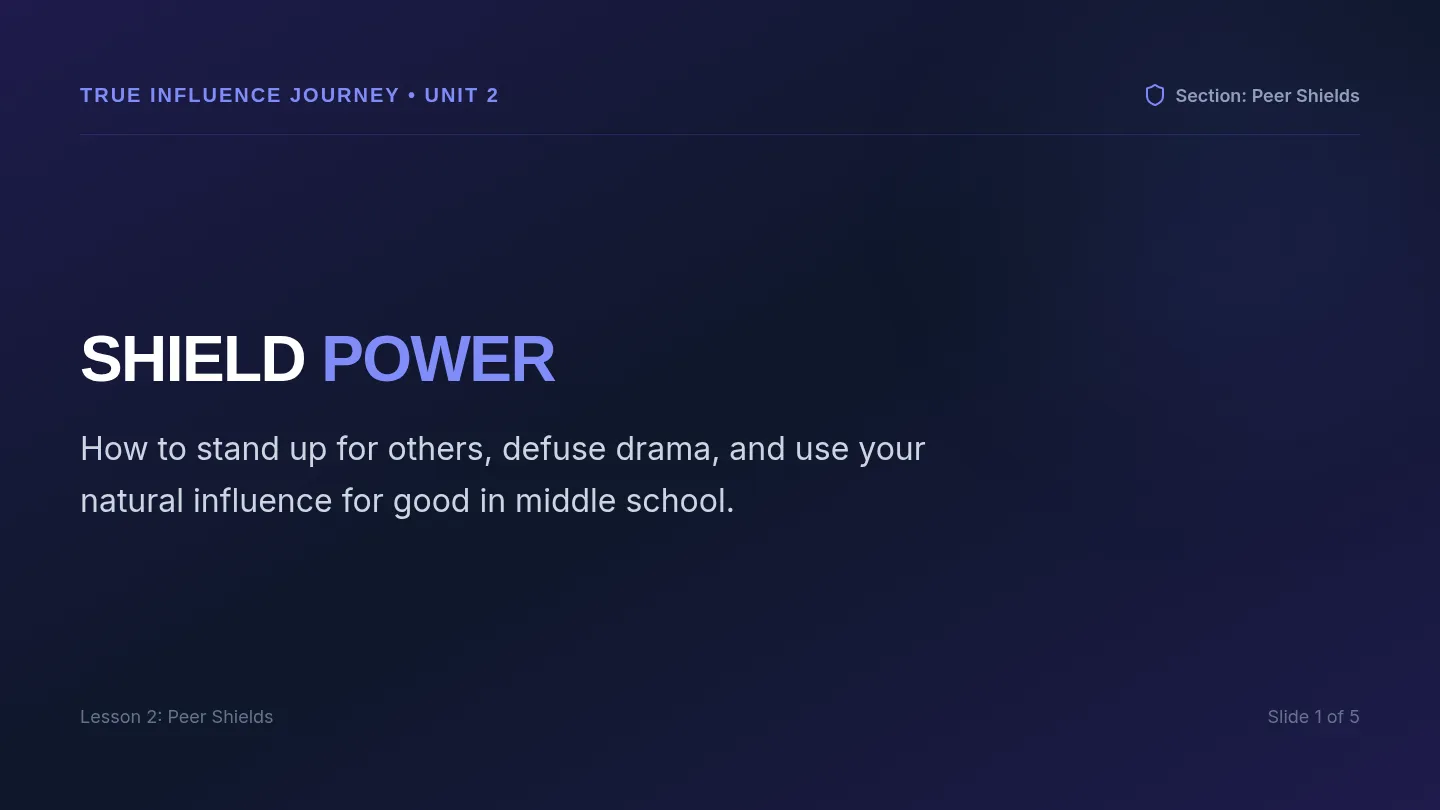
A 5-slide presentation matching the Peer Shields lesson. It helps teachers guide a classroom debate on instigators vs. bystanders vs. shields, analyzing real-life lunchroom and digital chat situations.