A 20-minute lesson introducing 5th and 6th-grade students to influential female role models. Through guided discussion and a collaborative profile activity, students explore the traits of courage, innovation, and resilience.
A reflective end-of-year lesson for grades 3-5 that frames the school year as a mountain expedition. Students map out their achievements ('peaks') and identify the strategies and support ('tools') they used to overcome obstacles, building self-efficacy for the next grade level.
A comprehensive preparation toolkit for Career Day, equipping both guest speakers and student interviewers with structured guides, question banks, and evaluation rubrics to ensure engaging and meaningful professional dialogues.
A high-energy, collaborative building challenge where student teams design and construct towers under shifting constraints. This lesson is specifically engineered to target active communication, resilience when faced with unexpected roadblocks, and group decision-making.
A high-impact digital citizenship project lesson where students become 'Web Guardians' to design PSAs addressing digital footprints, screen time self-regulation, and online empathy. Includes interactive presentation slides, detailed teacher guides, a project menu choice board, visual tip-sheets, and scaffolded planning templates for posters and videos.
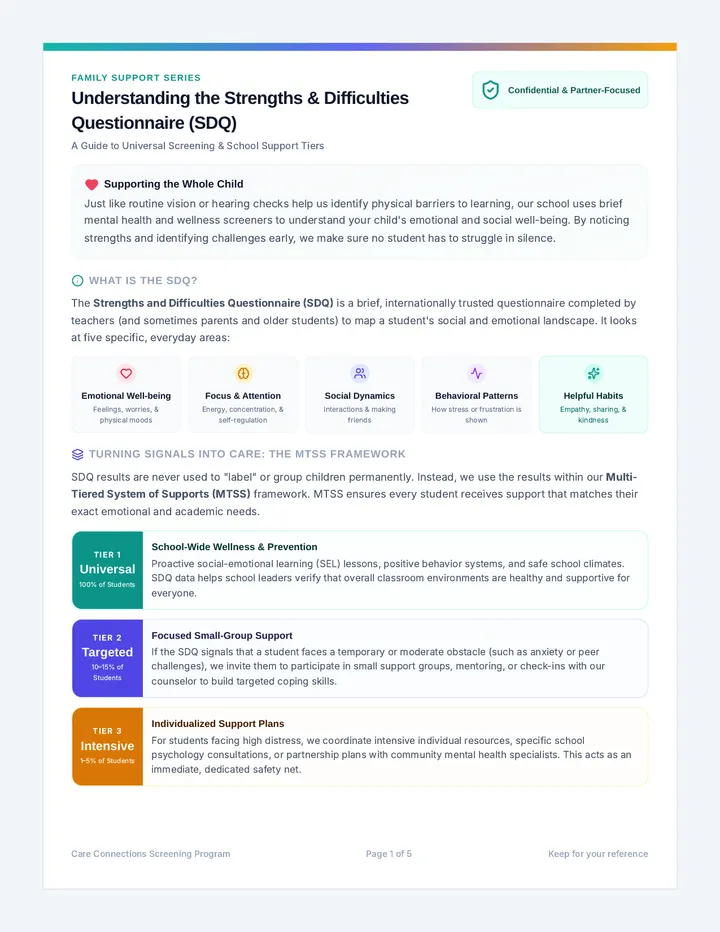
This 25-minute psychoeducational session introduces 6th-grade students to the topic of anxiety in a supportive small group setting. The primary goal is to foster comfort, normalize anxiety, and encourage initial connections.
A transition-focused counseling lesson for 5th-grade students preparing for the major shift to middle school, centering on identifying core supportive networks, framing complex feelings about change, and building a self-care anchor.
A developmental counseling lesson for 3rd-grade students focused on identifying personal strengths, tracking school year progress, and building a customizable summer coping suitcase to manage big feelings.
A supportive counseling session tailored for 1st-grade students to celebrate their visible emotional and social growth this year, introduce interactive 'Ocean Breathing' coping techniques, and capture their accomplishments in a highly visual, low-color printable keepsake.
A social-emotional strength inventory lesson designed specifically for middle school gifted students. Using a cartography and exploration theme, students identify, analyze, and map their unique cognitive, creative, and emotional strengths while addressing gifted-specific traits like asynchronous development and overexcitabilities.
A high-energy, 20-minute Lunch Bunch session designed for 6th graders to identify their inner dialogue and practice transforming negative self-talk into supportive, positive affirmations. Includes a structured discussion guide, interactive slides, conversational scenario cards, and a creative personal shield worksheet.
A comprehensive transition lesson designed to help rising sixth graders navigate the emotional shift to middle school. Students explore mixed emotions, learn practical coping strategies for academic and social pressures, and map out their path to success.
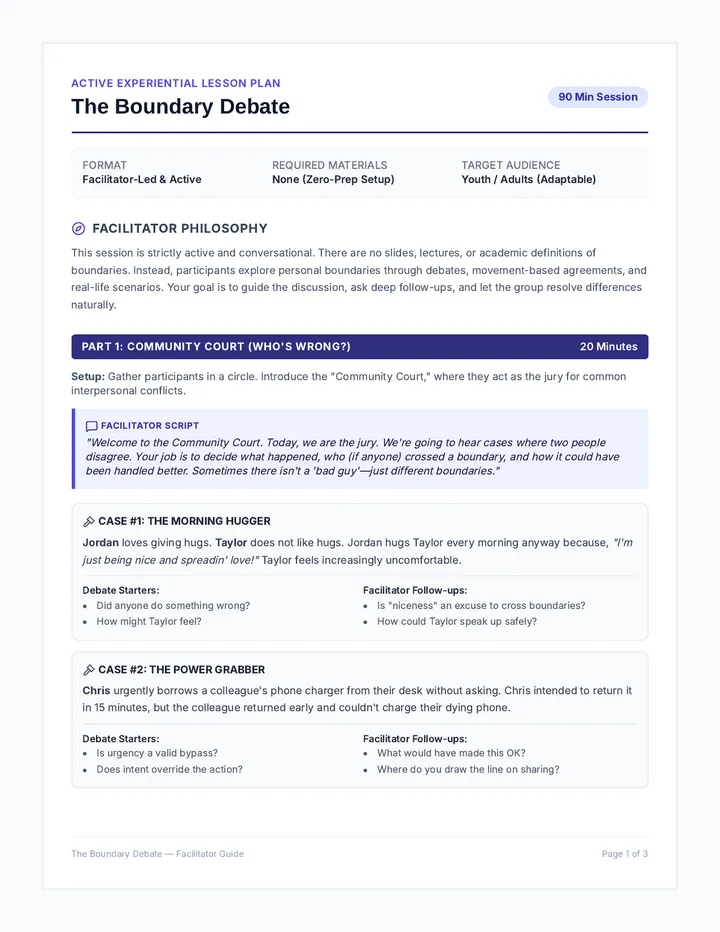
A 30-minute social-emotional learning lesson for 5th-grade girls on filtering honest but hurtful opinions. Students learn to distinguish between 'Think It' (internal thoughts) and 'Say It' (socially filtered words) to navigate friendships and peer conflicts.
A 5th-grade social-emotional learning lesson focusing on cultivating gratitude through a structured list of simple sentence starters. Students reflect on small daily moments, important relationships, and personal strengths to build self-awareness and optimism.
A comprehensive training lesson designed to teach middle/high school students and social work interns how to navigate emotionally charged, difficult conversations using empathetic listening and structured communication frameworks.
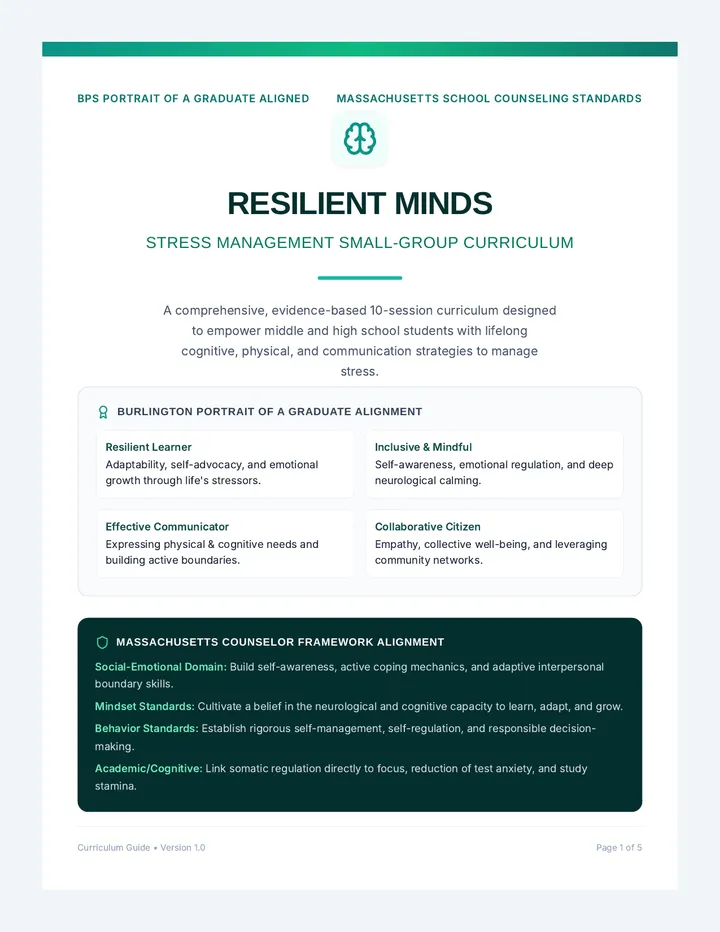
A comprehensive developmental school counseling framework spanning K-12, aligned with ASCA national standards. This blueprint includes a K-12 scope and sequence, grade-band counselor handbooks, a staff reference poster, and professional development slides for counselor-led staff training.
The ultimate multi-layered capstone escape room challenge. Recruits analyze complex social conflict evidence, trace misinformation networks, resolve major ethical dilemmas, and decode the final system override.
A high-stakes digital safety escape room focused on identifying online scams, recognizing manipulative dark patterns, and protecting personal data. Recruits analyze active verb voices, linking verbs, ellipses punctuation, and deceptive tones to decode the final alert.
An advanced media literacy and communication escape room for Ages 13-15. Recruits distinguish facts from opinions, analyze objective realities, sort personal attitudes, and input the override PROOF to secure the school news mainframe.
A collaborative social-emotional escape room focused on identifying relational and social bullying, supporting target peers, and standing up to cyber/verbal exclusion. Recruits analyze verb verbal types, pronoun cases, intransitive verbs, and compound syntax to decode the final override.
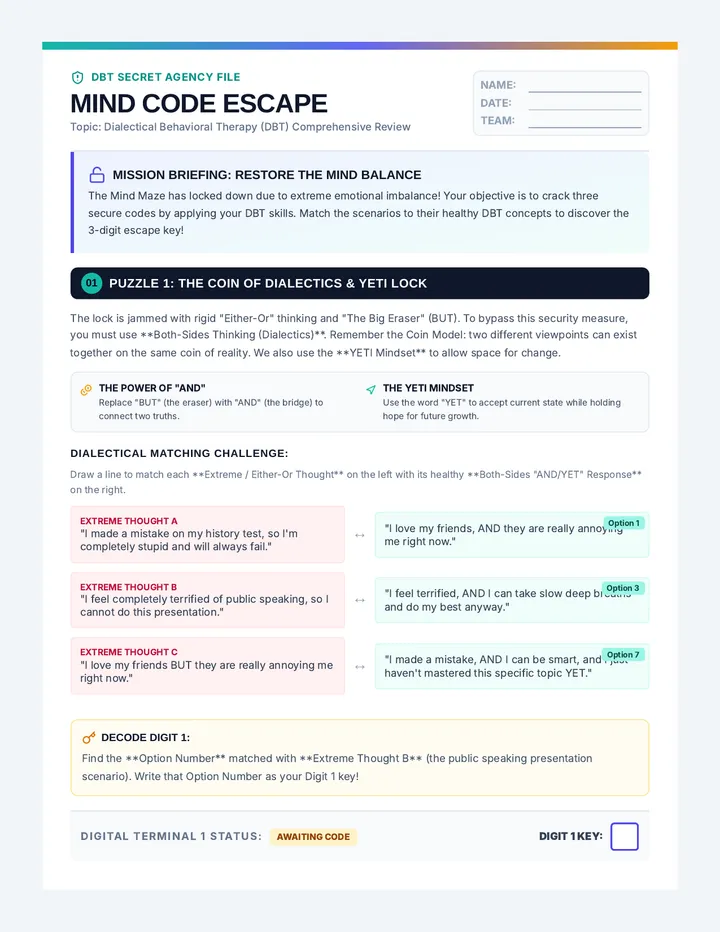
An immersive and strategic escape room focused on managing academic stress, avoiding burnout, and planning study habits. Recruits analyze student logs under performance anxiety, build efficient schedules, and decode the override to restore positive motivation.
A cooperative and empathetic escape room focused on managing family duties and household balance. Recruits analyze parent/child perspective claims, organize daily chores timelines, and decode the final compromise override.
An advanced digital literacy and collaborative cryptography escape room for Ages 14-16. Recruits analyze verb transitivity, relative clauses, subjunctive moods, and tone to stop a school database wipe.
A high-stakes moral dilemma escape room for Ages 11-13. Recruits evaluate the trade-offs of academic honesty, identify plagiarism, analyze persuasive appeals, and decode the final ethics code.
A high-stakes perspective-taking escape room. Recruits examine conflicting first-person accounts, analyze bias, reconstruct a unified timeline, and solve the override code.
An ethical decision-making and systems-thinking escape room. Recruits analyze resource allocation options, vote on complex tradeoffs, map cascading social consequences, and draft an argumentative consensus brief to restore balance.
In this second session, students shift from analyzing impact to taking active accountability. They explore restorative justice and draft a concrete "Repair Blueprint" detailing specific actions to rebuild trust and repair the harm.
In this first session, students explore the concepts of cause and effect, analyzing how behavior ripples outward to affect the targeted student, their families, the school community, and themselves, both now and in the future.