A growth-mindset focused lesson where students reflect on personal goals and create a visual 'growth garden' of intentions for the new year. Designed for grades 2-5, it combines reflection, art, and goal-setting.
A 1:1 social-emotional lesson designed for a Year 2 student to address frustrations during sports lessons, focusing on the importance of staying engaged and practicing fair play.
A community-building lesson where 4th-grade students explore positive character traits and choose a single, powerful adjective to describe each of their classmates.
A lesson introducing the Zones of Regulation framework using a construction zone analogy, focusing on identifying emotions and using self-advocacy phrases to manage them.
A 10-minute interactive lesson for 5th graders focused on defining integrity and navigating the challenge of admitting mistakes through a "Would You Rather" game.
A comprehensive self-management lesson that uses Cognitive Behavioral Therapy (CBT) principles to help students move from a blame mindset to taking full responsibility for their actions. Students analyze characters from 'Inside Out 2' and 'The Boy at the Back of the Class' to understand the connection between thoughts, feelings, and behaviors.
A 20-minute mission-based lesson for 4th graders focusing on kind digital communication and staying safe in gaming environments and chat rooms. Students become 'Pixel Patrollers' to learn how to identify and respond to cyberbullying and unsafe interactions.
A fast-paced, high-energy 10-minute lesson teaching the STEP model for conflict resolution through a social exclusion scenario. Students learn to navigate rumors and friendship friction like a pro.
A Social-Emotional Learning lesson for 3rd graders exploring how personal experiences and emotions act as 'mirrors' that shape their perspective on conflicts. Students practice identifying multiple valid viewpoints to build empathy and resolve playground disagreements.
A 30-minute lesson for 5th graders to master active listening skills through modeling, direct instruction, and peer-to-peer practice with a focus on non-verbal cues and respect.
A social-emotional learning lesson focused on accepting 'no', respecting personal space boundaries, and reflecting on behavioral choices. Students learn to navigate social challenges with the 'Peace Pilot' framework for staying calm and respectful.
A social skills lesson for speech therapy sessions focusing on identifying and practicing 'tuned in' vs 'tuned out' behaviors using a radio/broadcast signal metaphor.
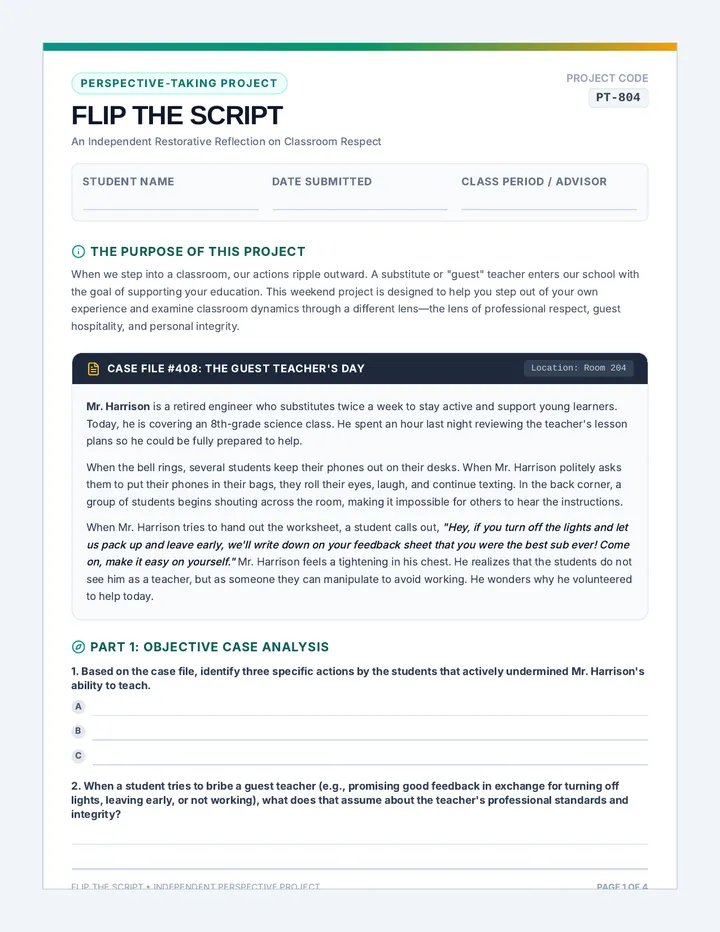
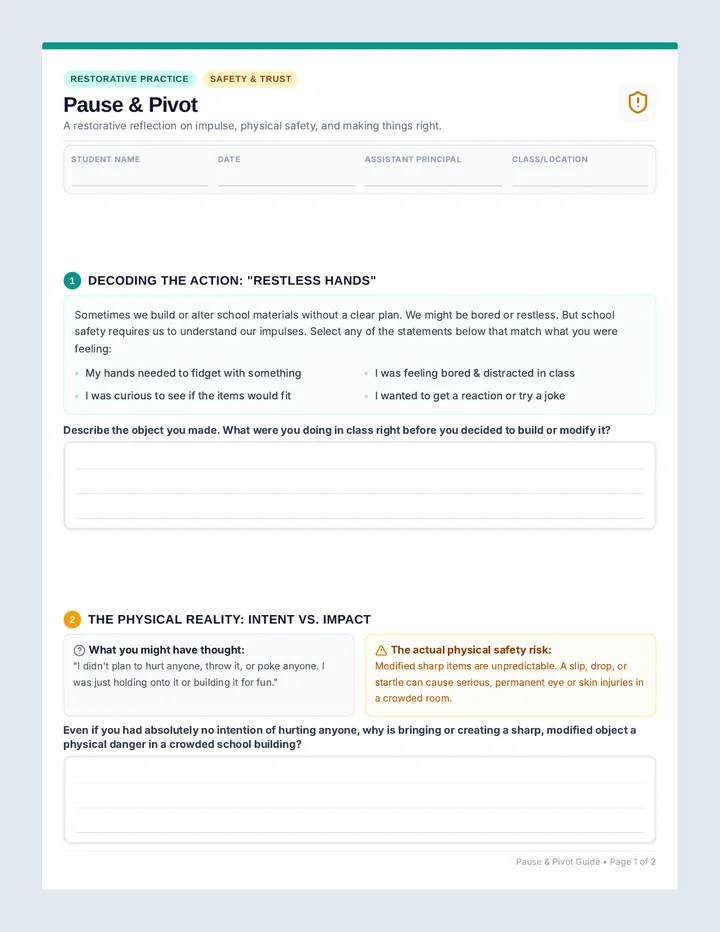
A lesson focused on restorative justice principles, helping students identify the impact of their actions and master self-regulation strategies to rebuild relationships.
A high-energy, 20-minute lesson on sportsmanship, focusing on how to be a 'Game Day Great' by handling wins and losses with grace. Includes slides, a small group guide, an anchor chart, task cards, and a board game.
A lesson focused on identifying and challenging cognitive distortions through the 'evidence for vs. against' technique, styled as a psychological investigation.
A series of activities and practices designed to build foundational reading comprehension, writing structure, and cognitive focus skills through the metaphor of a productive factory.
A recurring weekly reflection tool designed to help students celebrate successes, manage their emotional well-being, and sharpen their academic focus through a creative doodle-inspired layout.
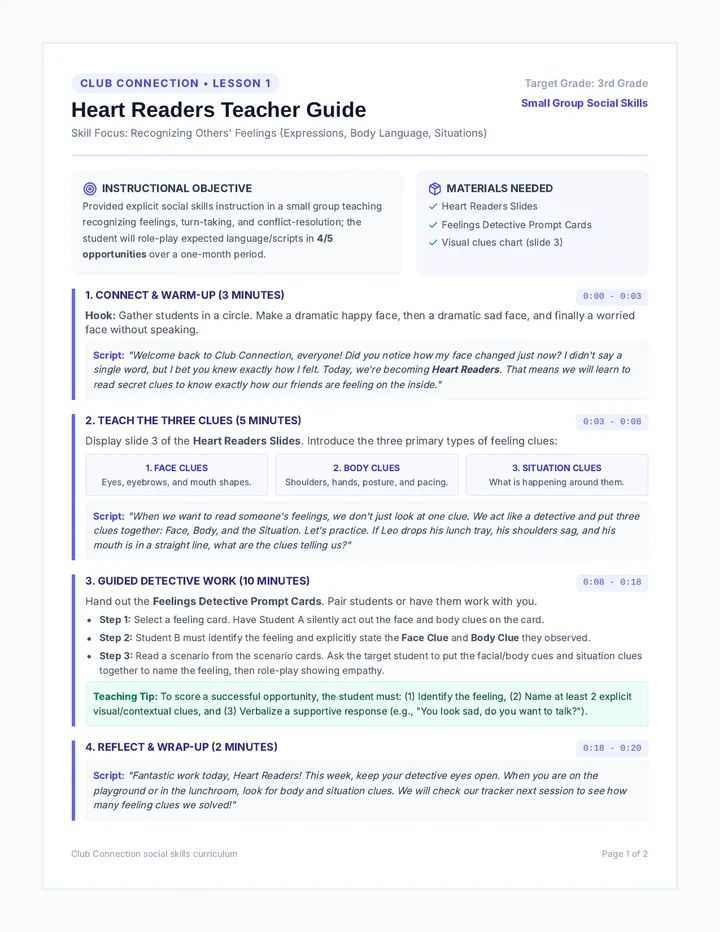
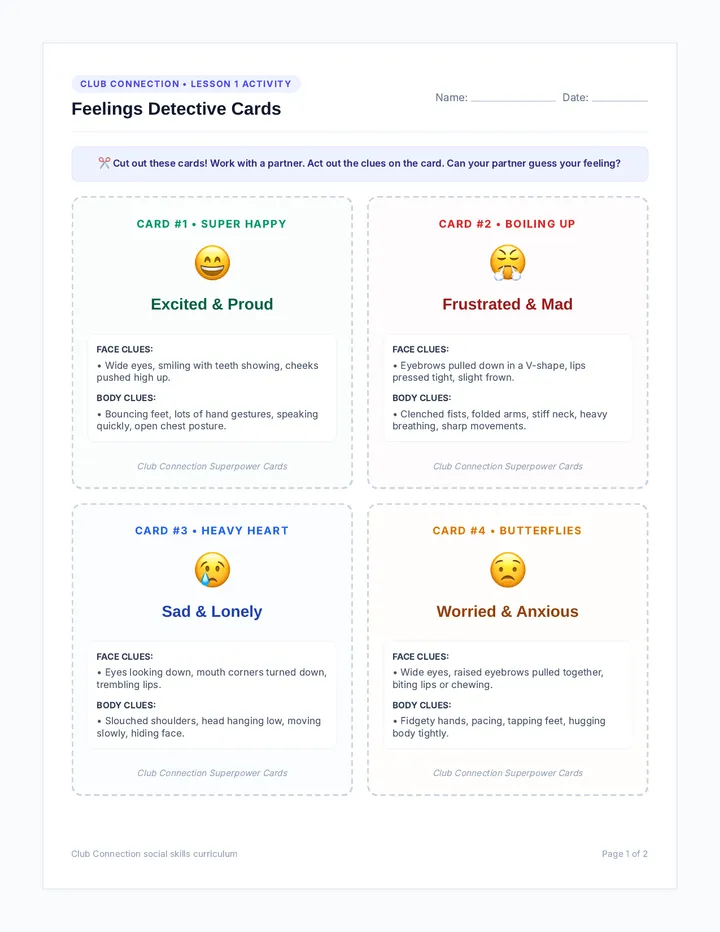
This lesson covers the physical sensations of frustration and provides a structured framework for navigating social conflicts using 'I' statements and perspective-taking.
Final review of skills and the MVP Trading Cards craft activity to celebrate individual and group growth.
Differentiating between good sportsmanship and poor sportsmanship, specifically handling winning and losing.
Strategies for managing impulsivity and 'big feelings' when games get intense or things don't go as planned.
Collaborative problem-solving and understanding the value of working together to achieve a goal.
Focusing on communication, active listening, and sharing the spotlight during group activities.
Introduction to the group, setting goals, and identifying individual strengths within the team.
A collaborative hands-on project where students use recycled materials to build a spring garden while practicing effective communication and role-sharing.
Empowers 5th graders to lead by example, discussing the importance of academic integrity and resisting the urge to bypass school filters.