A 1:1 goal-setting workshop for 8th graders to help them define and plan academic, social, personal well-being, and hobby-related goals using a structured blueprint approach.
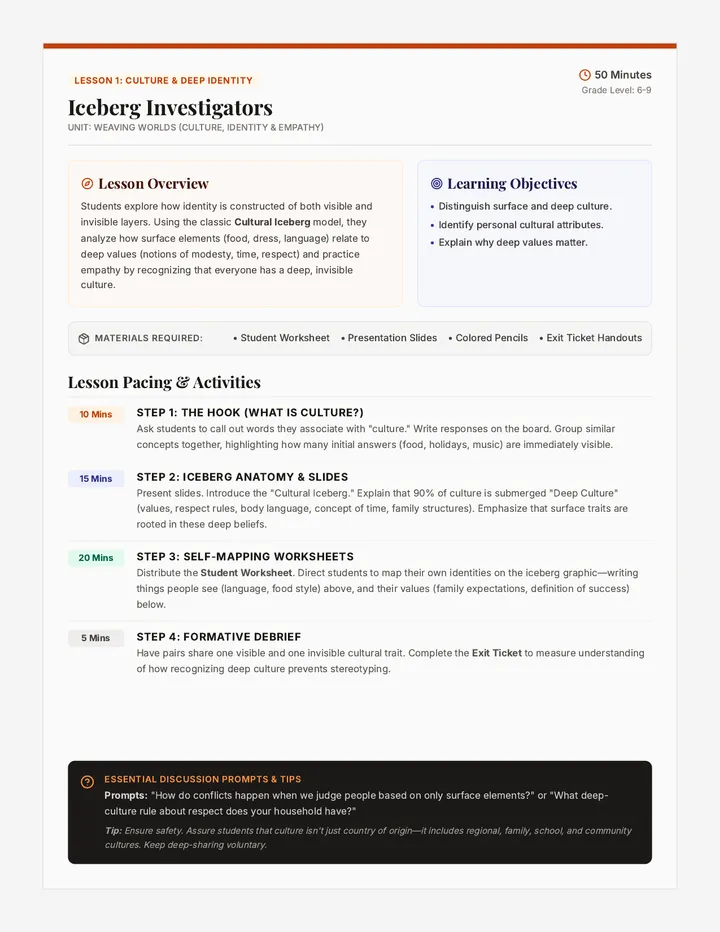
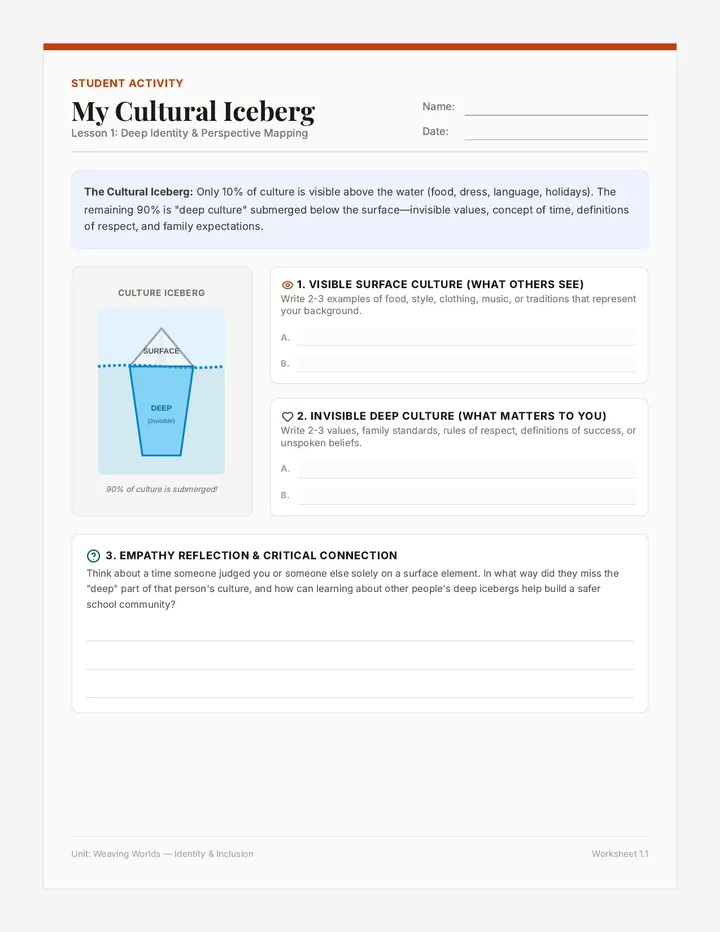
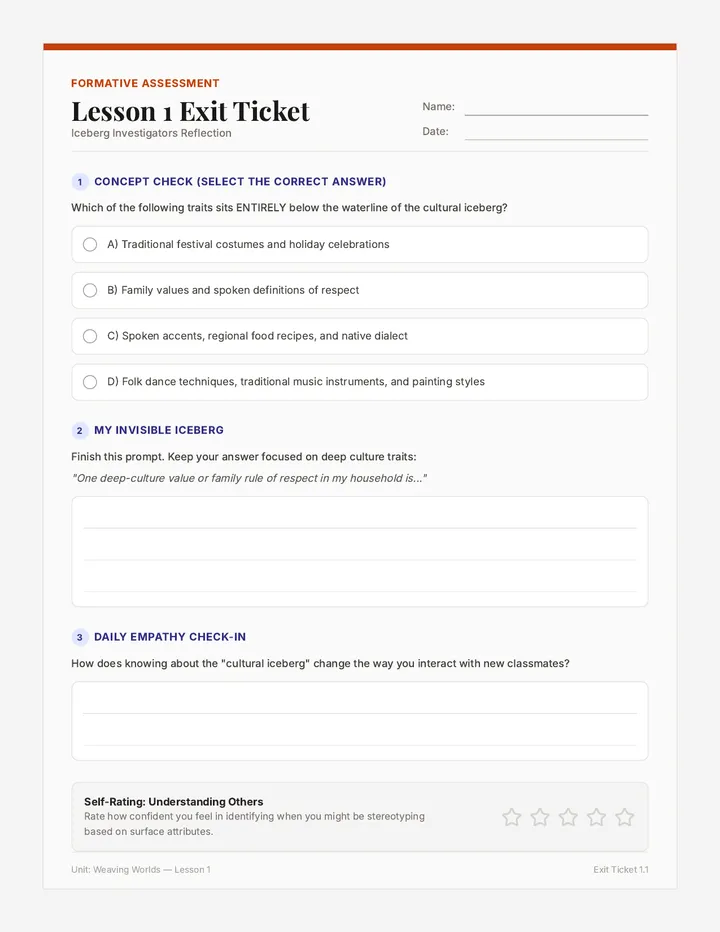
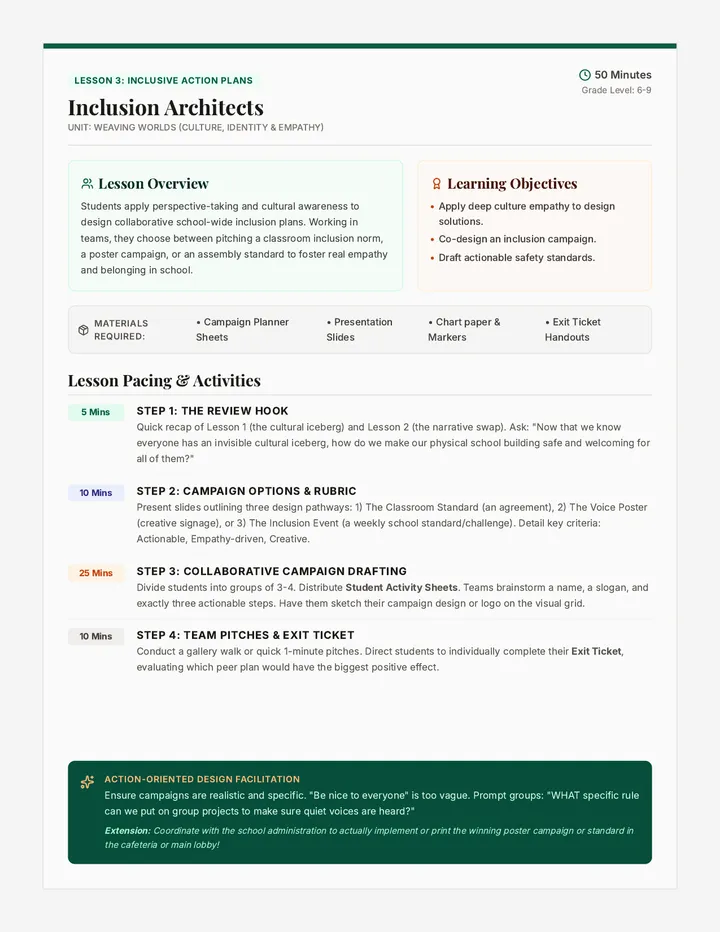
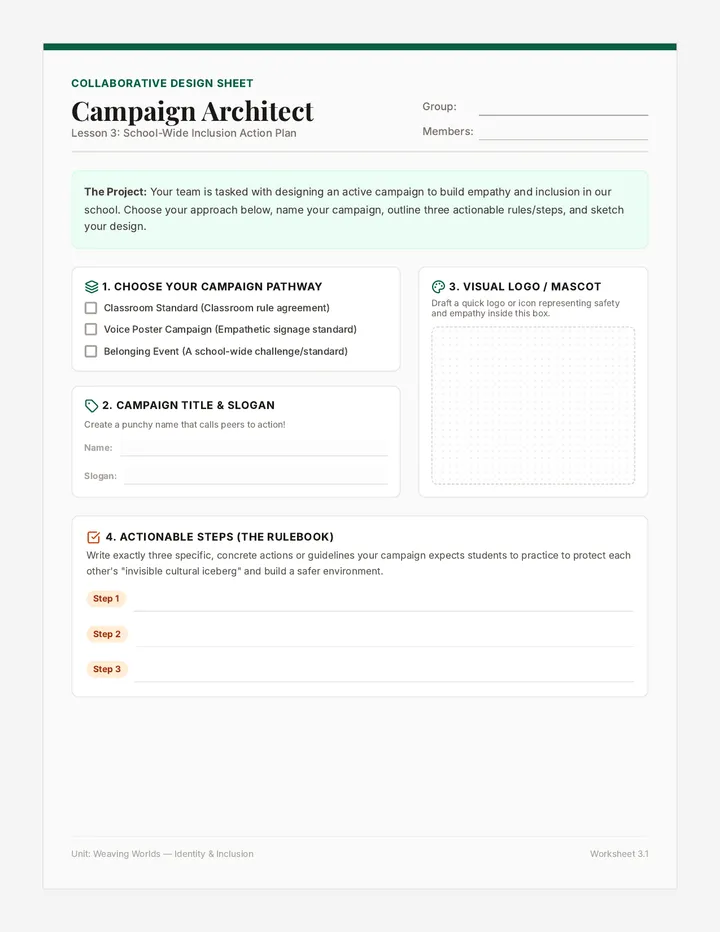
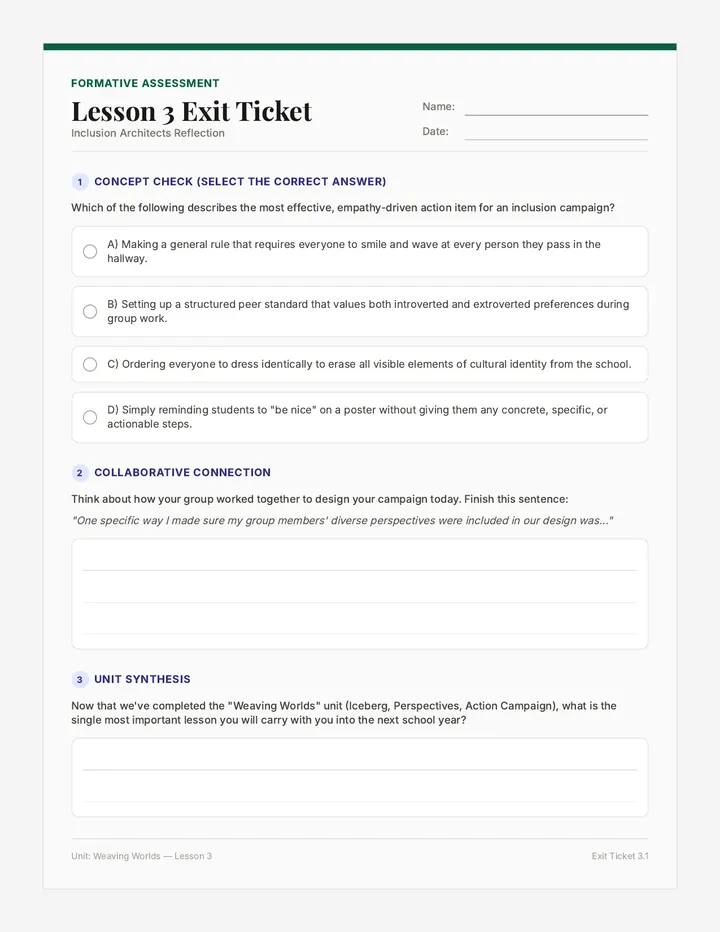
A 3-lesson unit on culture, identity, empathy, and building an inclusive school community. Students explore the cultural iceberg, share personal perspective narratives, and collaborate on actionable school-wide inclusion plans.
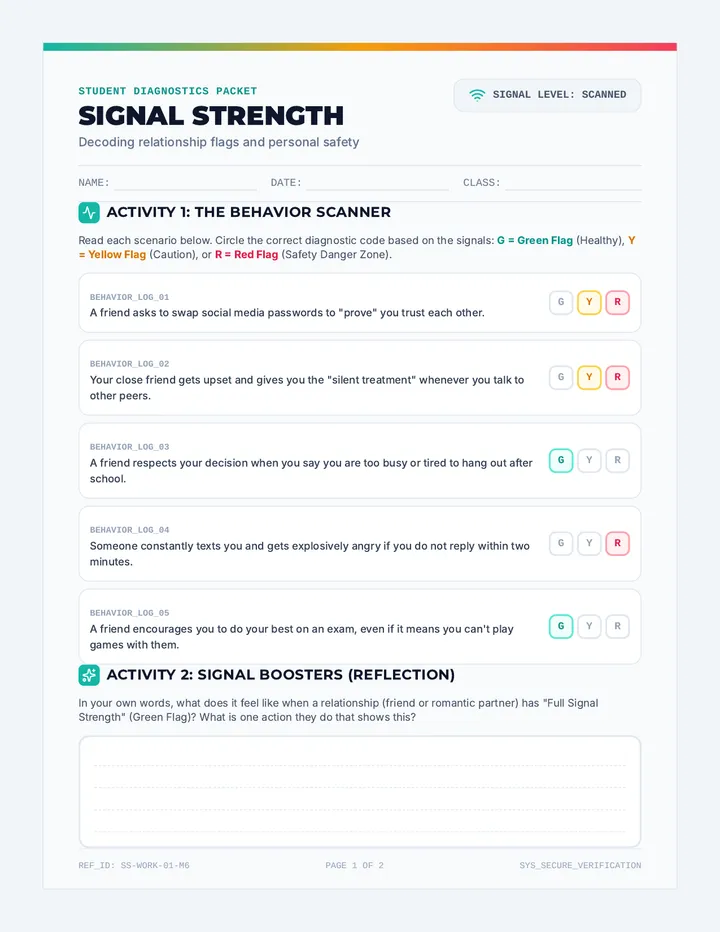
A middle school counseling lesson on healthy relationships and personal safety. Students learn to decode relationship signals, identify red and yellow flags, map their personal boundaries, and practice navigating peer pressure through interactive discussions and guided reflections.
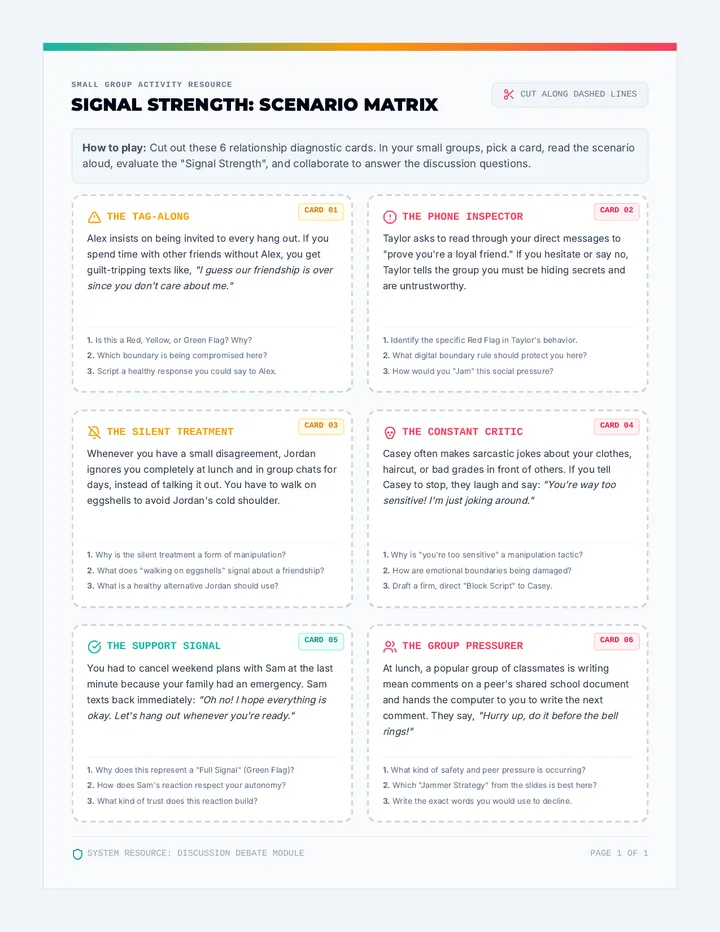
Print-ready small group scenario debate cards. Features 6 detailed scenarios designed to guide middle schoolers through peer pressure, boundary calibration, and red/yellow flag diagnostics.
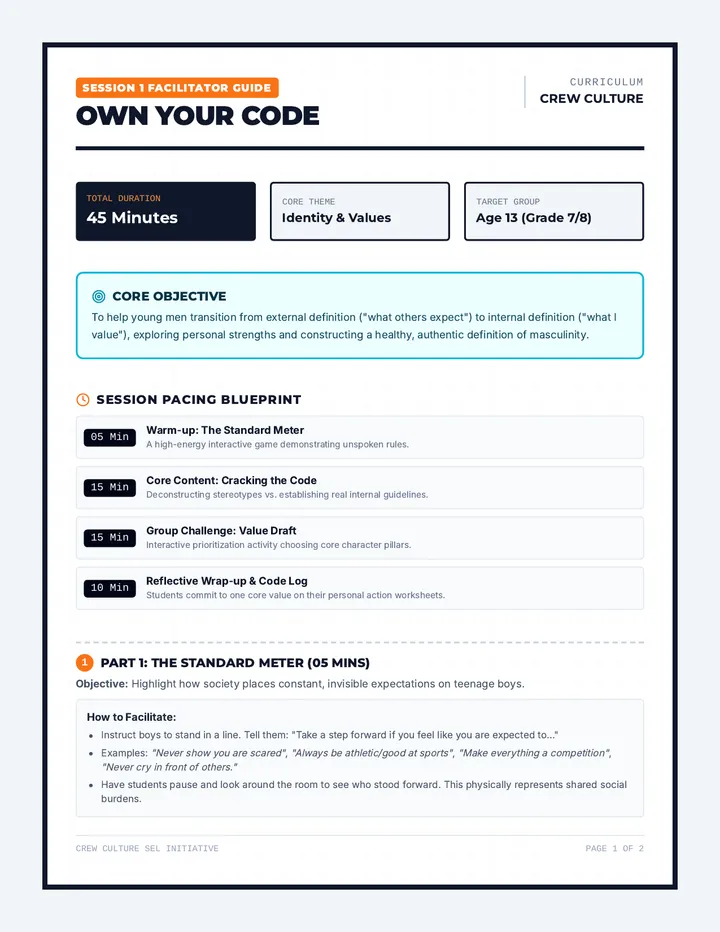
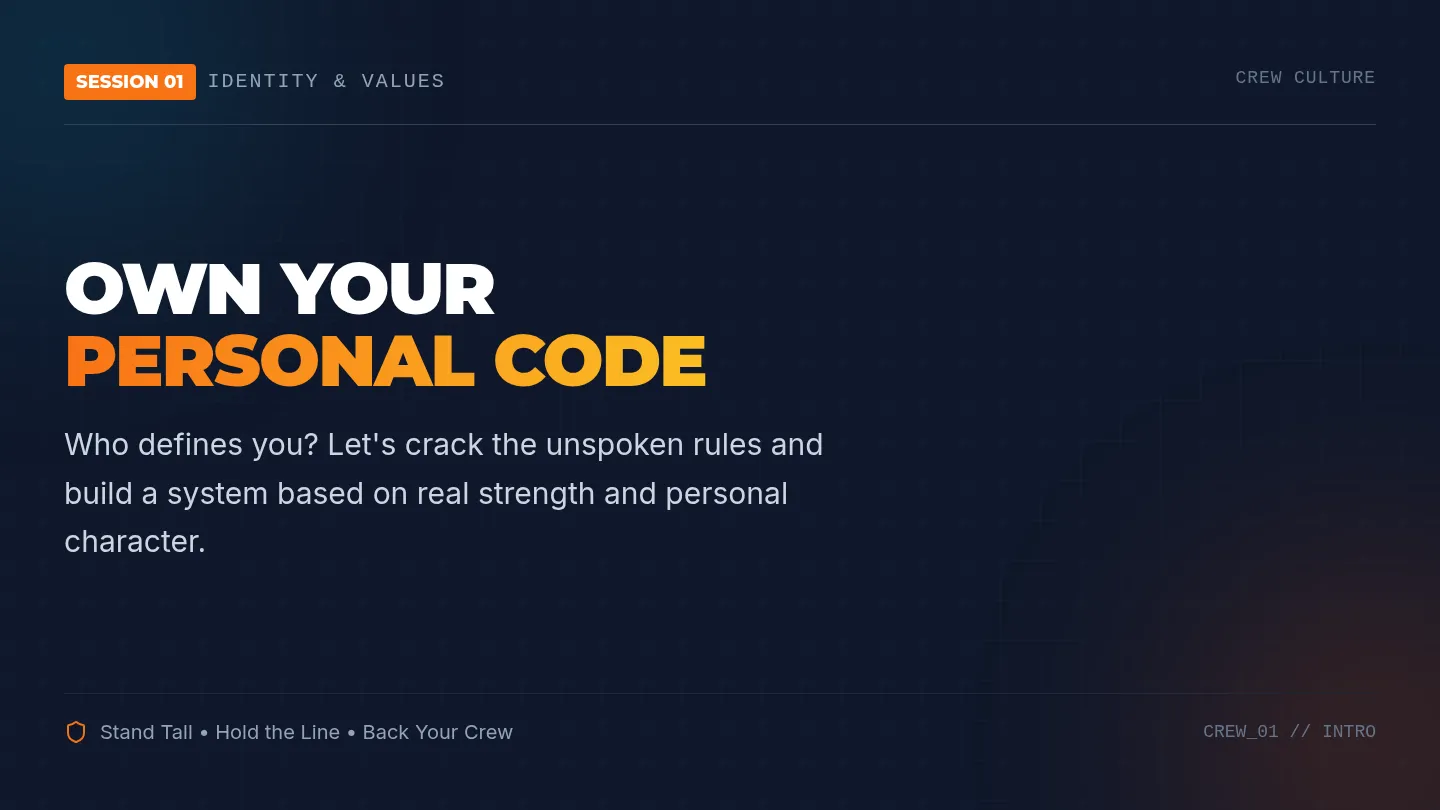
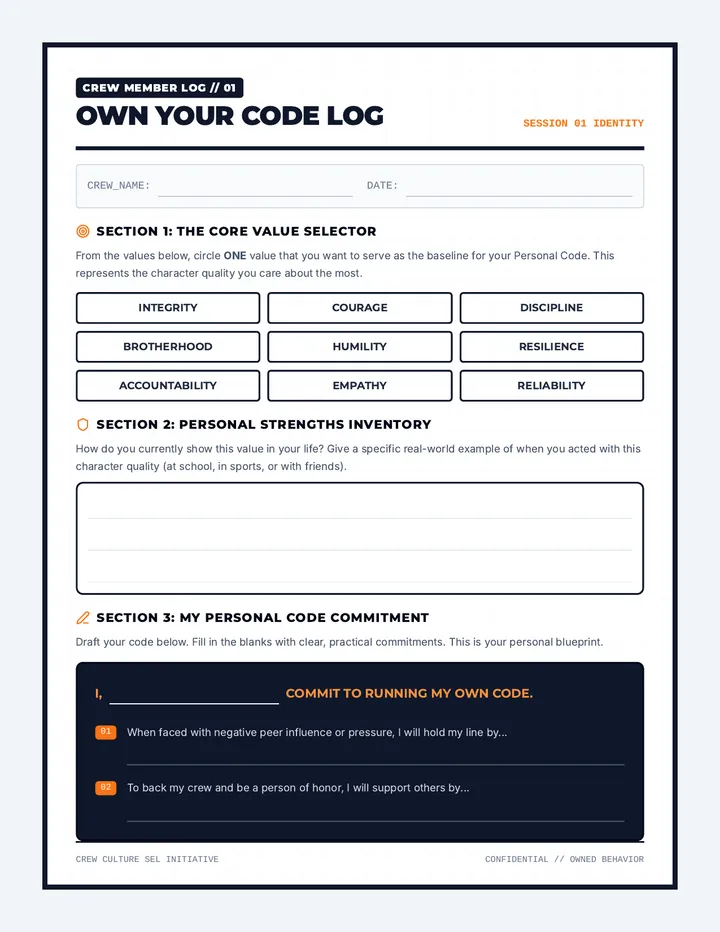
A three-part social-emotional learning curriculum designed specifically for middle school boys to develop self-esteem, manage digital pressure, and build authentic peer relationships.
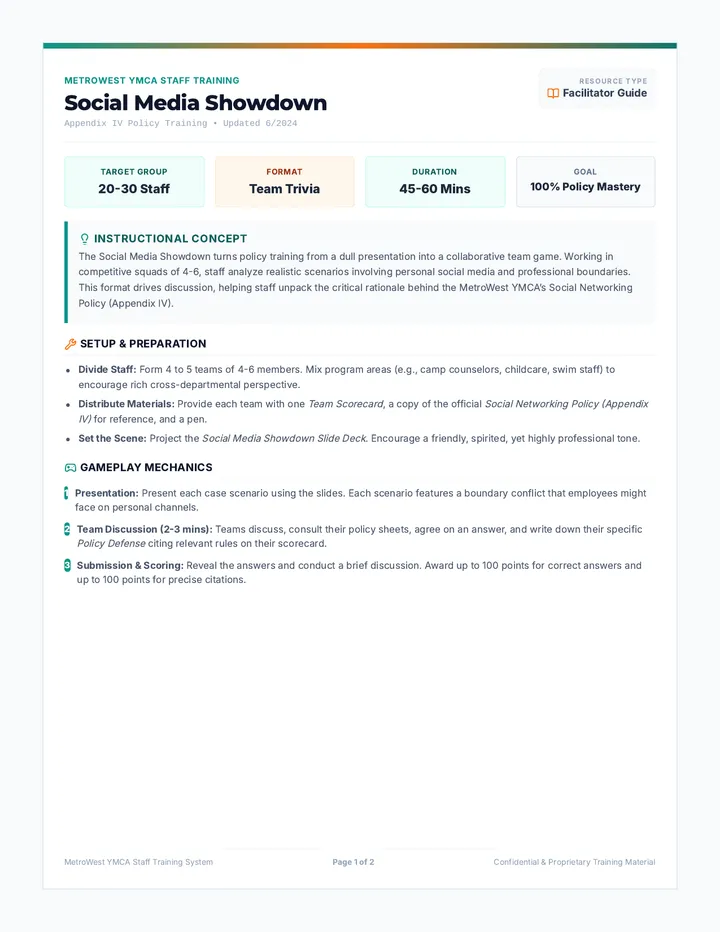
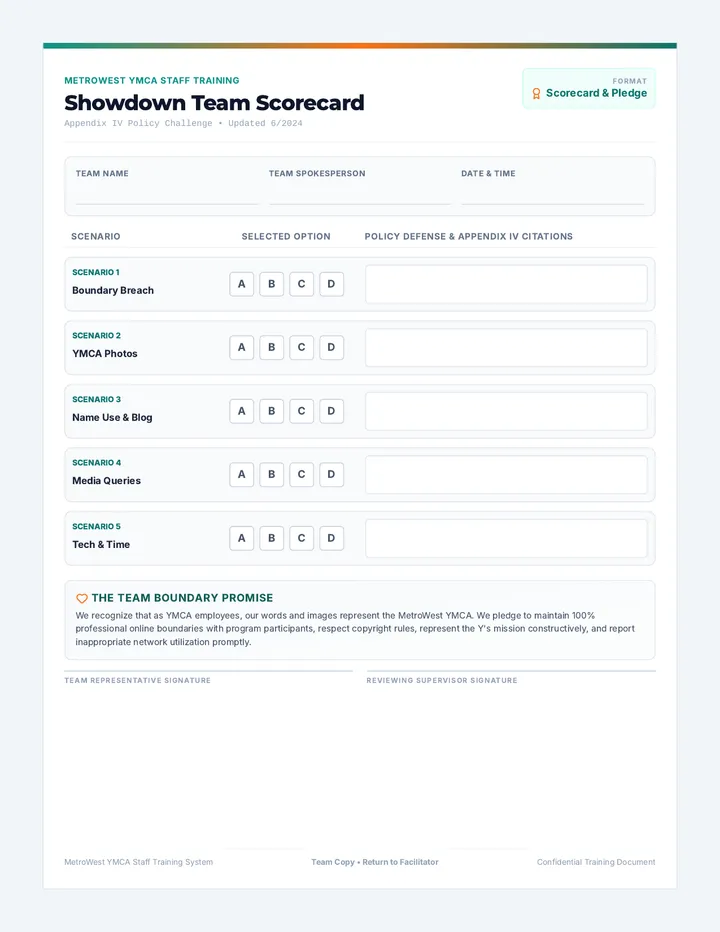
A high-energy, collaborative staff training session built around a competitive trivia game. Staff work in teams to analyze realistic scenarios and master MetroWest YMCA's Social Networking Policy (Appendix IV, Updated 6/2024), emphasizing child safety, professional boundaries, and brand protection.
A 2-page print-ready interactive student worksheet packet for self-assessment, boundary mapping, and scripting refusal skills. Uses the cohesive digital/tech theme.
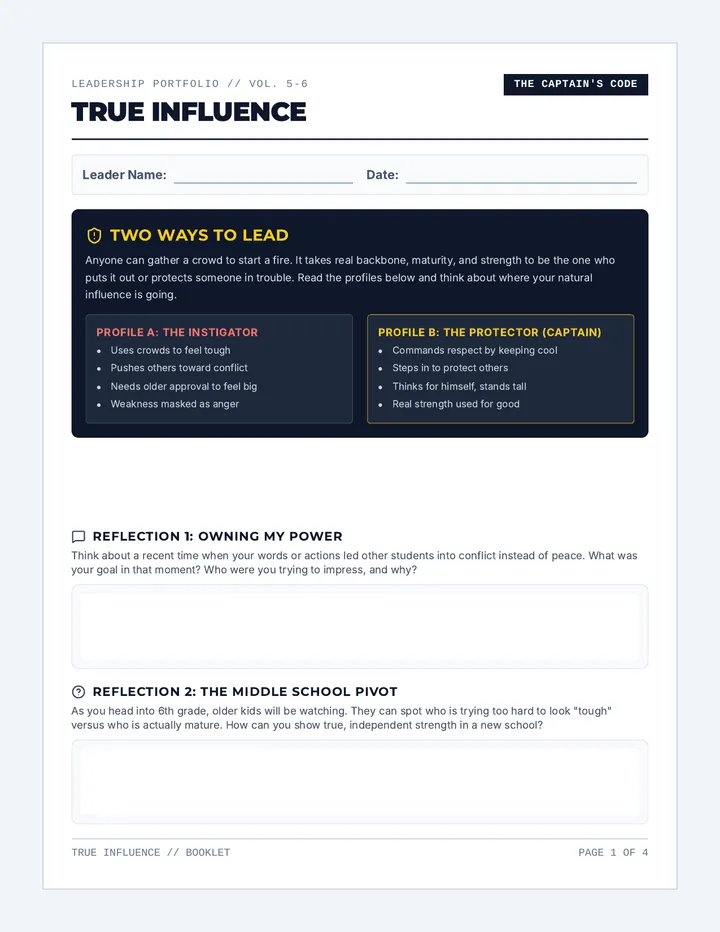
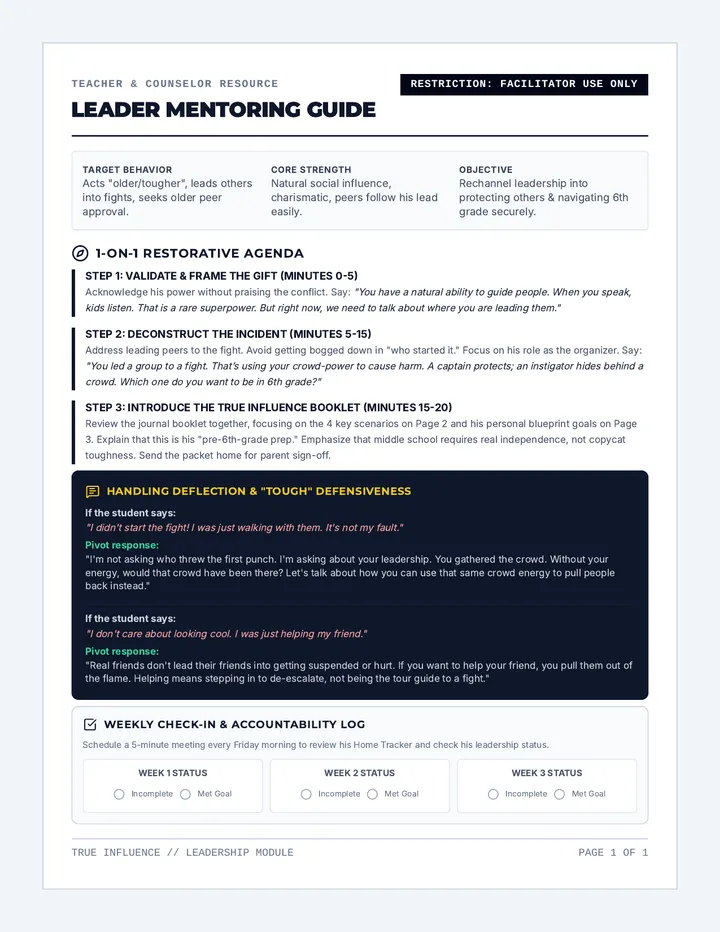
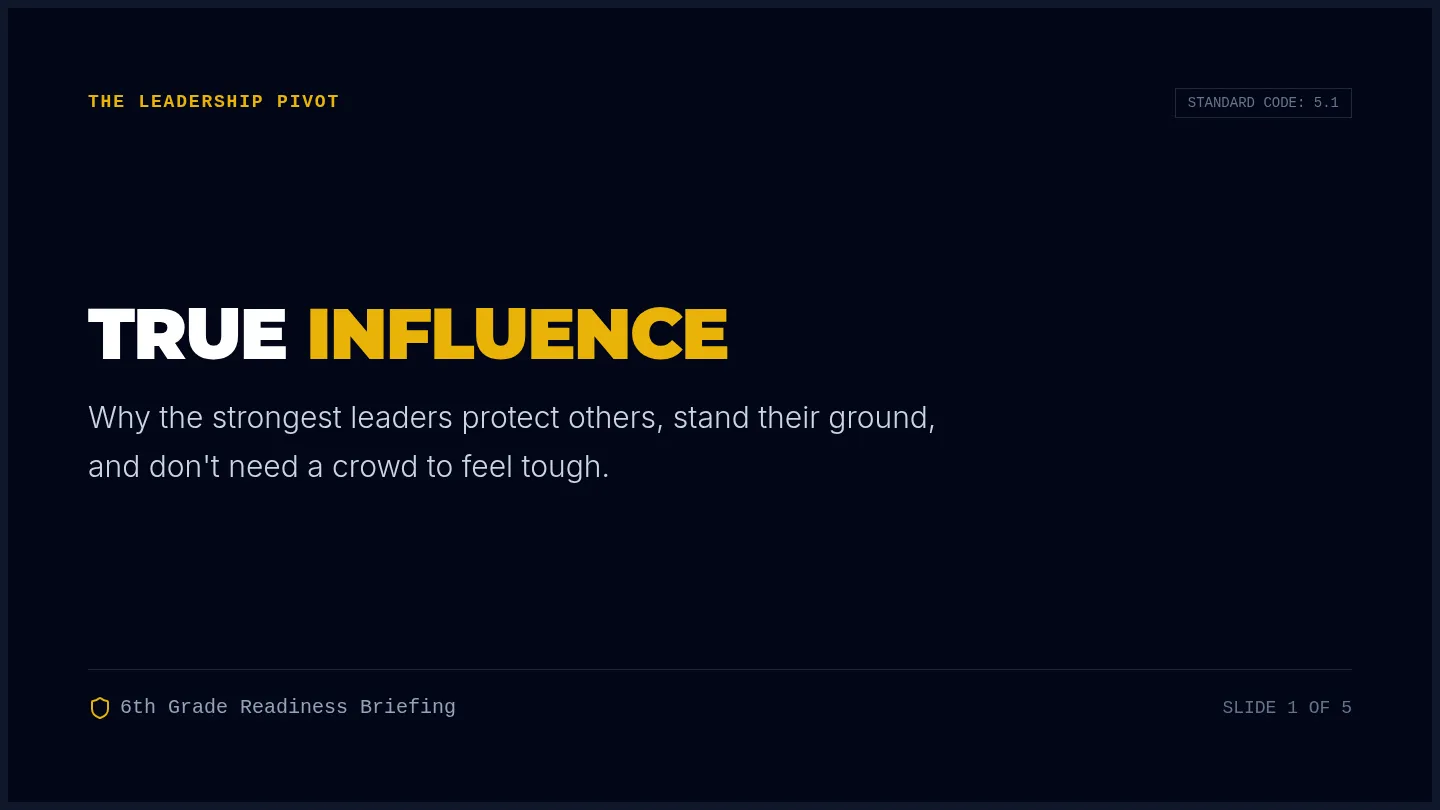
A comprehensive restorative leadership and peer advocacy sequence designed for students transitioning to middle school. It guides students from understanding their social influence to actively protecting peers and spreading positive school culture.
Students apply their deep listening and empathy skills to design a school-wide inclusion campaign or classroom standard, designing collaborative action items.
An engaging, modern slide presentation for middle schoolers to introduce relationship green, yellow, and red flags, boundaries, and safety strategies. Uses a tech/signal theme.
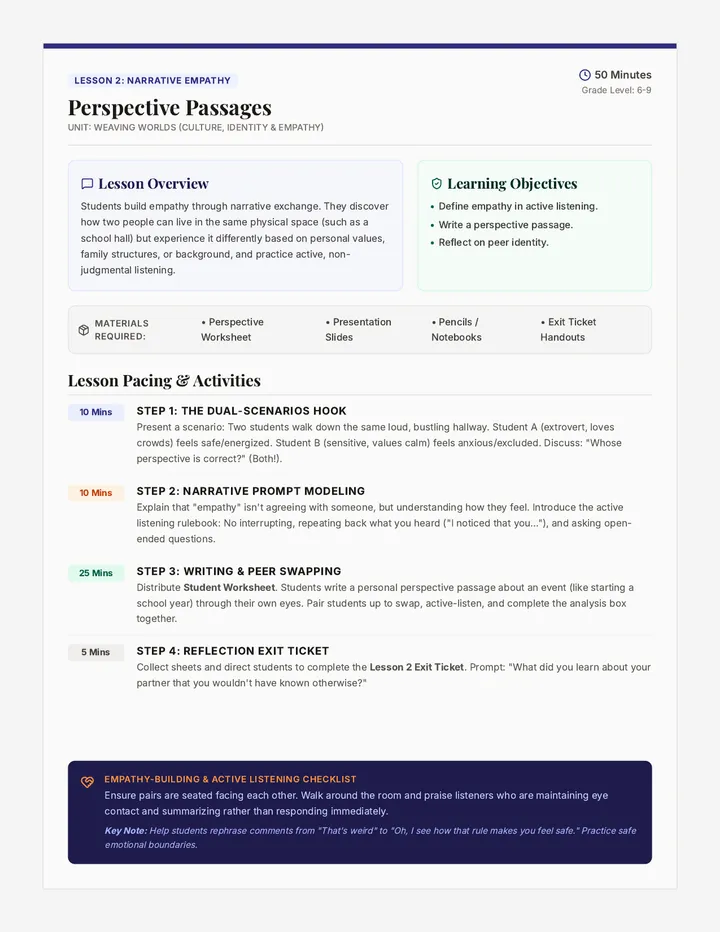
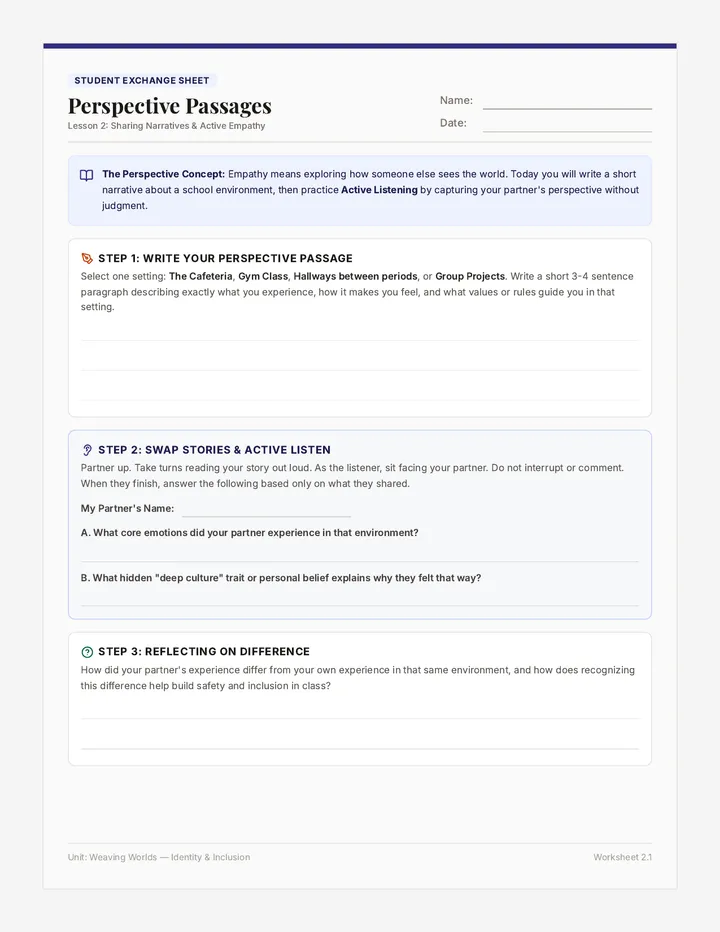
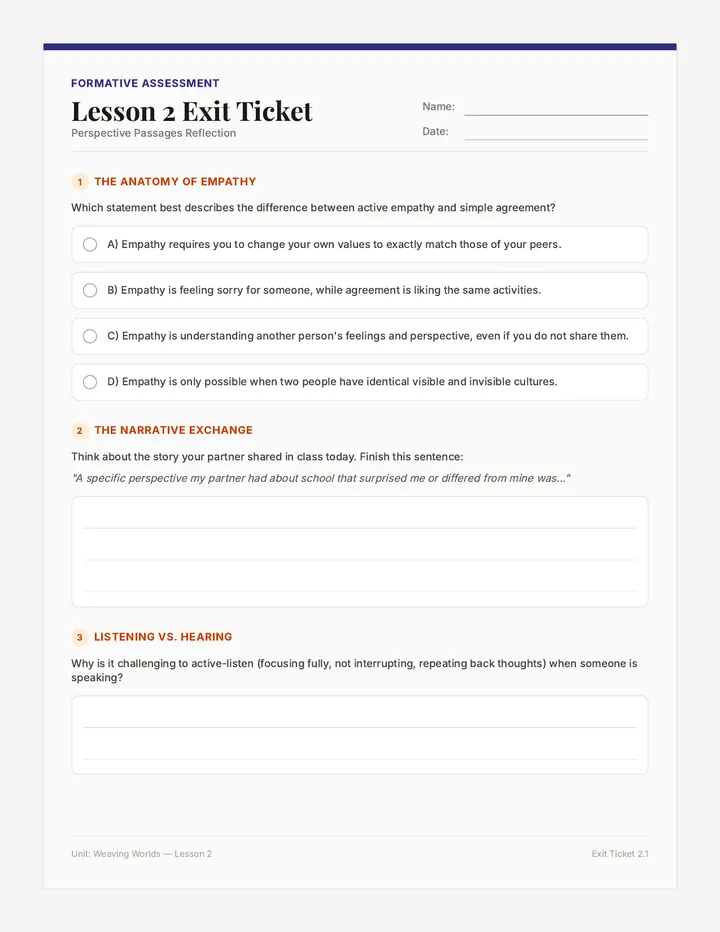
Students engage in active empathy and narrative exchange, analyzing how personal experiences and cultural backgrounds shape our perspectives of shared environments.
A clean, print-ready single-page team scorecard for 20-30 staff members divided into squads. It features space for team details, selection indicators, and dedicated white writing blocks for teams to cite policy rules from Appendix IV.
Students explore the concept of the cultural iceberg, distinguishing between visible elements of culture and deep, invisible values, to recognize the richness of identity.