Friendship Radar Slides
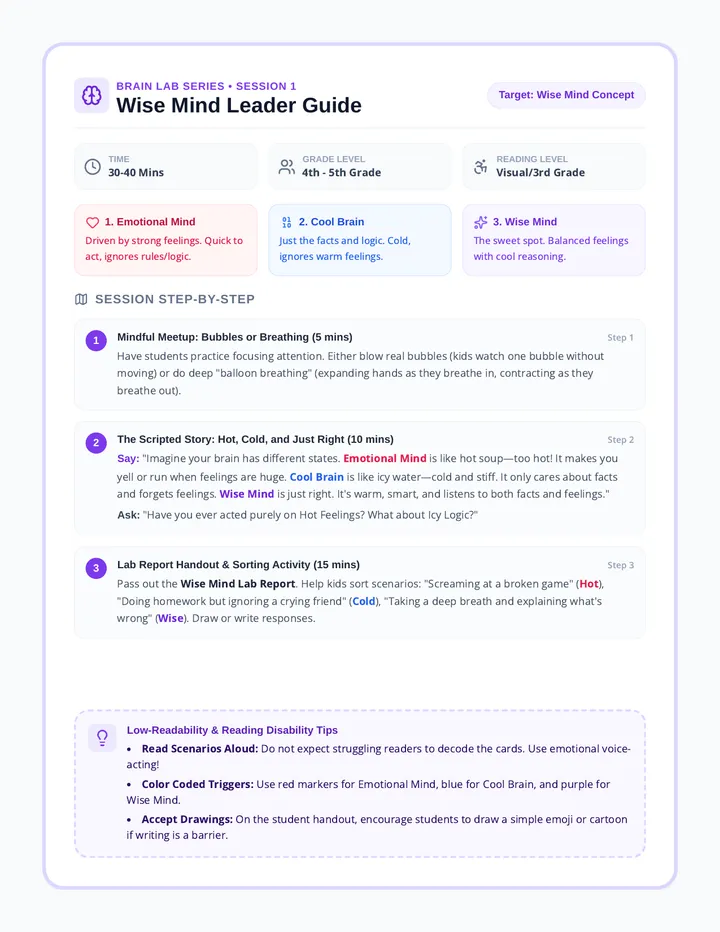
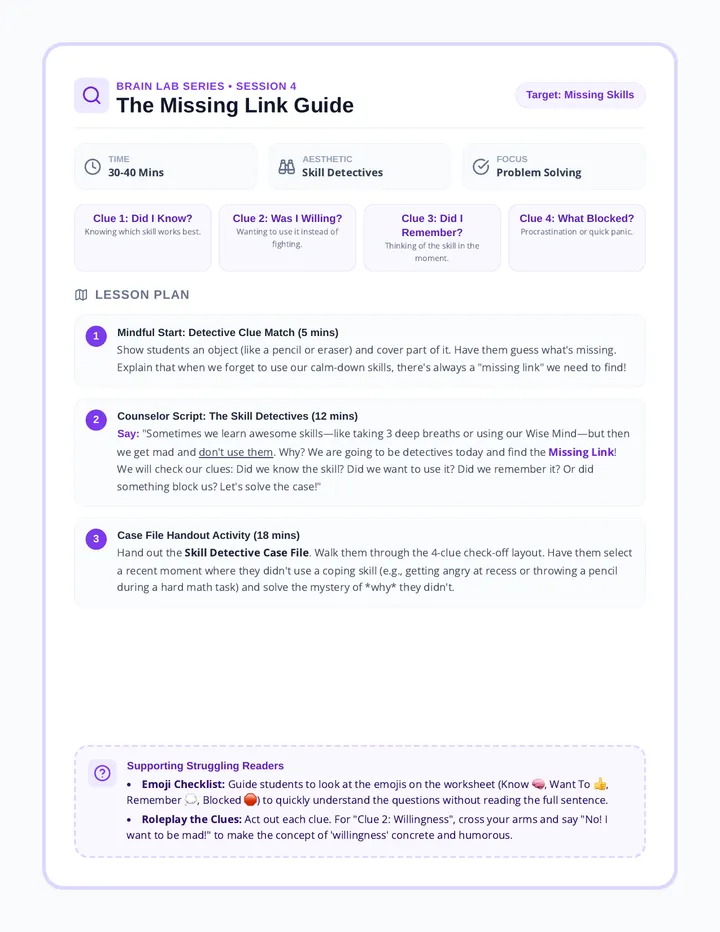
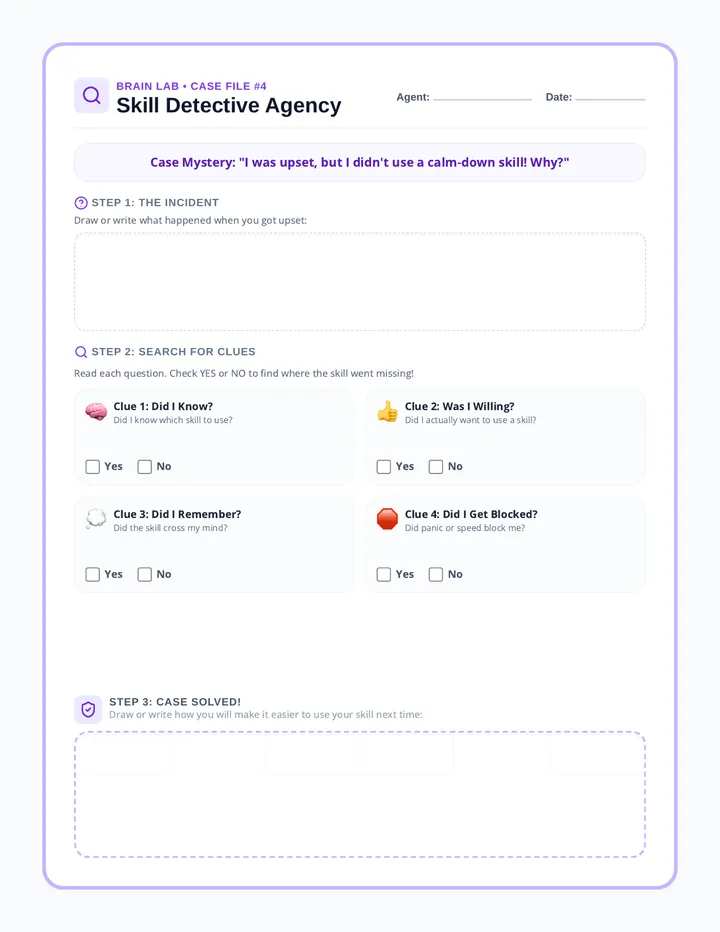
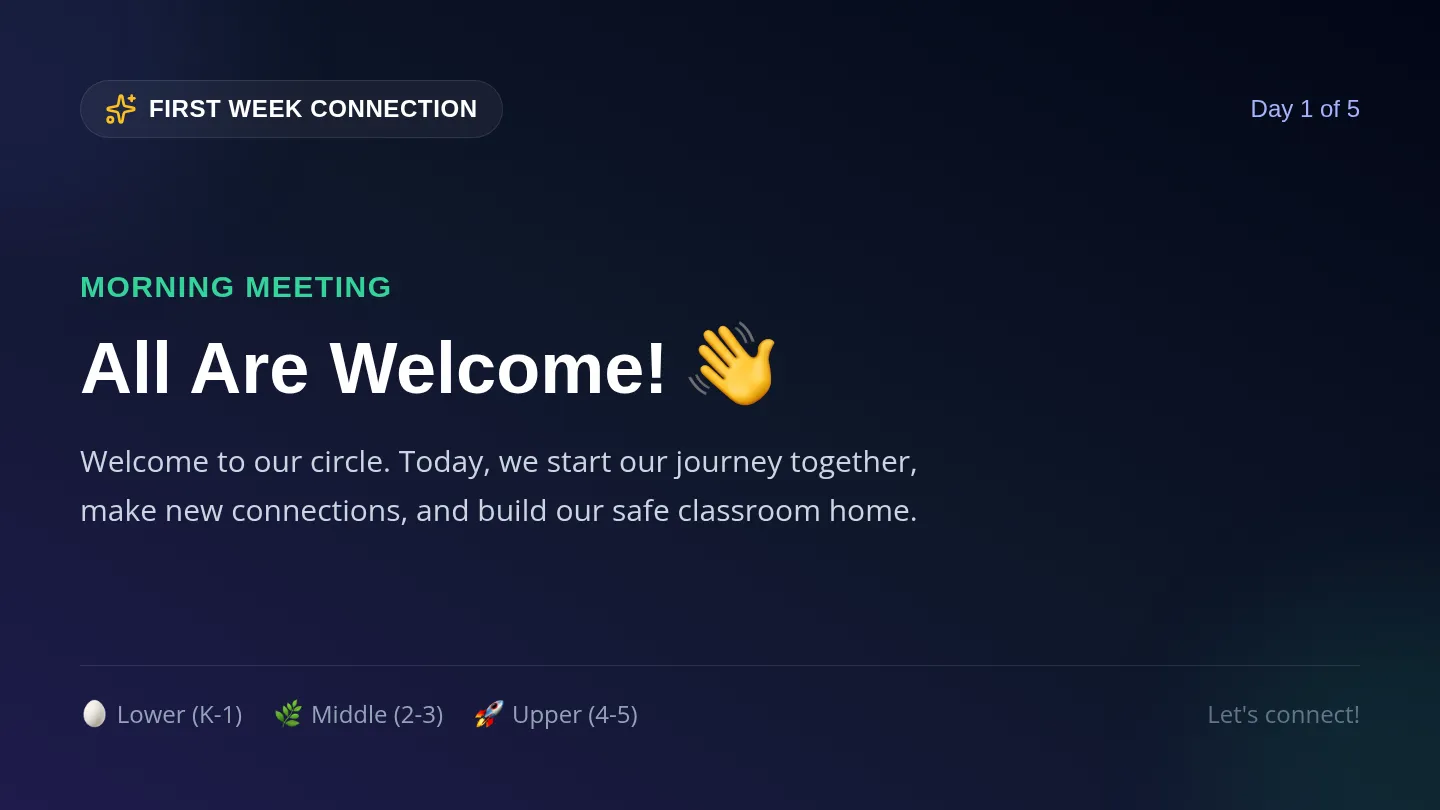
4th Grade Social-Emotional Skills
Friendship Radar
How to spot common interests, navigate group dynamics, and build lasting, supportive connections.
Quick Check!
Signal with your hands: How easy is it to make new friends? (Up = Easy, Side = So-so, Down = Hard)
👍 ✊ 👎
The Radar System
Slide 2 of 9
1. Scan
Look for shared clues, hobbies, and mutual interests. Spot the common ground!
Search clues
2. Connect
Join groups with confidence using clear, friendly strategies. No awkward crashing!
Join naturally
3. Navigate
Understand that friendships change. Grow your circle while staying supportive.
Stay resilient
Which of these three radar stations feels like your strongest skill?
Station 1: Scanning Clues
Slide 3 of 9
How to Spot Common Ground
Friendships often start with shared clues. You don't have to guess what others like—you can actively search for indications!
- Visual Clues: Backpack pins, shoes, drawing topics
- Verbal Clues: What jokes they tell or books they talk about
- Action Clues: What games they choose at recess
Recess Clue Hunt
Imagine looking around the blacktop. You spot:
🎒 A student with a dog sticker on their binder.
⚽ A student carrying a soccer ball to the lunch table.
🎨 A student sketching a cartoon dragon in their notebook.
💡 Challenge: What clues are you wearing or displaying right now?
Interactive Scenario
Slide 4 of 9
Radar Mission 1
Spot the Common Ground!
👦
Maya
Loves drawing anime, playing soccer at recess, and playing video games on weekends.
👧
Leo
Loves playing kickball, reading fantasy books, and designing custom video game levels.
Class Discussion Prompts:
1. What is their hidden connection? How can they start a conversation?
2. Write or speak a starter line Maya could say to Leo.
Station 2: Joining the Group
Slide 5 of 9
The "Stop, Look, Listen" Strategy
Avoid crashing into games abruptly. Instead, navigate into them smoothly!
1
STOP & Observe
Check out what the group is doing. What are the rules? What is the mood? Is it competitive or cooperative?
2
LOOK for a Pause
Wait for a break in play, a reset, or a transition. Do not disrupt the middle of high-action moments.
3
ASK with Value
Ask to join with a positive contribution, or say something related to what they are doing.
Try This: "Hey, mind if I jump in as the next teammate?" or "That was an awesome throw!"
Interactive Scenario
Slide 6 of 9
Radar Mission 2
Entering the Game
Four classmates are playing a fast-paced game of four-square at recess. They are laughing and intense. You want to join, but they are focused.
How do you use your Stop, Look, Listen strategy here?
Class Action Plan
What NOT to do:
Run in, grab the ball mid-bounce, and yell "I'm playing now!"
What TO do:
Stand near the line, watch a play, compliment a good bounce, and say "Nice hit! Can I get in line next?"
🙋 Practice Out Loud: Turn to a partner and say a polite entry line!
Station 3: Shifting Connections
Slide 7 of 9
Navigating Friendship Changes
In 4th grade, interests grow and shift. It is normal for friendships to evolve! Here is how we handle it positively.
Outgrowing
Sometimes your old friend wants to do things you don't enjoy anymore. It doesn't mean you can't be friendly—it just means your focus is changing.
Expanding the Circle
You don't have to have only ONE best friend. You can have different friends for soccer, gaming, drawing, and quiet talking!
🌱 Healthy reminder: Growing your circle doesn't mean leaving others behind.
Interactive Scenario
Slide 8 of 9
Radar Mission 3
The Changing Circle
Your best friend from 3rd grade has started sitting with a new group at lunchtime and talking about a show you don't watch. You feel excluded and left behind.
What is the most positive way to handle this scenario?
Options to Debate:
🅰️
React with Anger
Ignore them back and tell others not to play with them.
🅱️
Expand Your Horizons
Use your Radar to scan for other kids who share your current interests while staying polite to your old friend.
🅲
Speak Up Gently
Pull them aside later and say, "I miss playing with you! Want to play soccer on Tuesday?"
Which option builds resilience? Can Option B and C both be right answers?
Mission Briefing
Slide 9 of 9
Your Recess Mission!
Choose one friend mission to complete during your next free time today:
🛰️
Mission: Scan
Find 2 visual or verbal clues about classmates you don't usually hang out with.
🤝
Mission: Connect
Use the "Stop, Look, Listen" strategy to politefully ask to join a game or conversation.
Good luck out there, Explorers! You've got the radar!
Friendship Radar Worksheet
Explorer Social Lab
Friendship Radar
Page 1 of 2
Name: _________________
Date: _________________
Class: _________________
Activity 1: Broadcasting My Radar Signal
What are your favorite hobbies and interests? Write and sketch clues that other students could spot!
Clue #1 ⚽
Recess / Sports
What game do you run to play first?
Draw or write here
Clue #2 🎨
Creative Hobby
Drawing, writing, crafting, coding?
Draw or write here
Clue #3 🦖
Favorite Topics
Animals, space, fantasy books, etc.
Draw or write here
Activity 2: Scanning Classmate Clues
Think of three classmates. Note down one interesting clue you've spotted about each of them.
1
I noticed this clue on a classmate (e.g., sticker, drawing, book cover):
This tells me they might enjoy:
2
I noticed this clue on a classmate:
This tells me they might enjoy:
3
I noticed this clue on a classmate:
This tells me they might enjoy:
Tip: Clues can be found on books, lunchbox items, clothes, or games they play!
Explorer Social Lab
The Connection Lab
Page 2 of 2
Activity 3: The Recess Entry Scenario
Scenario: You see a group of classmates playing a board game at lunch. They are taking turns, laughing, and the game is halfway done. Use the 3 steps to plan your joining move.
STOP
1. Observe the Group
What are the rules of their play? What is the group's "mood" right now?
LOOK
2. Find a "Pause"
When is the best moment to talk to them without interrupting their high-energy play?
ASK
3. Ask & Add Value
Write down your script! What friendly lines could you say to join or make a positive comment?
Activity 4: Navigating Friendship Shifts
Classmate dynamics sometimes change. Reflect on how to bounce back smoothly.
If your long-time recess buddy starts hanging out with a different group of kids, what are two resilient, positive things you can do for yourself?
Action Idea 1:
Action Idea 2:
🚀
My Selected Recess Mission:
Pick one mission from the slides to try today at school!
Friendship Radar Teacher Guide
Educator Lesson Blueprint
Friendship Radar Teacher Guide
Facilitator Guide
Target Grade 4th Grade (Ages 9-10)
Duration 45-60 Minutes
Grouping Whole Group / Pairs
Materials Slides + Worksheet
Lesson Flow & Pacing
10m
1. Setup & Icebreaker (Slides 1-2)
Launch Slide 1. Guide students through the "thumbs check" to gauge current comfort. Emphasize that connecting is a buildable skill, not magic.
15m
2. Station 1: Scanning Clues (Slides 3-4)
Introduce clues (Visual, Verbal, Action). Solve the Maya & Leo common ground exercise. Lead into Worksheet Activity 1 & 2.
15m
3. Station 2: Joining In (Slides 5-6)
Explain Stop, Look, Listen. Practice entering the four-square game on Slide 6. Students fill out Worksheet Activity 3.
10m
4. Station 3: Friendship Shifts (Slides 7-8)
Acknowledge that changing friendships is normal. Discuss choices on Slide 8. Guide kids to complete Worksheet Activity 4.
05m
5. Mission Launch (Slide 9)
Encourage practicing the strategy outside. Students check their selected recess mission on their worksheet.
Discussion Starters
- "Why does barging in make others defensive?"
- "How can we have different friends for different things?"
Inclusivity Adaptations
Visual tracking: Let students scan for environmental objects (folders, lunch bags) instead of forced peer eye contact.
Index cards: Provide written scripts on small cards for students experiencing high playground anxiety.
Script Prompts
"Hey, nice throw! Mind if I jump in as the next backup?"
"I saw you are sketching. Cool drawings!"
📊
Exit Ticket Suggestion
Ask: "Write down one 'Pause' you spotted on the playground today before talking."