A comprehensive introduction to digital citizenship for 6th graders, focusing on online safety, respectful communication, and secure habits. This lesson equips students with practical strategies for navigating the digital world responsibly.
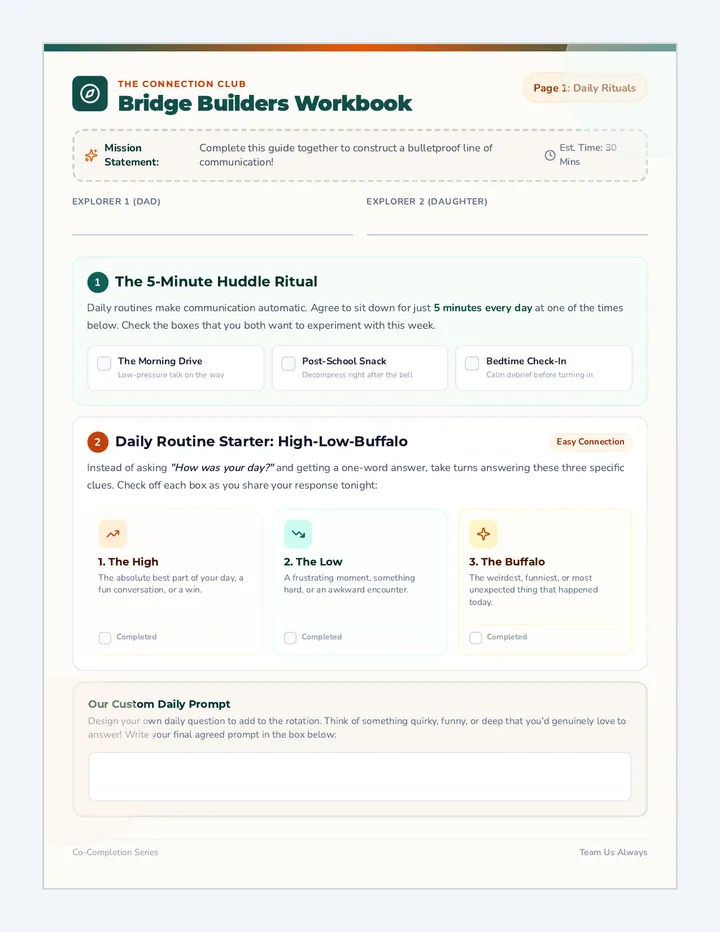
Teaches students how to transition from understanding a perspective to responding with empathy. Focuses on 'Bridge Building' communication strategies during conflicts.
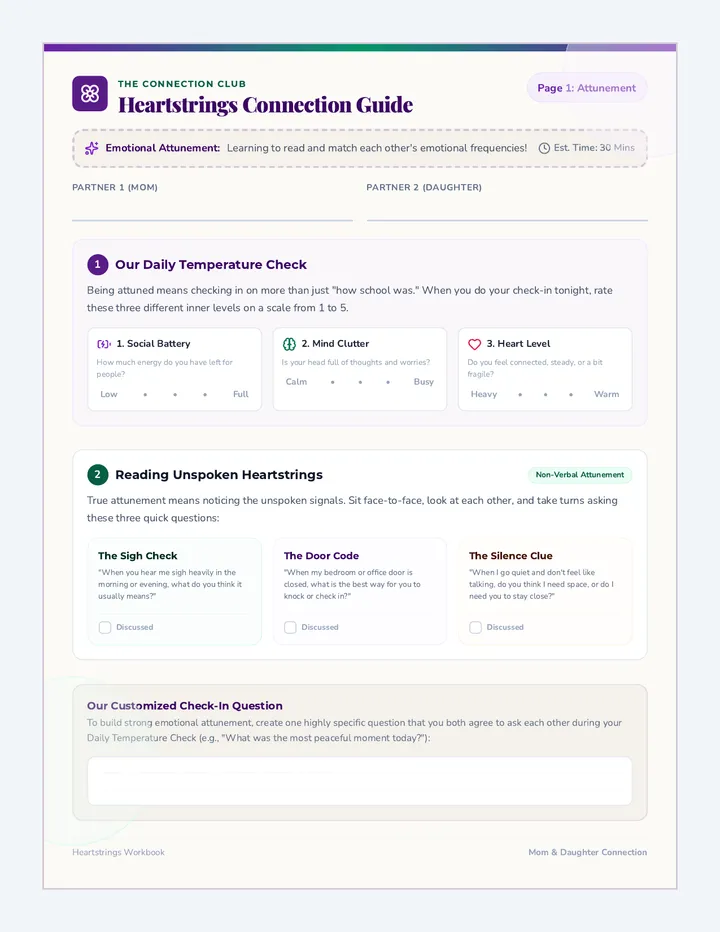
Focuses on decoding emotional cues in others through body language, tone, and context. Students practice 'emotional detective' work to understand what others are feeling.
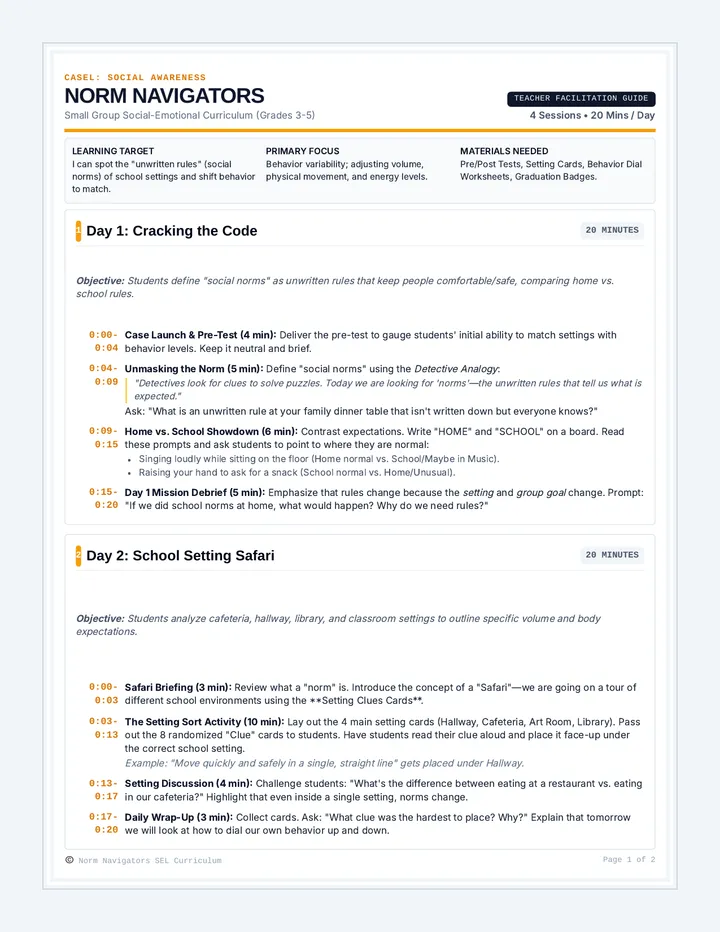
Introduces the concept of 'perspective lenses' and how personal experiences shape how we see the world. Students learn that two people can see the same thing differently without either being wrong.
A gentle and supportive activity focused on sharing cherished memories of loved ones through creative story starters and guided discussion.
A comprehensive set of surveys designed to assess school climate and evaluate the effectiveness of the school counseling program from the perspective of students, teachers, parents, and administrators.
Week 4 focuses on Planning through the 'Master Chef' lens. Students break down complex, multi-step meal preparation tasks into sequenced steps, organize resources with grocery lists, and practice backward planning to ensure mission success.
Teacher-facing resources including answer keys and instructional guides for all three measurement levels.
Challenges students with complex conversions, weight vs. volume concepts, and fractional recipe scaling. Designed for advanced learners mastering culinary math.
Focuses on standard kitchen conversions (teaspoons to tablespoons, cups to pints) and simple recipe doubling. Ideal for students with basic measurement knowledge.
Introduces basic kitchen tools and the difference between dry and liquid measurements for beginners. Focuses on identification and standard units (teaspoon, tablespoon, cup).
A 30-minute social-emotional learning session for 6th graders focused on reflecting on their personal journey and setting a targeted SMART goal for growth.
A 45-minute interactive lesson for middle schoolers to understand the psychology of procrastination and learn practical strategies to overcome it, featuring a movement-based icebreaker.
A guide to help individuals determine the urgency of their communication and choose the right time to speak with staff members.
A series of 6 reflective worksheets designed for a 12-year-old girl to build self-awareness regarding lying, swearing, and class avoidance, focusing on emotional regulation and accountability.
A set of resources designed to help parents and students distinguish between peer conflict and bullying, providing clear action plans for resolution and support.
A comprehensive lesson on building executive functioning skills through organizational systems, including brainstorming challenges and creating personal blueprints for school and home.
A 45-minute social-emotional learning lesson focusing on identifying big emotions, practicing self-regulation techniques, and applying a step-by-step 'BUG' (Breathe, Understand, Go-Solve) approach to friendship conflicts.
A collection of evidence-based strategies for students with ADHD to manage impulses, boredom, medication, and social reputation through a "blueprint" for self-regulation.
Week 7 of the Executive Functioning module, focusing on Working Memory. Students learn strategies to hold and manipulate 'data streams' using chunking, visualization, and external systems.
A set of resources designed for a 5th-grade boy to manage ELA-related stress, replace negative self-talk with positive affirmations, and improve his relationship with his teacher through effective communication.
A social story and support materials for a Kindergarten ESL student learning to manage big emotions using specific communication tools.
A foundational look at the CASEL Social Emotional Learning framework, covering the five core competencies and the benefits of implementation.
A targeted organization and time management workshop designed for upper elementary and middle school students to build effective daily systems for academic success.
This lesson helps 6th grade students understand ADHD medication management, specifically focusing on how Methylphenidate (stimulants) and Guanfacine (non-stimulants) work individually and together to support focus, emotional regulation, and school success.
A brief opening session designed to help students identify their current emotional state and understand the factors influencing their feelings before beginning social skills activities.
A foundational workshop for parents to understand the 'Flipping the Lid' hand model of the brain, the science of meltdowns, and practical strategies for regulation and prevention.
A 15-minute lesson focused on self-acceptance, reframing negative self-talk, and embracing individual strengths and growth areas through a 'Mosaic Mindset' lens.
A final capstone module to reflect on the Life Architect experience, summarize key self-discoveries, and finalize the transition blueprint for school reentry.
An interactive lesson designed to help students identify common cognitive distortions (mind traps) and develop practical skills for challenging negative thought patterns through role-play and analysis.
A professional development resource for staff to practice facilitating restorative circles with kindergarteners, focusing on a multi-party peer conflict.
This lesson focuses on resilience and the growth mindset. Students learn that mistakes are a natural part of learning (like rain for a flower) and practice strategies for trying again.
In this lesson, kindergarteners identify their own unique talents and strengths using the metaphor of 'super seeds.' They will explore things they are already good at and things they want to learn.
A high-energy, 15-minute assembly lesson for middle schoolers focusing on active listening, respectful interaction, and clear self-advocacy.
A collection of materials to help graduating seniors prepare for their recognition ceremony, focusing on summarizing their artistic achievements and memories in a professional, third-person format.
A high-energy, 15-minute exploration of communication through the 'Signal Hackers' game, focusing on active listening and selecting appropriate communication channels.
A workshop focused on mindful and ethical online behaviors, empowering middle schoolers to navigate the digital world with empathy, privacy awareness, and intentionality.
A fast-paced, 20-minute interactive workshop where middle school students practice active listening and clear expression through a back-to-back communication challenge.
Creates a concrete morning routine and transition plan to build confidence for the school day.
Teaches specific emotional regulation strategies and coping skills for use during the school day.
Introduces basic CBT concepts by helping the student identify 'Worry Thoughts' and replace them with 'Brave Thoughts.'
Focuses on identifying specific triggers for school anxiety and exploring the feelings associated with separation from home.
This lesson helps students recognize when they need support and provides a structured framework for asking for help effectively and confidently. Students will explore the benefits of seeking help and practice through scenarios.
A supportive lesson for 7th-grade students to understand depression, identify emotions, and build a toolkit of coping strategies and self-care practices.
This lesson explores the physiological and emotional consequences of suppressing emotions, specifically tailored for a student with ADHD and ODD. It covers the mechanics of impulsivity and provides practical 'pause' strategies for managing disagreements and academic overwhelm.