Focuses on the quality of study materials, teaching students how to create atomic, dual-coded flashcards that facilitate better recall.
A final review and certification ceremony where students reflect on their growth and receive their 'Master Mechanic' status.
Integrating all 'Mind Mechanic' skills into a final creative project, demonstrating mastery of self-awareness and social reasoning.
Evaluating options and consequences using 'The Choice Circuit,' focusing on making deliberate decisions while reading and writing.
Introducing decision thinking through 'The Logic Loom,' helping students weave together 'how' and 'why' clues in complex texts.
Advanced social reasoning using 'Point of View Goggles' to interpret different perspectives and motivations in stories and real-life situations.
Developing social understanding by using 'Signal Scanners' to detect character emotions and perspectives within texts.
Focuses on using feedback as a 'Toolbox Upgrade,' helping students see mistakes and suggestions as ways to improve their work rather than as failures.
Introduction to growth mindset through 'The Blueprint,' teaching students that skills are built over time with practice and planning.
Building self-esteem by identifying 'Safety Gear'—the positive inner talk and strengths that protect us from fear and frustration.
Focuses on stress handling by introducing 'Coolant Systems'—calming strategies to use when facing difficult tasks or making mistakes.
Exploring the 'Reaction Engine' to understand how the brain responds to stressors during reading and writing, helping students identify their personal triggers.
An introduction to the concept of the mind as a 'workshop' where thoughts and feelings are built, introducing students to their role as Mind Mechanics and establishing basic self-awareness.
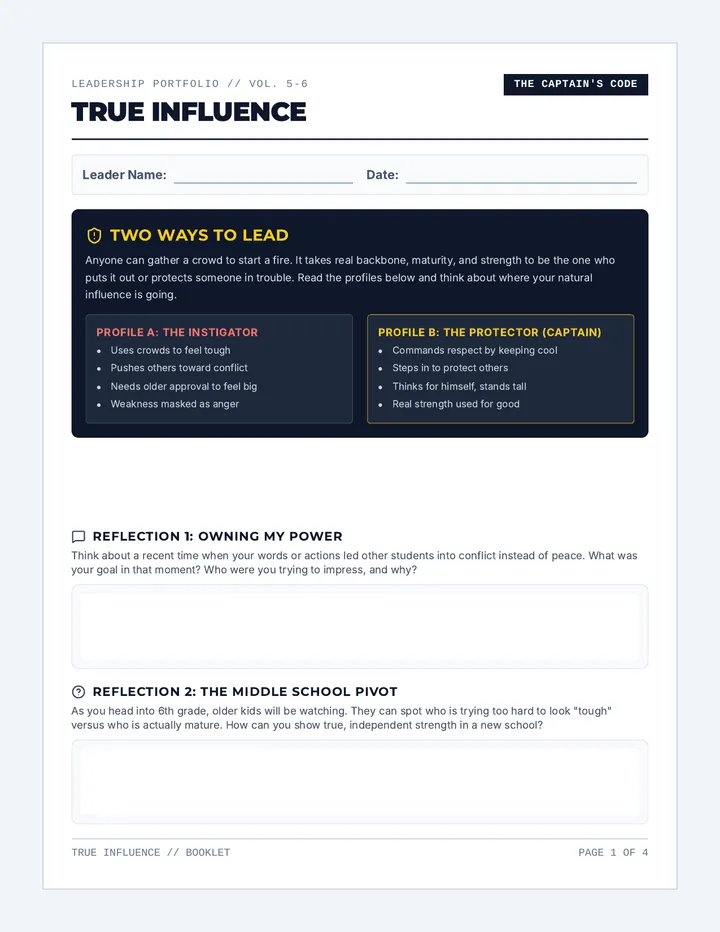
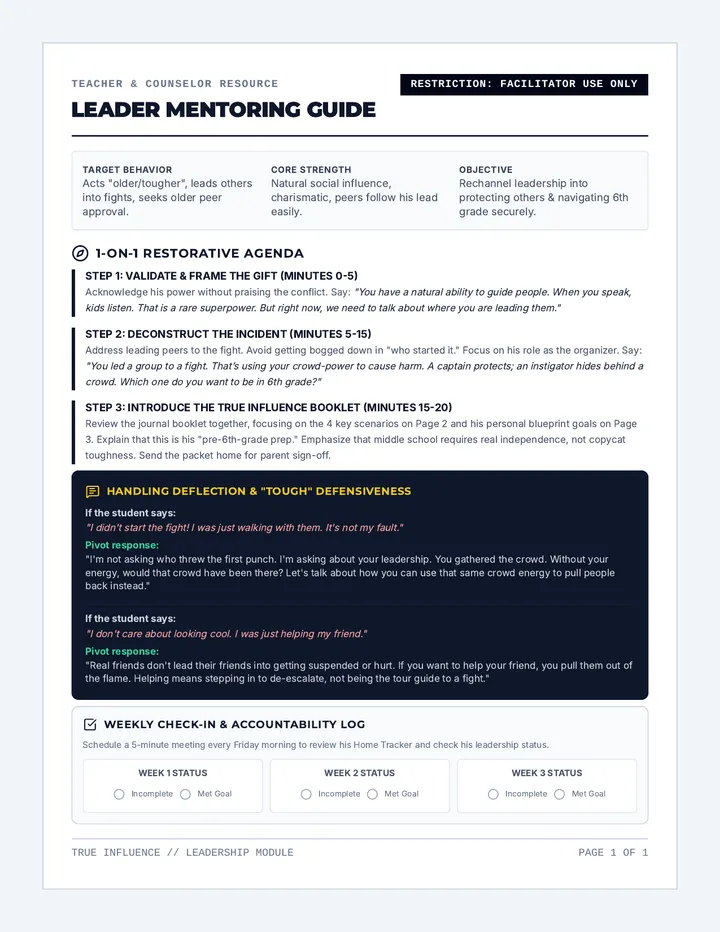
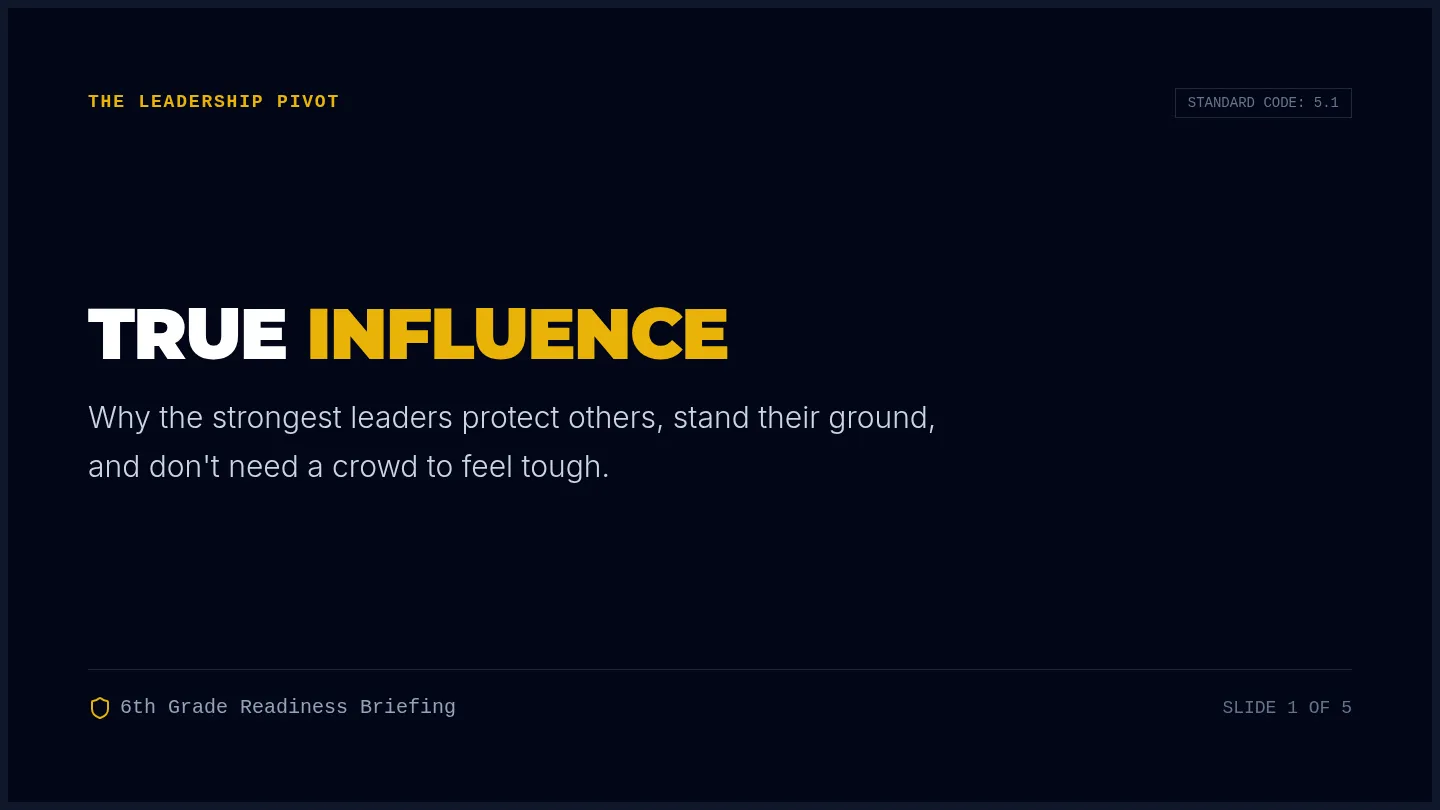
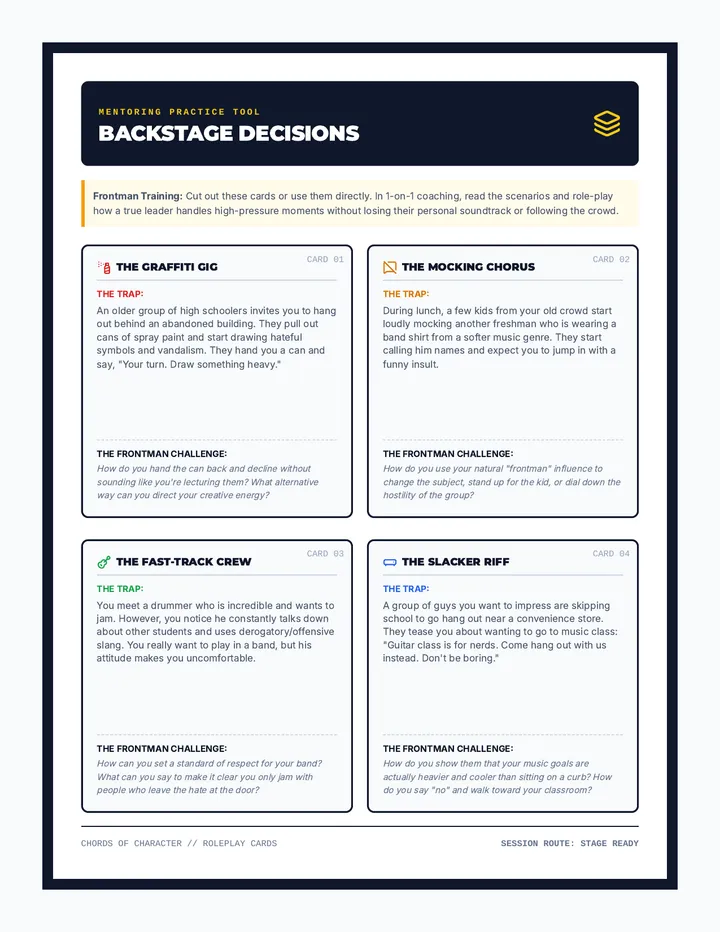
A comprehensive lesson on identifying and managing peer pressure, focusing on direct vs. indirect influence and developing effective refusal strategies.
A lesson for first graders to identify the physical sensations and outward signs associated with different emotions, inspired by "A Little Spot of Feelings" by Diane Alber. Students become 'Feeling Detectives' to investigate how their bodies react to various feelings.
The capstone session where students consolidate their learning, create a vision board, and write a letter to their future professional self.
Focuses on consistency and the daily grind, providing tools for tracking motivation and building automated positive habits.
Identifies common 'blockers' like fear and procrastination, and uses role-play and discussion to build 'ninja' defense strategies.
Covers the fourth 'P' (Positivity), teaching students to reframe negative thoughts and maintain a growth mindset during setbacks.
Teaches the third 'P' (Plan), where students turn vague goals into concrete, actionable steps using the Action Plan Builder.
Focuses on the second 'P' (Purpose), guiding students to connect their daily actions to their deeper 'Why' to sustain effort when things get tough.
Explores the 'Passion Engine,' helping students optimize their performance by aligning interests with required outputs.
Analyzes the mechanics of motivation and the 4 P's Strategy, shifting from 'feeling-based' to 'system-based' performance. Includes a baseline diagnostic.
A supportive session for parents at Burlington Public Schools focused on enhancing parenting skills, self-care, and family relationships through the Parenting Journey program.
A focused session on postsecondary self-advocacy, teaching students with learning differences how to communicate their needs to professors and employers. The lesson emphasizes the transition from high school's automatic support to the self-initiated systems of college and the workplace.
A lesson for grades 3-4 on the "Link" strategy for building on ideas and identifying team strengths.
A lesson for grades 3-4 on grounding techniques and practicing gratitude to build a positive mental "weather map."
A lesson for grades 3-4 on setting milestones and maintaining effort through the middle of a difficult task.
A lesson for grades 3-4 on identifying community "ripples" and planning small-scale service projects within the school.
A lesson for grades 3-4 focused on using assertive I-Statements and understanding different points of view during disagreements.
A lesson for grades 3-4 on deeper problem solving, distinguishing fact from opinion, and investigating the root cause of issues.
A K-2 lesson on sharing and taking turns to complete simple group activities on the shared trail.
A K-2 lesson on basic emotional regulation using the "Five Senses Search" to stay calm and happy.
A K-2 lesson focused on trying again and using the "Power of Yet" through simple physical challenges.
A K-2 lesson introducing the concept of helping others and noticing needs in the immediate classroom community.
A K-2 lesson teaching Pathfinders to identify feelings and use simple "Peace Breaths" to manage disagreements.
A foundational lesson for K-2 Pathfinders focused on basic problem identification and curious thinking using simplified logic.
A lesson teaching Pathfinders the power of teamwork and collaboration, focusing on active listening, sharing ideas, and the "Link" strategy to achieve shared goals.
A lesson focused on mindfulness and emotional regulation, teaching Pathfinders how to stay centered using grounding techniques and a positive mindset.
A lesson inspiring Pathfinders to take positive action in their community, focusing on responsibility and the ripple effect of kindness.
A lesson teaching Pathfinders the value of perseverance and grit using the Power of Yet to overcome obstacles.
A lesson teaching Pathfinders how to manage disagreements and build peace using I-Statements and perspective taking.
A lesson focused on building critical thinking and decision-making skills, teaching Pathfinders to analyze situations and problem-solve using the 5 Whys.
An introductory lesson to the Young Pathfinders Life Skills Program, providing parents and students with a clear roadmap of the social and emotional journey ahead, powered by Skill Plus.
A comprehensive social skills lesson designed for a 7th-grade student focusing on personal space, responding to 'No', and handling rejection with maturity and respect.
A comprehensive exploration of neuroplasticity and growth mindset designed for middle schoolers. Students will learn the biological basis of learning and how to apply brain science to overcome challenges.
A transformative journaling lesson for teens in recovery, focusing on identity reconstruction and self-discovery using an architectural blueprint metaphor.
An art therapy lesson designed for teens in rehabilitation to explore and visualize their core values through markers and colored pencils. Students will create a symbolic landscape that represents their personal beliefs and guiding principles.
A counseling session designed for gifted students with ADHD to address the intersection of time blindness, procrastination, and perfectionism. It focuses on practical strategies like time estimation and cognitive reframing to lower the barrier to starting tasks.
Teaches the mindset and language of self-correction to handle communication errors without loss of confidence.