This lesson introduces 6th-grade students to the world of postsecondary education. Students will explore different types of colleges, learn essential vocabulary, and visualize their future through a virtual campus tour and interactive games.
Explores the structure of school authority and how students can work within the system to achieve their goals rather than fighting against it.
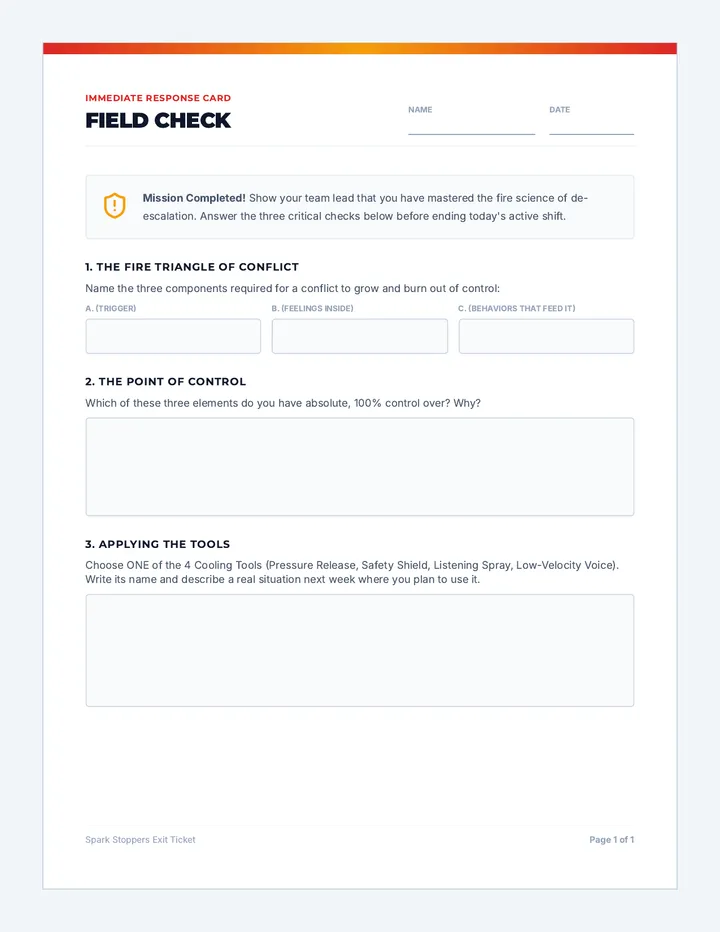
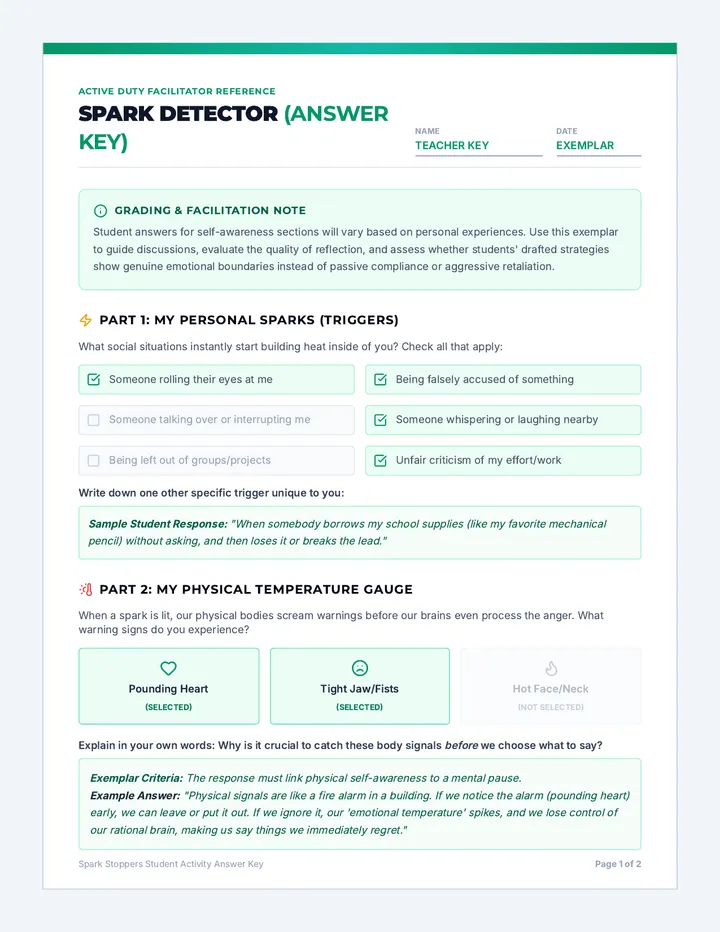
Teaches students how to identify physical triggers of anger and implement immediate de-escalation strategies when they feel unfairly treated.
Focuses on the distinction between arguing and professional advocacy, teaching students how to express disagreement without escalating conflict.
A comprehensive toolkit designed to help students manage test-related stress through breathing techniques, positive mindset shifts, and practical preparation strategies.
A practical financial literacy lesson where students evaluate three different car options (economy, mid-range, and luxury) to determine which best fits a monthly budget using simple payment calculations.
A final session focused on identifying personal strengths and reframing challenges as opportunities for growth.
Students will map out their support networks and practice assertive communication for seeking help.
Practical application of grounding techniques and mindfulness to manage overwhelming emotions.
Students will explore the importance of flexible routines and identify low-cost self-care habits.
Introduction to healthy coping strategies and the development of a personalized coping skills menu.
Students will learn to identify the physical and emotional signs of stress and recognize their personal triggers.
A guided session focused on acknowledging the feeling of loneliness after the loss of a father and creating a personal space for remembrance.
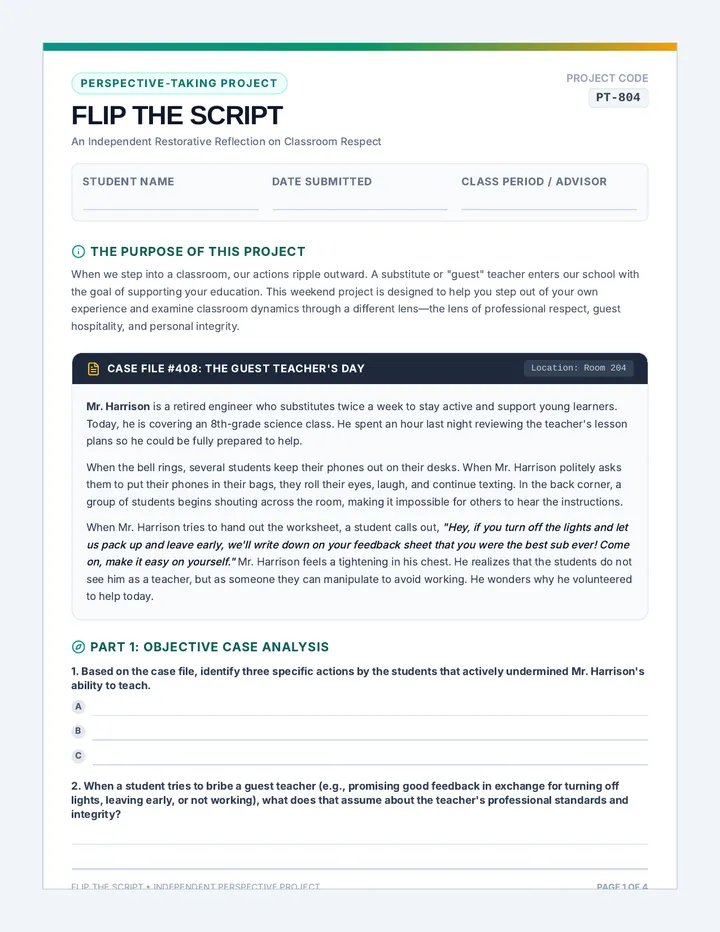
A discussion-based lesson teaching students how to navigate difficult interpersonal dynamics with teachers and peers using diplomatic communication and emotional regulation.
A comprehensive parent workshop designed to introduce families to the multi-faceted role of middle school counselors, covering academic, social-emotional, and career support.
A comprehensive lesson focused on helping students identify academic, social, environmental, and schedule changes while practicing specific coping strategies. Includes visual aids, scenarios, and tracking tools for ERMHS goals.
A discussion-based lesson focused on self-advocacy skills, specifically setting healthy boundaries and requesting help or clarity in various social and academic situations.
Students will identify personal frustration triggers and practice selecting appropriate coping strategies using a visual menu and scenario-based role-play.
A fast-paced workshop designed to help adolescents overcome social anxiety and master the basic 'blueprints' of starting a conversation with a new peer. Students will learn specific openers and body language cues to build meaningful connections.
A lesson focused on interpreting social cues and ambiguous communication to improve interpersonal understanding.
A quick-fire 15-minute SEL lesson focused on helping 6th graders distinguish between passive, aggressive, and assertive responses when facing unkindness. Students learn the 'Backbone Method' to set firm, respectful boundaries.
A collection of promotional materials to recruit parent volunteers for Dana Middle School's student-led Ally Action Program.
A middle school SEL lesson focusing on conflict resolution, teaching 6th graders how to identify and choose between escalating or de-escalating a situation. Includes a detailed lesson plan and an interactive slide deck featuring real-world scenarios like social media rumors and group project drama.
A 6th-grade SEL lesson focused on distinguishing between harmless banter and hurtful communication, exploring intent vs. impact.
A lesson focused on identifying negative self-talk and practicing four key coping strategies: positive reframing, deep breathing, grounding, and 'I' statements to improve academic resilience.
Students practice applying their new skills to social situations and conflict resolution, concluding the group with a graduation ceremony.
Focuses on self-control and the power of the 'pause,' teaching students how to stop before reacting impulsively to high-intensity emotions.
Participants build a personal toolkit of 'cooling' strategies to lower their emotional temperature when they feel anger or frustration rising.
Students learn to identify the physical warning signs of big emotions and map out their personal 'triggers' using an engineering-themed alert system metaphor.
A 30-minute counseling session focused on teaching and practicing the box breathing technique to manage stress and anxiety.
A foundational lesson on career research and exploration, focusing on key terminology and real-world application through career scenarios.
A lesson focused on equipping students with task initiation strategies and goal-setting techniques to maximize their performance during state exams.
A comprehensive lesson for teenagers to categorize the 'size' of life's problems and match them with appropriate emotional reactions and practical solutions in school and social settings.
A remote-friendly social work lesson focusing on impulse control, personal boundaries, and academic self-monitoring for middle school students. It uses an aviation/pilot theme to help students visualize 'steering' their own actions and responsibilities.
Focuses on self-control and self-management through the lens of self-care rather than self-correction, helping students navigate challenges with grace.
A deep dive into emotional awareness and self-compassion, teaching students to welcome all feelings with curiosity and kindness.
Students explore the concept of intrinsic value and identity, learning that their worth is separate from their achievements or behaviors.
A 20-minute remote session designed for middle school students to master conflict prevention through trigger identification, the 'Stop, Think, Act' method, and 'I' statements. This lesson aims to reduce behavioral referrals by providing concrete technical tools for emotional regulation.
A high-impact 20-minute group activity that identifies the 'inner critic' in academic settings and explores how it impacts motivation and self-esteem. Students will conduct an 'academic audit' to transform anxious thoughts into motivational strategies.
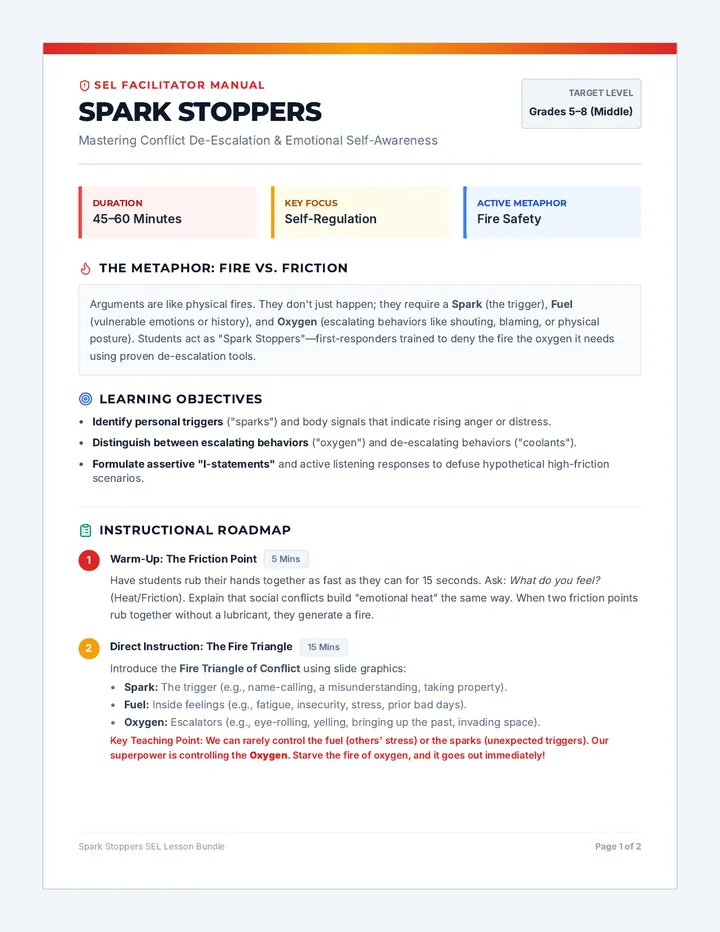
A social-emotional learning lesson focused on identifying emotional triggers and mastering communication techniques to de-escalate peer conflict. Students analyze the 'chemistry' of conflict and practice specific verbal tools to lower the emotional temperature of tense situations.
Students explore the critical distinction between personal responsibility and the decision-making process, learning to identify when they are fulfilling an obligation versus making a choice. Through case studies and a 'choice matrix' activity, they analyze how these two concepts interact in real-world scenarios.
A lesson designed to help students identify their 'Yellow Zone' physical signals and implement self-regulation strategies like deep breathing and mental reframing before escalating to the 'Red Zone'. Students will build a personal dashboard of coping tools and practice applying them to real-world scenarios.
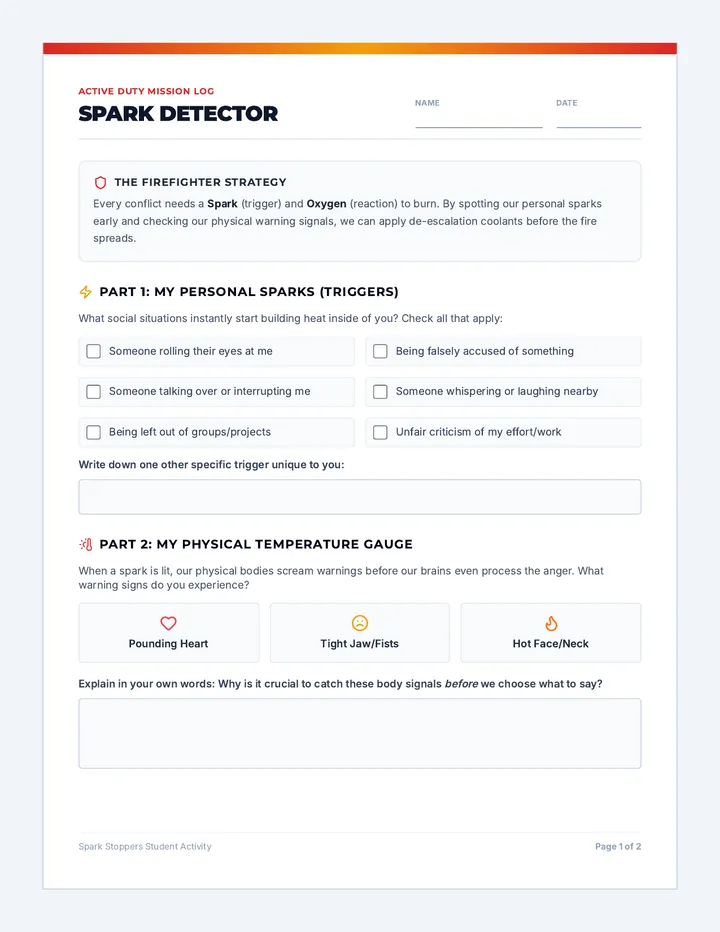
A lesson focused on helping students recognize the early physical and mental warning signs of anger to improve emotional self-regulation.
A social-emotional learning lesson that helps students distinguish between normal peer conflict and bullying using the 'RIP' criteria (Repeated, Imbalance of power, Purposeful).
A lesson focused on developing social inference and prediction skills for middle schoolers, focusing on common social settings like school, the bus, and online gaming environments.
A lesson designed for students with ADHD to recognize impulsive urges and implement the 'Stop, Think, Act' strategy using a 'Pause Button' mental model. Students will explore common triggers and practice thoughtful decision-making through scenarios.
A 30-minute lesson for 7th graders to understand the connection between emotions and behaviors, introducing a two-step pause strategy to improve self-regulation and decision-making.
A comprehensive lesson on conversational turn-taking using themed prompt cards to build social-emotional skills and active listening.
A targeted social skills lesson focusing on the 'Social Filter' concept. Students will learn to distinguish between 'Think' and 'Say', understand the difference between intent and impact, and practice empathy by considering how their words affect others.