A 25-minute social-emotional learning lesson focused on impulse control and decision-making through the Stop-Think-Choose framework. Students practice identifying problems, generating multiple solutions, and pausing before acting.
This lesson teaches students how to use cognitive distractions—like puzzles and coloring—to manage anxious feelings. It explains the science behind 'changing the channel' in the brain to find a sense of calm.
Integrates all previous skills—optimism, self-control, and perspective-taking—to solve complex social scenarios and 'level up' as a Power Player.
Introduces responsible decision-making by using a Choice Map to evaluate consequences before acting.
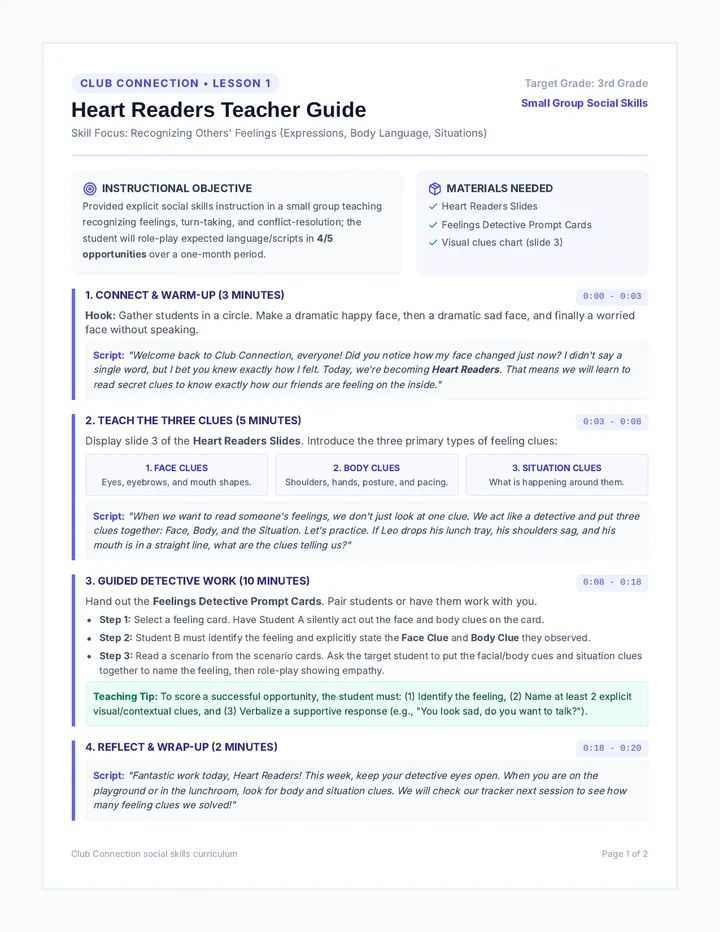
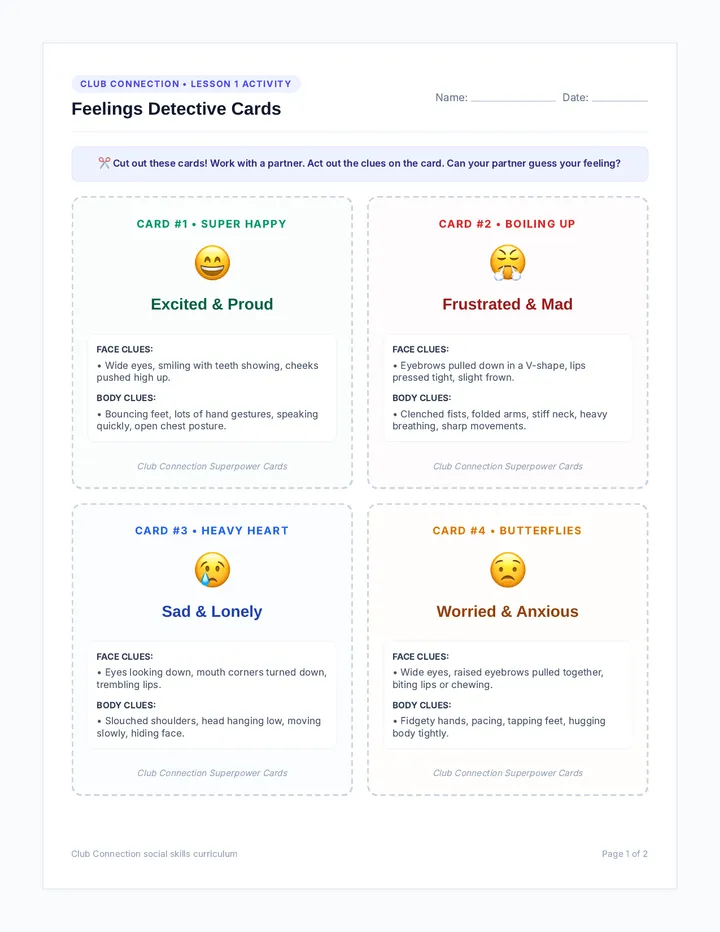
Develops social awareness and empathy by helping students identify feelings in others and understand different perspectives.
Teaches self-management skills including the 'Pause, Calm, and Think' strategy using a remote control visual metaphor.
Focuses on Growth Mindset and Optimistic Thinking, teaching students to use the power of 'Yet' to overcome challenges and stay positive.
This lesson introduces math-based grounding techniques to help students manage anxiety or overstimulation by engaging the logical side of the brain. It includes portable prompt cards and structured worksheets featuring counting, arithmetic, and geometry challenges.
A comprehensive Social-Emotional Learning lesson introducing the concepts of the Upstairs and Downstairs Brain, teaching students how to identify their emotional states and use regulation strategies to stay 'integrated'.
A comprehensive lesson designed for 4th-grade students to develop impulse control and navigate peer relationships through the lens of a video game quest. The lesson covers listening skills, sharing, and resolving small conflicts.
This lesson focuses on helping students navigate feelings of disappointment by developing resilience and practicing positive self-talk. Students will learn to identify 'Growth Mindset' responses to setbacks and build a toolkit of coping strategies.