Consensus Lesson Plan Teamwork Triumph
Lesson Plan: Building Consensus
Grade Level
8th Grade
Duration
45 Minutes
Objective
Students will learn to build consensus through collaborative group challenges, active listening exercises, and reflective discussions aimed at finding common ground.
The "Why"
This lesson fosters essential teamwork and communication skills, preparing students for collaborative success in academics and beyond.
Preparation & Materials
Setup Tasks (5 min)
Review the lesson plan for complete context.
Arrange desks/tables for small group collaboration.
Ensure AV equipment is ready for slide presentation.
Required Materials
Group Challenge Instructions
Active Listening Prompts
"Understanding Consensus" Reading
Building Consensus Slides
Instructional Sequence
1
Introduction & Overview
5 MIN
Setting the Stage
Introduce the concept of consensus building and its importance in teamwork.
Outline the session flow: Group challenge, active listening practice, and debrief.
Use the Morning Meeting Question to spark initial reflection.
2
Group Challenge & Active Listening
25 MIN
The Core Activity
Divide students into small groups (3-4 students per group).
Hand out Group Challenge Instructions and Active Listening Prompts .
Students work to plan an event while explicitly practicing active listening techniques.
Teacher Role: Circulate and monitor communication styles, facilitating if groups get stuck in "majority rule" thinking.
3
Debrief & Reflection
15 MIN
Consolidating Learning
Facilitate a whole-class discussion: How was consensus achieved? What strategies worked?
Discuss the difference between consensus and "winning" an argument.
Collect Exit Tickets to assess individual student understanding.
Facilitation Guide
Key Concept: Consensus vs. Majority
Students often default to voting (majority rule), which can leave a minority feeling unheard. Emphasize that consensus is about synthesis —taking the best parts of everyone's ideas to create something better than any individual suggestion.
Prompts for Monitoring Groups
"I notice one idea hasn't been discussed much. [Name], could you summarize what you think of the plan so far?"
"You have two different ideas. How can you combine the 'spacious' part of Plan A with the 'low cost' part of Plan B?"
Differentiation Strategies
For Students Needing Support
Provide sentence starters from the Active Listening Prompts for them to keep visible.
Pre-assign group roles (Scribe, Timekeeper, Facilitator) to provide structure.
Offer a more narrow event choice (e.g., just planning the food) to reduce cognitive load.
For Advanced Learners
Introduce a "Constraint Card" (e.g., "The budget was just cut by 50%") mid-activity to test their consensus-building under pressure.
Have them observe another group for 2 minutes and provide feedback on their listening skills.
Building Consensus Slides Building Consensus
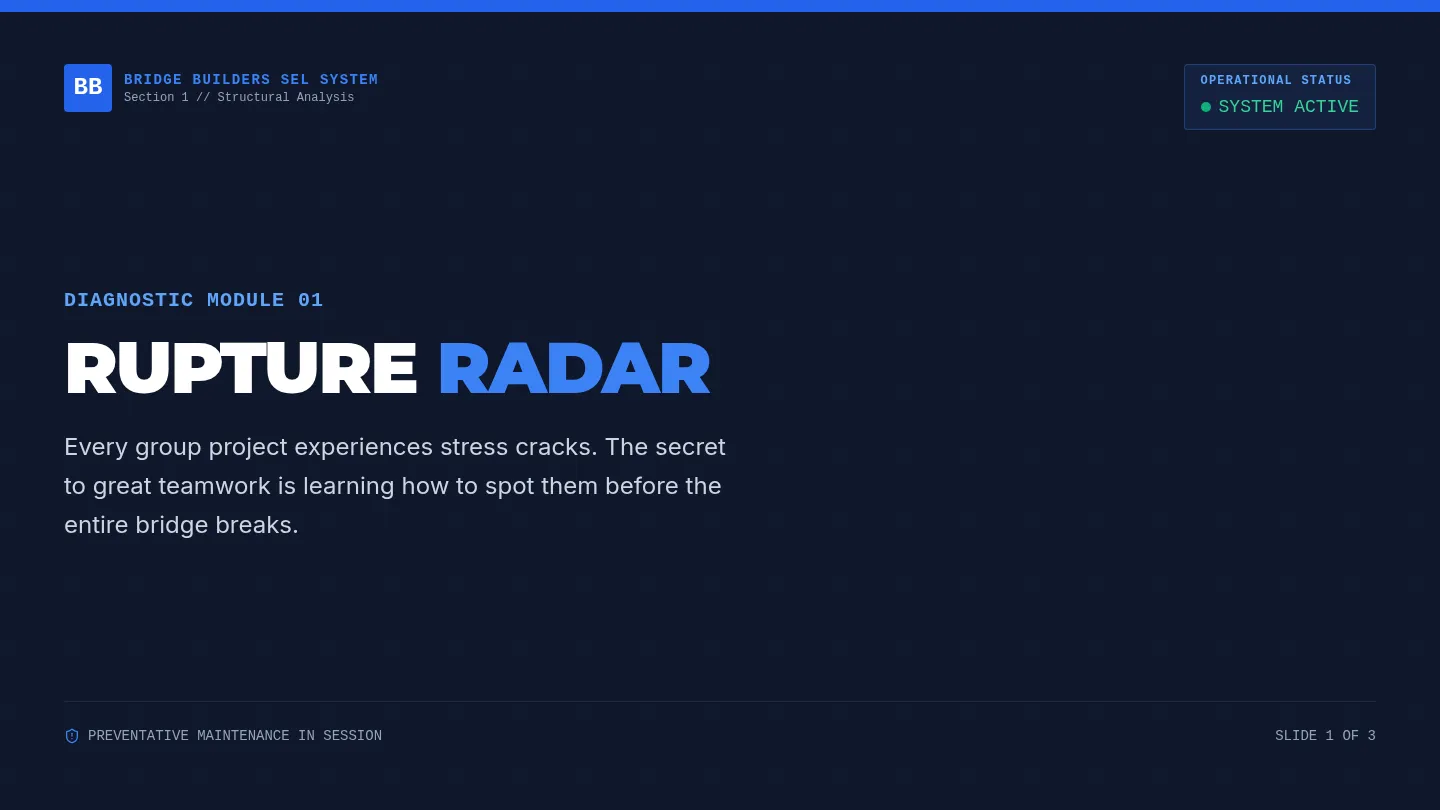
TEAMWORK TRIUMPH
Objective
Collaborate & Find Common Ground
Target
8th Grade Tier 1
Session Duration
45 Minutes
What is Consensus?
Achieving agreement by considering and integrating multiple viewpoints.
Strengthens solutions through collaboration
Essential for both school and life success
"It's not just about who wins the vote; it's about making sure every voice builds the final plan."
Group Challenge
The Task
Collaborate to solve a shared problem: Planning a Major Event .
Process Steps
Read the Instructions material
Work together to propose one solution
Utilize every team member's input
Success isn't just a finished plan; it's a team that stands behind it!
Active Listening
THE GOAL
Focus on understanding before responding.
THE TECHNIQUE
Reflect back what you hear first.
Strategy Toolbox
Ask Clarifying Questions
Paraphrase the Idea
Connect to Past Points
Build on Suggestions
Debrief & Reflection
How was consensus achieved in your group?
What strategies helped collaboration the most?
How did active listening change the outcome?
"Coming together is a beginning; keeping together is progress; working together is success."
Group Challenge Instructions Project Brief: The Event Challenge
Team Reference
CONSENSUS-ACT-01
Team Members
Date
Overview
"Your challenge is to plan an event that requires careful collaboration and consensus building. Your goal is to work together as a team, ensuring that every member's ideas are heard and considered."
Phase 1: Selection
Choose an Event Theme:
School Fair
Charity Drive
Community Sports Day
Other: _________
Phase 2: Planning Aspects
Your team must address all of the following:
Venue Selection
Budget Logic
Entertainment
Promotion
Safety & Security Measures
Guidelines for Success
01
Divide Responsibilities: Assign specific focus areas to each member.
02
Practice Active Listening: Use your prompt sheet! Repeat what you heard before you respond.
03
Integrate Ideas: Don't just pick one person's plan. Combine the best elements of multiple ideas.
04
Build Consensus: Debate respectfully. Compromise to find common ground that everyone supports.
Team Workspace
Sketch your plan or jot down shared ideas here
Team Reflection
1. What specific strategies helped your team build consensus?
2. How did active listening contribute to your decision-making process?
3. What was the biggest challenge your team overcame together?
Good luck and have fun planning your event!
Active Listening Prompts Communication Protocol
REF: AL-PROMPT-02
Subject: Active Listening for Consensus Building
Active listening is the foundation of consensus. Use these protocols to ensure every voice is processed correctly before you contribute your own input.
01
Protocol: Reflection
"Summarize the main idea of what your teammate just said."
Example: "So, you're suggesting that we use the school gym for the event because it's spacious?"
02
Protocol: Clarification
"Ask a question that helps clear up any uncertainty."
Example: "When you mention a budget, do you mean we need to consider costs for decor as well?"
03
Protocol: Connection
"Relate the idea to something discussed before, or see where it fits."
Example: "That ties in well with my idea of creating a fun activity zone that also considers safety."
04
Protocol: Expansion
"Think of ways to add to or strengthen what your teammate has said."
Example: "I really like that approach, and perhaps we can look into community partnerships too."
05
Protocol: Deepening
"Identify any parts of the idea that need further explanation or detail."
Example: "Could you elaborate a bit more on how you envision managing the budget?"
Draft Your Own Responses
Try writing one reflection or question for a teammate's idea during the challenge:
I Heard:
My Prompt:
System Update: Teamwork V8.0
© Classroom Tier 1 Protocol
Understanding Consensus Reading Understanding Consensus
Building agreements that empower every voice and strengthen every solution.
Consensus is an agreement reached when everyone in a group has a chance to share their ideas and concerns. Instead of simply voting or following just one person's decision, consensus involves deep discussion, active listening, and cooperation. This method of decision-making ensures that everyone feels heard and valued.
Collaboration
Combining different ideas into one solution.
Respect
Valuing each person's unique input.
Communication
Sharing thoughts and listening fully.
? Why Consensus Matters
Builds Stronger Teams
When everyone contributes, the final choice is often more creative. It strengthens bonds and promotes trust within the group.
Encourages Inclusivity
All voices are heard, ensuring everyone feels respected and included in the final outcome.
Develops Critical Skills
Practice negotiation, problem-solving, and conflict resolution—essential skills for adult life.
Creates Shared Ownership
Everyone feels responsible for the result, leading to better support and long-term commitment.
How it works
1
Discussion: Start by allowing everyone to express their opinions without judgment.
2
Active Listening: Practice summarizing another person's point before adding your own.
3
Integration: Combine the best parts of individual suggestions into a well-rounded decision.
4
Compromise: Adjust your ideas to meet halfway, ensuring everyone's needs are met.
Real-World Examples
Classroom Projects
Students use consensus to choose a topic that everyone is excited about, rather than just one student picking the theme.
Community Meetings
Residents discuss park improvements, combining suggestions for new benches with ideas for playground equipment to benefit everyone.
Personal Reflection
How can you ensure that everyone in your group feels heard during a disagreement?
Can you think of a time when working together led to a better decision than working alone?
Building consensus is a journey, not a destination.
Morning Meeting Question Morning Meeting
Kickstarting Teamwork Triumph
The Big Question
"What does teamwork mean to you, and can you share an experience when working together led to a great outcome?"
Draft Your Thoughts Below
Unit: Teamwork Foundations Session: 01
Consensus Exit Ticket Exit Ticket
Teamwork Triumph Reflection
Name
Date
"As we wrap up today's lesson on building consensus, please take a moment to reflect on what you've learned. These insights will help us build even stronger teams in the future."
1
What does consensus mean to you, and why is it important in teamwork?
2
How did active listening contribute to reaching a consensus during today's activities?
3
What is one key takeaway you will remember when working in a group?
Protocol Verified