A small group intervention lesson designed to help 7th graders identify when they need help and practice the specific language required to ask for it effectively.
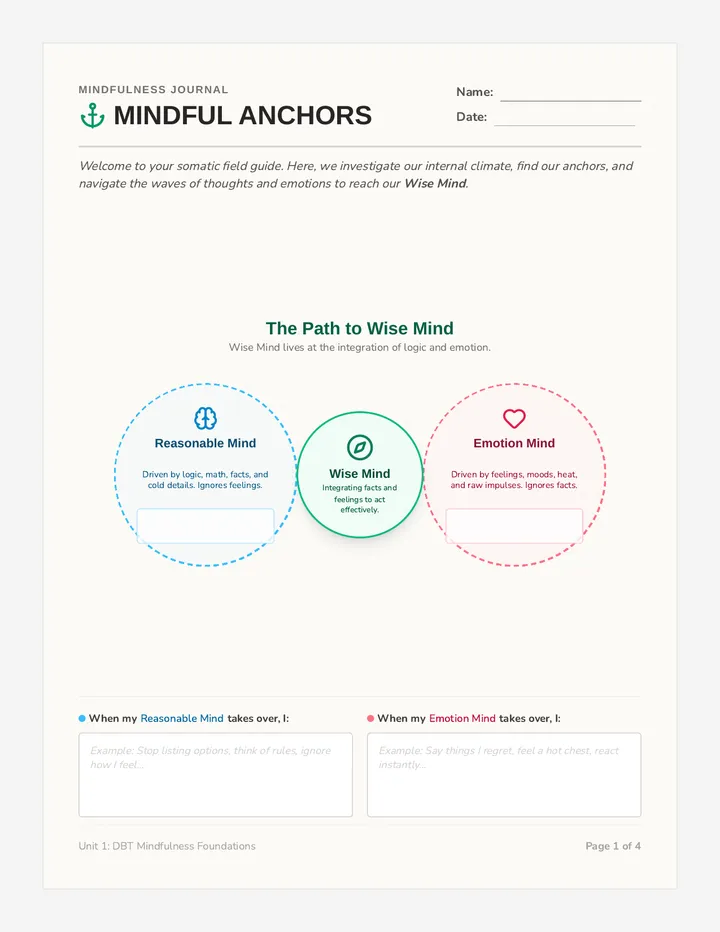
A comprehensive unit on Dialectical Behavior Therapy (DBT) mindfulness skills, taking students from somatic anchoring and cognitive understanding to collaborative, station-based performances that demonstrate 'What' and 'How' skills.
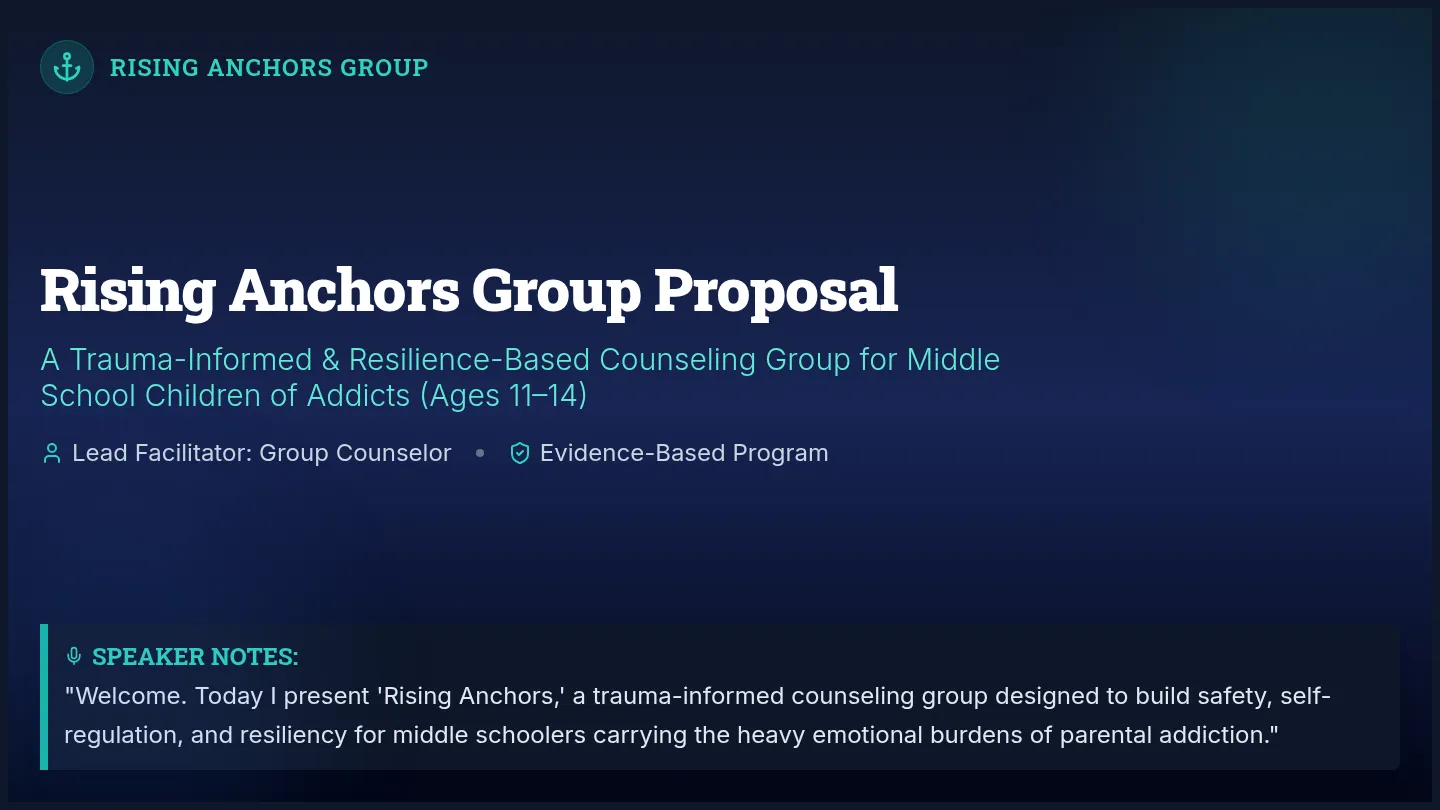
A comprehensive group counseling proposal and slide deck designed for middle school children of addicts (ages 11-14), utilizing a trauma-informed and resilience-based framework.
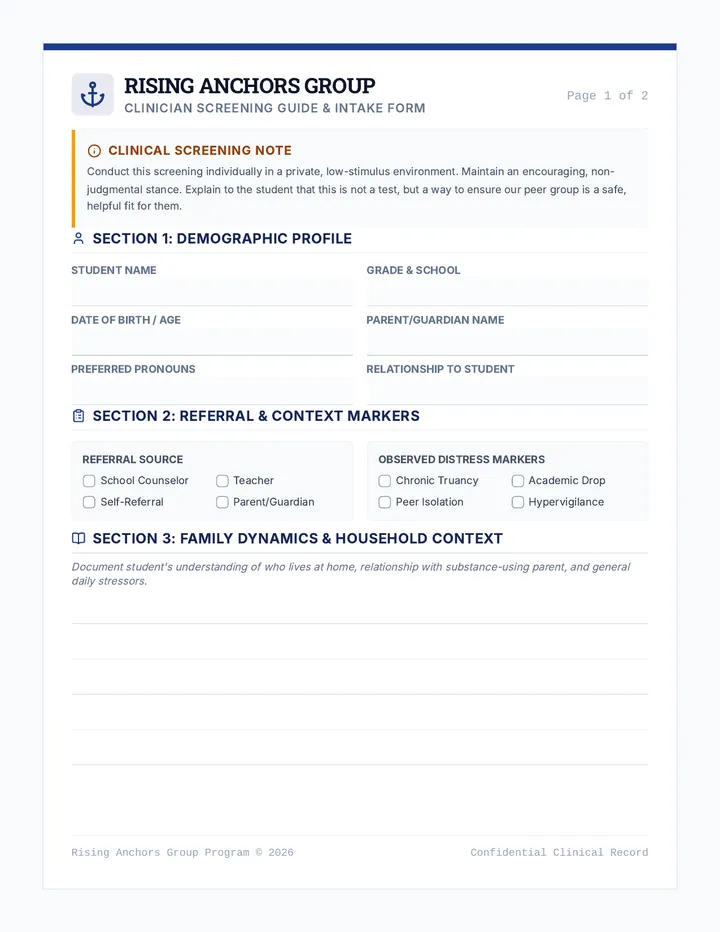
A professional, printable clinician screening guide and intake form featuring a client profile, academic checklist, 10 trauma-informed clinical questions with handwriting lines, and a decision matrix.
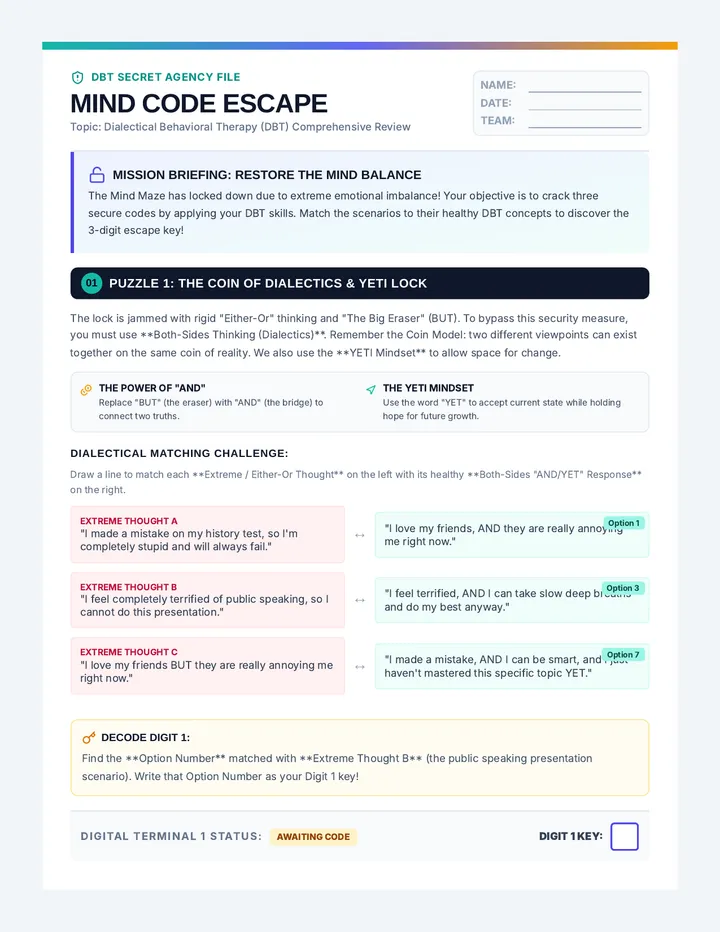
A hands-on sequence designed to empower teens with Dialectical Behavioral Therapy (DBT) concepts. Through engaging escape rooms, creative drama challenges, and real-life scenarios, students master dialectics and emotional regulation.
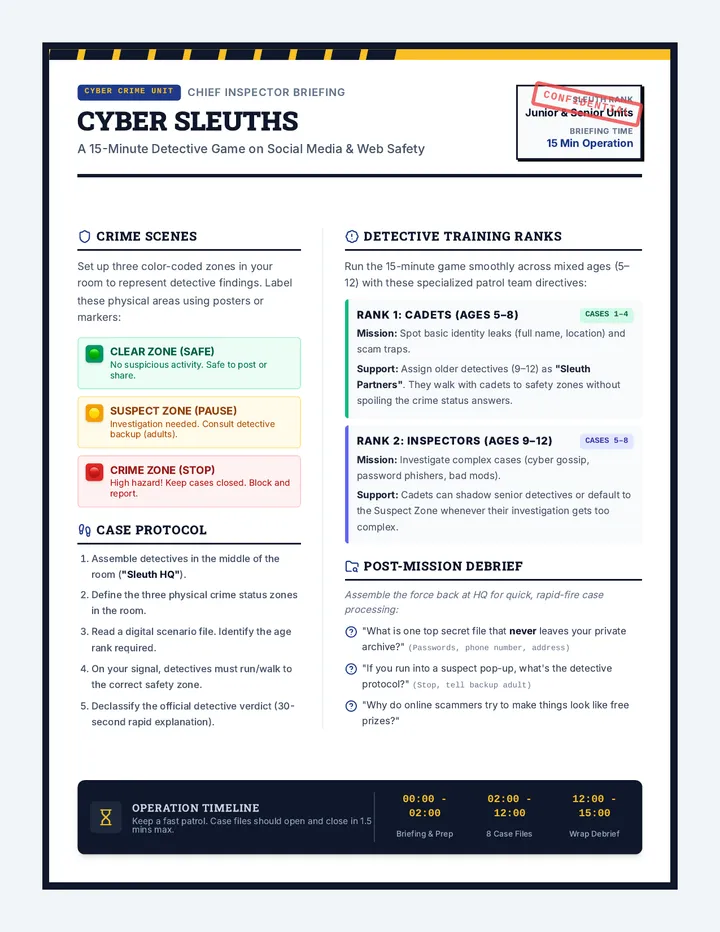
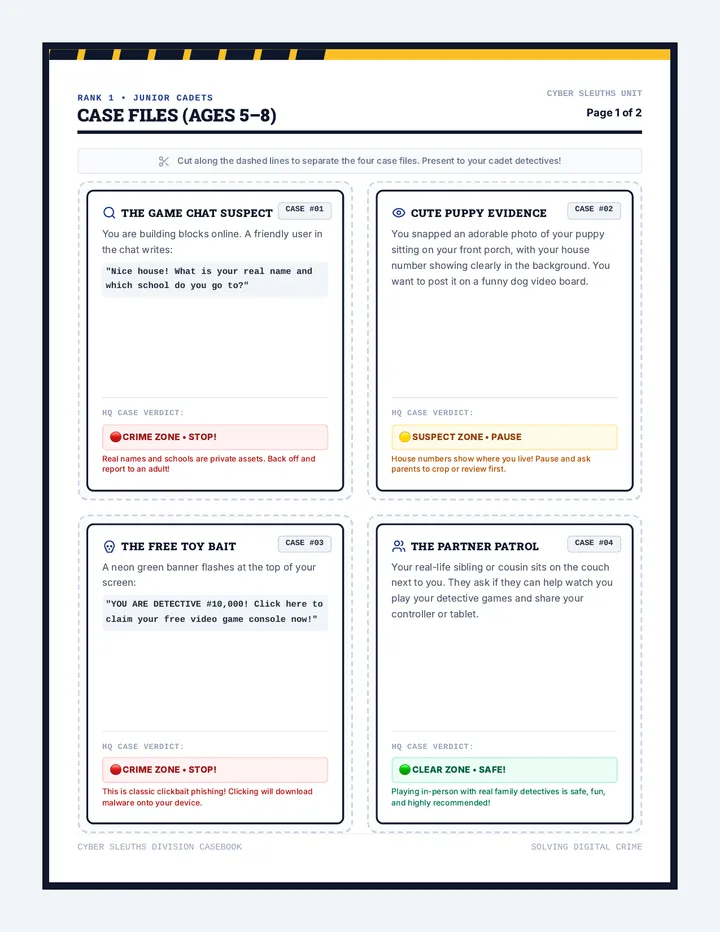
A high-energy, 15-minute movement game designed to teach kids ages 5-12 how to make smart, safe decisions online. Through rapid-fire scenario cards, students act as Cyber Sleuths to solve digital cases and investigate cyber threats.
A beautifully designed, trauma-informed 13-slide presentation outlining the theoretical framework, group logistics, ethical guidelines, and client screening process for a middle school Children of Addicts support group.
A 6-week curriculum for 7th-grade students focusing on social-emotional skills, decision-making, and fostering a positive return to school.
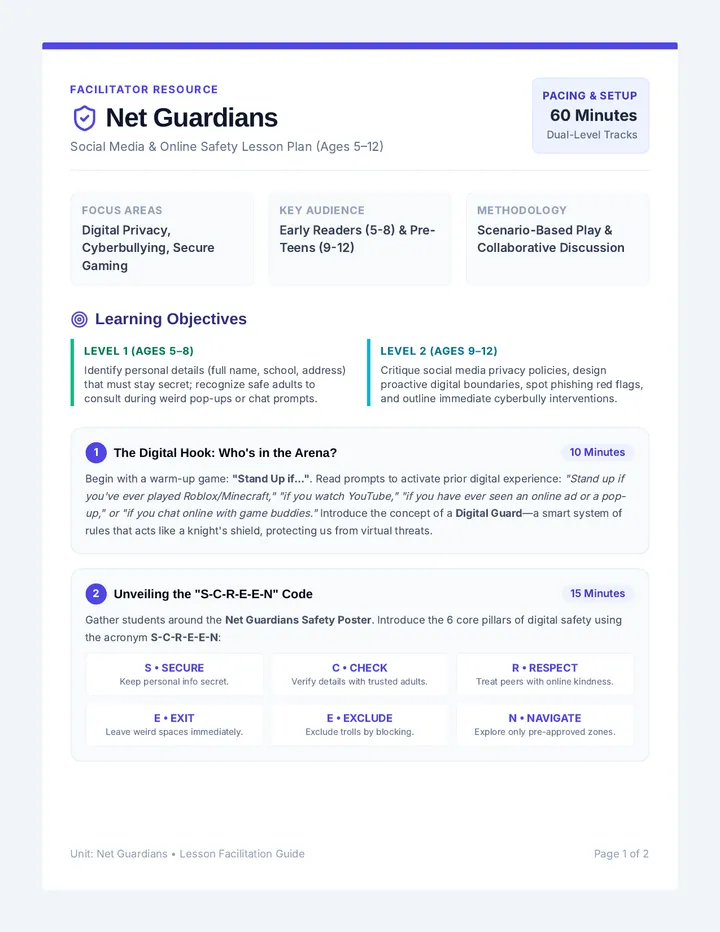
An interactive, dual-level digital safety lesson designed for youth ages 5-12, covering key concepts of digital privacy, cyberbullying, and safe gaming through collaborative activities and differentiated scenario cards.
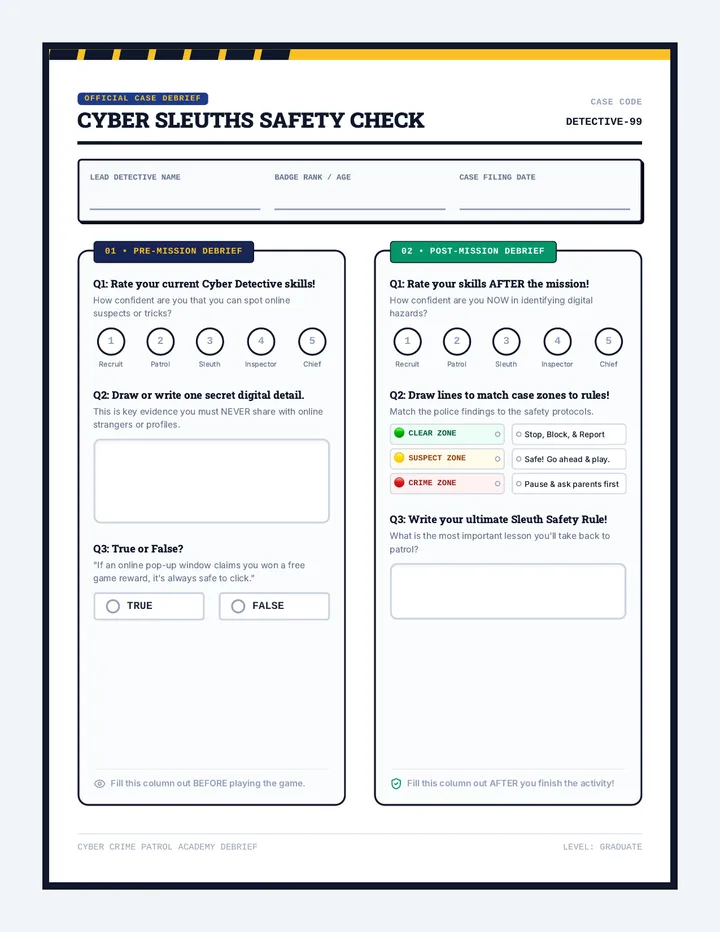
A 1-page student pre- and post-activity assessment sheet. It features visual self-ratings, a matching game for safety zones, and creative writing/drawing prompts suitable for mixed ages (5-12).
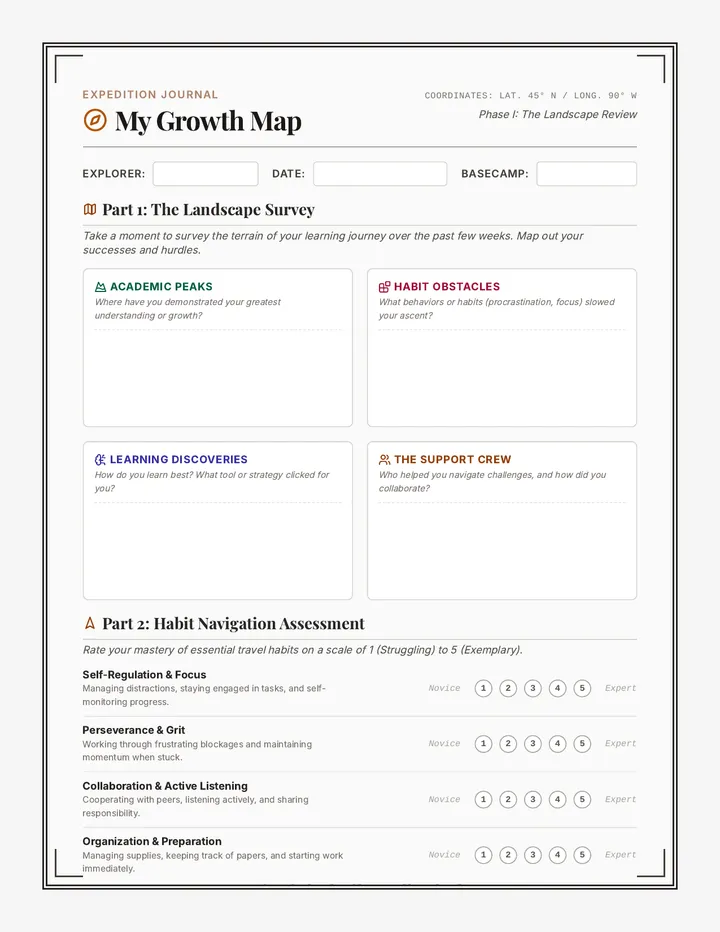
A comprehensive goal-setting and reflection lesson designed to help students analyze their academic and social-emotional progress, identify roadblocks, and create actionable growth plans.
A 2-page printable activity containing 8 scenarios (4 for ages 5-8, 4 for ages 9-12) formatted as cuttable cards. Each card includes a relatable digital scenario, age-appropriate language, and an official teacher safety verdict (Green, Yellow, or Red).