Techniques for reducing cognitive load by isolating tasks into discrete, single-step instructions. Employs visual cues and verbal repetition to improve task completion for students with processing challenges.
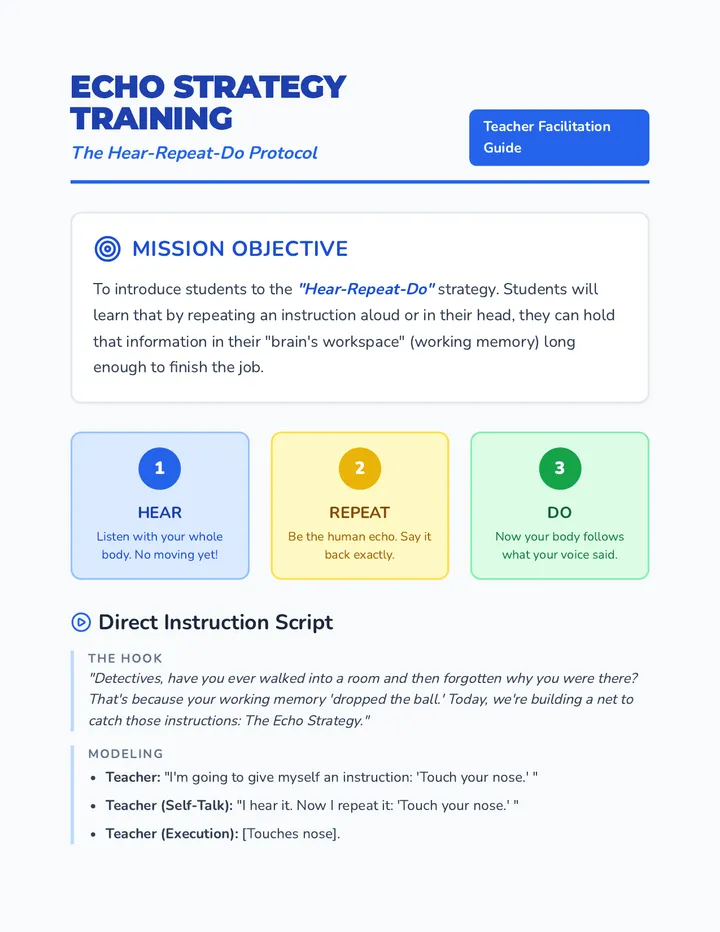
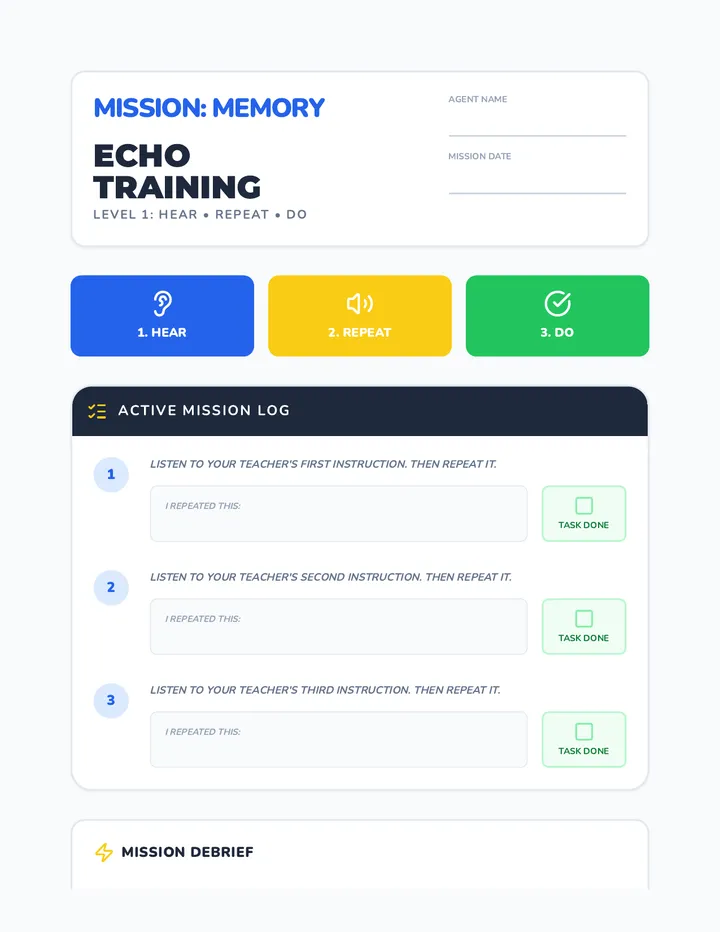
A specialized sequence for 4th-grade students to develop working memory through verbal rehearsal. Students practice the 'Hear-Repeat-Do' strategy, identify action keywords, utilize processing pauses, and verify their work to improve follow-through on single-step directions.
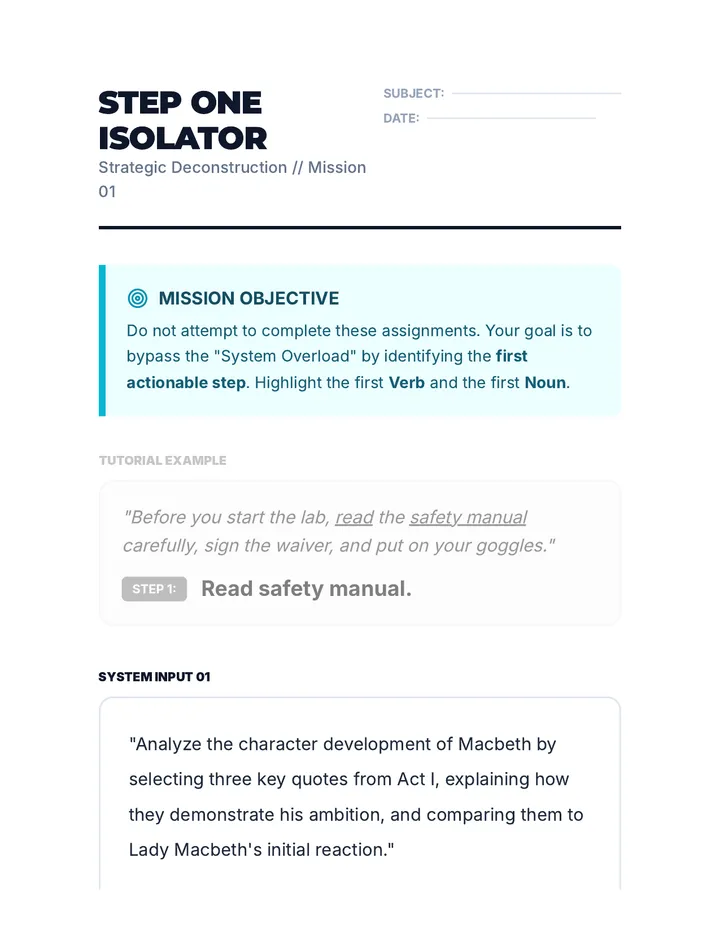
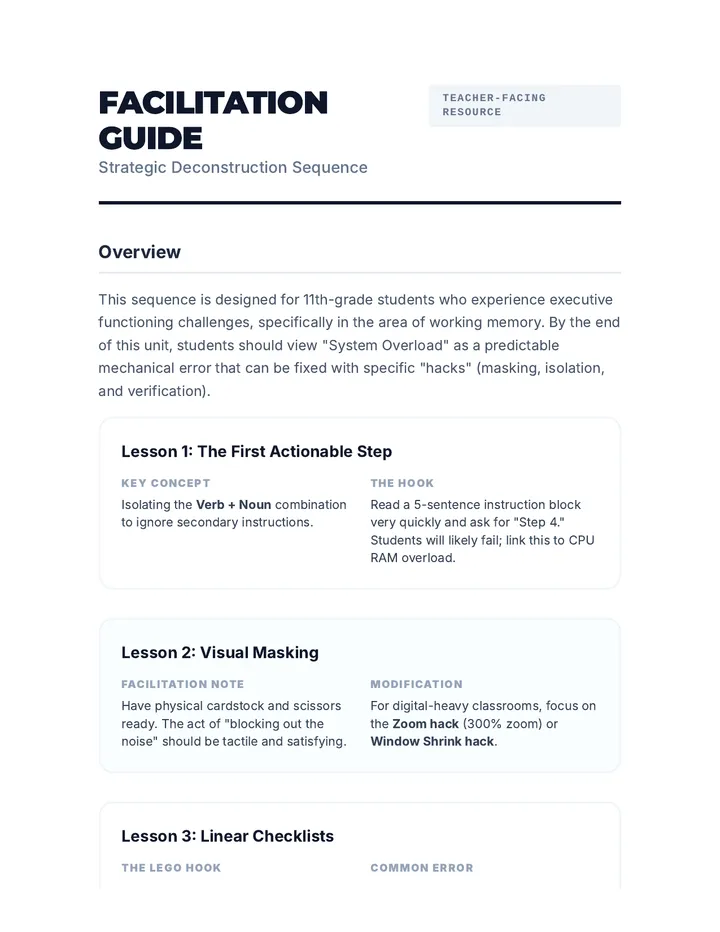
This sequence teaches 11th-grade students with working memory challenges how to deconstruct complex academic prompts into single, manageable steps using masking, checklists, and verification protocols.
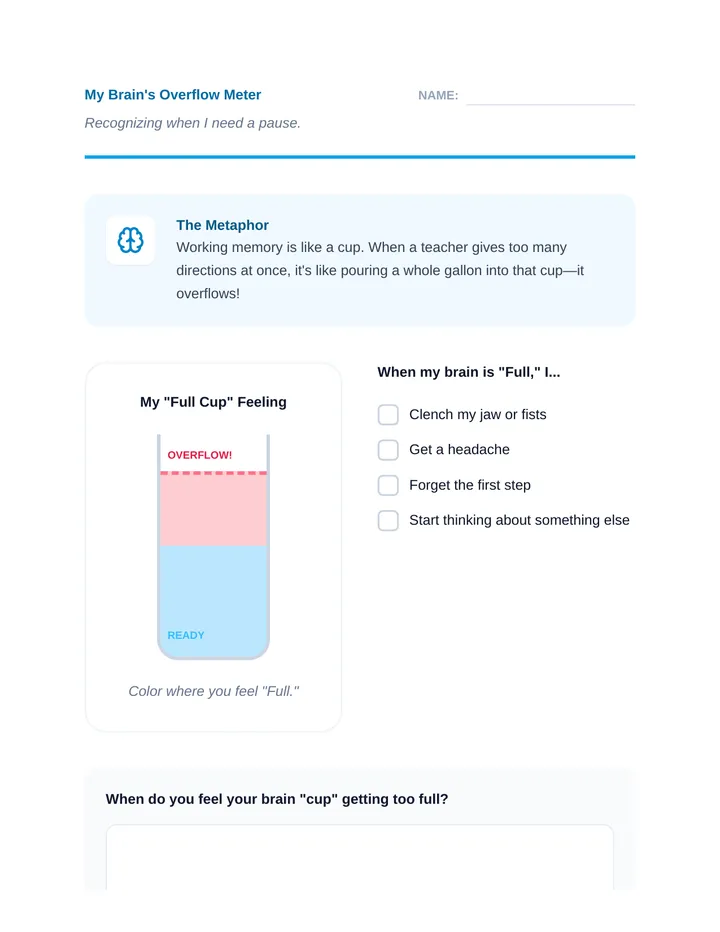
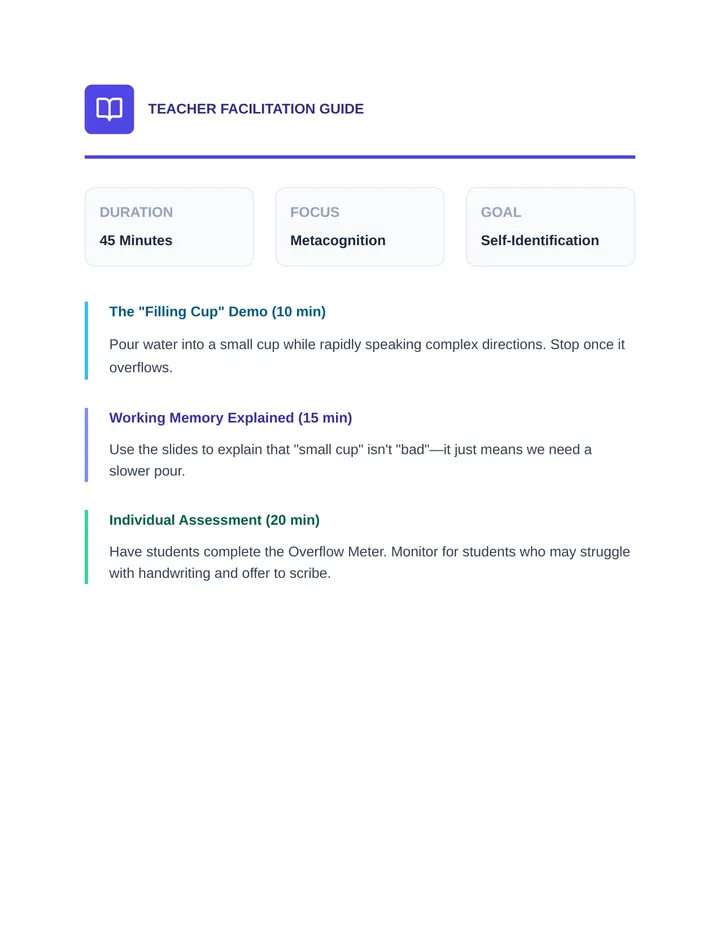
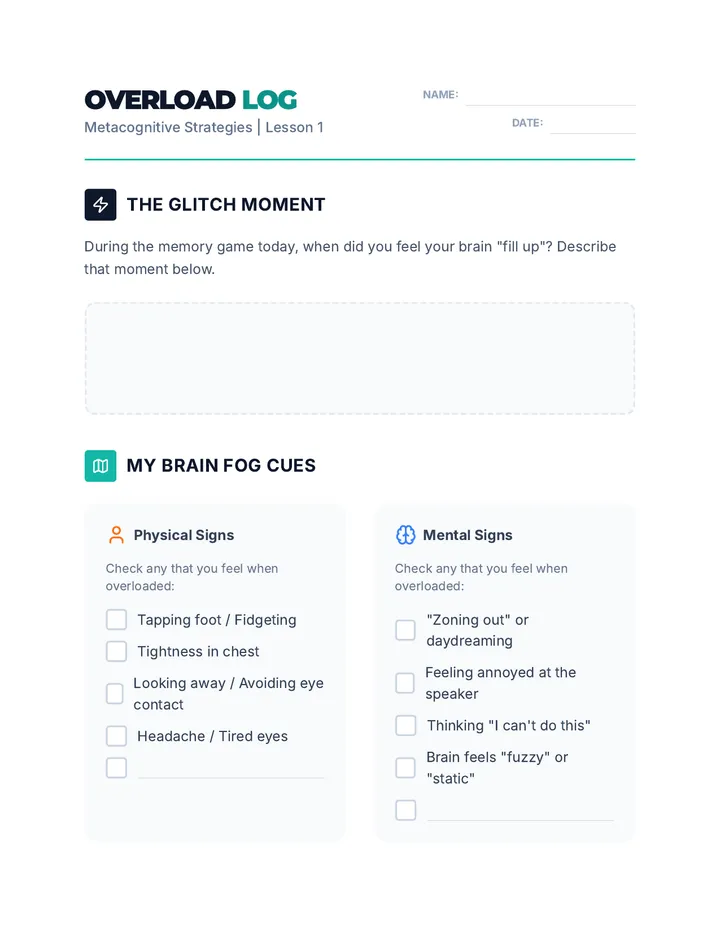
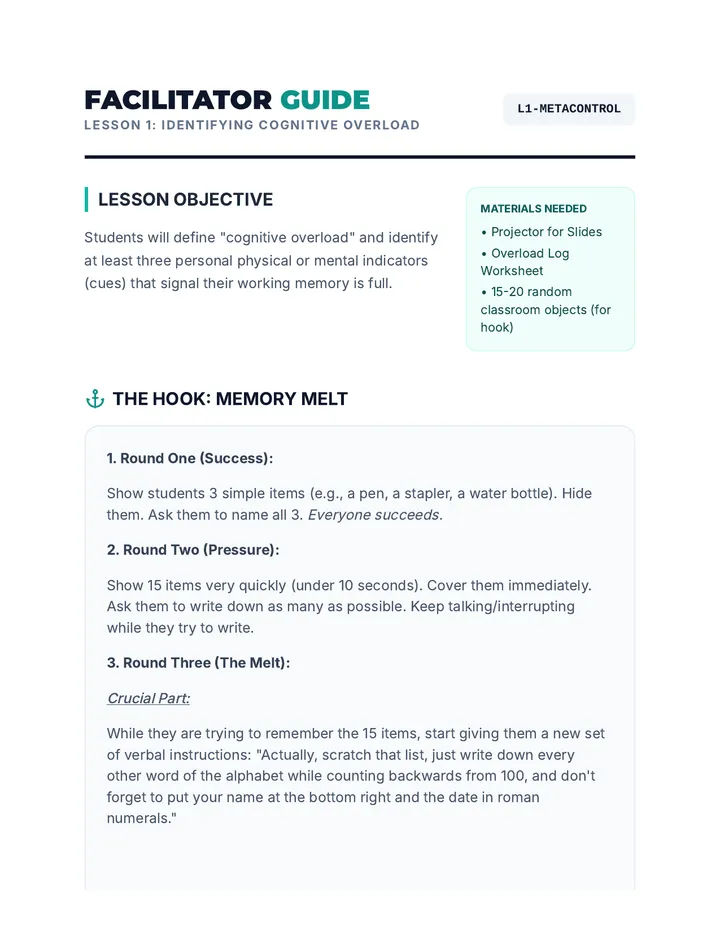
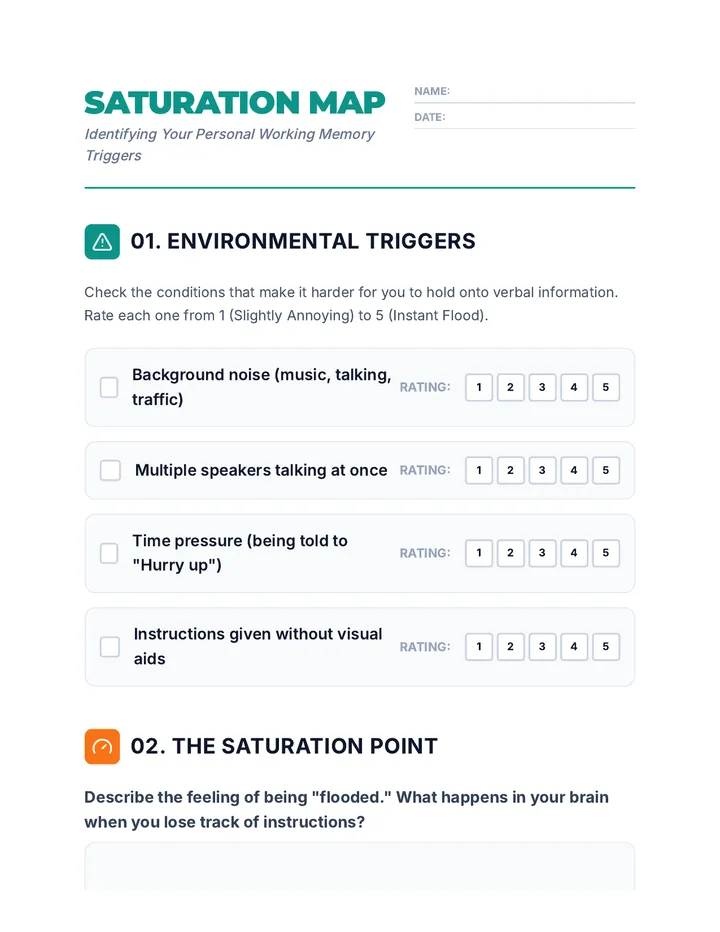
This sequence empowers 6th-grade students with working memory challenges to recognize cognitive overload and advocate for single-step directions. Students develop metacognitive awareness and a practical 'clarification toolkit' to manage learning inputs effectively.
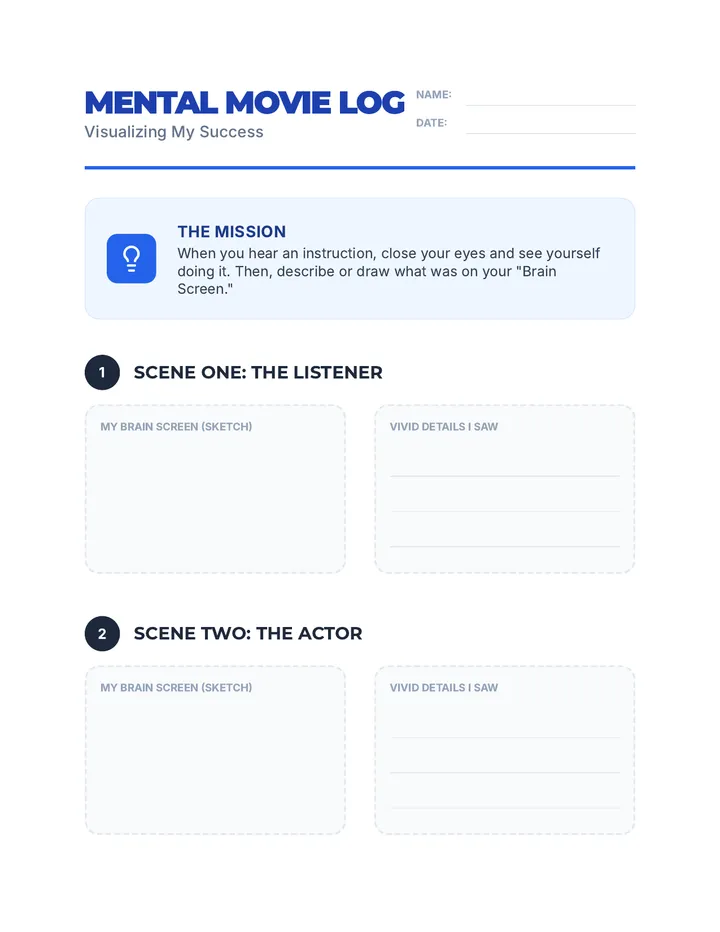
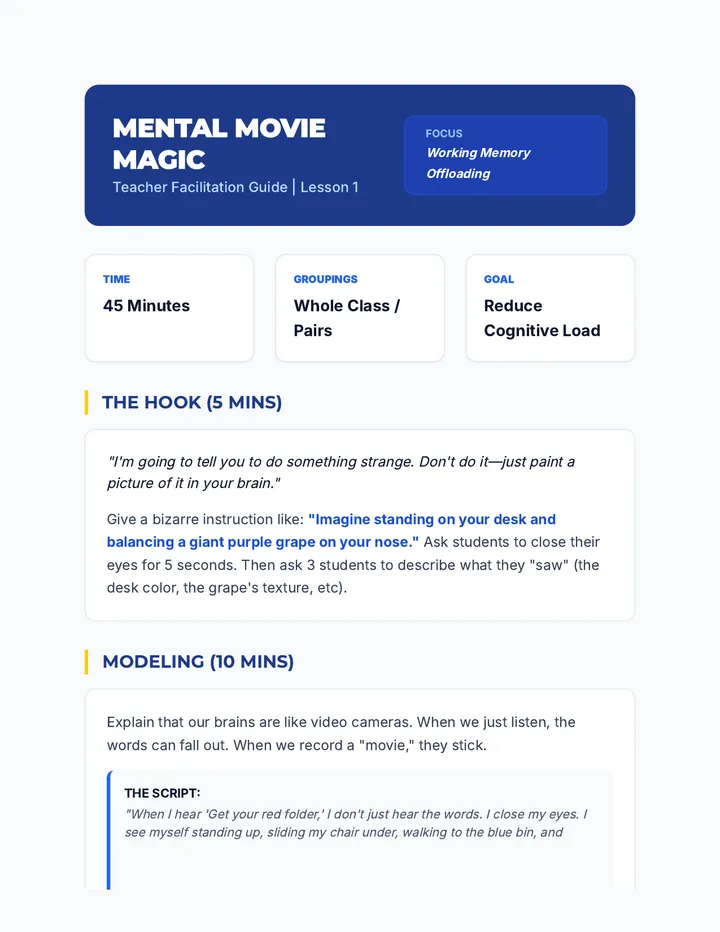
A specialized sequence for 6th-grade students focusing on working memory support through visual encoding. Students learn to transform auditory single-step directions into mental images and physical sketches to improve recall and task execution.
A specialized sequence for 5th-grade students focusing on working memory support through task segmentation. Students learn to break complex tasks into single steps, using digital pacing and physical checklists to manage cognitive load and reduce anxiety.
This sequence helps 8th-grade students with working memory challenges by teaching them to externalize tasks into single-step visual guides. Using an architectural blueprint theme, students learn to deconstruct complex goals, create symbolic anchors, and utilize physical tracking systems to ensure successful task completion.
This sequence supports Kindergarten students in developing working memory through visual cues. Students progress from matching objects to pictures to using action icons and First/Then boards, culminating in personal task management.
This sequence empowers 8th-grade students with metacognitive strategies to recognize cognitive overload and advocate for single-step directions. It covers identifying personal cues of overload, deconstructing complex instructions, and practicing self-advocacy scripts.
A self-advocacy sequence for 11th-grade students to manage working memory challenges by requesting single-step directions and professional modifications in fast-paced environments.
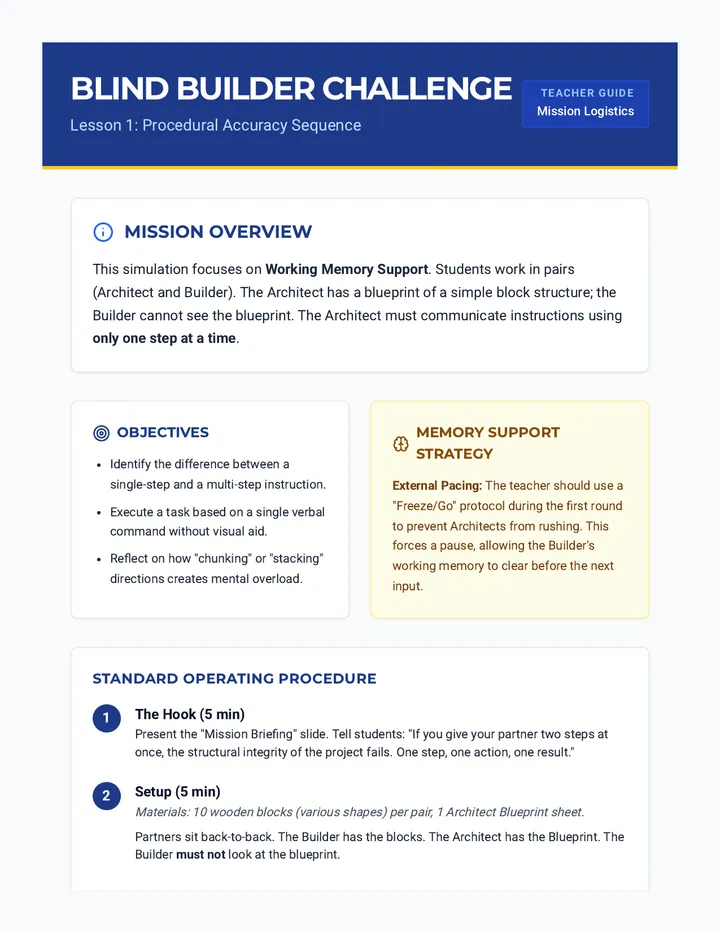
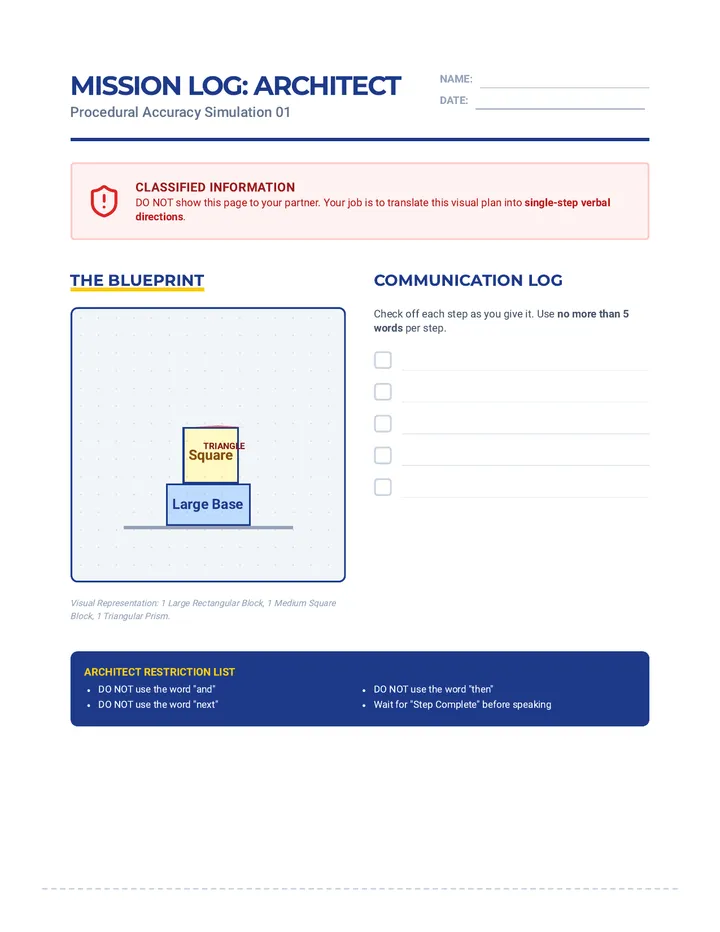
A simulation-based sequence for 6th graders to strengthen working memory and focus through precise, single-step instructions. Students engage in collaborative building, robotic programming, and assembly line tasks to master the art of sequential processing.
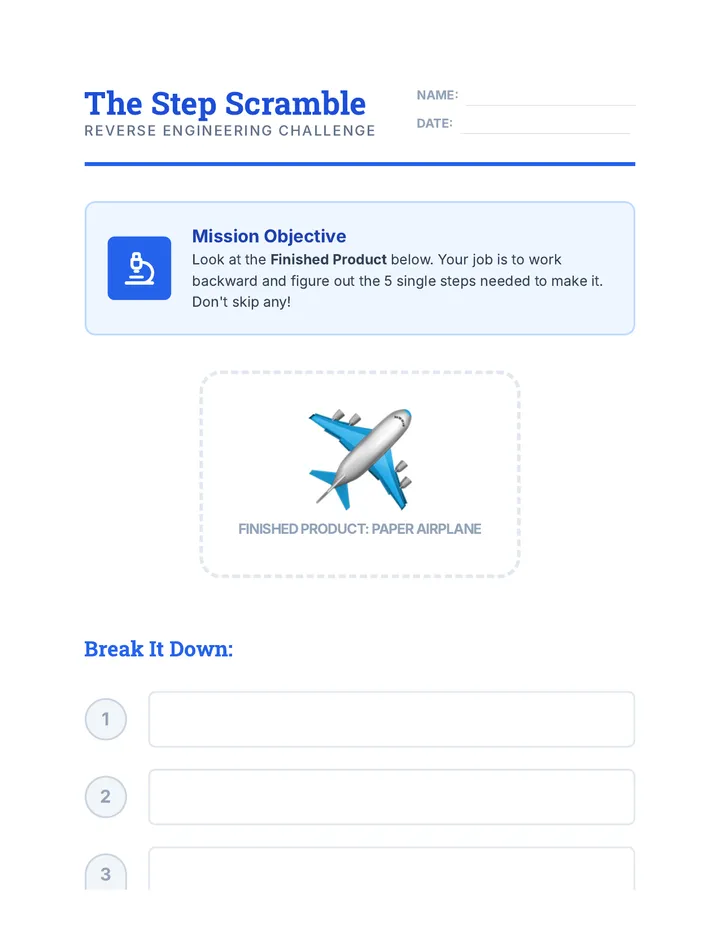
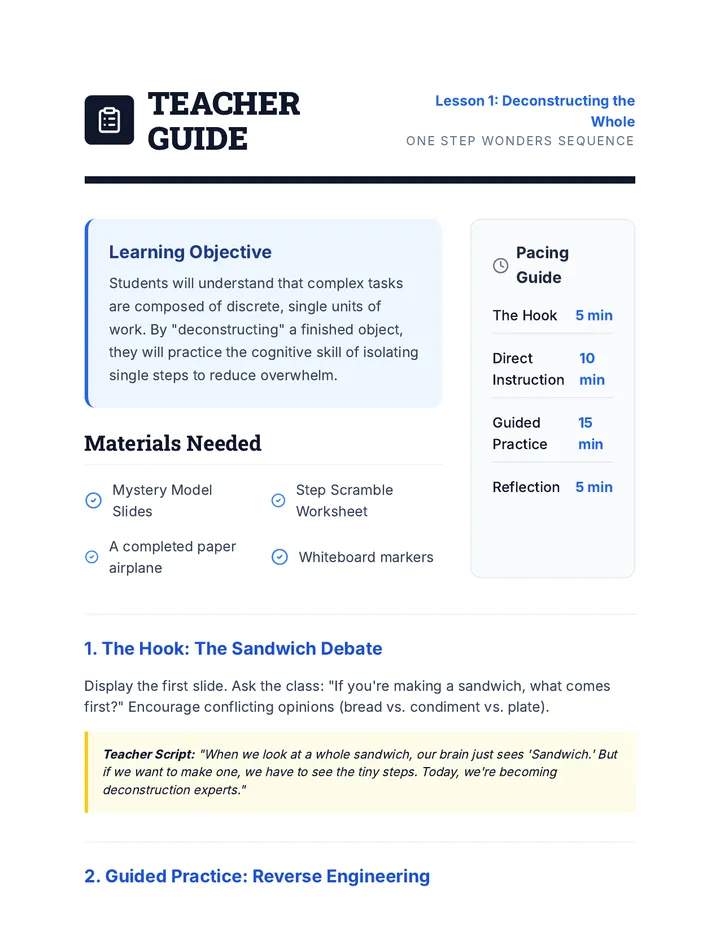
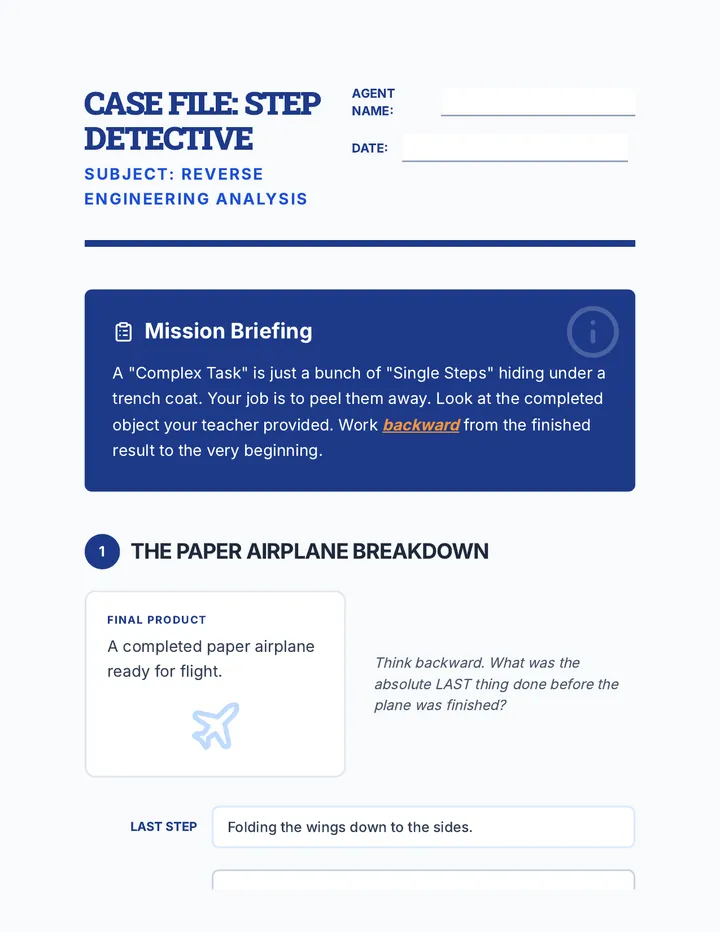
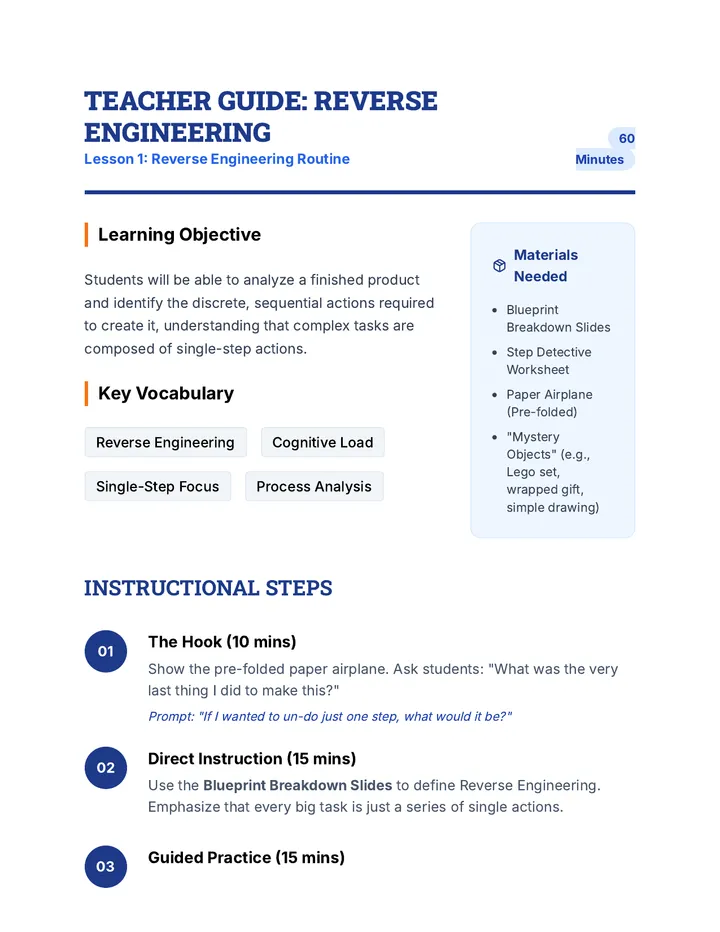
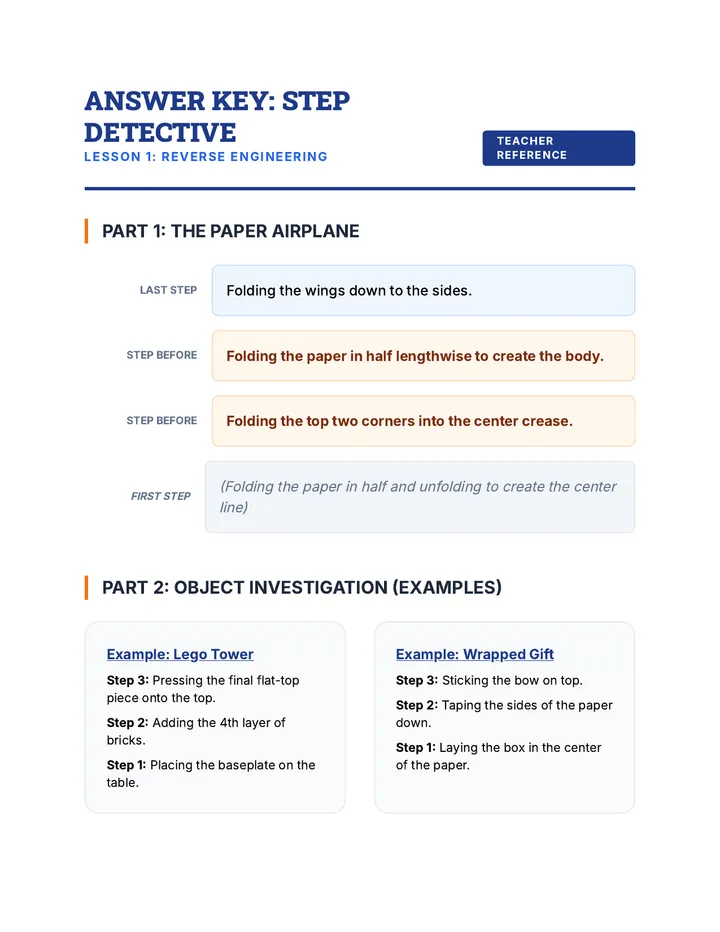
This sequence teaches 6th-grade students how to manage cognitive load by breaking down complex instructions into single, manageable steps. It covers reverse engineering, chunking text, prioritizing the first step, digital task management, and logical sequencing.
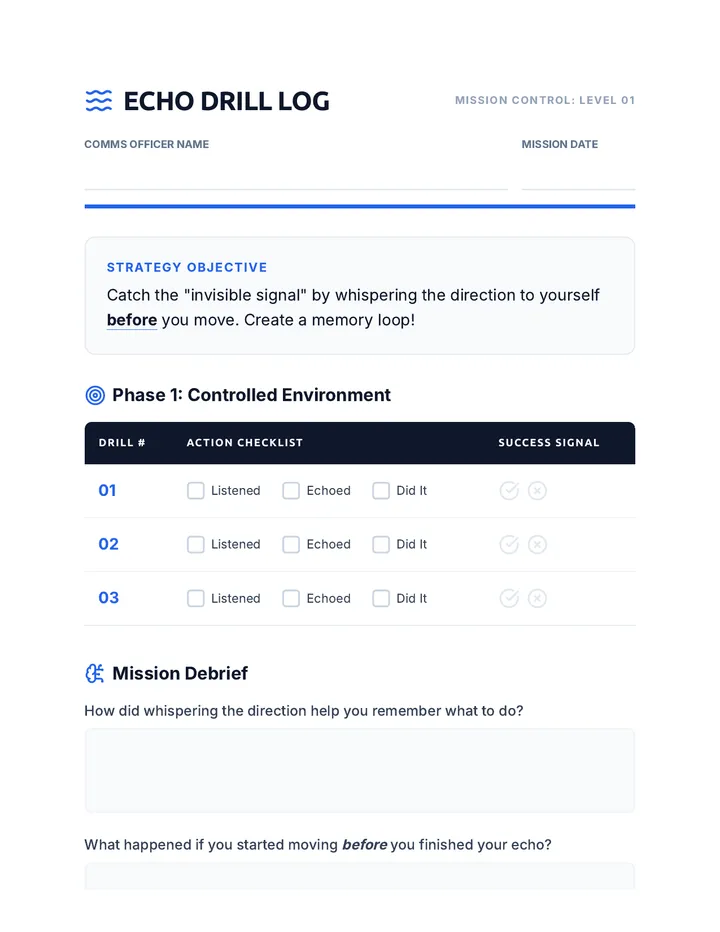
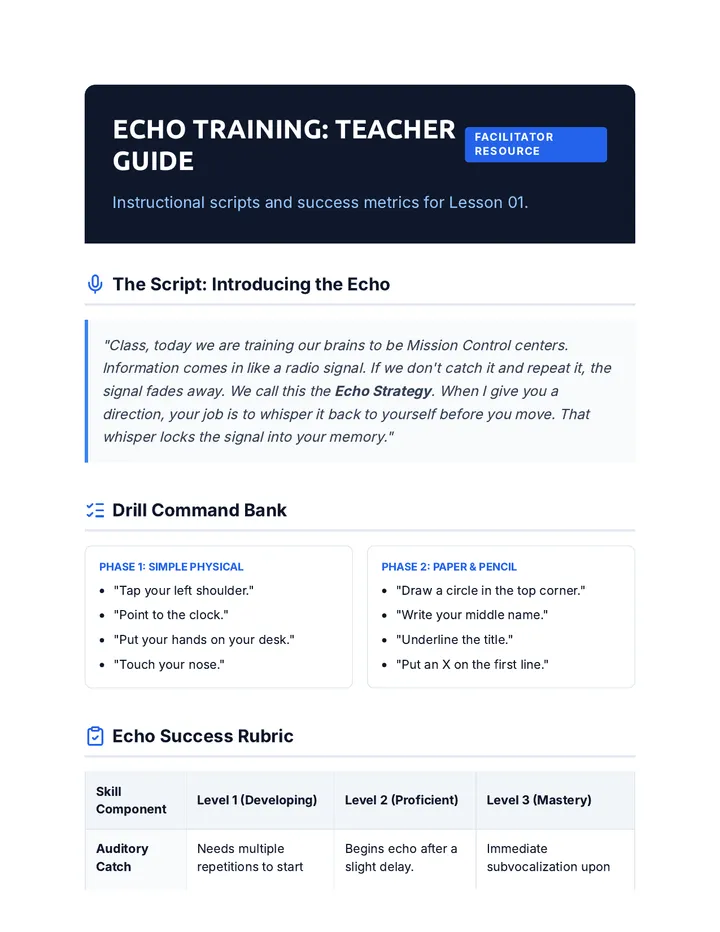
A systematic program designed for 6th grade students to improve working memory and auditory processing. Students learn specific strategies like verbal rehearsal, verb isolation, and impulse control to successfully capture and execute single-step instructions in various environments.
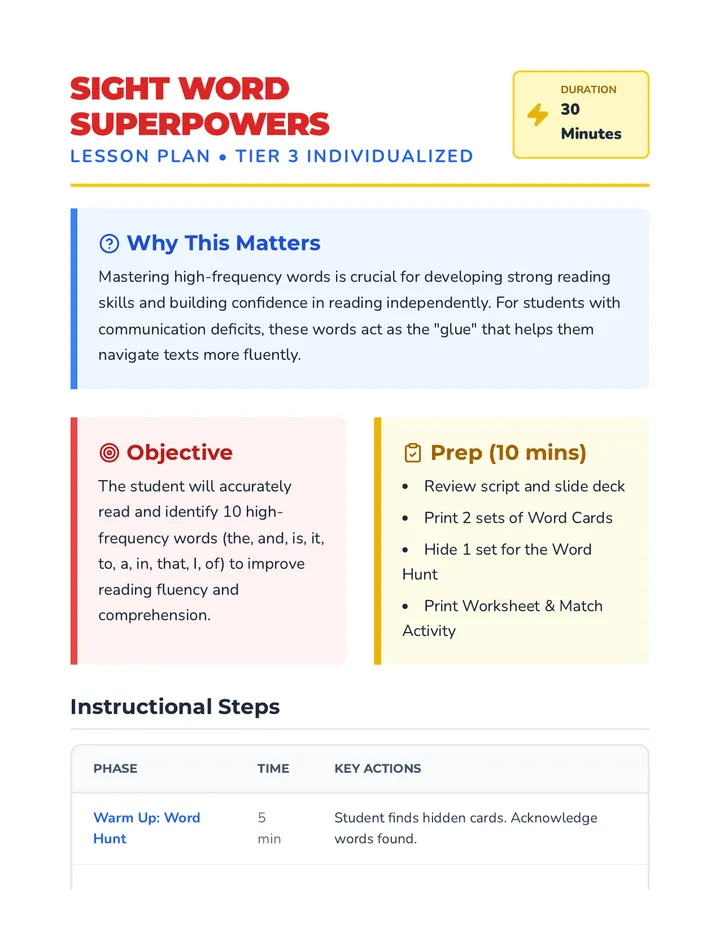
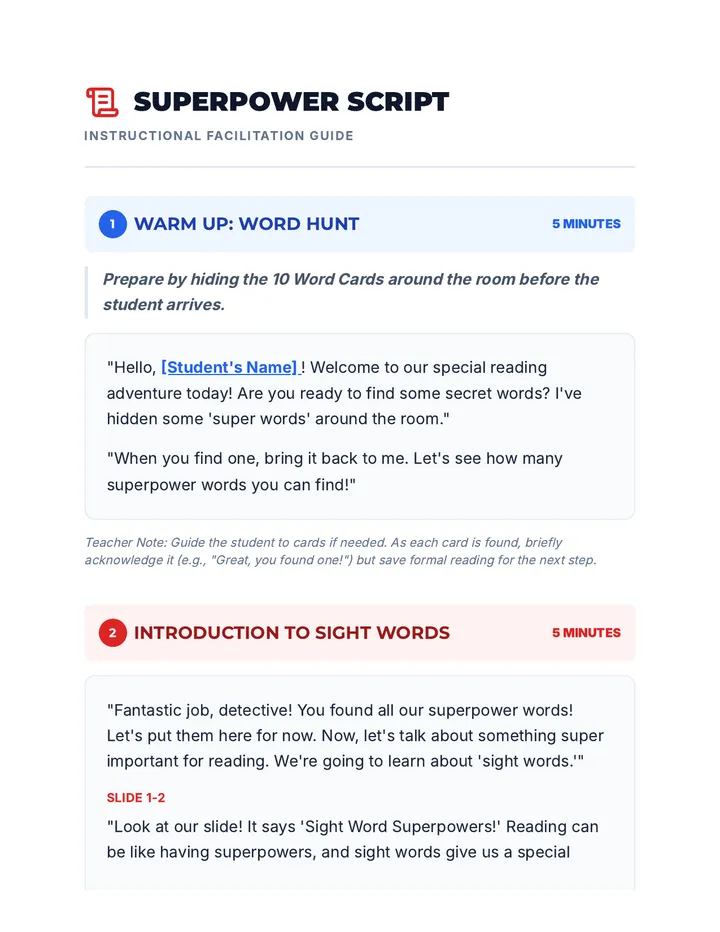
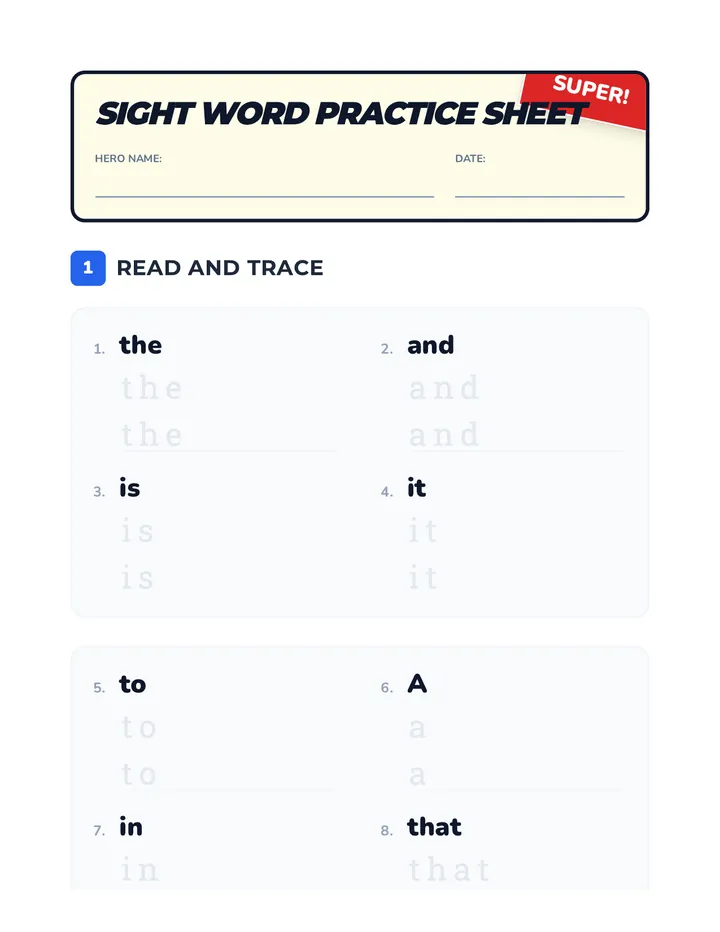
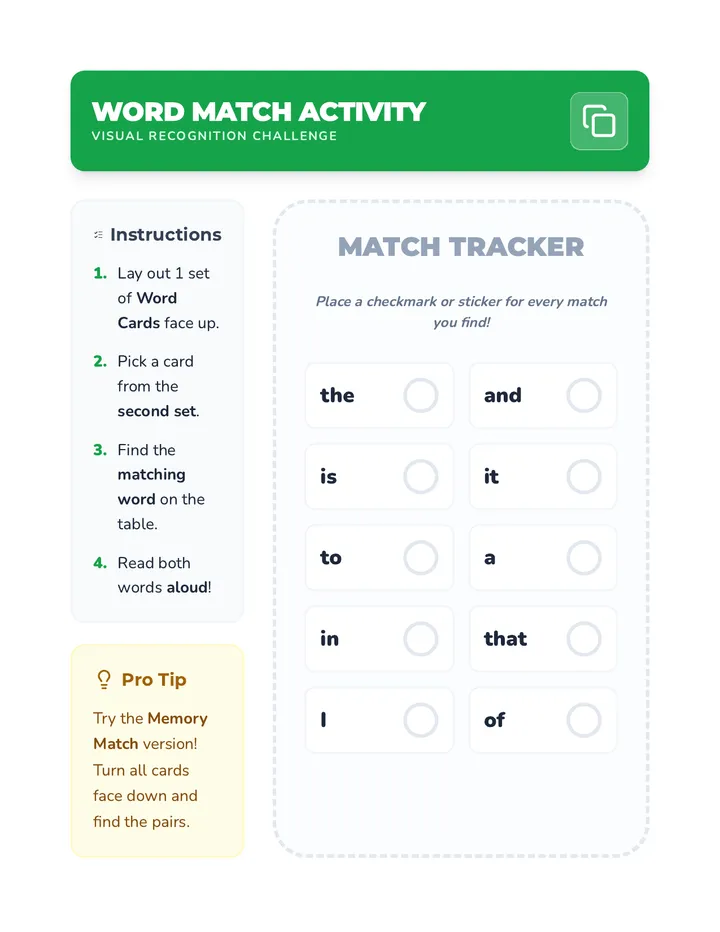
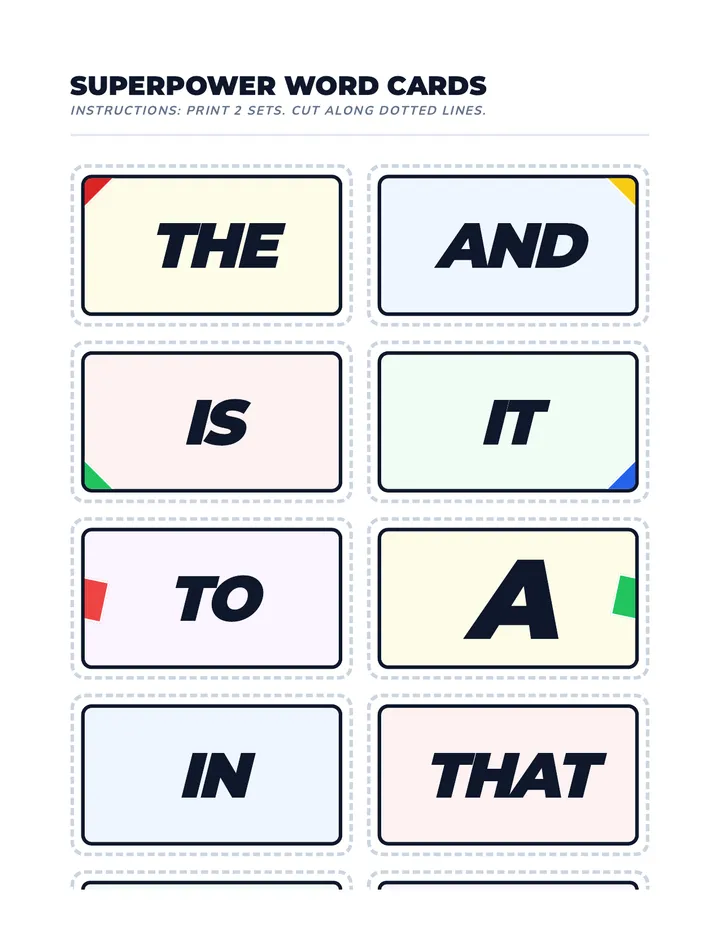
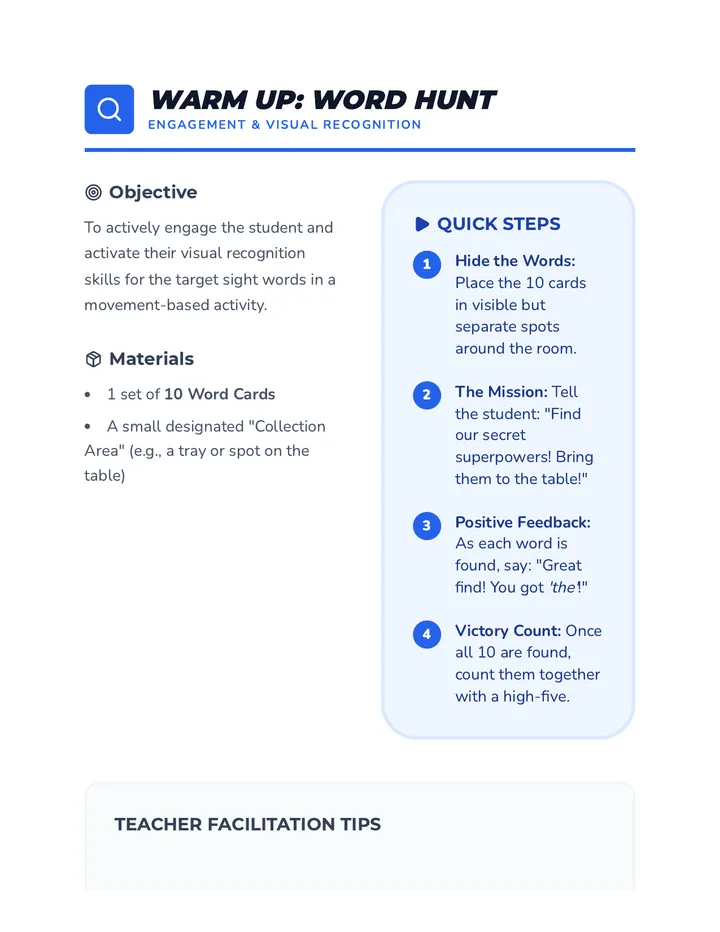
A 30-minute individualized Tier 3 lesson designed for a 3rd-grade student with autism, focusing on mastering 10 high-frequency words through multi-sensory and interactive activities.
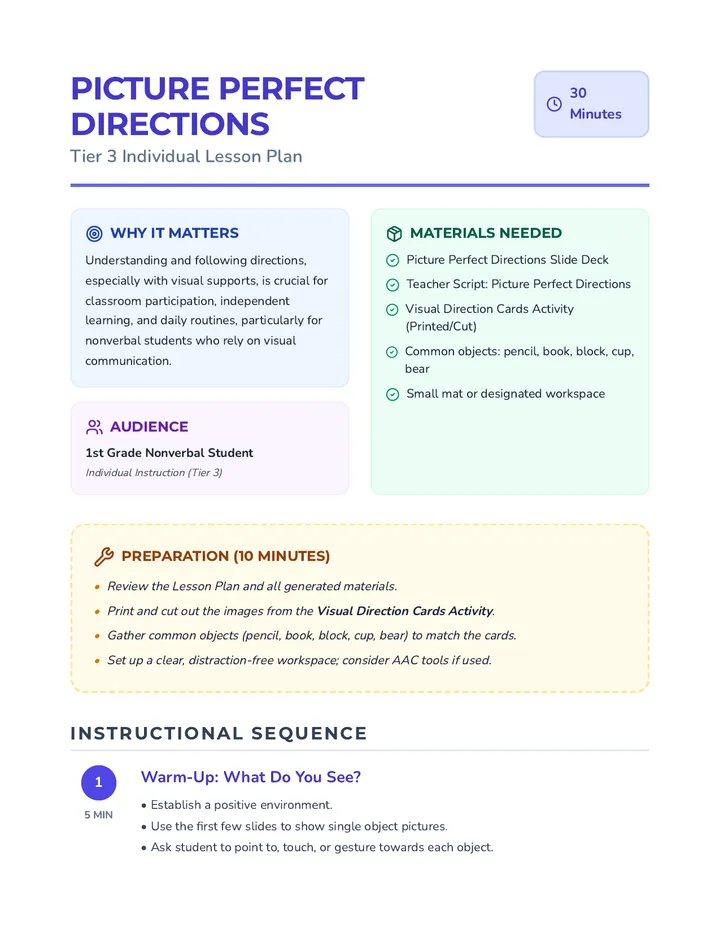
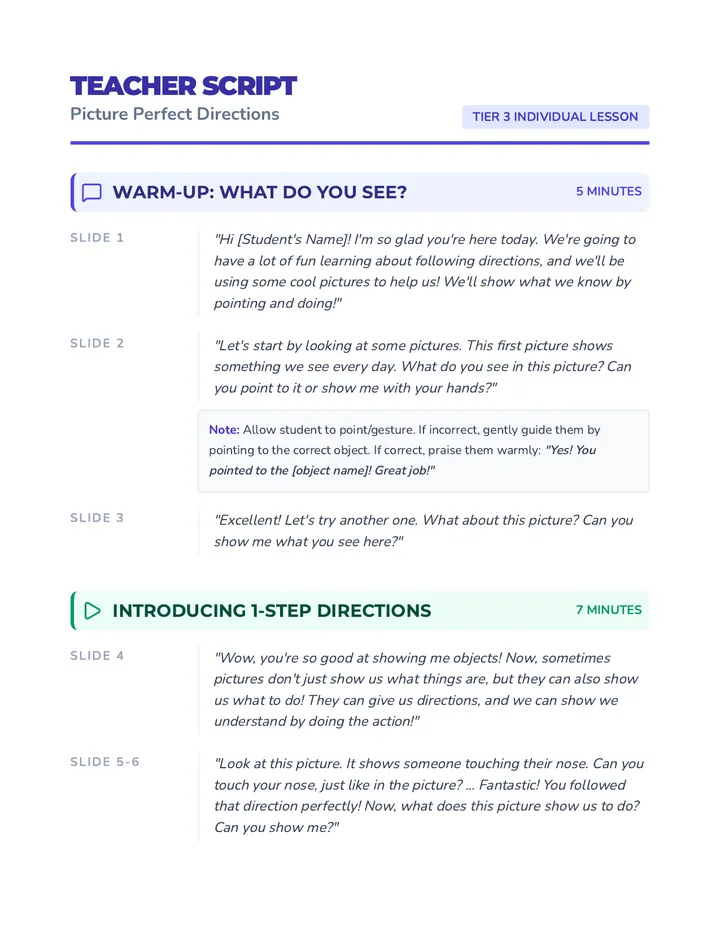
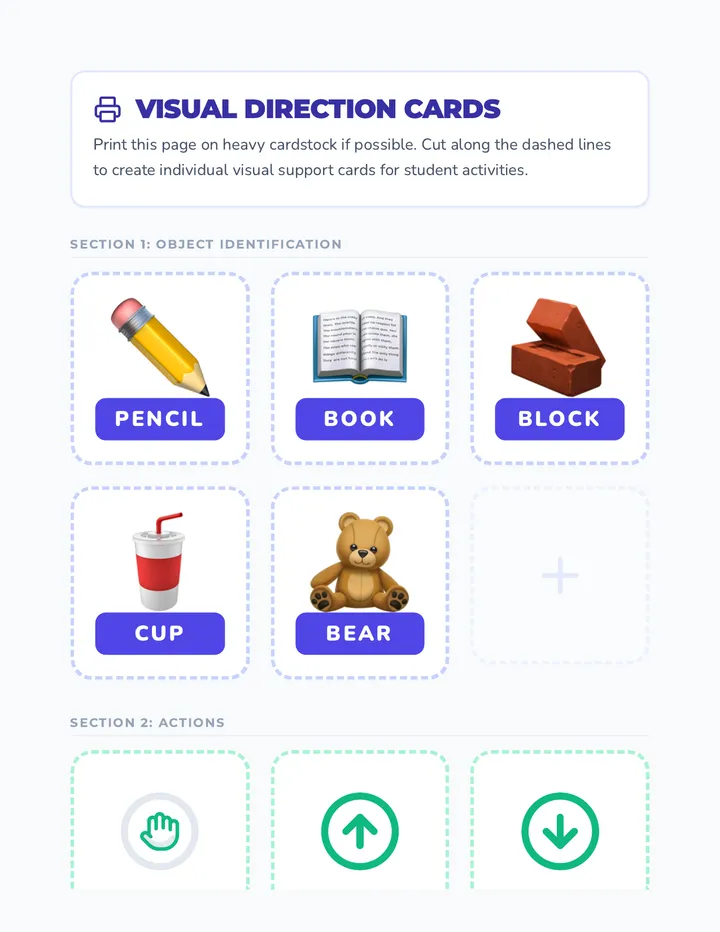
A 30-minute Tier 3 individual lesson for a 1st-grade student focused on following 1 and 2-step visual directions using pictures and common objects.
A 10-day curriculum for Pre-K special education students to learn the concepts of 'whole' and 'half' through repetitive, hands-on, superhero-themed activities.
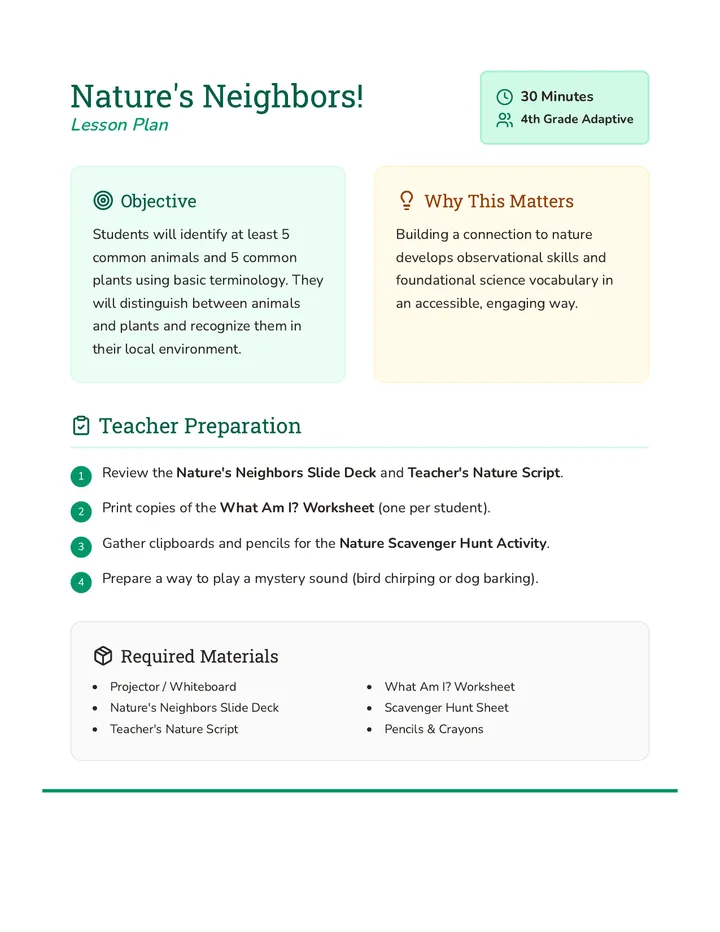
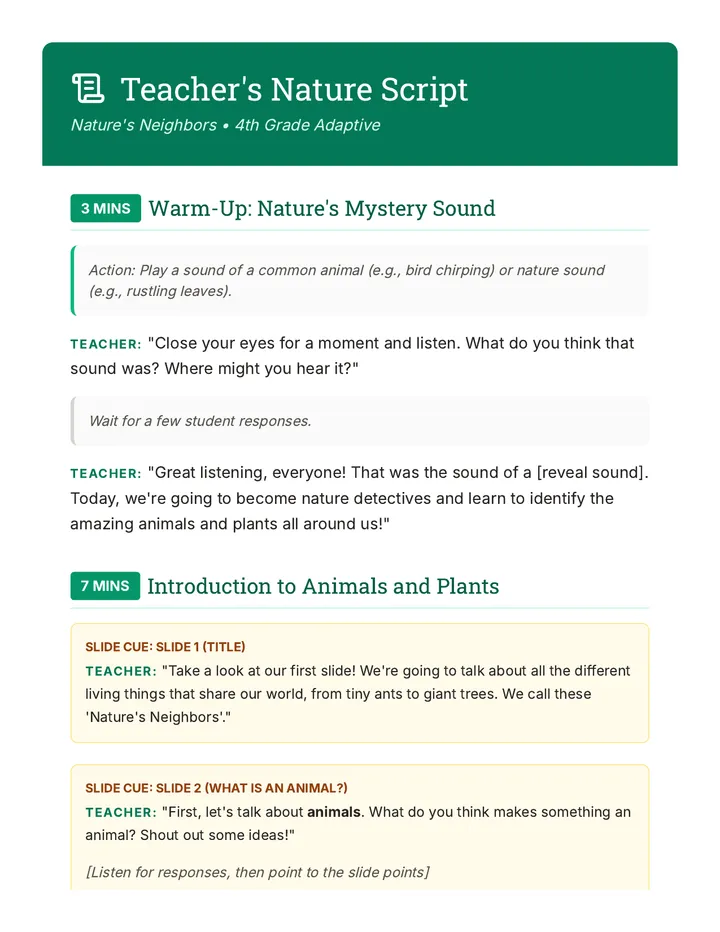
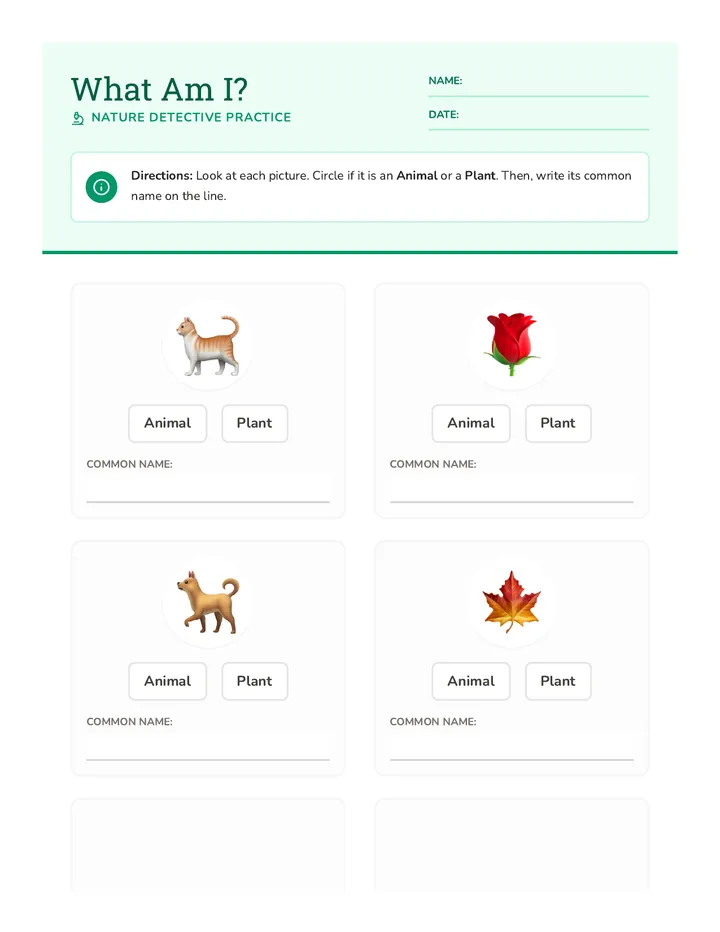
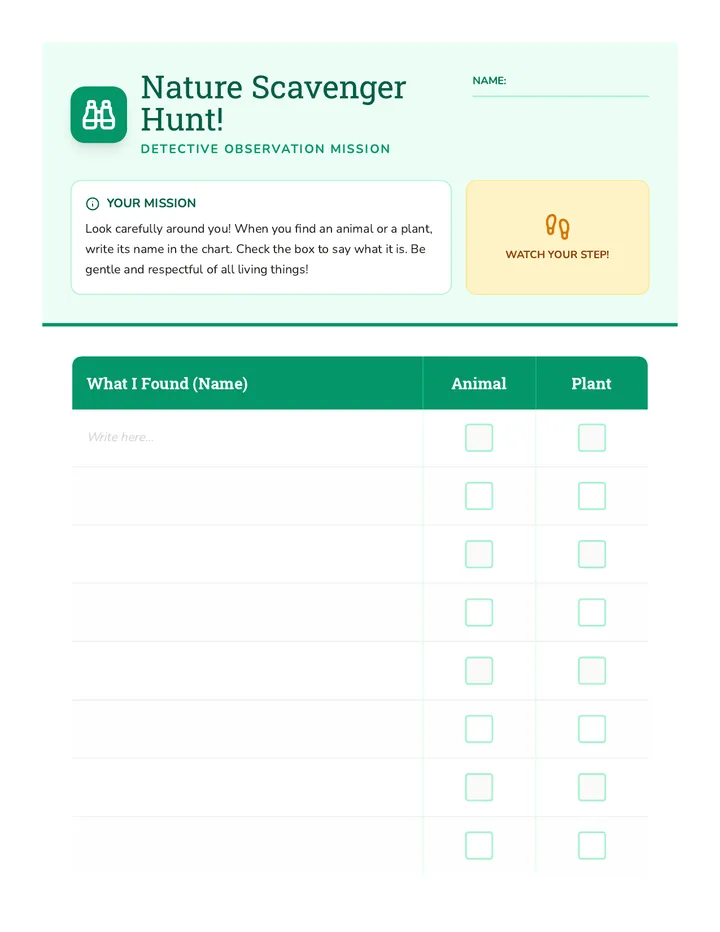
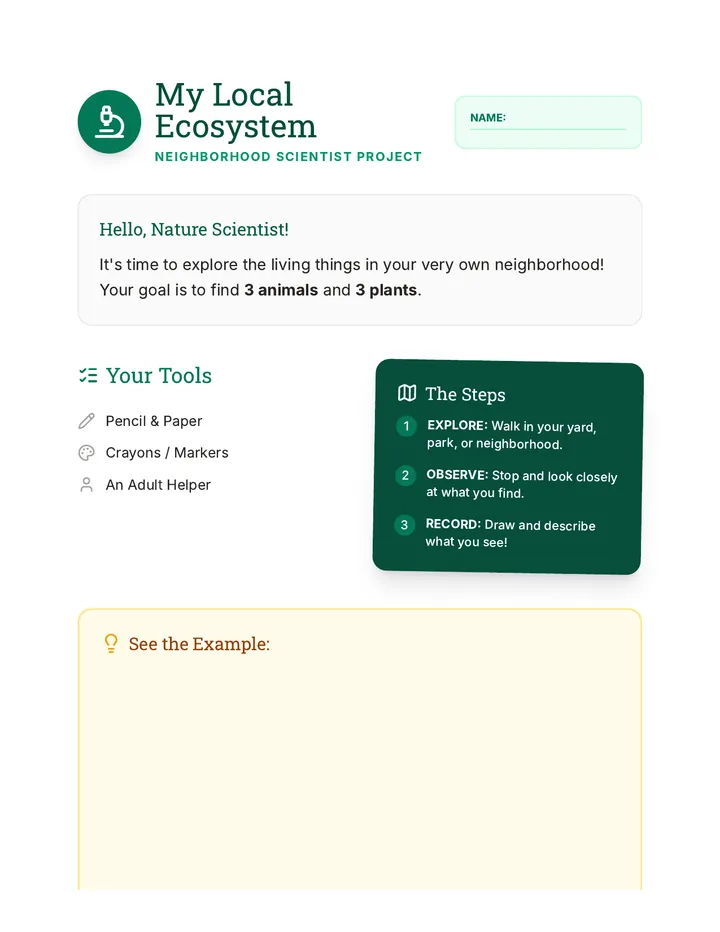
An introductory science lesson for 4th-grade adaptive students to identify common local plants and animals using simple vocabulary and hands-on observation.
A 30-minute individualized lesson for a 3rd-grade autistic student focused on following multi-step directions through engaging activities and visual supports.
A 30-minute Tier 3 lesson for 2nd-grade students focused on mastering two-step verbal directions through interactive practice, visual aids, and detective-themed activities.
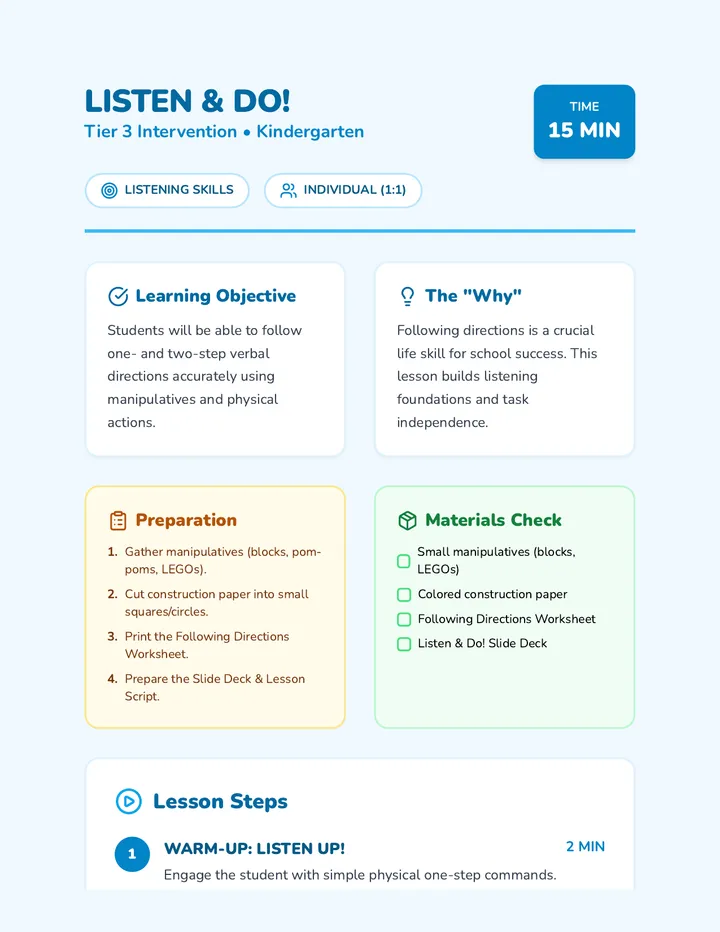
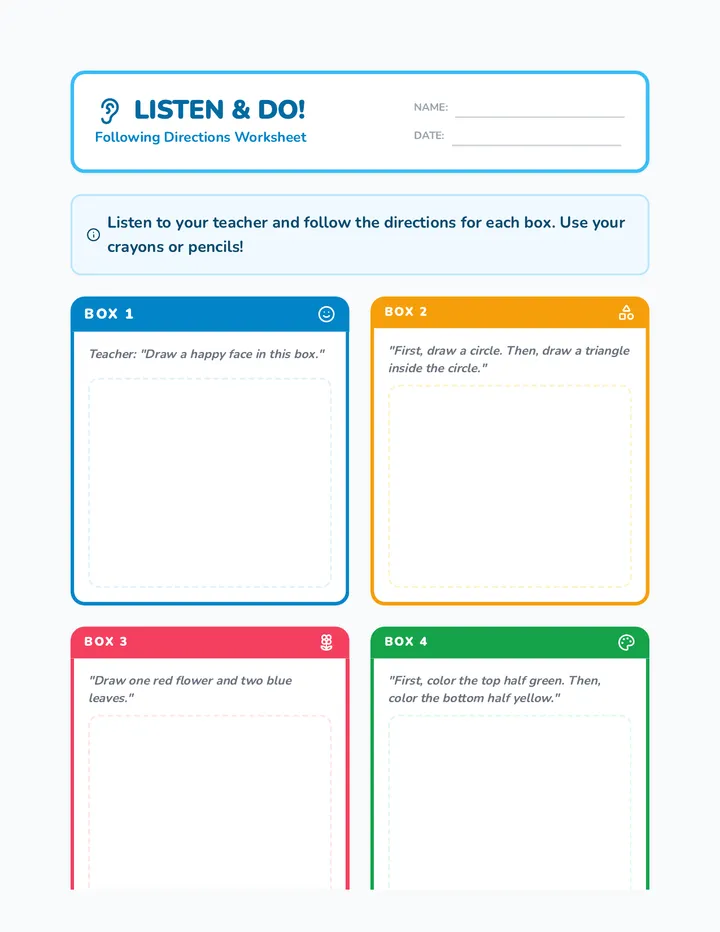
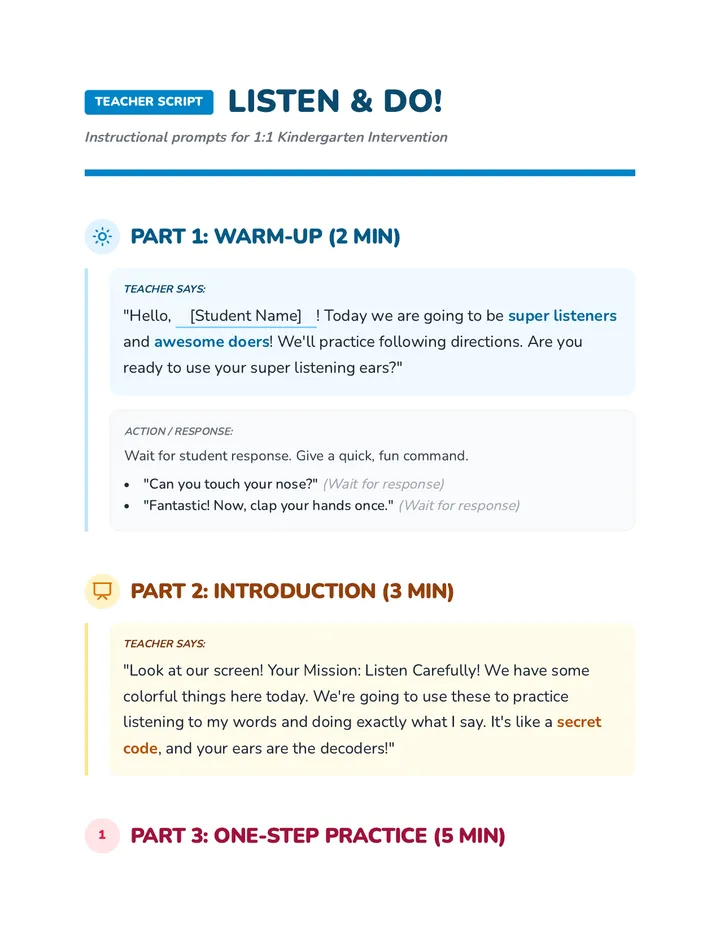
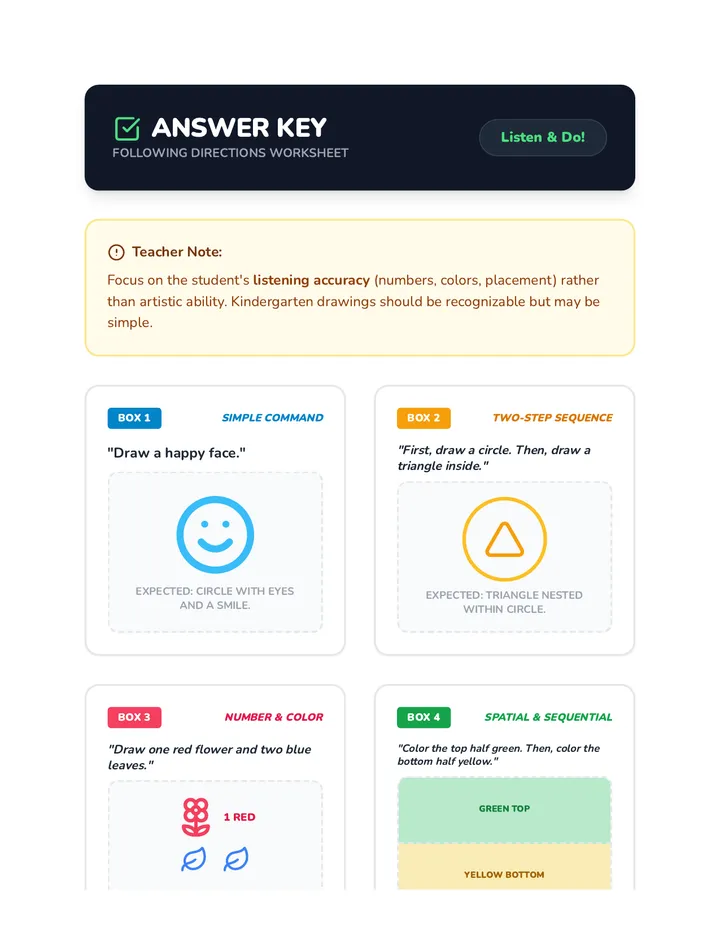
A 15-minute Tier 3 intervention for Kindergarteners focusing on following one- and two-step directions through hands-on practice and interactive instruction.
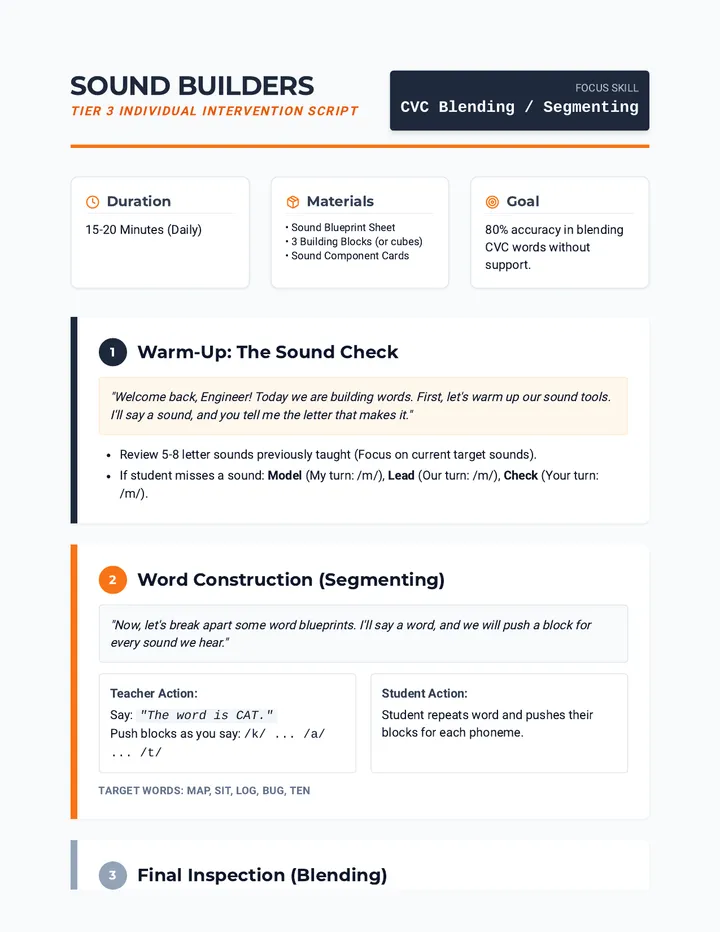
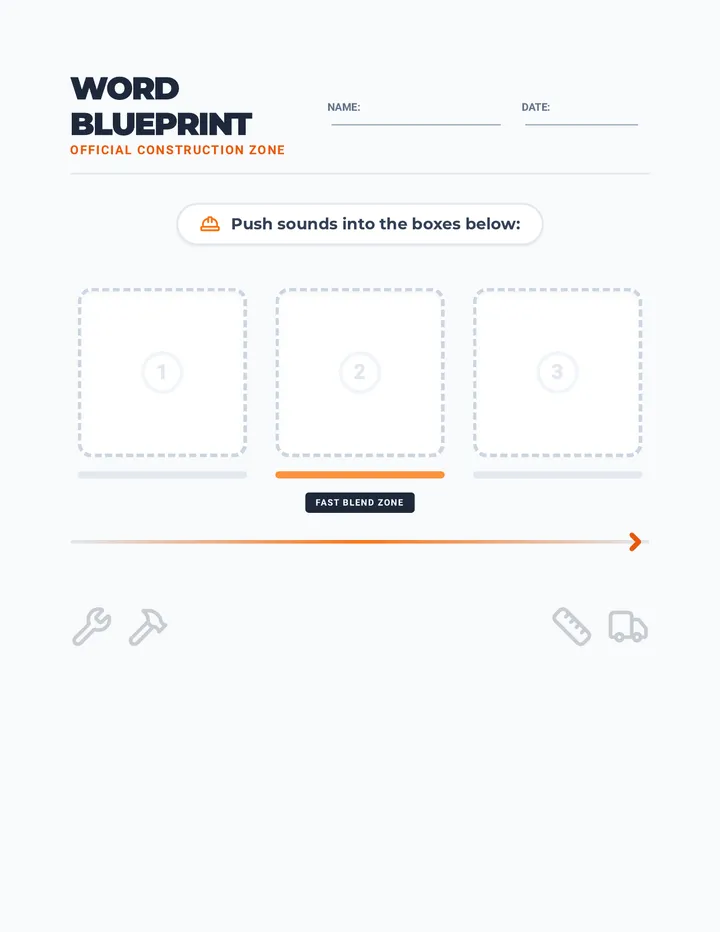
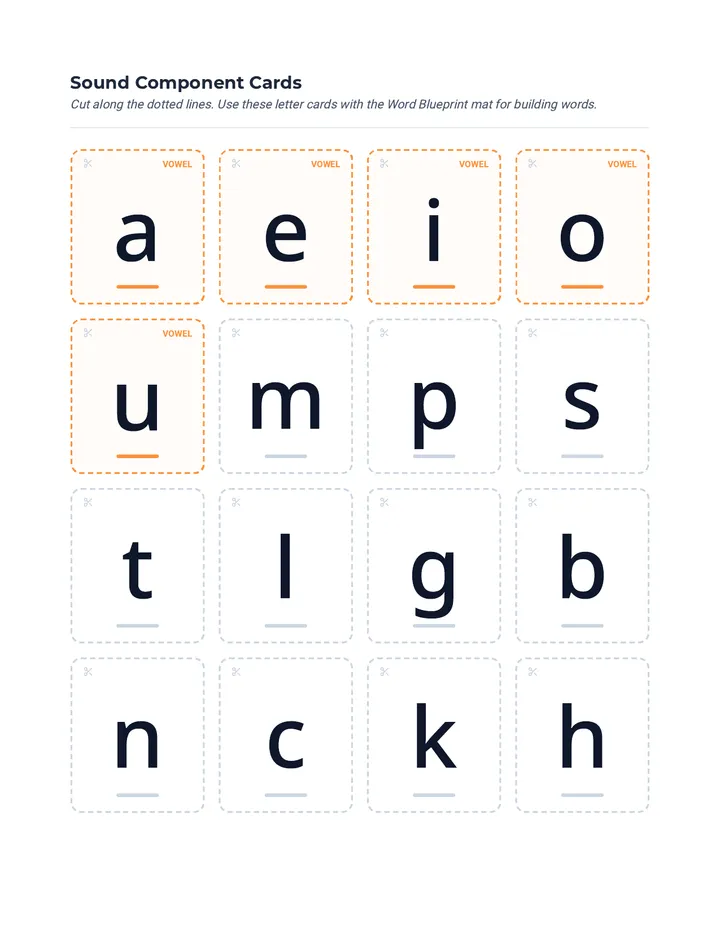
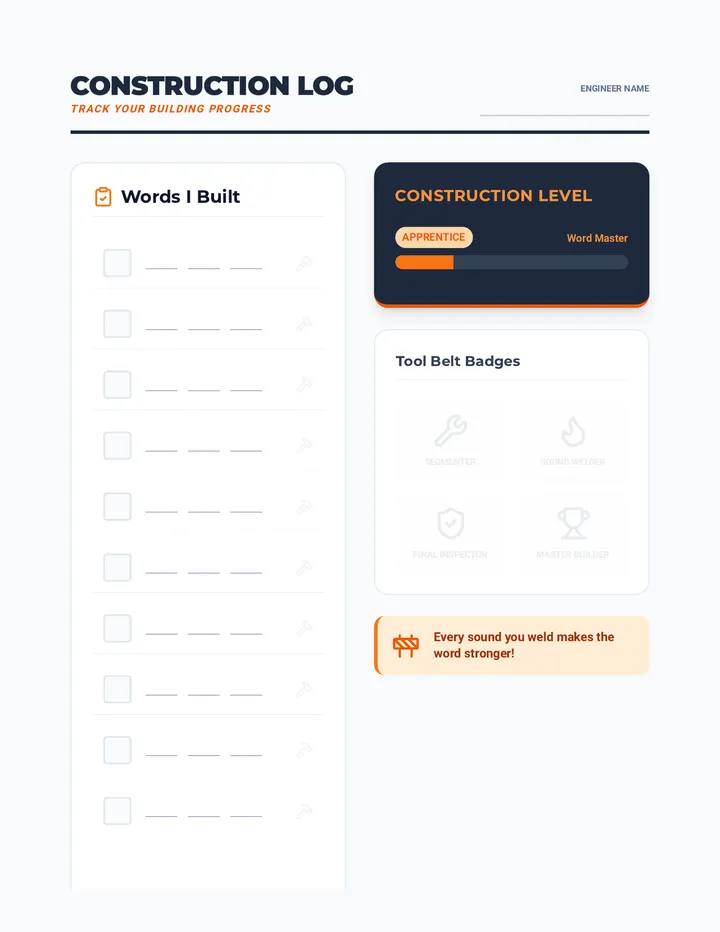
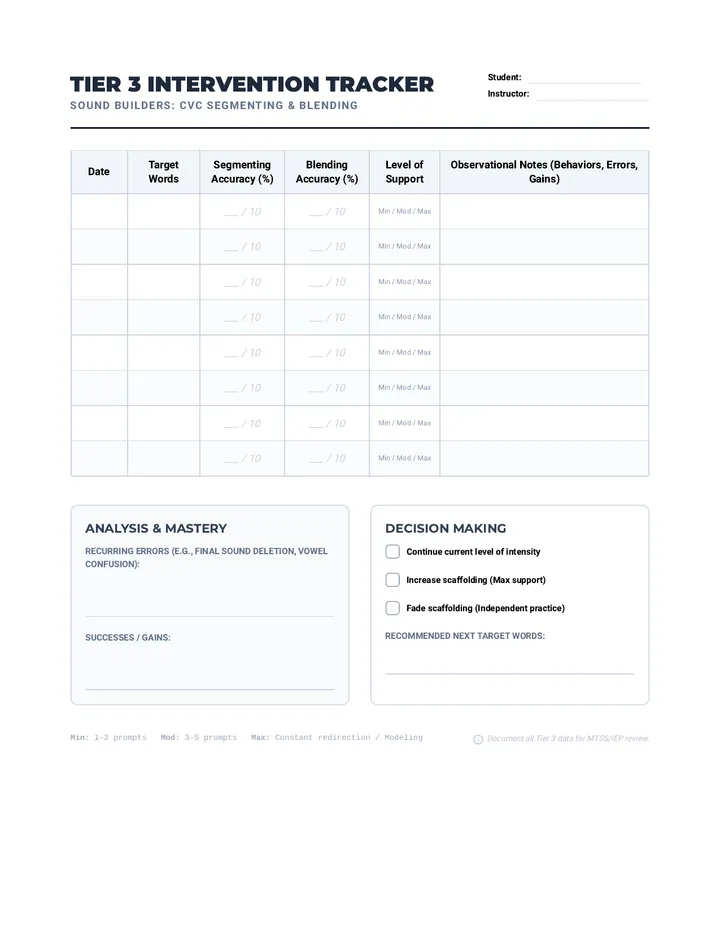
An intensive, Tier 3 individual intervention focusing on segmenting and blending three-phoneme (CVC) words using tactile and visual supports for students requiring significant literacy support.
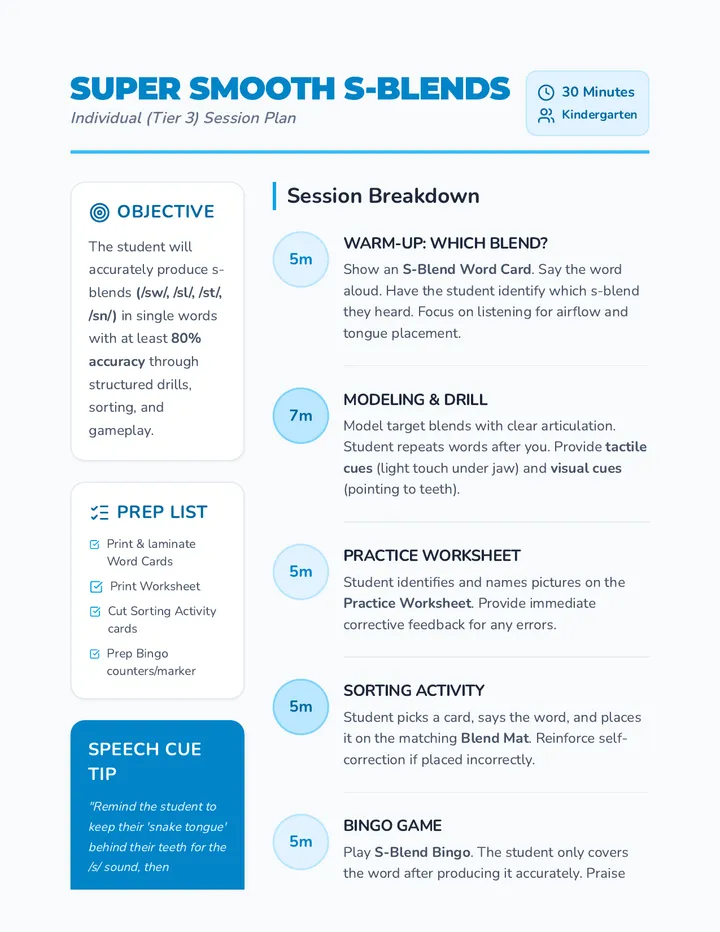
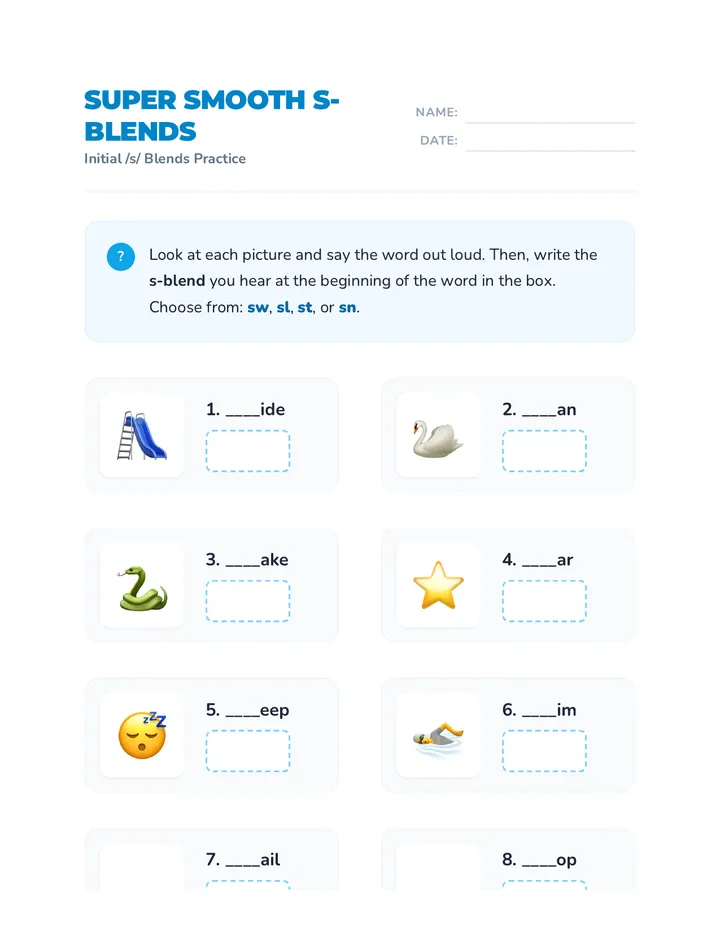
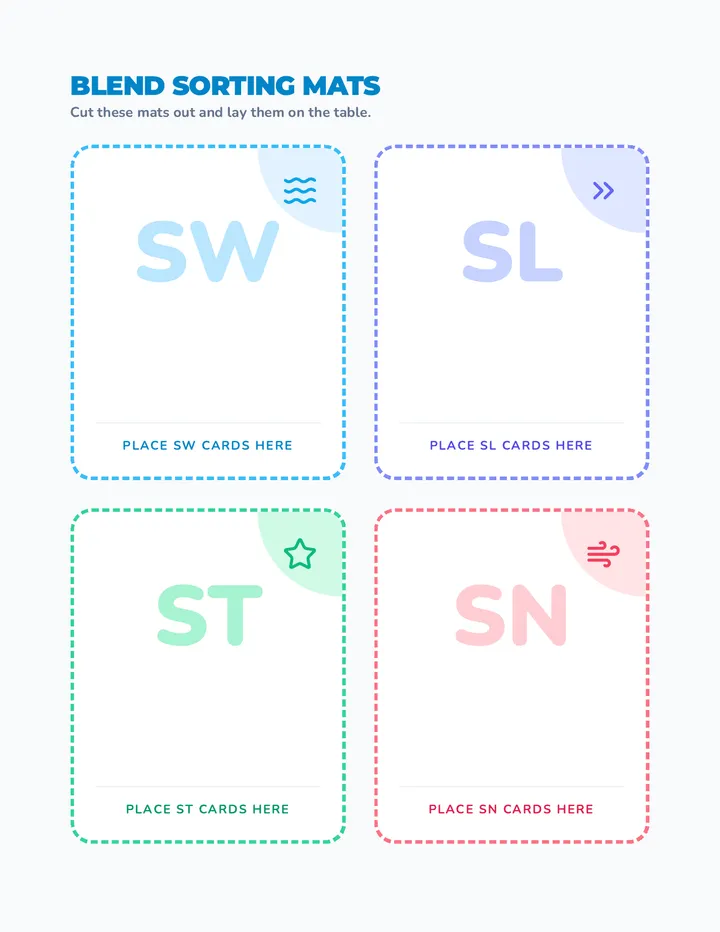
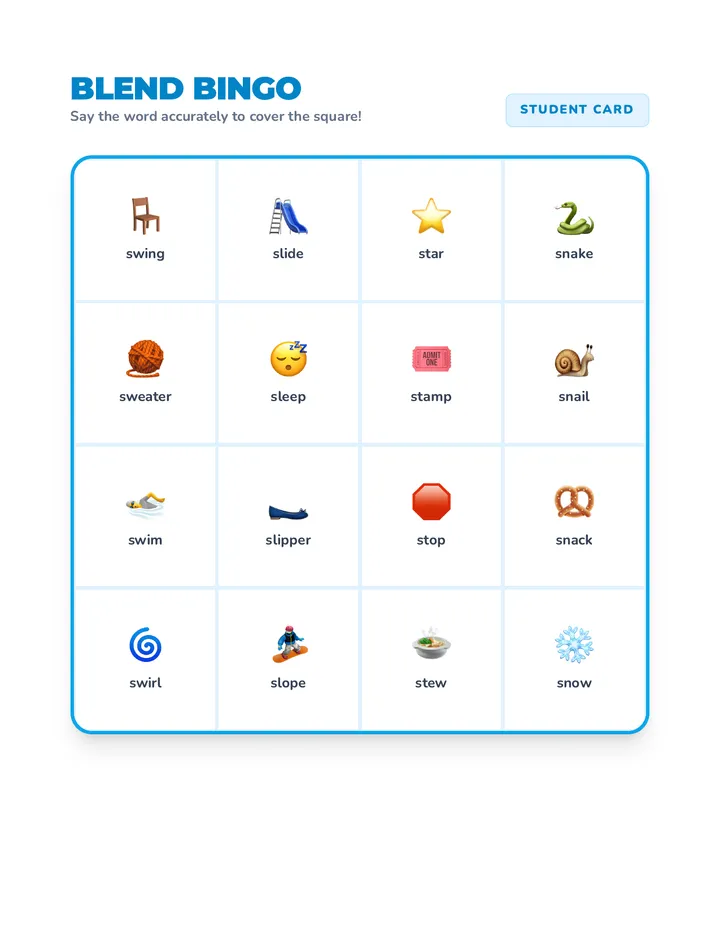
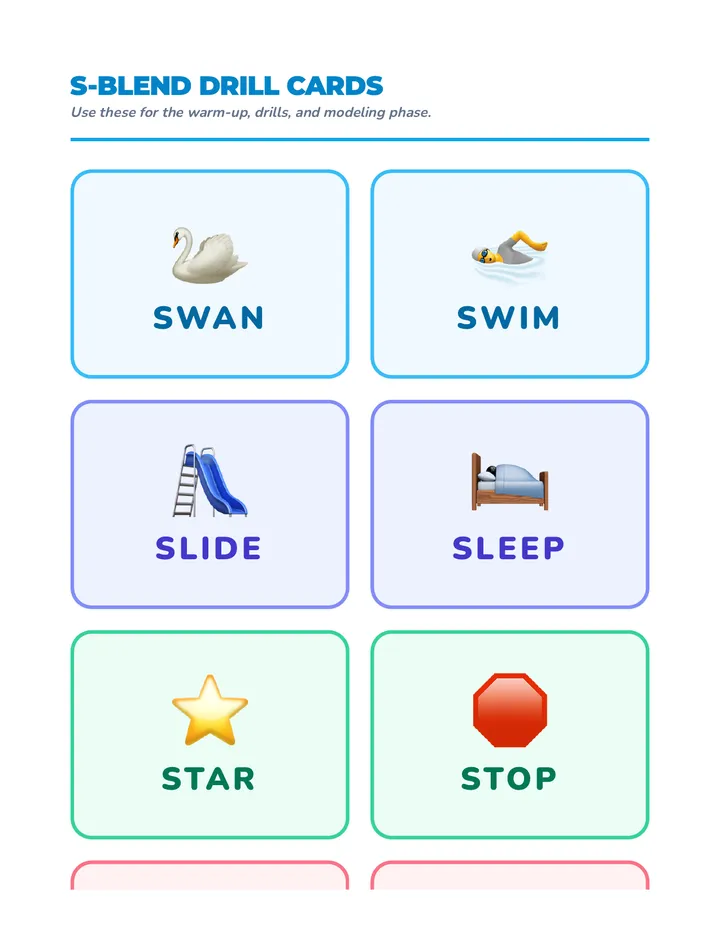
This individualized 30-minute speech therapy session targets s-blends (/sw/, /sl/, /st/, /sn/) at the word level for kindergarten students. Through engaging activities like sorting, bingo, and structured drills, students improve articulation, phonemic awareness, and speech intelligibility.
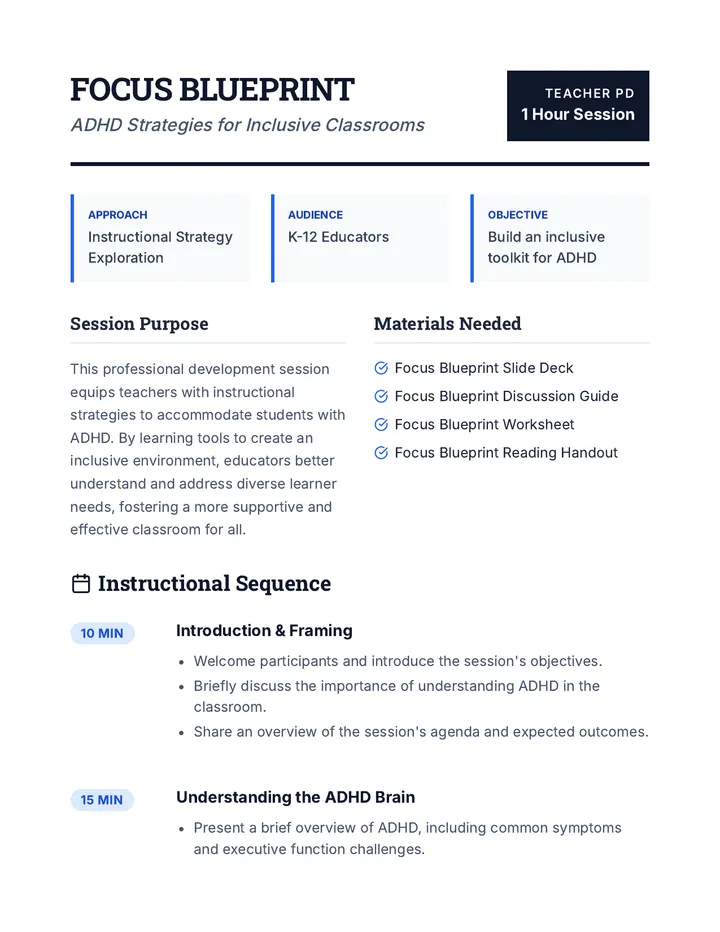
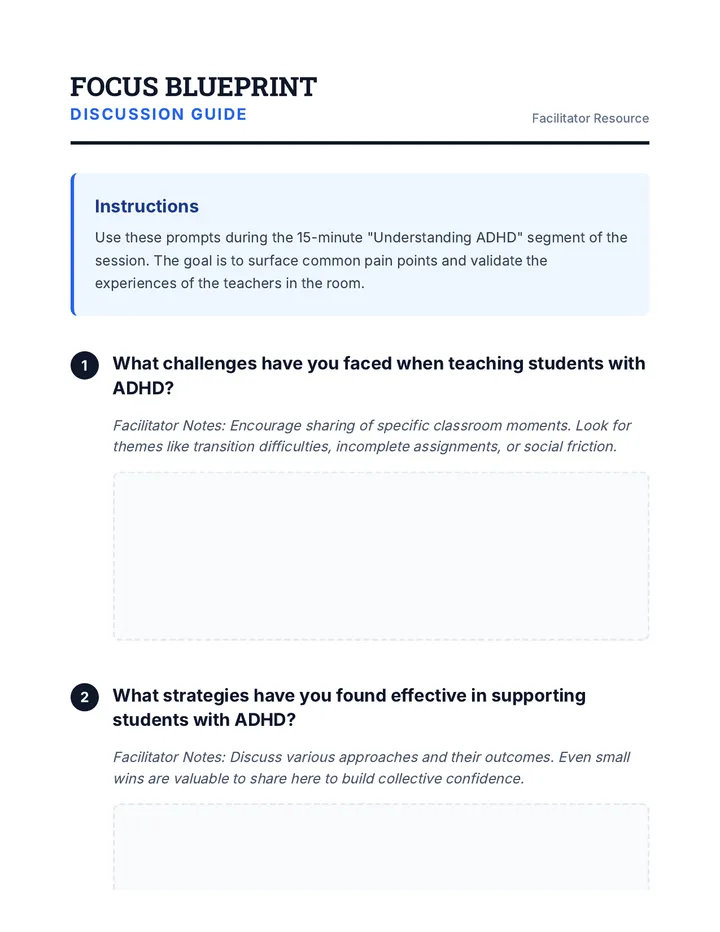
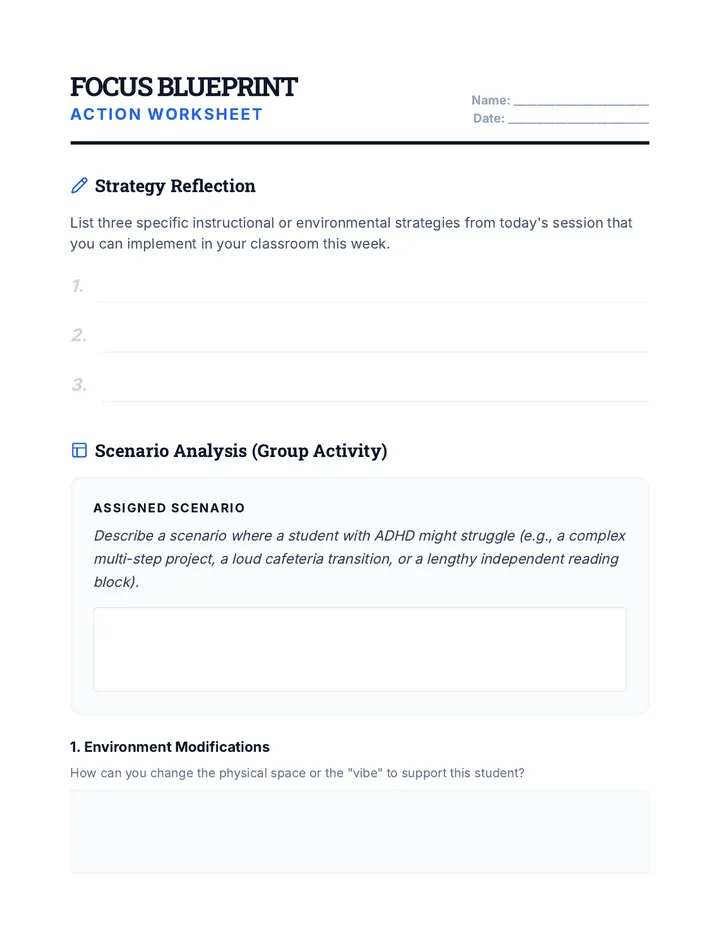
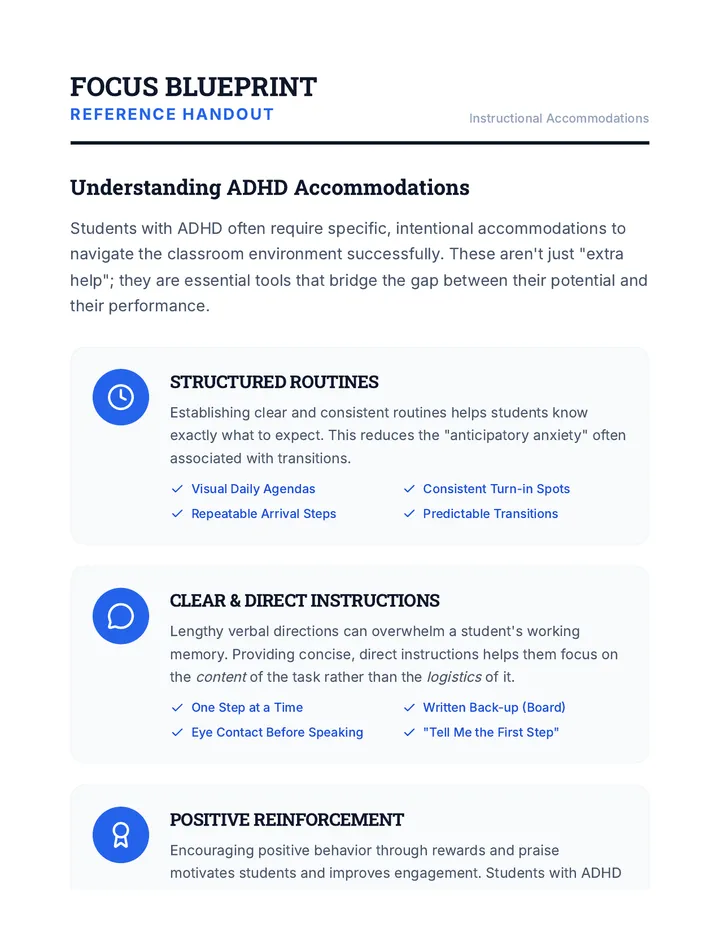
A professional development session for educators focused on practical instructional strategies and classroom environment adjustments to support students with ADHD. Teachers will explore structured routines, clear communication techniques, and positive reinforcement models to foster an inclusive learning space.
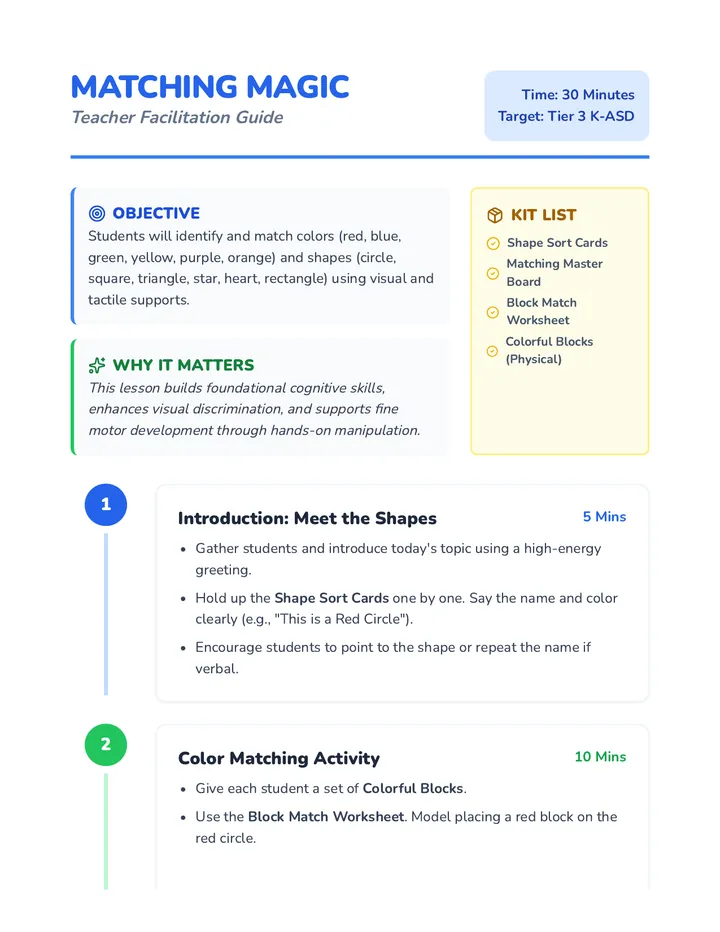
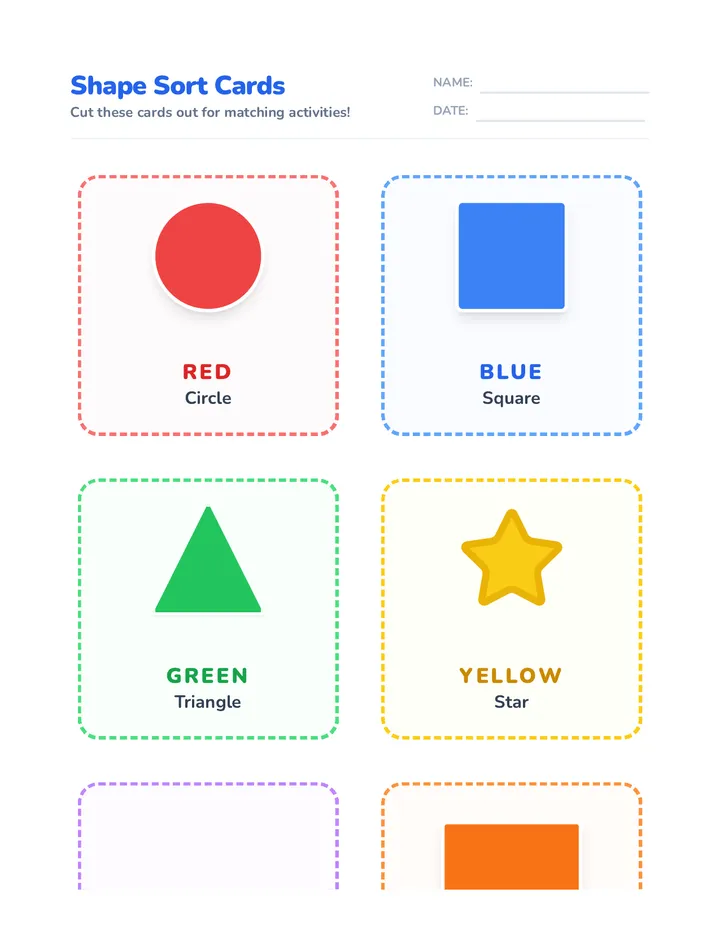
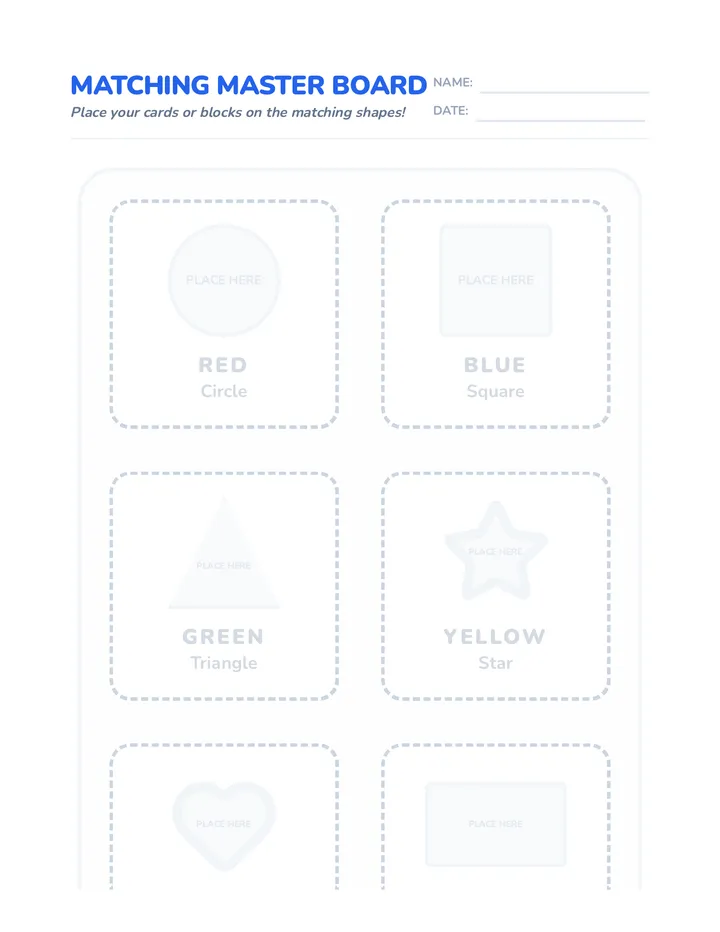
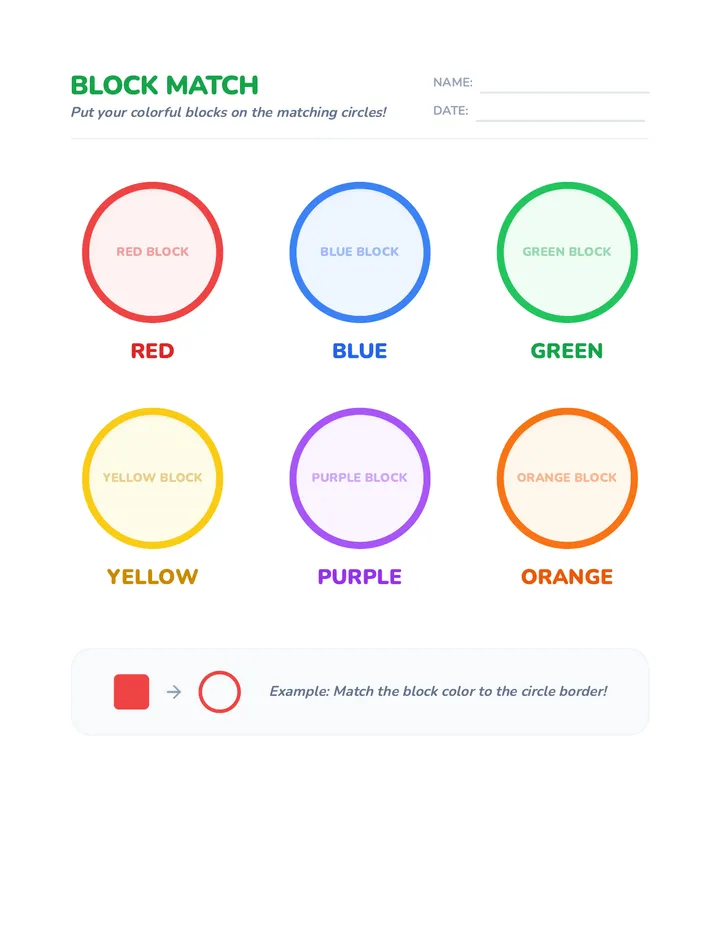
A Tier 3 individualized lesson designed for Kindergarten students with autism to develop color and shape recognition through tactile and visual matching activities.