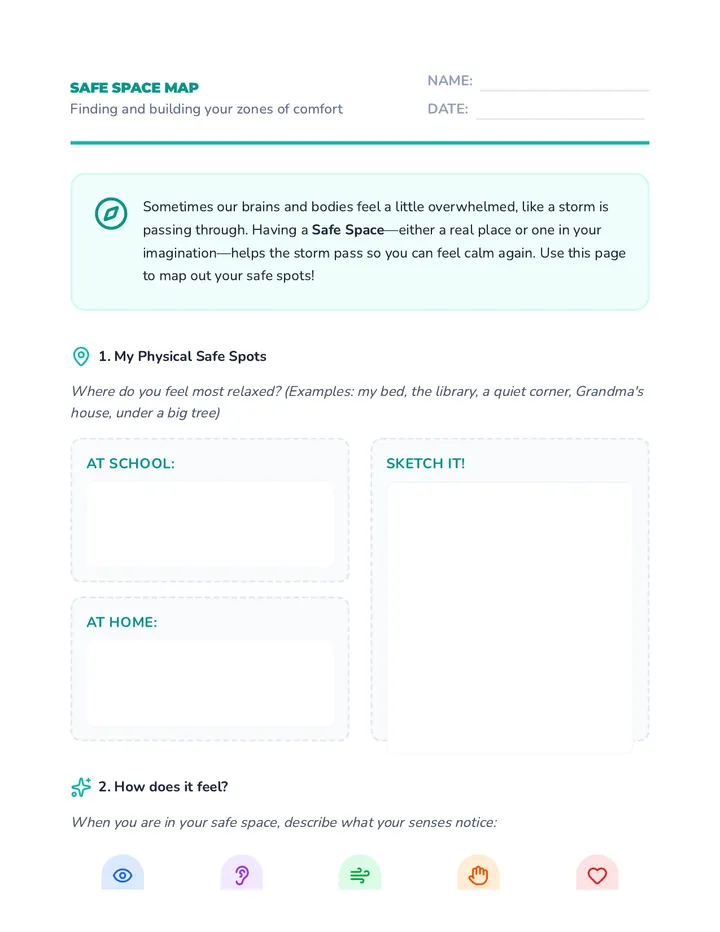
Post-meltdown intervention strategies and co-regulation techniques to help students return to a physiological baseline. Includes environmental modifications and sensory tools for emotional stabilization.
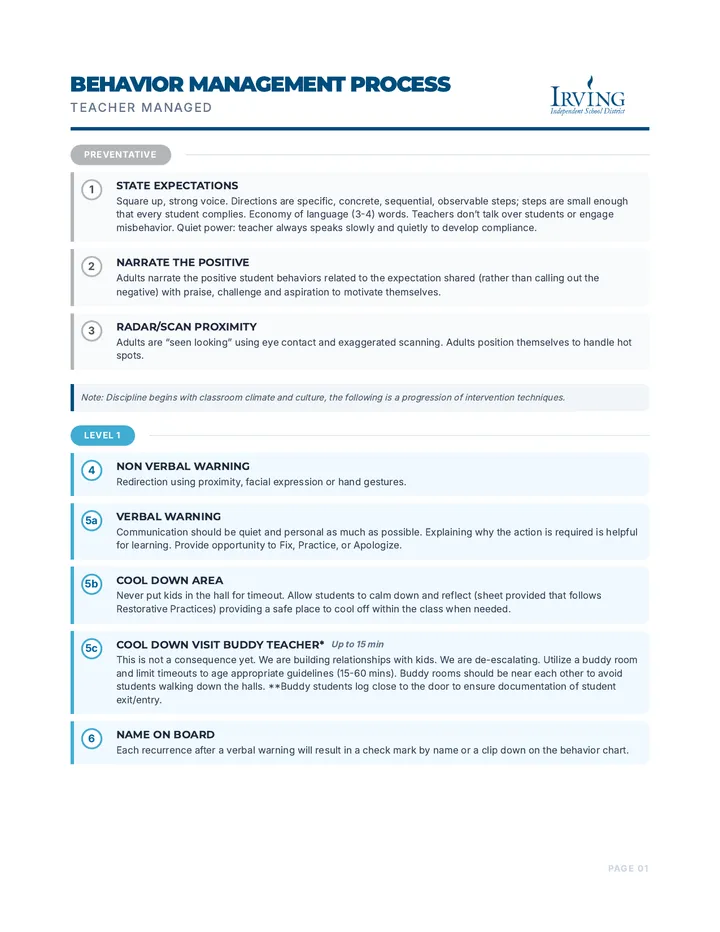
A 2-page behavioral management infographic designed as a professional flowchart. It integrates teacher-managed steps from 'Preventative' to 'Level 3' with a corresponding column for Administrative Actions and required notes. Updated with the exact text from the source PDF for all teacher-managed actions. Fixed layout issues where content overlapped footers, improved text contrast for accessibility, and ensured consistent vertical flow lines.
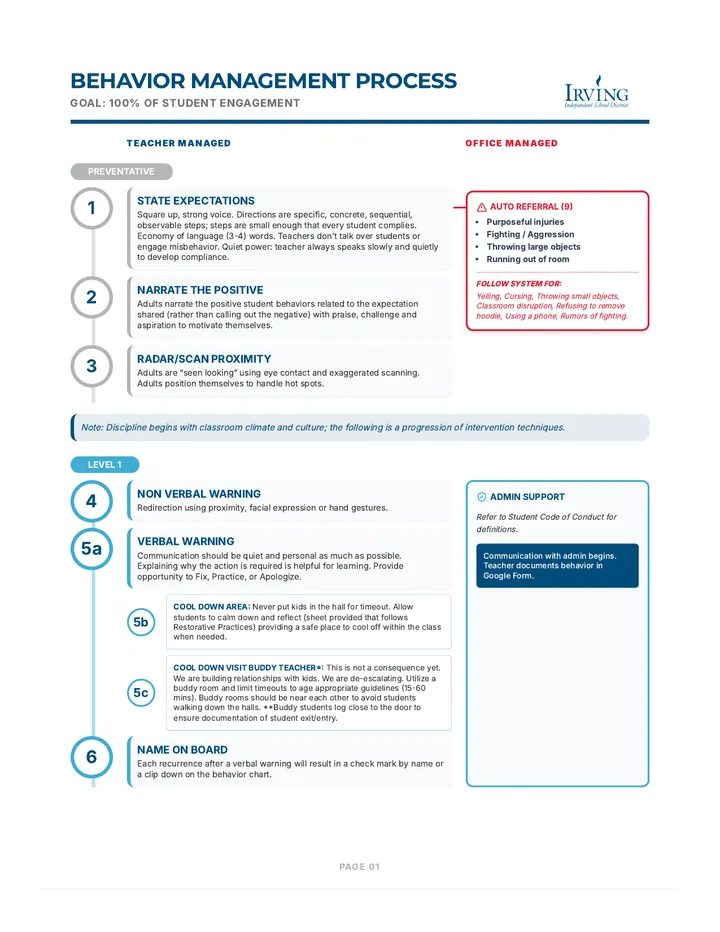
A comprehensive 3-page infographic of the Irving ISD behavior management process. It includes a flowchart of teacher-managed redirection steps and a dedicated third page for administrator-specific actions across all levels of the hierarchy.
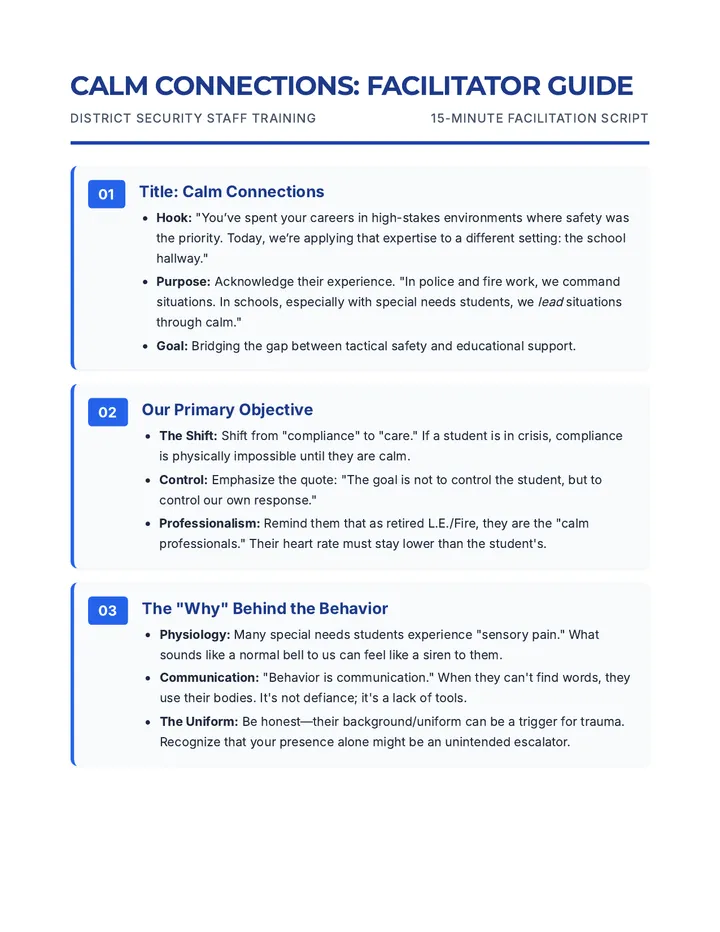
A facilitator guide and script for security staff training, specifically designed for retired law enforcement and fire personnel working in schools. It provides punchy, professional talking points for each slide of the 'Calm Connections' presentation with a focus on shifting from enforcement to supportive de-escalation.
A professional, high-fidelity de-escalation protocol poster for [Fairlawn] featuring structured steps, specific speech bubble prompts, and matching iconography.
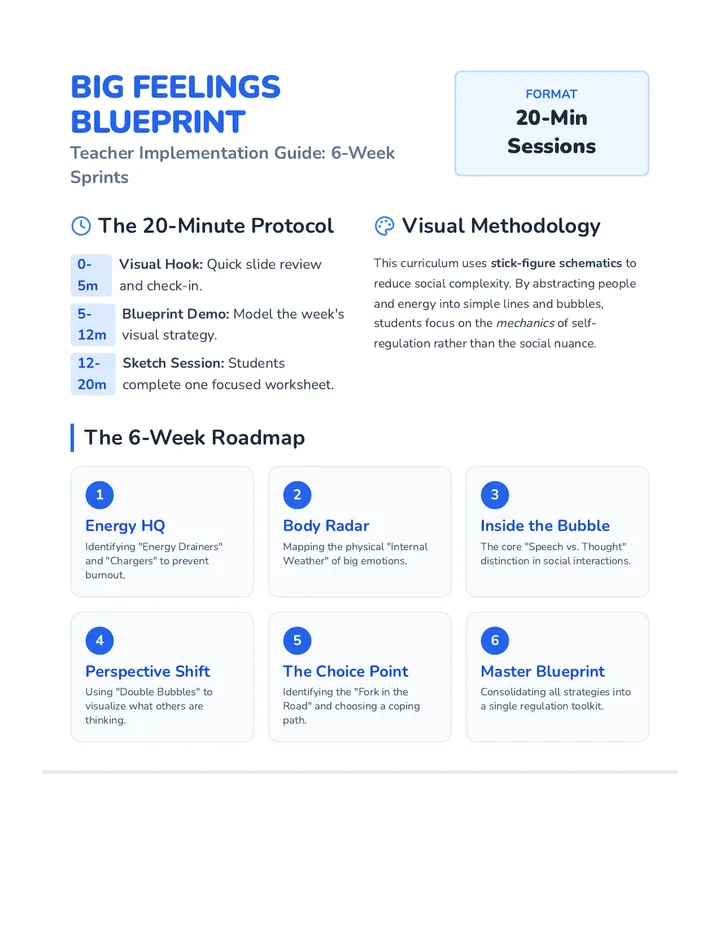
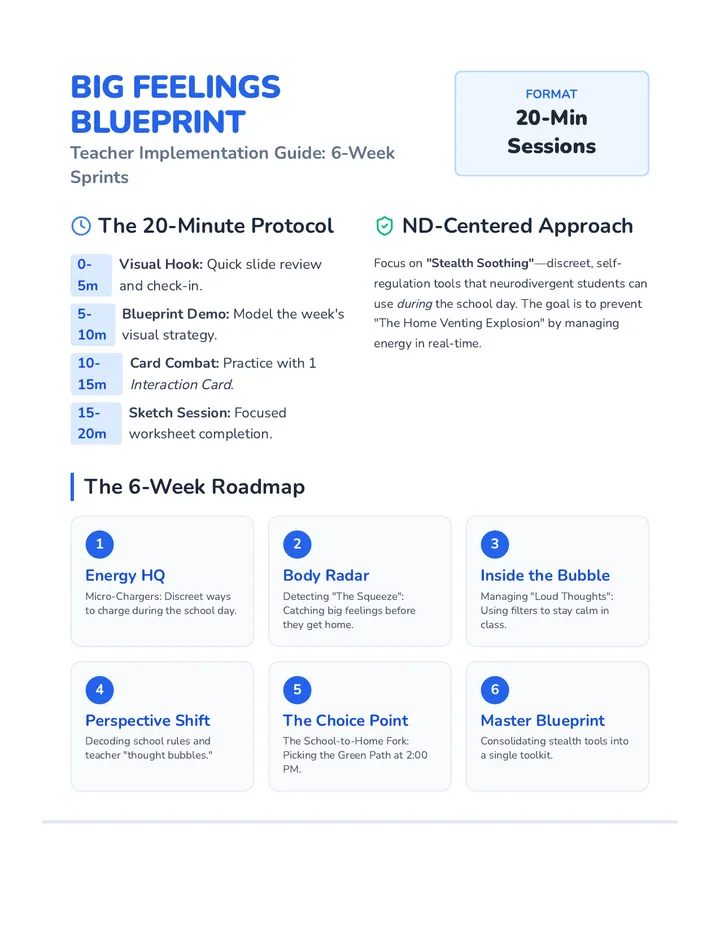
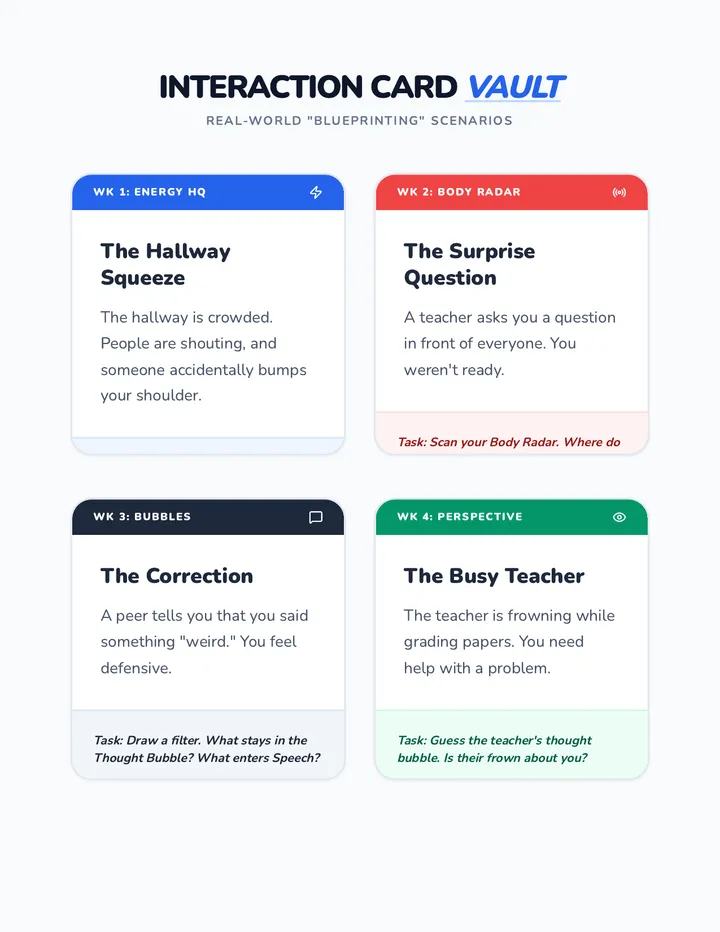
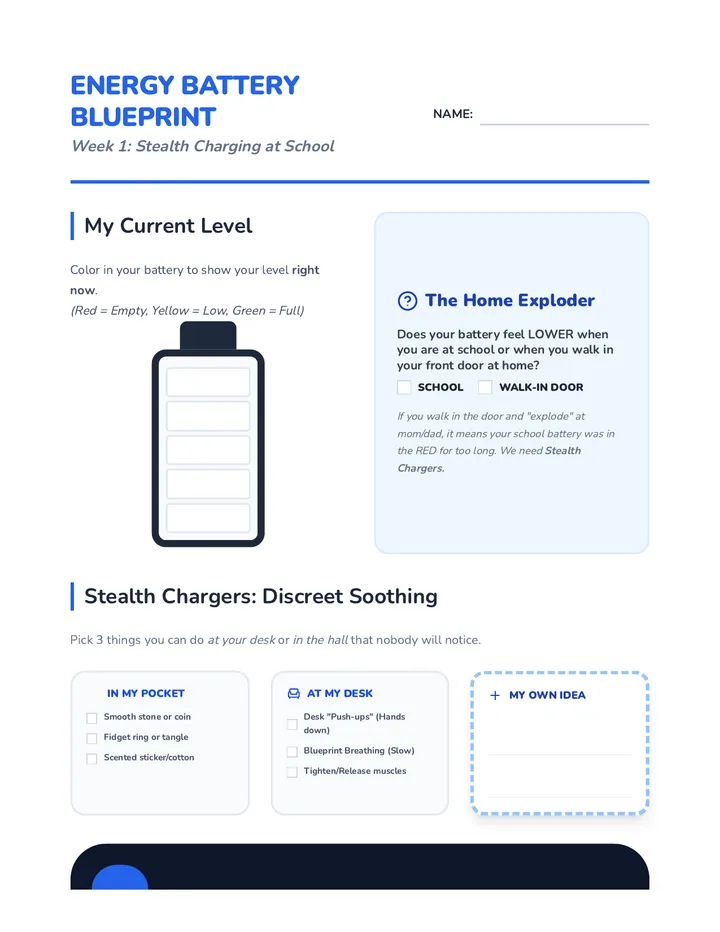
A 6-week social-emotional learning program for teenagers on the autism spectrum, delivered in focused 20-minute sessions. The program uses visual "blueprints" to teach energy management, body awareness, and Comic Strip Conversation techniques for emotional regulation and perspective taking.
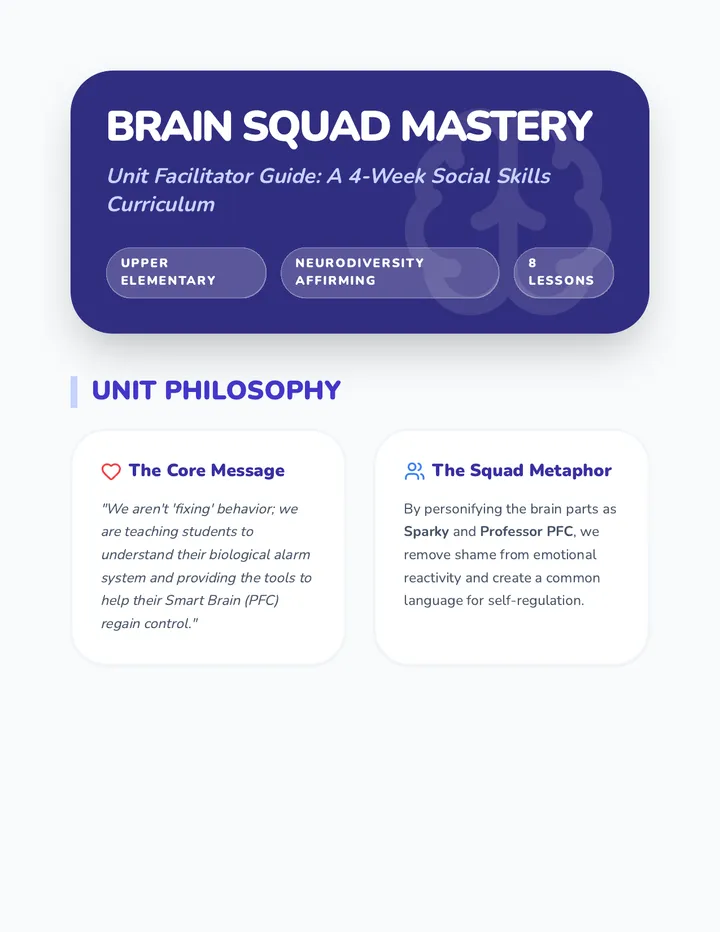
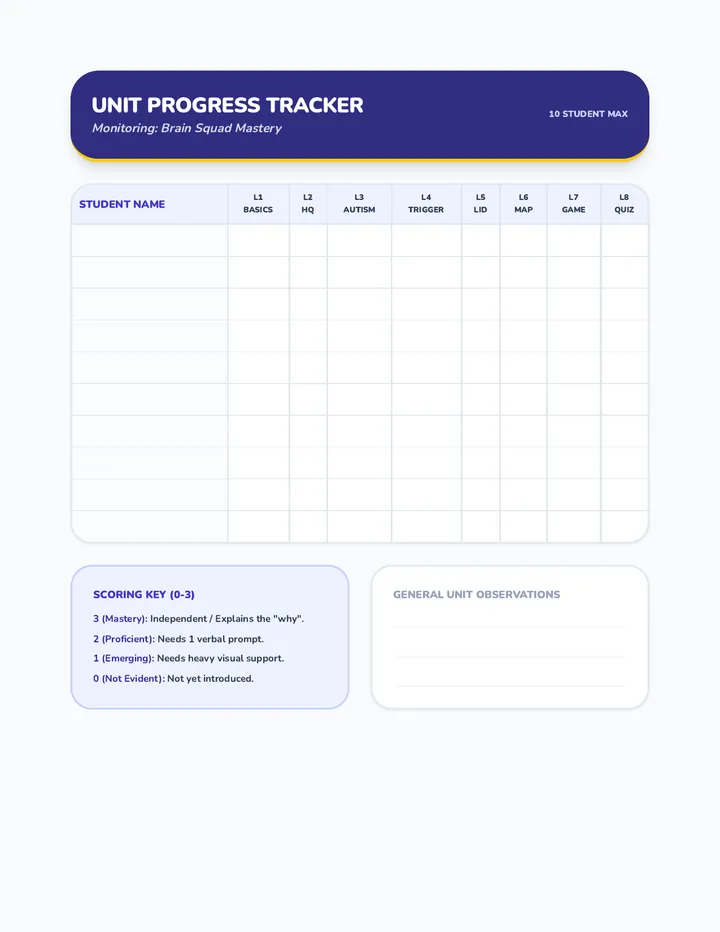
A 4-week social skills unit (8 lessons) teaching students to distinguish between their emotional brain and smart brain, focusing on regulation strategies, autism-specific challenges, and positive outlets.
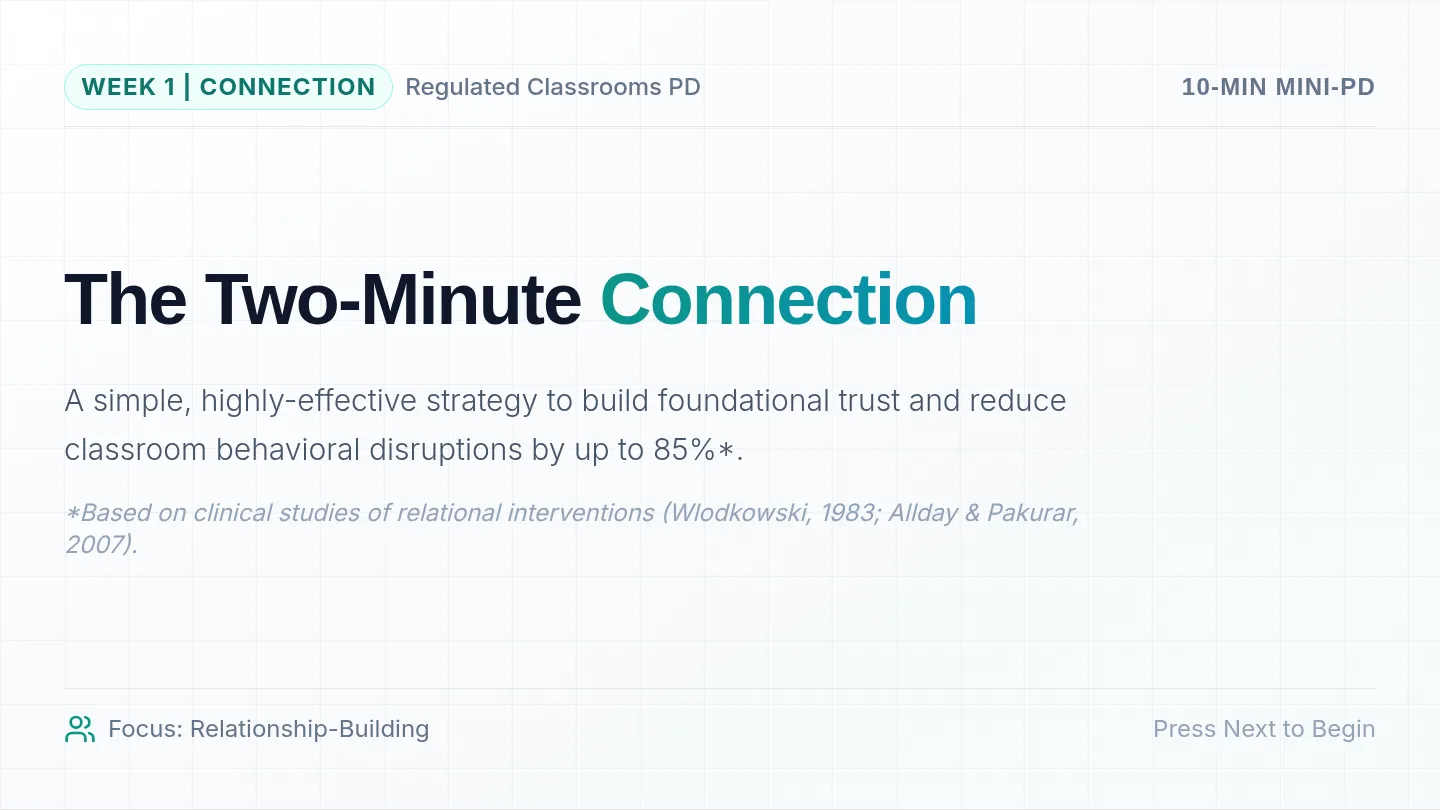
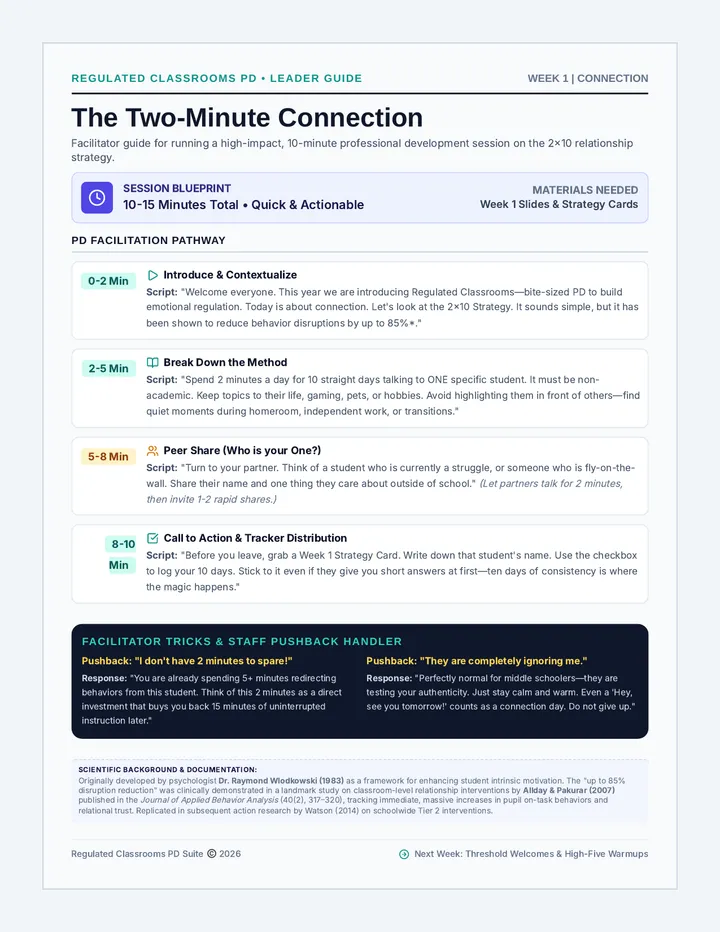
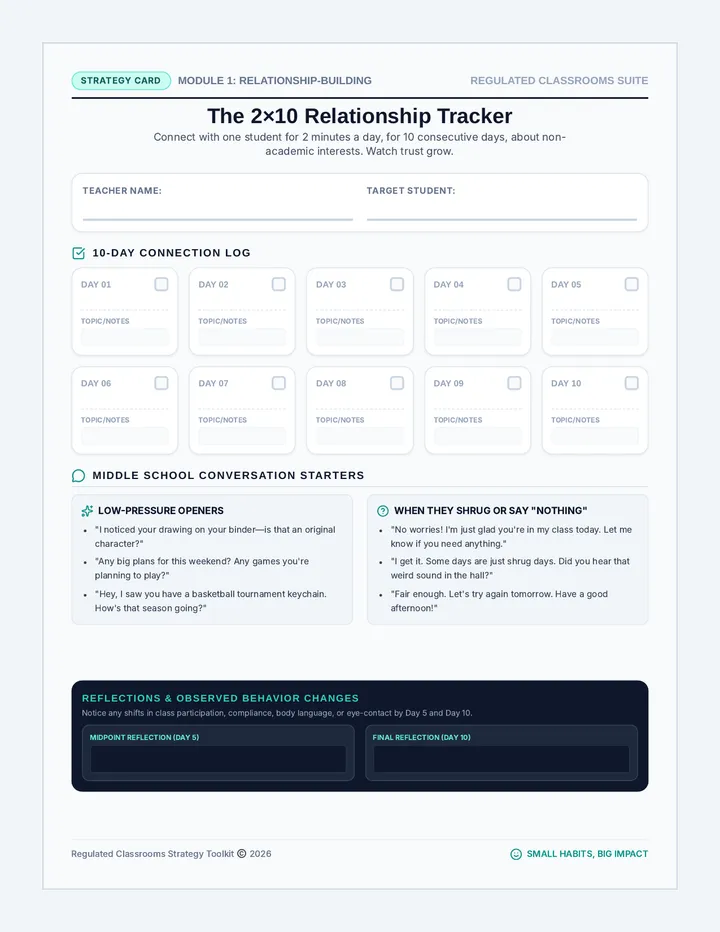
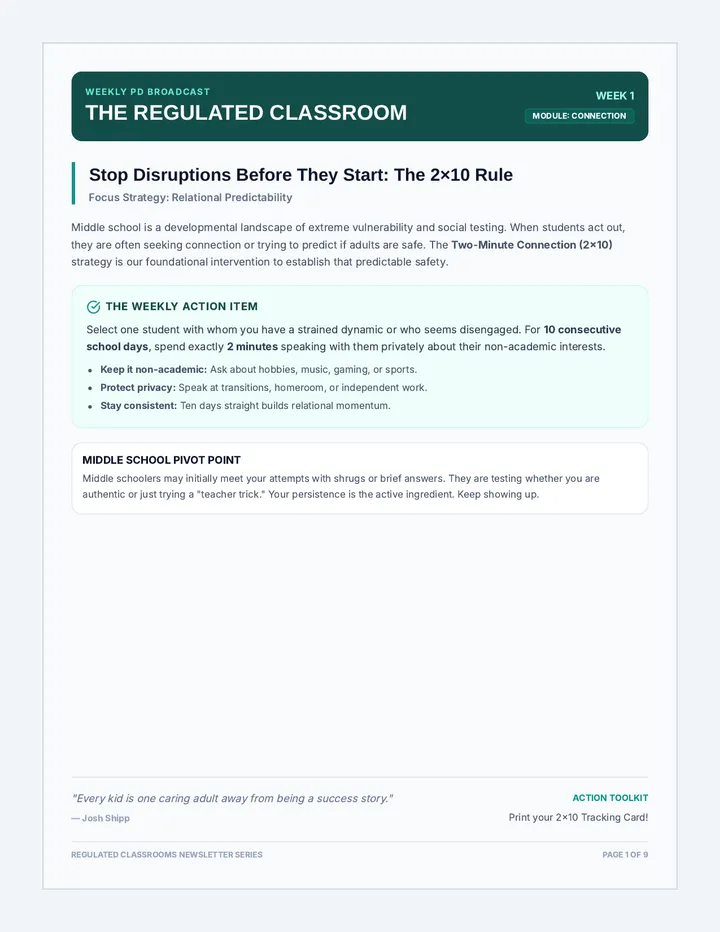
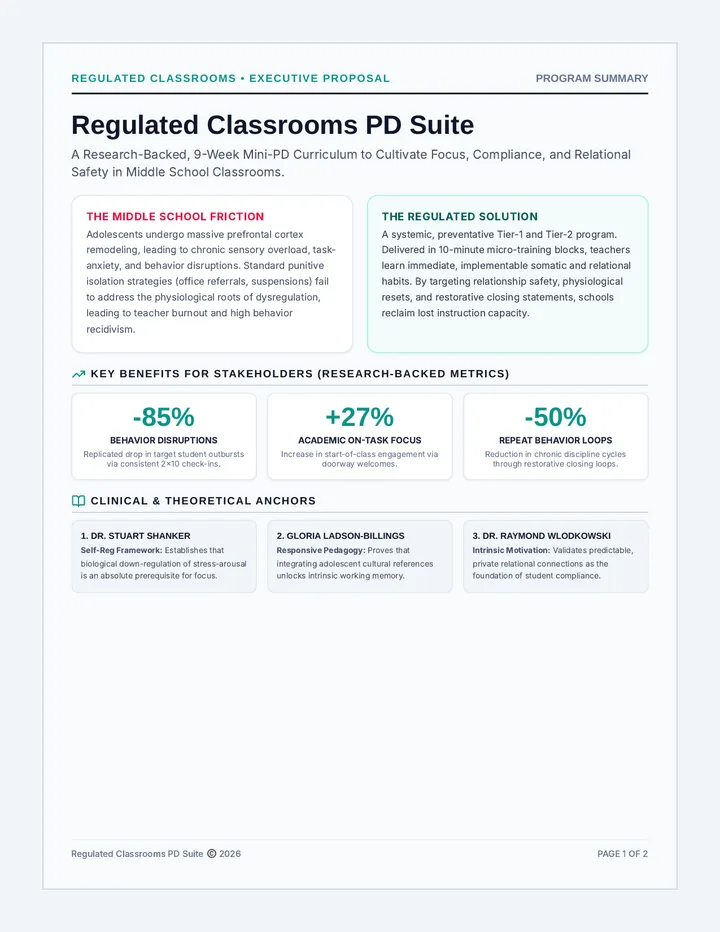
A comprehensive nine-week professional development sequence for middle school staff, delivering 10-15 minute training sessions on relationship-building, mindfulness, and de-escalation strategies. Includes interactive slides, facilitator guides, teacher reference cards, and digital newsletter templates.
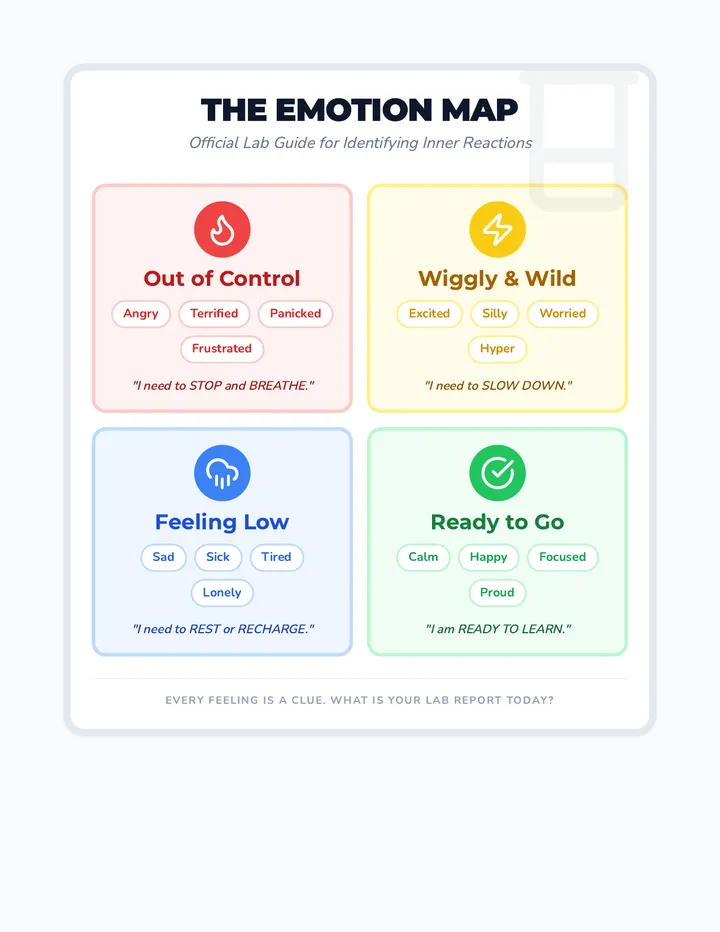
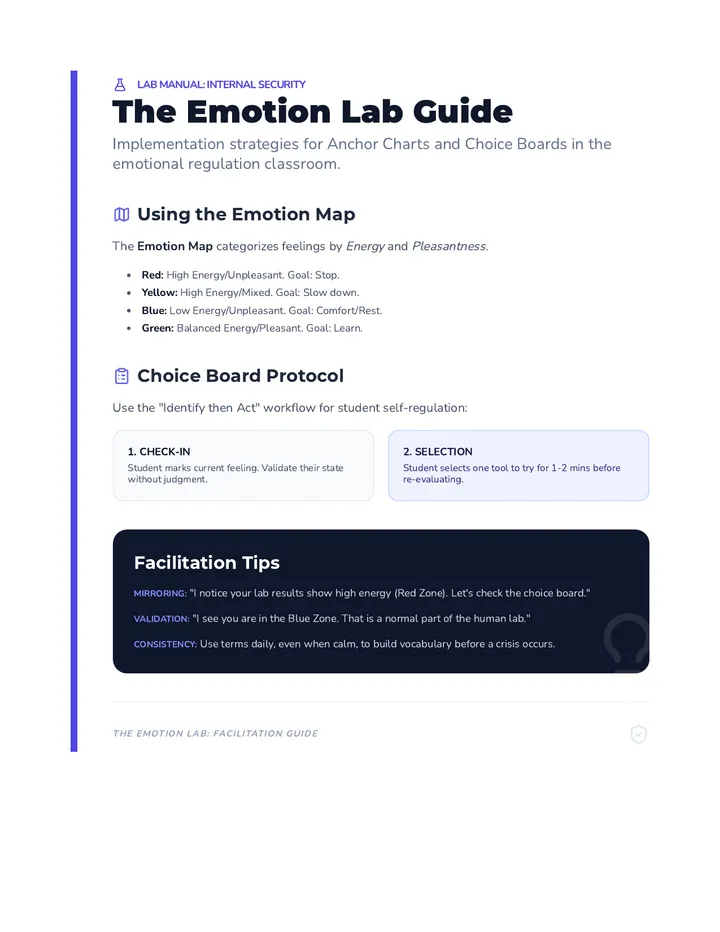
A comprehensive series of lessons for high school students focusing on the four Zones of Regulation. Students will learn to identify internal physical cues, external triggers, and specific coping strategies to manage low-energy (Blue), regulated (Green), elevated (Yellow), and extreme (Red) states.
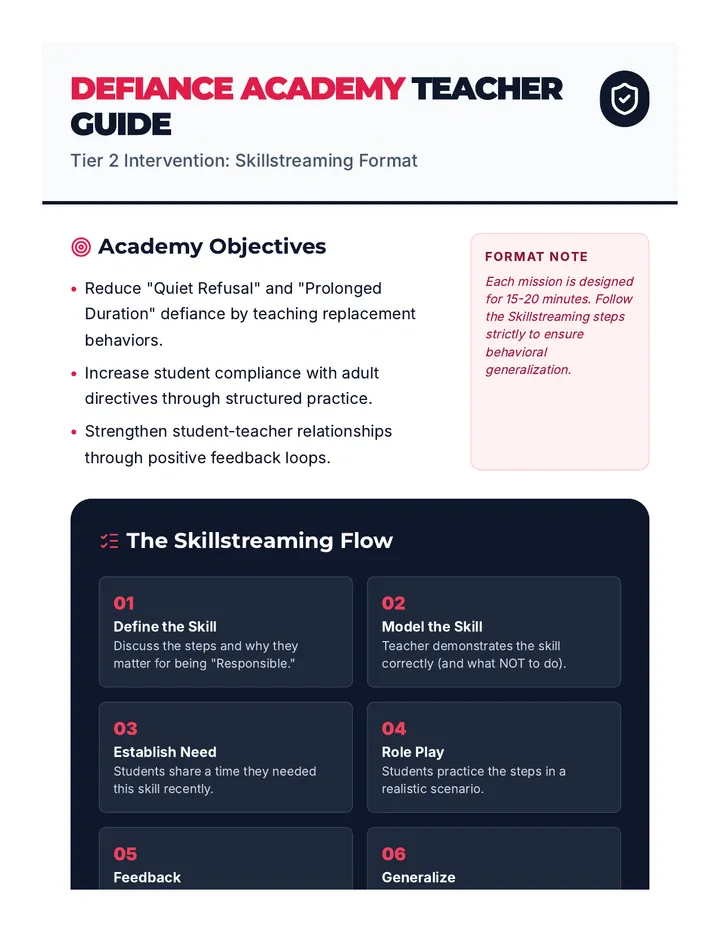
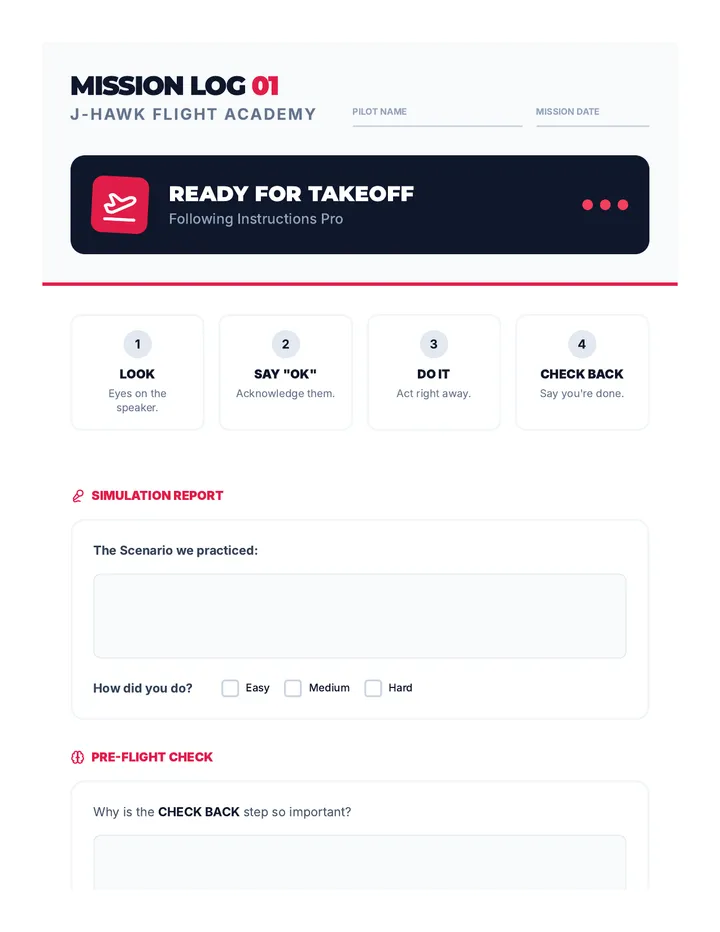
A series of Tier 2 behavior intervention academies for elementary students based on the Urbandale Student Code of Conduct. Using the Skillstreaming model, these 15-20 minute mini-lessons target specific pro-social skills to replace behaviors related to Defiance, Disruption, Physical Aggression, and Abusive Language.
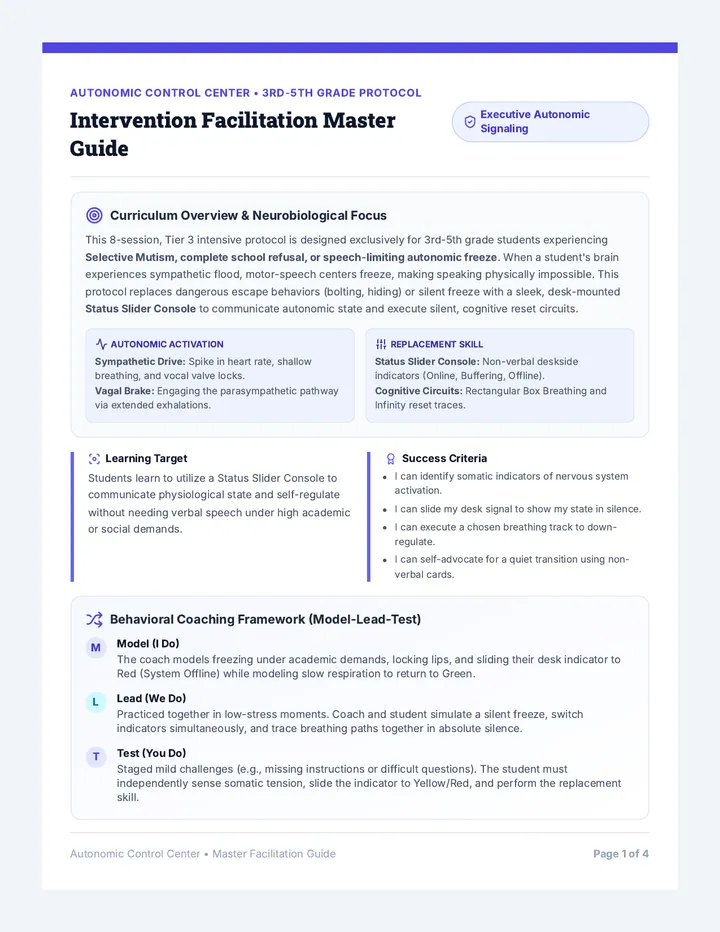
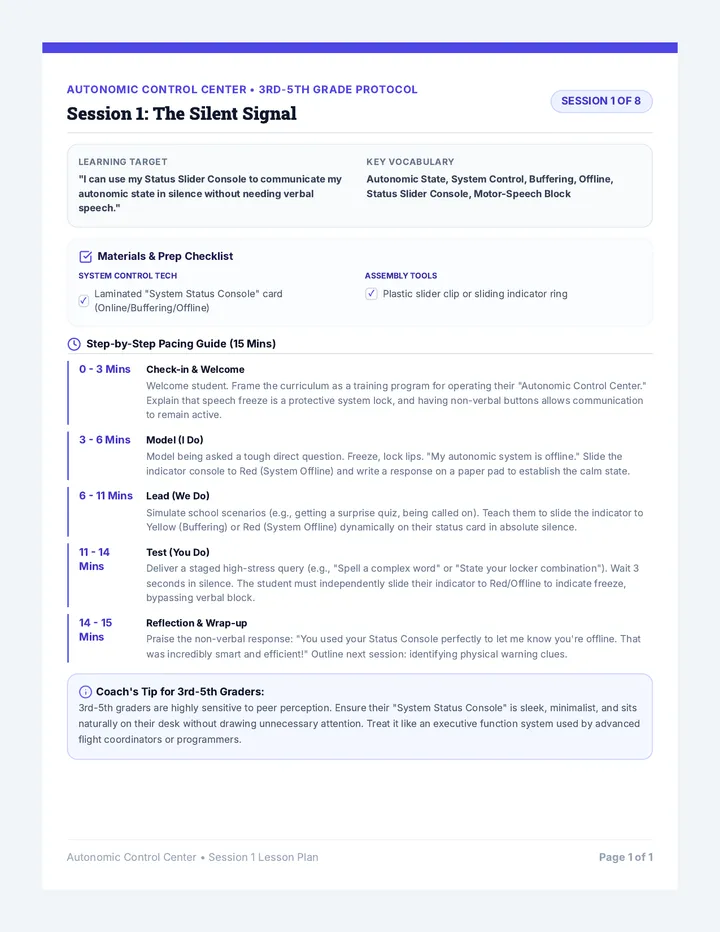
An intensive 8-session autonomic regulation and behavioral self-advocacy protocol designed exclusively for 3rd-5th grade students experiencing Selective Mutism, complete school refusal, or speech-limiting autonomic freeze. It teaches students to utilize a sleek, desk-mounted Status Slider Console to communicate physiological state and execute silent, cognitive reset circuits without verbal pressure.
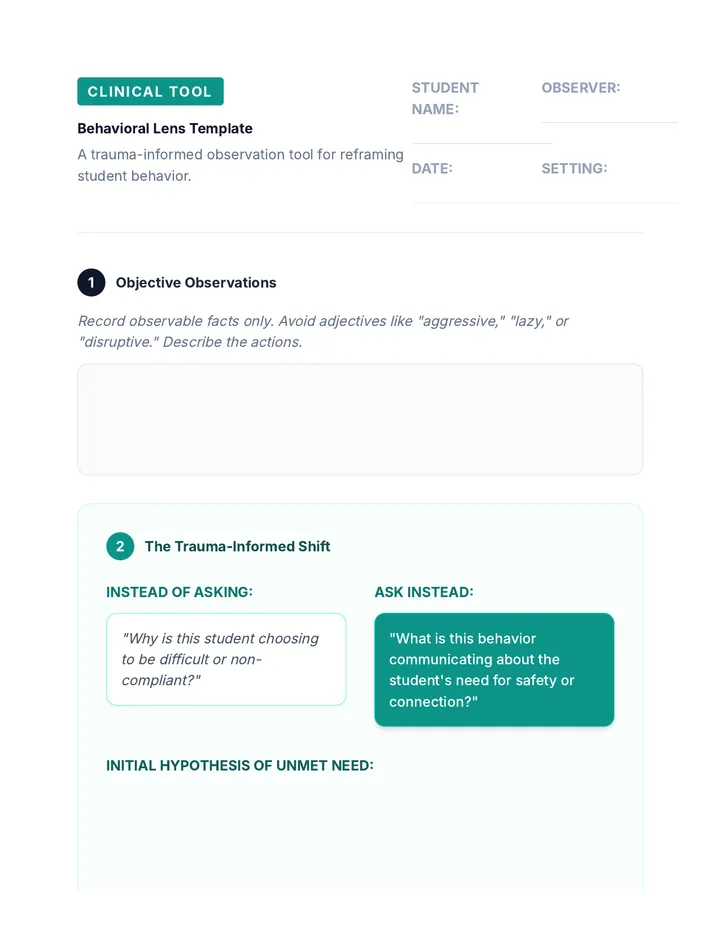
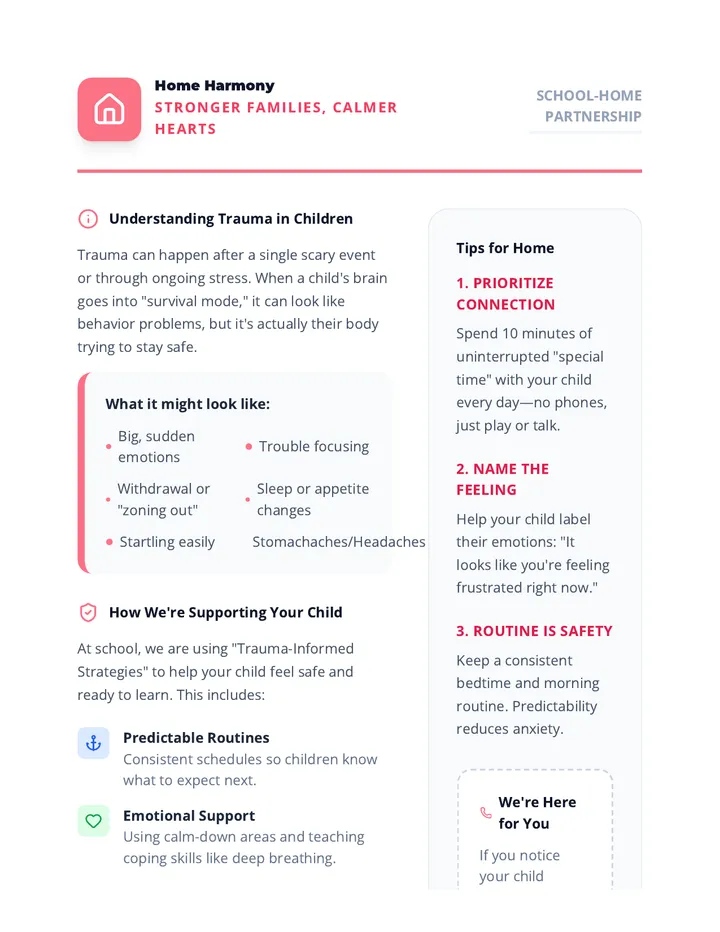
A comprehensive collection of resources for K-12 educators and staff focusing on trauma-informed care, social-emotional learning, neurodiversity, and crisis intervention. Includes training slides, student worksheets, clinical templates, and parent guides.
A specialized support framework for educators managing high-energy, dysregulated ADHD students. This sequence provides a holistic approach to movement-based learning, demand reduction, and proactive regulation strategies for the 6th-grade classroom.
A professional growth sequence focusing on student emotional regulation and systematic data-driven instructional leadership. This series pairs practical behavioral systems with rigorous academic reflection tools.
An advanced cognitive-behavioral sequence for 11th-grade students focusing on the emotional and analytical aftermath of sensory dysregulation. Students learn to challenge post-crisis shame, conduct root cause analysis, track behavioral data, and design preventative environments to build long-term resilience.
This theoretical sequence establishes the foundational knowledge required to understand Daily Check-In procedures within a Multi-Tiered System of Supports (MTSS). Students analyze the psychological principles behind Check-In/Check-Out (CICO) interventions, examine feedback loops, review evidence-based research, and investigate trauma-informed perspectives and organizational readiness.
This sequence teaches 5th-grade students how to communicate their sensory needs and utilize co-regulation strategies. Students will develop non-verbal signals, practice verbal scripts, and create a formal co-regulation plan to bridge the gap between internal dysregulation and external support.
A professional development session focused on the GAIN MTSS framework for the Learning and Behavior Cycle. Participants will explore the neuroeducation of stress, stressload, and the eight specific zones of student regulation to implement more effective, attuned responses.
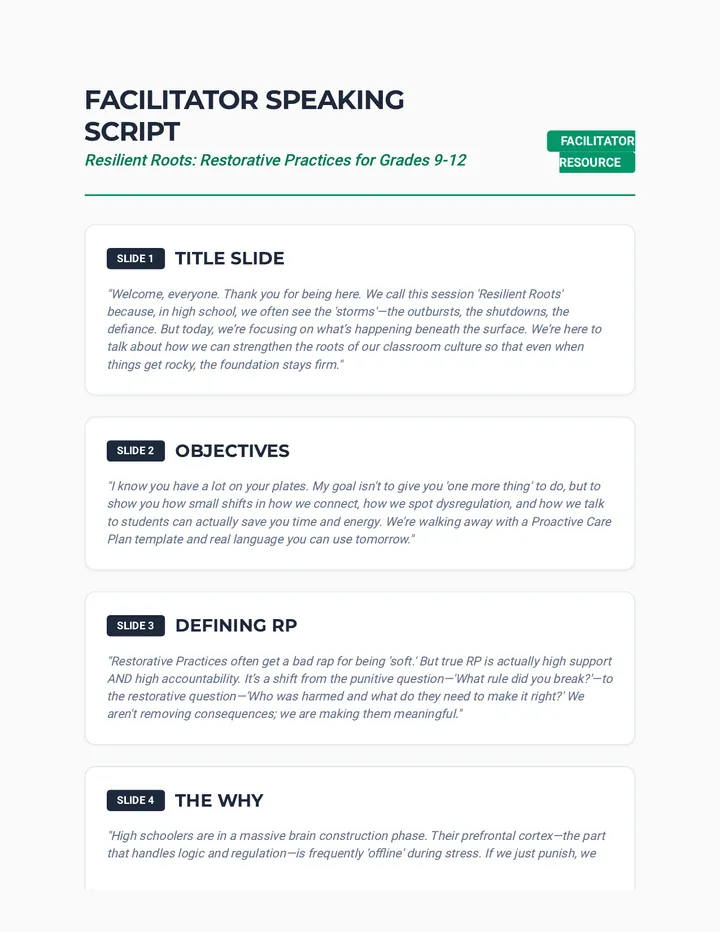
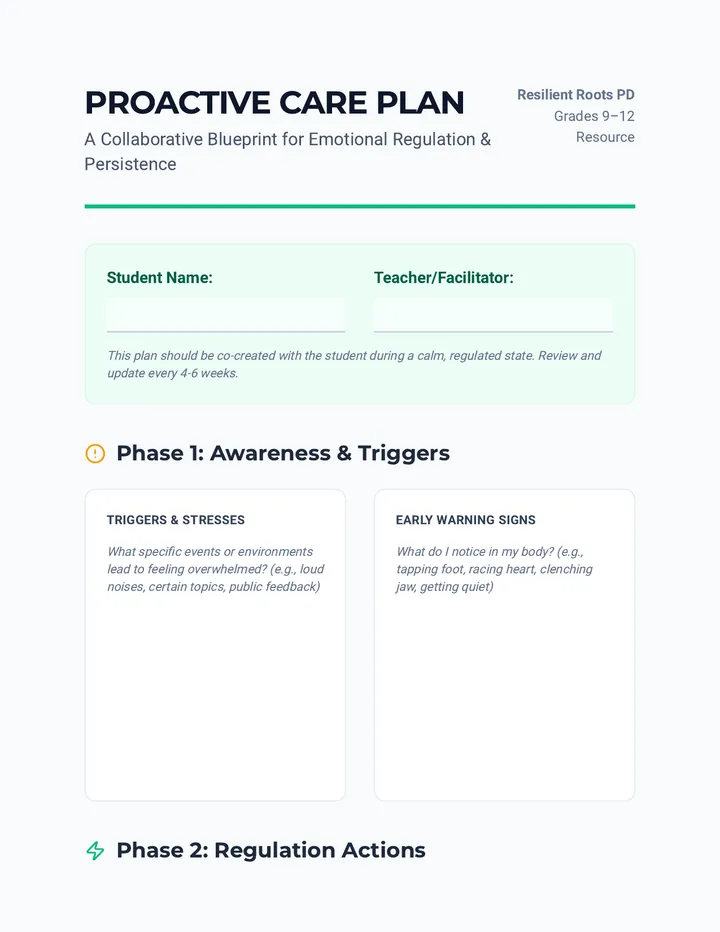
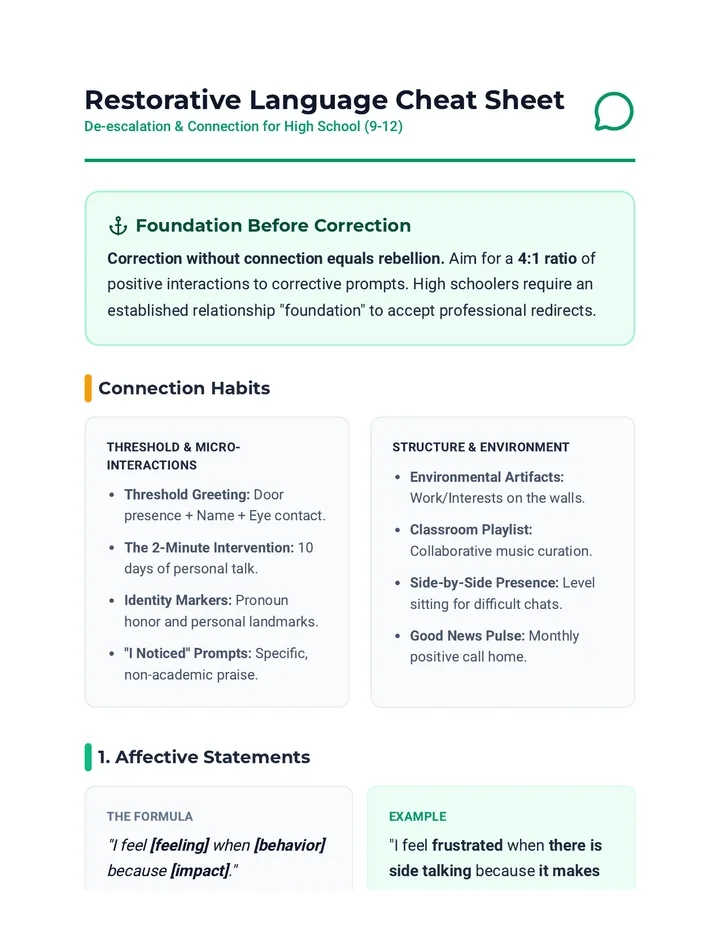
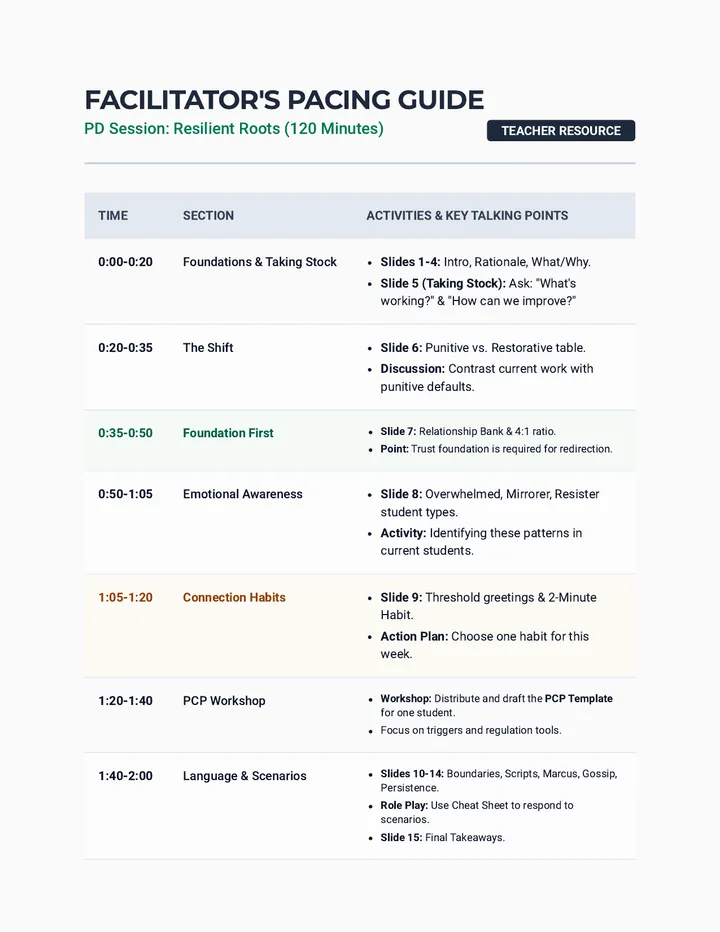
A professional development session for high school teachers focusing on restorative practices, emotional regulation, and the implementation of proactive care plans. This lesson equips educators with the tools to handle chronic emotional challenges and foster deep connection with students in grades 9-12.
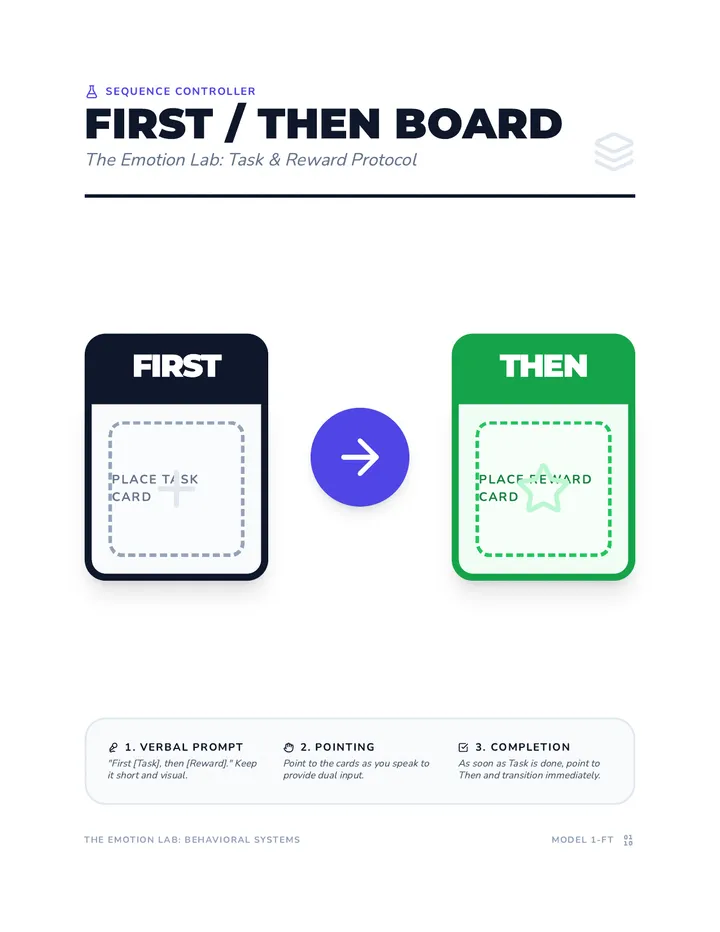
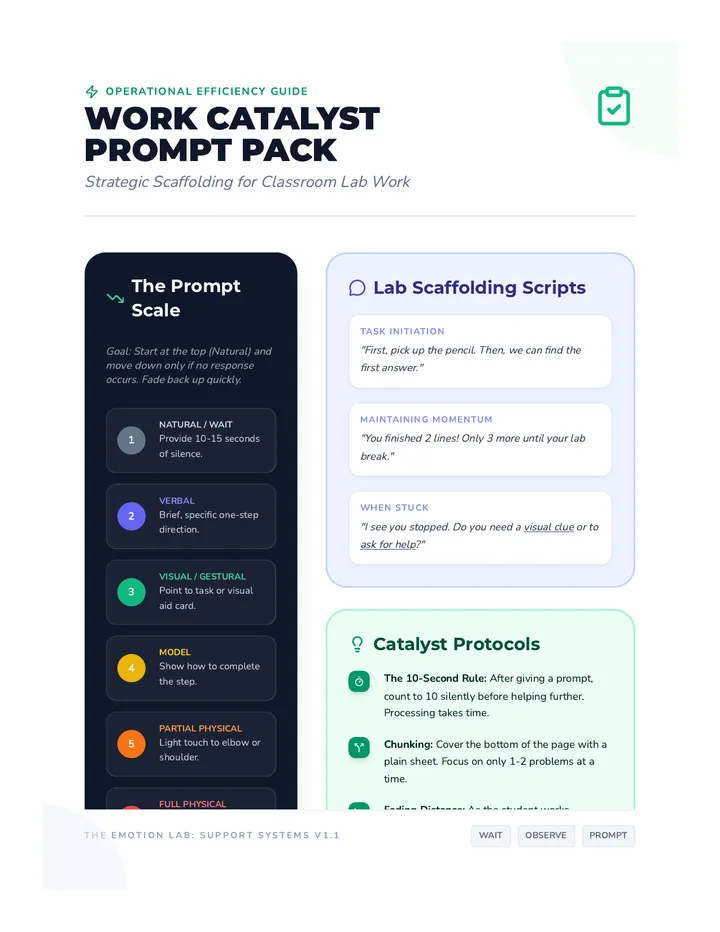
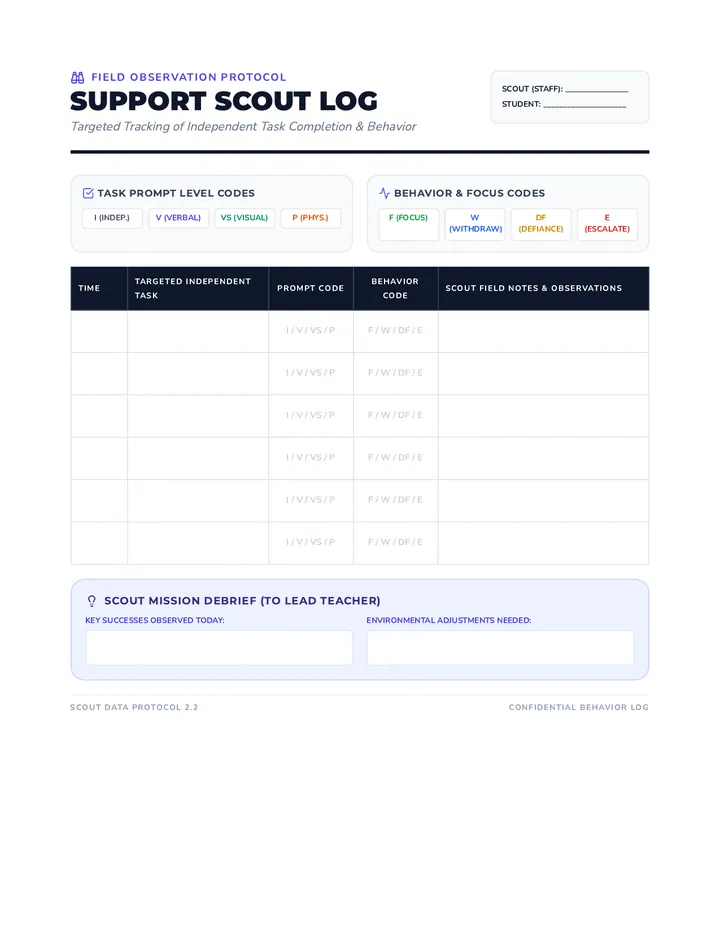
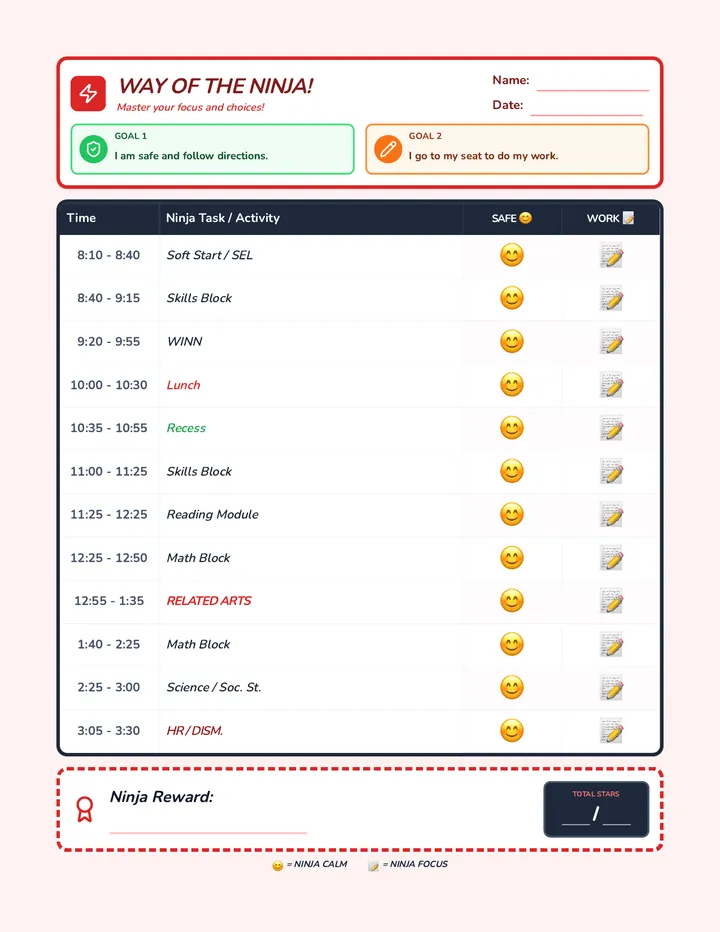
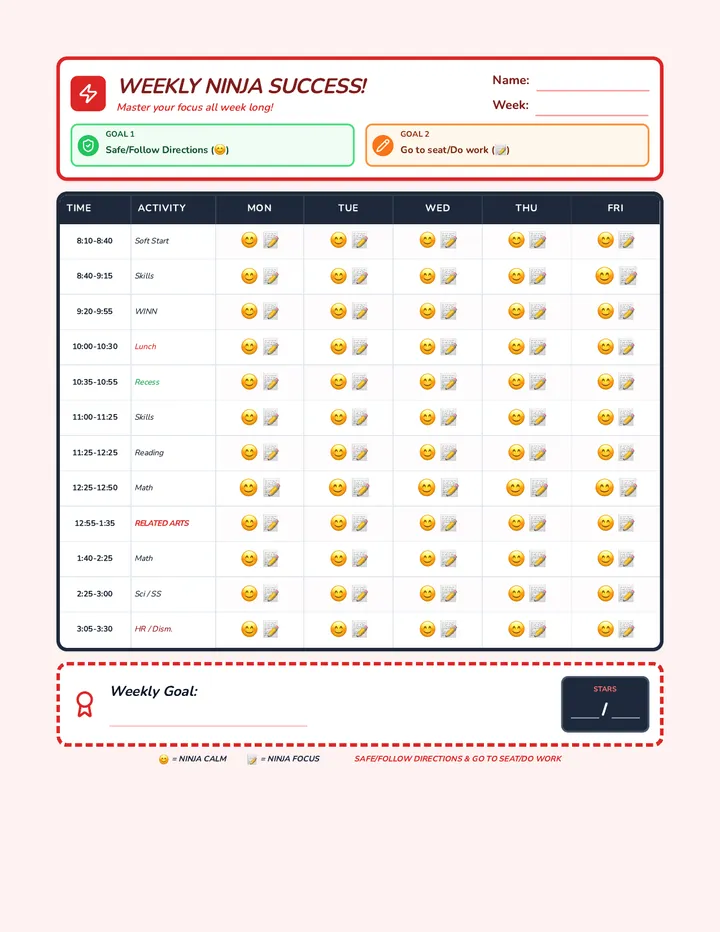
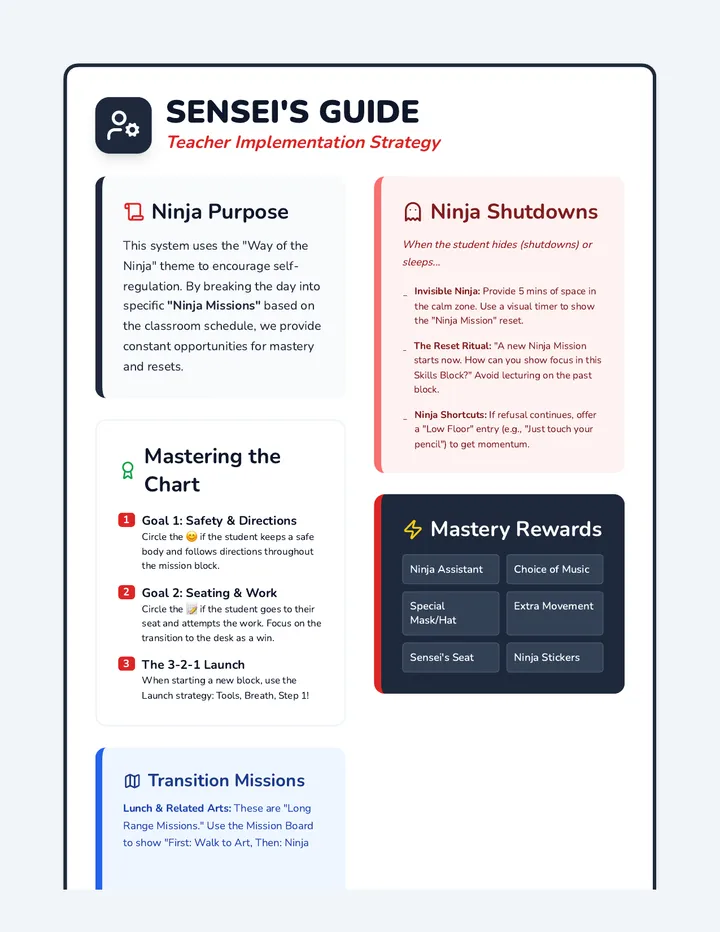
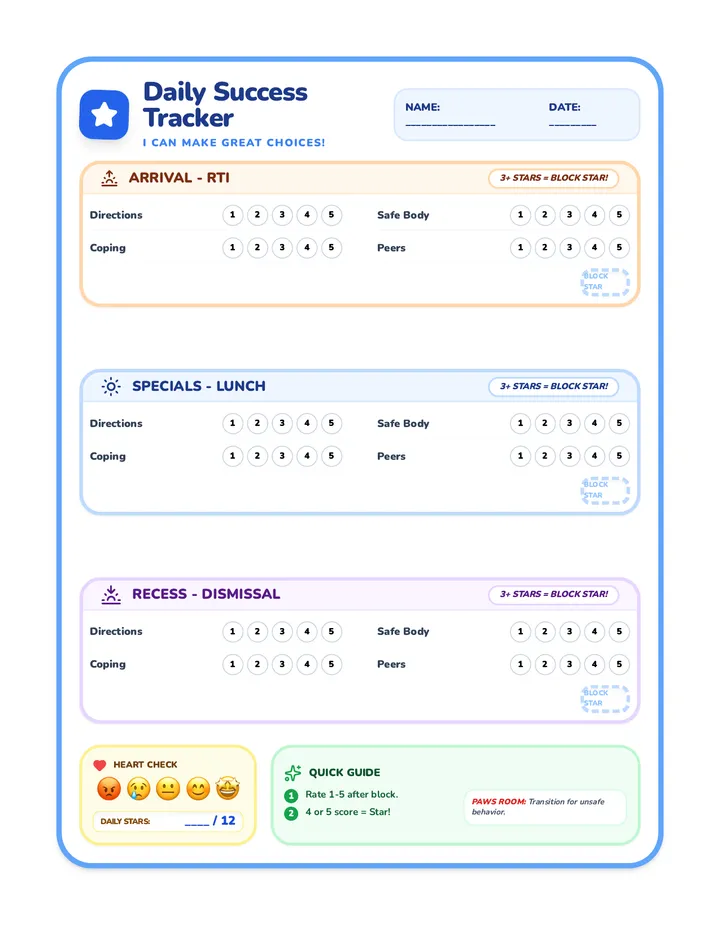
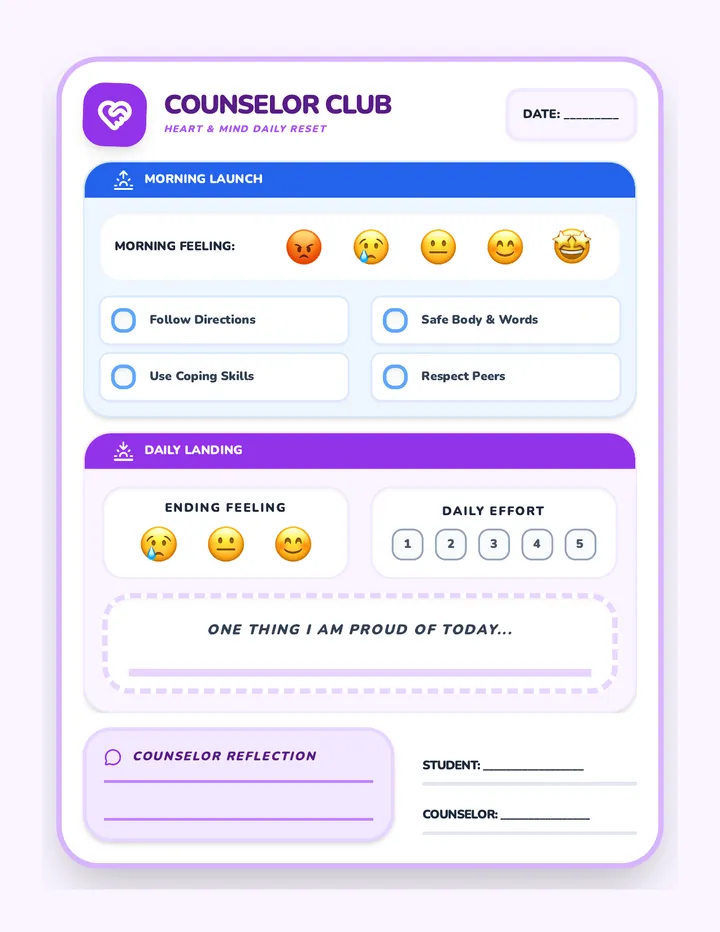
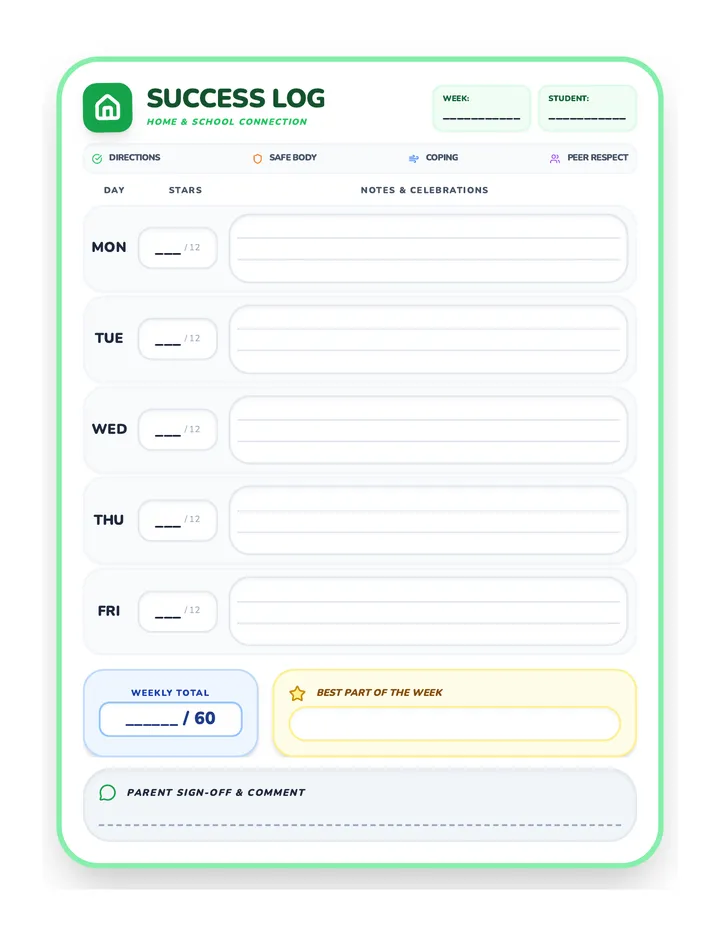
A comprehensive behavior tracking system designed for a 1st-grade student struggling with work refusal and transitions. The system uses a 30-minute incremental tracker, visual desk reminders, and a teacher implementation guide to foster safety and academic engagement.
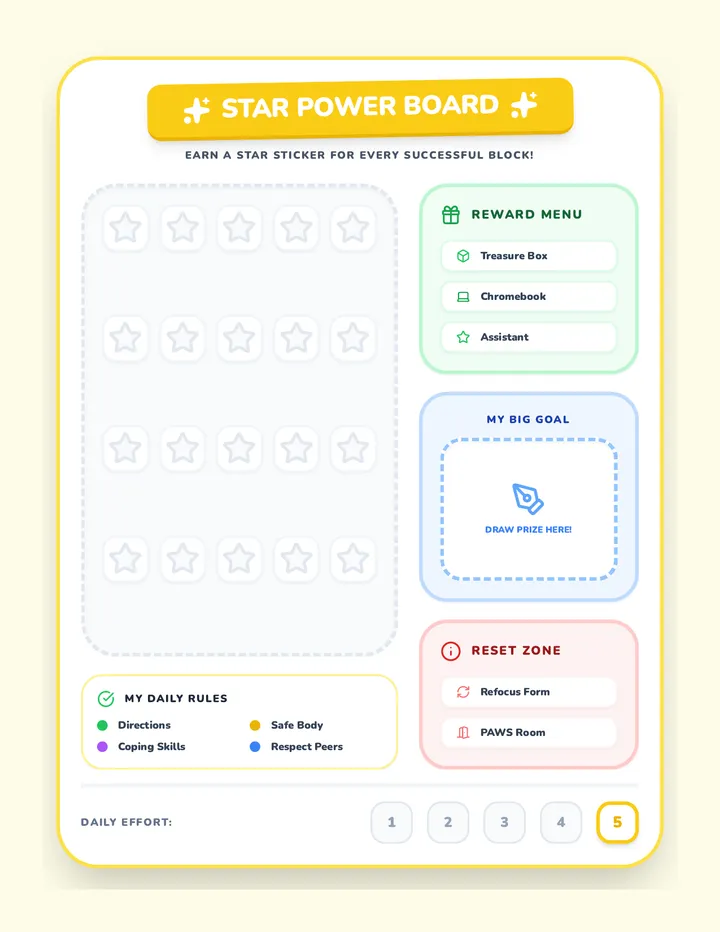
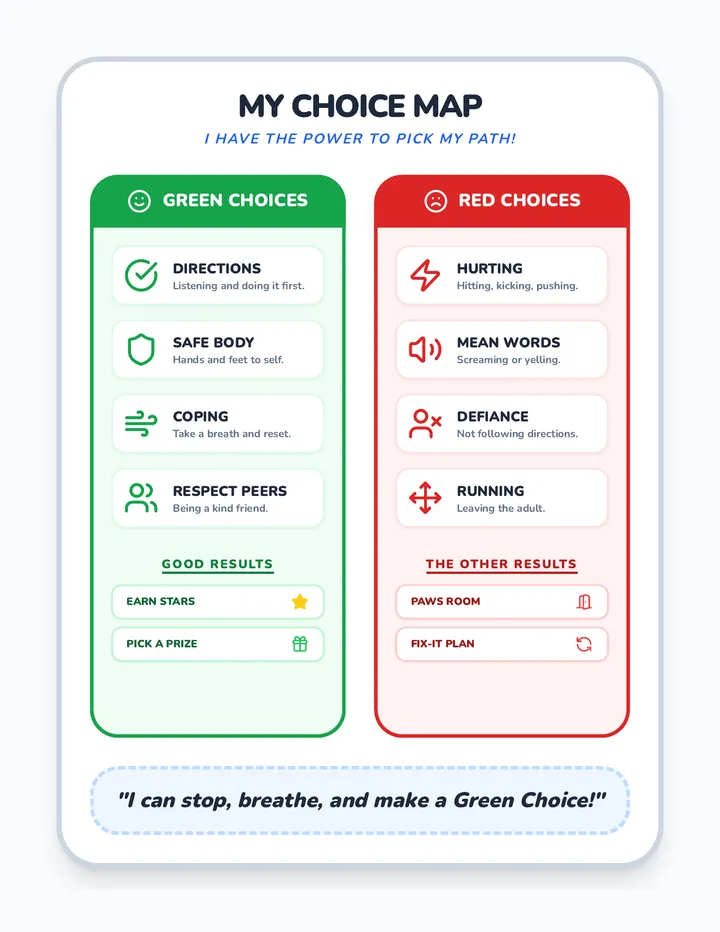
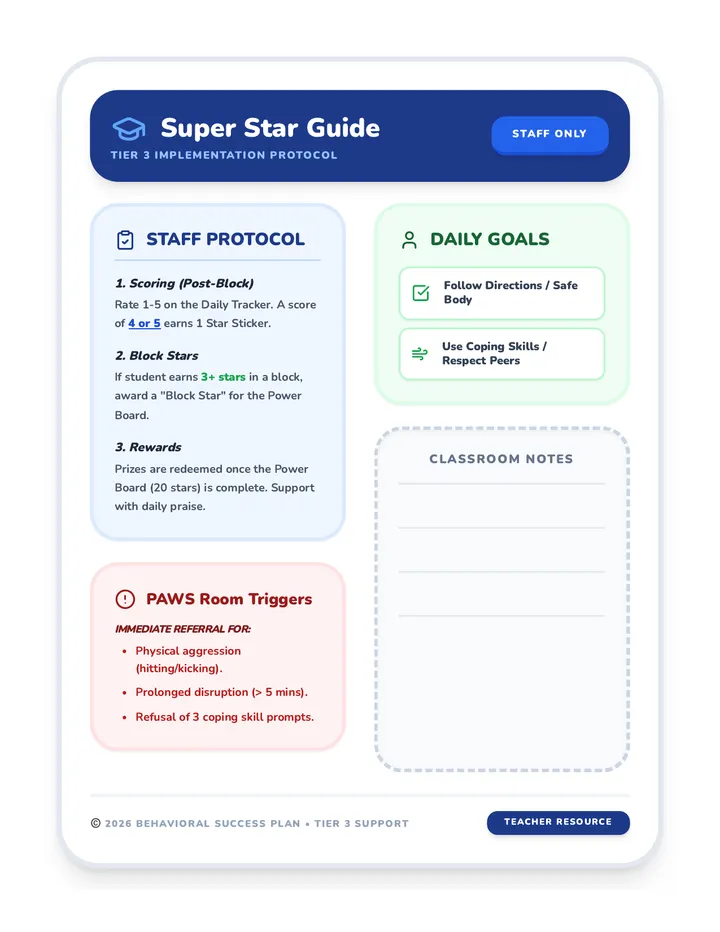
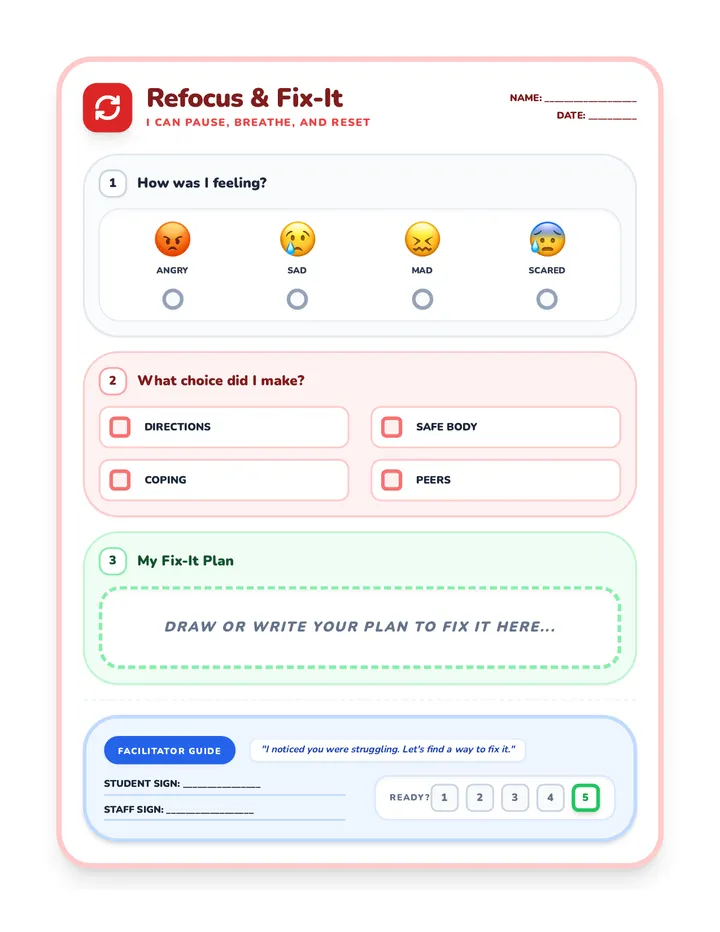
A comprehensive Tier 3 behavior support system for a second-grade student with ADHD, focusing on emotion regulation, safe choices, and positive reinforcement through a structured daily check-in/check-out (CICO) process.
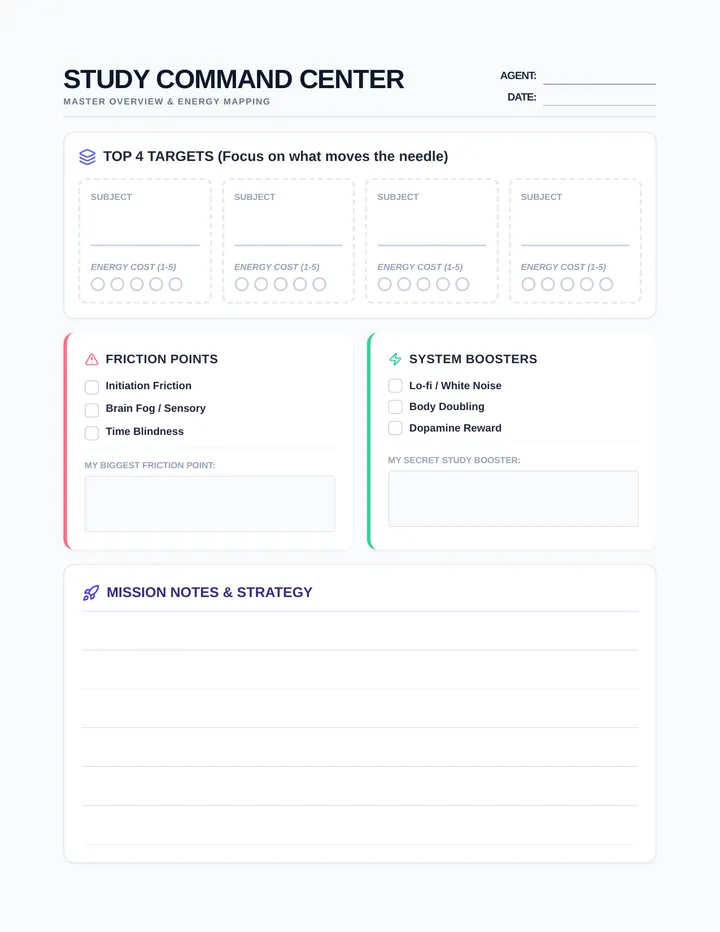
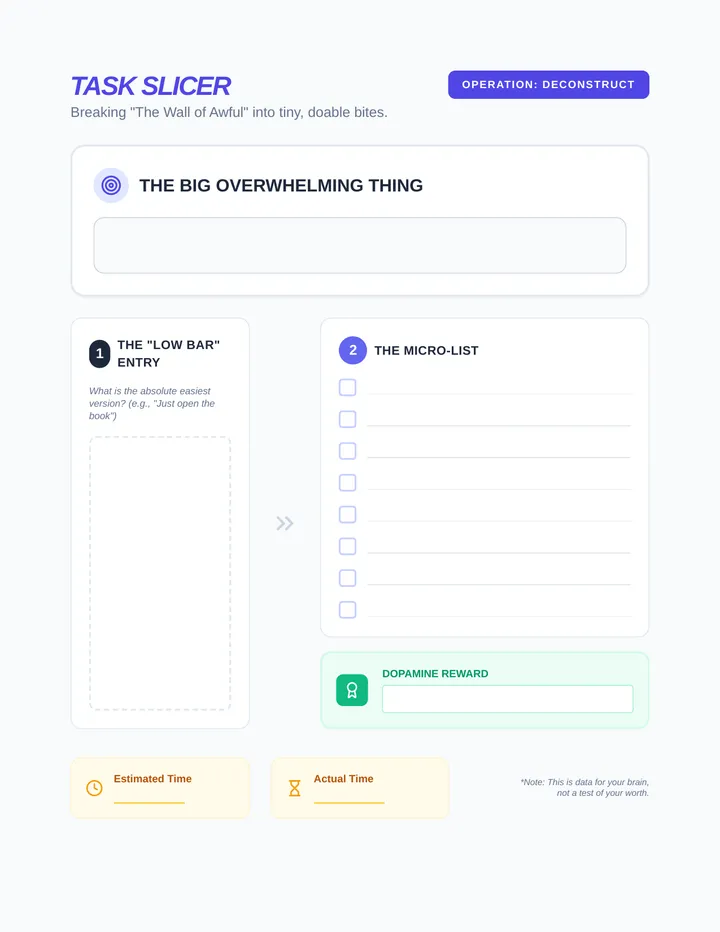
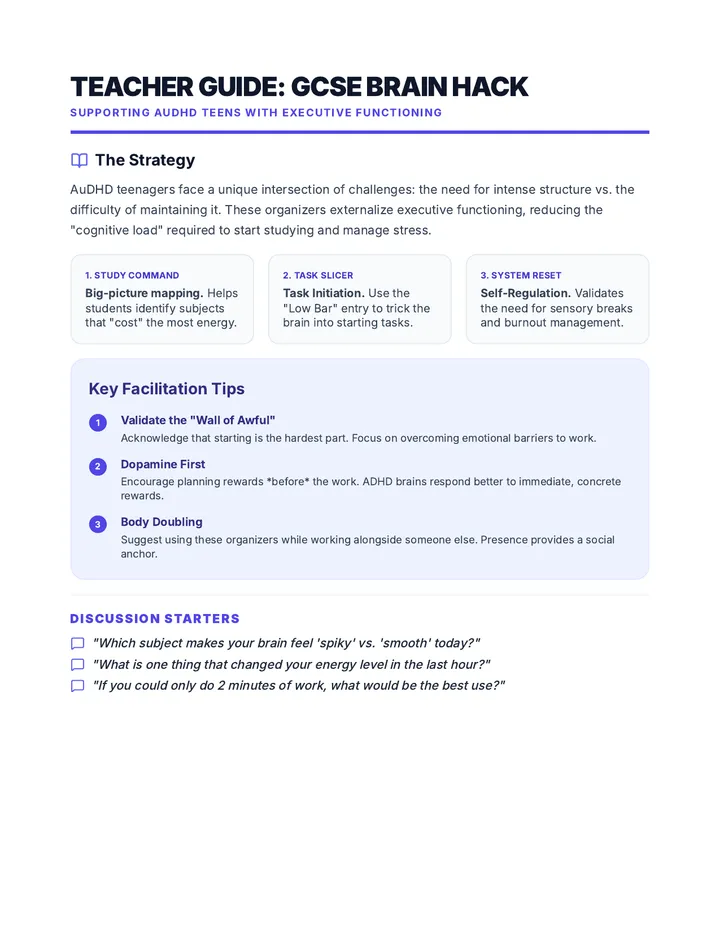
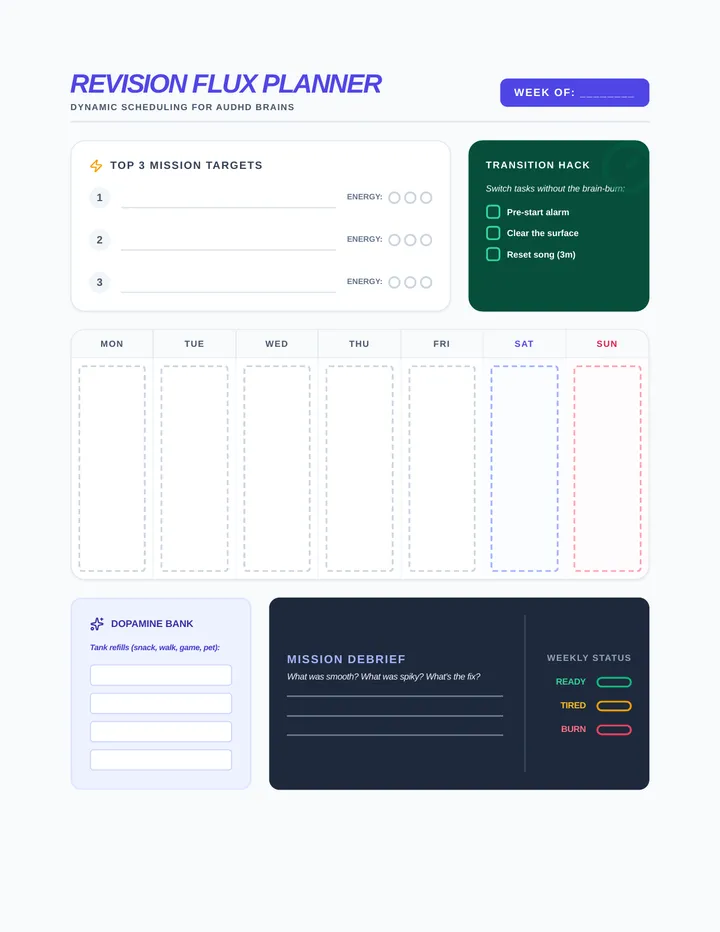
A collection of graphic organizers and strategies designed specifically for AuDHD teenagers to manage executive functioning and stress during GCSE exam preparation.
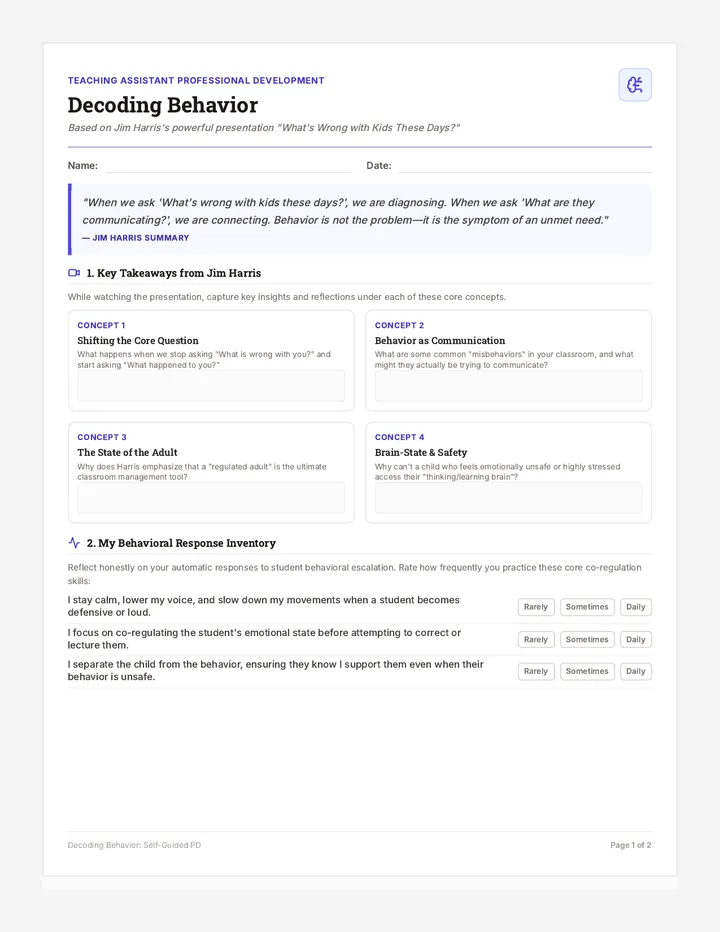
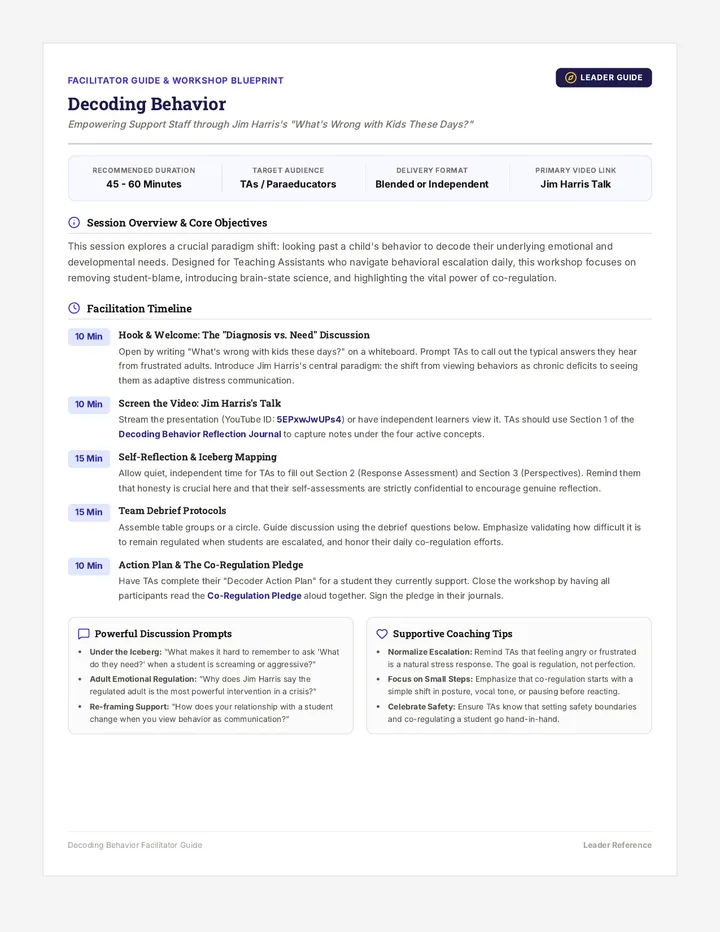
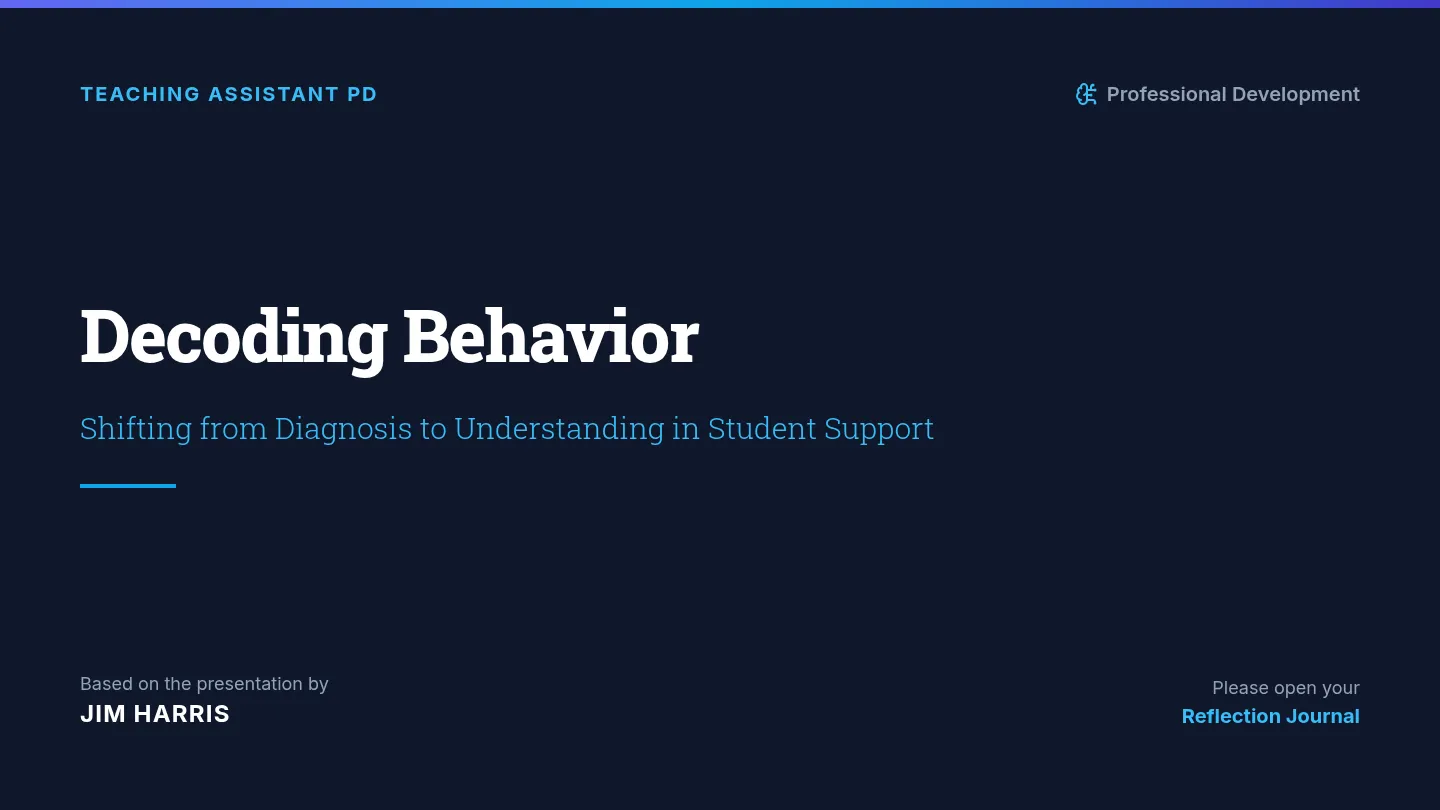
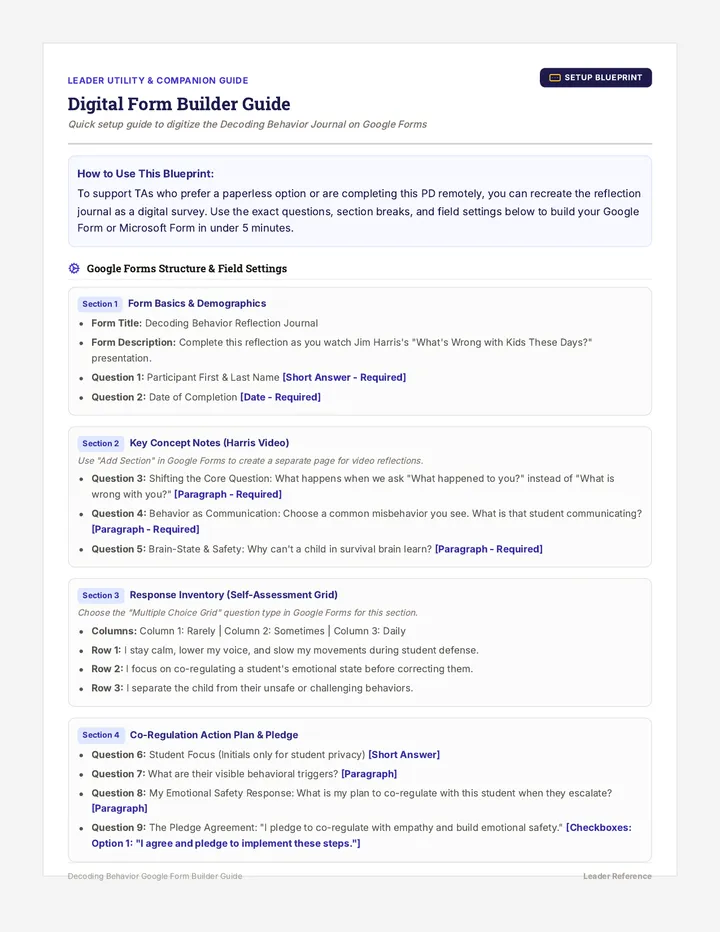
A powerful professional development lesson for teaching assistants based on Jim Harris's eye-opening presentation "What's Wrong with Kids These Days?". This lesson shifts the perspective from diagnosing student deficits to decoding behavioral communication and building emotional safety.
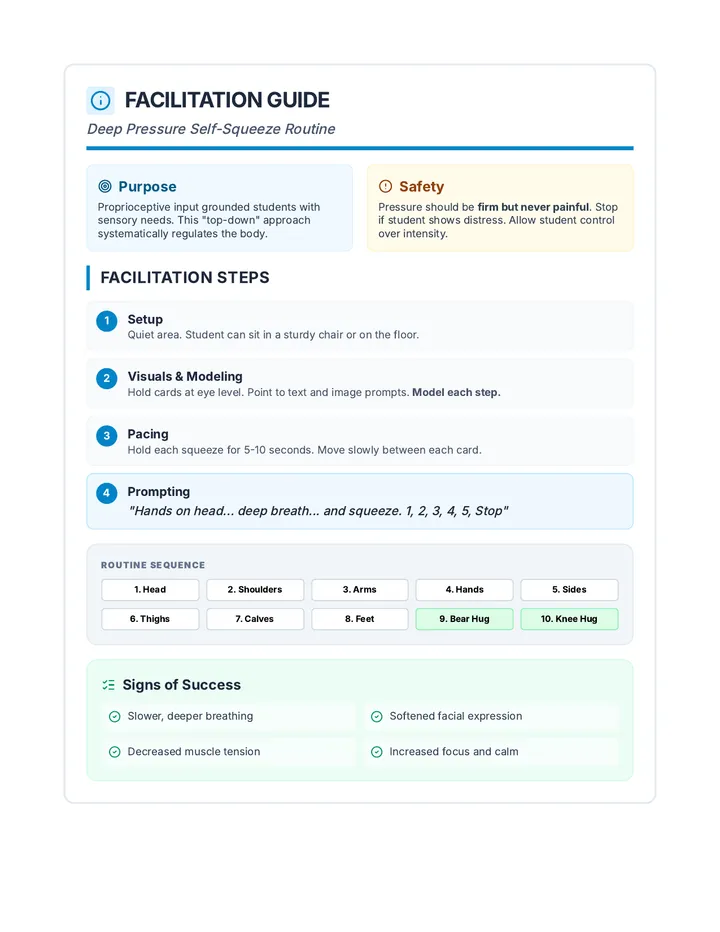
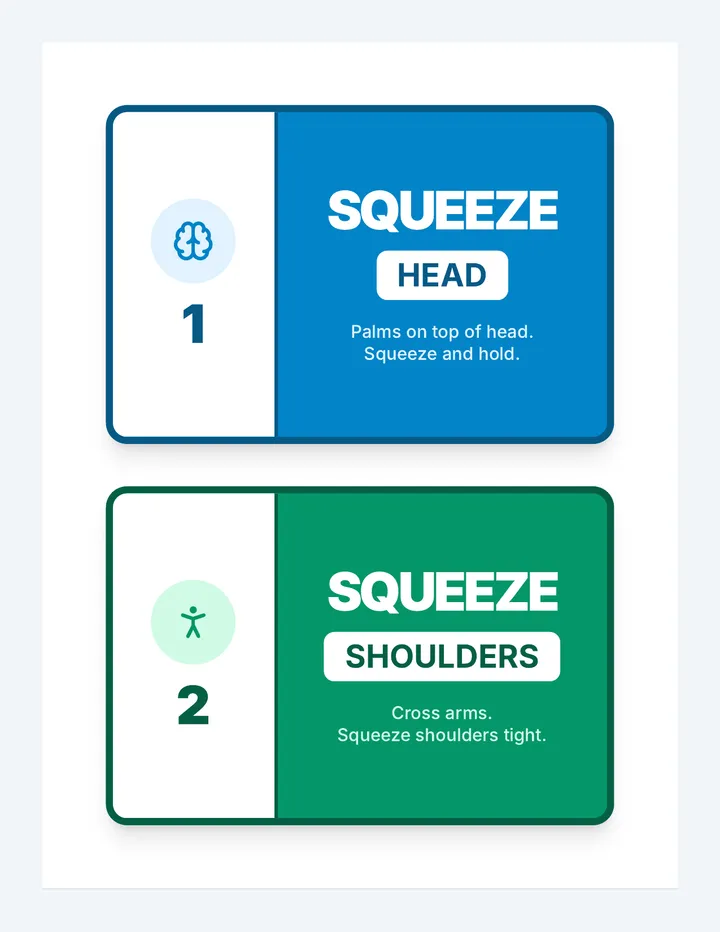
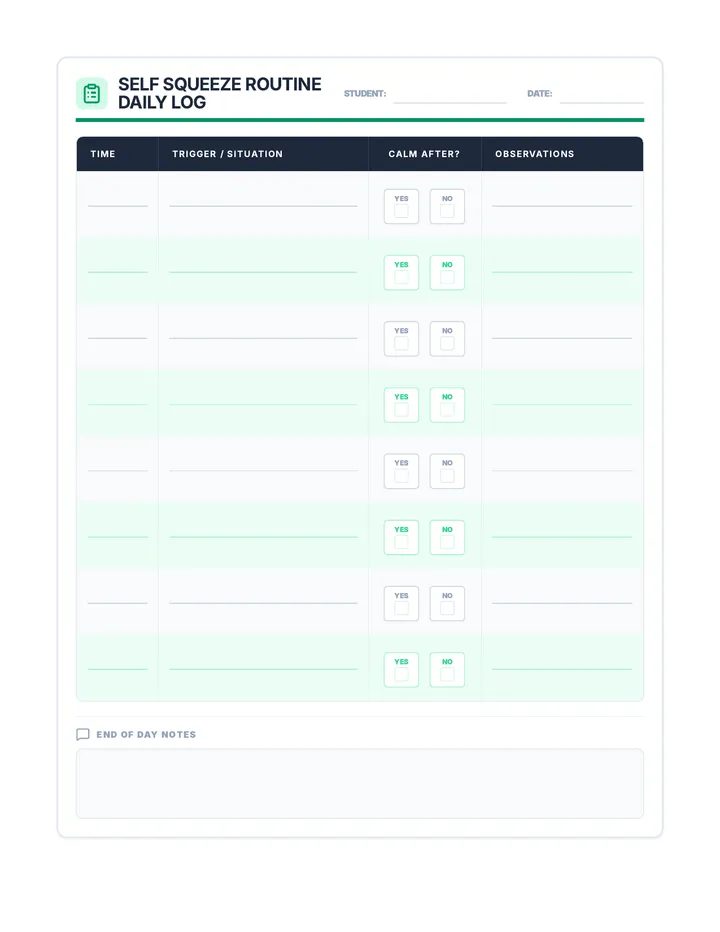
A sensory regulation routine using self-applied deep pressure to help students ground themselves and manage overstimulation. The lesson includes visual squeeze cards for the student and a facilitation guide for the teaching assistant.
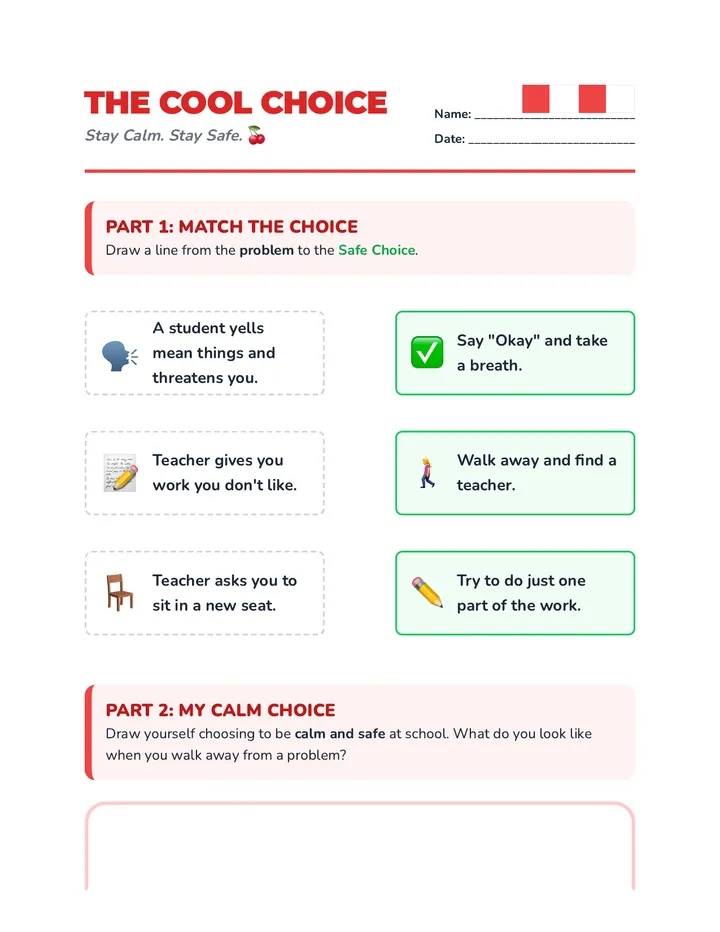
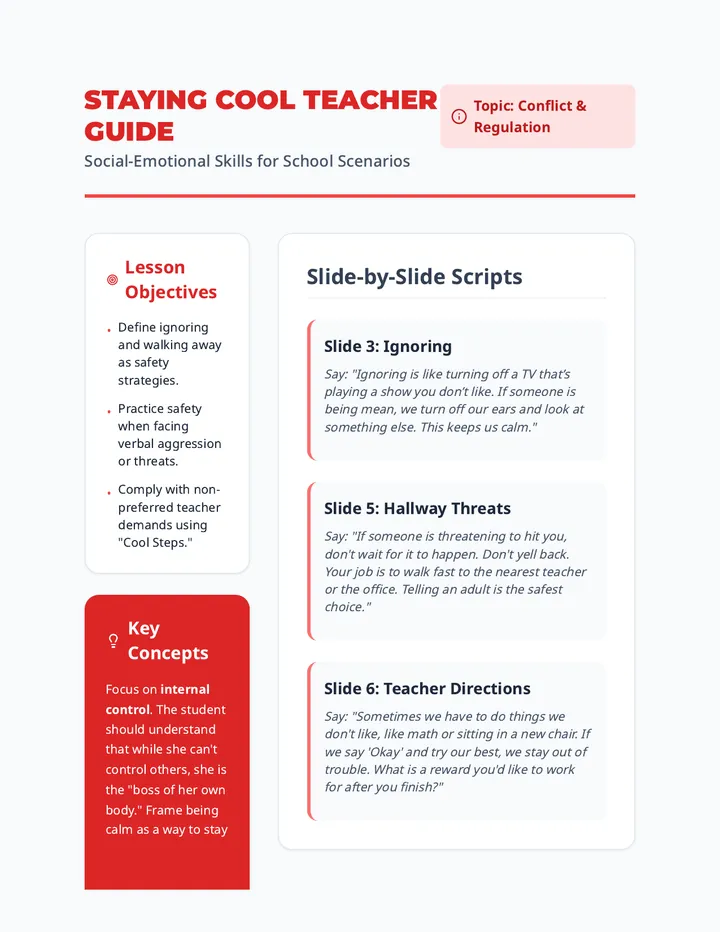
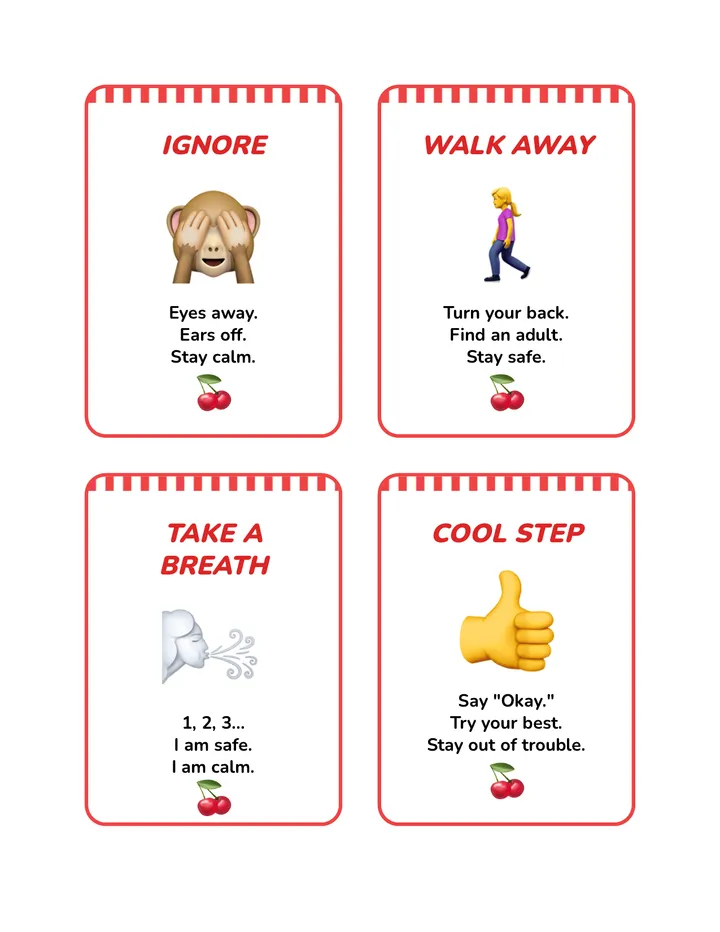
A social-emotional learning lesson focused on conflict resolution, ignoring distractions, and emotional regulation for middle school students with cognitive developmental delays. The lesson uses a fashion-themed 'Cherries and Checkers' aesthetic to engage the student.
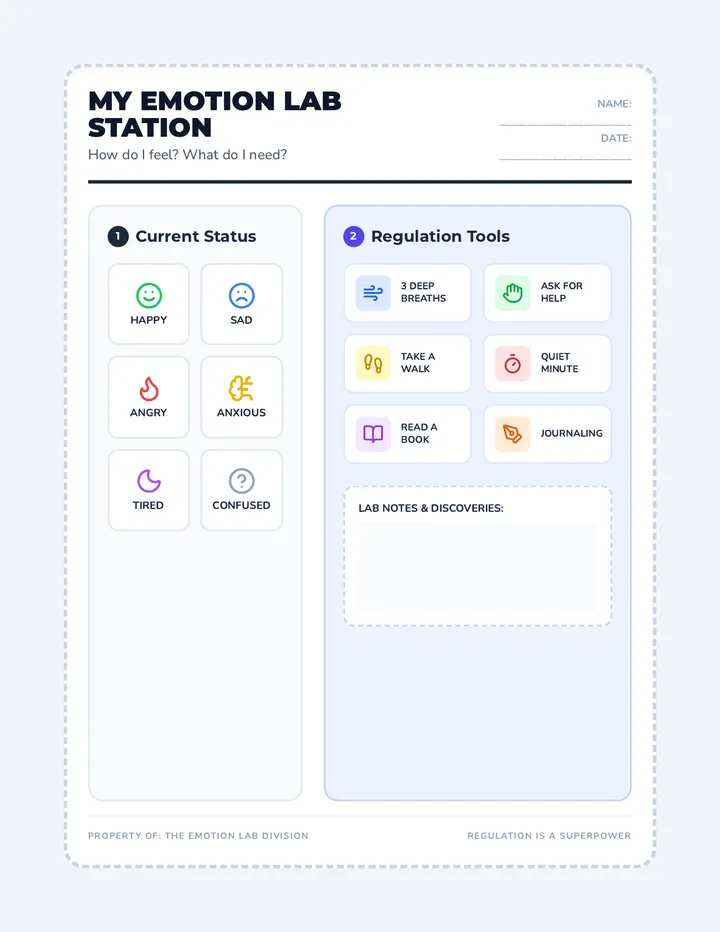
A set of resources designed for a second-grade student to identify, name, and regulate emotions, specifically focusing on school-related task avoidance and escalation. Features a mechanical 'Emotion Engine' theme to engage neurodivergent learners.
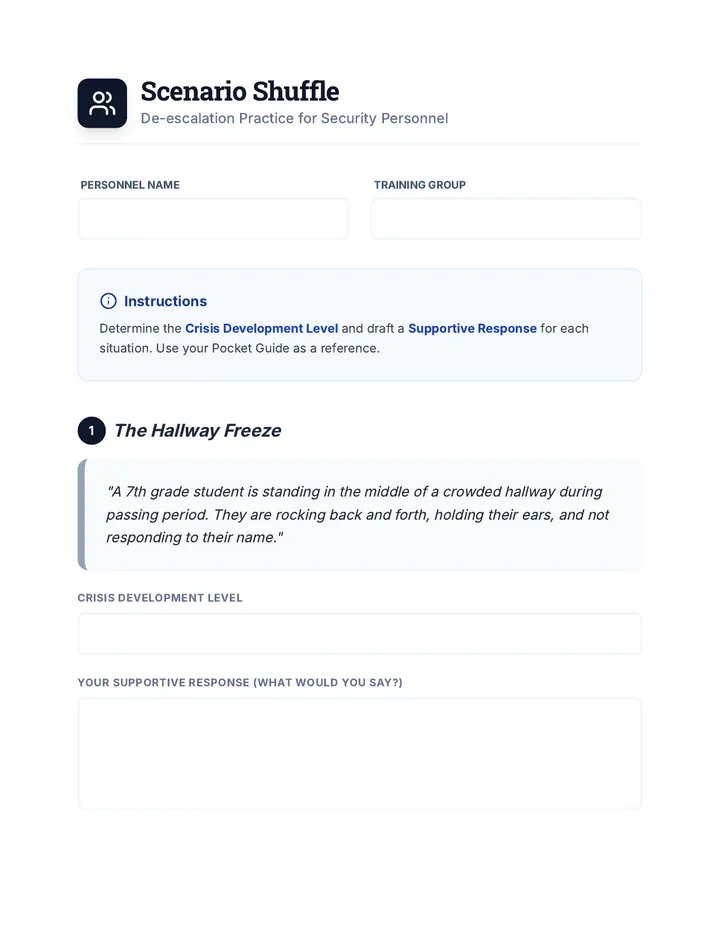
A targeted sensitivity and de-escalation training for school security personnel focusing on supporting students with special needs using CPI principles.
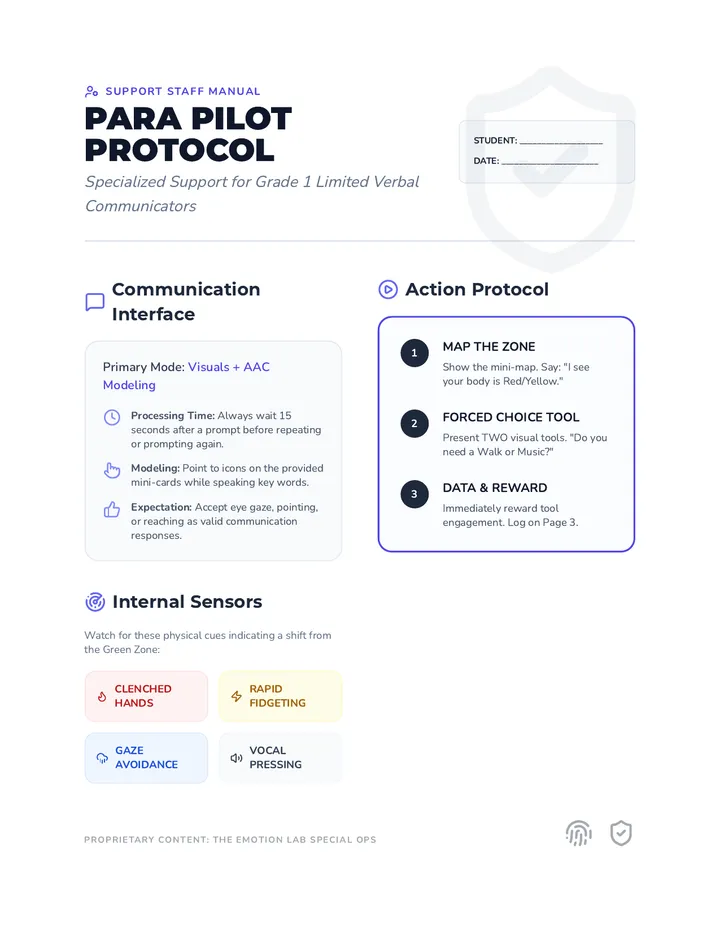
A comprehensive guide and set of tools for paraprofessionals to effectively support students with special education needs, focusing on behavior management and de-escalation.
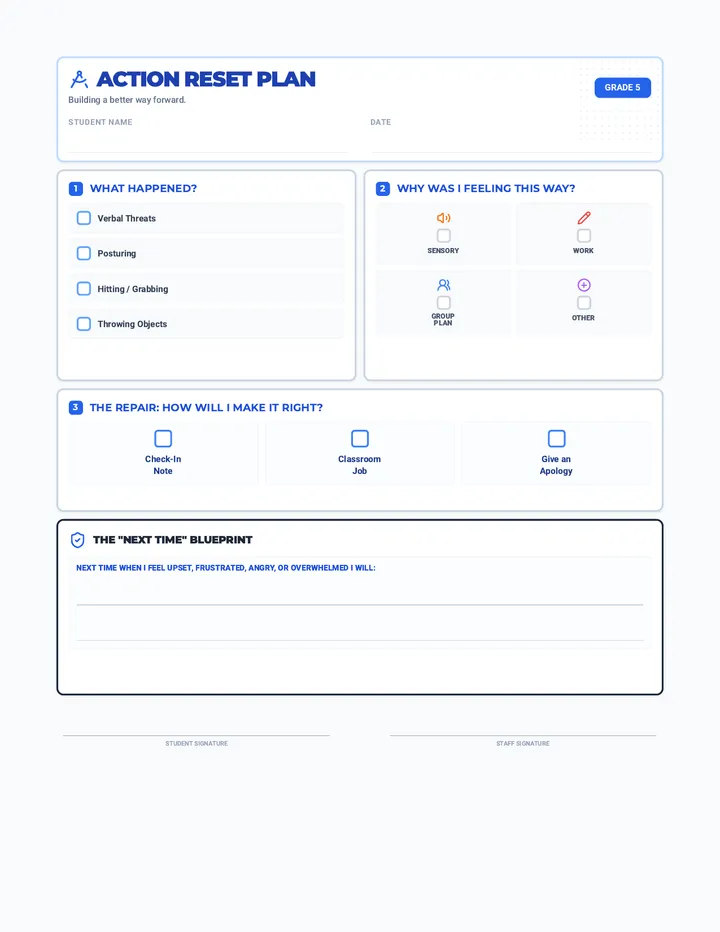
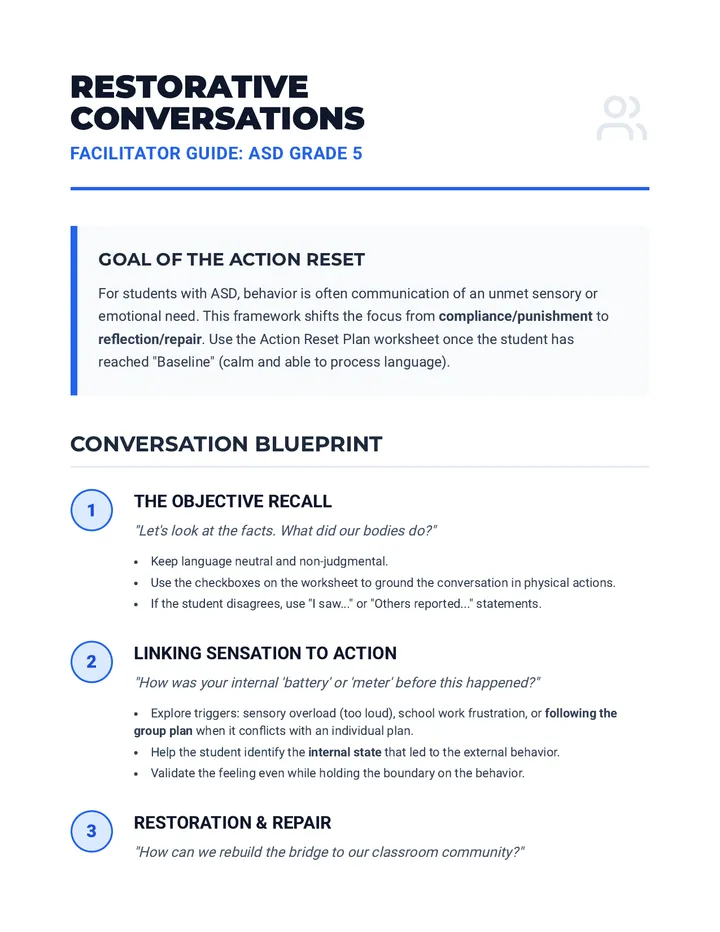
A structured restorative justice framework designed for 5th-grade students, specifically tailored for those with ASD to reflect on and repair behavioral incidents involving physical or verbal aggression.