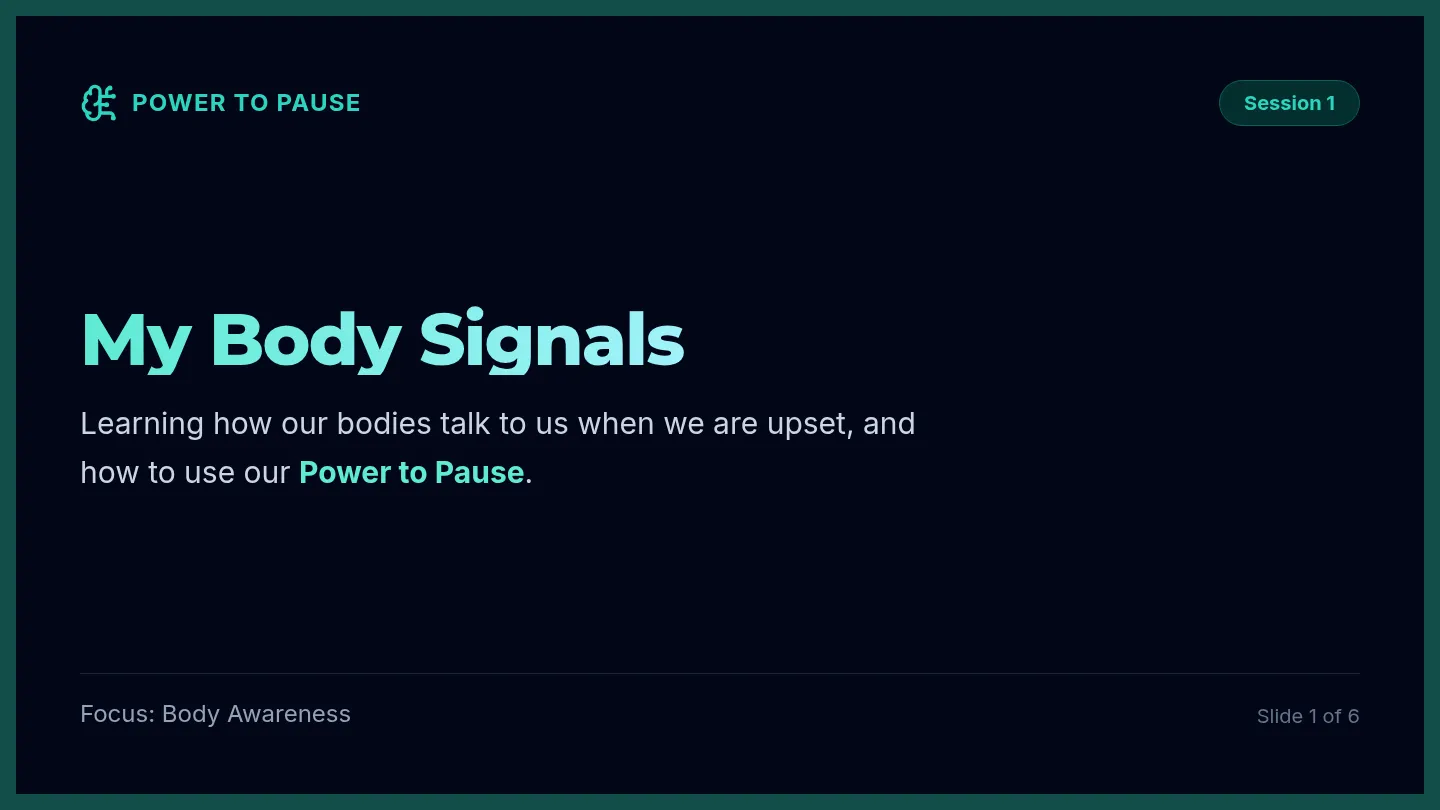
Shame Spiral Slides SHAME SPIRAL
Deconstructing the Aftermath
The Post-Crisis Hangover
When the nervous system finally calms down, a new wave often hits: Cognitive Shame.
"I can't believe I did that again."
"Everyone thinks I'm weird/dangerous."
"I'll never be able to handle this."
The Shame Spiral:
Dysregulation → Physical Calm → Self-Judgment → Stress Increase → Lower Threshold for Next Incident.
Tools for Deconstruction
Observation
Notice the thought without judging it as "true." Just label it: "I am having the thought that I am a failure."
Evidence Check
Is this thought a fact or a feeling? What is the evidence that this is actually true vs. my brain feeling stressed?
Reframing
Swap the judgment for a mechanical explanation. "I'm bad" becomes "My sensory system was overloaded."
Anatomy of a Reframe
The Shame Thought
"I'm a failure because I lost control in front of the class."
The Resilience Reframe
"My brain was in survival mode because of the noise and heat. I am learning how to identify those signals earlier."
Why does this matter?
Reframing isn't "toxic positivity." It is accuracy. Judging yourself adds stress. Analyzing yourself adds data. Data leads to solutions.
Workshop Time
We are going to use the "Thought Reframer" to tackle one of those sticky post-incident thoughts.
Observe
Challenge
Reframe
Thought Reframer Worksheet Thought Reframer
Cognitive Deconstruction Workshop
Name:
Date:
1
The Observation
Write down a recurring negative thought you have after a dysregulation incident. Don't censor it—write exactly what your brain tells you in that moment (e.g., "I'm a failure," "Everyone hates me").
2
The Evidence Trial
Proof "FOR" the thought
What evidence supports this thought?
Proof "AGAINST" the thought
What evidence suggests this is just a feeling?
3
The Mechanical Reframe
Now, strip away the judgment and replace it with biological or environmental facts. Focus on the 'Why' instead of the 'Who.'
New Resilience Statement:
Example: "My sensory threshold was low due to 4 hours of sleep and a broken air conditioner. My brain reacted to protect me."
The Shift
How does the new statement feel compared to the original thought?
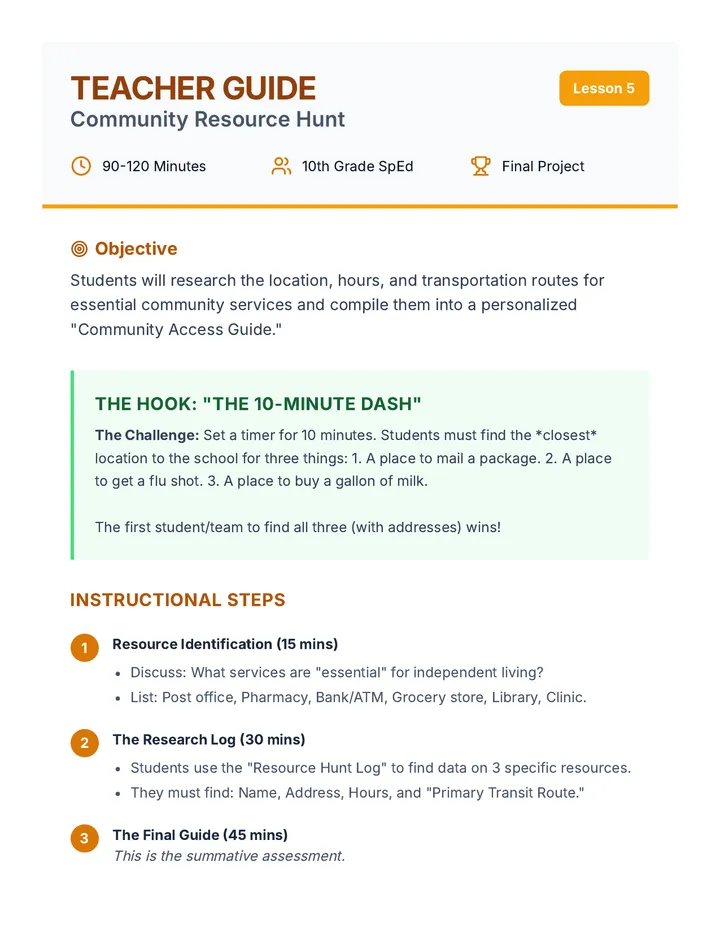
Shame Deconstruction Teacher Guide Facilitation Guide
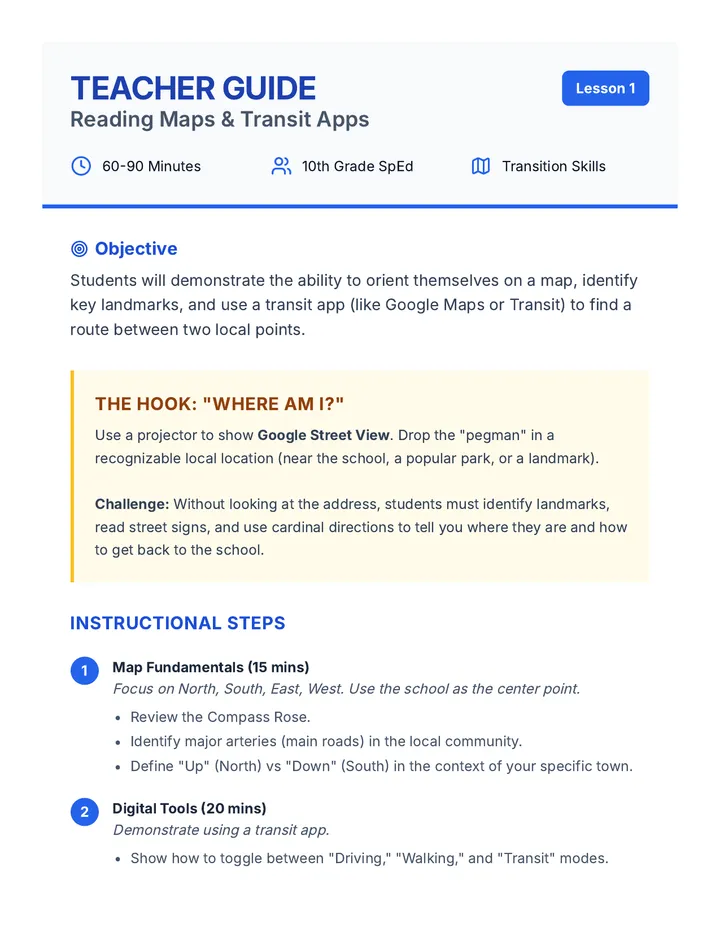
Lesson 1: Deconstructing the Shame Spiral
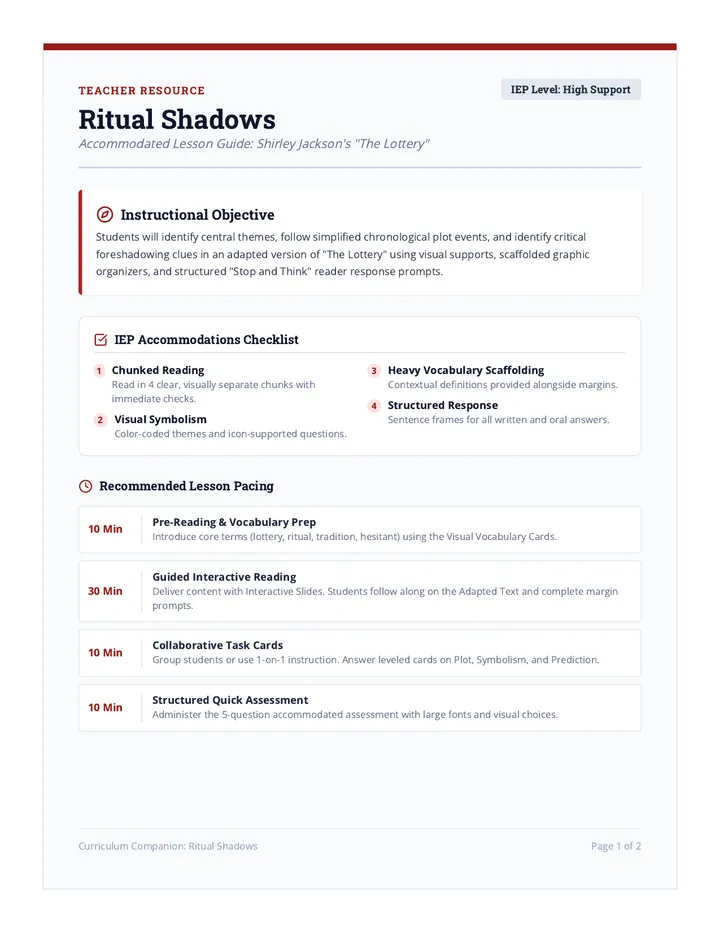
Teacher Resource
Lesson Objective
Students will identify the "shame spiral" as a secondary stressor and apply Cognitive Behavioral Therapy (CBT) techniques to reframe post-dysregulation self-talk into analytical, data-driven observations.
At a Glance
Duration:50-60 min
Format:Discussion/Workshop
Sensitivity:High
Instructional Blocks
00-10m
The Hook: Anonymous Sharing
Distribute sticky notes. Ask students to write one word or phrase describing how they feel AFTER a "meltdown" or "shutdown." Collect and post anonymously.
Discussion Prompt: "Look at these notes. Notice how many of them are about *judgment* (I'm bad) versus *biology* (I was tired). Why do we judge ourselves for something our nervous system did?"
10-25m
Direct Instruction (Slides)
Use the Shame Spiral Slides to introduce the concept. Emphasize that shame is "dead-end thinking"—it doesn't lead to improvement, only more stress. Reframing is the "on-ramp" to solution-finding.
25-50m
Workshop: Thought Reframer
Students work individually on the Thought Reframer Worksheet . Circulation is critical here to help students distinguish between "evidence" and "feelings."
Differentiation & Support
For High-Anxiety Students
If a student is currently dysregulated or too close to a recent incident, allow them to use a fictional character (e.g., "What would Spider-Man feel after a loss?") to practice the skill at a distance.
For Verbal Students
Allow "Thought Partners" where students can verbally brainstorm evidence against a negative thought before writing it down.
Incident Forensics Slides INCIDENT FORENSICS
Root Cause Analysis
Case File: 002-ROOT
Behavior ≠ Trigger
The "Behavior"
The observable explosion or shutdown. What we see on the outside (yelling, leaving, refusal).
The "Trigger"
The hidden internal or external event that pushed the nervous system past its limit.
"We usually discipline the behavior, but we have to solve the trigger."
The 5 Whys Technique
1
Why did the incident happen? (The behavior)
2
Why did that [answer 1] happen?
...
Repeat until you hit a physical, sensory, or systemic cause.
Forensics in Action
1. I yelled at my teacher. Why?
2. Because she told me to sit down. Why did that make you yell?
3. Because I was already feeling frustrated. Why?
4. Because the buzzing in the ceiling lights was driving me crazy. Why?
5. Because I didn't get enough sleep, so my sensory filter is weak today.
Root Cause: Sensory Overload + Sleep Depletion
Open Case Files
You are now the lead investigator. Use the 5 Whys to solve the mystery of "The Cafeteria Collision."
Forensic Case File Activity Internal Use Only
Case File: 09-CAF-22
Subject: Alex M. | Status: Open Investigation
Investigator
Incident Summary
"At approximately 12:45 PM, student Alex M. stood up in the middle of lunch, shouted, and knocked over a tray. When staff approached, Alex refused to speak and fled to the sensory room. No prior verbal conflict was noted between Alex and peers."
Evidence Log: 08:00 - 12:30
[08:15] Student arrived late; missed breakfast.
[09:30] Math exam. Alex noted to be tapping desk intensely.
[11:00] Cafeteria changed menu: Pizza day replaced by fish tacos.
[12:15] Student entered cafeteria. AC unit making high-pitched whine.
Forensic Analysis: The 5 Whys
Why did Alex shout and knock over the tray?
Because Alex reached a sensory breaking point.
Why? (What led to the break?)
Why? (Trace it further back...)
Why? (Think about the morning evidence...)
Why? (The absolute root cause...)
Detective's Final Conclusion
Identify the Root Sensory Trigger:
Forensic Report Answer Key Forensic Analysis: Answer Key
Lesson 2: Case File 09-CAF-22 (Alex M.)
Confidential / Teacher Use Only
The Investigation: Suggested Chain
1. Why did Alex stand up and knock over the tray?
Alex reached a sensory breaking point and felt an immediate need to "escape" or "erupt."
2. Why did Alex reach that point in the cafeteria specifically?
The environment was high-stress. Evidence: New AC unit whine + change in routine (taco menu change).
3. Why was Alex's threshold lower than usual today?
Cumulative stress (stacking). Evidence: Late arrival, math exam anxiety, and skipping breakfast.
4. Why was Alex late and missed breakfast?
Poor physiological regulation from the start of the day. This removed Alex's "buffer" for stress.
5. What is the absolute ROOT CAUSE?
Systemic Depletion + Sensory Stacking. (Missing breakfast + Math stress + AC Whine = Inevitable Dysregulation).
Teacher Debrief Points
The "Red Herring": Many students might blame the menu change (fish tacos). Remind them that a single taco change doesn't cause an explosion—it was the *stack* of events before it.
The "Hidden Sensory": The AC whine is a classic hidden trigger. High-pitched sounds can be physically painful even if others can't hear them.
Analytical Shift: Ensure students aren't saying "Alex was being bad." They should use clinical language: "Alex's nervous system was overloaded by [X] and [Y]."
Data Pattern Tracking Slides THE DATA DETECTIVE
Identifying Patterns & Correlations
From Feeling to Fact
Dysregulation often feels random.
"I was fine, then suddenly I wasn't."
But data tells a different story. It shows us correlations.
Correlation (definition):
A relationship between two variables that happen at the same time.
→ Less sleep + Higher frustration
→ High noise + Fast heart rate
→ No breakfast + Lower focus
The Key Variables
Physiological
Sleep (hours), Hydration, Diet, Movement.
Sensory
Noise levels, Brightness, Crowd density, Temperature.
Social/Academic
Exams, Conflict with peers, Transition times.
Finding the Spikes
"If I map my dysregulation incidents on a calendar, I see they almost always happen on Tuesdays at 2:00 PM."
Why Tuesday at 2:00 PM?
Investigation Findings:
- Tuesday has double Physics (high mental load).
- Lunch is 30 mins late on Tuesdays.
- Fire alarm testing is usually on Tuesday afternoons.
Analyze the Log
We've got a 14-day sample log from a student named Taylor. Your job is to find the hidden pattern Taylor missed.
Data Detective Worksheet Data Detective Analysis
Case File: Taylor's 7-Day Regulation Log
Detective Assigned
Day Sleep (Hrs) Breakfast? Sensory Load Incidents Notes Mon 8.5 Yes Low 0 Normal day. Tue 7.0 No Med 1 Meltdown during Chem lab. Wed 8.0 Yes High 0 School assembly; worn out. Thu 6.0 No Med 1 Argument with coach. Fri 7.5 Yes Low 0 Feeling good. Sat 9.0 Yes Med 0 Chill weekend. Sun 5.5 No High 2 Family party; very loud.
1. Identification
On which days did Taylor have 1 or more incidents?
What common variables do those days share?
2. Correlation
Which variable seems most linked to Taylor's incidents?
Sleep
Breakfast
Sensory Load
Explain your reasoning based on the data:
Investigator's Proposal
Based on Taylor's data, suggest TWO preventative changes Taylor could make next week to reduce the likelihood of an incident.
Proposal A:
Proposal B:
DATA DRIVEN DECISIONS REDUCE UNCERTAINTY
Regulation Log Template Personal Regulation Log
Daily Tracking Tool for Pattern Recognition
Week Of:
Sleep Rating
1: Poor 5: Excellent
Sensory Load
L: Low M: Med H: High
Regulation Status
G: Green Y: Yellow R: Red
Day Sleep (1-5) B-fast? (Y/N) Load (L/M/H) Status (G/Y/R) Key Environmental Triggers / Notes MON TUE WED THU FRI SAT SUN
End of Week Reflection
Look back at your week. Is there a specific day, time, or environment that consistently led to "Yellow" or "Red" status?
Preventative Design Slides PREVENTATIVE DESIGN
Engineering Environments for Success
Reacting vs. Preventing
The "Reaction" Cycle
The environment is chaotic → You get dysregulated → You use a coping skill to calm down → Repeat tomorrow.
The "Design" Cycle
Identify a trigger → Remove/Modify the trigger → The chaos is reduced → Energy is saved for learning.
"You don't need 'more willpower' in a room designed for your failure."
The Environmental Audit
1. Physical Space
Lighting (fluorescents, glare)
Sound (ventilation, chatter, echoes)
Sightlines (cluttered walls, busy hallway)
2. Routine/Schedule
Transitions (crowded halls, sudden changes)
"Wait" times (unstructured minutes)
Mental Load (stacking hard subjects)
Engineering the Fix
Elimination
Removing the trigger entirely (e.g., using a back door to avoid the loud main hallway).
Buffering
Adding a protective layer (e.g., noise-canceling headphones or a fidget desk-attachment).
Modification
Changing how something is done (e.g., having 5 mins of quiet reading before starting Math).
Project: The Blueprint
Take one persistent "friction point" from your data log. Design a Blueprint for Success that eliminates or modifies that trigger.
Blueprint for Success Activity Blueprint for Success
Project: Environmental Design & Implementation
01
The Problem Site
Based on your tracking data, what is the #1 "friction point" in your school day? (e.g., The 5th-period hallway noise, the brightness of the Computer Lab, the speed of transitions).
02
The Intervention Strategy
Elimination
How can you avoid the trigger entirely?
Buffering
What tool can you add to protect yourself?
Modification
How can the routine/rules change?
03
Visual Blueprint
Scale: 1:1 Resilience
Draw your redesigned space or routine here.
Action Plan: Implementation
Who needs to approve this change?
First step to take tomorrow:
Design for Performance Post-Incident Analysis v1.2
Resilience Mindset Slides THE RESILIENCE MINDSET
Mastery, Not Perfection
Step 5
Final Integration
Traits, Not Deficits
Having a sensitive sensory system is a trait—like being left-handed or tall.
It is not a "bug" in your code. It is a feature that requires specific management.
"I don't need to 'fix' my brain. I need to 'optimize' my life for my brain."
Self-Knowledge
Self-Advocacy
Self-Compassion
The Narrative Shift
The Fixed Narrative
"I'll always be this way. I'm just a ticking time bomb."
Result: Shame, anxiety, avoidance.
The Growth Narrative
"Every incident is data. I am becoming an expert on my own nervous system."
Result: Self-efficacy, problem-solving.
The Future Self Connection
Dysregulation will happen again. That is a fact of life. The goal isn't ZERO incidents.
The goal is a faster, kinder, and smarter RECOVERY.
Prompt:
"What does your Future Self need to remember when the next 'Shame Spiral' tries to take over? What data can you give them?"
Expert in You
You have the tools. You have the data. You have the mindset.
Future Self Letter Activity Letter to My Future Self
Recovery & Resilience Integration
"Imagine you have just experienced a difficult dysregulation incident. You are in the middle of a Shame Spiral, feeling like you failed. Your Future Self is reading this letter to remember what we learned in this unit."
1. The Biological Reminder
Dear Me, right now you might feel like you're 'bad,' but remember the data: This happened because...
2. The Evidence Check
When your brain tells you 'Everyone thinks I'm weird,' here is the evidence against that thought:
3. The Design Plan
Next time, to prevent this from reaching a breaking point, we are going to modify the environment by...
4. The Closing Statement
Recovery isn't about perfection; it's about...
Signed by your current self, an expert in your own brain.
Signature