A set of resources designed for a second-grade student to identify, name, and regulate emotions, specifically focusing on school-related task avoidance and escalation. Features a mechanical 'Emotion Engine' theme to engage neurodivergent learners.
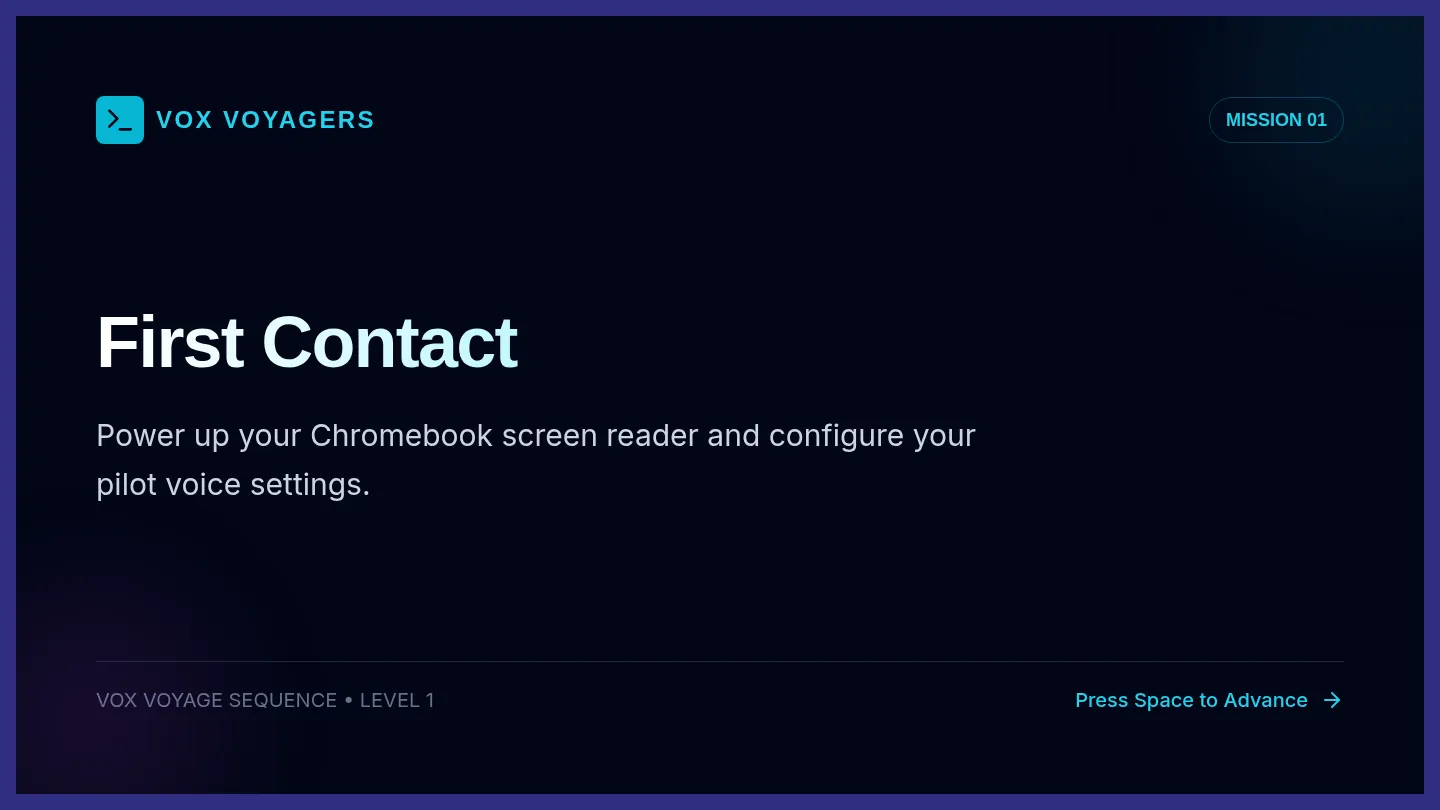
A foundational sequence introducing students to the ChromeVox screen reader on Chromebooks. Students learn activation, voice personalization, linear text navigation, and structural element navigation to independently explore web content.
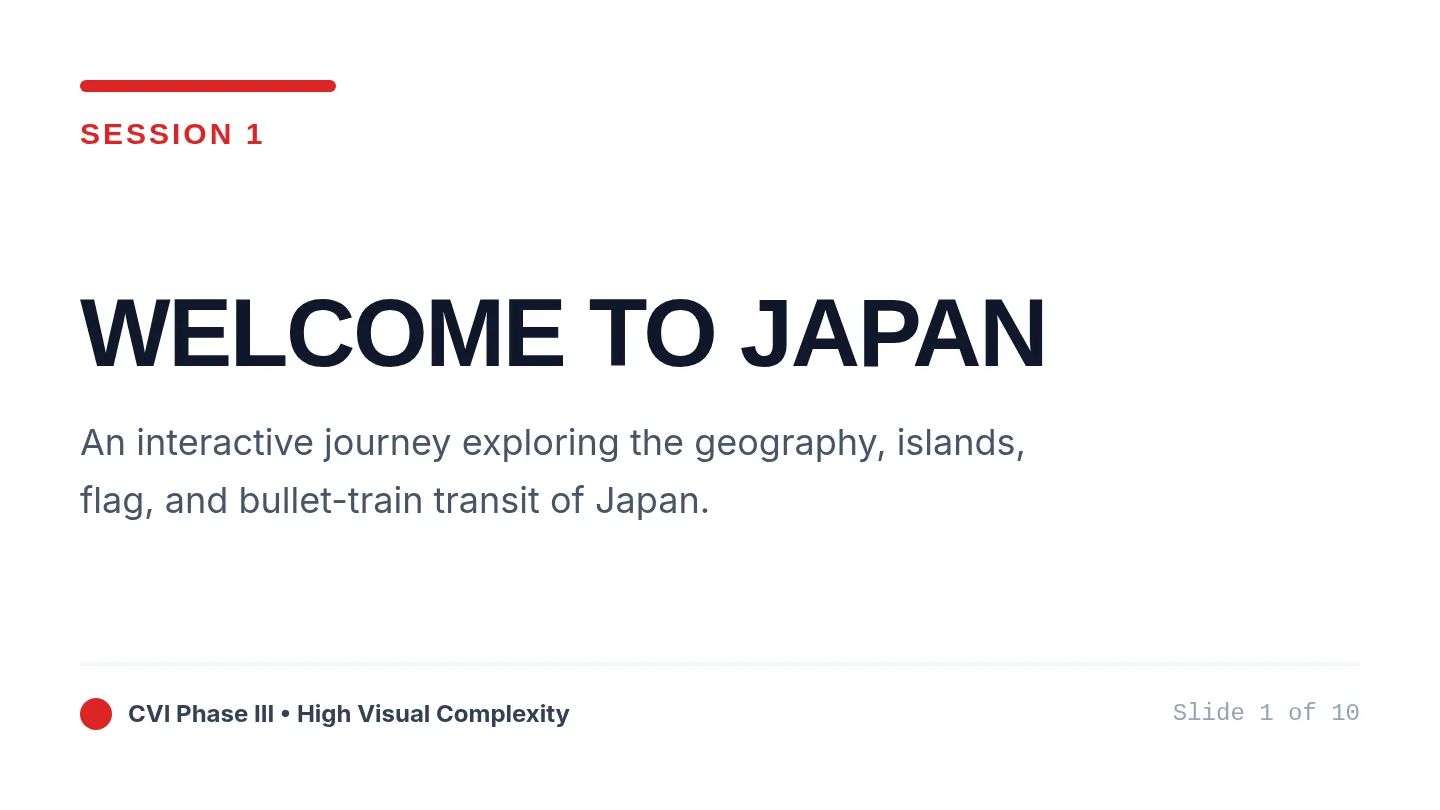
An introductory lesson exploring Japan's geographical location, island features, national flag, and a virtual bullet-train route, adapted for students with CVI Phase III.
A visually rich, light-background slide presentation designed for students in Phase III CVI with high visual complexity. Features a dedicated island pronunciation guide with clear phonetic spellings and syllables, elegant visual targets, and clean sans-serif typography.
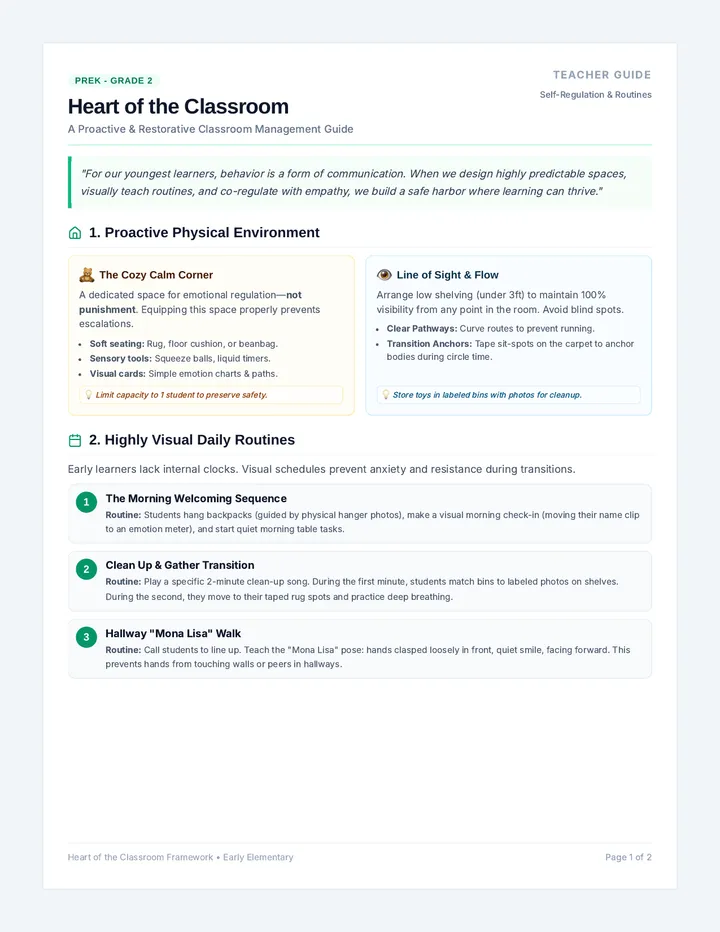
A comprehensive sequence of classroom management frameworks spanning PreK through Grade 8, detailing visual self-regulation routines for early elementary, peer-led cooperative monitoring for upper elementary, and restorative agency frameworks for middle school.
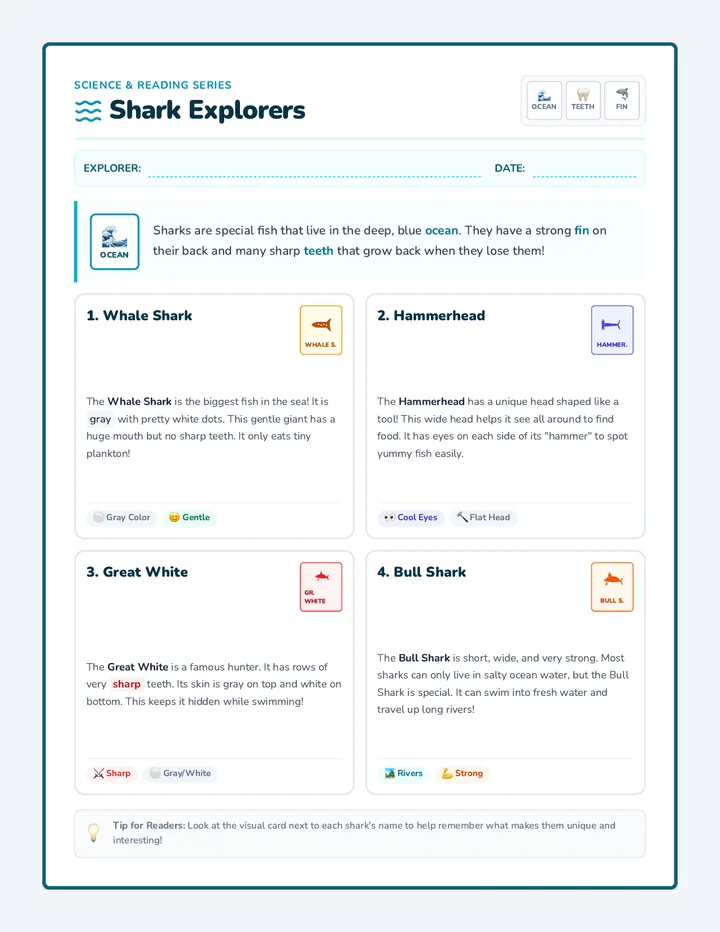
An introductory reading comprehension and science lesson about sharks for second-grade students, featuring PEC-style visual supports and a cooperative matching board game.
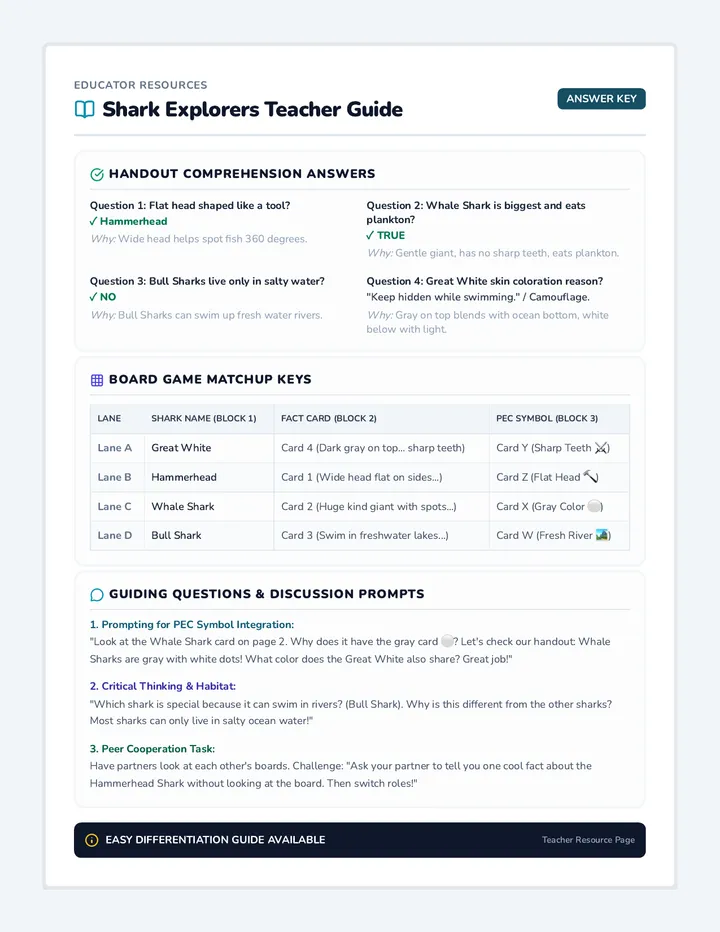
A 1-page teacher reference document containing the answer keys for the reading comprehension handout, correct solutions for the cut-and-paste board game, and guided speaking questions.
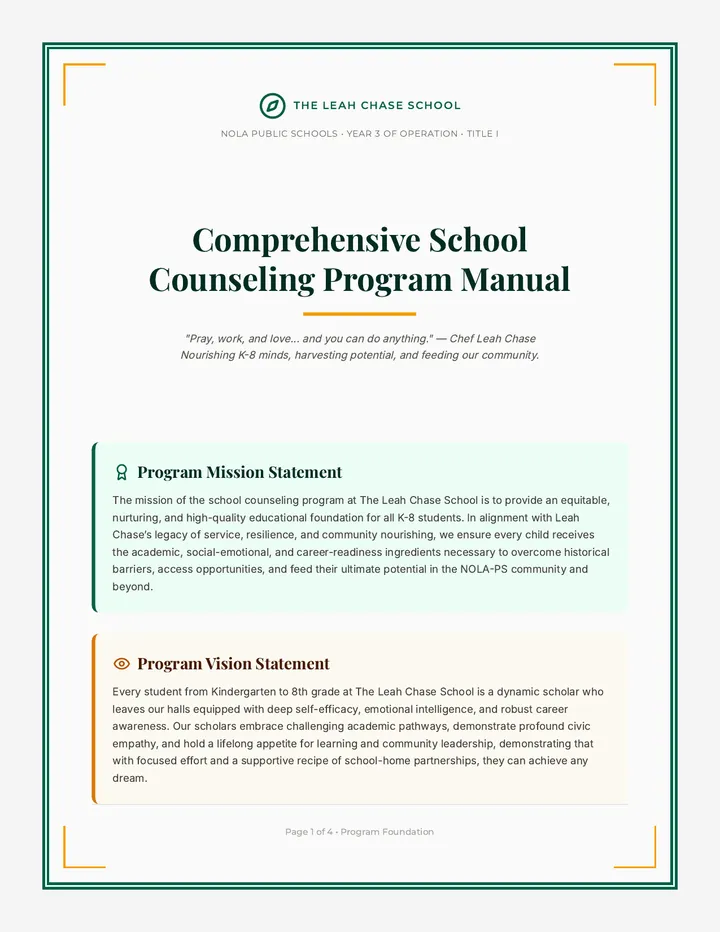
A comprehensive ASCA-aligned school counseling program framework designed for The Leah Chase School. Tailored for a single K-8 counselor in a Title I, NOLA-PS district-run school in its third year of operation, covering program management, MTSS, SEL, and career exploration.
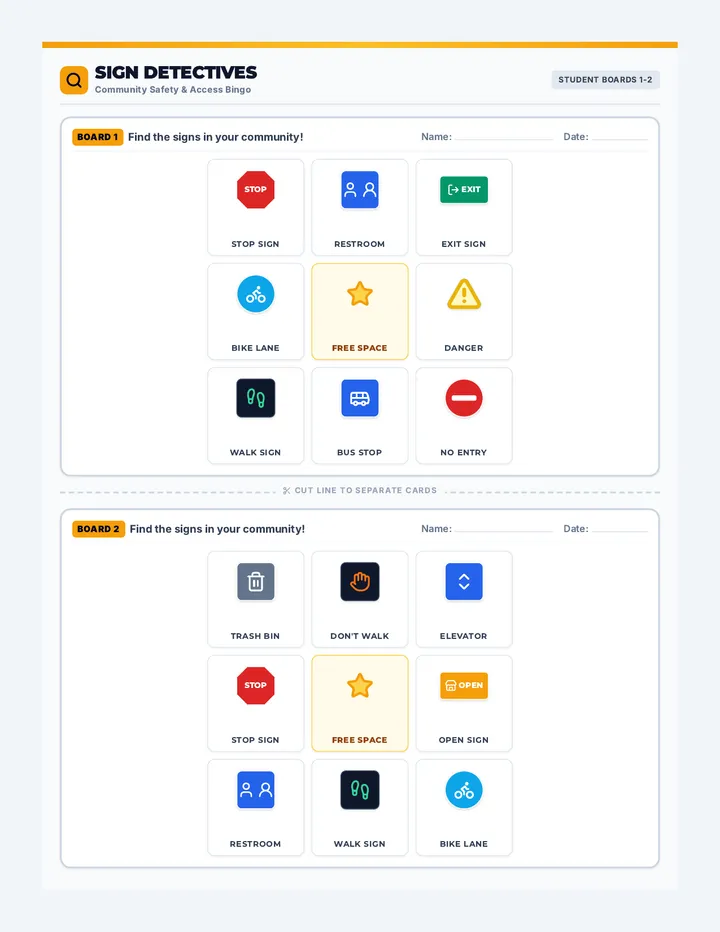
An interactive, visual bingo game designed to help students recognize and understand essential community, safety, and transit signs in their environment. Features high-contrast, recognizable signs to support learning and real-world independence.
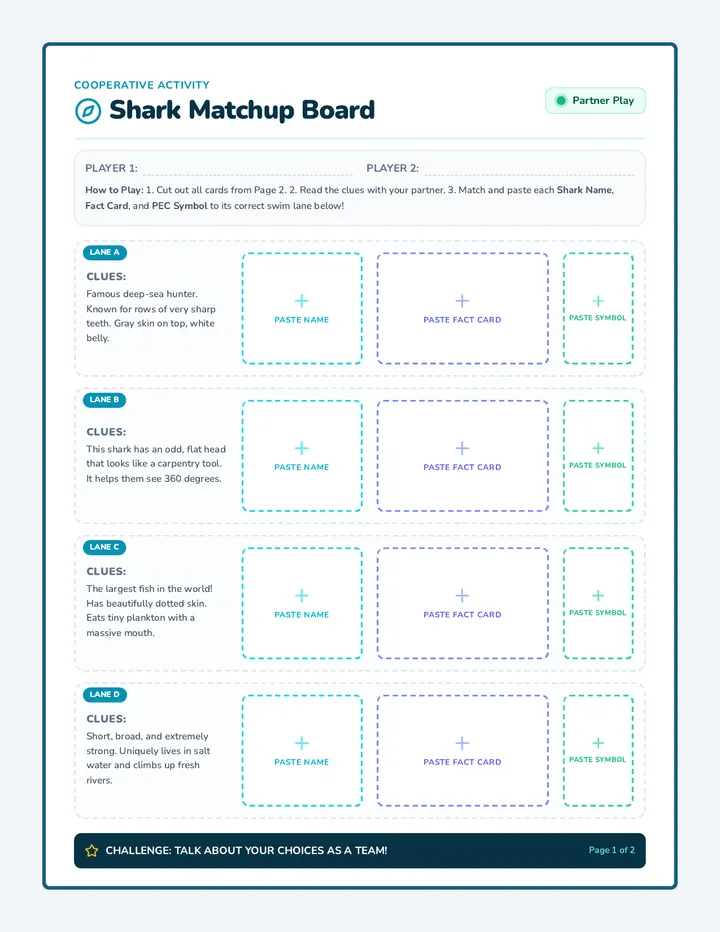
A 2-page cut-and-paste matching board game. Page 1 contains the beautiful, marine-themed game board with empty slots for partners to complete. Page 2 provides the illustrated, dotted-line cutout cards for names, characteristics, and PEC symbols.
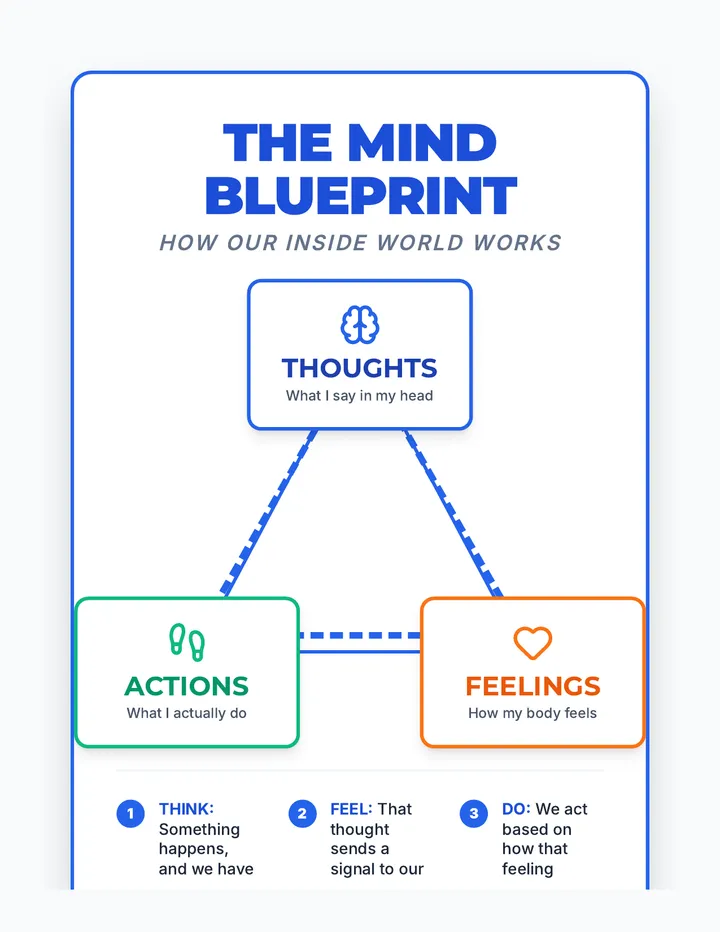
A Tier 3 CBT intervention sequence focusing on the cognitive triangle: how thoughts lead to feelings, which drive behaviors. Designed for intensive, small-group or individual support.
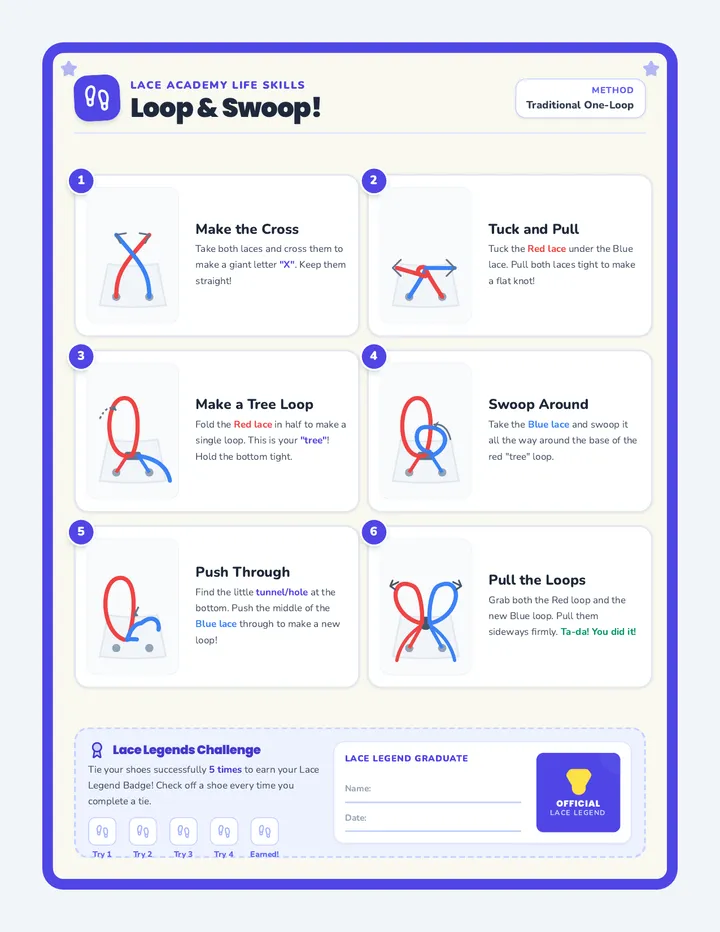
A comprehensive, visually engaging lesson dedicated to helping young learners master the essential life skill of shoe-tying using the traditional Loop-and-Swoop method.
A 2-page reading comprehension handout for second graders. Page 1 contains a simplified informational passage about four sharks with integrated PEC-style visual cards. Page 2 features comprehension questions supported by PEC helpers (Yes, No, True, False, Who).