Visual frameworks for brainstorming, outlining, and structuring multi-paragraph essays. Supports students with executive functioning challenges through sequential planning tools and sentence starters.
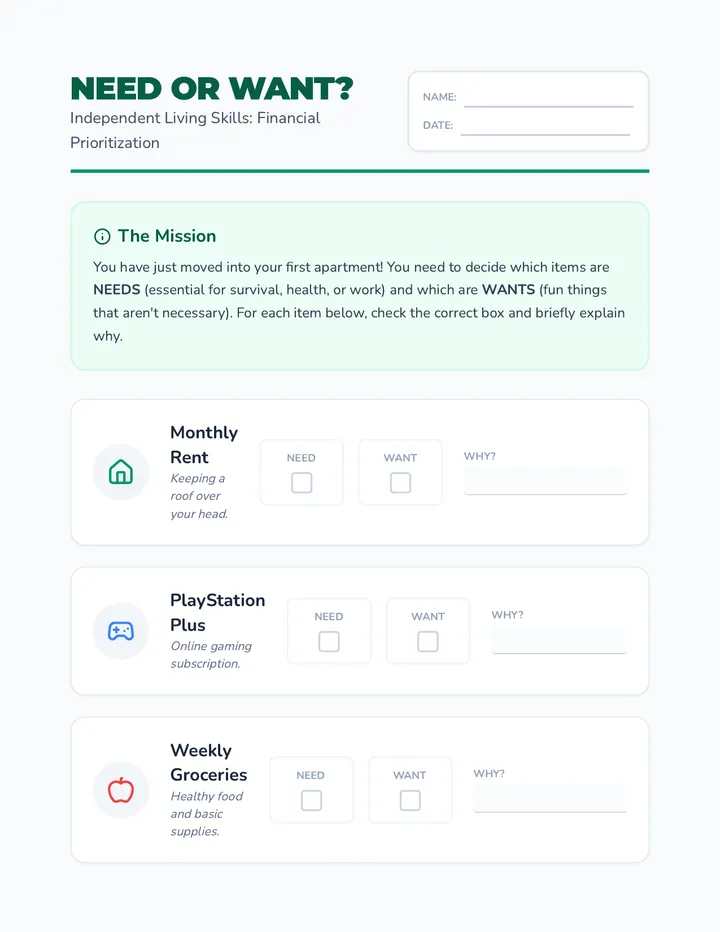
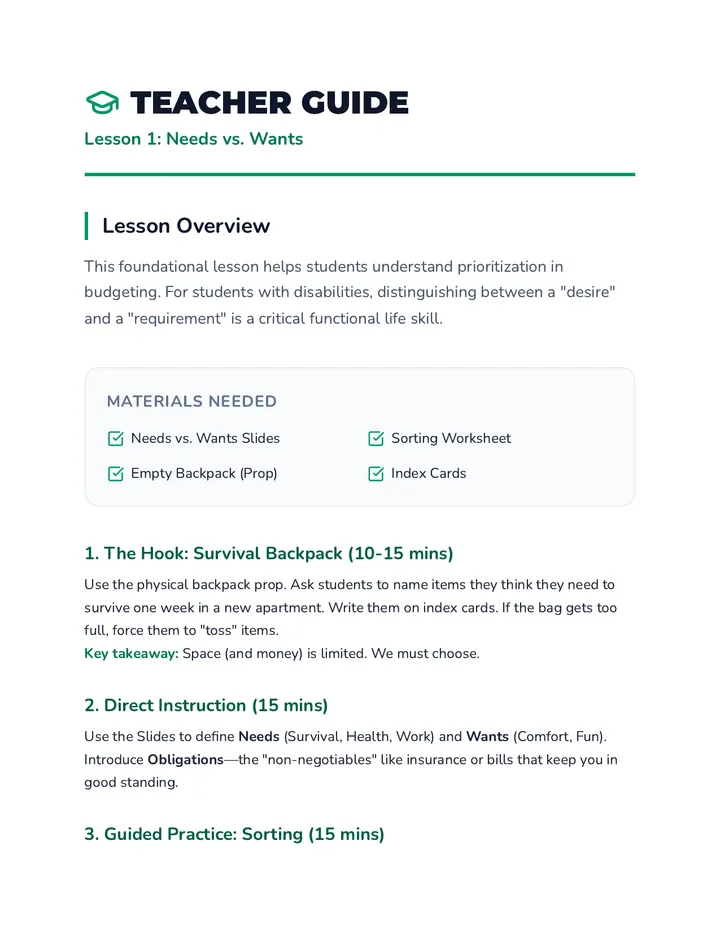
A comprehensive financial literacy sequence for Special Education students focusing on real-world budgeting, income analysis, and banking skills for independent living.
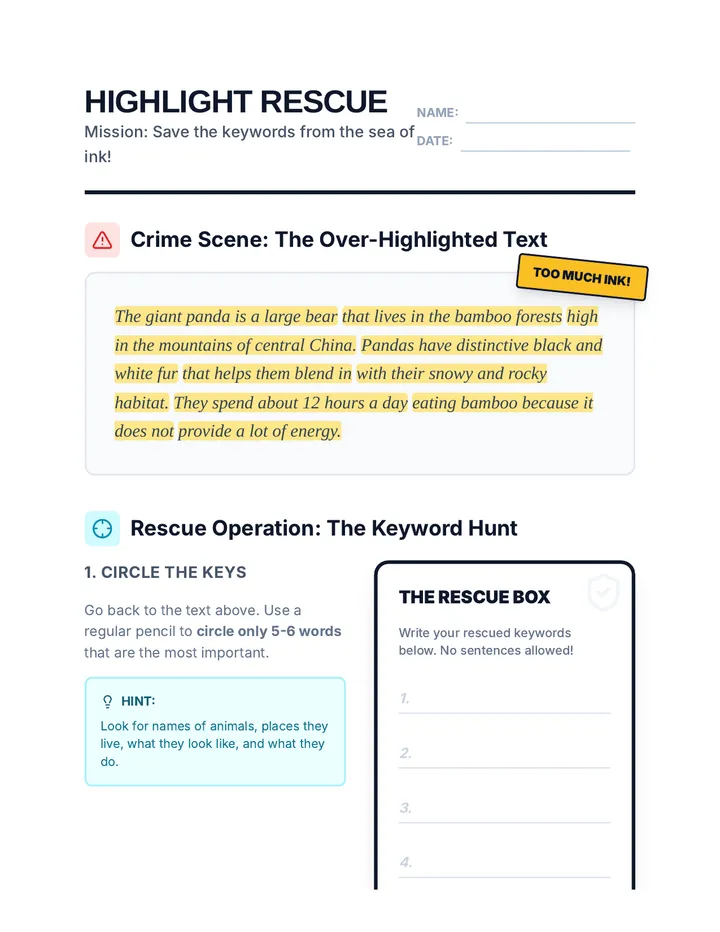
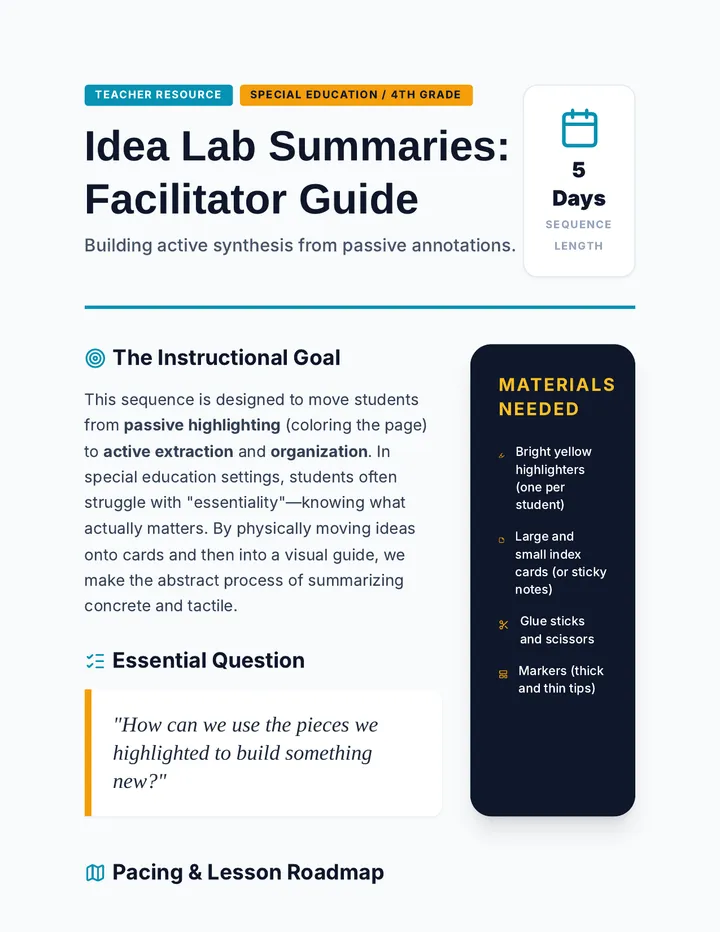
A project-based sequence for 4th-grade students in special education settings, focusing on moving from passive highlighting to active extraction, organization, and synthesis. Students learn to refine highlights, extract them onto cards, sort ideas logically, and create a visual 'One-Page Expert Guide' as a summary tool.
This sequence teaches 5th-grade students how to offload working memory demands using visual scaffolding. Students learn to use mind maps, color-coding, focused drafting techniques, and visual checklists to sustain attention during complex, multi-step tasks like writing and project management.
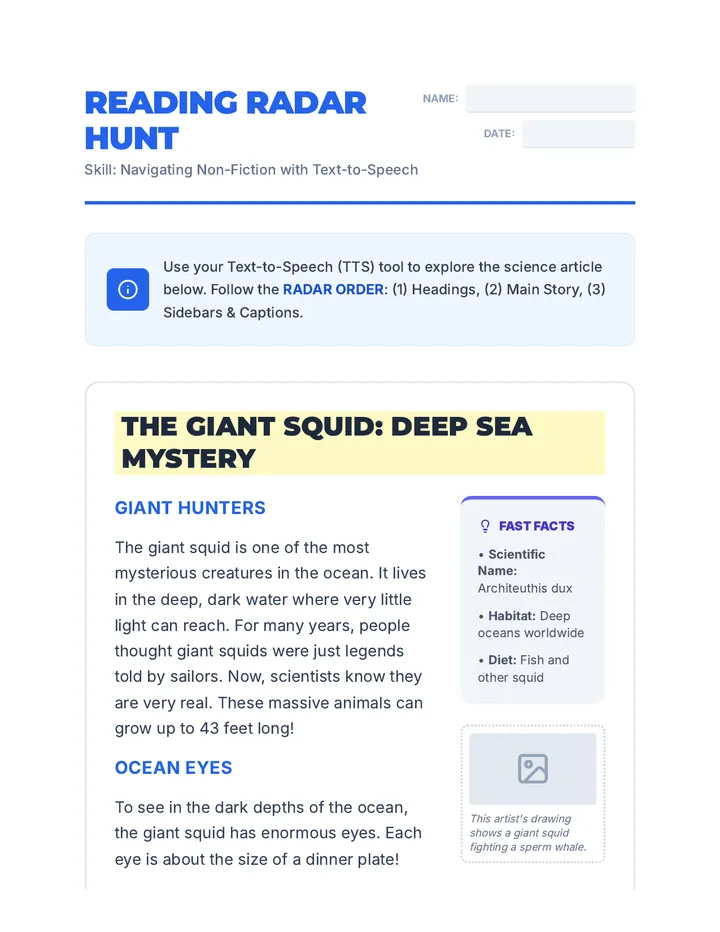
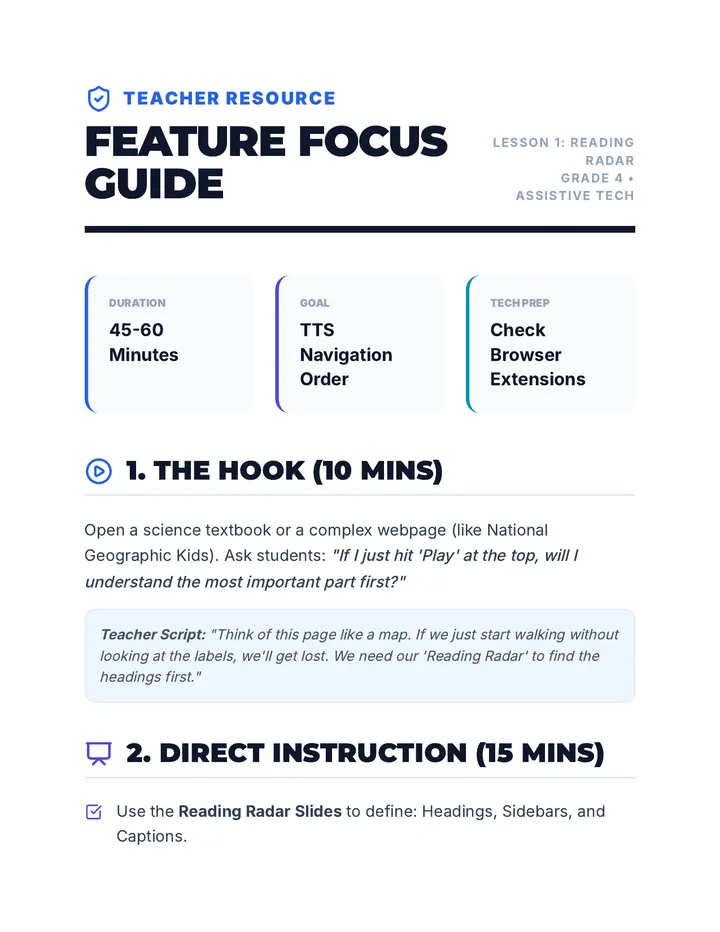
A comprehensive sequence for 4th-grade students to master Text-to-Speech (TTS) assistive technology. Students learn to navigate complex text features, clean up cluttered webpages, tackle math word problems, conduct research, and take effective notes using auditory tools.
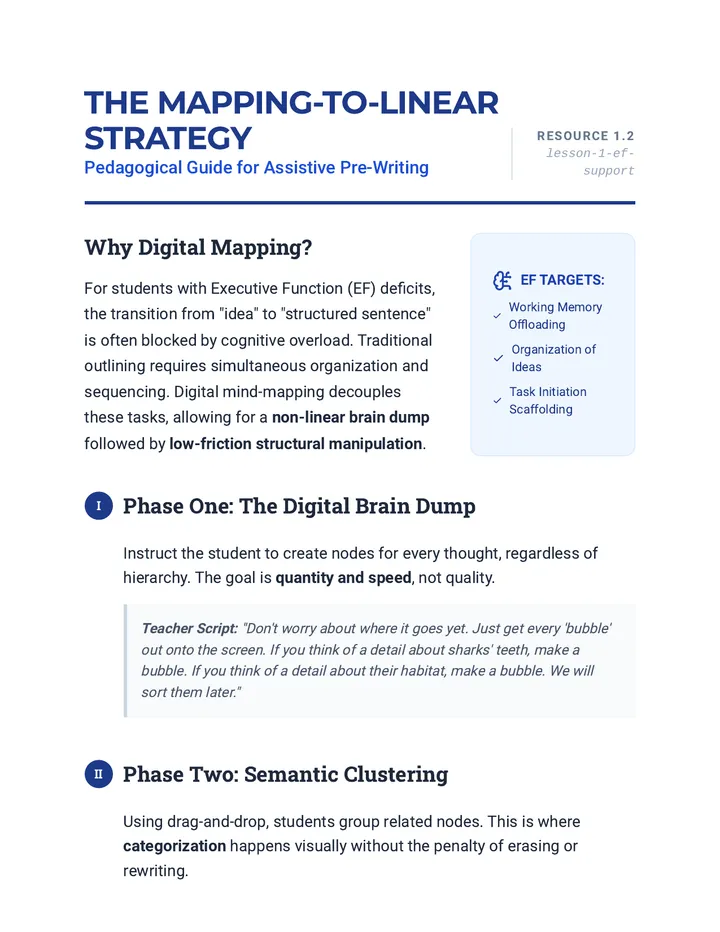
A comprehensive graduate-level sequence focused on the pedagogical implementation of assistive writing technology. It shifts the focus from tool selection to instructional methodologies that scaffold digital organizers, dictation, and text-to-speech for student autonomy.
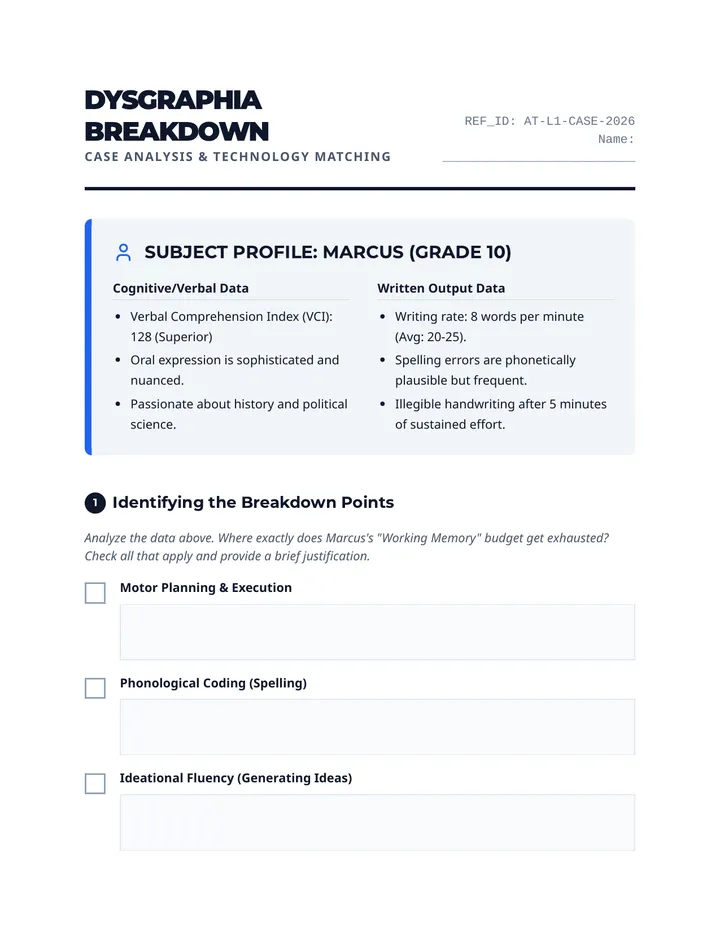
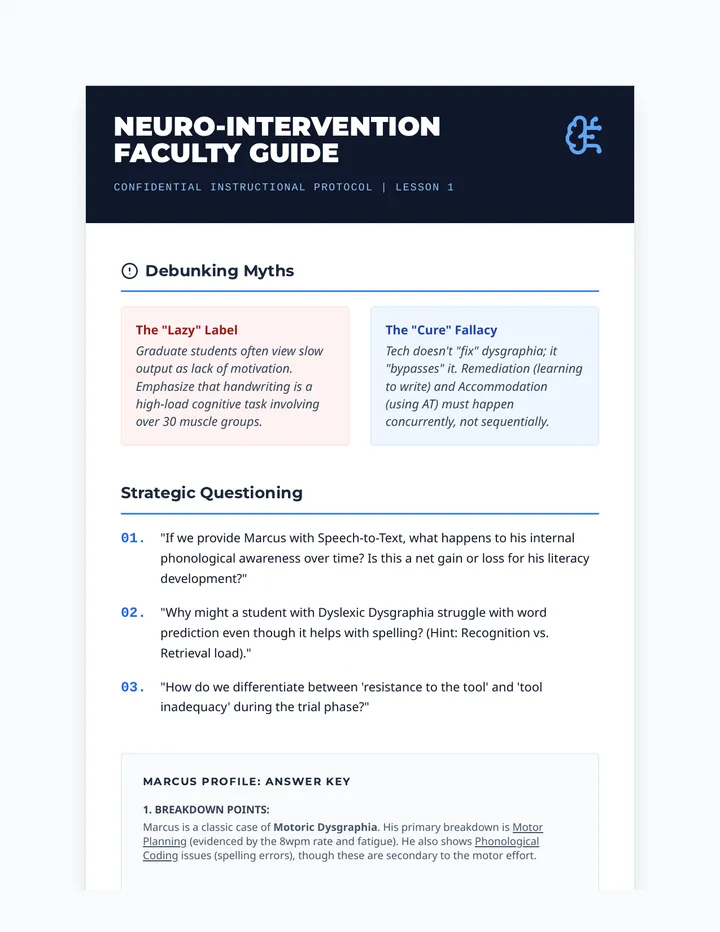
This graduate-level sequence prepares educators to evaluate and select assistive writing technologies using evidence-based frameworks like SETT. It covers the neurology of dysgraphia, technical analysis of speech-to-text and word prediction, and the legal requirements for IEP implementation.
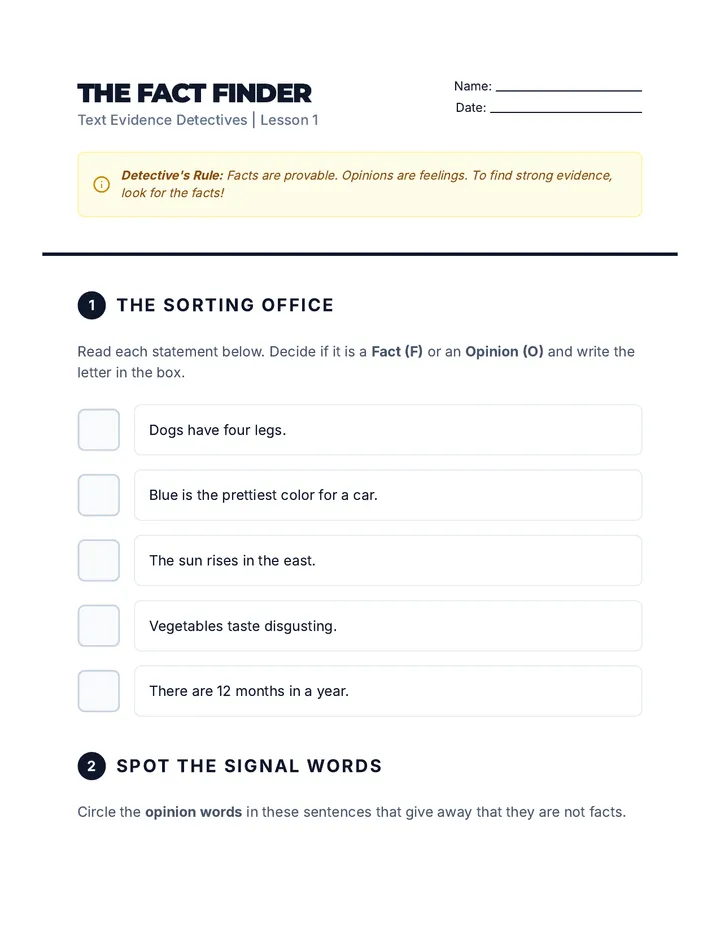
A 5-lesson sequence designed for 6th-grade special education students to master text highlighting and annotation. Students act as 'Text Detectives' to identify, scan, categorize, and evaluate textual evidence to support argumentative writing.
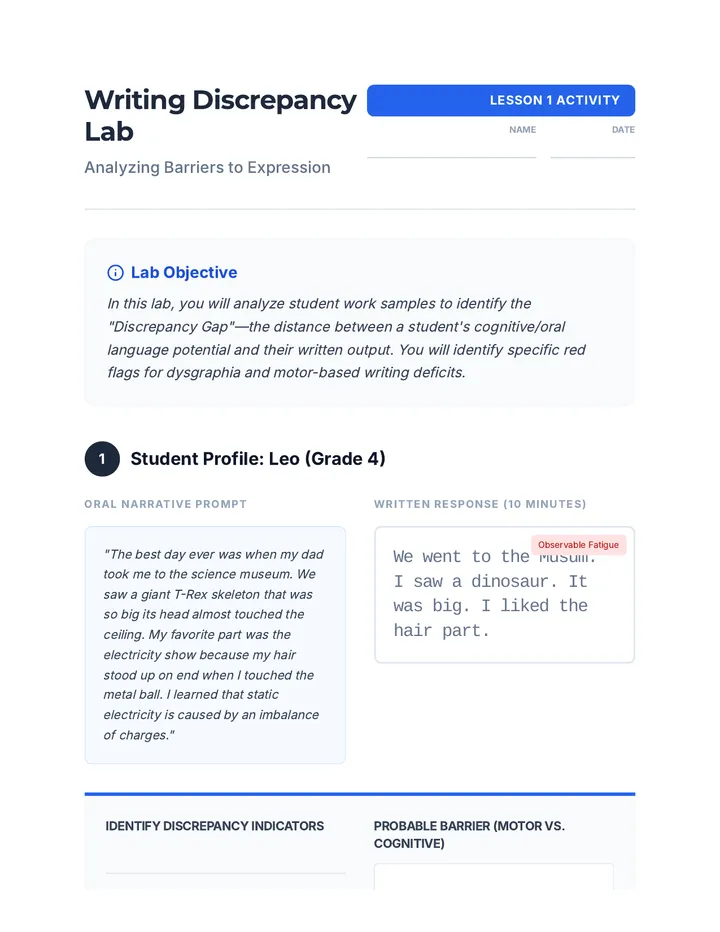
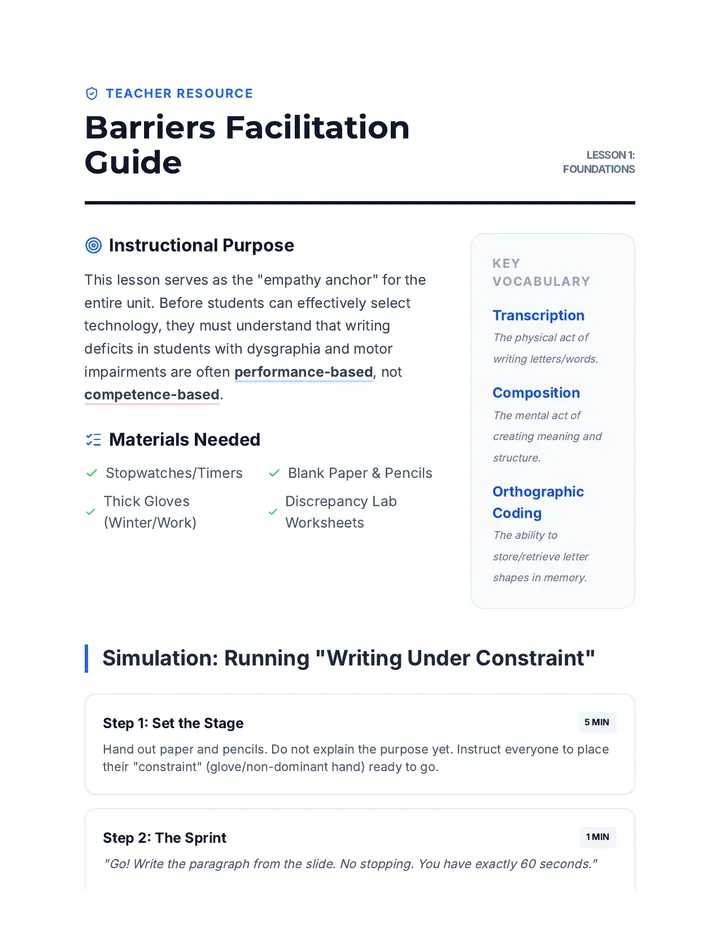
This sequence prepares pre-service teachers to evaluate, select, and implement assistive technology (AT) tools specifically designed for students with dysgraphia and physical motor impairments. Students will move from understanding neurological barriers to designing comprehensive, data-driven AT implementation plans.
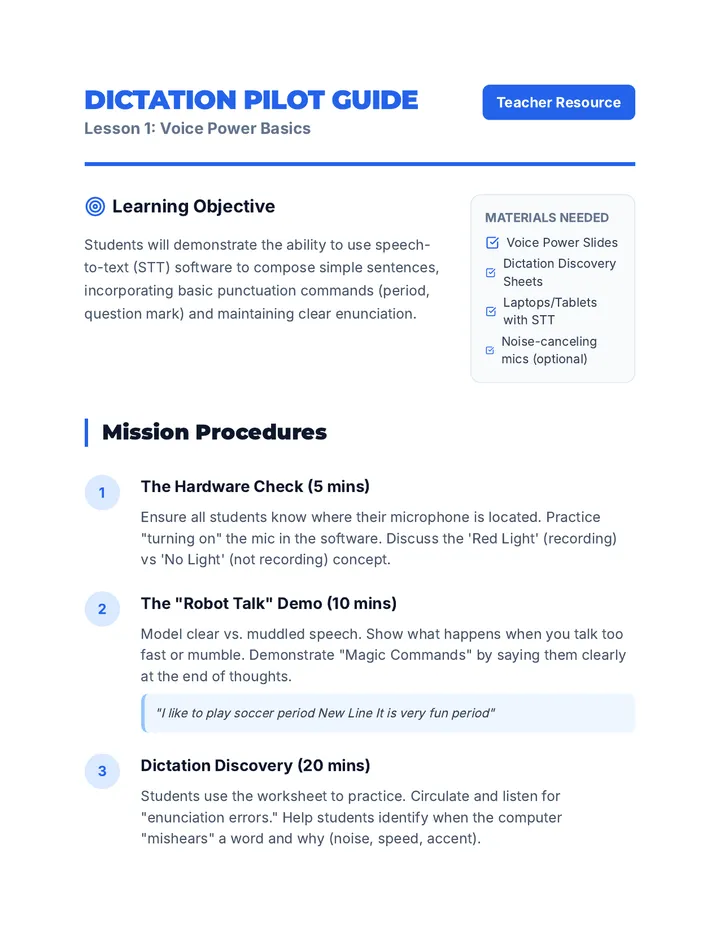
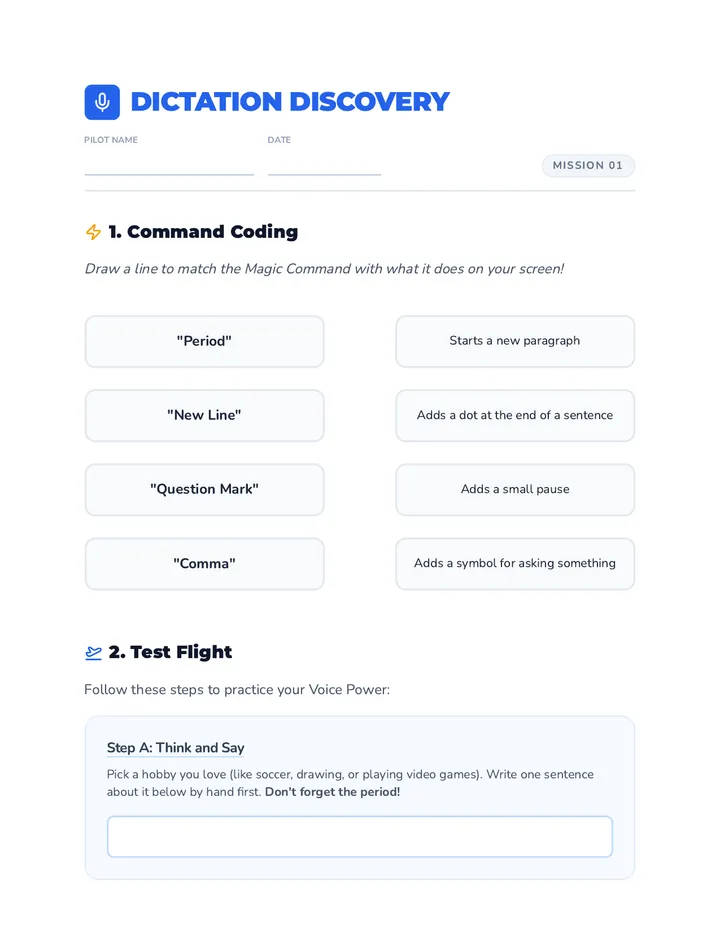
This sequence empowers 3rd-grade students to bypass physical writing barriers using assistive technology tools like speech-to-text, digital organizers, and word prediction. Students progress from basic dictation mechanics to publishing a fully edited personal narrative, fostering independence and confidence in their writing abilities.
A 5-lesson unit for 6th-grade students focused on mastering assistive writing technologies, including speech-to-text, word prediction, and digital graphic organizers, culminating in a personal narrative and a self-advocacy tech plan.
This sequence introduces 2nd-grade students to assistive writing technology, including speech-to-text, digital organizers, word prediction, and text-to-speech, to foster independence in writing.
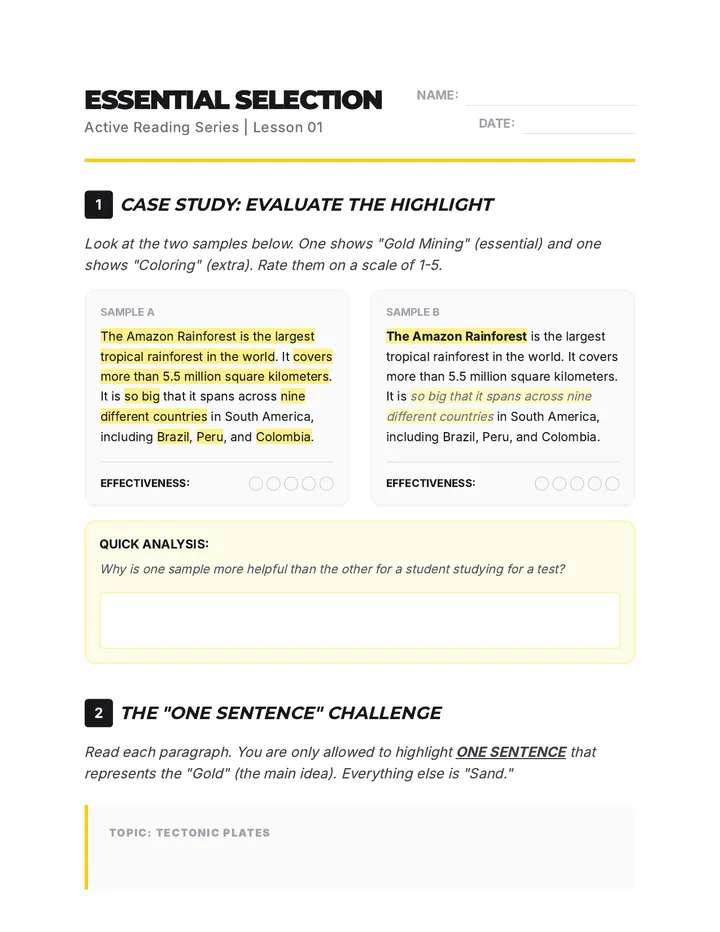
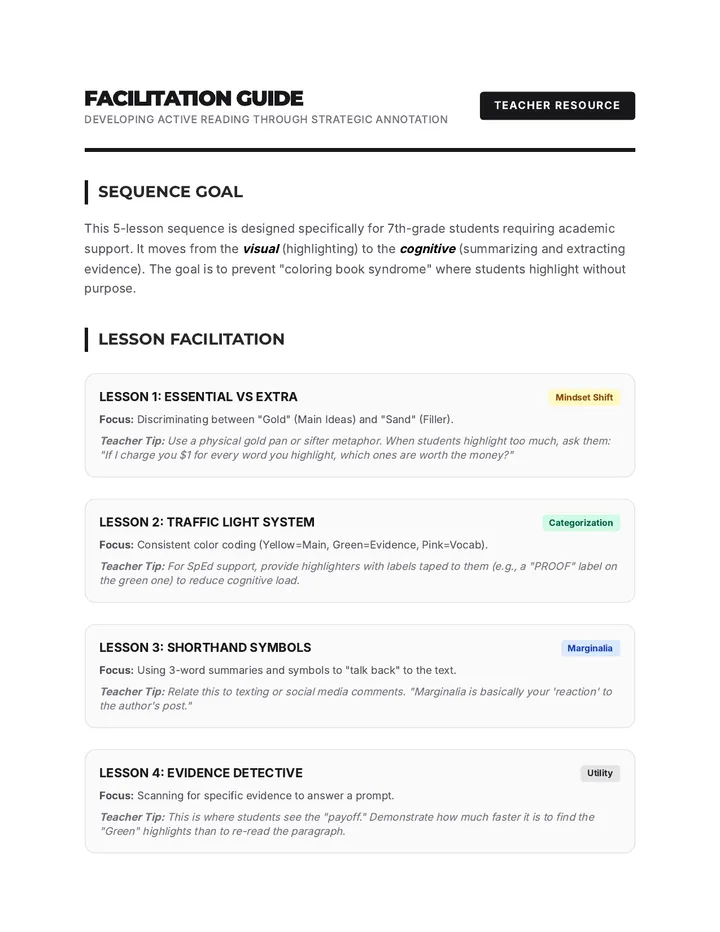
This sequence transitions students from passive reading to active engagement using systematic annotation strategies designed for diverse learners. Students learn to distinguish essential information, apply a color-coding system, use marginalia, and extract evidence for writing.
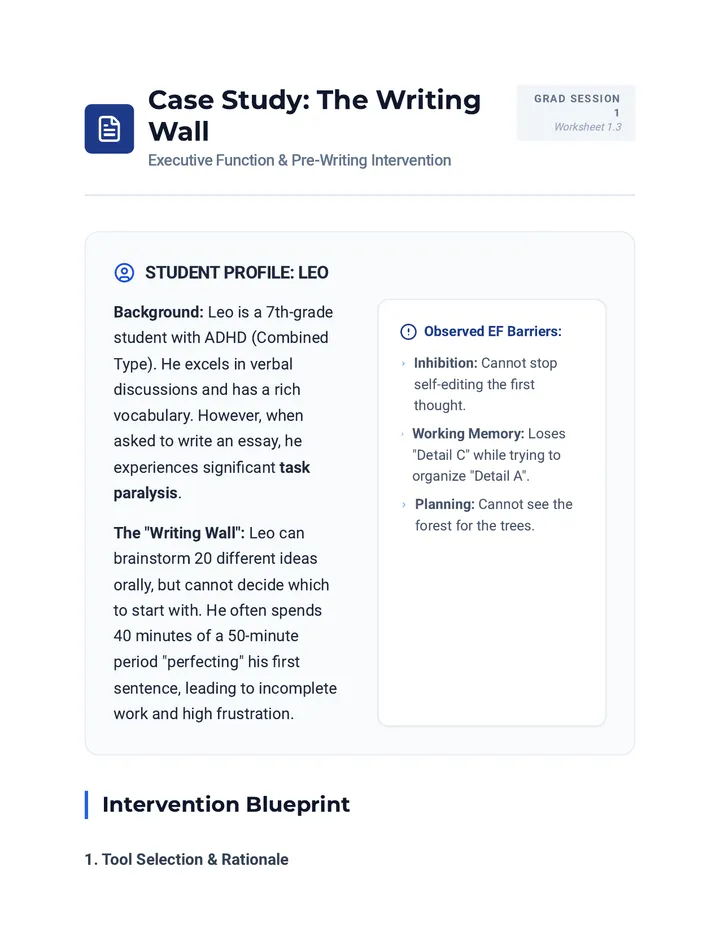
A 60-minute professional development session for teachers focusing on advanced executive function, emotional regulation, and scaffolding strategies to support students with ADHD. Educators will analyze case studies and develop personalized action plans.
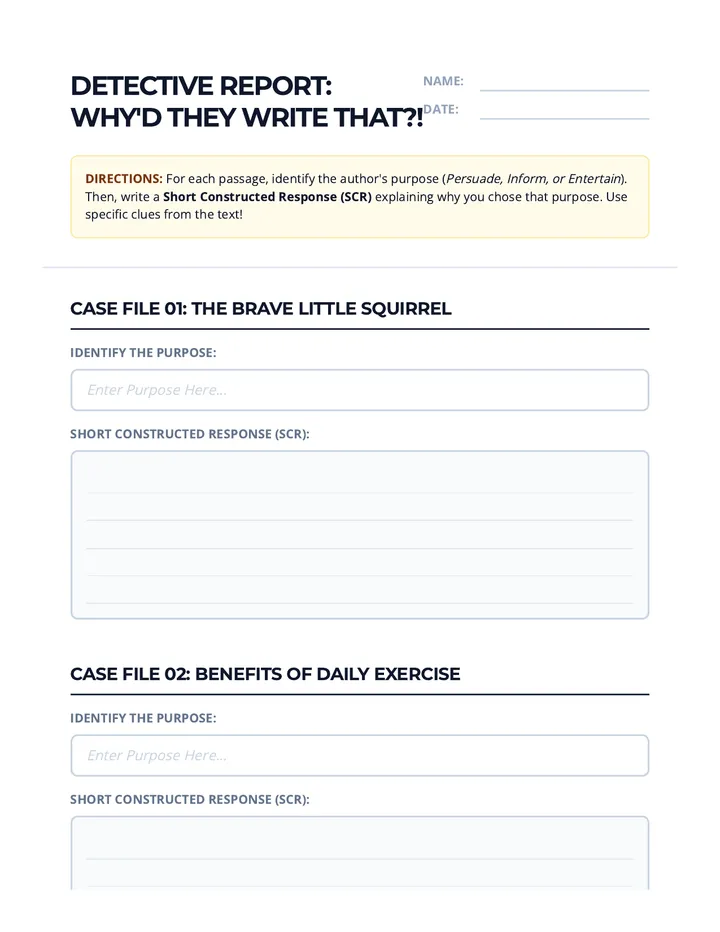
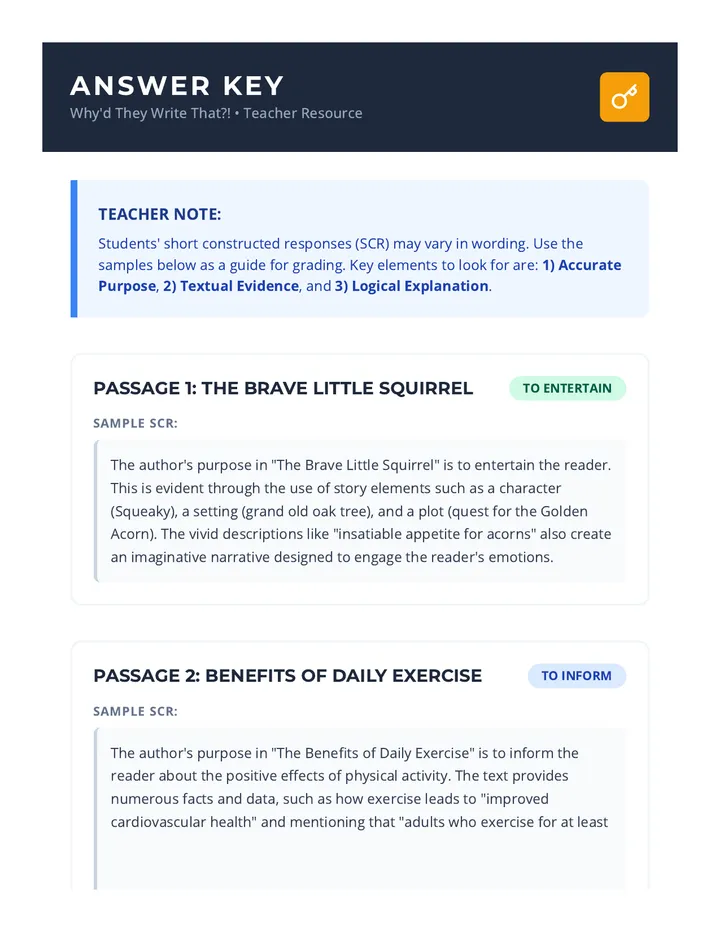
This lesson empowers high school special education students to identify an author's purpose (Persuade, Inform, Entertain) and articulate their understanding through well-structured short constructed responses.
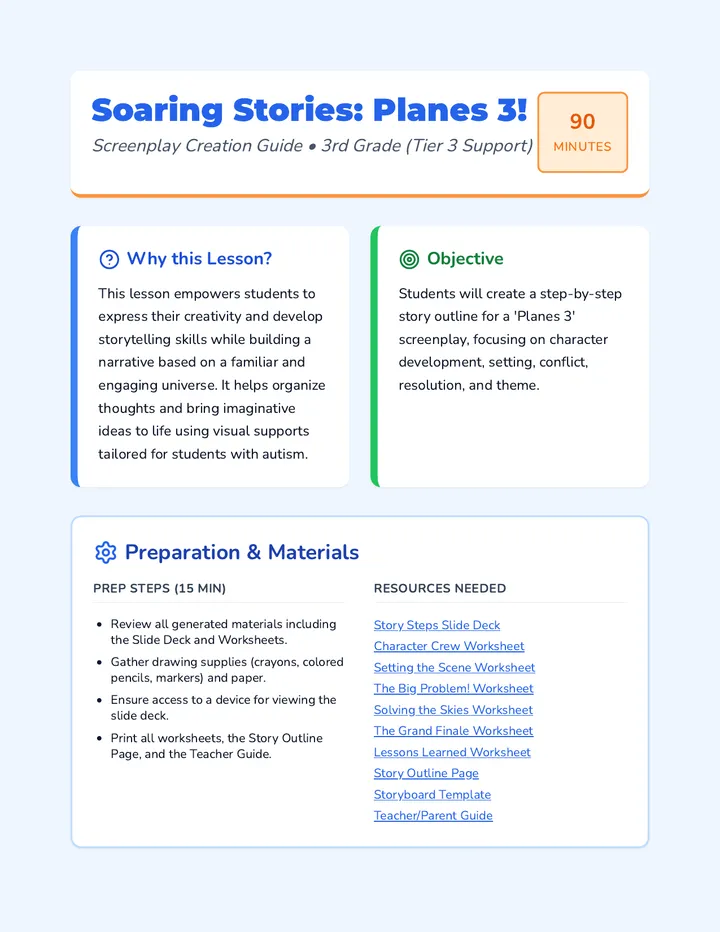
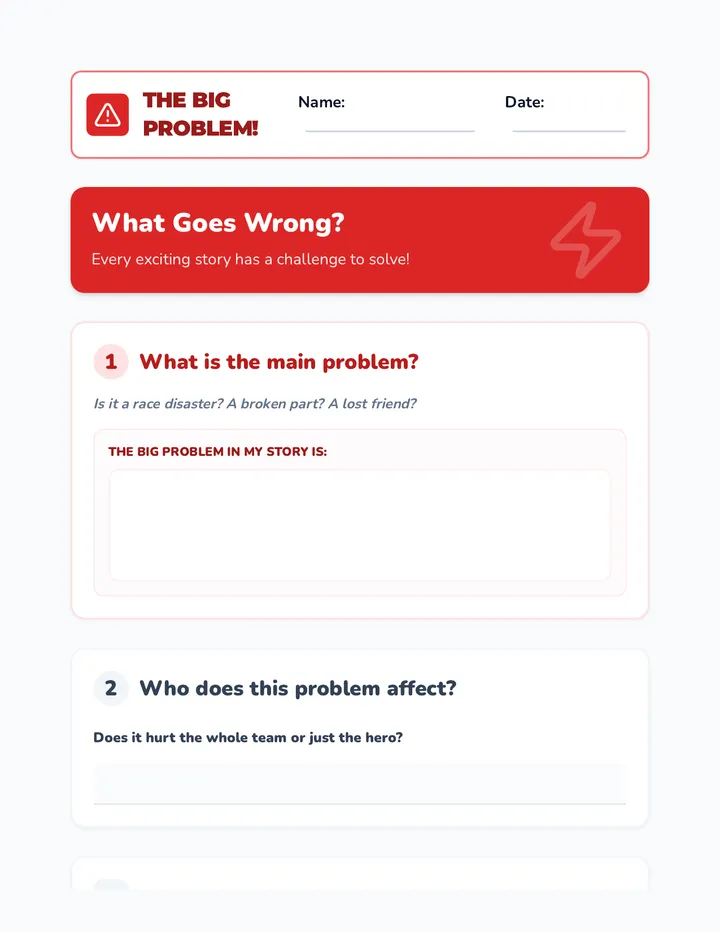
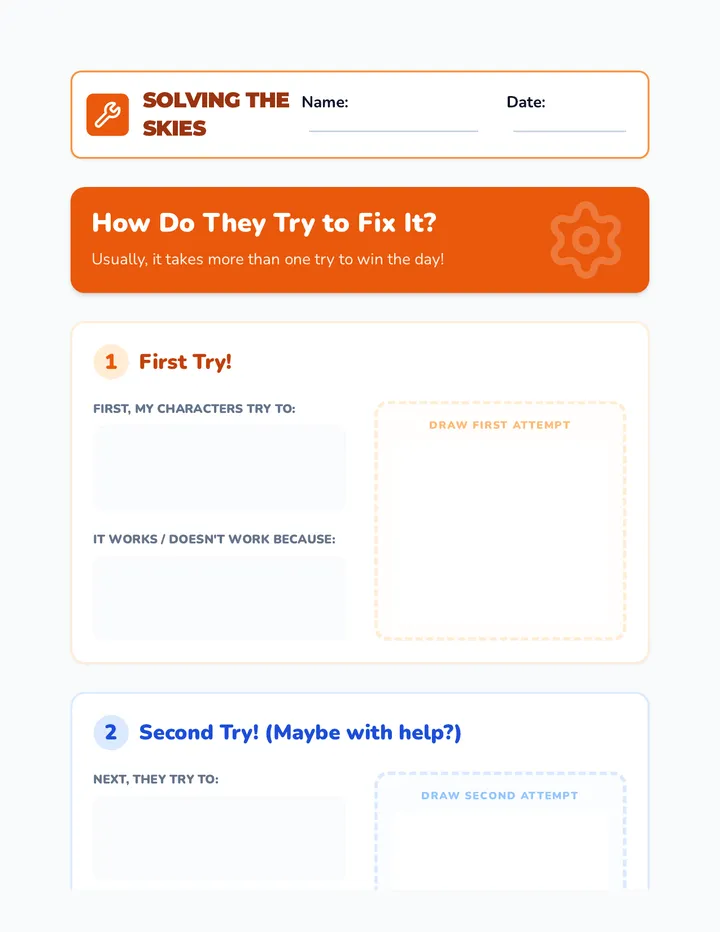
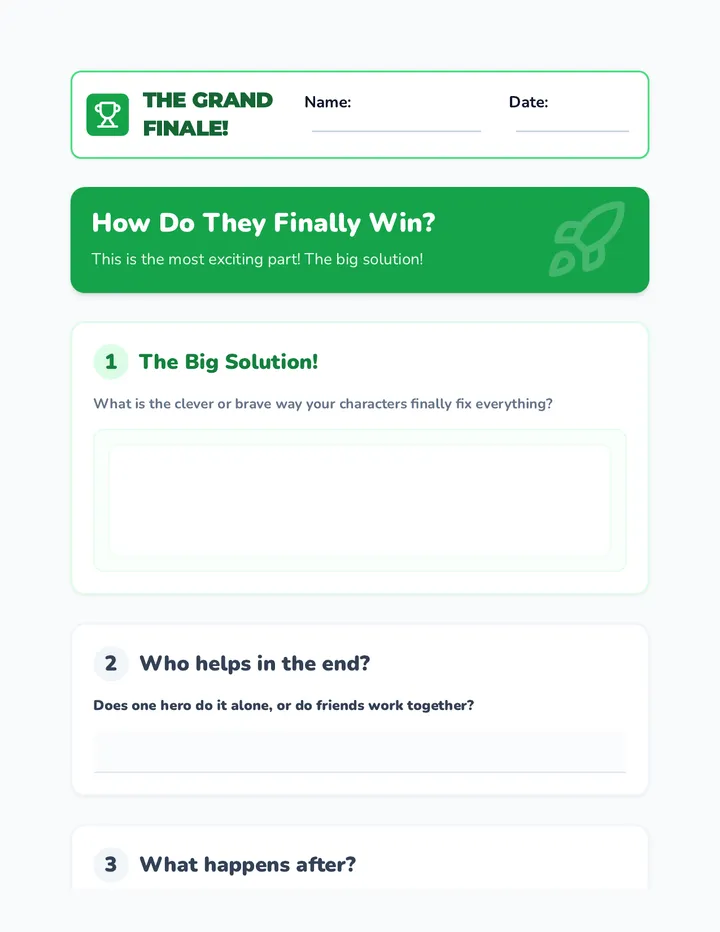
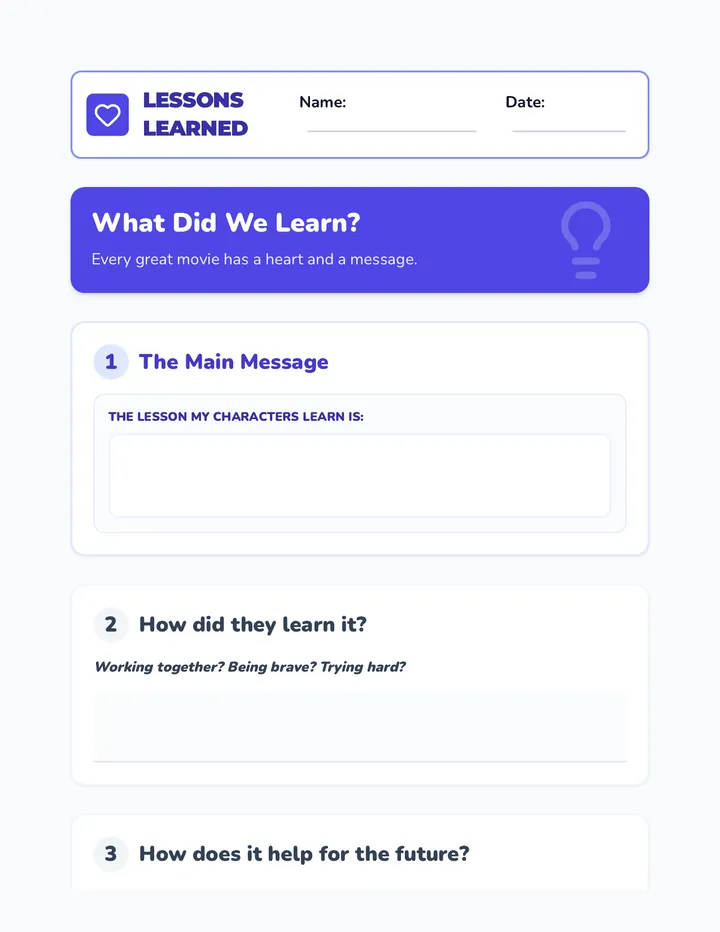
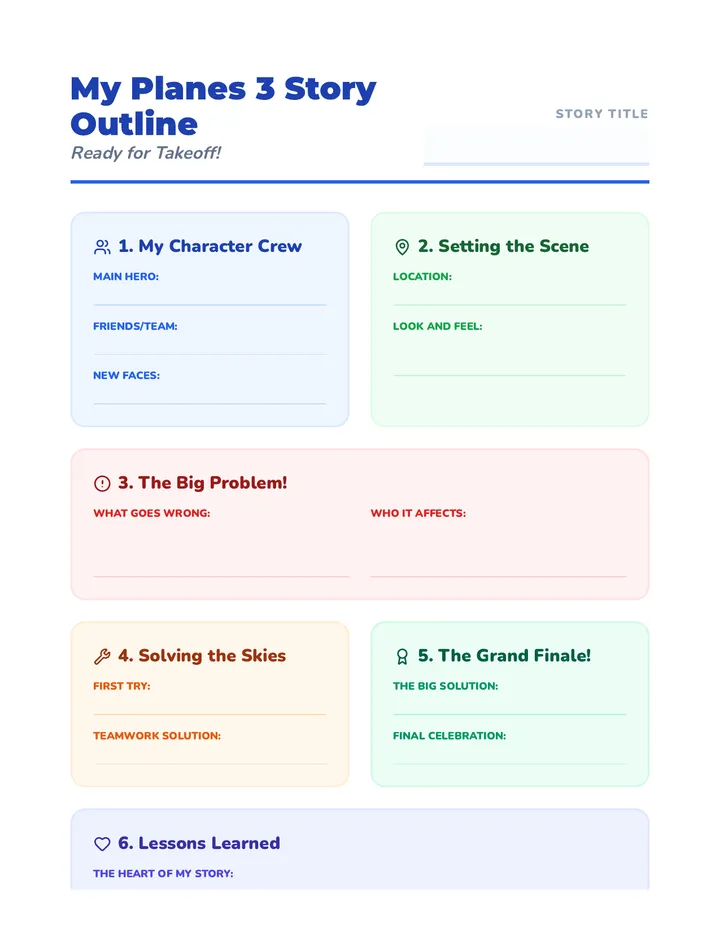
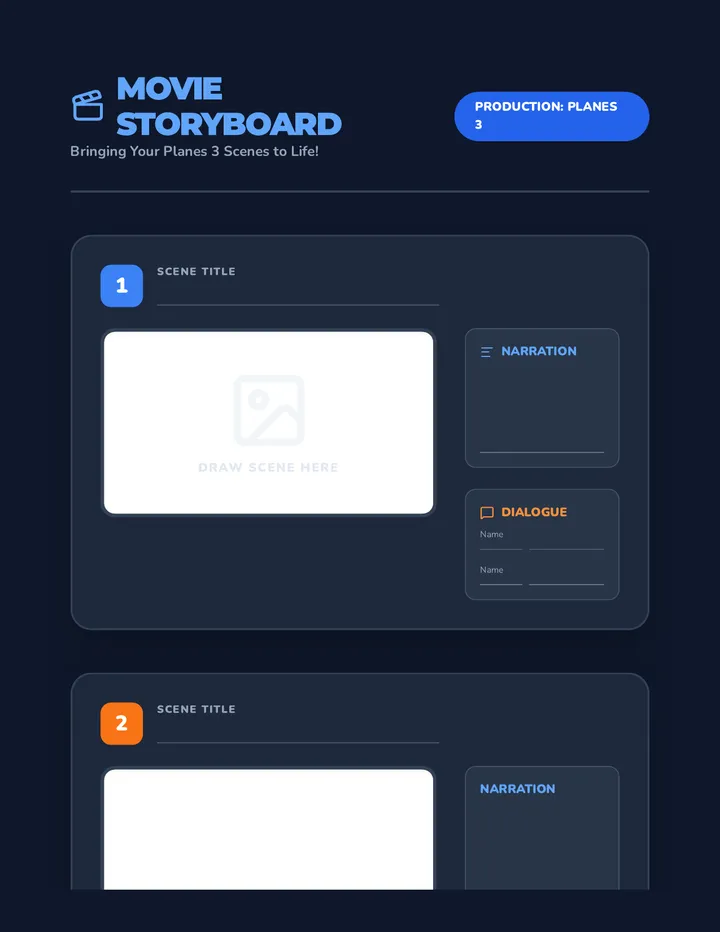
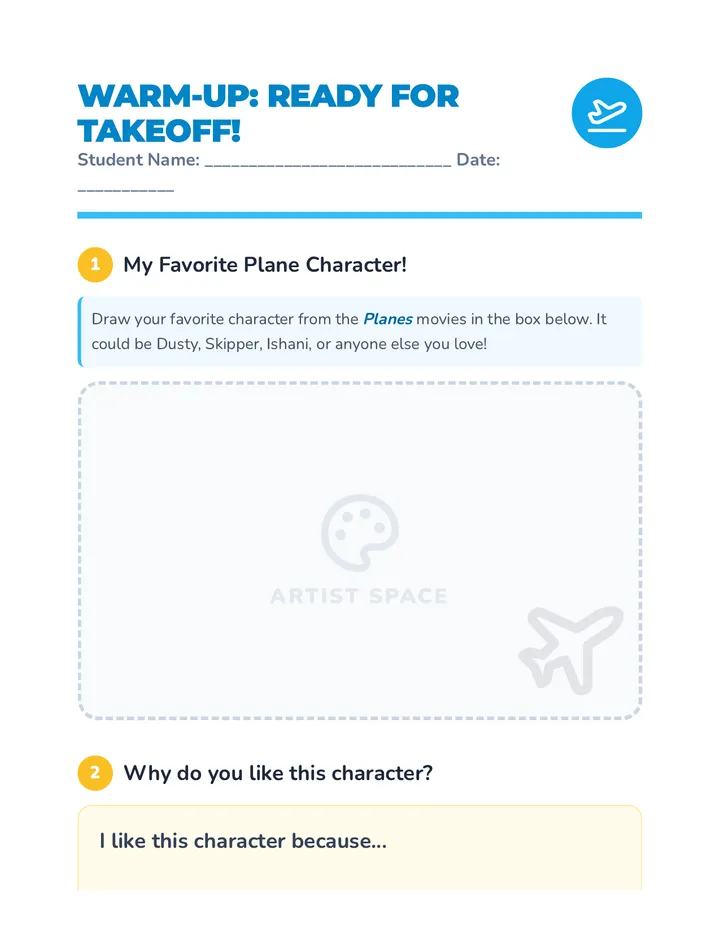
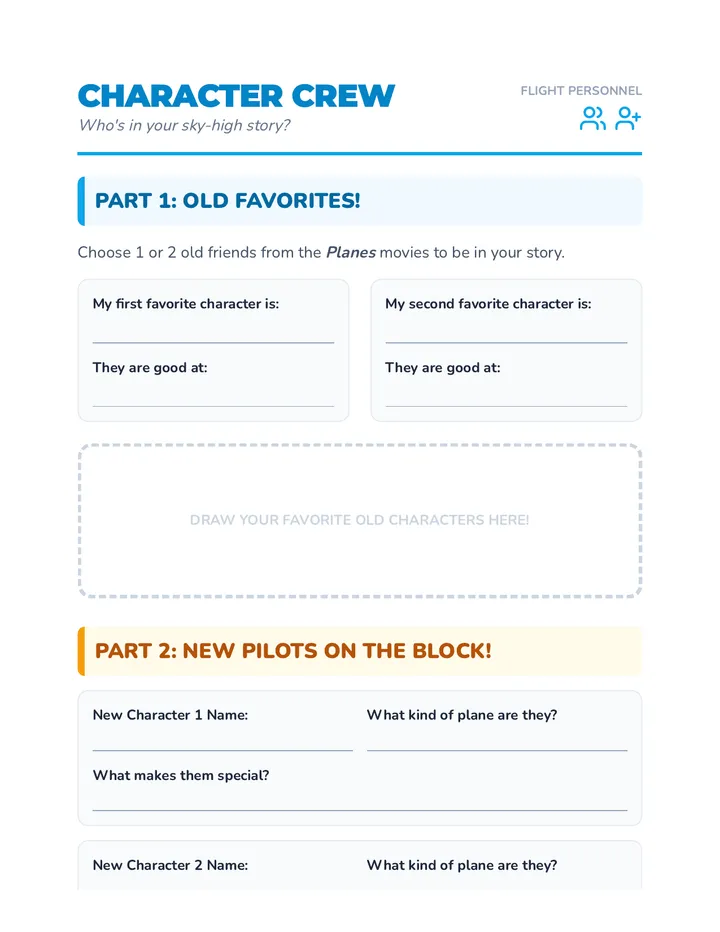
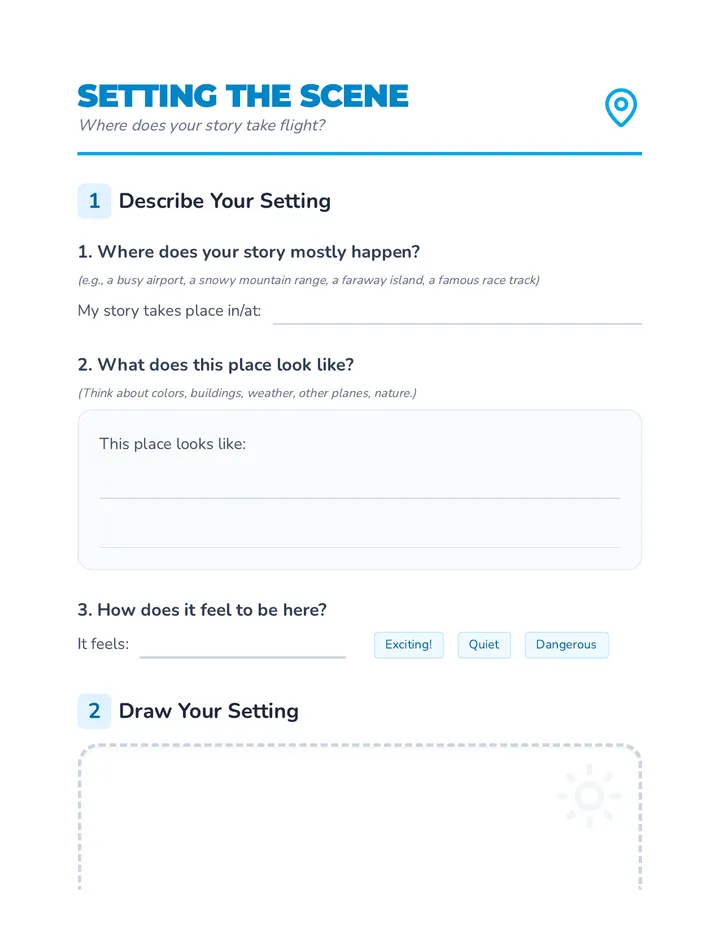
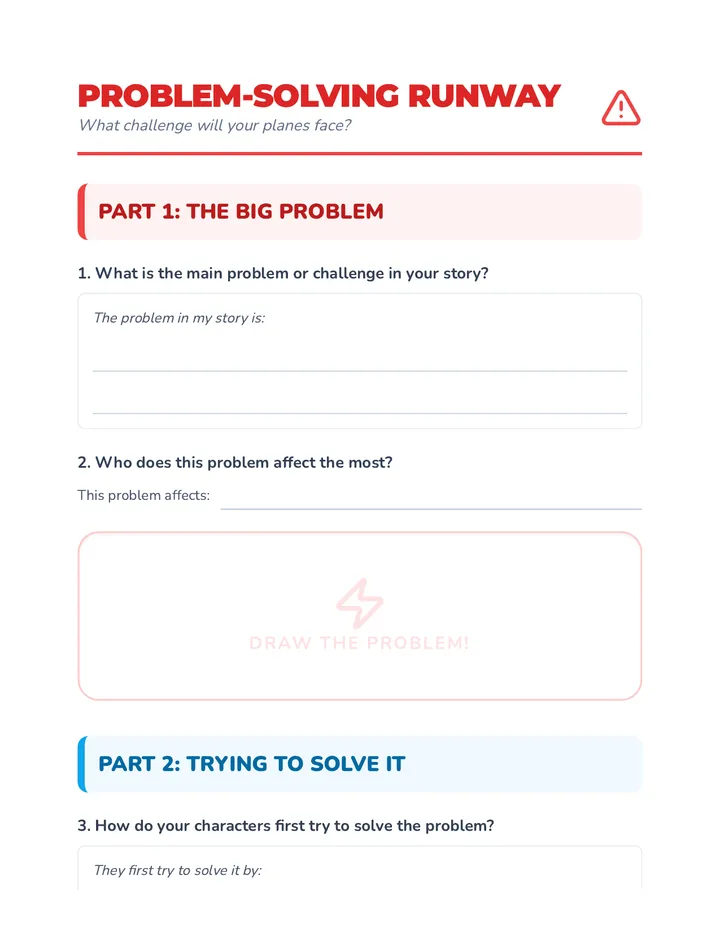
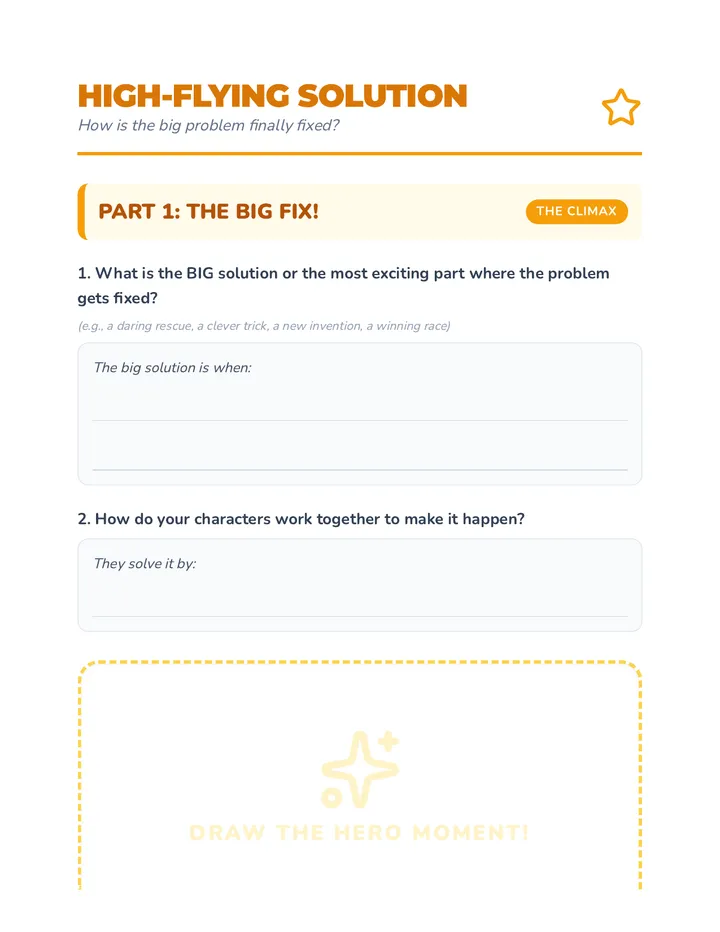
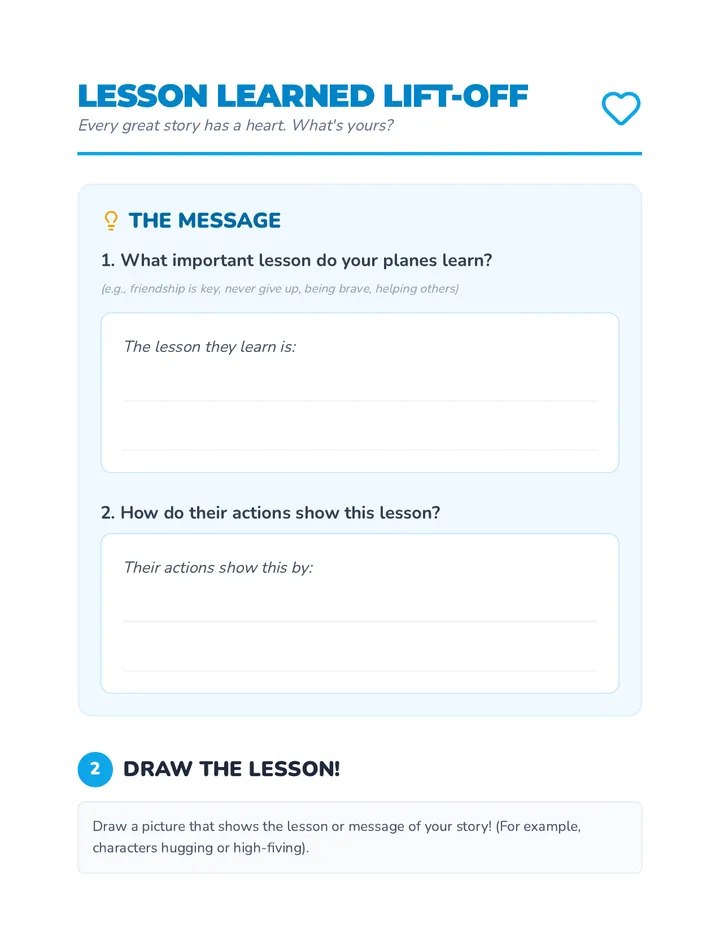
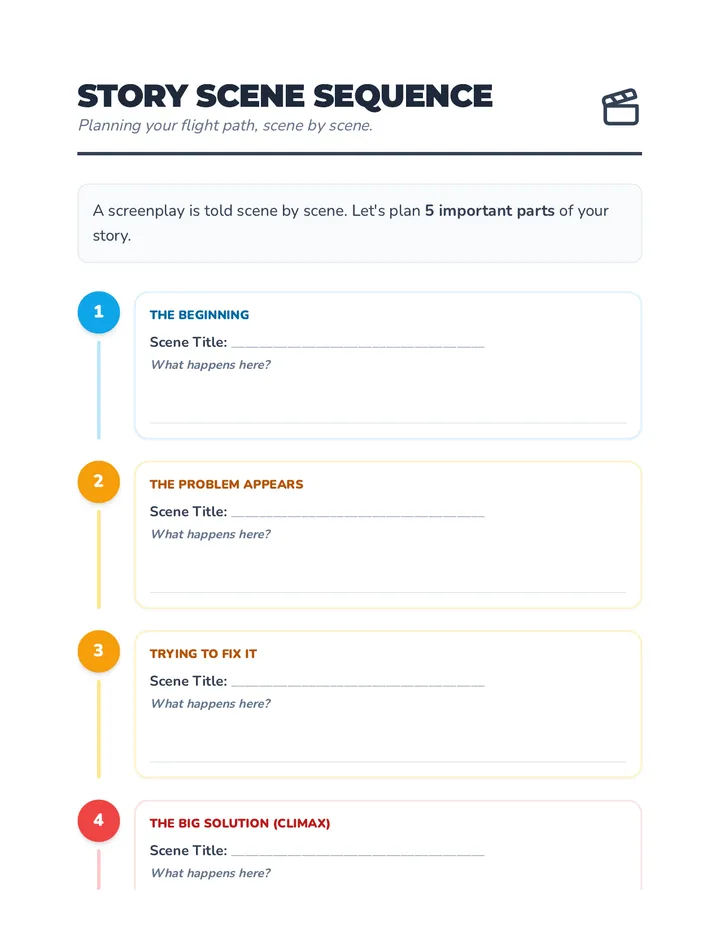
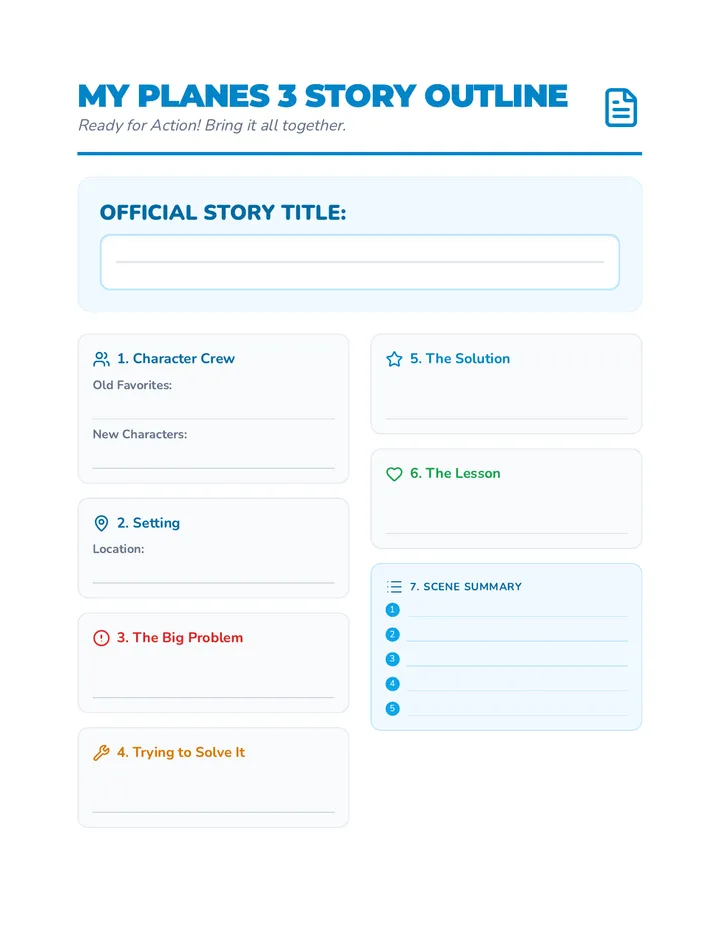
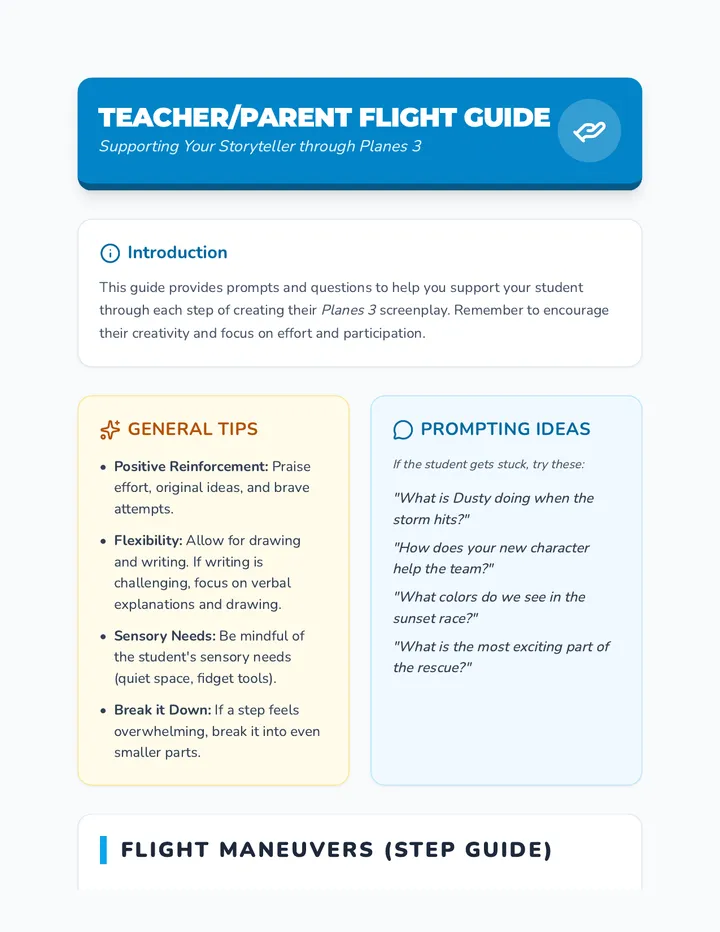
This lesson guides a 3rd-grade student with autism through a visual, step-by-step process to create their own 'Planes 3' screenplay. It focuses on developing characters, setting, plot, and themes through creative writing and storyboarding.
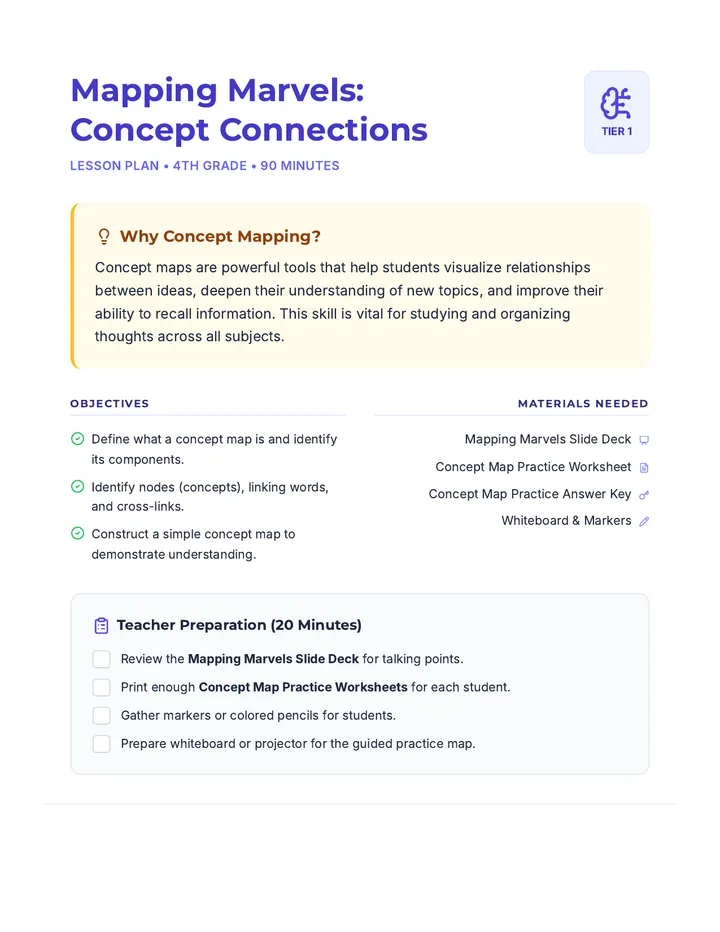
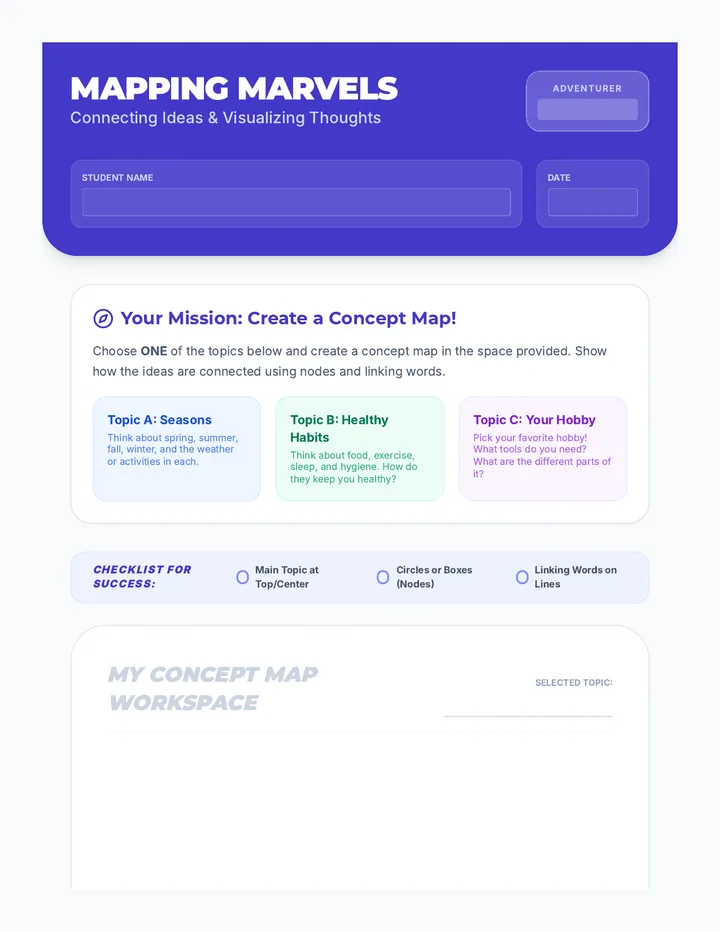
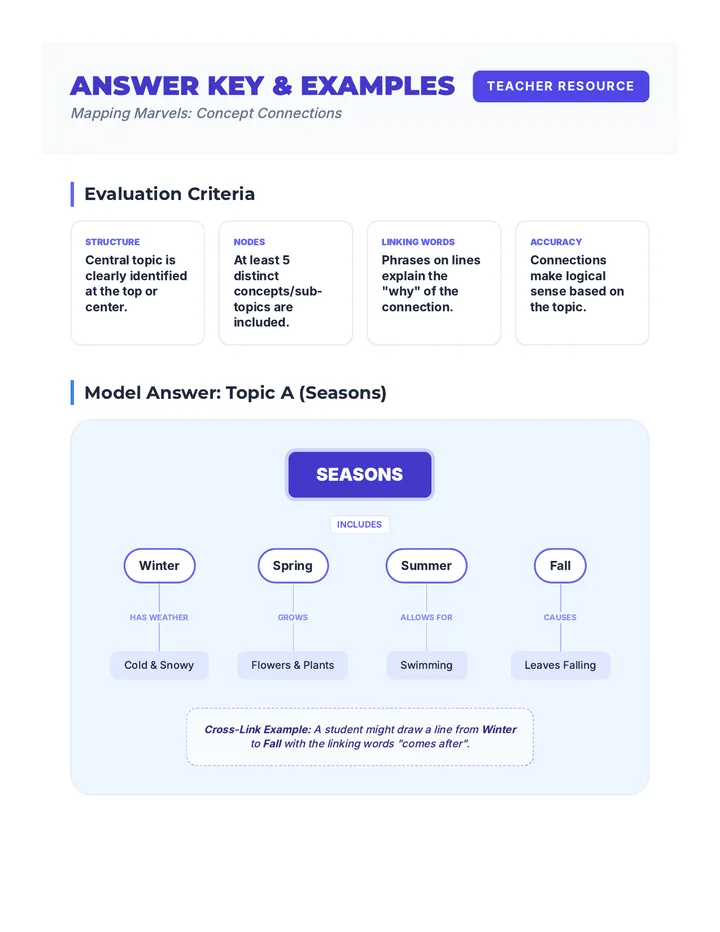
A 90-minute lesson for 4th graders on creating concept maps. Students will learn to visualize relationships between ideas using nodes, linking words, and cross-links to enhance their comprehension and organizational skills.
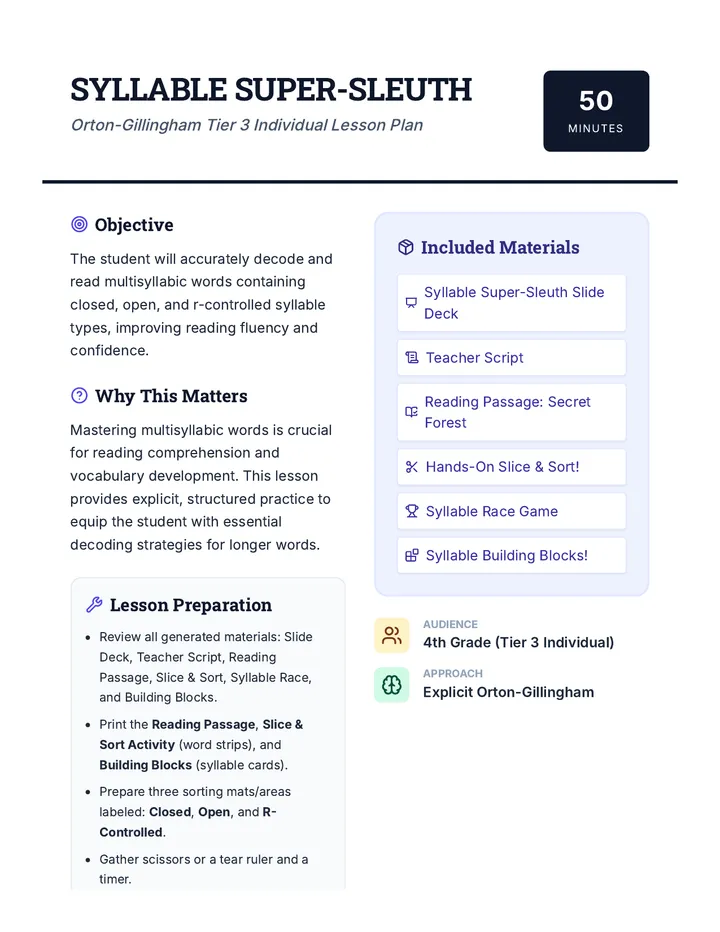
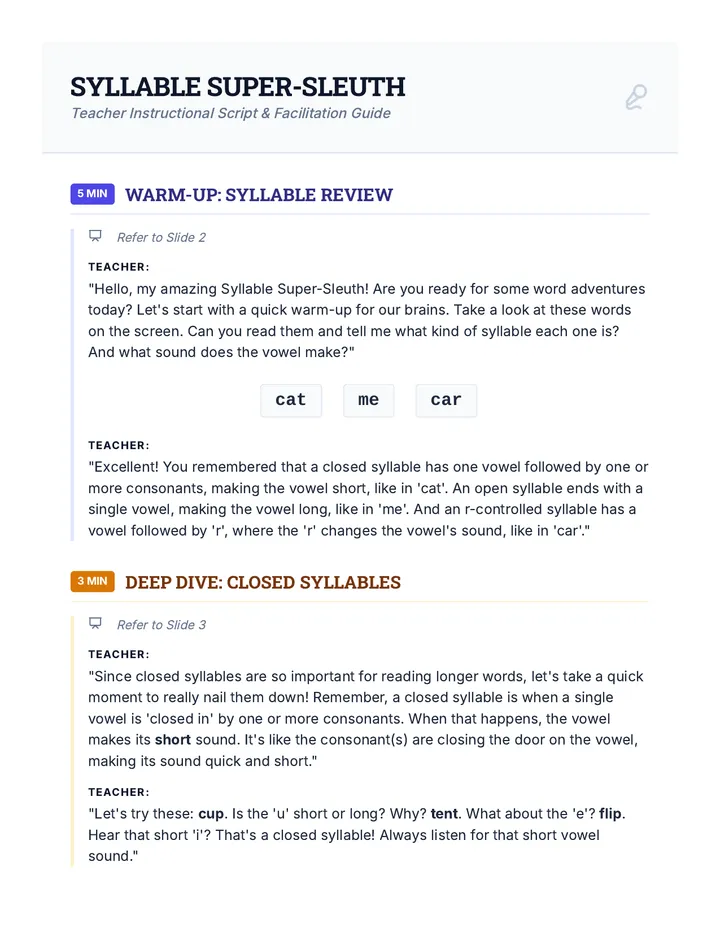
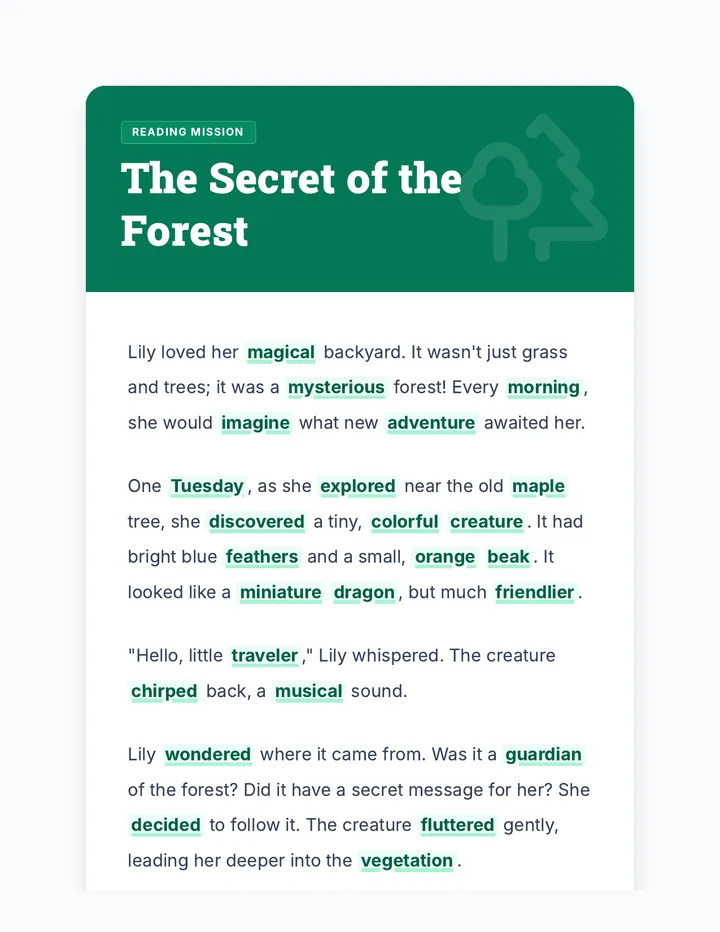
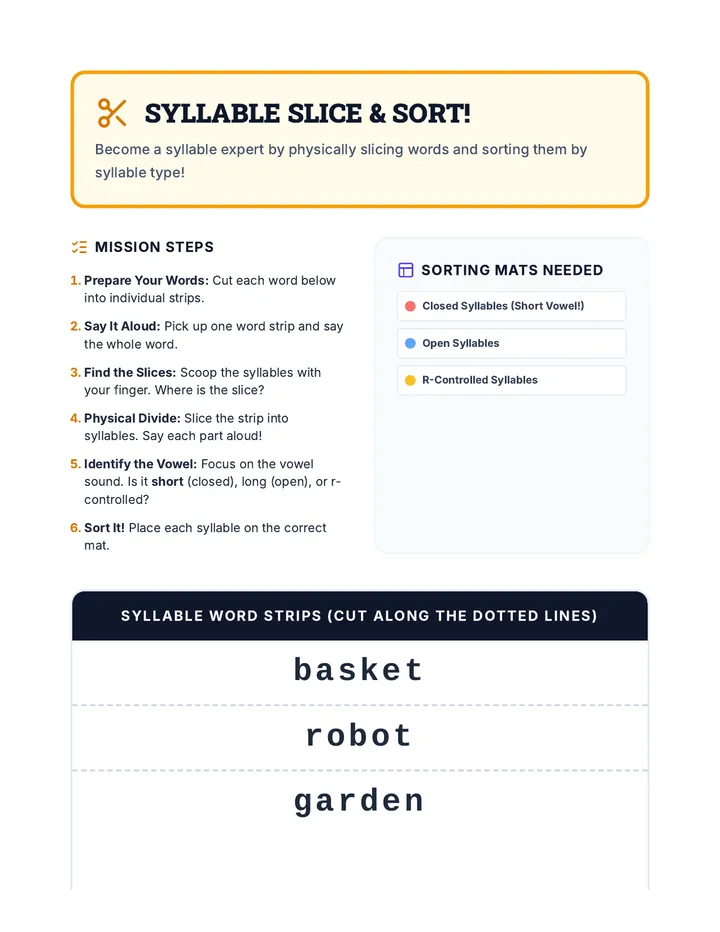
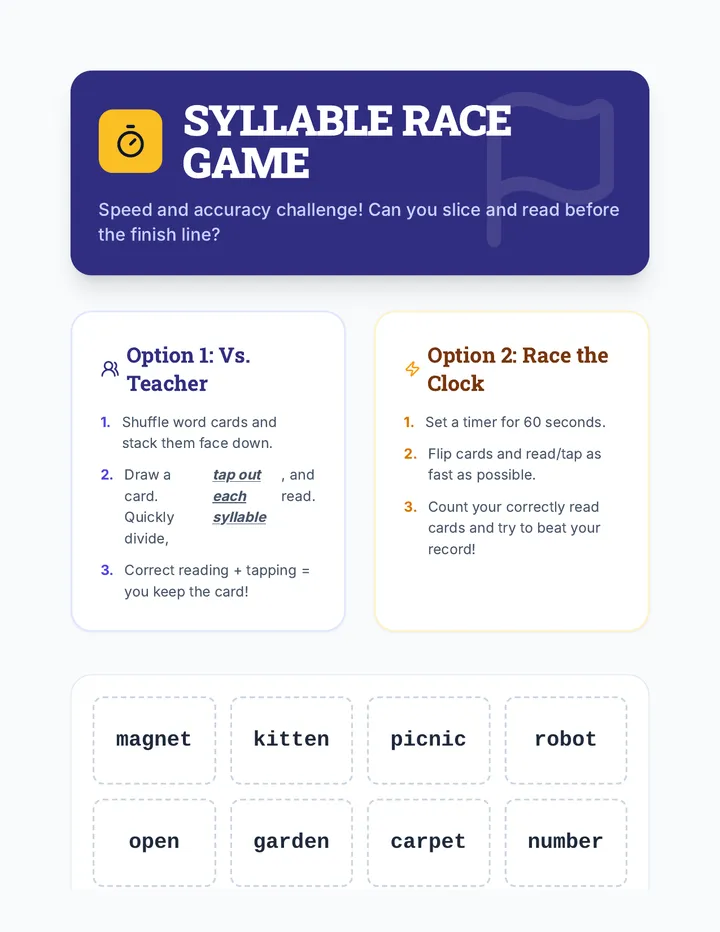
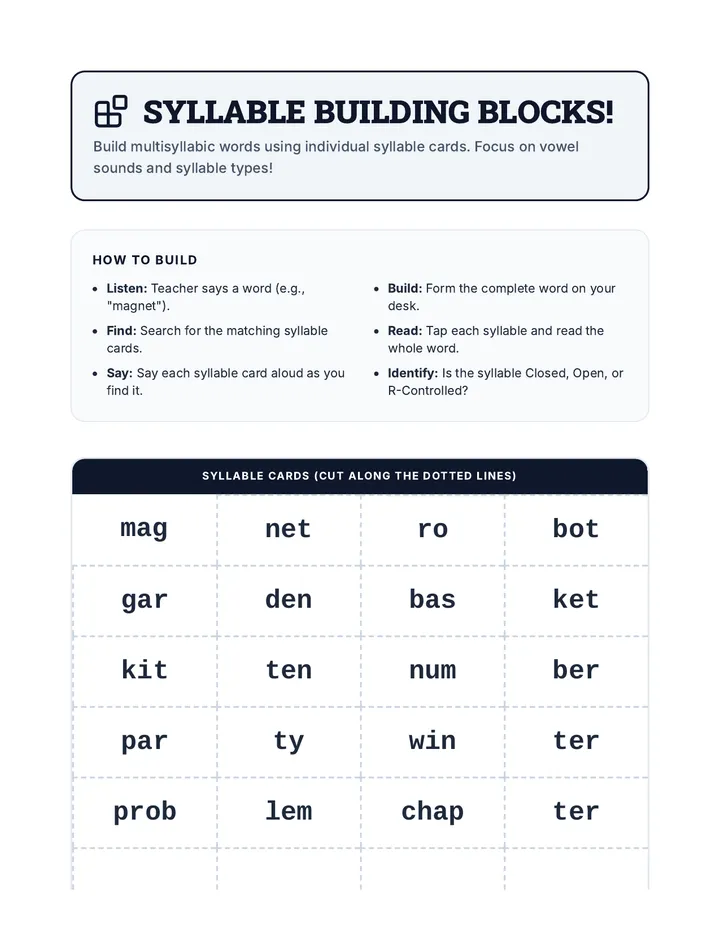
A 50-minute individualized Orton-Gillingham lesson for 4th-grade students with dyslexia, focusing on decoding multisyllabic words through syllable division rules for closed, open, and r-controlled syllables.
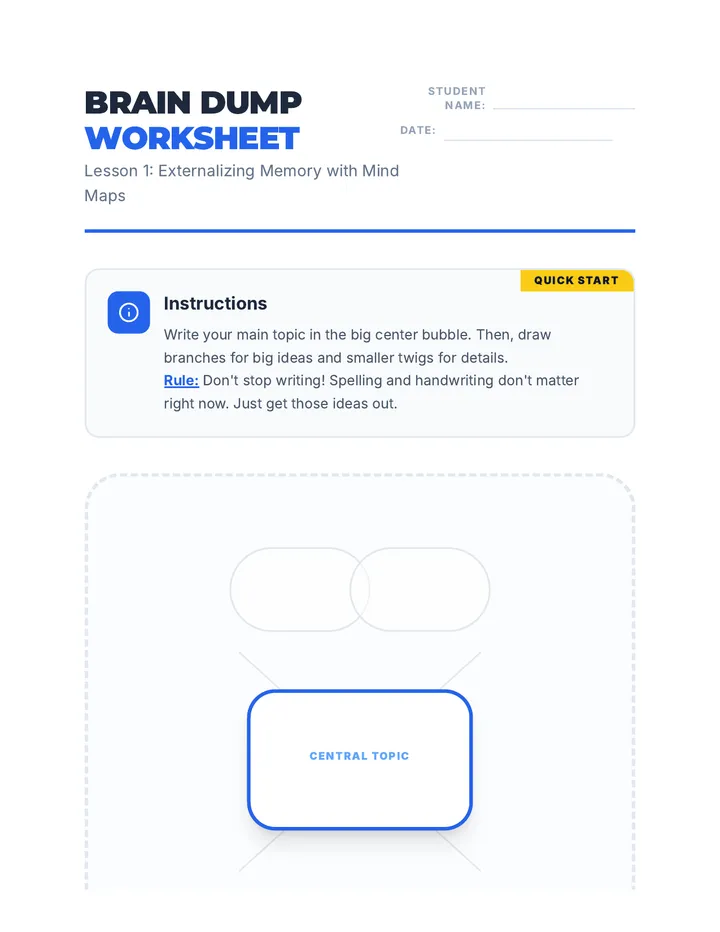
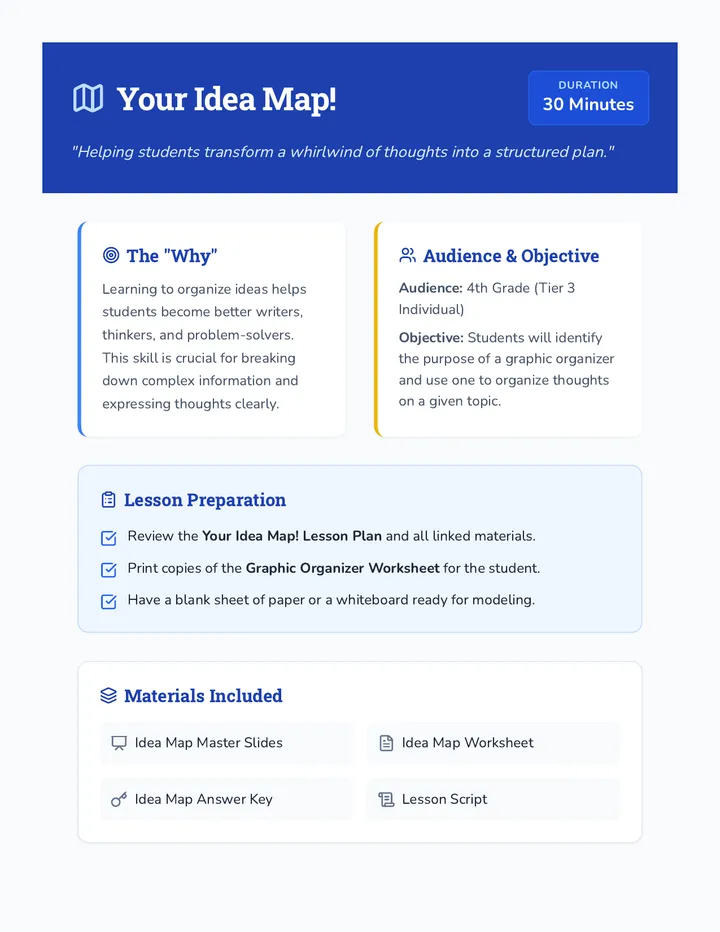
A 30-minute individual session helping 4th-grade students master brainstorming and organizing thoughts using visual maps.
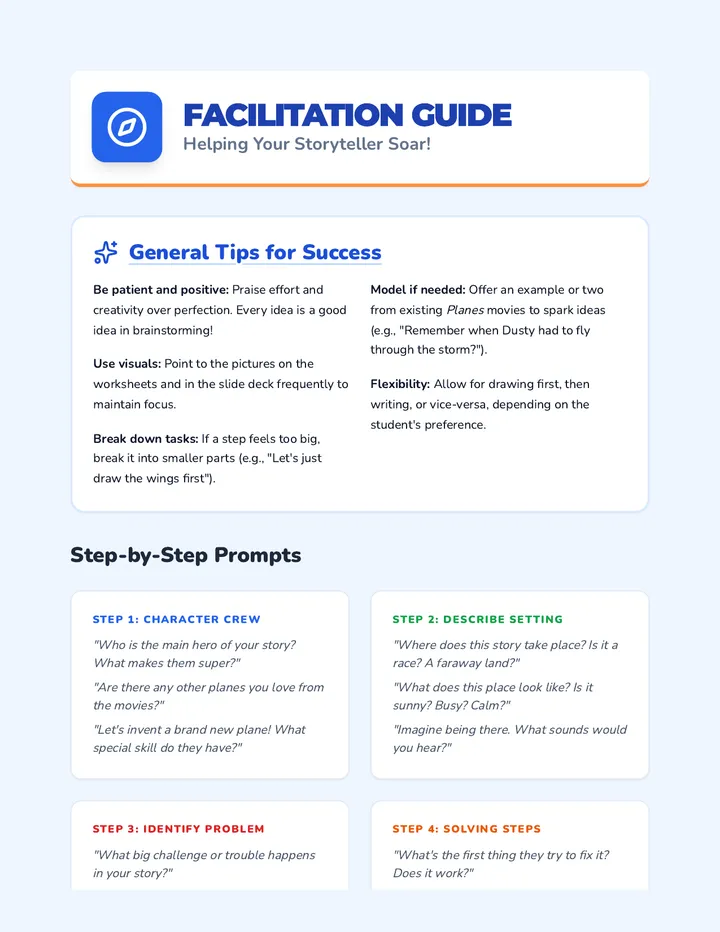
A comprehensive Tier 3 lesson guiding a 3rd-grade student with autism through the screenplay creation process for 'Planes 3'. It uses a structured, visual approach to teach story elements like characters, setting, conflict, and resolution.
A 30-minute Tier 2 small group lesson focused on retelling the story of Mary Anning using a graphic organizer, word banks, and sequencing activity to support students with writing and comprehension challenges.
A 30-minute Tier 2 intervention designed for 3rd-grade students with ADHD and learning disabilities to develop executive function skills for organizing thoughts and sequencing ideas into sentences and paragraphs.
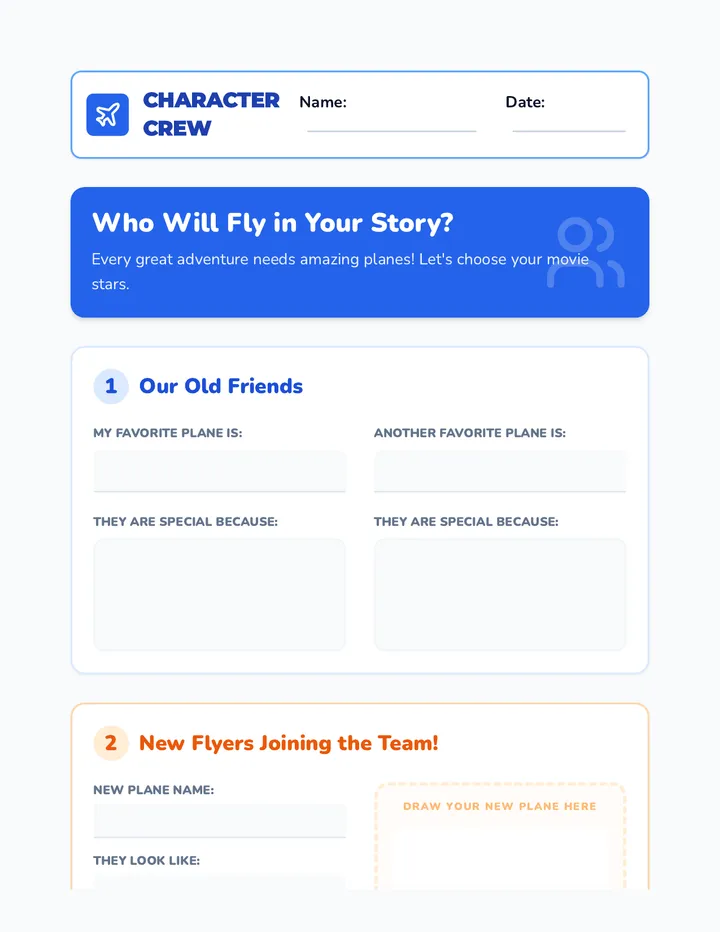
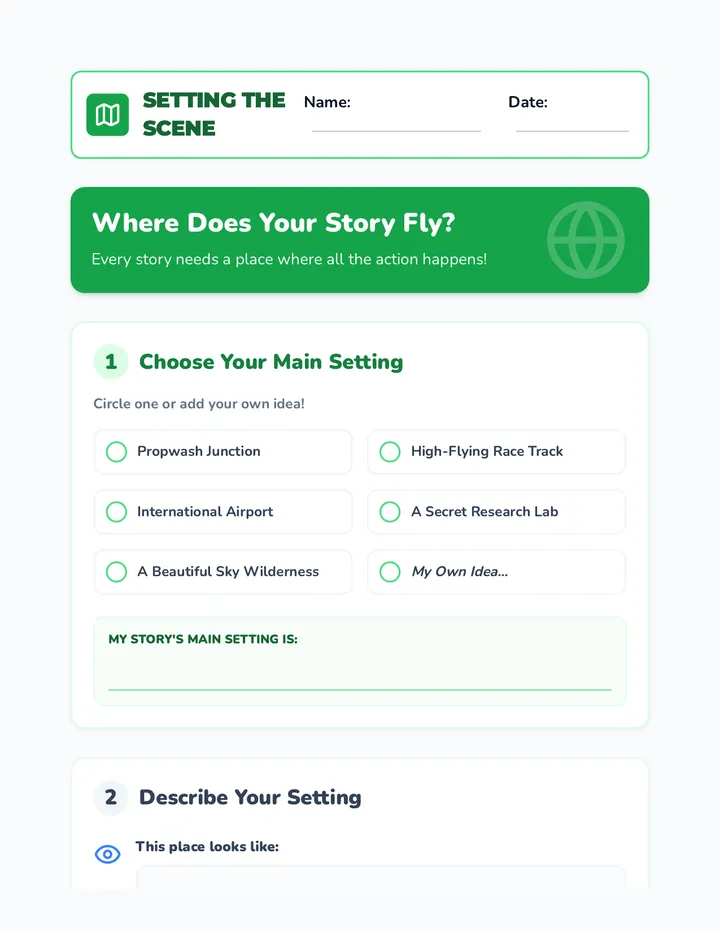
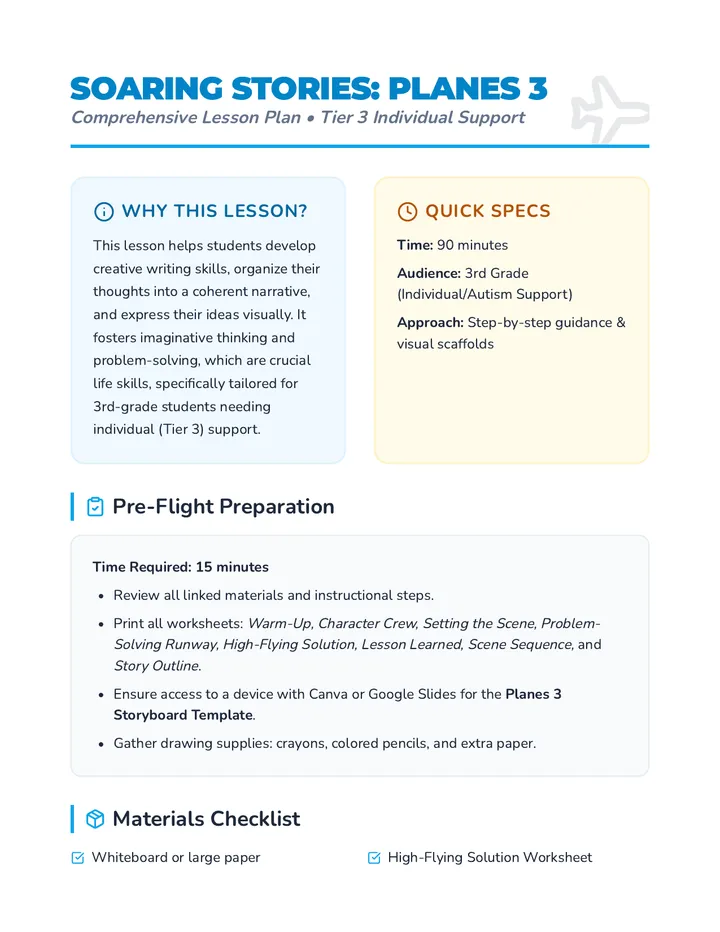
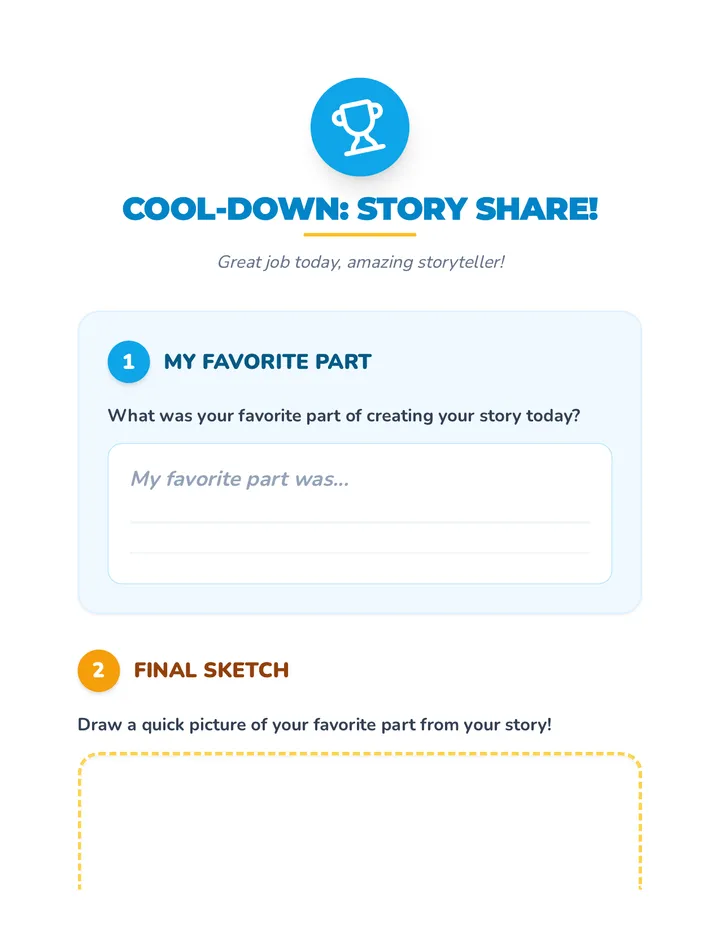
A comprehensive 90-minute creative writing lesson for a 3rd-grade student with autism, focused on developing an original 'Planes 3' screenplay through structured visual worksheets and a digital storyboard.
This lesson guides a 3rd-grade student with autism through the creative process of writing a Pixar-style screenplay, specifically 'Planes 3'. It breaks down storytelling into 7 visual steps, encouraging creativity, problem-solving, and emotional connection.
A structured, visual lesson designed for a 3rd-grade student with autism to create an original 'Planes 3' screenplay. This lesson breaks down the storytelling process into manageable, creative steps using a Pixar-inspired framework.