Systematic color-coding and marginalia techniques to support active reading and information retention. Targets skills in isolating key concepts and organizing textual evidence for students with diverse learning needs.
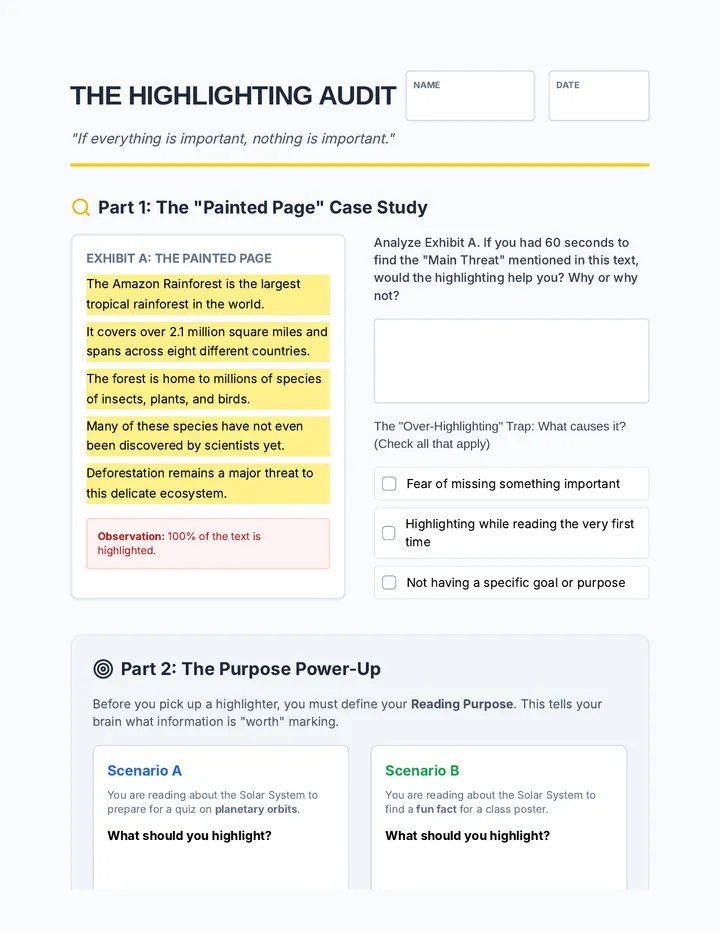
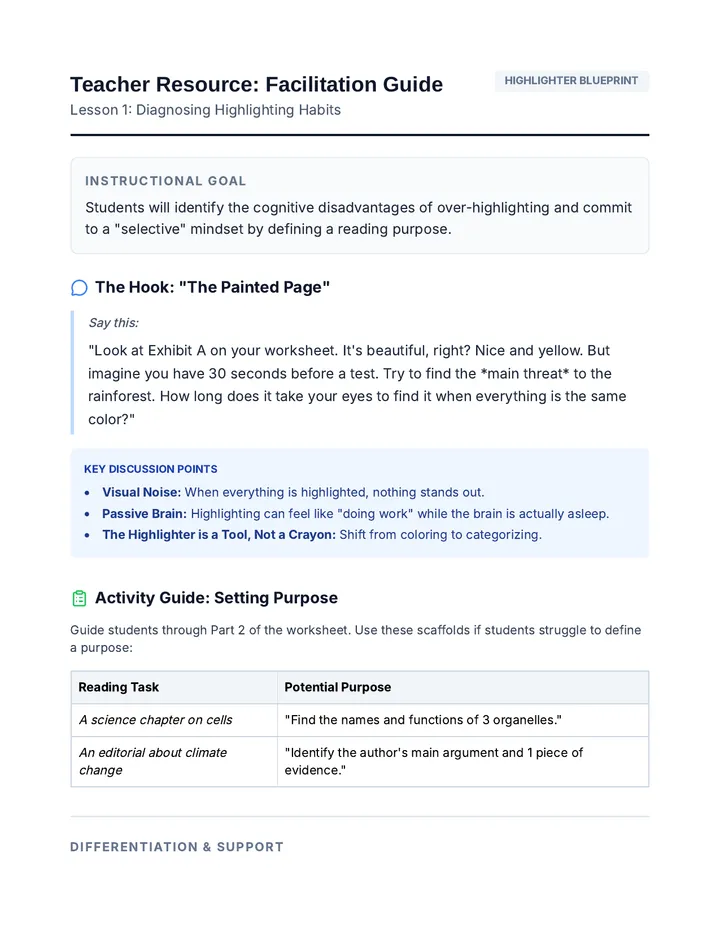
A 5-lesson sequence for 9th-grade students to master a systematic, three-color highlighting strategy, moving from identifying 'over-highlighting' pitfalls to independent application on non-fiction texts.
A 5-lesson sequence designed for 11th-grade students to master the Cornell Note-Taking System. The curriculum focuses on reducing cognitive load and supporting working memory through structured page formatting, keyword identification, synthesis, and retrieval practice.
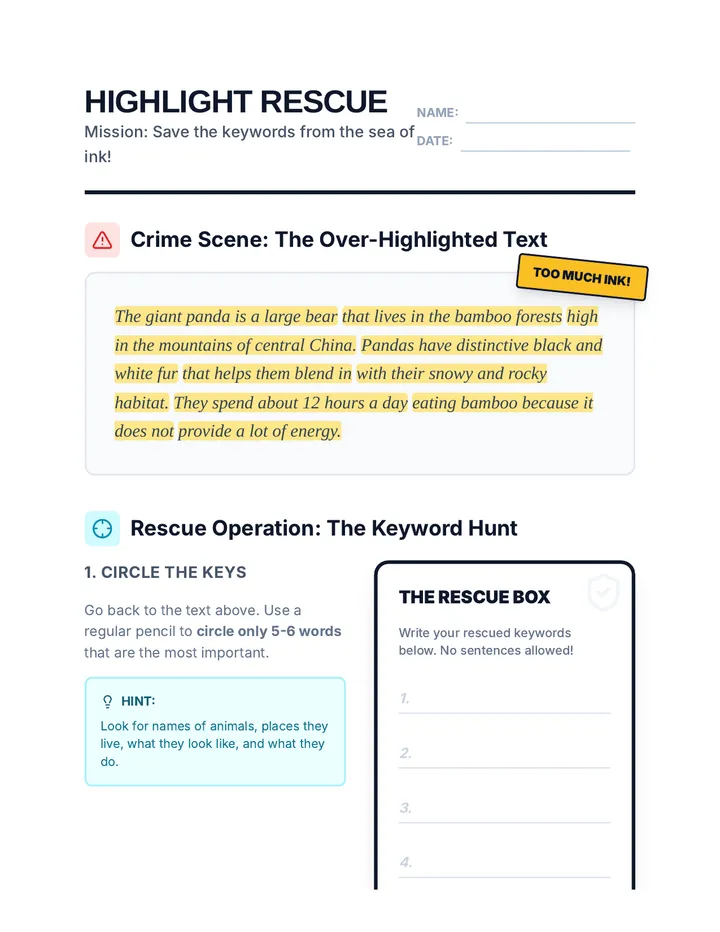
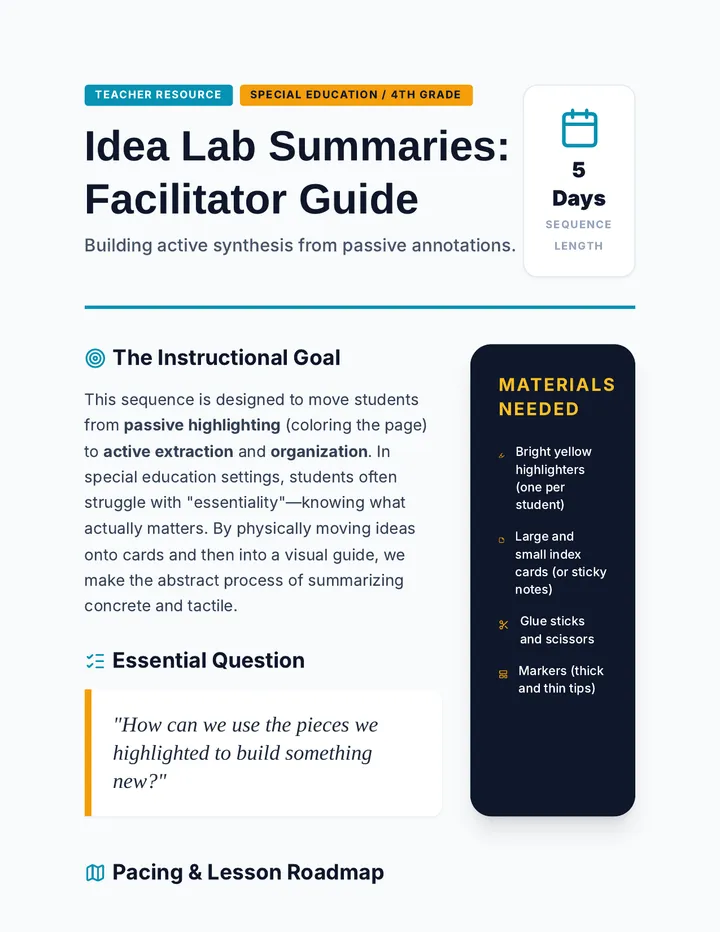
A project-based sequence for 4th-grade students in special education settings, focusing on moving from passive highlighting to active extraction, organization, and synthesis. Students learn to refine highlights, extract them onto cards, sort ideas logically, and create a visual 'One-Page Expert Guide' as a summary tool.
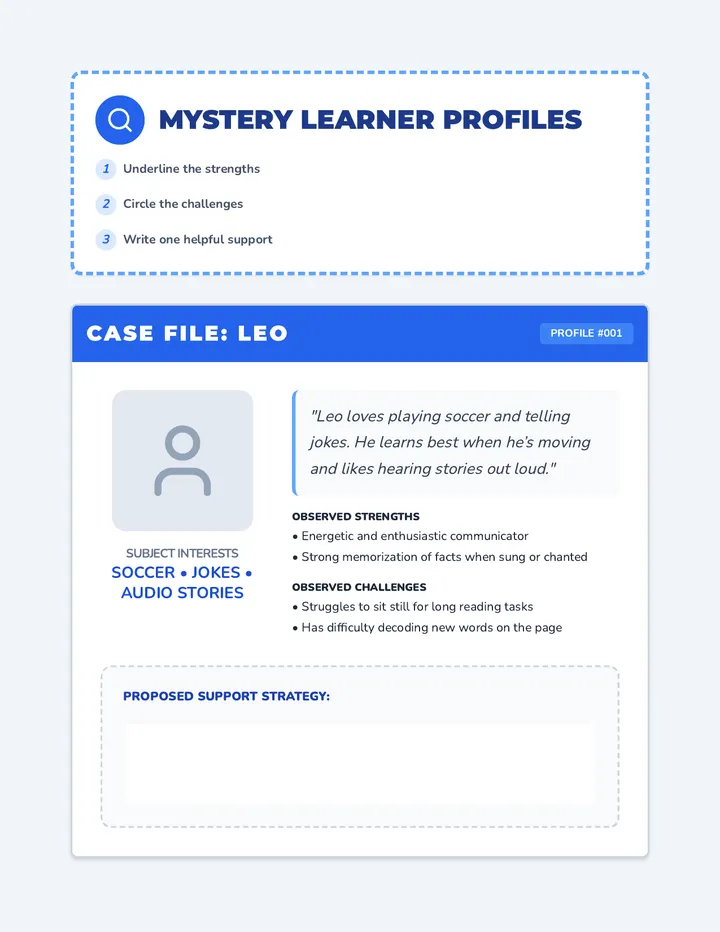
A detective-themed sequence for 1st-grade special education students to master inferencing through concrete objects, body language, sensory details, and text clues.
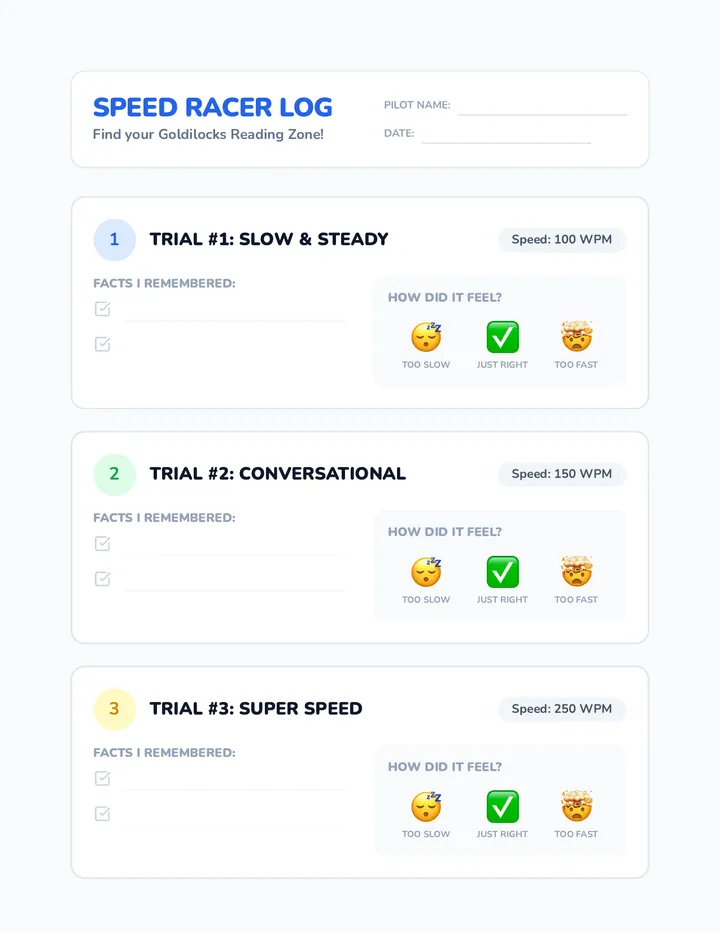
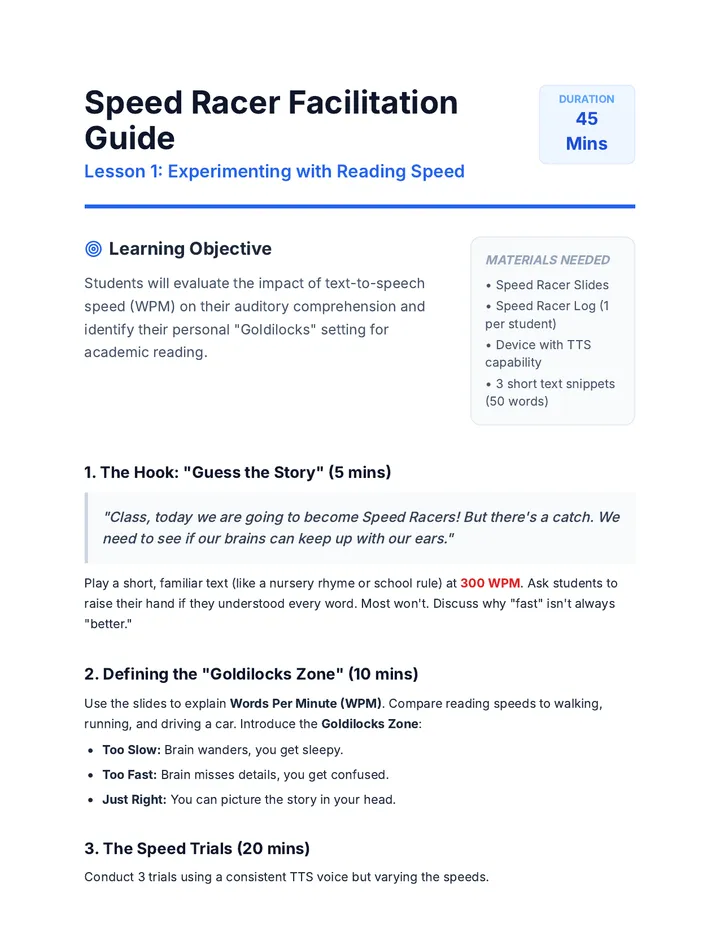
A sequence focused on empowering 3rd-grade students to customize their text-to-speech settings. Students experiment with speed, voice, and visual highlighting to create a personalized 'Assistive Tech Profile' for better reading retention and comfort.
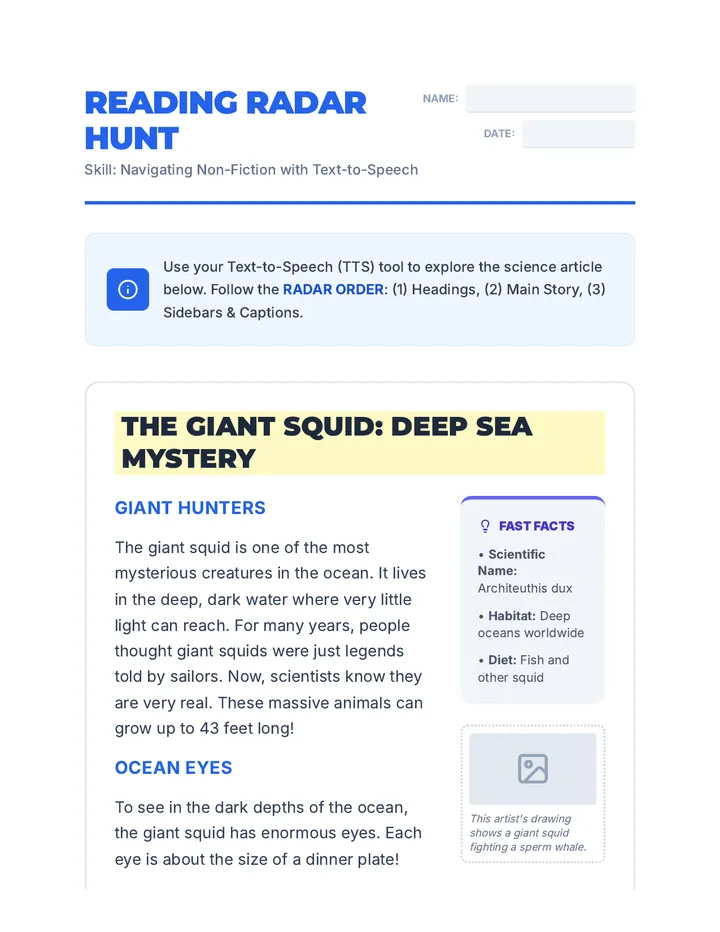
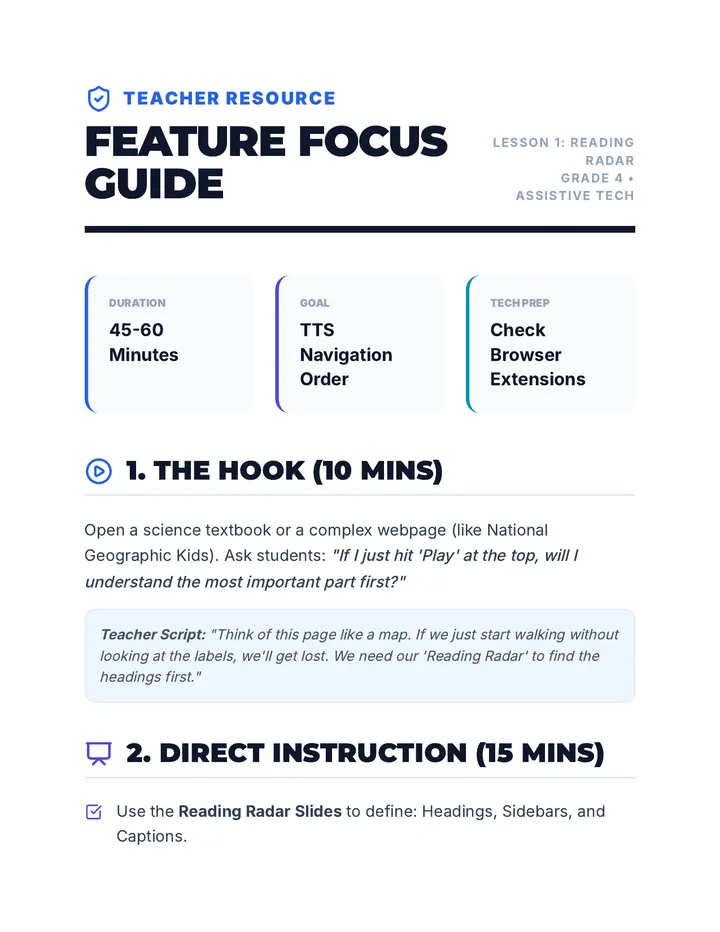
A comprehensive sequence for 4th-grade students to master Text-to-Speech (TTS) assistive technology. Students learn to navigate complex text features, clean up cluttered webpages, tackle math word problems, conduct research, and take effective notes using auditory tools.
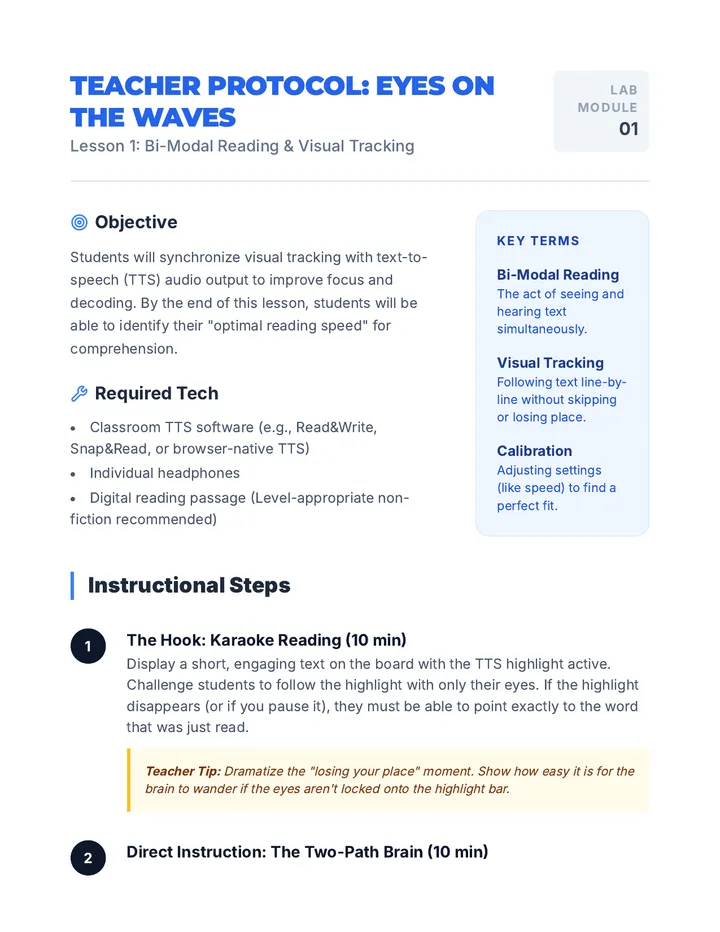
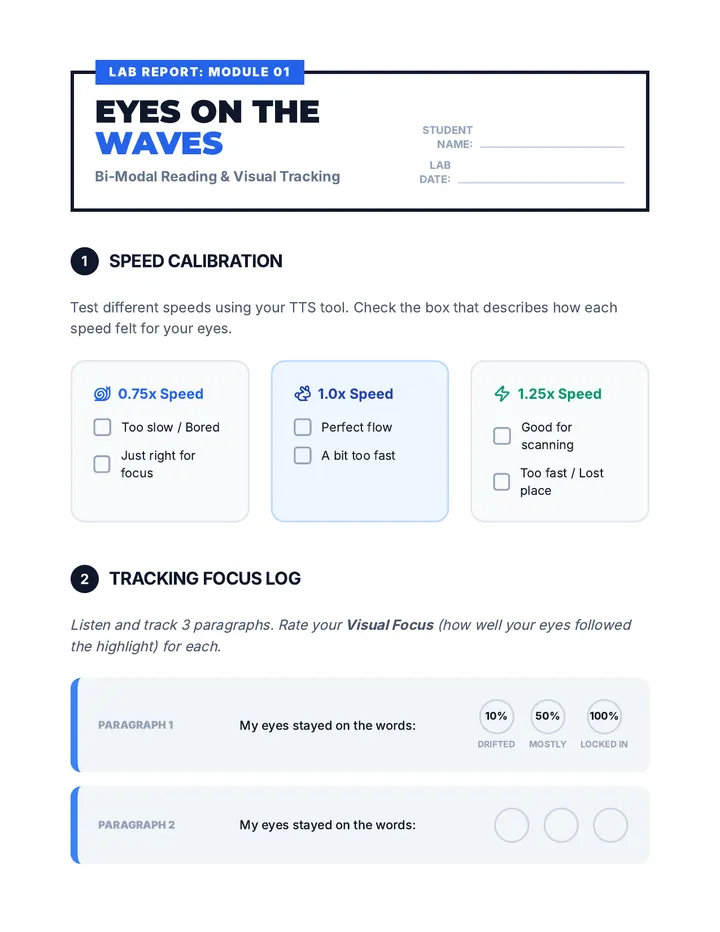
A 5th-grade sequence focused on using Text-to-Speech (TTS) technology as a cognitive strategy for reading comprehension. Students learn bi-modal reading, text chunking, evidence collection, and active annotation to transition from passive listening to active engagement with digital text.
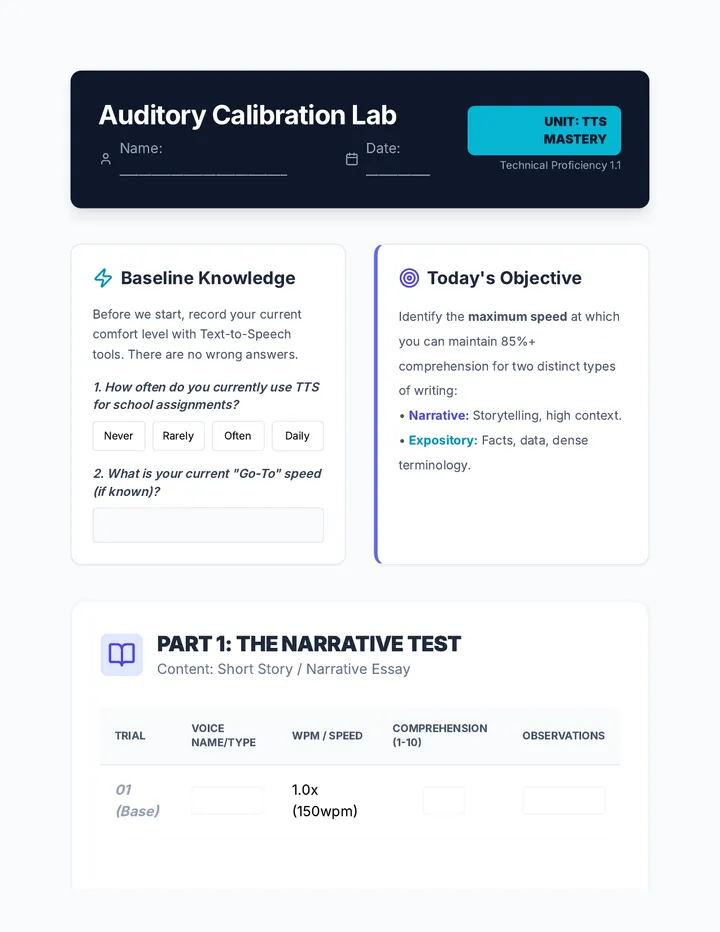
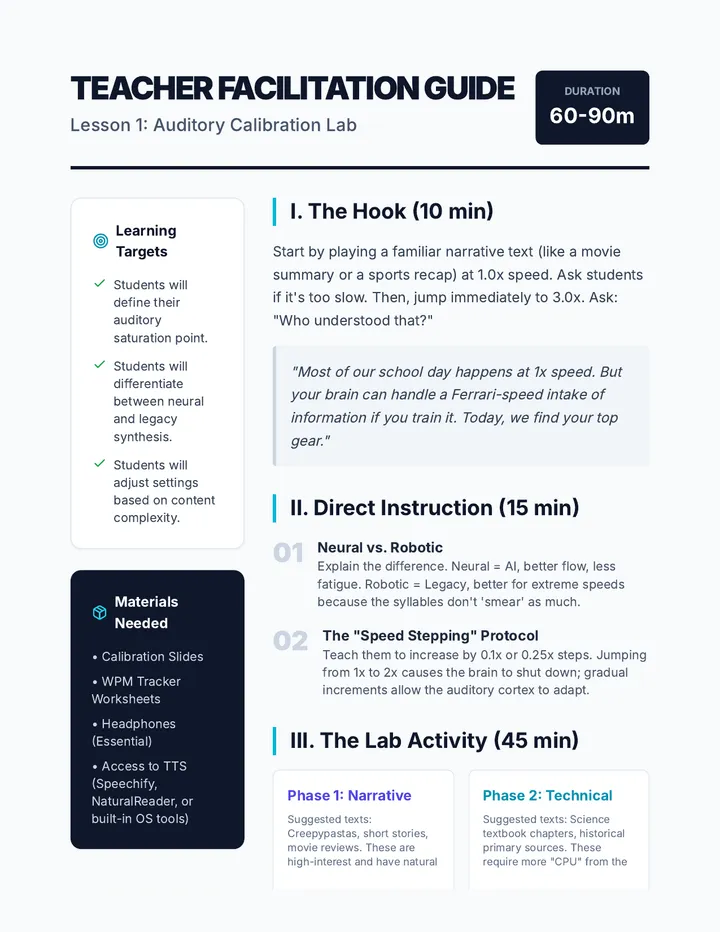
This sequence equips 12th-grade students with advanced technical skills in Text-to-Speech (TTS) technology. It moves beyond basic tool usage to professional-grade workflows, including auditory calibration, OCR conversion, immersion reading, mobile synchronization, and technical troubleshooting, preparing students for the heavy reading demands of post-secondary environments.
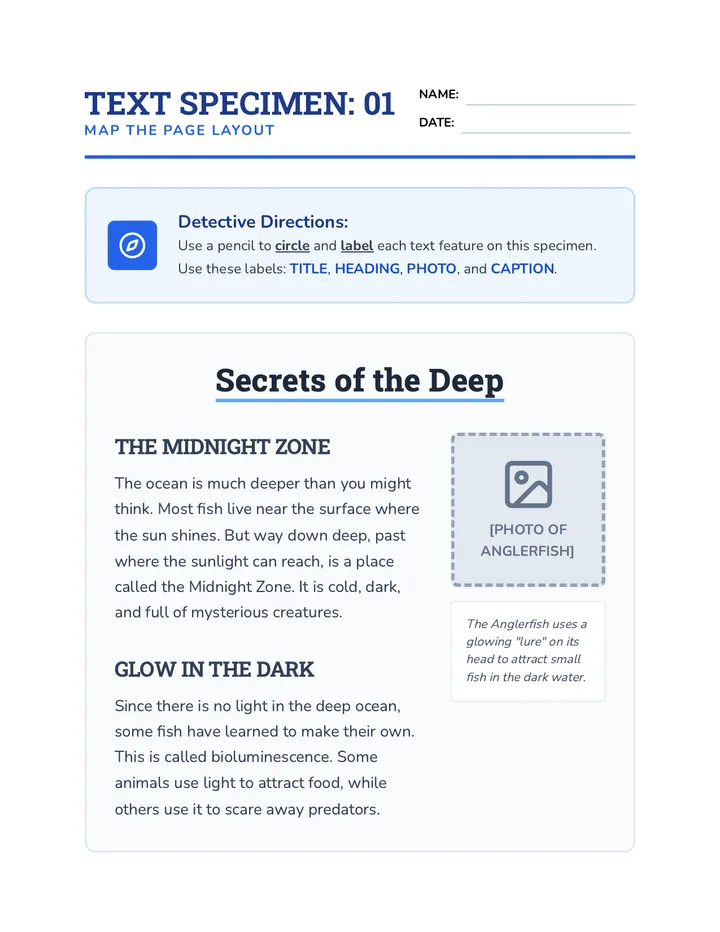
A 3rd-grade sequence focused on teaching students with processing difficulties how to navigate informational texts using annotation and highlighting techniques. Through a 'text detective' theme, students analyze informational articles as 'specimens' to identify features, vocabulary, and main ideas.
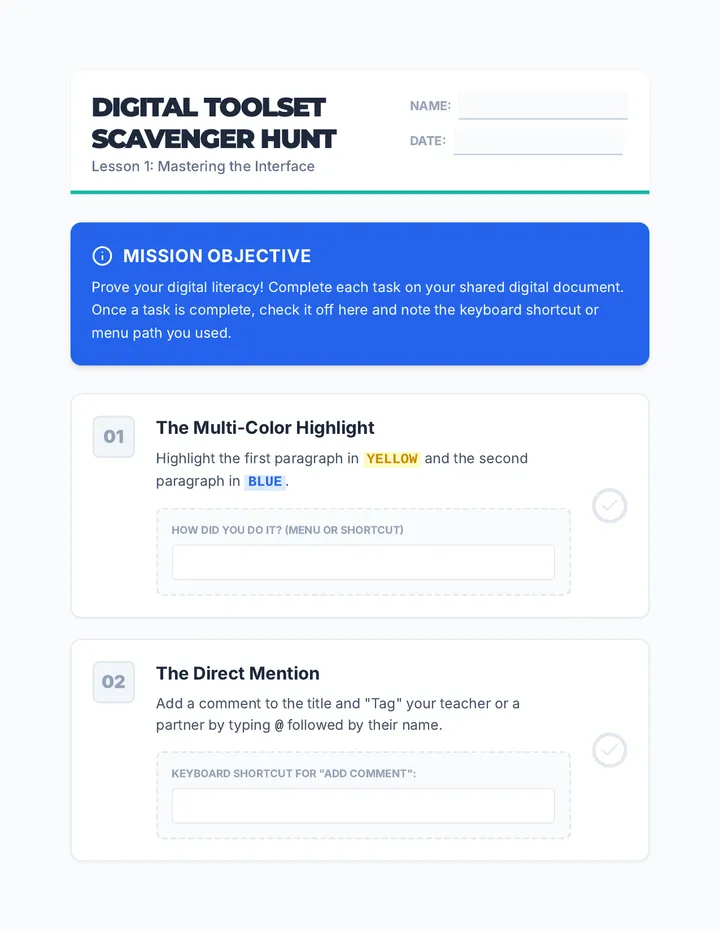
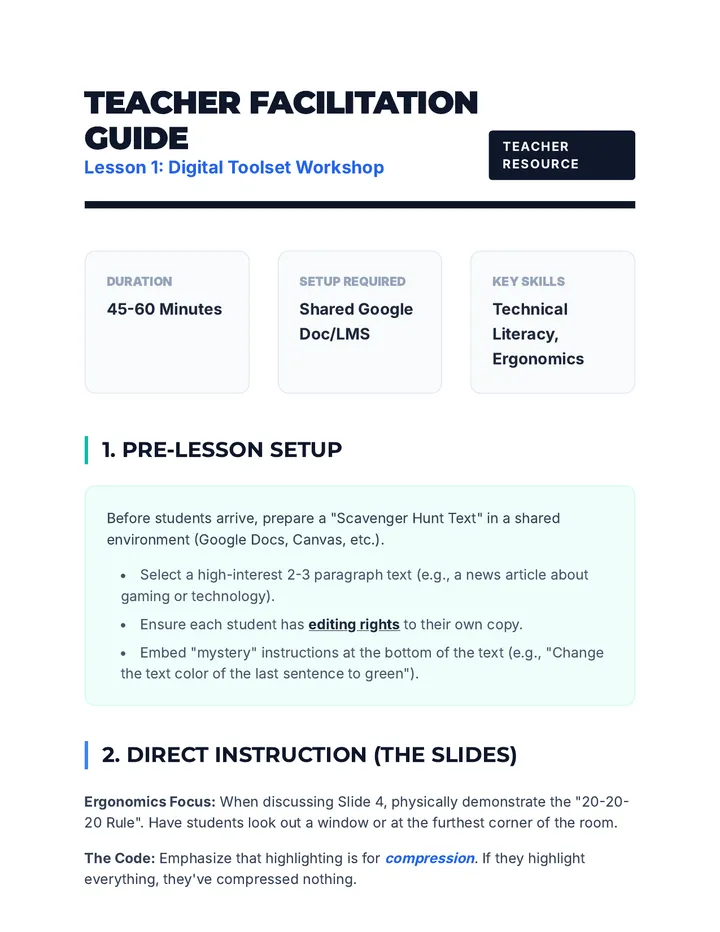
A 5-lesson sequence designed for 9th-grade students in an academic support setting to master digital annotation, highlighting, and collaborative text analysis tools. The sequence focuses on transitioning traditional paper-based strategies to digital environments like Google Docs and PDFs, emphasizing visible thinking and peer collaboration.
This sequence teaches 4th-grade students how to use digital annotation tools—like highlighting, commenting, and text-to-speech—to support reading comprehension and prepare for computer-based assessments. It is designed specifically for students needing academic support or accommodations.
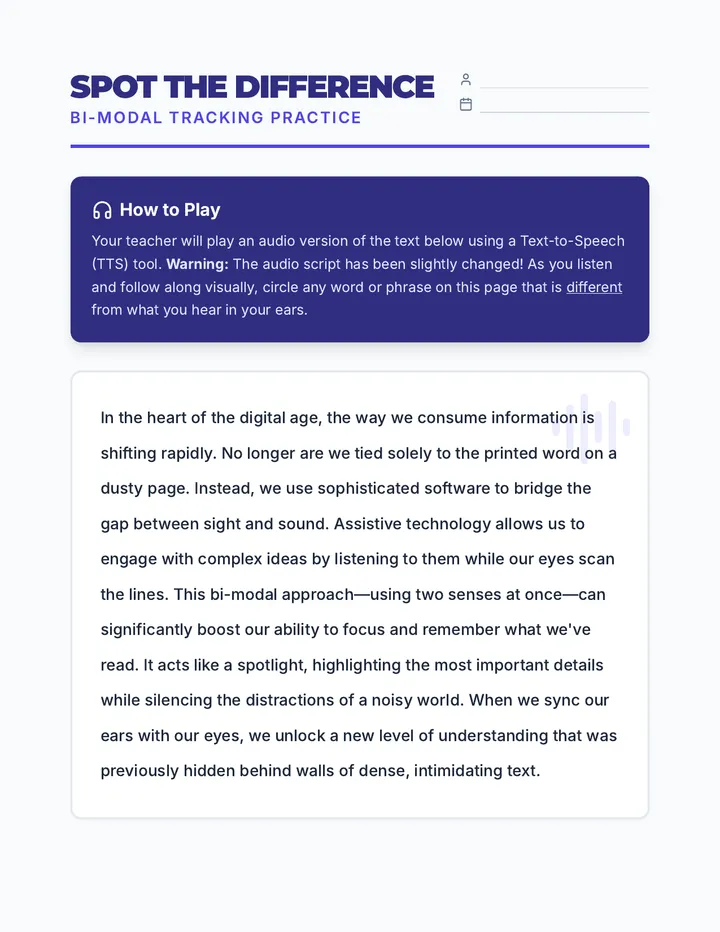
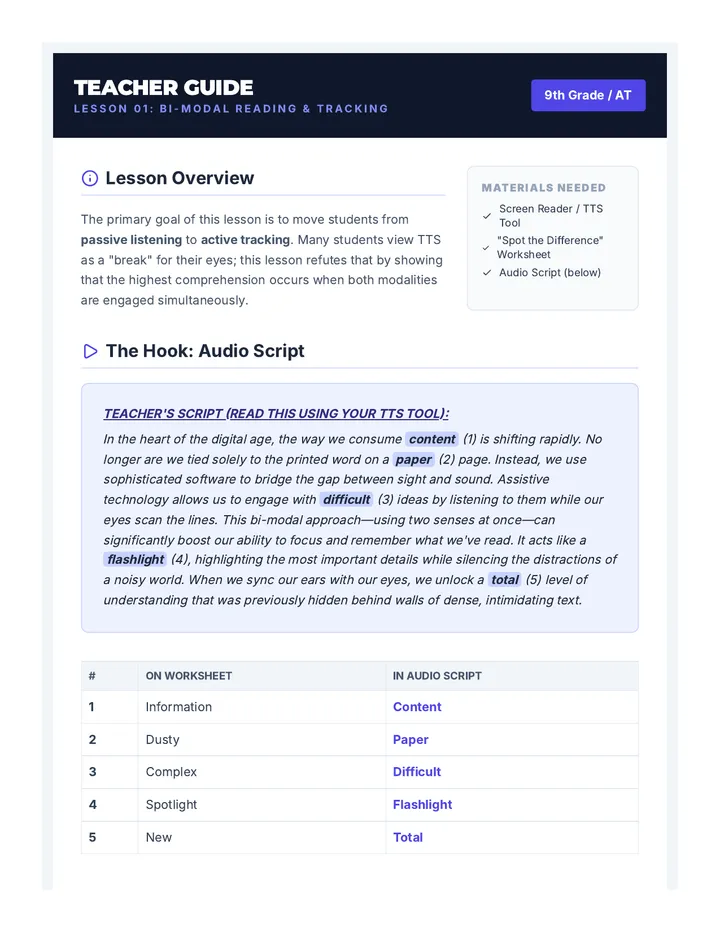
This sequence guides 9th-grade students through the cognitive strategies of using Text-to-Speech (TTS) for deep comprehension. It moves from basic bi-modal tracking to advanced digital annotation and genre-specific strategy adaptation, culminating in a rigorous auditory comprehension assessment.
A 2nd-grade Tier 2 reading comprehension lesson where students become 'reading detectives' to find key details in 'The Sleepy Bear Story'. Includes guided reading, discussion, and a comprehension worksheet.
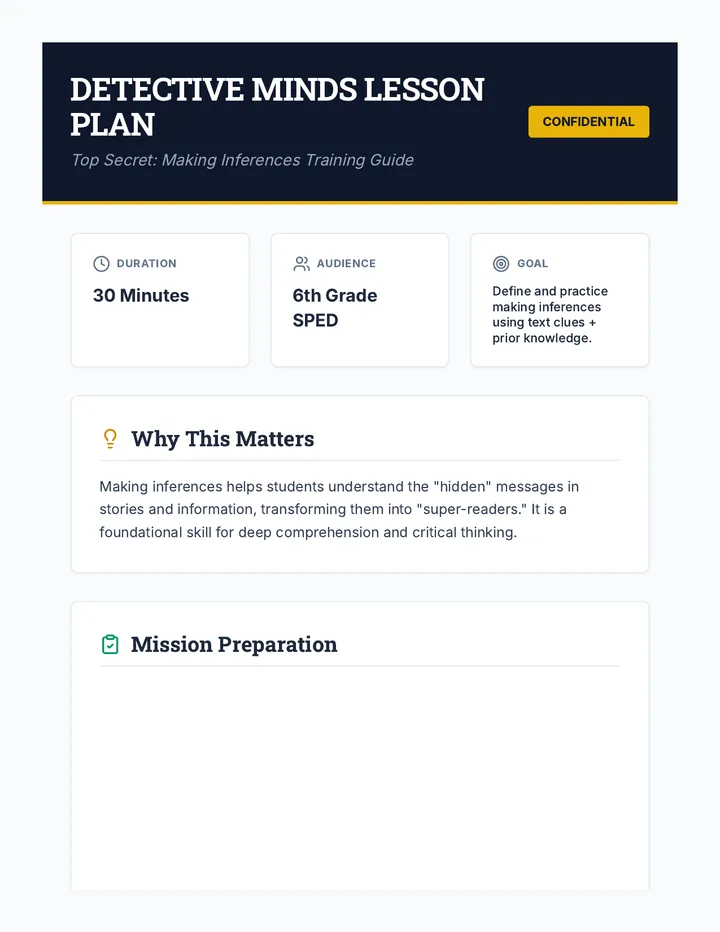
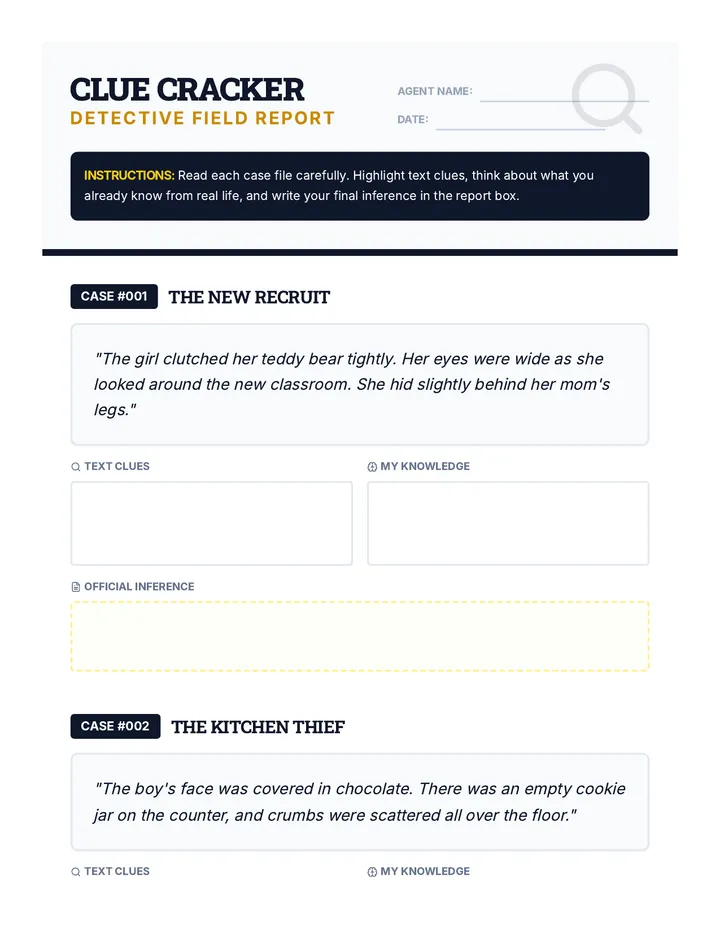
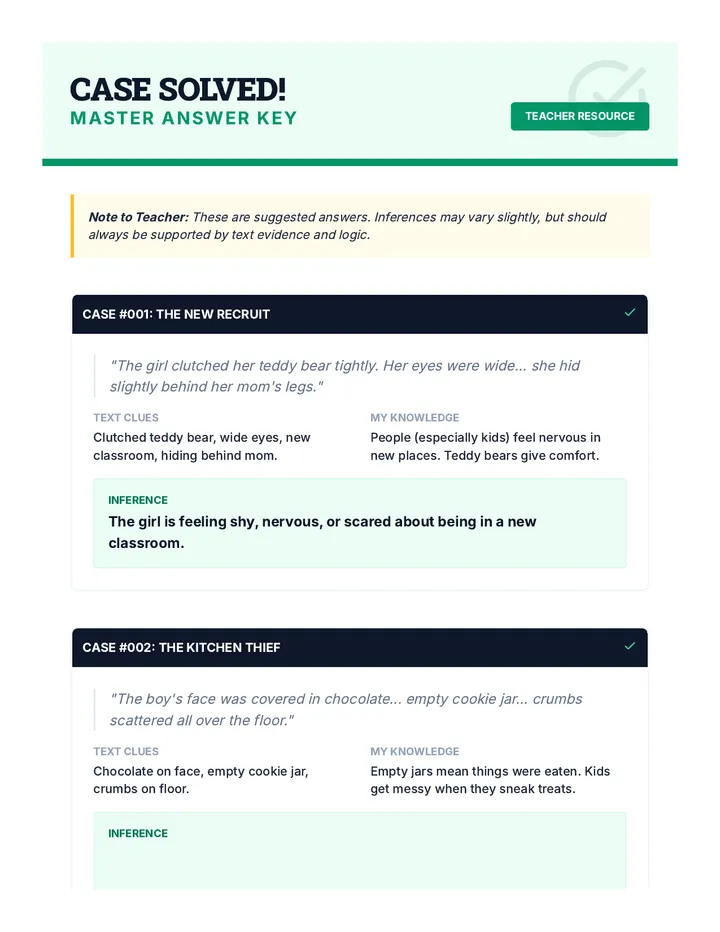
A foundational lesson for 6th-grade special education students on making inferences. Using a detective theme, students learn to combine text clues with background knowledge to uncover implied meanings in short passages.
A intensive Tier 3 lesson designed for individual students to master identifying the main idea and supporting details using visual strategies and explicit instruction.
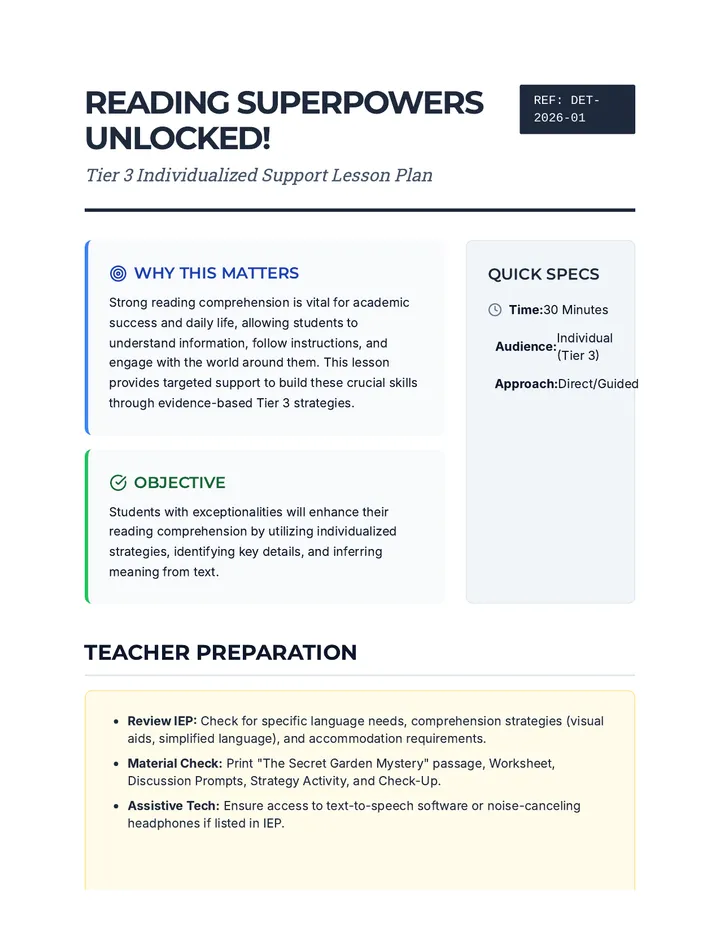
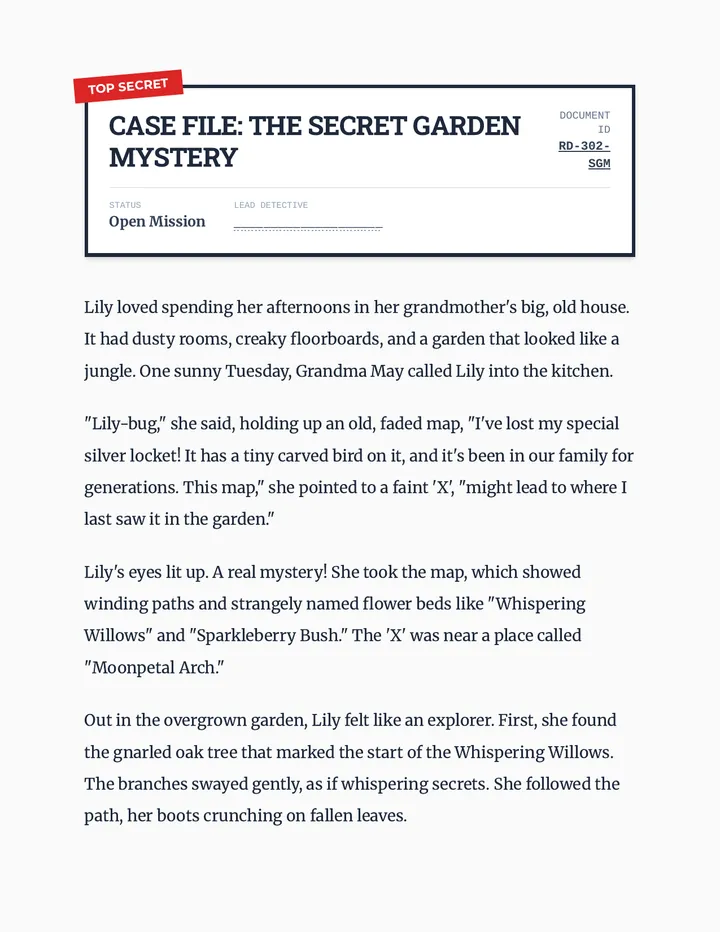
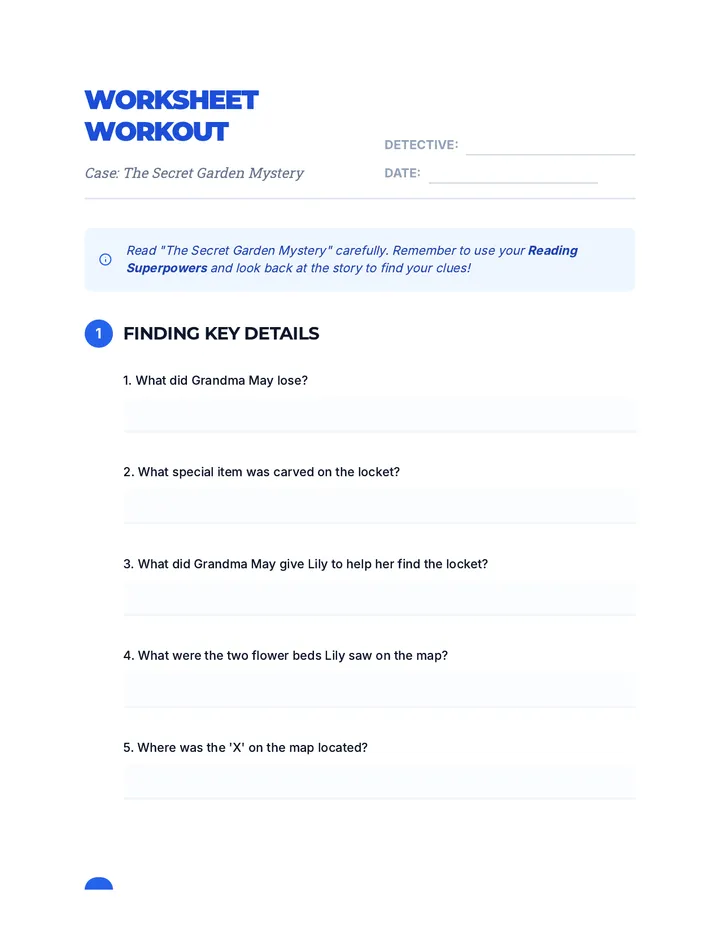
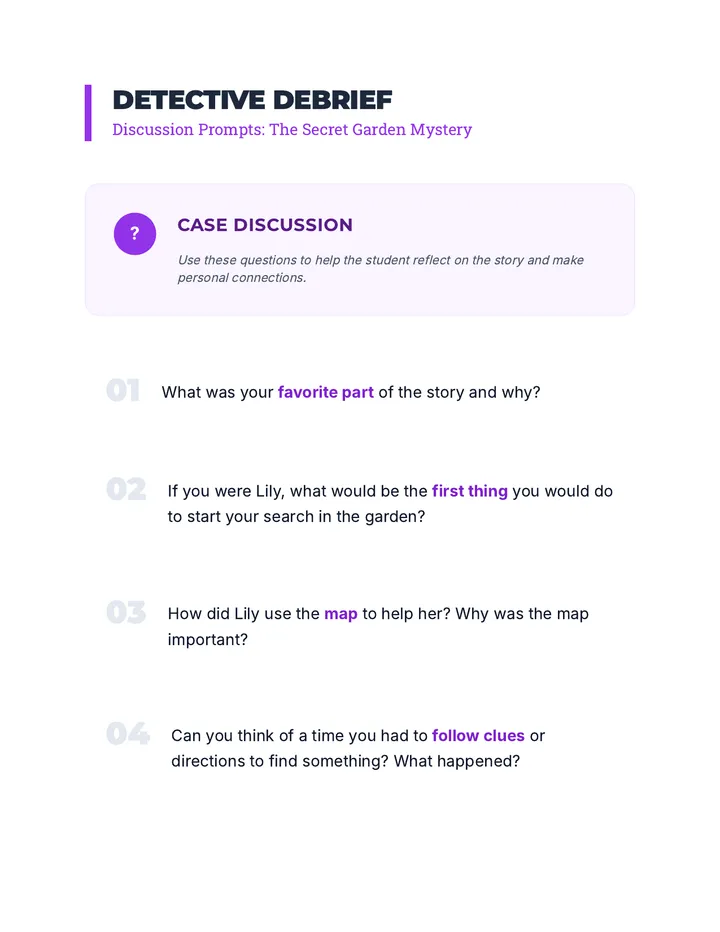
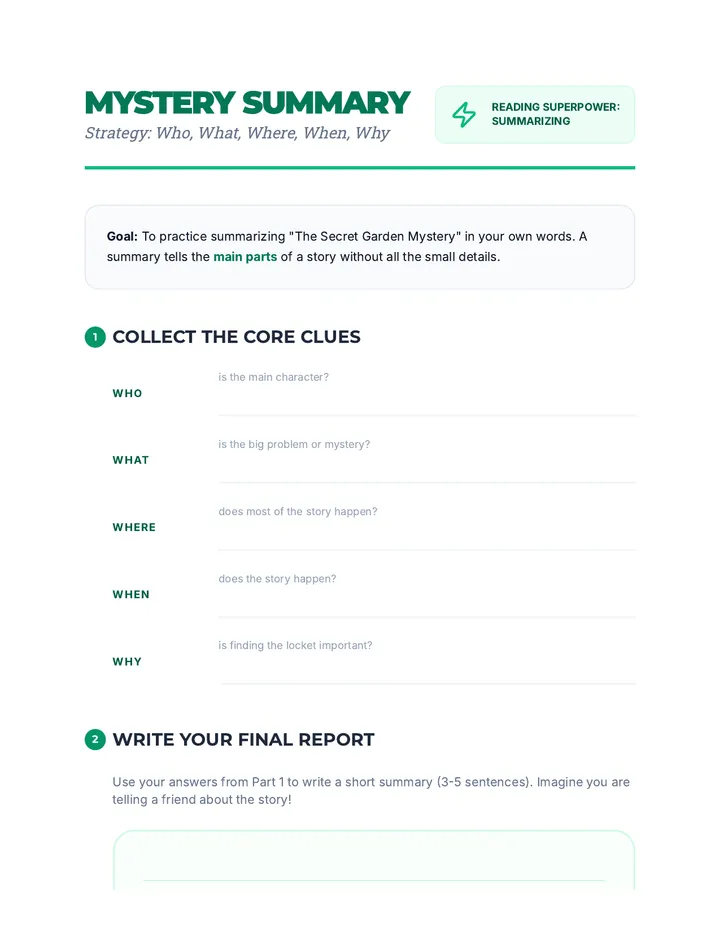
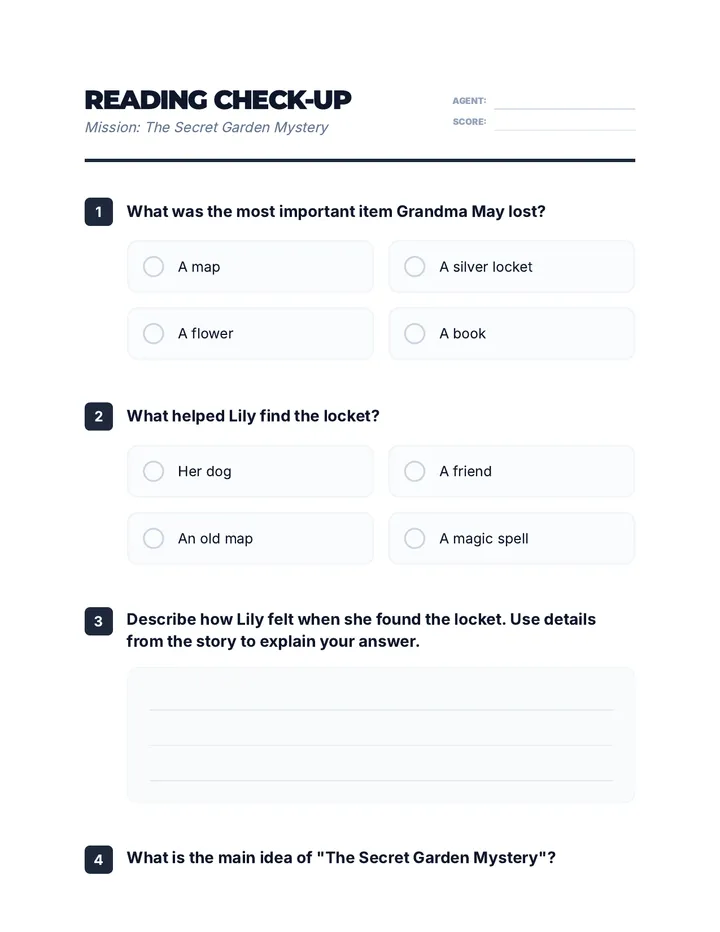
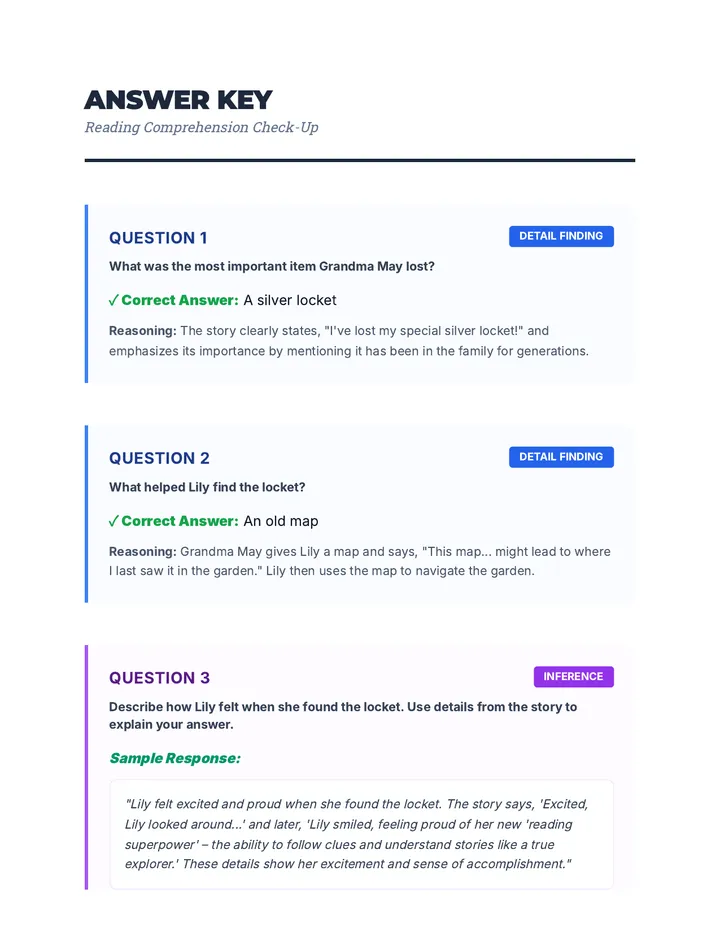
A 30-minute Tier 3 lesson designed for students with exceptionalities, focusing on reading comprehension through a "detective" lens. Students learn to use reading "superpowers" to decode mysteries and find key details.
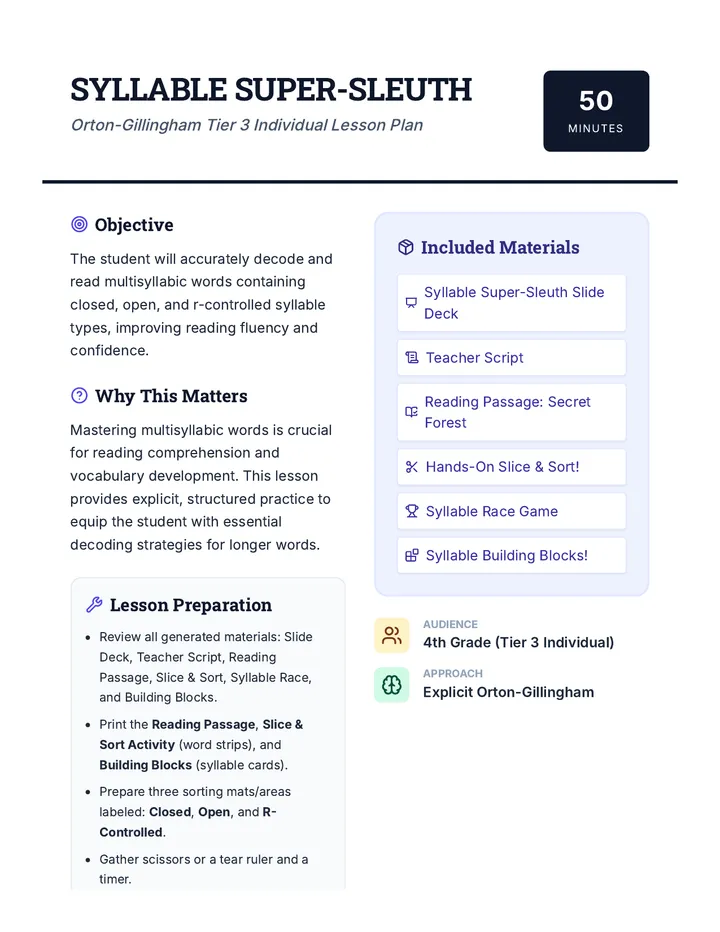
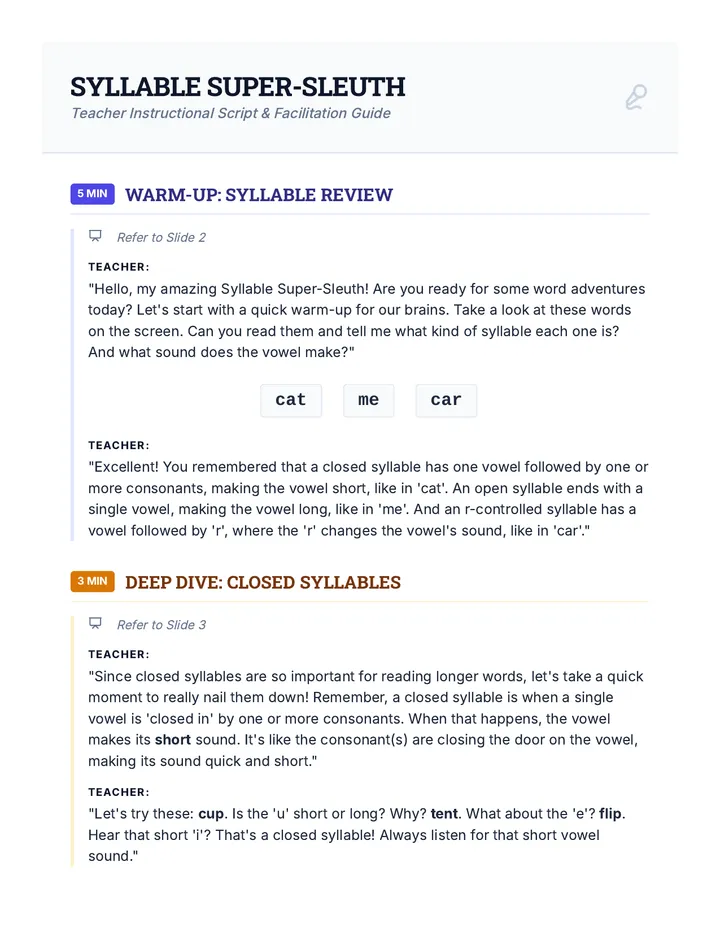
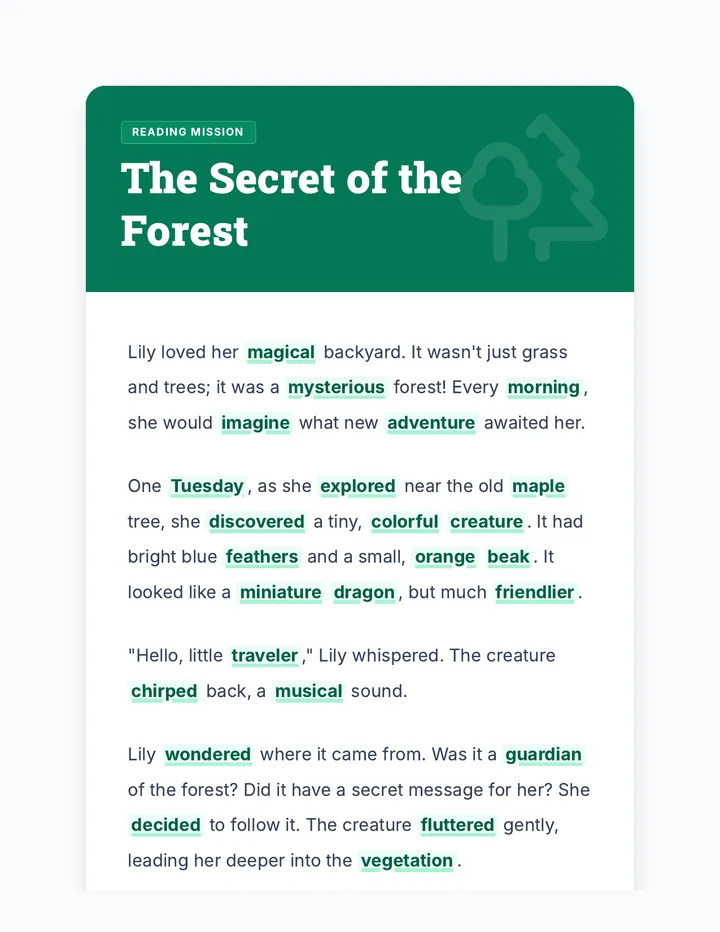
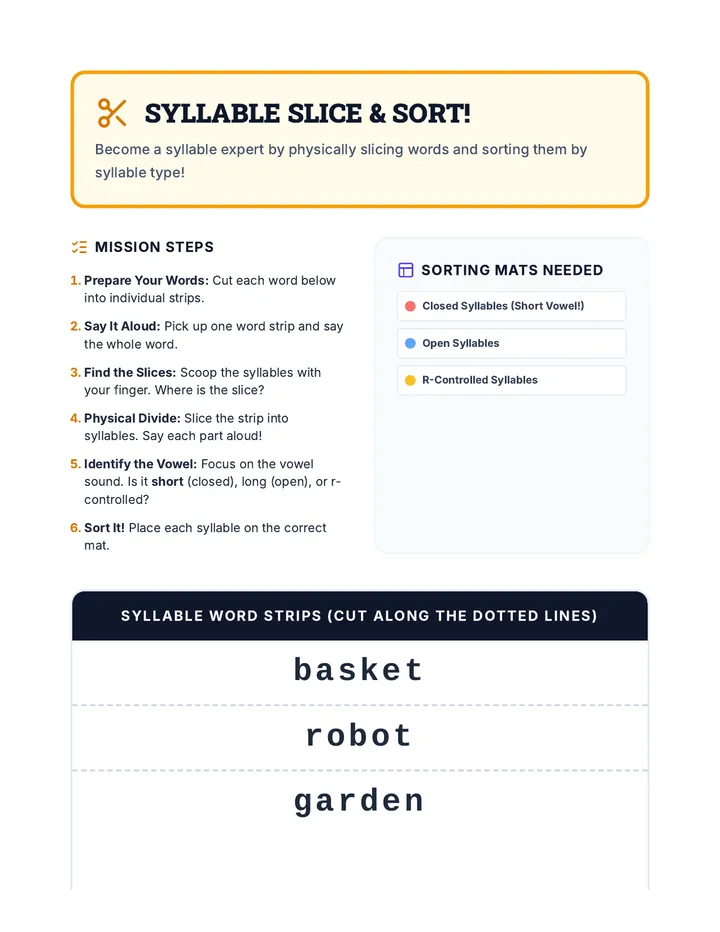
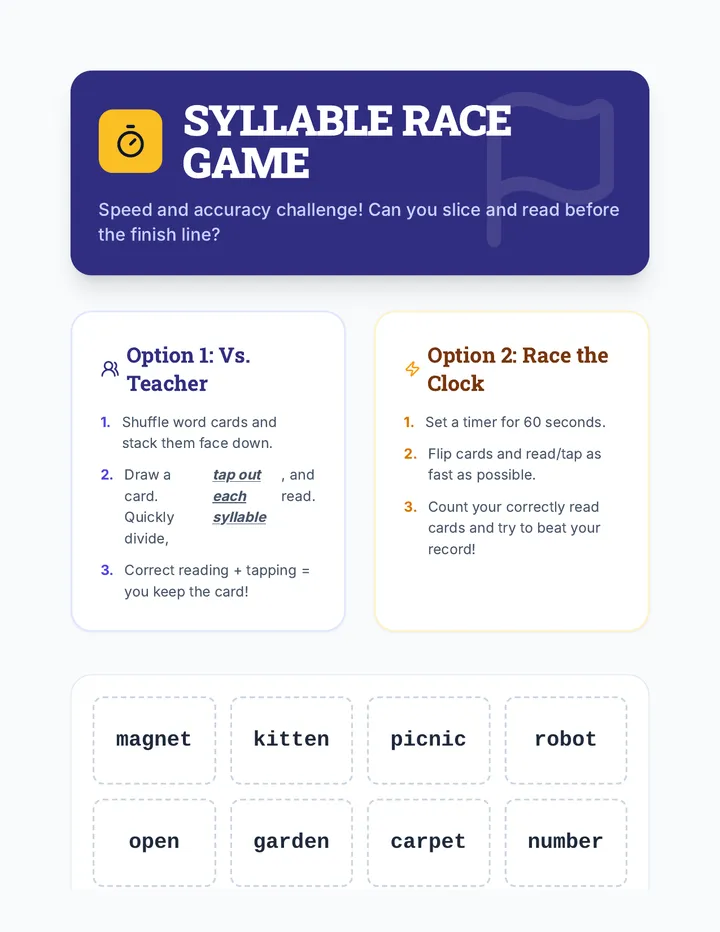
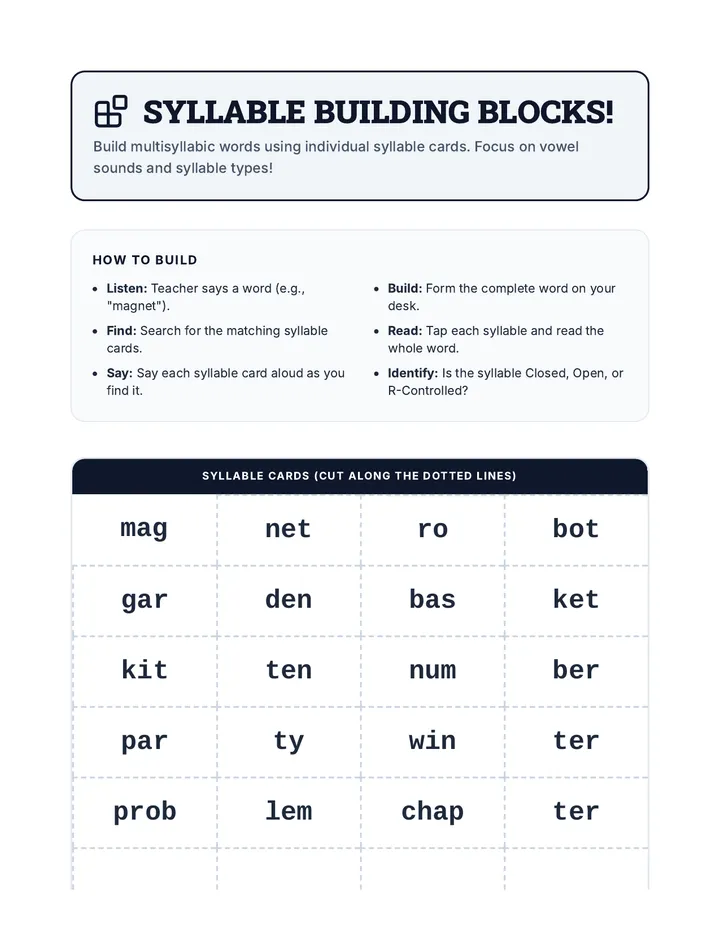
A 50-minute individualized Orton-Gillingham lesson for 4th-grade students with dyslexia, focusing on decoding multisyllabic words through syllable division rules for closed, open, and r-controlled syllables.
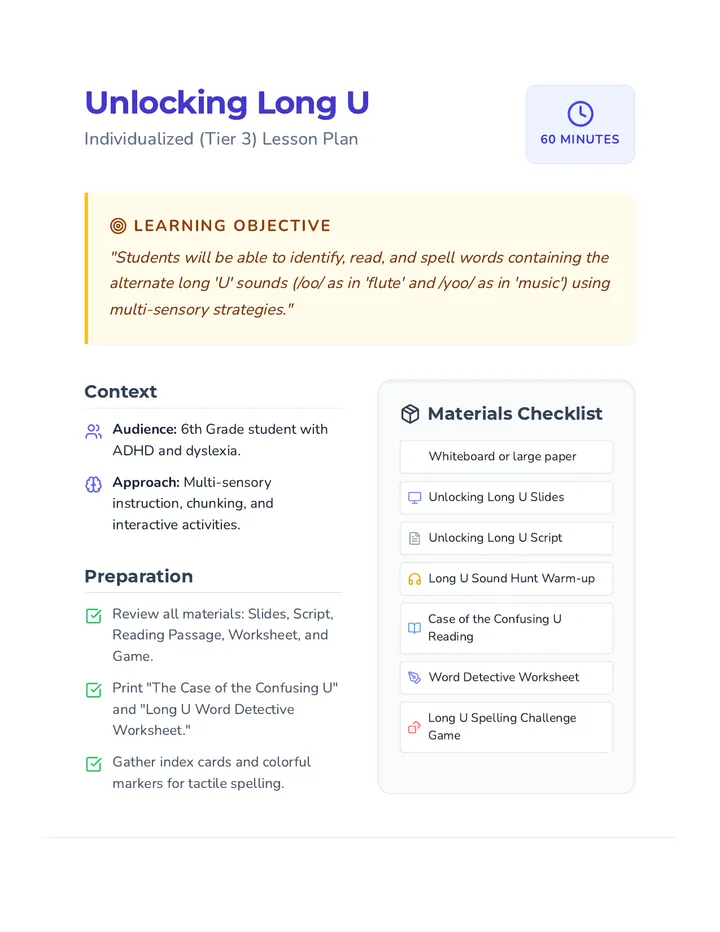
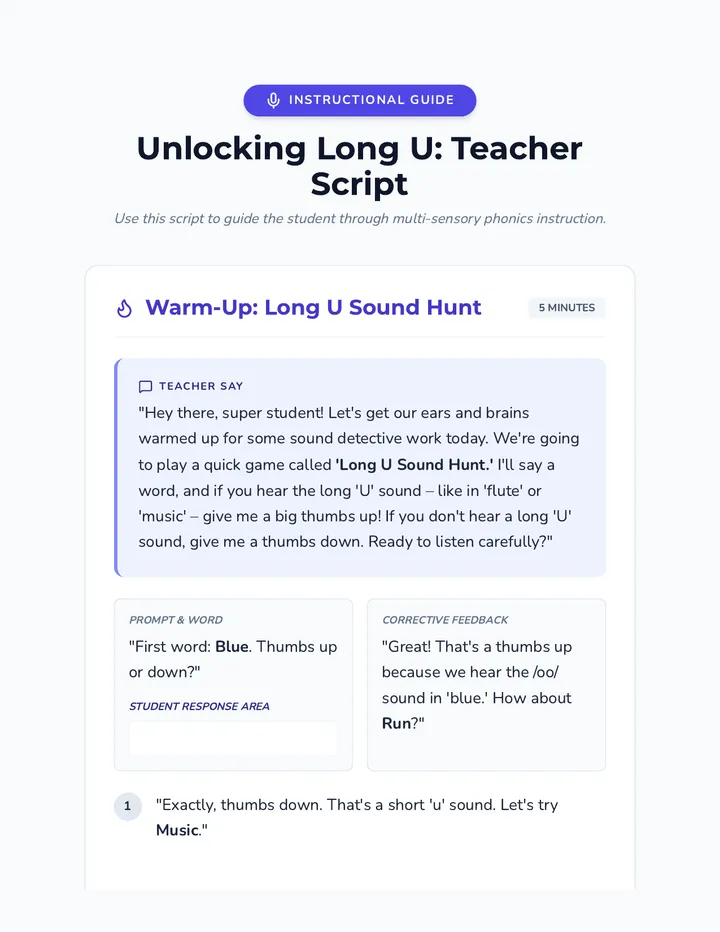
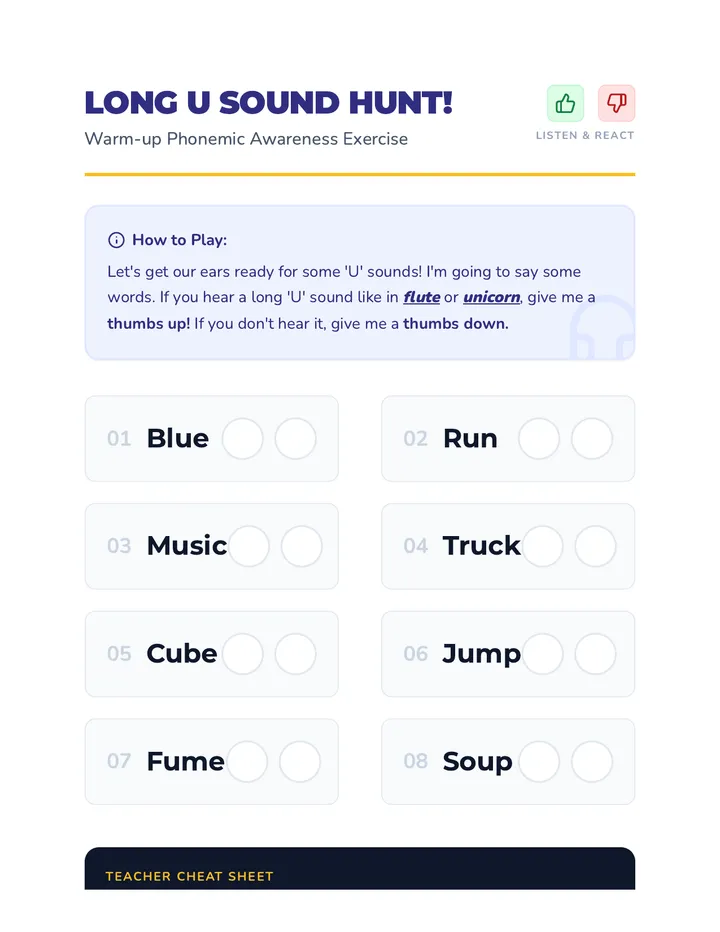
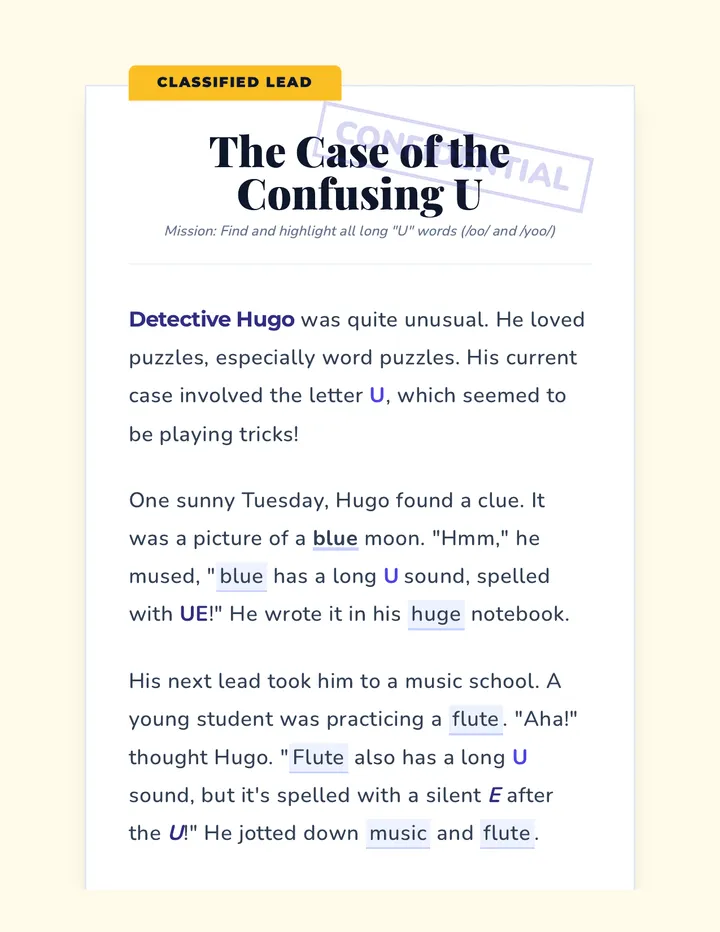
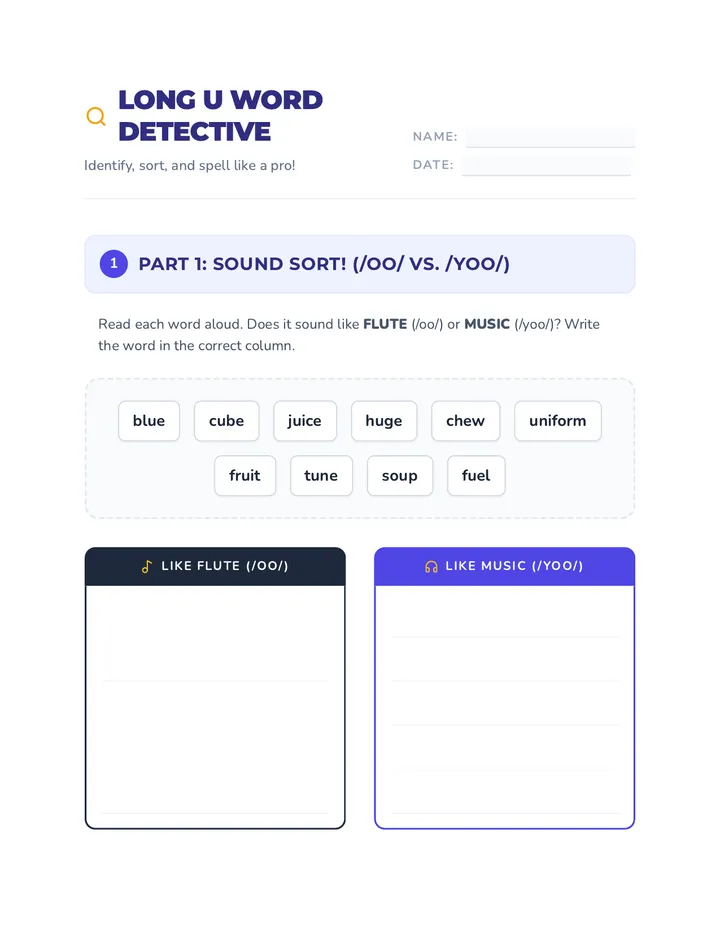
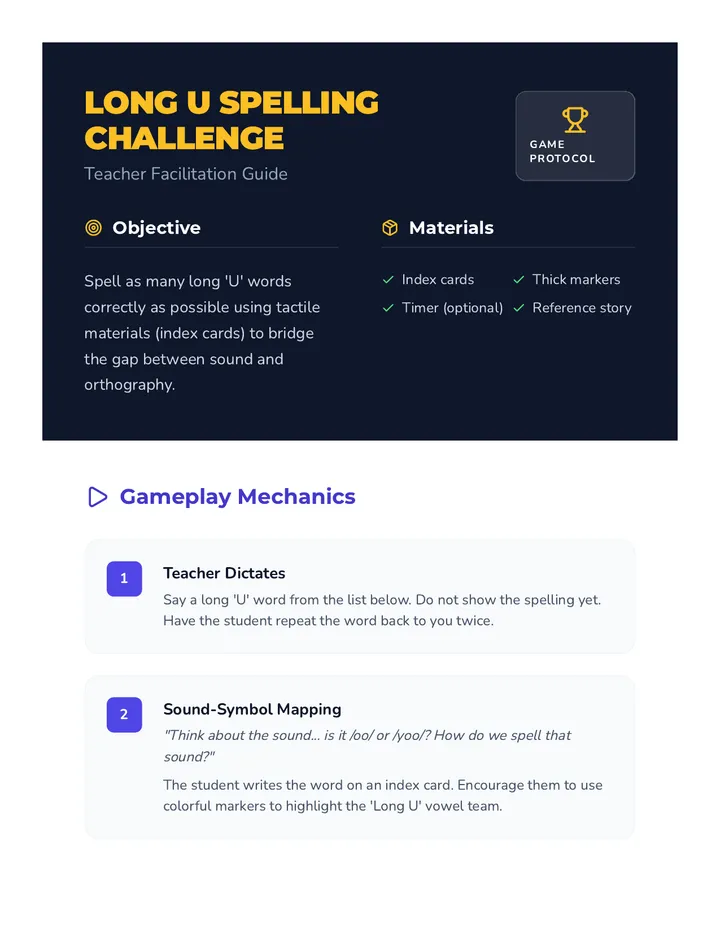
This 60-minute individualized lesson focuses on mastering the alternate long 'U' sounds (/oo/ and /yoo/) for a 6th-grade student with ADHD and dyslexia. It uses a detective theme and multi-sensory strategies to support engagement and phonemic awareness.
A high-energy Tier 2 intervention lesson for 7th graders to master tricky high-frequency words through reading passages, games, and writing challenges.
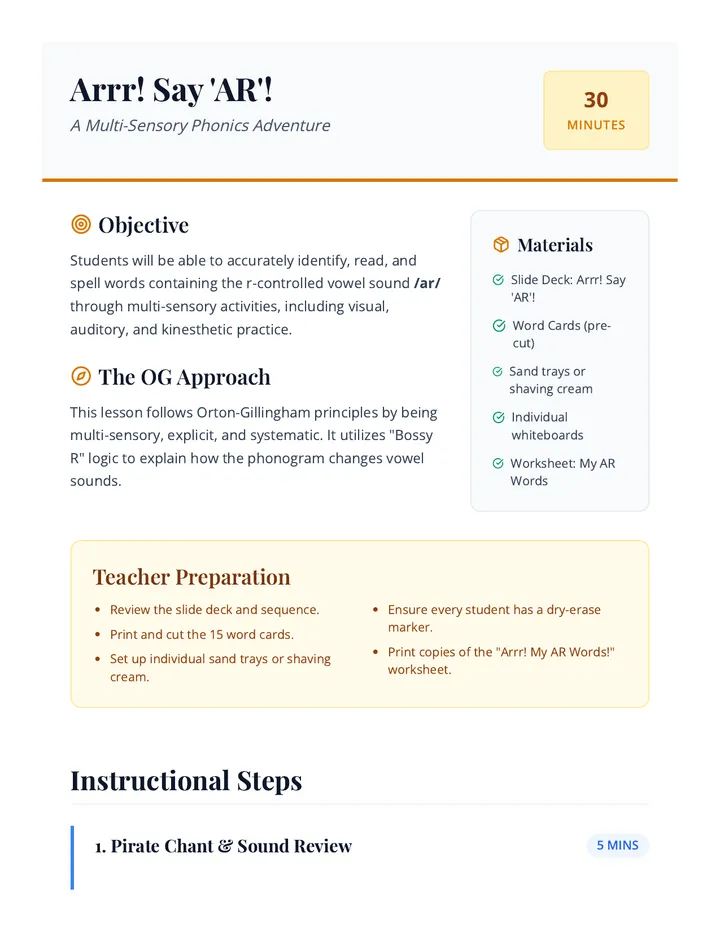
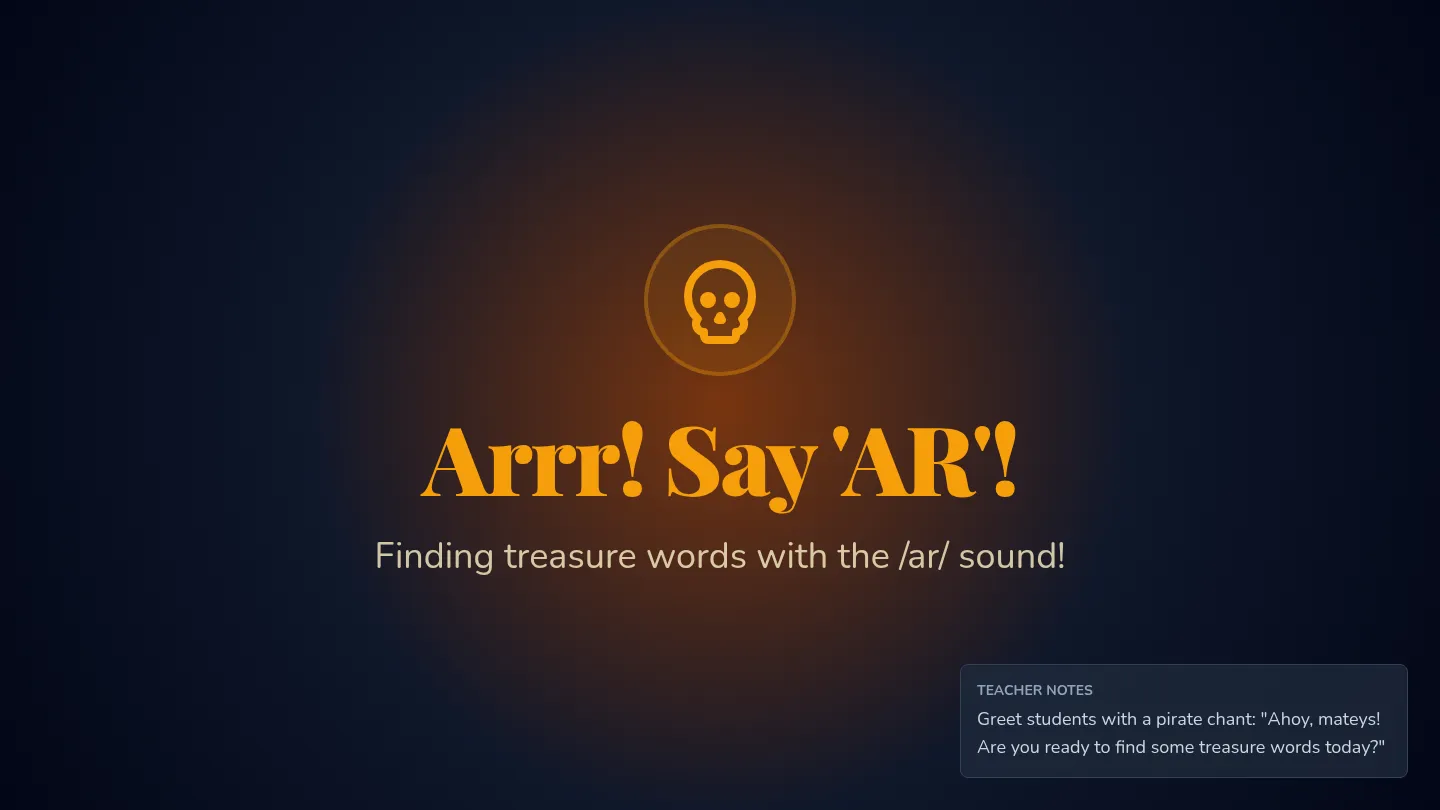
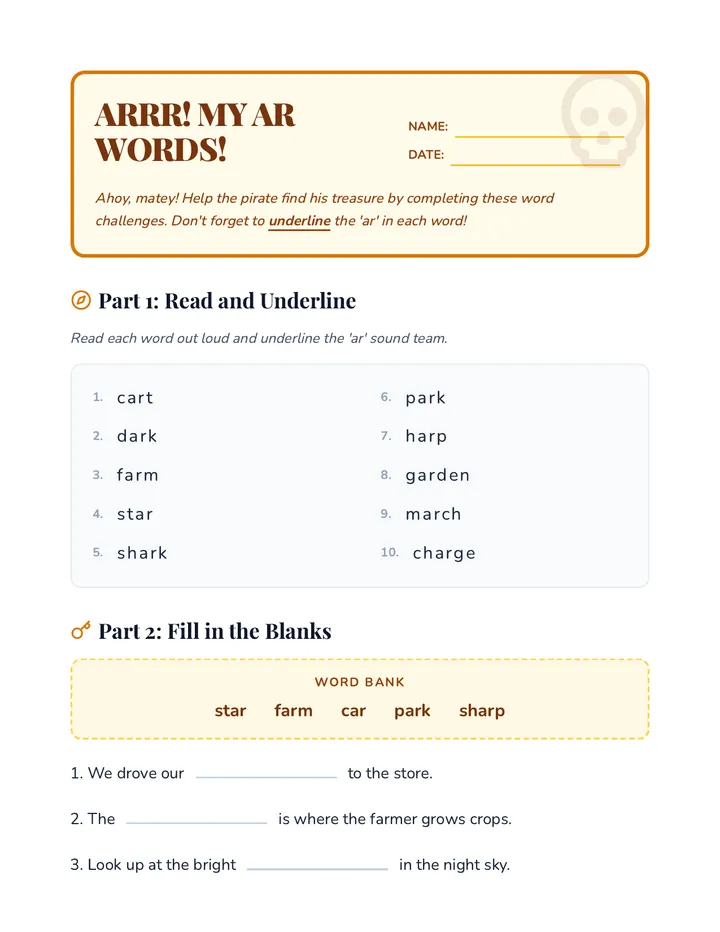
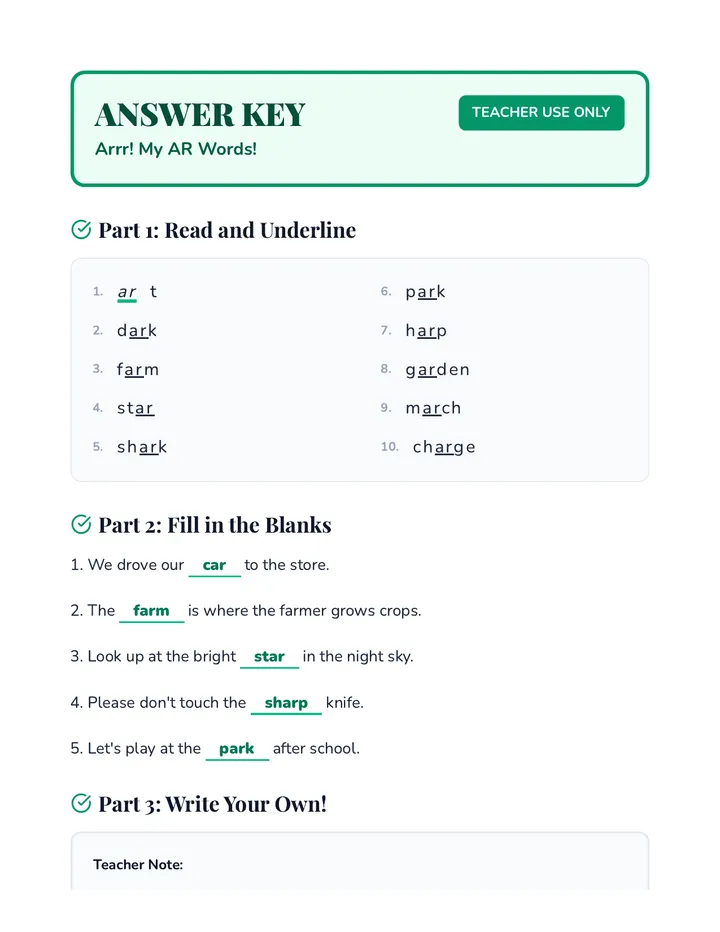
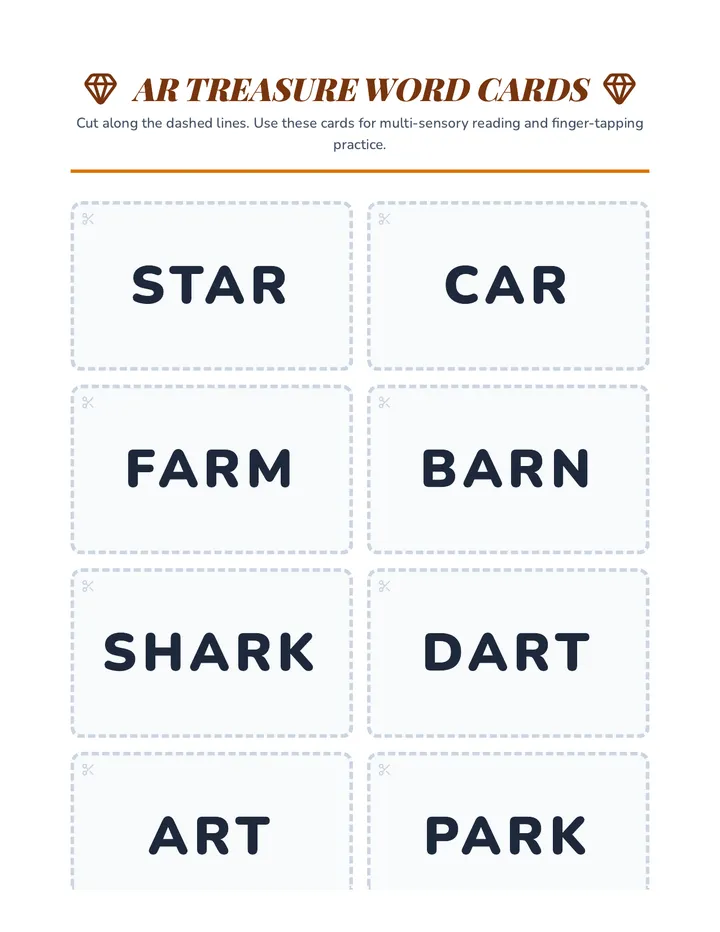
A multi-sensory Orton-Gillingham phonics lesson for third-grade students with dyslexia to master the /ar/ sound using a pirate-themed treasure hunt approach.
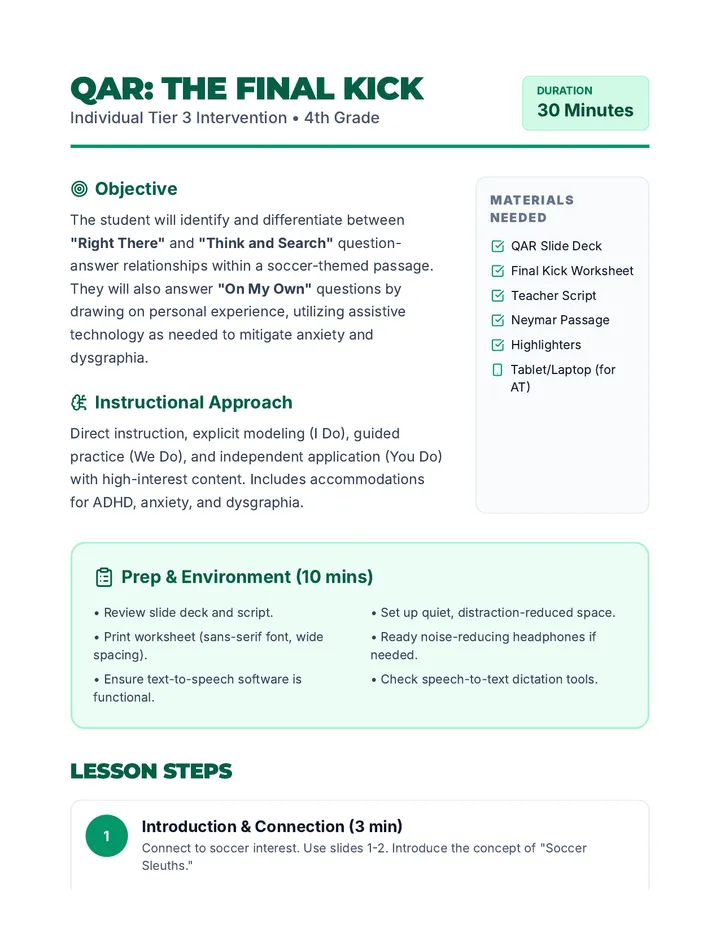
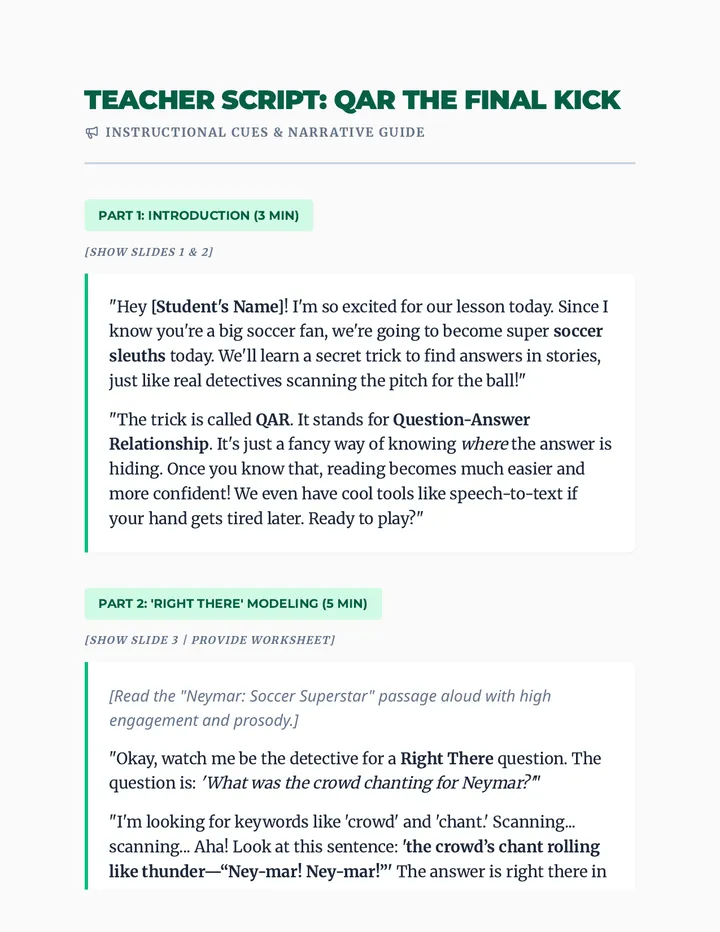
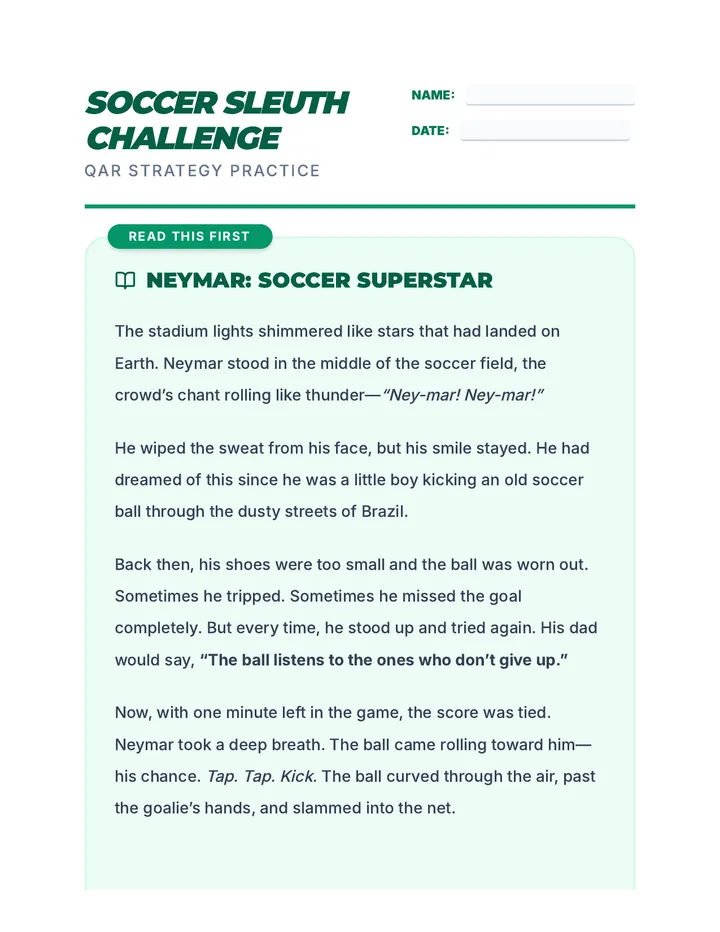
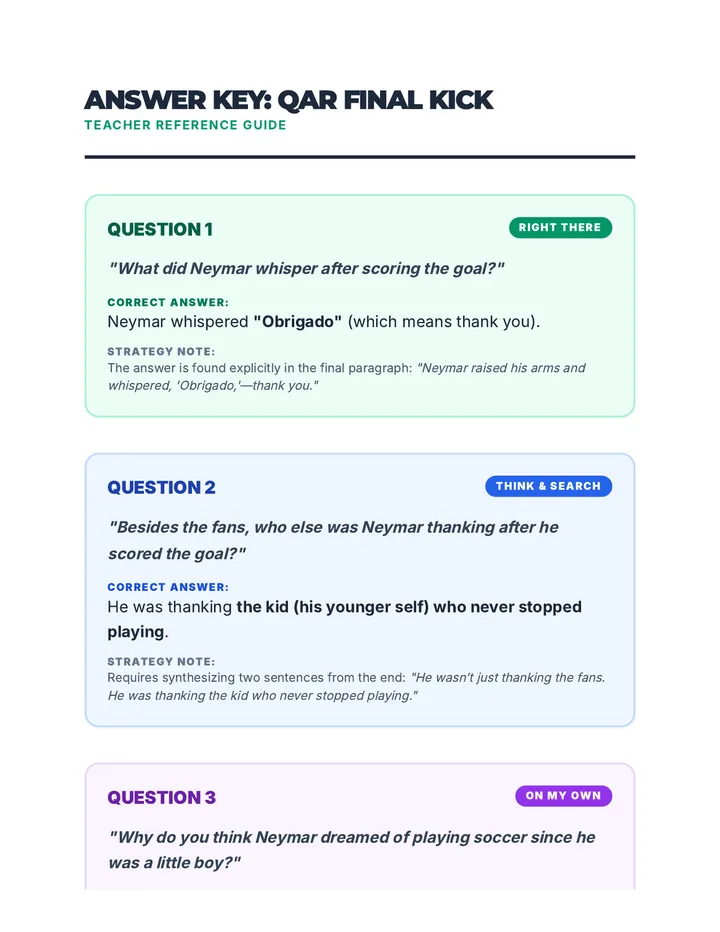
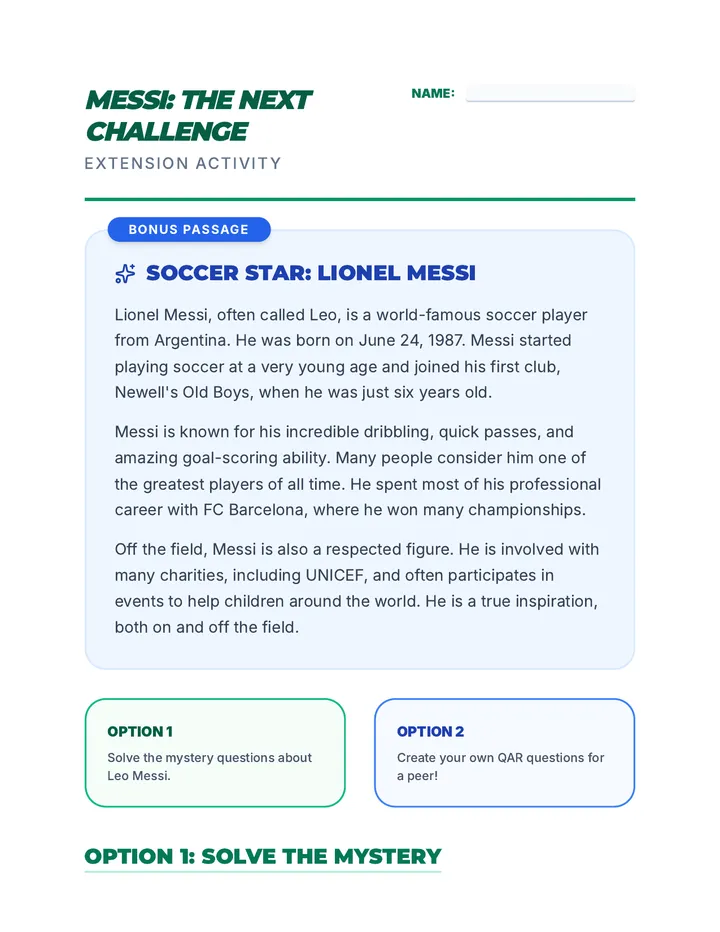
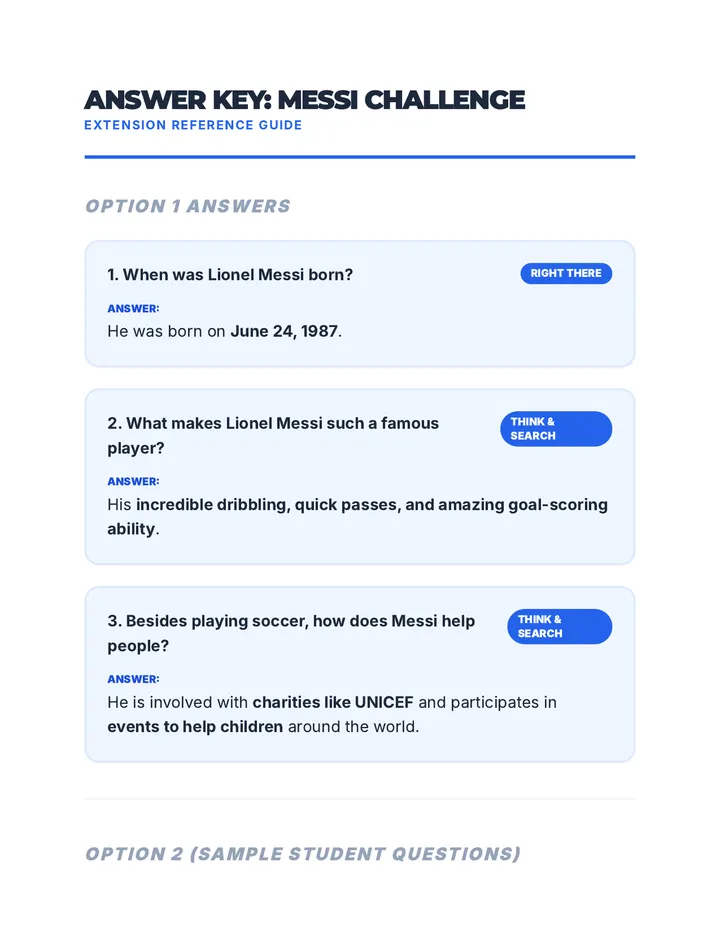
This Tier 3 individual lesson introduces a 4th-grade student with ADHD, anxiety, and dysgraphia to the Question-Answer Relationship (QAR) strategy using high-interest soccer content. It focuses on 'Right There', 'Think and Search', and 'On My Own' question types through explicit modeling and scaffolded practice.
A Tier 2 small-group lesson for 8th-grade students with ADHD, focusing on unlocking their 'superpowers' through effective study, time management, and organization strategies.
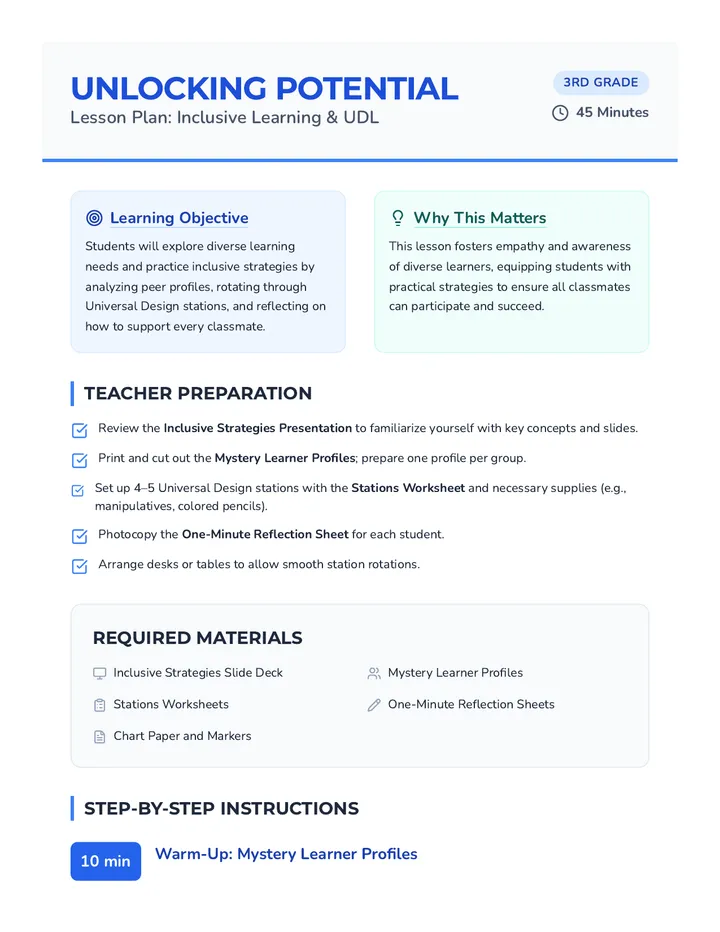
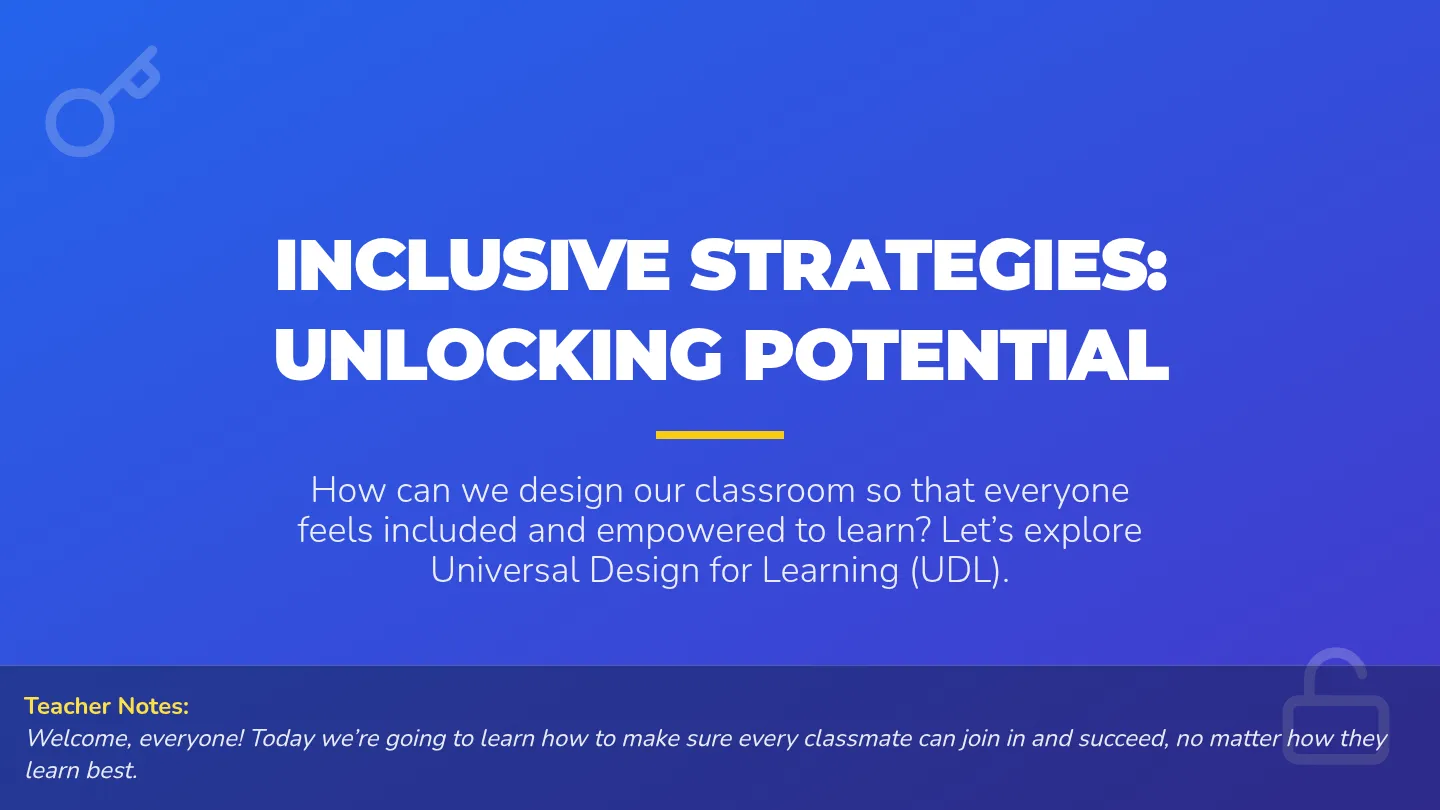
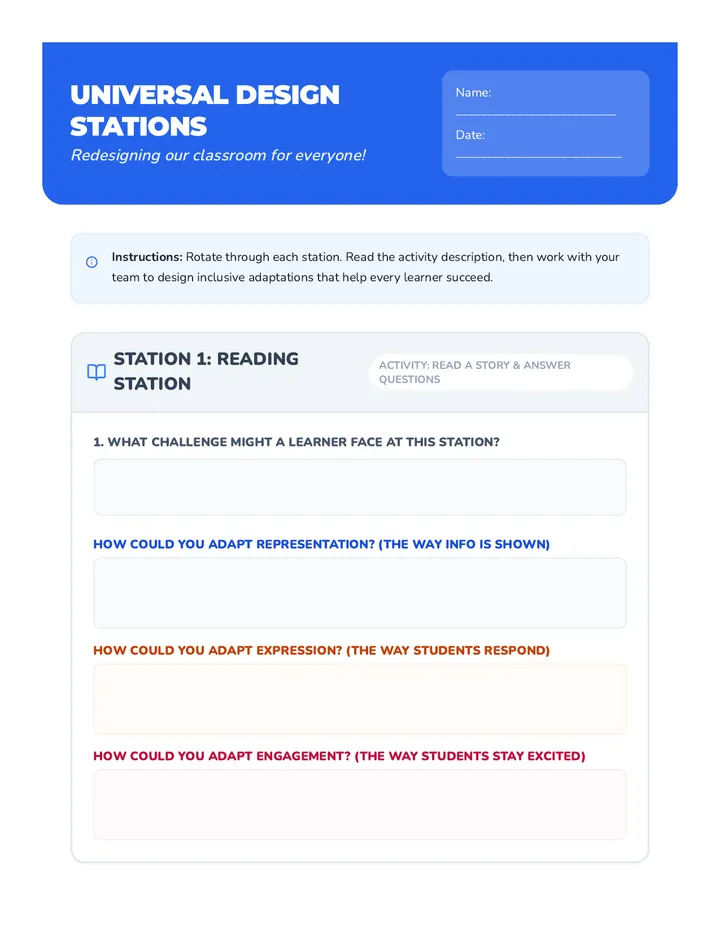
A 45-minute lesson for 3rd graders to build empathy and awareness of diverse learning needs through Universal Design for Learning (UDL) principles and hands-on station activities.
A targeted 50-minute individual lesson for 6th graders to strengthen working memory through visualization, chunking, and rehearsal strategies. This session includes interactive games, reading tasks, and structured reflection to build cognitive confidence.