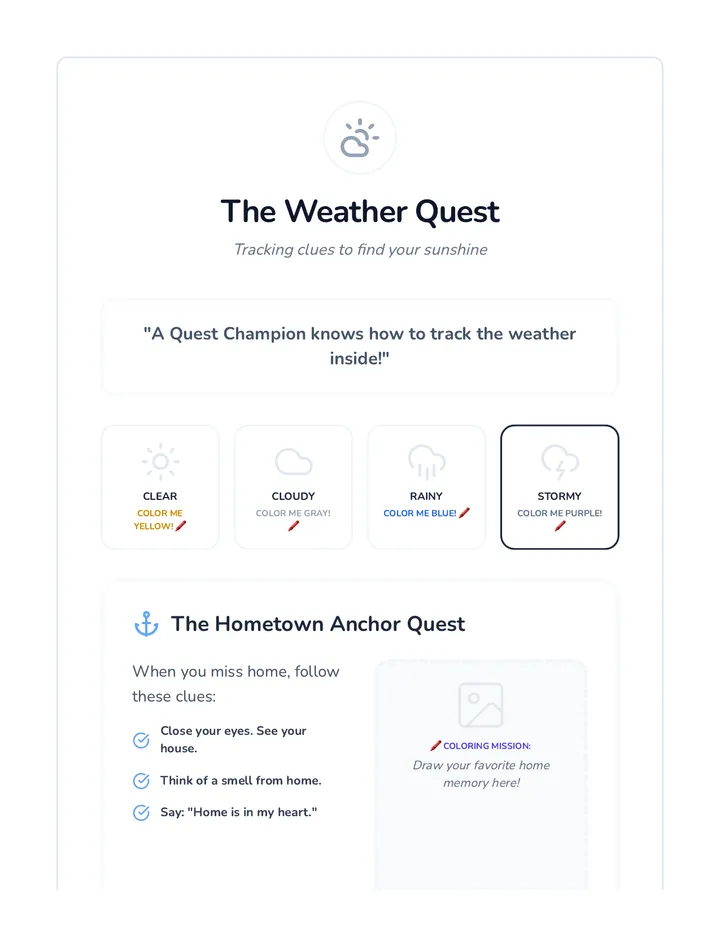
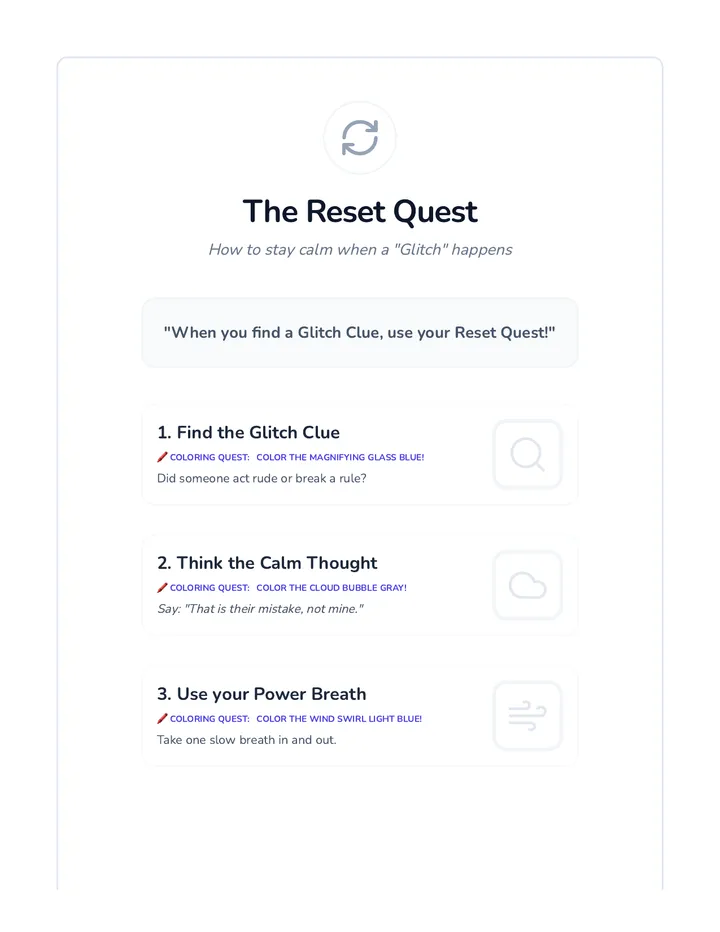
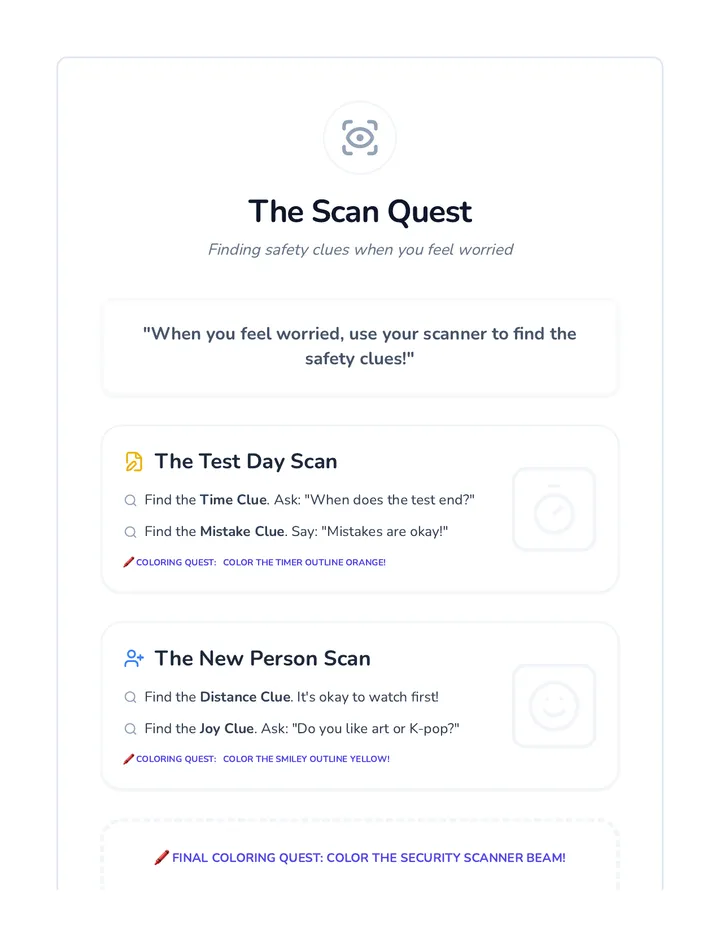
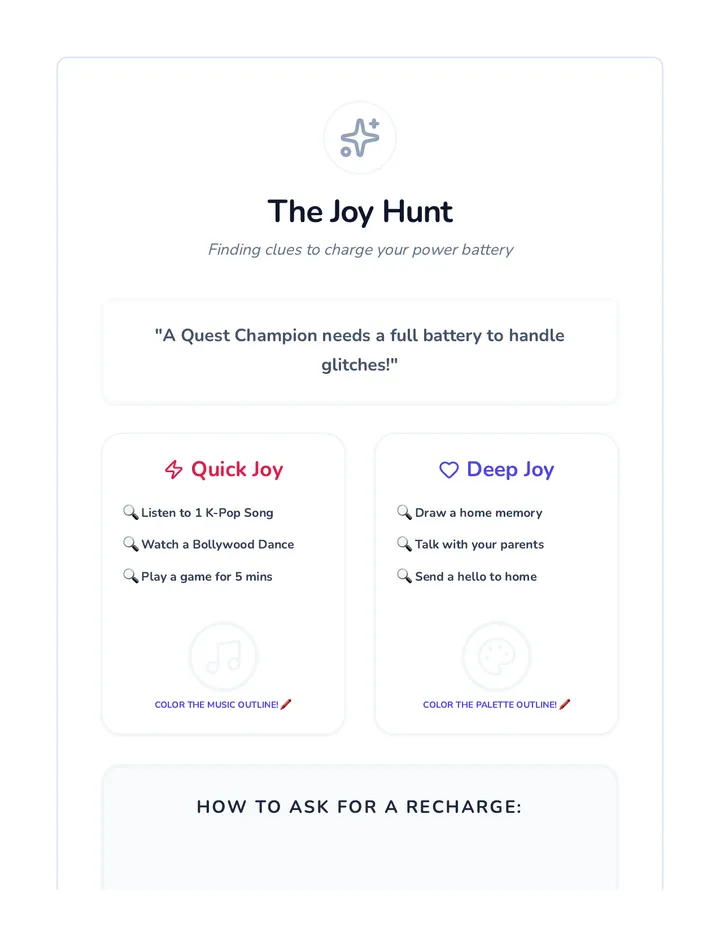
Construction of personalized narratives to explain social situations, cues, and behavioral expectations. Supports neurodivergent students in navigating transitions, routines, and interpersonal interactions.
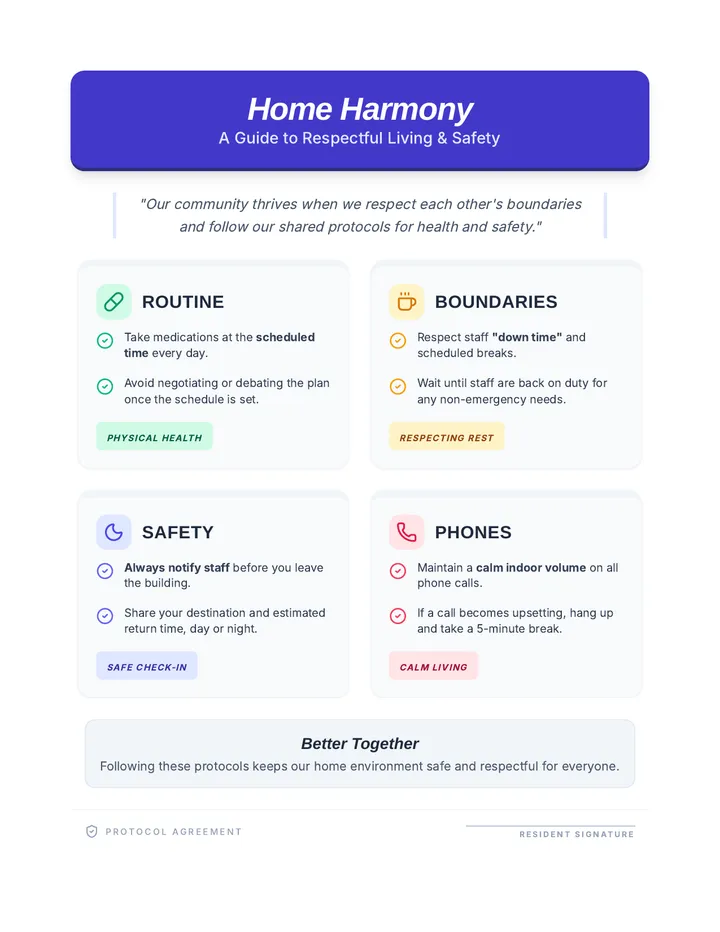
A single-page visual poster summarizing behavioral expectations for a client, strictly optimized to fit on exactly one side of a letter-sized sheet by using a fixed-height container and precise spacing.
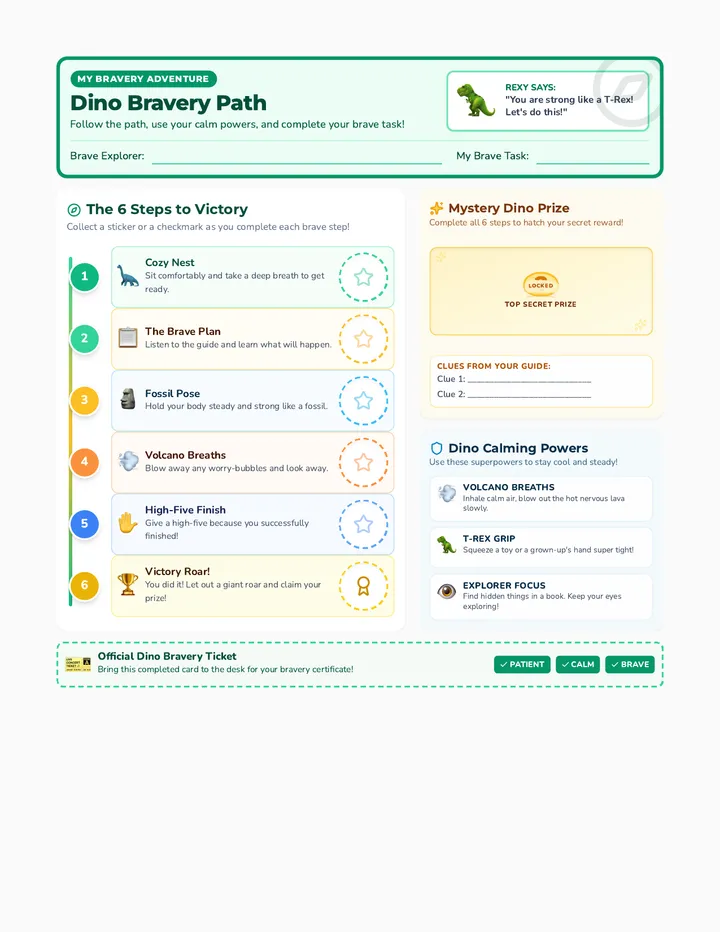
A progressive, dinosaur-themed bravery reward chart for children undergoing medical checkups, school tasks, or other scary activities. Features a step-by-step visual path mapping bravery stages, coping strategy cards, and a designated reward drawing space to make stressful experiences manageable.
A 5-page social story booklet designed for students with autism, now updated to remove all written output requirements. It uses visual selection grids and drawing spaces instead of writing lines.
A one-page visual social story guide teaching the step-by-step process of using the bathroom, focusing on privacy and handling button-up pants. It emphasizes that pants are only pulled down once inside the private bathroom space.
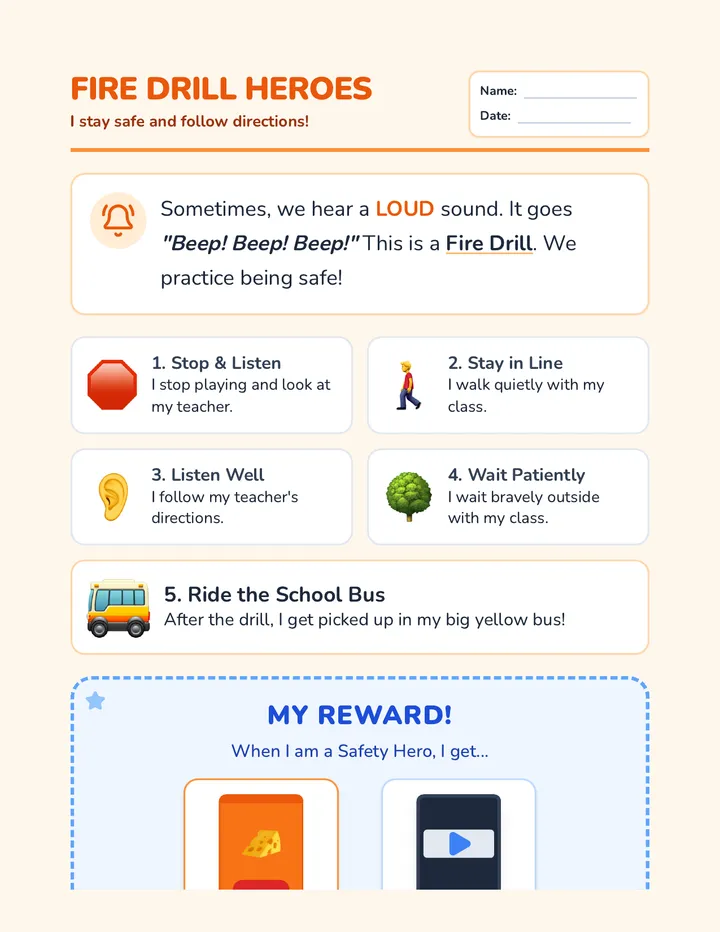
An updated version of the fire drill social story with a new step for the school bus pickup, including the Cheetos and iPad rewards.
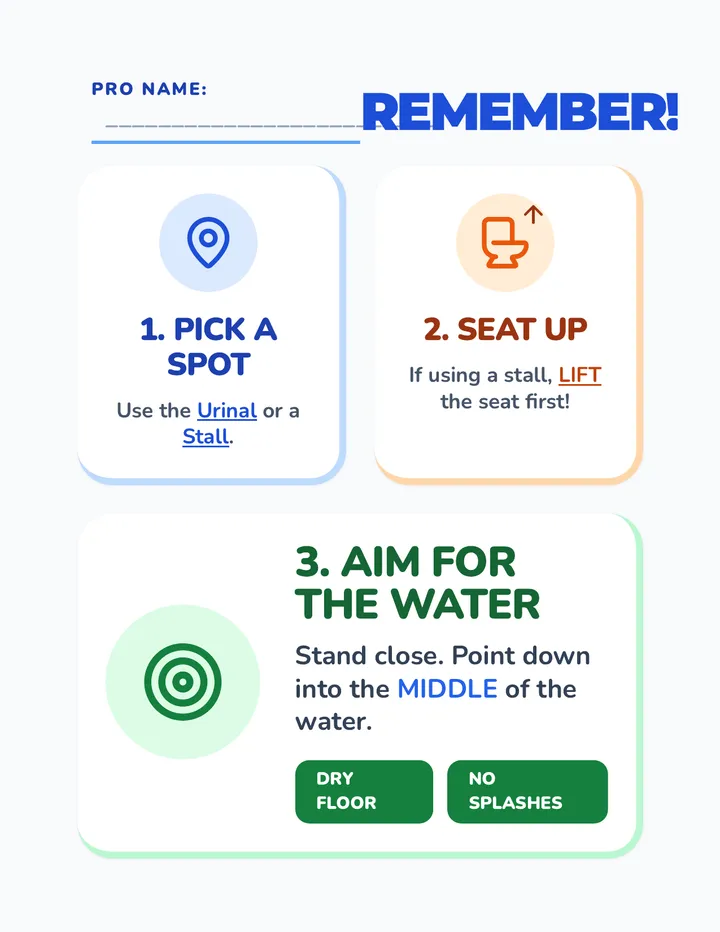
A visual bathroom reminder sheet for boys with large headers, high-contrast text, and a decorative checklist for reinforcing positive bathroom habits.
A visual flipbook designed to help students transition from the school bus to their classroom. It features clear, numbered steps for getting off the bus, finding the room, hanging up gear, and starting morning work.
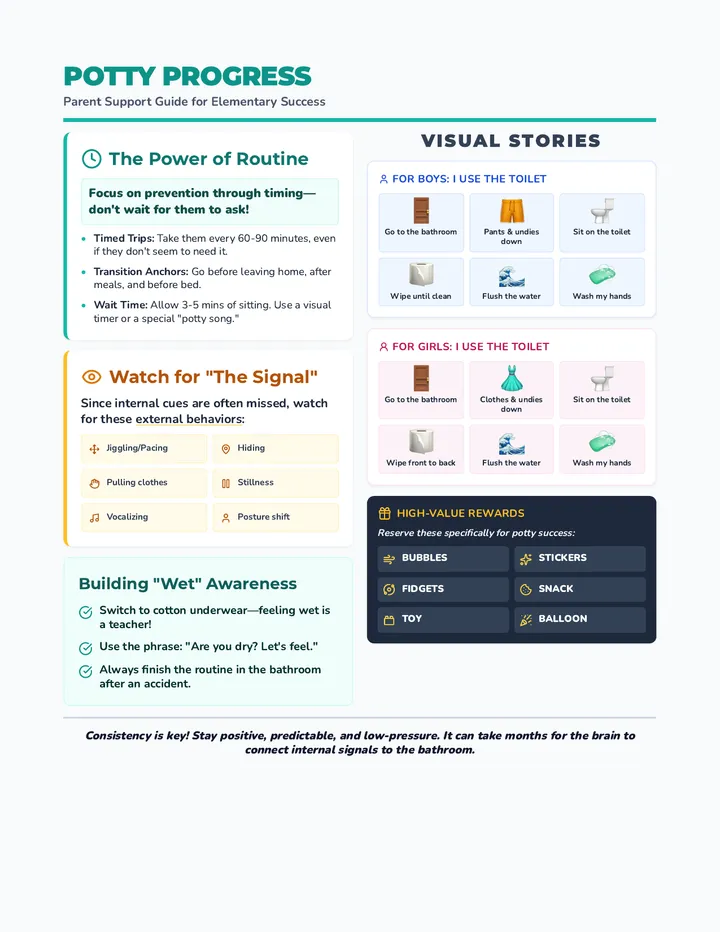
A refined one-page parent guide for toilet training autistic students. Now featuring the original emoji visual stories and initial instructional wording, alongside larger, bolder instructional sentences for parents.
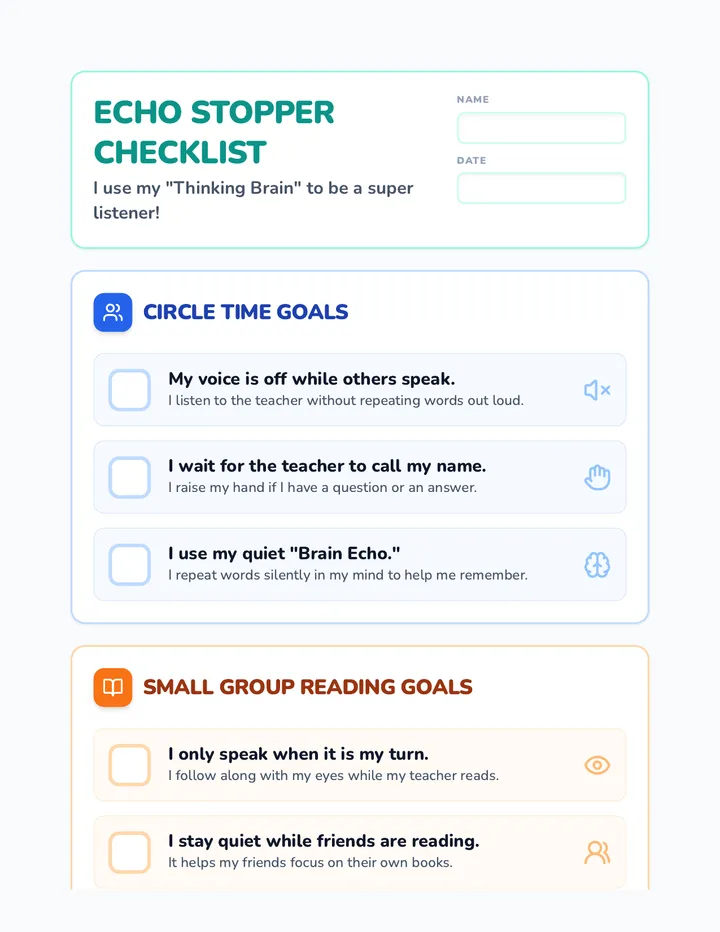
A single-page visual checklist social story for students who struggle with repeating the teacher's words. It includes specific goals for circle time and reading with clear visual icons, large check-off boxes, and a daily reflection section.
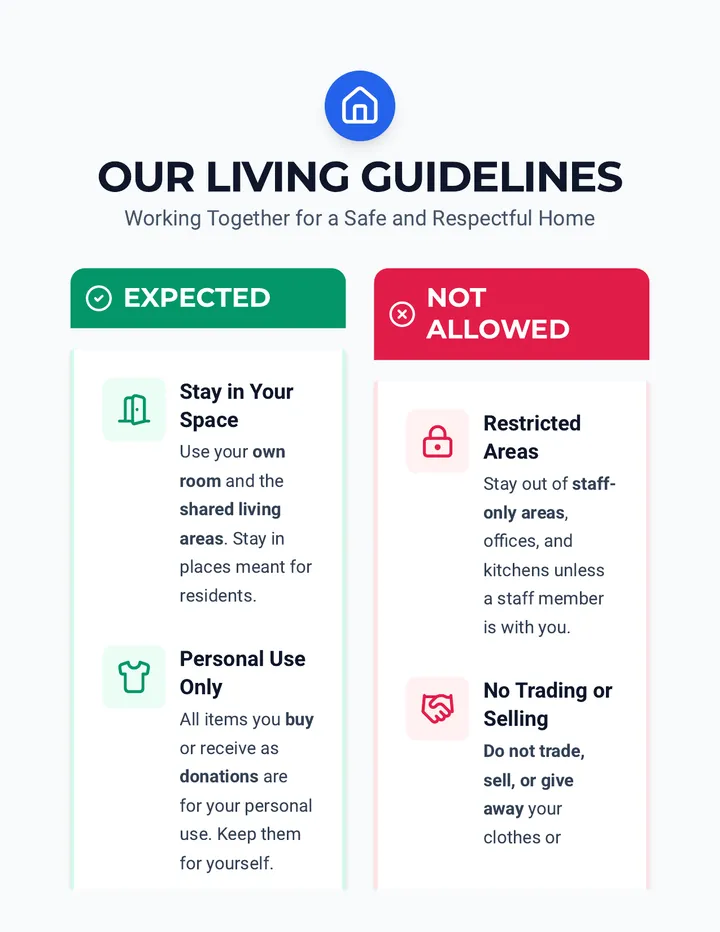
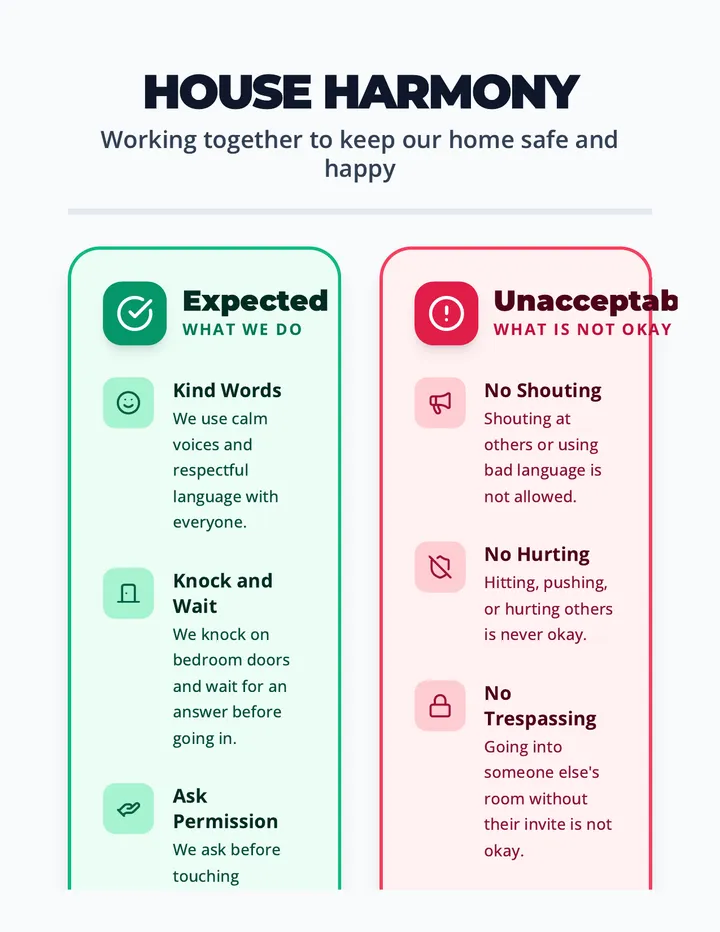
A clear, visually-structured poster for a supported living environment, outlining expected and unacceptable behaviors regarding personal boundaries and belongings. It uses high-contrast colors and icons to aid comprehension for adults with Acquired Brain Injury (ABI).
A clear, visual poster designed for adult supported living environments (ABI focus). It uses color-coded sections (Emerald for expected, Rose for unacceptable) with simple icons and direct language to promote respect, privacy, and safety.
A high-contrast visual poster following the classic PECS-style layout. Includes checkboxes, bold black-bordered icons, and clear text for five essential play dough safety and social rules.
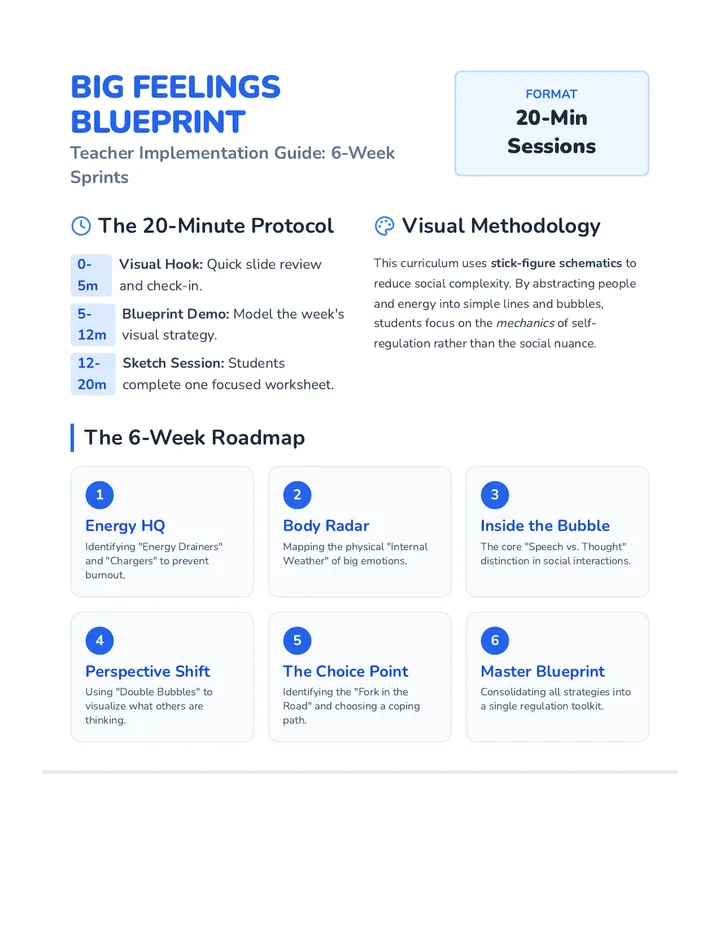
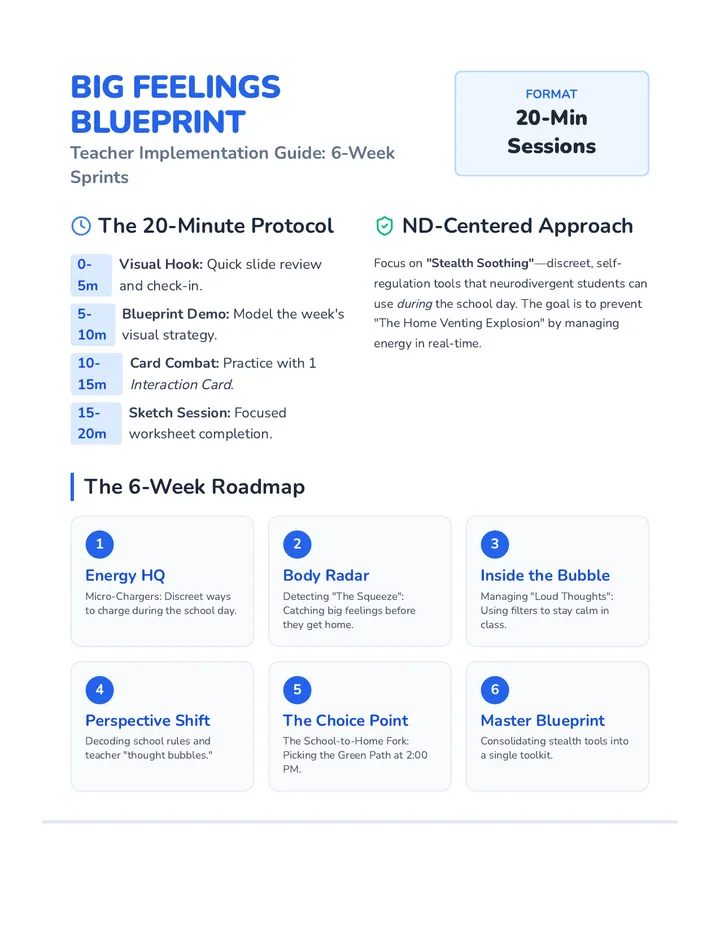
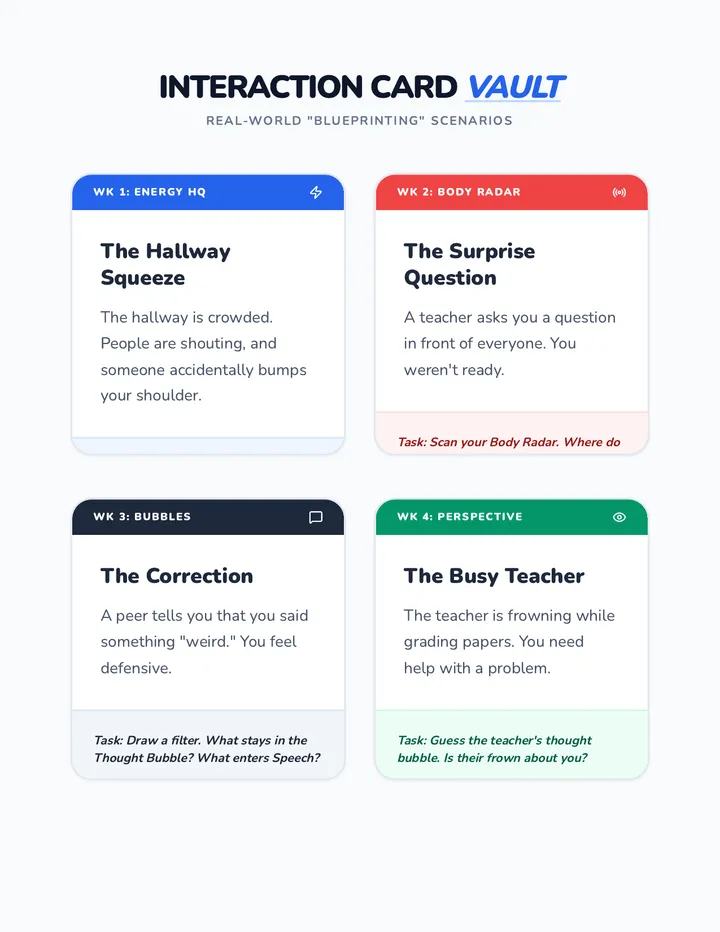
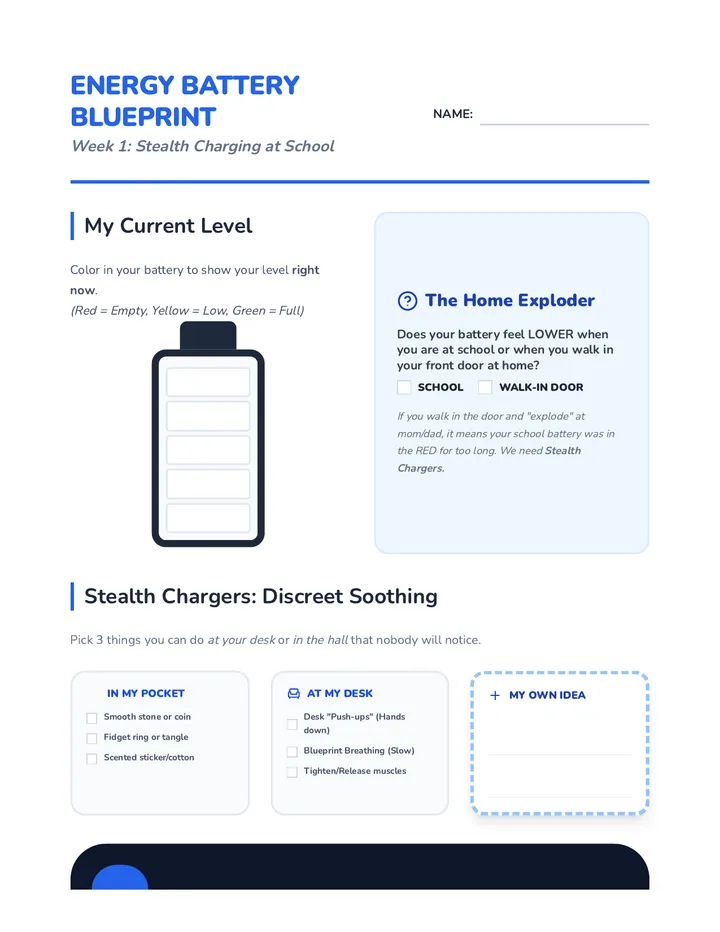
A 6-week social-emotional learning program for teenagers on the autism spectrum, delivered in focused 20-minute sessions. The program uses visual "blueprints" to teach energy management, body awareness, and Comic Strip Conversation techniques for emotional regulation and perspective taking.
An 8-week deep dive into Kafka's Metamorphosis for special education students, focusing on abstract thinking, social value, and the human condition through high-engagement activities and visual organizers.
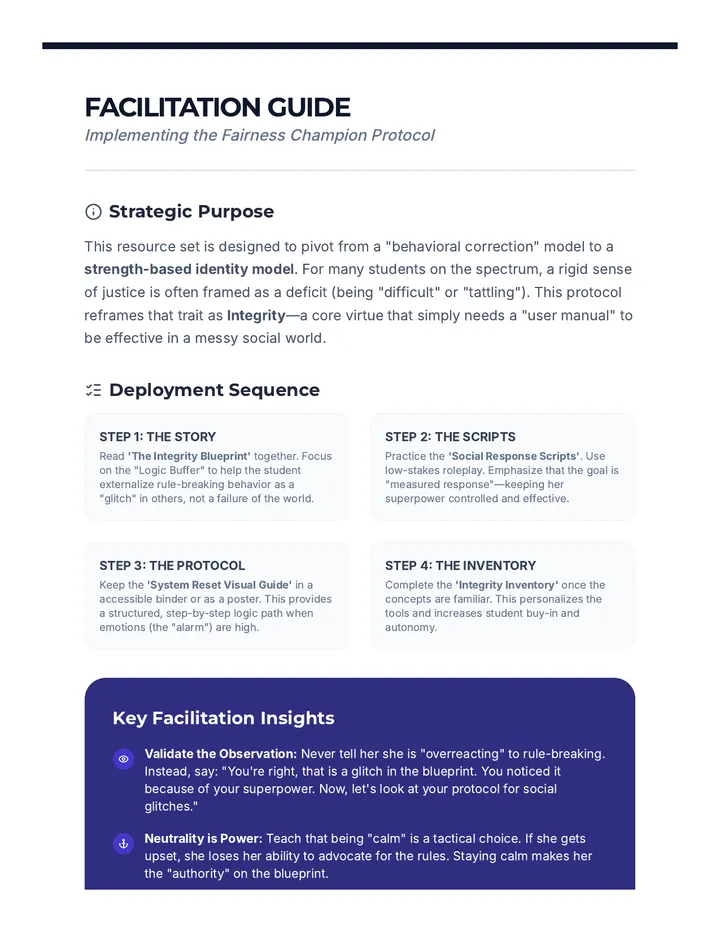
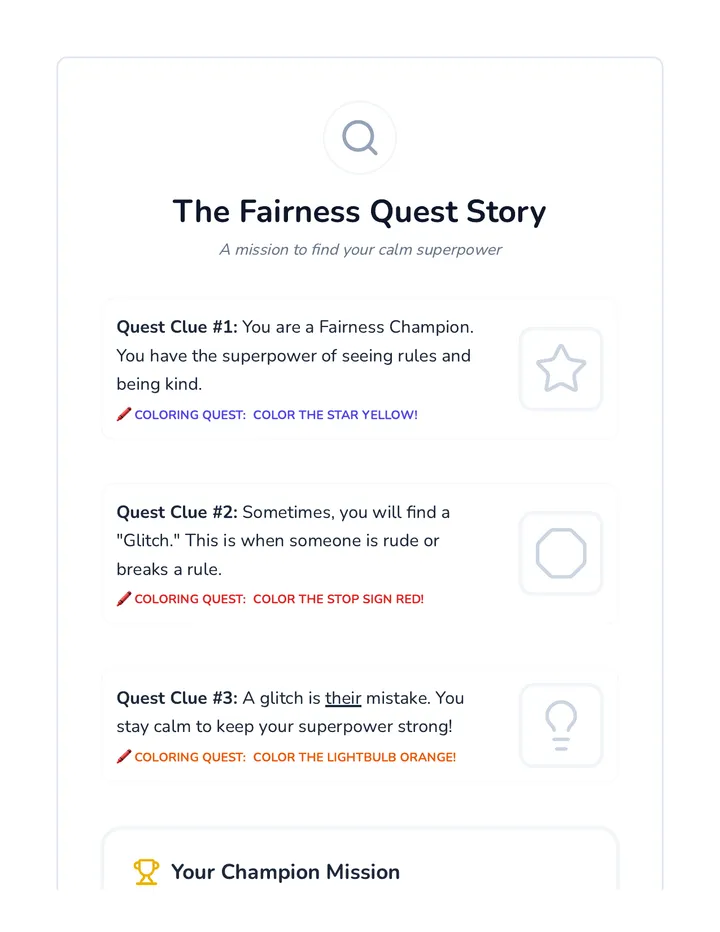
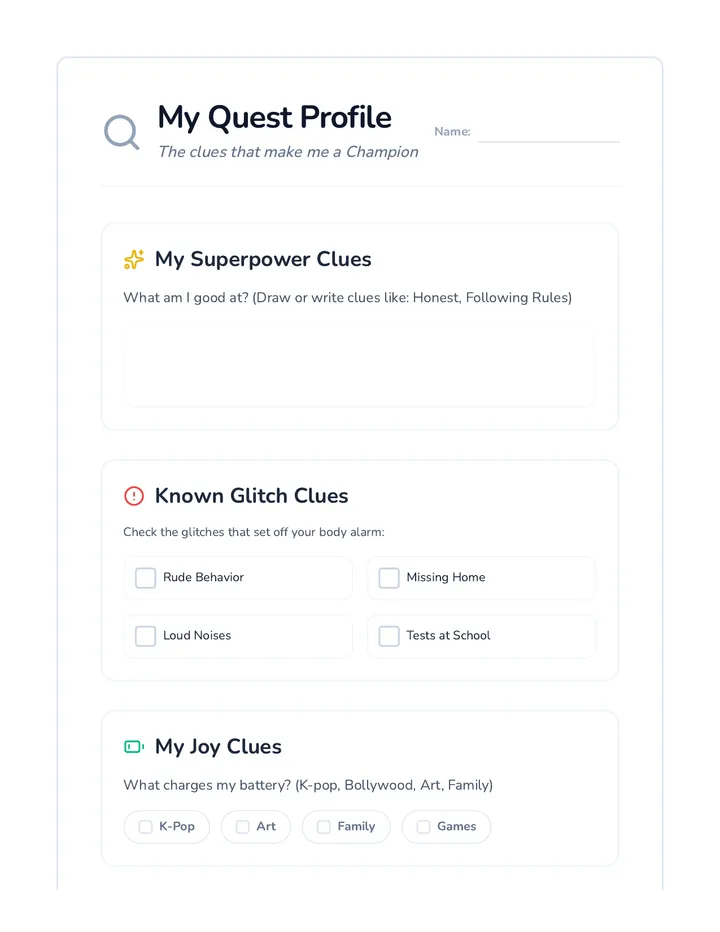
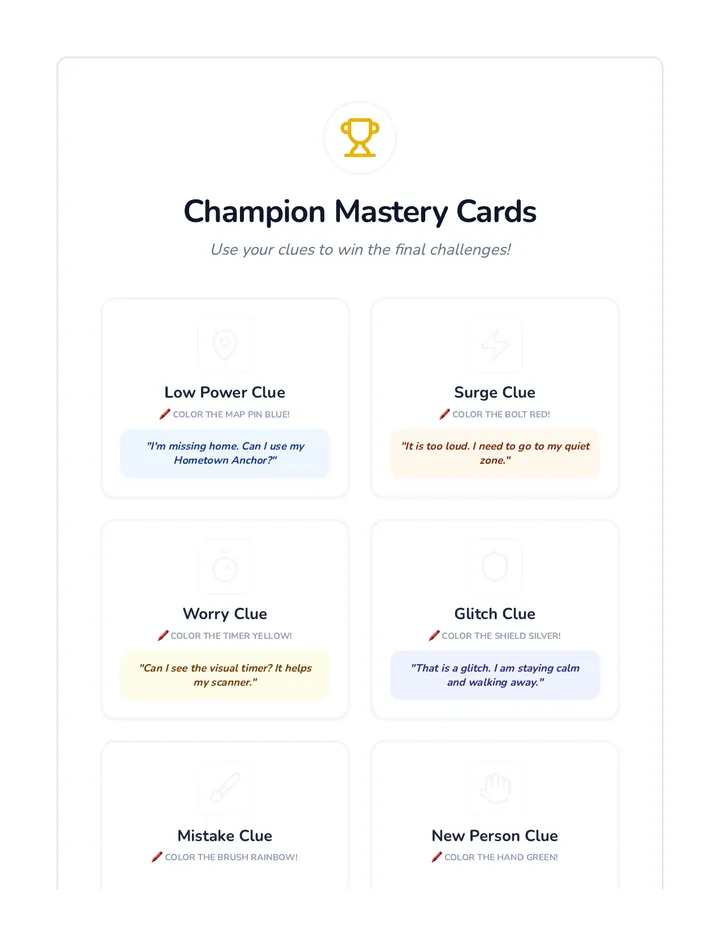
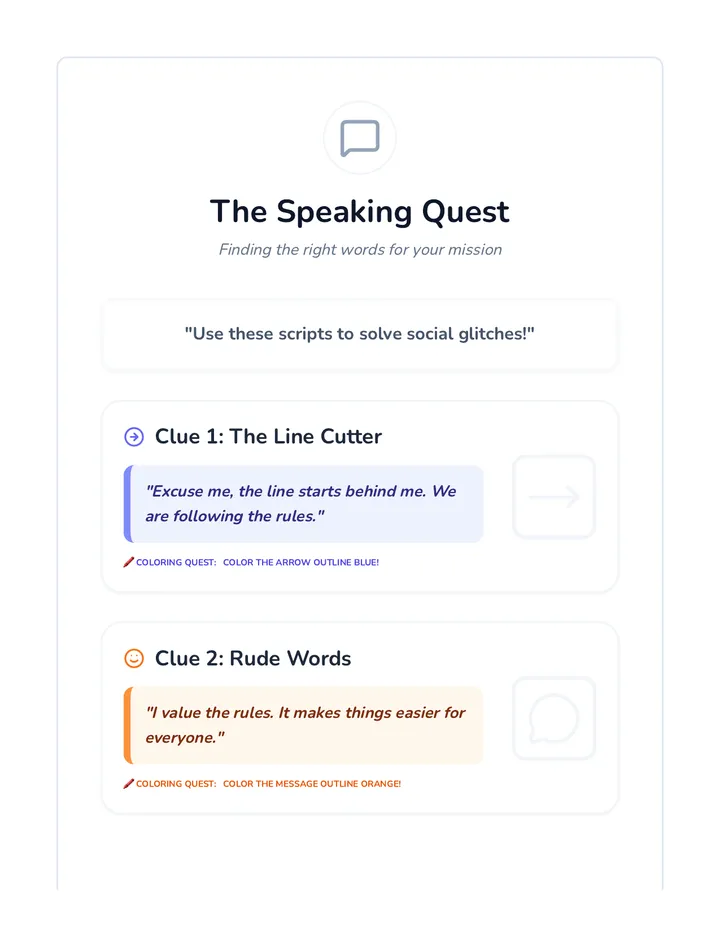
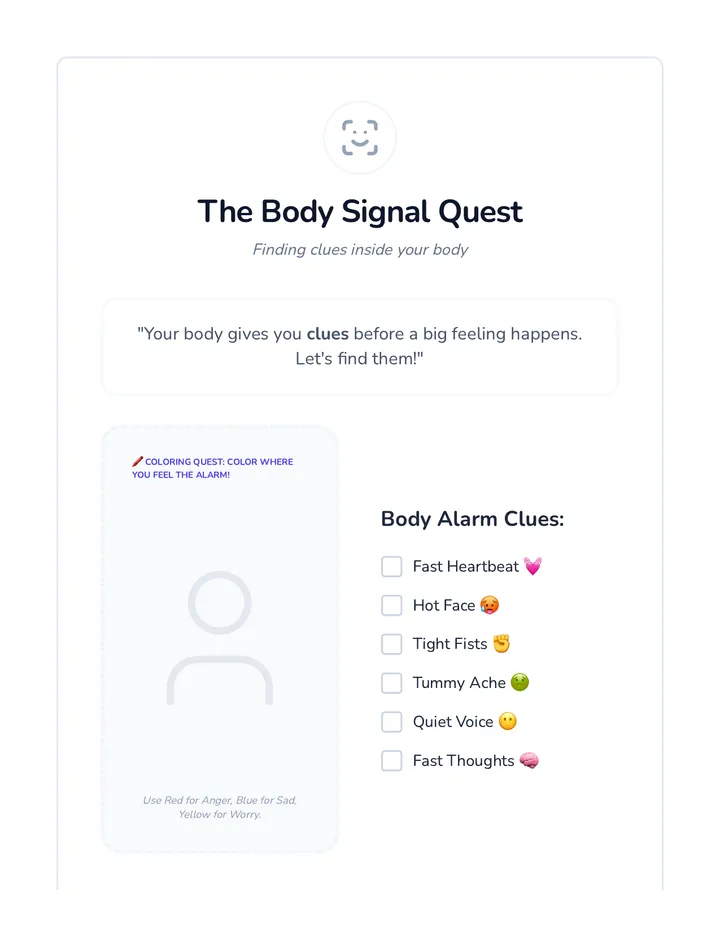
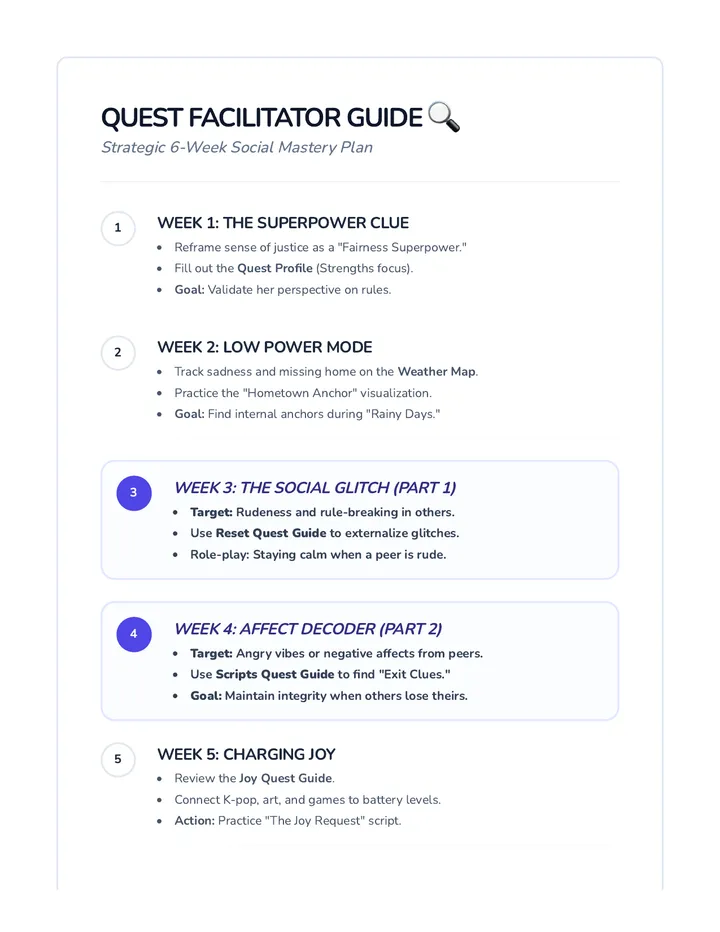
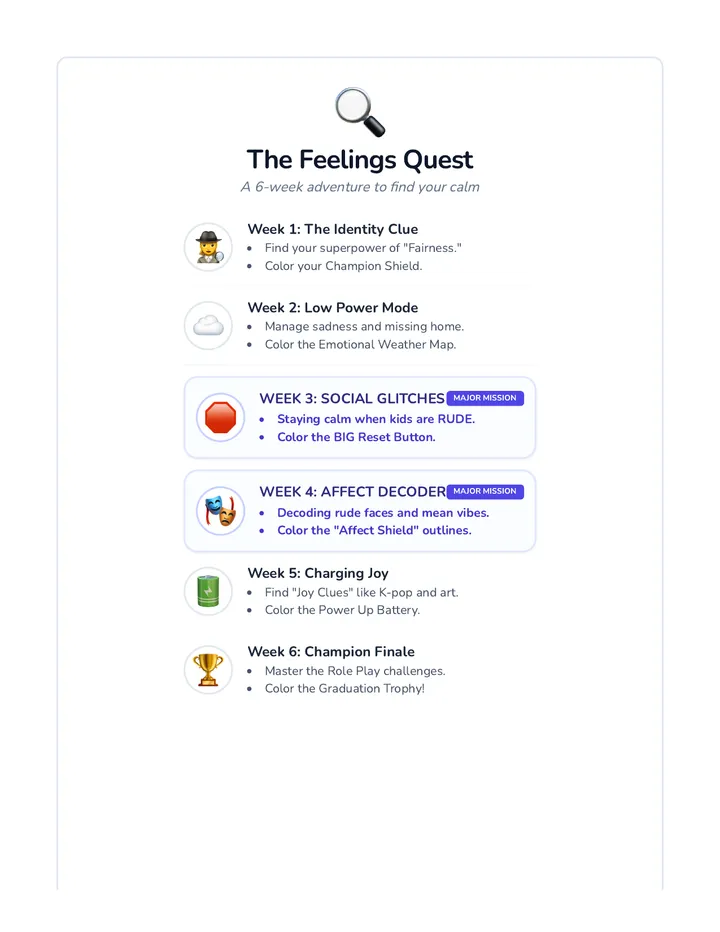
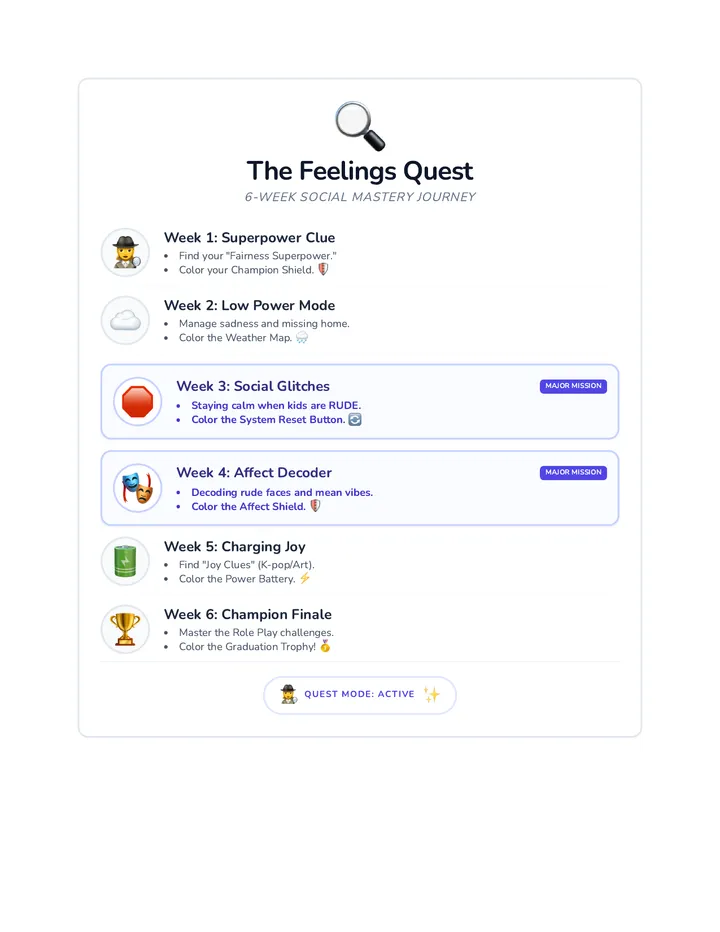
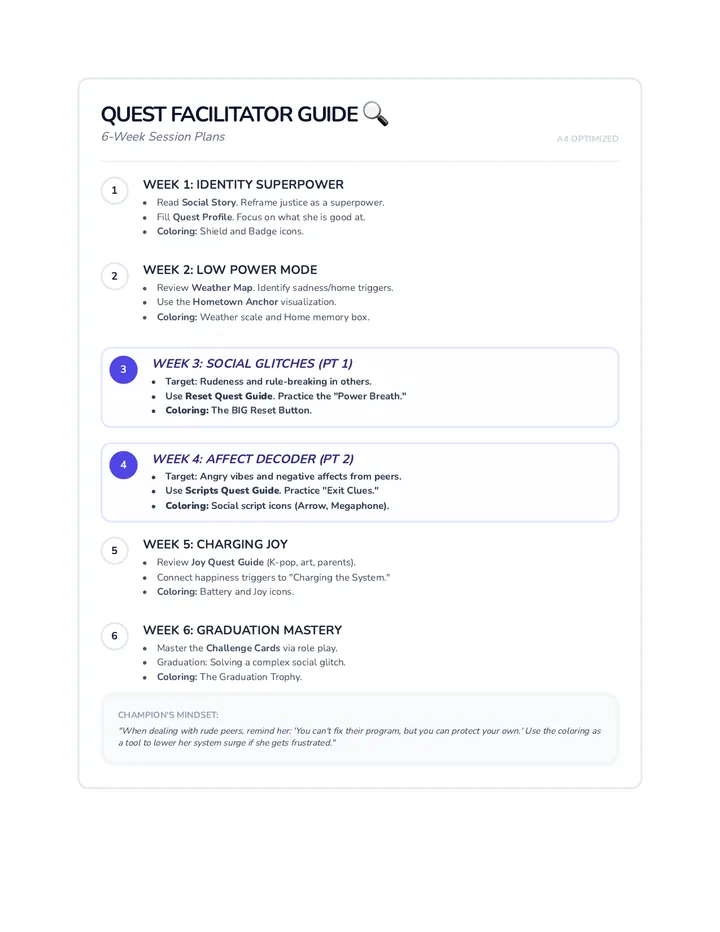
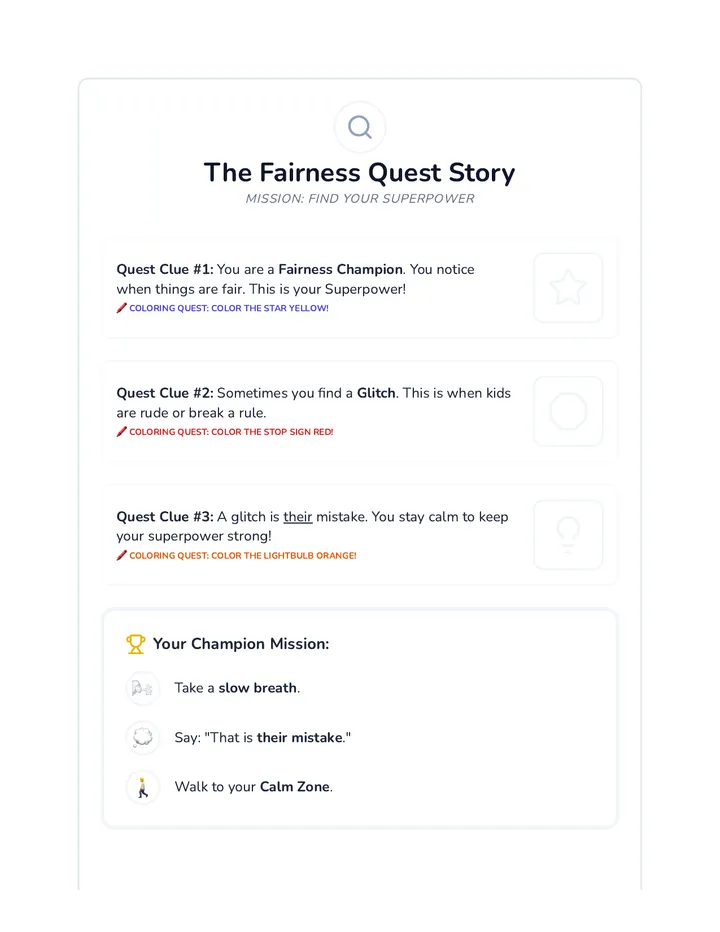
A 6-week social-emotional learning curriculum for a 13-year-old girl on the autism spectrum, focusing on managing specific triggers through a strength-based "Integrity Blueprint" lens.
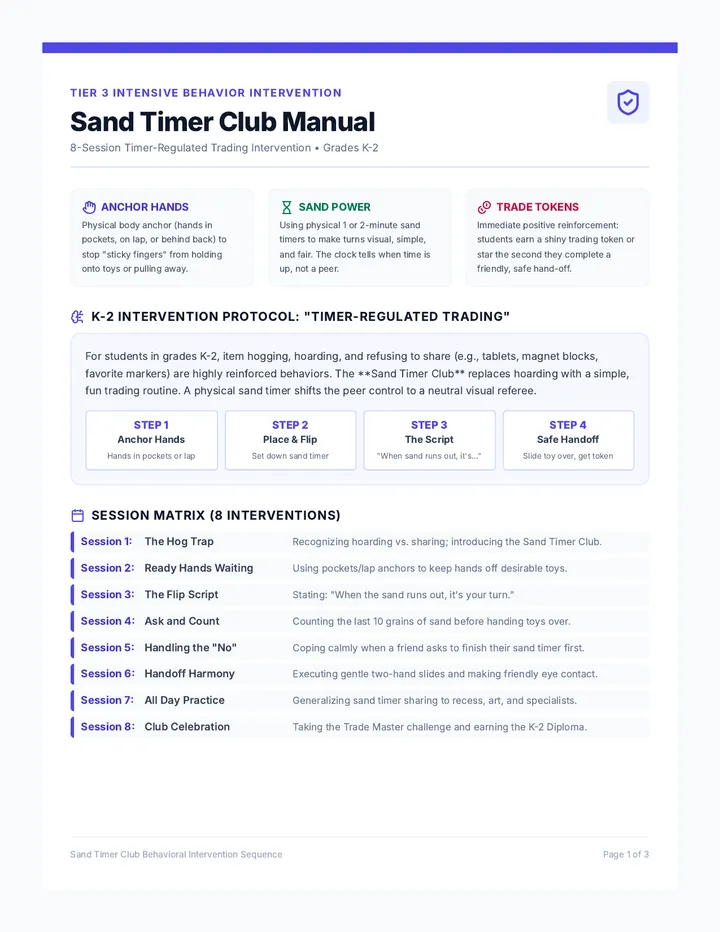
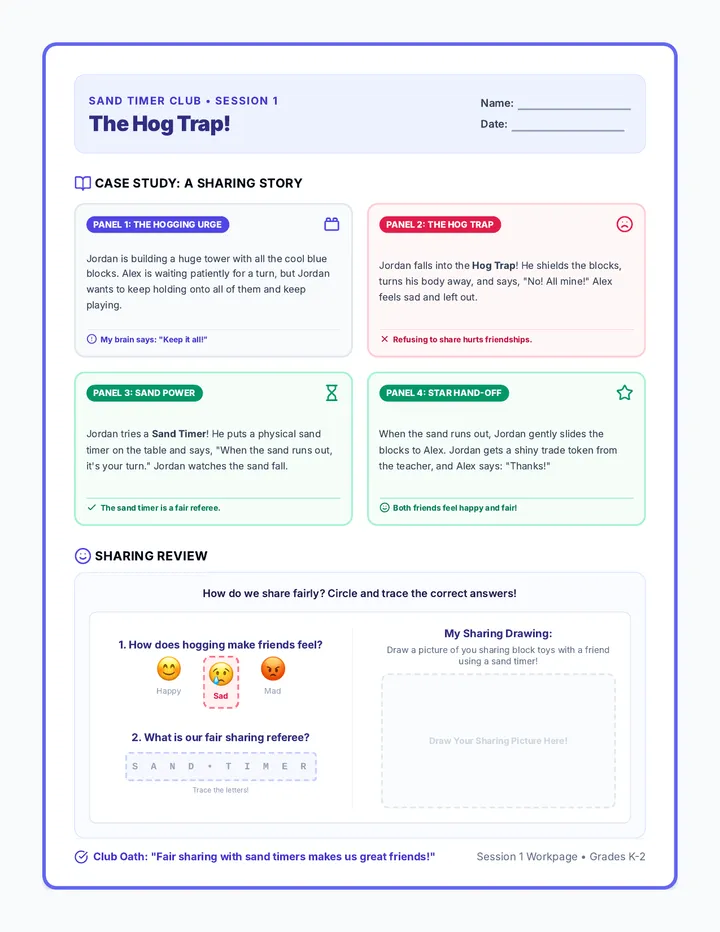
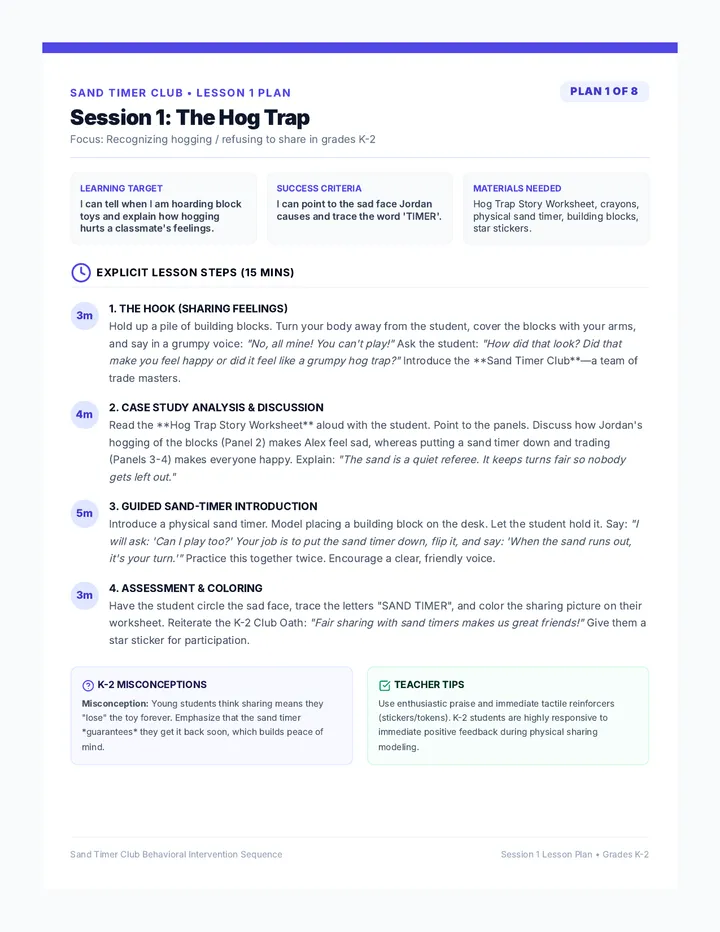
An 8-session intensive behavioral intervention sequence for students in grades K-2. It targets the reduction of item hogging and refusal to share, teaching a 'Timer-Regulated Trading' replacement behavior using sand timers, cooperative scripts, and token hand-offs.
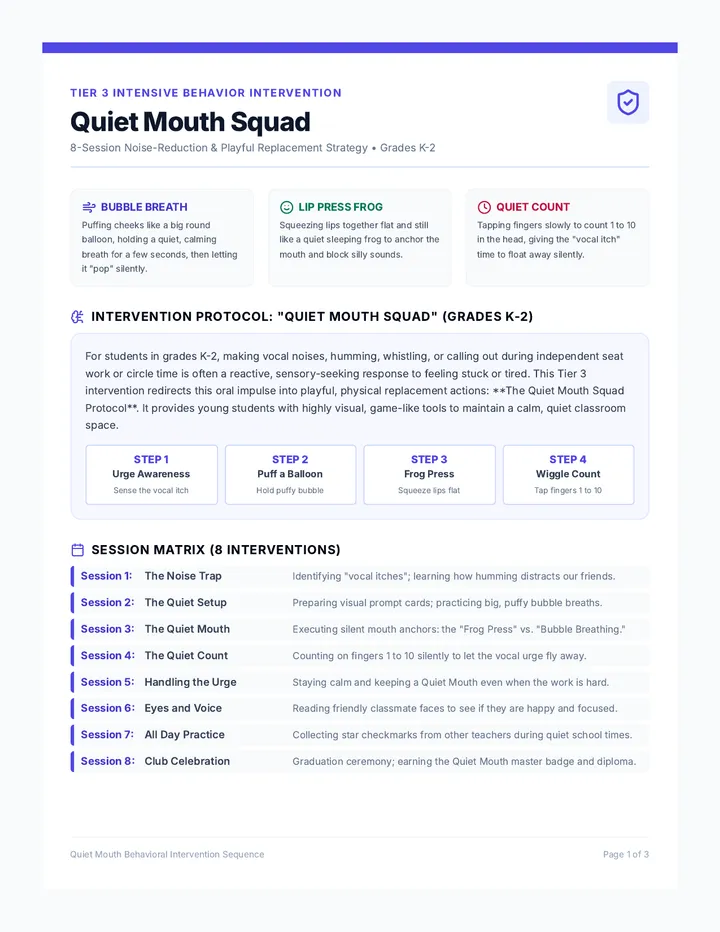
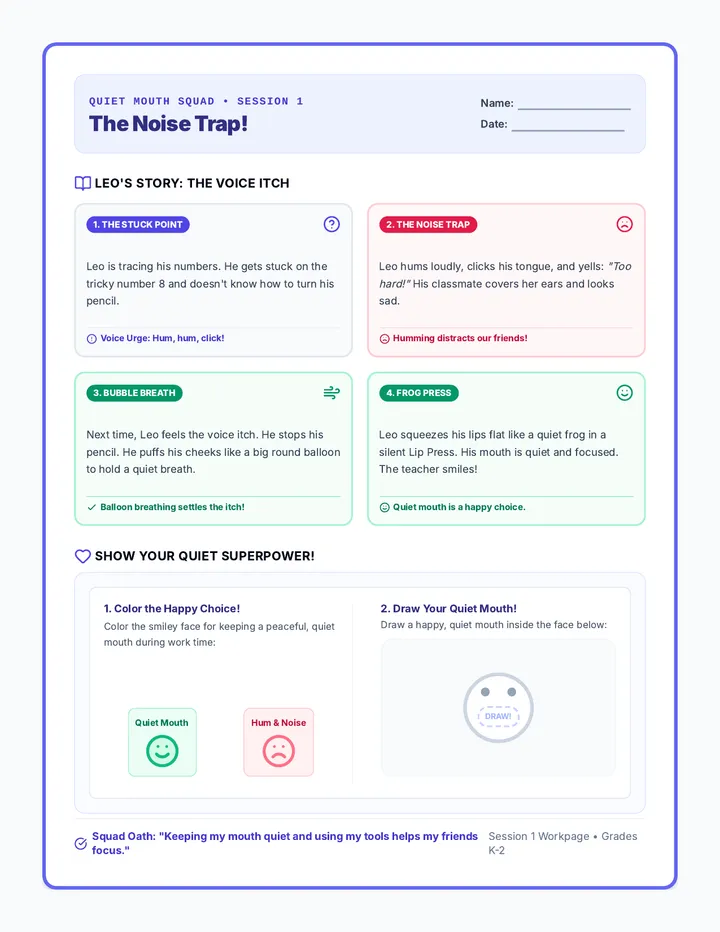
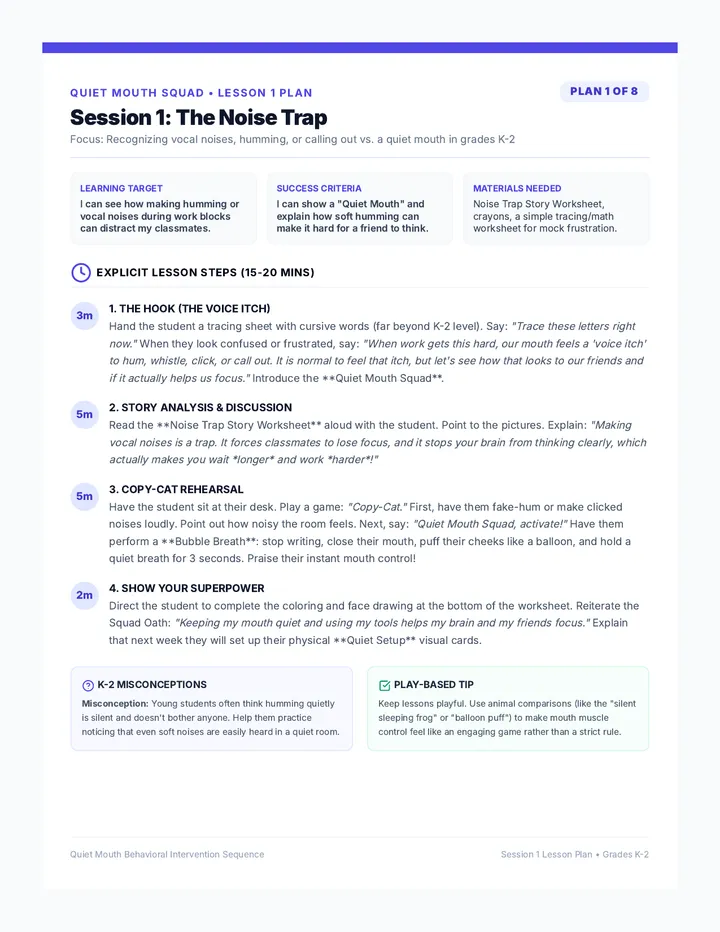
An 8-session intensive behavioral intervention sequence for students in grades K-2 targeting vocal noises, humming, or calling out during independent work. It teaches playful replacement behaviors: holding a quiet, puffy 'Bubble Breath' (like a balloon) or a firm 'Lip Press' (making a flat, silent mouth) to settle urges and maintain classroom focus.
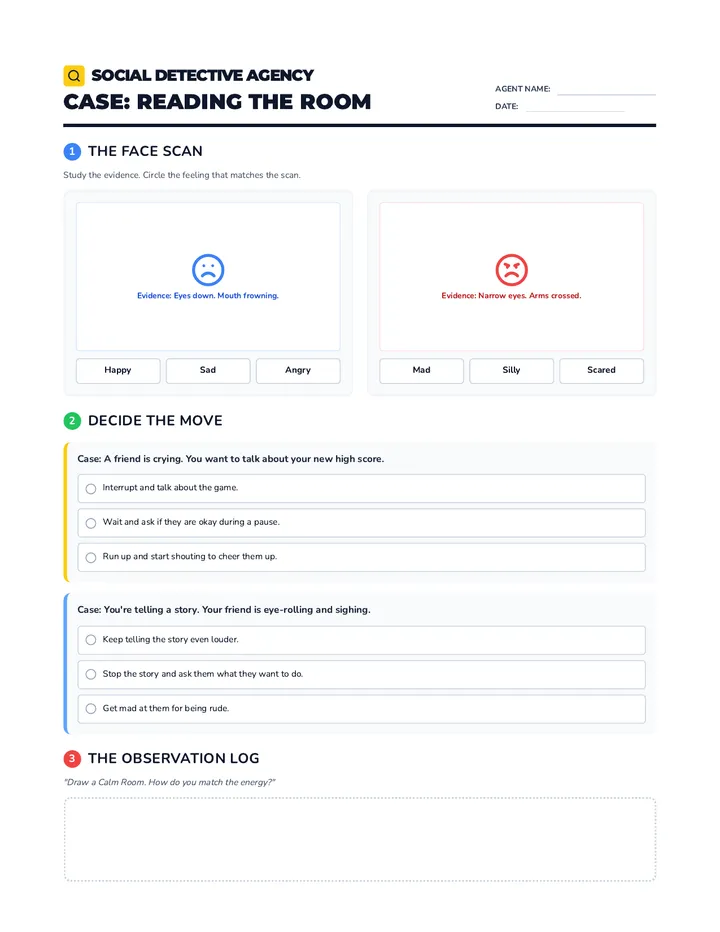
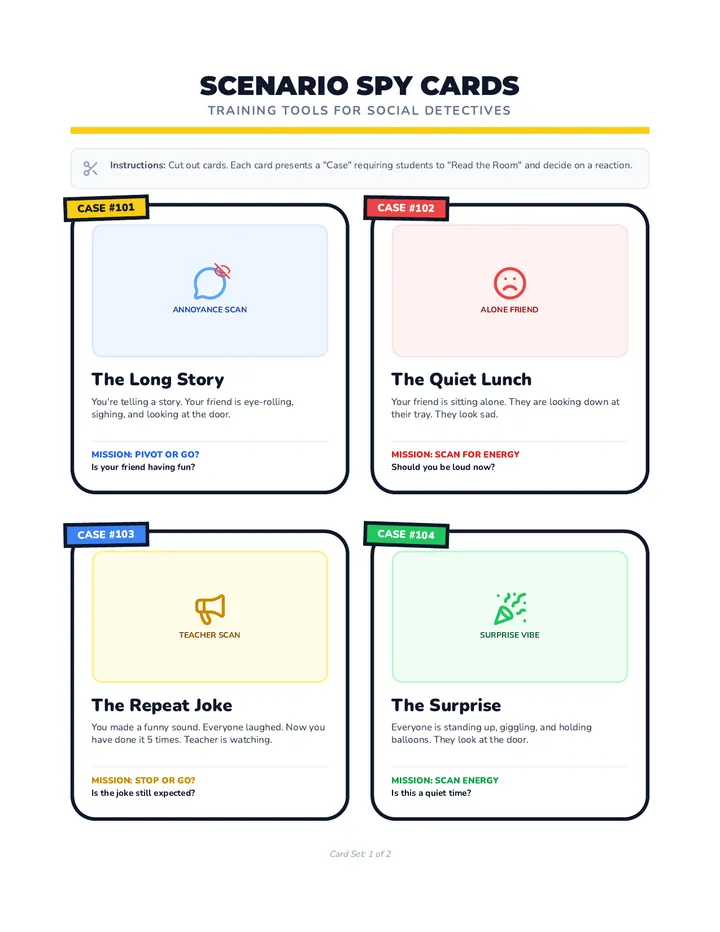
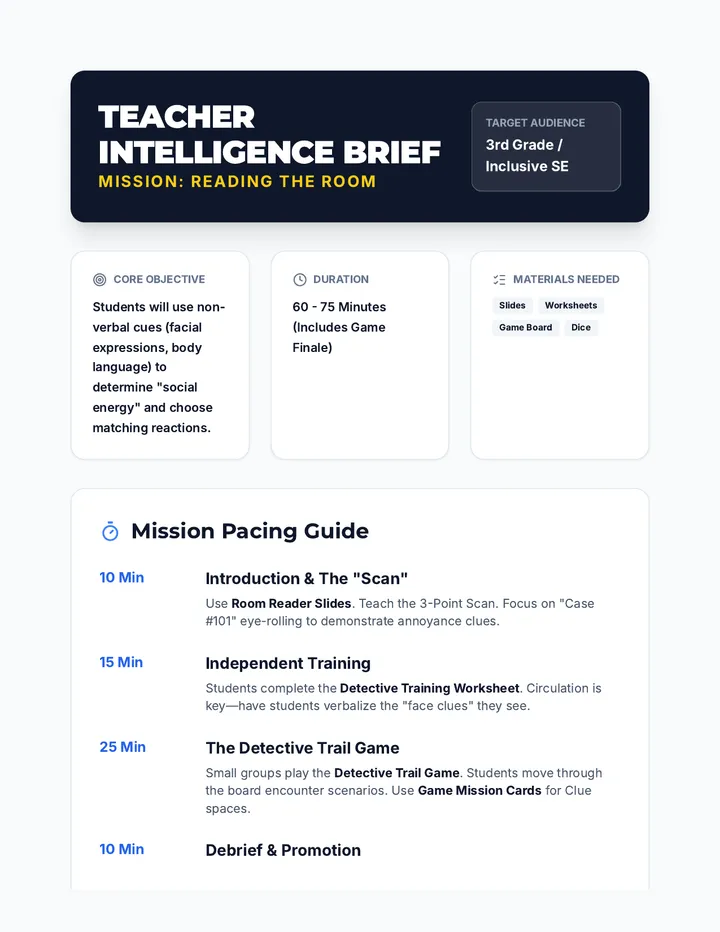
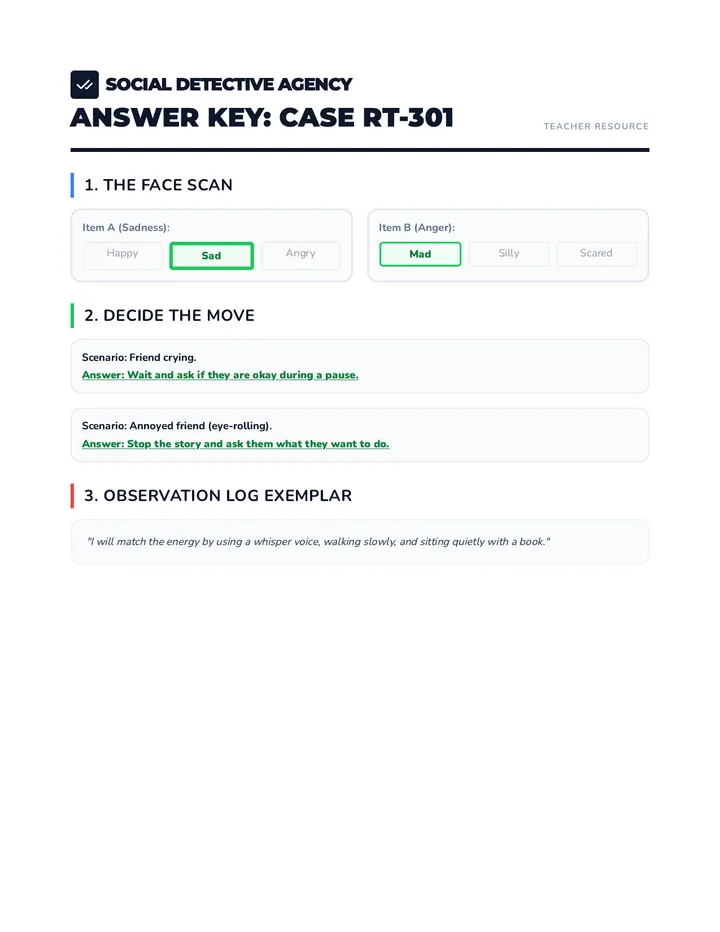
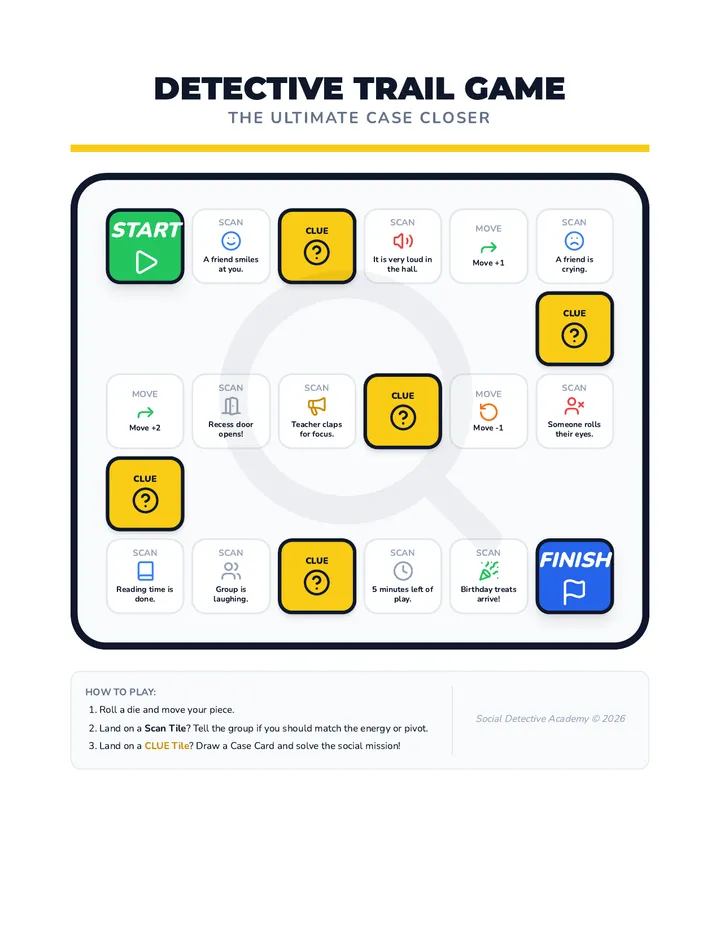
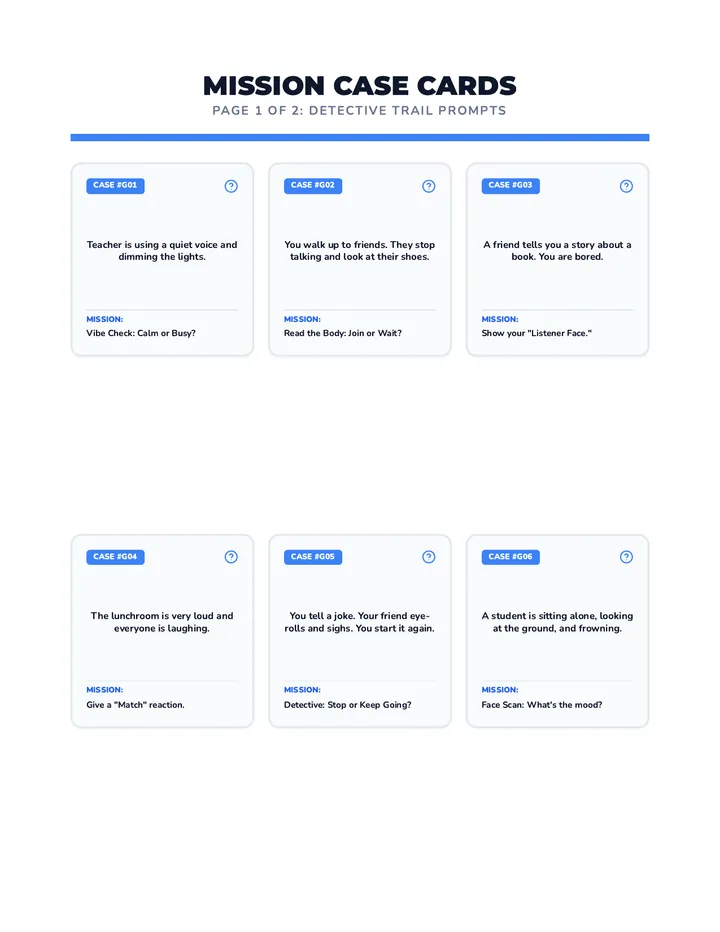
A social-emotional unit for 3rd grade students in inclusive programs, focused on building 'Social Detective' skills. Students learn to scan environmental cues, interpret non-verbal communication, and flexibly adjust their behavior to match the social energy of different contexts.
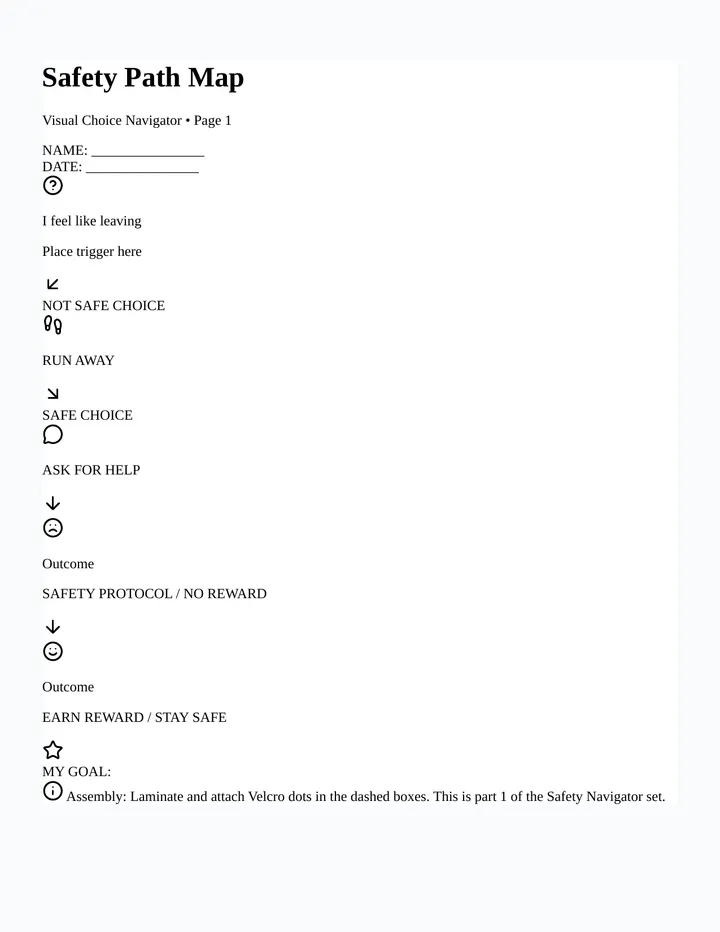
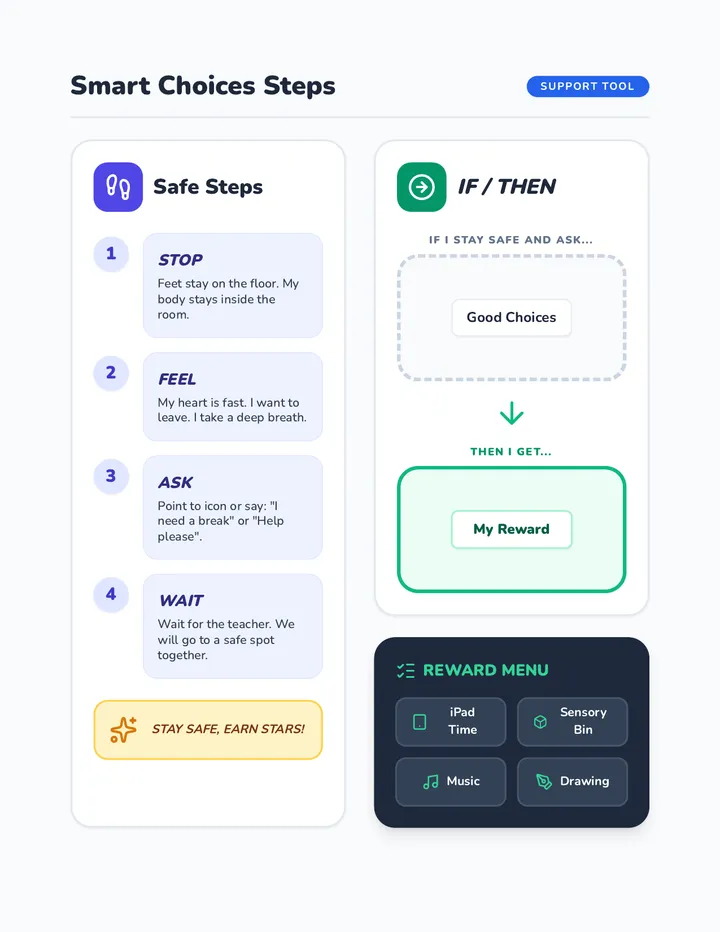
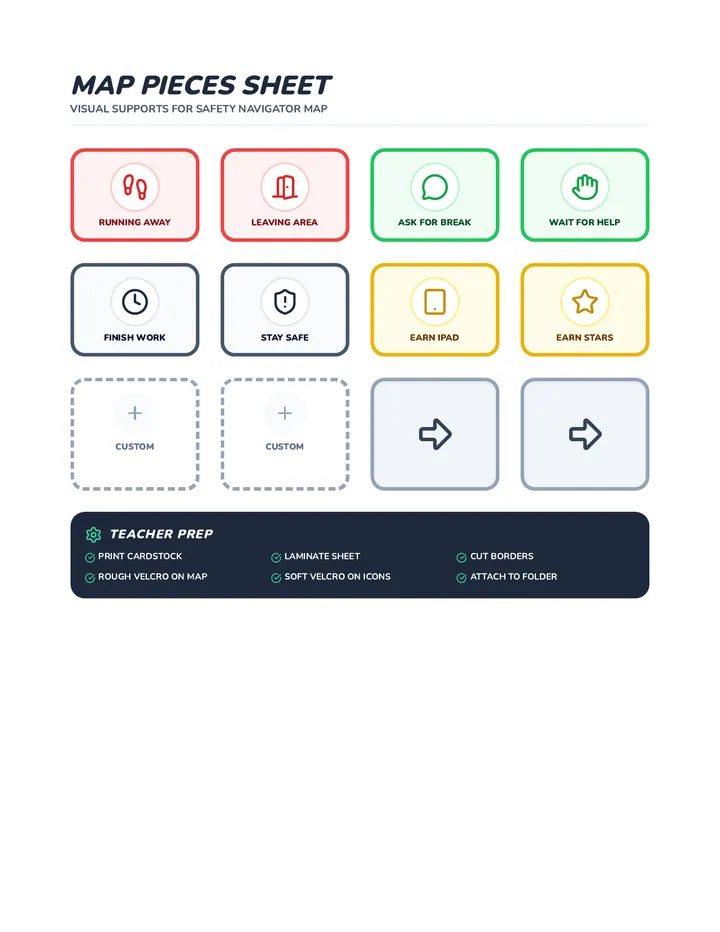
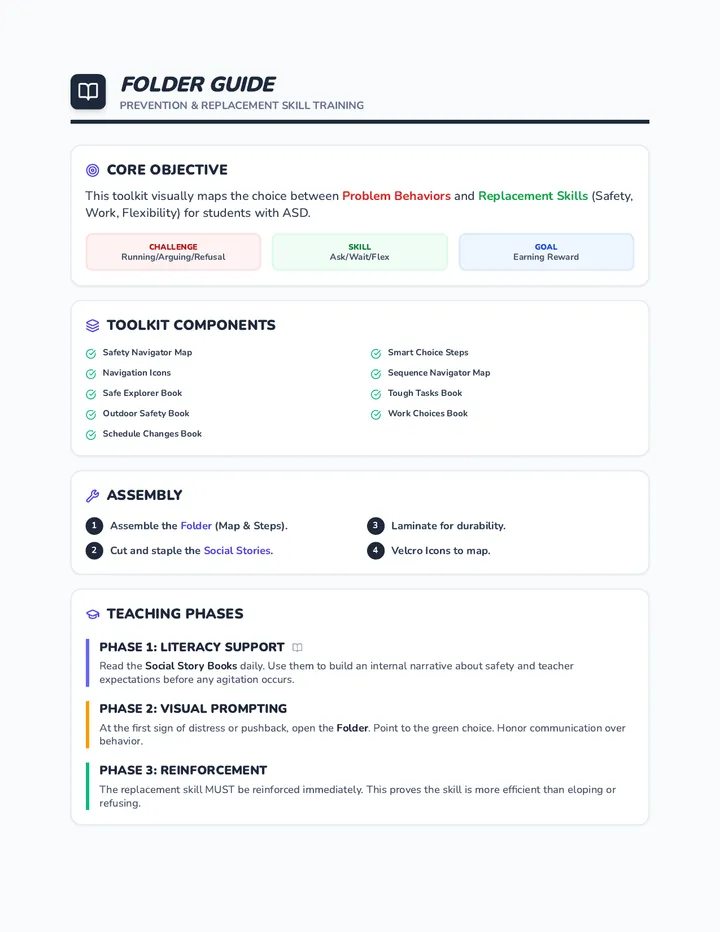
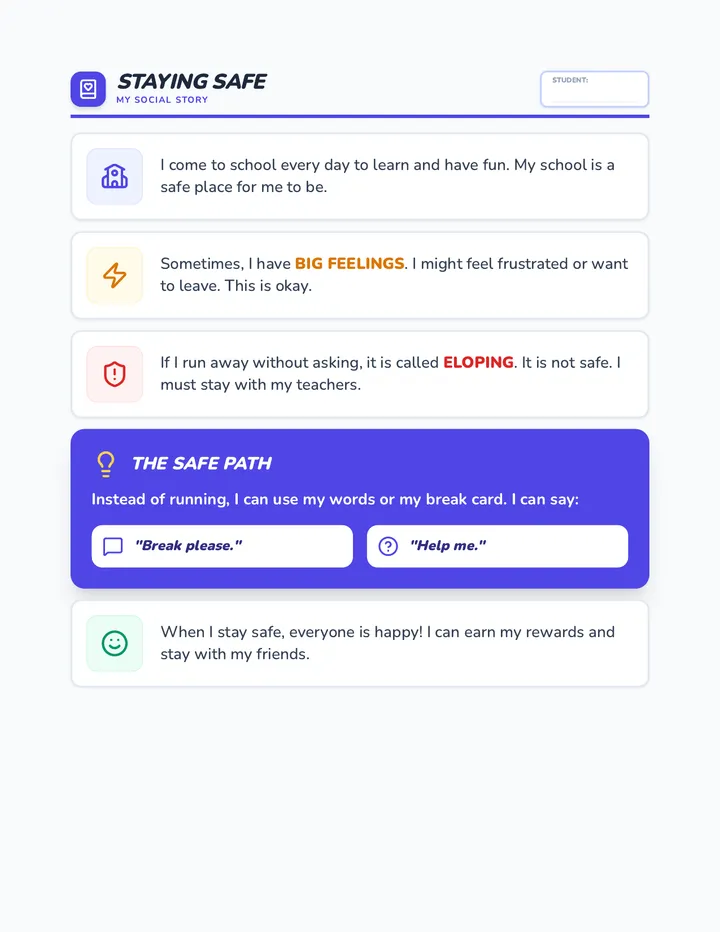
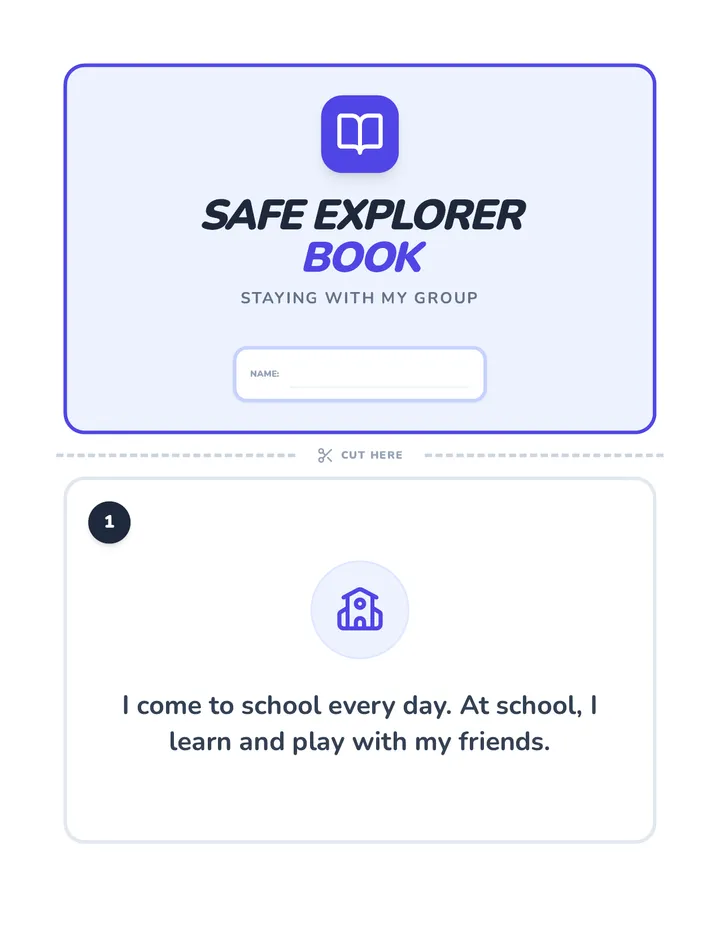
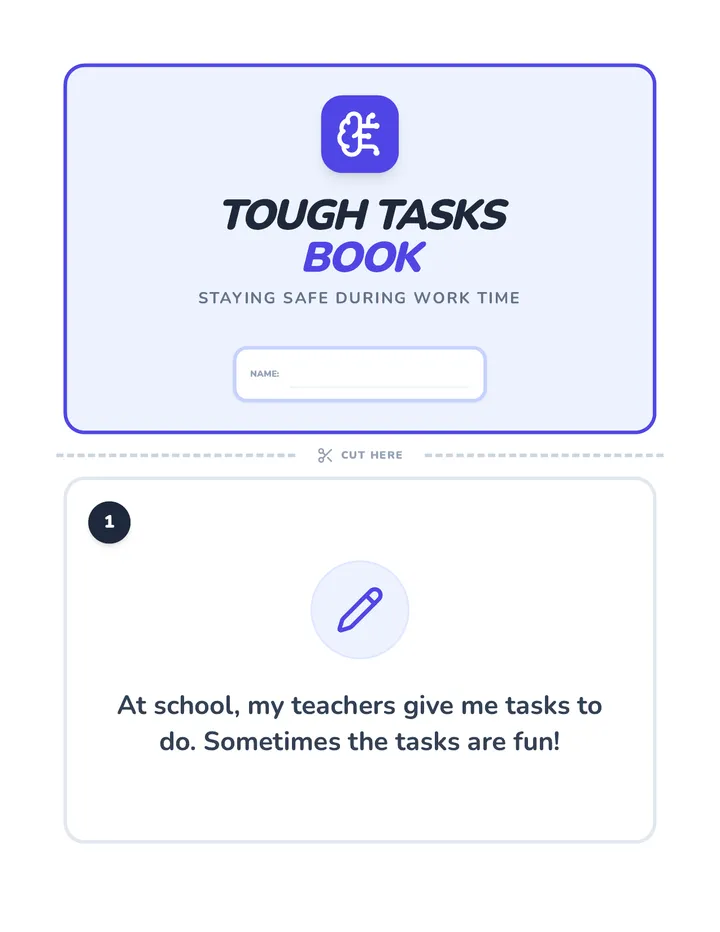
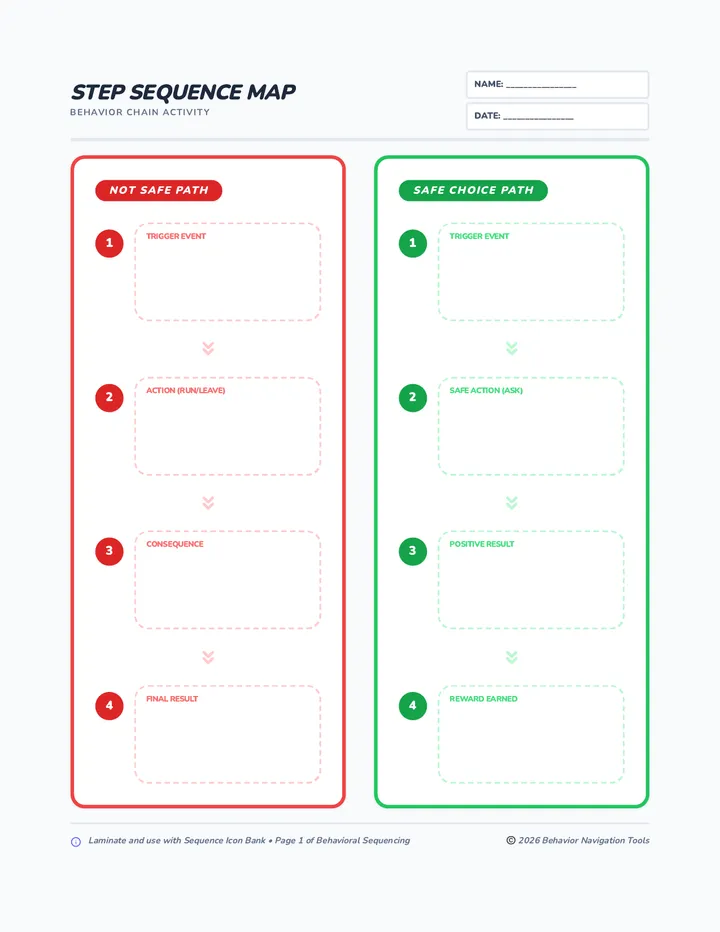
A set of visual supports and interactive activities designed to help students with ASD understand the consequences of elopement and learn safe replacement behaviors.
A Tier 3 social-emotional curriculum designed for middle school students on the autism spectrum, focusing on self-regulation, social cues, and conflict resolution through a 'Social Architect' theme.
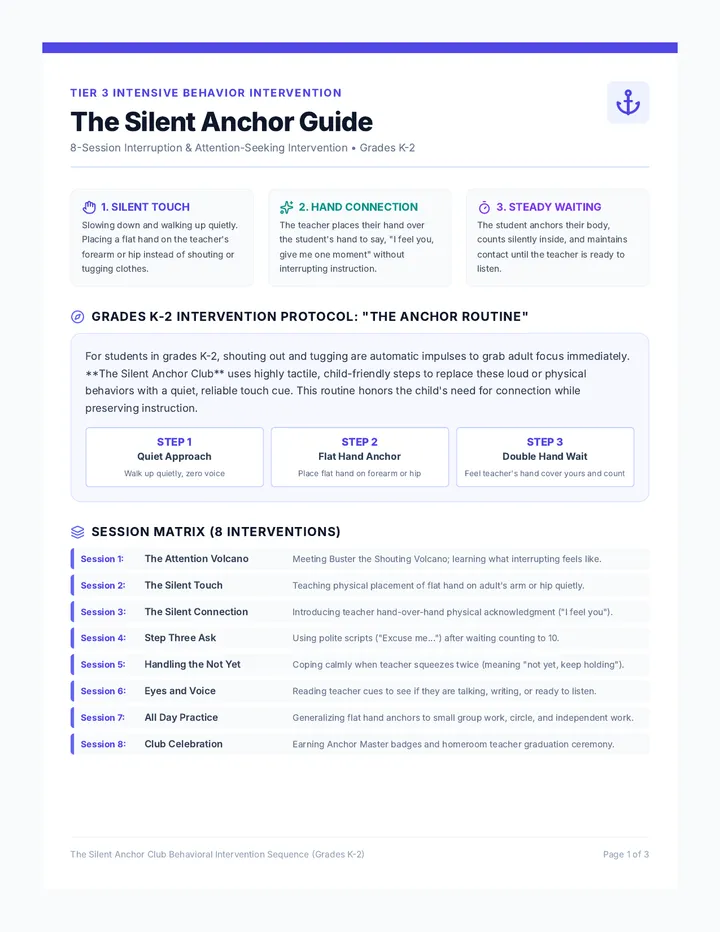
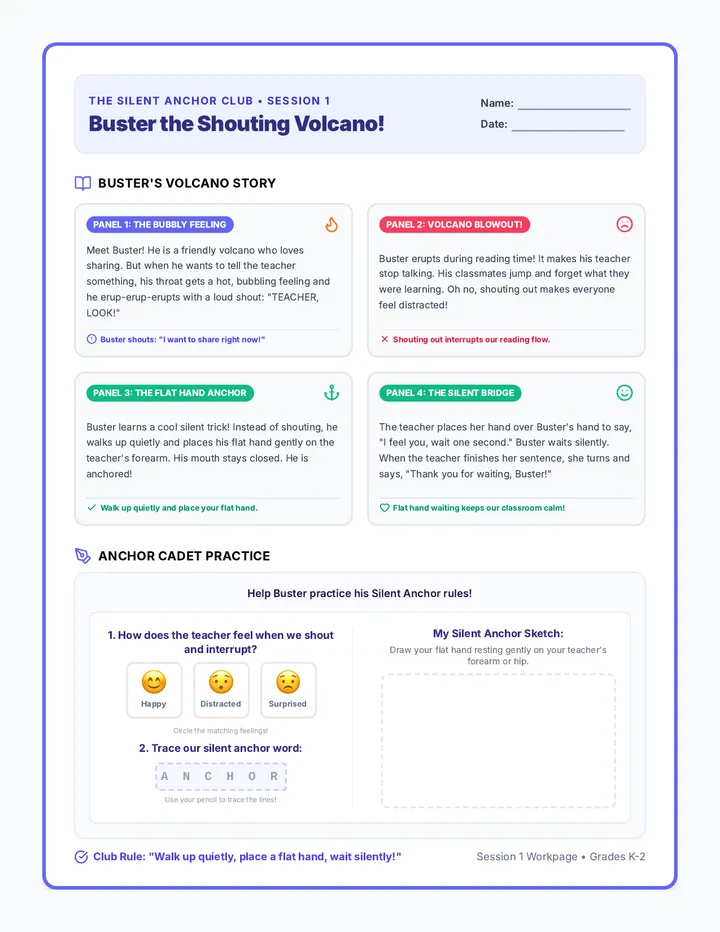
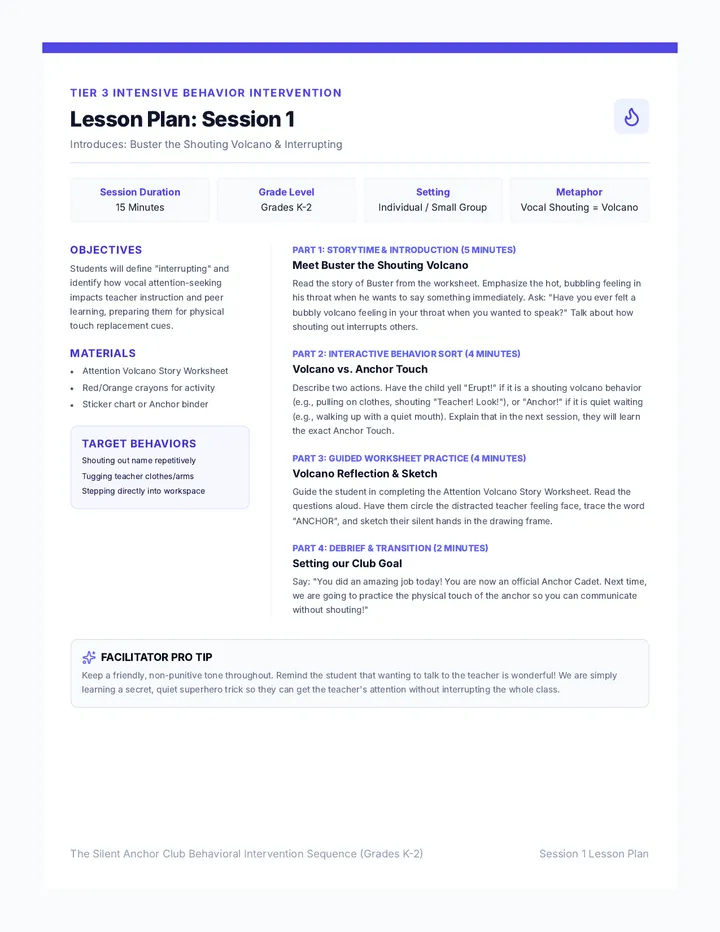
An 8-session intensive behavioral intervention sequence for students in grades K-2. It targets aggressive or vocal bids for attention (such as shouting out, clothes-tugging, or interrupting) by teaching the 'Silent Anchor' routine, enabling students to connect quietly with teachers using a flat-hand contact and steady waiting.
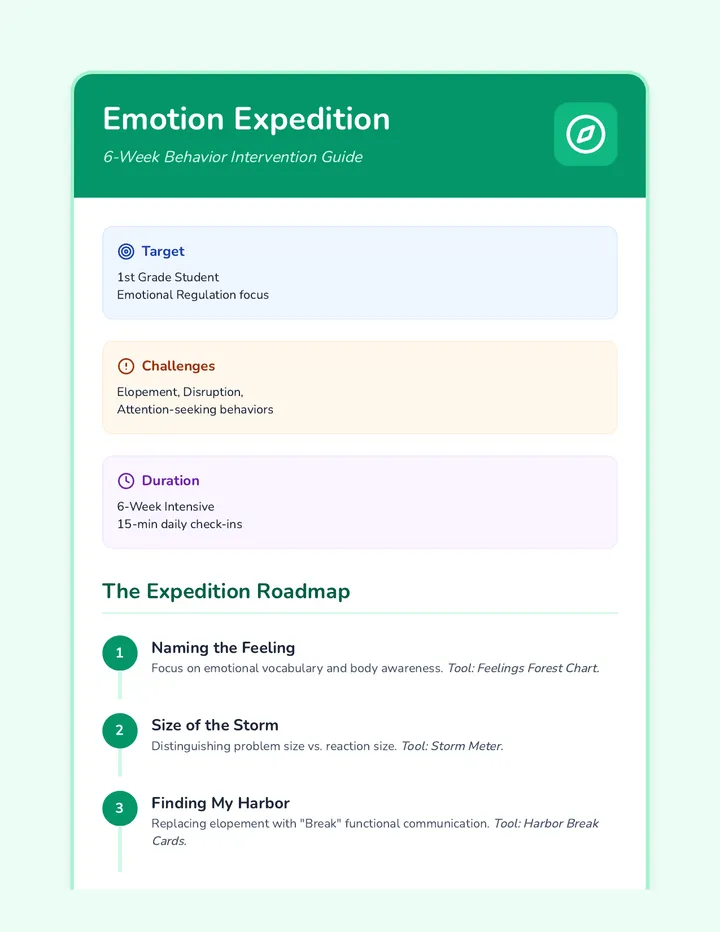
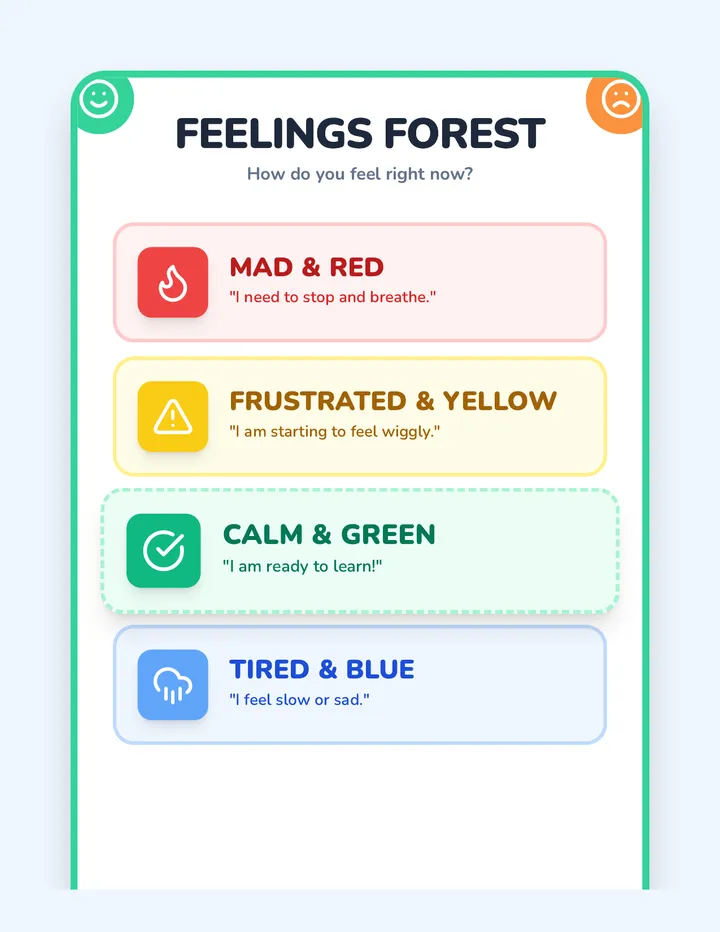
A 6-week individual behavior intervention sequence for 1st grade students struggling with emotional regulation, elopement, and attention-seeking behaviors. The sequence focuses on identifying feelings, sizing problems, and using functional communication to seek attention appropriately.
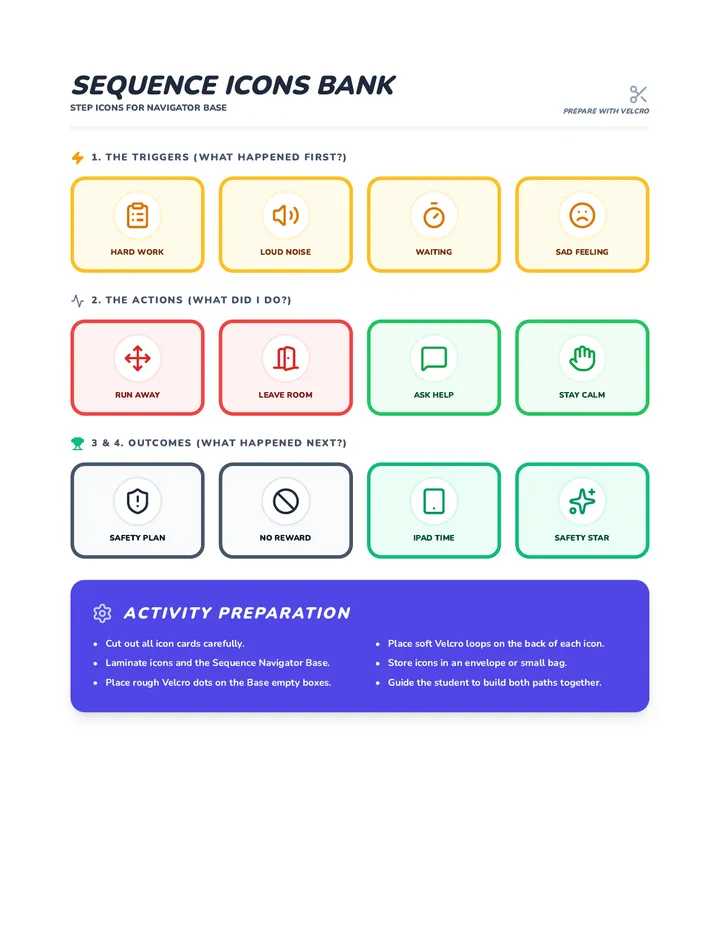
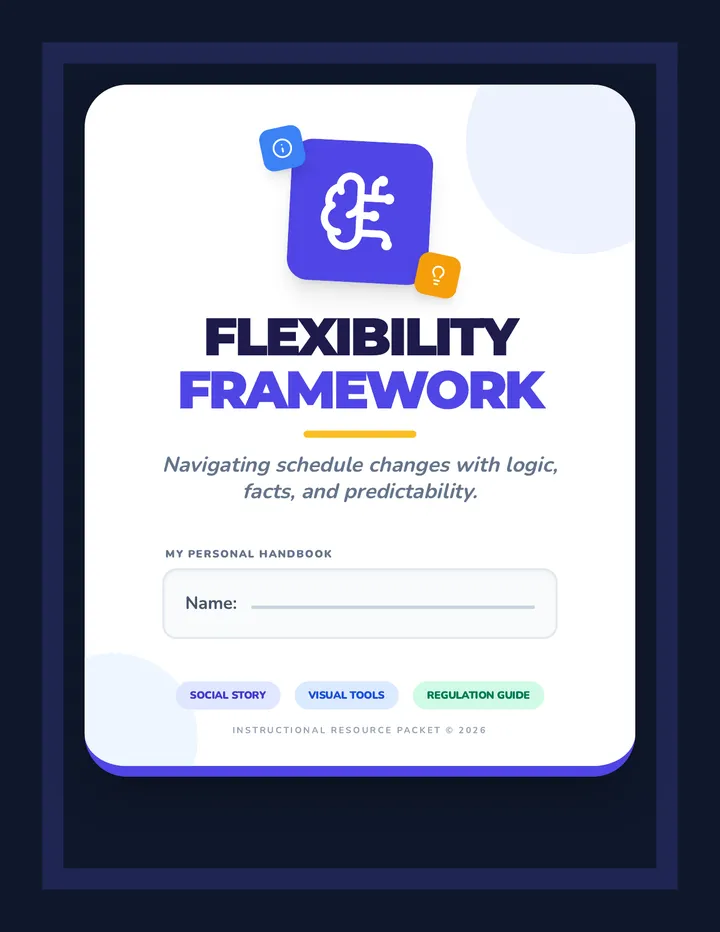
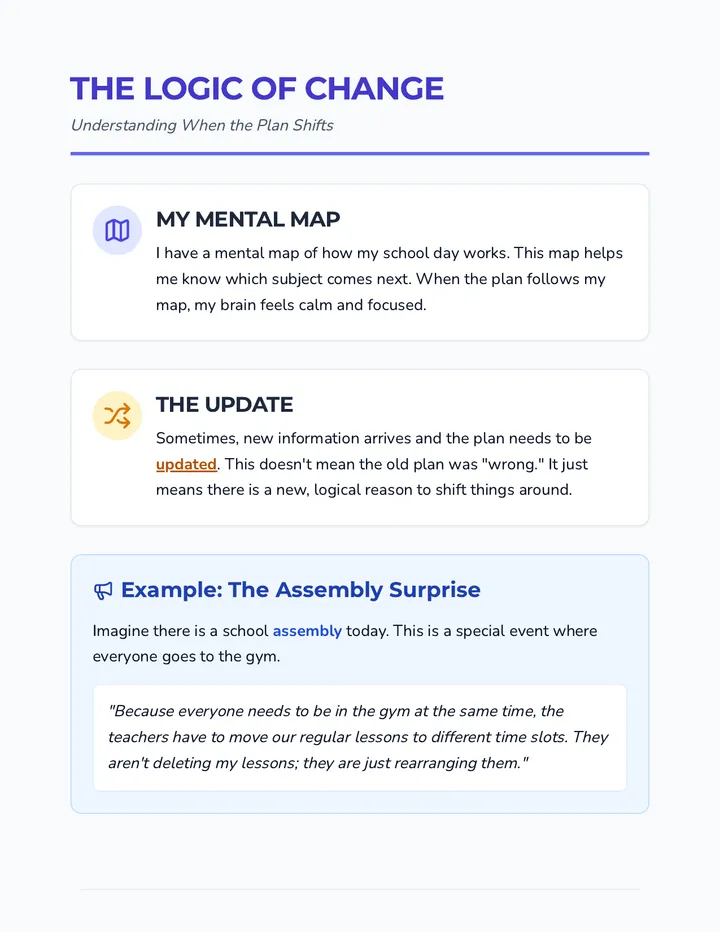
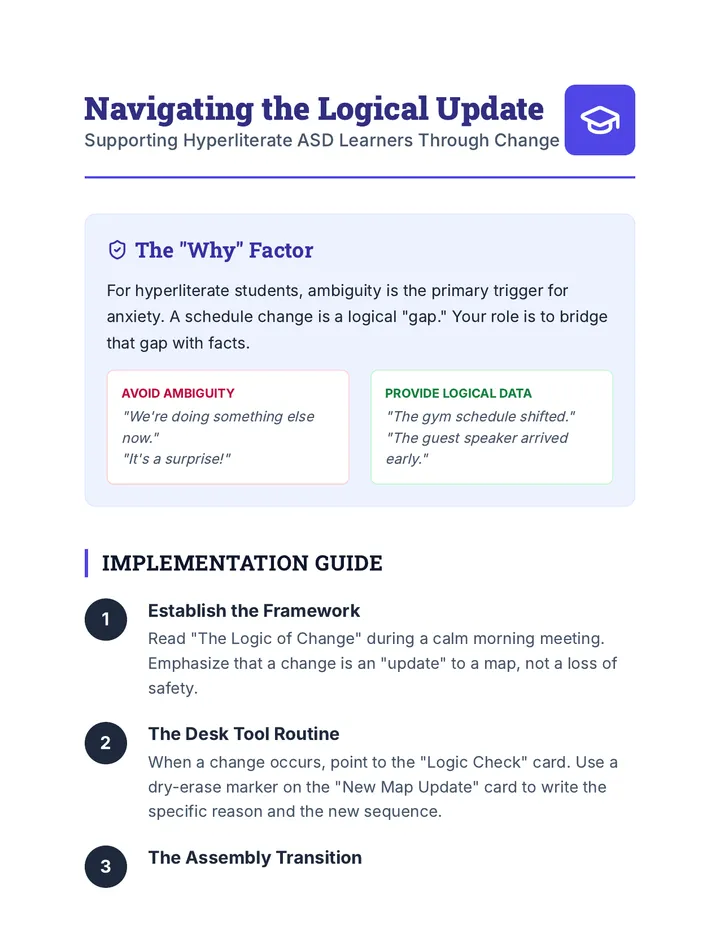
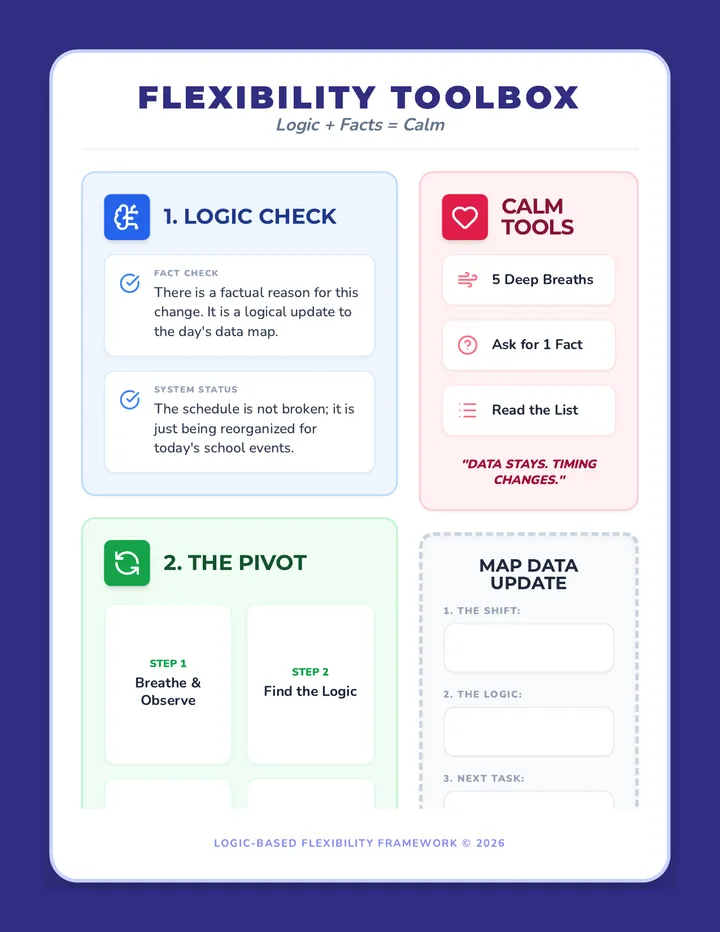
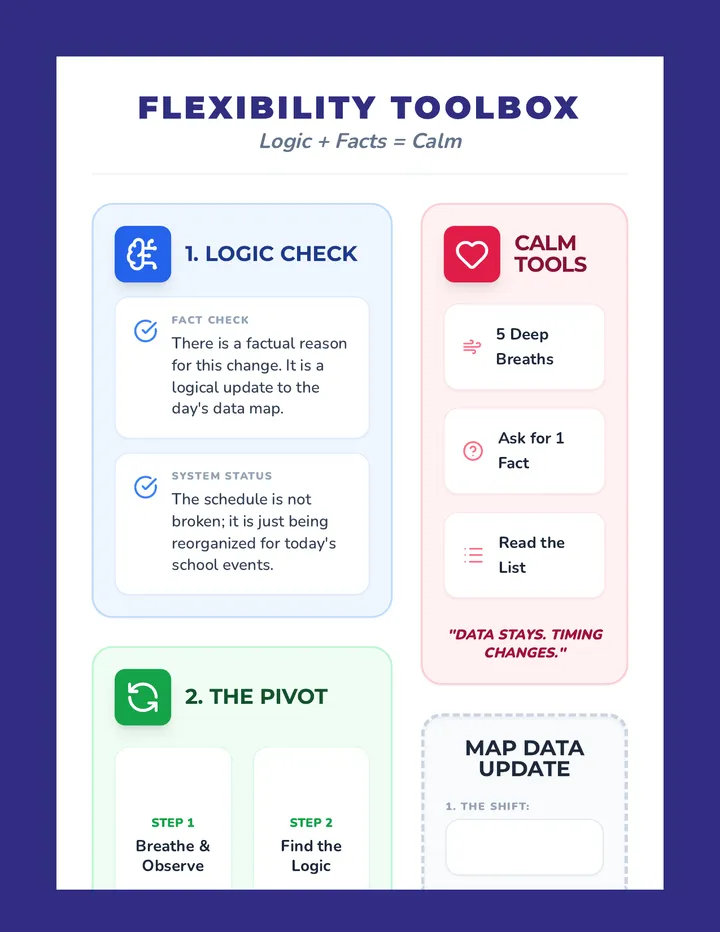
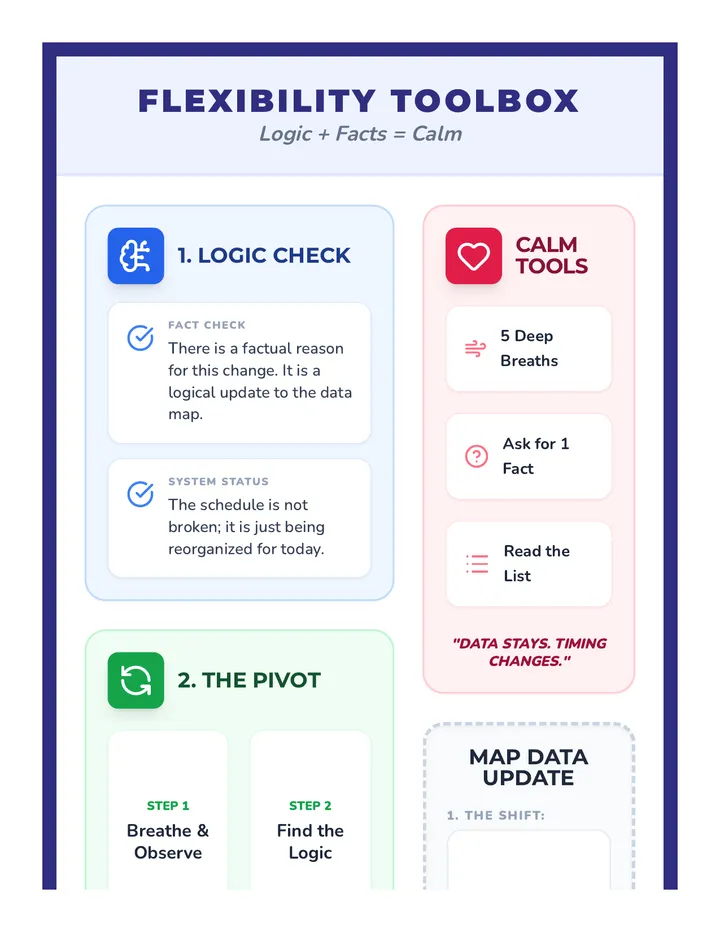
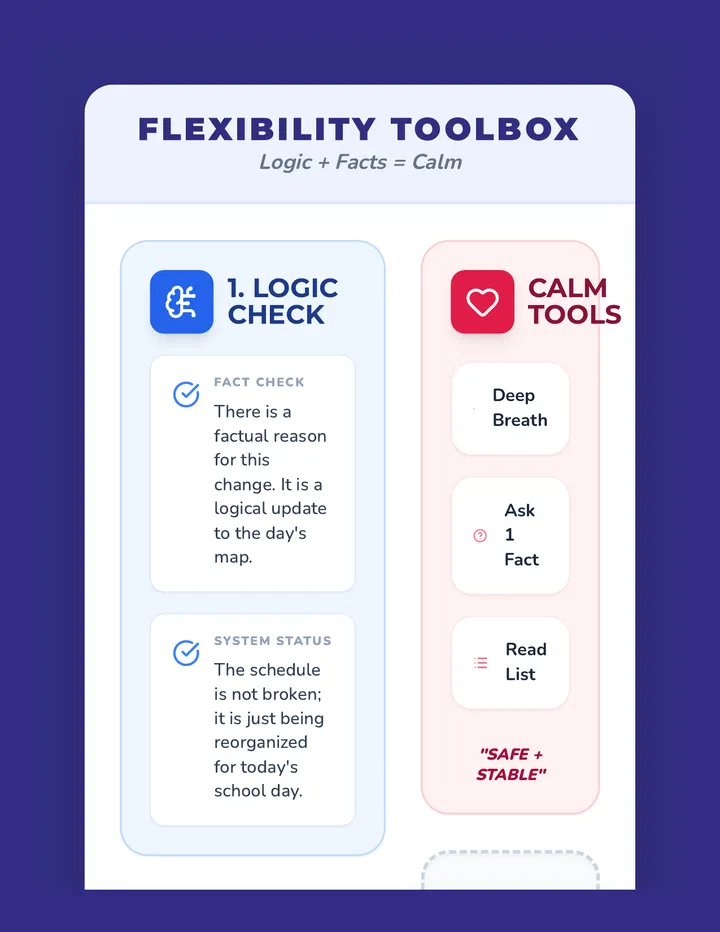
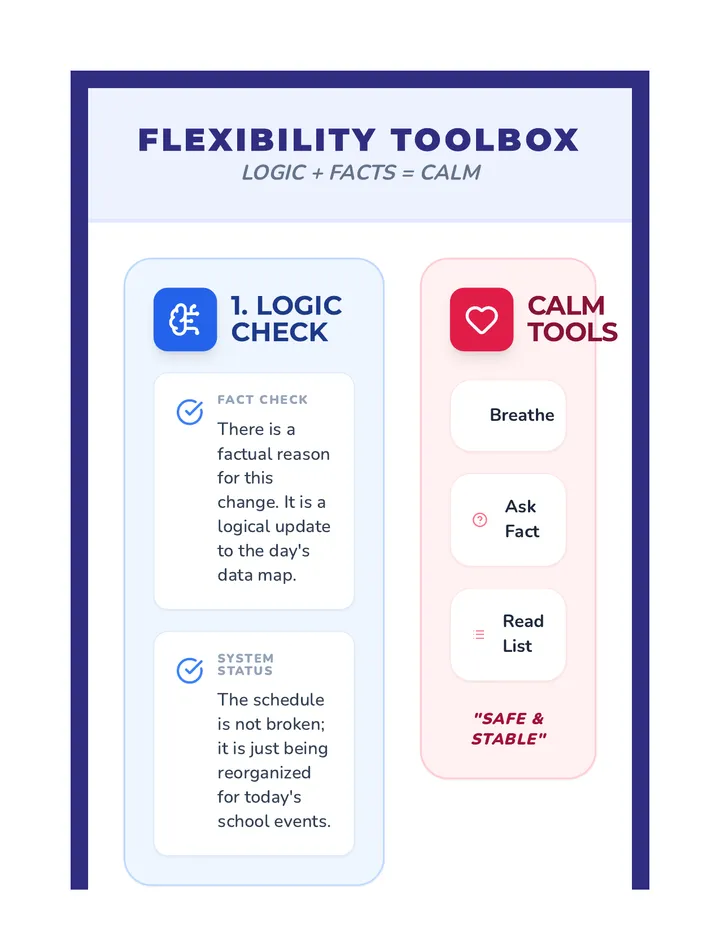
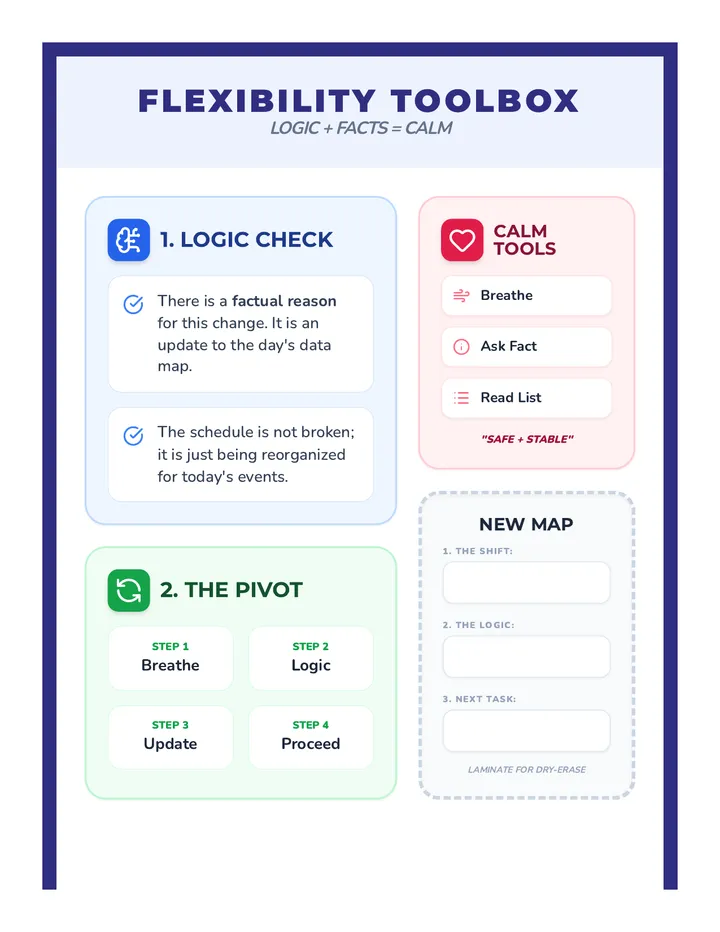
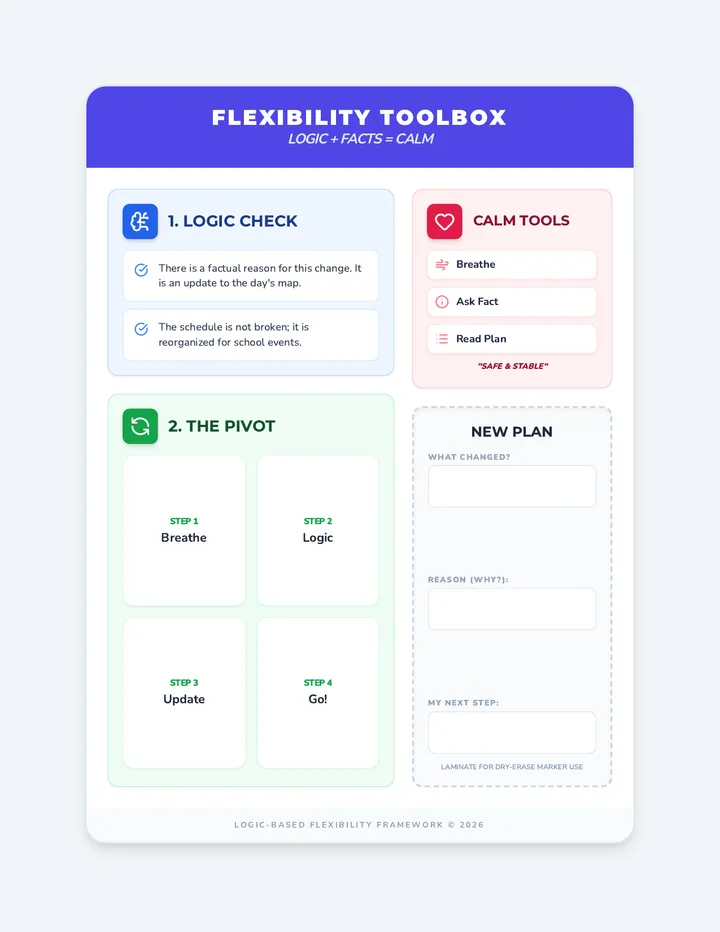
A sequence designed to help neurodivergent students navigate unexpected schedule changes with logic-based social stories and visual tools.
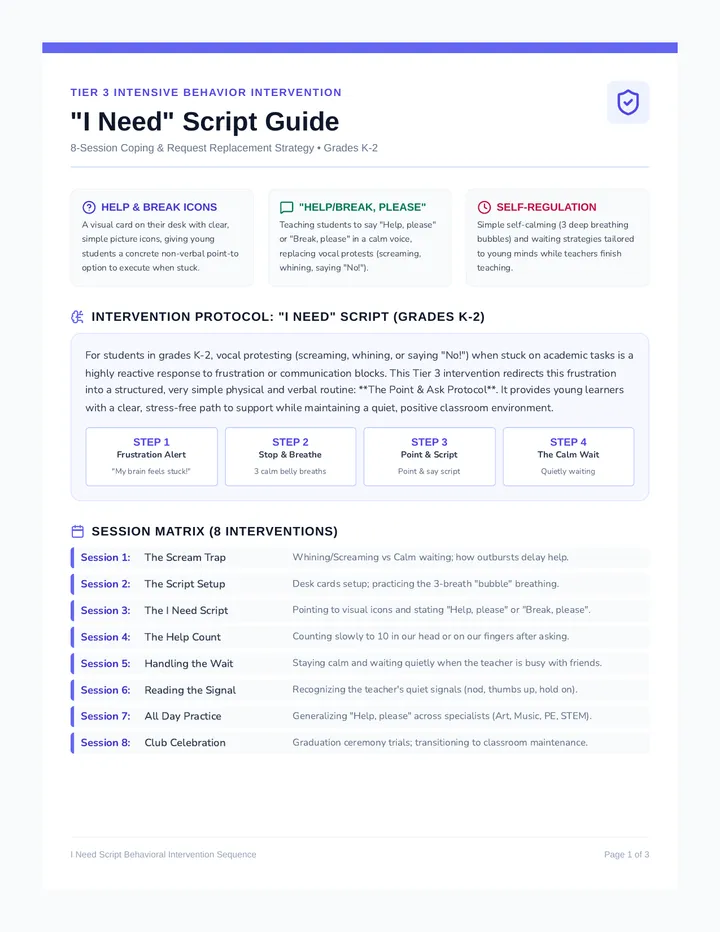
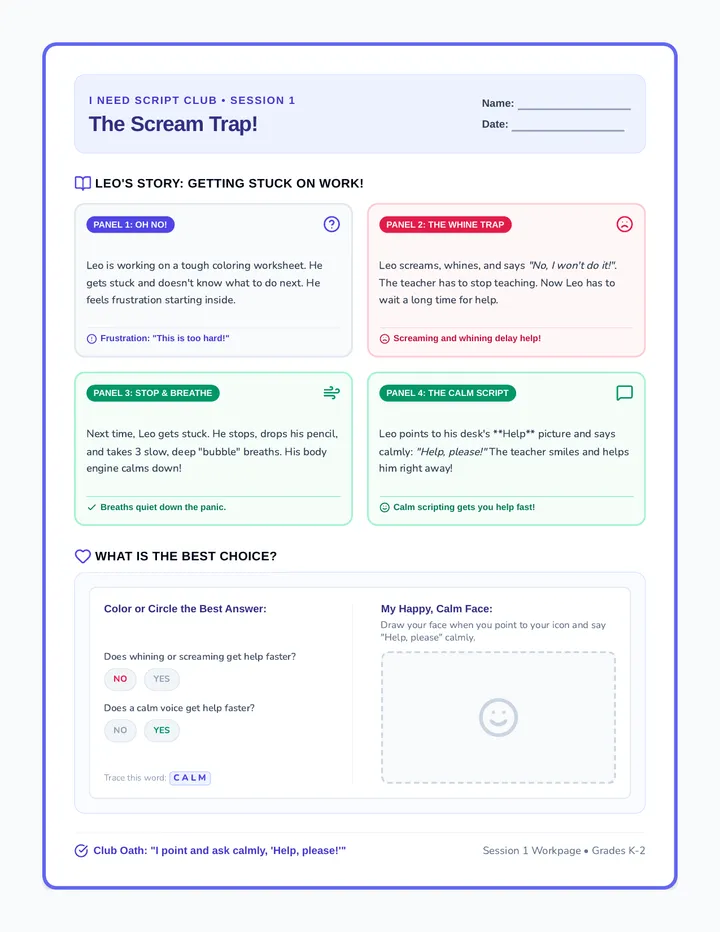
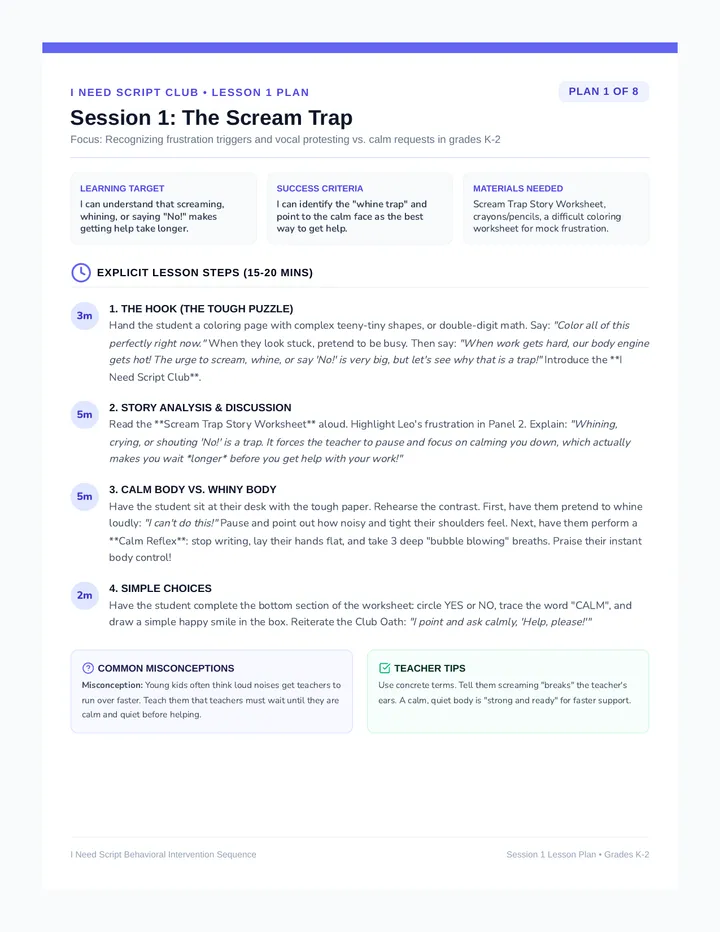
An 8-session intensive behavioral intervention sequence for students in grades K-2 targeting vocal protesting such as screaming, whining, or saying 'No!' when stuck on work. It teaches the 'I Need' Script replacement behavior: pointing to a 'Help' or 'Break' icon and asking calmly 'Help, please' or 'Break, please'.
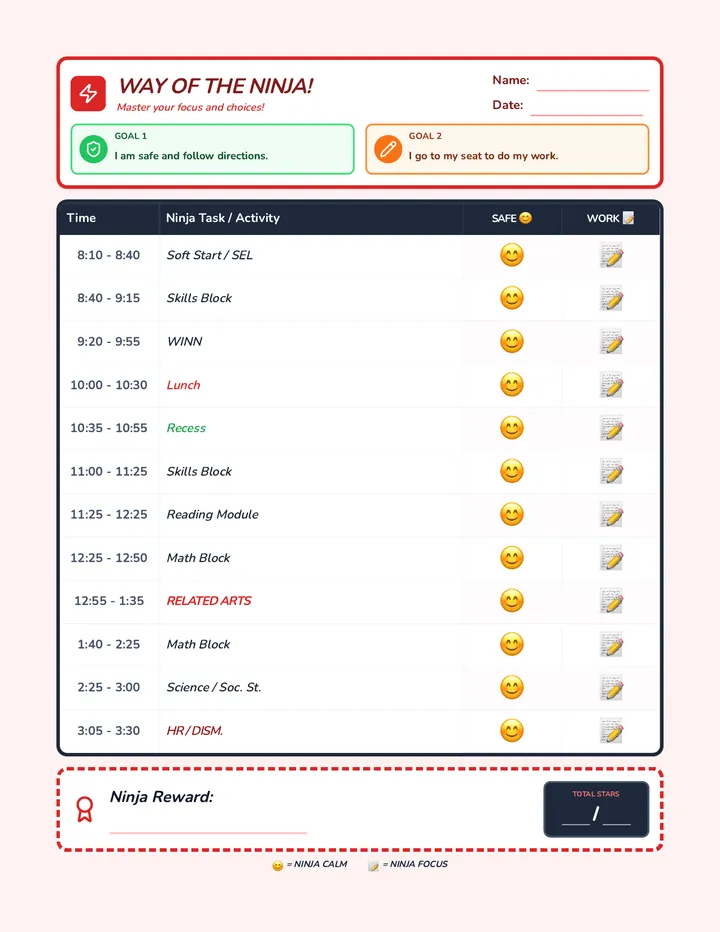
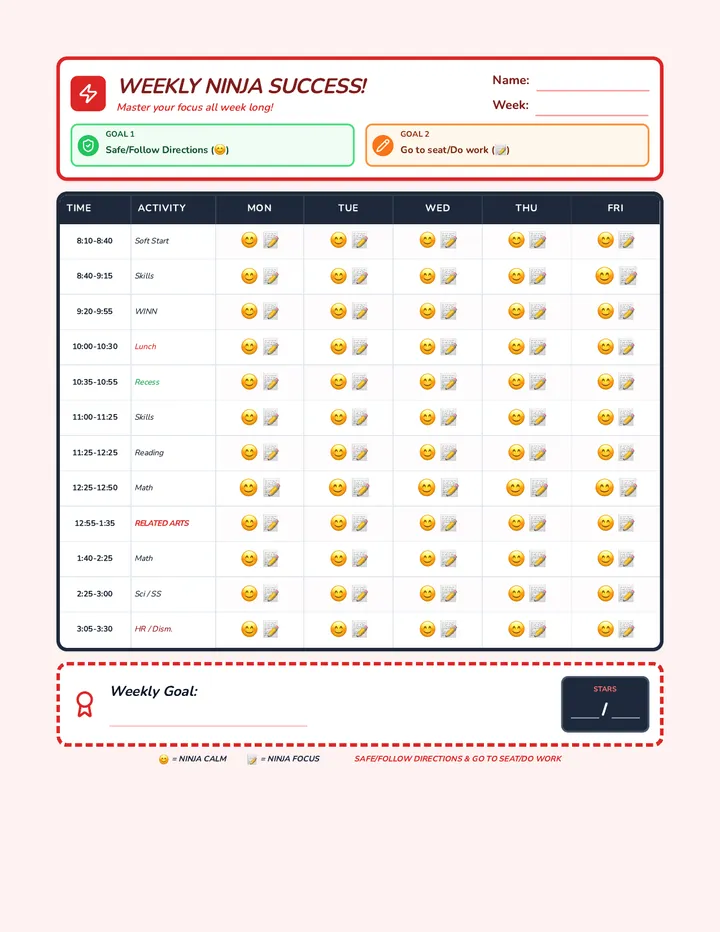
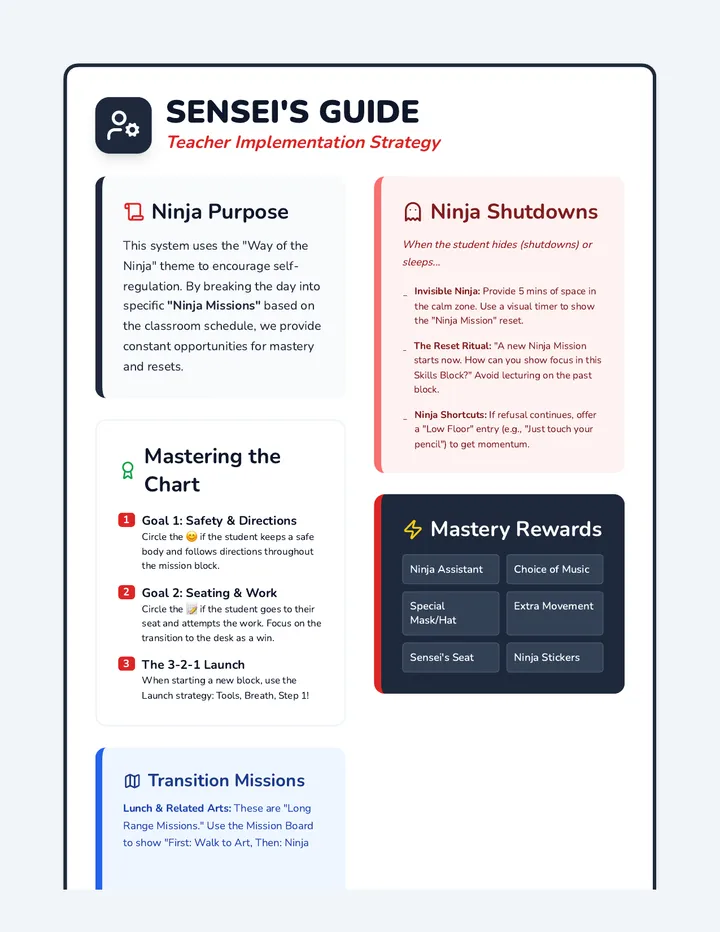
A comprehensive behavior tracking system designed for a 1st-grade student struggling with work refusal and transitions. The system uses a 30-minute incremental tracker, visual desk reminders, and a teacher implementation guide to foster safety and academic engagement.
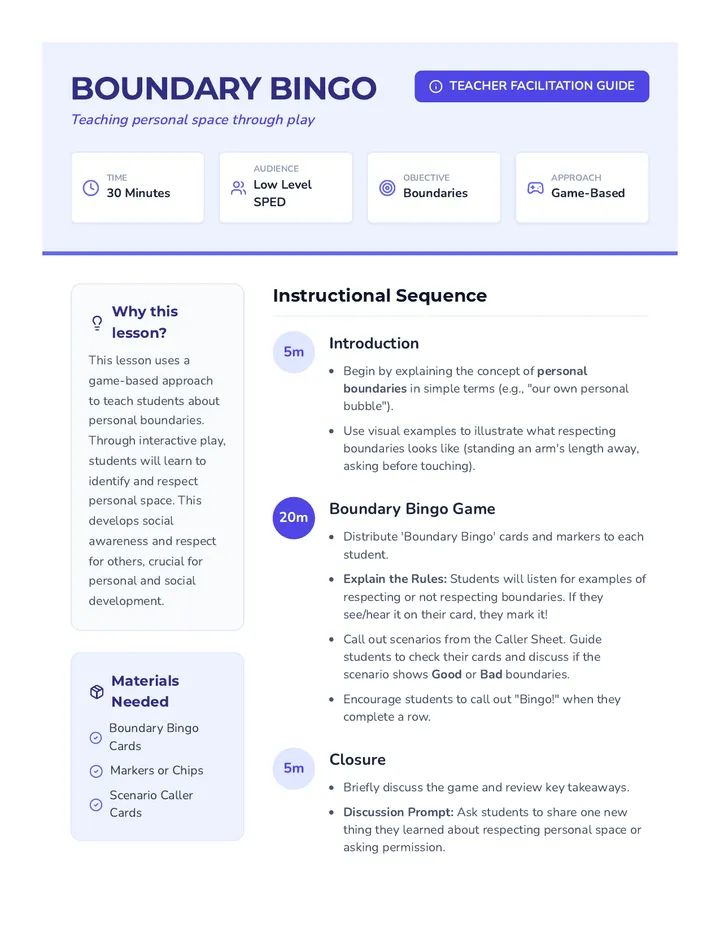
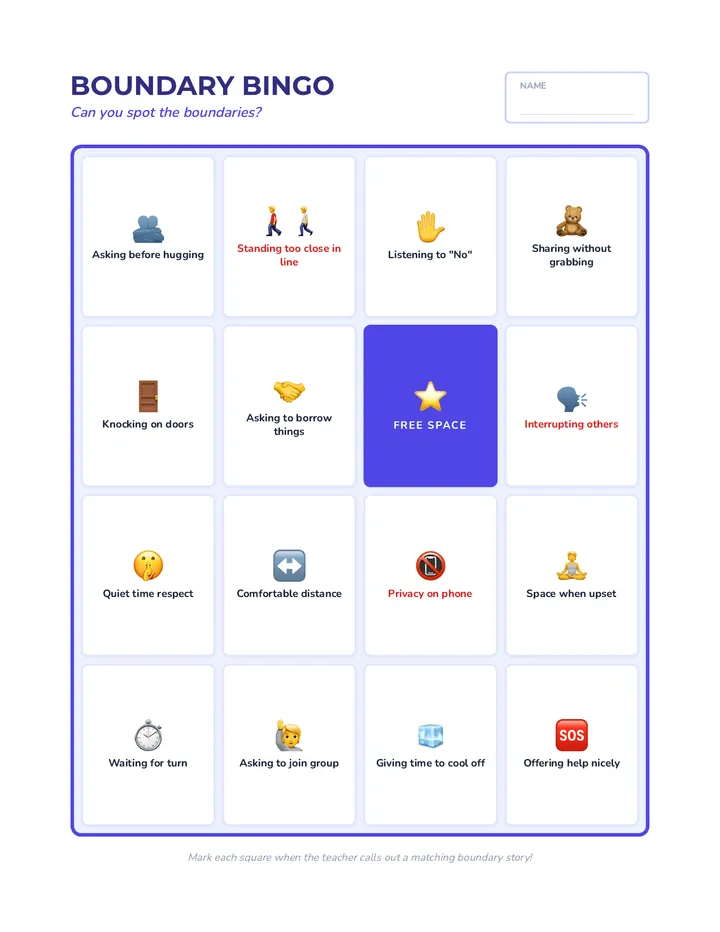
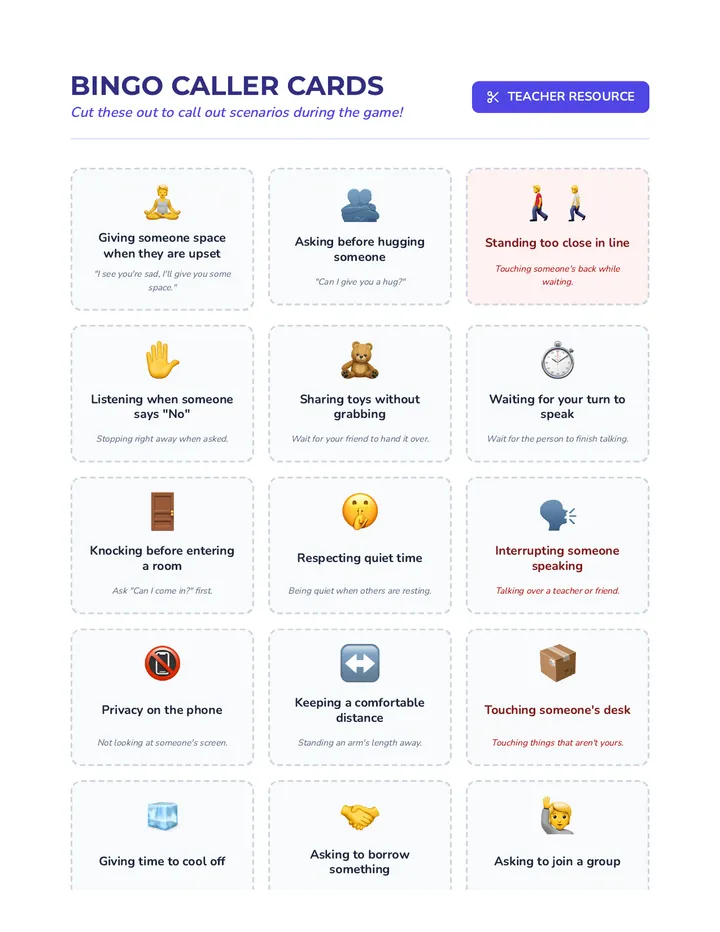
A game-based lesson designed for low-level SPED students to learn about and practice respecting personal boundaries and space through interactive play.
A 20-minute Tier 1 lesson for exceptional children introducing the concept of personal space bubbles to improve social comfort and reduce task avoidance.
A comprehensive lesson designed to help a 3rd-grade student recognize and shift from 'stuck thinking' to 'flexible thinking' during transitions and writing tasks. Includes a social story, role-playing, and tangible strategy cards.
A comprehensive social story and supporting tools designed for an academically advanced 2nd grader to manage non-preferred tasks, transitions, and big emotions using verbal communication and solution-seeking strategies instead of screaming or eloping.
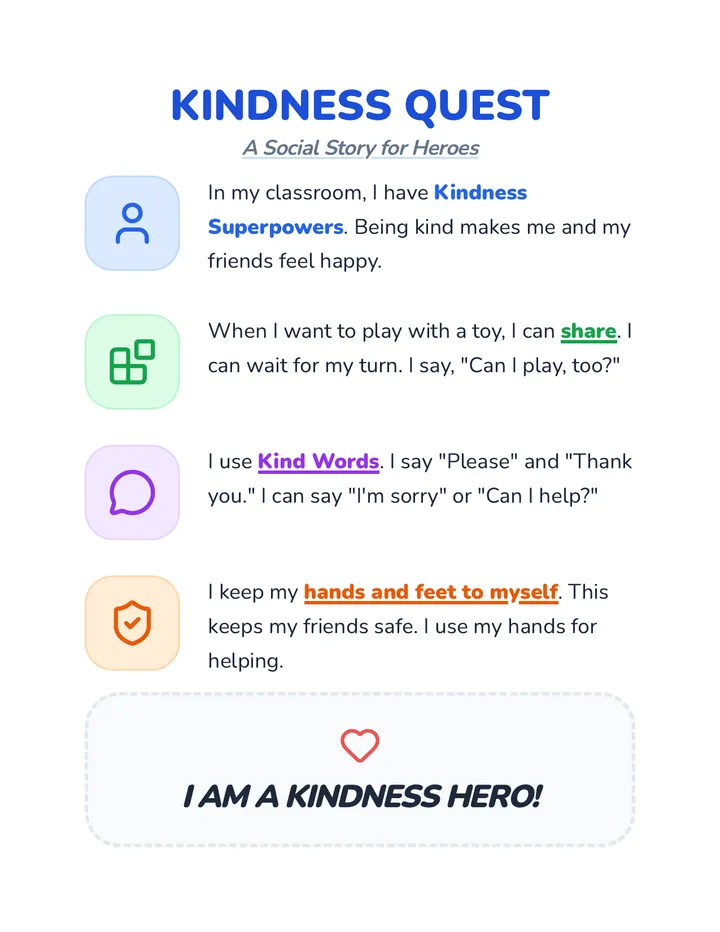
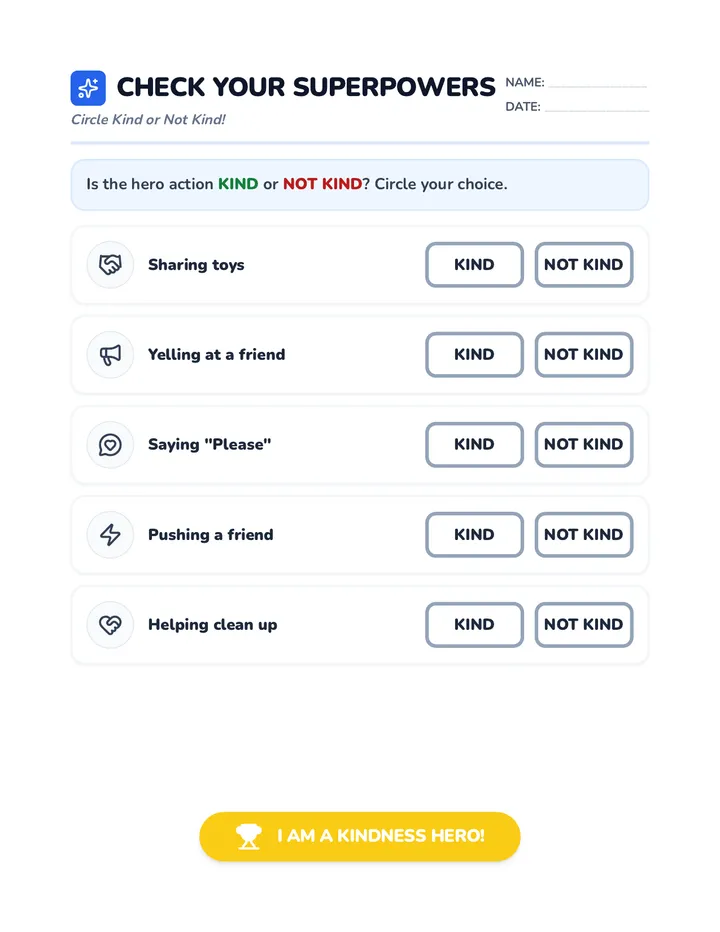
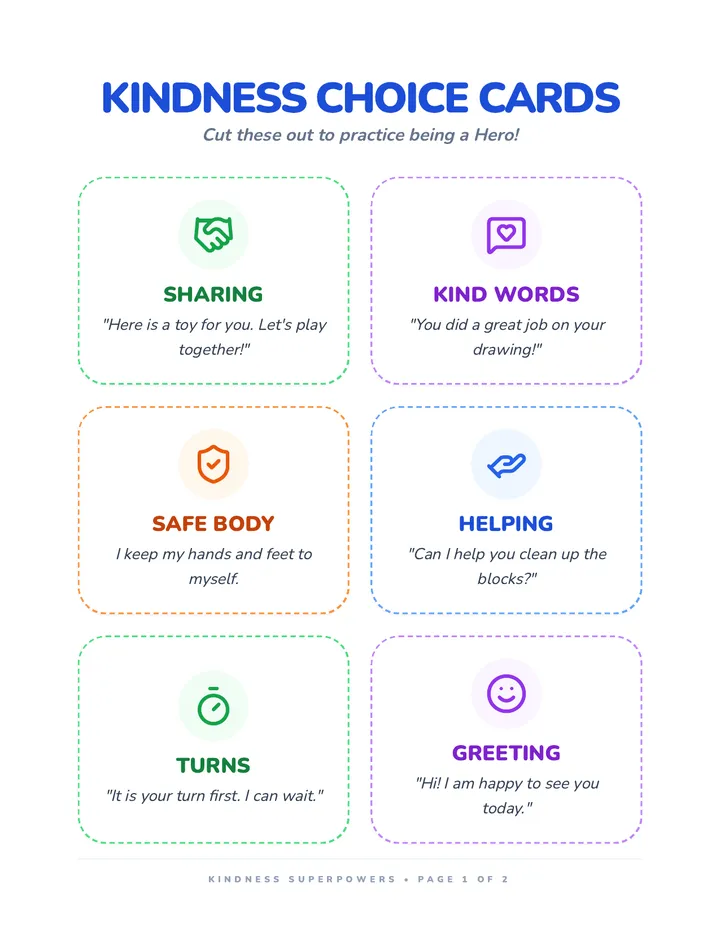
A lesson designed for students with disabilities focusing on three core kindness skills: sharing, using kind words, and keeping hands and feet to oneself. This lesson uses the 'Kindness Superpowers' theme to engage students in social-emotional learning.
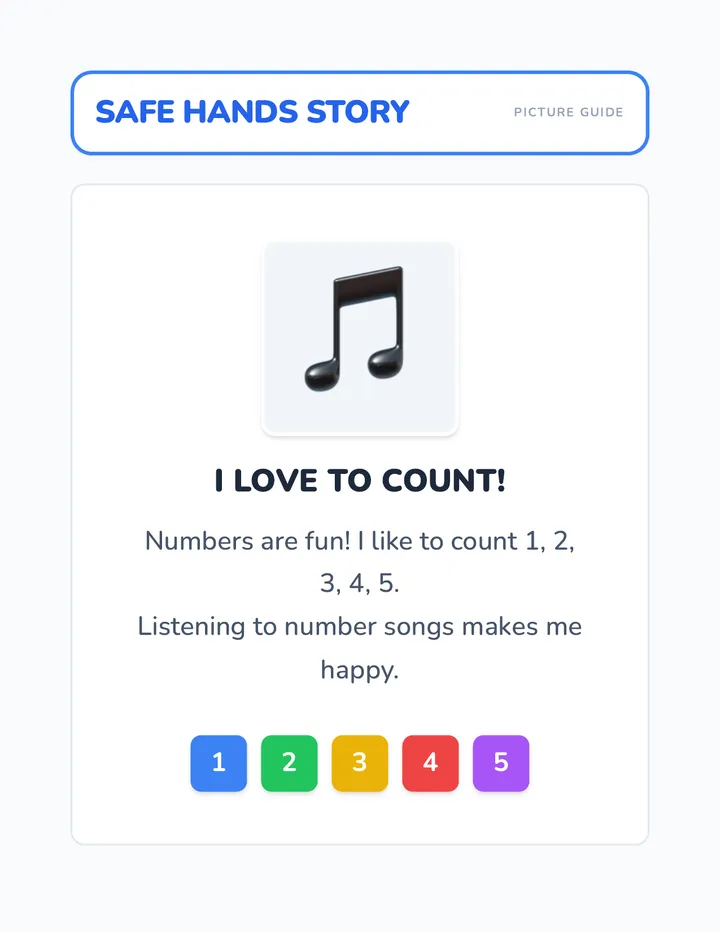
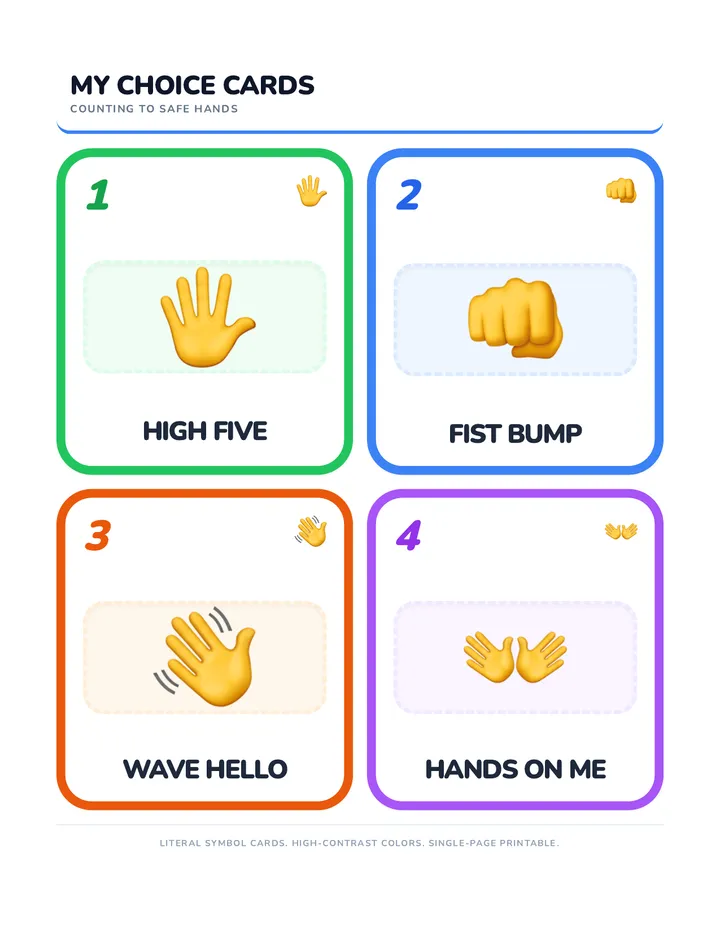
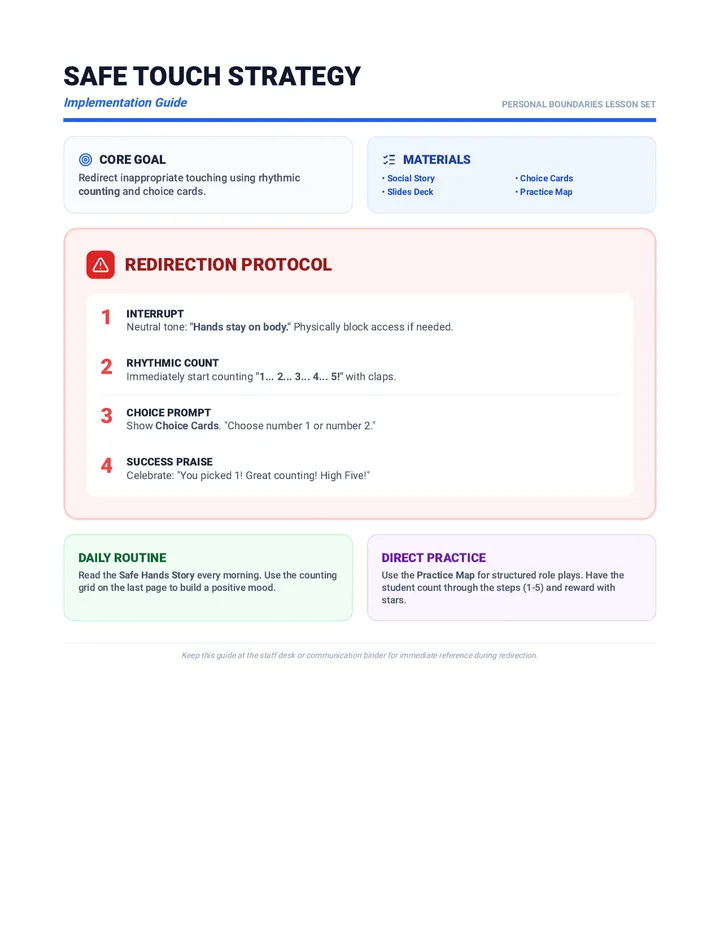
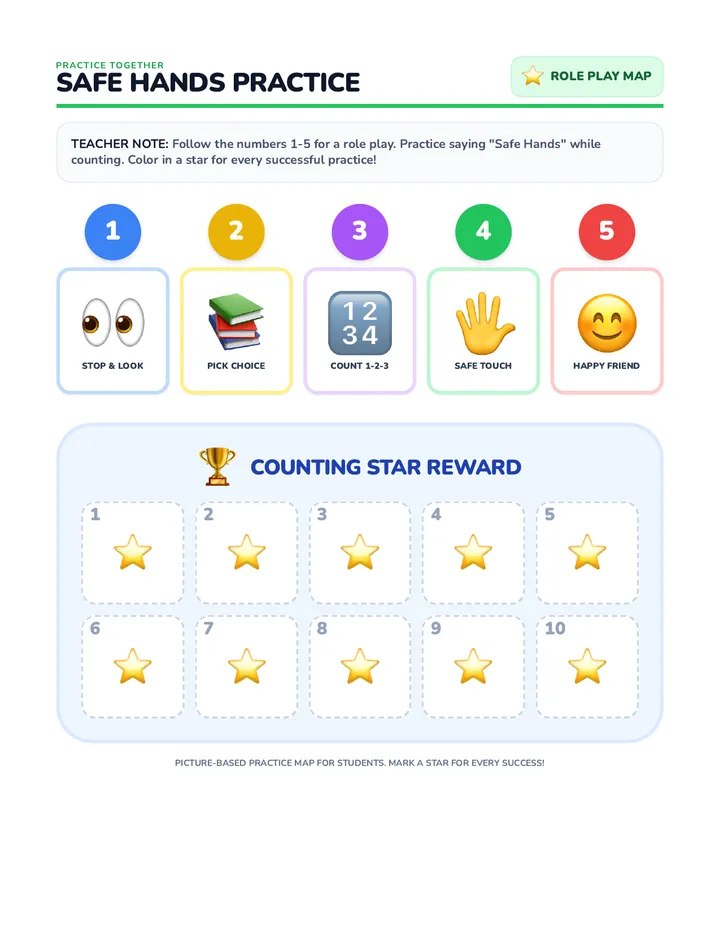
A social boundaries lesson designed for a student who uses PECS and enjoys counting songs. The lesson focuses on identifying safe touches and using numbers to regulate social interactions.
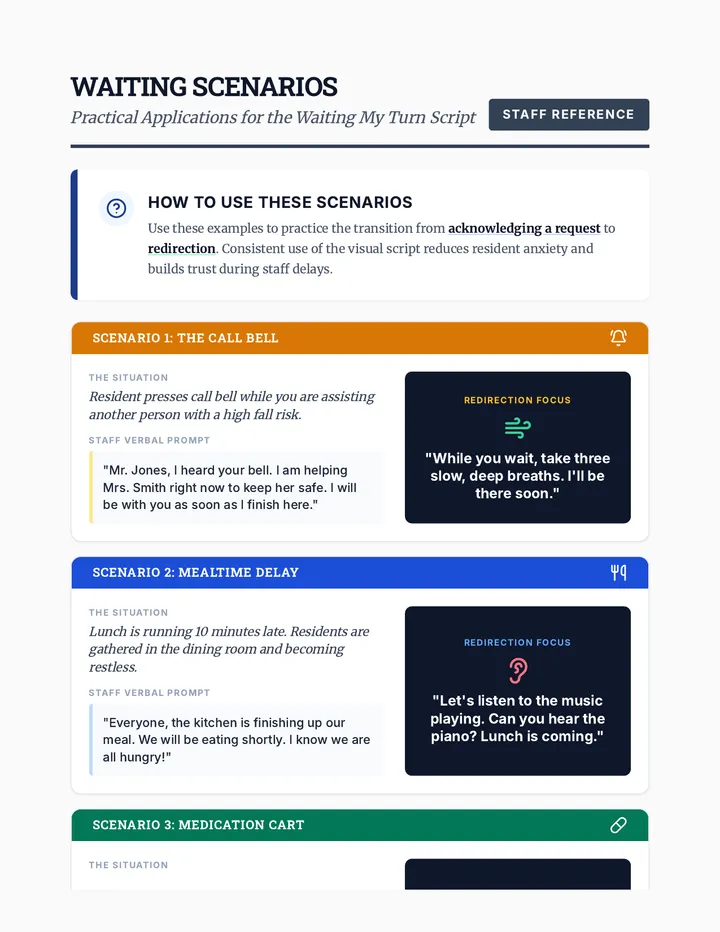
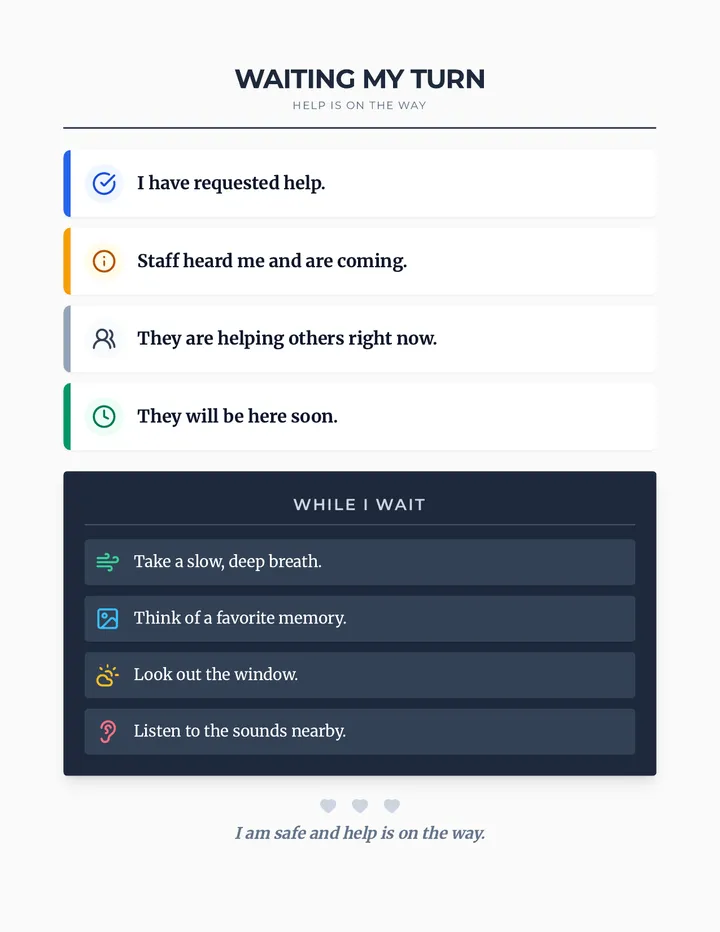
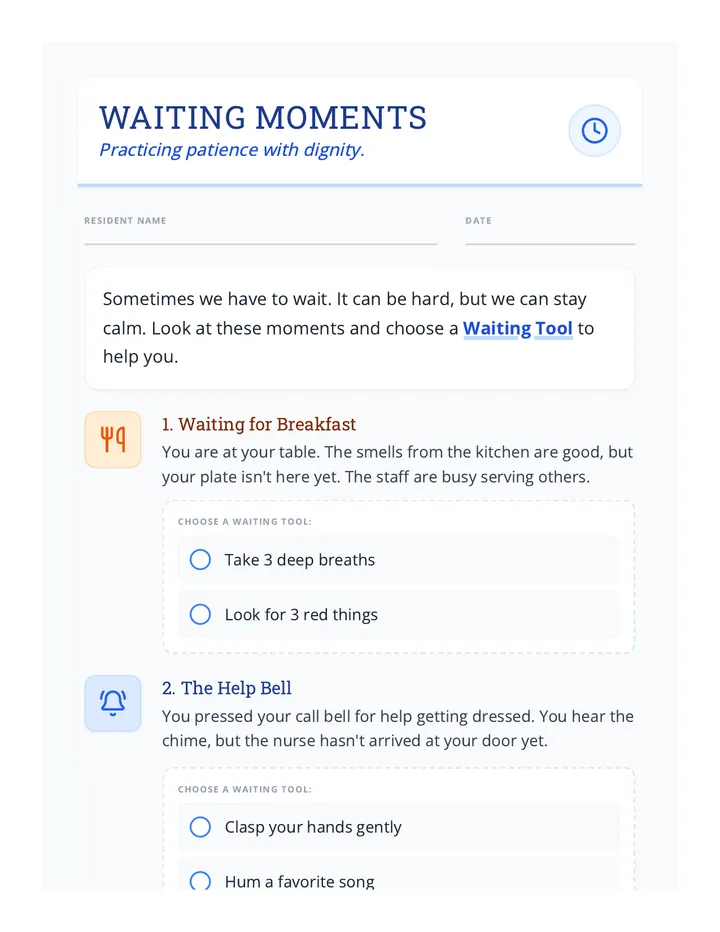
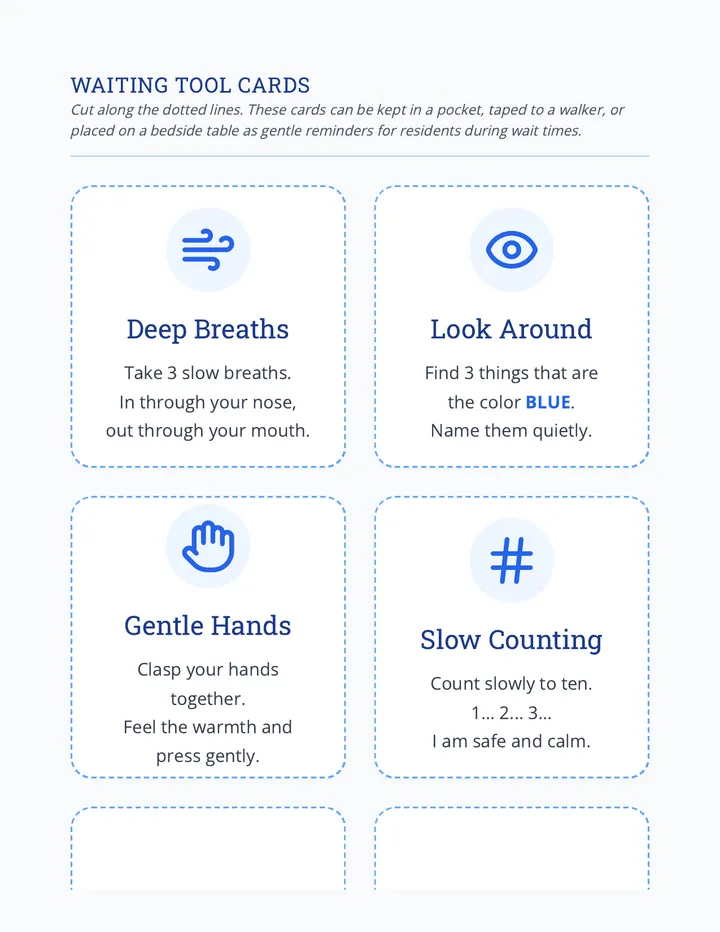
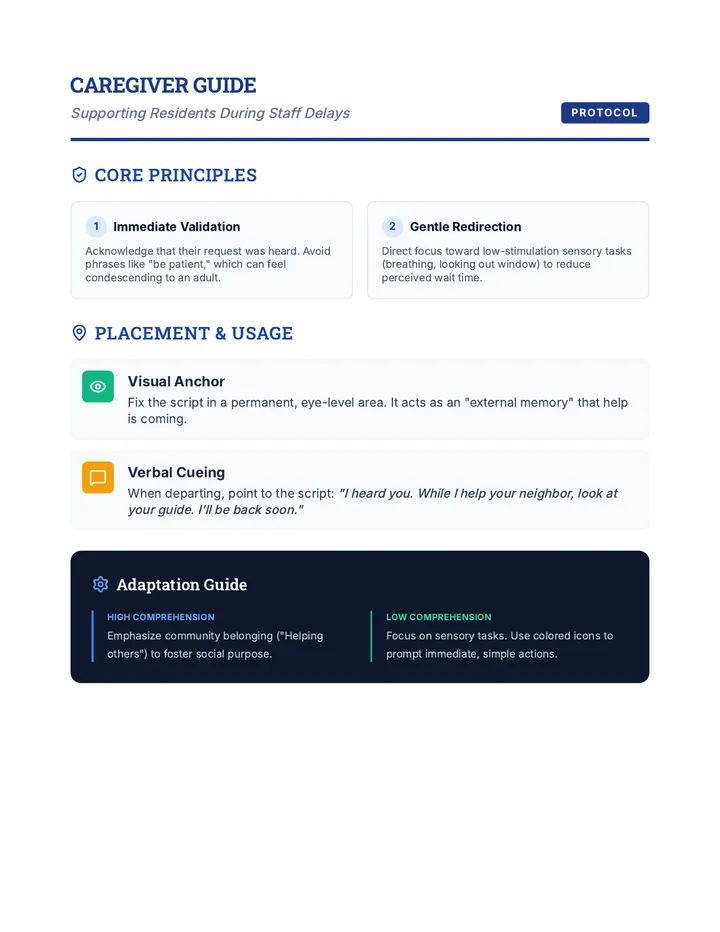
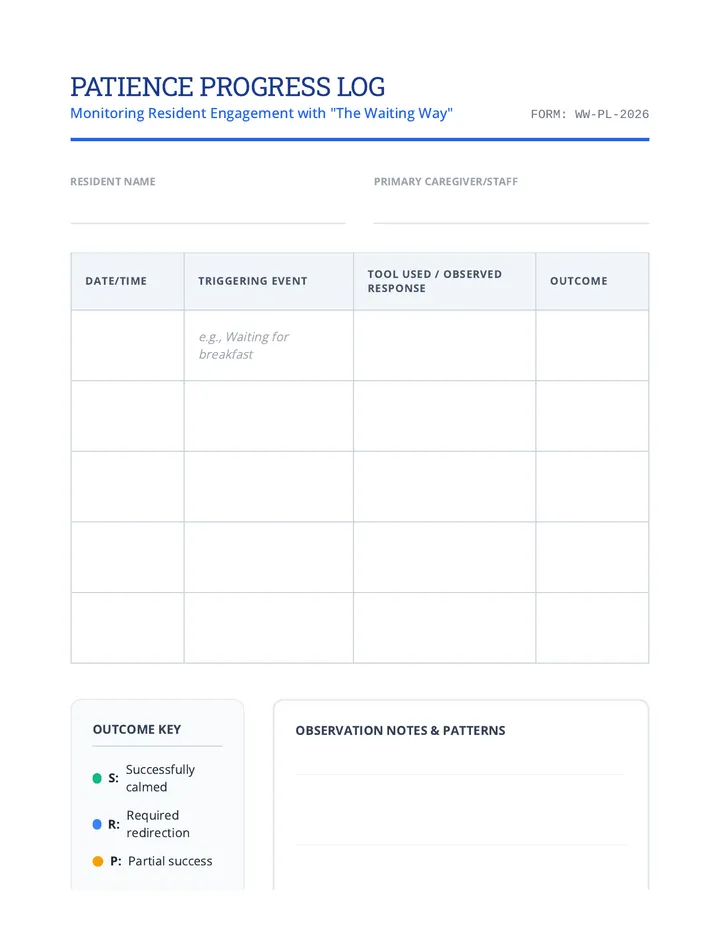
A lesson designed to support adults with cognitive decline in nursing home settings, focusing on the social and emotional skills needed to wait for staff assistance patiently.
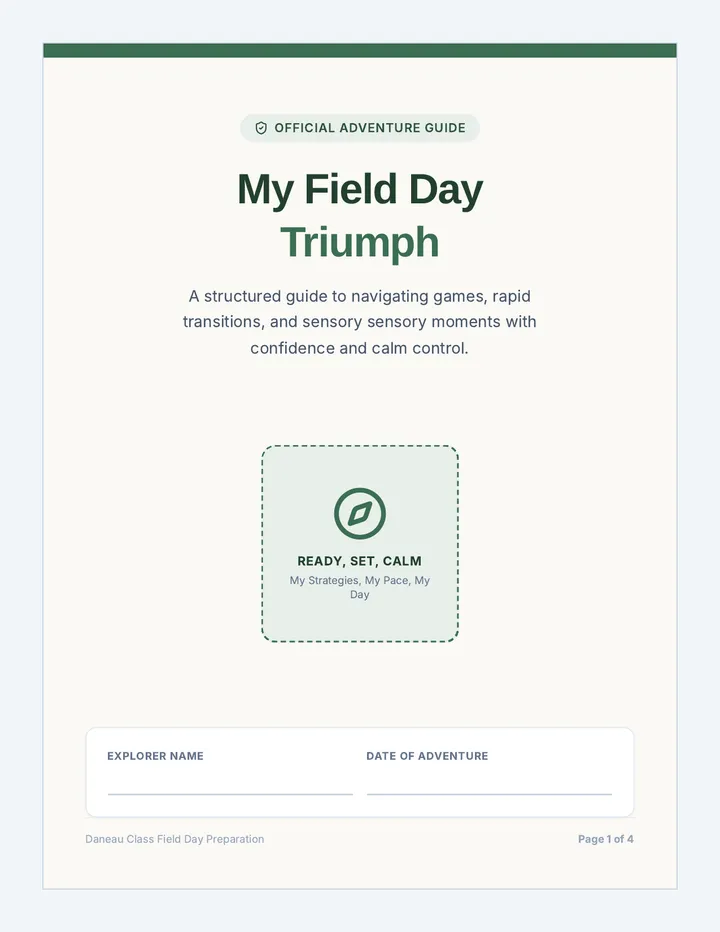
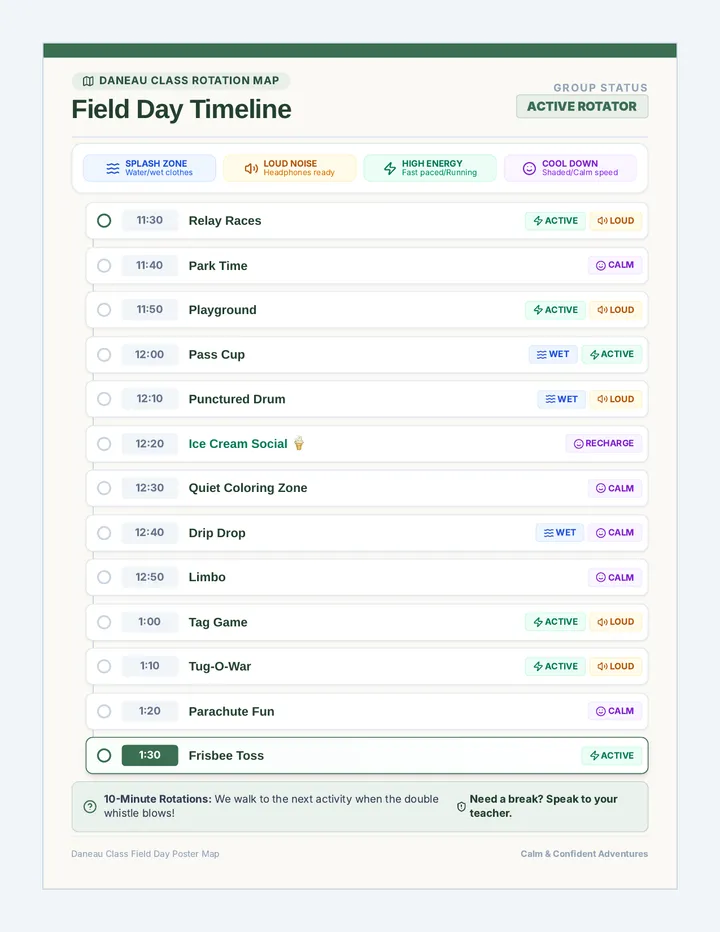
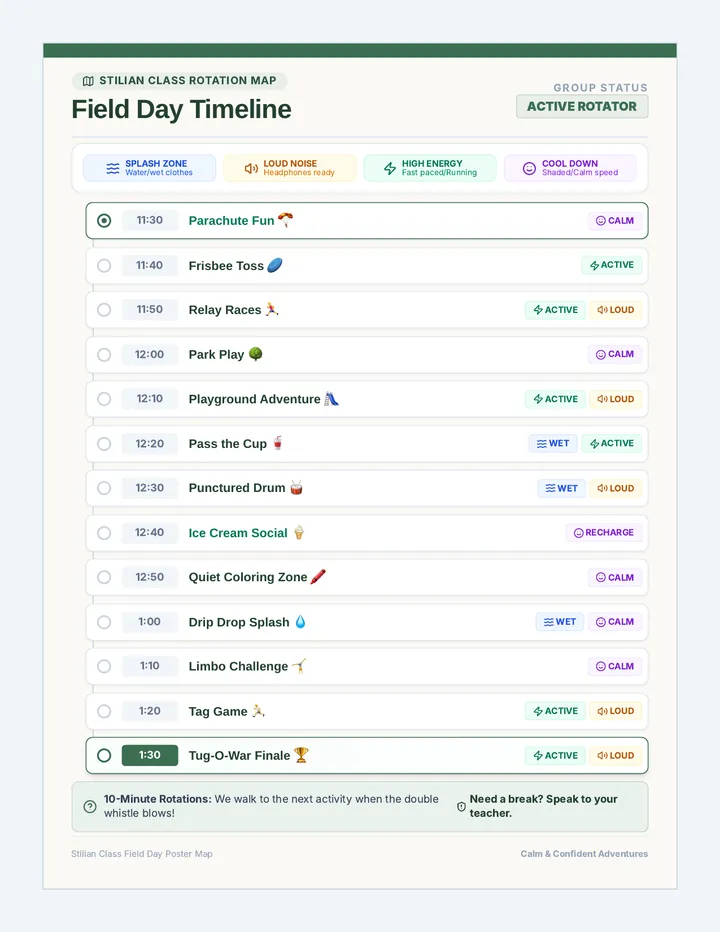
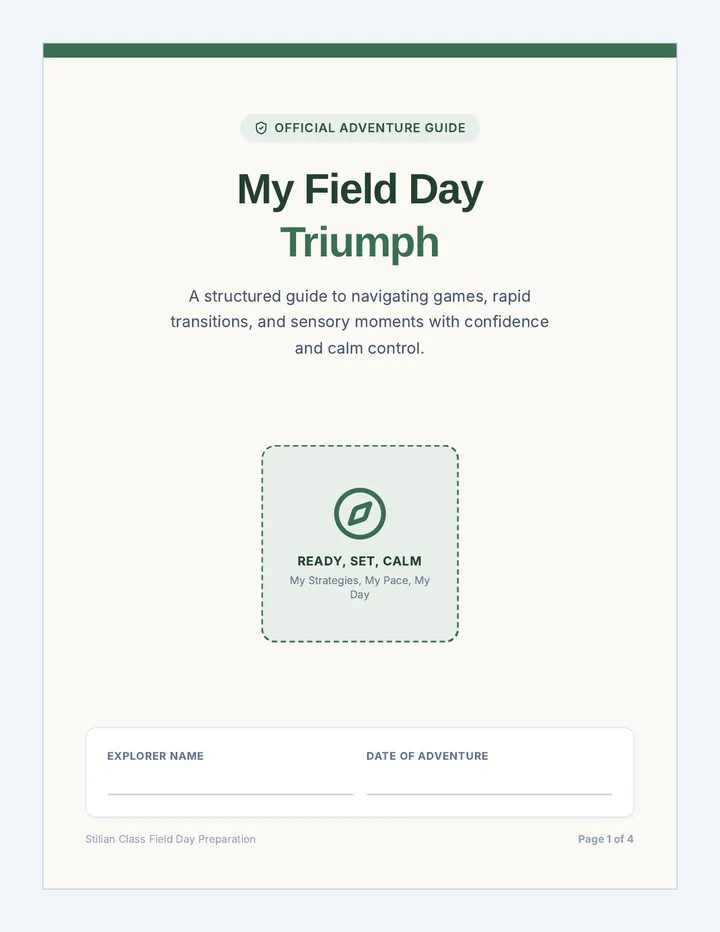
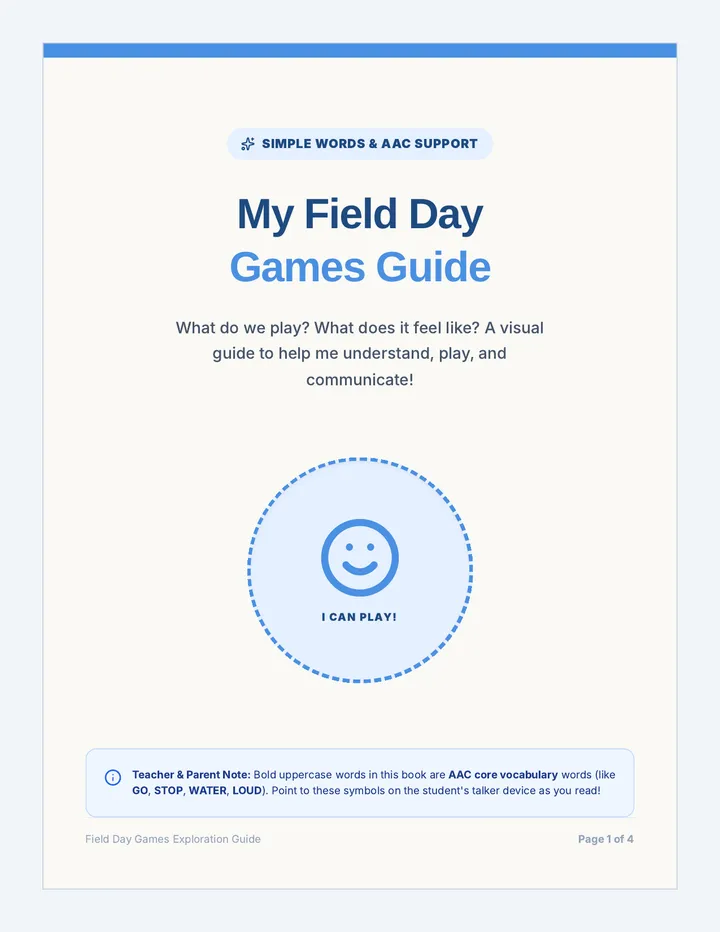
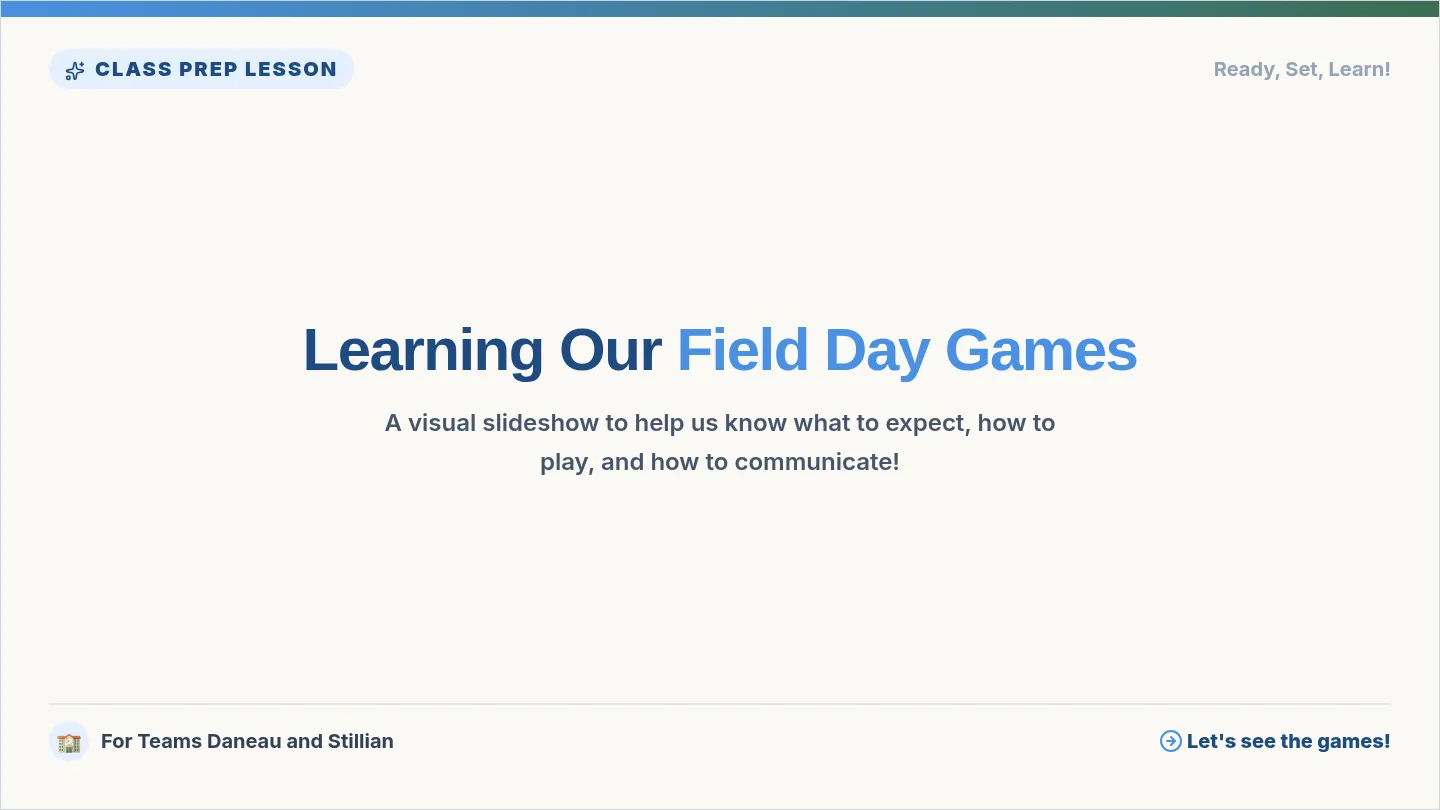
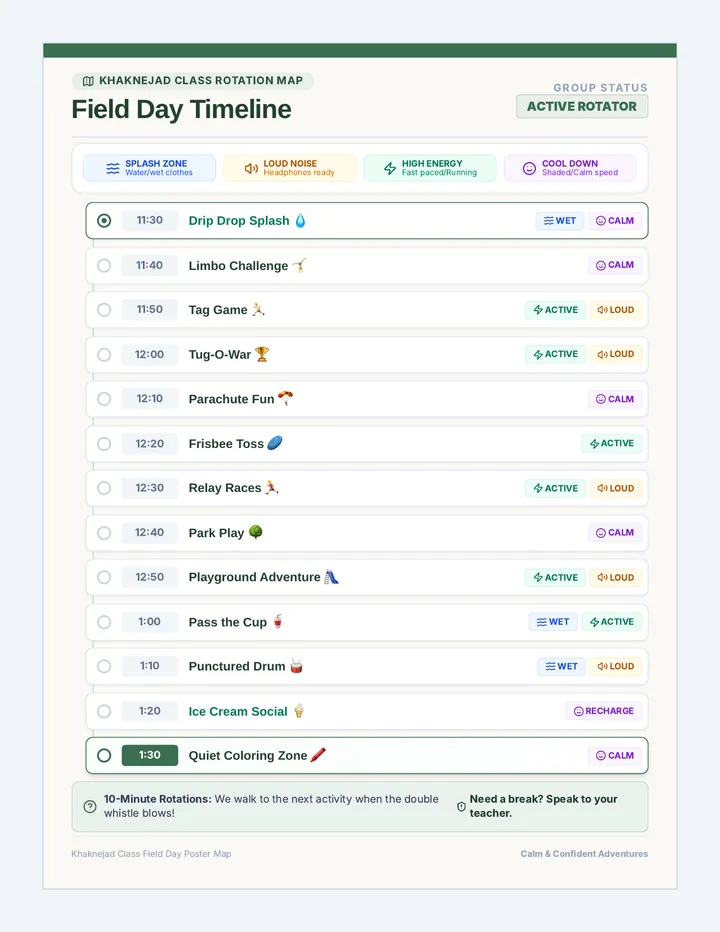
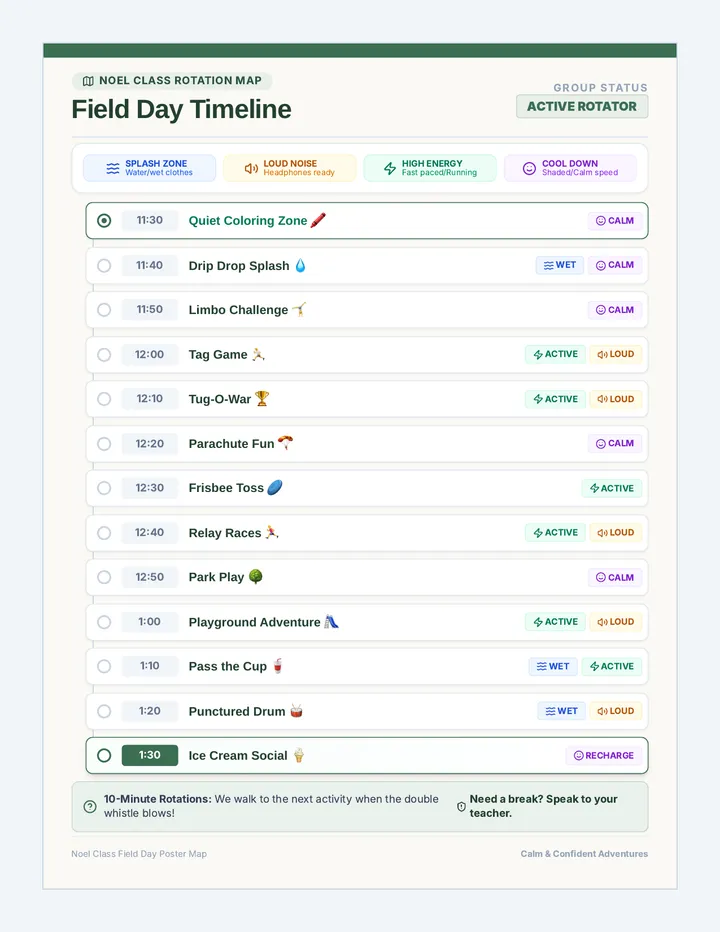
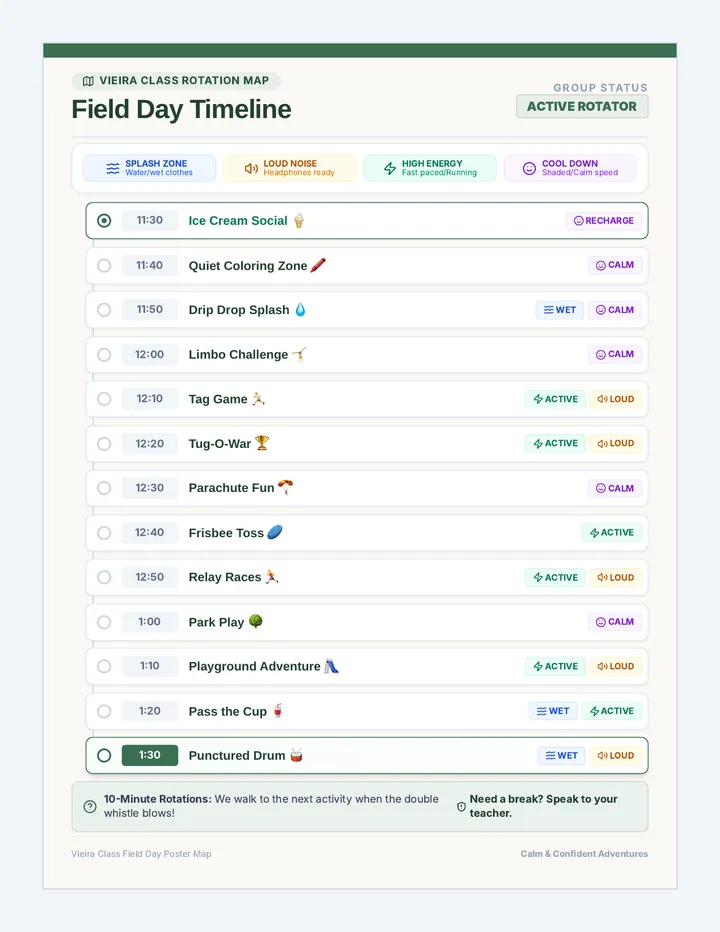
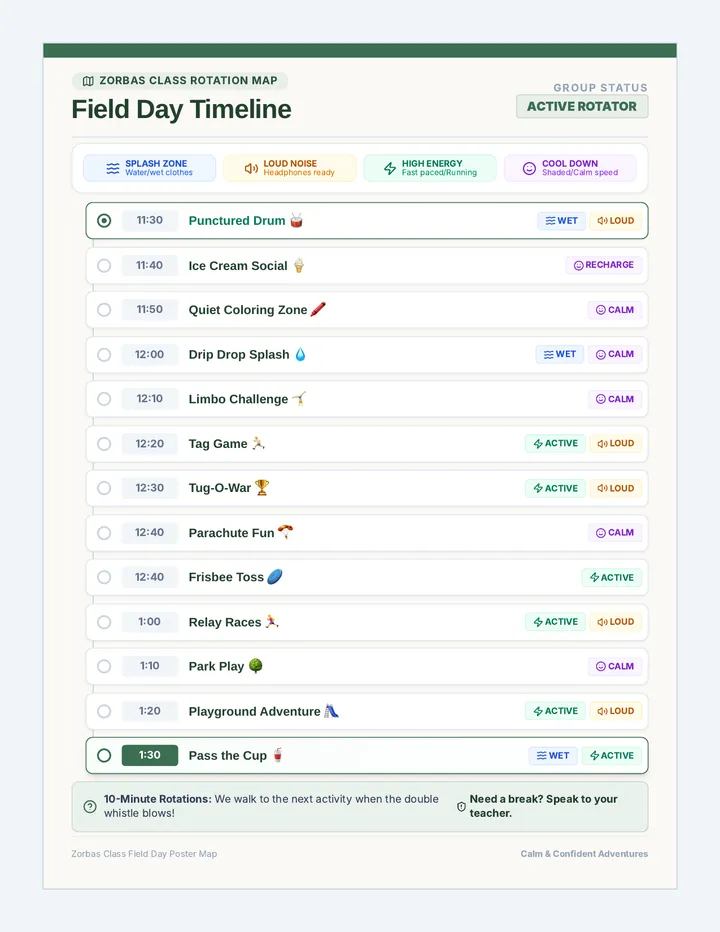
A comprehensive preparation resource set for Field Day, designed for upper elementary and sensory-sensitive students. It includes a structured, coping-strategy-focused social story booklet and a beautifully organized, visual rotation schedule poster to support seamless transitions.
A lesson for highly intelligent 1st grade students with autism focused on turn-taking and classroom flexibility using the metaphor of a 'Classroom Garden' to illustrate how every student's voice needs space to grow.
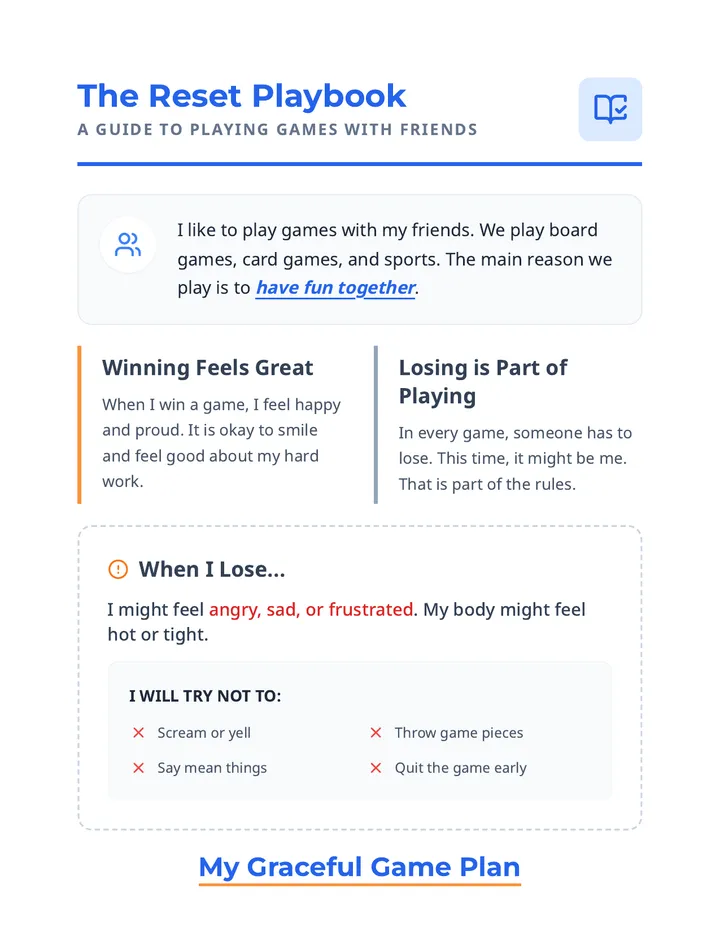
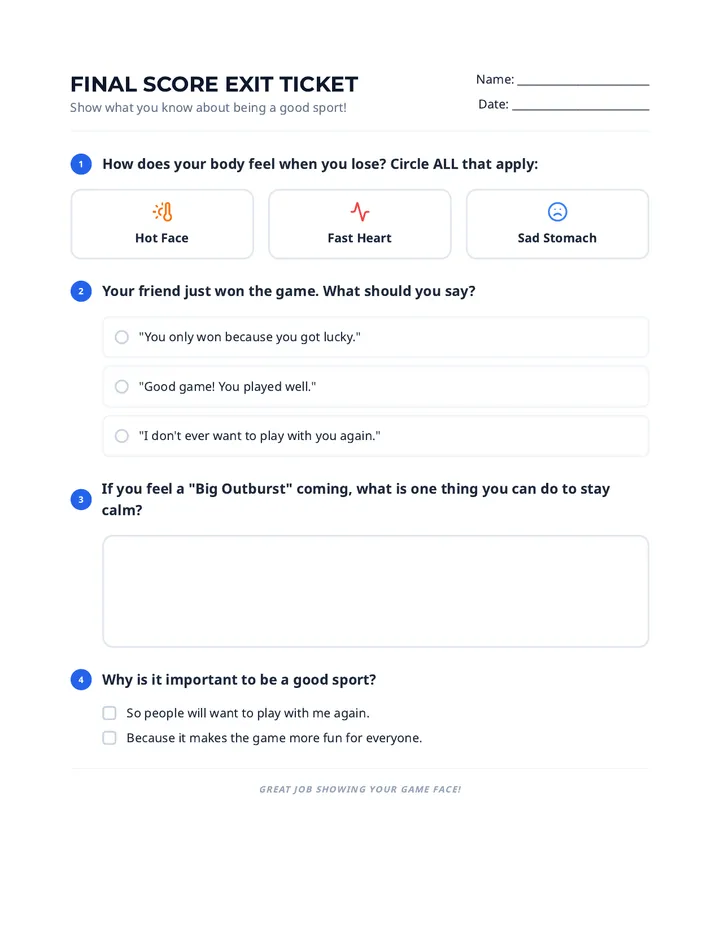
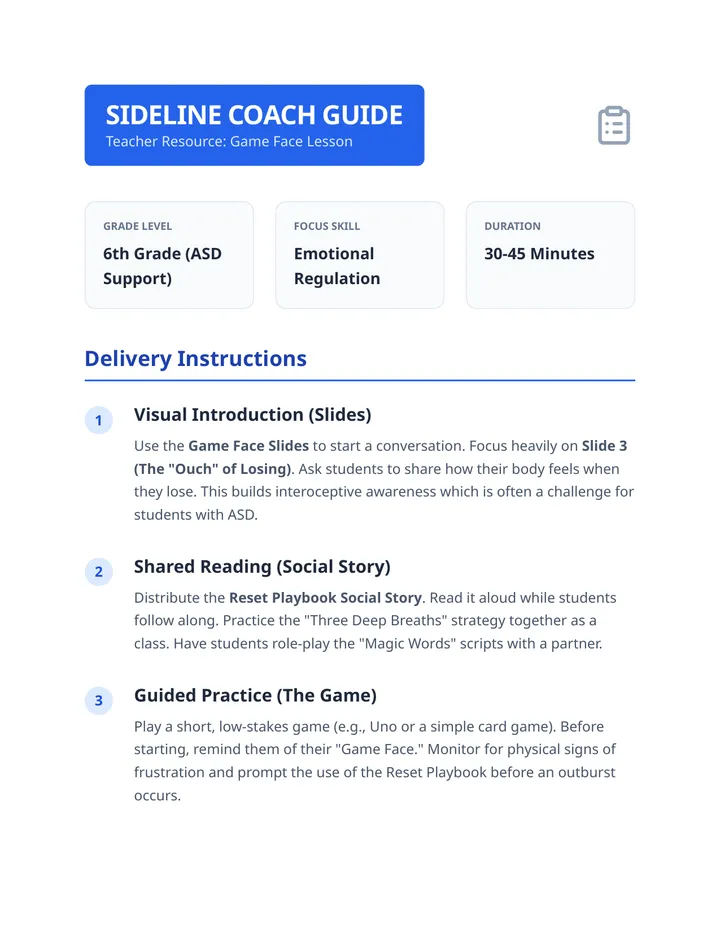
A lesson designed for 6th-grade students with ASD to develop the social skills needed to lose gracefully during games, featuring a social story, visual slides, and an exit ticket.
A comprehensive set of resources designed to help a 6th-grade student understand and manage classroom call-outs and volume control using a 'Sound Engineer' metaphor. The lesson includes a social story, visual prompts for staff, and a coaching guide for implementation.