Visual supports and symbol-based software for developing literacy and functional communication. Targets students with complex communication needs through picture-word association and structured AAC systems.
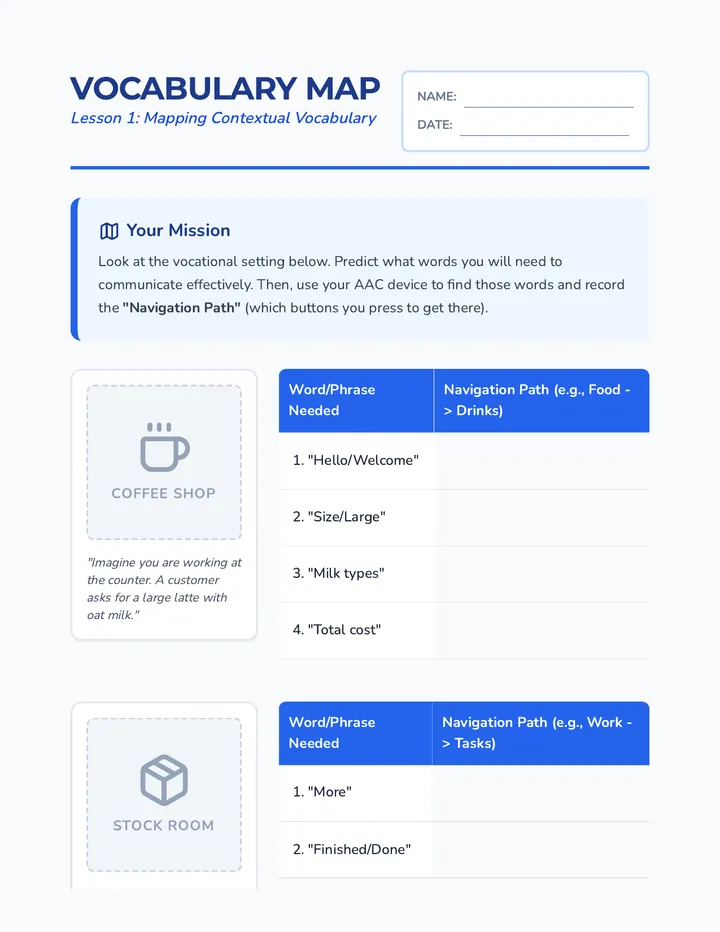
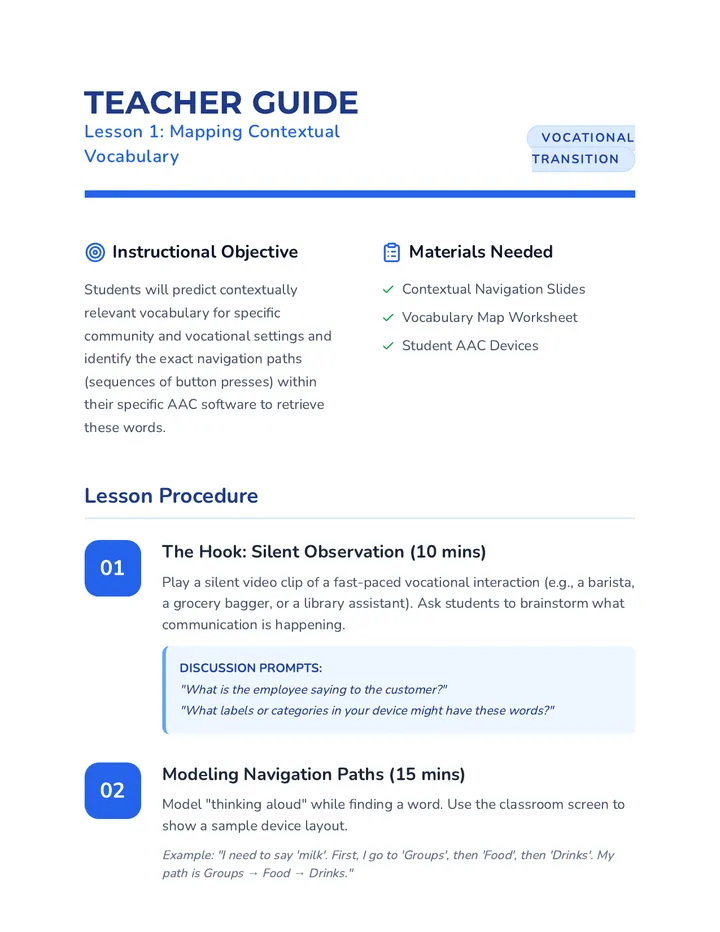
This sequence prepares 10th-grade students for the transition to community and vocational life by mastering the navigation of Augmentative and Alternative Communication (AAC) devices. Students progress from identifying context-specific vocabulary to navigating complex, multi-folder social and professional interactions.
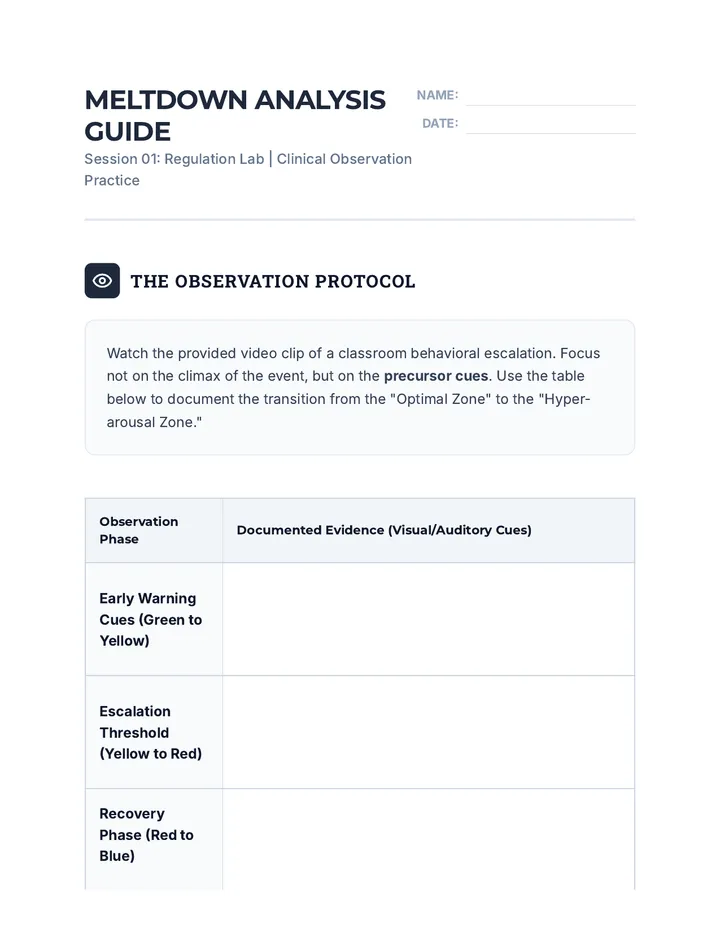
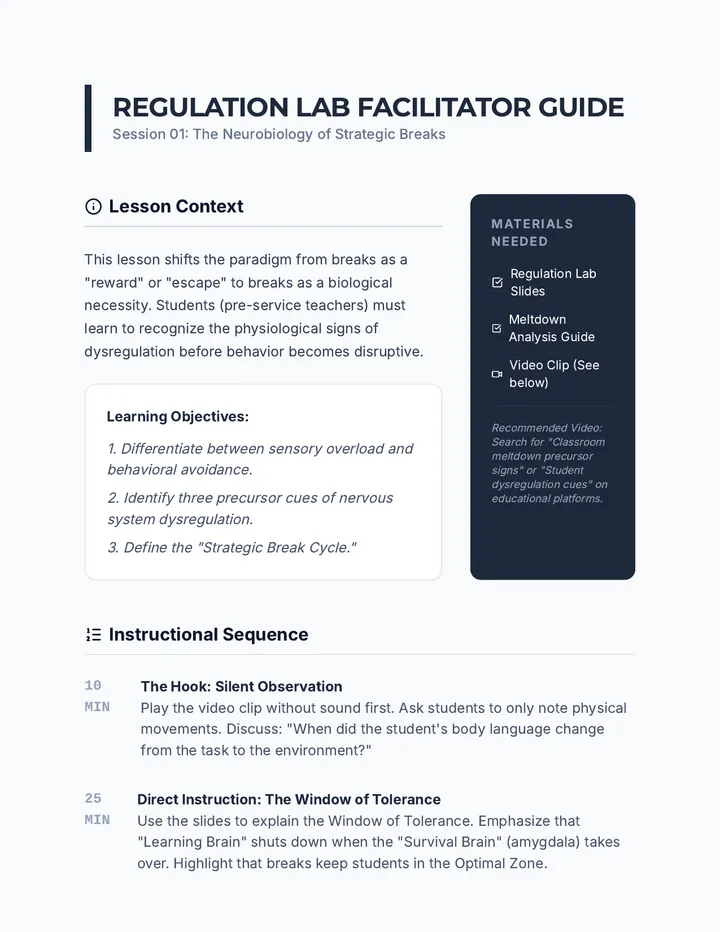
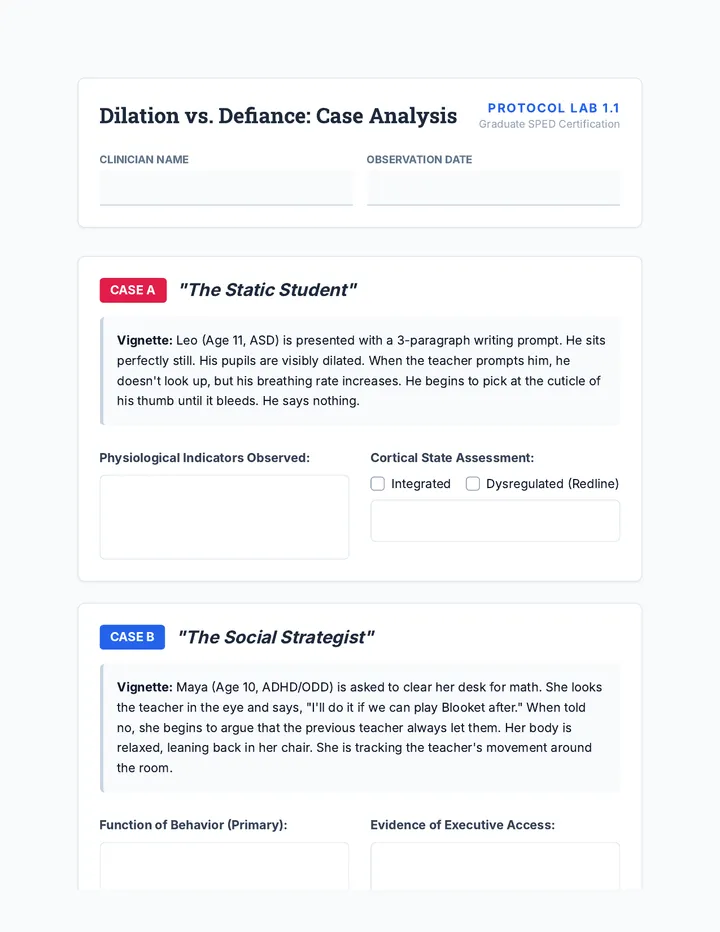
A workshop-style sequence for undergraduate education students focusing on the neurobiology, design, and implementation of strategic break systems for neurodivergent learners. Students transition from theoretical understanding to creating tangible visual supports and transition protocols.
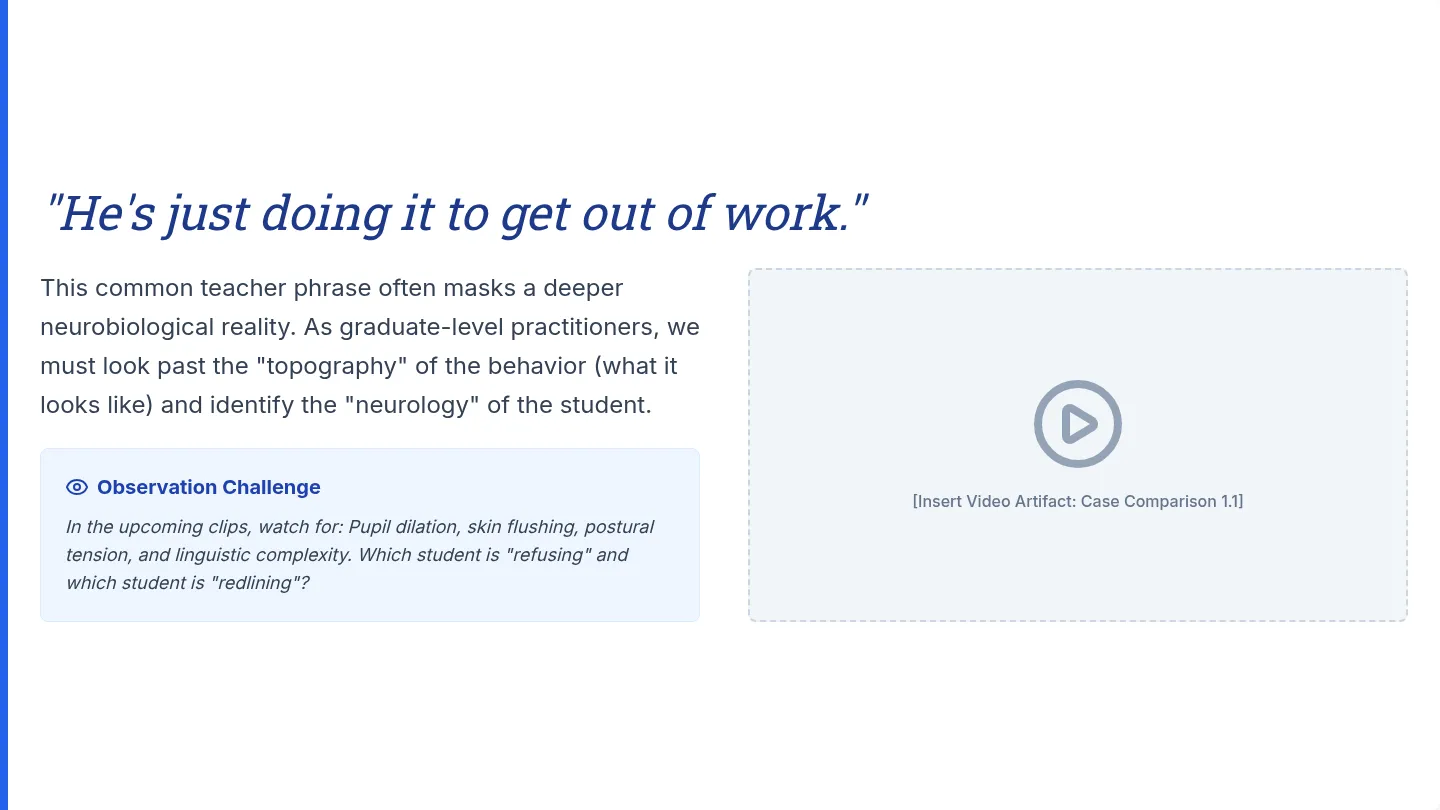
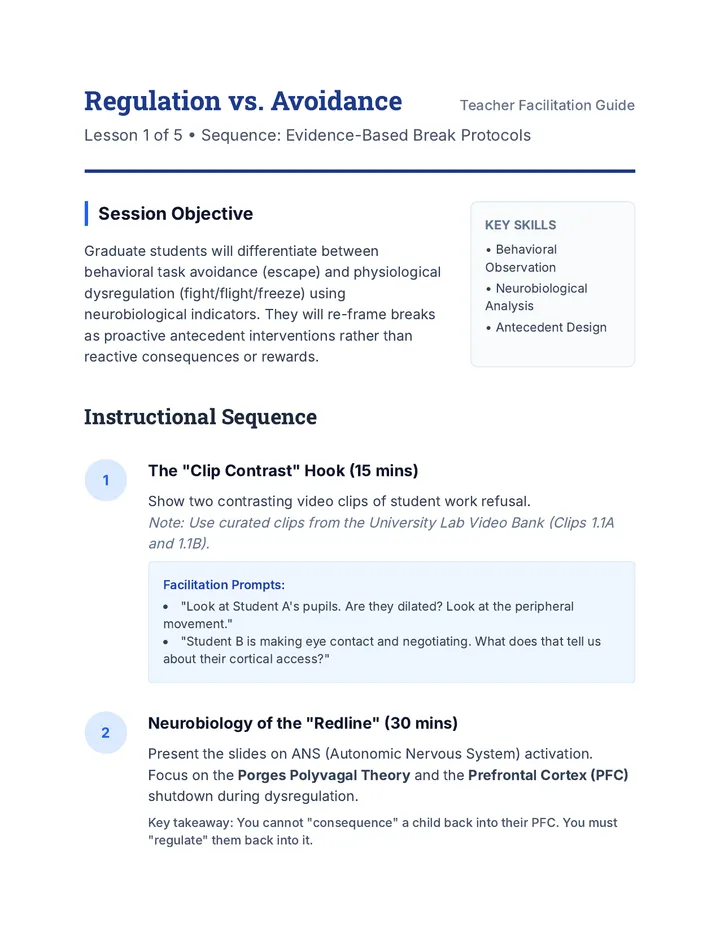
This advanced sequence guides graduate students through the design, implementation, and evaluation of strategic break protocols for neurodivergent learners. It covers the neurobiological basis for self-regulation, visual supports, sensory modality matching, and data-driven efficacy evaluation to foster student independence.
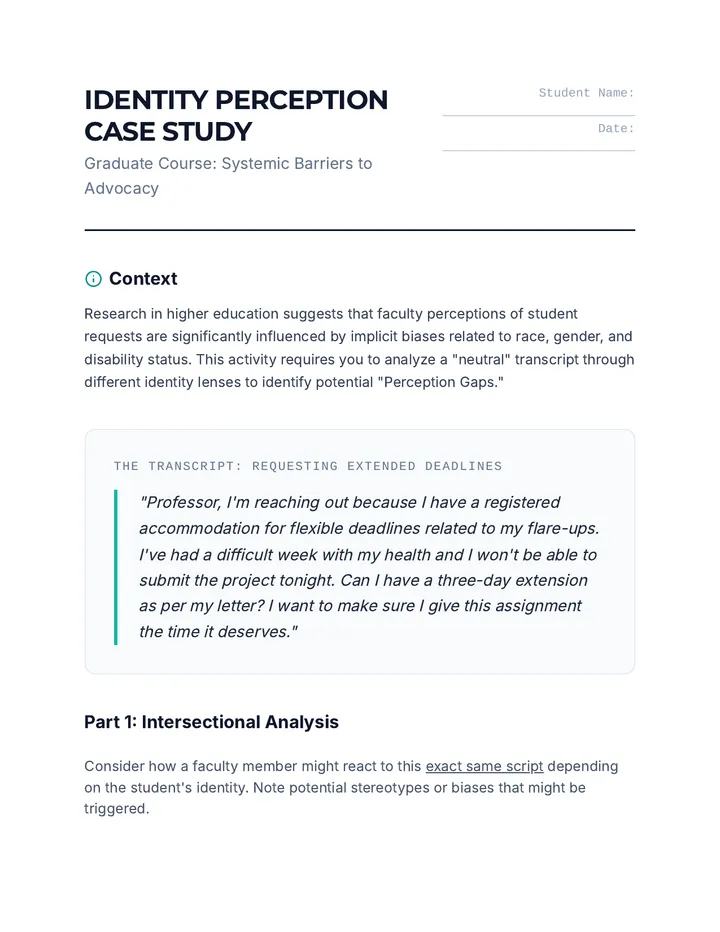
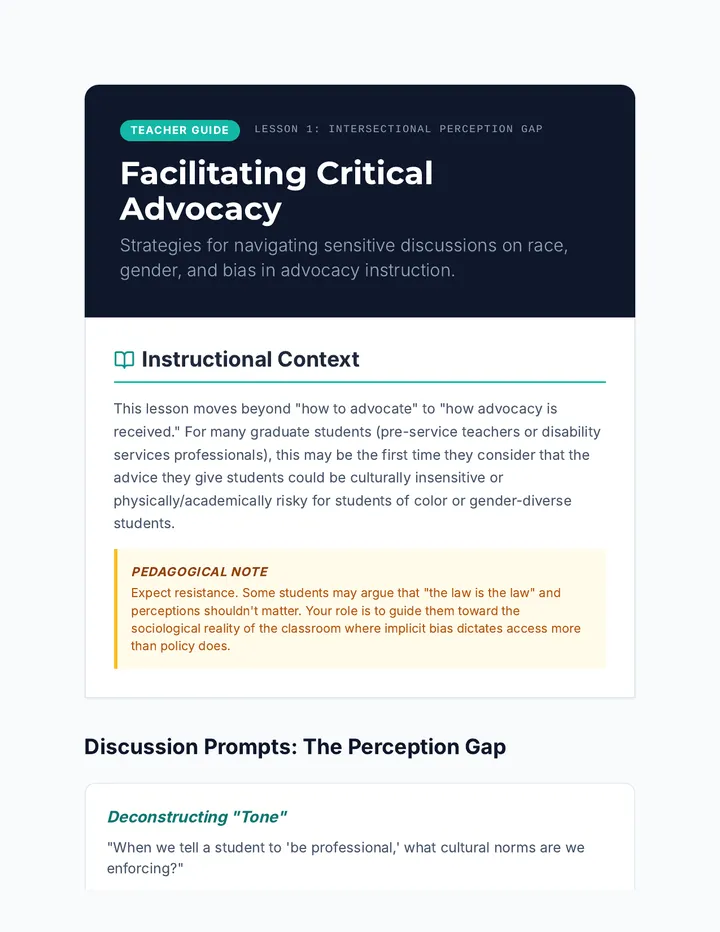
An advanced graduate-level course exploring the intersectional barriers to student self-advocacy. This sequence critiques traditional advocacy models through the lenses of Critical Race Theory and Disability Studies to develop culturally responsive strategies.
This graduate-level sequence examines how to adapt spaced repetition systems (SRS) for students with diverse learning needs, including Dyslexia, ADHD, and Dyscalculia. Students will learn to modify content, timing, and engagement strategies to bypass cognitive barriers and support long-term memory.
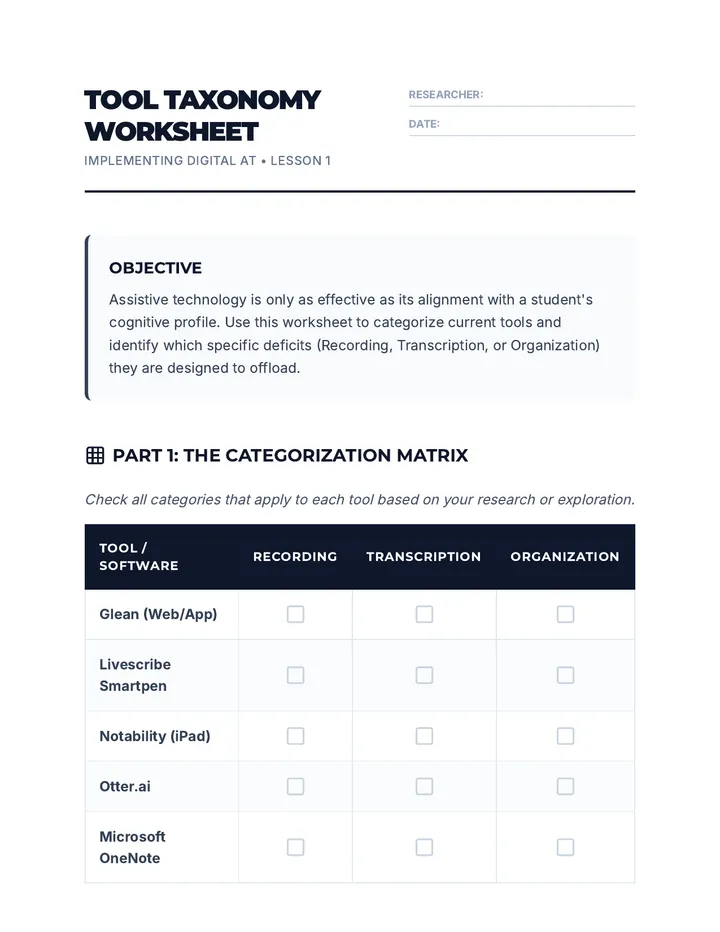
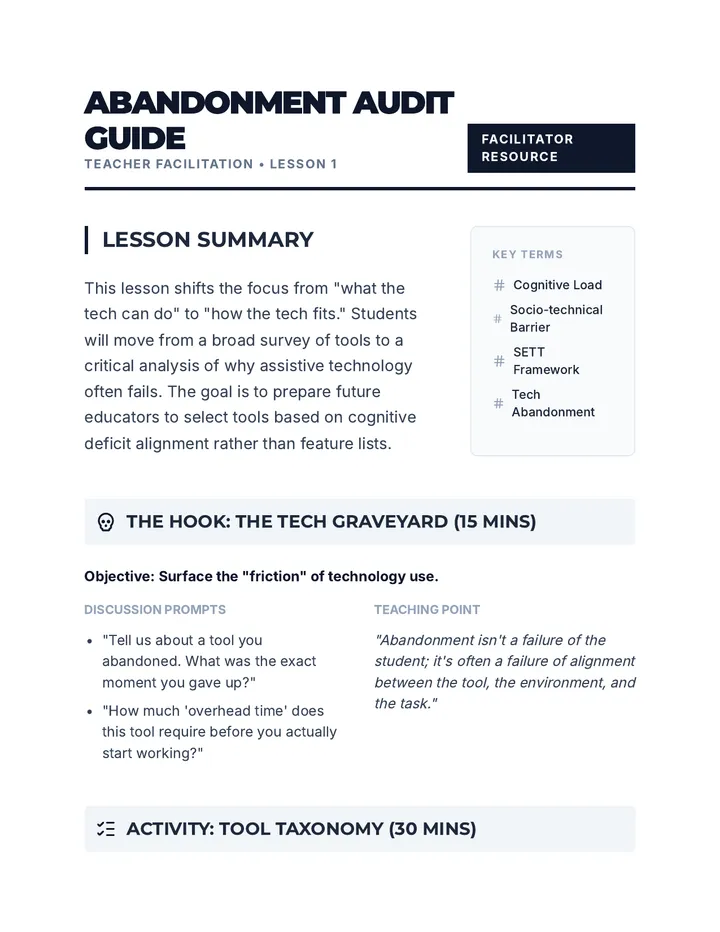
A comprehensive graduate-level sequence on implementing digital assistive technology for note-taking. It covers the transition from traditional methods to audio-synchronization, AI-driven summarization, and executive function-focused organization, concluding with IEP documentation.
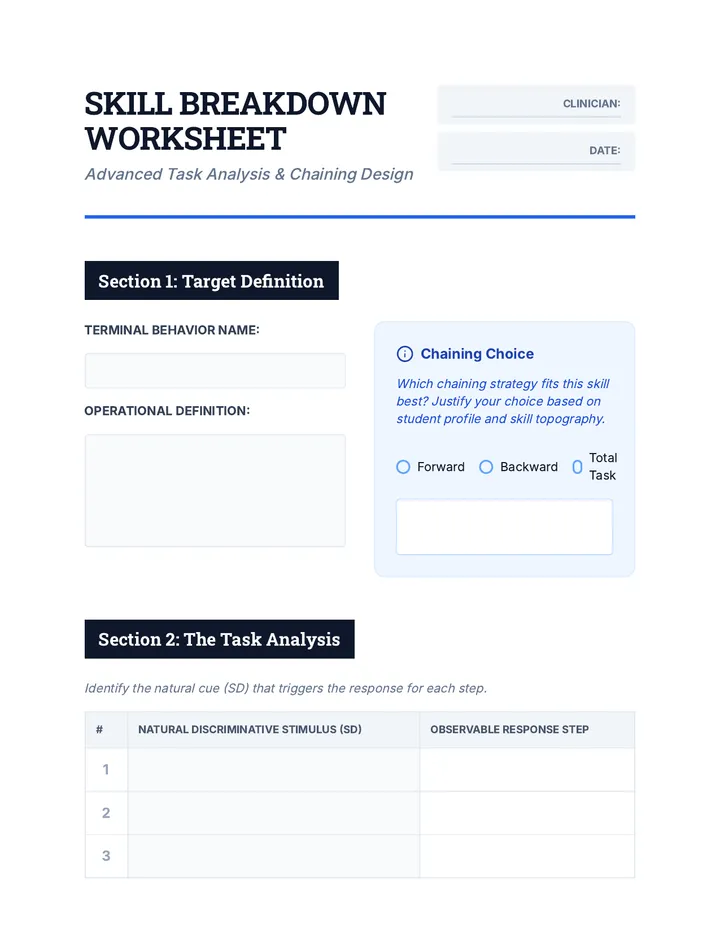
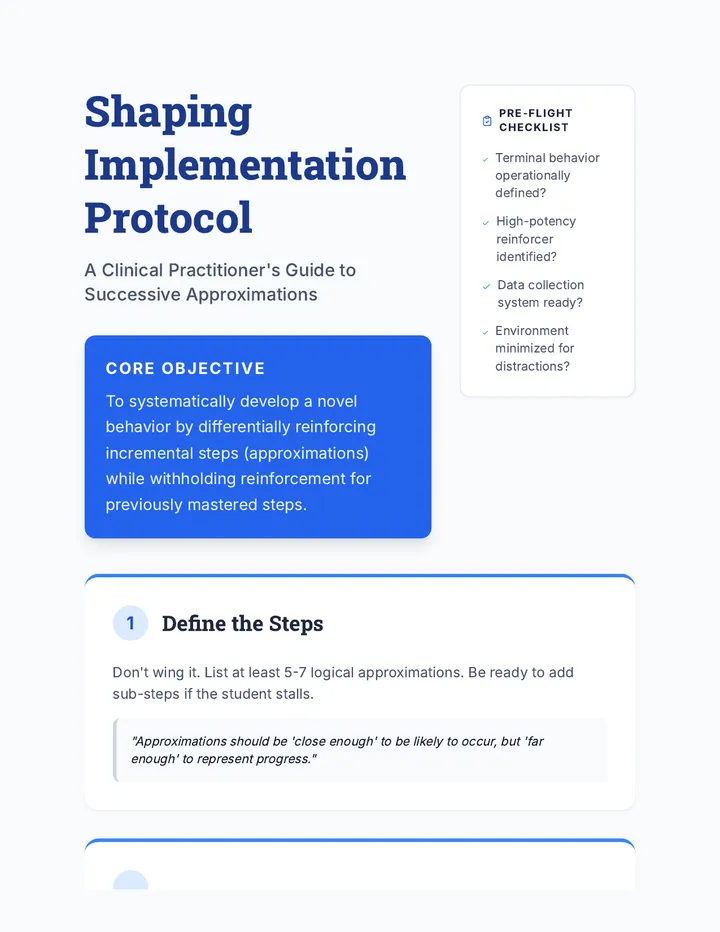
A graduate-level course on the systematic instruction of replacement behaviors within a function-based framework. Students master shaping, chaining, FCT, DTT, and naturalistic teaching, culminating in advanced generalization and maintenance planning for long-term clinical success.
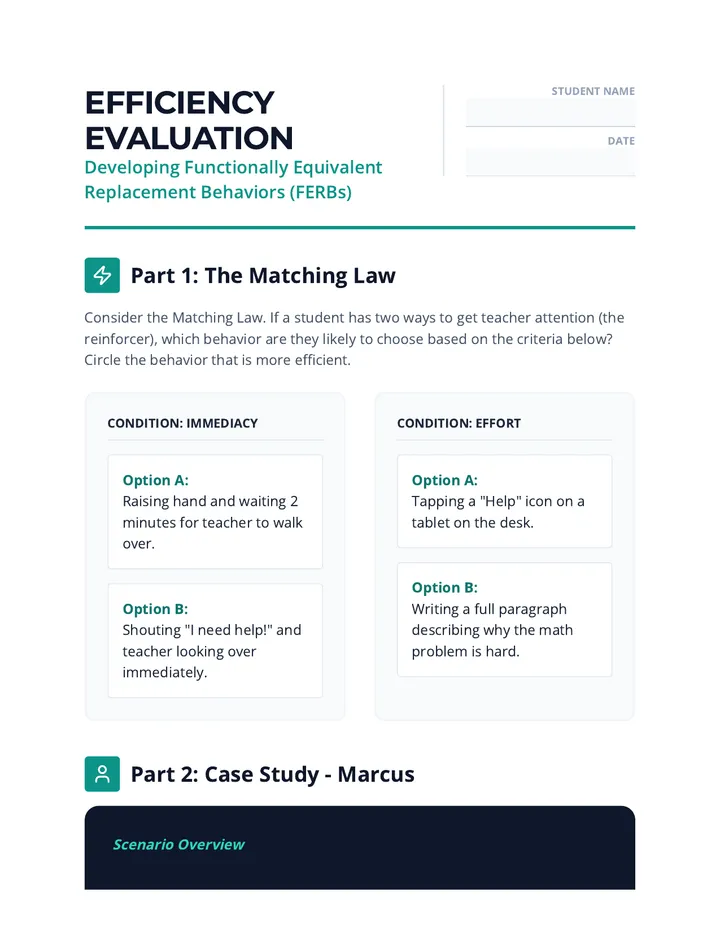
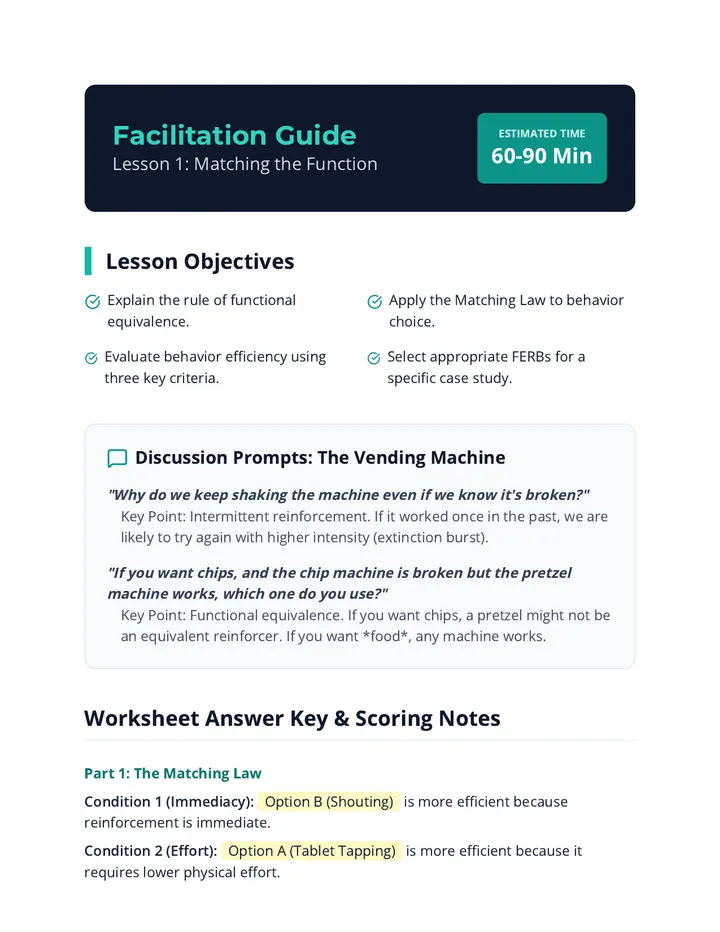
This sequence for undergraduate students explores the design and implementation of Functionally Equivalent Replacement Behaviors (FERBs). Students will learn to apply the Matching Law, design Functional Communication Training (FCT) protocols, and use shaping and chaining to teach adaptive skills that serve the same purpose as challenging behaviors.
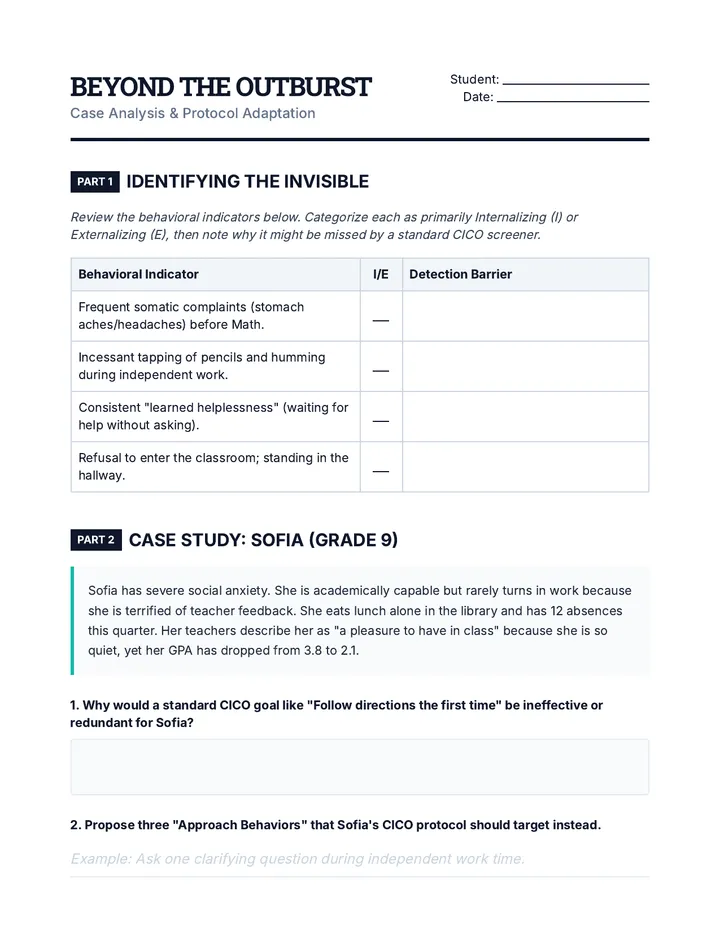
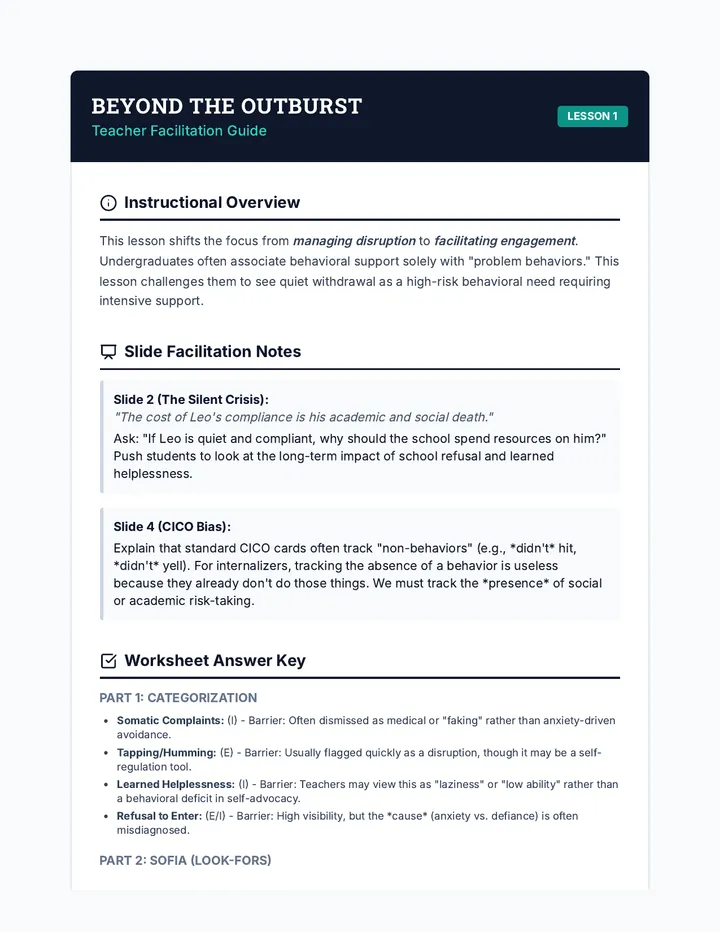
This sequence challenges undergraduate students to adapt standard behavioral check-in protocols for diverse student populations, focusing on developmental, cultural, and neurological differences. Students move beyond a one-size-fits-all approach to design equitable and effective behavioral supports.
This sequence teaches 12th-grade students how to replace challenging behaviors with adaptive skills. Students explore the ethics of behavior change, master Functional Communication Training, learn instructional techniques like shaping and chaining, and design comprehensive intervention plans based on differential reinforcement.
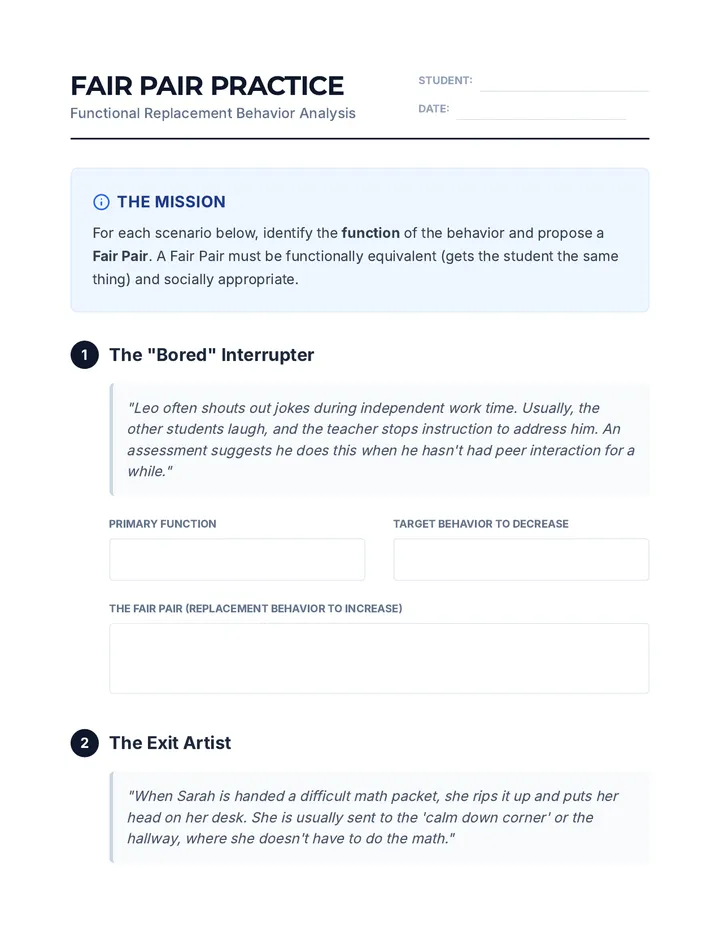
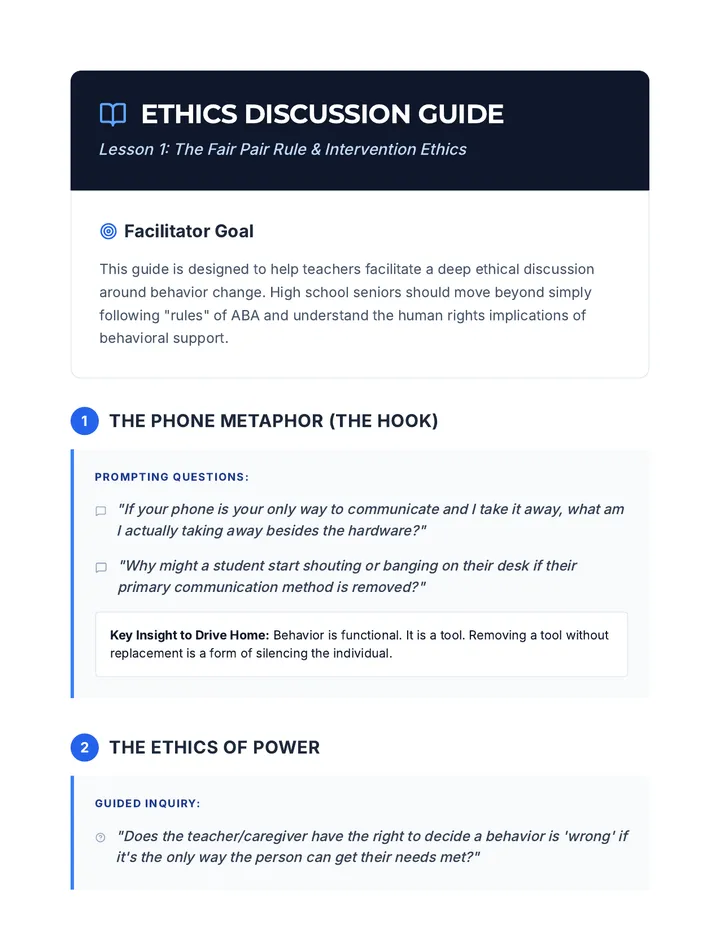
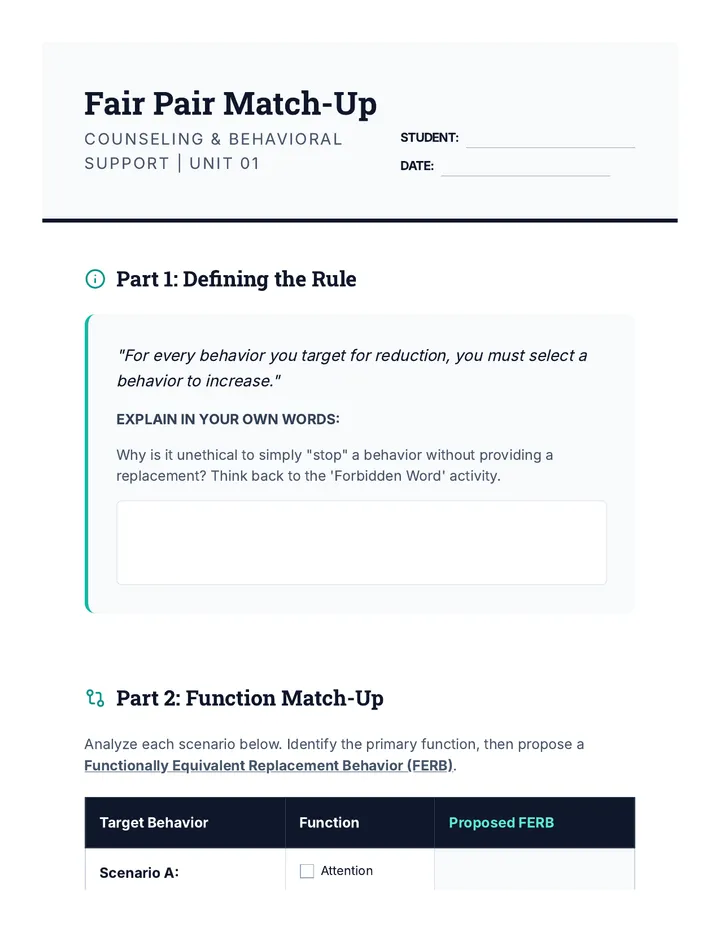
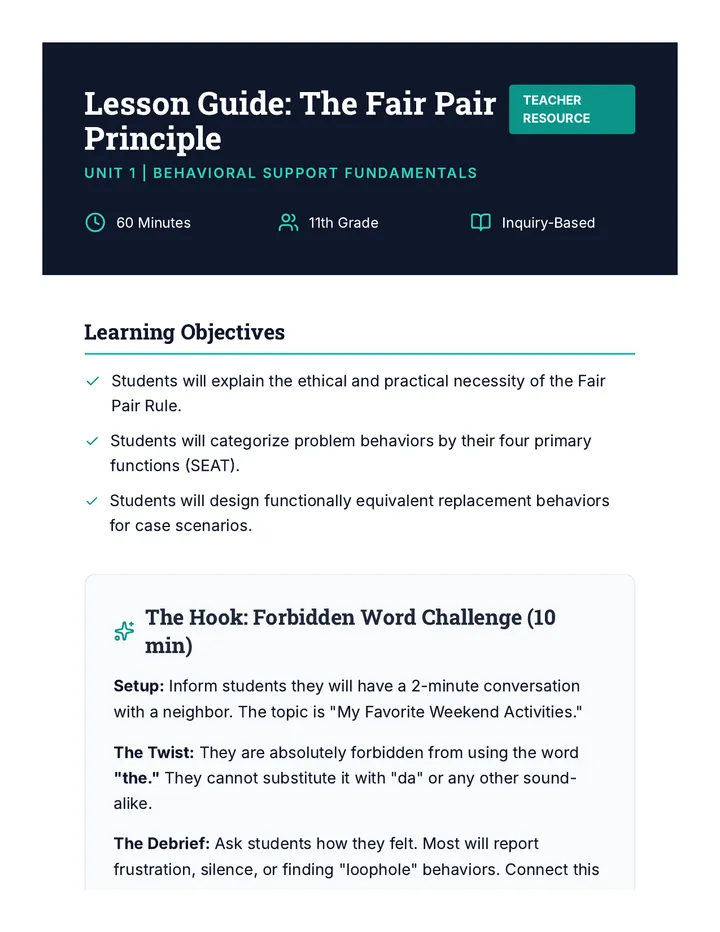
A comprehensive sequence for 11th-grade students on behavioral support, focusing on the 'Fair Pair' rule. Students learn to identify, design, and implement functionally equivalent replacement behaviors (FERBs) to empower individuals to meet their needs pro-socially.
A project-based sequence for undergraduate special education students focused on modernizing social narratives through multimedia and technology. Students progress from selecting appropriate visual supports to creating a comprehensive digital social story portfolio featuring video modeling and accessibility features.
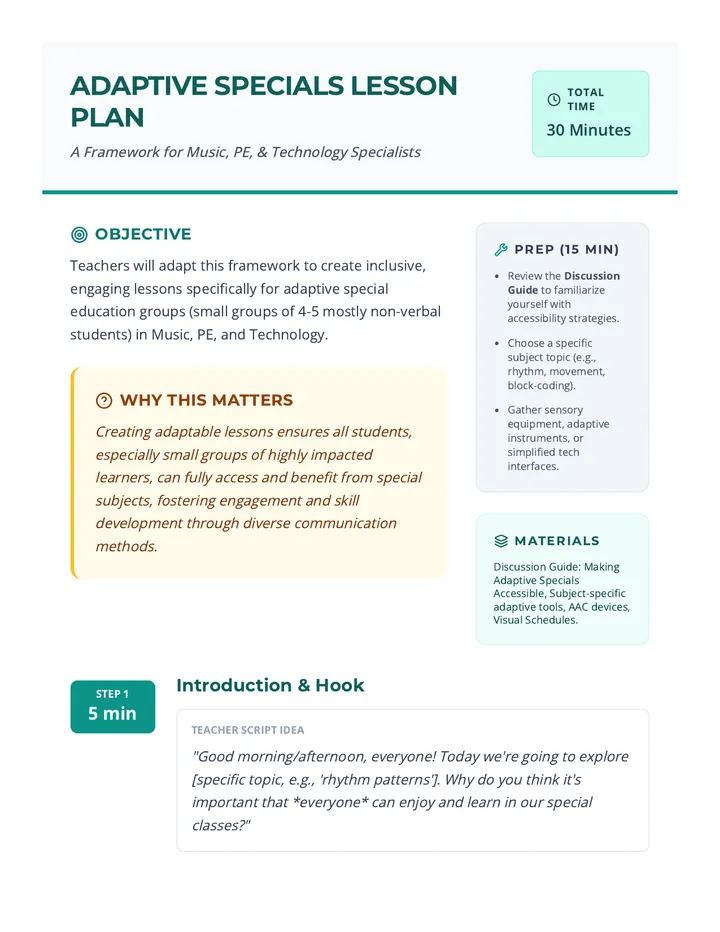
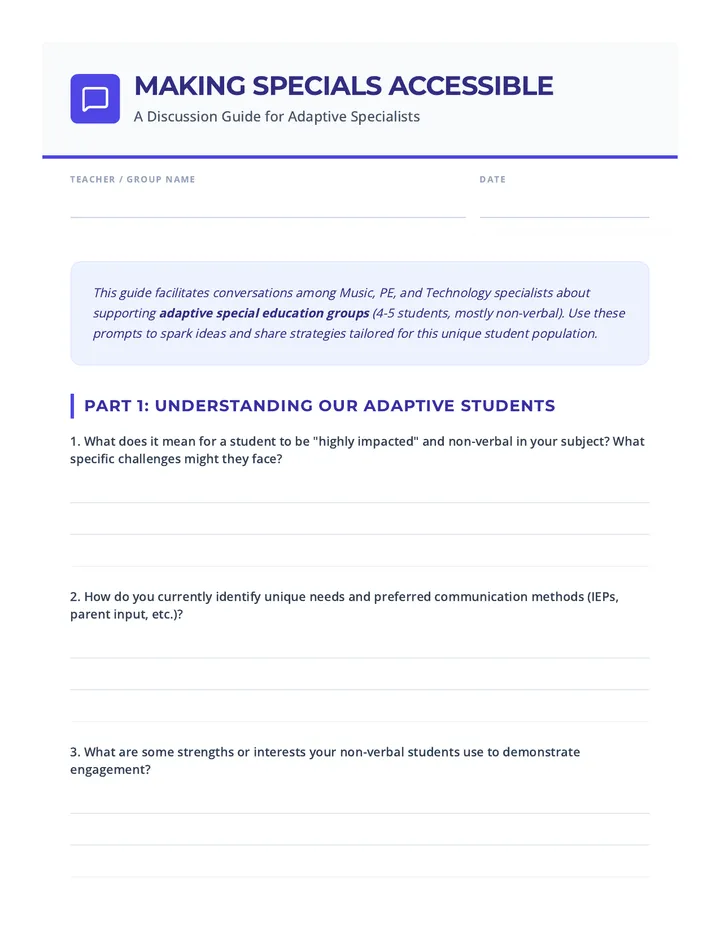
A 30-minute professional development session for teachers focused on universal design principles to create inclusive Music, Physical Education, and Technology lessons for highly impacted, non-verbal students.
A 30-minute small group lesson for 2nd-5th grade students with ASD focused on selecting three personal strategies for each of the four Zones of Regulation. The lesson uses a superhero theme to empower students to build their own 'strategy superpower' toolkit.
A structured, interactive morning meeting routine for middle school students with significant cognitive disabilities, focusing on communication, temporal concepts, and social-emotional check-ins.
An introductory 15-minute lesson for 6th-grade students exploring long division through the lens of accessibility and UEB Braille. Students learn the DMSB steps while understanding how math is represented tactually for blind learners.
An individualized 90-minute lesson for adult students exploring the vital concept of communication accessibility, barriers, and inclusive strategies.
A Tier 2 ESE lesson for 2nd and 3rd-grade students focused on predicting using visual story sequences. Designed for small groups with heavy visual support for non-verbal learners.
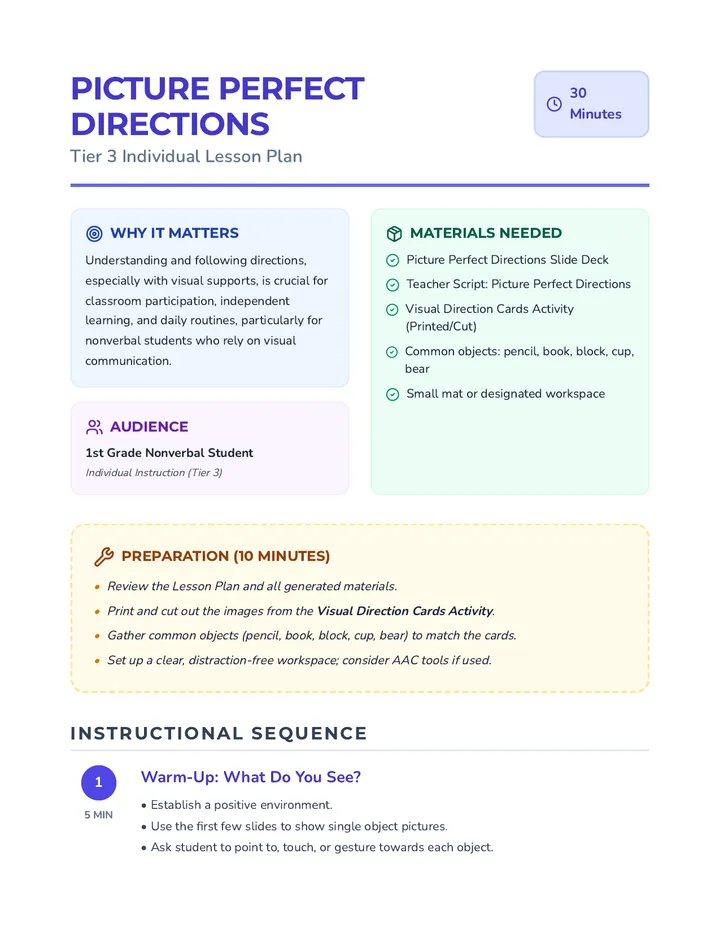
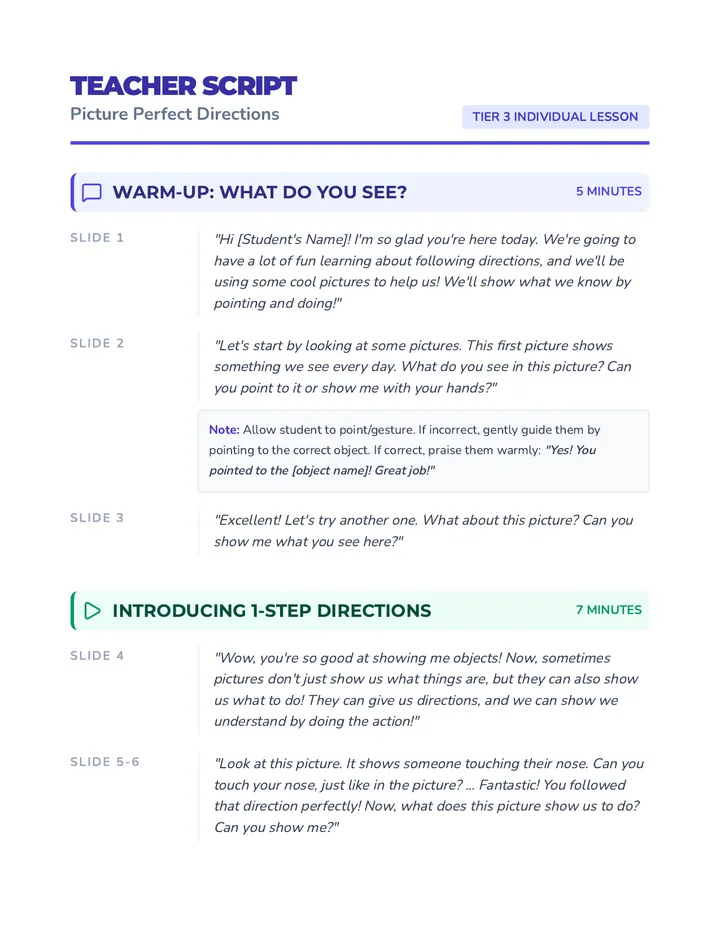
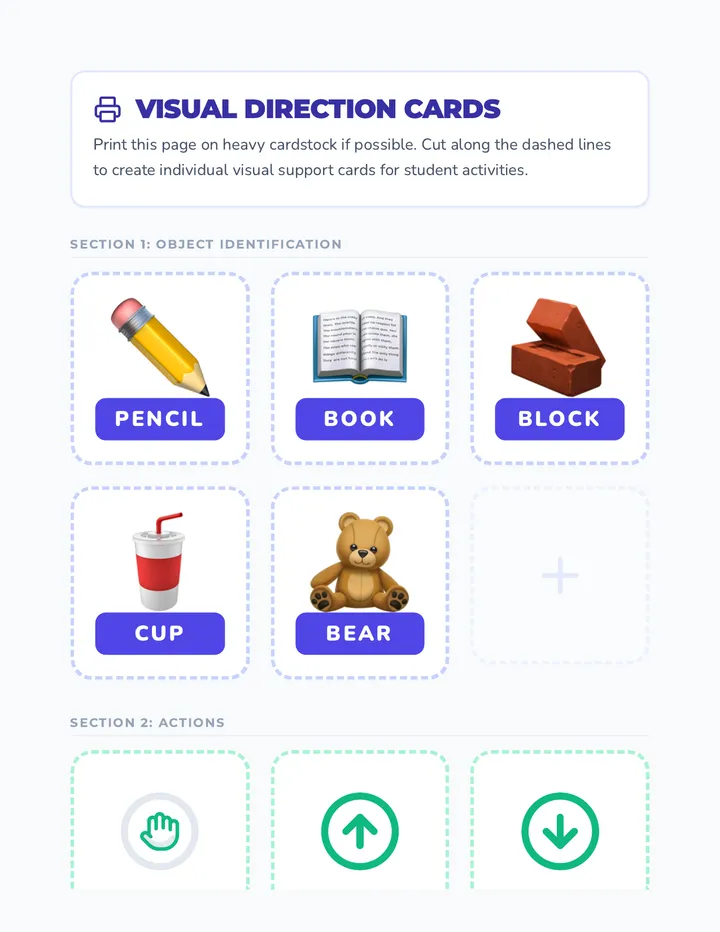
A 30-minute Tier 3 individual lesson for a 1st-grade student focused on following 1 and 2-step visual directions using pictures and common objects.
A Tier 2 group lesson for middle school students with intellectual disabilities focused on social communication skills for holiday gatherings, including specific supports for AAC users.
A single-session lesson for K-2 students that introduces various communication devices, including Augmentative and Alternative Communication (AAC), to foster inclusion and understanding of how people connect.
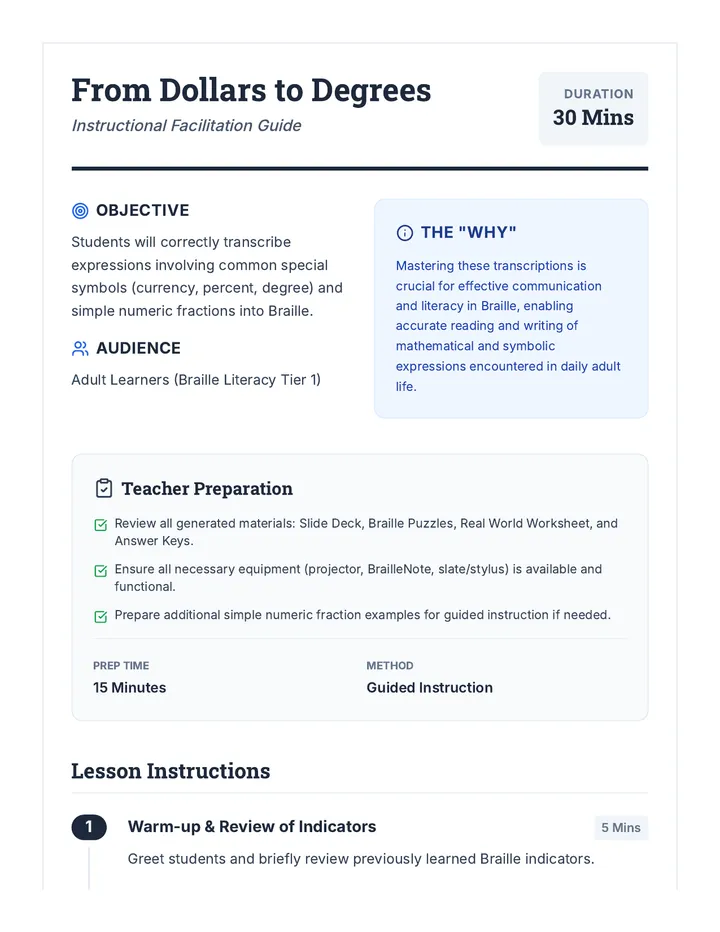
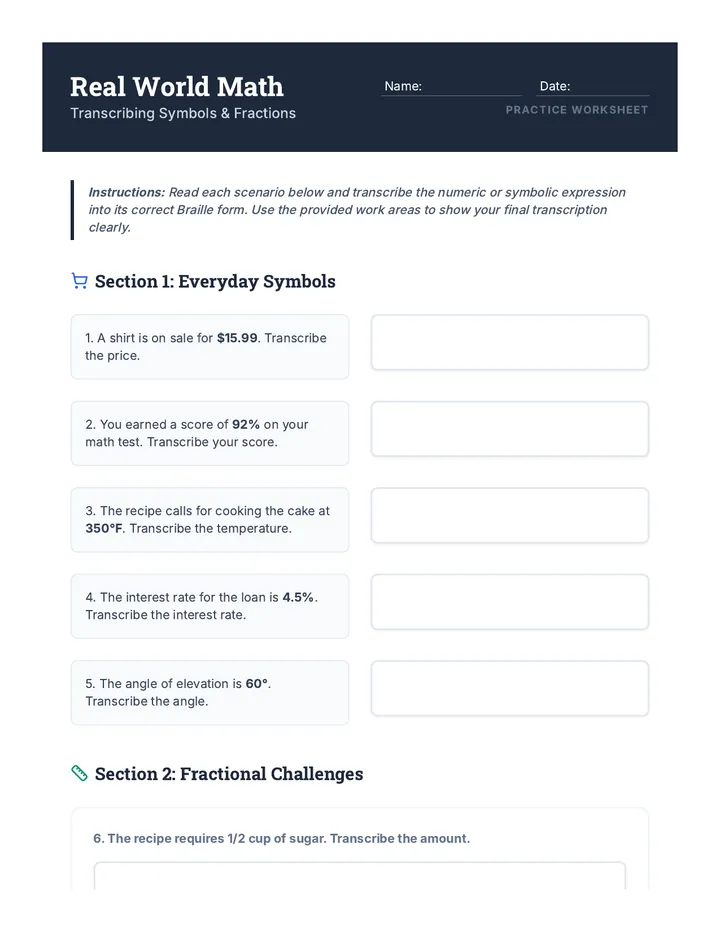
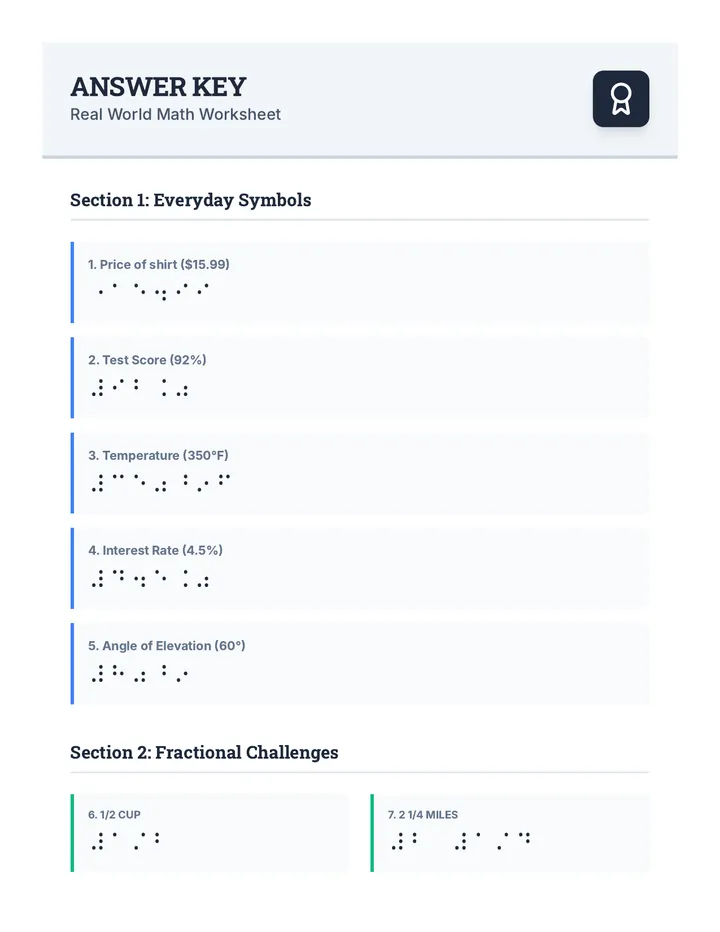
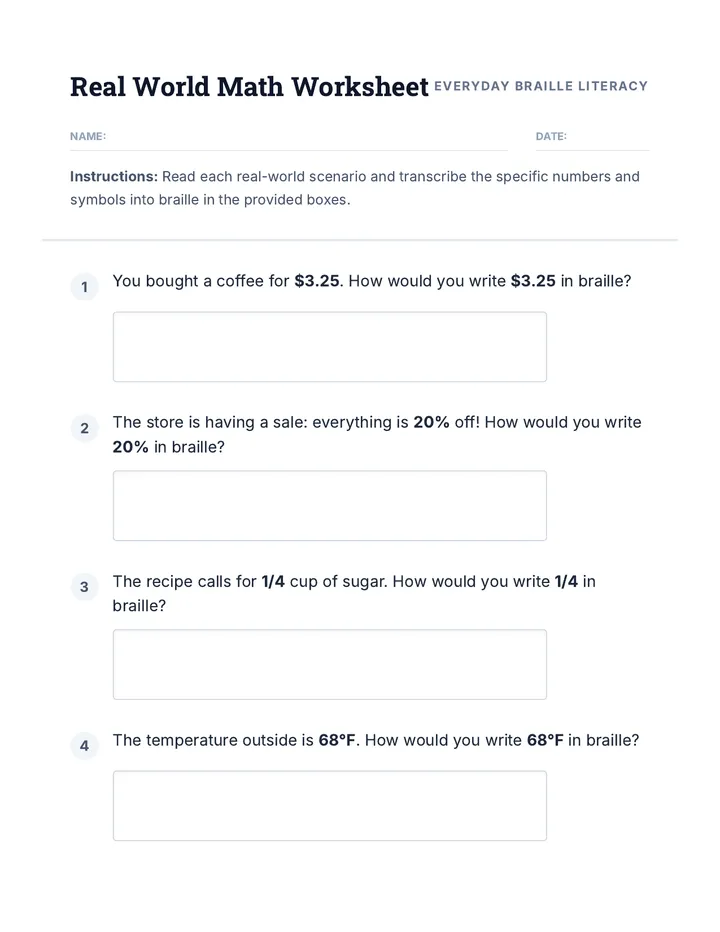
This lesson helps adult learners accurately transcribe expressions with special symbols like currency, percent, and degrees, along with simple numeric fractions, into Braille. Mastering these transcriptions is crucial for effective communication and literacy in Braille.
This lesson helps adult learners accurately transcribe expressions with special print symbols (like currency, percent, and degrees) and simple numeric fractions into braille. it is designed for a 30-minute session focused on everyday literacy.
A Tier 3 intervention lesson for nonverbal 2nd grade students with ASD, focusing on using AAC devices and visual cues to communicate distress and request help during transitions to reduce aggressive behaviors.