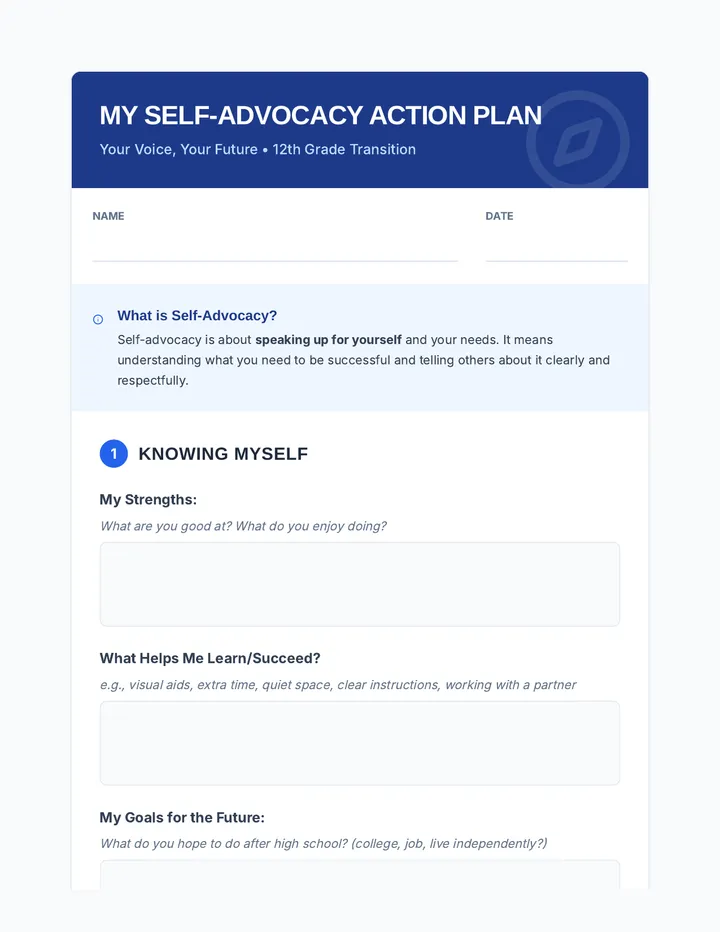
Identifies college, vocational training, and independent living pathways for students with disabilities. Guides goal-setting while addressing necessary accommodations and self-advocacy skills.
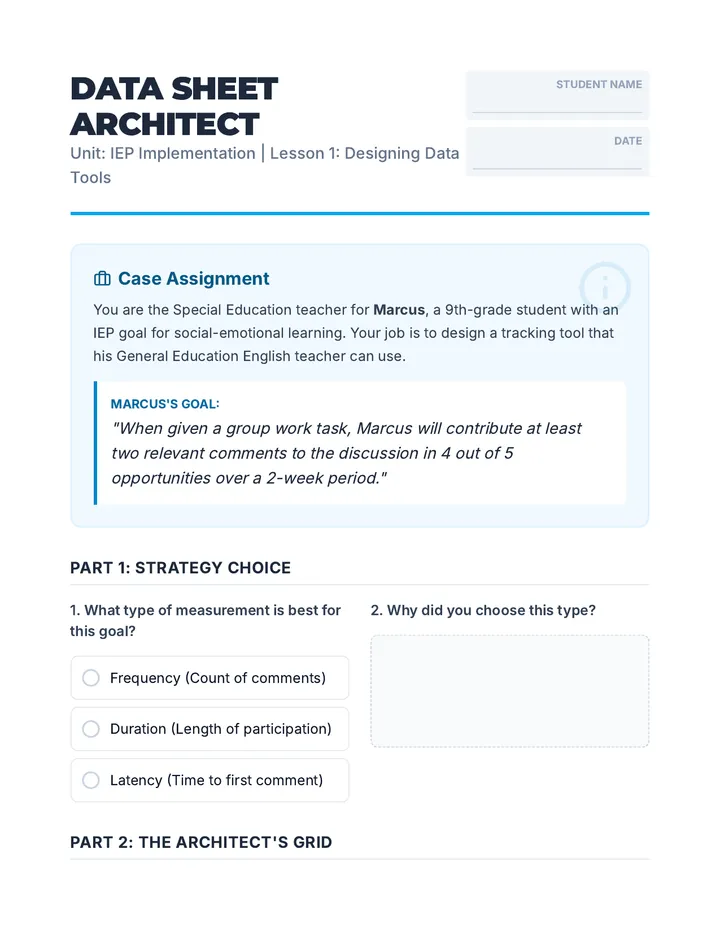
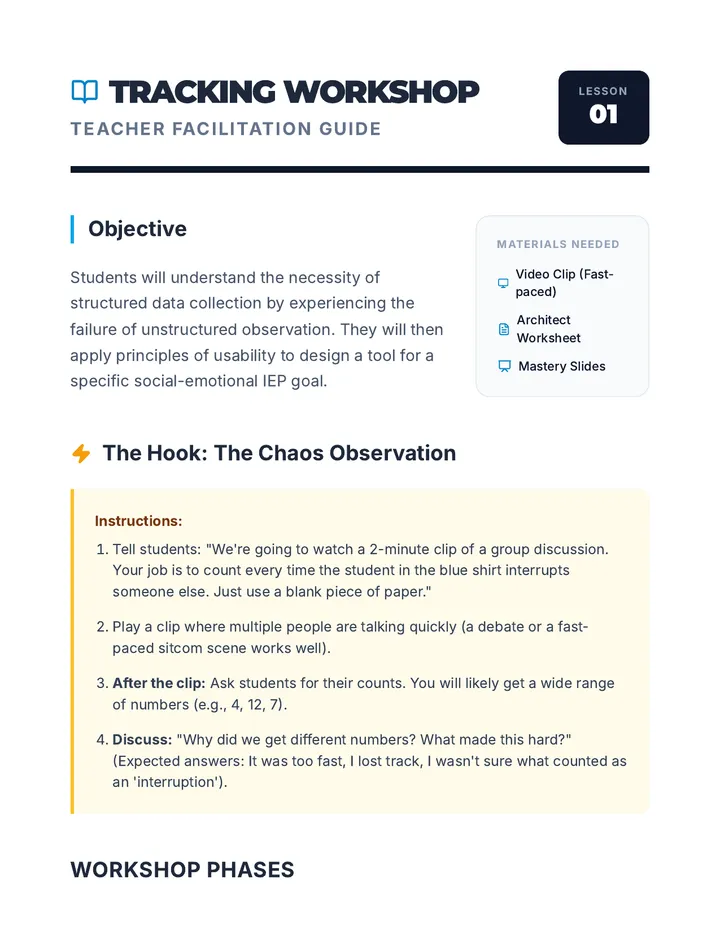
This sequence explores the implementation and monitoring of IEPs for 11th-grade students, focusing on data collection, progress reporting, secondary transition planning (ITP), and the ethical balance between legal compliance and educational quality. Students transition from being passive participants to active designers and evaluators of the IEP process.
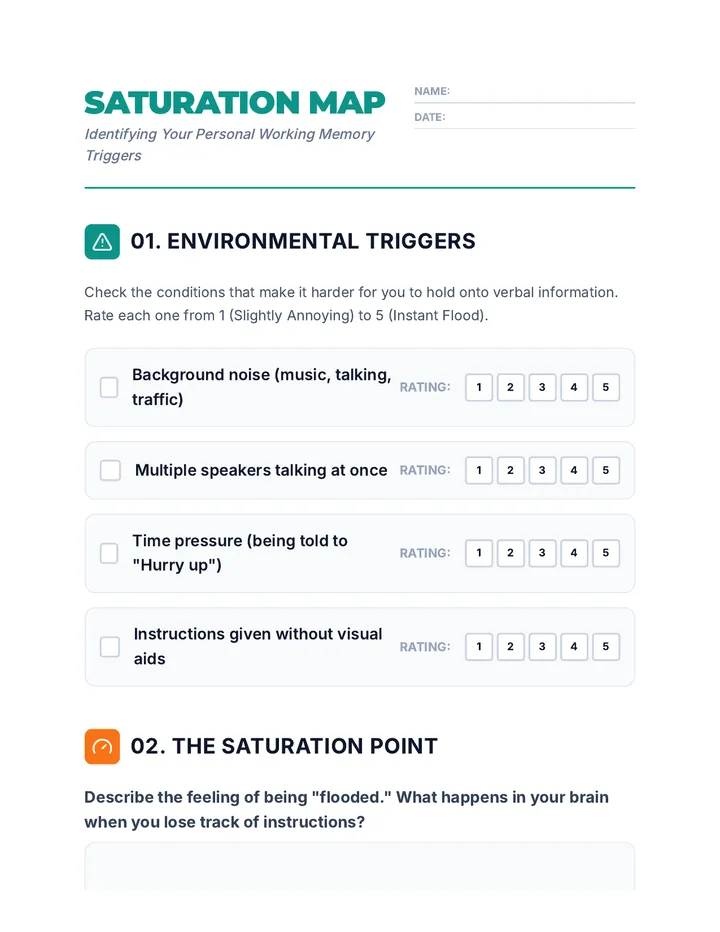
A self-advocacy sequence for 11th-grade students to manage working memory challenges by requesting single-step directions and professional modifications in fast-paced environments.
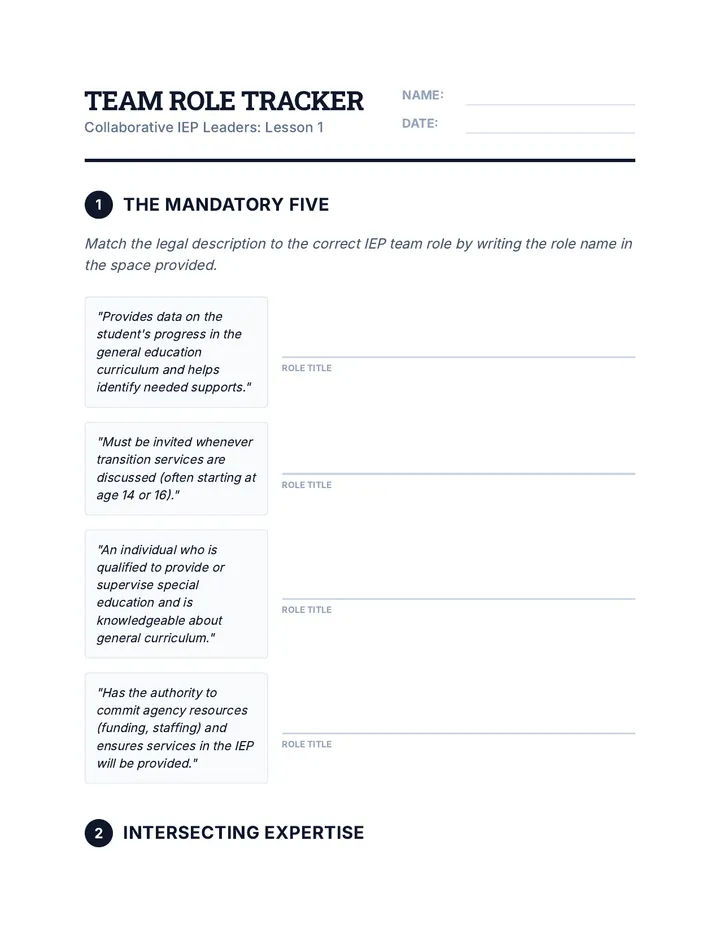
A comprehensive unit for high school students exploring the collaborative nature of IEP meetings. Students will master the roles of team members, the legal timeline of special education, self-advocacy strategies, and conflict resolution techniques, culminating in a professional mock IEP simulation.
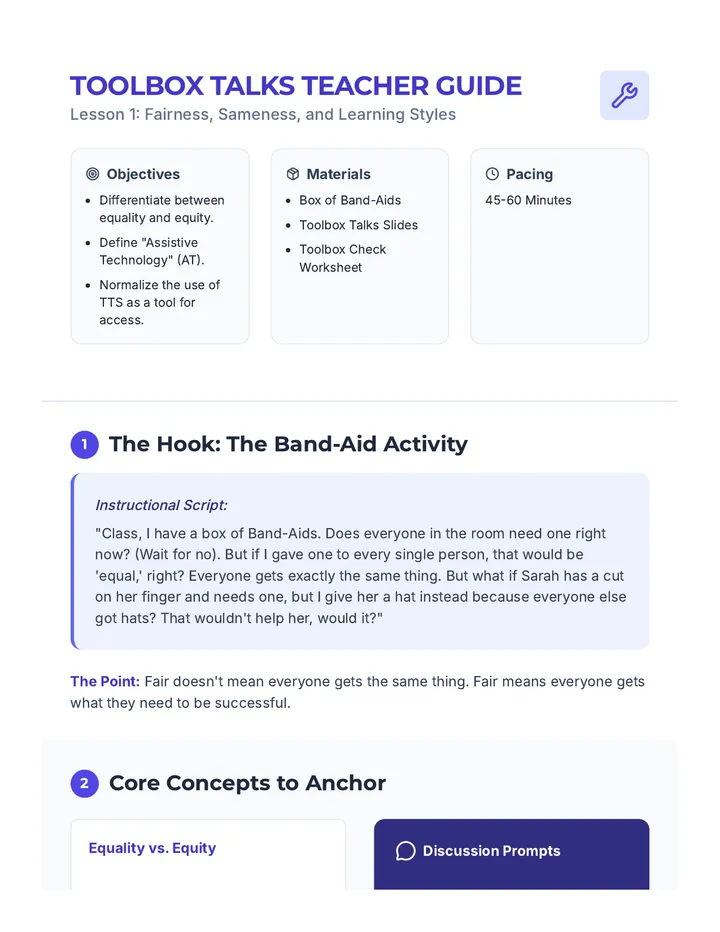
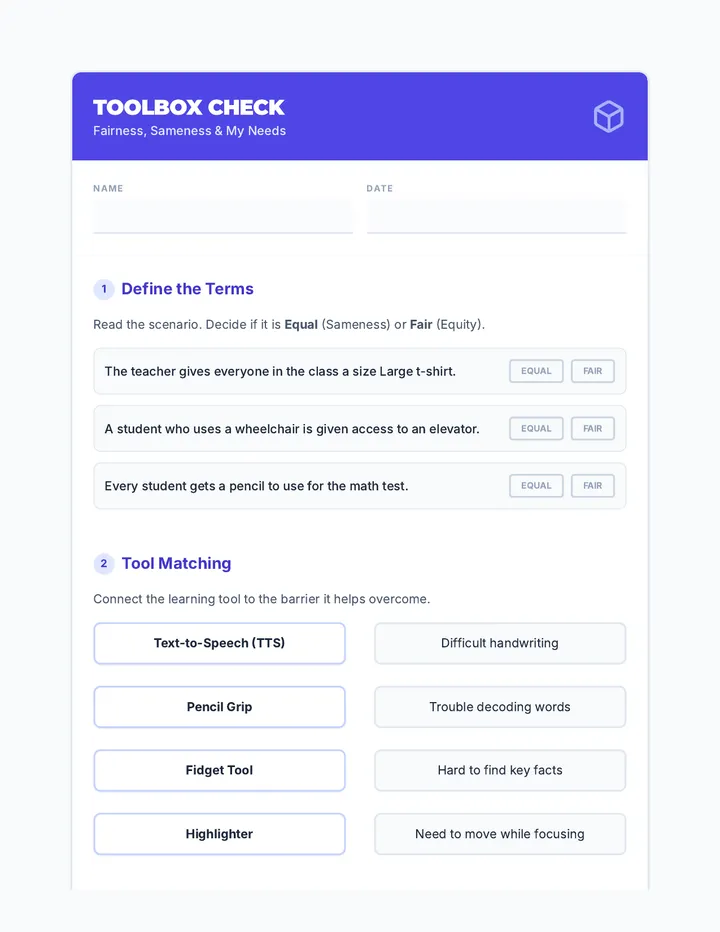
This sequence empowers 5th-grade students to understand, use, and advocate for Text-to-Speech (TTS) as a vital learning tool. It focuses on the distinction between fairness and sameness, identifying specific tasks where TTS is most effective, and building the social-emotional confidence to communicate needs to teachers and peers.
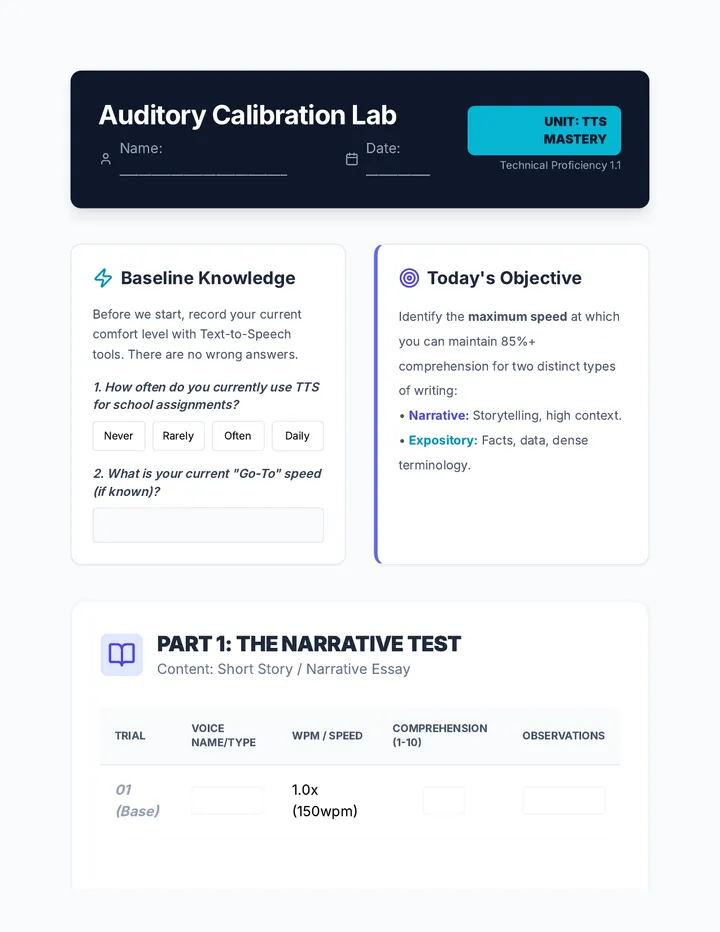
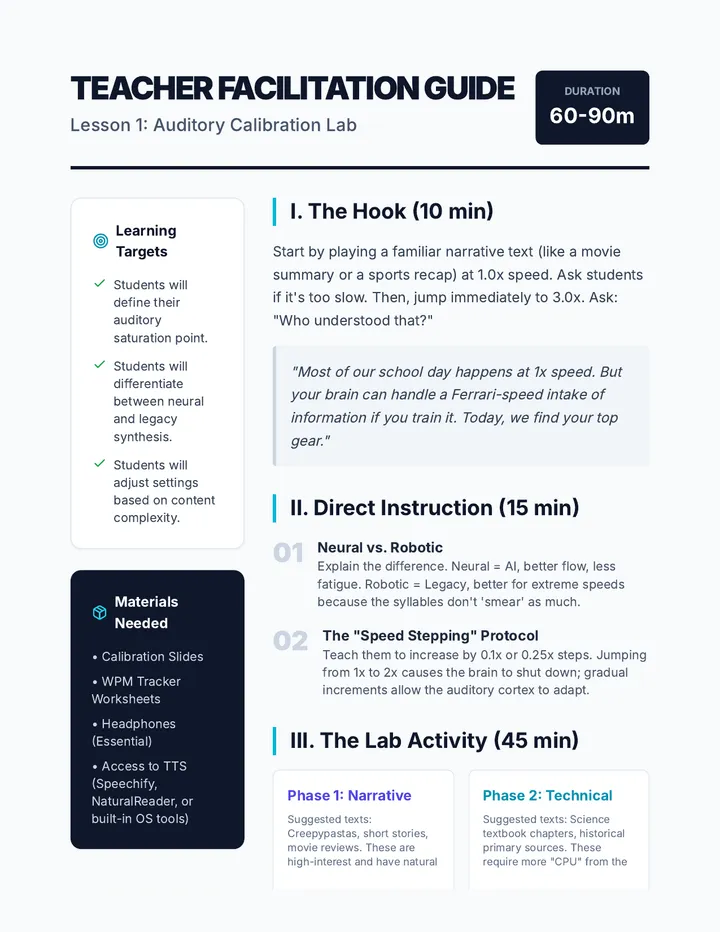
This sequence equips 12th-grade students with advanced technical skills in Text-to-Speech (TTS) technology. It moves beyond basic tool usage to professional-grade workflows, including auditory calibration, OCR conversion, immersion reading, mobile synchronization, and technical troubleshooting, preparing students for the heavy reading demands of post-secondary environments.
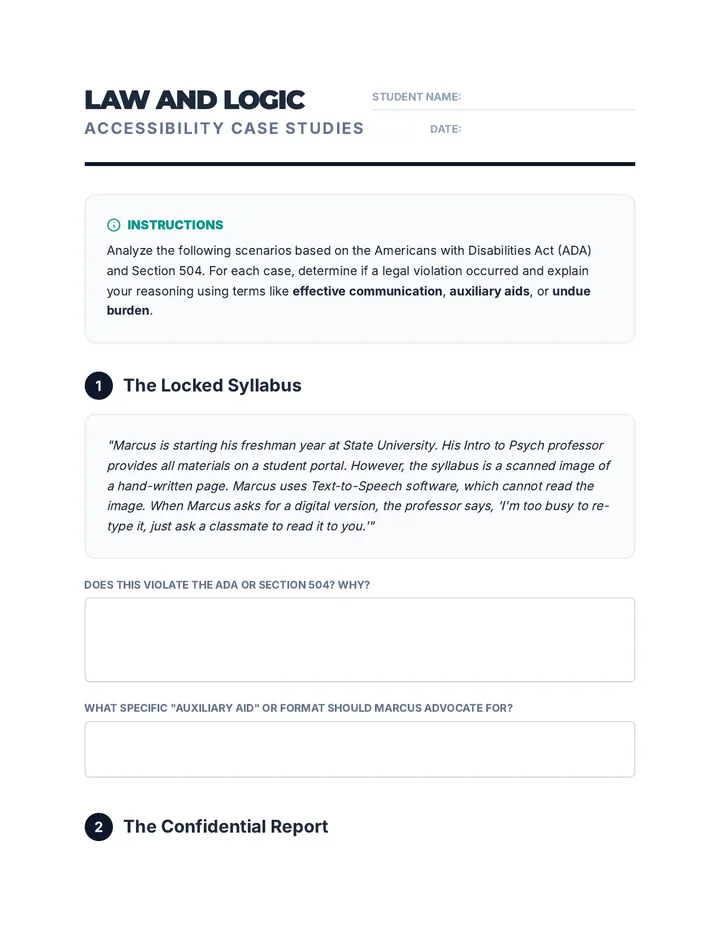
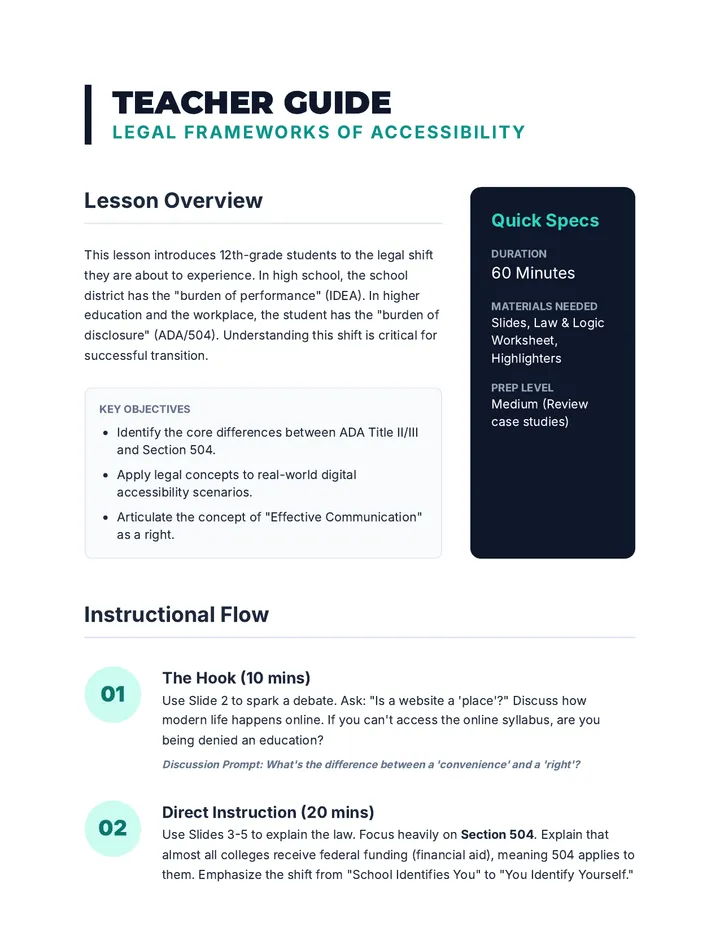
A comprehensive transition sequence for 12th-grade students focusing on the legal, professional, and practical aspects of using Text-to-Speech (TTS) and other assistive technologies in higher education and the workplace. Students learn to advocate for their rights under the ADA and Section 504 through role-play, professional writing, and portfolio building.
A technical sequence designed for high school students to master text-to-speech (TTS) tools. It covers tool selection, voice optimization, navigation shortcuts, troubleshooting inaccessible formats like PDFs, and ends with students creating a personal accessibility profile for independent academic success.
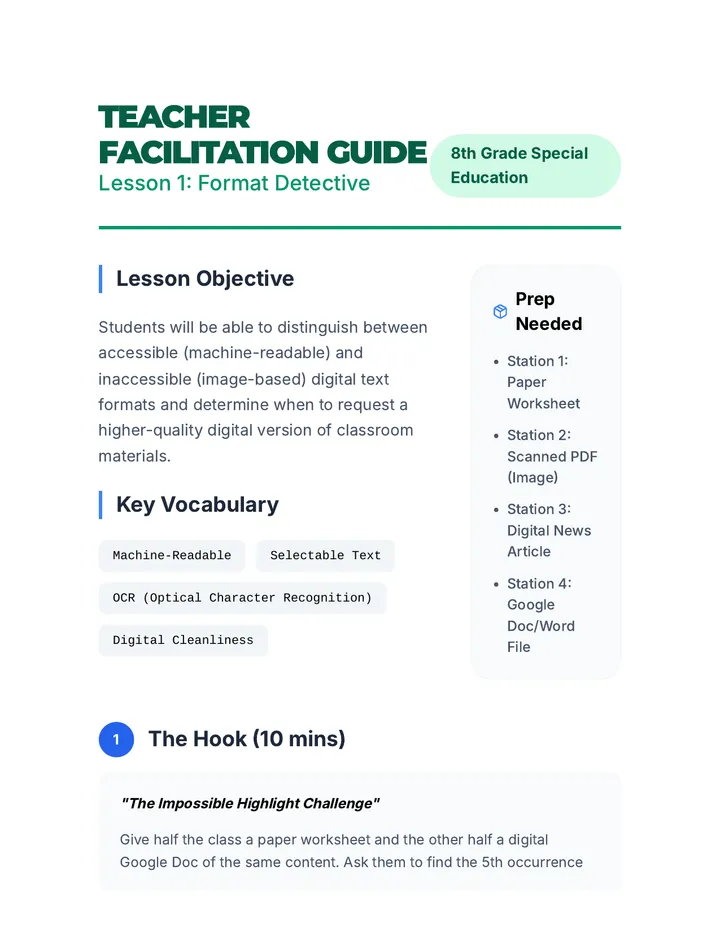
A 5-lesson sequence for 8th-grade students to master Text-to-Speech (TTS) tools, develop self-advocacy skills for accessible materials, and create a personalized digital accessibility plan for high school. Students transition from identifying accessible content to independently managing their accommodations across various academic environments.
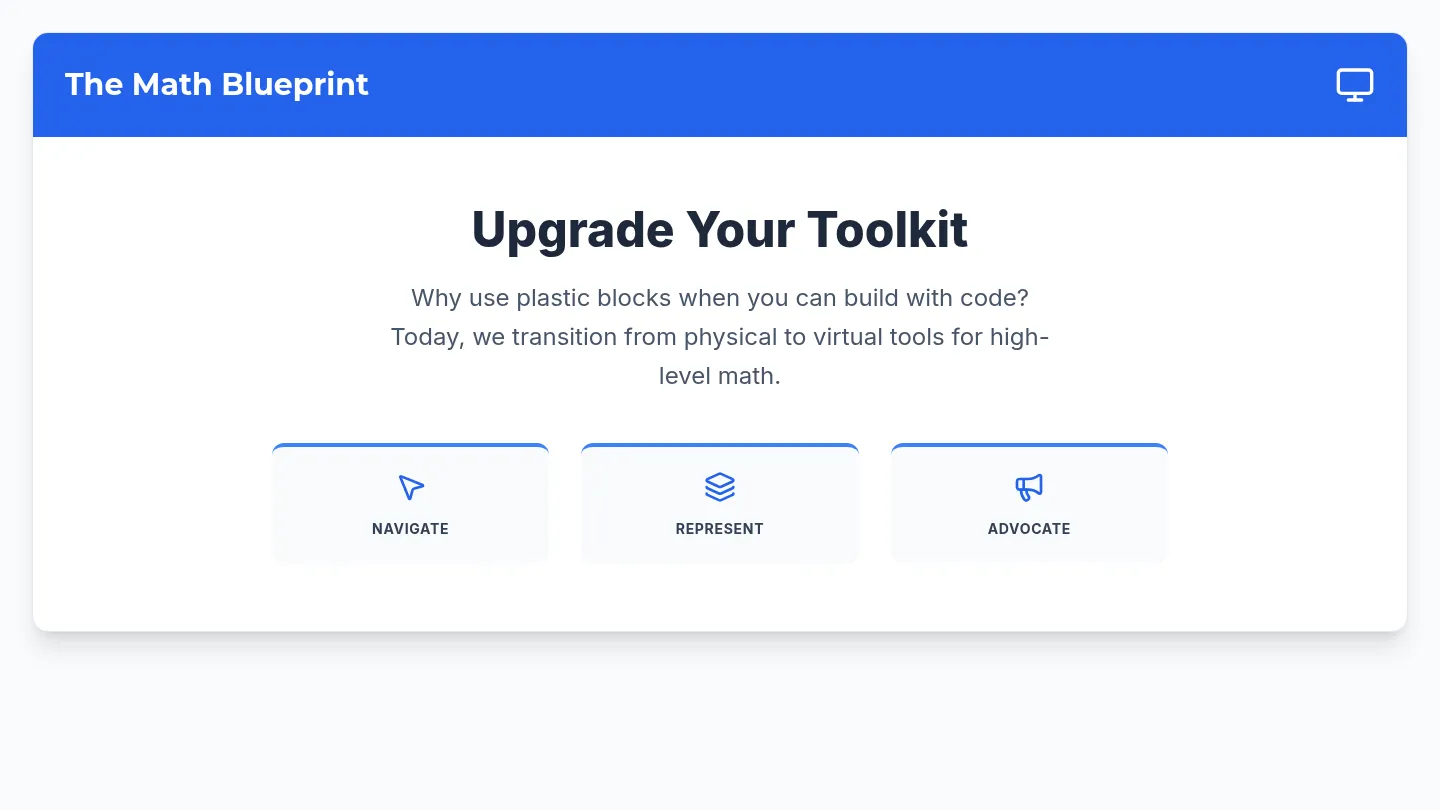
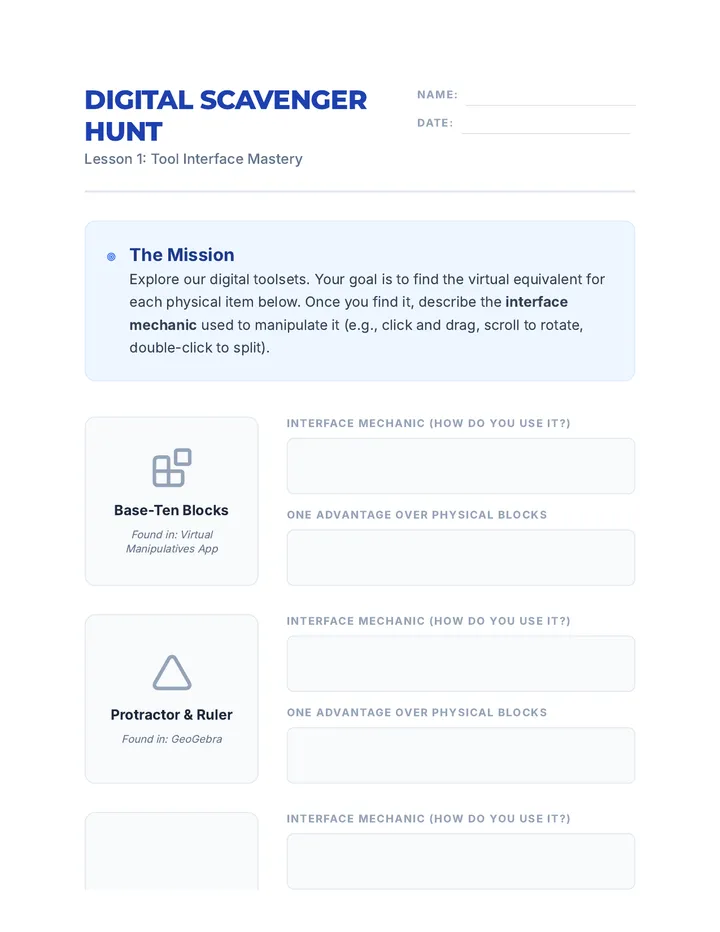
A 5-lesson sequence for 11th-grade students transitioning from physical math manipulatives to virtual tools. The curriculum emphasizes digital literacy, strategic tool selection, and self-advocacy to prepare students for post-secondary academic environments.
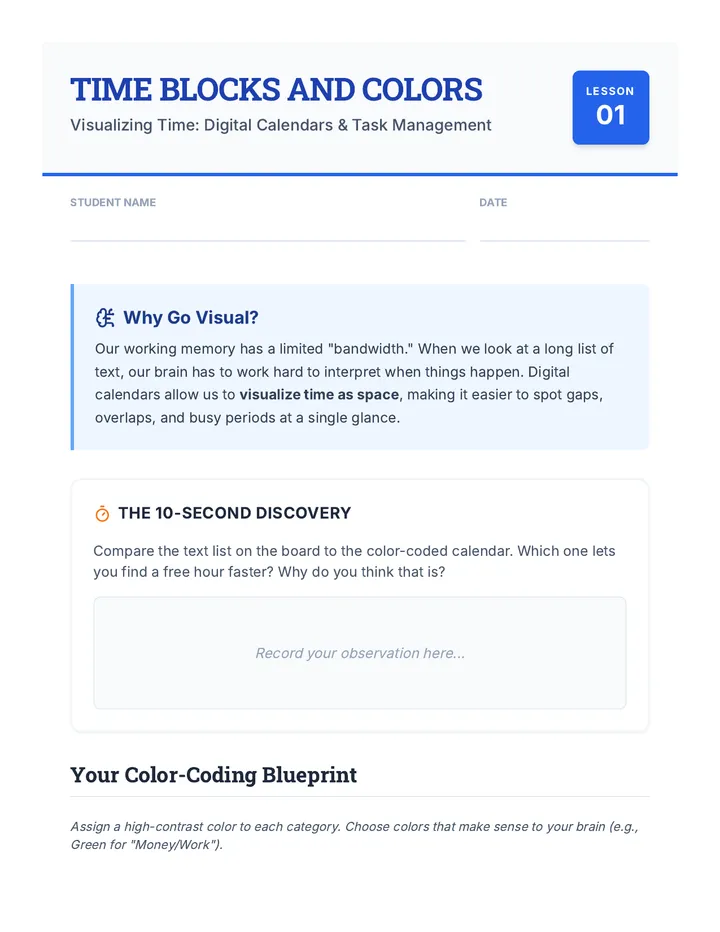
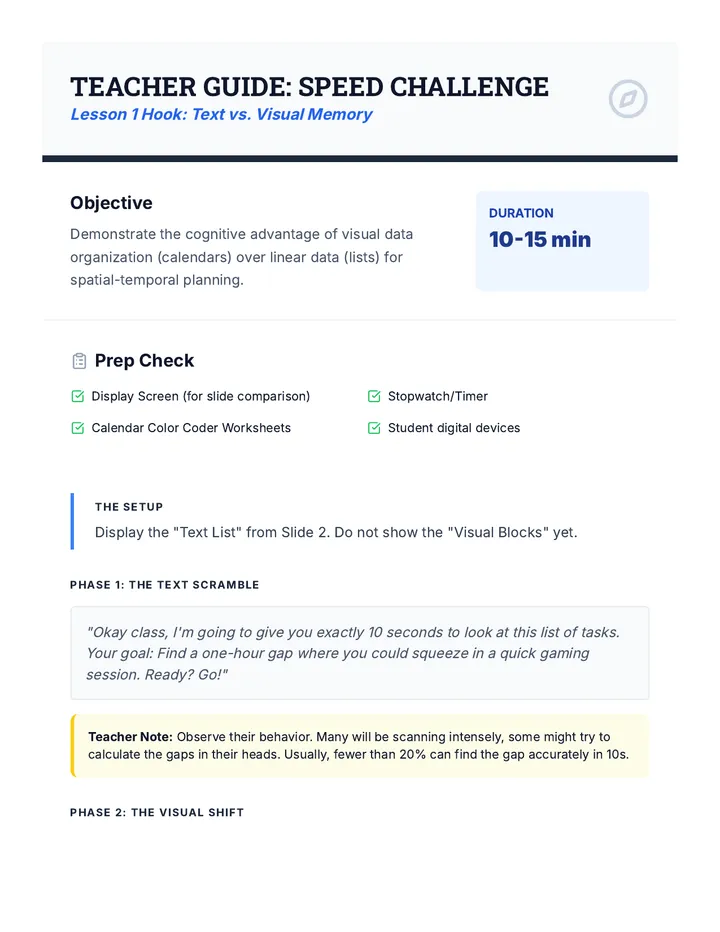
This sequence teaches 11th-grade students how to use digital visual systems (calendars, Kanban boards, and widgets) to support working memory and executive function. Students transition from reactive list-making to proactive visual time and task management, preparing them for the demands of college and career environments.
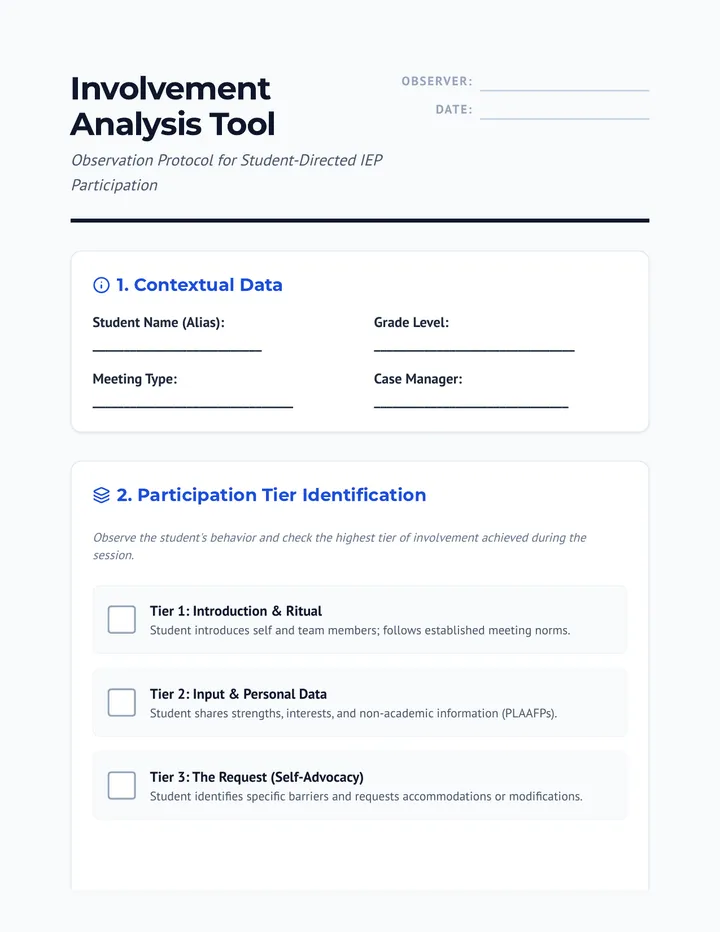
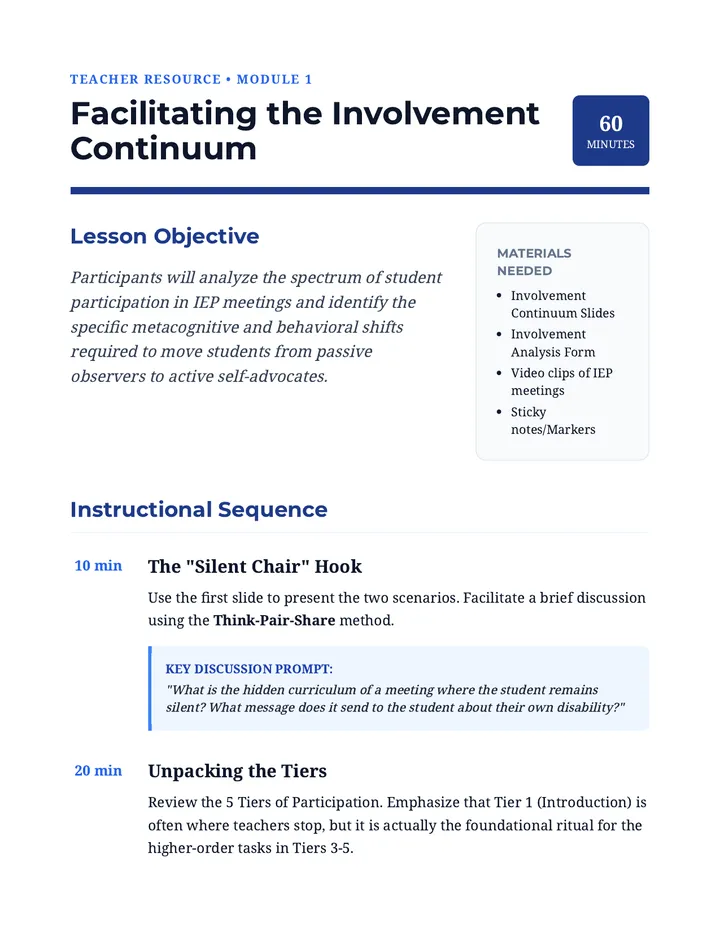
A comprehensive sequence for graduate students to master the implementation of Student-Led IEPs (SLIEPs). This sequence explores the continuum of student involvement, preparation protocols, visual advocacy aids, meeting facilitation techniques, and post-meeting reflection to empower students as self-advocates for their own accommodations.
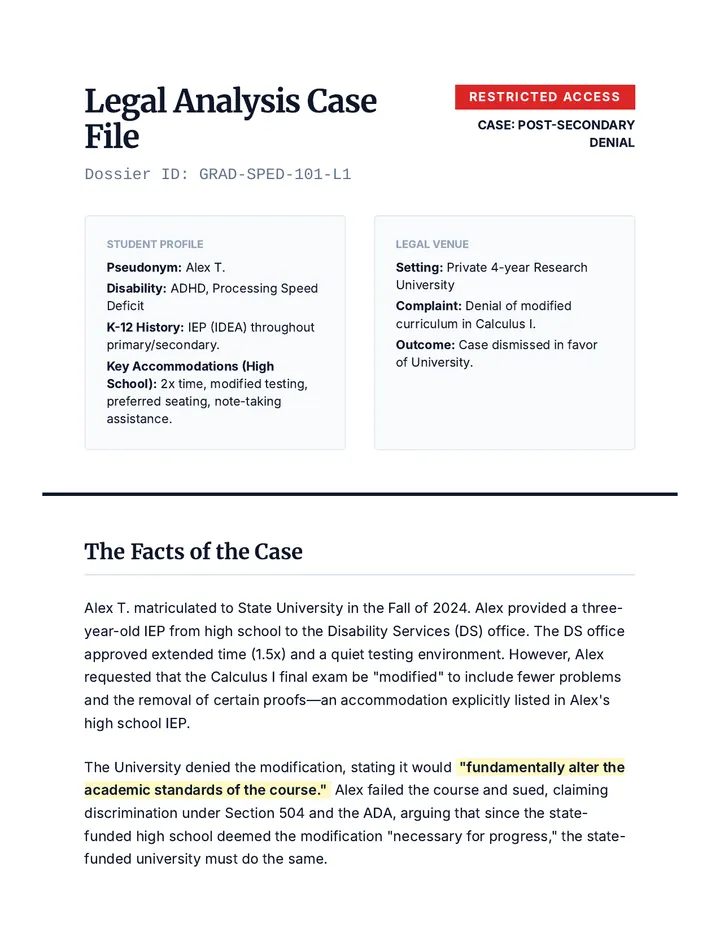
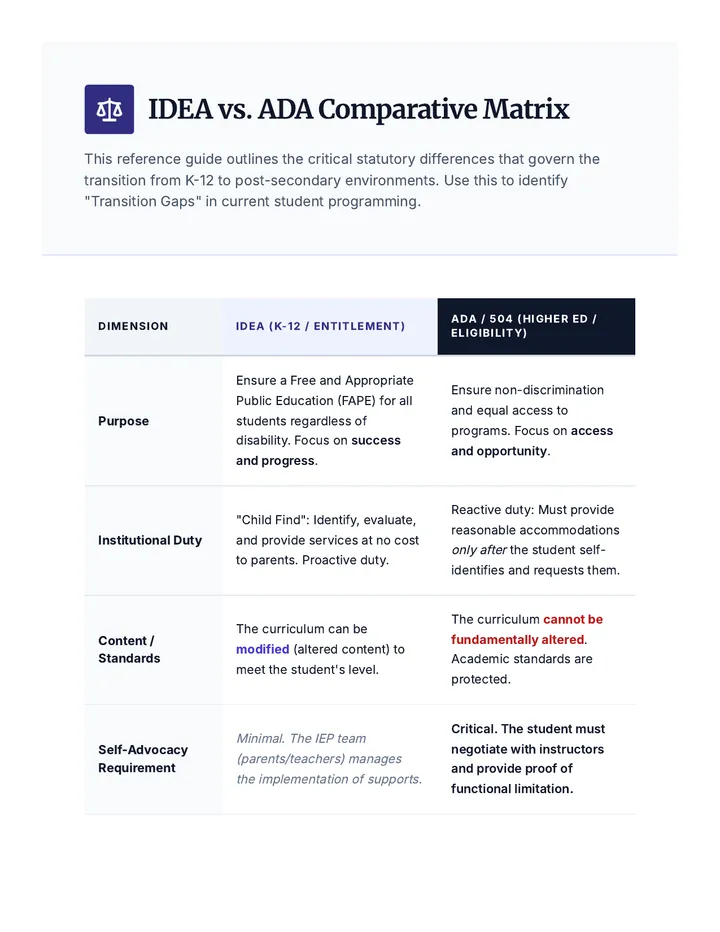
This sequence for graduate students explores the legal and psychological shift from IDEA to ADA in the context of self-advocacy and accommodation requests. It moves from legal analysis to curriculum design, preparing future special education leaders to build robust transition programs.
A Tier 2 small group lesson for 10th graders designed to empower students with IEPs to actively participate in their educational planning through self-advocacy skills. Students will identify their strengths, challenges, and goals, and practice communicating them effectively in an IEP meeting context.
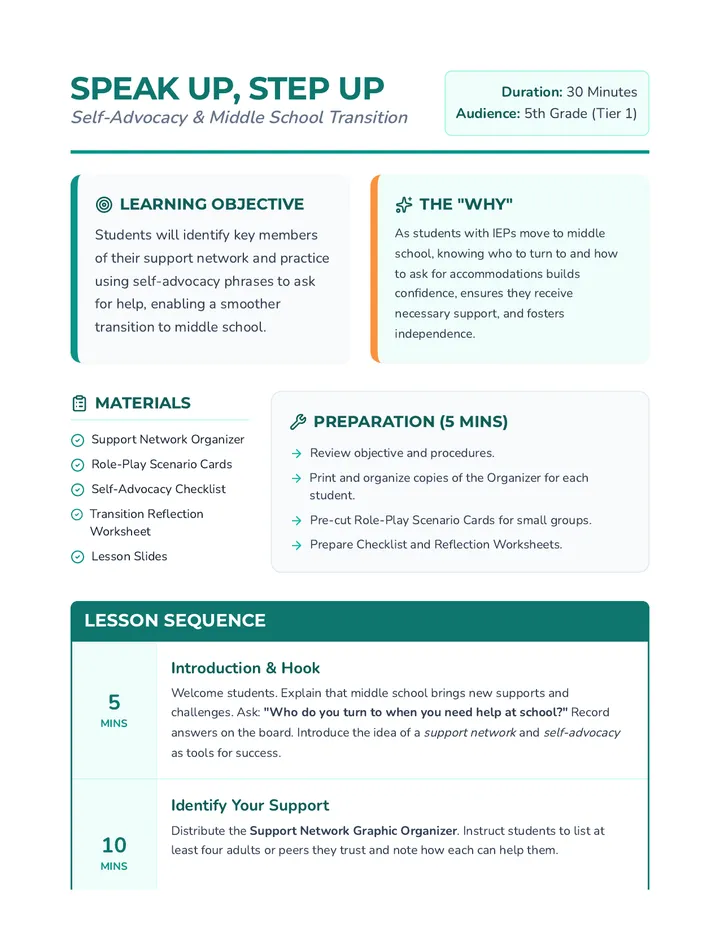
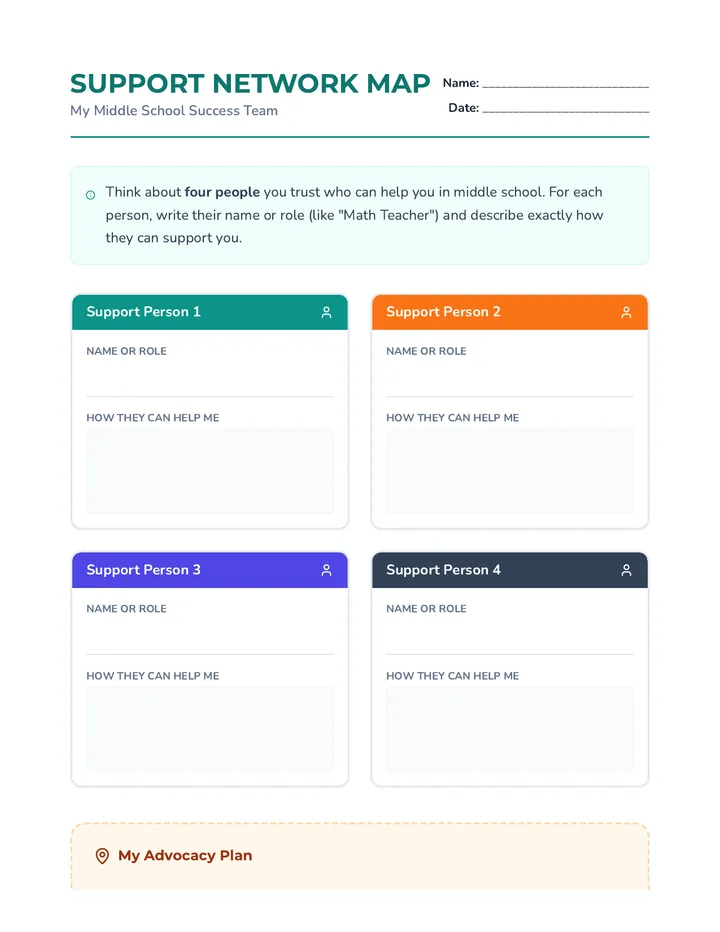
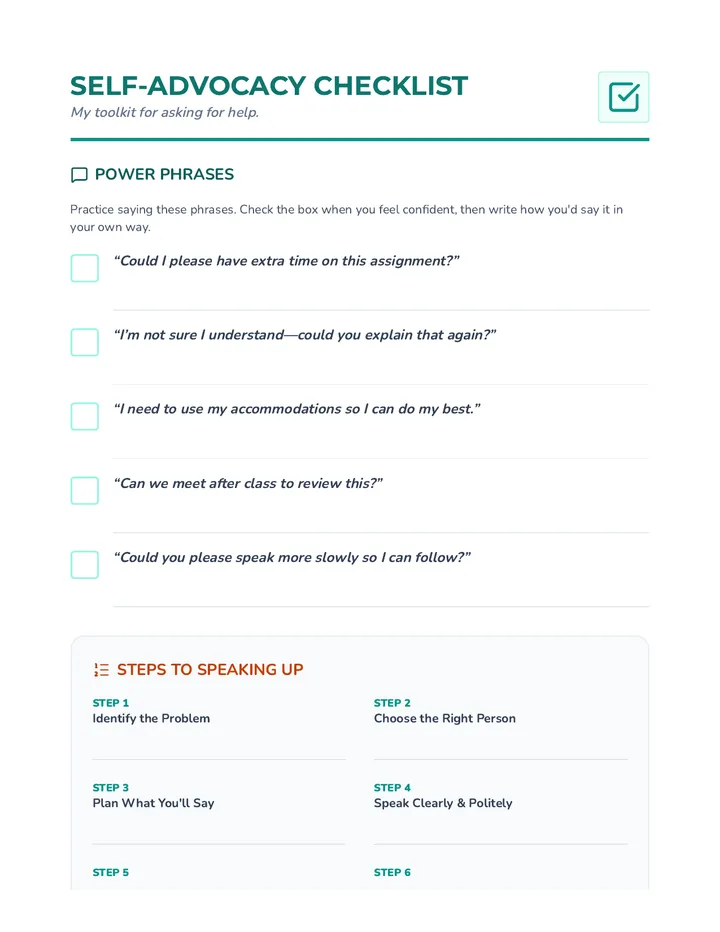
A 30-minute 5th grade lesson empowering students with IEPs to identify their support networks and practice self-advocacy as they transition to middle school.
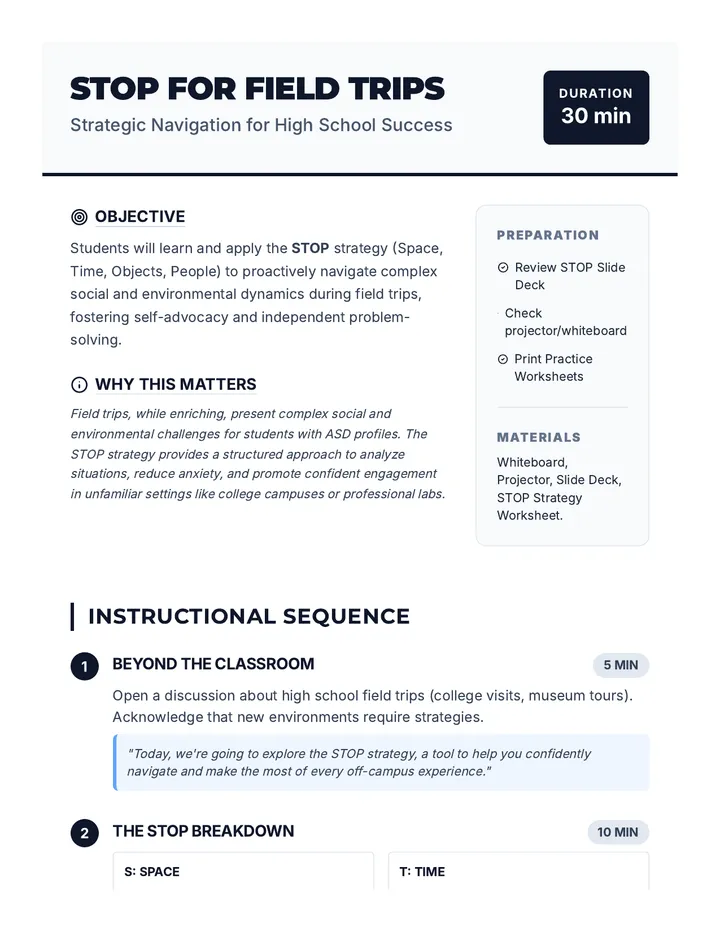
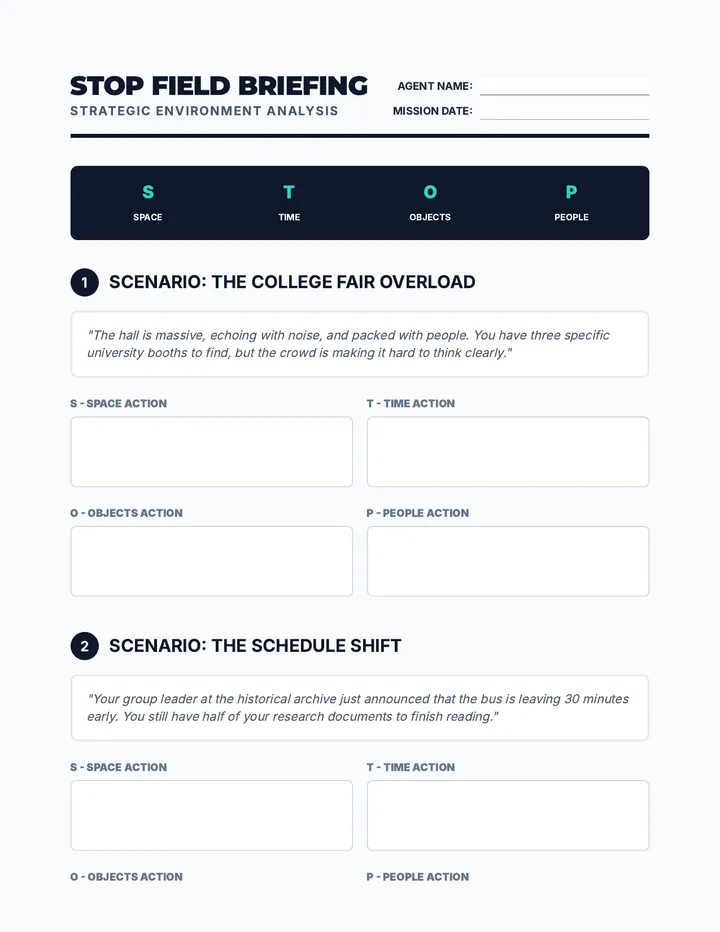
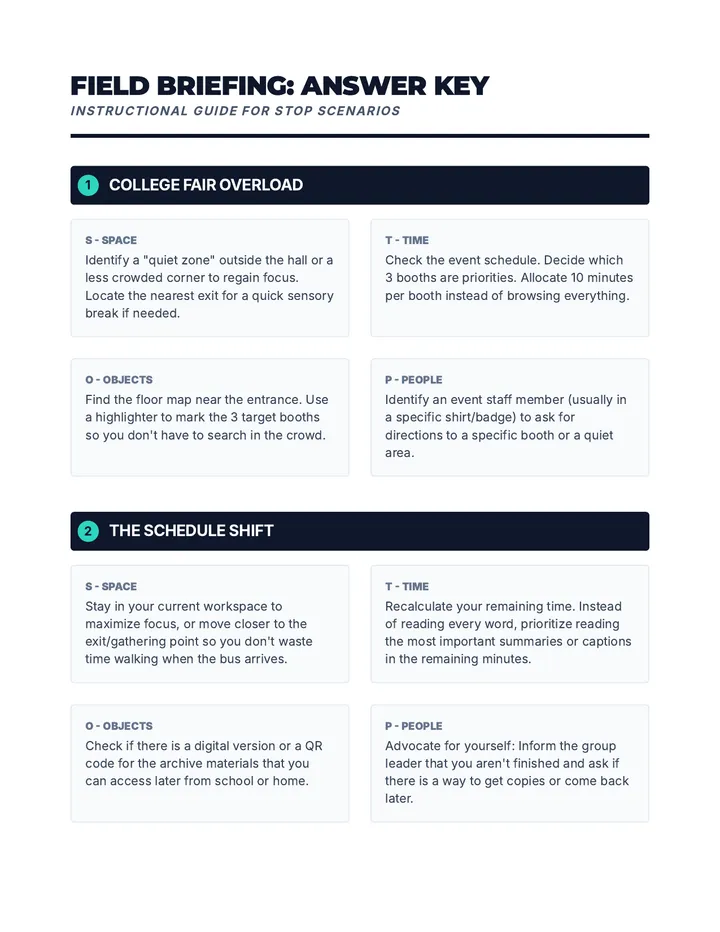
This lesson introduces the 'STOP' strategy (Space, Time, Objects, People) to help high school students with ASD profiles navigate field trips, college visits, and professional events. It focuses on situational analysis, self-advocacy, and reducing anxiety in new environments.
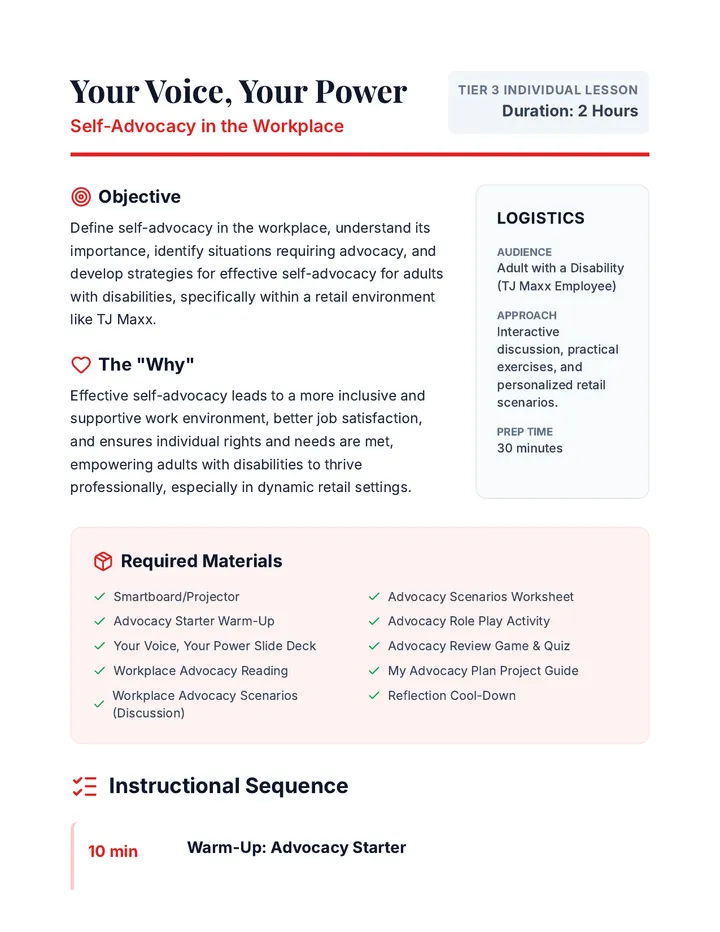
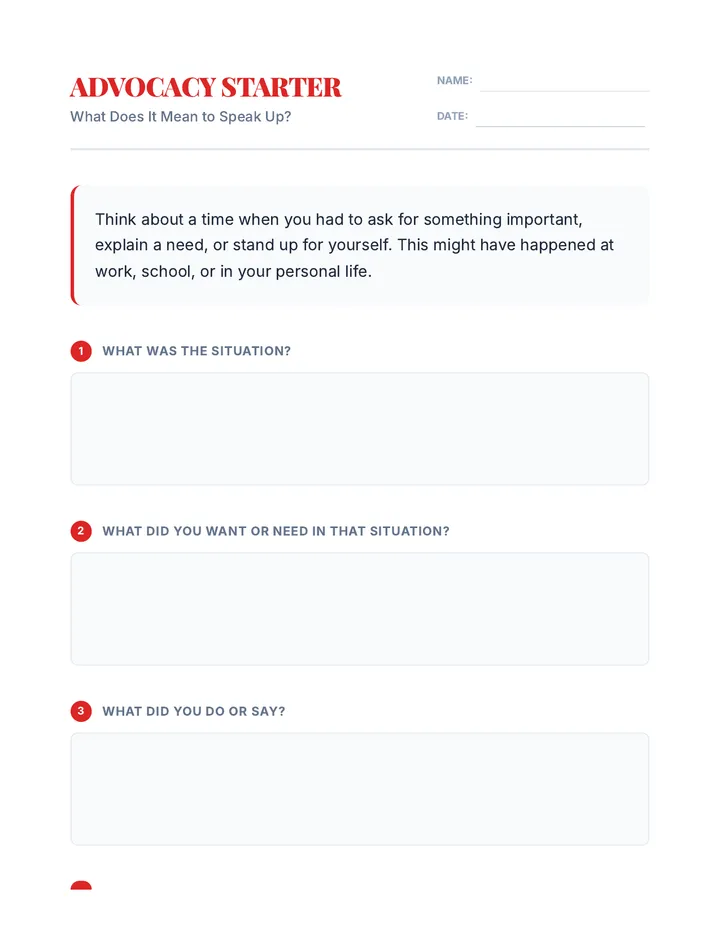
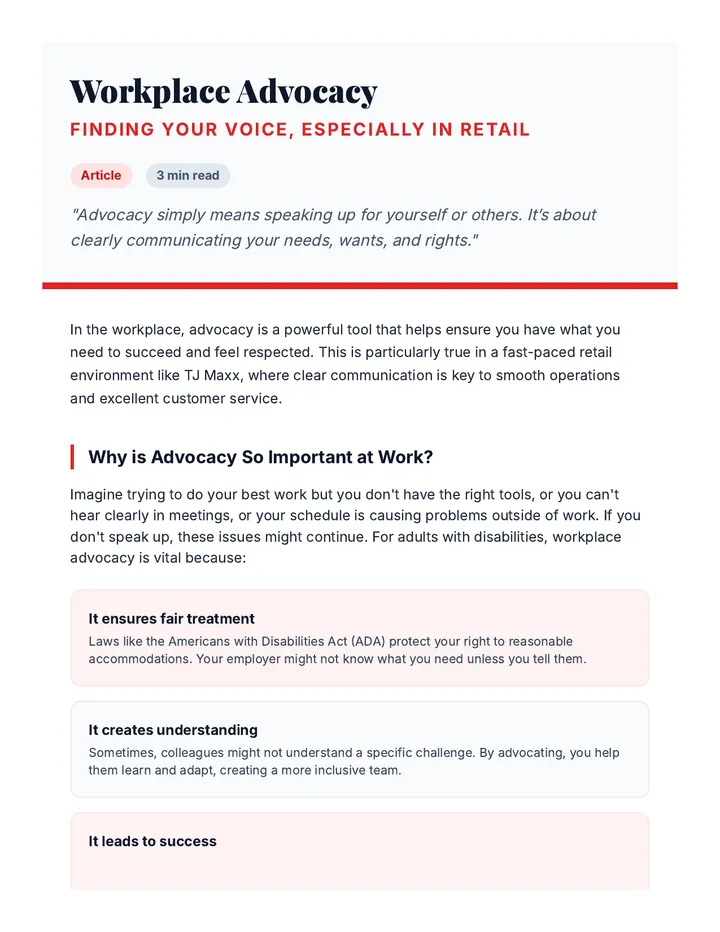
A comprehensive 2-hour individualized lesson designed to empower adults with disabilities to understand and practice self-advocacy in the workplace, specifically tailored for a retail environment like TJ Maxx.
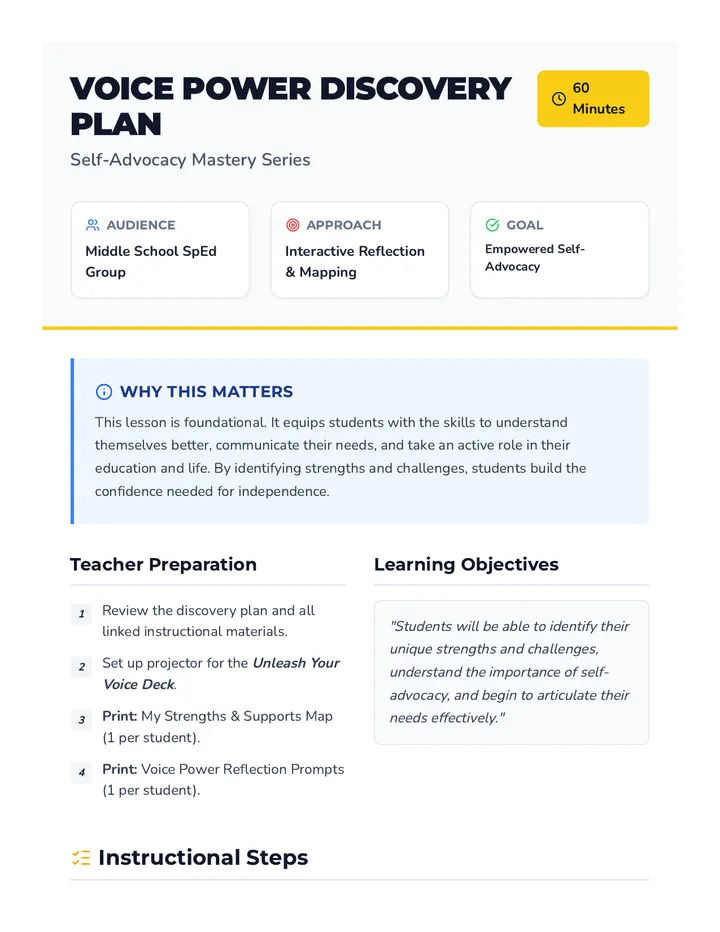
This lesson empowers middle school students to identify their unique strengths and challenges, fostering self-awareness as a foundation for effective self-advocacy and independence.
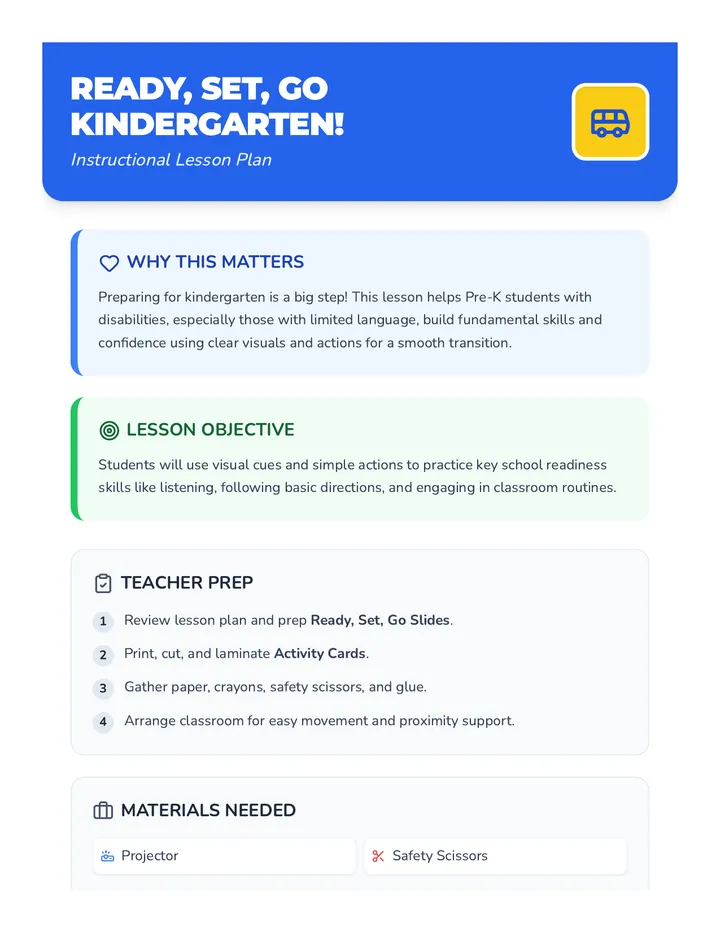
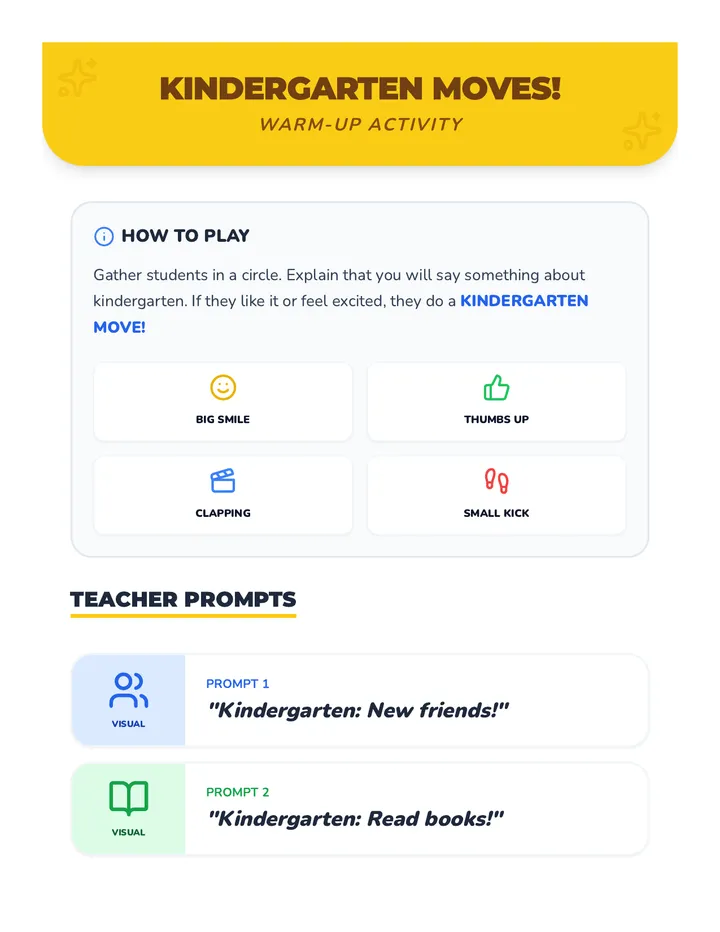
A 30-minute school readiness lesson for Pre-K students with disabilities, focusing on social-emotional skills, following directions, and basic academic concepts through visual and action-based activities.
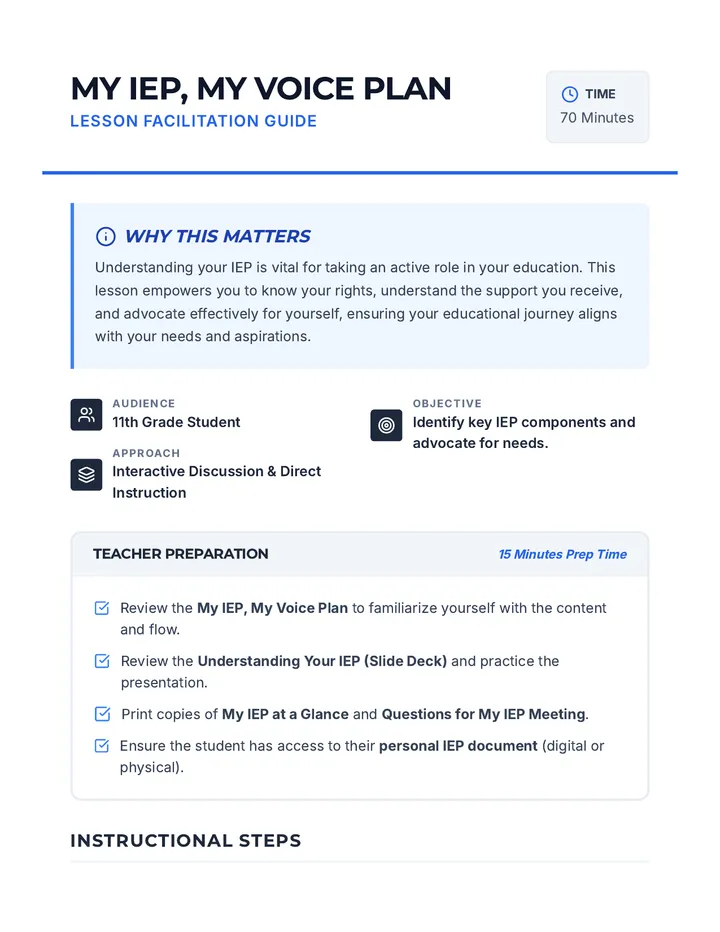
This lesson demystifies the Individualized Education Program (IEP) for 11th-grade students, empowering them to understand their goals, accommodations, and rights. Through interactive discussion and guided reflection, students learn to advocate for themselves and take an active role in their educational planning.
This lesson empowers 10th-grade students to understand their learning profile and advocate for their needs, building self-determination and independence for lifelong success.
An individualized Tier 3 lesson designed for a 17-year-old student with Autism, focusing on self-advocacy skills through direct instruction, role-playing, and guided practice.
This lesson helps 9th-grade special education students identify and utilize their support network, including family, teachers, and community members. Building and leveraging a strong support system is a key component of successful self-advocacy and transition.
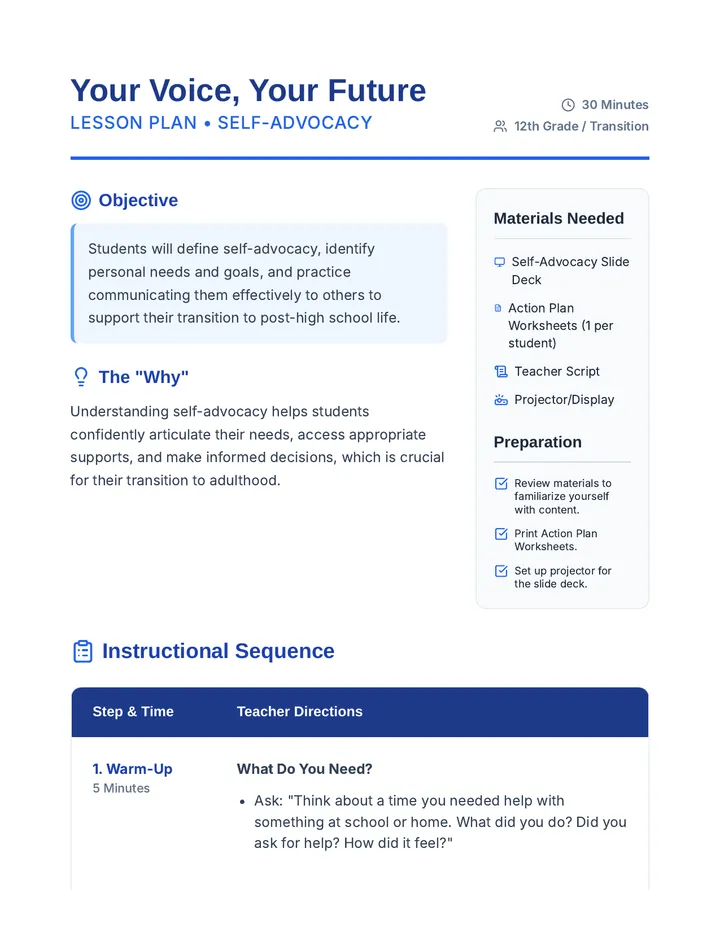
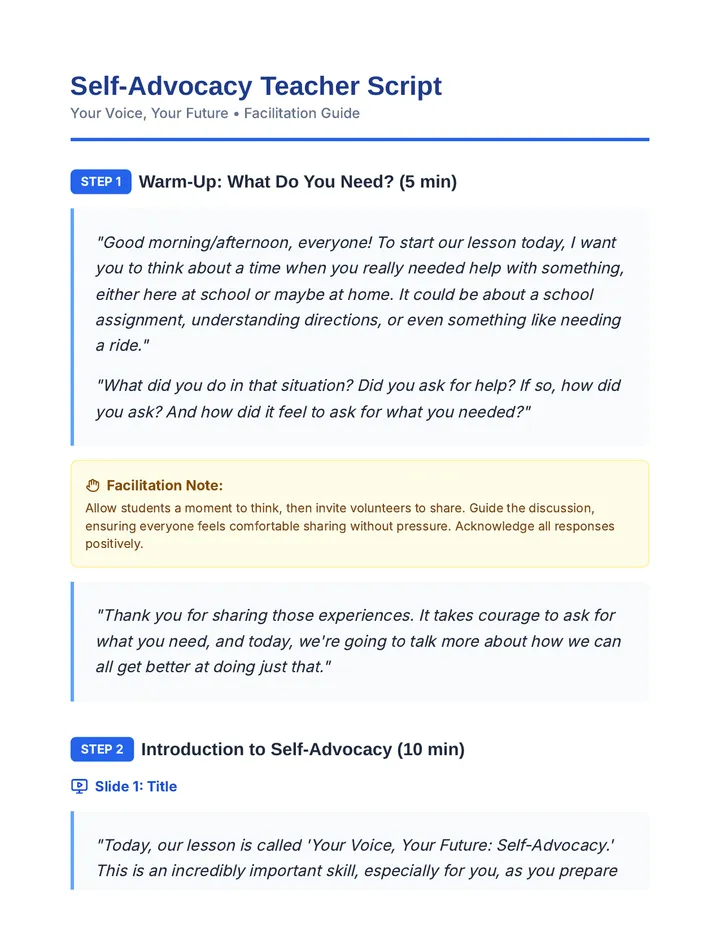
This lesson empowers 12th-grade special needs students to understand and practice self-advocacy, focusing on identifying needs and communicating effectively for their post-high school transitions.
A focused 15-minute Tier 3 transition planning session for 12th-grade special education students to explore post-high school goals and actionable next steps.