Self-Advocacy Action Plan Lesson Plan My Voice My Power
Self-Advocacy Action Plan Lesson Plan
Why This Matters
Learning to advocate for yourself is a superpower! It helps you get what you need to succeed in school and in life, ensuring your voice is heard and your unique strengths are recognized. This lesson helps build confidence and independence.
Duration 50 Minutes
Audience 10th Grade Student
Focus Self-Advocacy
Objective
Students will understand their individual learning strengths and challenges, identify key components of their IEP, and develop a personalized self-advocacy action plan for their academic and personal needs.
Approach
Interactive discussion, personal reflection, and a role-playing activity.
Materials Needed
Speaking Up for You Slides
My Learning Superpowers Journal
Role Play Prompts Script
Pen/Pencil
Preparation 15 Minutes
Review & Customize: Review all materials and customize the content to fit the student's specific IEP goals and learning profile.
Print Journal: Prepare digital or physical copies of the My Learning Superpowers Journal.
Set the Space: Ensure a comfortable and private space for discussion and role-playing.
Tech Check: Test the slide deck display and any external tech required.
Instructional Steps
1
Warm-Up: My Learning Snapshot
5 min
Begin by asking the student to share one thing they love about learning and one thing they find challenging.
"What's one 'superpower' you have when it comes to learning, and one 'kryptonite' that sometimes makes learning tough?"
2
Understanding My IEP
10 min
Use the Speaking Up for You Slide Deck to introduce the purpose and key components of an IEP (Individualized Education Program).
Discuss the student's specific accommodations, modifications, and goals.
Prompt: "What parts of your IEP do you already know about? Which parts are new or confusing?"
3
My Learning Superpowers Reflection
15 min
Distribute the My Learning Superpowers Journal .
Guide the student through the prompts, focusing on identifying their strengths, understanding their challenges, and articulating what they need to succeed.
Encourage specific examples. Provide support as needed to help the student articulate their thoughts.
4
Role Play: Advocating in Action
15 min
Introduce the concept of self-advocacy and its importance.
Use the IEP Meeting Role Play Prompts Script to facilitate a role-playing scenario (e.g., an IEP meeting, a conversation with a teacher).
Provide constructive feedback and opportunities for the student to practice different phrases and approaches.
Prompt: "How did it feel to speak up for yourself? What felt easy, and what felt challenging?"
5
Action Plan & Cool Down
5 min
Summarize key takeaways and identify 1-2 concrete steps they can take to advocate for themselves in the near future.
"What's one small step you can take this week to use 'My Voice, My Power'?"
Conclude by reinforcing the student's ability to advocate for themselves.
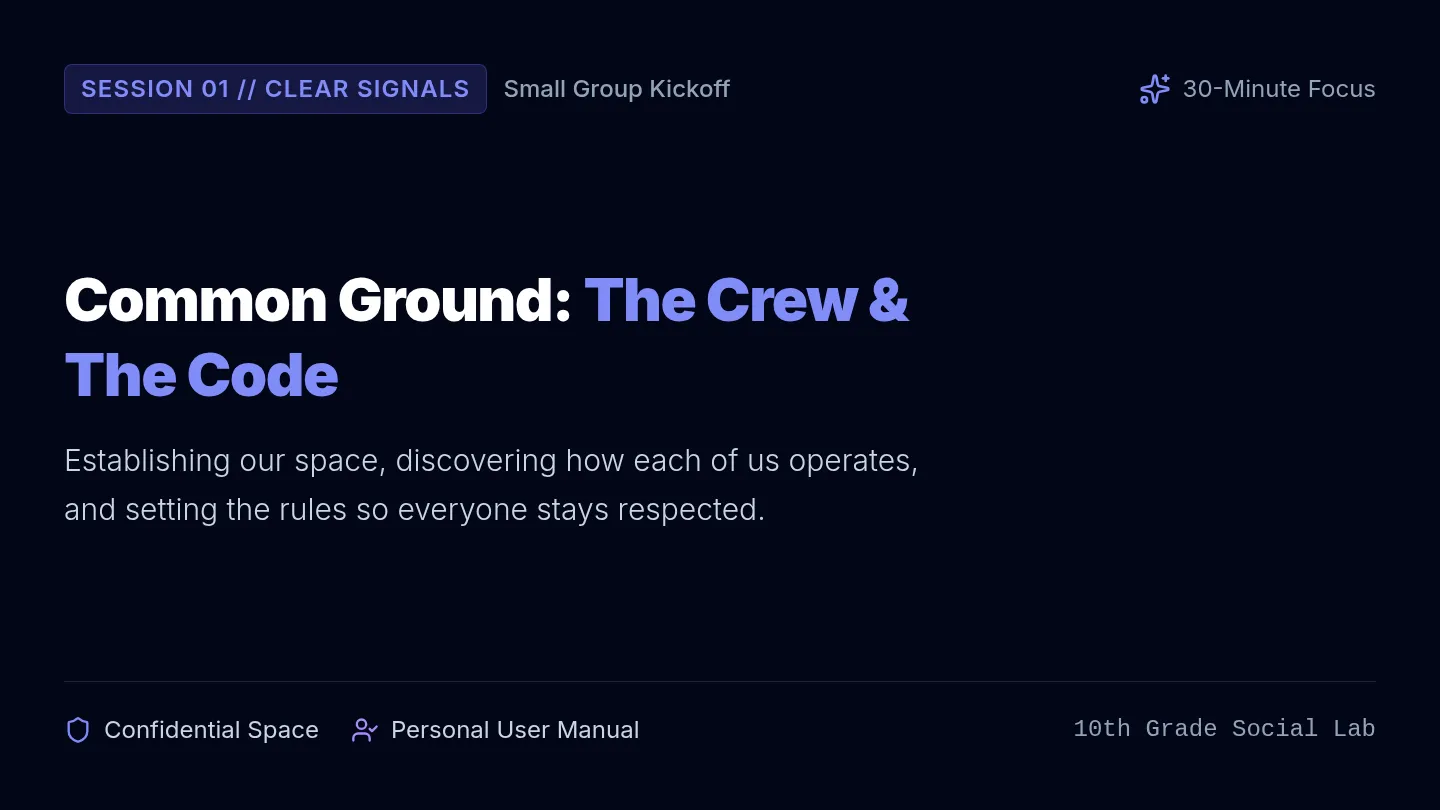
Speaking Up for You Slide Deck My Voice, My Power
Speaking Up for You: Understanding Your Learning Journey & How to Advocate for Yourself
Teacher Notes
Welcome the student. Explain today is about understanding their unique learning journey. Ask about their favorite subject or an accomplishment to build rapport.
What's an IEP?
Individualized Education Program: A special plan designed just for YOU to help you learn and succeed in school.
Think of it as your education roadmap!
It focuses on your unique goals.
Teacher Notes: Introduce the concept. Ask if they know what an IEP is or if they've heard of it before.
Key Parts of YOUR IEP
1. Present Levels
Where you are now: your strengths and needs.
2. Goals
What you're working towards this year.
3. Accommodations
Changes to how you learn (e.g., extra time).
4. Modifications
Changes to what you learn.
5. Related Services
Extra help like counseling or speech.
6. Transition Plan
Planning for life after high school!
Teacher Notes: Focus on accommodations and goals. Use clear, student-friendly language. Avoid jargon.
Why This Matters to YOU
Helps teachers know how you learn best.
Ensures you get the support you need.
Gives you a voice in your education.
"Knowing your IEP helps you speak up for yourself and your needs!"
Teacher Notes: Emphasize self-determination and taking ownership. This is THEIR document.
What is Self-Advocacy?
Speaking up for yourself and your needs. It means:
Knowing what you want
Understanding your rights
Communicating effectively
Examples:
"I need more time to finish this quiz."
"Could you explain those directions again?"
"I focus best in a quiet room."
Teacher Notes: Provide examples relevant to 10th grade. Encourage them to share a time they wished they'd spoken up.
Discovering Your Learning Superpowers
Before you can advocate, you need to know YOU!
Strengths
Needs
Support
Let's open your Learning Superpowers Journal!
My Learning Superpowers Journal My Learning Superpowers
Understanding My Unique Brain & Advocacy Plan
Name:
Date:
My Strengths: What I Rock At!
1. What are three things you are really good at when it comes to learning? (e.g., remembering details, big ideas, creativity, solving problems, reading, math, art, etc.)
2. Describe a time you felt really successful in school. What made it a success?
3. What kind of learning activities do you enjoy the most? Why?
My Challenges: Where I Need a Boost
1. What are some things that make learning difficult or frustrating for you sometimes? (e.g., focusing, remembering directions, finishing on time, reading long texts)
2. Describe a time you struggled with something in school. What happened, and how did it feel?
3. Are there specific subjects or assignments you find more challenging? Why?
My Needs: What Helps Me Thrive
1. Thinking about your challenges, what specific supports or accommodations help you learn best? (e.g., extra time, quiet space, visual aids, breaking tasks into steps, technology tools)
2. If you could tell a new teacher one thing about how you learn best, what would it be?
3. How do you feel about asking for help? What makes it easy or hard?
My Voice, My Power: Advocating for Me!
1. What does "self-advocacy" mean to you in your own words?
2. Identify one specific goal for advocating for yourself in the next month. How will you achieve it?
3. Imagine you are explaining your learning needs to a friend or family member. What would you say?
My Voice. My Power. My Success.
IEP Meeting Role Play Prompts Script IEP Meeting Role Play
Practice Prompts: Speaking Up for Your Needs
Teacher Introduction
"Alright, we're going to do a little role-play activity to practice using 'My Voice, My Power.' I'll play the role of a teacher or an IEP team member, and you'll play yourself. Remember, this is a safe space to try out different ways of speaking up for what you need. There are no right or wrong answers, just practice! We'll go through a few scenarios. Your goal is to clearly explain your needs. Ready?"
1
Extended Time Accommodation
Teacher
"(As a teacher) Hi [Student's Name], I'm noticing you haven't turned in the last two assignments. Is everything okay?"
Student
Teacher
"(As a teacher) I understand. Remember, you have an accommodation for extended time. How could you bring that up to me in a way that helps you? What could you say?"
Student
Feedback
Try this: "I'm working on managing my time, and my IEP says I can have extended time. Would it be possible to get until Friday?" or "I was feeling overwhelmed. Could we discuss how I can best use my extended time accommodation?"
2
Needing Clarification
Teacher
"(As a teacher) For next week, your task is to complete the research project on historical events. Make sure to include primary and secondary sources, and present it in a format of your choosing. Any questions?"
Student
Teacher
"(As a teacher) Okay, you're looking a bit confused. What parts of those instructions were unclear? How could you ask me to explain it in a way that helps you understand better?"
Student
Feedback
Try this: "Could you break down the steps for me?" or "What do you mean by 'primary sources'? Could you give an example?" Asking for a rubric or an example is a fantastic way to get clarity.
3
Preferred Learning Environment
Team
"(As an IEP team member) So, [Student's Name], at your last meeting, we talked about settings that help you focus. We're thinking of having you work in the main classroom for all assignments. How do you feel about that?"
Student
Team
"(As an IEP team member) I hear you. What specific conditions or environments help you concentrate best? How can you clearly state what you need to the team?"
Student
Feedback
Try this: "I really focus better in a quiet setting for tests, perhaps the resource room, even though I'm comfortable in the main classroom for daily work." Knowing your needs shows self-awareness!