Visual schedules, transition cues, and consistent routines to minimize behavioral challenges during schedule changes. Supports students in navigating shifts between activities while maintaining emotional regulation.
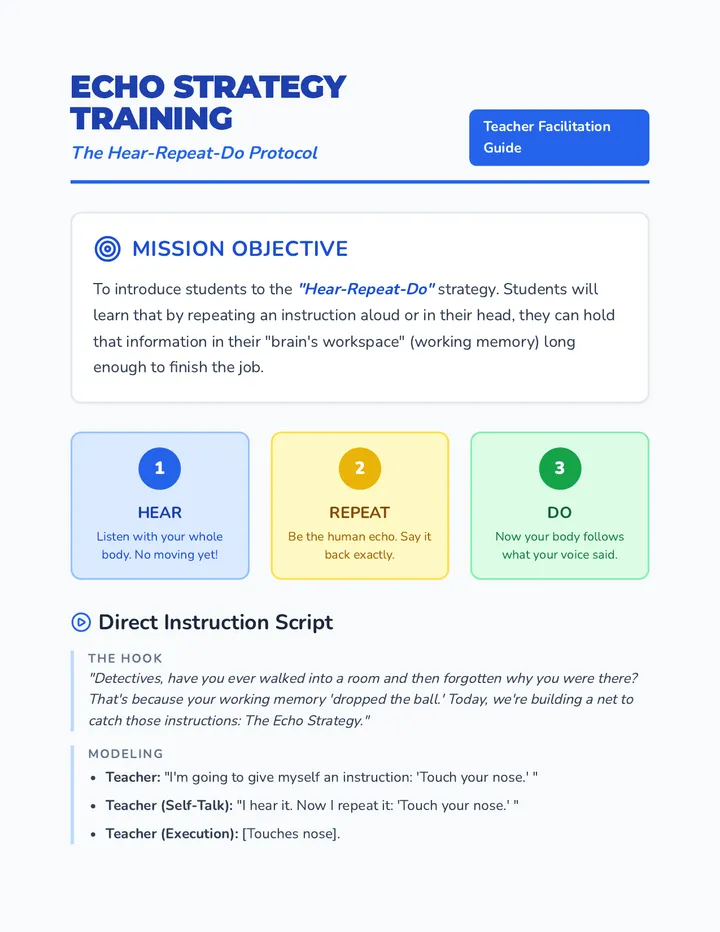
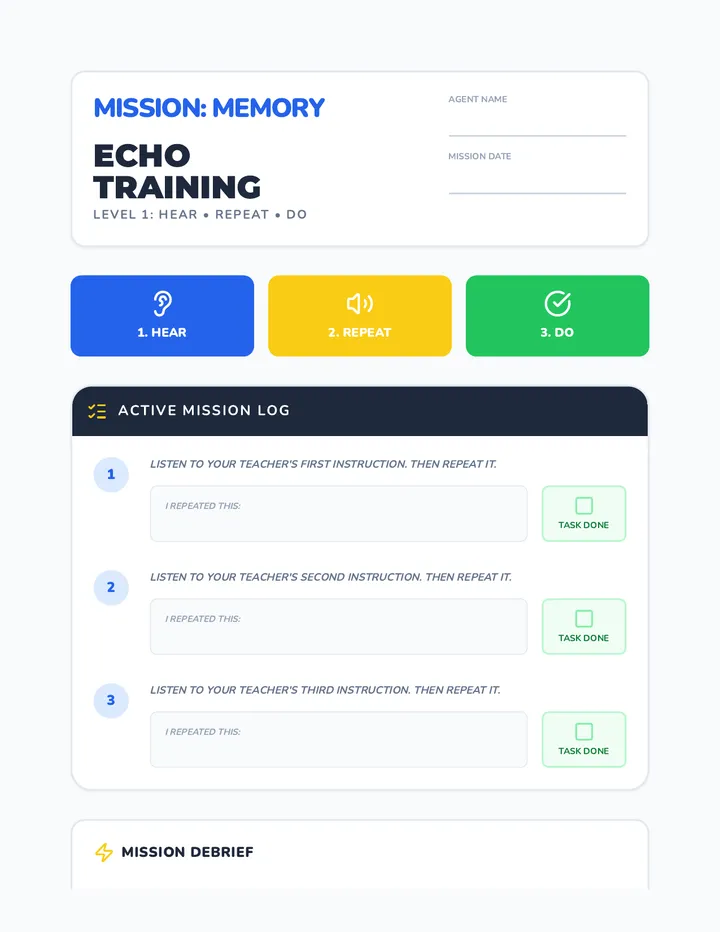
A specialized sequence for 4th-grade students to develop working memory through verbal rehearsal. Students practice the 'Hear-Repeat-Do' strategy, identify action keywords, utilize processing pauses, and verify their work to improve follow-through on single-step directions.
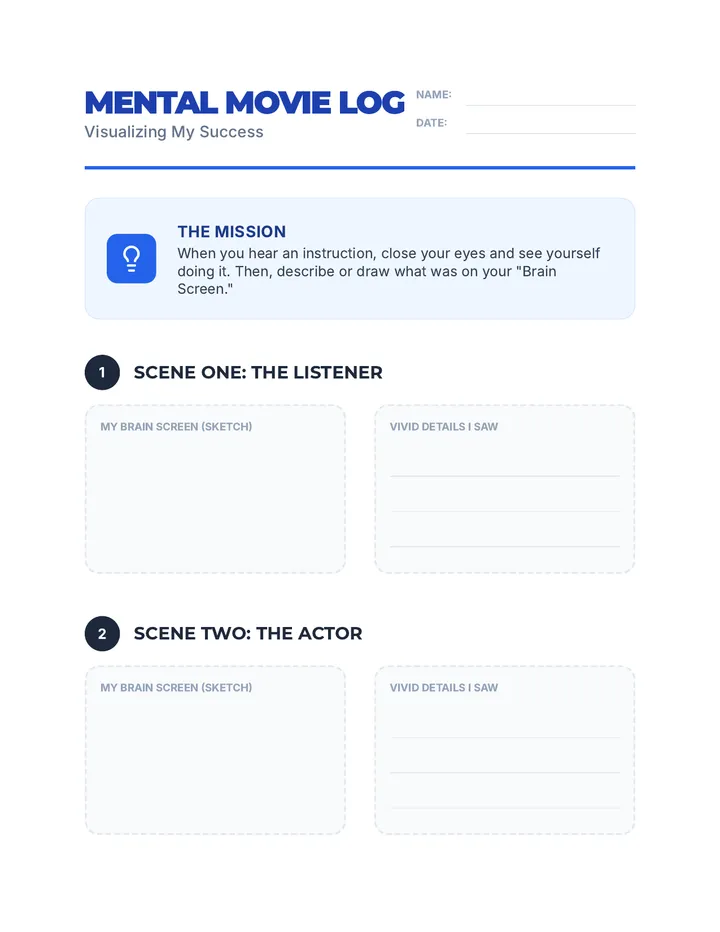
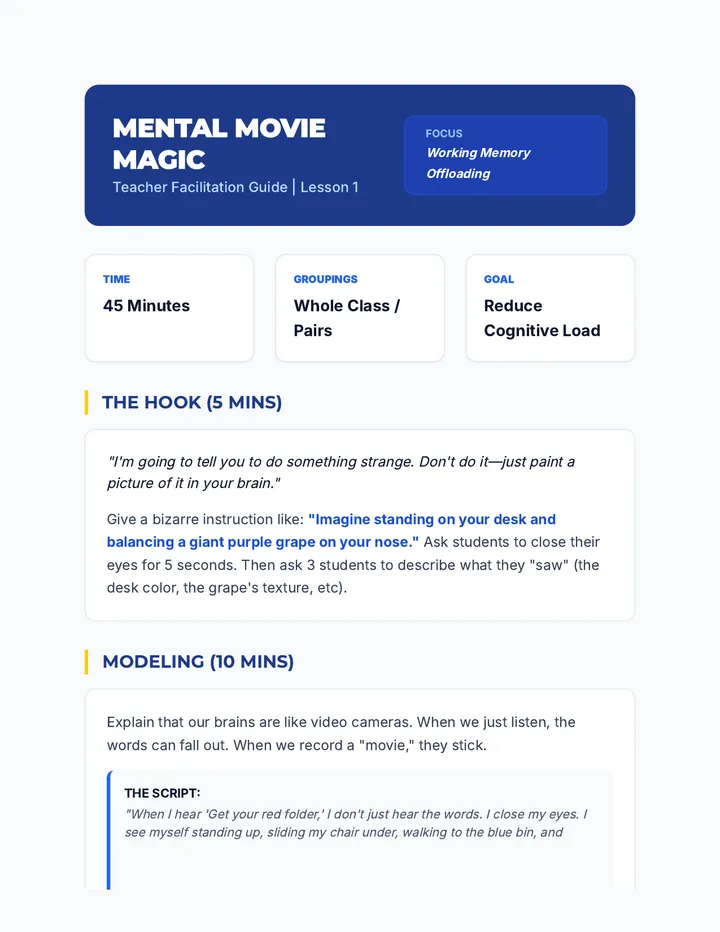
A specialized sequence for 6th-grade students focusing on working memory support through visual encoding. Students learn to transform auditory single-step directions into mental images and physical sketches to improve recall and task execution.
A 5th-grade Special Education sequence focused on externalizing executive functions through visual schedules, checklists, planners, and environmental cues to build independence and reduce anxiety.
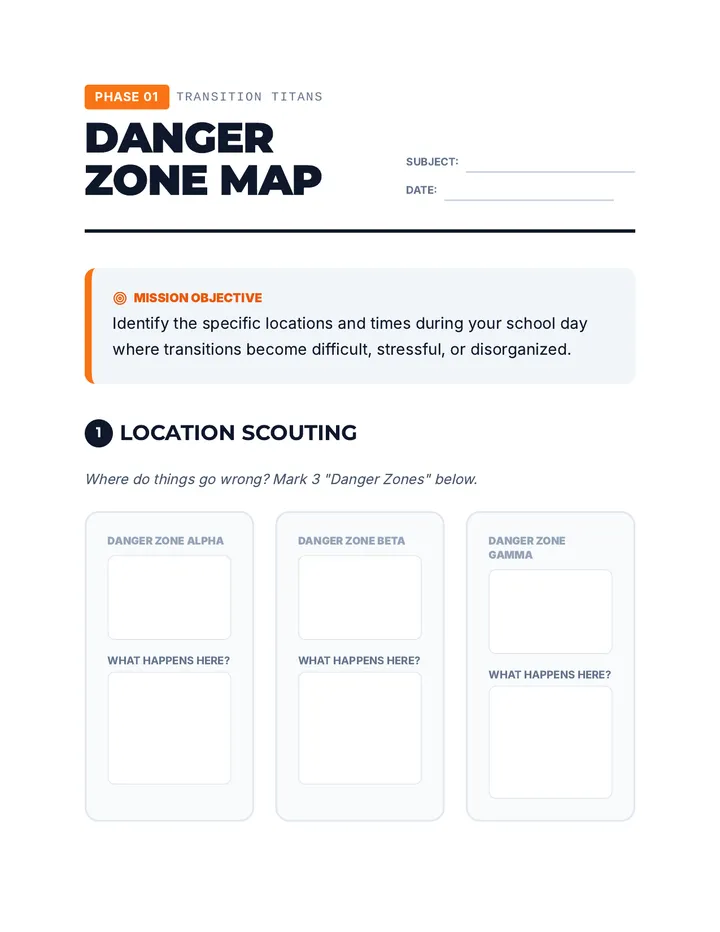
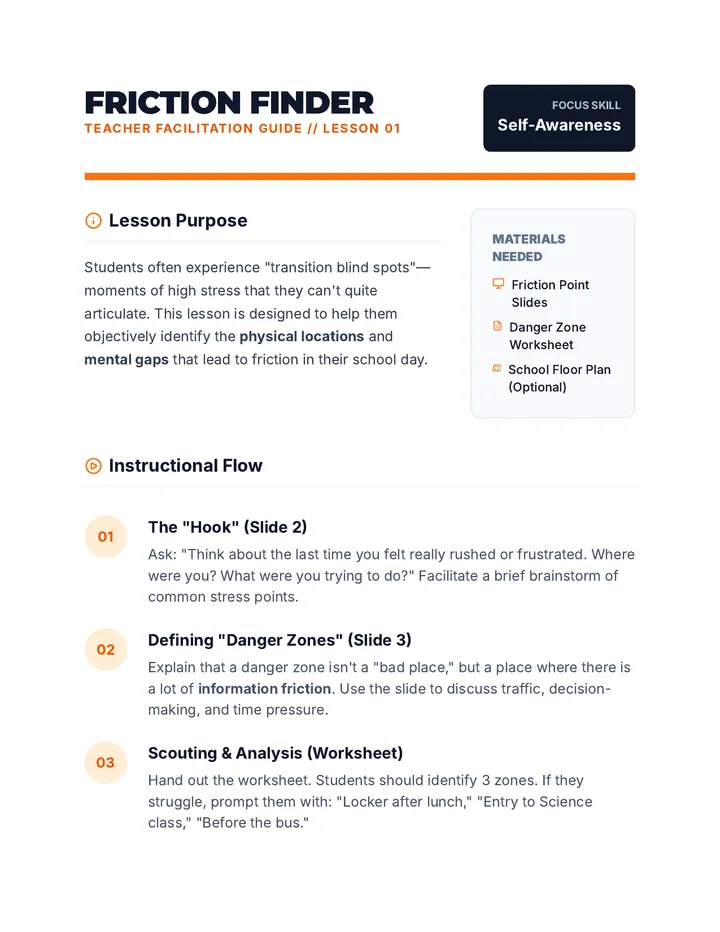
A 5-lesson sequence for 7th-grade students to master school transitions through visual cues, checklists, and cognitive routines. Students identify stress points, design locker maps, and navigate a 'Transition Gauntlet' to build executive function and emotional regulation.
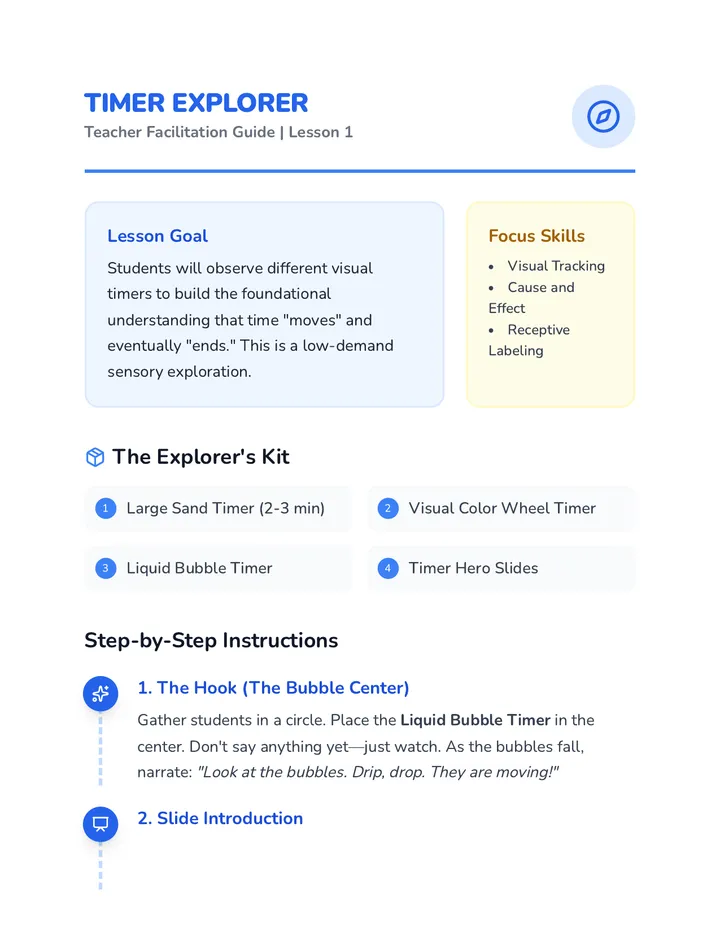
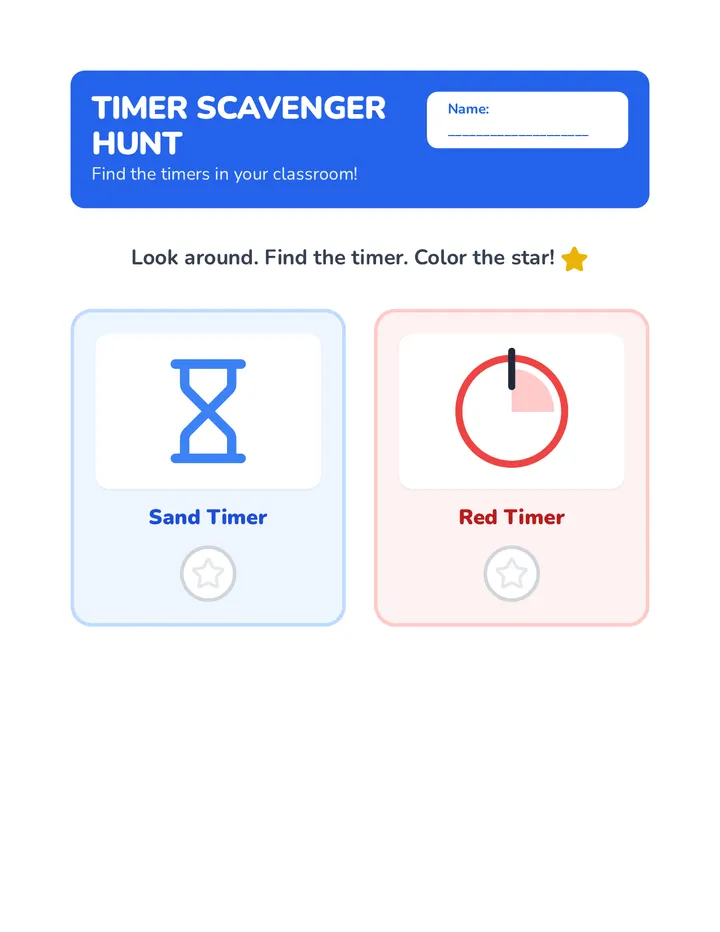
A 5-lesson sequence designed for 2nd-grade students to master the use of visual timers and schedules for smoother activity transitions. Students explore time perception, learn to read various visual countdowns, and develop self-regulation strategies for independent transitions.
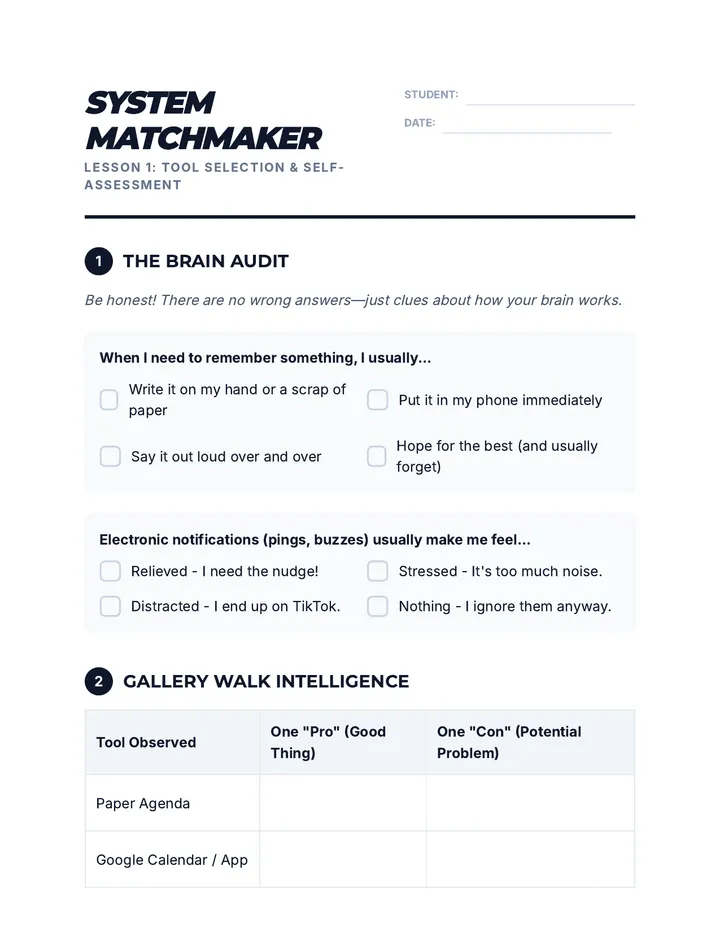
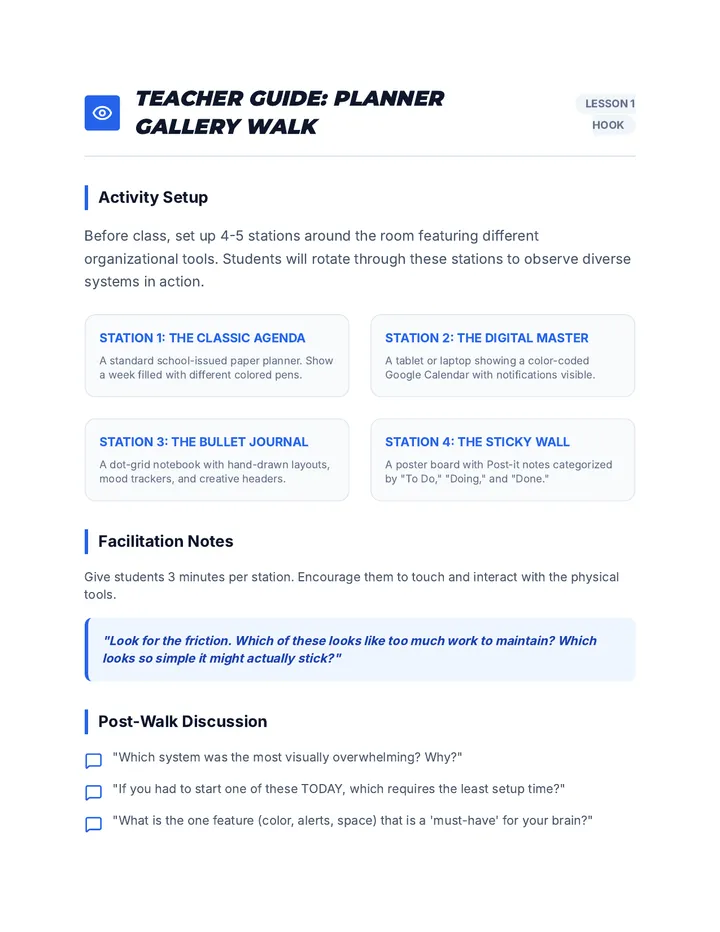
A comprehensive sequence designed to help 9th-grade students with executive function challenges develop, implement, and test personalized organizational systems. Students explore analog and digital tools, master calendar management, organize digital and physical spaces, and simulate real-world 'stress tests' to refine their chosen frameworks.
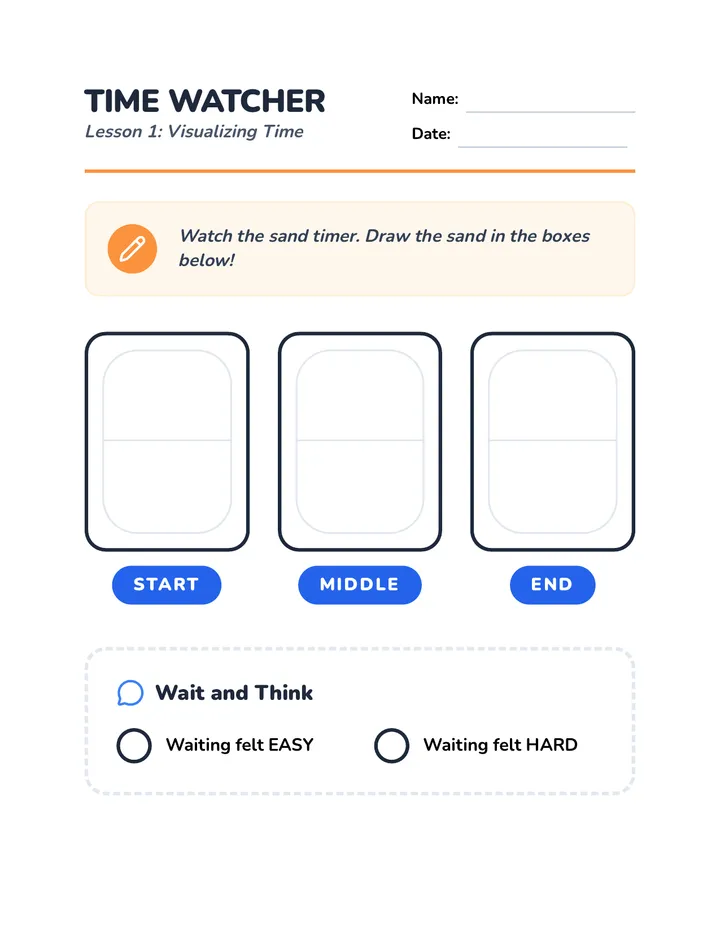
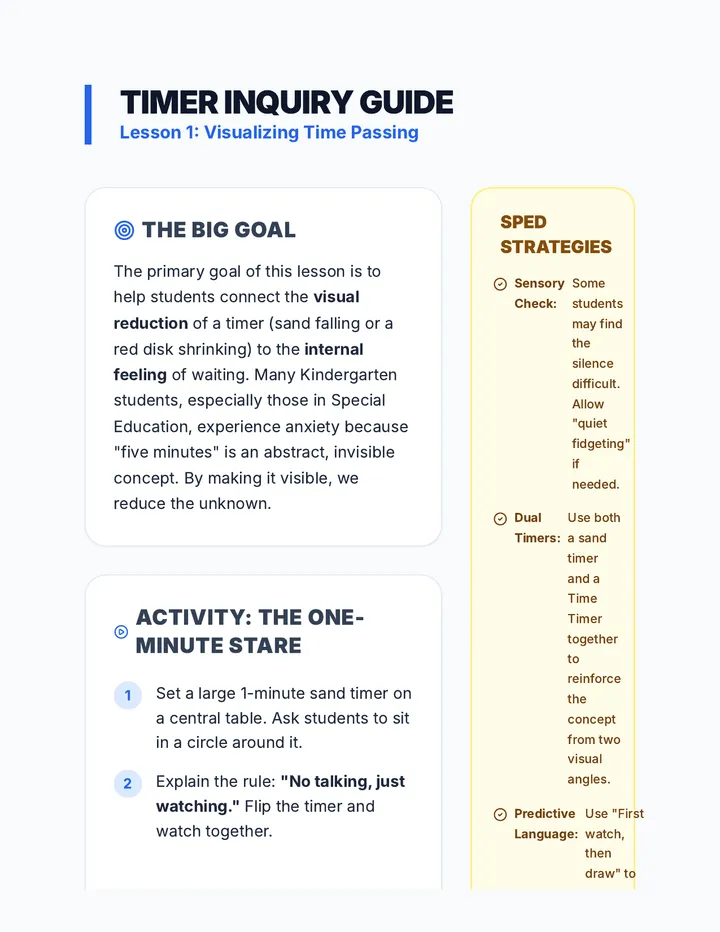
A comprehensive sequence designed for Kindergarten students in Special Education to master the concept of time, transitions, and break management using visual timers and structured protocols.
This sequence introduces Pre-K students in Special Education to visual timers to manage transitions. It covers exploring timers, practicing waiting, working during timed intervals, responding to 'all done' signals, and moving to break zones.
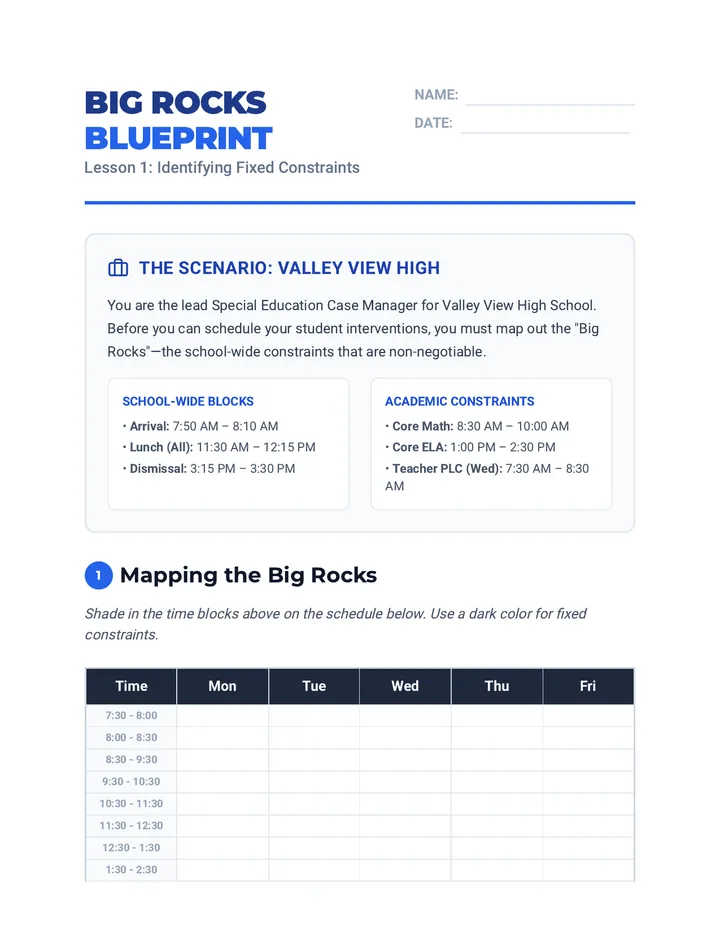
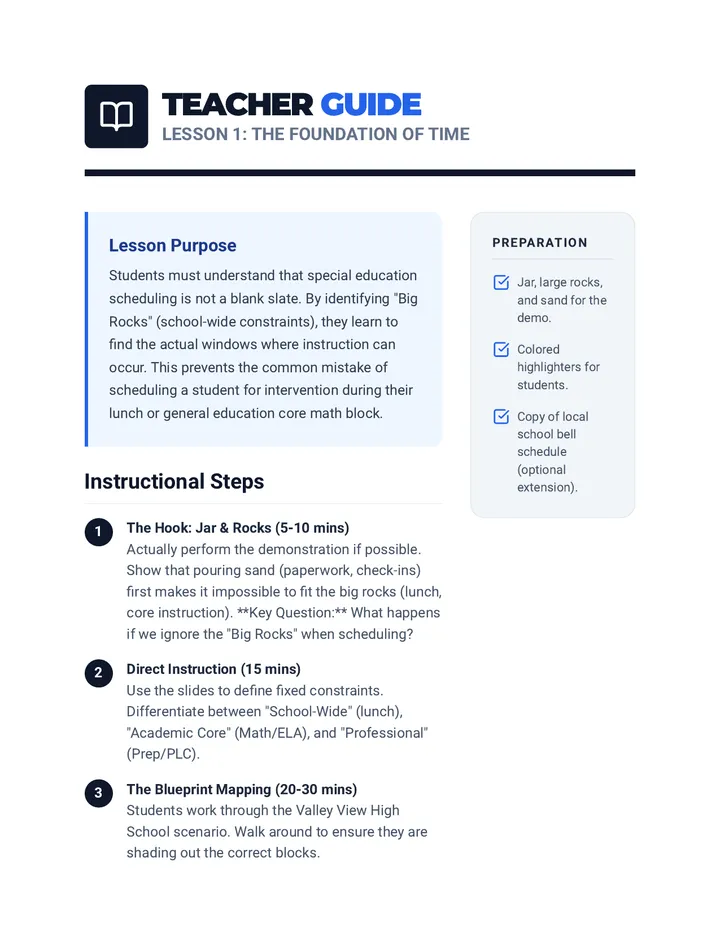
A comprehensive sequence for 11th-grade students to master the logistical and strategic elements of building a Special Education master schedule. Students progress from identifying fixed school-wide constraints to managing personnel and grouping students for maximum instructional impact.
An undergraduate-level course focusing on the data-driven application of break strategies for neurodivergent learners. Students analyze learner profiles, design schedules, create data collection tools, and draft legally sound IEP accommodations to optimize regulation and task management.
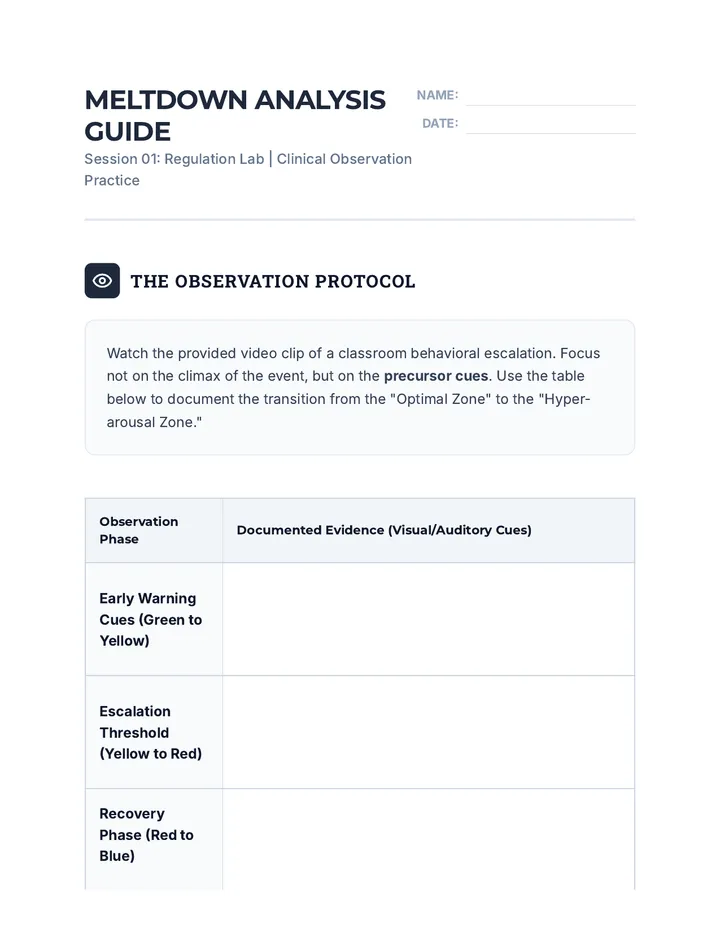
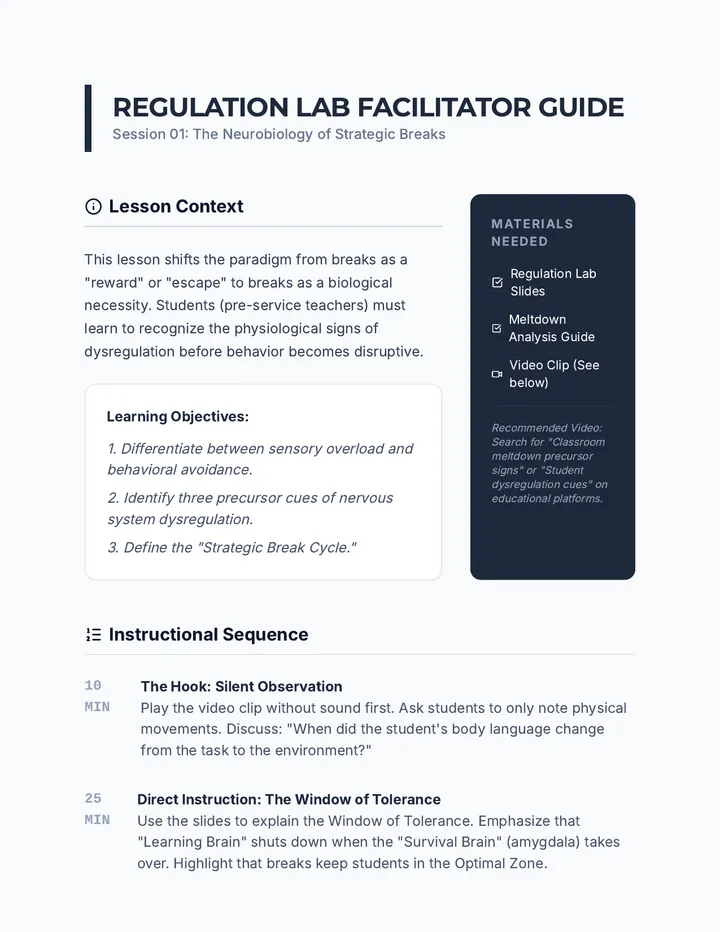
A workshop-style sequence for undergraduate education students focusing on the neurobiology, design, and implementation of strategic break systems for neurodivergent learners. Students transition from theoretical understanding to creating tangible visual supports and transition protocols.
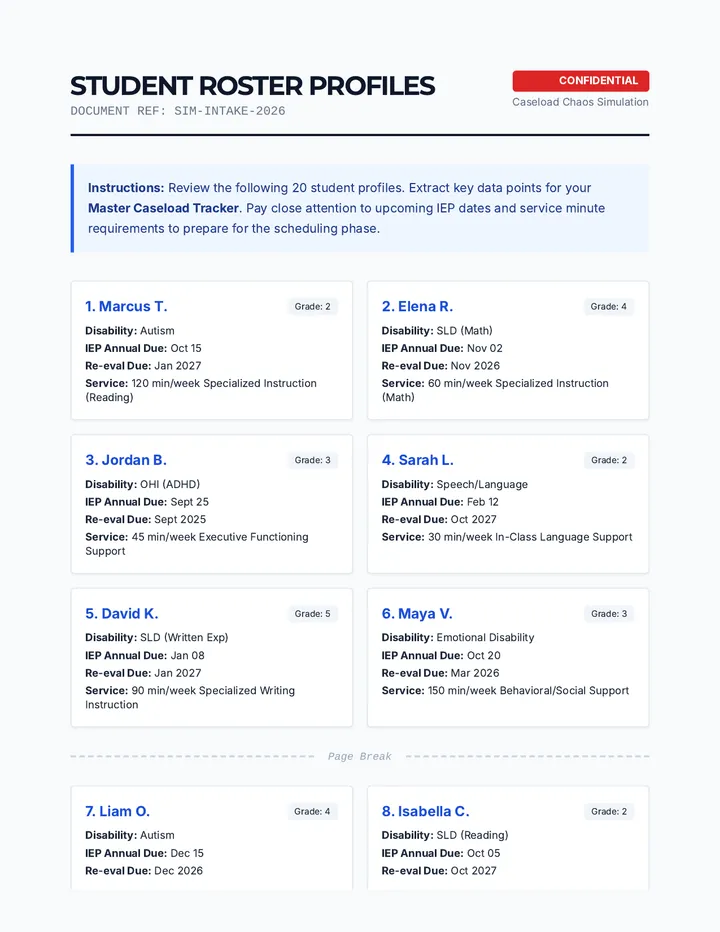
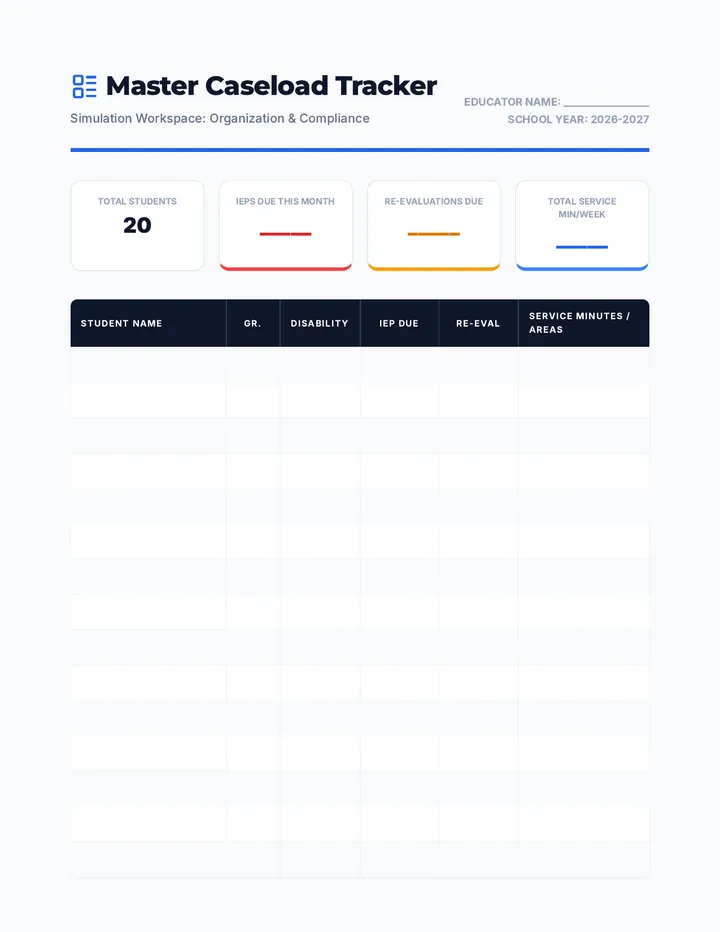
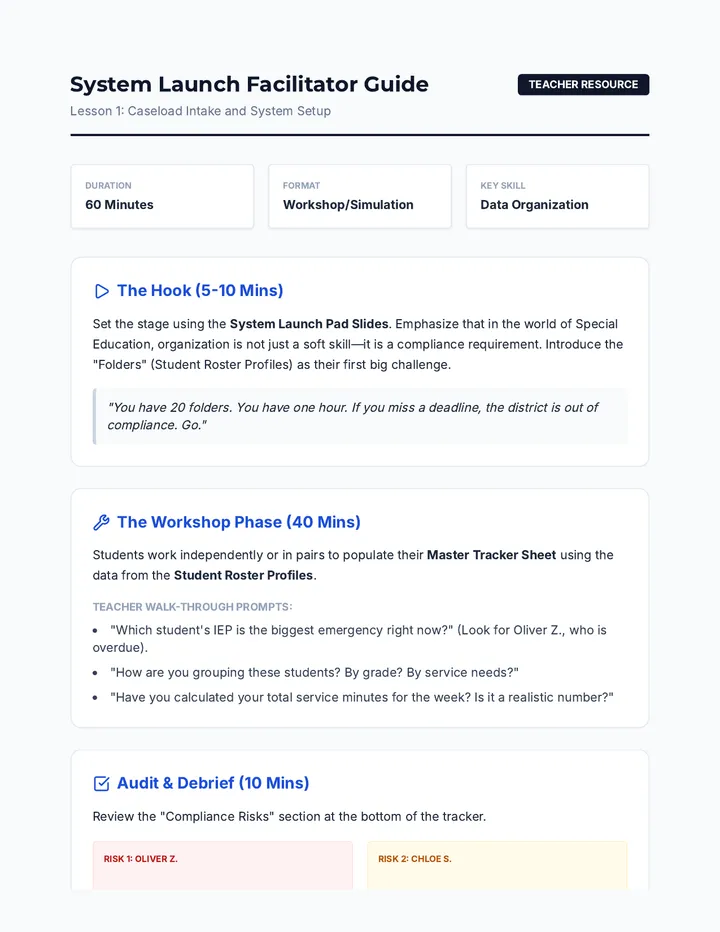
An immersive caseload management simulation for undergraduate special education students, focusing on organization, task-switching, and professional composure.
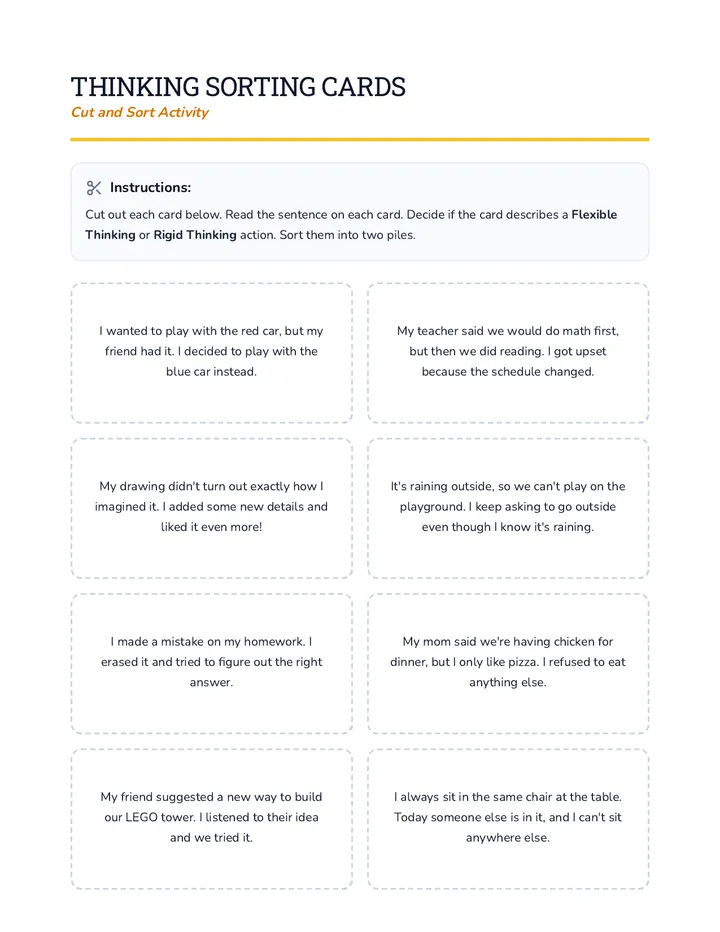
A 15-minute interactive lesson for an individual student with autism to introduce flexible vs. rigid thinking using routines, visuals, and movement.
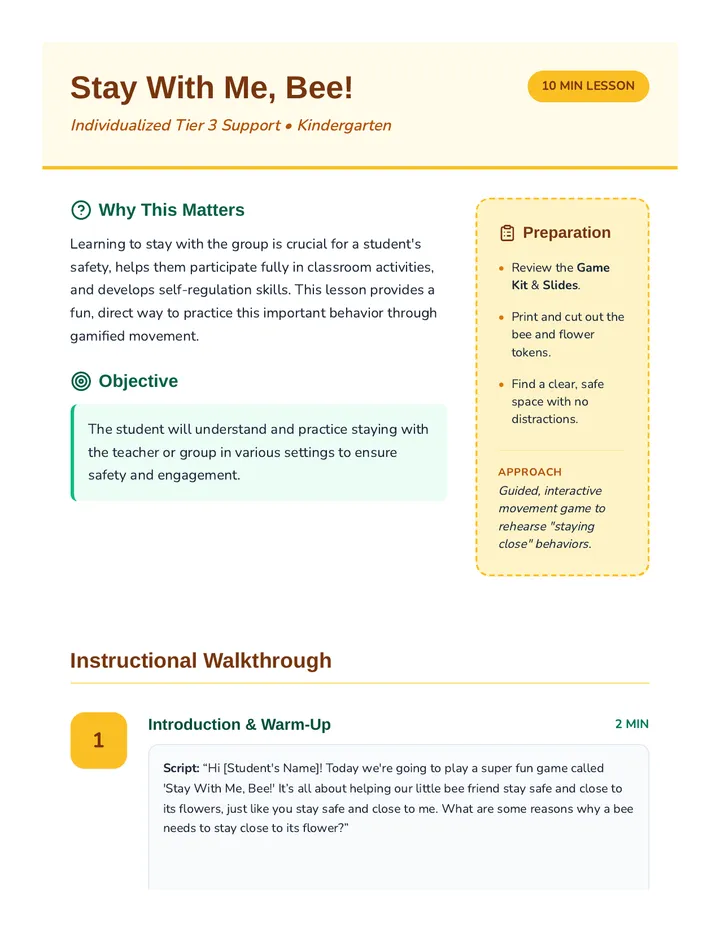
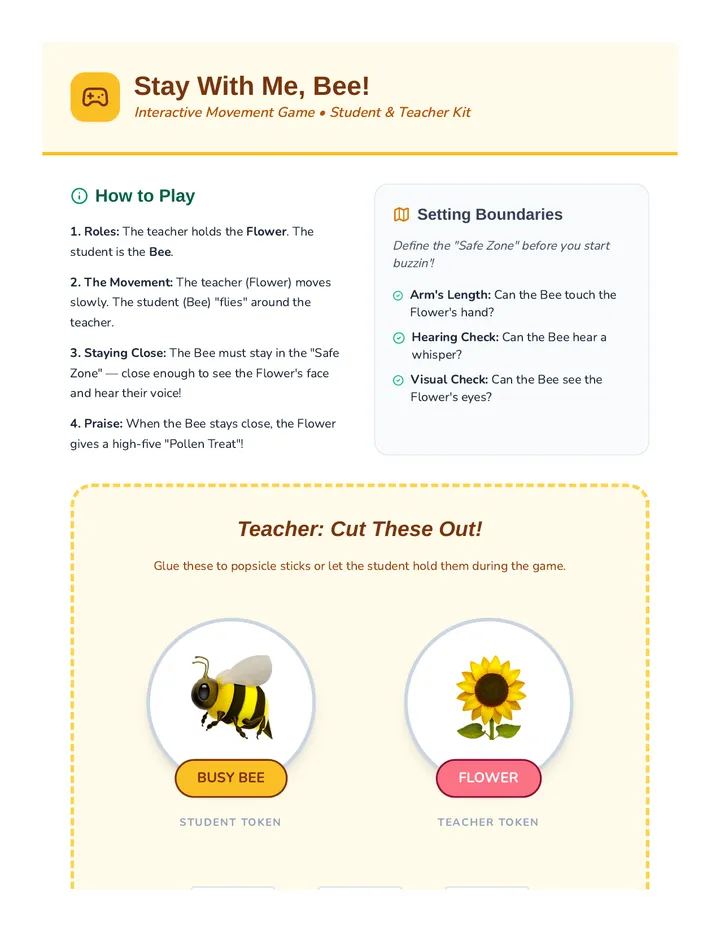
A 10-minute individualized Tier 3 lesson for Kindergarten students to practice staying with the group or teacher using a fun, bee-themed movement game.
A 45-minute lesson for 6th-grade small groups to reflect on flexibility, organization, and planning. Students engage in a collaborative storytelling mission and individual reflection to solidify their executive functioning strategies.
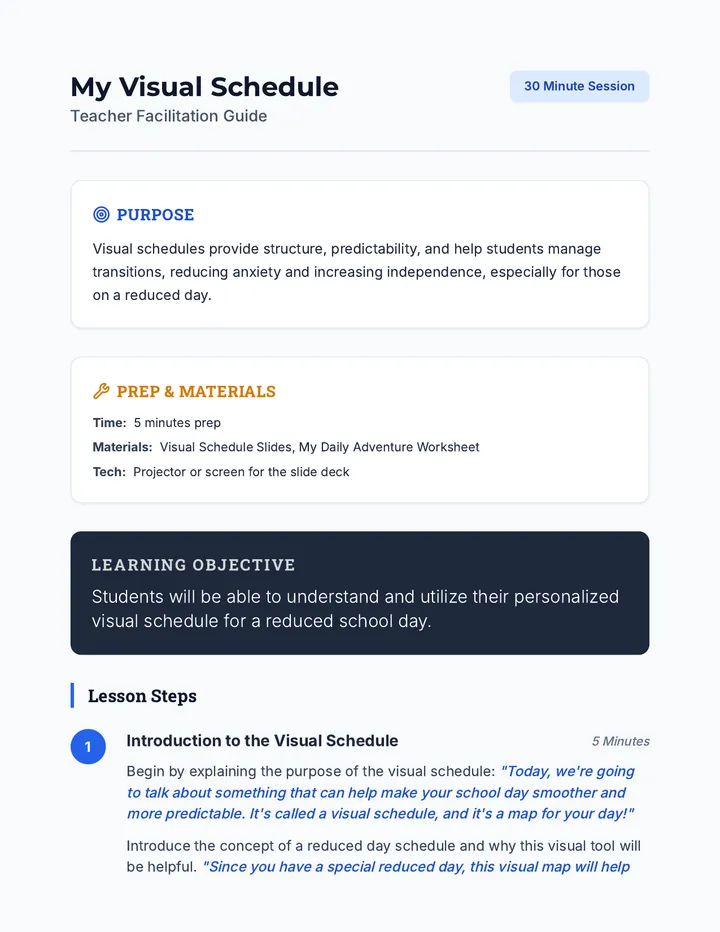
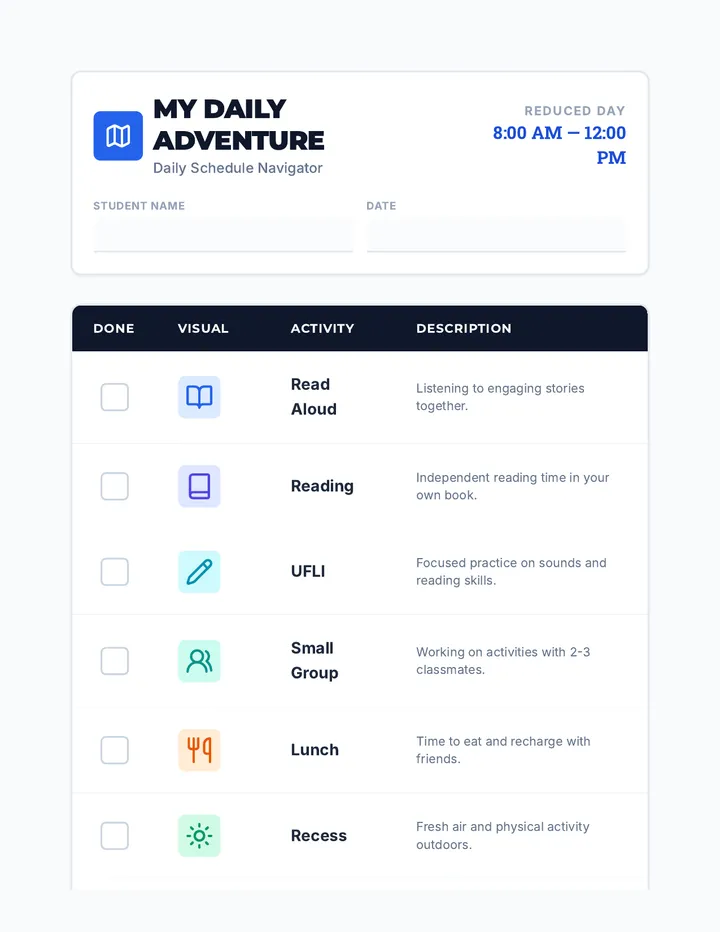
A specialized lesson to introduce a personalized visual schedule for a 7th-grade student on a reduced day, designed to increase independence and reduce transition anxiety.
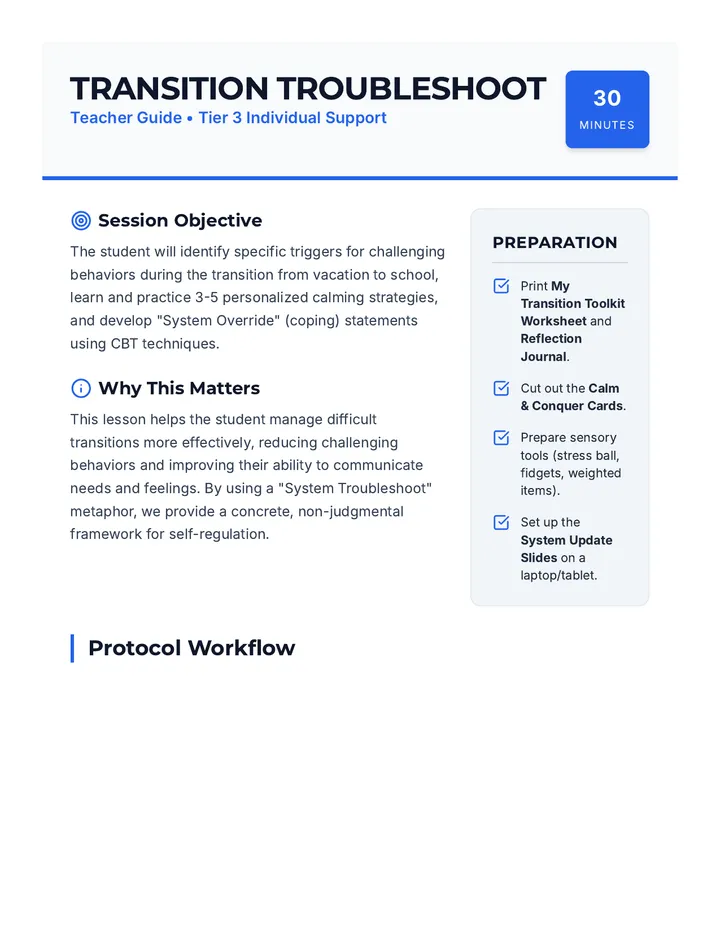
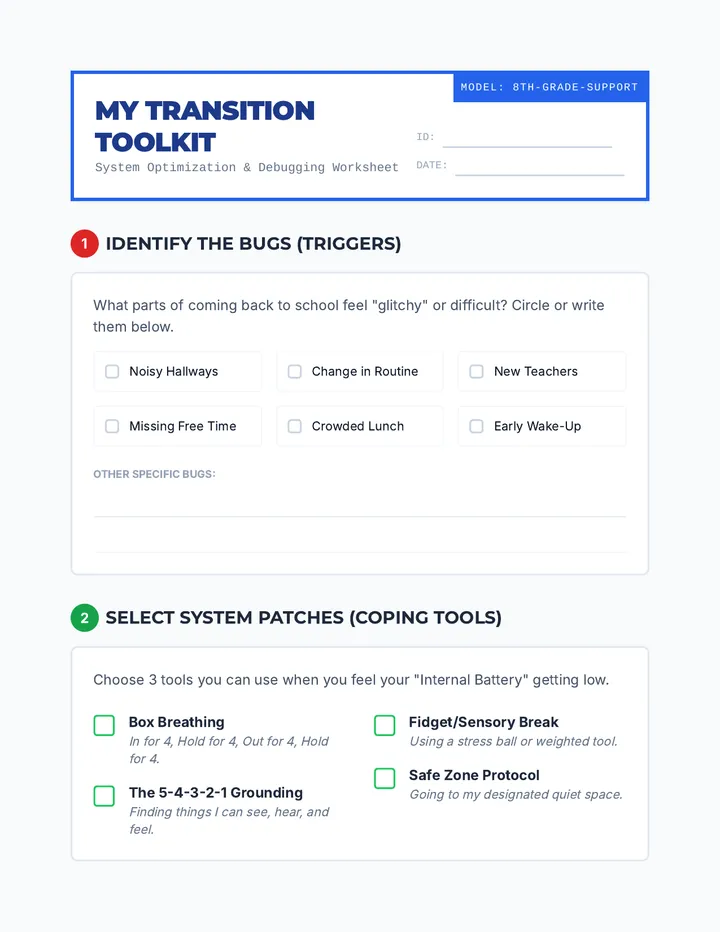
A personalized CBT-focused lesson for an 8th-grade student with autism, addressing challenging behaviors during the transition from vacation to school by identifying triggers, teaching calming strategies, and promoting positive coping mechanisms.
A personalized one-on-one lesson designed to help a 1st-grade student navigate unexpected changes in their routine using a social story and coping strategies.
This Tier 3 intervention lesson provides individualized strategies for students struggling with task initiation. It includes a personalized launch plan, visual supports, and a progress tracker to foster independence and executive functioning skills.
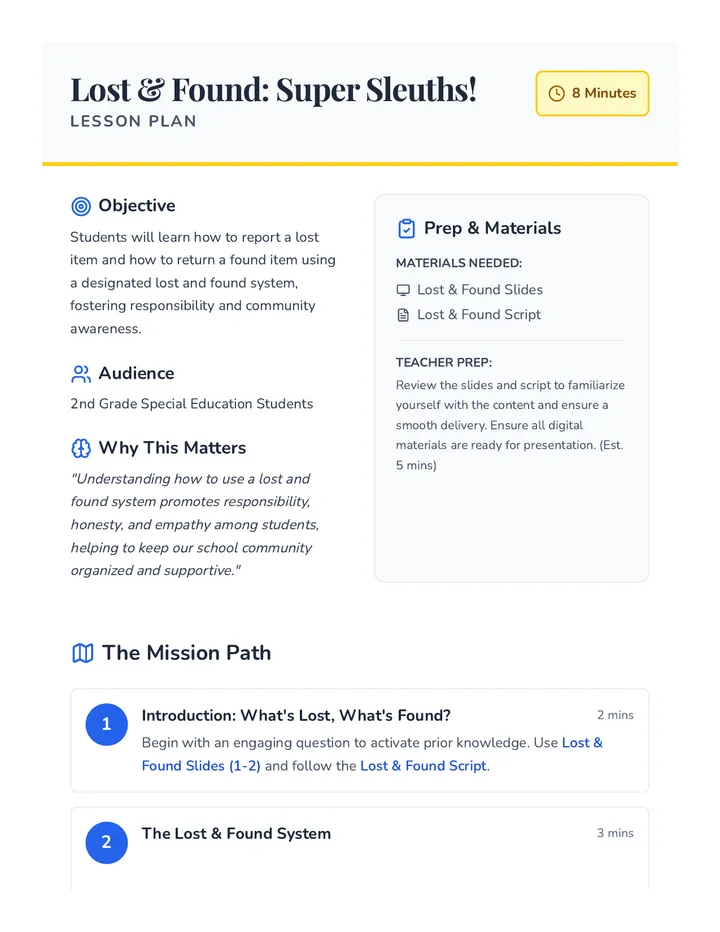
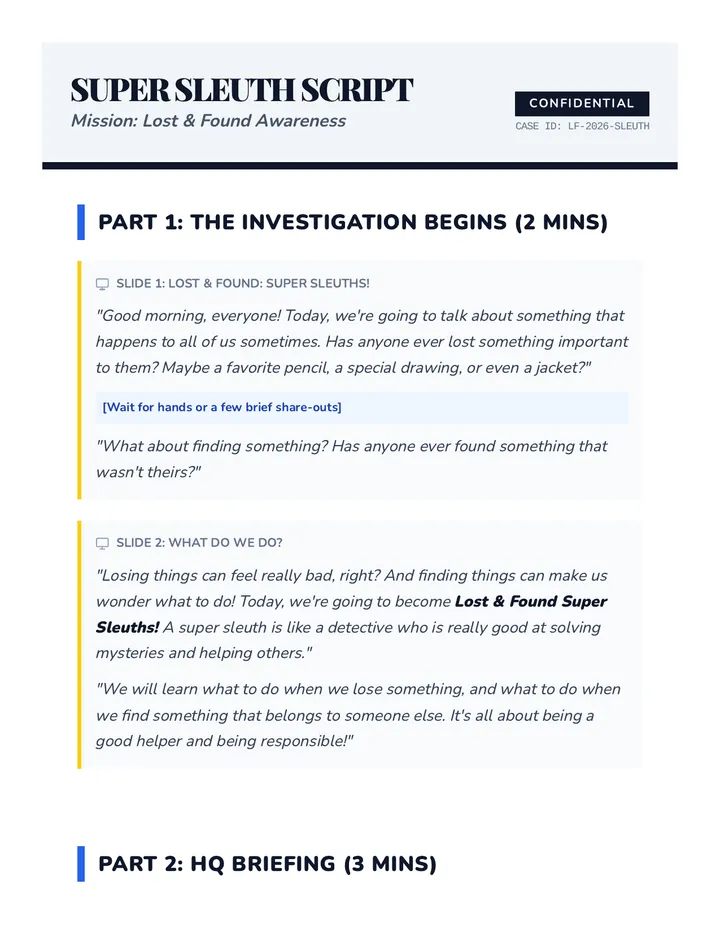
A short, engaging lesson for 2nd-grade special education students on how to responsibly handle lost and found items using a 'Super Sleuth' detective theme.
A 60-minute professional development session for teachers that reframes ADHD as a neurodevelopmental difference and provides practical, empathetic strategies for classroom support.
A personalized behavior chart for a 2nd-grade student to improve transitions and reduce aggressive behaviors. This lesson plan is designed for individual student support (Tier 3) and takes approximately 15 minutes to introduce and explain.
A 30-minute parent workshop focused on practical strategies and tools to support second graders' executive function skills at home, including planning, organization, and self-monitoring.
A Tier 3 individual intervention lesson designed to introduce a personalized behavior tracker to a 2nd-grade student, focusing on self-regulation and academic success through positive reinforcement.